Iran Lobby

Exposing the Activities of the lobbies and appeasers of the Mullah's Dictatorship ruling Iran

  • Home
  • About
  • Current Trend
  • National Iranian-American Council(NIAC)
    • Bogus Memberships
    • Survey
    • Lobbying
    • Iranians for International Cooperation
    • Defamation Lawsuit
    • People’s Mojahedin
    • Trita Parsi Biography
    • Parsi/Namazi Lobbying Plan
    • Parsi Links to Namazi& Iranian Regime
    • Namazi, NIAC Ringleader
    • Collaborating with Iran’s Ambassador
  • The Appeasers
    • Gary Sick
    • Flynt Leverett & Hillary Mann Leverett
    • Baroness Nicholson
  • Blog
  • Links
  • Media Reports

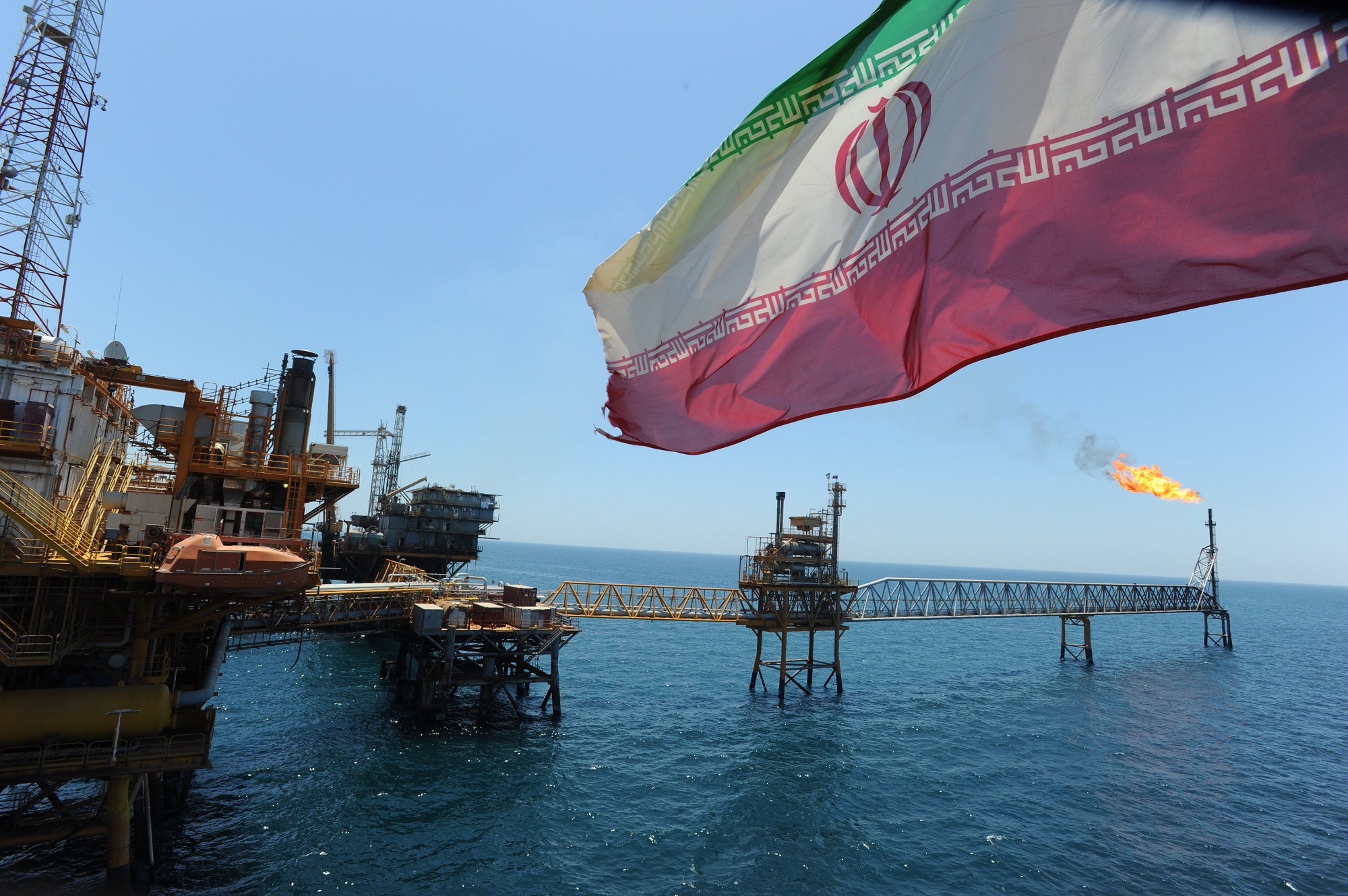
Will Oil Sanctions Crumble the Iranian Regime?

October 31, 2018 by admin

Will Oil Sanctions Crumble the Iranian Regime?

There is no doubt petroleum is the lifeblood of the Iranian regime’s economy. It’s one of the few natural resources the mullahs have left that has not been over-exploited or driven to ruin. During the time economic sanctions were lifted because of the Iran nuclear deal, the windfall of selling its oil on the open market once again pumped badly needed hard currency into the floundering Iranian economy and fueled its wars in Syria, Iraq, and Yemen.

But even during the decade in which sanctions were in place, the mullahs and the Revolutionary Guard Corps personally profited from the illicit sale of oil on the black market and pocketed hefty commissions for family members through a shadowy network of middlemen.

Now the re-imposition of economic sanctions by the U.S. after pulling out from the nuclear deal is looming with the ban on sales of Iranian oil to commence next week. The sanctions beginning November 4th are geared to specifically hit the regime where it hurts, including:

  • Sanctions on Iran’s port operators and shipping and shipbuilding sectors, including on the Islamic Republic of Iran Shipping Lines (IRISL), South Shipping Line Iran, or their affiliates;
  • Sanctions on petroleum-related transactions with, among others, the National Iranian Oil Company (NIOC), Naftiran Intertrade Company (NICO), and National Iranian Tanker Company (NITC), including the purchase of petroleum, petroleum products, or petrochemical products from Iran;
  • Sanctions on transactions by foreign financial institutions with the Central Bank of Iran and designated Iranian financial institutions;
  • Sanctions on the provision of underwriting services, insurance, or reinsurance; and
  • Sanctions on Iran’s energy sector.

The sanctions on shipping, petroleum, banking and insurance are aimed squarely at the financial engine that powers the Iranian regime’s corrupt empire. Since virtually all of the major industries in Iran are controlled directly by the government or the Revolutionary Guard Corps, the direct financial impacts of these sanctions hit the theocratic regime and are not aimed at the Iranian people.

It’s an important distinction since the Iran lobby, especially the National Iranian American Council, has long pounded on the messaging that the Iranian people are the ones being hurt the most by these sanctions.

Using today’s favorite hashtag, that’s just #fakenews.

The truth is that the regime’s own gross mismanagement, incompetence and deep corruption has been more than sufficient to run the Iranian economy into the ground. The fact that the country’s currency has steadily declined in value under the mullahs’ control is just one of many indicators of how they have managed to muck everything up.

The reason the U.S. sanctions are aimed at these particulars sectors is to deny the regime’s ability to finance terrorism and support the proxy wars it has waged on its neighbors. The sanctions are not aimed at stopping the flow of food, medicine or consumer products to the Iranian people.

The regime for example has been the one to block communications to the outside world, ban access to social media, artificially regulate the consumer market with heavy-handed regulations designed to keep the pipeline of luxury goods flowing to the entitled and privileged, but provide none of the support for the staples the Iranian people need to survive.

In a desperate effort to keep the flow of cash coming in, the regime offered up one million barrels of oil through the regime’s domestic bourse so its private sector could buy oil to resell to the international market.

The response from the global marketplace was tepid at best with only 280,000 barrels of crude oil being sold according to oil ministry news service Shana.

Saeed Khoshroo, NIOC’s director for international affairs, had said Sunday that the eased restrictions would cause the crude offered on the bourse to get snapped up immediately.

The fact that so little crude was bought highlights the growing impotence of the regime in trying to navigate a path out of the economic fallout coming next week.

Of special concern to the regime was the price paid on the bourse which was only $74.85/b in 35,000-barrel consignments. The steady decline in price demonstrates the belief in the global marketplace that shortfalls from Iranian supplies cut off by sanctions can be made up from other sources, as well as a projected global drop in demand, which has increased U.S. crude inventories and further drove the price down.

Iran’s last use of the bourse was in early April 2014, when US and EU sanctions on Iran were in force. Just 2,920 barrels were sold on the first day that the crude was offered, and a second offer a day later failed to find any buyers.

Hopes by the regime that things would be different this time around were dashed and raise an ugly prospect for the mullahs: “What happens when the cash stops flowing?”

For the regime, the cut-off of money raises the specter that the Iranian people may now have the best opportunity ever to force regime change in demanding concessions from the mullahs and Revolutionary Guard Corps to loosen their iron-grip on the country and clear a pathway for greater democracy; especially the introduction of legitimate opposition parties.

The loss of oil revenue is likely to keep driving the value of the rial down and fuel more inflation – both have been drivers of popular uprisings and protests throughout Iran – thereby adding to the volatile and combustible mix of anger aimed at the ruling mullahs.

On Saturday, Iran’s parliament approved a government economic reshuffle, according to a Reuters report in an effort to try and convince the population the regime was trying to address its concerns, but will reshuffling of regime leaders be enough to stave off regime change this time?

We don’t think so.

Michael Tomlinson
Filed Under: Blog, Current Trend, News Tagged With: Featured, Iran deal, iran econom, Iran Lobby, Iran oil market, Iran sanctions, NIAC, NIAC Action

Behind the Deals and Photos Lies a Troubled Iranian Economy

June 28, 2016 by admin

Behind the Deals and Photos Lies a Troubled Iranian Economy

Behind the Deals and Photos Lies a Troubled Iranian Economy

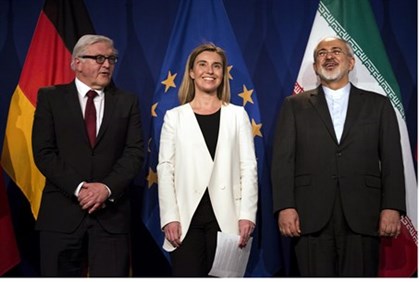
Ever since the Iranian nuclear deal was agreed to last year, the Iranian regime has been busy staging elaborate photo opportunities announcing business deals and hosting trade delegations from a wide range of European, Asian and African nations looking to re-enter the Iranian marketplace.

For the regime, it has been a vital source of propaganda to show the world that Iran was indeed flourishing under the nuclear deal, which helped to reinforce the false messages and perception that the deal was helping to bring economic benefits to the Iranian people.

Of course, many trade delegations were faced with the inconvenient truth of the regime continuing its bloody policies of executing large numbers of Iranians during these visits, including juveniles that were publicly hanged during visits by European Union officials.

The reality though is much more dismal than the mullahs would like the world to know, although news media reports have begun to focus more closely and with greater scrutiny on the economic woes and mismanagement besetting Iran.

Chief among the many benefits the Iran lobby crowed about was the ability for Iranian oil to enter the open market with the lifting of economic sanctions. Regime advocates such as Trita Parsi of the National Iranian American Council contended that lifting these sanctions would bring Iran into the global marketplace, thereby moderating its behavior and bringing economic relief to hard-pressed Iranians.

The opposite has happened instead.

Bloomberg’s Julian Lee discussed the slide in Iran’s oil fortunes, noting that five months after sanctions on Iran were eased, the rapid rise in the country’s oil production and exports appears to be ending as quickly as it began.

Iran’s observed crude oil exports, which exceeded 2 million barrels a day in both April and May, slipped by almost 20 percent in the first three weeks of June, said Lee.

One of the country’s primary aims after restrictions on oil sales were eased was to regain its markets in Europe. Before the latest sanctions were imposed in 2012, Iran was exporting about 600,000 barrels a day of crude to countries in the European Union, with Italy, Spain and Greece its biggest buyers.

But more worrying for Iran is the difficulty that it seems to have had in persuading its biggest pre-sanctions buyers to resume purchases. Italy, previously Iran’s best customer in Europe, loaded its first cargo in mid-June, five months after the restrictions were lifted. Purchases by Spain and Greece are also well below pre-sanctions levels.

Outside Europe, Iran has also struggled to regain customers it lost to sanctions. A delivery to the Tanzanian port of Dar Es Salaam in March remains its only post-sanctions sale to Africa, while purchases by U.S. companies are still banned.

The steep decline in oil sales spells trouble for the regime, which counted on the influx of cash to help bolster a treasury wrung dry from the financing of three separate proxy wars in Syria, Yemen and Iraq.

Adding to the bad financial news for Hassan Rouhani and the mullahs in Tehran is word that the ballyhooed announcement of sales of Airbus commercial airliners to Iran was also in trouble with Iran thinking of cancelling some of the planes in the order, including the flagship mammoth A380 super jumbo jets.

Part of the difficulty, which the recently announced Boeing deal is facing, is the restrictions in place keeping most banks from financing the deals because of sanctions still in place against Iran for human rights violations and sponsorship of terrorism.

It certainly did not help the regime to have an international watchdog agency vote to keep Iran on its blacklist of nations still supporting money laundering and terrorism.

The economic difficulties Iran is experiencing underscore the inherent weakness of the religious leadership of the regime, especially in running an efficient economy. Virtually all of Iran’s major industries are run by or controlled by shell companies under the thumb of the Revolutionary Guard Corps and the various power factions of mullahs all enriching themselves at the expense of the Iranian people.

The level of corruption has erupted into protests and demonstrations that have rocked the regime for the better part of three years and have ranged from schoolteachers protesting low wages to small business owners demanding reforms to halt graft to mass demonstrations over sky high salaries paid to regime executives and state-controlled businesses.

In a sign of the growing desperation being felt by the regime, deputy chief of staff of the armed forces Brig. Gen. Masoud Jazayeri was the first Iranian official to offer a comment on the Brexit results in trying to tie the “Leave” to a rejection of American policies.

“The desire by the people of England to leave the EU is in reality a ‘No’ by the majority of the people for the continuation of the compliance of the British government with respect the imposition of America’s will on this country,” Jazayeri said.

It’s a ridiculous comment since virtually every exit poll showed Britons were alarmed at the sharp rise in Islamic extremist attacks and the mass influx of refugees fleeing the Syrian conflict aggravated by Iran’s support of the Assad regime there.

More importantly Brexit poses a significant threat to the mullahs since the United Kingdom is now free to pursue a foreign policy independent of the European Union which has sought to normalize relations with Iran since the nuclear deal.

What doesn’t help improve British perceptions of the Iranian regime is the recent illegal arrest of a British woman on charges she fomented insurrection by helping design a charity website years ago.

The reality is that the chaos created by Iranian regime in Syria is now coming back to haunt the mullahs and underscore how incompetent they are not only in managing the economy, but in foreign affairs.

By Michael Tomlinson

Filed Under: Blog, News Tagged With: Featured, Iran, Iran deal, Iran Lobby, Iran oil market, Trita Parsi

National Iranian-American Council (NIAC)

  • Bogus Memberships
  • Survey
  • Lobbying
  • Iranians for International Cooperation
  • Defamation Lawsuit
  • People’s Mojahedin
  • Trita Parsi Biography
  • Parsi/Namazi Lobbying Plan
  • Parsi Links to Namazi & Iranian Regime
  • Namazi, NIAC Ringleader
  • Collaborating with Iran’s Ambassador

Recent Posts

  • NIAC Trying to Gain Influence On U.S. Congress
  • While Iran Lobby Plays Blame Game Iran Goes Nuclear
  • Iran Lobby Jumps on Detention of Iranian Newscaster
  • Bad News for Iran Swamps Iran Lobby
  • Iran Starts Off Year by Banning Instagram

© Copyright 2026 IranLobby.net · All Rights Reserved.