Iran Lobby

Exposing the Activities of the lobbies and appeasers of the Mullah's Dictatorship ruling Iran

  • Home
  • About
  • Current Trend
  • National Iranian-American Council(NIAC)
    • Bogus Memberships
    • Survey
    • Lobbying
    • Iranians for International Cooperation
    • Defamation Lawsuit
    • People’s Mojahedin
    • Trita Parsi Biography
    • Parsi/Namazi Lobbying Plan
    • Parsi Links to Namazi& Iranian Regime
    • Namazi, NIAC Ringleader
    • Collaborating with Iran’s Ambassador
  • The Appeasers
    • Gary Sick
    • Flynt Leverett & Hillary Mann Leverett
    • Baroness Nicholson
  • Blog
  • Links
  • Media Reports

Iran Denies British Aid Worker Appeal and Keeps Her Imprisoned

April 25, 2017 by admin

Iran Denies British Aid Worker Appeal and Keeps Her Imprisoned

Iran Denies British Aid Worker Appeal and Keeps Her Imprisoned

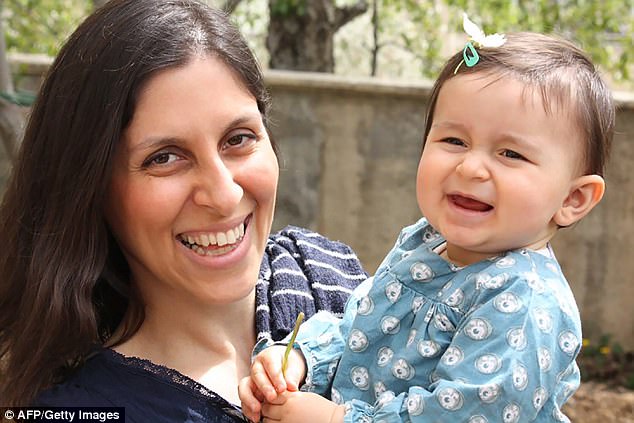
In another display of the cold-blooded nature of the Iranian regime, Iran’s supreme court up held the conviction of a British-Iranian women sentenced to five years in jail on vague charges relating to national security. The decision ends her last legal avenue to ending her harsh imprisonment.

Nazanin Zaghari-Ratcliffe, a project manager with the Thomson Reuters Foundation, the news agency’s charitable arm, had lodged a final appeal in January after the confirmation of her sentence in a lower court. Her husband, Richard Ratcliffe, said on Monday that the supreme court had rejected her appeal.

“I hadn’t had great hopes for the supreme court appeal,” he told the Guardian. “Now, realizing that that’s it, that all options are gone … in the middle of an election cycle, it’s hard to get attention on Nazanin’s case.”

According to the Guardian, Zaghari-Ratcliffe, 38, has spent 387 days behind bars, most of which have been in the notorious Evin prison. The regime’s Revolutionary Guards arrested her in April 2016 while she and her two-year-old daughter, Gabriella, were about to return to the UK after a family visit to Iran. She was tried and found guilty on the unspecified charges relating to national security last September.

Although the exact reasons behind Zaghari-Ratcliffe’s incarceration remain unclear, the Guards have accused her of attempting to orchestrate a “soft overthrow” of the Islamic Republic. An Iranian news agency affiliated to the country’s judiciary also said in April that she was a spy. Richard Ratcliffe has vehemently denied both allegations.

It also reinforces the regime’s dubious practice—articulated by Hassan Rouhani in media interviews—that it does not recognize the dual-national status of any Iranian and as such maintains the rights to arrest anyone.

The use of imprisoned American-Iranians as hostage bargaining chips during nuclear negotiations yielded billions of dollars in cash and sanctions relief and only emboldened the regime to go on another spree of arrests shortly after the deal was reached.

New revelations by Politico also revealed disturbing information about that prisoner swap by the Obama administration with the Iranian regime.

Obama announced the “one-time gesture” of releasing Iranian-born prisoners who “were not charged with terrorism or any violent offenses” last year, his administration presented the move as a modest trade-off for the greater good of the Iran nuclear agreement.

Obama portrayed the seven men he freed as “civilians.” The senior official described them as businessmen convicted of or awaiting trial for mere “sanctions-related offenses, violations of the trade embargo.”

In reality, some were accused by Obama’s own Justice Department of posing threats to national security. Three allegedly were part of an illegal procurement network supplying Iran with U.S.-made microelectronics with applications in surface-to-air and cruise missiles like the kind Tehran test-fired recently. Another was serving an eight-year sentence for conspiring to supply Iran with satellite technology and hardware, according to Politico.

And in a series of unpublicized court filings, the Justice Department dropped charges and international arrest warrants against 14 other men, all of them fugitives. The administration didn’t disclose their names or what they were accused of doing, noting only in an unattributed, 152-word statement about the swap that the U.S. “also removed any Interpol red notices and dismissed any charges against 14 Iranians for whom it was assessed that extradition requests were unlikely to be successful.”

Three of the fugitives allegedly sought to lease Boeing aircraft for an Iranian airline that authorities say had supported Hezbollah, the U.S.-designated terrorist organization. A fourth, Behrouz Dolatzadeh, was charged with conspiring to buy thousands of U.S.-made assault rifles and illegally import them into Iran.

A fifth, Amin Ravan, was charged with smuggling U.S. military antennas to Hong Kong and Singapore for use in Iran. U.S. authorities also believe he was part of a procurement network providing Iran with high-tech components for an especially deadly type of IED used by Shiite militias to kill hundreds of American troops in Iraq.

The most worrisome prisoner was Seyed Abolfazl Shahab Jamili, who had been charged with being part of a conspiracy that from 2005 to 2012 procured thousands of parts with nuclear applications for Iran via China, including hundreds of U.S.-made sensors for the uranium enrichment centrifuges in Iran whose progress had prompted the nuclear deal talks in the first place.

The revelations were devastating to federal prosecutors and cast a dark shadow over the claims constantly made by the Obama administration and the Iran lobby about the nature of concessions granted to the Iranian regime and proved the promises of “moderation” to be illusory.

The damage to long-running investigations into the regime’s illicit efforts to procure technologies to boost its ballistic missile program and military capabilities was severe, but the more important question yet to be answered is how to repair the damage to refocus efforts on pushing democracy forward in Iran.

Dr. Majid Sadeghpour, political director of the Organization of Iranian American Communities (OIACUS), a non-profit organization that works to promote human rights and democratic freedoms in Iran, emphasized that one positive that came from the Obama administration was the saving of Iranian dissidents under constant attack in Iraq by the regime in a piece for The Hill.

“Recently, Senate Armed Service Committee Chairman Sen. John McCain (R-Ariz.) met with Maryam Rajavi, the president-elect of the National Council of Resistance of Iran (NCRI) and addressed members of the People’s Mojahedin Organization of Iran (PMOI/MEK) in a rally in Tirana, Albania,” he said.

“Senator McCain’s visit represents a turning point in the plight of the Iranian dissidents now in Albania, but more importantly, marks a significant milestone in their struggle to bring about democratic change in Iran,” Sadeghpour added.

“Despite years of delays and several deadly attacks by mercenaries loyal to the Iranian regime, the MEK left Camp Liberty in Iraq with help from the previous occupants of the White House — perhaps the only piece of former President Obama’s Iran policy that will prove to have a lasting positive effect. As many as 3,000 lives were saved.”

It’s unfortunate the Obama administration could exercise the same foresight in confronting the Iran regime instead of appeasing it on the nuclear deal.

Michael Tomlinson
Filed Under: Blog, News Tagged With: Featured, Iran, Iran deal, Iran Human rights, Iran Lobby, Iran Mullahs, Iran sanctions, Iran Terrorism, Khamenei, Nazanin Zaghari-Ratcliffe

The Double Standard of the Iran Lobby

April 3, 2017 by admin

The Double Standard of the Iran Lobby

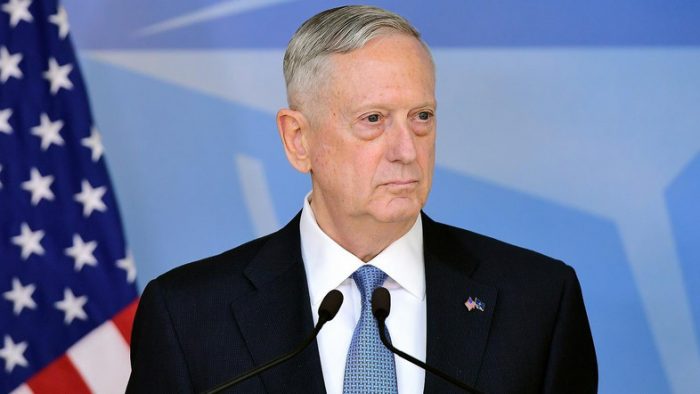
US Defence Minister James Mattis addresses the press during a NATO defence ministers’ meetings at the NATO headquarters in Brussels on February 15, 2017. / AFP PHOTO / EMMANUEL DUNAND

Consistency of thought has never been the strong suit for members of the Iran lobby such as the National Iranian American Council. Often staffers from the NIAC write editorials that passionately argue to right some perceived wrong being perpetrated by the U.S. government, while at the same time ignoring the exact same violation being committed by the Iranian regime.

Take for example the issue of detention of Iranians within the U.S. under the Trump administration’s new immigration rules versus the long-running policy of the mullahs in Tehran of snatching up and imprisoning dual-national citizens.

The NIAC issued a statement by Ryan Costello arguing against the arrest of an Iranian citizen holding a U.S. visa in Michigan. According to the statement, the “news comes amidst an uptick in government harassment of visa holders and citizens entering the U.S. We are concerned this is further evidence of a discriminatory culture being promoted by Donald Trump and his administration, particularly towards people of Middle Eastern descent.”

While the attention to this case seems to be the primary focus of the NIAC, the notorious supporters of the Iranian regime are virtually silent on the same practice by the mullahs in arresting dual-nationals such as Iranian-Americans on bogus or secret charges and held in deplorable conditions.

Consider the long-running saga of British charity worker Nazanin Zaghari-Ratcliffe who was arrested at Tehran Airport on April 3 last year while visiting family with daughter Gabriella.

She was imprisoned for five years in September for allegedly plotting to topple the Iranian government and lost an appeal against her sentence in January but maintains her innocence.

On Sunday – the 365th day since the arrest – family and friends gathered at Fortune Green close to Zaghari-Ratcliffe’s home in north-west London according to the Standard.

Supporters tied yellow ribbons to a tree in the park along with quotes from inmates at Evin prison in Iran, where Zaghari-Ratcliffe is being held, describing what they would do with one day of freedom.

Her painful and heartfelt wish reads: “My fondest dream has always been to arrive at our home, you ask me if I want to have a cup of tea, then make me one.”

“I just sit back and watch you two play. This is the image I had most when in solitary confinement.

“How I wish I could watch you both dance in the middle of our sitting room to the Michael Jackson music – like when Gabriella was only tiny.”

The NIAC makes no mention of her incarceration, not even a plea for humanitarian release because of her sharply declining health and denial of adequate medical care. Why the double standard?

One of the more stunning double standards was an editorial in the Atlantic Council by NIAC’s Adam Weinstein which argued why Iran views its ballistic missile program as a “red line” that warrants full protection by the mullahs.

He predictably recounts the same old arguments from Iran’s experiences in the Iran-Iraq War in which Saddam Hussein showered Iranian troops with missile barrages and how the mullahs in Tehran vowed to develop their own missile capability to defend themselves in the future, especially as a deterrent from perceived enemies such as the U.S. and Saudis.

Weinstein argues—incredibly—that alleviating Iran’s sense of vulnerability might be a better way to approach Iran.

Using his logic, if your neighbor has decided to arm himself and occasionally takes shots at you, Weinstein argues that you should be the one of reassure your violent neighbor, not the other way around?!

Weinstein even stretches his bizarre logic by trying to tie into a historically revisionist view of Shi’ism portraying it as choosing pragmatism over ideology.

Not many Syrians or Yemen civilians being subjected to Iranian bombs, mortars, rockets, drones and militia would find any proof of that sentiment.

What Weinstein never discusses though is the rapid development of Iran’s missile program in creating and testing ever more powerful boosters designed to reach intercontinental distances and lift capability approaching via nuclear payload capabilities.

Why Iran needs a ballistic missile with the range to reach into New Delhi or Rome is never mentioned by Weinstein because there is no reason other than to hold a dagger over Europe, Asia and the rest of the Middle East like the sword of Damocles.

But that double standard is nothing new to the Iranian regime as Iran’s Foreign Ministry called on the United States to pressure its regional allies into abandoning their support for terrorism and not level “malicious” allegations against the Islamic state.

Foreign Ministry Spokesman Bahram Qasemi made the statement on Saturday, reacting to earlier comments by US Defense Secretary James Mattis claiming that Iran continued to sponsor terror, Press TV reported.

Asked about comments Mattis made in 2012 that the three primary threats the United States faced were “Iran, Iran, Iran,” Mattis told reporters in London on Friday that Iranian regime’s behavior had not changed in the years since.

“At the time when I spoke about Iran I was a commander of US central command and that (Iran) was the primary exporter of terrorism, frankly, it was the primary state sponsor of terrorism and it continues that kind of behavior today,” Mattis said.

Laura Carnahan


Filed Under: Blog, News Tagged With: Adam Weinstein, Featured, Iran, Iran Lobby, Iran Mullahs, Iran Terrorism, IRGC, National Iranian American Council, Nazanin Zaghari-Ratcliffe, NIAC, NIAC Action, Ryan Costello, Tyler Cullis

The Cruelty of the Iranian Regime at the Holidays

December 23, 2016 by admin

The Cruelty of the Iranian Regime at the Holidays

The Cruelty of the Iranian Regime at the Holidays

Amidst the horror of World War I over a century ago, a remarkable event occurred that has almost never been seen again in the history of human conflict.

During Christmas in 1914, the Western Front of World War I in France was a devastated moonscape of trenches filled with mud, dead bodies, snow and men filled with despair and lost hope amidst the first modern war of the Industrial Age.

The First World War introduced machine guns, aerial bombardment and poison gas and chemical attacks. It was brutal, unforgiving and merciless. Yet that Christmas saw what was to become known as “the Christmas Truce” where French, German and British soldiers got out of their trenches to walk across no man’s land and exchange seasonal greetings with their enemy.

They exchanged food and souvenirs, held prisoner swaps and even ended up singing holiday carols together. Some units even played football games together. It was a remarkable sight and one that some hoped might portend a pathway to ending the bloody conflict.

Unfortunately, war, as in all human conflict, resumed its proceedings with brisk abandon and there would be no further repeats of this holiday miracle.

This episode is instructive since it shows us that even the most bitter of enemies can pause and allow the good nature of the holiday period seep in and allow a few moments of grace to settle over a bloody battlefield.

One hundred and two years later, a different kind of uneasy peace has settled over the city of Aleppo in Syria, but unlike the battlefields of Europe, this silence has been brought about by the utter destruction of a city and its residents by the round-the-clock merciless attacks and bombings by the Syrian regime and its allies, especially Iran.

The wreckage of Aleppo mirrors old black and white photos of cities blasted to bits in that long ago war in France, but today there is no hope for truce, no compassion and no hearkening to a holiday message of peace and forgiveness.

For the mullahs in Tehran, a cold blackness rules their collective Islamic extremist hearts and their judgment is swayed by the needs of the moment which almost always revolves around their struggle to keep their shaky grip on power.

While the rest of the world takes a break this weekend to celebrate the holidays with family gatherings and goodwill towards one another, the Iranian regime continues to find new ways to demonstrate its depravity.

Nazanin Zaghari-Ratcliffe, 37, has been told that she must choose between taking her two-year old daughter, Gabriella, into a Tehran’s notorious Evin prison or sign away her rights to be with her daughters, her husband Richard Ratcliffe told the Telegraph.

“The ultimatum is that Gabriella lives with her three days a week in prison or she signs a paper waiving her rights of custody,” he said.

“She is deeply wary of having Gabriella move into prison partly because prison is horrible, and partly because after a hunger strike she does not have the strength to look after her three days a week,” he said.

Zaghari-Ratcliffe, a project manager with the Thomson Reuters Foundation, was sentenced to five years in prison in September following a conviction on unspecified “national security-related” offences following a trial before a Revolutionary Court in the capital Tehran.

The 37-year old charity worker has been in custody – much of it solitary confinement – since being detained by the Revolutionary Guard Corps on April 3.

Ratcliffe, who has dual British-Iranian nationality, was on holiday visiting her parents in Tehran. She was arrested at the check-in desks of Khomeini International Airport.

Gabriella was left in the care of her grandparents after the arrest, but her passport was confiscated meaning the child was trapped in Iran.

Hassan Rouhani earlier articulated the regime policy that it did not recognize dual-national citizens, arresting several Canadians, Americans, French and British subjects following the nuclear agreement reached last year.

The arrests, coupled with a broad crackdown domestically against Iranian dissidents, journalists, students and artists, highlight the chief motivation for the mullahs in Tehran which is fear. The mullahs are afraid of dissent. They are afraid of Iranians living abroad coming home and spreading dangerous ideas such as freedom, democracy and peace with their friends and family.

The mullahs fear an open and free press and they fear young people and artists who have utilized social media to show their objections to the mullahs by simple acts of defiance.

For the Iranian regime, the only thing the mullahs understand is power and violence and how to apply brute force to advance their goals. It’s the recipe the regime has followed since its founding in using violence in Lebanon, Syria, Iraq, Afghanistan and Yemen.

While Aleppo stands empty and Iranian commanders take public tours of the destruction they have wrought, the most telling indictment of the Iranian regime may not be bombed out buildings, but in the message that the mullahs are forcing a mother to decide between losing her child or bringing her into one of the darkest and most brutal hellholes on Earth.

The next time the Iran lobby advocates for accommodating Iran, you may want to ask why there is not accommodation for a mother and her child at Christmas?

Laura Carnahan


Filed Under: Blog, News Tagged With: Featured, hassan rouhani, Iran, Iran Human rights, Iran Lobby, Iran Mullahs, Nazanin Zaghari-Ratcliffe

National Iranian-American Council (NIAC)

  • Bogus Memberships
  • Survey
  • Lobbying
  • Iranians for International Cooperation
  • Defamation Lawsuit
  • People’s Mojahedin
  • Trita Parsi Biography
  • Parsi/Namazi Lobbying Plan
  • Parsi Links to Namazi & Iranian Regime
  • Namazi, NIAC Ringleader
  • Collaborating with Iran’s Ambassador

Recent Posts

  • NIAC Trying to Gain Influence On U.S. Congress
  • While Iran Lobby Plays Blame Game Iran Goes Nuclear
  • Iran Lobby Jumps on Detention of Iranian Newscaster
  • Bad News for Iran Swamps Iran Lobby
  • Iran Starts Off Year by Banning Instagram

© Copyright 2026 IranLobby.net · All Rights Reserved.