Iran Lobby

Exposing the Activities of the lobbies and appeasers of the Mullah's Dictatorship ruling Iran

  • Home
  • About
  • Current Trend
  • National Iranian-American Council(NIAC)
    • Bogus Memberships
    • Survey
    • Lobbying
    • Iranians for International Cooperation
    • Defamation Lawsuit
    • People’s Mojahedin
    • Trita Parsi Biography
    • Parsi/Namazi Lobbying Plan
    • Parsi Links to Namazi& Iranian Regime
    • Namazi, NIAC Ringleader
    • Collaborating with Iran’s Ambassador
  • The Appeasers
    • Gary Sick
    • Flynt Leverett & Hillary Mann Leverett
    • Baroness Nicholson
  • Blog
  • Links
  • Media Reports

“Deadline Schmedline” Trita Parsi Not Worried for Regime

July 10, 2015 by admin

“Deadline Schmedline” Trita Parsi Not Worried for Regime

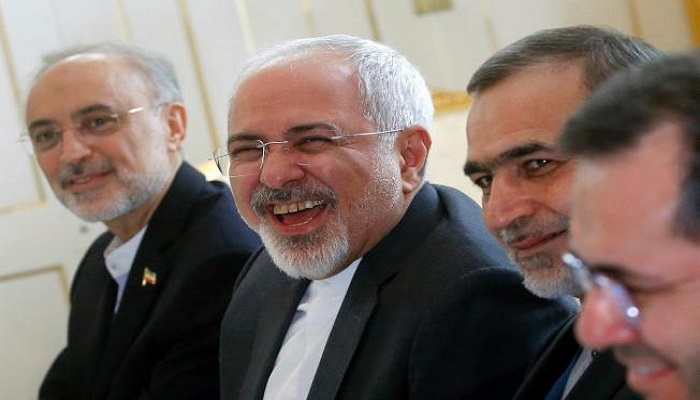
Trita Parsi has had close working relationship with Javad Zarif, when he was Iran’s Ambassador to the United Nations. In a deposition, Parsi stated he only communicated in 2006 with Zarif in order to “interview him.” But this is not true.
Emails made public demonstrate that Parsi and Zarif collaborated on numerous political issues. Parsi publicly distributed an Iranian regime document to influence US policy. He made arrangements for the ambassador to participate in a conference on Capitol Hill and to meet members of Congress, and sought the ambassador’s council regarding the feasibility of a new Persian Gulf security arrangement.
About the collusion between Parsi and Zarif, a former Associate Deputy Director of the FBI said Parsi should have been registered as a foreign agent of Iran. Arizona Senator Jon Kyl contacted the US Justice Department, urging an investigation of Parsi.

Noun: dead·line


  • a date or time when something must be finished : the last day, hour, or minute that something will be accepted

“Deadline schmedline, I’m still not worried.”

  • Trita Parsi, head of the National Iranian American Council, in tweet from Vienna

Apparently Parsi, chief cheerleader and lobbyist for the Iran regime, has a slightly different view of deadlines than the foreign ministers of six countries negotiating with regime, but not so different from his mullah masters in Tehran since Iran has now blown past five self-imposed deadlines to reach a nuclear deal over the past two years.

The new, new deadline is today to meet a deadline set in legislation granting Congress 30 days to review any deal instead of a 60 day period; the logic being having a longer review period would allow opposition to a Iranian nuclear more time to lobby Congress.

In fact, Iran’s mullahs care little about deadlines since what they seem most interested in is taking verbal potshots at their opposite numbers, especially the U.S. as evidenced by heated exchanges from regime foreign minister Javad Zarif who chastised P5+1 negotiators for taking exception to regime’s latest demand to lift embargoes against the conventional arms trade.

Parsi was almost crowing about Zarif’s verbal explosion by tweeting out how well received it would be back in Iran by the mullahs.  All of which makes it plain Parsi could really care less about a deal as long as the regime gets to play the rest of the world as fools.

In each case as a new deadline approached, the regime has sabotaged the hope of any agreement by issuing new, aggressive demands; typically through a public rant by top mullah Ali Khamenei or more recently by issuing his very own infographic of “red lines” the regime would not cross in concessions.

And Parsi has faithfully sought to provide cover for the mullahs in his media interviews and social media tweets even though he probably knows what he is saying is either false or contradicted by the very mullahs he’s trying to make excuses for.

Take for example his tweet the other day chastising the amount of money spent by Saudi Arabia and other Gulf states as part of their overall military budgets. He lists Iran’s military spending at only $10.6 billion which is patently false since the regime halted public reporting of its military expenditures since 2009 when the mullahs stole the presidential election and spurred massive protests by the Iranian people which were brutally put down.

The Stockholm International Peace Research Institute tracks global military spending but has no data for Iran past 2009 and the data it did have before then did not include regime spending for paramilitary forces such as the Revolutionary Guards Corps and Quds Force, nor did it take into account aid given to terror groups such as Hezbollah or proxies such as Shiite militias in Iraq or Houthi rebels in Yemen.

But Parsi is by no means the only apologist for the regime. His colleague Reza Marashi has been just as busy in trying to explain why the mullahs keep heaping on demand after demand even after a so-called interim agreement was reached and only “technical” details had to be worked out.

His contention in the Los Angeles Times was that the mullahs worry the “White House will use administrative authority to temporarily lift U.S. sanctions on Iran but that Congress won’t follow through to permanently remove sanctions that were enacted into law.”

It is an odd position to take since the lifting of sanctions was agreed upon in the interim agreement only after verifying the regime had lived up to the conditions of a deal, including verification and reductions in enriched uranium stockpiles; both conditions repudiated by the regime since last April’s agreement.

But the truth doesn’t seem to faze Parsi and his cohorts and neither it seem do deadlines.

By Michael Tomlinson
Filed Under: Blog Tagged With: Iran, Iran deal, Iran Lobby, Iran Talks, Reza Marashi, Trita Parsi

Iran Lobby Pulling Out All the Stops

July 7, 2015 by admin

Iran Lobby Pulling Out All the Stops

Iran Lobby Pulling Out All the Stops

The 4th of July weekend was filled with more than fireworks and celebration. It had more than BBQs and hot dog eating contests or mesmerizing Women’s World Cup finale. The holiday weekend also a blizzard of last minute lobbying by supporters of the Iran regime in a desperate attempt to push for a final key concessions including some new disturbing demands by the mullahs in Tehran.

In the vanguard were staffers from the regime’s chief lobbying group, the National Iranian American Council, which sent its representatives anywhere they could find a microphone, camera, notebook or warm body willing to listen to them.

There was no limit to what they were willing to comment about, even if it had no real tie in with ongoing nuclear negotiations or for that matter, anything of relevance to Iranian-Americans, the purported audience they were founded to help.

Reza Marashi of the NIAC spent his weekend being quoted in Voice of America about an online campaign to foster love for the Iran regime. I’m still trying to figure out just how that movement halts Iran’s funding of three proxy wars in Syria, Iraq and Yemen.

He also attempted to persuade the BBC in the Viennese hotel lobby where negotiations were taking place that talks had moved from the “expert” level and now was in the hands of “ministers.” An interesting observation since he said the exact same thing last year and in April when the interim framework agreement was announced with much fanfare and 24 hours later each side disputed what was agreed to.

But give Marashi credit for attempting wild spin control such as when he told Bloomberg News that “both sides have more maneuvering ability in their negotiating position than they are willing to let on.”

An interesting contention when regime leader Ali Khamenei laid down several red lines in the sand in the form of a detailed infographic repudiating almost everything regime negotiators had hinted at in terms of compromises.

Public lobbying for the regime’s positions wasn’t limited to the NIAC though. Long-time regime business associate Bijan Khajehpour of Atieh International has made the argument that the immediate lifting of sanctions would benefit the Iranian people with the injection of fresh capital into the economy. While everyone knows that the estimated $140 billion in frozen assets and nearly $100 billion in direct foreign investment was being eagerly awaited by the regime’s ruling mullahs who desperately need the cash to replenish coffers drained dry by three proxy wars, plunging oil prices and deep-seated corruption resulted from regime elites and their families skimming off the economy.

The most impressive linguistic gymnastics have come from Trita Parsi, the leader-for-life of the NIAC, who has given full-throated support for all of the demands laid out by Khamenei. Ironically, Parsi’s own book has been used to explain how during the Bush administration, the opportunity arose for a deal with Iran to be struck only to fail because of the “unreasonable” demands by the U.S. for regime change.

History has demonstrated though that Iran’s mullahs have never been serious about delivering a deal that undercuts their power, ability to control their neighbors, nor reduce their ongoing sectarian warfare against other religions. While Parsi contends the mullahs were perfectly willing to give up supporting terror groups like Hezbollah and cooperate with nuclear inspectors, the opposite has been the truth.

Parsi has never explained why a regime he himself has portrayed as being committed to a path of peace has instead turned into the single source of bloodshed, war, sectarian violence, terrorism and practitioner of unrivaled human rights abuses on the planet right now.

Indeed, Iran is appropriately enough the “godfather” of much of what troubles the world now. About the only thing Iran’s mullahs are not responsible for are the Greek Eurozone vote and the collapse of the Japanese women’s soccer team in the Women’s World Cup championship game.

But Parsi deserves our final attention since it has been his championing of the mullahs that has turned the once promising idea of a voice for Iranian-Americans into a propaganda megaphone for the mullahs.

In a question and answer session with Deutsche Welle, Parsi was asked if “a deal only helps Iran’s elite, the hardliners, or do you think a deal could actually help to unleash Iran’s moderate society?”

“It is the moderates in Iran who are pushing for this deal. It is the pro-democracy movement that is overwhelmingly in favor of this deal,” Parsi said.

That statement, more than any other he has made over the past few weeks, sheds the brightest light on the rank hypocrisy Parsi spouts. He attempts to convince us moderate forces are in control in Iran; the same moderate forces that:

  • Instituting brutal put downs of any street demonstration or protests over the past four years;
  • Proclaiming a “moderate” president in Hassan Rouhani who has overseen 1,800 executions in the past 2 years at a clip almost double that of his deranged predecessor, Ahmadinejad;
  • Plunged the Middle East into three massive wars in Syria, Iraq and Yemen with the full military, economic and political backing of the regime, including committing thousands of Iranian soldiers and paramilitary militias;
  • Oversaw the most massive crackdown on communications in Iran, essentially blacking out the entire country through installation of a cyberwall, confiscation of satellite dishes and banning of access to social media.

These things and more are the proof that puts to lies what Parsi, Marashi and all other regime supporters’ contend are the true nature of the mullahs’ intentions.

By Michael Tomlinson

Filed Under: Blog, National Iranian-American Council Tagged With: Iran, Iran Lobby, Reza Marashi, Trita Parsi

NIAC Leads Charge for Great Iran Giveaway

June 25, 2015 by admin

GiveawayReza Marashi, another one of the National Iranian American Council’s regime cheerleaders, offered an editorial on the final hurdles facing nuclear negotiators in Switzerland. It is an impressive piece of fiction, worthy of a Hugo Award for fantasy writing.

His ignoring the televised rants by top mullah Ali Khamenei in denouncing any freeze on Iran’s nuclear program and opposition to any inspections of military or secret sites and demand for an immediate lifting of economic sanctions by the entire world even before ink is dry on an agreement is proof that Marashi is attempting that unique political high wire act; covering for a boss who suffers foot-in-mouth disease.

But I sympathize with Marashi. It can’t be easy to spin a line when your top guy goes on national television to basically undermine everything you’re saying. Marashi might find better luck defending the Confederate battle flag these days.

In another flight of fancy, Marashi claims that “Iran gave more than it received in the interim nuclear deal, and is looking to collect on that investment.” We certainly agree on the second part of that statement, Iran’s mullahs are certainly looking to collect – about $140 billion in frozen assets in what would be a gigantic payday, but the first part of the statement is disingenuous.

The Wall Street Journal, amongst scores of other news media, has documented the avalanche of concessions granted to the Iran regime by P5+1 negotiators without any comparable concessions from the mullahs. Those concessions began with the most important and earliest concession which was to move away from dismantling Iran’s nuclear program to complex Rube Goldberg structure of stretching out the “breakout” time for creating a nuclear weapon.

Marashi, his colleague at the NIAC Trita Parsi and other regime sympathizers, have created a new vocabulary of deceit with newly invented terms such as “snapback sanctions” and “breakout times” to replace conditions such as “dismantling centrifuges” and “eliminating fuel stockpiles.” It amounts to a shell game any tourist on the sidewalks of New York city would recognize with Iran’s mullahs hiding their nuclear program under a walnut and moving it rapidly around.

But what Iran’s mullahs truly want – and badly – is the cash. The $140 billion at the end of their nuclear rainbow is desperately needed – not by the ordinary Iranian citizen strangled by a corrupted economy – but a religious theocracy bled dry from three costly proxy wars in Syria, Iraq and Yemen and crashing oil prices. The mullahs need that money to prop their floundering regime afloat and keep their extremists allies well-equipped with guns, rockets and cash to pay mercenaries recruited from Afghanistan, Lebanon, Somalia and Nigeria.

To put it into perspective, according to the International Monetary Fund, Iran’s total foreign currency reserves amounts to only $110 billion, ranking it 21st in the world. The U.S. only has currency reserves of $121.5 billion, ranking it 19th. A $140 billion cash infusion into Iran would vault it to 11th place, ahead of Mexico, Germany, the U.K., France and Italy and just behind powerhouses Russia, Saudi Arabia, Japan and China.

That, more than anything else, is what the mullahs are craving like heroin to an addict. They need that cash to pay for their military adventures, to support terror groups and to maintain the massive expenditures required to continue building its nuclear infrastructure including new equipment it intends to buy from Russia and North Korea.

And if that wasn’t enough, Marashi also proposes that UN sanctions be rewritten to exclude tying sanctions to non-nuclear issues “such as arms procurement and export, human rights, and terrorism.” In effect, giving Iran a free pass to acquire arms, export them to its proxies, continue hanging people at a breakneck pace and lavish terror groups with more support.

Clearly Marashi has given up all pretense of finding common ground with negotiating countries and instead is all-in with the mullahs in trying to get everything they can before the June 30th deadline. The “throw everything in the basket” approach is reminiscent of looters sweeping through a CVS store grabbing everything they can before burning it down.

The end result will leave a deeply destabilized world with a nuclear-capable and flush with cash Iran still controlled by a small cadre of extremist mullahs.

By Michael Tomlinson

Filed Under: Blog, National Iranian-American Council Tagged With: Iran, Iran deal, Iran Lobby, Iran Talks, Irantalks, NIAC, Reza Marashi, Sanctions, Trita Parsi

  • « Previous Page
  • 1
  • …
  • 4
  • 5
  • 6

National Iranian-American Council (NIAC)

  • Bogus Memberships
  • Survey
  • Lobbying
  • Iranians for International Cooperation
  • Defamation Lawsuit
  • People’s Mojahedin
  • Trita Parsi Biography
  • Parsi/Namazi Lobbying Plan
  • Parsi Links to Namazi & Iranian Regime
  • Namazi, NIAC Ringleader
  • Collaborating with Iran’s Ambassador

Recent Posts

  • NIAC Trying to Gain Influence On U.S. Congress
  • While Iran Lobby Plays Blame Game Iran Goes Nuclear
  • Iran Lobby Jumps on Detention of Iranian Newscaster
  • Bad News for Iran Swamps Iran Lobby
  • Iran Starts Off Year by Banning Instagram

© Copyright 2026 IranLobby.net · All Rights Reserved.