Iran Lobby

Exposing the Activities of the lobbies and appeasers of the Mullah's Dictatorship ruling Iran

  • Home
  • About
  • Current Trend
  • National Iranian-American Council(NIAC)
    • Bogus Memberships
    • Survey
    • Lobbying
    • Iranians for International Cooperation
    • Defamation Lawsuit
    • People’s Mojahedin
    • Trita Parsi Biography
    • Parsi/Namazi Lobbying Plan
    • Parsi Links to Namazi& Iranian Regime
    • Namazi, NIAC Ringleader
    • Collaborating with Iran’s Ambassador
  • The Appeasers
    • Gary Sick
    • Flynt Leverett & Hillary Mann Leverett
    • Baroness Nicholson
  • Blog
  • Links
  • Media Reports

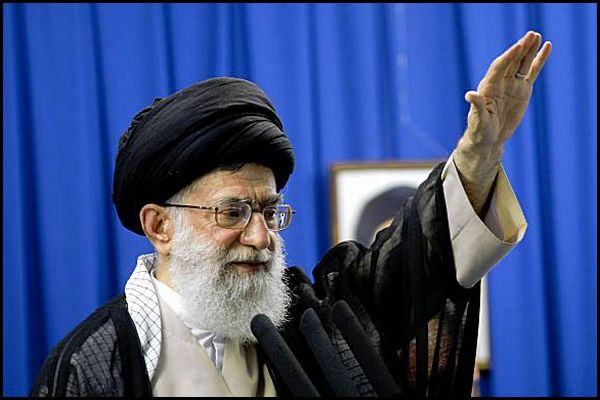
Khamenei Promises More Crackdowns on Election Protests

March 22, 2017 by admin

Khamenei Promises More Crackdowns on Election Protests

Khamenei Promises More Crackdowns on Election Protests

Back in 2009, the Middle East was being rocked by the Arab Spring, a pro-democracy movement that toppled governments throughout the region and put despotic regimes on the defensive.

At the time, the Iranian regime’s much despised president Mahmoud Ahmadinejad was running for “re-election” in a contest widely viewed as unlikely for him given the historic disapproval of the Iranian people and their deep desire for democratic change.

But as with all things under the careful watch of the mullahs, his election was essentially guaranteed in what the international community dubbed a rigged election.

In response, Iran was rocked with mass protests and demonstrations the likes of which the Iranian regime had not seen before in the most serious threat to the iron rule of the religious establishment. Alarmed and in response to keep their hold on power, the top mullah Ali Khamenei ordered a widespread crackdown that set human rights back in Iran decades in resulted in scores killed and thousands beaten, arrested and imprisoned.

The mass protests were aided in large part by the emergence of social media which helped rally young and old Iranians alike to dispute the election and served as a splash of cold water in the regime’s face that it would have to change as well, but not in terms of granting more freedoms.

By the time 2013 rolled around, the mullahs had gotten wise to international opinion and instead staged an election by removing anyone from the ballot that could even be considered a dissident and instead offered up an old loyalist in Hassan Rouhani repackaged as a smiling, tweeting, kindly “moderate.”

The end result was another sham election and in comparison to 2009 with favorable media attention abroad. It was also aided by the creation of an Iran lobby apparatus designed to push forward more positive narratives about the regime in news media and among elected officials, especially the National Iranian American Council.

Since then, while Rouhani has paraded himself as ca champion of the oppressed, Iran has plunged even further into disrepair.

It is involved now in two full-blown wars in Syria and Yemen, while spending billions of dollars in cash to support the Assad regime, Shiite militias in Iraq, its long-time Hezbollah proxy, and a rebuilding of its vast military.

It has also cracked down viciously at home, oppressing women, religious and ethnic minorities and even going on a binge of hostage taking amongst dual-national citizens including Americans, Canadians and Brits.

Now the stage is set for another election this May and once Khamenei has set the table by declaring that the regime would not tolerate any interference; meaning only the regime’s candidate will be elected and everyone should stay off the streets.

“I will confront anyone who wants to tamper with the results of the people’s vote. In previous years and previous elections …, it was the same. Some of it was in front of people’s eyes and they became aware of it. And some of it they were not aware of but I was informed about it,” he said in Iranian New Year remarks carried live on state television, according to Reuters.

“It was revealed in 2009 – they came out and drew battle lines. And in other years in other ways, but in all these years I stood against them and said whatever the results of the election are, they must be carried out.”

Two of the candidates from the 2009 presidential election, which put hardliner Mahmoud Ahmadinejad into office for a second term despite large protests over alleged vote fraud that shook the Islamic Republic, have been under house arrest since 2011. Although part of the regime apparatus, they were detained for calling for street protests at the same time that pro-democracy uprisings were convulsing Tunisia and Egypt.

This year’s election will never be in doubt. Whoever Khamenei wants is going to win, this is a matter of course since he controls the policy making body that will have final say on whoever gets on the ballot in the first place.

Imagine if the Democratic or Republican parties had final say on who got on a presidential ballot without having to suffer through the rigors of a primary contest? In essence, that is what the Iranian regime does on a regular basis; it’s a rigged game.

But the Iranian regime is becoming more sophisticated in the ways of politics. Just as it adjusted to the brutal crackdowns following the 2009 elections, it is following up on the initial creation of the Iran lobby with a broader call for more Iranians in the West to become active lobbyists for the regime’s causes as outlined in an editorial by Michael Rubin in Commentary.

“An Iran watcher and Iranian citizen recently alerted me to this clip showing Mahmoud Alavi, Iran’s intelligence minister, on Iranian national television suggesting there are Iranians in the West who have a lobby for the regime,” Rubin said.

“Alavi does not mention NIAC, but the number of politically active groups that focus on issues of sanctions, defending Iran’s ballistic missile program, and Iran’s nuclear program can like be counted not only on one hand but rather on one finger. If Iran’s intelligence minister believes that Tehran can leverage a specific lobby in the West on behalf not of Iranians but rather of the Islamic Republic, perhaps it is time for American counterintelligence authorities to take a far harder look at whatever lobby to which Alavi might be referring,” he added.

Rouhani’s election will be critical as the regime enters a new phase of expansion and aggression as it puts its newfound billions in cash it received as part of the nuclear deal to good use in furthering the war in Yemen and securing Syria as part of its Shiite sphere of influence.

According to Reuters, Iran is sending advanced weapons and military advisers to Yemen’s rebel Houthi movement, stepping up support for its Shiite ally in a civil war whose outcome could sway the balance of power in the Middle East, regional and Western sources say.

Sources with knowledge of the military movements, who declined to be identified, say that in recent months Iran has taken a greater role in the two-year-old conflict by stepping up arms supplies and other support. This mirrors the strategy it has used to support its Lebanese ally Hezbollah in Syria.

A senior Iranian official said Major General Qassem Soleimani, commander of the Qods Force – the external arm of the Islamic Revolutionary Guard Corps – met top IRGC officials in Tehran last month to look at ways to “empower” the Houthis.

We may very soon see the Arabian Peninsula erupt in a war not unlike what has convulsed Syria if the mullahs have their way.

Michael Tomlinson
Filed Under: Blog, News Tagged With: Appeasement policy, Featured, Iran, Iran Human rights, Iran Lobby, Iran Mullahs, Iran Terrorism, IRGC, Khamenei, National Iranian American Council, NIAC, NIAC Action, Rouhani

There is No Battle Between Moderates and Hardliners in Iran

March 21, 2017 by admin

There is No Battle Between Moderates and Hardliners in Iran

There is No Battle Between Moderates and Hardliners in Iran

One of the cornerstones of the Iran lobby’s messaging has been the contention that a monumental battle is being waged in Iran between moderate elements in the Iranian regime and hardline conservatives intent on winning at all costs.

To the extent hardliners want to hang onto their power that part of the story is correct, but the image of moderates existing and having a meaningful role within the regime government is as illusory as a mirage of a desert oasis to a thirsty wanderer.

The regime’s leadership, under the hard rule of Ali Khamenei, has done a methodical job of eliminating any shred of moderate opposition. Ever since the original Islamic revolution was taken over by the religious clerics that now run Tehran, the regime has systematically arrested, imprisoned, tortured and executed anyone publicly voicing a dissenting point of view.

This has even extended to targeting and attack Iranian dissidents outside of Iran; the most notably example are members of the People’s Mujahedin Organization of Iran, one of the largest and oldest resistance groups to the mullahs. Many of these PMOI members had resided in refugee camps in Iraq that were constantly under attack by Iranian operatives, as well as local Shiite militias acting on Iranian control.

The most egregious example of Iran’s crushing of dissent was on display in the wake of the 2009 presidential elections in which mass demonstrations by ordinary Iranians was met with bullets and mass arrests that led to a near daily parade to the gallows.

Before each election cycle since, the regime has instituted broad crackdowns to remove any dissenting views. This has included mass arrests of journalists, bloggers, politicians, activists and even students and artists.

The regime’s highest policy making bodies have also ensured that only carefully vetted and approved candidates were on the ballot for presidential and parliamentary elections which is why Hassan Rouhani was elected before and may be re-elected this May and Iran’s parliament remains firmly in the control of the ruling mullahs.

Dr. Majid Rafizadeh, president of the International American Council and a leading expert on Iran and U.S. foreign policy, wrote about this Iran lobby myth in Arab News.

The truth is that Iran’s moderates are a critical part of the political establishment. Many of them, including the current President Hassan Rouhani, were robust supporters or founding fathers of the Islamic Republic’s Shiite theocracy. These “moderates,” such as the late former President Akbar Hashemi Rafsanjani, were once called “hard-liners,” Rafizadeh writes.

“In addition, it is crucial to point out that to be a politician in Iran, your loyalty to the core pillars of the political establishment should be firmly proven. Vilayat-e Faqih is the core pillar of Shiite political thought expounded by the late Ayatollah Ruhollah Khomeini, and forces a guardianship-based political system on the people, and requires that a Shiite religious figure be the leader of the nation,” he adds.

The terms “moderates” and “hardliners” are also a Western invention and not used in Iranian politics according to Rafizadeh. Consequently, the Iranian regime makes no distinction in political allegiances. You are either a loyal member of the regime or you are not. If you are not, your ticket is punched for a trip to Evin Prison.

The Iran lobby uses these terms with Western media in order to create the appearance of fissures in Iran’s political system where there is none.

“Iran’s supreme leader and the senior cadre of IRGC hold the final say when it comes to Iran’s foreign policy. They also have significant control over Iran’s economic, financial, and political sectors. For example, at the end of the presidential term of the so-called ‘moderate’ Hassan Rouhani, Iran has not altered its policies toward Syria, in supporting President Bashar Assad, along with Iraq, Lebanon, Yemen and other nations’ domestic affairs. In fact, it has intensified its expansionist policies through its military and additional revenues,” Rafizadeh said.

Since 1979 Iran has not altered the cornerstone of its foreign policy and revolutionary principles regardless of who was president and therein lays the harshest rebuttal to the Iran lobby. If Iran was indeed going to moderate its behavior as a result of the nuclear deal as the National Iranian American Council insisted on, then where has the emptying of Iran’s prisons begun of political prisoners?

Ultimately the price being paid by Iran’s religious and ethnic minorities such as Kurds, Christians, Sunni, Arabs and others demonstrate exactly how little has changed in Iran since 1979.

Not surprisingly, there has been a marked increase in human rights abuses including the ghastly use of acid in attacks against women.

After almost a year of calm, spraying people with burning acid has returned in Iran where a family of four has been attacked on Saturday in Sharada, within Isfahan province, Iran’s top tourist destination, according to Al-Arabiya.

Last month, unidentified people also attacked two women in Maashour, within the Ahwaz province, according to Iranian news agencies.

Isfahan’s Investigative Police Chief Sitar Khasraoui said in press statement that the families were taken to the hospital to treat the burns. The family consists of the father, 53, the mother, 48, the son, 23, and the daughter, 20. Both parents are said to be in critical condition.

In 2014, attacks in Isfahan shocked the public and provoked a major protest there from citizens who demanded better security and action over such violent crimes.

Reports on social networks have claimed that the victims were doused on the face and body because they were not properly veiled. They were targeted by assailants on motorcycles.

The next time the Iran lobby professes that moderates are battling for control in Iran, one might ask if that battle is being done from the back of a motorcycle.

Laura Carnahan


Filed Under: Blog, Current Trend, News Tagged With: #NuclearDeal, Featured, hardliners, hassan rouhani, Iran Mullahs, IRGC, Moderate Mullahs

Iran Lobby Working Overtime Pushing Fake News

March 21, 2017 by admin

Iran Lobby Working Overtime Pushing Fake News

Iran Lobby Working Overtime Pushing Fake News

Merriam-Webster defines “hypocrisy” as “a feigning to be what one is not or to believe what one does not: behavior that contradicts what one claims to be believe or feel.”

In the case of the Iran lobby, hypocrisy runs deep within its press releases, background papers, editorials and blog entries, especially the National Iranian American Council. In the aftermath of the end of the Obama administration’s policies of trying to appease the Iranian regime, the NIAC has been working overtime to push narratives that have come to define this era of “fake news.”

The NIAC website was busy this weekend pumping out several storylines, including attempting to shift blame for global terrorism from the Iranian regime to Saudi Arabia; attempting to character assassinate a vocal critic of the regime in the Trump administration; and tried to claim that Yemen was an example of a failed U.S. policy.

The most hypocritical position taken by the NIAC was an opinion piece by Adam Weinstein in which he called Saudi Arabia the world’s “biggest state sponsor of terrorism.” He makes this claim largely on the basis that many terrorist groups such as ISIS are comprised of Sunni members, while largely ignoring the magnitude of death and destruction meted out by Iranian-backed Shiite terror groups such as Hezbollah.

Weinstein goes on to try and specifically link Wahhabism to the Saudi government, while ignoring the direct support Shiite terror groups receive directly from the Iranian regime through the Revolutionary Guard Corps and its Quds Force operations.

While the Saudi government has a myriad of its own problems, such as the status and role of women in Saudi society and the need to rein in rogue Saudis that have engaged in terror, such as Osama bin Laden, the Saudi government does not purse and enact a policy of global terror, nor a systematic effort to attack and kill its enemies and dissidents at home and abroad; all things the Iranian regime does.

Weinstein delves into the complexities of the Islamic religion and its various offshoots and varieties in an attempt to confuse readers when in fact the issue is not about religion, but national policy instead.

What makes the Iranian regime the center point of terrorist activities is that the regime relies heavily on terrorist proxies to conduct military operations, terrorist attacks and assassinations. Notable examples include the bombing of the U.S. Marine barracks in Beirut, the bombing of the Khobar Towers in Saudi Arabia and the flood of Iranian-built IEDs into Iraq targeting U.S. service personnel.

Iran also provided shelter and support for Al-Qaeda leaders fleeing the U.S. invasion in Afghanistan and then later provided passage for these same fighters to enter Syria and from there spawned ISIS and other radical militant groups who were originally turned loose to attack U.S.-backed rebel groups.

But the NIAC’s fake news didn’t end there as Ryan Costello issued a press release attacking Trump national security aide Sebastian Gorka, a vocal and harsh critic of past policies towards the Iranian regime, especially the deeply flawed nuclear agreement.

The irony of Costello’s statement was his attempt to blame Gorka for anti-Semitism, a crazy concept considering the Iranian regime’s naked hostility to Jews and Israel; advocating for its destruction about as often as it holds public “Death to America” chants.

The effort to attack Gorka is not about racism, but about dislodging a strong opponent of the Iranian regime from any position of influence within the administration. This is an especially important consideration when viewed in light of recent disclosures that former Obama administration staffers have managed to burrow their way into the State Department to maintain influence over Iran policy; including one who was a former NIAC staffer.

The strangest piece was another one written by Adam Weinstein in which he attempted to show a clash of policy views over the conflict in Yemen amongst American legislators at a Senate Foreign Relations Committee hearing.

“As is too often the case on Capitol Hill, the hearing – which was framed as an examination of U.S. interests and risks to U.S. policy in the war in Yemen – devolved into a conversation dominated by Iran hawks who inflated Iran’s influence and sought to play down Saudi Arabia’s role in the conflict,” Weinstein writes.

During the hearing, former Ambassador to Yemen (2010-2013) Gerald Feierstein testified that Iran is benefiting from the conflict in Yemen and even claimed Saudi Arabia’s image was suffering as a result.

Weinstein then goes on to make the extraordinary claim that the Iranian regime attempted to persuade Houthi rebels from moving on Sanaa, the capital and blamed a Saudi naval blockade in 2015 for escalating the conflict.

It’s another silly argument to make since Iran’s Quds Forces have been the primary supplier of arms to the Houthis, with several Iranian fishing vessels being intercepted on their way to Yemen carrying guns, ammunition, mortars, rockets and missiles, many bearing Iranian serial numbers.

What Weinstein characterizes as an “obsession” by Saudi Arabia over Iran in Yemen, belies a basic aspect of Iran’s strategy which is to foment a civil war in a country sharing a border with Saudi Arabia in an effort to place the kingdom under duress even as it opposes Iranian forces in the Syrian conflict.

It is a strategy Iranian regime has used for decades in neighboring countries such as Lebanon and Iraq.

Weinstein goes on to claim the Houthis are not proxies for the Iranian regime because they are “indigenous” to Yemen as if accident of birth defines one as a proxy or not for the Islamic state. The true definition of an Iranian proxy is not where they are from, but rather if you are supplied, controlled and commanded by the mullahs in Tehran.

On that score, the Houthis are identical twins to Hezbollah, Shiite militias in Iraq and recruited Afghan mercenaries, all fighting on behalf of the Iranian regime.

Michael Tomlinson


Filed Under: Blog, Latest from Lobbies & Appeasers, National Iranian-American Council, News Tagged With: Featured, Iran deal, Iran Lobby, Iran Mullahs, Iran sanctions, National Iranian American Council, NIAC, NIAC Action, Nuclear Deal, Reza Marashi, Ryan Costello, Sanctions

Nowruz Should Bring Hope to Iranian People

March 16, 2017 by admin

Nowruz Should Bring Hope to Iranian People

Nowrouz Should Bring Hope to Iranian People

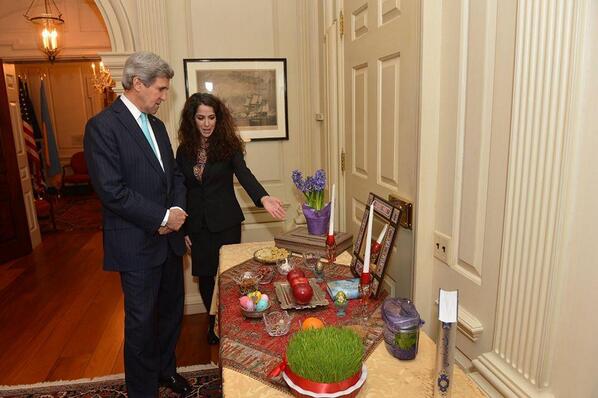
The Iranian New Year is marked with the feast of Nowrouz and falls on March 21. Translated, Nowrouz means “new day” and fittingly it should be a new day for the oppressed Iranian people as the effort begins to reverse the damage caused by years of efforts by the Obama administration to appease the mullahs in Tehran.

F.H. Buckley, a professor at the Scalia Law School, wrote an editorial in the New York Post about this need to provide the Iranian people with hope during this year’s Nowrouz observances.

“It would be a good opportunity for President Trump to mark a new day in US-Iran relations — one that corrects his predecessor’s poor treatment of the Iranian people,” Buckley writes.

“Last year at this time, the regime announced that an additional 7,000 undercover officers would patrol the streets to arrest women who had too much hair showing from under a headscarf or were out walking with a boyfriend,” he added.

“That’s why change will come to Iran, if at all, from the streets, from an Iranian Spring. And the Iranians who want to rid their country of its oppressive regime must be told that America shares their goals.” Buckley offered.

Buckley took to task the Obama administration for failing to support mass protests against the Iranian regime during the disputed presidential elections in 2009; a missed opportunity for the U.S. and urged the Trump administration to demonstrate its support for the Iranian people.

“I have a suggestion for Trump. After we ignored the street protests against the Iranian dictatorship, after we cut our disastrous Iran deal, after we abandoned Israel to the threat of medium-range missiles from the Iranian Revolutionary Guards, after American hostages were allowed to rot in Iranian jails, let the president welcome NowRuz with a message to the Iranian people,” Buckley said.

“Let him wish them a happy and prosperous new year, and the freedom that all men deserve from their cruel oppressors.”

It’s a noble sentiment and an important one since the Obama administration was quick to offer Iranians a traditional Nowrouz greeting, but never one directed specifically at the Iranian people’s desires for more freedom and democracy in their country. Such a message from the Trump administration would be an important symbol and one that would go a long way to putting the mullahs on notice that this administration will act in a much more conservative manner towards the regime.

Trump has already offered the political rhetoric chastising the regime and the much-maligned nuclear deal, but he needs to keep that momentum going in order to restore stability and balance in the Middle East; a process that Nathan Field, founder and former CEO of Industry Arabic, a translation company that provided services to over 300 high-profile customers throughout the Middle East, praised in a piece for The Hill.

“President Trump’s hardline but pragmatic approach to Iran is paving the way for the restoration of a semblance of order and regional stability. That’s a significant accomplishment for an administration still in its first 100 days,” Field writes.

“Effective foreign policy is not necessarily a matter of complicated treaties that take years to negotiate or opaque theories on international relations that only PhDs can understand. A simple message and tone set at the top is often all that’s needed.”

Field notes how President Trump has made Iranian adventurism throughout the Middle East an issue requiring a coordinated, but firm response, thereby correcting the errors made by the Obama administration.

The deal not only does not “guarantee that Iran will never obtain nuclear weapons, in the process of negotiating it, Iranian leaders, sensing that the U.S. wanted the deal more than they did, felt emboldened throughout the region in countries such as Syria, Lebanon and Yemen,” he said.

One telling example was the American non-response to a series of Iranian cyber-attacks on U.S. banks because, as one official noted, “If we had unleashed the fury in response to that DDoS attack, I don’t know if we would have gotten an Iran deal.”

“The Obama administration, by contrast, alienated nearly every traditional U.S. Middle East ally. Having thrown all of its prestige into a nuclear deal with Iran, opposed by most of the countries of the region, Washington had no leverage.”

The payoffs for the Trump administration’s tougher line against Iran has already yielded some benefits with Saudi Arabia’s willingness to send more troops to Syria and set up safe zones for refugees to stem the flood of a Syrian exodus from the war.

In many ways, Iran is slowly finding itself nudged back onto an island of isolation, even as the mullahs desperately reach out to Russia, China and Turkey in efforts to remain politically and diplomatically relevant.

We can only hope this Nowrouz brings a much better new year to the Iranian people; one that will eventually see them freed from the oppression of the mullahs.

Laura Carnahan

Filed Under: Blog, News Tagged With: #NuclearDeal, Featured, Iran, Iran deal, Iran Human rights, Iran Lobby, Iran Mullahs, Irandeal, Nowrouz, Sanctions

Former Iran Lobby Staffer Burrowing Deeper into State Department

March 15, 2017 by admin

Former Iran Lobby Staffer Burrowing Deeper into State Department

Former Iran Lobby Staffer Burrowing Deeper into State Department

Sahar Nowrouzzadeh, the Iran director for former President Obama’s National Security Council (NSC), has burrowed into the government under President Trump. She’s now in charge of Iran and the Persian Gulf region on the policy planning staff at the State Department, according to Conservative Review.

The reason why this is of concern is because of her previous employment at the National Iranian American Council, an organization with well-documented ties to the Iranian regime and a long-time supporter and advocate as part of the larger Iran lobby apparatus created to help support the loosening of sanctions on the regime.

In February, a group of over 100 prominent Iranian dissidents called for Congress to investigate NIAC’s ties to the Iranian regime.

“One of Nowrouzzadeh’s primary duties under President Obama was to promote initiatives that pushed the Iran deal. As President Obama’s NSC director for Iran, Nowrouzzadeh sat in on high-level briefings along with President Obama, former VP Joe Biden, and former Secretary of State John Kerry, as top White House staff crafted false narratives on the Iran deal to sell to the American public,” reported Jordan Schachtel.

According to the head of a state-run Iranian newspaper, Nowrouzzadeh was an essential element to pushing through the Iran deal. Editor-in-Chief Emad Abshenass said that she opened up a direct line of communication with the Iranian president’s brother. “She helped clear a number of contradictions and allowed the entire endeavor to succeed,” Abshenass said of her efforts.

Towards the end of President Obama’s tenure, Nowrouzzadeh was embedded into the State Department and for a brief time served as its Persian language spokesperson.

Breitbart News had earlier investigated Nowrouzzadeh’s prior employment with NIAC, finding that a person with the same name has previously written several publications on behalf of NIAC. According to what appears to be her LinkedIn account, Nowrouzzadeh became an analyst for the Department of Defense in 2005 before moving her way up to the National Security Council in 2014.

A NIAC profile from 2007 reveals that Sahar Nowrouzzadeh appears to be the same person as the one who is currently the NSC Director for Iran. The profiles indicate that she had the same double major and attended the same university (George Washington).

Critics have alleged that NIAC is a lobby for the current Iranian dictatorship under Ayatollah Khamenei. A dissident journalist revealed recently that NIAC’s president and founder, Trita Parsi, has maintained a years-long relationship with Iranian Foreign Minister, Javad Zarif.

The rise of this NIAC mole within the State Department is troubling since it allows a member of the Iran lobby to still maintain a position of significant influence in developing U.S. policy towards Iran.

The timing of her continued work within the State Department coincides with the upcoming Iranian election for president which is already shaping up to be another rigged cakewalk for Hassan Rouhani to continue as parliament speaker Ali Larijani publicly threw his support behind Rouhani.

Of further note, Rouhani has been selected as the only candidate of the so-called “Reformists” for the election by the Electoral Supreme Council of Reformists for Policymaking, headed by Mohammad-Reza Aref, who was the sole candidate of the Reformists in the 2013 presidential elections but in the final days ahead of that vote withdrew in favor of Rouhani.

The coronation of Rouhani comes as estimates of the Iranian regime’s military expenditures in Syria have risen a whopping $6 billion a year to $20 billion a year, including $4 billion in direct costs as well as subsidies for Hezbollah and other Iranian-controlled irregulars, according to an editorial by David P. Goldman in Asia Times.

“The Iranian regime is ready to sacrifice the most urgent needs of its internal economy in favor of its ambitions in Syria. Iran cut development spending to just one-third of the intended level as state income lagged forecasts during the three quarters ending last December, according to the country’s central bank. Iran sold $29 billion of crude during the period, up from $25 billion the comparable period last year,” Goldman added.

Goldman went on to describe Iran’s financial system as a “black hole,” and how the regime cannot refinance its arrears, recapitalize its bankrupt banks, and finance a substantial budget deficit at the same time. Its infrastructure requirements are not only urgent, but existential.  The country’s much-discussed water crisis threatens to empty whole cities and displace millions of Iranians, particularly the farmers who consume more than nine-tenths of its disappearing water supply. Despite what the Tehran Times called “a desperate call for action” by Iranian environmental scientists, the government slashed infrastructure spending by two-thirds during the last fiscal year.

This leaves American policy in a quandary. The Obama administration— as Lieutenant General Michael Flynn warned in this and numerous other statements — inadvertently stood godfather to the birth of ISIS by blundering into the milieu of Syrian Sunni rebels.

All of which places a greater emphasis on just who is developing U.S. policy moving forward and why a housecleaning of former Iran lobby associates is necessary.

Michael Tomlinson

Filed Under: Blog, News Tagged With: #NuclearDeal, Appeasement policy, Featured, hassan rouhani, Iran, Iran deal, Iran Lobby, Moderate Mullahs, National Iranian American Council, NIAC, nuclear talks, Sanctions

Iran Regime Charting a Pathway for Aggression

March 14, 2017 by admin

Iran Regime Charting a Pathway for Aggression

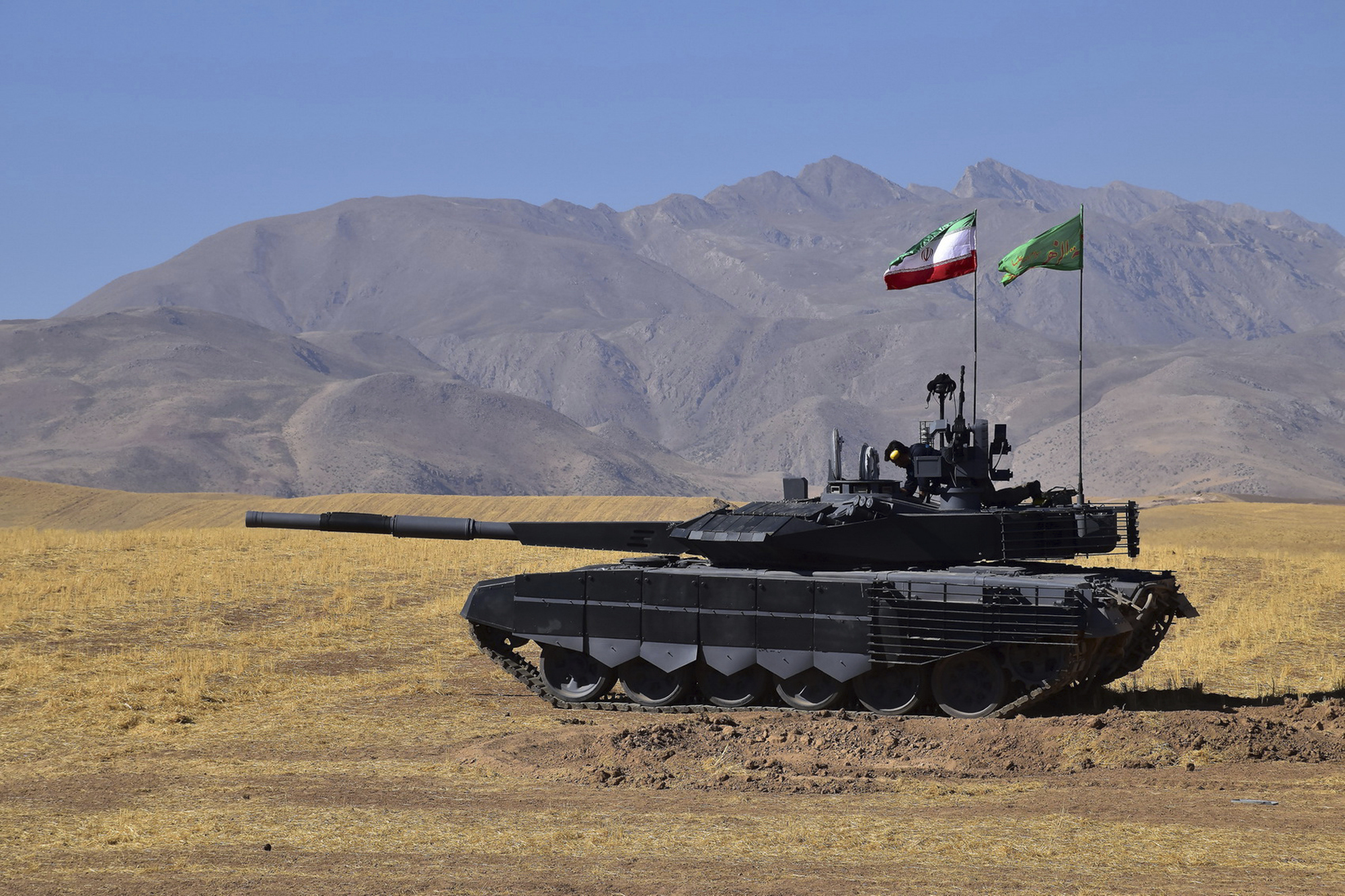
This picture released by the official website of the Iranian Defense Ministry on Sunday, March 12, 2017, shows domestically manufactured tank called “Karrar” in an undisclosed location in Iran. Iran’s semi-official Fars news agency is reporting that the country has unveiled a domestically manufactured tank and has launched a mass-production line. (Iranian Defense Ministry via AP)

The Iran lobby has consistently pushed a message that the Iranian regime was always interested in pursuing a pathway towards moderation and only needed the cooperation of the U.S. and its allies in empowering “moderate” elements in the government to take control and nudge the religious theocracy back to center.

The truth has been far bleaker and starker and nowhere has that been more obvious than in Iran’s constant efforts to build out its military capabilities and size of forces. Already possessing one of the largest standing armies in the world, the Iranian regime has been on a buying and building binge lately to expand its military using billions in new cash garnered from the lifting of sanctions under the nuclear agreement.

Iran has used its newfound wealth to buy advanced missile systems from Russia, along with sophisticated radar and communications equipment, as well as licenses to mass produce arms such as guns, rockets, missiles, drones and in its latest unveiling, a new main battle tank.

Tehran formally announced it will begin mass producing its domestically built main battle tank during a ceremony attended by the country’s defense leadership, according to Russia Today.

The tank has been compared to Russia’s T-90MS, the latest variant in the Kremlin’s T-90 series.

Russia’s Uralvagonzavod production corporation announced it was ready to export the new variant to foreign customers during the IDEX 2017 trade show in late February.

The T-90MS is able to conduct self-testing and self-diagnostics on the field, and is designed to integrate with foreign components including communication systems and air-cooling units.

The introduction of a new advanced tank system paves the way for a major upgrade to the Iranian Revolutionary Guard Corps and an imposing threat to its neighbors, which have already been under near constant assault from Iranian-backed proxies in Yemen, Iraq, Afghanistan, Lebanon and Syria.

  1. Todd Wood, a contributor to Fox Business, wrote about the concerns of this new found arms bazaar between Iran and Russia in the Washington Times.

“Russia has been keen to sell Iran military equipment and technology since the sanctions were lifted on the Islamic theocracy and the billions started flowing from the Obama administration. In fact, you could say that President Obama was the best thing that ever happened to the Russian armament industry. You could also say Hezbollah, the Iranian terror army in Lebanon and Syria, feels the same about Mr. Obama, as they were surely the recipient of all those pallets of billions in cash, but that’s another story,” he writes.

“The Iranian armor capability was severely degraded during the Iran-Iraq War and the real Shia Islamic state never had the money to change that reality. After the dollars started flowing, thanks to Valerie Jarrett and Ben Rhodes, Iran made noise about wanting to license the Russian T-90 tank technology and build the war machines ‘in-country,’” Wood added.

In addition to the upgrade in armor, the National Council of Resistance of Iran, a coalition of Iranian dissident and human rights groups, released information about claims made by a IRGC commander detailing the construction of several arms factories throughout Lebanon and handed over to Hezbollah three months ago.

These factories are able to build various types of missiles with ranges of over 500 kilometers. This includes surface-to-surface, surface-to-sea, and torpedoes designed to be launched from light and fast-attack boats. Armed drones, anti-tank missiles and fast armored boats are also built in these factories.

The weapons produced in these factories have been successfully tested in Syria, this IRGC commander added. These factories were handed over to Hezbollah experts through a step-by step process.

Anti-tank weapons built by these factories have been used time and again in Syria.

Rifles, cannons, anti-air artillery, mortar launchers, various types of missiles and bullets, especially anti-armor are other weapons built and tested by Hezbollah arms experts in these factories.

These sites, spread across the country in unknown locations, are located more than 50 meters below ground level and protected by numerous layers of armored cement to prevent Israeli fighter jets from destroying them, sources say.

Each factory produces a particular part of the missiles and weaponry, and they are assembled at yet another unknown site, according to a report published Saturday in the al-Jarida daily.

All of this military build-up is also being put on display in an aggressive fashion by the regime as detailed by Dr. Majid Rafizadeh in a piece in Huffington Post.

“It has become an alarming and dangerous pattern; a pattern of provocative actions initiated by Iran against many nations in the region, the U.K., the U.S. and its allies,” he writes.

“Just in the last week, several of these provocative operations unfolded. On March 4 U.S. officials pointed out that several of Iran’s assault crafts came dangerously close to the USNS, within 150 meters. A similar incident occurred two days earlier, on March 2 as well,” he added.

These swift-moving assault vessels operate under Iran’s Revolutionary Guard Corps (IRGC), which has been empowered and emboldened by the continuing relief of sanctions as well as the lack of a robust reaction against Iran from the international community.

These incidents clearly highlight the fact that Iran is attempting to showcase its military power and regional preeminence to the United States. Some of Iran’s Persian-language newspapers boasted about Tehran’s military capacity to counter the U.S. navy and dominate the Strait of Hormuz, an area that roughly a third of all oil traded by sea must pass through. Iran has frequently exploited the strategic location of the Strait of Hormuz by threatening to shut it down or conducting military exercises meant to intimidate, Rafizadeh points out.

As Iran puts its military might on display, it is clear that the mullahs in Tehran are not preparing for moderation, but a showdown.

Michael Tomlinson

Filed Under: Blog, News Tagged With: Featured, Iran Mullahs, Iran Terrorism, IRGC, Moderate Mullahs, NIAC, Sanctions

Iran Lobby Goes to Bat for IRGC and Ballistic Missiles

March 13, 2017 by admin

Iran Lobby Goes to Bat for IRGC and Ballistic Missiles

Iran Lobby Goes to Bat for IRGC and Ballistic Missiles

The twin pillars of the Iranian regime’s military future lies within the Revolutionary Guard Corps which puts boots on the ground to fight its battles and the development of intercontinental ballistic missiles capable of carrying out its biggest threats of global destruction.

They represent the center of power within the Iranian regime since without the IRGC to enforce its’ will, the mullahs in Tehran would be turned out like beggars in the streets by an oppressed Iranian people, while the threat of ballistic missiles hangs like a dagger over Europe and neighboring Arab countries.

It is no surprise then to see the Iran lobby going all out in pushing silly arguments in support of the IRGC and the regime’s missiles as evidenced by two pieces of fiction from the National Iranian American Council.

In one piece authored by Tyler Cullis and appearing in Foreign Affairs, the Iran lobby argues vehemently against designating the IRGC a “foreign terrorist organization, although many of its leaders and subsidiary commercial entities it controls have already been targeted for sanctions by the U.S. and other government for supporting terrorism.

Cullis argues that designating the IRGC would put “U.S. forces in Iraq” in danger and undermine the nuclear agreement reached with Iran, but Cullis argues against his own position when he readily admits that the IRGC is already heavily sanctioned because of its “Iran’s ballistic missile program, its human rights abuses around Iran’s June 2009 presidential election and its disruption and monitoring of Iranian citizens’ communications.”

He also calls any further sanctions a duplicate of current U.S. sanctions so why does he argue against this effort?

Because he knows, as does the rest of the Iran lobby, that designation of the IRGC as an organizational whole is vastly different that current sanctions which only target individuals within the IRGC and some entities. A designation of the whole effectively targets all of the criminal enterprises the IRGC is involved with that siphon monies away from the Iranian people and economy and directly into the coffers of the regime and the pocketbooks of the elites.

Cullis makes the same claim the Iran lobby has made over and over again which is that anything and everything needs to be done to preserve a badly flawed nuclear deal; including treating the chief sponsor of terrorism in Iran with kid gloves.

Cullis makes the absurd claim that Shiite militias controlled by the IRGC—which have been responsible for the deaths and attacks on American service personnel in Iraq through IEDs—would end up trying to frustrate American efforts against ISIS. It’s a claim so ridiculous that it doesn’t even deserve a response since we already know very well that Shiite militias already actively engage and fight American-backed forces and advisors in Iraq and Syria.

But the IRGC defense is only half the battle, as the NIAC’s Ryan Costello takes up the cause of defending Iran’s ballistic missile program in a briefing memo on NIAC’s website.

Costello bases his arguments on a lawyerly-like parsing of fine print to excuse Iran’s missile program, but ignores the intent of United Nations resolutions which seek to actively discourage Iran from becoming another North Korea. The fact that Costello is arguing against that development is deeply disturbing and indicative of how little the Iran lobby fears Iran’s crash course race to catch up to North Korea.

Where Costello falls in lock-step with his partner Cullis’ editorial, is in making the same silly argument that sanctions against ballistic missiles threatens the nuclear agreement. Using the same twisted pretzel logic virtually anything the mullahs dislikes threatens the nuclear agreement:

  • Protest the hanging of Iranian dissidents? That threatens the nuclear agreement;
  • Demand the freeing of American prisoners? That threatens the nuclear agreement;
  • Call for a halt to Iran’s support for Houthi rebels in Yemen? That threatens the nuclear agreement;
  • Force Iranian-backed Shiite militias to stop killing Sunnis in Iraq and Syria? That threatens the nuclear agreement;
  • Ask that Iran stop allowing its morality police to beat women on the streets? That threatens the nuclear agreement.

At a certain point, the NIAC’s logic becomes insanely stupid and that’s the point it has reached with Costello and Cullis’ propaganda pieces.

Costello even makes the excuse FOR the mullahs that Iran’s ballistic missiles program is “intrinsically” tied to its experience in the Iran-Iraq war and thus Iran has a right to these missiles to prevent any future attacks.

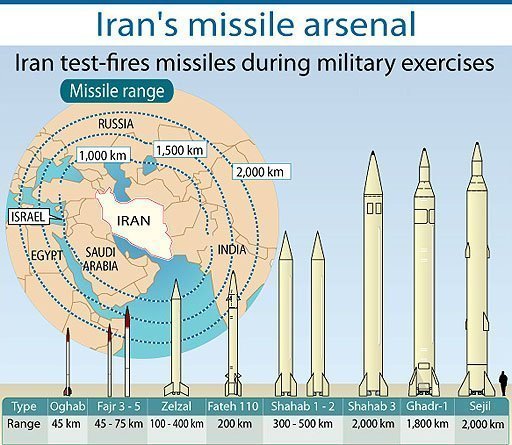
While Costello claims Iran has no interest in developing missiles with a range beyond 2,300 kilometers, he neglects to mention that allowing Iran to have a missile fleet with those ranges puts most of Europe, North Africa, the entire Middle East and virtually every important American military and naval base in the region in the crosshairs of Iranian missiles.

Neither Costello nor Cullis ever address the basic problem with their positions which is the lack of fundamental trust the world has in the religious leadership of Iran. The mullahs are fanatical in their pursuit of expanding the Islamic revolution and zealous in the crackdown of any dissenting opinions.

These heinous positions are illustrated in the decision over the weekend to sentence to death an Iranian and American-Iranian dual national on charges of promoting moral corruption.

The defendants, who have not been named, are believed to be a couple involved in the art industry who were arrested in July last year. They ran a leading art gallery in Tehran, the Iranian capital, and were known to associate with foreign diplomats, according to the Financial Times.

Iran has arrested several Iranians holding dual nationality in recent months in a move analysts suggest is intended to intimidate those associated with foreign businesses or who have social connections with foreigners, the Times said.

Abbas Jafari Dolatabadi, Tehran prosecutor-general, said on Sunday that the man and woman had been sentenced because they established “a new cult” and made “alcoholic beverages, encouraged vice . . . through throwing mixed parties [and] . . . exhibiting and selling obscene images at gallery”.

Laura Carnahan

Filed Under: Blog, Current Trend, News Tagged With: Featured, Iran Human rights, Iran Lobby, Iran Terrorism, IRGC, National Iranian American Council, NIAC, NIAC Action, Rouhani, Ryan Costello, Trita Parsi, Tyler Cullis

Fierce Debate on Iran Obscures Pain of Hostage Families

March 10, 2017 by admin

Fierce Debate on Iran Obscures Pain of Hostage Families

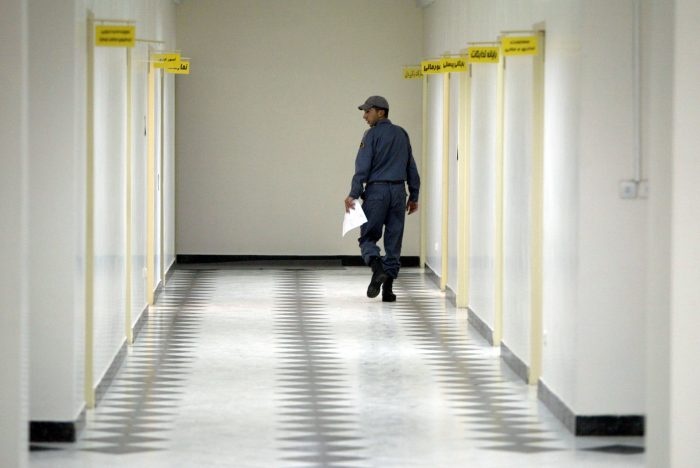
File photo shows an Iranian soldier walking in a corridor of Evin prison during a journalist’s visit to the prison in Tehran, Iran on June 13, 2006. Esha Momeni, 28, an Iranian-American student from Los Angeles is imprisoned in Tehran and is not being allowed to talk to her family, her attorney says. Momeni, described as a researcher looking into the status of women in Iran, was pulled over for a traffic infraction in Tehran on October 15 and is now being held at the notorious Evin prison. Momeni has been allowed one phone conversation since her arrest, which her attorney says may have been related to the One Million Signatures campaign, in which women in Iran are pressing for more rights. Several Iranian-Americans were held for months in Iran last year because the government suspected them of working for a “velvet revolution,” and were eventually released without being charged, the BBC reported. (UPI Photo/Mohammad Kheirkhah) (Newscom TagID: upiphotos893509.jpg) [Photo via Newscom]

The debate that rages over U.S. policy towards the Iranian regime under the Trump administration has been marked by a near-constant war of words on social media, editorial pages and blogs with the Iran lobby rising up to challenge every assertion made by Iran critics, as well as deflect from any horrific act committed by the mullahs in Tehran.

The rancor has obscured one important and painful reminder of personal suffering which is the plight of dual-nationals being held as hostages in Iranian prisons by the regime.

These citizens of other countries were arbitrarily snatched up by the regime’s Revolutionary Guard Corps, tossed into prison, and in some cases given secret trials without access to counsel, while others have simply been held without charge or trial.

Most have been subjected to physical, emotional and mental abuses that we would find appalling and even denied much needed medical care as their health has deteriorated as in the case of a British mother who works for a charity organization.

There are five Americans reportedly being held in Iran who were arrested almost immediately after another batch of American hostages were released shortly after the nuclear deal was agreed to and pallets of cold hard cash were flown to Tehran on Iranian jets in a blatant swap.

Iranian officials even boasted of not selling these new hostages for less than $1 billion.

The Iran lobby has been quick to gloss over their plight, only issuing the briefest of rebukes at the beginning and never raising the issue again. The National Iranian American Council has been the most ridiculous in playing this game even through its founder, Trita Parsi, claims one of these hostages, Siamak Namazi, as a close personal friend.

If this is how hard Parsi fights for a friend, I’d hate to see what he does for a relative.

But for the families of these hostages, their pain is real and the struggle to maintain hope is often elusive. They petition the world’s media and beg for the release of their family members from regime officials who ignore them.

This week though, attention has shifted back as family members press their cases again in the media and we observe the passing of the grim decade milestone of one missing American, Robert Levinson.

“I ask myself and my fellow American neighbors: Where is the justice I have come to associate with America?” Robin Shahini, 46, wrote to his family from an Iranian jail.

Shahini was convicted of collaborating with “a hostile government,” the U.S – an accusation his family denies. He was reportedly sentenced to 18 years in prison.

“This charge is unjust and the Iranian government intended to commit this wrong against me, an innocent American citizen, for political purposes. I ask of you, please to not let Iranian government use me,” Shahini wrote in his letter.

“I ask you beloved citizens and all human-loving individuals to not leave me alone and defend my rights, which is also the right of each and every one of you. Defending me is defending yourselves. Do not let me be alone.”

The number of arrests and detentions of visitors…especially dual-citizens… has spiked, warns Lisa Daftari, the editor of the website “The Foreign Desk,” who has followed Shahini’s case.

“In the aftermath of the nuclear deal with Iran, we would expect things to get better,” she said. “But we’ve seen an increase in executions, we’ve seen an increase in crackdowns against journalists, against dual-citizens, against academics, political dissidents, women’s human rights leaders. And this is not what we expected.”

Daftari also said the arrest and trial of Shahini, and other dual-U.S. citizens like him, serves as a broader propaganda purpose for Tehran, according to Fox News.

“The Iranian regime is delivering a stern message to Iranians living abroad, not to get involved in political activity, not to speak out against the regime, and they want Iranians to know that they are in fact being watched.”

Dan Levinson, the son of missing former FBI agent Robert Levinson, penned an editorial in the Washington Post, lamenting his father’s disappearance in Iran for the past 10 years.

“The United Nations Working Group on Arbitrary Detention, which investigates cases of arrest that may be in violation of international human rights law, did something in January that the previous two U.S. presidents failed to do: It announced a finding that my father, retired FBI agent Robert Levinson, was arrested by Iranian authorities without any legal grounds in March 2007 on Kish Island, and it called on the Iranian government to release him immediately,” he writes.

“In finding that Iran has violated international law — and fundamental human decency — by detaining a U.S. citizen and providing him no rights whatsoever, the U.N. working group is being far more aggressive than our own U.S. government has been in 10 years. This is shameful,” Levinson added.

Levinson went on to encourage the new president to pressure Iran for his father’s release.

“If Iran continues to deny holding him and fails to act, Trump can pressure it with tools such as sanctions — which he demonstrated his willingness to use already – or labeling Iran’s Islamic Revolutionary Guard Corps, which was very likely involved in my father’s detention, a terrorist organization. Trump can put my father at the center of every single discussion he has with or about Iran and finally make him a top priority — not just in words like the previous administration, but in action,” he said.

We hope these families can be reunited with their loved ones soon and believe that is only going to happen by applying heavy pressure on the Iranian regime and its leaders.

Laura Carnahan

Filed Under: Blog, News Tagged With: Featured, Iran, Iran deal, Iran Lobby, Iran sanctions, National Iranian American Council, NIAC, Trita Parsi, Tyler Cullis

In Iran the Plight of Women Contradicts International Women’s Day

March 8, 2017 by admin

In Iran the Plight of Women Contradicts International Women’s Day

Iranian demonstrators march after weekly Friday prayers in Tehran on July 8, 2011 during a protest asking the government to intensify its crackdown on women and men to enforce the Islamic dress code. AFP PHOTO/ATTA KENARE (Photo credit should read ATTA KENARE/AFP/Getty Images)

The world is taking part in International Women’s Day in a myriad of ways; some of it commercial offering to donate $100 to the cause of your choice, and other’s political with marches planned in the U.S. protesting a wide range of issues from reproductive rights to opposition to administration’s policies.

Women the world over are gathering to reinforce their solidarity with their gender and to support issues of concern to them. It’s an annual spectacle that for many celebrates the freedom and opportunities women are now enjoying everywhere…except in the Iranian regime.

Although International Women’s Day has been around since 1908, its origins as a fight for equal pay and voting rights has morphed into the hashtag #IWD and lost some of its fervor. It’s also at times celebrated not as a call to political arms, but now used to tout corporate branding campaigns emphasizing a product or company’s openness to women.

Unfortunately, the harsh reality is that in many places in the world, women continue to be treated as second-class citizens or even property of their husbands and fathers. Nowhere is that more brutally explicit than in Iran where the ruling mullahs have consistently passed laws that would make any Western feminist breath fire in reaction.

The Iran lobby has tried to cover up this fact by praising window-dressing efforts to empower women in Iran, but those efforts have rung hollow in the face of escalating brutality aimed specifically at women.

Shahriar Kia, a political analyst and member of the Iranian opposition, the People’s Mujahedin Organization of Iran, outlined some of these practices in a piece for American Thinker.

“Iranian regime President Hassan Rouhani has recently been making remarks about women’s rights (!) in an attempt to cloak his portion of the Iranian regime’s misogynist report card,” Kia writes. “In his own memoirs, from page 571 to 573, Rouhani explains in detail how in 1980 he began enforcing mandatory hijab regulations as the mullahs began their historical campaign against Iranian women.”

Rouhani’s tenure has also been the hallmark home of systematic oppression against women, workers, college students, writers, journalists, dissident bloggers; imposing poverty and unemployment on a majority of Iranians; continuous threats made against the media; punishment of political prisoners have increased significantly even in comparison to the years of Iran’s firebrand Mahmoud Ahmadinejad. During Rouhani’s human rights violations-stained tenure, an average of two to three people have been executed on a daily basis, Kia adds.

The mistreatment of women in Iran extends also to non-Iranian women citizens as in the appalling treatment of Nazanin Zaghari-Ratcliffe, a British charity worker who was sentenced to prison for five years by a secret Iranian regime court and has been abused and denied much-needed medical care and given the option of only be able to see her child in prison.

Last year a UN body of human rights experts described her detention as “arbitrary” and said she had been denied a fair trial, according to the Telegraph.

This week, the UN released a new report on human rights in Iran, written by Asma Jahangir, the Special Rapporteur for Human Rights in Iran.

From the outset, it is clear that there has been no marked improvement in human rights in the Gulf nation, despite President Hassan Rouhani signing a Citizens’ Rights Charter in December 2016.

The 14,000-word report discusses both ongoing cases of abuse (like the execution of juveniles) and urgent situations (like the fate of political prisoners denied medical care).

Jahangir, who spoke to non-governmental organizations, intellectuals, lawyers and victims to ensure the accuracy of this report, also covers torture, the bias judicial system, free speech and women’s rights and clearly details just how far human rights, especially for women, have sunk in Iran.

For its part, the Iranian regime as usual blasted the UN report and defended the indefensible in its human rights situation.

In an address to a high-level meeting of the Human Rights Council in Geneva, Iran’s Deputy Foreign Minister Abbas Araqchi denounced a recent resolution raised in the council as “totally baseless and unacceptable,” claiming that political use of human rights by certain countries would pose a real challenge to the council’s goals and undermine and discredit the UN body, according to regime-controlled Tasnim News.

The UN report stated that “the Islamic Republic of Iran has reportedly executed the highest number of juvenile offenders in the world during the past decade. Despite an absolute ban on the practice under international law, the penal code continues to explicitly retain the death penalty for boys of at least fifteen lunar years of age and girls of at least 9 lunar years for qisas (retribution in kind) or hudud crimes, like homicide, adultery or sodomy.”

“The Special Rapporteur urges the Islamic Republic of Iran to take proactive steps to promote the full realization of the rights of human rights defenders and to refrain from any acts that violate the rights of human rights defenders because of their human rights work. The government should take strict measures to ensure that the security and intelligence apparatus does not use reprisals against families of those who monitor or campaign against human rights violations or express views that are contrary to government policies,” the report added.

Aside from the cruelty of human rights in Iran, which includes severe punishments for even minor infractions such as not wearing traditional hijab head coverings, Iranian women are denied economic growth and access to good paying jobs.

According to a Pew Research Center analysis of labor force statistics from 114 nations from 2010 to 2016, the median female share of a nation’s workforce was 45.4%, but in the case of Iran, women made up only a paltry 17.4% of the workforce, ranking near the bottom among all countries.

For all of the talk of empowerment and moderation in Iran by the regime and its Iran lobby supporters, the truth is dismal and the outlook for women even bleaker.

The next time women march for Women’s Day, it might be worth remembering the millions of Iranian women who are denied their futures and can’t even march in protest for fear of arrest and imprisonment.


Filed Under: Blog, News Tagged With: hassan rouhani, international Women's Day, Iran, Iran Lobby, Iran Terrorism, Khamenei, National Iranian American Council, Rouhani, Women's Day

Iranian Revolutionary Guard Corps Stands at Center of Terror

March 7, 2017 by admin

Iranian Revolutionary Guard Corps Stands at Center of Terror

Iranian Revolutionary Guard Corps Stands at Center of Terror

Like the beating heart of a wild animal, the Iranian regime’s Revolutionary Guard Corps stands at the center of almost every piece of chaos, violence and extremism happening in the Middle East today it seems.

The IRGC pumps the engine that powers all the arms of the Iranian war machine that results in terrible human rights abuses and proxy wars raging throughout the region. Its tentacles stretch into almost every part of Iranian society and have been well documented over the past three decades.

Its control of all aspects of Iran’s military and its leadership position in instigating almost every violent act militarily is impressive and deeply disturbing. Needless to say, its conducts warrants nary a word of protest from the Iran lobby. Not even the allegedly peace-loving Ploughshares Fund utters any protests over the IRGC’s worst military excesses.

Just recently, the Pentagon blasted the “unprofessional” behavior of the Iranian navy after two separate incidents in the Strait of Hormuz last week.

According to the Pentagon, an Iranian frigate on Thursday came within 150 yards of the civilian-crewed USNS Invincible.

Then on Saturday, a number of small assault craft came within 350 yards of the Invincible and other ships.

“This was assessed to be a combination of unsafe or unprofessional behavior,” Pentagon spokesman Navy Captain Jeff Davis said.

In both cases, the US ship had to change course to avoid any collision, he added.

According to Fox News, Iran test-fired a pair of ballistic missiles into the Gulf of Oman over the weekend as well. It was the first time Fateh-110 short-range ballistic missiles have been tested in two years. One of the missiles successfully destroyed a target barge at a range of 155 miles.

One of the missiles launched from the IRGC base in Bandar-e-Jask successfully destroyed a target barge at a range of 155 miles. The other missed its target. U.S. officials told Fox News the latest version of the Fateh-110 missile has an “active seeker” system that helps it target ships at sea.

The new Iranian short-range ballistic missile launches come a week after Iran successfully test-fired Russian surface-to-air missiles, part of the S-300 air defense system Russia sent to Iran recently.

According to the Foundation for Defense of Democracies, Iran has conducted as many as 14 ballistic missile launches since the landmark nuclear agreement in July 2015.

A senior U.S. military official told Fox News that Iran had made great advances in its ballistic missile program over the past decade.

Domestically, the IRGC also leads in the brutal crackdowns that have targeted political dissidents, journalists, artists, women and religious minorities.

The Center for Human Rights in Iran (CHRI) reported that two Iranian Catholic converts were arrested in their home by the IRGC in West Azerbaijan Province.

“At 7 a.m. on February 20 (2017), two plainclothes intelligence agents of the Islamic Revolutionary Guards Corps (IRGC) entered the home of Christian converts Anoohe Rezabakhsh and her son Sohail (Augustin) Zargarzadeh in Oroumiyeh (city) without prior notice and searched the premises and took away personal items such as religious and holy books,” Mansour Borji, the spokesperson for the Alliance of Iranian Churches known as Hamgam, told CHRI on March 3, 2017.

Despite President Hassan Rouhani’s pledges during his election campaign in 2013 that “all ethnicities, all religions, even religious minorities, must feel justice,” the targeting of Christian converts has continued unabated under his administration according to the CHRI.

The central role the IRGC plays in all of these actions means that its leaders are key players in the destabilization going on throughout the Middle East. As Dr. Majid Rafizadeh points out in an editorial in Arab News, the Quds Forces Qassem Soleimani could be called Iran’s “Osama Bin Laden” for his key role in directing much of this chaos.

“He is well-known as the Middle East’s deadliest and Iran’s most dangerous man. He prioritizes offensive tactics and operations over defensive ones, and rejoices in taking overconfident selfies with his troops and proxies in battlefields in many countries, including Iraq, Syria, Yemen and Lebanon,” Rafizadeh said. “When it comes to authority, he is Iran’s second man after Supreme Leader Ali Khamenei. Being a staunchly loyal confidante to Khamenei, Qassem Soleimani has great influence over foreign policy.”

“Soleimani commands at least 150,000 militants, many designated as terrorists and belonging to designated terrorist groups. This is why Iran has been repeatedly ranked as the top state sponsor of terrorism by the US State Department,” he added. “Based on my research, there are more than 250 terrorist groups worldwide, with different religious and sociopolitical backgrounds. Roughly 25 percent of them are funded, trained or supported by only one entity, the Quds Force.”

All of this is important as the Trump administration debates whether or not to designate the IRGC as a Foreign Terrorist Organization as a whole rather than simply designating individuals such as Soleimani.

No doubt the Iran lobby will raise its collective voices into another shrill call opposing any designation and warning of dire consequences, but this time the push back is coming strongly from many quarters.

Michael Tomlinson

Filed Under: Blog, News Tagged With: Featured, Iran, Iran deal, Iran Terrorism, IRGC, Khamenei, Sanctions

  • « Previous Page
  • 1
  • …
  • 18
  • 19
  • 20
  • 21
  • 22
  • …
  • 64
  • Next Page »

National Iranian-American Council (NIAC)

  • Bogus Memberships
  • Survey
  • Lobbying
  • Iranians for International Cooperation
  • Defamation Lawsuit
  • People’s Mojahedin
  • Trita Parsi Biography
  • Parsi/Namazi Lobbying Plan
  • Parsi Links to Namazi & Iranian Regime
  • Namazi, NIAC Ringleader
  • Collaborating with Iran’s Ambassador

Recent Posts

  • NIAC Trying to Gain Influence On U.S. Congress
  • While Iran Lobby Plays Blame Game Iran Goes Nuclear
  • Iran Lobby Jumps on Detention of Iranian Newscaster
  • Bad News for Iran Swamps Iran Lobby
  • Iran Starts Off Year by Banning Instagram

© Copyright 2026 IranLobby.net · All Rights Reserved.