Iran Lobby

Exposing the Activities of the lobbies and appeasers of the Mullah's Dictatorship ruling Iran

  • Home
  • About
  • Current Trend
  • National Iranian-American Council(NIAC)
    • Bogus Memberships
    • Survey
    • Lobbying
    • Iranians for International Cooperation
    • Defamation Lawsuit
    • People’s Mojahedin
    • Trita Parsi Biography
    • Parsi/Namazi Lobbying Plan
    • Parsi Links to Namazi& Iranian Regime
    • Namazi, NIAC Ringleader
    • Collaborating with Iran’s Ambassador
  • The Appeasers
    • Gary Sick
    • Flynt Leverett & Hillary Mann Leverett
    • Baroness Nicholson
  • Blog
  • Links
  • Media Reports

Iran Regime Continues “Moderate” Push

September 21, 2015 by admin

Iran Regime Continues “Moderate” Push

Iran Regime Continues “Moderate” Push

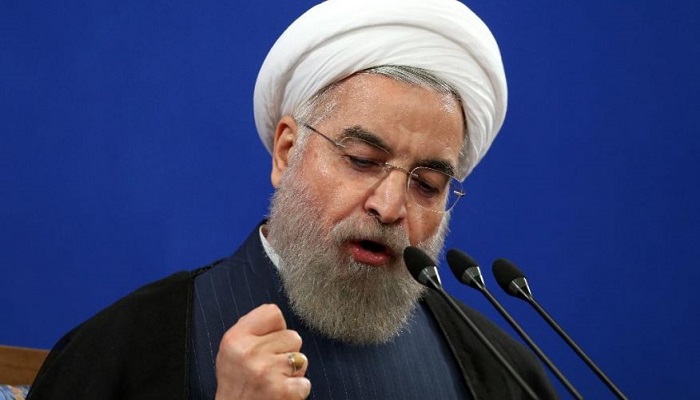
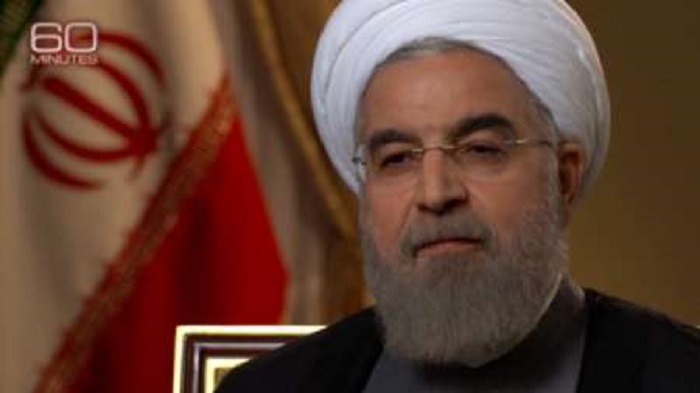
The Iran regime continues its campaign to push a moderate face for itself to news media and government officials through its lobbyists such as the National Iranian American Council and through its own media PR push as evidenced by Hassan Rouhani’s appearance on the venerable news show “60 Minutes;” his first interview with a Western news organization in over a year.

The interview of the regime’s handpicked “face of the regime” took place in Tehran and comes shortly before Rouhani’s scheduled appearance before the annual general assembly session of the United Nations in New York.

The interview was revealing because Rouhani continues to foist the misconception that there are factions within Iran between “moderate” and “hardline” groups and that the nuclear deal will empower these more “moderate” elements leading the heroic fight for Iran’s future. The fact that “60 Minutes” correspondent Steve Kroft falls for this deception is not entirely surprising given the ferocity of the Iran lobby’s efforts to push this fairy tale.

The reality is that within the Mullah’s regime, all power vests entirely within the ruling mullahs and their top leader Ali Khamenei who is empowered by the constitution with sole authority over the judiciary, foreign policy, religion and most military and economic decision making.

Kroft exposes his lack of understanding of how the regime operates when he asks Rouhani: “Some of the opponents are very powerful. The commander of the Revolutionary Guards, for example, has condemned the deal. How do you deal with that? That’s an important political force in this country.”

He assumes the Revolutionary Guard is similar to some U.S. federal agency that acts independently with its own politics when in fact the Guard serves solely to safeguard the mullah’s rule and does so not only through military muscle, but also through ownership of vast swatches of the Iranian economy, including the telecommunications industry and most heavy manufacturing.

But Rohani reveals the true nature of the regime when Kroft questions him about the use of “Death to America” chants and the labeling of the U.S. as the “Great Satan” in virtually every speech made by his boss Khamenei.

Rouhani claims the chant is not against the American people, but rather against the policies of the government; a subtlety that glosses over the fact that even after securing the nuclear deal, the regime still continues its traditions of death chants.

Most notably when the questioning turns to human rights abuses and Kroft raises the possibility of a prisoner exchange for the Iranian-Americans being held hostage, Rouhani is quick to point out the need for the U.S. to make the first move in a reference to Iranians being held for violations of economic sanctions in supplying nuclear components to the regime. The fact that Rouhani is suggesting a swap of nuclear arms merchants for a journalist, pastor and former Marine tells us much about the priorities of the regime.

Inside of the almost fawning “60 Minutes” interview, the Washington Beacon took note of a hilarious parody ad created by director David Zucker, the man behind the films Airplane! and the Naked Gun series, in which he characterized as efforts to sell the nuclear deal as an advertisement for an erectile dysfunction medication.

Zucker came up with the idea after watching the PR effort being waged by the Iran lobby’s presentation of the deal.

“Every prescription drug ad follows the same basic pattern—5 seconds of how amazing and wonderful the drug would be, and then 25 seconds of all the miserable side effects,” Zucker said.

But the Iran lobby continues its marketing efforts to rebrand the Iran regime as cute and cuddly with the disclosure coming out that The New York Times has opted to cohost an October 6-7 “Oil and Money” conference in London where attendees can have the opportunity to engage with “H.E. Seyed Mehdi Hosseini, chairman of the Oil Contract Restructuring Committee at the Iranian Ministry of Petroleum.”

The fact that the Times is offering up access to regime officials after championing passage of the nuclear agreement seems at best unsightly and at worst filled with appalling bad judgement.  This comes after an incident last year in which the Times offered 13-day tours of Iran guided by Times journalist Elaine Sciolino” at the bargain rate of $6,995 per person.

Among other things, it promised “excellent insights into … (the) life and accomplishments” of Ayatollah Khomeini, the ruthless extremist leader who posed as a liberator, but then imposed a fundamentalist Islamic state after taking control of that country in the late 1970s. Those tours are still active, and popular, according to Newsbusters.org.

All of which demonstrates the effort to cash in on the windfall associated with passage of the nuclear deal and the enormous profits many are anticipating in doing business with the regime regardless of the consequences in supporting a blood thirsty regime fueling virtually all of the turmoil in the Middle East right now.

By Michael Tomlinson
Filed Under: Blog, The Appeasers Tagged With: Featured, Iran deal, Iran Lobby, Moderate Mullahs, Moderate Rouhani

  Iran Lobby Shifts Focus, Now Demanding More Dialogue With Iran

September 18, 2015 by admin

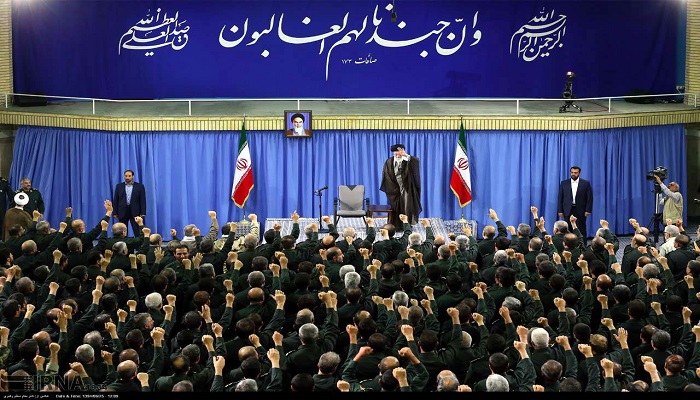
Khamenei-with-IRGC-The main force behind Terror in Iran, Iraq, Syria, Yemen, Lebanon, etc.

Khamenei-with-IRGC-The main force behind terror in Iran, Iraq, Syria, Yemen, Lebanon, etc.

The failure of Congress to halt the implementation of the nuclear deal with the Iran regime opens the floodgates for the regime to reap financial, military, economic and political rewards, but those gains may prove tenuous and illusory since in order to win passage of the agreement, the Obama administration took the unusual route of proposing it not as a full-fledged treaty, but as an administrative action that an incoming administration could conceivably reverse.

Since the Iran regime was adamant on delinking anything not related to the nuclear issue including human rights violations, support of terrorism, development of ballistic missiles and proxy wars, the reality is sinking in for supporters of the regime that they need to pay lip service to these other issues in order to stave off renewed calls to punish Iran for its transgressions.

This was evident by the issuance of a press release by lead regime lobbyist, Trita Parsi of the National Iranian American Council, who even acknowledged that the deal’s passage would not cause significant shifts in regime policy:

“While dialogue does not guarantee that Iran’s foreign policy conduct will shift to Washington’s liking, the absence of engagement all but guarantees that there will be either no change or a change in the wrong direction,” Parsi said.

While Parsi is showing its true face by advocating more dialogue with the criminal mullahs, his call for greater dialogue were again undermined by the statements of the regime’s top mullah, Ali Khamenei.

In his weekly televised speech, Khamenei warned commanders of the regime’s Revolutionary Guards to be on alert for “political and cultural” infiltration by the U.S. according to Agence France-Press.

“The main purpose of the enemies is for Iranians to give up on their revolutionary mentality,” Khamenei told a gathering of Guards commanders and personnel in Tehran.

“Enemy means global arrogance, the ultimate symbol of which is the United States,” he said, calling on the powerful branch of the military to protect the revolution.

“Economic and security breaches are definitely dangerous, and have dire consequences,” he said.

“But political and cultural intrusion by the enemy is a more serious danger that everyone should be vigilant about,” he added.

Parsi of course did not call for Khamenei to moderate his language or stop the continued depiction of the U.S. as Iran’s greatest “enemy.” Parsi saves his rhetorical fire – not to his mullah taskmasters – but for the U.S. leadership that he actively lobbies.

Khamenei threw more cold water on Parsi’s press release and his call for greater dialogue by saying last week that Iran would not hold any negotiations with the U.S. beyond the nuclear issue. Short of calling Parsi a liar, Khamenei certainly refutes most of what Parsi has to say.

It’s no surprise that Khamenei made his appeal directly to the leaders of the Revolutionary Guards which was created by the mullahs to preserve the mullah’s rule and maintain the stranglehold the leadership holds over Iran’s economy and its people.

The passage of the deadline to sink the nuclear deal also marked a celebration of sorts by supporters of the regime as evidenced by Ben Wikler, Washington director of Moveon.org, piece in Huffington Post which gleefully recounted how the regime’s supporters marshalled their forces to prevent the agreement’s demise.

The only thing missing was a photo of Wikler and Parsi holding hands in front of a “Mission Accomplished” banner over an Iranian missile battery.

But while Wikler breathlessly recounts the campaign to support the deal, this moment may prove Pyrrhic for supporters as the next year reveals the true nature of the regime as it no doubt continues to support conflicts in Syria, Iraq and Yemen and Americans grow increasingly uneasy about the deteriorating situation in the Middle East along with the rise of extremist groups and a full-blown refugee crisis.

Broad public disapproval of the nuclear deal has already been registered in virtually every public opinion poll and the fact the deal was passed with no bipartisan support and only through a minority vote of 42 Democratic senators may condemn any member running for re-election not only in 2016, but also 2018.

In essence, the regime lobby is praying mightily the American people will have a short memory and that the mullahs don’t blow it for them; neither scenario seems likely.

Already we’ve seen the veneer being peeled off of the Iran lobby with a flood of news articles examining the lobby, especially the NIAC and its financial backers. Ben Cohen, senior editor of TheTower.org, joined in this review by posting a story on JNS.org recounting the various investigative news stories recently published about the NIAC including The Daily Beast and others and smartly asks the inevitable question that should be on the lips of every Capitol Hill staffer:

“Now that the truth about NIAC is emerging, one has to ask why anyone who seeks respectability in Washington would have anything to do with Parsi and his cohorts,” Cohen said.

“The Islamist regime in Iran is the root of the problem, not its cure: as long as it remains in place, there should be no talk of normalization. Second, that there shouldn’t even be an Iran lobby in America, if by ‘Iran lobby’ we mean individuals and groups like NIAC, whose mission is to sell this vicious regime as an attractive partner for Western democracies,” Cohen added.

Cohen is correct when he assesses only regime change in Iran will force changes in policy away from sponsorship of terror and human rights abuses. The real hope and future lies not in the nuclear deal Parsi has championed, but in a new presidential administration that can tear it up.

By Michael Tomlinson

Filed Under: Blog, National Iranian-American Council, The Appeasers Tagged With: Dialogue with Iran, Featured, IRGC, Khamenei's speech, NIAC, Trita Parsi

The Insidious Infiltration of American Government by Iran Lobby

September 7, 2015 by admin

Tritta Parsi paying respect to the Iranian regime delegation in Geneva

Trita Parsi paying respect to Iran delegation in Geneva Talks

Matthew RJ Brodsky, senior Middle East analyst at Wikistrat and former editor of inFOCUS Quarterly, took a deep dive in Huffington Post into the lobbying forces of the Iran regime and the progress it has made in infiltrating deep into American policy making positions under the Obama administration.

What piqued his interest and those who track the activities of the Iran lobby was the latest batch of emails released from Hillary Clinton’s email server in which the pro-regime group The Iran Project provided the administration with a 10-page plan that eventually served as the roadmap for engaging with the regime once again and led to the run up in negotiating the nuclear weapons agreement.

Brodsky includes the ground breaking investigative analysis done by Lee Smith, a senior fellow at the Hudson  Institute and senior editor of the Weekly Standard, who examined the ties Trita Parsi, the head of the National Iranian American Council, has with Iran regime insiders such as Akbar Hashemi Rafsanjani.

Parsi founded the NIAC in 2002 and was described by Smith as being the “tip of the spear of the Iran Lobby,” in terms of funneling a large number of former staffers into key administration positions and gaining the ear of key members of the Obama administration.

Breitbart News discovered the hiring of Sahar Nowrouzzadeh, a former NIAC staffer, as the National Security Director for Iran who sat in on several high level meetings with President Obama while discussing negotiations with the Iran regime on the nuclear deal.

The NIAC attempted to dismiss Nowrouzzadeh’s position as a mere intern, but a 2004 document uncovered by Breitbart News described her as a former “staff member” at NIAC.

Jeffrey Goldberg of The Atlantic referred to Parsi as someone who “does a lot of the leg-work for the Iranian regime.”

Parsi’s close ties to the regime came under greater scrutiny during the tense negotiations between the regime and P5+1 negotiators in which Parsi and his NIAC colleague Reza Marashi were often seen conferring with members of the Iranian delegation and often were quoted by news media covering the talks using the same talking points and keys messages as the official regime news agencies.

Bloomberg reporter Eli Lake wrote about Parsi’s close connection with regime foreign minister Javad Zarif uncovered in documents made public as part of a failed defamation lawsuit brought by Parsi against an Iranian American journalist who accused Parsi of working on behalf of the regime.

NIAC and Parsi have moved out of the legally shadowy world of indirect lobbying by forming an official lobbying arm called NIAC Action which made no bones about its open lobbying for positions favorable to the regime and began the solicitation of funds as it expected to make donations to political campaigns it deems supportive of the Iranian regime.

Brodsky in his Huffington Post column also examined the flow of funds to regime lobbying groups and traced how the Rockfeller Brothers Fund spent millions of dollars since 2003 towards promoting a nuclear agreement with the regime, primarily through donations given to The Iran Project. That funding has been supplemented by additional contributions made through the Ploughshares Fund which has given substantial amounts of funding to the NIAC directly.

Ironically, the policy memos written by The Iran Project proved to be key elements of the Obama administration’s outreach to the Iran regime including a call to open a direct dialogue to top regime mullah Ali Khamenei by promising to not seek regime change as a means of reassuring the mullahs which came in the form of a personal letter from Obama early in his first term.

Paramount for the Iran lobby was not only securing a favorable nuclear deal for the regime, but more importantly unlinking any agreement from conditions related to the regime’s conduct in areas such as terrorism, human rights or military interventions through proxies and terror groups.

The de-linking of all these areas may very well turn out to be the biggest win for the Iran lobby.

By Michael Tomlinson

Filed Under: Blog, National Iranian-American Council, The Appeasers Tagged With: Iran Project, NIAC, NIAC Action, Trita Parsi

Iran Regime Cheating Already Undermines Nuclear Deal

August 31, 2015 by admin

Iran Regime Cheating Already Undermines Nuclear Deal

Iran Regime Cheating Already Undermines Nuclear Deal

The United Nations nuclear watchdog, the International Atomic Energy Agency, released a new report showing that the Iran regime was engaged in new construction activities at its Parchin military facility which has been at the center of the growing controversy about Iran retaining the ability to self-inspect suspected nuclear facilities.

The document states the IAEA “has continued to observe, through satellite imagery, the presence of vehicles, equipment and probable construction materials” at Parchin.

“In addition,” the report continues, “a small extension to an existing building appears to have been constructed.”

But the IAEA report comes amid renewed scrutiny with regard to the Parchin site after it was revealed that Iranian inspectors would be taking an active role in IAEA-monitored inspections there.

“Allowing the Iranians to inspect their own nuclear sites, particularly a notorious military site, is like allowing the inmates to run the jail,” Republican presidential candidate Lindsey Graham said of the arrangement in an interview with CNN.

The move to begin construction activities at a key military site the Iran regime has continually denied access to for inspectors is another clear sign of the regime’s efforts to cover up aspects of its nuclear program in advance of the deal being closed. The fact that the IAEA does not even know what exactly the regime is doing at Parchin demonstrates how ineffectual it will be in policing the regime’s compliance with the agreement.

And in another move demonstrating the regime’s commitment to military superiority in the region, regime presidential puppet Hassan Rouhani again took to state-run television to declare Iran’s military capability would not be affected by the nuclear deal and the regime “did not and will not accept any limitations.”

With the Iran regime already cheating at Parchin and reiterating its commitment to military expansion, it comes as no surprise the regime is beefing up its direct lobbying efforts through campaign contributions from pro-regime groups with ties to the Iranian government to at least ten Congressional members as reported in FrontPage Magazine by Daniel Greenfield.

Legislators who took contributions from the Iranian American Political Action Committee and have already announced their support for the nuclear deal included:

  • Edward Markey (D-MA)
  • Alan Franken (D-MN)
  • Jeanne Shaheen (D-NH)
  • Kirsten Gillibrand (D-NY)
  • Barbara Boxer (D-CA)
  • Michael Honda (D-CA)
  • André Carson (D-IN)
  • Gerald Connolly (D-VA)
  • Donna Edwards (D-MD)
  • Jackie Speier (D-CA)

Iranian dissident Hassan Daioleslam, who won a defamation lawsuit brought by Trita Parsi of the National Iranian American Council, a leading pro-regime lobbying group, detailed the origins of IAPAC in 2007 according to Spryridon Mitsotakis in Breitbart:

“During the eight years of Rafsanjani’s presidency, which ended in 1997, the Iranian regime had attempted without success to attract the Iranian Diaspora to its cause. Khatami’s presidency recharged Tehran’s efforts. With the Supreme Leader’s direct involvement, the High Council for Iranian Compatriots Overseas was created in 2000 under the auspices of the Foreign Ministry. The President heads the Council, and the Foreign Minister serves as its deputy director. The Ministry of Intelligence and the Ministry of Culture and Islamic Guidance collaborate to implement the decisions of the council. The objective was to create a network of organizations to infiltrate and seemingly represent the Iranian community abroad, and promote policies favorable to the Iranian government. Tehran anticipated that this strategy would neutralize opposition activities abroad and legitimize the new lobby.”

He goes on to detail Parsi’s close work with Iran regime officials in launching the Iran lobby in the U.S. modeled closely on Jewish lobbying groups and made to have the appearance of a citizen’s lobby and impede the work of Iranian dissident and opposition groups such as the National Council of Resistance of Iran.

The NIAC, IAPAC and a host of other regime front groups have worked hard to reshape and distort the truth about the mullahs’ true intentions which have come to light with this new IAEA report on Parchin. The sheer brazenness of openly working to alter the Parchin site shows the contempt and lack of fear the mullahs have in snookering the rest of the world.

By Michael Tomlinson

Filed Under: Blog, National Iranian-American Council, The Appeasers Tagged With: IAEA report, NIAC, NIAC Action, Parchin, Trita Parsi

Iran Lobby Turns to Dubious List of Hate Apologists

August 28, 2015 by admin

Iran Lobby Turns to Dubious List of Hate Apologists

Iran Lobby Turns to Dubious List of Hate Apologists

The National Iranian American Council demonstrated its full-fledged commitment to supporting the Iran regime at any cost by issuing what could only be described as anarchist’s playlist of a press release full of terror supporters, hate apologists and regime sympathizers in a letter purporting to show “prominent international relations scholars” voicing their support for the Iran nuclear deal.

The letter is a farce – to put it mildly – because it omits the one phrase that dominates everything about the Iran regime: Human Rights.

Feel free to search the text of the NIAC release. It doesn’t exist anywhere in the letter, which should come as no surprise since it is the fatal flaw in all things the NIAC is involved in. Human rights for the NIAC are an inconvenient truth. It is the Achilles heel of its arguments in portraying a new “moderate” Iran.

While NIAC staffers such as Trita Parsi, Reza Marashi, Jamal Abdi and Tyler Cullis shout until veins bulge out of their collective necks that the mullahs deserve a break, they continue to blatantly ignore the incalculable human suffering being inflicted by those same mullahs on women, children, Christians, Iranian-Americans, Sunnis in Iraq, moderates in Syria or refugees in Yemen. The swatch of human suffering and misery caused by the mullahs has earned neither reproach nor condemnation by the NIAC and its allies.

The fact that this bogus letter excludes any mention of human rights is not unusual since the signers of the letter are culled from some of the most notorious corners of the academic world funded by regime sponsors and used as tools in defending terror groups, propagating hatred and applauding murder and mayhem.

Article in Breitbart delved deep into the histories and backgrounds of many of these academic frauds, noting “quite a few of the ‘prominent’ professors share radical views pertaining to issues of concern to everyday Americans. This list includes terror group sympathizers, Muslim Brotherhood sympathizers, Iranian regime apologists, Islamist supremacists, anti-Israel conspiracy theorists, overt anti-Semites, and other deplorable characters.”

“One of the most notable signatories is Noam Chomsky, who rose to fame as an MIT linguistics expert and now considers himself an international relations scholar. Chomsky, whom some believe is an anti-Semite, openly supports Iran-backed terror groups Hezbollah and Hamas,” Schahtel added.

Article published in Breitbart also reminds us that Parsi, also a signatory on the list of pro-deal “scholars,” made headlines last week when he alleged there was an Israeli conspiracy behind a report that presented the text of the “side deal” between Iran and the International Atomic Energy Agency. Additionally, several prominent Iranian dissidents have complained that Parsi’s agenda parallels that of the theocracy in Tehran.

But that has been the glaring aspect of NIAC’s fanatical devotion to the Iran regime agenda; the open unwillingness to criticize or comment on the human toll inflicted by the regime’s actions. NIAC has not argued against the retribution murders committed by Shiite militias supported by Iranian regime’s Quds Forces in Iraq as they slaughter entire Sunni villages.

NIAC has not commented on the horrific conditions in refugee camps caused by Iran regime proxy wars in Syria and Yemen. Nor has Parsi or his cohorts ever applauded efforts by groups such as Amnesty International or the United Nations Special Rapporteur for Human Rights in Iran as they have condemned and battled the over 2,000 executions conducted by the regime in less than two years; a staggering assembly line of death.

It would be a public service for those opposing the Iran nuclear deal and the policies of the regime and mullahs in Tehran to peruse the list of professors and send letters to the administrations of each of these universities – the vast majority of which are public and taxpayer funded – and ask why these academics are allowed bully pulpits to argue in favor of a regime that stifles free thinking and political discourse at home and brutally tortures students and teachers in Iran.

The sheer audacity of arguing for an accommodation of a regime that makes no accommodation for dissenters has helped persuade a majority of Americans that the mullahs cannot be trusted in spite of the efforts by NIAC, aided and abetted by groups such as J Street and MoveOn.org, to hold demonstrations that have generated small crowds.

The ultimate proof of the complete lack of authenticity within NIAC is the complete lack of honesty about the regime’s abuses.

By Michael Tomlinson

Filed Under: Blog, National Iranian-American Council, The Appeasers Tagged With: Iran deal, Jamal Abdi, NIAC, NIAC Action, Noam Chomsky, Reza Marashi, Trita Parsi

Well-Funded Iran Lobby Makes Trusting Regime Appealing

August 27, 2015 by admin

Well-Funded Iran Lobby Makes Trusting Regime Appealing

Well-Funded Iran Lobby Makes Trusting Regime Appealing

The central conceit of the proposed nuclear weapons deal with the Iran regime is a simple one: Iran’s mullahs can be trusted to act moderately and peacefully. It’s an idea that is hopeful, optimistic and enticing. It’s an idea propagated by the extensive lobbying and PR machine built up to support the mullahs in Tehran. It is an idea designed to reassure nervous Americans and provide political cover for wavering congressional lawmakers.

It is an idea fatally flawed.

The concept of trust is defined as a “firm belief in the integrity, ability, or character of a person or thing; confidence or reliance.” In order for trust to work, it assumes that the party in question – in this case the religious theocracy ruling Iran – has either demonstrated an ability to be trusted or expressed a desire to be trusted and then lives up to it.

In the case of the mullahs, nothing could be further from the truth. In their every action, the Iran regime has demonstrated again and again that it cannot be a reliable partner in any international agreement.

On the nuclear issue alone, Iran regime signed the Non-Proliferation Treaty yet violated the terms of the treaty by engaging in nuclear weapons development prior to 2003 and through 2012, leading to the stockpiling of 20 percent enriched uranium and the development of related weapons programs such as warhead detonation and missile delivery design. The International Atomic Energy Agency has found Iran in non-compliance repeatedly over the past decade.

Putting the nuclear issue aside for a moment, Iran also signed the Chemical Weapons Convention, but moved forward in supporting the Syrian regime of Bashar al-Assad after he used chemical weapons on his own people. Interestingly enough, while the regime’s top mullah Ali Khamenei has issued a much-ballyhooed “fatwa” or religious edict proscribing the use of nuclear weapons, he did not rule out the development of those weapons, nor did he mention chemical or biological weapons.

For the Iran regime language and its nuances is vital to its aims which is why the proposed nuclear agreement is a paltry 159 pages and does even include two secret side deals with the IAEA. The SALT and START treaties between the U.S. and Soviet Union dwarf it with detailed provisions and requirements.

This explains why the regime has strenuously held out for a finite time limit in any further sanctions or limits on its nuclear development; the mullahs have the patience of Job and are content to outwait the rest of the world. The fact that the proposed deal has no further limitations after 10 years means Iranian regime is free to scale up to industrial capacity in enriching uranium. The fact that its centrifuges will not be destroyed – only unplugged and stored – allowing Iranian regime to keep its refining infrastructure intact.

All we have done is kick the can down the road for a decade and allow another administration and Congress to deal with the mess.

Oddly enough, those elected officials supporting the deal have basically placed their faith and re-election hopes in the hands of the mullahs. There can be no other interpretation of their support. They are betting on the mullahs which seems an inane act unless you consider the lobbying force the mullahs have deployed.

Michael Rubin in a piece for Commentary delves deeply into the financial support for the Iran lobby; looking specifically at the Ploughshares Fund which spreads its millions of dollars around to a number of regime supporters, including the National Iranian American Council. He also connects the dots of how many staffers and activists supporting the regime are funneled through groups and entities with close ties to the regime.

“Those staffing NIAC, for example, have always sought an end to sanctions against the Islamic Republic of Iran. Many had worked for Atieh Bahar, a Tehran-based consultancy close to former Iranian regime President Ali Akbar Hashemi Rafsanjani. They are not chameleons, changing their stripes to match their funders,” Rubin said.

“When NIAC policy director Reza Marashi, an Atieh Bahar alum, worked for the State Department during the George W. Bush years, he was not pro-democracy agenda, but was understood to be sympathetic to an embrace rather than isolation of Iran. Indeed, his persistent questions about the recipients of U.S. aid inside Iran raised security concerns,” he said. “Likewise, when NIAC received a couple hundred thousand dollars from the National Endowment for Democracy, Trita channeled it to organizations close to the Iranian government.”

Rubin lists the extensive donations made by Ploughshares to benefit regime supporters, including:

  • $210,000 to the Arms Control Association for “influencing…US policy toward Iran.”
  • $80,000 to the Atlantic Council to support the Iran Task Force and another $130,000 for the South Asian Program;
  • Funded the Center for New American Security to give “boot camps” to Congressional staffers “on the nature of Iran’s nuclear program,” in other words, to lobby them;
  • Underwrote the Friends Committee on National Legislation’s efforts “to support an integrated lobbying strategy to build support for pragmatic approaches to resolve the Iranian nuclear issue;”
  • $100,000 to J Street to “educate” on behalf of an Iran deal;
  • $150,000 to the National Iranian American Council for its advocacy on behalf of the Iran deal, not including money given individually to its staff;
  • $75,000 to National Security Network to “educate media and policymakers about policy options to prevent Iran from acquiring a nuclear weapon;”
  • Blogger Jeffrey Lewis criticized and downplayed the Associated Press’ revelation about a side deal between Iran and the IAEA gutting verification by allowing Iran to test itself, but did not acknowledge a $75,000 gift to his home institution from Ploughshares;
  • The Aspen Institute also received Ploughshares money to educate Congressmen and senior staffers about Iran policy options, again, effectively to lobby them; and
  • $75,000 to Gulf-2000, a listserv run by former Carter Iran hand and “October Surprise” conspiracy theorist Gary Sick, who has used Gulf-2000 to become a “Journolist”-style clearing house to feed pro-Iran talking points to journalists.

All of these groups work in aligning the interests of the mullahs and in pressing for a deal that releases them of any obligations to change their behavior while setting the stage for turmoil down the road.

By Michael Tomlinson

Filed Under: Blog, Latest from Lobbies & Appeasers, National Iranian-American Council, The Appeasers Tagged With: Atieh Bahar, NIAC, NIAC Action, Ploughshares, Reza Marashi, Trita Parsi

Iran Lobby Keeps Pedaling Same Distortions

August 26, 2015 by admin

Iran Lobby Keeps Pedaling Same Distortions

Iran Lobby Keeps Pedaling Same Distortions

The Iran lobby, especially the National Iranian American Council, is in full-speed-ahead mode as it churns out editorials and press releases quicker than Donald Trump quips, with virtually all of them rehashing the same themes designed to mislead and misdirect Americans from the damning facts surrounding the Iran regime and the proposed nuclear agreement.

One example is an editorial authored by Reza Marashi, NIAC’s research director who apparently doesn’t do much research, but instead parrots what runs on Iranian state media it seems, which ran on Quartz, a blog dedicated to supporting the regime.

In it, Marashi claims President Obama’s “all in” push on the nuclear deal proves his commitment to choose peace over war, but in fact what it does represent is the administration’s desire to leave with a foreign policy win at all costs on the president’s resume.

The world will likely be paying the butcher’s bill for P5+1 decision to appease the mullahs in Tehran with generous terms in the decade to come since at the end of the deal’s time limit (and yes there is a finite time limit) mullahs will be free to scale up industrial-scale production of uranium without any consequences.

Marashi goes on to pedal another fallacy and that is Iranian-Americans wholeheartedly endorse the deal. He offers up as proof polling done on behalf of the Public Affairs Alliance of Iranian Americans, another front supporting the mullahs. The poll conducted by Zogby Research Services is flawed – as are other polls purported to show support for the Iran deal – because it asks questions related to the desires of Iranian Americans for peace, not on their beliefs on whether or not the Iran regime can be trusted to comply with any deal.

The one question PAAIA did ask (but probably wish it hadn’t) was what were the top issues affecting U.S.-Iran relations and a majority 55% said the promotion of human rights and democracy with a minority of 40% citing the nuclear deal.

Polling done for CNN, NBC, Wall Street Journal and others all show when the question of supporting a nuclear deal is tied to the idea of “trusting” the Iran regime, support plummets below the Mendoza Line and that is the misdirection employed by the NIAC and other regime supporters. This whole thing works only if they never discuss trusting the mullahs.

But Marashi goes one step further, he actually tries to portray Hassan Rouhani as a staunch moderate, even pointing out his tenure as secretary for the Supreme National Security Council as evidence of the support he enjoys from top mullah Ali Khamenei.

The claim is deliciously insipid because Marashi neglects to mention during his 16 year tenure, Rouhani oversaw some of the most brutal crackdowns on political dissent in Iran, as well as being the chief negotiator with the International Atomic Energy Agency when the first disclosures came of Iranian cheating in developing its nuclear infrastructure. Rouhani, far from being a moderate role-model, was in fact the model Iranian hardliner in carrying out the regime’s initiatives without public dissent or comment.

But the ridiculous claims keep on rolling as NIAC Action, the new lobbying arm of the NIAC, issued a press release in which it claimed growing momentum for the deal citing several Democratic Senators who had publicly endorsed the deal. It notes that 18 Democratic Senators are still undecided, placing approval in jeopardy, but what Jamal Abdi, NIAC Action’s executive director, fails to mention is the key item holding uncertain Democrats back, which is the doubts they have in placing their political futures in the hands of the mullahs.

That fact poses the most significant obstacle since undecided lawmakers have to basically choose to throw their lot in with the mullahs and “trust” that the mullahs will not end up killing their political careers by cheating on the agreement or engaging in more sectarian wars in the years to come.

The biggest leap in logic by the Iran lobby came courtesy of Trita Parsi, NIAC’s cheerleader-in-chief, who posted a piece on Huffington Post reiterating the same theme that Abdi and Marashi made of overwhelming momentum for the deal, but Parsi goes further by trotting out the concept that human rights activists support the deal.

He cites several Iranians who have been or are currently imprisoned by the regime voicing their support for the deal. The entire exercise by Parsi has a distinct Orwellian tinge to it as the regime picks prisoners for Parsi to quote in the same way the old Soviet Union would trot out prisoners from its gulags for appearance to Western media to talk about how their confinement is filled with gardening and cooking classes.

It is incredibly noteworthy that Parsi does not mention any of the Iranian Americans currently held in Iranian prisons, including Jason Rezaian, Saeed Abedini and Amir Hekmati. We can be assured that none of them would be endorsing the deal, nor their treatment at the hands of the mullahs.

By Michael Tomlinson


Filed Under: Blog, National Iranian-American Council, The Appeasers

The Big Lie About Human Rights and the Iran Nuclear Deal

August 7, 2015 by admin


The Big Lie About Human Rights and the Iran Nuclear Deal

The Big Lie About Human Rights and the Iran Nuclear Deal

One of the more incredible stretches of imagination surrounding the proposed nuclear deal between the Iran regime and the rest of the world is the notion that the agreement with Tehran’s mullahs might somehow spur improvements in the regime’s bleak human rights record.

One of the strongest proponents of that lie has been the regime’s paid lobbyists, the National Iranian American Council, which put out a policy memo on its website attempting to reinforce the misconception.

The memo essentially consists of quotes taken from various people and groups identified with human rights issues in Iran, but notably does not include any quotes or comments from groups who have traditionally monitored regime human rights abuses, such as Amnesty International, nor does it include any comments from relatives or families of loved ones who languish in regime prisons or been subject to torture and executions.

It is also notable how many of the quotes are taken from purported human rights activists who in reality serve the regime such as Akbar Ganji, a self-described Iranian journalist who was previously a commander in the regime’s Revolutionary Guard and still has deep ties to the regime’s leadership.

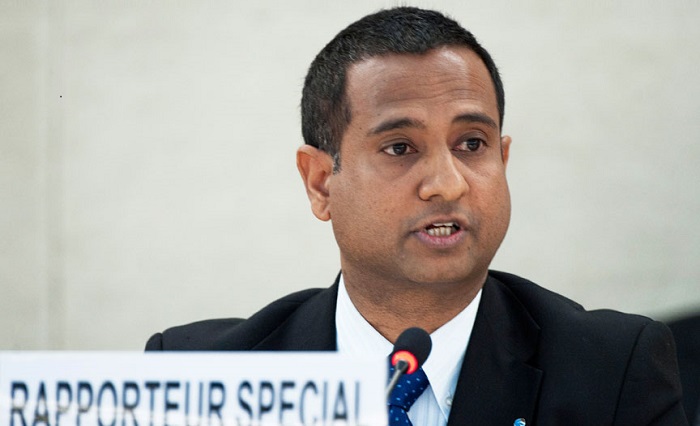
The fact that NIAC also used a quote from Ahmed Shaheed, the United Nations Special Rapporteur for human rights in Iran is laughable considering revelations that the Iran regime launched a sophisticated smear campaign against him through the use of a fabricated WikiLeaks cable purporting to show bribes from Saudi Arabia that never existed.

“The apparently orchestrated campaign against Shaheed seems to fit into a familiar pattern of Iran smearing activists, dissidents, or even journalists by propagating misinformation about them.

Iran has repeatedly condemned Shaheed’s reports as unsubstantiated, biased and collated from anti-Iranian outlets. Shaheed has never been allowed to travel to Iran since his initial mandate was approved by the UN in 2011.

One could go through practically the entire list of quotes provided by the NIAC and simply use Google searches to reveal how factually incorrect and in error they are. It is an admirable show of deception on the NIAC’s part that rivals many of their past efforts to distort the regime’s true record.

The real record on the regime’s abysmal human rights record has been well documented not only by Shaheed and Amnesty International, but also by opposition groups such as the National Council of Resistance of Iran, news media and through the statements and actions made by ordinary Iranians demonstrating and protesting against the regime and those imprisoned such as Americans Jason Rezaian, Saeed Abedini and Amir Hekmati who still languish despite the nuclear agreement.

But everything the NIAC says seems to be constantly undercut by their masters in Tehran. Another glaring example was the complaint filed by the regime against White House press secretary Josh Earnest who has taken to insisting the U.S. retained the right to “use military force in the long run and the use of nuclear inspections to gain intelligence about Iran’s nuclear facilities”; calling Earnest’s statements a “material breach” of the nuclear deal itself.

The outlandish complaint was lodged with the International Atomic Energy Agency which has come under heavy criticism for negotiating two secret side deals with the regime and not making either available to the public or members of Congress currently reviewing the agreement.

The irony of the Iran regime’s complaint is that it exposes both provisions as being completely false and unenforceable since the regime has already clearly considered both to be invalid, even though deal supporters such as Trita Parsi and Reza Marashi of the NIAC have gone to great lengths to champion those same provisions of key examples of why the deal works.

One has to wonder who the American public should believe on this issue: the Iranian government or those lobbyists being paid by that same government and its allies?

By Michael Tomlinson

Filed Under: Blog, News, The Appeasers Tagged With: Ahmad Shaheed, Iran, Iran deal, Iran Lobby, Iran sanctions, Nuclear Deal, Trita Parsi

Why Iran Regime Cannot Stomach Any Opposition

August 6, 2015 by admin

Why Iran Regime Cannot Stomach Any Opposition

Why Iran Regime Cannot Stomach Any Opposition

Like all totalitarian regimes throughout history, the Iranian government cannot tolerate any dissent, especially from within its own citizenry, since opposition from the Iranian people is a condemnation of their government’s policies and proof to the world it has no legitimacy.

This often extends to the point where oppressive governments rig elections in order to show popular support at the polls when in fact, there is no support for the regime. Take for example Nazi Germany in which opposition political parties were effectively outlawed and the parties in power received what they called an overwhelming mandate from the people.

The same principle applies to the mullahs in Tehran who reserved the power for themselves to decide arbitrarily which candidates met the selection criteria to even be allowed on the ballot. This rigging of the candidate slate has a long history in mullah’s Iran where certified nut jobs such as Mahmoud Ahmadinejad were “elected” in stolen elections that provoked the largest mass protests since the overthrow of the Shah’s government.

The regime’s current puppet, Hassan Rouhani, was the beneficiary of the same selection process that cleared the ballot of anyone else who might threaten him and his fellow mullahs and allowed them to present to the world a certified “moderate” face in order to guile the West into jumpstarting nuclear negotiations which the regime needed desperately in order to access $160 billion in frozen assets to revive an economy brought low by official corruption and gross mismanagement.

All of which explains to some degree the fanatical hatred the regime has for any Iranian dissident group. Its long-running efforts to discredit any group that dares oppose the mullahs include everything within its disposal; from diplomatic pressure, mass arrests and imprisonment, outlawing participation or membership, attacks in news media and even resorting to launching online assaults and social media campaigns denouncing dissidents. The tactics are as old as ancient times with the only difference being the advent of technology.

In terms of technology, the Iran regime has sought to create a wide range of online front groups, web pages and blogs dedicated to discrediting any Iranian opposition group and attempt to give the perception of a social media wave of support for its policies. Of particular focus for these regime false fronts has been the National Council of Resistance of Iran, an umbrella opposition group housing various resistance efforts such as the People’s Mojahedin Organization of Iran (PMOI) or otherwise known as the Mujahedeen-e-Khalq (MEK).

The number of regime online fronts is stunning in many ways and reaches across all platforms to include social media such as Twitter, Facebook and LinkedIN to websites and blogs and multimedia like YouTube. One glaring example of one of those sites is the Campaign Against Sanctions and Military Intervention in Iran (CASMII) which makes an extra special effort to regularly denounce the MEK.

Interestingly, if one scrolls down the CASMII website, you can see the affiliated links to the large universe of Iran regime websites, including such notorious efforts as Stop Iran War, Code Pink: Iran, Mossadegh Project News and Iran Affairs. It also includes official regime news links such as Payvand News which gives one a better idea of how closely aligned CASMII and its brethren are to the mullahs in Tehran.

A careful reading of the CASMII site reveals some odd features, namely there are no names of any staff, no quotes by anyone associated with CASMII, no indication who supports it, no way to mail a letter, place a call or knock on a door with these people. It is also revealing when one reads the statements and posts on CASMII, especially relating to the Iranian resistance, how broad sections are cut and paste jobs from regime news sites, regime press statements or articles written by regime supporters.

But the true nature of sites such as CASMII comes from what is not on there. No mention of critical comments made by groups such as Amnesty International of the Iran regime’s brutal suppression of the Iranian people. No mention of any stories about the support of terror groups such as Hezbollah by Iran. No discussion of the fixing of disputed elections and the killing of protesters in the streets of Tehran. No call for the release of American hostages being held in Iranian prisons.

The absence of comments is just as revealing as the garbage put out by these front groups. CASMII, like many of the groups listed as links, serves essentially as a link farm to help boost page views and clicks to favorable articles, mostly on sympathetic sites and news organizations such as Huffington Post, Guardian newspaper, National Iranian American Council and Buzzfeed.

CASMII and these other sites do little to add to any real policy debate over the Iran nuclear deal and instead are just part of the background noise being generated by the regime in the hope of drowning out the real debate taking place in town halls across America as congressional representatives and senators go home to talk to their constituents.

By Michael Tomlinson

Filed Under: Blog, Duping Anti-War Groups, The Appeasers

The Importance of Linking Iran Sanctions and Human Rights

June 9, 2015 by admin

Bijan Khajehpour

Bijan Khajehpour

Sens. Mark Kirk (R-IL) and Bob Menendez (D-NJ) have put forward an amendment to the defense budget that would extend congressional sanctions against the Iran regime for 10 additional years. The amendment is aimed at extending the Iran Sanctions Act of 1996, currently set to expire at the end of 2016, to the end of 2026.

The amendment is an important step in resetting the expectations associated with the Iran regime’s nuclear weapons program because it links it to the development of intercontinental ballistic missiles and human rights abuses; a significant step towards properly addressing the central issues with the regime’s conduct towards the world.

The regime’s chief cheerleaders, the National Iranian American Council, predictably were quick to denounce the legislation, warning that passage of the bill would derail ongoing negotiations. The NIAC’s statement was noteworthy for a few things, namely that it placed the burden of completion of a deal on the U.S. and not the regime.

“There are legitimate questions about whether the U.S. will be able to deliver on the terms for sanctions relief under a nuclear deal, and the passage of this amendment would give credence to those concerns,” the NIAC statement said.

It is a remarkable sentence because it firmly ignores the chief obstacle to any agreement between the West and Iran, which is Iran’s historic inability to live up to any of its international agreements. As recently as last month, Iran has steadfastly refused to answer outstanding questions from the International Atomic Energy Agency about the “possible military dimensions” of its nuclear program.

On top of that omission are repeated comments by Iran’s top mullah, Ali Khamenei, who has reiterated publicly his opposition to allowing access to any Iranian military facility or Iranian nuclear scientists by international inspectors.

This follows continued denials by Iran that it is involved in proxy wars being waged in Syria and Yemen, not to mention its control of Shiite militias in Iraq that are now being accused of reprisal sectarian killings against Sunni Muslim villagers, all of which points to a disturbing and repeated pattern of deception, denial and distrust.

The action by Senators Kirk and Menendez comes after passage of legislation signed by President Obama and over the vigorous objections of NIAC authorizing congressional review of any nuclear agreement reached with Iran.

This latest bill from Kirk and Menendez addresses a glaring hole in current negotiations, which is the failure of negotiators to hold Iran’s human rights conduct accountable, as well as including the regime’s capacity to deliver a nuclear weapon well outside their neighborhood and threaten Europe and Asia.

The NIAC and the rest of the Iran lobby have fought hard to keep these things out of negotiations because they know full well their inclusion would almost certainly doom Iran’s hopes of securing a deal and lift economic sanctions and flood the regime with billions in new cash and investment.

The proposed amendment is not a deal breaker for the West as much as it is a safety clause assuring the West does not deliver a bad deal that could come back to haunt them.

By Michael Tomlinson


Filed Under: American-Iranian Council, Latest from Lobbies & Appeasers, National Iranian-American Council, The Appeasers Tagged With: Congress bill on Iran, Iran, Iran appeasers, Iran deal, Iran Human rights, Iran Lobby, Iran sanctions, Iran Talks, Irandeal, NIAC, Sanctions

  • « Previous Page
  • 1
  • 2
  • 3
  • 4
  • Next Page »

National Iranian-American Council (NIAC)

  • Bogus Memberships
  • Survey
  • Lobbying
  • Iranians for International Cooperation
  • Defamation Lawsuit
  • People’s Mojahedin
  • Trita Parsi Biography
  • Parsi/Namazi Lobbying Plan
  • Parsi Links to Namazi & Iranian Regime
  • Namazi, NIAC Ringleader
  • Collaborating with Iran’s Ambassador

Recent Posts

  • NIAC Trying to Gain Influence On U.S. Congress
  • While Iran Lobby Plays Blame Game Iran Goes Nuclear
  • Iran Lobby Jumps on Detention of Iranian Newscaster
  • Bad News for Iran Swamps Iran Lobby
  • Iran Starts Off Year by Banning Instagram

© Copyright 2026 IranLobby.net · All Rights Reserved.