Iran Lobby

Exposing the Activities of the lobbies and appeasers of the Mullah's Dictatorship ruling Iran

  • Home
  • About
  • Current Trend
  • National Iranian-American Council(NIAC)
    • Bogus Memberships
    • Survey
    • Lobbying
    • Iranians for International Cooperation
    • Defamation Lawsuit
    • People’s Mojahedin
    • Trita Parsi Biography
    • Parsi/Namazi Lobbying Plan
    • Parsi Links to Namazi& Iranian Regime
    • Namazi, NIAC Ringleader
    • Collaborating with Iran’s Ambassador
  • The Appeasers
    • Gary Sick
    • Flynt Leverett & Hillary Mann Leverett
    • Baroness Nicholson
  • Blog
  • Links
  • Media Reports

Iran Lobby Blaming US for Failure of Nuclear Accord

April 1, 2016 by admin


Iran Lobby Blaming US for Failure of Nuclear Accord

Iran Lobby Blaming US for Failure of Nuclear Accord

Like the erupting of Old Faithful or the certainty of the tides and moon, the Iran lobby is now attempting to blame the failure of the nuclear agreement reached with the Iranian regime squarely on the Obama administration and the U.S.

It’s an absurd and bitterly ironic move since it was these same supporters of the Iranian regime who lauded President Obama for disregarding the opinions of the American people, his military and national security advisors and a majority of Congressmen to do a deal with a nation firmly in the thrall of religious extremists.

Since the deal was done last summer, the evidence of Iran’s complete lack of compliance has been laid bare to see ranging from the testing of illegal ballistic missiles and narrowing of inspections to carefully stage-managed media events to the imposition of a vicious human rights crackdown and rigging of parliamentary elections that delivered continued control of Iran to the ruling mullahs.

And in a complete demonstration of weak intestinal fortitude, the doors were opened for Iran to access over $100 billion in cash which is promptly used to begin buying advanced new weapons from Russia, as well as host North Korean officials connected to that regime’s nuclear and missile programs.

Meanwhile, the Iranian people have seen no benefits or improvements in their lives, only greater oppression as detailed by Amnesty International and the UN Special Rapporteur for human rights in Iran who have noted a dizzying climb in executions, including among children and women, and severe crackdowns against religious minorities such as Christians, Sunni Muslims and Bahai, as well as journalists, artists, students and political dissidents.

Now the Iran lobby is blaming the U.S. for the failure of the nuclear accord?

“The nuclear accord between the U.S., other major world powers, and Iran is under threat. But the source of this risk might upset expectations: it is the Obama administration that has failed to resolve persistent ambiguities with the U.S. sanctions relief and, as a result, major foreign banks continue to refuse to handle transactions involving Iran, frustrating the expectations of Iran’s people for economic reprieve and plaguing the ultimate sustainability of the nuclear accord,” said Tyler Cullis of the National Iranian American Council in a piece in Huffington Post.

Last week, Iran’s Supreme Leader Ayatollah Ali Khamenei publicly alleged that the United States was failing to “respect its commitments” under the nuclear accord, particularly by “using roundabout paths to prevent the Islamic Republic” from achieving economic re-integration with the rest of the world. Specifically, the Supreme Leader decried the reticence of foreign banks to re-engage with their Iranian counterparts, chalking it up to pernicious efforts by U.S. sanctions authorities to undermine the benefit of the sanctions relief for Iran, wrote Cullis.

It’s an absurd series of statements that would take an encyclopedia to deconstruct, but let’s take a shot at the highlights or rather, the lowlights:

  • Ali Khamenei, the religious dictator in control of Iran, has long hammered the U.S. and the rest of the world for that matter not only for sanctions and policies aimed against the regime, but also for the failure to free Iran to interact with the rest of the world, even though he has consistently called upon Iranians to embrace a “resistance economy” built on the idea that the regime could be self-sustaining and not subject to future sanctions; thereby freeing it to pursue any policies it wanted free from reprisals;
  • Khamenei and Cullis’ claim that Iran is being kept from re-entering the international financial system is partly true in that the Obama administration is still debating whether or not to lift those restrictions. The problem is that since the regime insisted that the nuclear deal not be tied to other contentious issues such as support for terrorism and human rights violations, the similar lifting of sanctions in place for those “unrelated” activities might violate U.S. laws on the books;
  • Cullis’ contention that failure to lift access to the financial system is burdensome on the Iranian people is a farce since the government of Hassan Rouhani has already announced it is going to keep the bulk of its new-found wealth abroad to be used to buy planes, missiles, telecommunications equipment and other items the regime was prohibited from buying beforehand. Virtually none of that money will find its way back to Iran to provide healthcare for Iranians, boost the consumer economy or even help protect Iran’s environment devastated by gross mismanagement by the mullahs.

Khamenei and Cullis can’t have it both ways. You cannot demand to have items delinked from the deal and then demand the lifting of sanctions not related to the nuclear deal as well. In this case, both are whining like bully children being denied the ability to smack around another child that already waved the white flag.

While Cullis urges to provide foreign banks with clear guidelines on how to tap Iran back into the financial system, he neglects to focus on the real issue which is by treating the nuclear deal by itself and not addressing the vast number of other collateral issues, the sanctions program against Iran regime is frankly a mess and vast loopholes and uncertainty everywhere.

In fact, the Obama administration and U.S. Treasury Dept. have already had to levy additional sanctions and criminal charges against individuals and companies for violating existing sanctions, as well as for brand new cyberattacks on U.S. financial institution and a New York dam.

“Without taking steps such as these, the Obama administration will continue to frustrate Iran’s expectations and risk the nuclear accord in the process. When it comes to U.S.-Iran relations, perceptions matter; and the perception in Iran right now is that the U.S. — whether acting out of malice or negligence — is hindering the practical benefit to Iran of the sanctions relief. Should this perception grow in Tehran that the United States is not a good-faith actor with which Iran can deal, both the historic nuclear accord and the progress in relations between the two bitter adversaries will be placed in bitter peril,” Cullis adds.

It’s a silly statement to make because it pre-supposes that the burden of compliance falls on the U.S. and its allies, not on Iran mullahs which violated international law in the first place by pursuing nuclear weapons!

This is like a serial killer being paroled from prison and then suing the state for not providing him with a beachfront home in Malibu and brand new Tesla in the garage.

Cullis’ gumption is admirable, it’s takes a special kind of chutzpah to push for a terror regime to gain access to the world’s ATM machine.

By Laura Carnahan

Filed Under: Blog, Current Trend, Latest from Lobbies & Appeasers, News Tagged With: Featured, Iran, Iran deal, Iran Human rights, Iran Lobby, Iran Mullahs, Tyler Cullis

Who Are These So-Called “Moderates” in Iran Elections?

March 1, 2016 by admin

Who Are These So-Called “Moderates” in Iran Elections?

Who Are These So-Called “Moderates” in Iran Elections?

The New York Times, among other news outlets, trumpeted the election results from Iran with great fanfare announcing “strong” gains by moderates and reformists in this weekend’s parliamentary elections. Predictably, the spin revolved around the notion that this was a step in the right direction towards a more moderate future in Iran.

“Though hard-liners still control the most powerful positions and institutions of the state, two national elections last week appeared to build on the slow but unmistakable evolution toward a more moderate political landscape — now and into the future,” wrote Thomas Erdbrink in the Times. “While the hard-liners still remain firmly in control of the judiciary, the security forces and much of the economy, the success of the moderate, pragmatic and pro-government forces seemed to give Mr. Rouhani political currency to push a course of greater liberalization of the economy at home and accommodation abroad.”

What Erdbrink and most other Western journalists miss is the simple fact that the mullahs in control of the regime – virtually all of the important sectors of power as Erdbrink notes – have allowed a smattering of candidates to run that can appear “moderate” when compared to the more vocal conservatives in power, but in fact all share the same loyalty to the aims of the Islamic state.

Revolution and regime change are not coming anytime soon to Iran under these mullahs no matter what rosy picture some media wish to paint.

What is even more amusing is that all the celebration is focused on the election of a small minority dubbed “moderates” in the lower house parliament, but in the 88-member Assembly of Experts, over three-quarters of the original candidates seeking to run were swept off the ballot before voting even began, leaving only hardcore supporters of top mullah Ali Khamenei to win seats.

As to whom actually won, the Wall Street Journal editorial board took a closer look at the winners and found them less than “moderate” and downright unsavory.

  • Mostafa Kavakebian. The General Secretary of Iran’s Democratic Party, Mr. Kavakebian is projected to enter the Majlis as a member for Tehran. In a 2008 speech he said: “The people who currently reside in Israel aren’t humans, and this region is comprised of a group of soldiers and occupiers who openly wage war on the people.”
  • Another moderate is Kazem Jalali, who previously served as the spokesman for the National Security and Foreign Affairs Committee of the Majlis and is projected to have won a seat. In 2011 Mr. Jalali said his committee “demands the harshest punishment”—meaning the death penalty—for Mir Hossein Mousavi and Mehdi Karroubi, the two leaders of the Green Movement that was bloodily suppressed after stolen elections in 2009. Those two leaders are still under house arrest.

According to the Journal, as for new Assembly of Experts, many of the “moderates” projected to have won seats were also listed on the hard-liners’ lists, since the ratio of candidates to seats was well below two, including:

  • Mohammad Reyshahry, a former Intelligence Minister believed to have helped spearhead the 1988 summary execution of thousands of leftists;
  • Ghorbanali Dorri-Najafabadi, another former Intelligence Minister believed to have directed the “chain murders” of the late 1990s; and
  • Ayatollah Yousef Tabatabainejad, a fierce opponent of women’s rights who has called Israel “a cancerous tumor.”

That seems like quite a slate of “moderate” new faces that got elected. Maybe Trita Parsi and Reza Marashi from the National Iranian American Council, can fly over and have lunch with these moderates, unless they are worried they might be arrested like their fellow Iran lobby supporter Siamak Namazi who now languishes in an regime prison.

“The political reality in Iran is that the Ayatollahs, backed by the Revolutionary Guards, remain firmly in control,” the Journal correctly points out.

The funny thing about the parade of optimistic and sunny news headlines is how they eerily echo the same notes of hope that came in the wake of the nuclear agreement only to be followed by grimmer headlines of illegal ballistic missile tests, detaining of American sailors, rocket launches at U.S. and French navy warships, recruiting Russia to fight in Syria and the largest refugee crisis since World War II.

Even as regime supporters laud these “moderate” wins, shocking news came of a village in southern Iran of a heinous incident announced by Shahindokht Molaverdi, the ironically named vice president for women and family affairs.

“We have a village in Sistan and Baluchestan province where every single man has been executed,” she said, without naming the place or clarifying whether the executions took place at the same time or over a longer period. “Their children are potential drug traffickers as they would want to seek revenge and provide money for their families. There is no support for these people.”

Maya Foa, from the anti-death penalty campaigning group Reprieve, said: “The apparent hanging of every man in one Iranian village demonstrates the astonishing scale of Iran’s execution spree. These executions — often based on juvenile arrests, torture, and unfair or nonexistent trials — show total contempt for the rule of law, and it is shameful that the UN and its funders are supporting the police forces responsible.”

Amnesty is particularly concerned about Iran’s execution of juveniles. In a report published in January, the group said Iran had carried out 73 executions of juvenile offenders between 2005 and 2015.

Sistan and Baluchestan, where the unnamed village is situated, “is arguably the most underdeveloped region in Iran, with the highest poverty, infant and child mortality rates, and lowest life expectancy and literacy rates in the country,” according to Ahmed Shaheed, the UN special rapporteur on the situation of human rights in Iran. “The province … experiences a high rate of executions for drug-related offences or crimes deemed to constitute ‘enmity against God’ in the absence of fair trials.”

Even as the Iran lobby celebrates these wins, an Iranian village has seen all the men in it killed indiscriminately by these same “moderates.”

By Laura Carnahan

Filed Under: Blog, News Tagged With: Featured, Iran Human rights, Iran Lobby, Iran Mullahs, Khamenei, Marashi, National Iranian American Council, NIAC, Reza Marashi, Rouhani, Trita Parsi

Human Rights in Iran Matter to the World

December 9, 2015 by admin

Human Rights in Iran Matter to the World

Human Rights in Iran Matter to the World

This Thursday marks International Human Rights Day, which marks the day in 1948 when the United Nations General Assembly adopted the Universal Declaration of Human Rights which lays out a broad range of political, civil, social, cultural and economic rights that eventually formed the foundation of human rights principles binding the UN in its work and through the work of the High Commissioner for Human Rights.

In 1948, the world was still picking up the pieces from World War II and the early battle lines of the Cold War were being drawn in a world largely divided between old Soviet-era Warsaw Pact and U.S.-led NATO alliance.

That world is gone and today we are increasingly finding a world divided along secular and sectarian lines as terror has become a tool of statecraft for nations such as Iran and Syria, while other nations such as Afghanistan, Lebanon, Yemen and Iraq are being fought over in what they pretend to be a religious and ideological battle.

In this new world of global terror, human rights have all but vanished in these disputed regions, but whereas the fall of the Iron Curtain and Berlin Wall came after an arms race the Soviet Union could not win and the seeds of democracy flourished in places like Gdansk in Poland, the hegemony of Islamic extremists is growing and sinking deeper roots as the West struggles to formulate a coherent strategy to stem the growth of groups such as ISIS, Al-Qaeda and Boko Haram.

Central to that any successful strategy though will be how to address the crushing suppression of human rights by the Iran regime against its own people. As one of only three state sponsors of terror left on the U.S. State Department terrorism list, the Iran regime sits in the middle of most – if not all – of the crises occurring throughout the Middle East.

Rep. Eliot Engel (D-NY) pointed out during a House Foreign Affairs Committee hearing last week that Iran’s Islamic Revolutionary Guard Corps (IRGC) has been fueling turmoil throughout the Middle East even with strict economic sanctions in place.

“Iran is the leading state sponsor of terrorism, and in the past several years when Iran had no money, it still found money to be the leading state sponsor of terrorism,” Engel said.

“Under the [nuclear] deal negotiated with Iran, they will be awash in cash, they will have lots of money, and imagine how much destruction they can do in support of terrorist activities and terrorism. That is very deeply troubling for me.”

The mullahs support of Hezbollah and the Assad regime in Syria has fostered the birth of ISIS and other splintered Al-Qaeda groups, while its mishandling of Iraq’s government collapsed a coalition government driving Sunni tribes out and into the arms of ISIS which soon become a nation-state in its own right with the takeover of Mosul of most of northern Iraq.

Their support of Houthi rebels in Yemen, toppled the government and drove Saudi Arabia and other Gulf States into a shooting war that threatens the flow of oil from the Persian Gulf.

Beyond the foreign policy conundrums the mullahs in Tehran have fomented, it is their treatment of the Iranian people that has caused the most problems because the complete suppression of dissent has enabled the mullahs to keep their hands on power and accomplish their goals of exporting their extremist philosophy around the world.

Without dissent, without a free press and without due process and fair trials, the Iran regime has managed to turn Iran into a virtual police state that would give a Stalinist-era Soviet Union a run for its money in cruelty. That cruelty is not necessarily confined to just political dissent as the Iran regime seeks to impose its punishments on all facets of Iranian life.

Amnesty International noted this in a blistering statement condemning death sentences placed on two Iranian children.

“This ruling lays bare the Iranian authorities’ contempt for the human rights of children, coupled with their appetite for the death penalty – a toxic combination that leaves numerous juvenile offenders facing execution,” said Said Boumedouha, deputy director of Amnesty International’s Middle East and North Africa Program.

“Iran’s continued use of the death penalty against persons convicted of crimes committed while they were under 18 years of age is cruel, inhumane and blatantly unlawful. The death sentences of both these men, and all other juvenile offenders on death row in Iran, must be commuted immediately.”

As noted by Amnesty International, Iran is a state party to the Convention on the Rights of the Child and the International Covenant on Civil and Political Rights, both of which prohibit the imposition of the death penalty against persons who were below 18 years of age at the time of the crime, without exceptions. However, Iran continues to impose the death penalty against juvenile offenders and frequently defer the execution until after they pass the age of 18, which illustrates the regime’s approach to most international treaties and agreements it signs.

That same contempt has been applied to nuclear agreements the regime has signed, including the most recent one negotiated last July, which it violated through the test firing of new ballistic missiles.

But the regime is facing consequences of its crackdowns as evidenced by the rising tide of protests and demonstrations being mounted within Iran – often at personal risk to the protestors – such as a protest of students expressing frustration over the continuing repression in Iran and demanding for the release of political prisoners, at a ceremony marking Students Day (December 7) in Iran.

But criticism of government officials, and especially of the regime’s top mullah Ali Khomeini, comes at a high cost. Indeed the angry speeches and slogans at the Students Day event were partly sparked by the recent wave of arrests carried out by the Revolutionary Guards Intelligence Organization against journalists, reformists, poets, and artists. Last month four journalists, were among the latest detainees, while many other peaceful activists, such as Bahareh Hedayat, Narges Mohammadi, Atena Faraghdani, and Atena Daemi are still behind bars in Iran.

The protests come on the heels of an announcement that the regime’s revolutionary courts sentenced the managing editor of a state daily newspaper claiming he violated prohibitions on coverage of Mohammad Khatami, a former regime president now described as a seditionist.

The indictment was also notable because the editor, Mahmoud Doaei, of the Ettelaat, one of Iran’s oldest newspapers, was an early figure in the 1979 Revolution. He was a member of the inner circle around Ruhollah Khomeini, the regime’s previous supreme leader who gave birth to the deadly ideology of Islamic extremism, and was considered somewhat protected in the factional feuding that has increasingly marked Iran’s opaque political hierarchy.

All of which points to an almost bipolar exhibition of policy decisions by the regime that have left many Western observers baffled, but to experienced Iranian dissidents, the actions of the regime have been all too typical of past history.

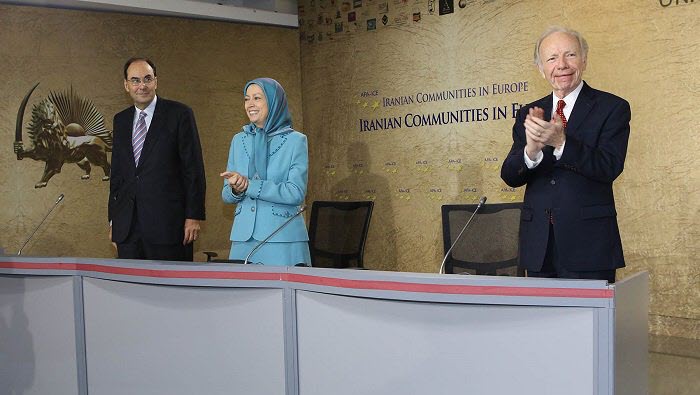
At a meeting sponsored by the Union of Iranian Associations in Europe in Paris the other day, Mrs. Maryam Rajavi, leader of the National Council of Resistance of Iran, drew attention to the efforts of the Iran regime to save the Assad regime in Syria.

She called on Western governments to revise their policy which has so far reinforced the Iranian regime that causes instability in the region and is the main threat to global peace and security, and to make their relations with the Iranian regime contingent on end to executions and torture, and freedom of political prisoners.

“This calls for Western governments to adopt a policy that supports the desires of the innocent people of Syria for a speedy overthrow of Bashar Assad, gives substantial backing to the Free Army of Syria in its struggle against the regime, and insists on the eviction of foreign troops, specifically the Iranian Revolutionary Guards Corps from Syria and Iraq,” Mrs. Rajavi said.

Only by reforming Iran and bringing about a sectarian, democratic government can the Middle East ever hope to find peace and stability and the first step towards that goal is making human rights a top priority again in Iran.

By Michael Tomlinson

Filed Under: Blog, News Tagged With: Featured, Iran, Iran Human rights, Iran Mullahs, Joe Lieberman, Maryam Rajavi

Iran Lobby Glosses Over IAEA Report on Iran Nuclear Work

December 3, 2015 by admin

Iran Lobby Glosses Over IAEA Report on Iran Nuclear Work

Iran Lobby Glosses Over IAEA Report on Iran Nuclear Work

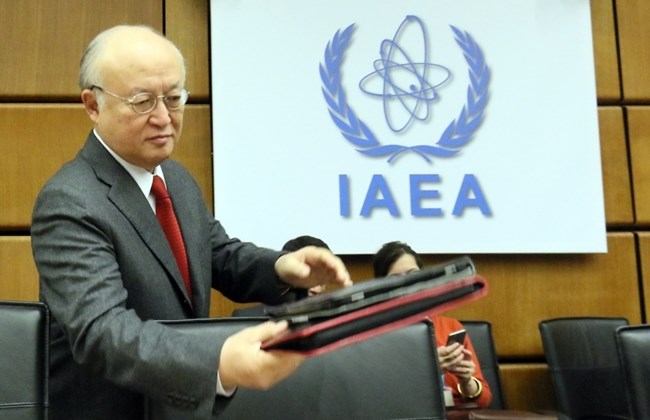
The International Atomic Energy Agency released its long-awaited report detailing the military dimensions of the Iranian regime’s nuclear program and unveiled disturbing new details that have left the Iran lobby, especially the National Iranian American Council, scrambling to cover up.

In the report, Iran was actively designing a nuclear weapon until at least 2009, far later than virtually all intelligence agencies had believed and proving the regime’s ability to conceal its design activities while under intense scrutiny and even spying from various nations.

The report, which according to the New York Times, was compiled largely based on partial answers provided by Iran after completing nuclear talks last July, concluded that the regime was “conducting computer modeling of a nuclear explosive device” before 2004 and continued those efforts right through President Obama’s first term in office.

The IAEA detailed a long list of experiments conducted by the regime “relevant to a nuclear explosive device” directly contradicting claims made by the Iran lobby and the mullahs that Iranian regime’s nuclear program was only for civilian and peaceful purposes.

We now know through Iranian regime’s own admission, it was trying to build nuclear weapons at a feverish pace.

But the IAEA concluded that substantial gaps existed because the regime refused to provide answers to several key questions, restricted the ability to interview key scientific personnel and limited sampling of sites and facilities only after they had been scrubbed.

The nuclear deal negotiated with the Iranian regime mandated limiting Iran’s ability to build a bomb for at least 15 years, but the inability to paint a complete picture and the revelation that Tehran had been conducting work unbeknownst to the rest of the world leaves significant doubt as even that goal is attainable.

According to the Times, Tehran gave no substantive answers to one quarter of the dozen specific questions or documents it was asked about, leaving open the question of how much progress it had made.

At Iran’s Parchin complex, where the agency thought there had been nuclear experimental work in 2000, “extensive activities undertaken by Iran” to alter the site “seriously undermined” the agency’s ability to come to conclusions about past activities, the report said.

The response from Capitol Hill was swift and bipartisan.

“I think we’re getting off to a very, very poor start,” Senate Foreign Relations Committee Chairman Bob Corker (R-Tenn.) told reporters after a roughly two-hour top-secret committee hearing.

“These are exactly the things that we talked about during the hearing process that raised concerns and they’re being validated right now,” he added.

“It just sets a very bad precedent that if Iran thinks it can violate the world’s will, as expressed by Security Council resolutions, and in essence face no consequence for it,” said Sen. Robert Menendez (N.J.), one of the four Democrats who voted against the deal in September.

The defense offered by the NIAC’s Trita Parsi through a press release was tepid and paper thin as he focused on the issue of complying with the terms of the agreement in releasing the report, but not in the report’s findings themselves, praising the IAEA’s “assessment of coordinated ‘activities relevant to the development of a nuclear explosive device,’ in Iran prior to 2003, and that there have been no credible indications of such relevant activities since 2009.”

Parsi of course does not mention the fact the work conducted through 2009 was denied by Tehran and by Parsi himself and that the refusal by the mullahs to answer specific questions left the report, at best incomplete, and at worst a whitewash.

The Iran lobby is now finding it harder and harder to cover for the regime because its own promises and arguments are now all coming to be uncovered as falsehoods and outright deceptions. The fortunate thing about the internet is you can always search and look back at the statements people like Parsi have made and in the context of what is happening now, realize just how really wrong they were.

With the IAEA report, it’s just another blow to any shred of credibility the Iran lobby had.

By Michael Tomlinson

Filed Under: Current Trend, News Tagged With: #NuclearDeal, Featured, Iran deal, Iran Human rights, Iran Lobby, Iran Mullahs, Iran sanctions, Iran Talks, National Iranian American Council, NIAC Action, Rouhani, Sanctions, Trita Parsi

What the Paris Attacks Tell Us About Terror Template

November 16, 2015 by admin

What the Paris Attacks Tell Us About Terror Template

What the Paris Attacks Tell Us About Terror Template

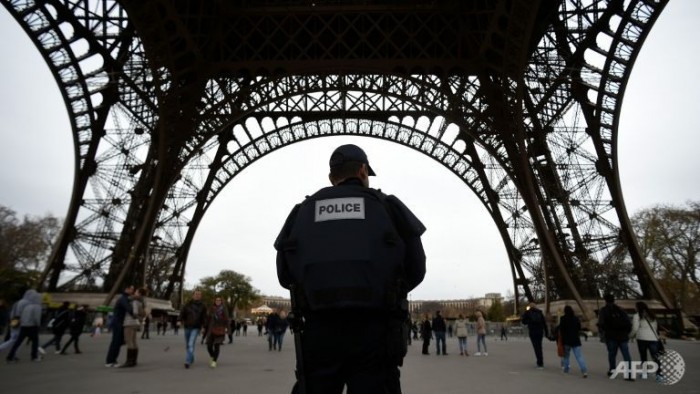
The tragedy of the Paris terrorist attacks this weekend are so startling in their scope, so appalling in the loss of life and so despicable in the choice of victims, that the world has once again been moved to commemorate with demands for stern action and condemnation of the breed of Islamic extremism flowing out of the war torn streets of Syria and now making its way to the wide boulevards of Paris.

With 132 dead as of the latest reporting with scores more in critical condition, the full scope of the killed may not be known for a little while longer, but what is known is that the attack was sophisticated in planning, meticulous in its execution and devastating in its results. It was also spawned and given life from early reports by the ISIS terror network that now dominates vast swaths of Syrian and Iraqi territory, while its influence and recruitment stretches from the Americas to Africa and Asia.

What is unmistakable is the “template of terror” that has come to be the calling card of terror groups such as Hezbollah, Al Qaeda, Boko Haram and ISIS, amongst scores of others. The names might be different, ethnicities varied, even religions at odds with each other, but all share the same fundamental belief in using violence, terror and fear to state their case, sow terror and achieve their aims.

Attacking and striking at these terror groups has de-evolved into a game of “Whack-a-Mole” as militaries strike at individual terrorist leaders like “Jihadi John,” the Briton who was identified as being one of the ringleaders of ISIS who came to the world’s attention decapitating Western hostages.

More astute analysts have pointed out that to curb the threat of global terror, you have to strike at the safe havens offered by sympathetic governments such as the invasion of Afghanistan after the 9/11 attacks to dislodge the Taliban’s support of Al-Qaeda. Others have pointed out the need to support unstable democracies as they struggle with the aftermath and chaos wrought by the changes from the Arab spring protests that toppled governments in Libya, Egypt and elsewhere so that they do not become safe havens for terrorists.

But the single largest supporter of terror in the world today, both financially and spiritually, has been and remains the Iranian regime.

The mullahs in Tehran have been the chief sponsors of Hezbollah and have used Hezbollah fighters in proxy wars in Syria, Afghanistan, Lebanon, Iraq and elsewhere. They have also supported Shiite militias in Iraq with arms, including explosive devices manufactured in Iran, used to kill hundreds of U.S. service personnel in Iraq.

The Iran regime has also provided a spiritual template for ISIS and others through the brutal warped application of sharia law to mete out punishment in often ghastly ways. Before ISIS ever decapitated a captive on video, Iranian regime was hanging prisoners in public squares in front of young relatives. Before ISIS ever machine gunned children, Iranian regime was arresting and executing them. Before ISIS ever imposed harsh religious law in the villages and towns it conquered, Iranian regime was flogging women, cutting off the hands of thieves with power saws and beating demonstrators in the street. The medieval measures that are still being practiced under Rouhani.

The visceral brutality of Iranian regime’s justice has long been used as the standard for invoking a twisted form of Islam to justify violence in the name of territorial gain. The mistake most countries make in dealing with Islamic extremism is in thinking it is a religious war.

It is not.

The violence that stems from the Iran regime and flows out to groups like ISIS and Hezbollah is used as a political tool to achieve practical goals such as toppling governments in Yemen, creating safe havens for forces to operate such as in Iraq and Lebanon and building integrated networks to carry out missions around the world such as Iranian-linked terror attacks in Latin America and the U.S.

What is most telling is the response to the Paris attacks by Iran and its lobbyist allies. In the first few hours of the attacks, while the world expressed, shock, outrage and revulsion, social media linked to Iran’s lobbyists did not offer condolences or sympathy, but rather opened up a full bore attack on Iran’s chief regional rival – Saudi Arabia – in an ongoing effort to destabilize that country.

Trita Parsi, head of the National Iranian American Council, offered up this insightful post on his Twitter feed as the streets of Paris ran thick with blood:

“If it turns out this horrible terror was done by ISIS or AlQaeda, will France rethink its cosy ties with Saudi and those funding Salafists?”

This is the first thing that comes to the mind of Parsi? His next seven posts sought to blame the attacks on Saudi Arabia before he got to his first tweet about Iranians expressing sympathy outside of the French embassy in Tehran.

He even managed to work in a dig at the U.S., tweeting:

“2014, U.S. intel found out that certain equipment sold to Saudi had ended up in ISIS hands. Not sure if they followed up… #ParisAttacks”

Since then, Parsi has continued the drumbeat of linking ISIS to Saudi Arabia, along with other Iran supporters who are marching to the same tune of deflecting blame away from Iranian mullahs.

The only certain thing is that the mullahs in Tehran set the tune and example for the terror industry and by their actions have long validated violence against civilians as a means to an end. It is a pathway that folks like Parsi have never apparently found objectionable judging by their social media accounts and public statements.

Parsi and his colleagues have never made human rights a centerpiece of their lobbying efforts as they have always sought to de-link the issue from any relevancy such as the nuclear talks. The hypocrisy of groups such as NIAC is easily apparent when you peruse their press releases and commentary. The lack of sympathy for the victims of Paris and the all-too-quick efforts to link them to traditional enemies of Iranian regime reveal the true purposes they have.

That true nature of the Iran regime was on front page display in regime newspapers where on its front page, Javan featured an illustration of a masked jihadist with a gun and a machete standing at the top of the Eiffel Tower, waving a mixed flag of the United States and ISIS.

“Return to home,” its headline said, quoting reports that some 200 French extremists had returned to the country after fighting with ISIS abroad.

In Kayhan – Iranian regime’s oldest and most-vocal paper — editor Hossein Shariatmadari, known as the mouth piece for regime’s supreme leader, repeated a conspiracy theory often cited in Iranian media that ISIS is a creation of the West and Israel under an operation dubbed “Hornet’s Nest”.

“Now the designers of the Hornet’s Nest must await the return of the wasps to the real nest — wasps that carry automatic rifles and grenades,” Shariatmadari wrote.

This shouldn’t come as a surprise to long-time observers of the regime or to Iranian dissidents who have long warned that ignoring Iranian mullah’s conduct in supporting terrorist groups has only allowed them to flourish.

Unfortunately, unless the world acts to focus on the source of the terrorism occurring in Iran, we will inevitably be faced with more Paris attacks elsewhere.

By Michael Tomlinson

Filed Under: Blog, Current Trend, News Tagged With: Featured, Iran, Iran Human rights, Iran Lobby, Iran Mullahs, Iran Talks, Khamenei, Moderate Mullahs, National Iranian American Council, NIAC, NIAC Action, Rouhani, Trita Parsi

As Iran Regime Approves Nuke Deal, It Bulks Up Militarily

October 23, 2015 by admin

As Iran Regime Approves Nuke Deal, It Bulks Up Militarily

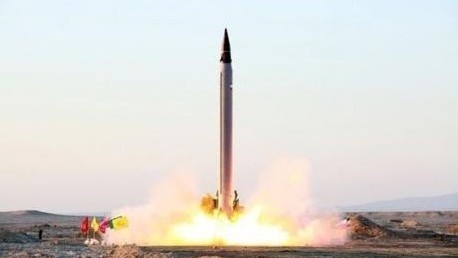
A new Iranian precision-guided ballistic missile is launched as it is tested at an undisclosed location October 11, 2015. REUTERS/farsnews.com/Handout via ReutersThe Iran regime’s top mullah, Ali Khamenei, added his tepid support to the nuclear deal that the regime’s Parliament also approved, clearing the pathway for the regime to get its payday of $150 billion plus billions more in foreign investment and economic activity.

But nothing is ever simple with the inscrutable mullahs of Tehran as Khamenei added the caveat that all sanctions had to be lifted or Iran would walk away from the deal. This reinforces the key stumbling block he placed in front of negotiators when he maintained that the regime had to first receive the benefits of lifted sanctions before it would begin any dismantling of its nuclear infrastructure.

The chicken and egg argument he poses is deliberately cloaked in the obscurity it needs to allow both sides proof of his adherence to the terms of the deal from both sides perspective, while allowing the wiggle room Khamenei wants to set the implementation of the agreement any way he sees fit.

This is readily apparent in the deluge of provocative acts the regime has undertaken since the agreement was signed, including:

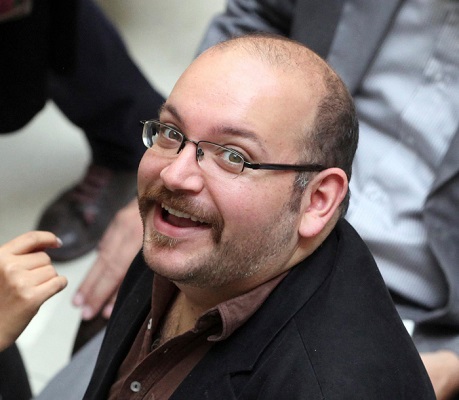
  • The conviction of Washington Post reporter Jason Rezaian on trumped up spying charges and then offering to swap him for convicted Iranian arms smugglers;
  • The test firing of a new ballistic missile violating United Nations Security Council resolutions prohibiting development of new nuclear-capable missiles;
  • Coordination of a military alliance with Russia through a mission to Moscow by Quds Force commander Qassem Soleimani in violation of UN travel restrictions; and
  • Launching of a new offensive in Syria against forces opposing the Assad regime including the use of thousands of Iranian fighters and proxies from Hezbollah in Lebanon, Shiite militias from Iraq and Afghan mercenaries.

These acts put to a lie the claims long made by the Iran lobby during the nuclear negotiations that the regime was only interested in becoming a moderating force within the region. Led by the National Iranian American Council, those same supportive voices for the regime have been struck deaf and dumb in the face of these new violations by the regime.

The test firing of the new ballistic missile was especially provocative and so concerning that the U.S., Great Britain, France and Germany called on the UN Security Council’s Iran sanctions committee to take action over the violation.

In a letter obtained by Reuters containing details on the launch, the nations said the ballistic missile was “inherently capable of delivering a nuclear weapon.”

Is it too late to say “We told you so?”

Even now, news media that once editorialized in support of the nuclear deal have reversed course in noting the worrisome developments by the Iran regime.

“But the Syrian offensive is certainly more than message-sending. If successful, it could eliminate the chance to construct a moderate, secular alternative to the Assad regime, and send hundreds of thousands more refugees across Syria’s borders. It was just such aggression that Mr. Obama acknowledged might be a byproduct of the nuclear deal — and that he vowed to resist. If he remains passive as Maj. Gen. Soleimani’s forces press forward, both Iranian and U.S. allies across the Middle East will conclude that there will be no U.S. check on an Iranian push for regional hegemony,” said the Washington Post in an editorial.

There was also a move by 11 Senate Democrats to push the Obama administration to respond forcefully to the regime’s missile test, pressing the case that a response would set a precedent for how the U.S. would react to any future violations of the nuclear deal.

“We are concerned about the military significance of this test, which is part of a long-term Iranian program that seeks to improve the range and capabilities of its ballistic missiles,” the senators wrote. “We are also convinced that the launch is an attempt to test the world’s will to respond to Iranian violations of its international commitments.”

It is worth noting that several of these same Senators had voted in favor of the deal.

Joshua Keating at Slate raised a similar concern about the fallout from the nuclear deal saying “it certainly doesn’t bode well for the optimistic notion that the deal could lead to U.S.-Iranian security cooperation beyond the narrow areas laid out in the agreement and it certainly doesn’t look good for the administration. Iranian leaders were presumably well aware of this.”

This understanding of the regime’s intentions puts into perspective the potential use of the billions of dollars about to be released into the control of the mullahs and as the International Business Times puts it:

“Pushed by a combination of its own outdated military equipment and the formidable military buying power of its oil-rich Middle East rivals, analysts said Tehran is urgently plotting to upgrade and replace its own antiquated defense technology in favor of Russian- and Chinese-made military equipment by spending oil revenue that’s been trapped in an assortment of banks worldwide for the last three years.”

“Those options range from providing Hezbollah fighters, who are supporting Syrian President Bashar Assad in the Syrian civil war, to boosting aerospace efforts, including space-based platforms such as satellites, to advance its military into the 21st century,” according to Ariel Cohen, senior fellow at the Atlantic Council, an international affairs think tank based in Washington, D.C.

It is clear that the foxes let loose by the nuclear deal are now coming home to hunt.

By Michael Tomlinson


Filed Under: News Tagged With: Appeasement policy, Featured, Iran, Iran deal, Iran Lobby, Iran Mullahs, Iraq, Sanctions, Syria, Yemen

Iran Regime Unveils Missile Base to Cover Weakness

October 16, 2015 by admin

Iran Regime Unveils Missile Base to Cover Weakness

Iran Regime Unveils Missile Base to Cover Weakness

Mother Nature provides us excellent examples of weaker insects or animals using the art of disguise to shield themselves from predators. The katydid tries to look like a leaf, while the elephant hawkmoth caterpillar looks like a snake head. Both use deception to keep from becoming someone else’s lunch.

In a case of man imitating nature, the Iran regime’s Revolutionary Guard Corps released video footage of secret missile base in an underground tunnel deep in a mountain side.

“The video, aired on semi-official Fars TV and set to rousing music, shows an extensive tunnel packed with medium- and long-range missiles and launcher units. The Guard said the missiles were on their launch pads, ready to be fired in the event of an attack on the country,” according to Fox News.

The video of the missile base, so far unconfirmed by independent sources, follows the recent test firing of a new ballistic missile that the U.S. claims violates terms of a United Nations Security Council sanction prohibiting the regime from developing new missiles. The video’s airing raises some basic questions such as: Why?

Dominic Waghorn, reporting for Sky News, said the video’s release was designed for domestic consumption as leaders within the Revolutionary Guards Corps worry about appearing weak to the rivals such as Saudi Arabia, especially at a time when its Syria campaign all but collapsed until the last-minute intervention by the Russians.

“But an attempt to project strength is in itself a sign of weakness. Neither Russia nor Iran would be in Syria were their ally Bashar al Assad not in trouble,” Waghorn said. “Their forces are there because his have been crumbling and that has threatened their interests there. Their presence invites a response from his enemies and their backers, and is not therefore without considerable peril.”

But the Iran regime’s effort to project a more assertive posture as it has seen a rolling series of setbacks didn’t stop with the missile video and test launch. It included grainy video released through Twitter showing the regime’s Quds Force commander Qassem Soleimani, purportedly addressing Iranian and Syrian troops in Syria on the eve of launching a new offensive to attack rebel militias.

Showing Soleimani taking direct command of ground forces following the deaths of two other senior IRGC commanders strongly shows the mullahs near-desperation to pull out a victory in Syria after so much blood and treasure has been spent with little to show for it as Assad’s forces have been pushed nearly all the way back to the sea.

But with the looming deadline for certification by the International Atomic Energy Agency to complete its investigation of Iran’s past nuclear activities, the regime – which had been slow in responding to the inquiry – stepped up at the last minute to be responsive to the UN probe.

In the past two weeks, after Iran had largely brushed off serious questions about its past nuclear activities, the IAEA and some Western governments directly warned Tehran that it must increase cooperation if it wanted IAEA board members to conclude it had sufficiently addressed their concerns, according to the Wall Street Journal.

The board must decide in mid-December, based on a report by Director General Yukiya Amano, whether Tehran has done enough for the nuclear agreement it signed in July with six world powers to proceed.

As the regime is confronted with the costs of a massive new offensive in Syria, it may very well have concluded that it needs the scheduled $150 billion in frozen assets as quickly as possible to replenish its coffers as part of the nuclear deal, as well as keep its economy afloat.

That became painfully apparent as the engine from an Iranian Mahan Air 747 fell off shortly after takeoff from Tehran. The regime badly needs new aircraft to replace a fleet hampered by economic sanctions.

Ultimately, many of the regime’s most recent moves can be seen as desperate acts by a leadership of mullahs being pressed in on all sides.

By Michael Tomlinson

Filed Under: Blog, News Tagged With: #NuclearDeal, Featured, Iran, Iran Economy, Iran Mullahs, Nuclear, Nuclear Deal, Sanctions

What the Conviction of Jason Rezaian Tells Us About Iran Regime

October 13, 2015 by admin

What the Conviction of Jason Rezaian Tells Us About Iran Regime

What the Conviction of Jason Rezaian Tells Us About Iran Regime

News media and journalists around the world have reacted strongly to the announcement that Washington Post reporter Jason Rezaian had been convicted in an espionage trial after 14 months of imprisonment. The verdict from the Revolutionary Court was reported through regime state television, but not the specific decision even though the trial ended in August.

According to the Washington Post, “Rezaian faced four charges — the most serious of which was espionage — and it was not immediately clear whether he was convicted of all charges. Rezaian and The Post have strongly denied the accusations, and his case has drawn wide-ranging denunciations including statements from the White House and media freedom groups.”

Depending on which charges he was convicted on, Rezaian could face upwards of 20 more years in prison.

“Iran has behaved unconscionably throughout this case, but never more so than with this indefensible decision by a Revolutionary Court to convict an innocent journalist of serious crimes after a proceeding that unfolded in secret, with no evidence whatsoever of any wrongdoing,” said Martin Baron, executive editor of the Post, in a statement.

“The contemptible end to this ‘judicial process’ leaves Iran’s senior leaders with an obligation to right this grievous wrong,” Baron said. “Jason is a victim — arrested without cause, held for months in isolation, without access to a lawyer, subjected to physical mistreatment and psychological abuse, and now convicted without basis. He has spent nearly 15 months locked up in Iran’s notorious Evin Prison, more than three times as long than any other Western journalists.”

Ironically, on October 10, Rezaian passed the dubious milestone of having been locked up in Iran longer than the original 52 American embassy hostages three decades ago.

Rezaian’s case, as well as the plight of other Americans being held in Iranian regime’s prisons; including Amir Hekmati, a former U.S. Marine, and Saeed Abedini, a Christian pastor, are defining signposts of how the Iran regime’s leadership acts, plans, thinks and executes its national policy. They have become unfortunate pawns in a much larger game the mullahs have been playing at for the past three decades.

Abedini of Boise, Idaho, was imprisoned for organizing home churches. Hekmati of Flint, Mich., has spent four years in prison since his arrest during a visit to see his grandmother. Rezaian was accused by the regime of providing information on Iranian companies and individuals violating economic sanctions and thereby providing intelligence to regime foes.

These higher profile victims share a similar fate as countless thousands of other Iranians who have been arrested, tortured, falsely imprisoned and often publicly executed as the regime seeks to stamp out dissent, curb free speech and hang onto people to be used as bargaining chips should it need them.

In the case of the Americans, Hassan Rouhani, the regime’s handpicked leader, openly floated the idea of prisoner swaps with the Americans exchanged for up to 19 Iranian agents convicted of trafficking in arms and smuggling nuclear components for the regime’s nuclear program.

In many ways though, approval the nuclear agreement may have inadvertently sunk hopes of getting these Americans released since the mullahs perceive they got what they originally wanted in the potential lifting of economic sanctions, which raises the question of why would the regime double down and sentence Rezaian when there would be no clear political reason to?

The conviction certainly disproves the idea – long floated by Iran lobbyists such as the National Iranian American Council – that supporting the nuclear deal would empower so-called “moderates” within the Iranian government. If anything, this conviction demonstrates that Ali Khamenei, to whom the courts answer to, is still firmly in charge of the regime’s policies.

What all of this tells us is that the Iran regime leadership does not value human life, other than to use it as a commodity. It tells us the judicial system is controlled and used for political and religious purposes. It tells us there is always linkage in the mullahs’ mindset and willingness to traffic in human life.

The regime shows us every day examples that it views international law and norms with contempt, be it the brutal treatment of its people or the almost daily threats its generals and leaders make against the U.S. and other nations and neighbors.

Alireza Tangsiri, a Revolutionary Guard Corps lieutenant commander, said that suicide bombers are on stand by and ready to “blow up themselves” to “destroy the U.S. warships,” according to remarks made Monday in Iran’s state-controlled Fars News Agency.

“They [the U.S.] have tested us once and if necessary, there are people who will blow up themselves with ammunitions to destroy the U.S. warships,” Tangsiri was quoted as saying.

He added that if the United States takes any hostile action against Iran, the country’s military forces would pursue the Americans into the Gulf of Mexico.

“I declare now that if the enemy wants to spark a war against Iran, we will chase them even to the Gulf of Mexico and we will (certainly) do it,” he said.

The threats come a day after Iran test fired ballistic missiles in the region, in a potential violation of international agreements barring such activity.

That missile, the Emad or “Pillar,” is designed to evade missile defenses and is supposedly much more accurate than previous missile designs, putting neighbors such as Saudi Arabia, Turkey, Egypt and even Southern Europe within range.

While execution of Iranians under Rouhani’s watch is surging, it is more obvious now that despite the Iran Lobby’s pitch, mullahs ruling Iran, emboldened by the concessions received as a result of the flawed Iran deal, are now more of a threat to the international community than ever before.

By Michael Tomlinson

Filed Under: News Tagged With: #NuclearDeal, Appeasement policy, Featured, Iran, Iran deal, Iran Lobby, Iran Mullahs, Iran sanctions, National Iranian American Council, NIAC, NIAC Action, Rouhani, Sanctions

Iran Regime Reveals True Intentions

October 8, 2015 by admin


Iran Regime Reveals True Intentions

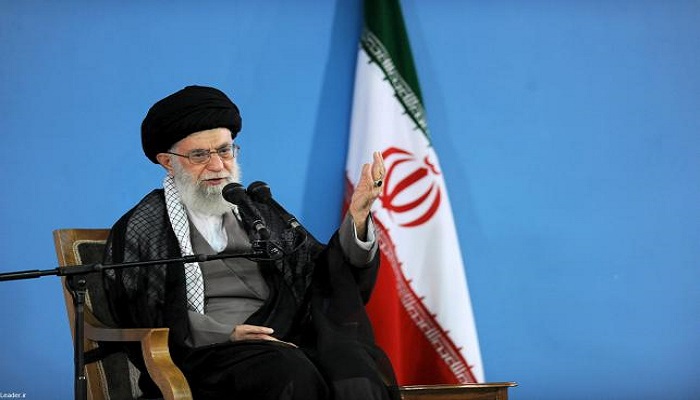
Iran’s Supreme Leader Ayatollah Ali Khamenei gestures as he delivers a speech during a gathering by Iranian forces, in Tehran October 7, 2015. REUTERS/leader.ir/Handout via Reuters

Ali Khamenei, the highest authority in the Iran regime, banned any further negotiations between the regime and the U.S. according to a statement released on his website, firmly putting the brakes to any idea of accommodation or moderation following the approval of a nuclear deal.

“Negotiations with the United States open gates to their economic, cultural, political and security influence. Even during the nuclear negotiations they tried to harm our national interests,” Khamenei was quoted as saying on his website.

Khamenei had previously said there would be no more talks with the U.S. last month, but this move was a step further in declaring an outright ban on any further discussions on any other topics.

The Obama administration, fed a steady stream of misrepresentations and false promises by the Iran lobby – led by the National Iranian American Council – expected a new phase of relaxed, open negotiations with the regime on a variety of issues including the ISIS, the Syrian conflict and sponsorship of terror.

Instead, now that the regime has achieved its goals in the nuclear deal – a lifting of economic and military sanctions, preservation of its nuclear infrastructure, delinking of human rights issues and release of billions in frozen cash – the regime sees no other reason to carry on the façade of moderation it has so assiduously pushed since the handpicked elevation of Hassan Rouhani as regime president.

In his address to Revolutionary Guards Navy commanders, Khamenei said talks with the U.S. brought only disadvantages to Iran.

“Through negotiations Americans seek to influence Iran”, Khamenei was quoted as saying to the IRGC commanders, who are also running much of Iran’s military involvement in Syria.

The bill of goods sold by the Iran lobby for hopes of a release of American hostages, removal of Assad and a reigning in of sectarian violence has now come due as Iranian regime’s leadership seeks to make all those promises false.

Michael Goodwin, a New York Post columnist wrote in Fox News:

“The White House deliberately downplayed the Russian buildup because it undercut central promises Obama made to Congress about the Iran nuke deal, which was then being debated.

“One of those promises was that Russia would help enforce the terms. Instead, Putin actually was making common cause with Iran, and both are now killing the Syrian rebels we supported.

“Here’s the scorecard: Obama got his Iran deal, and the world got a more aggressive Iran, an expanded Syrian war and wider Russian influence. With each passing day, the cost of stopping Putin grows more expensive.”

The yawning chasm between the promises made by the Iran lobby and the reality of what is taking place was discussed in another piece in Foreign Policy by Aaron David Miller and Jason Brodsky in which they write:

“One thing seems pretty clear: Somewhere in a parallel universe far, far away, the logic of a linear path to Iran’s moderation may be alive and well. But back here on planet earth, the odds on the health and prosperity of reform and the reformers, too, are still very long ones indeed.”

But supporters of the regime are still fighting back in trying to hold the line that a force for moderation exists in Iran and is fueled by post-nuclear deal euphoria, rather than the hangover the world is witnessing today.

One of those peddling this snake oil is Kourosh Ziabari who writes in Huffington Post:

“To the detriment of hardliners, Iran is reemerging as a regional power, and it’s easily predictable that with another four years in office plus the two intact years he has in hand – unless Ahmadinejad comes up with a new wizardry and wins the 2017 elections, President Rouhani will be able to build a strong and peace-making Iran which nobody will be able to demonize or depict as a threat to world peace and security.”

Ziabari pushes the Iran lobby message that there exists within Iran “moderate” and hard line” forces when in fact Khamenei has indelibly proven there exists only one voice on all policy matters and it is firmly his.

Even as Iran and Russia join with Hezbollah in launching a new phase in Syria, Iran’s mullahs are busy in other parts of the Middle East, including Yemen, where the Houthi rebels they support have been spotted in Iran getting support and new arms according to Al Arabiya.

The Houthi delegation “will convey to Iranian officials an urgent request by Houthi leader Abdulmalik al-Houthi to attain additional shipments of weapons after the Saudi-led coalition forces made several gains against the militia,” according to the report.

“Before visiting Tehran, the delegation had allegedly visited Beirut where it met with Hezbollah leader Hassan Nasrallah,” according to al Arabiya. “During the visit, the delegation allegedly voiced Abdulmalik’s al-Houthi’s gratitude for Hezbollah’s support in sending military experts to Yemen.”

President Obama’s former national security adviser also warned that Iranian regime leaders have effectively turned Iraq into a “client state” and are bent on exploiting the regional war against ISIS to promote their own brand of Shiite extremism throughout the Middle East.

“Iran’s grand strategy entails consolidating the hold it has gained in Iraq — a grip it seeks to tighten, directly and through proxies — and by stoking the sectarian fires,” said retired Marine Corps Gen. James L. Jones.

Gen. Jones testified alongside former Sen. Joe Lieberman, an independent, and both men lamented the administration’s failure to provide more assistance and refuge to members of the Iranian dissident group — commonly known in Washington as the “MEK” or “PMOI” — who have been left in the lurch in Iraq since the departure of U.S. forces in 2011.

On top of all this, word comes out that cybersecurity researchers have uncovered a network of fake LinkedIn profiles, which they suspect were being used by hackers in Iran to build relationships with potential victims around the world, according to a new report to be published by security firm Dell SecureWorks Inc.

This tactic, known as “social engineering,” is one where hackers trick people to get them to cough up personal or sensitive information. “Having those trust relationships gives [hackers] a platform to do a bunch of different things,” said Tom Finney, a security researcher at Dell Secureworks.

The 25 fake profiles described in the report were connected to more than 200 legitimate LinkedIn profiles — mostly individuals based in the Middle East who worked in sectors like telecom and defense. Those individuals and their companies likely have information that would be of interest to an Iranian cyber group, Dell Secureworks said.

Yes, the post nuclear deal world has indeed brought much change, just not the kind the Iran lobby promised.

By Michael Tomlinson

Filed Under: Blog, The Appeasers Tagged With: #NuclearDeal, Appeasement policy, Featured, Iran, Iran deal, Iran Economy, Iran Lobby, Iran Mullahs, Iran sanctions, Khamenei, NIAC, NIAC Action, Syria, Yemen

The Top 1 Percent in the Iran Regime

May 6, 2015 by admin

Rich Kids of Tehran1A bright yellow Porsche Boxster GTS driven by a young woman from a poorer neighborhood of Tehran with the wealthy owner a grandson of a high ranking mullah next to her hit speeds of 120 miles per hour before losing control and slamming into a tree; instantly killing the 20 year old woman with the 21 year old owner dying hours later of injuries.

The crash, which otherwise might have drawn scant attention in New York, Paris or Tokyo, caused a firestorm in tightly controlled Iran where social media has fueled pent-up outrage over the chasm between the rich, wealthy elites of the ruling class and the hardscrabble lives of ordinary Iranians. To make matters worse, the man killed was engaged to be married, but not to his young companion, furthering the perception that the strict laws and harsh penalties imposed by the regime’s mullahs exempt their own families and supporters.

The glaring contradiction in having unmarried a man and woman together in a society where a woman found in the company of a man other than her family can result in a swift beating by Basiji paramilitary militia reveals the hypocrisy running rife through the regime’s leadership.

The flow of cash and wealth to a select few, the regime’s own 1 percent, is the product of efforts by the regime to circumvent economic sanctions put in place to slow down Iran’s nuclear program, but have turned into a lucrative illicit trade benefitting just a few and helping to fuel the regime’s support for terror groups and its many proxy wars it is engaged in, most recently in Yemen.

The allocation of wealth within the regime based on family connections or need to fund overseas expansion of its extremist religion leaves ordinary Iranians struggling amidst the excessive display of wealth by family members of mullahs and those connected to the Revolutionary Guards Corps which controls vast sections of Iran’s economy and industry.

All of which is another reason why the ruling mullahs, including top mullah Ali Khamenei, have been absolutely adamant on the unconditional and total lifting of all economic sanctions, including U.S., European Union and United Nations penalties because they want to open the floodgates to foreign investment further enriching them and their families.

But the regime is a master of contrary perceptions to suit its needs. Another example was a speech by Iranian Foreign Minister Javad Zarif in New York where he chastised Sunni Arab nations’ air campaign against Iranian-backed Houthi rebels in Yemen, and yet refused to accept the regime’s $35 billion annual support of Syrian President Bashar al-Assad in a similar vein, even with Iranian Quds Force fighters actively fighting on the ground.

But it seems Zarif has become as adept at speaking out of both sides of his mouth as his loyal supporters in the U.S. such as Trita Parsi of the National Iranian American Council. In an interview on Charlie Rose’s show, Zarif insisted the regime did not imprison people for mere opinions.

“We do not jail people for their opinions,” Zarif said. His comments were met by derision on social media from former political prisoners to call him a liar pointing out dozens of political prisoners including journalists, bloggers, political activists and other dissidents languishing in Iranian prisons.

In the most blatant example of these flip-flops, the regime moved forward with the arrest of human rights activist Narges Mohammadi this week. She was scheduled to appear in court in connection with a new case filed against her by regime authorities, but a request for a delay in that case was denied, leaving her lawyer no time to study the charges against her. Her situation remains in doubt.

While the regime continues to enrich its own members, at the expense of Iranian citizens, it also continues to oppress the same people it is depriving of an economic future. Unfortunately, there can be no Occupy Wall Street movement in Tehran since protest is likely to send you straight to Evin Prison like so many others.

By Laura Carnahan

Filed Under: Blog Tagged With: Iran Economy, Iran Mullahs, Iran Talks, Khamenei, Rich mullahs, Sanctions

  • « Previous Page
  • 1
  • …
  • 13
  • 14
  • 15
  • 16
  • Next Page »

National Iranian-American Council (NIAC)

  • Bogus Memberships
  • Survey
  • Lobbying
  • Iranians for International Cooperation
  • Defamation Lawsuit
  • People’s Mojahedin
  • Trita Parsi Biography
  • Parsi/Namazi Lobbying Plan
  • Parsi Links to Namazi & Iranian Regime
  • Namazi, NIAC Ringleader
  • Collaborating with Iran’s Ambassador

Recent Posts

  • NIAC Trying to Gain Influence On U.S. Congress
  • While Iran Lobby Plays Blame Game Iran Goes Nuclear
  • Iran Lobby Jumps on Detention of Iranian Newscaster
  • Bad News for Iran Swamps Iran Lobby
  • Iran Starts Off Year by Banning Instagram

© Copyright 2026 IranLobby.net · All Rights Reserved.