Iran Lobby

Exposing the Activities of the lobbies and appeasers of the Mullah's Dictatorship ruling Iran

  • Home
  • About
  • Current Trend
  • National Iranian-American Council(NIAC)
    • Bogus Memberships
    • Survey
    • Lobbying
    • Iranians for International Cooperation
    • Defamation Lawsuit
    • People’s Mojahedin
    • Trita Parsi Biography
    • Parsi/Namazi Lobbying Plan
    • Parsi Links to Namazi& Iranian Regime
    • Namazi, NIAC Ringleader
    • Collaborating with Iran’s Ambassador
  • The Appeasers
    • Gary Sick
    • Flynt Leverett & Hillary Mann Leverett
    • Baroness Nicholson
  • Blog
  • Links
  • Media Reports

President Trump Warns Rouhani as Pompeo Assails Mullahs

July 23, 2018 by admin

President Trump Warns Rouhani as Pompeo Assails Mullahs

President Trump Warns Rouhani as Pompeo Assails Mullahs

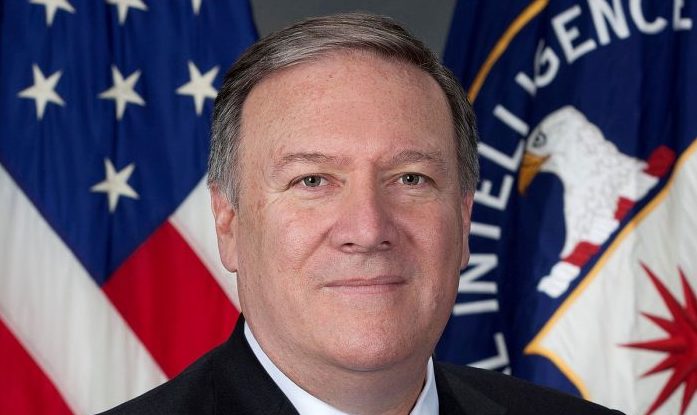
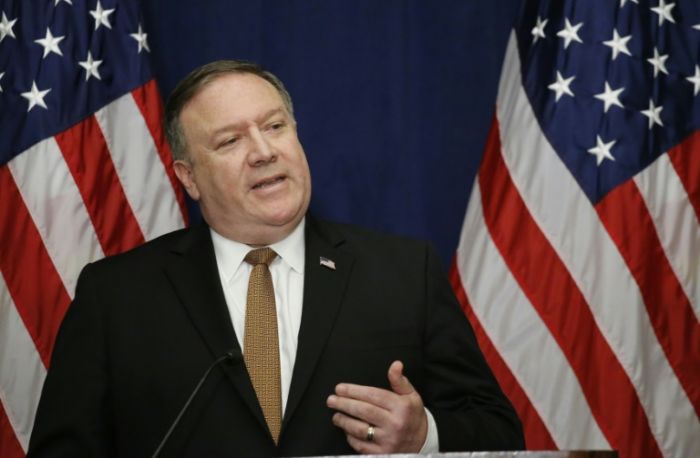
This weekend President Donald Trump and Secretary of State Mike Pompeo as the U.S. bluntly warned the Iranian regime against any further transgressions against the U.S.

It started with Pompeo addressing a gathering of Iranian-American leaders at the Ronald Reagan Presidential Library in which he launched a blistering attack aimed at Iran’s religious and military leaders; likening them to the Mafia.

“The level of corruption and wealth among regime leaders shows that Iran is run by something that resembles the Mafia more than a government,” Pompeo said.

Pompeo’s hardline speech comes just three weeks before the first round of banking sanctions suspended under the Iran nuclear deal is re-imposed after President Trump withdrew from the landmark agreement in May. Bigger sanctions coming in November are aimed at cutting off virtually all Iran’s oil market, according to the Washington Post.

Pompeo’s speech delved deeper into U.S. demands that the Iranian regime stop repressing dissidents and religious minorities, as well as halt its support of militant and terrorist groups throughout the Middle East.

He also said the U.S. Broadcasting Board of Governors was going to attempt and circumvent Internet censorship in Iran by creating a 24-hour Farsi channel for television, radio, digital and social media formats, “so that ordinary Iranians inside Iran and around the globe will know that America stands with them.”

Pompeo’s speech fully realizes the administration’s growing strategy for Iran in which it will make its appeals directly to the Iranian people to propel peaceful, democratic regime change; a policy long advocated by Iranian dissidents, including the National Council of Resistance of Iran.

Pompeo’s speech focused on the rampant corruption within the regime’s leadership which has been the target of mass protests by Iranians across the country since last December. He attacked what he called Iranian regime’s “hypocritical holy men,” saying the ruling elites have enriched themselves through corruption and called out officials by name who he said had plundered government coffers through embezzlement or by winning lucrative contracts.

He singled out “the billionaire general,” Interior Minister Sadegh Mahsouli; Grand Ayatollah Makarem Shirazi, the “Sultan of Sugar”; and Sadeq Ardeshir Larijani, the head of Iran’s judiciary, whom he said had embezzled $300 million in public money.

“Call me crazy,” Pompeo said, “but I’m a little skeptical that a thieving thug under international sanctions is the right man to be Iran’s highest-ranking judicial official.”

He also attacked Ayatollah Ali Khamenei for presiding over a $95 billion “sludge fund” for the Revolutionary Guard Corps.

In delivering this speech Pompeo finally closed the loopholes created by the Obama administration during negotiations on a nuclear deal which let the Iranian regime off the hook for human rights abuses, development of ballistic missiles and sponsorship of militias and terrorist groups in waging proxy wars in Syria, Iraq and Yemen.

Following on Pompeo’s speech, the president himself took to Twitter in response to a speech by Iranian president Hassan Rouhani who warned that the U.S. risked the “mother of all wars” in a conflict with Iran. Rouhani warned against threatening the nation’s oil exports and called for improved relations with its neighbors, including arch-rival Saudi Arabia in what can only be considered a sign of the weakness of the regime in offering an opening to its rival.

In a Twitter post late Sunday, the president said, “To Iranian President Rouhani: NEVER, EVER THREATEN THE UNITED STATES AGAIN OR YOU WILL SUFFER CONSEQUENCES THE LIKES OF WHICH FEW THROUGHOUT HISTORY HAVE EVER SUFFERED BEFORE. WE ARE NO LONGER A COUNTRY THAT WILL STAND FOR YOUR DEMENTED WORDS OF VIOLENCE & DEATH. BE CAUTIOUS!”

The president left little doubt of his intentions in the face of Rouhani’s threat and reminded the Iranian regime that even a blustering speech for domestic political consumption was going to have potentially disastrous consequences for the regime.

Long gone are the days of kowtowing to the regime under the Obama administration where every aggressive act against the U.S. from launching ballistic missiles that could strikes U.S. bases to the funneling to explosives and arms to terrorist groups that killed U.S. service personnel to even taking U.S. sailors hostage was going to be tolerated anymore.

Rouhani and his overlord, Ali Khamenei, find themselves in a pickle as President Trump prepares to re-impose sanctions on Iran’s oil industry as its economy already is reeling from gross mismanagement. A key point for halting Iranian oil exports is through the Strait of Hormuz.

“Mr Trump! We are the honest men who have throughout history guaranteed the safety of this region’s waterways,” Rouhani said in his speech. “Do not play with the lion’s tail, it will bring regret.”

Rouhani’s claims were undercut by threats by regime officials to cut off commerce through Hormuz.

Iran would halt oil shipments through the strait if the U.S. stopped it from exporting, Esmail Kowsari, deputy commander of the Sarollah Revolutionary Guards base in Tehran, said earlier this month, according to the Young Journalists Club, which is affiliated with Iran’s national broadcaster.

But then again lying seems to be a perquisite for being part of the Iranian regime.
 

Filed Under: Blog, News Tagged With: #NuclearDeal, Appeasement policy, Featured, Iran deal, Iran Lobby, Iran sanctions, Khamenei, Moderate Mullahs, Rouhani

Iran Lobby Reduced to Begging for Shoes

June 13, 2018 by admin

Iran Lobby Reduced to Begging for Shoes

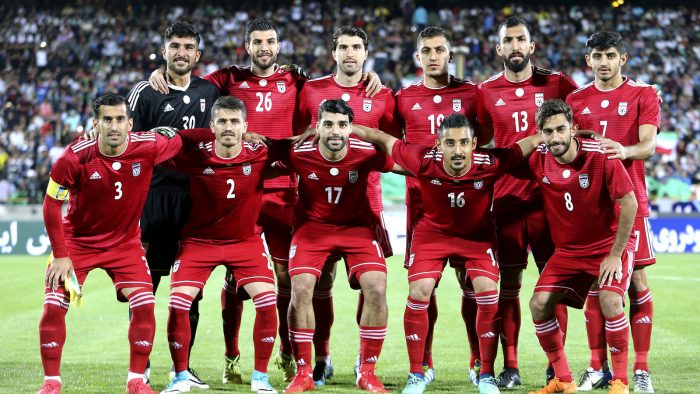
Iran’s team poses for a team photo prior the international friendly soccer match between Iran and Uzbekistan at the Azadi Stadium in Tehran, Iran, Saturday, May 19, 2018. (AP Photo/Ebrahim Noroozi)

The World Cup is about to begin in Russia with the world’s sports stage about to be taken up by soccer teams from around the world. All of them will be clad in gear provided by leading sports manufacturers, but one of the world’s biggest, Nike, will not be providing cleats for the Iranian regime’s soccer team.

On the eve of facing its first opponent in Morocco, Iranian players won’t be wearing Nike footwear after the U.S.-based sporting giant announced it would no longer supply the Iranian team because of new economic sanctions put in place by the Trump administration.

“The sanctions mean that, as a U.S. company, we cannot provide shoes to players in the Iran national team at this time,” Nike said in a statement.

The decision was accompanied by new economic sanctions. The U.S. Treasury can impose a penalty of up to $1 million and 20 years in prison against any company or person who violates the sanctions.

Predictably the Iran lobby spewed with rage at the perceived injustice with the National Iranian American Council leading the charge.

“I haven’t gotten clarity on what legal basis [Nike] is using to say this. They should reference what part of the sanctions they are talking about since technically they’re not selling anything,” said Trita Parsi, head of the NIAC.

The next incoming head of the NIAC, Jamal Abdi, chimed in as well in a press release issued by the NIAC.

“This flies in the face of any claims by the Trump Administration that it is targeting the Iranian government and not the Iranian people. We are well aware that the President’s National Security Advisor, John Bolton, has openly called for the U.S. to take steps to target even sports exchanges with Iran and may relish this shameful situation. Nothing symbolizes the wishes and hopes of the Iranian people more than their national soccer team. And nothing unifies them more than when that team is unjustly targeted and insulted,” Abdi said.

It shows just how far the influence of the Iran lobby has fallen now that President Trump has withdrawn from the Iran nuclear deal and has placed North Korea negotiations front and center of the global debate when the NIAC is reduced to begging for shoes for the regime’s soccer team.

It’s worthwhile recalling some of the lowlights for the Iran lobby and regime when it comes to sporting events which the Parsi and Abdi have conveniently forgotten about; namely, that regime has historically banned women from even attending and watching sporting events such as soccer, swimming, and wrestling.

Many Iranian women who are fans often resort to wearing beards and disguises to gain entry and cheer on their team. If they are discovered, it often leads to jail time.

Since 1979, women athletes have been subject to strict requirements when competing in Iran or abroad, with the Iranian Olympic Committee stating that “severe punishment will be meted out to those who do not follow Islamic rules during sporting competitions”. The committee banned women athletes from competing in Olympic events where a male referee could come into physical contact with them. At 1996, 2000, 2004 and 2008 Summer Olympics combined, a total of six women represented Iran.

Dorsa Derakhshani, 19, an Iranian chess grandmaster champion who grew up in Tehran, was forced out for choosing not to wear a hijab and now plays for the U.S. Chess Federation.

In many cases, especially women, the Iranian regime has often chased away its best and brightest in favor of maintaining the archaic nature of the theocracy’s laws.

These issues are never mentioned by the Iran lobby nor do they earn condemnation by the NIAC, which instead chooses to attack the issue of sanctions, by using the plight of the men’s soccer team as a PR tool.

The underlying concern for the Iran lobby is what the refusal by Nike represents, which is worry that the new sanctions imposed by the Trump administration will be deeper, harder and more effective than those that originally drove the Iranian regime to the nuclear bargaining table in the first place.

If sporting manufacturers are opting to stay from potential sanctions for participating with Iran, what does that say about heavy industries the regime’s economy and military depend on such as electronics, steel, petroleum, chemicals, and manufacturing?

The worry for Parsi and Abdi is that if other companies, including those in Asia and Europe, take these sanctions by the Trump administration more seriously, the Iranian regime could soon find its faltering economy knocked flat on its back which would pose significant threats to the rule of the mullahs in light of widening protests by ordinary working-class Iranians over the terrible economic conditions they are now facing.

While Abdi tries to frame the debate around noted hawk John Bolton, the reality is that he worries that the tough stance President Trump is taking, especially in recent trade talks, demonstrates his willingness to go after any company that engages in trade with Iran.

This is why regime leaders such as Hassan Rouhani have worked hard in an effort to preserve economic ties with the European Union following the U.S. pullout from the nuclear deal, but that effort looks increasingly like a failure as more and more private companies reassess their potential risk and weigh the disadvantage of doing business with the Iranian regime against the potential for crippling sanctions.

One example of the impact of U.S. sanctions was in the case of Chinese telecommunications giant ZTE Corp which was on the verge of extinction because of sanctions stemming from its illegal trading with Iran and North Korea.

Only after President Trump ordered a review and ZTE paid a whopping $1.4 billion fine and turned over its management and board did it manage to cling to life.

The example was unmistakable for any company deciding to do business with the Iranian regime, even more, a shoe manufacturer.

Michael Tomlinson

Filed Under: Blog, News Tagged With: Featured, Iran Lobby, Iran Mullahs, Iran sanctions, Iran soccer team, Jamal Abdi, Nike, Sanctions, Trita Parsi

Jamal Abdi Responds to Mike Pompeo with Absurdities

May 23, 2018 by admin

Jamal Abdi Responds to Mike Pompeo with Absurdities

Jamal Abdi Responds to Mike Pompeo with Absurdities

In a landmark speech to the Heritage Foundation, U.S. Secretary of State Mike Pompeo laid out the Trump administration’s new policy towards the Iranian regime including a list of a dozen conditions the mullahs would need to address to move forward with the U.S. in a new relationship.

Chief among those conditions was a new requirement that the Iranian regime would have to stop enriching all uranium and supporting militant groups such as Hezbollah and the Houthi; conditions that the Obama administration had tossed aside in its haste to nail down a nuclear deal with almost no pre-conditions.

In exchange for accepting these new conditions, Pompeo laid out the U.S. would lift punishing economic sanctions, restore diplomatic relations, open up commercial activity and give Iran access to advanced technology it badly needs to revitalize its economy and infrastructure.

The policy as laid out by Pompeo essentially resets the clock to the period before the Iran nuclear negotiations ran off the rails when crushing and comprehensive economic sanctions from countries around the world had dragged the Iranian regime kicking and screaming to the bargaining table where the Obama administration promptly gave away the proverbial house.

If this was a game of high stakes poker, the Obama team folded even before the flop, paying the price of the ante, but never seeing the hole cards.

Of course, the idea of a new, revised agreement that finally corralled the regime’s worst instincts was greeted with skepticism by European leaders.

Boris Johnson, the British foreign secretary, said the U.S. decision to fold all of its disputes with Tehran into a “jumbo Iran treaty” would be very difficult to achieve “in anything like a reasonable timetable,” according to the Wall Street Journal.

Federica Mogherini, the European Union’s foreign-policy chief, insisted the Iran agreement President Trump had abandoned remained the best way to contain Tehran’s nuclear efforts and said the EU would support it as long as Iran did. “The deal belongs to the international community,” she said.

But the new policy articulated by Pompeo is a clear demonstration of what should have been on the table in the original negotiations back in 2015. If the U.S. had exercised its leverage at that crucial moment, the devastating wars in Syria and Yemen may have never taken place.

Predictably the National Iranian American Council led the braying chorus of naysayers attacking Pompeo’s speech and leading the charge was Jamal Abdi, recently anointed as the new president for NIAC.

“The Trump Administration is setting the stage for a war of choice with Iran, with Mike Pompeo offering a smokescreen of diplomacy to distract from the administration’s pursuit of Iraq-style regime change,” Abdi said in a statement released by NIAC.

“Trump is renting out U.S. Middle East policy to the highest bidder – in this case Saudi Arabia, the GCC states, and Israel – and expecting ordinary Americans and U.S. service members to shoulder the burden of a regional escalation, a potential trade war with our allies, and a new Iraq-style regime change war in the Middle East.”

Abdi may be replacing Trita Parsi, but the rhetoric and misstatements are still the same. NIAC once again trots out the war fears in a false flag effort to convince Americans that the president wants to wage war against Iran; forgetting that then-candidate Trump was the one of the first on the campaign trail to criticize the Bush administration’s decision to invade Iraq and has been reluctant to commit U.S. combat troops to any new escalation, especially during the bloody Syria civil war.

Abdi of course neglects to mention that Iranian regime was responsible for the escalation that killed over 400,000 people in Syria, when it shipped Hezbollah fighters, then its own Revolutionary Guards to fight there.

Abdi doles out the same tropes the Iran lobby has used before, but now they ring hollow with the benefit of hindsight. The three years since the deal have shown how an unrestrained Iran has radically reshaped the Middle East and resulted in deaths from the Mediterranean to the Indian Ocean and the essential failure of the promises made by NIAC and the Iran lobby: the nuclear deal did not moderate the Iranian regime but unleashed it.

Now that Iran’s economy is reeling from corruption, mismanagement and diversion of billions of dollars to its military and terrorism, the mullahs in Tehran are under enormous pressure from mass protests across the country since last December, which is why the Trump administration views this as an opportunity to reset the situation and bring about a more comprehensive deal.

In his own unconventional style, President Trump sees an opportunity here to correct what the previous administration fumbled and the Iran lobby has been rendered largely impotent in trying to stop him.

Laura Carnahan

Filed Under: Blog, Current Trend, News Tagged With: #NuclearDeal, Appeasement policy, Featured, Iran Lobby, Iran sanctions, IRGC, Jamal Abdi, National Iranian American Council, NIAC, NIAC Action, Trita Parsi

Iranian Regime Threats Ring Hollow

April 26, 2018 by admin

Iranian Regime Threats Ring Hollow

Iranian Regime Threats Ring Hollow

What a difference a year makes. Last year the Iranian regime was riding high with its victories in Syria, its military partnership with Russia, the overthrow of the government in Yemen, billions of dollars to spend on upgrades to its military and successful ballistic missile launches showcased on state television almost weekly.

But in less than 12 months, the regime is under the most severe attack and pressure from all quarters than it has ever been since the nascent days of the Islamic revolution that the mullahs highjacked.

First the foremost, the Iranian economy is in freefall and a basket case. The rial has dropped faster than a lead anchor from a ship and furious attempts by the Iranian regime to artificially boost it and control the flow of foreign currency through local money changers has failed miserably.

The threat of a new cyber currency being offered by the ubiquitous messaging app Telegram didn’t help either which led to the mullahs trying to ban it even though over half of the Iranian population uses it.

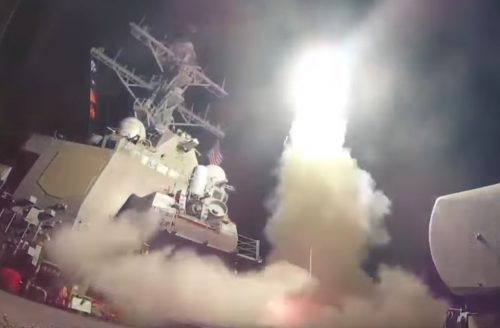
On the military fronts, the gains made in Syria have been threatened with Bashar al-Assad’s continued indiscriminate use of chemical weapons to kill men, women, and children leading to the first multi-national military response on Syrian targets by French, British and U.S. forces.

It also forced Russia to sit on the sidelines and allow its ally to be hammered by over 300 missile strikes.

Also, Iran’s move into Yemen had the unintended effect of galvanizing long-time foe Saudi Arabia into action and form alliances that were unheard of only a short time ago such as Saudi and Israeli defense officials meeting to go over planning in defending against Iranian aggression and even permitting mutual flights over each other’s airspace for the first time ever.

The mullahs also probably did not count on the waves of mass protests and public discontent that have sprung up beginning late last year and have been propelled not by a single issue such as the disputed presidential election of 2009, but rather a whole raft of complaints ranging from pathetic job growth and record unemployment among youth, to the constant oppression of Iranians, especially women, over everything from riding bicycles and not wearing hijabs to degraded environmental conditions turning much of the Iranian countryside from fertile farmlands to barren deserts.

Not to mention the election of President Donald Trump and the 180-degree about face from trying to appease the regime under President Obama to the aggressive efforts to match Iranian aggression move for move.

You allow Assad to use chemical weapons? Okay, we’ll bomb sites and if Iranian military personnel happen to be there assisting, tough.

You threaten to walk away from the nuclear deal? Feel free to do it.

Every Iranian regime temper tantrum, taunt, and the threat is now met with a shrug of indifference and steely resolve instead of the constant handwringing that marked the previous administration.

Even the Iran lobby is left with little to nothing to say. In response to the president’s most recent comments to the possibility of Iran walking away from the nuclear deal, Trita Parsi of the National Iranian American Council issued a curt two-paragraph statement that shows how much his verbosity has plunged in this new era.

“Macron and Europe seem willing to bend over backward to save the nuclear deal and prevent catastrophe. When our closest allies express alarm in unison, we should listen. Trump should quit while he is ahead and reaffirm the U.S. commitment to the JCPOA before it is too late. The alternative would be an isolated America, an unchecked Iranian nuclear program, and an escalation towards war,” Parsi writes.

It’s laudable for Parsi to even admit for the first time that President Trump is actually ahead of the ballgame with Iran. He recognizes, even if he is unwilling to say so publicly, that President Trump’s actions have turned the tables on who controls leverage in the Middle East.

The same approach has brought a startling and breathless turnaround with North Korea in which the Hermit Kingdom has agreed for the first time to put denuclearization on the negotiating table without any preconditions.

Parsi understands that the same mobilization of pressure and harsh rhetoric backed by tough actions are being applied to Iran now with most European allies, who had been staunch supporters of the Iran nuclear deal, now being contortionist moves to appease the Trump administration in an effort to save the deal.

French President Emmanuel Macron’s visit to Washington was designed to showcase French unity with the U.S. on issues such as Syria, while also acknowledging the need to address issues left untouched by the Obama administration such as ballistic missile development and unfettered access to now-blocked off Iranian military sites.

The fact that all of Europe is now intensely focused on appeasing President Trump instead of the mullahs is a remarkable feat of diplomatic brinkmanship and indicative of how the tide has utterly turned against the Iranian regime.

Meanwhile as Iran threatens to pull out of the treaty on non-proliferation of nuclear weapons if the Trump administration approves a non-certification of the deal by the May 12th deadline, President Trump now essentially has Iran dancing on a string since he could simply conditionally approve the extension one more time and squeeze Iran and Europe for even more concessions.

The president has taken a page from the mullahs’ playbook and is throwing it right back at them.

The threat to pull out of the NPT rings hollow since by doing so, Iran would be throwing its lot in with countries such as Israel which has not signed the agreement.

Now that would be ironic.

Michael Tomlinson

Filed Under: Blog, News Tagged With: Featured, Iran deal, Iran sanctions, Macron Visit, National Iranian American Council, NIAC, NIAC Action, Syria, Trita Parsi, Trump, Yemen

The Rank Hypocrisy of Iran Lobby on Syria

April 16, 2018 by admin

The Rank Hypocrisy of Iran Lobby on Syria

The Rank Hypocrisy of Iran Lobby on Syria

Bashar al-Assad rules Syria with the same kind of tyrannical tactics common in Iran under the rule of his mullah partners. That includes the use of chemical weapons to target and kill pockets of resistance to his rule; the most recent strike coming recently and claiming the lives of men, women, and children in grisly scenes broadcast around the world.

The repeated use of such weapons resulted in a coordinated strike by the military forces of the U.S., Great Britain and France against three sites identified as having been storage or development sites for Assad’s chemical weapons this past weekend.

The strikes themselves were hardly a surprise given the level of revulsion around the world to Assad’s continued use of chemical weapons and the tweeting by President Donald Trump of his open intention to punish the rogue regime.

What was interesting was his televised address once the attacks began of his putting the Iranian regime and Russia on notice for their continued support of the Assad regime.

“What kind of a nation wants to be associated with the mass murder of innocent men, women, and children?” the president said.

President Trump asks an important question and really the only one that matters for the future of Syria and the Middle East.

Under his predecessor’s administration, the U.S. engaged in a foreign policy based largely on appeasing regional bad actors like the Iranian regime in an effort to coax them to adhere to dubious international agreements. That policy led to agreements that essentially exempted Iran from militant actions that only exacerbated and inflamed regional conflict.

Those policies gave us the quagmire President Trump now faces where there are hardly any good choices. The decision to strike militarily was not taken lightly and it says much for the sake of future diplomacy when the U.S. was joined by British and French military forces in a united show of force.

Take into consideration the positive alignments by the Arab world led by Saudi Arabia in confronting Iranian regime’s aggression and we see a world moving towards to the kind of unified front that helped bring the Iranian regime to the bargaining table in the first place with crushing economic sanctions before the Obama administration let the regime off the hook.

“We renew our strong condemnation of terrorist acts carried out by Iran in the Arab region, and we reject its blatant interference in the internal affairs of Arab countries,” Saudi King Salman said at a summit of Arab leaders, without referencing Friday’s missile strikes on Syria, according to Reuters.

Riyadh expressed its support for the strikes on Damascus in a statement on Saturday.

“We fully support military operations against military targets in Syria,” the Saudi Foreign Ministry said. “The military operation was necessary to protect civilians and stop chemical use.”

But for the Trump administration, the strike was more than just eradicating chemical stockpiles—stockpiles that the Russians had promised were removed under their supervision in a deal with the Obama administration—but rather about a broader agenda that includes containing the Iranian regime.

In an interview with ABC News, White House press secretary Sarah Sanders said the U.S. had three objectives in Syria: Defeating ISIS, containing Iran and ending the use of chemical weapons.

Which makes the reaction by the Iran lobby, specifically the National Iranian American Council, all the more appalling.

In a statement released by the NIAC, research director Reza Marashi said:

“The situation in Syria is tremendously dangerous, and President Trump risks throwing fuel on the regional fire. Given that Iranian and Russian forces are closely embedded with the Syrian government, there is a significant risk that any strikes will trigger retaliation and a bloodier, wider war with few discernible ways to de-escalate the conflict.”

We cannot believe Marashi was educated in a home for mentally deficit children growing up, but he must assume the world’s journalists are idiots when he calls for deflecting attacks on Syria because Russian and Iranian forces are deeply embedded there since it was the Iranian regime and Russia that have been supporting Assad and enabling his use of chemical weapons in the first place!

Wouldn’t it have been more responsible for Marashi and NIAC to denounce Assad’s use of chemical weapons and urge Iran and Russia to use their influence on Assad to de-escalate the conflict and garner a promise from him not to gas his own people anymore?

Instead Marashi ends the paltry statement by calling U.S. action “reckless” but only citing a “duty” by Iran and Russia to rein in Assad. Hardly a denunciation of the use of vile weapons.

“A large part of the reason that Syria is in ruins today is because nearly all actors have pursued military solutions instead of diplomacy aimed at halting the bloodshed. An eye for an eye approach will not bring justice or peace to Syria, and there is no moral high ground for those who respond to abhorrent violence with more violence,” Marashi also writes.

The irony of Marashi calling out the lack of diplomatic actions when the Iranian regime ignored diplomatic efforts to stop the Syrian civil war when it started and instead poured billions of dollars to prop up Assad, mobilized tens of thousands of Hezbollah fighters from Lebanon, shipped in Iranian-backed Shiite militias from Iraq, recruited Afghan mercenaries and started an airlift of ammunition and supplies using its own regional airlines is appalling to any rational observer.

The Iranian regime has been the guilty in ignoring diplomacy and using sheer military might to hold Syria together for Assad. Remember, it was the Iranian regime that sent its notorious Quds Force commander, Qassem Soleimani, on a secret trip to Moscow to beg for Russian intervention in July 2015 to save Assad and Iranian forces from defeat.

Marashi’s statement only proves once again how the NIAC and rest of Iran lobby are still working to spread the kind of fake news that helped the Iranian regime avoid crippling sanctions in the first place, freeing the regime to support Assad and allow these chemical attacks to take place in the first place.

All of which begs the question: Why does the NIAC support the slaughter of men, women, and children with poison gas?

Michael Tomlinson

Filed Under: Blog, News Tagged With: Featured, Iran Lobby, Iran Mullahs, Iran sanctions, Iran Terrorism, IRGC, Syria

As Currency Plummets the Iran Regime Teeters on Collapse

April 15, 2018 by admin

As Currency Plummets the Iran Regime Teeters on Collapse

As Currency Plummets the Iran Regime Teeters on Collapse

Iran’s currency, the Rial, is on a skydive plummet downward to historic levels and poses the most significant threat to the stranglehold the mullahs have had on the Islamic state.

Pegged to the price of petroleum, the Rial has been rocked by the global glut of oil and a stagnant economy riven through by rampant corruption and the diversion of billions of badly-need dollars to fund wars in Syria, Iraq and Yemen as well as a massive military build-up including a ballistic missile program.

Now as Iran has been gripped by rising political tension with massive demonstrations sweeping across the country since last December, there has been a rush to the banks as Iranian citizens desperately try to cash out and swap to scarce U.S. dollars in a scene reminiscent of bank runs during the Great Depression.

The Rial has bled away a third of its value just this year alone with an exchange rate of 60,000 Rial to a single dollar. The track record for the mullahs in fiscal management is pretty rancid ever since the Iranian revolution in 1979 when one dollar bought 70 Rials.

Since Hassan Rouhani assumed power in 2013, 36,000 Rials equaled one dollar. The drop in value is as much a reflection of Iranians lack of confidence in their government as it is of an economy that is nearing Third World status.

The mullahs have reacted in their typical brutal manner setting an official exchange rate of 42,000 Rials to the dollar in an example of wishful thinking. To enforce that rate, the mullahs have promised harsh punishment including arrest for anyone trying to exchange Rials at a different rate than the one established by them.

The crisis is driven by an inability to access physical currency notes, which are estimated at only five percent of all foreign currency in Iran, while the rest is available in the form of credits for business and the government.

Long gone it seems are the images of pallets loaded down with dollars and euros being unloaded from airplanes as part of the ransom payment made by the U.S. in exchange for U.S. hostages as part of the Iran nuclear deal.

That nuclear deal has failed to deliver the benefits promised by Rouhani to ordinary Iranians; instead the regime has siphoned the economic relief it brought to state-owned industries and the powerful Revolutionary Guard Corps.

It has also failed to generate the flood of foreign investment promised by Rouhani with many foreign companies unwilling to risk capital in investments in Iran when the U.S. has contemplated additional sanctions for the regime’s abysmal human rights record and its involvement in the support of terrorism and the war in Syria.

The use of chemical weapons repeatedly by the Assad regime against its own citizens has also ostracized Iran for its support of Assad and the heavy use of Iranian military units in the conflict.

The sponsorship of the revolt in Yemen and support of Houthi rebels has also ignited another potential regional conflict with Saudi Arabia and brought the U.S. and Russia into contentious situations that could possibly start a wider war rattling any potential investors.

Other efforts by the Iranian regime to bring in more foreign currency include trying to increase oil production in order to generate more sales overseas, but that has been stymied by fields utilizing outdated equipment and failure to attract any significant foreign partners to develop oil fields.

“This currency crisis is another step in the collapse of the Iranian economy, which was expected to rebound after the signing of the nuclear agreement. Difficult economic conditions brought protestors to the streets in a number of Iranian cities earlier this year, however those protests were quelled by the government. It is important to continue watching the economic situation in Iran, because historically economic issues have typically led to the most significant political unrests in that country,” wrote Ellen R. Wald, a historian and scholar at the Arabia Foundation.

The regime hasn’t been helped by action this week by the European Union to extend sanctions on Iran over human rights violations in an effort to demonstrate its willingness to the Trump administration to hold Iran accountable, while trying to preserve the nuclear agreement.

France has pushed for new sanctions over Iran’s missile program and involvement in conflicts in the region, including in Syria where Tehran backs President Bashar al-Assad. Paris hopes that would show President Trump the EU takes his concerns seriously.

The Foundation for Defense of Democracies, offered in an editoRial in The Hill that the collapsing Rial represented an opportunity to apply even more pressure on the regime.

“The White House should re-impose sanctions on the Central Bank of Iran to vindicate currency traders’ fear that it now plans to inflict serious damage on Tehran’s economy,” they write.

“Based on our analysis of the Central Bank data, Iran’s currency has lost roughly half of its value, 46 percent, falling from 40,170 to 58,880 per dollar, since Trump put the future of the nuclear deal in doubt last October.  The Iranian economy looked particularly wobbly amidst protests in December when Iranians took to the streets to protest the regime-controlled banking sector, and lack of economic opportunity and political freedom,” they added.

They believe that additional pressure on Iran’s Central Bank could be the nudge necessary to send it into collapse and bring down the regime.

“Under the sanctions law applied prior to the nuclear deal, foreign financial institutions are generally prohibited from engaging in transactions with the Central Bank. In effect, the Bank’s foreign-held accounts are put on lock down, barring the regime from accessing its foreign exchange reserves.  On paper, Iran may get paid for its oil but the money sits in the purchaser’s country and is only available for Iran to buy goods from that country in the local currency. Without access to these reserves, the regime would find it much harder to defend the Rial,” the article said.

The proverbial hammer blow this would deal to the regime is significant since the Central Bank provides the funding for the Revolutionary Guard Corps and supplies the cash for its activities in Syria, Iraq and Yemen.

The irony is that the regime can be crippled without canceling the nuclear deal as the Iran lobby has feared and instead using the Rial as a leveraged weapon against the mullahs by hitting them where it hurts; wiping out popular support from the Iranian people.

Remember, the original revolution against the Shah was largely fueled by economic concerns before it was stolen by the mullahs. Wouldn’t it be delicious to see the same thing happen to them?

Laura Carnahan

Filed Under: Blog, News Tagged With: #NuclearDeal, Featured, hassan rouhani, Iran deal, Iran Human rights, Iran Lobby, Iran sanctions, Iran Terrorism, IRGC, Sanctions

Iran Lobby Attacks on John Bolton Hide Fear of Regime Change

March 30, 2018 by admin

Iran Lobby Attacks on John Bolton Hide Fear of Regime Change

Iran Lobby Attacks on John Bolton Hide Fear of Regime Change

The Iran lobby, especially the National Iranian American Council, have been busy hurling attacks and invectives at John Bolton, President Donald Trump’s nominee to be the new national security advisor, calling him everything from being crazy to a war monger to an extremist or child of Satan.

The accusations have seemed to take on a life of their own as Iranian regime loyalists such as NIAC’s Trita Parsi empty out the thesaurus in an effort to try and find something that will stick and either derail his nomination or throw cold water on the administration’s plans to revisit the Iran nuclear deal.

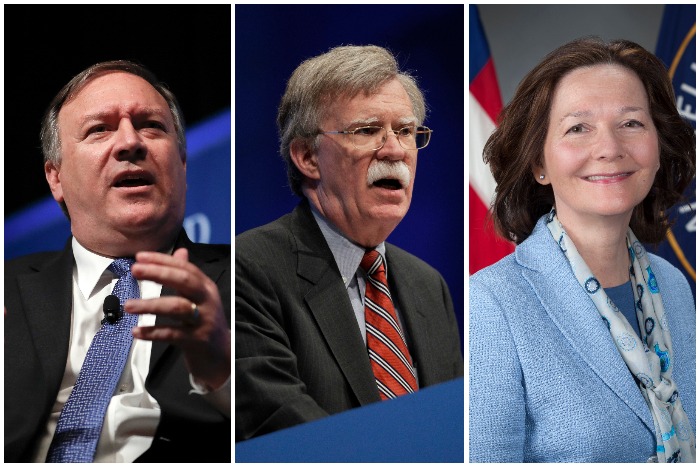
In either case, it seems apparent the trains have already left the stations and on Capitol Hill, it appears Democrats are only pondering going after President Trump’s CIA director nominee, Gina Haspel, for past involvement in the interrogation of terror suspects, with Bolton and secretary of state nominee, Mike Pompeo, looking like solid confirmations.

This new troika of national security, intelligence and diplomatic heads represents a significant shift in the president’s thinking as it relates to the challenges of Iran, North Korea and Islamic extremist terrorism.

Far from trying to swat individual terror suspects like so many mosquitos, it appears the administration maybe looking for a more strategic approach in draining the swamp so-to-speak by dealing directly with the sources of terrorism; more specifically nation states.

The terror attacks of 9/11 served as a reminder that safe harbors such as a Taliban-controlled Afghanistan, provide training, security, funding and logistical support for terrorists to plan and execute their attacks.

The rise of ISIS out of the wreckage of a Syrian civil war and Iraqi sectarian conflict borne out of Iranian regime’s meddling carved out a caliphate which provided ISIS with everything from oil to sell and ready recruits to satellite broadcasts and a news magazine.

The Iranian regime set the template when it built Hezbollah to a formidable terrorist operation and shock troops for proxy wars. Iran mullahs utilized Hezbollah and a safe harbor in Lebanon.

But now the mullahs in Tehran are confronted with a rapid flurry of problems that have escalated nearly out of their normally iron-fisted control.

  • The explosion of U.S. fracking for oil turned it into the top oil producer in the world and forced prices to plummet on the open market, crushing revenues the mullahs were expecting from the lifting economic sanctions following the Iran nuclear deal. Coupled with the drain on cash reserves for propping up the Assad regime in Syria and spending heavily on military equipment, including building a ballistic missile program, Iran soon became a pauper nation;
  • A free-falling economy gave ordinary Iranians a gut-punch with stagnant wages, limited job opportunities and a deeply corrupt government that controlled almost all facets of the economy. Couple that with deep dissatisfaction over the increasing divide of haves vs. have-nots as those with ties to the Revolutionary Guard Corps and Quds Force or the ruling mullahs profited handsomely; and
  • Massive protests swept the nation as the combination of punishing economic conditions and dissatisfaction with oppressive rule, including morality laws specifically targeting Iranian women, drove ordinary Iranians to extraordinary acts of defiance unheard of in Iran. This included women launch the hijab movement with the mullahs responding by passing laws criminalizing it on the basis it promoted “prostitution” and calling for 10 years imprisonment.

These trends are unmistakable and more importantly, unassailable by the Iran lobby, which for the most part has stayed silent on these domestic protests; choosing only to blame the economic conditions on the U.S. not fully complying with the terms of the nuclear deal.

Apparently Parsi and his friends think we should empty out Ft. Knox on behalf of the mullahs.

What is apparent though is that the accusations being flung by the Iran lobby at Bolton’s nomination miss an inescapable truth which is Bolton is not setting the stage for war when Tehran has already been at war with the West ever since it supplied explosives to kill Marines in Beirut or U.S. troops in Iraq.

Ivan Sascha Sheehan, incoming executive director of the School of Public and International Affairs at the University of Baltimore, makes that point in a strongly worded editorial in The Hill.

“Those who are concerned about the potential for war with Iran should embrace Bolton’s appointment and support the administration’s efforts to confront Tehran’s destabilizing regional influence by taking its theocratic regime to task. The regime’s misbehavior only worsened in the run-up to Trump’s ascension to the Oval Office, and particularly under the prior administration’s cooperative policies that engendered an even greater sense of impunity than the Islamic Republic was used to,” Sheehan writes.

“Trump’s assertiveness during his first year in office is paying small dividends. U.S. Navy officials recently reported that close encounters between their vessels and those of the Iranian Revolutionary Guard Corps (IRGC), which were commonplace over the previous two years, halted abruptly in August,” he added.

But what the Iran lobby is most fearful of is not a simple knee-jerk tearing up of the nuclear deal by President Trump, but rather a consensus among U.S. allies to rework the deal, toughening provisions on terror support, ballistic missile development and human rights improvement, in an effort to save it.

Using the deal as a leverage against the Iranian regime is fair turnabout since the regime and Iran lobby have used its continued existence as a blunt instrument against any calls to rein in the regime’s excesses.

The Economist outlined some of the intense deal-making going on now from Great Britain, France and Germany to compel the Iranians to accept new restrictions; restrictions that should have been included in the original deal in the first place.

“Sir Simon Gass, a former British ambassador to Tehran who led the British team negotiating the deal, says that it might be possible to get an agreement from Iran not to develop an intercontinental-range ballistic missile (ICBM) capable of hitting America. An ICBM, he points out, only makes sense if it carries a nuclear warhead, so testing one should prompt broad economic sanctions. Patricia Lewis of Chatham House, another London think-tank, believes that the Europeans may already be talking to the Iranians about a future regional missile-deal that would ban long- and intermediate-range nuclear missiles,” the Economist editorial said.

Ultimately the real rub for Parsi and his fellow travelers is that new restrictions, coupled with worsening economic conditions will once again rollback Tehran back to 2009 when massive street protests nearly toppled the regime.

As the president’s new team take their place, it’s clear the era of appeasing the mullahs is dead.

Michael Tomlinson

Filed Under: Blog, News Tagged With: #NuclearDeal, Appeasement policy, Featured, Iran Ballistic Missile, Iran deal, Iran Human rights, Iran Lobby, Iran sanctions, Iran Talks, Iran Terrorism, National Iranian American Council, NIAC, NIAC Action, Trita Parsi

NIAC Misses Mark on Apple Shutdown of Iran App Store Access

March 20, 2018 by admin

NIAC Misses Mark on Apple Shutdown of Iran App Store Access

NIAC Misses Mark on Apple Shutdown of Iran App Store Access

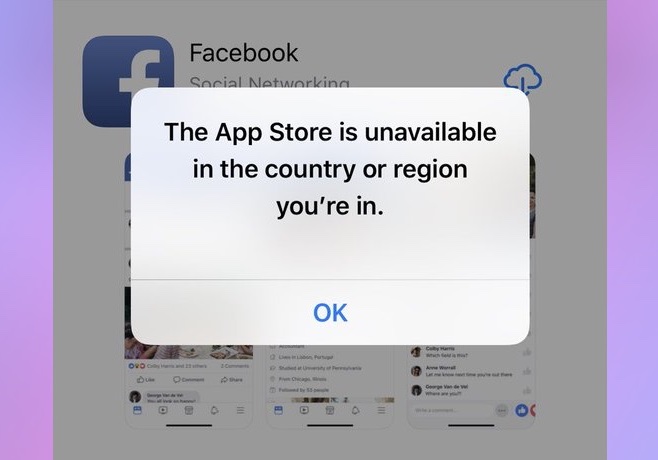
Apple reportedly shutdown access to its App Store to users and developers in Iran last week raising intense speculation as to why the tech giant restricted access, although Iranian users reported being able to access the store by the weekend.

Speculation ranged from potential U.S. sanctions looming on the horizon to the announcement of CIA director Mike Pompeo to replace Rex Tillerson as U.S. Secretary of State.

The Iran lobby weighed in predictably as well, with the National Iranian American Council leading the blame game with a statement it issued in which it again displayed the irony of decrying Apple’s move, while at the same time never criticizing the Iranian regime’s weaponization of those some smartphone apps to identify and arrest potential dissidents and protestors.

Earlier this month, the National Council of Resistance of Iran (NCRI), the largest Iranian dissident group in the world, issued a report detailing how the Iranian regime has launched a sophisticated cybercampaign to deploy apps on Apple and Google’s app stores that mimic more well-known apps and allows the regime’s security services to monitor the activities of Iranian citizens, as well as export malware cyberattacks against U.S. citizens.

Starting with the massive election protests of 2009, smartphones have played a vital role in organizing opposition to the Iranian regime and helped share video, photos and audio of the brutality of the regime as it has arrested, beaten and even killed protestors over the years; culminating to the most recent protests that have rocked Iran over the past two months.

These include protests over poor economic conditions, rampant corruption within the regime and even over morality codes by women who have abandoned head scarves and posted photos on social media in a form of soft power protest that has landed many of them in prison.

Nearly 48 million Iranians have smartphones with about 70 percent of them having access to the internet, making Iran one of the more connected nations in the Middle East, but the regime has struggled to restrict Internet access and have tried to disrupt the usage of popular messaging apps such as Telegram and WhatsApp by protestors.

The move by Apple, while not publicly commented on by the company yet, highlights the precarious nature of technology in Iran. The regime uses it as a prolific tool for cyberwarfare while the rest of the free world views it as an engine of change, commerce and communication.

The NIAC highlights this in its statement saying:

“Access to communication technology is important for both humanitarian as well as U.S. strategic interests, which is why exemptions for Internet communication tools were put in place under the previous Administration. Allowing these exemptions to fall by the wayside helps no one except those who seek to keep the Iranian people silent.”

It’s a laudable position to take, but hollow and empty when we consider how the NIAC has never criticized the Iranian regime for its manipulation of technology to restrict protests.

“We have already been in communication with the U.S. government about decisions late last year by Apple and Google to block Iranian developers from hosting applications on their platforms. We have emphasized the need to broaden exemptions to reverse such decisions and will redouble our efforts to address these new challenges,” the NIAC statement said.

It’s a twisted piece of logic by the NIAC since the NCRI report, as well as similar reports by national intelligence agencies, have long documented the Iranian regime’s use of Iranian programmers to create apps that have malware embedded in them and efforts to crack the encryption of apps such as WhatsApp.

But this exclusion of Iran from the Apple App Store is not the first time. Back in August of 2017, Apple removed all apps created by Iranian developers from its App Store as a result of U.S. economic sanctions.

Iran’s own Telecommunication Minister said the ban of Iranian-made apps would probably have a limited effect on the country’s economy and tech industry, as the US company had only an 11 percent market share in the country, according to a report from the New York Times, but the move was bound to hurt the regime’s intelligence gathering efforts.

Far from hurting Iranians, as the NIAC suggests, restricting the Iranian Revolutionary Guard Corps access to these app stores benefits those Iranians who rely on clandestine technology to spread, share and collaborate in their dissent.

This is why the NIAC continually misses the mark in its position papers and statements because of its slavish devotion to the Iranian regime and an uncompromising reluctance to ever criticize Tehran on anything.

The NIAC should be focused on the cyberwall the regime operates allowing it to monitor virtually all Internet activities of the Iranian people. The NIAC should be calling on the regime to end its use of bogus social media apps to monitor its own people. The NIAC should call for the release from Iranian jails any Iranian being detained for posting a video or photo that violated the regime’s draconian morality codes.

The NIAC should speak on behalf of freedom and democracy and not try to support a regime that is slowly dying from the corruption that is rotting the core of the Iranian government.

That rot has become so apparent to the Iranian people that they have been motivated to post online their own protests and Apple and other Western companies should be encouraged to do more to obstruct the Iranian regime and aid these people in their quest for freedom and democracy.

Michael Tomlinson

Filed Under: Blog, National Iranian-American Council, News Tagged With: Apple Store Access for Iran, Featured, Iran Human rights, Iran Lobby, Iran sanctions, Iran Terrorism, IRGC, National Iranian American Council, NIAC, NIAC Action, Trita Parsi

IranLobby Screams About War With Iran

March 16, 2018 by admin

IranLobby Screams About War With Iran

IranLobby Screams About War With Iran

“War!” The talking point pours out of the mouths of Iran lobby supporters such as Trita Parsi of the National Iranian American Council about as often as he tweets it seems. Parsi and his colleagues have always waved the banner of war as a means of distracting from the key issues continually dogging the Iranian regime such as its miserable human rights record.

During the negotiations for the Iran nuclear deal, the specter of war was a near-constant theme sounded by the NIAC, even though there was never any real prospect of a conflict with the Iranian regime under the Obama administration.

It was however a convenient tool to use in the so-called “echo chamber” of public opinion created by the NIAC in collaboration with a White House intent on landing a PR win at almost any cost, including appeasing the mullahs in Tehran.

Even after the deal was struck and the Iranian regime launched a series of wars in Syria, Iraq and Yemen, the chorus of the Iran lobby continued to warn that any effort to take action against Iran would inevitably result in war.

It was a silly argument; akin to saying that trying to stop the burglar robbing your house would only lead to more violence so one should leave him to his thievery.

After President Donald Trump took office and installed an administration openly skeptical of the Iran nuclear deal, the Iran lobby continued to warn that any effort to rein in Tehran’s militant actions would only lead to war. This included doing everything in the PR/lobbying handbook to preserve the nuclear deal that delivered billions in cash to the mullahs to help fund their wars and ballistic missile program.

Now the president has decided to shuffle his cabinet by moving Mike Pompeo from the directorship of the Central Intelligence Agency to become Secretary of State, replacing the outgoing Rex Tillerson.

The change represents a potential realignment of U.S. foreign policy hewing more closely to the promises made by candidate Trump on the campaign trail when he called the Iran nuclear deal the worst deal ever made and vowed to tear it up for a new one.

Predictably, Parsi and the NIAC went on the offensive in near hysterical warnings of war. The NIAC issued a statement that blasted the appointment of Pompeo, a noted and vocal critic of the Iran nuclear deal.

“Mike Pompeo’s nomination for Secretary of State could have profound implications for the fate of the Iran nuclear deal and the prospect of a new war in the Middle East. While serving in Congress, Pompeo’s positions on foreign policy were often ideological and tended towards militarism rather than diplomacy. His opposition to the Iran deal – including the political hijinks he engaged in to undermine U.S. negotiators – and his comments suggesting that military strikes would be more effective than diplomacy, raise serious questions about his fitness to serve as America’s top diplomat,” the NIAC statement read.

“It may result in a dramatic escalation of tensions in the Middle East and a war with Iran.”

Of course, Pompeo’s position as CIA director provided him with the ultimate access to the most conclusive information on whether or not Iran was truly adhering to the terms of the nuclear deal, as well as the full scope of the regime’s activities, especially its support for proxy terrorist groups such as Hezbollah.

His elevation by President Trump sets the stage for what Iranian dissidents have been calling for all along which is an honest, unabashed focus on the Iranian regime’s conduct and not the false promises being made by the mullahs and their cheerleaders in the Iran lobby.

In this case, actions speak louder than words and the regime’s actions over the past two years since the deal was approved lay bare the lies that have been consistently spouted.

It’s no secret that Pompeo has been a harsh critic of the Iranian regime, calling out its brutality towards dissidents and use of its police forces to crack down on protests.

“Iran’s Ministry of Intelligence and Security and the Islamic Revolutionary Guard Corps (IRGC) are the cudgels of a despotic theocracy,” Pompeo said in a speech last October. “They’re the vanguard of a pernicious empire that is expanding its power and influence across the Middle East.”

A week later, he told the Foundation for Defense of Democracies (FDD) that Trump is of the same mind.

“The president has come to view the threat from Iran as at the center of so much of the turmoil that bogs us down in lots of places in the Middle East, right? Whether it’s Lebanese Hezbollah, the threat that it presents to both Lebanon and to Israel; whether it’s the Shia militias—you can see the impact that they’re having today,” Pompeo said.

That kind of tough talk and brutal honesty is what has driven a recalcitrant North Korea back to the bargaining table after three years of brazen missile launches and should prove to be equally effective against the mullahs in Tehran.

Appeasement has never historically worked. It didn’t work against Hitler in Munich and it certainly didn’t work against Ali Khamenei in Geneva.

Seeing little hope of finding anymore receptive audiences in the U.S., Parsi and the NIAC have increasingly turned their message to European audiences and the regime has followed suit as regime-controlled media have already begun trying to shape the narrative about Pompeo by urging Europe to act as a balance against the Trump administration.

“Pompeo is very interested in waging a war similar to the Iraq war by citing international regulations,” said Alo Khorram, a former Iranian envoy to the United Nations, in the daily newspaper Arman. “European powers will play a role in balancing his desire.”

While the NIAC continues to panic, the clock may finally be running out on the reign of the Iranian regime.

Michael Tomlinson

Filed Under: Blog, Current Trend, National Iranian-American Council, News Tagged With: Featured, Iran, Iran deal, Iran Lobby, Iran sanctions, Iran Talks, Iran Terrorism, IRGC, National Iranian American Council, NIAC, NIAC Action, Nuclear Deal, Trita Parsi

NIAC Ignores the Bad News in FATF Decision on Iran Penalties

March 5, 2018 by admin

NIAC Ignores the Bad News in FATF Decision on Iran Penalties

NIAC Ignores the Bad News in FATF Decision on Iran Penalties

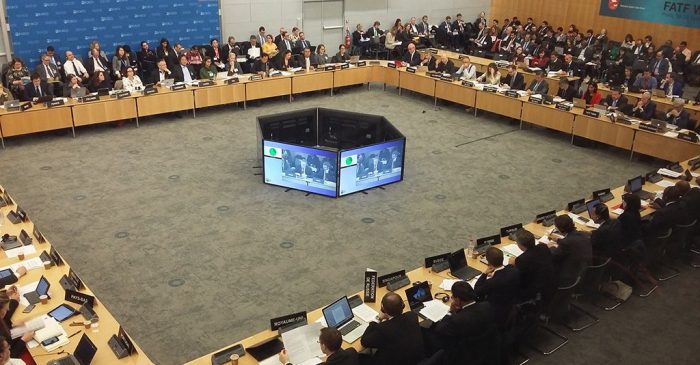
The Financial Action Task Force (FATF) is an inter-governmental body made up of 35 countries and two regional governing groups setting standards to promote effective implementation of legal, regulatory and operational measures combating money laundering, terrorist financing and other related threats to the integrity of the international financial system.

The FATF monitors the progress of its members in implementing necessary measures, reviews money laundering and terrorist financing techniques and counter-measures and promotes the adoption and implementation of appropriate measures globally.

The FATF serves as a crucial watchdog then against the spread of global terrorism through the transfer of funds through the international banking system. Chief among its current assignments is to monitor North Korea and the Iranian regime.

As part of its monitoring of Iranian regime, the FATF provides periodic updates on the action plan the regime pledged to follow as part of the nuclear deal it signed two years ago. In its most recent update, the FATF noted that Iran’s action plan has expired with most items on its to-do list remaining incomplete.

Chief among the items still needing to be addressed by the regime are:

  1. Adequately criminalizing terrorist financing, including by removing the exemption for designated groups “attempting to end foreign occupation, colonialism and racism”;
  2. Identifying and freezing terrorist assets in line with the relevant United Nations Security Council resolutions;
  3. Ensuring an adequate and enforceable customer due diligence regime;
  4. Ensuring the full independence of the Financial Intelligence Unit and requiring the submission of STRs for attempted transactions;
  5. Demonstrating how authorities are identifying and sanctioning unlicensed money/value transfer service providers;
  6. Ratifying and implementing the Palermo and TF Conventions and clarifying the capability to provide mutual legal assistance;
  7. Ensuring that financial institutions verify that wire transfers contain complete originator and beneficiary information;
  8. Establishing a broader range of penalties for violations of the ML offense; and
  9. Ensuring adequate legislation and procedures to provide for confiscation of property of corresponding value.

If Iranian regime does not meet these obligations, the FATF has the power to impose counter-measures punishing the regime, including restricting its access to international currency exchanges and electronic transfers.

It was this kind of pressure that proved pivotal in bringing the mullahs to the bargaining table in the first place.

Although Iran has left most of the required action items unfilled, the FATF has opted to hold off pending the Iranian parliament taking up these measures in draft legislation. Their outcome remains uncertain as the regime has dropped suggestions it may walk away from the nuclear deal anyway, including statements made by Iranian Deputy Foreign Minister Abbas Araqchi.

And yet, while the FATF continues to press the regime to comply with its promises, the National Iranian American Council didn’t miss the opportunity to crow that the FATF’s forbearance was in fact some kind of endorsement of the Iranian regime’s actions.

Predictably, the NIAC also called the FATF’s actions as standing up to pressure from the Trump administration.

“By showing itself unwilling to give in to pressure from the Trump administration and outside advocacy groups like United Against Nuclear Iran, which were pushing for the re-imposition of counter-measures against Iran, FATF smartly avoided politicization of its work and protected its integrity as a technical body assessing countries’ anti-money laundering and terrorist financing laws,” the NIAC statement read.

The NIAC said the Iranian regime had made “significant progress” in meeting the action plan, but neglected to note the disparity in how far the regime still has to go. For the NIAC, its only concern is to keep pushing the goal line back farther and farther to avoid crossing it and triggering new sanctions.

Its failure to recognize the agonizingly slow pace of approval of legislation by the Iranian parliament as part of a larger scheme to not make any changes in its financing of terror demonstrates the charade of the NIAC’s positions.

While the Trump administration has succeeded in focusing new pressure on Iran, Iran lobby groups such as the NIAC are now struggling to find any excuse to hold back the rising tide against its patrons in Tehran.

Laura Carnahan

Filed Under: Blog, News Tagged With: FATF, Featured, Iran deal, Iran Lobby, Iran sanctions, Iran Terrorism, National Iranian American Council, NIAC, NIAC Action

  • « Previous Page
  • 1
  • 2
  • 3
  • 4
  • …
  • 15
  • Next Page »

National Iranian-American Council (NIAC)

  • Bogus Memberships
  • Survey
  • Lobbying
  • Iranians for International Cooperation
  • Defamation Lawsuit
  • People’s Mojahedin
  • Trita Parsi Biography
  • Parsi/Namazi Lobbying Plan
  • Parsi Links to Namazi & Iranian Regime
  • Namazi, NIAC Ringleader
  • Collaborating with Iran’s Ambassador

Recent Posts

  • NIAC Trying to Gain Influence On U.S. Congress
  • While Iran Lobby Plays Blame Game Iran Goes Nuclear
  • Iran Lobby Jumps on Detention of Iranian Newscaster
  • Bad News for Iran Swamps Iran Lobby
  • Iran Starts Off Year by Banning Instagram

© Copyright 2026 IranLobby.net · All Rights Reserved.