Iran Lobby

Exposing the Activities of the lobbies and appeasers of the Mullah's Dictatorship ruling Iran

  • Home
  • About
  • Current Trend
  • National Iranian-American Council(NIAC)
    • Bogus Memberships
    • Survey
    • Lobbying
    • Iranians for International Cooperation
    • Defamation Lawsuit
    • People’s Mojahedin
    • Trita Parsi Biography
    • Parsi/Namazi Lobbying Plan
    • Parsi Links to Namazi& Iranian Regime
    • Namazi, NIAC Ringleader
    • Collaborating with Iran’s Ambassador
  • The Appeasers
    • Gary Sick
    • Flynt Leverett & Hillary Mann Leverett
    • Baroness Nicholson
  • Blog
  • Links
  • Media Reports

Holding Iran Accountable Starts by Not Believing Iran Lobby

March 11, 2016 by admin

Holding Iran Accountable Starts by Not Believing Iran Lobby

Holding Iran Accountable Starts by Not Believing Iran Lobby

The Iran lobby, consisting of lobbying groups such as the National Iranian American Council and media platforms like Lobelog.com, has long argued that agreement on a nuclear deal would bring about a new period of moderation within Iran and smooth the way for normalized relations.

Since the agreement was completed last summer, the Iranian regime has acted nothing like a moderate government engaging in a wide variety of foreign policy excesses such as going all-in on the Syrian civil war and stepping up support for Houthi rebels in Yemen, to instituting a harsh crackdown at home imprisoning dissidents and journalists and keeping the gallows busy by marching over 2,200 people to their deaths over the past two years.

Throughout it all, the Iran lobby has worked hard to maintain its charade and keep journalists believing in this false narrative no matter how incredible the proof has been otherwise. One example of this is a Q&A in the New York Times by Rick Gladstone in which he regurgitates many of the Iran lobby’s myths. For example, Gladstone asks:

  • Is Iran honoring the nuclear agreement? He writes it is according to the International Atomic Energy Agency, but neglects to mention admissions by the head of that agency that inspection protocols had been comprised at various points and full reporting may never be achievable;
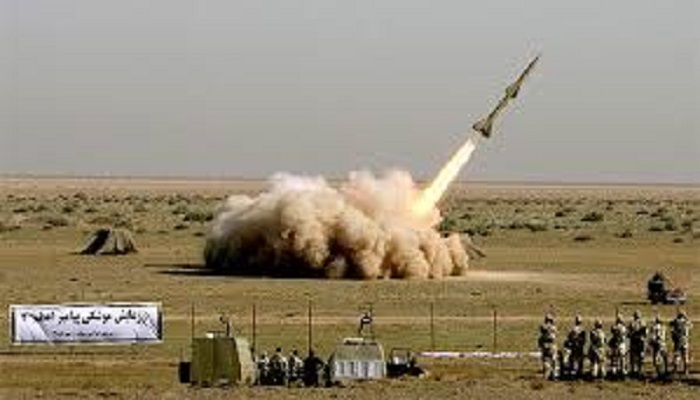
  • Are recent missile tests prohibited under the nuclear agreement? He says no, such launchings are considered a separate issue, but neglects to mention that the regime pushed hard to unlink a host of issues such as ballistic missiles, human rights and support for terrorism from the deal, thereby allowing the regime a free hand to continue its illegal activities;
  • Iran’s parliamentary elections last month were supposed to have strengthened moderate supporters of Hassan Rouhani. So why is Iran provoking its critics by testing missiles? Gladstone explains that the launches are conducted by the Revolutionary Guard Corps which is outside of Rouhani’s control, but neglects to point out that Rouhani has been a willing supporter of these hardline tactics since his government has overseen one of the harshest crackdowns in 20 years against public dissent.

This militancy on the part of the Iranian regime was reinforced by boasts by senior military commanders that the tests would continue even though they are in violation of United Nations Security Council resolutions, which are being proven impotent by the lack of any consequences for these violations.

Brig. Gen. Amir Ali Hajizadeh, a senior commander for the Iranian Revolutionary Guard Corps that runs the regime’s missile program, told state television that it has more missiles ready to launch, and they are for defensive purposes.

“Iran’s missile program will not stop under any circumstances,” Hajizadeh said. “We are always ready to defend the country against any aggressor.”

The fact that the argument over the regime’s violations have shifted from calling for swift action to debates over whether or not imposition of sanctions might jeopardize a nuclear agreement that has already proven ineffectual in curbing the regime demonstrates how weak the international response has become.

This broad policy of appeasing the mullahs has already generated severe negative consequences as Iran seeks to aggressive upgrade its military and rearm in the wake of its deep involvement in three ongoing proxy wars in Syria, Iraq and Yemen as well as a potential new arms race with its chief regional rival, Saudi Arabia.

Hajizadeh also announced that Iran is calling its own version of a spy drone, “Simorgh,” which is Iranian for “Phoenix,” according to the country’s state controlled media.

Iran’s version of the drone “was manufactured through reverse engineering of the U.S. drone, which was tracked and hunted down in Iran late in 2011, and has been equipped by the IRGC with bombing capability,” according to Fars News Agency.

This comes on the heels of an $8 billion shopping spree in Moscow by the Iranian regime and the imminent delivery of an advanced S-300 anti-aircraft missile system.

Most disturbing of all was the announcement by Ahmed Shaheed, U.N. special rapporteur on human rights in Iran, that there had been a “staggering surge in the execution of at least 966 prisoners last year – the highest rate in over two decades,” Shaheed told a news briefing.

The number of executions are roughly double the number executed in 2010 and 10 times as many as were executed in 2005 and demonstrate how Rouhani’s promises of a more moderate government when he was elected were merely political window dressing.

“A large percentage of those executions are for drug offences and under Iran’s current drug laws, possession of 30 grams of heroin or cocaine would qualify for the death penalty. So there’s a number of draconian laws,” he said.

“Fundamental problems also exist with regard to the due process and fair trial rights of the accused,” Shaheed said.

“I continue to receive frequent and alarming reports about the use of prolonged solitary and incommunicado confinement, torture and ill-treatment, lack of access to lawyers and the use of confessions solicited under torture as evidence in trials – practices that clearly violate Iran’s own laws,” he said.

Hundreds of journalists, bloggers, activists and opposition figures “currently languish in Iran’s prisons and detention facilities,” he said.

None of which has stopped the Iran lobby from trying to divert attention to anything else as evidenced by an appearance by Jamal Abdi, of the NIAC, at a summit in Washington, DC aimed at criticizing the U.S. relationship with Saudi Arabia.

He spoke of how the Saudi regime tried to jeopardize the U.S. nuclear deal with Iran and criticized the visa restrictions the U.S. imposed on Iranians and Iranian dual nationals. He also spoke of how the U.S. is essentially “renting” the Saudi army to carry out the war in Yemen, and potentially even Syria, which is ironic considering that it was the Iranian regime’s support of the Assad regime in Syria and Houthi rebels in Yemen that started both conflicts in the first place.

All of which demonstrates how the Iran lobby will address any issue other than the current activities of the regime.

By Michael Tomlinson
Filed Under: Blog, News Tagged With: Featured, Iran Human rights, Iran Lobby, Iran sanctions, IRGC, Jamal Abdi, Lobelog, National Iranian American Council, NIAC, NIAC Action

Iran Lobby Ignores Money Trail from Iranian Regime

February 18, 2016 by admin

Iran Lobby Ignores Money Trail from Iranian Regime

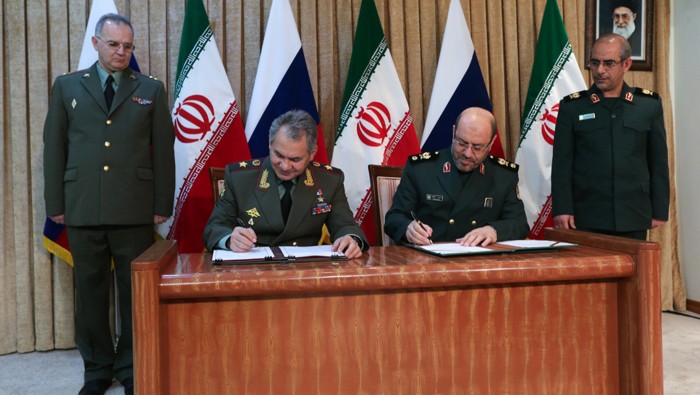
In this Tuesday, Jan. 20, 2015 photo Russia’s Defense Minister Sergei Shoigu, second left, and Iran’s Defense Minister Hossein Dehghan, second right, sign an agreement to expand military ties in Tehran Iran. Sergei Shoigu, in remarks carried by Russian news agencies, said Moscow wants to develop a “long-term and multifaceted” military relationship with Iran. He said that the new agreement includes expanded counter-terrorism cooperation, exchanges of military personnel for training purposes and an understanding for each country’s navy to more frequently use the other’s ports. (AP Photo/ Vadim Savitsky, Russian Defense Ministry Press Service)

While the Iran lobby argued strenuously that a nuclear deal with the Iranian regime would facilitate a moderation in its outlook, it also suggested that the financial windfall coming from the release of sanctions would help bolster the Iranian economy, benefitting the Iranian people and helping turn the Islamic state into an economic engine in the region.

Regime advocates such as the National Iranian American Council (NIAC) and The Ploughshares Fund were outspoken in their conviction that ultimately the Iranian people – hurt after years of international sanctions – would be the ones lifted up by the rising tide of new capital flooding into the country.

Predictably those claims have turned out to be just another in the truckloads of false promises made by the Iran lobby. The reality has been harsh and unforgiving.

In the months following completion of the deal, the regime has turned all of its attention to just two issues: the crackdown on dissidents at home in advance of parliamentary elections and upgrading as quickly as possible its military forces.

This was evidenced on Hassan Rouhani’s recent European tour in which he signed a flurry of business deals with foreign companies aimed at rebuilding the country’s infrastructure and funnel billions of dollars toward companies controlled by the Islamic Revolutionary Guards Corps (IRGC).

It is no surprise that the IRGC is the first institution in Iran to benefit from the largess. Rouhani’s government made the decision to keep the bulk of the $100 billion in their overseas accounts in order to pay for foreign military purchases in euros or dollars and they have wasted no time buying.

The first deal to be completed was the sale of S-300 anti-aircraft missile batteries that are a significant upgrade to the regime’s defenses and could be used to protect any nuclear facilities the regime chose to restart.

In addition, the regime announced another round of purchases of Russian arms totaling $8 billion. According to news reports, Iran wants to purchase more sophisticated anti-aircraft missile systems and also a new cadre of warplanes. The new deals will be in addition to several outstanding arms and military contracts that have already been signed between Iran and Russia.

Iran will “seriously focus on its air force and fighter jets,” according to comments by regime defense minister Hossein Dehghan while in Moscow to sign the defense agreements. “We are moving toward a contract. We told them that we need to be involved in the production [of the fighter planes] as well.”

A Russian source who spoke to the media said Iran is also interested in the latest anti-aircraft technology.

“Iran would like to buy Russia’s latest S-400 Triumph anti-aircraft missile system, developed by Almaz-Antey. And they make no secret of it,” the source was quoted as telling the Russian press. “On the eve of his visit to Moscow, Dehghan openly said to Iranian media they want to purchase the S-400s.”

Iran also is seeking to buy and possibly license for domestic production Russia’s new Sukhoi Su-30SM fighter jet, which is used for air-to-air and air-to-surface combat.

“Iran is also interested in Russia’s Bastion mobile coastal defense missile system, equipped with supersonic Yakhont anti-ship missiles, along with Mi-8/17 helicopters and other arms,” according to the regime-controlled media.

The military purchases represent one of the largest investments in state-of-the-art military hardware anywhere in the Middle East. The addition of supersonic fighter jets, anti-ship missiles and even more sophisticated anti-aircraft systems poses a grave threat to international shipping lanes through the Strait of Hormuz.

News reports also indicated the regime would seek to diversify its military suppliers by seeking arms purchases from China as it dips heavily into its newfound wealth. The rapid buying binge indicates the mullahs’ strong desire to rearm Iran into the region’s most powerful military.

To give the expenditures perspective, the entire publicly reported budget for the Iranian regime’s military was $10.2 billion, supporting over half a million active duty regime personnel. The Russian agreement nearly equaled the entire budget last year and more buying is on the way.

The inevitable question that needs to be asked of the Iran lobby is where is the money to help the Iranian people? Little of the money has been brought back to Iran and even less has been disbursed to help ordinary Iranians with healthcare, education, or even food. Why does the Iran lobby ignore all these actions? Probably the same reason it is ignoring the carnage in Syria being wrought by the Iranian regime as well.

In fact, the civil war in Syria is at the heart of the Iranian regime military buildup and an example of why the regime cannot be trusted.

As the Independent newspaper detailed the obvious contradiction in supporting a nuclear deal that only served to supply the regime with fresh resources to wage an even bloodier war in support of keeping Syrian dictator Bashar al-Assad in power.

Kyle Orton cites the brutal battle over the Syrian city of Aleppo as the case in point, writing:

“The Geneva III peace process is the most immediate cause for this latest offensive against Aleppo, led on the ground by Iran’s Islamic Revolutionary Guard Corps (IRGC) and its proxies, as well as Russian airstrikes. The regime and Russia have used it as a cover to gain ground. The US took the process seriously so sought to de-escalate, taking steps to weaken its own side. This included restricting the rebels’ access to anti-tank missiles”.

“Russia, on the other hand, enabled the IRGC-run forces that control the Bashar al-Assad regime’s security sector to cut the rebels’ final Aleppo supply line into Turkey and move to impose a starvation-siege on the city like the ones they have imposed on forty-nine other areas in Syria. The regime coalition can then either bring the city to its knees and complete the reconquest, or quarantine the rebels in the city, freeing up resources to deploy against rebels on other fronts,” he added.

The Iranian regime’s intentions in Syria are simple: 1) Keep Assad in power; and 2) Do it anyway it can.

“Assad, Iran, and Russia have worked tirelessly to eliminate the moderate opposition so that there will be nobody for the international community to interface with, and Assad’s reign will have to be accepted—and perhaps even supported to reconquer the Isis-held areas in the east,” Orton said.

The brutal evidence of that ruthless strategy can be seen in the deliberate targeting of civilians and the use of barrel bombs and now starvation as a tactic to weaken the opposition.

The mullahs are well acquainted with using death, destruction and executions as a tactic for winning its conflicts. The diplomacy the Iran lobby publicizes with great fanfare cannot be found on the battlefields of Syria, Yemen or Iraq where the Iranian regime’s policies are killing tens of thousands.

By Michael Tomlinson

Filed Under: Blog, News Tagged With: #NuclearDeal, IRGC, National Iranian American Council, NIAC, NIAC Action, Trita Parsi

Reasons To Be Thankful This Past Weekend

December 1, 2015 by admin

Reasons To Be Thankful This Past Weekend

Reasons To Be Thankful This Past Weekend

This past weekend, across the U.S., families sat down together to celebrate family and give thanks for all what they have, including secularism in government, freedom of speech and the practice of religion, support for the rights of women and minorities, protection for a free and active press and the guarantee of due process and a presumption of innocence in criminal cases.

All those things and more have formed the bedrock of American civil society for 239 years, but are virtually non-existent in the one country that has steadily called for the destruction of the American way of life since 1979: the Iranian regime.

The past few months of 2015 have certainly caused significant concern and alarm among Americans and throughout most parts of the world. We have seen terror attacks spring up literally around the world, most recently in the horrific attacks in Paris – first with the Charlie Hebdo attacks and then the bombings – and in the wave of atrocities perpetuated by Al-Qaeda, Boko Haram, Hezbollah and Shiite militias.

Couple that with the spread of sectarian conflicts – most fueled by the Iranian regime – in Syria, Iraq and Yemen, and you begin to get a pretty good idea of how chaotic the year has become in spite of the promises made by the Iran lobby that things would settle down after a deal was struck with the mullahs in Tehran over a new nuclear deal.

How wrong people like Trita Parsi of the National Iranian American Council were.

But for most Americans, their Thanksgiving wishes and victories were much smaller and personal. For them, most Americans could be thankful that this past weekend:

  • No more Americans were arrested and held hostage in Iran, except for the five currently held captive by the Iranian regime;
  • No new terror attacks were launched against Americans at home or abroad; and
  • The Iranian regime didn’t launch any new ballistic missiles like it did last month violating United Nations arms embargoes.

But for the Iranian regime, this past weekend wasn’t nearly a peaceful or good one for the mullahs as setbacks continue to dog the regime and stymie each of its efforts to expand its vision for a greater Islamic sphere of influence controlled from Tehran.

Among the news coming from media sources this weekend include:

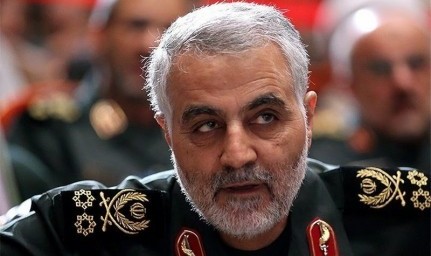
  • Reports that Quds Force commander Qassem Soleimani was seriously injured in Syria while supervising Iranian regime forces fighting rebels on behalf of the Assad regime. This follows previous news of deaths of other top Iranian military commanders in Syria;
  • The Washington Post reported that findings by the International Atomic Energy Agency can be expected to spark another round of intense scrutiny over the Iran regime’s claims its previously undisclosed nuclear program did not have any military components to it;
  • In anticipation of the IAEA report, the regime denounced the ongoing investigation and warned that Iran would not follow through on the nuclear deal unless the IAEA closed its investigation no later than Dec. 15;
  • Kenyan security forces have arrested two Kenyan men with links to the Iranian regime’s Quds Forces on suspicion of planning attacks in the East African nation, the Interior Ministry said on Saturday. It said their targets included “hotels in Nairobi frequented by Western tourists and diplomats;”
  • A flurry of reports in the Iran regime’s official and semi­official news outlets that have flooded out about more combat deaths suffered by Iranian forces in Syria have surprised analysts who monitor the country’s tightly controlled media. The reports, they say, indicate that at least 67 Iranians have been killed in Syria since the beginning of October, in a move some have described as an attempt by the mullahs to grab headlines back from Russia in an effort to burnish the image of regime forces fighting in Syria.

And to top off the weekend, top mullah Ali Khamenei went on his usual Sunday rant denouncing the U.S. and promising to keep the regime’s policies aimed squarely at preserving the Islamic revolution and spreading it throughout the region.

As reported in the Washington Times, Khamenei’s message was the subject of an analysis in a report by the U.S. Army Foreign Military Studies Office at Fort Leavenworth, Kansas.

“To encourage perpetual revolution might mean to foment continuous crisis,” the report said. “This, in turn, suggests greater regional instability and Iranian Revolutionary Guards Corps provocations toward U.S. forces and others.”

In other words, the Joint Comprehensive Plan of Action, the nuclear deal on which the Obama administration gambled for a more moderate Iran, has not tempered Khamenei’s fiery outcry.

“Khamenei’s endorsement of an expansive and perhaps even growing IRGC role confirms the group’s position as the chief obstacle to any political and economic reform in the Islamic Republic, and also suggests that the IRGC may win disproportionate advantage from any unfrozen assets or foreign direct investment entering the Iranian economy,” the report added.

All of which points out that while Americans celebrated values of family, peace, forgiveness and charity on Thanksgiving, the Iranian regime was busy deepening a conflict that has displaced half of Syria’s population, creating the largest refugee crisis in Europe since the end of World War II and spreading a radicalized form of extremist Islam manifesting itself in various terrorist groups around the world.

We can only hope the mullahs don’t get their holiday wishes granted next month.

By Michael Tomlinson

Filed Under: Blog, News Tagged With: Featured, Iran, Iran deal, Iran Terrorism, IRGC, Khamenei, Quds force, Syria, Trita Parsi, Yemen

Syria is Just Tip of Iran Regime Iceberg

October 7, 2015 by admin

The Restocking of Iran Regime Bank Accounts and Weapons

The Restocking of Iran Regime Bank Accounts and Weapons

In what has to be regarded as one of the strangest lobbying efforts being mounted, Iran regime foreign minister Javad Zarif is being put forward for the Nobel Peace Prize Award for his work in actually duping the West, during the P5+1 talks that resulted in crafting a deeply flawed nuclear deal. Putting him forward as Nobel recipient would be akin to giving the peace prize to António Caetano de Abreu Freire Egas Moniz in 1949 for inventing the prefrontal lobotomy, and almost as appropriate.

If the idea wasn’t so serious, it would be laughable given what has happened since the agreement was reached.

Zarif himself has echoed public statements by Hassan Rouhani and Ali Khamenei in drawing a firm red line in the sand that Syria’s dictator, Bashar al-Assad, has to be part of any Syria plan and that Russia is on board with efforts to keep him in power.

Ironically, Zarif put forward the idea that any decision on Assad has to be made by the Syrian people. He neglected to mention that Assad and Iran’s Quds Forces and Hezbollah allies have driven four million Syrians out of the country and gassed and barrel bombed the remaining 600,000 who oppose Assad in a virtual siege aided by Russian air strikes.

But the coordination between the Tehran and Moscow goes much deeper than the regime has let on. In a compelling Reuters story, Iran’s Qassem Soleimani, the head of the regime’s Quds Forces, went secretly to Moscow last July and laid out the strategy for Russian intervention to save Assad in Syria.

“Soleimani put the map of Syria on the table. The Russians were very alarmed, and felt matters were in steep decline and that there were real dangers to the regime. The Iranians assured them there is still the possibility to reclaim the initiative,” a senior regional official said. “At that time, Soleimani played a role in assuring them that we haven’t lost all the cards.”

The decision for a joint Iranian-Russian military effort in Syria was taken at a meeting between Russia’s foreign minister and Khamenei a few months ago, said a senior official of a country in the region, involved in security matters according to Reuters.

“Soleimani, assigned by Khamenei to run the Iranian side of the operation, traveled to Moscow to discuss details. And he also traveled to Syria several times since then,” the official said.

In the biggest deployment of Iranian forces yet, sources told Reuters last week that hundreds of troops have arrived since late September to take part in a major ground offensive planned in the west and northwest.

Around 3,000 fighters from the Iranian-backed Lebanese group Hezbollah have also mobilized for the battle, along with Syrian army troops, said one of the senior regional sources.

The military intervention in Syria is set out in an agreement between Moscow and Tehran that says Russian air strikes will support ground operations by Iranian, Syrian and Lebanese Hezbollah forces, said one of the senior regional sources.

The agreement also included the provision of more sophisticated Russian weapons to the Syrian army, and the establishment of joint operations rooms that would bring those allies together, along with the government of Iraq, which is allied both to Iran and the United States.

All of this flies in the face of claims made by the Iran lobby that the nuclear deal would bring forth a more moderate Iran intent on bringing stability to region and fighting ISIS. Nothing could be further from the truth as the mullahs have boldly flexed their military muscle openly now.

The regime isn’t even hiding its military intentions now that it’s been given tacit approval by the rest of the world with the nuclear deal.

Brigadier General Amir Ali Hajizadeh, commander of the Iranian Revolutionary Guard Corps Aerospace Force, said that “all U.S. military bases in the Middle East are within the range of” Iran’s missiles and emphasized that the Islamic Republic will continue to break international bans on the construction of ballistic missiles, in a statement to the regime’s state-controlled Fars News Agency.

“We do not see any restriction for our missiles and the IRGC’s preparedness and missile drills are conducted without a halt and according to our annual time-table, but only some of them are publicized through the media,” Hajizadeh said.

The comments echo similar rhetoric of IRGC Navy Commander Ali Fadavi, who warned last month that “the U.S. knows the damages of any war and firing bullets in the Persian Gulf.”

“The U.S. is obedient and passive in the Persian Gulf and we impose our sovereignty right in the Persian Gulf very powerfully,” Fadavi said.

It doesn’t take a rocket scientist to figure out the Iran regime has been planning this coordinated military mission to save Assad long before the nuclear deal was finalized and with full knowledge and consent of Iran’s top mullahs. It is also clear that the messages delivered by the regime’s lobbyist allies such as the National Iranian American Council, Ploughshares Fund and J-Street were fundamentally wrong.

The mullahs have now gained a valuable military partner in Russia and are intent on pushing their gains across the rest of the Middle East.

By Michael Tomlinson

Filed Under: News Tagged With: Appeasement policy, Iran, Iran Talks, IRGC, Khamenei, Nuclear Deal

  Iran Lobby Shifts Focus, Now Demanding More Dialogue With Iran

September 18, 2015 by admin

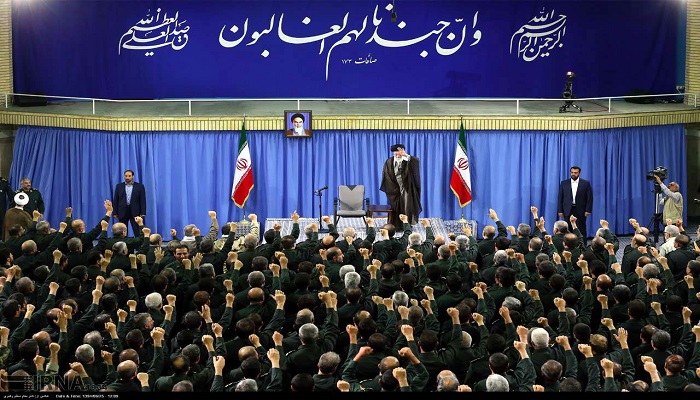
Khamenei-with-IRGC-The main force behind Terror in Iran, Iraq, Syria, Yemen, Lebanon, etc.

Khamenei-with-IRGC-The main force behind terror in Iran, Iraq, Syria, Yemen, Lebanon, etc.

The failure of Congress to halt the implementation of the nuclear deal with the Iran regime opens the floodgates for the regime to reap financial, military, economic and political rewards, but those gains may prove tenuous and illusory since in order to win passage of the agreement, the Obama administration took the unusual route of proposing it not as a full-fledged treaty, but as an administrative action that an incoming administration could conceivably reverse.

Since the Iran regime was adamant on delinking anything not related to the nuclear issue including human rights violations, support of terrorism, development of ballistic missiles and proxy wars, the reality is sinking in for supporters of the regime that they need to pay lip service to these other issues in order to stave off renewed calls to punish Iran for its transgressions.

This was evident by the issuance of a press release by lead regime lobbyist, Trita Parsi of the National Iranian American Council, who even acknowledged that the deal’s passage would not cause significant shifts in regime policy:

“While dialogue does not guarantee that Iran’s foreign policy conduct will shift to Washington’s liking, the absence of engagement all but guarantees that there will be either no change or a change in the wrong direction,” Parsi said.

While Parsi is showing its true face by advocating more dialogue with the criminal mullahs, his call for greater dialogue were again undermined by the statements of the regime’s top mullah, Ali Khamenei.

In his weekly televised speech, Khamenei warned commanders of the regime’s Revolutionary Guards to be on alert for “political and cultural” infiltration by the U.S. according to Agence France-Press.

“The main purpose of the enemies is for Iranians to give up on their revolutionary mentality,” Khamenei told a gathering of Guards commanders and personnel in Tehran.

“Enemy means global arrogance, the ultimate symbol of which is the United States,” he said, calling on the powerful branch of the military to protect the revolution.

“Economic and security breaches are definitely dangerous, and have dire consequences,” he said.

“But political and cultural intrusion by the enemy is a more serious danger that everyone should be vigilant about,” he added.

Parsi of course did not call for Khamenei to moderate his language or stop the continued depiction of the U.S. as Iran’s greatest “enemy.” Parsi saves his rhetorical fire – not to his mullah taskmasters – but for the U.S. leadership that he actively lobbies.

Khamenei threw more cold water on Parsi’s press release and his call for greater dialogue by saying last week that Iran would not hold any negotiations with the U.S. beyond the nuclear issue. Short of calling Parsi a liar, Khamenei certainly refutes most of what Parsi has to say.

It’s no surprise that Khamenei made his appeal directly to the leaders of the Revolutionary Guards which was created by the mullahs to preserve the mullah’s rule and maintain the stranglehold the leadership holds over Iran’s economy and its people.

The passage of the deadline to sink the nuclear deal also marked a celebration of sorts by supporters of the regime as evidenced by Ben Wikler, Washington director of Moveon.org, piece in Huffington Post which gleefully recounted how the regime’s supporters marshalled their forces to prevent the agreement’s demise.

The only thing missing was a photo of Wikler and Parsi holding hands in front of a “Mission Accomplished” banner over an Iranian missile battery.

But while Wikler breathlessly recounts the campaign to support the deal, this moment may prove Pyrrhic for supporters as the next year reveals the true nature of the regime as it no doubt continues to support conflicts in Syria, Iraq and Yemen and Americans grow increasingly uneasy about the deteriorating situation in the Middle East along with the rise of extremist groups and a full-blown refugee crisis.

Broad public disapproval of the nuclear deal has already been registered in virtually every public opinion poll and the fact the deal was passed with no bipartisan support and only through a minority vote of 42 Democratic senators may condemn any member running for re-election not only in 2016, but also 2018.

In essence, the regime lobby is praying mightily the American people will have a short memory and that the mullahs don’t blow it for them; neither scenario seems likely.

Already we’ve seen the veneer being peeled off of the Iran lobby with a flood of news articles examining the lobby, especially the NIAC and its financial backers. Ben Cohen, senior editor of TheTower.org, joined in this review by posting a story on JNS.org recounting the various investigative news stories recently published about the NIAC including The Daily Beast and others and smartly asks the inevitable question that should be on the lips of every Capitol Hill staffer:

“Now that the truth about NIAC is emerging, one has to ask why anyone who seeks respectability in Washington would have anything to do with Parsi and his cohorts,” Cohen said.

“The Islamist regime in Iran is the root of the problem, not its cure: as long as it remains in place, there should be no talk of normalization. Second, that there shouldn’t even be an Iran lobby in America, if by ‘Iran lobby’ we mean individuals and groups like NIAC, whose mission is to sell this vicious regime as an attractive partner for Western democracies,” Cohen added.

Cohen is correct when he assesses only regime change in Iran will force changes in policy away from sponsorship of terror and human rights abuses. The real hope and future lies not in the nuclear deal Parsi has championed, but in a new presidential administration that can tear it up.

By Michael Tomlinson

Filed Under: Blog, National Iranian-American Council, The Appeasers Tagged With: Dialogue with Iran, Featured, IRGC, Khamenei's speech, NIAC, Trita Parsi

Scrutiny of Iran Regime Increasing Over The Nuclear Talks

May 5, 2015 by admin

Magnifying ScrutinyDespite the best efforts of lobbying allies of the Iran regime, including the National Iranian American Council, scrutiny of Iran’s actions and its policies are intensifying with the perception that this latest third round of talks will be the last chance for the Obama administration to close a deal.

With the stakes high, news organizations are finally turning their attention on the regime, and in light of the latest proxy wars started by Iran in Yemen, journalists are taking heed of what those acts may portend for a possible deal.

One such area of increased attention was the collective warning from Sunni Arab leaders to the U.S. that Iran’s role in arming and funding Shiite allies in the Middle East is powering extremist groups like Islamic State and Al Qaeda.

These same Arab leaders are pressing the Obama administration to more aggressively support Saudi Arabia and its allies in pushing back Iranian influence in Yemen, Syria, Lebanon and elsewhere in order to drain support for Islamic State and Al Qaeda.

Journalistic skepticism continued with the apparent contradiction over the issue of the economic sanctions should a nuclear deal be completed. Bloomberg View columnist Josh Rogin detailed speeches by Vice President Joe Biden and Treasury Secretary Jack Lew in which they outlined the administration plan to only lift sanctions after many years of compliance and only through Congressional action.

But “that explanation directly conflicts with what Iranian Foreign Minister Javad Zarif told an audience at New York University earlier that day,” Rogin wrote.” Zarif said that UN sanctions would be lifted within days of an agreement being signed and that all sanctions would be permanently lifted, including Congressional sanctions, once Iran met its initial obligations.”

In Commentary Magazine, Jonathan S. Tobin offered similar skepticism over the idea of “snapback sanctions” actually being of any effect. He correctly points out a critical flaw in the deal being contemplated:

“Just as important, the administration is drawing a broad distinction between branches of the Iranian Revolutionary Guard, the regime’s terror sponsor as well as an economic powerhouse. Lew promised that the U.S. would rightly hold the IRGC’s Quds Force responsible for its terrorist actions and keep sanctions in place on them. But the rest of the IRGC’s vast infrastructure will be exempt from sanctions after the deal is implemented. Such a distinction will enable Tehran to go on funding terrorism through the IRGC’s vast holdings that amount to a third of the Iranian economy. Money, like terrorism is fungible but if you’re determined to turn a blind eye to how the Iranian regime operates, anything is possible.”

But besides focus on the Iran regime’s foreign policy and nuclear talks, journalists are taking a closer look at the human rights abuses that continue to grow in new and alarming ways.

Agence France-Presse ran a story on the regime’s efforts to outlaw certain styles of haircuts for young Iranian men that the mullahs viewed as subversive and oddly “devil worshipping.”

Mostafa Govahi, the head of Iran’s Barbers Union, was quoted in the state-run ISNA news agency that “any shop that cuts hair in the devil worshipping style will be harshly dealt with and their license revoked,’ he said, noting that if a business cut hair in such a style this would ‘violate the Islamic system’s regulations.”

In addition, the mullahs aimed to ban tattoos, tanning beds and the plucking of eyebrows in a departure into the realm of weirdness. We can only assume given the regime’s preference for imprisonment and public hangings, haircutting in Iran might now be considered a dangerous profession.

And in a further embarrassment to those supporting a nuclear deal with Iran, the Observer chronicled the plight of homosexuals in Iran where an estimated 4,000-6,000 gays and lesbians have been executed by the regime since 1979 to today.

At a time when the U.S. is having a national debate over same-sex marriage, there is scant attention being paid to the abuses gays are undergoing in Iran; until now.

All of which points to the growing and well deserved scrutiny the regime is now undergoing. We can only hope the effect of a magnifying glass aimed at the regime’s policies will be similar to putting a bug under the burning glare of the sun.

By Michael Tomlinson

Filed Under: Blog, News Tagged With: Iran, Iran deal, Iran Lobby, Iran sanctions, Iran Talks, IRGC, Sanctions

Ending Sanctions Goal for Iran Lobby

April 30, 2015 by admin

Cash1Iran regime president Hassan Rouhani gave a speech marking Iran’s Labor Day in which he said a ratified nuclear deal would end business for sanctions busters who made millions from the illegal sale of black market Iranian oil and the importation of banned goods and technology. It was a curious statement to make since Rouhani and other regime leaders have benefitted greatly in the black market trafficking of goods.

But the Iranian PR and lobbying machine are busy trying to make the case that ending sanctions would empower the Iranian people and disenfranchise powerful hardline conservative entities as the Revolutionary Guard Corps. It is a disingenuous argument to make since the opposite is the more realistic outcome based on moves being made by Rouhani and his boss, top mullah Ali Khamenei.

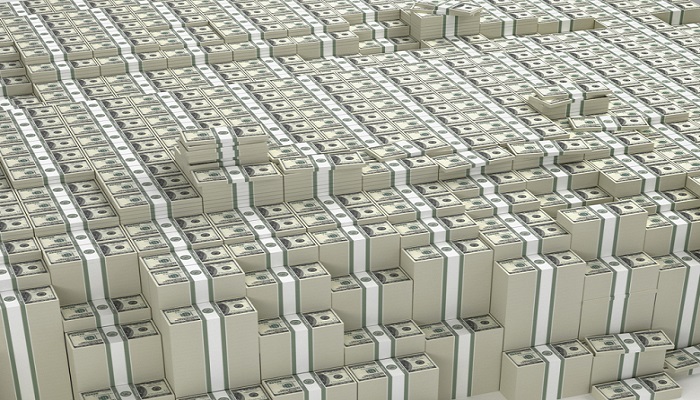
It is important to remember that the number one condition of Iran’s mullahs for any deal is a complete lifting of all economic sanctions at the same time when a deal is signed. That includes U.S. sanctions (both executive and Congressional), European Union sanctions and sanctions placed by the UN Security Council. Why? Because it would open floodgates to over $100 billion in immediate cash into Iranian coffers, coffers controlled almost exclusively by the Revolutionary Guard.

In addition, the lifting of sanctions would include the immediate availability of Iranian oil back on the open market, generating almost 3 million barrels of oil for the regime. Right now, the company controlled by the Guard is maintaining a fleet oil tankers in the Gulf filled to the brim with oil in offshore storage it plans to release the minute an agreement is signed.

Also, the large bulk of utilities and services in Iran are also controlled by shell companies for the Guard, this includes the nation’s cellular providers, internet providers, electronics importers, drug importers, power companies, and water companies. The Guard recently took control of Iran’s telecommunications company with a $7.8 billion stake.

All of these firms would be able to take in foreign investment with many market analysts estimating foreign investment in Iran at close to $1 trillion; with most of that money being channeled through Guard controlled companies. The net contribution to the Revolutionary Guard would dwarf anything it currently makes on the black market.

Why this is important to the regime, besides filling the pockets of Guard commanders and regime mullahs and their families, is to help replenish state accounts drained from funding four proxy wars right now, including costly fights in Syria, Iraq and Yemen. Not to mention the need for the Guard to seriously upgrade its technology, including the recent sale of state-of-the-art S-300 anti-aircraft missile systems from the Russians to Iran. Far from hurting the Guard, ending sanctions would be the lifesaver for the Guard just when it needed it the most.

The regime needs cash badly, which is why it is making an all-out push to have all sanctions dropped immediately. It also explains why the West has at its disposal no more leverage than it does now as Iran is badly straining from mismanagement by the mullahs, its conflicts and corruption.

To not take advantage of that opportunity to force serious concessions from Iran’s mullahs in areas such as human rights and terror activities, not to mention its nuclear program would be a historic blunder; one that the world might never recover from.

By Michael Tomlinson


Filed Under: News Tagged With: Iran Economy, Iran Lobby, IRGC

  • « Previous Page
  • 1
  • …
  • 10
  • 11
  • 12

National Iranian-American Council (NIAC)

  • Bogus Memberships
  • Survey
  • Lobbying
  • Iranians for International Cooperation
  • Defamation Lawsuit
  • People’s Mojahedin
  • Trita Parsi Biography
  • Parsi/Namazi Lobbying Plan
  • Parsi Links to Namazi & Iranian Regime
  • Namazi, NIAC Ringleader
  • Collaborating with Iran’s Ambassador

Recent Posts

  • NIAC Trying to Gain Influence On U.S. Congress
  • While Iran Lobby Plays Blame Game Iran Goes Nuclear
  • Iran Lobby Jumps on Detention of Iranian Newscaster
  • Bad News for Iran Swamps Iran Lobby
  • Iran Starts Off Year by Banning Instagram

© Copyright 2026 IranLobby.net · All Rights Reserved.