Iran Lobby

Exposing the Activities of the lobbies and appeasers of the Mullah's Dictatorship ruling Iran

  • Home
  • About
  • Current Trend
  • National Iranian-American Council(NIAC)
    • Bogus Memberships
    • Survey
    • Lobbying
    • Iranians for International Cooperation
    • Defamation Lawsuit
    • People’s Mojahedin
    • Trita Parsi Biography
    • Parsi/Namazi Lobbying Plan
    • Parsi Links to Namazi& Iranian Regime
    • Namazi, NIAC Ringleader
    • Collaborating with Iran’s Ambassador
  • The Appeasers
    • Gary Sick
    • Flynt Leverett & Hillary Mann Leverett
    • Baroness Nicholson
  • Blog
  • Links
  • Media Reports

 The Paper Tiger of the Iran Regime

October 14, 2015 by admin

 The Paper Tiger of the Iran Regime

The Paper Tiger of the Iran Regime

How much of a threat is the Iran regime to the world? It’s a question that has preoccupied everyone from American congressmen to Saudi royalty to Sunni tribal leaders to Turkish newspapers. It’s a question that lies at the heart of policy discussions ranging from imposing economic sanctions to approving a nuclear agreement to opening up free trade.

In many ways, the regime represents a clear and present danger, especially to its neighbors. Syria, Iraq and Yemen have already felt the brunt of Iranian regime’s involvement in supporting terrorist groups operating within their borders as in the case of Hezbollah in Syria, and sponsorship of proxies fighting sectarian wars such as Shiite militias in Iraq and Houthi rebels in Yemen.

The regime also represents a significant threat in terms of its potential for causing more chaos, including the ongoing development of advanced ballistic missiles and the ability to acquire new military technology such as satellites, fighter jets and anti-aircraft missile batteries from Russia.

But is the Iran regime really more like a paper tiger, painted over in fierce colors, but fragile and capable of collapsing utterly in a strong wind?

Take the civil war in Syria for example. The mullahs in Tehran moved quickly to bolster support for the Assad regime in the face of democracy protests that quickly escalated to armed conflict. It did so through its reliable terrorist partners in Hezbollah and through use of its own Quds Forces in supporting the Syrian Army.

Even after Assad was internationally condemned for using chemical weapons on his own people, the Iran regime stood firm in supporting him and worked out a deal with Russia to help shield Assad as long as he gave up chemical weapons, which many outside observers claim he did, but only in part.

The Iran regime dipped deep into financial reserves to support the war effort, estimated at over $15 billion annually, a massive drain on the regime’s economy at the same time the global price of petroleum plummeted putting even more pressure on the mullahs.

As Ali Khamenei, the regime’s top mullah, ordered a “war economy” be imposed on the Iranian people, the first signs of economic dissent crept in with mass protests amongst underpaid teachers, small business owners and workers erupted in various parts of Iran.

Despite all of the support the Iran regime was providing Assad, the multitude of opponents, ranging from the religious extremists such as ISIS and terror groups such as Al-Qaeda to moderate backed secularists such as the Free Syrian Army, made substantial gains against Syrian and Iranian forces.

The gains were so significant and threatening to the Assad regime that Iran’s Quds Force commander, Maj. Gen. Qassem Soleimani, took a clandestine mission to Moscow to brief Russian leaders on the gravity of the situation and beg for Russian assistance in staving off an imminent disaster.

Since the Russians agreed and have launched a major air campaign and placed boots on the ground, a new chorus of discontent has arisen from the Syrian people and within the ranks of the Syrian military who are chafing under the virtual “Iranianization” of their country and military as the Iranian military has taken over almost all combat and control mechanisms and set up joint intelligence and command centers with Russia in Damascus and Baghdad.

But the regime is not impervious to losses as several notable and high ranking Iran regime military commanders have been killed on the Syrian battlefield recently including 67 year old Islamic Revolutionary Guard Corps (IRGC) Brigadier General, Hossein Hamedani.

According to The Daily Beast, Hamedani was reportedly killed in Aleppo. Officially, he was described by the Iranian officials as a, “high-ranking military advisor” to Assad. But to write Hamedani off as merely an “advisor” would be the equivalent of referring to Napoleon as just, “a French general.”

“With the loss of Hamedani came the loss of a major leadership element within the IRGC, one Tehran will not likely be able to regain. Still, Hamedani was not the last IRGC commander to have met his end in Syria in the past few days. On October 12th, two more IRGC Brigadier Generals were slain. Farshid Hasounizadeh and Hamid Mukhtarband, both were former commanders of the Sabreen and 1 Brigades, respectively,” said The Daily Beast.

The loss of these key regime commanders, the growing resentment among the Syrian military and people, coupled with the need for a Hail Mary intervention by the Russians all point to the floundering nature of the Iran regime’s Syrian enterprise.

As J. Michael McInnis, a resident fellow at the American Enterprise Institute, writes in the National Interest, “Tehran has been losing the Syrian fight since the civil war broke out on 2011. After major setbacks for Syrian government forces in 2012, Iran persuaded a reluctant Lebanese Hezbollah to send in ground forces in early 2013. That helped stabilize Assad’s position for a while, but by 2015 the regime was again at risk of losing its most critical positions near the Mediterranean coast and Damascus. Desperate times apparently drove Iran right into Moscow’s arms.”

The fortunes of the regime in Yemen, where Houthi rebels have been pushed back by a coalition of loyalist Yemen forces and Saudi and Gulf state militaries to such an extent that Yemen’s former government is slowly returning to normality.

Similarly in Iraq, the failed efforts by the regime to control former Prime Minister Nouri al-Maliki only led to the spawning of ISIS.

Couple that with the scores of almost comical announcements made breathlessly by regime-controlled media about some military advance such as the development of a new advanced torpedo system, sinking of a replica American aircraft carrier, unveiling of a new missile, all of which have come with a splash, but have proven to be more illusory than practical.

The real test for the mullahs and regime comes this Sunday which will be the “adoption day” for the nuclear agreement and marks the point where the regime must begin the process to dismantle its nuclear infrastructure, including the removal of 14,000 centrifuges from Natanz and Fordow facilities, getting rid of 12,000 kilograms of low-enriched uranium and removing the core of the Arak nuclear reactor.

Even though the agreement is badly flawed, the regime will have to demonstrate its compliance on these areas or face a reversal of the gains its lobbyist forces have achieved. In many ways, Sunday marks the “put up or shut up” phase for the regime.

The mullahs may now be facing a point where they may regret what they have so eagerly sought in this nuclear deal.

By Laura Carnahan

Filed Under: Blog Tagged With: #NuclearDeal, Featured, Iran, Iran deal, Yemen

Iran Lobby Tries Clearing Economic Pathway for Regime

October 10, 2015 by admin

Iran Lobby Tries Clearing Economic Pathway for Regime

Iran Lobby Tries Clearing Economic Pathway for Regime

The Iran lobby, led by the National Iranian American Council, has been busy working to clear the economic runway for the Iran regime now that it has its nuclear deal because now that it has the opportunity to operate more freely in the world, the mullahs have opted to significantly increase the regime’s military operations in Syria, Yemen and Iraq; all of which requires cash and mountains of it.

As part of that NIAC propaganda push, Tyler Cullis and Amir Handjani, posted an editorial in The Hill arguing that the U.S. should open greater economic ties with the Islamic regime; the reason being that European and Asian nations are already quickly seeking to exploit these new markets.

Cullis and Handjani are correct that there are some companies and nations seeking to rush into this economic void. We know that China has a deep interest in securing contracts for cheap Iranian oil, while Russia has already begun selling weapons to the regime despite the fact that embargos on advanced ballistic missiles and weapons remains in effect.

They note however that the Obama administration has put the brakes on the rush to re-open economic ties with the regime. Part of delay comes from the huge groundswell of negative reaction from American voters to the nuclear deal which has forced many representatives who supported the deal to backtracked and offer up new pieces of legislation to address the perception that the Iran regime received a sweetheart deal and the U.S. got nothing in return; most notably Sen. Ben Cardin’s (D-MD) move to introduce to track compliance by the regime.

Most anti-regime critics called the effort too little, too late and still does not address the central and most critical issue surrounding the Iran regime: the delinking of human rights and sponsorship of terror from the deal and thus making no effort to reform or modify the regime’s bloodthirsty policies.

There has also been discussions and disagreements over the conflict between the nuclear deal and the Iran Threat Reduction and Syria Human Rights Act (ITRA) which was signed into law in August 2012 by President Obama which closes the foreign subsidiary loophole that the an annex in the nuclear deal makes open.

According to Fox News, “ITRA contains language, in Section 605, requiring that the terms spelled out in Section 218 shall remain in effect until the president of the United States certifies two things to Congress: first, that Iran has been removed from the State Department’s list of nations that sponsor terrorism, and second, that Iran has ceased the pursuit, acquisition, and development of weapons of mass destruction.

“Additional executive orders and statutes signed by President Obama, such as the Iran Nuclear Agreement Review Act, have reaffirmed that all prior federal statutes relating to sanctions on Iran shall remain in full effect.”

All of which drives a stake through the arguments made by Cullis and Handjani who by using the flawed tactic of supporting “moderates” against “hardliner” mullahs, argue that continued economic isolation of Iran only strengthens the “hardliners” and leaves American companies out in the cold versus their European and Asian competitors.

First of all, it is refreshing Cullis and Handjani are so interested in the economic well-being of American firms, but the reality is they recognize failure to fully open Iran to international trade and commerce will not bring in the cash and investment necessary for the regime to generate the revenue necessary to fund its expansionist policies.

The regime has spent upwards of $15 billion in direct financial aid and military support just to prop up the Assad regime in Syria alone. This doesn’t include the billions being spent to arm Houthis in Yemen and outfit Shiite militias in Iraq, not to mention the regime’s old terrorist partners in Hezbollah. With slumping oil prices, the mullahs desperately need that foreign investment to help keep them in power as ordinary Iranians have staged protests against the “war economy” top mullah Ali Khamenei has mandated for the past decade.

Oddly, Cullis and Handjani use the analogy of President Nixon opening up relations with China in the early ‘70s as an example of opening up to a closed society the U.S. was in conflict with, but what they don’t mention is the fact that coming out of the Vietnam War, China recognized the need to end its sponsorship of armed conflict and instead turn to embracing capitalism.

The fact that a deeply Communist nation that inflicted the Cultural Revolution on its people in brutal repression, recognized it needed to do a complete policy turnaround and embrace the very thing it denounced as part of its founding represents why the Nixon overtures were even possible in the first place; China’s leaders made that opening available by being receptive to change.

Iran’s mullahs have exhibited no such inclination. In fact since the nuclear deal was agreed to, Iran has partnered with Russia to step up an air and ground campaign in Syria, was caught smuggling weapons into Yemen and has turned Iraq into a virtual client state.

So while the Iran lobby may be hard at work trying to rewrite history, the Iran regime is busy trying to shape the future to its own perverted vision.

By Laura Carnahan

Filed Under: Blog, Latest from Lobbies & Appeasers, News Tagged With: Amir Handjani, Appeasement policy, Featured, Iran, Iran deal, Iran Economy, Iran Lobby, Iran Nuclear, Iran sanctions, Iran Talks, Jamal Abdi, National Iranian American Council, NIAC, NIAC Action, Sanctions, Tyler Cullis, Yemen

Iran Regime Reveals True Intentions

October 8, 2015 by admin


Iran Regime Reveals True Intentions

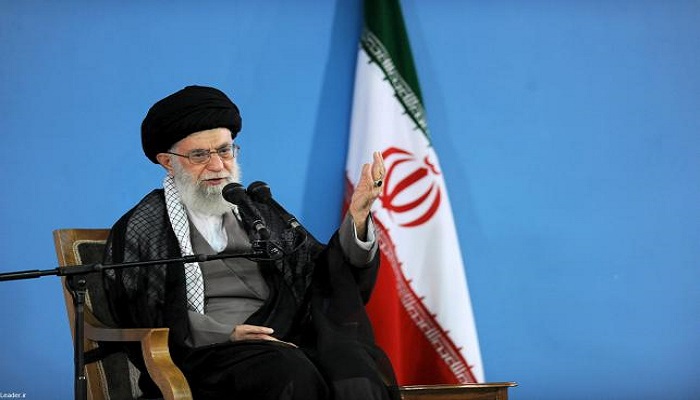
Iran’s Supreme Leader Ayatollah Ali Khamenei gestures as he delivers a speech during a gathering by Iranian forces, in Tehran October 7, 2015. REUTERS/leader.ir/Handout via Reuters

Ali Khamenei, the highest authority in the Iran regime, banned any further negotiations between the regime and the U.S. according to a statement released on his website, firmly putting the brakes to any idea of accommodation or moderation following the approval of a nuclear deal.

“Negotiations with the United States open gates to their economic, cultural, political and security influence. Even during the nuclear negotiations they tried to harm our national interests,” Khamenei was quoted as saying on his website.

Khamenei had previously said there would be no more talks with the U.S. last month, but this move was a step further in declaring an outright ban on any further discussions on any other topics.

The Obama administration, fed a steady stream of misrepresentations and false promises by the Iran lobby – led by the National Iranian American Council – expected a new phase of relaxed, open negotiations with the regime on a variety of issues including the ISIS, the Syrian conflict and sponsorship of terror.

Instead, now that the regime has achieved its goals in the nuclear deal – a lifting of economic and military sanctions, preservation of its nuclear infrastructure, delinking of human rights issues and release of billions in frozen cash – the regime sees no other reason to carry on the façade of moderation it has so assiduously pushed since the handpicked elevation of Hassan Rouhani as regime president.

In his address to Revolutionary Guards Navy commanders, Khamenei said talks with the U.S. brought only disadvantages to Iran.

“Through negotiations Americans seek to influence Iran”, Khamenei was quoted as saying to the IRGC commanders, who are also running much of Iran’s military involvement in Syria.

The bill of goods sold by the Iran lobby for hopes of a release of American hostages, removal of Assad and a reigning in of sectarian violence has now come due as Iranian regime’s leadership seeks to make all those promises false.

Michael Goodwin, a New York Post columnist wrote in Fox News:

“The White House deliberately downplayed the Russian buildup because it undercut central promises Obama made to Congress about the Iran nuke deal, which was then being debated.

“One of those promises was that Russia would help enforce the terms. Instead, Putin actually was making common cause with Iran, and both are now killing the Syrian rebels we supported.

“Here’s the scorecard: Obama got his Iran deal, and the world got a more aggressive Iran, an expanded Syrian war and wider Russian influence. With each passing day, the cost of stopping Putin grows more expensive.”

The yawning chasm between the promises made by the Iran lobby and the reality of what is taking place was discussed in another piece in Foreign Policy by Aaron David Miller and Jason Brodsky in which they write:

“One thing seems pretty clear: Somewhere in a parallel universe far, far away, the logic of a linear path to Iran’s moderation may be alive and well. But back here on planet earth, the odds on the health and prosperity of reform and the reformers, too, are still very long ones indeed.”

But supporters of the regime are still fighting back in trying to hold the line that a force for moderation exists in Iran and is fueled by post-nuclear deal euphoria, rather than the hangover the world is witnessing today.

One of those peddling this snake oil is Kourosh Ziabari who writes in Huffington Post:

“To the detriment of hardliners, Iran is reemerging as a regional power, and it’s easily predictable that with another four years in office plus the two intact years he has in hand – unless Ahmadinejad comes up with a new wizardry and wins the 2017 elections, President Rouhani will be able to build a strong and peace-making Iran which nobody will be able to demonize or depict as a threat to world peace and security.”

Ziabari pushes the Iran lobby message that there exists within Iran “moderate” and hard line” forces when in fact Khamenei has indelibly proven there exists only one voice on all policy matters and it is firmly his.

Even as Iran and Russia join with Hezbollah in launching a new phase in Syria, Iran’s mullahs are busy in other parts of the Middle East, including Yemen, where the Houthi rebels they support have been spotted in Iran getting support and new arms according to Al Arabiya.

The Houthi delegation “will convey to Iranian officials an urgent request by Houthi leader Abdulmalik al-Houthi to attain additional shipments of weapons after the Saudi-led coalition forces made several gains against the militia,” according to the report.

“Before visiting Tehran, the delegation had allegedly visited Beirut where it met with Hezbollah leader Hassan Nasrallah,” according to al Arabiya. “During the visit, the delegation allegedly voiced Abdulmalik’s al-Houthi’s gratitude for Hezbollah’s support in sending military experts to Yemen.”

President Obama’s former national security adviser also warned that Iranian regime leaders have effectively turned Iraq into a “client state” and are bent on exploiting the regional war against ISIS to promote their own brand of Shiite extremism throughout the Middle East.

“Iran’s grand strategy entails consolidating the hold it has gained in Iraq — a grip it seeks to tighten, directly and through proxies — and by stoking the sectarian fires,” said retired Marine Corps Gen. James L. Jones.

Gen. Jones testified alongside former Sen. Joe Lieberman, an independent, and both men lamented the administration’s failure to provide more assistance and refuge to members of the Iranian dissident group — commonly known in Washington as the “MEK” or “PMOI” — who have been left in the lurch in Iraq since the departure of U.S. forces in 2011.

On top of all this, word comes out that cybersecurity researchers have uncovered a network of fake LinkedIn profiles, which they suspect were being used by hackers in Iran to build relationships with potential victims around the world, according to a new report to be published by security firm Dell SecureWorks Inc.

This tactic, known as “social engineering,” is one where hackers trick people to get them to cough up personal or sensitive information. “Having those trust relationships gives [hackers] a platform to do a bunch of different things,” said Tom Finney, a security researcher at Dell Secureworks.

The 25 fake profiles described in the report were connected to more than 200 legitimate LinkedIn profiles — mostly individuals based in the Middle East who worked in sectors like telecom and defense. Those individuals and their companies likely have information that would be of interest to an Iranian cyber group, Dell Secureworks said.

Yes, the post nuclear deal world has indeed brought much change, just not the kind the Iran lobby promised.

By Michael Tomlinson

Filed Under: Blog, The Appeasers Tagged With: #NuclearDeal, Appeasement policy, Featured, Iran, Iran deal, Iran Economy, Iran Lobby, Iran Mullahs, Iran sanctions, Khamenei, NIAC, NIAC Action, Syria, Yemen

Iran Regime’s Role as Provocateur

May 20, 2015 by admin

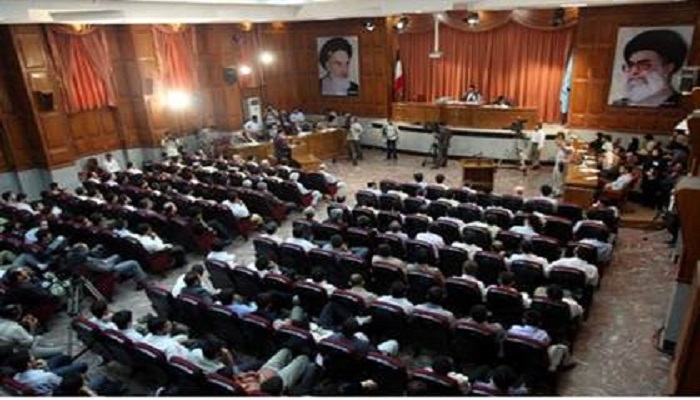
Revolutionary CourtIf there is one thing you can always bank on, it is the desire by Iran’s mullahs to always figure out a way to antagonize and terrify the rest of the world even as it says it only wants a nuclear and conflict-free relationship with the rest of the world.

It is an amazing stretch of creativity by Tehran that would rival anything Don Draper could come up with on “Mad Men,” but unlike that seminal cable show which ended its run this weekend with Draper dreaming up the “I Want to Teach the World to Sing” commercial for Coca-Cola, Iran’s mullahs have opted for a repertoire of brutality and provocation.

For example, the regime announced its intention to put Washington Post correspondent Jason Rezaian, imprisoned for the past 10 months, on trial on May 26 alongside his wife, Yeganeh Salehi, who is also a journalist, on charges of spying for the U.S.

What is unusual is Iran’s decision to try the case in the Revolutionary Court which typically handles cases of national security, drug smuggling and espionage. The Court was notorious for holding a series of show trials of more than 250 journalists, human rights advocates, dissidents and protestors after the disputed 2009 presidential election that involved forced confessions, stiff prison time and publicized executions.

To say the move by the regime is worrisome is an understatement. It is also even more mindboggling that while social media such as Twitter was flooded by statements of outrage from news organizations and human rights groups, Iran’s lobbying cohorts in the U.S. such as the National Iranian American Council was conspicuously silent. In fact, a casual perusal of Trita Parsi’s Twitter feed showed no condemnation or mention of Rezaian’s plight.

The regime certainly kept busy sending out aggressive messages including one by top mullah Ali Khamenei who in a speech in which he promised the regime’s support for the “oppressed” peoples of the Persian Gulf region, including Yemen and Bahrain. His comments were aimed squarely at Saudi Arabia and other Gulf States who are currently engaged in an air campaign against Iran-backed Houthi rebel forces in Yemen.

Those tensions were exacerbated when an Iranian ship headed to Yemen in violation of a coalition naval blockade was joined by Iranian warships as it headed into the Gulf of Aden.

This comes on top of Iran welcoming a delegation from the Taliban from Afghanistan, while Ramadi in Iraq fell to ISIS and Iranian-controlled Shiite militias prepared to move in what could be a sectarian bloodbath with 25,000 refugees caught in the middle.

But the discontent Iran that is brewing isn’t just abroad. In a move to bolster an economy bled dry from corruption, mismanagement and the diversion of billions of dollars into funding proxy wars in Syria, Iraq and Yemen, Hassan Rouhani announced the suspension of a program that provided financial handouts to Iranians which was itself a replacement for another broken promise for subsidized electricity, gas, water and bread.

Suspension of the payments is likely to fuel even greater discontent among ordinary Iranians whose economic situation worsens while the elites and families of the politically connected enjoy a luxurious lifestyle.

All of which adds up to what promises to be the beginning of a hot summer for Iran filled with domestic discontent.

By Laura Carnahan

Filed Under: Blog Tagged With: Gulf, Iran, Jason Rezaian, Spies, Trita Parsi, Yeganeh salehi, Yemen

Things To Know About the Iran Regime This Week

May 18, 2015 by admin

Sen. Lindsey Graham (R-SC) questions Supreme Court nominee Elena Kagan, President Obama's pick to replace retiring Justice John Paul Stevens, during during the second day of her confirmation hearing before the Senate Judiciary Committee on Capitol Hill in Washington on June 29, 2010. UPI/Kevin Dietsch

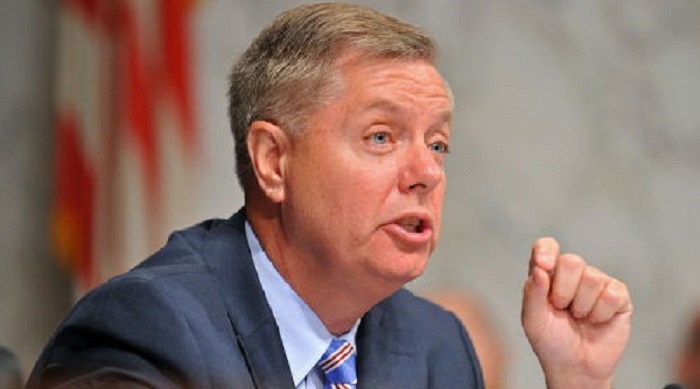
Sen. Lindsey Graham (R-SC) questions Supreme Court nominee Elena Kagan, President Obama’s pick to replace retiring Justice John Paul Stevens, during the second day of her confirmation hearing before the Senate Judiciary Committee on Capitol Hill in Washington on June 29, 2010. UPI/Kevin Dietsch

Sen. Lindsey Graham (R-SC) wrote in this weekend’s Wall Street Journal an editorial outlining eight conditions the Iran regime must meet before any nuclear agreement is reached. The points included common sense ideas such as closure of all hardened or formerly secret nuclear sites and allowing anytime, anywhere inspections of all Iranian military and nonmilitary facilities.

His points are valid and important in order to ensure any deal removes the threat of nuclear weapons from coming into the possession of the Islamic state., but the most important point he outlined as the conditioning of relief from economic sanctions on certification by the International Atomic Energy Agency that Iran was in full compliance and demonstrate that compliance over a sustained period of time.

The reason why this condition stands out above all others lies in the most pressing need Iran has right now which is cash. Iran’s mullahs have followed a policy of destabilizing the Middle East over the last three years including the funding of Shiite militias in Iraq and virtually taking over its government, supplying arms and support to the Syrian regime in its bloody civil war, and supporting a Houthi rebel army that has overthrown the government of Yemen and plunged the Arabian peninsula into a dangerous proxy war with Saudi Arabia and Sunni gulf states.

Iran’s mullahs have pressed hard for the lifting of all economic sanctions at once should a deal be completed because it needs the estimated $100 billion in frozen assets to help resupply its coffers depleted by proxy wars and plunging oil prices.

But even with this thirst for cash, Iran remains obstinate on even the most basic parts of an agreement. The regime’s top negotiator and Deputy Foreign Minister Abbas Araqchi opened talks with the IAEA recently which has been demanding access to Iranian military sites such as Parchin. “Iran, which is extremely reluctant to allow atomic inspectors access to military sites, has been stalling the investigation since last August,” reported Reuters.

This shows that mullahs’ desire for cash does have limits, namely they do not want to limit their ability to produce nuclear weapons. Iran’s mullahs believe that possession of nukes places Iran in a prime position to be the power in the region and weapons of mass destruction allow it to offset a nuclear-capable Israel, while also holding a hammer over the heads of Sunni states such as Saudi Arabia.

But this pursuit of weapons and funding of proxy wars have come at a steep price for ordinary Iranians. As Al Arabiya News Channel recently reported in a new series of stories focused on poverty in Iran:

“In 1979, shortly after the shah had been toppled, the new theocratic ruler Ruhollah Khomeini promised free electricity, water supplies and transportation services to all Iranians, to be paid for by oil revenues under a ‘just’ Islamic economic system.  Yet this promise – repeated by several regime presidents after him to make the poor feel the benefits of Iran’s oil wealth – was never delivered.”

Oddly enough though, U.S. Secretary of State John Kerry seems to think North Korea can somehow learn a positive lesson from any completed deal with Iran, which leaves objective observers dumbstruck since it was North Korea that provided the mullahs with the template for achieving nuclear capability by negotiating an agreement and then violating every aspect of it. In fact, North Korea has supplied Iran with much of its nuclear research and virtually all of its ballistic missile capability under manufacturing license.

Unfortunately while the rhetoric is starting to heat up on the near presidential campaign trail, the news media have all but ignored violent protests that have broken out in Iranian cities. The recent protests against the regime’s oppression began after a May 4 incident in which 27-year-old Farinaz Khosravani jumped to her death from a window when an Iranian intelligence officer allegedly tried to rape her at the hotel where she worked in the city of Mahabad according to the International Business Times.

The mass protests have been met harshly by Iranian regime’s security forces with the potential for even more deaths as a result.

All of which leads us to the most combustible issue coming to a head this week as an Iranian ship heads towards Yemen with what the regime calls a cargo of “humanitarian supplies,” but with no ability to independently verify it.

Iranian Gen. Masoud Jazayeri, the deputy chief of staff, warned that any attempt to interfere with the vessel would “spark a fire” in a clear warning to the U.S. Navy. The stakes rise higher as the Iran regime starts the weekend talking about a nuclear peace and ends it with warnings of war.

By Michael Tomlinson

Filed Under: Blog, News Tagged With: Iran, Iran sanctions, Iran Talks, Syria, Yemen

High Seas Drama Proves Iran Regime Untrustworthy

May 1, 2015 by admin

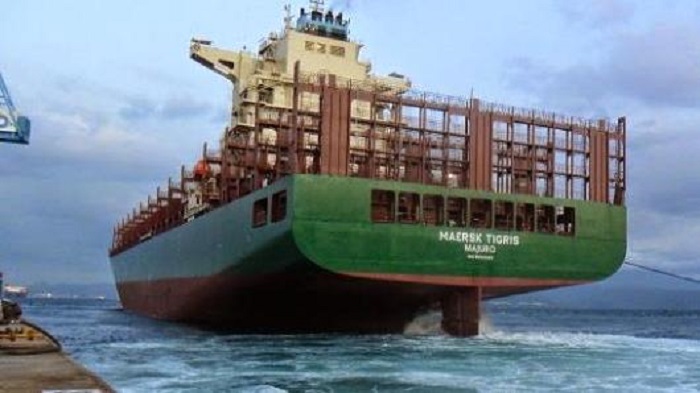
Maersk TigrisWhile the Iran regime has been working hard to portray itself as a peace-loving group of mullahs only interested in the peaceful splitting of the atom, drama was playing out on the high seas as Iran engaged in a high-stakes poker game with the U.S. Navy and commercial fishing vessels much to the consternation of the regime’s lobbying and PR allies who had to answer some uncomfortable questions.

It began last week with the decision by the mullahs to send a nine-ship convoy steaming towards Yemen with what was believed to be a large cache of supplies and weapons for Houthis rebels they had been backing in the overthrow of Yemen’s government.

This was followed by the decision to send in the U.S. nuclear-powered aircraft carrier Theodore Roosevelt with escorts into the Gulf of Aden to deter and possibly detain the Iranian flotilla, which eventually turned back to Iranian waters.

Then this week saw an act bordering on piracy when Iranian navy ships fired across the bow of a Marshall Island-flagged container ship steaming through the Straits of Hormuz. After the ship refused to turn towards Iranian waters, it was boarded and the 24-man crew detained and the ship confiscated over a reported legal dispute.

Earlier reports indicated the Iranian navy ships had reportedly been on the lookout for a U.S.-flagged commercial ship and mistakenly stopped the Maersk Tigris. The U.S. and Marshall Islands share a defense treaty and it remains to be seen if the boarding of the vessel would trigger the security agreement.

The rapid escalation in provocative moves by the regime in international waters has posed a sticky problem for regime supporters, even Congressional supporters of a nuclear agreement with Iran were at a loss of explanation for the actions.

“We have to assure the sea lanes are open. I think it’s important to find out exactly what happened,” said Sen. Jack Reed (D-R.I.), the Armed Services Committee’s ranking Democratic member.

“But we can’t tolerate interference with vessels moving up and down in international waters. It’s very serious when ships are intercepted like that,” he said.

In response, the U.S. Navy instituted a new policy of escorting commercial ships through the Persian Gulf and monitor for any distress signals sent out from vessels traversing the Straits of Hormuz in clear warning to the mullah’s regime in Iran.

Reza Marashi, who has entitled himself as “research director” of the regime’s chief lobbying group the National Iranian American Council, offered the ludicrous notion that Iran may have boarded the ship because of suspicions it was from rival Saudi Arabia and heading to the United Arab Emirates.

“If that’s true, it could be part of an escalation in the conflict between Tehran and Riyadh,” Marashi said. One theory he offered was that the Iranians could be retaliating for the Saudi bombing of a landing strip in Yemen where Iran was said to be planning to land a plane.

Marashi probably would have also offered as explanation that Mercury was in retrograde or aliens had seized control of the Iranian navy commander’s brain since those excuses made as much sense for the regime’s blatant disregard for international maritime law.

All of which poses a pickle for supporters such as the NIAC who have long argued that the Iran regime could be a trustworthy and believable partner in an international nuclear agreement, but is now faced with yet another inconvenient example of Iran’s mullahs flouting the law.

The near constant displays of disregard for agreements, treaties and law by Iran’s mullahs should not catch anyone unawares and only reinforces the growing perception in America that any agreement Iran signs will not be worth the paper it’s printed on.

By Michael Tomlinson

Filed Under: Blog, Current Trend, National Iranian-American Council Tagged With: Iran Lobby, Iran Talks, Yemen

Yemen as Warning for Iran Regime Nuclear Deal

March 26, 2015 by admin

WarningAs the old saying goes, “Fool me once, shame on you. Fool me twice, shame on me.” But what do you say when you’ve been fooled over and over again? “I’m an idiot?” Maybe and in this case, it almost certainly applies to anyone thinking they can trust the Iranian regime.

News came out of Yemen that Iranian-backed Houthi rebels had taken over the capital Sana and also moved south forcing the popularly-elected President Abdu Rabbu Mansour Hadi to reportedly flee by boat from the port city of Aden.

Yemeni intelligence officers still loyal to Hadi’s failing government attempted to burn secret files in a scene reminiscent of the effort to destroy files in the American embassy in Tehran in 1979 as militants stormed the building before the Iranian revolution was hijacked by radical extremist mullahs.

The fact that the Iranian regime has been deeply involved in the financing, training, equipping and leadership of Hezbollah fighters in Syria, Shiite militias in Iraq and now Houthi rebels in Yemen, all the while pushing for a rapid lifting of economic sanctions as part of ongoing nuclear weapons talks with the P5+1 group of nations, leads any rational person to deeply suspect the West is being played for fools by Iran’s mullahs.

It is hard to imagine anyone at the negotiating table in Switzerland being blind and oblivious to what is happening in Yemen, Iraq and Syria, and yet we know little, if anything, about the substance of these talks or if Iran’s conduct around the world has even been mentioned in a cursory way.

What we do know is that the track record of Iran’s mullahs is soaked in blood and is unquestionably focused on fomenting more of the sectarian violence rippling across the Mideast as Iran pushes its extremist ideology everywhere. No doubt the colossal expenditure of money necessary to fund all of these wars is draining Iranian coffers, which is one reason why Iran’s mullahs are almost frantic in their demands for an immediate lifting of all sanctions immediately.

News agencies report upwards of 18 Iranian oil tankers sitting off the coast filled to the brim with 30 million barrels of Iranian oil waiting to depart for market deliveries the minute sanctions are lifted with an agreement; bringing in billions of dollars to fund its war efforts.

The presence of Iranian military and intelligence officers on the ground in Yemen to take possession of classified files related to intelligence activities against Al Qaeda in the Arabian Peninsula, widely regarded as the terrorist network’s most dangerous branch, can only lead to a single conclusion: Iran’s leadership remains committed to its long-term plan of preserving and even growing terror networks around the world endangering the global peace.

While the White House can easily dismiss Supreme Leader Ali Khamenei’s recent “Death to America” chants and tweets as something for “domestic political consumption,” it is impossible to ignore the active security threats the Iranian regime presents in nations where the U.S. is literally running out the door such as Syria and Yemen.

Trust. It’s a simple word, but one filled with powerful meaning. It is earned and often only after demonstrations to earn trust over a long period of time. We know how trust works in our work lives, families, personal relationships, even in our choices of which brands to buy. Trust is a singularly important human emotion.

If the U.S. closes a deal with the Iranian regime without any pre-conditions on Iranian terror activities, let along relief for its gross human rights abuses at home, then the real fools will be those who support such an agreement and place their trust in Iran’s mullahs to keep their word when their past betrays them.

By Michael Tomlinson


Filed Under: Blog Tagged With: Houthies, Iran deal, Iran Talks, Iran Terrorism, Yemen

  • « Previous Page
  • 1
  • 2
  • 3
  • 4

National Iranian-American Council (NIAC)

  • Bogus Memberships
  • Survey
  • Lobbying
  • Iranians for International Cooperation
  • Defamation Lawsuit
  • People’s Mojahedin
  • Trita Parsi Biography
  • Parsi/Namazi Lobbying Plan
  • Parsi Links to Namazi & Iranian Regime
  • Namazi, NIAC Ringleader
  • Collaborating with Iran’s Ambassador

Recent Posts

  • NIAC Trying to Gain Influence On U.S. Congress
  • While Iran Lobby Plays Blame Game Iran Goes Nuclear
  • Iran Lobby Jumps on Detention of Iranian Newscaster
  • Bad News for Iran Swamps Iran Lobby
  • Iran Starts Off Year by Banning Instagram

© Copyright 2026 IranLobby.net · All Rights Reserved.