Iran Lobby

Exposing the Activities of the lobbies and appeasers of the Mullah's Dictatorship ruling Iran

  • Home
  • About
  • Current Trend
  • National Iranian-American Council(NIAC)
    • Bogus Memberships
    • Survey
    • Lobbying
    • Iranians for International Cooperation
    • Defamation Lawsuit
    • People’s Mojahedin
    • Trita Parsi Biography
    • Parsi/Namazi Lobbying Plan
    • Parsi Links to Namazi& Iranian Regime
    • Namazi, NIAC Ringleader
    • Collaborating with Iran’s Ambassador
  • The Appeasers
    • Gary Sick
    • Flynt Leverett & Hillary Mann Leverett
    • Baroness Nicholson
  • Blog
  • Links
  • Media Reports

Iran Cashes U.S. Checks Without Penalty

January 23, 2015 by admin

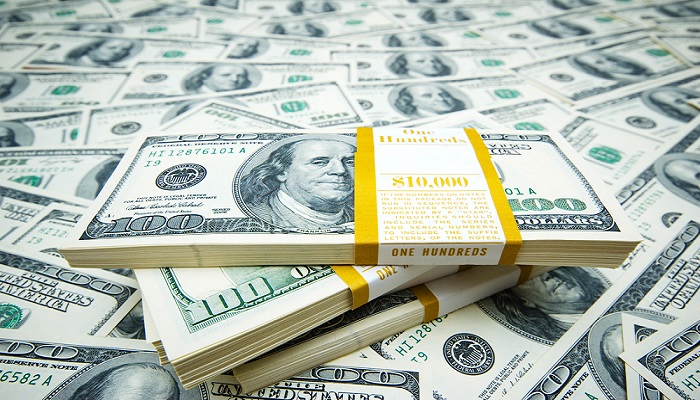
Stacks of CashEarlier this week, the Obama administration paid out $490 million in cash to mullahs in Iran and will have given the Iranian regime a whopping $11.9 billion in cash by June 2015 when this third and latest round of nuclear talks are scheduled to end according to figures released by the U.S. State Department.

The $490 million transfer to Iran was the third payment sent to Iran as part of the interim agreement between Iran and the Obama administration during an extension agreed to last November. Under the agreement, Iranian regime will receive a total of $4.9 billion in unfrozen cash in 10 separate payments through June of this year in the hopes a final nuclear agreement can be reached.

This comes on top of $4.2 billion Iranian regime received as part of the 2013 interim agreement, which the Obama administration followed with another $2.8 billion last year in a last ditch attempt by the Obama administration to entice mullahs in Iran to stay at the bargaining table.

Iran loyalists and supporters have touted the payments as the down payment on building trust between Iranian regime and the rest of the West. The more rational view is that the U.S. has been suckered by mullahs in Iran into handing over billions in cash which mullahs have put to good use funding their various foreign adventures. Namely to fund Hezbollah militias in Syria and their likes in Iraq to kill innocent people.

The payments have come at an especially good time for Iran as plunging oil prices worldwide coupled with massive outflows of cash to support terror groups such as Hezbollah and prop up the Assad regime in Syria and fund a growing war in Iraq have drained Iran’s foreign currency reserves and placed it on shaky financial footing.

The almost $12 billion injection of U.S. cash will be equal to nearly 18 percent of Iran’s total foreign currency reserves as of 2014; a massive payment that comes at the most critical time for Iran. The U.S. is essentially bailing Iran out right now as it engages in some of the most extreme fighting and terror activities around the world:

• Iranian regime’s funding of Hezbollah has provided Syria’s Bashar al-Assad with the manpower to turn the tide of civil war after being isolated internationally for using chemical weapons. The shift in power directly led to the growth of ISIS as the opposition faltered and splintered into extremist factions that Assad’s forces pushed into Iraq;
• Iranian regime’s control of the Iraqi government of Nouri al-Maliki led to the sectarian war against Sunni tribes and weakened its military to the extent ISIS was able to swiftly move across Iraq and enabled mullahs the excuse to move large numbers of troops and arms into Iraq in a de facto takeover of the country.

In each case, the flow of cash from the U.S. softened the financial blows of these adventures and enabled Iran’s mullahs to keep an iron grip on its domestic politics with continued oppression of its people.

While Iran’s lobbying groups such as the National Iranian American Council would have Americans believe the release of these funds was an act of good faith that will be rewarded with a more peaceful future, the truth has been the opposite. Iran has made no significant concessions except a promise to reduce the rate of enrichment of nuclear fuel. Iran has increased its crackdown domestically and significantly stepped up its role in extremists and military activities worldwide in the two years since the payments began.

A new Congress should be asking the tough questions of what exactly $11.9 billion has bought from Iran. The only is unfortunately nothing.

By Michael Tomlinson
Filed Under: Blog, The Appeasers

Iran – New Attempts To Become Iraq’s Puppetmaster?

January 22, 2015 by admin

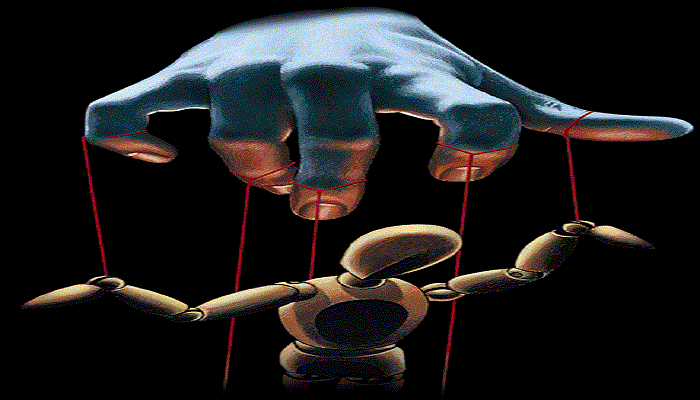
PuppetMasterAmid the marches and events in Paris and throughout the world in response to the attacks on Charlie Hebdo and its aftermath, the world’s news media paid scant attention to new developments in Iraq as Iran has dramatically scaled up not only its military presence but also its involvement in the internal affairs of Iraq.

Writing for the Associated Press, Hamza Hendawi Qassim Abdul-zahra reported the growing perception of Iraqis that Iran was their nation’s best ally against the growing influence of ISIS rather than the air campaign being waged by the United States and its allies.

He writes: “Shiite, non-Arab Iran has effectively taken charge of Iraq’s defense against the Sunni radical group, meeting the Iraqi government’s need for immediate help on the ground.

“Two to three Iranian military aircraft a day land at Baghdad airport, bringing in weapons and ammunition. Iran’s most potent military force and best known general — the Revolutionary Guard’s elite Quds Force and its commander Gen. Ghasem Soleimani — are organizing Iraqi forces and have become the de facto leaders of Iraqi Shiite militias that are the backbone of the fight.”

These fast moving developments have largely gone unnoticed, but may end up proving to be the most consequential changes happening in the Middle East because Iran’s control over Iraq would give it unprecedented reach and influence over the two large petroleum economies with two of the largest military powers.

The fact that Iran’s earlier puppeteering of Nouri al-Maliki’s government and its intervening in Syria’s civil war on behalf of Bashar Assad’s government directly led to the birth and explosive growth of ISIS in the first place is fast receding from everyone’s memory.

Iran’s lobbying machine and PR allies such as the National Iranian American Council have been quick to point out the potential value of a U.S.-Iran partnership against ISIS; conveniently ignoring the irony in such a marriage.

In fact, in a piece in Iran Media Focus, NIAC’s head and chief Iran apologist, Trita Parsi, was busy lambasting Congressional Republicans over the possibility of new Iran sanctions while defending a U.S.-Iran alliance.

But what is the end game for Iran’s ruling mullahs with this stepped up influence over Iraq? One possible scenario was detailed in a piece in Commentary Magazine where Michael Rubin noted a report in the Fars News Agency that “Iraqi Oil Minister Adil Abd al-Mahdi will visit Tehran to ‘discuss joint Iran-Iraq oil fields, export of Iran’s gas to Iraq and trade of oil products.’ The article continues to say that Iran and Iraq have “agreed to develop their joint oilfields through setting up joint companies under a single management.”

It is also clear that Iran’s leadership has also harbored a deep-seated animosity towards members of the Iranian resistance who reside in camps located in Iraq and have persuaded Iraqi security forces to attack and harass them in the past. Firm control of Iraq by Iran could mean a massacre of these brave resistance members on par with the slaughter of civilians by extremists groups such as Boko Haram in Nigeria or ISIS of Yazidis in Iraq.

These developments are disturbing and warrant response from the West. At the very least as a new round of nuclear talks begin, it is incumbent on the P5+1 negotiators to press Iran for a complete withdrawal from Iraq and a cessation from meddling in its internal affairs, let alone a blatant takeover of the country.

It is the height of hypocrisy to allow Iran a free hand in Iraq and simply replace the domination of ISIS with the domination of Iran. It is especially noteworthy given the evidence beginning to pile up of Iranian regime’s complicity in the birth and expansion of ISIS and other affiliated extremist groups. If anything, Iranian mullahs have positioned themselves as the mother ship for Islamic extremism and its reach can be seen in Paris, Ottawa, Sydney, Yemen, Lebanon and elsewhere.

The U.S. and the West should not allow Iran’s theocracy a free hand in Iraq, nor should it be given a window of opportunity to increase its strength there and cement a foothold that it is hurriedly nurturing every day.

By Michael Tomlinson

Filed Under: Blog, National Iranian-American Council

The State of the Union and Iran

January 21, 2015 by admin

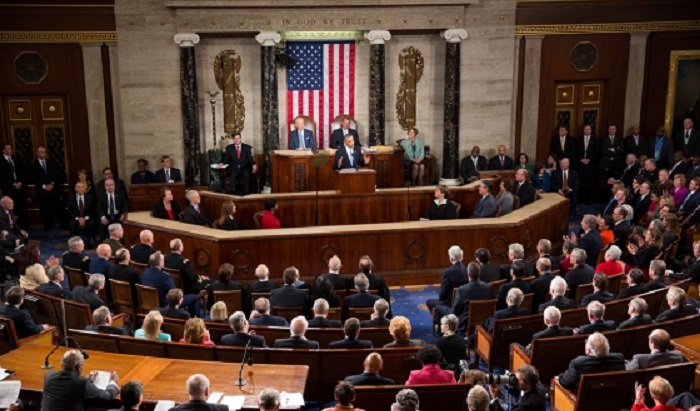
State of the UnionPresident Barack Obama delivered his sixth State of the Union address and like the previous five other speeches, he largely dealt with domestic issues as the nation continues to struggle with a lingering recession, stagnant wage growth and deadlocked politics in Washington.

And like his other speeches, this one ran slightly under 7,000 words in length and in it, President Obama mentioned Iran a grand total of four times, which is comparable to how many times he spoke about Iran in 2014, 2013, and 2012. The only difference in this speech was a slightly longer emphasis on the need to avoid the additional levying of economic sanctions on Iran during the third and latest round of nuclear negotiations.

Similarly, Iran’s coterie of apologists and cheerleaders went on the offensive in advance of the speech as early copies were circulated amongst administration supporters. The National Iranian American Council notably and predictably lauded the President’s statement with a statement warning of the possibility of war breaking out with Iran should sanctions be levied.

Of course what NIAC fails to address is that this so-called last best hope for peace for Iran is actually the third go-around for this administration and doesn’t include efforts by every previous Presidential administration who had attempted to rein in Iran’s ruling mullahs.

While Iran has played revolving chairs with presidents in order to first get tough with the West with Ahmadinejad, it then tried a different tack with a so-called moderate face now under Hassan Rouhani. In both cases, the heavy hand of Supreme Leader Ayatollah Ali Khamenei continues to sabotage any nuclear deal with his insistence that Iran retain not only its refining and enrichment capacity, but also its missile technology to potentially deliver a nuclear warhead.

NIAC’s hyperbole is indicative of the simple truth surrounding the issue of Iran; the American people simply do not trust the mullahs running Iran, least of all with nuclear weapons.

The fact that previous sanctions bills and the most recent one being proposed in Congress have been highly bipartisan with large numbers of Democrats joining with Republicans in an overwhelming show of solidarity on the issue demonstrates more powerfully than any speech that the President and NIAC are very much alone on this issue.

The funny thing is that the only people who are mentioning a possibility of war are only the NIAC and Iranian regime’s supporters, that have engaged in hyperventilating over the inevitable onset of war should sanctions come.

They neglect to mention that the same claims were made when previous sanctions were levied and in each case, war did not come. In fact the opposite occurred as Iran was forced to the bargaining table as its ability to export its brand of radicalized Islam became more difficult with fewer resources available. Couple that with crushing oil prices, and the timing is near perfect to forge a historic agreement with Iran to not only halt nuclear weapons development, but also seek improvements in Iran’s horrific human rights record, worsened under the “moderate” president Hassan Rouhani.

The U.S. and the West are being provided with an opportunity to use its significant leverage to move Iran forward back into the community of nations as a more democratic, pluralistic and free society than at any other time in recent memory. While the President focuses on nuclear talks, the window that has opened here is much more significant and should be taken advantage of immediately.

In short, the President needs to aim higher on behalf of the Iranian people, as well as the American people; a notion that the NIAC would be well served to adopt as well.

By Michael Tomlinson

Filed Under: Blog Tagged With: Iran, Iran Lobby, NIAC, Nuclear Iran, nuclear talks, Obama state of the Union

What Does the NIAC Stand For?

January 20, 2015 by admin

Stage SpotlightAs the third and latest round of nuclear talks between the P5+1 negotiating team and Iran get underway, an important sideline cheerleader for a successful conclusion to talks giving Iran its cake and eating it too will be the National Iranian American Council.

On this blog, the NIAC has been discussed extensively for its myriad efforts on behalf of the religious regime in Tehran and its comprehensive public relations, social media and news outreach efforts. Its members, including most notably its leader Trita Parsi, actively chronicle all of the potential pitfalls to the supposed moderate efforts by Iran and its President Hassan Rouhani to achieve a peaceful solution for all parties concerned.

What strikes most observers as peculiar about NIAC is exactly what its stated mission is and how it goes about achieving its goals.

You see, to a casual observer, if you read the NIAC’s very own mission statement and self-description, you find a fairly generic and simple explanation of what it seeks to accomplish:

“The National Iranian American Council is a nonpartisan, nonprofit organization dedicated to advancing the interests of the Iranian-American community. We accomplish our mission by supplying the resources, knowledge and tools to enable greater civic participation by Iranian Americans and informed decision making by lawmakers.

Since its inception in 2002, NIAC has effectively represented Iranian Americans on Capitol Hill, giving the Iranian-American community a powerful voice. NIAC has a presence on both coasts and in the American heartland. Members of Congress are now counting on hearing from NIAC and benefiting from the perspective of Iranian Americans.”

On the surface a fairly innocuous and some might say even worthy goal, but what is interesting is the complete lack of effort by the NIAC to live up to its very own words.

Let’s take up two specific examples.

If you take a look at NIAC’s listing of key issues it advocates on, you will notice of course U.S.-Iran relations and also “Discrimination & Immigration” as well as “Community & Heritage.”

Without a doubt the state of U.S.-Iran relations is paramount to NIAC as anyone can see from perusing its blog and archives. It is extremely active on all fronts especially as it relates to nuclear negotiations and economic sanctions. You would think it would also demonstrate the same kind of concern and activism on the other two key issues areas it lists as working on behalf of Iranian-Americans.

But click through the Discrimination & Immigration link and you find a little commented on section with no entries more current than a piece done last September 2014 about a jurist and before that issues related to economic sanctions.

In the Community & Heritage link, it’s even more dismal with virtually no action or activity that is not tied to nuclear talks or economic sanctions. It seems NIAC’s greatest achievements in 2014 in this area were to hold two fundraisers in California and another one in New York.

What is even more notable is the complete lack of participation and commentary from ordinary Iranian-Americans. NIAC’s website is hard pressed to deliver anything from Iranian-Americans not associated with NIAC through employment or sponsorship. This lack of representation is the by far the most telling and damning secret about it; NIAC represents no Iranian-Americans and instead simply is a front for the Iranian regime.

This fact is mirrored in the NIAC’s constant boosterish support for Iran, yet virtually no condemnation for the scores of human rights abuses and foreign military adventures or support for terrorist groups. You would think if a group claimed to represent the interests of Iranian-Americans it might, even once, offer up an opinion poll of what Iranian-Americans think. It might help work with concerned Iranian-Americans who have relatives in Iran under arrest or imprisoned. It might call for the open access of news media, social media and the internet in Iran so relatives in the U.S. could stay in touch.

One might think the NIAC might actually do what it claimed to be doing.

Sadly, the NIAC lives only for the purpose of supporting the mullahs which is why its influence has been greatly diminished and it now lives solely within a narrow strip of political support almost exclusively within the purview of progressives and liberals; thus explaining Trita Parsi’s ardent tweets lately about Ferguson and race relations which seem to have little bearing on issues at the top of the list for most Iranian-Americans.

It is clear that as NIAC wanes in influence and more reputable and knowledgeable groups such as the National Council of Resistance of Iran

Stage Spotlight begin to enjoy a resurgence within Congress and among global leaders, the truth about Iran’s regime and its true intentions about nuclear weapons and expansion of its radicalized Islamist agenda will finally be revealed for the world to see.

By Michael Tomlinson


Filed Under: American-Iranian Council, Blog

Selma Could Never Happen in Iran

January 19, 2015 by admin

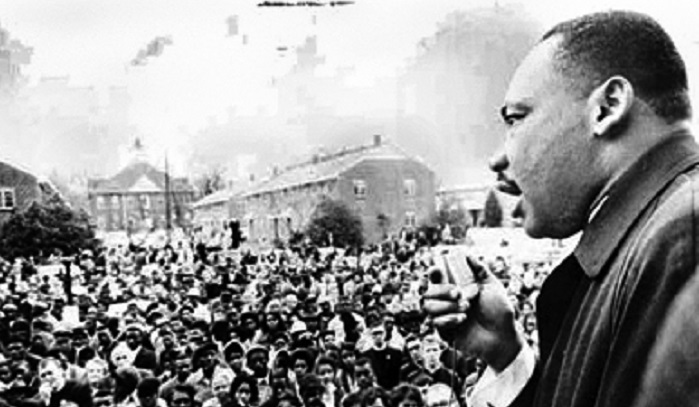
Selma March (1)It is fitting as we observe the birthday of Dr. Martin Luther King, Jr., the movie “Selma” has been nominated for a Best Picture award for its recounting of the pivotal series of peaceful marches led by Dr. King and thousands of civil rights supporters in Alabama in 1965 which led to the granting of voting rights to blacks.

A key element of those marches was the national and global outrage at news footage and media stories depicting the brutal beatings by state authorities of men and women offering no resistance. The public condemnation helped pressure the federal government to intervene to protect marchers and speed passage of this important legislation.

Nearly 50 years later that same call for equality and democracy rings out in Iran where peaceful marches over twice disputed elections were met with shocking violence, arrests and death. Nascent efforts to spread information and horrifying photos and videos via social media were shut down by the ruling regime of mullahs led by Supreme Leader Ayatollah Ali Khamenei.

To this day mass demonstrations are outlawed, any media viewed as subversive in the slightest way brings quick arrests while technology such as satellite dishes and internet access are routinely blocked in order to lay a blanket of secrecy over the human rights abuses going on in Iran.

The fact that 50 years ago men and women could peacefully stand up to their nation and change the course of history and their lives should provide a resonating example for what needs to happen in Iran. While the third and latest round of nuclear talks have begun with Iran and the P5+1 group of nations, the lessons of what happened in Selma, Alabama and what has been happening in Iran should give negotiators additional impetus to hold Iran accountable for improvements in its dismal human rights record.

The fact that Secretary of State John Kerry has raised the plight of Mr. Rezaian with Iranian negotiators shows that linking human rights to progress in talks has already happened. The West would be remiss to miss the opportunity to press the regime harder for basic reforms such as allowing for the right to free assembly, the right to access the internet and news media and the right to be free of torture, abuse and false imprisonment.

Nothing would be a greater tribute to the legacy of Dr. King than the emptying out of Iran’s notorious Evin Prison even while he himself sat in an Alabama jail cell half a century ago and wrote a series of letters that set the tone and stage for the argument for civil rights.

It is incumbent on the supporters and apologists of Iran in the U.S. such as the National Iranian American Council to stop paying lip service to the cause of civil rights with their tweets about supporting the Ferguson, Missouri protests and look closer to the injustices happening in their home country.


By Laura Carnahan

Filed Under: Blog

Iran Sanctions: Stop the Stalling

January 17, 2015 by admin

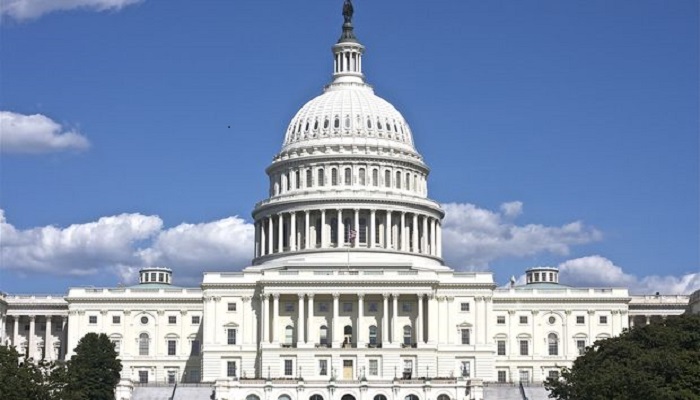
US Capitol (1)With the new Congressional session starting up under Republican control, it has been clearly evident that Iran’s lobbying and PR machines are going into hyperdrive at the prospect of new economic sanctions being proposed by the incoming Congress as a result of twice-failed nuclear negotiations and Iran’s newly aggressive military intrusions into Iraq and Syria.

Iran’s chief apologist in the National Iranian American Council has flooded news media with editorials and opinion pieces warning of disastrous consequences should a new sanctions bill be introduced. A press release issued by NIAC quotes Jamal Abdi, NIAC Policy Director, as saying “If Congress forces through new Iran sanctions legislation over the warnings of the President, our negotiators and the wishes of the American people, they will own the consequences.”

What he neglects to mention is the growing belief among the American people that President Obama’s current course of negotiating session after failed negotiating session is proving fruitless in the wake of the sharply increased about of violence occurring worldwide due to religious extremist terrorists abusing the name of Islam. This sense of unease has been borne out by recent opinion polling and the dramatic midterm elections.

The NIAC and its cohorts are terrified at the prospect of new sanctions since it would finally rip the façade covering Iran’s President Hassan Rouhani’s attempts to portray a moderate face to the world, while buying time for Iranian regime to expand its military and political influence to its neighbor in Iraq, as well as heavily increase its influence in the growing Islamic extremism sweeping across the world.

With plunging oil prices, the pressure on Iran’s ruling mullahs have never been greater and the opportunity to finally leverage real concessions on not only its nuclear program, but its overall dismal human rights record is finally at hand.

The incoming Congress recognizes the opportunity at hand and wants to seize it by moving forward with sanctions. More importantly, a new sanctions authorization would not only be aimed at placing new sanctions on Iranian government as much as ensuring that current sanctions already in place are not evaded or circumvented. President Obama’s recent executive action to normalize relations with Cuba provided the new Congress with the impetus it needed to ensure that West doesn’t give away the proverbial farm without getting anything back for it.

Similarly other Iran apologists such as Jim Lobe at LobeLog.com have also attempted to sound dire warnings of what would happen should a new sanctions bill be passed.

The irony in all this hysteria is that the prospect of failed nuclear talks have already come and gone. If NIAC hasn’t told the world yet, talks have already failed twice before because of Iran’s Supreme Leader Ayatollah Ali Khamenei and his public pronouncements committing Iran to its nuclear capability. Since the last failed talks nothing has changed except Iran’s Revolutionary Guard is spreading in Iraq and extremists have killed innocent people in Ottawa, Sydney and Paris now.

The American people have seen through all of the spin control, manipulations, false warnings and outright fabrications of NIAC and others and voted in a newly confident Congress intent on fulfilling the basic promise of keeping Americans safe. Iranian regime’s supporters realize just how small their island of support has become and have pushed all their chips into the pot in the hopes of putting one final scare into the American people so Iran might wrest from the P5+1 negotiating team more concessions without giving anything up.

Fortunately for the West, Ottawa, Sydney, Paris, Belgium, Nigeria, Syria, Iraq, Yemen and other places around the world have offered ample proof that the best course of action for peace and nuclear free Middle East does not lie in appeasing mullahs in Iran, but instead, getting tougher with its government.


Filed Under: Blog, News

The Tragedy at Charlie Hebdo and the Silence That Followed

January 8, 2015 by admin

paris-attack-charlie-hebdo (1)The vicious and meticulously executed attack by Islamic extremists on the French news weekly Charlie Hebdo in Paris resulted in the mass killings of journalists, cartoonists and police officers. It has been widely condemned by the international community as a blatant effort to muzzle a free press and punish any of those seeking to shine a spotlight on the radical thugs now perverting Islam and sowing death and destruction around the world.


Social media has been filled with sympathetic tweets and hashtags of #jesuischarlie as the world expresses its revulsion at this act and begins to grapple with the larger and ever growing problem of radicalization of people drawn to the preaching and messages of violence from groups such as ISIS and state-sponsors of terror such as Iranian mullahs.


Curiously there has been one quiet corner of the Internet and that is the domain occupied by the supporters and advocates of the Iranian regime. A casual perusal of the social media feeds of people such as Trita Parsi of the National Iranian American Council showed a lack of commentary or condemnation of the attack. In Parsi’s case he did not even post any comment on the attack until hours later and even then provided a link to an editorial by Juan Cole that attempted to rationalize the murders in the context that it did not represent a broader indictment of Muslims.


Why this is curious is when compared to other acts such as the rioting in Ferguson, Missouri or even the recent protests by New York Police Department officers against New York Mayor Bill de Blasio, Parsi has been vocal and quick to cite these incidents and condemn them. Yet in a case where he could have made a clear demarcation between the violent and extremist acts of Muslims intent on perverting a religion for their own gains, he remained largely silent.


This deafening lack of protest from supporters of Iran illustrates the tightrope they attempt to navigate by avoiding any potential linkages back to Iran from acts of terror and violence occurring around the world. It is well established that Iranian regime’s militant brand of sectarian violence and policy has been at the heart of conflicts in Syria, Iraq, Afghanistan, Lebanon and Yemen just to name a few places. Yet, none of these actions such as the supply of weapons and cash to terror groups such as Hezbollah nary once engender a word of protest or tweet of outrage from Parsi and company.


It points to the rank hypocrisy of the Iranian lobby in condemning acts in the West that help Iran point an accusing finger yet never question the almost daily barbarous acts of violence committed by the Iranian regime and its agents around the world and against its own people.


Members of the U.S. Congress, recently sworn in, should take the opportunity to not only note what Iranian regime supporters such as Parsi tweet and post, but more importantly, what they don’t post or protest.


Sometimes the silence is just as damning as the words.

By Laura Carnahan

Filed Under: Blog, National Iranian-American Council, News

Iran Cannot Have it Both Ways in Nuclear Talks in 2015

January 7, 2015 by admin

Empty-Meeting-RoomOn January 15th, Iran will once again take a seat at the negotiating table with the P5+1 nations and begin a third round of talks over its nuclear weapons program and just as it has done twice before, it will refuse to make any substantial concessions and after another seven tedious months, Iran will undergo its third strike.

Far from crystal-ball gazing, this scenario is more than likely given past history and a newly resurgent Republican majority in both houses of Congress who promise to flex its collective muscle in case President Obama makes any precipitous concessions as he did in normalizing relations with Cuba on his own.

And just as before, Iran’s lobbying and PR machinery has ramped up into overdrive before these talks start to help lay the ground work for another Cuba-like executive action by President Obama for Iran. The initial seeds have been laid by Iran cheerleaders such as Trita Parsi of the National Iranian American Council who have saluted the trial balloons for normalizing relations with Iran with the opening of an American embassy in Tehran again.

Ironically, Parsi has sought to frame this latest round of talks around whether or not the U.S. is willing to offer more concessions and can be trusted by Iran in recent comments, saying:

“There are question marks in the minds of the Iranians as to whether the American promises about sanctions relief actually can be trusted – not to say that they don’t have enough confidence in the president, but they may not have enough confidence in the U.S. Congress,” Parsi said.

One can see how he and other Iran allies are seeking to separate any possible normalization action by the President from a Congress that may object to it.

This, more than anything else, represents the “have their cake and eat it too” approach of Iran to nuclear talks. On the one hand Iran, through its perceived moderate President Hassan Rouhani, holds out an olive branch of concessions and flowery speeches, while on the other is the stern and recalcitrant voice of Iran’s Supreme Leader Ayatollah Ali Khamenei who’s earlier pronouncements sank the other negotiating sessions.

Now Parsi and his cohorts are once again attempting to provide political cover for progressive liberals in Congress who basically want to give Iran whatever it wants in the misguided belief that everything will turn out alright.

But former chairman of the U.S. Joint Chiefs of Staff, Gen. Hugh Shelton recently wrote in an editorial in The Los Angeles Times that “Amnesty International has pointed to the presence of Iran’s proxy militias in Iraq as a key source of instability and sectarian conflict there.”

He goes on to point out that Iran is at the heart of most of the region’s conflicts and instability. All of which has been going on during the time of nuclear talks. One cannot claim to aim for peaceful uses for nuclear power while at the same time sponsor most of the wars and conflicts going on at the same time.

This contradiction lies at the heart of these talks and is the unspoken elephant in the room. Iran cannot claim the mantle of peace while it clutches the proverbial sword of war, no matter what Parsi and others claim.

We can only hope round three ends the same way as rounds one and two.

By Michael Tomlinson


Filed Under: Blog, Latest from Lobbies & Appeasers, News Tagged With: Iran Lobby, Nuclear Iran, nuclear talks

Trita Parsi, Westboro Baptist Church, NYPD Police Funerals and Iran

January 6, 2015 by admin

Iranian Lobby

Iranian Lobby

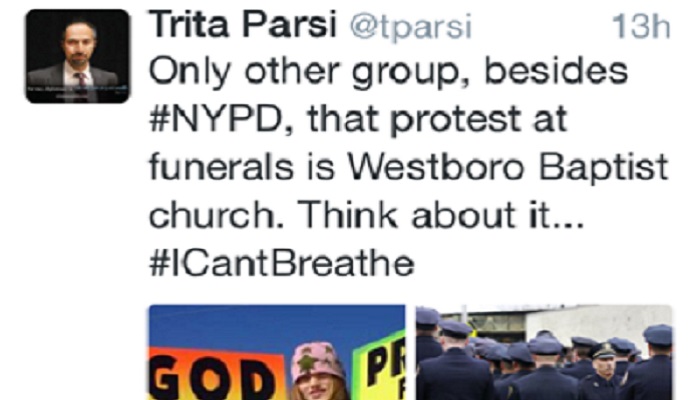
If anyone wanted to start off 2015 with a bang, it would seem Trita Parsi, the head of the National Iranian American Council and one of the Iranian regime’s chief cheerleaders, decided to throw all caution to the wind when he tweeted out:

Only other group, besides #NYPD, that protest at funerals is Westboro Baptist church. Think about it… #ICantBreathe

Parsi sought to link New York police officers who gave silent protest to New York Mayor Richard de Blasio at recent funerals for two NYPD officers to the highly objectionable protests by members of the Westboro Baptist Church who protested at funerals of U.S. service members killed in Afghanistan and Iraq.

It is a twisted sort of pretzel logic, even for Parsi, but worthy of his past statements on behalf of Iran during the past two years of fruitless negotiations overs nuclear weapons. His statements that Iran was only desirous of peaceful nuclear development flew in the face of near continuous acts of military intervention and terrorist group support and brutal human rights crackdowns during the same period.

For a man who has been almost single-handedly carrying the political and PR water for Iran’s mullahs, it’s an odd tweet to make since it has little to do with Iran and nothing to do with nuclear arms it seems on the surface, but it does fall in line with similar criticisms echoed by Iran’s Supreme Leader Ayatollah Ali Khamenei who delighted in criticizing the US over recent racial protests in Ferguson, Missouri.

But when we consider the incredible shrinking island of support for Parsi’s positions, it’s more easily understood why he chose to make such an odd and discordant tweet. After two years of failed negotiations, largely due to Khamenei’s obstinate loyalty to his own hardline positions, bipartisan support in Congress for an Iranian nuclear deal negotiated by President Obama and Secretary of State John Kerry has largely evaporated, especially in the wake of the midterm elections.

If anything has become abundantly clear in the new incoming Congress, about the only vocal and public support for Parsi’s positions lie within a small and highly liberal wing of the Democratic Party. Hence, Parsi’s hard shift to the left in the hope of currying more favor with the few American politicians willing to support a deal with Iran.

Supporting increased economic sanctions against Iran and holding Iran regime’s religious and political leadership for its dismal human rights record and sponsorship of terrorism abroad has gained even more bipartisan support as Democrats such as Sen. Bob Menendez and Republicans such as Rep. Ed Royce have consistently and loudly decried any potential deal that leaves Iran with the capacity to develop nuclear weapons.

It’s against this backdrop that any casual perusal of Parsi’s Twitter feed will show this evolution of politics in to increased attacks on the U.S. military and its allies and criticism of police departments.

If the stakes for a nuclear weren’t so high, it would be easy to dismiss Parsi’s tweets as the increasingly desperate rants of paid-for PR flaks which are losing their audience and impact. We can only hope his influence will be just as effective in securing a nuclear deal as it’s been the past two years…zero.

By Michael Tomlinson


Filed Under: Blog

Equating Cuba to Iran is More Smoke and Mirrors

December 18, 2014 by admin

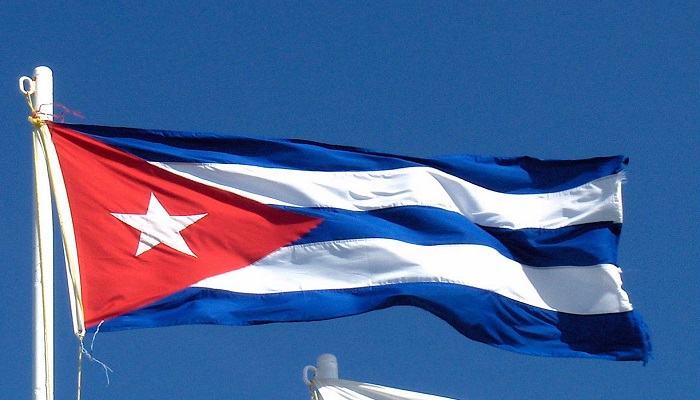
Cuba FlagPresident Obama laid out a move to normalize relations with Cuba after over half a century of unrest in relations. North Korea comes to mind too, but that involves another discussion on another day.

Sympathizers and supporters of Iran’s ruling regime have seized on the proposal to try and draw parallels to the U.S. approach to Iran. Most notably Trita Parsi and Ryan Costello of the regime’s foremost lobbyists at the National Iranian American Council, write in The HuffingtonPost that America’s perceived failed Cuba policy is akin to its similar flawed policy as it relates to Iran.

They attempt to draw parallels to economic sanctions placed on Cuba and Iran as both being failures in policy and deserving of retraction. They go to heap praise on President Obama’s recent efforts to advance a nuclear arms deal with Iran as evidence of this new pivot that can usher in an era of normalized relations between the two adversaries.

Unfortunately their obtuse logic is about as straightforward as a pretzel. Cuba and Iran are vastly different countries with vastly different economic, political and military histories.

Anyone over the age of 60 clearly remembers the Cuban Missile Crisis and the razor sharp edge the U.S. and old Soviet Union navigated as the world was pushed to the brink of global war. In a sharp twist of irony, Cuba’s placement of nuclear missiles aimed at the U.S. 90 miles away proved to be intolerable and were eventually removed through some last minute diplomacy and a heavy dose of military hardware in the Caribbean. Similarly, Iran faces the same choice in whether or not to pursue a nuclear arms program that could place Iran in the same position Cuba found itself in.

But the differences between Cuba and Iran are largely glossed over by Parsi and Costello. Whereas Cuba was a virtual vassal state to the Soviets and heavily dependent on imports of oil, food and other goods to keep the island nation going, Iran sits on one of the world’s largest reserves of oil and uses illicit petro dollars to fund a myriad of military activities as well as fund several of the world’s most notorious terror organizations.

It would be a remarkable display of honesty if Parsi and Costello were to actually use the terms “Hezbollah, ISIS and Iran” in the same sentence.

Iran has been governed by an unrelenting, unforgiving and uncaring religious cadre of mullahs who through advocacy of a particularly harsh and radicalized brand of Islam have managed to oppress the Iranian people for decades.

But par for the course for Parsi and Costello, they conveniently ignore the human rights abuses, depredations and decades-long effort by Iran to develop a nuclear capability in defiance of worldwide condemnations.

Iran remains deeply involved in the Syrian conflict, now manipulates Iraq in its fight against ISIS and continues to fund and support Hezbollah and Hamas, as well as shield its nuclear activities from international inspectors and continue to squeeze its own people with a stepped up campaign of arrests, imprisonments and executions that would make North Korea pale by comparison.

But none of that seems to make the proverbial exhortations of Parsi and Costello who remain slavishly obedient to Iran’s beck and call and are using the Cuba situation in another desperate attempt to push through a nuclear deal that would set Iran on a path not too dissimilar to the near global catastrophe of 1962.

By Michael Tomlinson

Filed Under: American-Iranian Council, Blog Tagged With: Cuba, Iran, Iran Lobby, National Iranian American Council, NIAC, Normalize relations with Cuba, Ryan Costello, Trita Parsi

  • « Previous Page
  • 1
  • …
  • 61
  • 62
  • 63
  • 64
  • Next Page »

National Iranian-American Council (NIAC)

  • Bogus Memberships
  • Survey
  • Lobbying
  • Iranians for International Cooperation
  • Defamation Lawsuit
  • People’s Mojahedin
  • Trita Parsi Biography
  • Parsi/Namazi Lobbying Plan
  • Parsi Links to Namazi & Iranian Regime
  • Namazi, NIAC Ringleader
  • Collaborating with Iran’s Ambassador

Recent Posts

  • NIAC Trying to Gain Influence On U.S. Congress
  • While Iran Lobby Plays Blame Game Iran Goes Nuclear
  • Iran Lobby Jumps on Detention of Iranian Newscaster
  • Bad News for Iran Swamps Iran Lobby
  • Iran Starts Off Year by Banning Instagram

© Copyright 2026 IranLobby.net · All Rights Reserved.