Iran Lobby

Exposing the Activities of the lobbies and appeasers of the Mullah's Dictatorship ruling Iran

  • Home
  • About
  • Current Trend
  • National Iranian-American Council(NIAC)
    • Bogus Memberships
    • Survey
    • Lobbying
    • Iranians for International Cooperation
    • Defamation Lawsuit
    • People’s Mojahedin
    • Trita Parsi Biography
    • Parsi/Namazi Lobbying Plan
    • Parsi Links to Namazi& Iranian Regime
    • Namazi, NIAC Ringleader
    • Collaborating with Iran’s Ambassador
  • The Appeasers
    • Gary Sick
    • Flynt Leverett & Hillary Mann Leverett
    • Baroness Nicholson
  • Blog
  • Links
  • Media Reports

Iranian Regime Threats Ring Hollow

April 26, 2018 by admin

Iranian Regime Threats Ring Hollow

Iranian Regime Threats Ring Hollow

What a difference a year makes. Last year the Iranian regime was riding high with its victories in Syria, its military partnership with Russia, the overthrow of the government in Yemen, billions of dollars to spend on upgrades to its military and successful ballistic missile launches showcased on state television almost weekly.

But in less than 12 months, the regime is under the most severe attack and pressure from all quarters than it has ever been since the nascent days of the Islamic revolution that the mullahs highjacked.

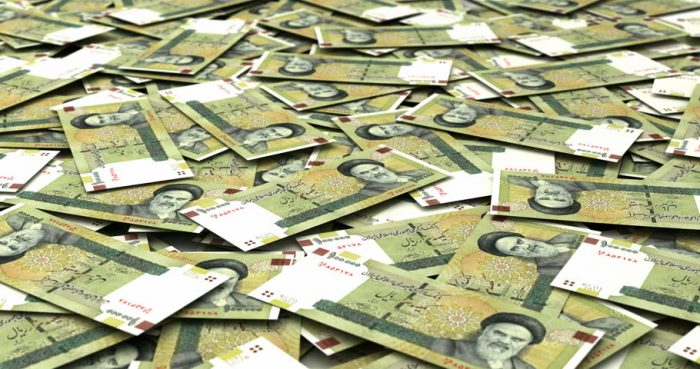
First the foremost, the Iranian economy is in freefall and a basket case. The rial has dropped faster than a lead anchor from a ship and furious attempts by the Iranian regime to artificially boost it and control the flow of foreign currency through local money changers has failed miserably.

The threat of a new cyber currency being offered by the ubiquitous messaging app Telegram didn’t help either which led to the mullahs trying to ban it even though over half of the Iranian population uses it.

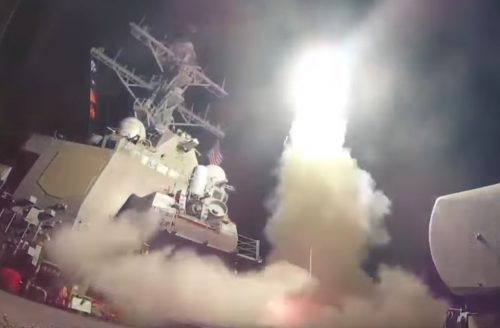
On the military fronts, the gains made in Syria have been threatened with Bashar al-Assad’s continued indiscriminate use of chemical weapons to kill men, women, and children leading to the first multi-national military response on Syrian targets by French, British and U.S. forces.

It also forced Russia to sit on the sidelines and allow its ally to be hammered by over 300 missile strikes.

Also, Iran’s move into Yemen had the unintended effect of galvanizing long-time foe Saudi Arabia into action and form alliances that were unheard of only a short time ago such as Saudi and Israeli defense officials meeting to go over planning in defending against Iranian aggression and even permitting mutual flights over each other’s airspace for the first time ever.

The mullahs also probably did not count on the waves of mass protests and public discontent that have sprung up beginning late last year and have been propelled not by a single issue such as the disputed presidential election of 2009, but rather a whole raft of complaints ranging from pathetic job growth and record unemployment among youth, to the constant oppression of Iranians, especially women, over everything from riding bicycles and not wearing hijabs to degraded environmental conditions turning much of the Iranian countryside from fertile farmlands to barren deserts.

Not to mention the election of President Donald Trump and the 180-degree about face from trying to appease the regime under President Obama to the aggressive efforts to match Iranian aggression move for move.

You allow Assad to use chemical weapons? Okay, we’ll bomb sites and if Iranian military personnel happen to be there assisting, tough.

You threaten to walk away from the nuclear deal? Feel free to do it.

Every Iranian regime temper tantrum, taunt, and the threat is now met with a shrug of indifference and steely resolve instead of the constant handwringing that marked the previous administration.

Even the Iran lobby is left with little to nothing to say. In response to the president’s most recent comments to the possibility of Iran walking away from the nuclear deal, Trita Parsi of the National Iranian American Council issued a curt two-paragraph statement that shows how much his verbosity has plunged in this new era.

“Macron and Europe seem willing to bend over backward to save the nuclear deal and prevent catastrophe. When our closest allies express alarm in unison, we should listen. Trump should quit while he is ahead and reaffirm the U.S. commitment to the JCPOA before it is too late. The alternative would be an isolated America, an unchecked Iranian nuclear program, and an escalation towards war,” Parsi writes.

It’s laudable for Parsi to even admit for the first time that President Trump is actually ahead of the ballgame with Iran. He recognizes, even if he is unwilling to say so publicly, that President Trump’s actions have turned the tables on who controls leverage in the Middle East.

The same approach has brought a startling and breathless turnaround with North Korea in which the Hermit Kingdom has agreed for the first time to put denuclearization on the negotiating table without any preconditions.

Parsi understands that the same mobilization of pressure and harsh rhetoric backed by tough actions are being applied to Iran now with most European allies, who had been staunch supporters of the Iran nuclear deal, now being contortionist moves to appease the Trump administration in an effort to save the deal.

French President Emmanuel Macron’s visit to Washington was designed to showcase French unity with the U.S. on issues such as Syria, while also acknowledging the need to address issues left untouched by the Obama administration such as ballistic missile development and unfettered access to now-blocked off Iranian military sites.

The fact that all of Europe is now intensely focused on appeasing President Trump instead of the mullahs is a remarkable feat of diplomatic brinkmanship and indicative of how the tide has utterly turned against the Iranian regime.

Meanwhile as Iran threatens to pull out of the treaty on non-proliferation of nuclear weapons if the Trump administration approves a non-certification of the deal by the May 12th deadline, President Trump now essentially has Iran dancing on a string since he could simply conditionally approve the extension one more time and squeeze Iran and Europe for even more concessions.

The president has taken a page from the mullahs’ playbook and is throwing it right back at them.

The threat to pull out of the NPT rings hollow since by doing so, Iran would be throwing its lot in with countries such as Israel which has not signed the agreement.

Now that would be ironic.

Michael Tomlinson

Filed Under: Blog, News Tagged With: Featured, Iran deal, Iran sanctions, Macron Visit, National Iranian American Council, NIAC, NIAC Action, Syria, Trita Parsi, Trump, Yemen

As Iran Regime Teeters Does the Nuclear Deal Even Matter?

April 19, 2018 by admin

As Iran Regime Teeters Does the Nuclear Deal Even Matter?

As Iran Regime Teeters Does the Nuclear Deal Even Matter?

To say the mullahs controlling Iran are nervous is akin to saying a hyena is nervous as an enraged elephant is about to step on it.

The imagery is appropriate since the pack of hyenas that are the mullahs in Tehran have worked relentlessly together to rip apart the Iranian economy and gnaw on the bones of the dissected carcass that used to be a shining light in the Middle East.

Iran bears a ghost-like resemblance to its former glory days; even stretching back to the historical Persian Empire that once straddled the known world. Today, Iran’s environment is dying literally and proverbially. Its economy drained of capital through deep corruption and years of supporting and sponsoring proxy wars and terrorist organizations.

Its people harassed, watched, intimidated, imprisoned and executed, Iran is a country reeling from assaults almost all internally created.

In response, the regime has done what all totalitarian governments do: They crack down harder.

It’s proven to be a recipe for more disaster as massive and widespread protests have gripped the country. Unlike previous mass protests such as during the disputed presidential elections in 2009, these protests have covered a wide range of grievances.

Women are protesting the repressive hijab laws. Workers have protested at factories, mines, farms and town squares to protest low wages, stagnant growth and government corruption. Small businessmen have protested graft and favoritism that hurts their ability to keep their businesses afloat while students, especially women, protests efforts to shut down social media, close down the popular Telegram app and restrict access to the outside world.

In response, even members of the regime’s government are calling it quits as deputy head of Iranian regime’s Department of Environment, Kaveh Madani, has decided to resign and leave the country following increasing pressure from the mullahs, according to Al-Monitor.

His appointment was originally hailed as a showcase for returning Iranian elites to help their country. Instead his resignation, tendered while abroad since he was most likely going to get arrested like so many other dual-national Iranians, is another signal that the future under the mullahs is only getting bleaker.


His departure also follows the arrest of a group of Iranian environmentalists, including Kavous Seyed Emami — whom authorities claim committed suicide two weeks after his arrest in February – and indicates the regime is increasingly sensitive to protests about the dismal state of the Iranian environment which has seen lakes disappear, farmland turn to dustbowls and air quality near poisonous levels of unhealthiness.


Predictably, the regime-controlled Mashregh News claims that Madani was also accused of spying and that his resignation, while he was abroad, is rooted in his alleged ties with “spies.” “Following the discovery of the spy and the infiltration network of Kavous Seyed Emami and the arrest of some elements of the Israeli, British and American network, rumors [spread] about Kaveh Madani, a professor at the Imperial College London, and it turned out that he is one of the defendants — and it must be made clear whether there was a relationship between him and the other elements of the spy network,” reported Mashregh News on April 17.


The irony of Madani’s situation is how it makes a mockery of claims made by the National Iranian American Council that the Iran nuclear deal was going to strengthen moderation in Iran. Trita Parsi and his NIAC colleagues have worked tirelessly to blame every problem facing Iran on the alleged incomplete fulfillment of the agreement’s terms, but it’s hard to imagine how Madani’s expulsion can be blamed on the Trump administration.


Simultaneously, the regime’s battle with a falling currency in the rial has essentially failed one week after imposing draconian steps to restrict dollar trading.


The tough new measures by the Central Bank of Iran (CBI) have largely failed to revive the value of the Iranian rial over the past week, based on open market exchange rates. There has been a similar pattern evident in the exchange rate of the rial against other major currencies, including the euro, British pound and Swiss franc.


According to Reuters, the majority of private money changers in Tehran have not bought or sold dollars or other foreign currencies for several days as they wait for the government’s next move in a clear sign of hoarding which is crippling the Iranian economy.


In response, clever Iranians are busy working to develop new smartphone apps that can help protect and mobilize protestors while thwarting the regime’s effort to monitor and identify dissidents.


One of the latest apps is Hafez, which translates as “to protect”. Named after the famous Persian poet whose words frequently targeted religious hypocrisy, the app offers users a collection of human rights-related information.

Foremost, it is a virtual rolodex of human rights lawyers in Iran, which allows users to access legal information regarding human rights, according to Aljazeera.

However, Hafez is more than just a list of telephone numbers, an Iranian human rights activist, told Al Jazeera.

“Users receive daily human rights news; [it] allows them to send news of human rights violations securely; [it] disseminates important legal information to users if they are arrested, and provides the contact information for attorneys who can assist,” said the article.

Here’s to hoping the ingenuity of the Iranian people can finally topple the theocratic regime.

Laura Carnahan

Filed Under: Blog, News Tagged With: Featured, hassan rouhani, Iran Human rights, Telegram Ban

The Rank Hypocrisy of Iran Lobby on Syria

April 16, 2018 by admin

The Rank Hypocrisy of Iran Lobby on Syria

The Rank Hypocrisy of Iran Lobby on Syria

Bashar al-Assad rules Syria with the same kind of tyrannical tactics common in Iran under the rule of his mullah partners. That includes the use of chemical weapons to target and kill pockets of resistance to his rule; the most recent strike coming recently and claiming the lives of men, women, and children in grisly scenes broadcast around the world.

The repeated use of such weapons resulted in a coordinated strike by the military forces of the U.S., Great Britain and France against three sites identified as having been storage or development sites for Assad’s chemical weapons this past weekend.

The strikes themselves were hardly a surprise given the level of revulsion around the world to Assad’s continued use of chemical weapons and the tweeting by President Donald Trump of his open intention to punish the rogue regime.

What was interesting was his televised address once the attacks began of his putting the Iranian regime and Russia on notice for their continued support of the Assad regime.

“What kind of a nation wants to be associated with the mass murder of innocent men, women, and children?” the president said.

President Trump asks an important question and really the only one that matters for the future of Syria and the Middle East.

Under his predecessor’s administration, the U.S. engaged in a foreign policy based largely on appeasing regional bad actors like the Iranian regime in an effort to coax them to adhere to dubious international agreements. That policy led to agreements that essentially exempted Iran from militant actions that only exacerbated and inflamed regional conflict.

Those policies gave us the quagmire President Trump now faces where there are hardly any good choices. The decision to strike militarily was not taken lightly and it says much for the sake of future diplomacy when the U.S. was joined by British and French military forces in a united show of force.

Take into consideration the positive alignments by the Arab world led by Saudi Arabia in confronting Iranian regime’s aggression and we see a world moving towards to the kind of unified front that helped bring the Iranian regime to the bargaining table in the first place with crushing economic sanctions before the Obama administration let the regime off the hook.

“We renew our strong condemnation of terrorist acts carried out by Iran in the Arab region, and we reject its blatant interference in the internal affairs of Arab countries,” Saudi King Salman said at a summit of Arab leaders, without referencing Friday’s missile strikes on Syria, according to Reuters.

Riyadh expressed its support for the strikes on Damascus in a statement on Saturday.

“We fully support military operations against military targets in Syria,” the Saudi Foreign Ministry said. “The military operation was necessary to protect civilians and stop chemical use.”

But for the Trump administration, the strike was more than just eradicating chemical stockpiles—stockpiles that the Russians had promised were removed under their supervision in a deal with the Obama administration—but rather about a broader agenda that includes containing the Iranian regime.

In an interview with ABC News, White House press secretary Sarah Sanders said the U.S. had three objectives in Syria: Defeating ISIS, containing Iran and ending the use of chemical weapons.

Which makes the reaction by the Iran lobby, specifically the National Iranian American Council, all the more appalling.

In a statement released by the NIAC, research director Reza Marashi said:

“The situation in Syria is tremendously dangerous, and President Trump risks throwing fuel on the regional fire. Given that Iranian and Russian forces are closely embedded with the Syrian government, there is a significant risk that any strikes will trigger retaliation and a bloodier, wider war with few discernible ways to de-escalate the conflict.”

We cannot believe Marashi was educated in a home for mentally deficit children growing up, but he must assume the world’s journalists are idiots when he calls for deflecting attacks on Syria because Russian and Iranian forces are deeply embedded there since it was the Iranian regime and Russia that have been supporting Assad and enabling his use of chemical weapons in the first place!

Wouldn’t it have been more responsible for Marashi and NIAC to denounce Assad’s use of chemical weapons and urge Iran and Russia to use their influence on Assad to de-escalate the conflict and garner a promise from him not to gas his own people anymore?

Instead Marashi ends the paltry statement by calling U.S. action “reckless” but only citing a “duty” by Iran and Russia to rein in Assad. Hardly a denunciation of the use of vile weapons.

“A large part of the reason that Syria is in ruins today is because nearly all actors have pursued military solutions instead of diplomacy aimed at halting the bloodshed. An eye for an eye approach will not bring justice or peace to Syria, and there is no moral high ground for those who respond to abhorrent violence with more violence,” Marashi also writes.

The irony of Marashi calling out the lack of diplomatic actions when the Iranian regime ignored diplomatic efforts to stop the Syrian civil war when it started and instead poured billions of dollars to prop up Assad, mobilized tens of thousands of Hezbollah fighters from Lebanon, shipped in Iranian-backed Shiite militias from Iraq, recruited Afghan mercenaries and started an airlift of ammunition and supplies using its own regional airlines is appalling to any rational observer.

The Iranian regime has been the guilty in ignoring diplomacy and using sheer military might to hold Syria together for Assad. Remember, it was the Iranian regime that sent its notorious Quds Force commander, Qassem Soleimani, on a secret trip to Moscow to beg for Russian intervention in July 2015 to save Assad and Iranian forces from defeat.

Marashi’s statement only proves once again how the NIAC and rest of Iran lobby are still working to spread the kind of fake news that helped the Iranian regime avoid crippling sanctions in the first place, freeing the regime to support Assad and allow these chemical attacks to take place in the first place.

All of which begs the question: Why does the NIAC support the slaughter of men, women, and children with poison gas?

Michael Tomlinson

Filed Under: Blog, News Tagged With: Featured, Iran Lobby, Iran Mullahs, Iran sanctions, Iran Terrorism, IRGC, Syria

As Currency Plummets the Iran Regime Teeters on Collapse

April 15, 2018 by admin

As Currency Plummets the Iran Regime Teeters on Collapse

As Currency Plummets the Iran Regime Teeters on Collapse

Iran’s currency, the Rial, is on a skydive plummet downward to historic levels and poses the most significant threat to the stranglehold the mullahs have had on the Islamic state.

Pegged to the price of petroleum, the Rial has been rocked by the global glut of oil and a stagnant economy riven through by rampant corruption and the diversion of billions of badly-need dollars to fund wars in Syria, Iraq and Yemen as well as a massive military build-up including a ballistic missile program.

Now as Iran has been gripped by rising political tension with massive demonstrations sweeping across the country since last December, there has been a rush to the banks as Iranian citizens desperately try to cash out and swap to scarce U.S. dollars in a scene reminiscent of bank runs during the Great Depression.

The Rial has bled away a third of its value just this year alone with an exchange rate of 60,000 Rial to a single dollar. The track record for the mullahs in fiscal management is pretty rancid ever since the Iranian revolution in 1979 when one dollar bought 70 Rials.

Since Hassan Rouhani assumed power in 2013, 36,000 Rials equaled one dollar. The drop in value is as much a reflection of Iranians lack of confidence in their government as it is of an economy that is nearing Third World status.

The mullahs have reacted in their typical brutal manner setting an official exchange rate of 42,000 Rials to the dollar in an example of wishful thinking. To enforce that rate, the mullahs have promised harsh punishment including arrest for anyone trying to exchange Rials at a different rate than the one established by them.

The crisis is driven by an inability to access physical currency notes, which are estimated at only five percent of all foreign currency in Iran, while the rest is available in the form of credits for business and the government.

Long gone it seems are the images of pallets loaded down with dollars and euros being unloaded from airplanes as part of the ransom payment made by the U.S. in exchange for U.S. hostages as part of the Iran nuclear deal.

That nuclear deal has failed to deliver the benefits promised by Rouhani to ordinary Iranians; instead the regime has siphoned the economic relief it brought to state-owned industries and the powerful Revolutionary Guard Corps.

It has also failed to generate the flood of foreign investment promised by Rouhani with many foreign companies unwilling to risk capital in investments in Iran when the U.S. has contemplated additional sanctions for the regime’s abysmal human rights record and its involvement in the support of terrorism and the war in Syria.

The use of chemical weapons repeatedly by the Assad regime against its own citizens has also ostracized Iran for its support of Assad and the heavy use of Iranian military units in the conflict.

The sponsorship of the revolt in Yemen and support of Houthi rebels has also ignited another potential regional conflict with Saudi Arabia and brought the U.S. and Russia into contentious situations that could possibly start a wider war rattling any potential investors.

Other efforts by the Iranian regime to bring in more foreign currency include trying to increase oil production in order to generate more sales overseas, but that has been stymied by fields utilizing outdated equipment and failure to attract any significant foreign partners to develop oil fields.

“This currency crisis is another step in the collapse of the Iranian economy, which was expected to rebound after the signing of the nuclear agreement. Difficult economic conditions brought protestors to the streets in a number of Iranian cities earlier this year, however those protests were quelled by the government. It is important to continue watching the economic situation in Iran, because historically economic issues have typically led to the most significant political unrests in that country,” wrote Ellen R. Wald, a historian and scholar at the Arabia Foundation.

The regime hasn’t been helped by action this week by the European Union to extend sanctions on Iran over human rights violations in an effort to demonstrate its willingness to the Trump administration to hold Iran accountable, while trying to preserve the nuclear agreement.

France has pushed for new sanctions over Iran’s missile program and involvement in conflicts in the region, including in Syria where Tehran backs President Bashar al-Assad. Paris hopes that would show President Trump the EU takes his concerns seriously.

The Foundation for Defense of Democracies, offered in an editoRial in The Hill that the collapsing Rial represented an opportunity to apply even more pressure on the regime.

“The White House should re-impose sanctions on the Central Bank of Iran to vindicate currency traders’ fear that it now plans to inflict serious damage on Tehran’s economy,” they write.

“Based on our analysis of the Central Bank data, Iran’s currency has lost roughly half of its value, 46 percent, falling from 40,170 to 58,880 per dollar, since Trump put the future of the nuclear deal in doubt last October.  The Iranian economy looked particularly wobbly amidst protests in December when Iranians took to the streets to protest the regime-controlled banking sector, and lack of economic opportunity and political freedom,” they added.

They believe that additional pressure on Iran’s Central Bank could be the nudge necessary to send it into collapse and bring down the regime.

“Under the sanctions law applied prior to the nuclear deal, foreign financial institutions are generally prohibited from engaging in transactions with the Central Bank. In effect, the Bank’s foreign-held accounts are put on lock down, barring the regime from accessing its foreign exchange reserves.  On paper, Iran may get paid for its oil but the money sits in the purchaser’s country and is only available for Iran to buy goods from that country in the local currency. Without access to these reserves, the regime would find it much harder to defend the Rial,” the article said.

The proverbial hammer blow this would deal to the regime is significant since the Central Bank provides the funding for the Revolutionary Guard Corps and supplies the cash for its activities in Syria, Iraq and Yemen.

The irony is that the regime can be crippled without canceling the nuclear deal as the Iran lobby has feared and instead using the Rial as a leveraged weapon against the mullahs by hitting them where it hurts; wiping out popular support from the Iranian people.

Remember, the original revolution against the Shah was largely fueled by economic concerns before it was stolen by the mullahs. Wouldn’t it be delicious to see the same thing happen to them?

Laura Carnahan

Filed Under: Blog, News Tagged With: #NuclearDeal, Featured, hassan rouhani, Iran deal, Iran Human rights, Iran Lobby, Iran sanctions, Iran Terrorism, IRGC, Sanctions

NIAC Sees Echo Chamber Falling

April 11, 2018 by admin

NIAC Sees Echo Chamber Falling

NIAC Sees Echo Chamber Falling

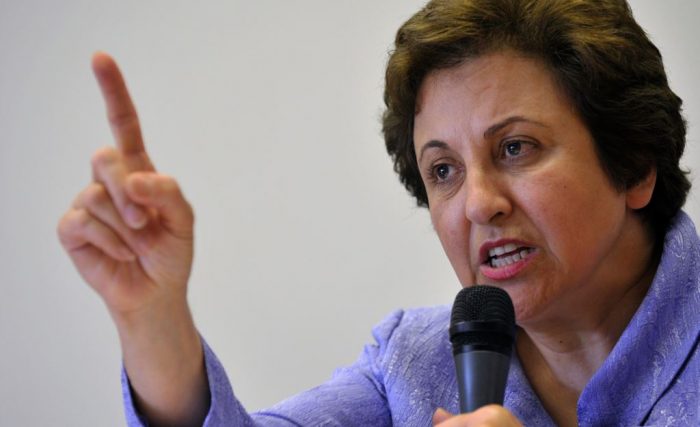
Shirin Ebadi, a Nobel Prize-winning Iranian human rights activist, took dead aim at the National Iranian American Council in an interview with Bloomberg and linked its efforts in lockstep with the Iranian regime. Even more damning, she openly called for regime change and the ouster of top mullah Ali Khamenei and eradication of the position with the replacement of the Iranian constitution with one based on democracy and freedom.

Predictably, the NIAC and its allies went on the offensive but stopped short of the usual verbal tongue lashings reserved for others regime naysayers.

Maybe the stature of a Nobel prize winner had something to do it. Maybe it was because Ebadi was the first Iranian and Muslim woman to win the prize had something to do with it. Maybe it was because the NIAC ran out of lies.

Instead, the NIAC put out a plaintive statement that avoided directly criticizing Ebadi and instead went after traditional foes; President Donald Trump and newly installed national security advisor, John Bolton.

“As we speak, Donald Trump is installing John Bolton in the White House – a man who has openly called for over a decade for the U.S. to bomb Iran. Trump has fired his advisors who argued against killing the Iran deal and is replacing them with pro-war advocates like CIA Director Mike Pompeo – who wants to turn Iran into Syria. Meanwhile, our families continue to be banned from America because of Trump’s hateful policies,” the NIAC said.

Remarkably, the NIAC did not disagree with any of Ebadi’s statements, including her harsh denouncement of the NIAC. Sometimes, when you get caught red-handed, there’s little you can say to counter the charges.

In the case of the NIAC, it’s been increasingly isolated and under fire from all quarters as the Iranian regime disproves virtually every false claim made by the NIAC during the run-up to the Iran nuclear deal.

The litany of mistakes and broken promises stretches across the entire spectrum of Iranian society as the ruling theocracy has brutally suppressed human rights and gone on a spree of imprisonments, public executions and moves to cut off Iranians access to social media and open communications.

Couple that with an economy approaching Third World standards, an environment turning into a wasteland due to mismanagement and a mounting realization among ordinary Iranians that the divide between the wealthy and powerful elites and everyone else is wider than the Indian Ocean and the challenge facing the NIAC of maintaining its vaunted “echo chamber” seems greater than finding a cure for the common cold.

Which is why the NIAC is pushing all of its chips into trying to save the Iran nuclear deal at all costs since if the Trump administration walks away from it, the relevance of the NIAC plummets to that of Mr. Irrelevant in the NFL draft.

“I’m quite pessimistic,” said Trita Parsi, NIAC president, in an interview in The Hill.

Parsi argued President Trump’s threats to kill the deal have already scared businesses away from Iran, turning Iranian opinion against the agreement.

Again, Parsi is trying to find some other reasons for why the nuclear deal is failing and the Iranian people are turning against Khamenei, Rouhani and the other mullahs. His efforts to pin the blame for everything on the new administration ignores his own role in setting expectations for a new moderate era in Iran only to have all of his promised reforms drop dead.

He parlayed the echo chamber coalition of special interest groups, bloggers and academics invested in supporting the Iranian regime into a humming PR machine, but now has seen most of that infrastructure crumble and fall into ineffectiveness.

Most of the premium media interviews Parsi so relished at the height of the echo chamber have now vanished; reduced to a few poor blogs and obscure news outlets reaching audiences outside of the U.S.

Similarly, the cadre of fellow travelers he relied on has dried up as they have been outed by news outlets as being instruments of the Iranian regime and blasted on social media.

While the #MeToo movement took down powerful men accused of sexual harassment, the #FakeNews movement also targeted the imposters that have consistently tried to sell the idea of Iranian moderation against a backdrop of unremitting wars in Syria, Iraq, and Yemen.

The latest chemical attacks on Syrian families and the gruesome images of small children gassed by the Assad regime has put to a lie the idea of Iran backing Assad only to fight ISIS.

Now the Iranian regime finds itself getting pushed closer to the precipice of extreme reactionary moves to save itself as it announced a move to ban the popular Telegram messaging app used by almost half of all Iranians.

The official reason for the ban was economic nationalism: Iranian officials say they want to promote homegrown apps that could break Telegram’s virtual monopoly on social media in a country where authorities tightly monitor internet usage and many websites are inaccessible.

But the real reason lies in the regime’s desire to cut off Telegram in order to cripple the ability of Iranian dissidents to organize the mass protests that have plagued the mullahs since last December.

It also means the regime is almost paranoid over the apps recent cryptocurrency offering that reached a record and posed a significant threat to the beleaguered Iranian rial which hit an all-time low on Monday against the U.S. dollar.

The rial was trading at 62,000 to the dollar, an 18 percent drop since Saturday, which was the first working day after the Persian new year, when many people travel abroad and certainly heightened the regime’s desire to move forward in trying to squash Telegram and the threat it posed.

Laura Carnahan

Filed Under: Blog, News Tagged With: Featured, Iran Lobby, National Iranian American Council, NIAC, NIAC Action, Shirin Ebadi, Trita Parsi

Iranian Nobel Prize Winner Finally Endorses Regime Change

April 10, 2018 by admin

Iranian Nobel Prize Winner Finally Endorses Regime Change

Iranian Nobel Prize Winner Finally Endorses Regime Change

Shirin Ebadi is an Iranian lawyer, former judge in the Iranian regime and noted human rights activist who was awarded the Nobel Peace Prize in 2003, making her the first Iranian and first Muslim woman to win the award.

During her extensive and laudable career, Ebadi took care to never explicitly call for the kind of regime change many Iranian dissidents have long advocated. Instead, she retained hope that the Iranian government could be fixed from within by so-called reformers such as Hassan Rouhani, whom regime advocate groups like the National Iranian American Council (NIAC) have long sought to portray as a “moderate.”

However, her true positions came to light recently in an interview with Bloomberg in which she finally announced her belief that “reform is useless in Iran.”

Echoing the argument that Iranian dissidents have been making for more than two decades, Ebadi said that the means of ending Iranian tyranny should be a U.N.-monitored referendum on the constitution that proposes one basic change: eliminating the unelected office of supreme leader. The Iranian people, she said, “want to change our regime, by changing our constitution to a secular constitution based on the universal declaration of human rights,” according to Lake.

It’s a position similar to the one advocated by Mrs. Maryam Rajavi, president of the National Council of Resistance of Iran (NCRI), in a ten-point plan for the future of  Iran.

Rajavi’s plan now seems remarkably prescient in light of the recent wave of massive grassroots demonstrations that began last December. Those protests and Ebadi’s belated condemnation are a strong rebuke not only to Rouhani but also to the Western progressives who foolishly believed he was an agent of change.

While Ebadi first made her views on the referendum known in February, she used the interview with Bloomberg to get more specific about what Western governments, and particularly the Trump administration, can do to assist the Iranian people in their struggle.

That included warning against any U.S. military intervention and urging only Iranian support for regime change. It’s a position that again echoed what the NCRI called for over a decade ago and represents a vindication of the vision laid out by the Iranian resistance movement in urging Western support for the Iranian dissident movement.

Ebadi went on to clarify what this type of Western support might look like, by advocating regime-targeting sanctions that would weaken the government without hurting the people themselves. For example, Ebadi says the U.S. and European governments should sanction the Islamic Republic of Iran Broadcasting or IRIB. This conglomerate controls the media in Iran and also manages Iran’s foreign propaganda such as the English-language PressTV and the Arabic al-Alam. Ebadi stopped short, however, of endorsing the style of crippling sanctions that were disbanded by the Obama administration in mid-2015.

Ebadi also criticized NIAC, which played a key role in advocating for President Obama’s nuclear deal with Iran. Ebadi told Bloomberg, she regrets participating in an event with NIAC in 2011, saying “when I analyzed what they say and do, I realize what they say is closer to what the government says that what the people want.”

Predictably, NIAC rallied its defenders among the American left including Noam Chomsky, a professor at the Massachusetts Institute of Technology, who said in The “Iranian” (a site where lobbies and agents of Iranian regime write): “I don’t know on what basis Shirin Ebadi is confident that she knows better what Iranians want than NIAC, to take one of her examples,”

So what makes Chomsky, an American professor who speaks no Farsi and has never been to Iran, feel that he has more authority on the subject than an Iranian woman who has risked her life fighting for basic human rights in her country of birth?

It’s not clear, but coming from someone who has made a career echoing regime propaganda of America being a “terrorist state,” and has cast doubt on Assad’s well-documented use of chemical weapons, it is sadly unsurprising.

Trying to kill the messenger in order to kill the message seems to be a favored tactic of the Iranian regime and its lobbying arm.

Laura Carnahan


Filed Under: Blog, News Tagged With: Featured, Iran deal, Iran Mullahs, National Iranian American Council, NIAC, NIAC Action, Shirin Ebadi, Trita Parsi

Huge ICO Sale by Telegram Portends Real Trouble for Tehran

April 5, 2018 by admin

Huge ICO Sale by Telegram Portends Real Trouble for Tehran

Huge ICO Sale by Telegram Portends Real Trouble for Tehran

One of the truisms for the future of the Iranian regime is that someone is always going to try to knock it over. Governments, including successive U.S. administrations to human rights groups to ordinary Iranian citizens, have done their best for force regime change over the decades.

The mullahs in Tehran have responded with typical brutality and force in suppressing dissent and opposing those efforts. Every meaningful revolt has been put down with the cost paid in bloodshed by protestors.

We can think back to the massive protests in 2009 following the stolen presidential election or just this past winter when citizen protests over the economy and lack of jobs pushed tens of thousands onto streets across Iran.

At the forefront of much of these movements has been technology. The advent of mobile phones and their development of cameras and social media led to the wide distribution of video and images of the everyday brutality Iranians experience under the regime’s iron boot.

The rest of the world got to watch live streams of protestors battling paramilitary forces and social media apps such as Instagram quickly became an outlet for Iranians, especially women, to protest morality laws by posting pictures of them waving their hijabs from atop cars and rooftops.

Most troubling for the regime has been the use of messaging apps such as WhatsApp and Telegram which has allowed Iranians to not only communicate with the outside world, especially family members in the Iranian diaspora but within Iran itself to help organize protests.

The Iranian regime has spent considerable resources trying to muzzle these conduits of freedom as it built its version of the Great Cyber Wall that China uses to maintain strict control over the Internet, but the regime has faced considerable problems in containing app use.

Most troubling for the regime has been a recent effort by Telegram to launch its own form of cryptocurrency. Just last March, Telegram announced the stunning sale of $1.7 billion in the world’s largest and most successful initial coin offering (ICO) ever.

The latest offering round closed in March and raised $850 million from 94 investors according to HiBusiness, matching what the company raised in February.

The total proceeds can go even higher since the regulatory filing says Telegram “may pursue one or more subsequent offerings.”

While the company has 200 million active users, only a tenth of what Facebook boasts, Telegram is widely used throughout Iran since the regime has been unable to completely block its usage after many unsuccessful attempts.

Telegram aims to finance the creation of a distributed encrypted messaging network that would preserve itself through a cryptocurrency known as GRAM.


Although it has not sold any tokens yet, one GRAM would reportedly be worth $0.10. The entire ecosystem would be capped at 5 billion GRAM.

What that means for the Iranian regime is that ordinary Iranians could use GRAM as a substitute currency that could be more stable and reliable than the regime’s own state-controlled rial which has been punished on currency exchanges over the years because of its tie-up with petroleum prices and the faltering Iranian economy.

The potential for significant capital flight frankly terrifies the regime and poses a potential roadblock to the regime’s oft-stated goal of jumpstarting the economy in the wake of the supposed benefits flowing from the Iran nuclear deal.

According to HiBusiness, Telegram is working to finish its blockchain-based service, which might make it more bothersome for states like Iran or Russia to block its services since with a blockchain running the chat network, users would be able to relay their messages without having to depend on one particular data center from Telegram, making it among the first widespread decentralized messaging services.

This also would be the undoing of the governments that attempt to pry into what their citizens are saying on the internet. Coupled with the threat of new cryptocurrency siphoning off hard cash from the Iranian regime’s coffers, you can see why the lights are burning late in Tehran.

In response, regime officials are now debating a move to completely ban Telegram altogether.

According to U.S.-based news site Al-Monitor, Hassan Firouzabadi, secretary of the country’s High Council for Cyberspace, yesterday pushed for Telegram to be blocked in Iran on state TV, saying the firm’s dominance in Iran was “the enemy of the private sector” and adding:

“Telegram has officially announced that it will be used as an economic platform, and Telegram will undermine the national currency of Iran.”

On March 31, according to the news source, parliament member Alaeddin Boroujerdi said the move to block the messaging app “was a decision made at the highest levels, and Telegram will be replaced by a domestic app.”

Of course, replacing Telegram with a regime-built app would be a dream come true since it would allow unparalleled spying on its own people.

The regime has already made significant efforts in that area by building and offering bogus apps in the Apple App Store and Google Play store modeled after legitimate apps in the hopes of gaining access to users’ data in a report offered by the National Council of Resistance of Iran, a leading Iranian dissident group.

There would be significant irony if the downfall of the Iranian regime was accomplished because of one company’s cryptocurrency.

Laura Carnahan

Filed Under: Blog, News Tagged With: Featured, Telegram

Iran Lobby Attacks on John Bolton Hide Fear of Regime Change

March 30, 2018 by admin

Iran Lobby Attacks on John Bolton Hide Fear of Regime Change

Iran Lobby Attacks on John Bolton Hide Fear of Regime Change

The Iran lobby, especially the National Iranian American Council, have been busy hurling attacks and invectives at John Bolton, President Donald Trump’s nominee to be the new national security advisor, calling him everything from being crazy to a war monger to an extremist or child of Satan.

The accusations have seemed to take on a life of their own as Iranian regime loyalists such as NIAC’s Trita Parsi empty out the thesaurus in an effort to try and find something that will stick and either derail his nomination or throw cold water on the administration’s plans to revisit the Iran nuclear deal.

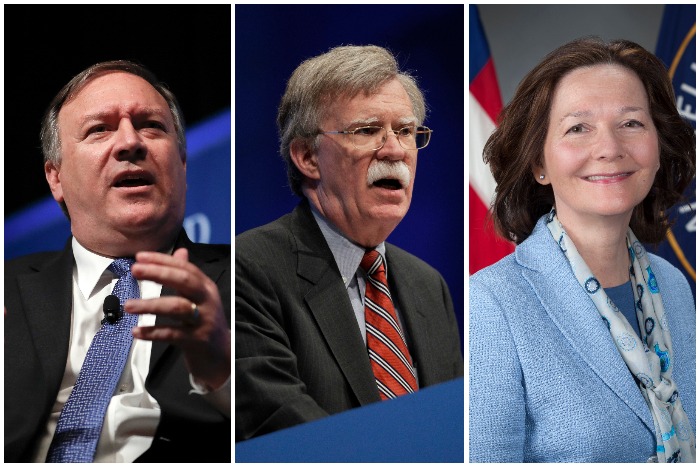
In either case, it seems apparent the trains have already left the stations and on Capitol Hill, it appears Democrats are only pondering going after President Trump’s CIA director nominee, Gina Haspel, for past involvement in the interrogation of terror suspects, with Bolton and secretary of state nominee, Mike Pompeo, looking like solid confirmations.

This new troika of national security, intelligence and diplomatic heads represents a significant shift in the president’s thinking as it relates to the challenges of Iran, North Korea and Islamic extremist terrorism.

Far from trying to swat individual terror suspects like so many mosquitos, it appears the administration maybe looking for a more strategic approach in draining the swamp so-to-speak by dealing directly with the sources of terrorism; more specifically nation states.

The terror attacks of 9/11 served as a reminder that safe harbors such as a Taliban-controlled Afghanistan, provide training, security, funding and logistical support for terrorists to plan and execute their attacks.

The rise of ISIS out of the wreckage of a Syrian civil war and Iraqi sectarian conflict borne out of Iranian regime’s meddling carved out a caliphate which provided ISIS with everything from oil to sell and ready recruits to satellite broadcasts and a news magazine.

The Iranian regime set the template when it built Hezbollah to a formidable terrorist operation and shock troops for proxy wars. Iran mullahs utilized Hezbollah and a safe harbor in Lebanon.

But now the mullahs in Tehran are confronted with a rapid flurry of problems that have escalated nearly out of their normally iron-fisted control.

  • The explosion of U.S. fracking for oil turned it into the top oil producer in the world and forced prices to plummet on the open market, crushing revenues the mullahs were expecting from the lifting economic sanctions following the Iran nuclear deal. Coupled with the drain on cash reserves for propping up the Assad regime in Syria and spending heavily on military equipment, including building a ballistic missile program, Iran soon became a pauper nation;
  • A free-falling economy gave ordinary Iranians a gut-punch with stagnant wages, limited job opportunities and a deeply corrupt government that controlled almost all facets of the economy. Couple that with deep dissatisfaction over the increasing divide of haves vs. have-nots as those with ties to the Revolutionary Guard Corps and Quds Force or the ruling mullahs profited handsomely; and
  • Massive protests swept the nation as the combination of punishing economic conditions and dissatisfaction with oppressive rule, including morality laws specifically targeting Iranian women, drove ordinary Iranians to extraordinary acts of defiance unheard of in Iran. This included women launch the hijab movement with the mullahs responding by passing laws criminalizing it on the basis it promoted “prostitution” and calling for 10 years imprisonment.

These trends are unmistakable and more importantly, unassailable by the Iran lobby, which for the most part has stayed silent on these domestic protests; choosing only to blame the economic conditions on the U.S. not fully complying with the terms of the nuclear deal.

Apparently Parsi and his friends think we should empty out Ft. Knox on behalf of the mullahs.

What is apparent though is that the accusations being flung by the Iran lobby at Bolton’s nomination miss an inescapable truth which is Bolton is not setting the stage for war when Tehran has already been at war with the West ever since it supplied explosives to kill Marines in Beirut or U.S. troops in Iraq.

Ivan Sascha Sheehan, incoming executive director of the School of Public and International Affairs at the University of Baltimore, makes that point in a strongly worded editorial in The Hill.

“Those who are concerned about the potential for war with Iran should embrace Bolton’s appointment and support the administration’s efforts to confront Tehran’s destabilizing regional influence by taking its theocratic regime to task. The regime’s misbehavior only worsened in the run-up to Trump’s ascension to the Oval Office, and particularly under the prior administration’s cooperative policies that engendered an even greater sense of impunity than the Islamic Republic was used to,” Sheehan writes.

“Trump’s assertiveness during his first year in office is paying small dividends. U.S. Navy officials recently reported that close encounters between their vessels and those of the Iranian Revolutionary Guard Corps (IRGC), which were commonplace over the previous two years, halted abruptly in August,” he added.

But what the Iran lobby is most fearful of is not a simple knee-jerk tearing up of the nuclear deal by President Trump, but rather a consensus among U.S. allies to rework the deal, toughening provisions on terror support, ballistic missile development and human rights improvement, in an effort to save it.

Using the deal as a leverage against the Iranian regime is fair turnabout since the regime and Iran lobby have used its continued existence as a blunt instrument against any calls to rein in the regime’s excesses.

The Economist outlined some of the intense deal-making going on now from Great Britain, France and Germany to compel the Iranians to accept new restrictions; restrictions that should have been included in the original deal in the first place.

“Sir Simon Gass, a former British ambassador to Tehran who led the British team negotiating the deal, says that it might be possible to get an agreement from Iran not to develop an intercontinental-range ballistic missile (ICBM) capable of hitting America. An ICBM, he points out, only makes sense if it carries a nuclear warhead, so testing one should prompt broad economic sanctions. Patricia Lewis of Chatham House, another London think-tank, believes that the Europeans may already be talking to the Iranians about a future regional missile-deal that would ban long- and intermediate-range nuclear missiles,” the Economist editorial said.

Ultimately the real rub for Parsi and his fellow travelers is that new restrictions, coupled with worsening economic conditions will once again rollback Tehran back to 2009 when massive street protests nearly toppled the regime.

As the president’s new team take their place, it’s clear the era of appeasing the mullahs is dead.

Michael Tomlinson

Filed Under: Blog, News Tagged With: #NuclearDeal, Appeasement policy, Featured, Iran Ballistic Missile, Iran deal, Iran Human rights, Iran Lobby, Iran sanctions, Iran Talks, Iran Terrorism, National Iranian American Council, NIAC, NIAC Action, Trita Parsi

Iran Lobby Becomes Unhinged at Selection of John Bolton

March 27, 2018 by admin

Iran Lobby Becomes Unhinged at Selection of John Bolton

Iran Lobby Becomes Unhinged at Selection of John Bolton

Monday morning dawned across the U.S. to see the news dominated, not by talk of a Final Four match-up featuring Cinderella Loyola of Chicago and Sister Jean, but instead with an intense debate blowing up over President Donald Trump’s selection of former UN ambassador John Bolton to succeed H.R. McMaster as national security advisor.

The loquacious and quotable Bolton has been a frequent commentator and critic of the Obama administration’s Iran nuclear deal on Fox News and other media outlets and now finds himself in a key policy position to act on those beliefs.

Predictably the response from the Iran lobby was swift, vicious and stupefying. Leading the anti-Bolton charge was the National Iranian American Council, once a ley architect of Iranian appeasement and now finding itself virtually alone on an ever-shrinking game of foreign policy “Survivor” as it allies leave the scene to a newly muscular and empowered Trump administration.

Trita Parsi, NIAC president, issued a blistering statement condemning Bolton and blaming for everything short of triggering the Apocalypse.

“Bolton is an unhinged advocate for waging World War III. He has explicitly called for bombing Iran for the past ten years and has suggested the U.S. engage in nuclear first strikes in North Korea. Bolton’s first order of business will be to convince Trump to exit the Iran nuclear deal and lay the groundwork for the war he has urged over the past decade. Additionally, he has has called for ending all visas for Iranians, shipping bunker busting weapons to Israel, and supporting the Mujahedin-e Khalq (MEK) terrorist organization and other separatist groups inside of Iran. The Iranian-American community and our pro-peace, pro-human rights allies will organize to stop Bolton’s plans from becoming a reality,” Parsi said.

In one paragraph, Parsi has managed to regurgitate virtually every false and misleading key message point the NIAC has articulated over the past five years.

  • Parsi calls Bolton “an unhinged advocate for waging World War III,” but neglects to parse any blame on an Iranian regime that has launched three wars on its own in Iraq, Syria and Yemen in the past three years;
  • Bolton has never called for nuking North Korea or Iran, but he has called for serious discussion about strike first policy options should Iran or North Korea move forward in developing nuclear capable ballistic missiles; a position virtually all Republican and Democratic congressional representatives have supported;
  • Bolton’s urging of the exiting the Iran nuclear deal is not a prelude to war—unless the mullahs in Tehran decide first—but rather a recognition that the deal did little to stymie Iranian extremism, halt terrorism or even delay Iran’s ability to lob nuclear weapons on missiles thousands of miles;
  • Parsi again takes a shot at one of the leading Iranian dissident groups in the MEK, using the “terrorist” label that has already been discredited. It’s also no coincidence Parsi refers to Iranian dissident and democracy groups as “separatist” groups refusing to acknowledge the widespread dissent and protests by ordinary Iranians sweeping across the country.

Parsi’s statement goes on to attack Bolton’s support of Iranian dissident groups as emblematic of war mongering, but Parsi doesn’t recognize the vast coalition of humanitarian, political, ethnic, religious and gender groups opposed to the Iranian regime including Amnesty International, members of the Bah’ai faith and virtually all Iranian women.

His focus solely on the MEK indicates the Iran lobby’s fears of recognizing the broad and deep resentment of the mullahs, especially the ever-unpopular rule of Hassan Rouhani.

Parsi’s hope that somehow slinging the MEK name around might somehow diminish Bolton’s chances for confirmation is a slim one since the MEK and the umbrella group of Iranian dissident and human rights groups it is part of, the National Council of Resistance of Iran, has become an important source of information smuggled out of Iran about protests and the activities of the regime such as the secret development of its nuclear program in the first place.

Intelligence services in the EU and the U.S. have commended the quality and veracity of information supplied by these dissident groups, often at great risk to sympathizers in Iran who smuggle out photos and videos, including the most recent Iran protests across the nation.

Parsi and the rest of the Iran lobby know the end is here for their policy of appeasing the regime. Pompeo and Bolton are only vocal supporters of ending it. The real architect of getting tougher with Iran is the president himself who used the Iran nuclear deal as a potent message point with American voters on the campaign trail; most of whom were disillusioned in the wake of massive terrorist attacks by Islamic extremists inspired by Iran’s war in Syria.

For most Americans, the memories of Orlando, San Bernardino and Paris and Nice mingle with vivid images of handguns, trucks, bombs, knives and virtually any other tool grasped by terrorists to kill innocent people.

Parsi is never one for understatement so his statements aimed at Bolton are only natural, but the only unhinged one making crazy statements is Parsi which diminishes his authority and reasonableness in the eyes of many news organizations.

That of course hasn’t stopped the NIAC as it made Parsi and fellow staffers Reza Marashi and Jamal Abdi available to news media to talk Bolton. Considering the only news outlets that seem to have picked their comments are Russian and Iranian publications and an occasional Iranian regime advocate blog like Lobelog, we are heartened to see that fewer and fewer journalists frankly care what NIAC has to say.

The problem with the histrionics of Parsi and his Iran lobby colleagues is that when you consistently scream at the top of your lungs and sound deranged, no one ends up listening to you.

In fact, the much-vaunted echo chamber of the Iran lobby only seems to echo with their own voices and no one else is listening.

Laura Carnahan

Filed Under: Blog, Current Trend, News Tagged With: Featured, hassan rouhani, Iran Human rights, Iran Lobby, Iran Terrorism, National Iranian American Council, NIAC, NIAC Action, Reza Marashi, Syria, Trita Parsi, Yemen

NIAC Tries to Defend Former Associate in State Department

March 23, 2018 by admin

NIAC Tries to Defend Former Associate in State Department

NIAC Tries to Defend Former Associate in State Department

Sahar Nowrouzzadeh, a State Department official who was instrumental in directing policy for completing the much-criticized Iran nuclear deal under the Obama administration, has been reassigned to other duties in the State Department by the Trump administration which has generated a flurry of lobbying activity by the Iran lobby.

The National Iranian American Council organized an effort to denounce the move in a letter sent to White House Chief of Staff John Kelly and acting Secretary of State John Sullivan even though the reassignment was made last April 2017.

The genesis for this new round of false outrage though was a Politico story that discussed email conversations between administration officials calling into question her political loyalty. In essence, the NIAC and its brethren were objecting to that age-old political practice of “cleaning house” when a new party and administration comes to power.

Where was the NIAC’s outrage when the Obama administration led its own purge of Bush-era appointees and installed its own loyalists in key civil service positions at the end of its own term to ensure policies were continued in spite of the new Trump administration’s move in?

To say the NIAC’s outrage is silly is an understatement. Every president reserves the right to pick and choose whomever he likes to serve and carry out his policies. Every president is also entitled to move or reassign any federal employee that does not wish to carry out that administration’s policies.

It is no different for someone like President John F. Kennedy taking over for Dwight D. Eisenhower or Bill Clinton taking over for George H.W. Bush.

But in the twisted logic of the NIAC, it seems even that most basic of presidential prerogatives is off-limits when it comes to keeping a trusted ally in the heart of policy-making when it concerns the Iranian regime.

In the case of Nowrouzzadeh, her involvement in policy towards Iran under the Obama administration has been well-documented.

Born in the U.S. to Iranian parents, Nowrouzzadeh has worked in various government capacities including the Defense Department in 2005 as a foreign affairs analyst and later the State Department in a similar capacity. She later joined the Obama White House in the National Security Council as a director for Iran and part of the team responsible for the Iran nuclear deal.

What raises the suspicions of many though was her prior stint working for NIAC which seems to have been purged from her bios and NIAC’s public records. Why? Obviously, association with the Iran lobby group can be fatal to a career civil servant’s future job prospects and it has been in Nowrouzzadeh’s case.

Also, her key involvement in crafting an agreement that President Trump has openly derided also has proven disadvantageous.

While the reassignment is common in new administrations, the furor is not as the NIAC has chosen to use her as a stalking horse for attacking the Trump administration yet again as ardent Iran-haters and racists.

It is sad to see the NIAC elevate her case and drag her through the public mud in order to score political points over an action that every incoming president undertakes throughout history.

What this does reveal though is NIAC’s willingness to cast any stone in wild attempts to attack the Trump administration in some blind hope of slowing down the freight train of change barreling towards the Iranian regime.

The setbacks for NIAC are numerous and significant:

  • Its attacks on the Saudi government have failed to prevent a historic realignment in the Middle East of nations united against Iran’s regime and containing its expansion;
  • Its efforts to keep alive the Iran nuclear deal are on life support as President Trump has decided to install Mike Pompeo as Secretary of State and former UN ambassador John Bolton as the new National Security Advisor. Both are ardent opponents of the nuclear deal;
  • Its struggle to deny democratic protests sweeping through Iran and bolster the fraudulent regime of Hassan Rouhani have only proven to news media how out of touch NIAC is with current events.

Oddly enough, Nowrouzzadeh could have settled this entire unhappy episode herself by simply advising President Trump’s incoming foreign policy team on the best methods for improving the nuclear agreement she had just worked to implement.

If you want to show your non-partisan, unbiased credentials, then all one has to do is provide the other point of view.

In her case, and because of the effort by NIAC to leverage her reassignment, the sad truth is that policy making in the State Department became highly politicized under the Obama administration, especially towards Iran.

Her reassignment is only the tip of the iceberg since if President Trump is going to finally hold the Iranian regime accountable for its support of terrorism and unbridled human rights failures, he will most likely need to reassign many more Nowrouzzadehs and that is the future that NIAC is terrified of.


Filed Under: Blog, Current Trend, News Tagged With: #NuclearDeal, Appeasement policy, Featured, Iran Lobby, National Iranian American Council, NIAC, NIAC Action, Nuclear Deal, Sahar Nowrouzzadeh, Trita Parsi

  • « Previous Page
  • 1
  • …
  • 5
  • 6
  • 7
  • 8
  • 9
  • …
  • 64
  • Next Page »

National Iranian-American Council (NIAC)

  • Bogus Memberships
  • Survey
  • Lobbying
  • Iranians for International Cooperation
  • Defamation Lawsuit
  • People’s Mojahedin
  • Trita Parsi Biography
  • Parsi/Namazi Lobbying Plan
  • Parsi Links to Namazi & Iranian Regime
  • Namazi, NIAC Ringleader
  • Collaborating with Iran’s Ambassador

Recent Posts

  • NIAC Trying to Gain Influence On U.S. Congress
  • While Iran Lobby Plays Blame Game Iran Goes Nuclear
  • Iran Lobby Jumps on Detention of Iranian Newscaster
  • Bad News for Iran Swamps Iran Lobby
  • Iran Starts Off Year by Banning Instagram

© Copyright 2026 IranLobby.net · All Rights Reserved.