Iran Lobby

Exposing the Activities of the lobbies and appeasers of the Mullah's Dictatorship ruling Iran

  • Home
  • About
  • Current Trend
  • National Iranian-American Council(NIAC)
    • Bogus Memberships
    • Survey
    • Lobbying
    • Iranians for International Cooperation
    • Defamation Lawsuit
    • People’s Mojahedin
    • Trita Parsi Biography
    • Parsi/Namazi Lobbying Plan
    • Parsi Links to Namazi& Iranian Regime
    • Namazi, NIAC Ringleader
    • Collaborating with Iran’s Ambassador
  • The Appeasers
    • Gary Sick
    • Flynt Leverett & Hillary Mann Leverett
    • Baroness Nicholson
  • Blog
  • Links
  • Media Reports

Iran Lobby Faces United US-Saudi Front

March 22, 2018 by admin

Iran Lobby Faces United US-Saudi Front

Iran Lobby Faces United US-Saudi Front

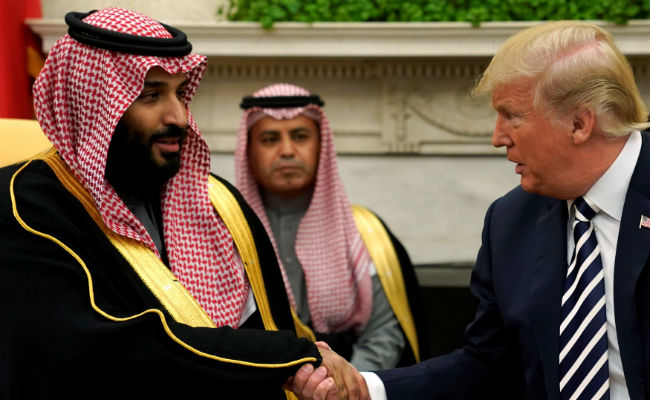
Saudi Prince Mohammad bin Salman, heir to the Saudi throne, kicked off a two-week tour of the U.S. with a meeting with President Donald Trump which highlighted the close relationship the administration shares with the Kingdom that began with the president’s trip to Saudi Arabia shortly after his inauguration.

Part of that relationship is centered on restoring stability in a Middle East riven asunder by the Iranian regime which has plunged three countries into war in Syria, Iraq and Yemen. The latter of most concern to the Kingdom because of its common border and a hail of Iranian-made rockets and mortar shells falling on it.

The Saudi Crown Prince has moved quickly not only to take the reins of foreign and defense policy for the Kingdom, but also to move it into a more progressive era by instituting changes and reforms especially aimed at empowering Saudi women in culture, politics and the economy.

Changes that are anathema to the mullahs in Tehran and evidence of the growing divide between the two countries.

Of course, that has not stopped the Iran lobby, especially the National Iranian American Council, from consistently attacking Saudi Arabia and attempting to portray it as a bloodthirsty state sponsor of terrorism.

Ironically, while Iran occupies almost permanent status on the U.S. State Department’s target list of state sponsors of terrorism, Saudi Arabia has moved quickly to identify and eradicate radicalized Islamic elements in its society, especially those adhering to the Iranian regime’s principles.

But that hasn’t stopped the NIAC’s Trita Parsi from issuing a statement attacking the Crown Prince because of his public statements warning of spreading Iranian extremism.

“While the Saudi effort to drag the US into war with Iran was blocked by previous administrations, Riyadh now appears to be pushing an open door,” Parsi said. “The tensions between Saudi Arabia and Iran are destabilizing the Middle East and necessitate strong diplomatic efforts to defuse the conflict before it escalates into a wider war.”

Parsi and the rest of the Iran lobby have consistently banged the war drum in order to stoke fears, but the source of that tension has always been blamed on someone else rather than the mullahs in Tehran; be it the U.S. or Saudi Arabia or Israel, according to Parsi someone else is always to blame.

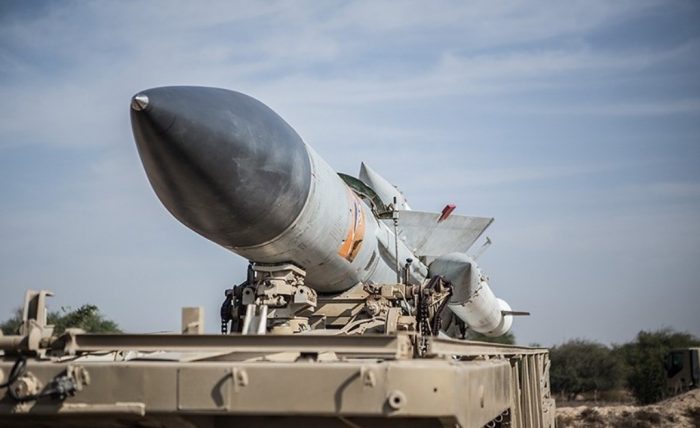
In Parsi’s worldview, the Iranian regime’s sponsorship of terrorist groups such as Hezbollah is not to blame. Nor has been the arming of Shiite militias in Iraq or Houthi rebels in Yemen. Neither can blame be laid at the launching pads of dozens of ballistic missiles fired off by the Iranians, nor their leaders’ threats to blast its enemies out of existence.

In his statement, Parsi also takes a stab at the president and his son-in-law, Jared Kushner, who has developed a close relationship with bin Salman.

Parsi claims that the Saudis are eager to start a war against Iran using American service personnel. It’s frankly an absurd claim since no one, not President Trump, nor the Saudi royal family, have ever mentioned a war or the prospect of one. In fact, the U.S. and Saudi Arabia have started and participated in nearly a dozen peace initiatives aimed at defusing the conflicts Iran has started included several peace conferences aimed at halting the bloodshed in Syria and in each case, Iranian regime’s reluctance to accept any terms that diminish its military or political advantage have torpedoed all of these talks.

In fact, rather than turning to the U.S. for help, the Saudis have taken it upon themselves to fight against Iranian-backed Houthi incursions along their border, as well as use their own navy to intercept Iranian fishing vessels trying to smuggle fresh arms into Yemen.

The portrayal of the Saudi position towards Iran by the Iran lobby is just more evidence of the effort to throw smokescreens up at any effort to affix blame on the Iranian regime for the chaos enveloping the Middle East.

It is also a recognition that the new world order in a post-Obama world has changed radically.

No longer is the U.S. content to try and appease the mullahs in Tehran. No longer will the U.S. bind itself to a flawed nuclear deal that did not attempt to rein in the regime’s ballistic missile program or fundamentally abusive human rights record.

Most importantly, the Iranian people themselves are expressing their own frustrations and desire for change in their oppressive government as protests have swept the country before being ruthlessly put down; crackdowns that drew almost not a whisper of protest by NIAC ironically.

The Saudis know the Iranian playbook because they have seen it put into effect in Lebanon and Syria where Hezbollah was built into a powerful military proxy that eventually served to take over both countries.

All of which rightly worries the Saudis in Yemen as Iran looks to create another Hezbollah with the Houthis it backs. A viewpoint shared by Prince Khalid bin Salman, the Saudi ambassador to the U.S.

He told CNN that Iran wants to destabilize Saudi Arabia, and that it poses a threat to the entire region and international security.

“Here’s what happening in Yemen: (Iran is trying to create) another Hezbollah in Yemen, which will not just threaten our security and Yemeni security, but also regional security.”

“We’ve been focusing on the weapon of mass destruction, the WMD. What we should really be focusing on is the MD, the mass destruction that Iran is committing in the region.”

He stressed to CNN that Tehran was stirring unrest and said the so-called “nuclear deal” between Iran and Western powers needs “to be fixed.”

It is ironic that while Saudi Arabia is moving to open up the Kingdom to benefit women and seek diplomatic overtures to contain the Iranian regime, the regime keeps oppressing its citizens and uses terror and military force to achieve its aims.

Michael Tomlinson
Filed Under: Blog, News Tagged With: Featured, Iran deal, Iran Human rights, Iran Lobby, Iran Mullahs, National Iranian American Council, NIAC, Nuclear Deal, Syria, Trita Parsi, Yemen

NIAC Misses Mark on Apple Shutdown of Iran App Store Access

March 20, 2018 by admin

NIAC Misses Mark on Apple Shutdown of Iran App Store Access

NIAC Misses Mark on Apple Shutdown of Iran App Store Access

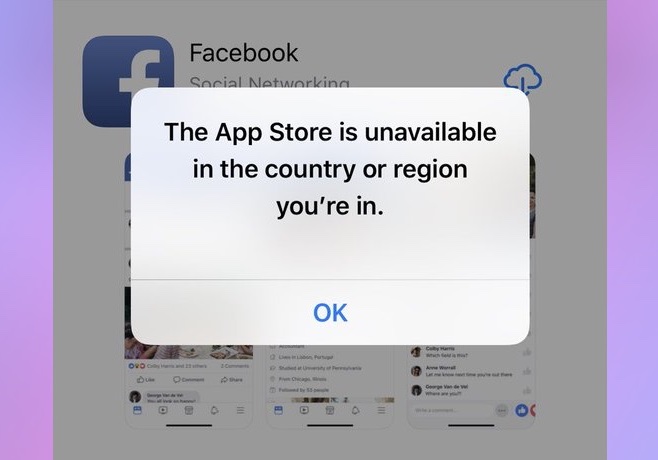
Apple reportedly shutdown access to its App Store to users and developers in Iran last week raising intense speculation as to why the tech giant restricted access, although Iranian users reported being able to access the store by the weekend.

Speculation ranged from potential U.S. sanctions looming on the horizon to the announcement of CIA director Mike Pompeo to replace Rex Tillerson as U.S. Secretary of State.

The Iran lobby weighed in predictably as well, with the National Iranian American Council leading the blame game with a statement it issued in which it again displayed the irony of decrying Apple’s move, while at the same time never criticizing the Iranian regime’s weaponization of those some smartphone apps to identify and arrest potential dissidents and protestors.

Earlier this month, the National Council of Resistance of Iran (NCRI), the largest Iranian dissident group in the world, issued a report detailing how the Iranian regime has launched a sophisticated cybercampaign to deploy apps on Apple and Google’s app stores that mimic more well-known apps and allows the regime’s security services to monitor the activities of Iranian citizens, as well as export malware cyberattacks against U.S. citizens.

Starting with the massive election protests of 2009, smartphones have played a vital role in organizing opposition to the Iranian regime and helped share video, photos and audio of the brutality of the regime as it has arrested, beaten and even killed protestors over the years; culminating to the most recent protests that have rocked Iran over the past two months.

These include protests over poor economic conditions, rampant corruption within the regime and even over morality codes by women who have abandoned head scarves and posted photos on social media in a form of soft power protest that has landed many of them in prison.

Nearly 48 million Iranians have smartphones with about 70 percent of them having access to the internet, making Iran one of the more connected nations in the Middle East, but the regime has struggled to restrict Internet access and have tried to disrupt the usage of popular messaging apps such as Telegram and WhatsApp by protestors.

The move by Apple, while not publicly commented on by the company yet, highlights the precarious nature of technology in Iran. The regime uses it as a prolific tool for cyberwarfare while the rest of the free world views it as an engine of change, commerce and communication.

The NIAC highlights this in its statement saying:

“Access to communication technology is important for both humanitarian as well as U.S. strategic interests, which is why exemptions for Internet communication tools were put in place under the previous Administration. Allowing these exemptions to fall by the wayside helps no one except those who seek to keep the Iranian people silent.”

It’s a laudable position to take, but hollow and empty when we consider how the NIAC has never criticized the Iranian regime for its manipulation of technology to restrict protests.

“We have already been in communication with the U.S. government about decisions late last year by Apple and Google to block Iranian developers from hosting applications on their platforms. We have emphasized the need to broaden exemptions to reverse such decisions and will redouble our efforts to address these new challenges,” the NIAC statement said.

It’s a twisted piece of logic by the NIAC since the NCRI report, as well as similar reports by national intelligence agencies, have long documented the Iranian regime’s use of Iranian programmers to create apps that have malware embedded in them and efforts to crack the encryption of apps such as WhatsApp.

But this exclusion of Iran from the Apple App Store is not the first time. Back in August of 2017, Apple removed all apps created by Iranian developers from its App Store as a result of U.S. economic sanctions.

Iran’s own Telecommunication Minister said the ban of Iranian-made apps would probably have a limited effect on the country’s economy and tech industry, as the US company had only an 11 percent market share in the country, according to a report from the New York Times, but the move was bound to hurt the regime’s intelligence gathering efforts.

Far from hurting Iranians, as the NIAC suggests, restricting the Iranian Revolutionary Guard Corps access to these app stores benefits those Iranians who rely on clandestine technology to spread, share and collaborate in their dissent.

This is why the NIAC continually misses the mark in its position papers and statements because of its slavish devotion to the Iranian regime and an uncompromising reluctance to ever criticize Tehran on anything.

The NIAC should be focused on the cyberwall the regime operates allowing it to monitor virtually all Internet activities of the Iranian people. The NIAC should be calling on the regime to end its use of bogus social media apps to monitor its own people. The NIAC should call for the release from Iranian jails any Iranian being detained for posting a video or photo that violated the regime’s draconian morality codes.

The NIAC should speak on behalf of freedom and democracy and not try to support a regime that is slowly dying from the corruption that is rotting the core of the Iranian government.

That rot has become so apparent to the Iranian people that they have been motivated to post online their own protests and Apple and other Western companies should be encouraged to do more to obstruct the Iranian regime and aid these people in their quest for freedom and democracy.

Michael Tomlinson

Filed Under: Blog, National Iranian-American Council, News Tagged With: Apple Store Access for Iran, Featured, Iran Human rights, Iran Lobby, Iran sanctions, Iran Terrorism, IRGC, National Iranian American Council, NIAC, NIAC Action, Trita Parsi

IranLobby Screams About War With Iran

March 16, 2018 by admin

IranLobby Screams About War With Iran

IranLobby Screams About War With Iran

“War!” The talking point pours out of the mouths of Iran lobby supporters such as Trita Parsi of the National Iranian American Council about as often as he tweets it seems. Parsi and his colleagues have always waved the banner of war as a means of distracting from the key issues continually dogging the Iranian regime such as its miserable human rights record.

During the negotiations for the Iran nuclear deal, the specter of war was a near-constant theme sounded by the NIAC, even though there was never any real prospect of a conflict with the Iranian regime under the Obama administration.

It was however a convenient tool to use in the so-called “echo chamber” of public opinion created by the NIAC in collaboration with a White House intent on landing a PR win at almost any cost, including appeasing the mullahs in Tehran.

Even after the deal was struck and the Iranian regime launched a series of wars in Syria, Iraq and Yemen, the chorus of the Iran lobby continued to warn that any effort to take action against Iran would inevitably result in war.

It was a silly argument; akin to saying that trying to stop the burglar robbing your house would only lead to more violence so one should leave him to his thievery.

After President Donald Trump took office and installed an administration openly skeptical of the Iran nuclear deal, the Iran lobby continued to warn that any effort to rein in Tehran’s militant actions would only lead to war. This included doing everything in the PR/lobbying handbook to preserve the nuclear deal that delivered billions in cash to the mullahs to help fund their wars and ballistic missile program.

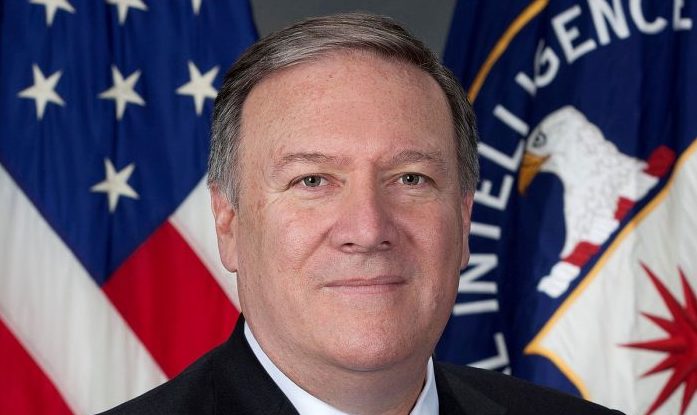
Now the president has decided to shuffle his cabinet by moving Mike Pompeo from the directorship of the Central Intelligence Agency to become Secretary of State, replacing the outgoing Rex Tillerson.

The change represents a potential realignment of U.S. foreign policy hewing more closely to the promises made by candidate Trump on the campaign trail when he called the Iran nuclear deal the worst deal ever made and vowed to tear it up for a new one.

Predictably, Parsi and the NIAC went on the offensive in near hysterical warnings of war. The NIAC issued a statement that blasted the appointment of Pompeo, a noted and vocal critic of the Iran nuclear deal.

“Mike Pompeo’s nomination for Secretary of State could have profound implications for the fate of the Iran nuclear deal and the prospect of a new war in the Middle East. While serving in Congress, Pompeo’s positions on foreign policy were often ideological and tended towards militarism rather than diplomacy. His opposition to the Iran deal – including the political hijinks he engaged in to undermine U.S. negotiators – and his comments suggesting that military strikes would be more effective than diplomacy, raise serious questions about his fitness to serve as America’s top diplomat,” the NIAC statement read.

“It may result in a dramatic escalation of tensions in the Middle East and a war with Iran.”

Of course, Pompeo’s position as CIA director provided him with the ultimate access to the most conclusive information on whether or not Iran was truly adhering to the terms of the nuclear deal, as well as the full scope of the regime’s activities, especially its support for proxy terrorist groups such as Hezbollah.

His elevation by President Trump sets the stage for what Iranian dissidents have been calling for all along which is an honest, unabashed focus on the Iranian regime’s conduct and not the false promises being made by the mullahs and their cheerleaders in the Iran lobby.

In this case, actions speak louder than words and the regime’s actions over the past two years since the deal was approved lay bare the lies that have been consistently spouted.

It’s no secret that Pompeo has been a harsh critic of the Iranian regime, calling out its brutality towards dissidents and use of its police forces to crack down on protests.

“Iran’s Ministry of Intelligence and Security and the Islamic Revolutionary Guard Corps (IRGC) are the cudgels of a despotic theocracy,” Pompeo said in a speech last October. “They’re the vanguard of a pernicious empire that is expanding its power and influence across the Middle East.”

A week later, he told the Foundation for Defense of Democracies (FDD) that Trump is of the same mind.

“The president has come to view the threat from Iran as at the center of so much of the turmoil that bogs us down in lots of places in the Middle East, right? Whether it’s Lebanese Hezbollah, the threat that it presents to both Lebanon and to Israel; whether it’s the Shia militias—you can see the impact that they’re having today,” Pompeo said.

That kind of tough talk and brutal honesty is what has driven a recalcitrant North Korea back to the bargaining table after three years of brazen missile launches and should prove to be equally effective against the mullahs in Tehran.

Appeasement has never historically worked. It didn’t work against Hitler in Munich and it certainly didn’t work against Ali Khamenei in Geneva.

Seeing little hope of finding anymore receptive audiences in the U.S., Parsi and the NIAC have increasingly turned their message to European audiences and the regime has followed suit as regime-controlled media have already begun trying to shape the narrative about Pompeo by urging Europe to act as a balance against the Trump administration.

“Pompeo is very interested in waging a war similar to the Iraq war by citing international regulations,” said Alo Khorram, a former Iranian envoy to the United Nations, in the daily newspaper Arman. “European powers will play a role in balancing his desire.”

While the NIAC continues to panic, the clock may finally be running out on the reign of the Iranian regime.

Michael Tomlinson

Filed Under: Blog, Current Trend, National Iranian-American Council, News Tagged With: Featured, Iran, Iran deal, Iran Lobby, Iran sanctions, Iran Talks, Iran Terrorism, IRGC, National Iranian American Council, NIAC, NIAC Action, Nuclear Deal, Trita Parsi

US Pressure on Iran Missile Program Pushing Europe to Act

March 5, 2018 by admin

US Pressure on Iran Missile Program Pushing Europe to Act

US Pressure on Iran Missile Program Pushing Europe to Act

The Trump administration has been applying diplomatic pressure on the Iranian regime over its ballistic missile program and support for terrorism and has consistently raised the specter of invalidating the Iran nuclear deal by certifying the regime as being out of compliance with its provisions.

For those efforts, the administration has been roundly and harshly criticized by the Iranian regime’s allies, especially within the Iran lobby by groups such as the National Iranian American Council and individuals such as Seyed Hossein Mousavian, a former regime nuclear official who now masquerade’s as an academic at Princeton University.

The vitriol being thrown at the administration over this new pressure on Iran has only been matched by the depth and breadth of misinformation and fake news being pumped out by the Iran lobby.

What is becoming clear though is that the central issue at the heart of the Trump administration’s complaints—that Iran’s ballistic missile program posed a serious international threat and its support of terrorist groups such as Hezbollah was destabilizing the Middle East—have finally gotten the attention of European leaders and serious traction throughout European capitals.

During the Obama administration’s negotiation of the nuclear deal, little emphasis was placed on Iran’s missile program, nor its abysmal human rights record or support for terrorism. That lack of negotiating prowess essentially left the Iranian regime off the hook and gave it carte blanche to rapidly build its missile program and gain strongholds in Syria, Iraq and Yemen through proxy wars.

Many EU leaders that had lauded the nuclear deal as paving the war towards Iranian moderation have been left in more precarious political situations as nearly four million Syrian refugees flooded into Europe in the greatest refugee crisis since World War II and cities such as Paris, Berlin and Brussels were rocked by terrorist acts inspired by the Islamic extremism espoused by the mullahs in Tehran.

That has forced many of them to make a decision to head off a potential move by the Trump administration to kill the nuclear deal and that is to apply more pressure on the Iranian regime on these issues they once considered unimportant.

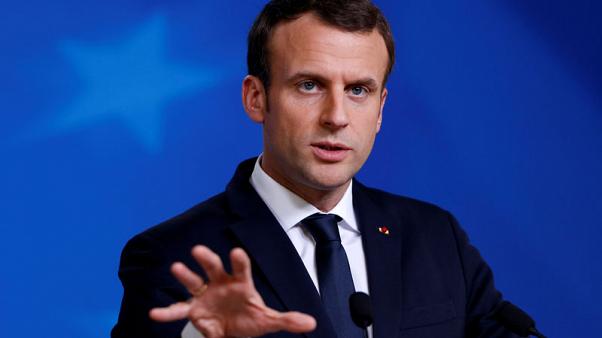
One example has been French president Emmanuel Macron, who has taken a more public and aggressive stance towards Iranian military actions and human rights.

Macron told the Iranian regime’s Hassan Rouhani in a telephone call this weekend of his support for the nuclear accord and his concerns over Iran’s other activities according to the Financial Times.

Jean-Yves Le Drian, French foreign minister, is due to hold further talks in Tehran on Monday as the clock ticks towards a May deadline set by the US president for European countries to “fix” the nuclear agreement.

The EU and the bloc’s three signatories to the deal — France, Germany and Britain — are urgently trying to craft a solution that will placate the Trump administration’s without destroying an accord they argue is working.

Macron also asked for “clear responses” from Iran over “problems” outside the deal relating to its ballistic missile program and its destabilizing role in the region, particularly in Lebanon.

France’s foreign minister, Jean-Yves Le Drian, will visit Tehran this week and call upon the regime to address the West’s misgivings about its ballistic missile program and Middle East military activities, according to Reuters.

The growing threats posed by the Iranian regime are now being scrutinized more openly as evidenced by an editorial in the Wall Street Journal authored by Jose Maria Aznar, former prime minister of Spain, and Stephen Harper, former prime minister of Canada, in which they both urged Europe to act more decisively in containing Iranian expansionism.

“Despite Tehran’s quest for regional control, popular protests in December and January showed that most of the nation’s citizens don’t share their leaders’ designs. The regime’s destabilizing actions have also triggered resistance from Saudi Arabia and other regional powers. Iran’s own citizens and neighbors are convinced of Tehran’s malice, and all concerned nations should heed their warning,” Aznar and Harper wrote.

“Thankfully, the U.S. has demonstrated its ability to rally its Middle Eastern partners in stabilizing the region. Iranian theocracy appeals mainly to a few neighboring Shiite Islamic factions, and Iran’s long-term conflicts with other sects have made many states eager to cooperate in restraining its influence. Numerous allies can be mobilized in the struggle against Iran, from the Kurds and tribal elements to many Sunni Arabs and Shiite forces not co-opted by Tehran. These factions must collaborate to contain Iran’s hegemonic ambitions,” they added.

They go on to warn that “if left unchecked, Iran’s aggression will ultimately threaten Europe and North America as well. All should urgently work together to counter this threat to global security.”

Their warnings should be heeded by the EU since the evidence has been so overwhelmingly against the claims of the Iran lobby and the Iranian regime.

The most serious threat facing the U.S. and in its allies is the high probability that Iran is quickly building permanent military bases in Syria and planning to move ballistic missiles there; placing most of Europe within range and providing almost no warning time for regional rivals Saudi Arabia and Israel any advance warning to detect, let alone shoot down, any Iranian missiles.

President Trump understood the geopolitical ramifications of the Iran nuclear deal better than anyone and now sees its potential certification as battering ram he can use to drive home the point of the threat Iranian regime missiles and its military poses to Europe.

It remains to be seen how many other European nations heed the wake up that French president Macron seems to be trumpeting more urgently now, but we hope they all take action soon.

Michael Tomlinson

Filed Under: Blog, News Tagged With: #NuclearDeal, Appeasement policy, Ballistic Missiles, Featured, Hezbollah, Iran Human rights, Iran Terrorism, Nuclear Deal, Nuclear Iran

Amnesty International Blasts Treatment of Protesting Women in Iran

March 5, 2018 by admin

Amnesty International Blasts Treatment of Protesting Women in Iran

Amnesty International Blasts Treatment of Protesting Women in Iran

The wave of people’s protests that swept across Iran beginning the end of 2017 and through the start of 2018 have been marked by demands for essentials such as job creation, food and water, as well as increased freedoms for a long-suffering and oppressed people.

Within the fabric of all those protests was the noteworthy and remarkable scene played out in cities and villages throughout Iran as women uncovered their heads by removing the proscribed hijab headscarves in silent protests.

Those iconic protesters were met with typical violence and brutality by the Iranian regime and human rights organization Amnesty International blasted the regime for its cruel treatment of women protestors to stifle dissent.

Amnesty International took note of a warning coming from Iranian regime police in a statement put out by the Mehr news agency warning that women could be jailed for up to a decade for joining any and all protests against veiling.

Amnesty International called it “an alarming escalation of the authorities’ violent crackdown on women’s rights.”

The group noted that more than 35 women have so far been violently attacked and arrested in Tehran alone since December 2017 for participating in peaceful protests. On the day that the regime issued its warning, one of the protestors, Narges Hosseini, was put on trial before an Ershad (Moral Guidance) court in Tehran on charges that included this new charge.

“This is a deeply retrograde move by the Iranian authorities in their ongoing persecution of women who dare to speak out against compulsory veiling. It places many women at serious and immediate risk of unjust imprisonment while sending a chilling message to others to keep quiet while their rights are being violated,” said Magdalena Mughrabi, Deputy Director for the Middle East and North Africa at Amnesty International.

The history of violence against women runs deep and long in the Islamic state where the mullahs issue hardline edicts designed to suppress women in areas such as domestic affairs, the job market, education and popular culture.

Restrictions placed on Iranian women have included bans on riding bicycles, the inability to gain divorces from abuses husbands, being forced into child marriages with much older male relatives and having scores of careers barred for women.

But the women thrown into Iranian prisons have endured some of the worst treatment.

At least one other woman, Shaparak Shajarizadeh, has been informed that she faces the charge of “inciting corruption and prostitution.” She is currently held in solitary confinement in Shahr-e Rey prison in Varamin, near Tehran. Her lawyer has said that she was subjected to torture or other ill-treatment, including beatings, in Vozara detention centre in Tehran following her arrest and was also injected with an unidentified substance several times by force and against her will.

The statement issued by regime police coincides with a recent upturn in police brutality against women’s solo protests – which see women take off their headscarves in busy public places and silently wave them on the end of a stick while standing on top of raised structures, according to Amnesty International.

Last Thursday, February 22, a video went viral on Persian social media showing a police officer recklessly pushing Maryam Shariatmadari off a concrete structure on which she was standing without a headscarf. Her friends have reported that the fall resulted in injuries requiring surgery. She is also held in Shahr-e Rey prison, without access to adequate medical care.

In recent weeks, the Iranian authorities, including the Chief Prosecutor of Iran and the Head of the Revolutionary Court in Tehran, have insulted women protestors by calling them “morons,” “infantile,” “deceived,” “perverted” and “wicked” and accused them of association with “foreign enemies.”

Iran’s judiciary spokesman Gholam-Hossein Mohseni-Eje’i has said that the women protesting against compulsory veiling are “acting under the influence of “synthetic drugs” or receiving instruction from “organized criminal groups.”

“The Iranian authorities must hold law enforcement officials to account for human rights violations, including torture and other ill-treatment and refrain from making any statements that incite further violence and abuse,” Mughrabi said.

While Amnesty International has focused on this latest round of abuses directed towards Iranian women, the latest episodes come as no surprise to seasoned Iranian dissident groups who have long championed the suffering of Iranian women by the regime, such as Mrs. Maryam Rajavi, the head of the National Council of Resistance of Iran, the largest Iranian dissident group.

By comparison, key Iran lobby members such as the National Iranian American Council, which is supposed to be an advocate for the human rights of Iranian-Americans, has stayed deafeningly silent on these latest abuses, as well as on the abuses suffered by dual-national women taken prisoner and held such as British social worker Nazanin Zaghari-Ratcliffe.

The pattern of abuse and intimidation, especially within regime-controlled media, encourages violence against women on the streets and makes liberal use of the morality police and paramilitaries to assault and beat these women.

Amnesty International noted that the regime’s policies stretch far back and have been a hallmark of the theocratic rule of the mullahs in Tehran in meeting any dissent with violence.

While these brave women continue their often lonely quests for equality and rights, it should be noted that the Iran lobby and NIAC are not supporters of theirs, nor defenders of those basic human rights.

Laura Carnahan

Filed Under: Blog, News Tagged With: Iran Human rights, Iran Lobby, National Iranian American Council, NIAC, NIAC Action

NIAC Ignores the Bad News in FATF Decision on Iran Penalties

March 5, 2018 by admin

NIAC Ignores the Bad News in FATF Decision on Iran Penalties

NIAC Ignores the Bad News in FATF Decision on Iran Penalties

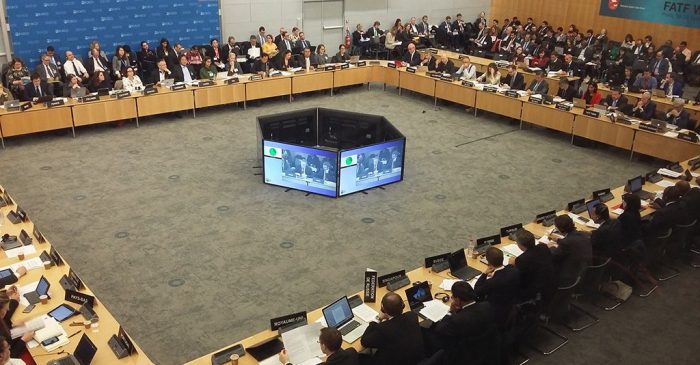
The Financial Action Task Force (FATF) is an inter-governmental body made up of 35 countries and two regional governing groups setting standards to promote effective implementation of legal, regulatory and operational measures combating money laundering, terrorist financing and other related threats to the integrity of the international financial system.

The FATF monitors the progress of its members in implementing necessary measures, reviews money laundering and terrorist financing techniques and counter-measures and promotes the adoption and implementation of appropriate measures globally.

The FATF serves as a crucial watchdog then against the spread of global terrorism through the transfer of funds through the international banking system. Chief among its current assignments is to monitor North Korea and the Iranian regime.

As part of its monitoring of Iranian regime, the FATF provides periodic updates on the action plan the regime pledged to follow as part of the nuclear deal it signed two years ago. In its most recent update, the FATF noted that Iran’s action plan has expired with most items on its to-do list remaining incomplete.

Chief among the items still needing to be addressed by the regime are:

  1. Adequately criminalizing terrorist financing, including by removing the exemption for designated groups “attempting to end foreign occupation, colonialism and racism”;
  2. Identifying and freezing terrorist assets in line with the relevant United Nations Security Council resolutions;
  3. Ensuring an adequate and enforceable customer due diligence regime;
  4. Ensuring the full independence of the Financial Intelligence Unit and requiring the submission of STRs for attempted transactions;
  5. Demonstrating how authorities are identifying and sanctioning unlicensed money/value transfer service providers;
  6. Ratifying and implementing the Palermo and TF Conventions and clarifying the capability to provide mutual legal assistance;
  7. Ensuring that financial institutions verify that wire transfers contain complete originator and beneficiary information;
  8. Establishing a broader range of penalties for violations of the ML offense; and
  9. Ensuring adequate legislation and procedures to provide for confiscation of property of corresponding value.

If Iranian regime does not meet these obligations, the FATF has the power to impose counter-measures punishing the regime, including restricting its access to international currency exchanges and electronic transfers.

It was this kind of pressure that proved pivotal in bringing the mullahs to the bargaining table in the first place.

Although Iran has left most of the required action items unfilled, the FATF has opted to hold off pending the Iranian parliament taking up these measures in draft legislation. Their outcome remains uncertain as the regime has dropped suggestions it may walk away from the nuclear deal anyway, including statements made by Iranian Deputy Foreign Minister Abbas Araqchi.

And yet, while the FATF continues to press the regime to comply with its promises, the National Iranian American Council didn’t miss the opportunity to crow that the FATF’s forbearance was in fact some kind of endorsement of the Iranian regime’s actions.

Predictably, the NIAC also called the FATF’s actions as standing up to pressure from the Trump administration.

“By showing itself unwilling to give in to pressure from the Trump administration and outside advocacy groups like United Against Nuclear Iran, which were pushing for the re-imposition of counter-measures against Iran, FATF smartly avoided politicization of its work and protected its integrity as a technical body assessing countries’ anti-money laundering and terrorist financing laws,” the NIAC statement read.

The NIAC said the Iranian regime had made “significant progress” in meeting the action plan, but neglected to note the disparity in how far the regime still has to go. For the NIAC, its only concern is to keep pushing the goal line back farther and farther to avoid crossing it and triggering new sanctions.

Its failure to recognize the agonizingly slow pace of approval of legislation by the Iranian parliament as part of a larger scheme to not make any changes in its financing of terror demonstrates the charade of the NIAC’s positions.

While the Trump administration has succeeded in focusing new pressure on Iran, Iran lobby groups such as the NIAC are now struggling to find any excuse to hold back the rising tide against its patrons in Tehran.

Laura Carnahan

Filed Under: Blog, News Tagged With: FATF, Featured, Iran deal, Iran Lobby, Iran sanctions, Iran Terrorism, National Iranian American Council, NIAC, NIAC Action

The Biggest Lie About Syria and Middle East Stability

March 2, 2018 by admin

The Biggest Lie About Syria and Middle East Stability

The Biggest Lie About Syria and Middle East Stability

On June 30, 2015, Trita Parsi, the head of the National Iranian American Council and a staunch cheerleader for the Iranian regime, published an editorial on CNN’s website that in retrospect now looks otherworldly stupid.

In it, Parsi was making the case for the Iran nuclear deal and the benefits it would bring, not the least of which was the argument that it would help empower moderates in Iran, rally Iranian youth and bring about stability throughout the Middle East.

His exact words were:

“The deal will help unleash Iran’s vibrant, young (the median age is 28!) and moderate society, which is continuously pushing Iran in a democratic direction. The deal enjoys solid support among the Iranian public as well as among Iranian civil society leaders, partly because they believe the deal ‘would enable political and cultural reforms.’

“America benefits if the democratic aspirations of the Iranian people are increasingly met, because a more democratic Iran is a more moderate Iran.

“This is particularly important at a time when the violent winds of religious radicalism are ravaging the Middle East and beyond. America is in desperate need of an injection of political moderation in the region. An Iran that moves towards democracy could provide that,” Parsi wrote.

In the three years since he penned that fairy tale, the reality has been brutally and violently different than the rosy picture he painted:

  • Iran poured billions of dollars it received in economic sanctions relief into propping up the Assad regime in Syria and committing thousands of troops and material into expanding a civil war that claimed 400,000 lives and pushed out four million refugees;
  • Iran shifted billions away from its domestic economy to crash produce a ballistic missile program exempt from restrictions in the nuclear deal, threatening the region under a missile umbrella stretching 2,000 km and plunging the Iranian people into poverty;
  • In two parliamentary elections and a presidential race, the regime cracked down by arresting hundreds of journalists, dissidents, artists, bloggers, students and ethnic and religious minorities, as well as wiping off thousands of candidates in favor of preserving power within the hands of hardline religious candidates;
  • Iran has expanded wars in Iraq and Yemen using terrorist proxies funded and armed by the regime’s Revolutionary Guards and Quds Force, destabilizing the.

Parsi is either the dumbest political analyst on the planet or one so far committed to covering for the Iranian regime it’s a wonder he’s not drawing a salary from the Iranian Foreign Ministry.

Parsi has been so colossally wrong in his predictions we have to ask if any news organization ever runs a check on the accuracy of his quotes.

But picking apart Parsi’s past stumbles is only picking at the corners of a much broader tapestry; one in which the NIAC has been proven wrong over and over again in its predictions.

One of the more recent claims was by Ryan Costello, a NIAC policy fellow, who wrote in analysis running on the NIAC’s website on February 16, 2018, that the Iranian regime’s missile program was not a threat and pointed out it was limiting the range of its weapons to 2,000 km, which only placed most of the Middle East under threat of attack and not the whole world.

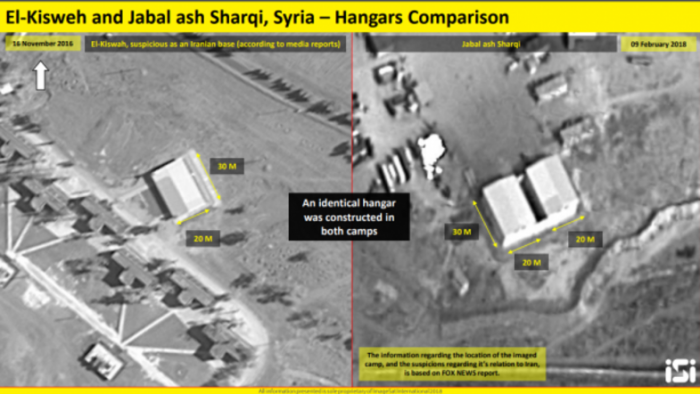
Small comfort when news has come out of satellite photos revealing a flurry of activity as Iran’s military begins construction of permanent military bases outside of Syria’s capital of Damascus complete with hangers capable of storing missiles that can now strike Israel, Saudi Arabia and most of the Mediterranean within a matter of minutes.

You hear that sound? It’s crickets in the silence coming from the NIAC.

According to Fox News, satellite images from ImageSat International show what is believed to be the new Iranian base operated by the Quds Force.  The photos show two new white hangars, each roughly 30 yards by 20 yards, used to store short- and medium-range missiles.

On Capitol Hill this week, the top U.S. military commander for American forces in the Middle East said Iran was “increasing” the number and “quality” of its ballistic missiles it was deploying to the region — when asked during a House Armed Services Committee hearing by Rep. Liz Cheney, R-Wyo., about reports Iran had moved more missiles into Syria.

Gen. Joseph L. Votel, head of U.S. Central Command, said Iran has “enhanced” its funding to proxy forces in the Middle East since the landmark nuclear agreement in July 2015, including sending missiles, fighters and other arms to Yemen and Syria.

The presence of permanent bases in Syria by Iran directly contradicts claims made by the NIAC that Iranian regime would only be a stabilizing force, but instead has turned into an occupation force.

All of which begets the question of what the U.S. needs to do to counter the regime, a question the NIAC has yet to answer other than to press the Trump administration not to ditch the nuclear agreement.

Secretary of State Rex Tillerson last month laid out a U.S. strategy in Syria that includes an indefinite stay for troops.

“U.S. disengagement from Syria would provide Iran the opportunity to further strengthen its position in Syria,” Tillerson said in the January speech. “As we have seen from Iran’s proxy wars and public announcements, Iran seeks dominance in the Middle East and the destruction of our ally.”

The tragedy of all this is that the NIAC has contributed to the biggest lie about Syria over the past three years and so far no one except us and the Iranian dissident movement seems to be holding it accountable for it.

Michael Tomlinson

Filed Under: Blog, News Tagged With: Ballistic Missiles, Featured, Iran Terrorism, IRGC, National Iranian American Council, NIAC, NIAC Action, Ryan Costello, Trita Parsi

Iran Regime Tapping Into Smartphones with Apps

February 23, 2018 by admin

Iran Regime Tapping Into Smartphones with Apps

Iran Regime Tapping Into Smartphones with Apps

One of the hallmarks of the Iran lobby, especially the National Iranian American Council, has been its consistent boasting of looking out of the interests of average, ordinary Iranian-Americans. That’s why it has spent considerable energy burnishing its credentials through attacking the Trump administration’s immigration proposals aimed at curbing terrorism and supporting the Iran nuclear agreement.

Of course, that’s exactly why the Iran lobby, especially the NIAC, cannot be trusted to advocate on behalf of ordinary Iranians; it is in the bag with the mullahs in Tehran.

This explains why the NIAC has been silent on blockbuster revelations by the National Council of Resistance of Iran, the largest dissident group to the Iranian regime, that Iran was using false front smartphone apps to secretly collect data on smartphone users in Iran, as well as around the world and may have been using the data to target and arrest protestors sweeping across Iran recently.

NCRI researchers allege in this new investigation that there are not only hundreds of smartphone apps currently being used by the Iranian regime to spy on its own citizens, some of them are available to users around the world via online marketplaces like Apple’s App Store, Google Play and GitHub.com, according to a Fox News report.

“The Iranian regime is currently hard at work to test the success of these apps on the people of Iran first,” said Alireza Jafarzadeh, the deputy director of the NCRI’s Washington office. “If not confronted, its next victims will be the people of other nations,” Jafarzadeh added, noting that the Iranian intel unit responsible for this alleged surveillance is the same group tasked with cyberwarfare against the West.

The NCRI report lists a handful of supposedly problematic apps that are available outside of Iran, despite these alleged connections to Iranian intelligence. The list includes Mobogram, Telegram Farsi and Telegram Black. Fox was able to confirm that most, if not all, are indeed still available for download.

The regime apps leverage the ability to text and communicate in native Farsi as an attribute driving many Iranians to download and use them, not knowing they are secretly developed by special cyberwarfare units within the Revolutionary Guard Corps.

It is estimated that some 40 million people in Iran were using the official Telegram app as a series of deadly protests broke out at the end of 2017, and the beginning of 2018. The apps have become popular because people outside of Iran are able to communicate with their family and friends, and because domestic users are able to evade government crackdowns on the internet.

This raises the very real specter that the regime is spying on family communications between Iranians and their American relatives and using that information to arrest and imprison any who might be viewed as dissenters.

During the mass protests that broke out last year and into this year, the regime shut down the popular Telegram app that many protestors were using to communicate with the outside world, including Western news agencies. This prompted many Iranians to switch to the fake regime apps and unwittingly placed them square in the bullseye of regime intelligence agencies.

Fox News reported that based on the NCRI revelations, Google was one of the first internet giants to remove some of the suspect apps from its Google Play and Android stores. We can only hope that Apple follows suit.

All of which makes curious why the NIAC remains silent on an issue of tremendous import to Iranian-Americans, but it silence should be surprising given its complete reticence in attacking any aspect of the Iranian regime’s policies.

In fact, why Iranian-Americans are being spied upon, the NIAC’s Trita Parsi was traveling through Kentucky to speak at a local World Affairs Council gathering and appear on local radio to again shill for the flawed Iran nuclear deal and flog the same tired myth that ditching the deal would surely lead the U.S. to war with Iran.

Ironically, it might be the Iranian regime and not the U.S. that ditches the nuclear deal first based on comments by Iranian Deputy Foreign Minister Abbas Araqchi who said if Iran did not continue to gain any benefits from the deal, especially more foreign investment, it would walk away from it first.

“If the same policy of confusion and uncertainties about the JCPOA (Joint Comprehensive Plan of Action) continues, if companies and banks are not working with Iran, we cannot remain in a deal that has no benefit for us,” Araqchi said. “That’s a fact.”

For Iran, the deal only serves as a means to an end, which is to reopen the flood-gates so cash could flow back into a regime dangerously teetering on the brink of insolvency from the cash it spent in supporting the Assad regime in Syria and the Houthi rebellion in Yemen, as well as development of its ballistic missile program.

It also means that the Iran lobby really doesn’t care much what happens to Iranians unless it benefits its PR efforts on behalf of the regime.

Laura Carnahan

Filed Under: Blog, News Tagged With: Featured, Iran deal, Iran Lobby, IRGC, National Iranian American Council, NIAC, NIAC Action, Sanctions, Trita Parsi

NIAC Tries to Defend Iran Missile Program Again

February 21, 2018 by admin

NIAC Tries to Defend Iran Missile Program Again

NIAC Tries to Defend Iran Missile Program Again

Just when you thought there might be the tiniest of cracks in the unified armor of the National Iranian American Council’s mind-numbingly strict defense of the Iranian regime with its recent statement criticizing the death of Canadian-Iranian environmentalist Kavous Seyed Emami, the NIAC went full-bore again in defending the regime’s ballistic missile program with an “analysis” of it.

Prepared by the NIAC’s Ryan Costello, the paper makes the argument that Iran’s ballistic missile program should not be a concern to the U.S. or anyone else (except maybe Saudi Arabia and Israel) and in fact ought to be viewed as benign.

He makes these arguments because the regime’s missile program has proven problematic for supporters of the Iran nuclear agreement. It is the inconvenient truth that no matter how much Iran lobby supporters say the deal is good for the world, the regime’s display of aggressive missile firepower boldly mirrors that of North Korea and frankly, scares the daylights out of the rest of the world.

It also doesn’t help that the Iranian regime fomented wars in Syria, Iraq and Yemen and is busy brutalizing its own people, as well as snatching citizens from other countries such as the U.S., U.K. and Canada.

That tends to make people have less faith in your word.

Which is why our good friend Ryan Costello is busy trying to reassure everyone that missiles with the throw weight necessary to carry a large warhead with a present range of over 2,000 kilometers is nothing to worry about.

“Despite this flurry of activity, there have been subtle shifts in Iran’s missile program that could reduce the program’s threat. In particular, Iran’s articulation of a range limit to its missiles and a shift toward short-range solid fueled missiles signals an interest in conventional, regional deterrence, not long-range nuclear missiles,” Costello writes.

Costello bases his argument that solid-rocket motor propelled missiles are somehow shorter range and less of a threat than liquid-fueled ones.

He obviously doesn’t know anything about missile technologies.

Solid-fuel boosters are the Holy Grail of ballistic missiles because they require no fueling, which can often be a laborious and time-intensive process. Solid-fuel capable missiles can be launched instantly and since they require no fueling facilities, can be siloed, transported or placed in virtually any location making them harder to detect and destroy.

The reason why Iran and North Korea for that matter are aggressively pursuing solid-fuel boosters is because of the cut down in response time. If you are looking to blast your neighbors to smithereens, it helps to be able to do so without warning.

Costello also bases his claims on statements made by top mullah Ali Khamenei that Iran would halt its development of longer range missiles and stick to the 2,000 km limit. It’s a dubious claim to stake global peace and security on given that Khamenei’s past track record of reliability has been just short of Adolf Hitler’s in 1938.

Costello credits all this to the Iran nuclear deal in shifting away from longer-range missiles, an absurd contention since he offers no proof other than to say the regime hasn’t fired as many test missiles as North Korea.

That is not a reassuring statistic.

The mere presence of a growing ballistic missile fleet, especially one being converted to solid-fuel boosters, represents an enormous destabilizing influence in the Middle East. Let’s remember that Costello and his brethren at the NIAC all claimed that passage of the nuclear deal would promote moderation within Iran and help stabilize the region.

The past three years have flatly proven them wrong as Iran has been at the very center of chaos in the region.

Costello also fails to address the elephant in the room, which is how can you trust a regime to not develop longer-range missiles when there is no agreement in place to prevent that from happening in the first place!

The argument the Iran lobby made for the Iran nuclear deal in the first place was that it was necessary to have an agreement and structure in place to hold Iran accountable and provide leverage through an inspections regime, but no such structure exists to blunt Iranian development of these weapons.

In essence, Costello is making the argument that we simply shouldn’t worry about them because hey, the mullahs will only fire them in self-defense!

This also explains why Costello’s boss, NIAC head Trita Parsi, has been busy trying to drum up the fear of war again by blaming Israel for exacerbating tensions with Iran, including the recent shootdown of an Iranian drone in Syria.

“Instead of a showdown in Syria, the showdown will move to New York and feed into an ongoing effort by Saudi Arabia and the Trump administration to use any pretext – missiles, drones or violating the ‘spirit’ of the Iran deal – to pass a Chapter VII UN [Security Council] resolution,” said Parsi, who supports the 2015 nuclear deal.

Parsi goes on to expand that idea in an editorial he authored in Defense One claiming that Saudi Arabia is manipulating the United Nations to punish its long-time regional foe.

“Such a resolution would once again put Iran in the penalty box, with its economy sanctioned and its political pathways for influence in the region blocked — i.e., an all-out containment of Iran. In Riyadh’s calculation, this will thwart Tehran’s rise and shift the regional balance in favor of Saudi Arabia and Israel,” Parsi writes.

It is mind-boggling how the NIAC will try any argument, no matter how far-fetched, to shift blame away from the mullahs and cast it on anyone else.

Laura Carnahan

Filed Under: Blog, News Tagged With: Ballistic Missiles, Featured, Iran, Iran Lobby, National Iranian American Council, NIAC, NIAC Action, Ryan Costello, Trita Parsi

As Iran Targets Environmentalists, Iran Lobby Finally Criticizes Regime

February 15, 2018 by admin

As Iran Targets Environmentalists, Iran Lobby Finally Criticizes Regime

As Iran Targets Environmentalists, Iran Lobby Finally Criticizes Regime

Kavous Seyed Emami, an Canadian-Iranian sociology professor, joined the ignominious list of prisoners to have died in the Iranian regime’s notorious Evin prison, including being the second Canadian citizen to die in Iranian custody.

The regime claimed that Seyed Emami hanged himself in his prison cell although virtually none of his friends, family or the Canadian government believe it.

Seyed Emami was co-founder of the Persian Wildlife Heritage Foundation, a nongovernmental organization fighting for the protection of indigenous animals, including the rare Asiatic cheetah, of which there are believed to be only about 50 remaining in Iran.

He had been arrested two weeks earlier along with seven other environmental activists who were accused of using their work as a cover for passing intelligence to foreigners, regime officials said.

The public prosecutor of Tehran, Abbas Jafari Dolatabadi, said that Seyed Emami killed himself after confessing to wrongdoing, but did not offer details according to the Los Angeles Times.

“Since he knew that many confessions had been made against him, and he himself had made confessions, he has unfortunately committed suicide in prison,” Dolatabadi was quoted as saying by Tasnim news agency.

Alaeddin Boroujerdi, head of the national security committee in Iran’s parliament, said he watched closed-circuit video showing Seyed Emami changing clothes in his prison cell. That indicated he was “getting ready to commit suicide,” the lawmaker was quoted as saying by Mizan, the mouthpiece of Iran’s judiciary.

Several other people with ties to the foundation were also arrested, according to reports in Iranian media. Among them were Hooman Jokar, vice chairman of the board and head of the cheetah desk at Iran’s Department of the Environment, and Morad Tahbaz, an Iranian American businessman and board member.

The pattern of arrests follows similar arrests of dual-national citizens under the administration of Hassan Rouhani and has become a favored tool of international blackmail and negotiating leverage for the mullahs.

In the case of Seyed Emami and his colleagues, the shift to targeting environmental activists results from the larger problems the regime faces as its gross mismanagement of Iran’s natural resources has turned much of the once-fertile countryside into a parched wasteland.

Historic lakes have dried up and farmland has turned to dust bowls, while entire villages and provinces lack water and food prices have skyrocketed; all of which has contributed to the spark of rebellion and protests sweeping across Iran.

The regime’s policies have bordered on criminally negligent with an excessive building of dams that have disrupted natural watersheds and diverted dwindling water supplies from recharging wetlands and aquifers to urban centers and major cities.

Things have gotten so bad, that much of Iran’s countryside joined in national protests sparked by the lack of food and water, representing then gravest threat to the ruling mullahs since the Islamic revolution.

For the Canadian government, the list of its citizens who have been imprisoned, raped, tortured and murdered grows ever longer and has stirred some Canadian leaders to call out the Iranian regime.

The Globe and Mail editorialized the fates of Canadians in Iran:

“Zahra Kazemi. Hamid Ghassemi-Shall. Homa Hoodfar. And now Kavous Seyed-Emami. All four are Iranian-Canadians who were imprisoned and maltreated by the Iran government after their arrests on dubious charges of espionage,” the newspaper said.

“But Mr. Seyed-Emami died on Friday in Tehran’s Evin Prison, the same chamber of horrors in which Ms. Kazemi was raped, tortured and murdered in 2003.”

“There is a hollow familiarity to Mr. Seyed-Emami’s death, and to Iranian officials’ claims as to how it came about. They say he committed suicide, but they are so unsure of their ability to defend that claim that they told Mr. Seyed-Emami’s family that there would be no autopsy, and ordered them to quickly bury his body without ceremony on Tuesday,” the newspaper noted.

The newspaper went on to cite other instances of brutality visited on other dual nationals and warned that Ottawa should press for answers and hold the regime accountable for the deaths.

The blatant nature of Seyed Emami’s death and the link to silencing environmental critics, just as the regime has targeted members of the Iranian resistance movement, journalists, students, artists and religious and ethnic minorities in such spectacularly public ways that even the Iran lobby cannot help but criticize the regime without looking like pathetic shills for the mullahs.

Chief among the Iran lobbyists forced to say something is the National Iranian American Council which released a statement on its website on Seyed Emami’s death:

“The death of Iranian-Canadian Kavous Seyed-Emami while in custody at Evin Prison on vague charges of espionage is deeply concerning. NIAC calls on Iranian authorities to allow an independent autopsy and uninhibited investigation into the circumstances that led to Seyed-Emami’s death in order to determine whether his human rights were violated and to hold accountable those responsible.

“Iran is facing major and serious environmental issues which have worried the population at large, and the government needs to take those concerns seriously. Instead, given the treatment of Seyed-Emami and other environmental activists by Iranian authorities, it appears that Iran’s government is intent on securitizing the environmental sphere like so many other parts of Iranian society,” the NIAC said.

It is worth noting that an autopsy is unlikely since the regime buried the body quickly and has no plans on resurrecting it for scrutiny, which makes the NIAC statement a nice PR stunt, but little more effective than a polite cough.

Far more effective than the toothless NIAC statement was the joint letter written by four leading Iranian academic societies to Rouhani demanding answers to Seyed Emami’s death.

The academics’ letter was published on Sunday by four leading associations in areas of political science, sociology, peace studies and cultural studies, which include professors from Iran’s top universities.

They wrote: “Our minimum expectation is that you take immediate and effective action to seriously investigate the case … and make the institutions involved in this painful loss accountable.”

As Iran’s leading scientists join with the working poor in condemning the regime’s actions, the scope and depth of dissatisfaction within all levels of Iranian is becoming increasingly apparent.

We can only hope it spreads and strengthens in the face of more reactionary actions by the mullahs.


Filed Under: Blog, News Tagged With: Featured, Iran Human rights, Iran Lobby, National Iranian American Council, NIAC Action

  • « Previous Page
  • 1
  • …
  • 6
  • 7
  • 8
  • 9
  • 10
  • …
  • 64
  • Next Page »

National Iranian-American Council (NIAC)

  • Bogus Memberships
  • Survey
  • Lobbying
  • Iranians for International Cooperation
  • Defamation Lawsuit
  • People’s Mojahedin
  • Trita Parsi Biography
  • Parsi/Namazi Lobbying Plan
  • Parsi Links to Namazi & Iranian Regime
  • Namazi, NIAC Ringleader
  • Collaborating with Iran’s Ambassador

Recent Posts

  • NIAC Trying to Gain Influence On U.S. Congress
  • While Iran Lobby Plays Blame Game Iran Goes Nuclear
  • Iran Lobby Jumps on Detention of Iranian Newscaster
  • Bad News for Iran Swamps Iran Lobby
  • Iran Starts Off Year by Banning Instagram

© Copyright 2026 IranLobby.net · All Rights Reserved.