Iran Lobby

Exposing the Activities of the lobbies and appeasers of the Mullah's Dictatorship ruling Iran

  • Home
  • About
  • Current Trend
  • National Iranian-American Council(NIAC)
    • Bogus Memberships
    • Survey
    • Lobbying
    • Iranians for International Cooperation
    • Defamation Lawsuit
    • People’s Mojahedin
    • Trita Parsi Biography
    • Parsi/Namazi Lobbying Plan
    • Parsi Links to Namazi& Iranian Regime
    • Namazi, NIAC Ringleader
    • Collaborating with Iran’s Ambassador
  • The Appeasers
    • Gary Sick
    • Flynt Leverett & Hillary Mann Leverett
    • Baroness Nicholson
  • Blog
  • Links
  • Media Reports

With Lifting of Sanctions Iran Lobby Pressing for Wide Open Trade

January 23, 2016 by admin

With Lifting of Sanctions Iran Lobby Pressing for Wide Open Trade

With Lifting of Sanctions Iran Lobby Pressing for Wide Open Trade

The transition for the Iran lobby was eventual and anticipated as it shifts gears from the lifting of economic sanctions to cheerleading investment by foreign companies into the Iranian economy in a bid to divert billions of dollars in capital into the regime’s coffers.

Nothing exemplified this newfound priority than an editorial by Tyler Cullis, a legal fellow with the National Iranian American Council, which appeared in Huffington Post. Cullis, a true apostle of the mullahs in Tehran, outlined the argument that the U.S. was coming late to the sanctions lifting party and not investing as wholeheartedly as it should.

“The U.S. trade embargo with Iran remains largely intact — outside of newly created authorizations for the import of Iran-origin carpets and certain foodstuffs and the sale to Iran of commercial aircraft. Under the trade embargo, U.S. companies are barred from engaging in trade with or investment in Iran — with few exceptions. Violating these U.S. sanctions prohibitions can lead to serious criminal and civil penalties,” Cullis writes.

“Moreover, considering the reputational risks of being seen doing business with Iran – which retains somewhat of a pariah status among the American public and which has remained under trade embargo for two-plus decades – few U.S. companies were willing to put themselves out on the limb for the chance to re-engage such an unfamiliar market. The result was that U.S. companies conducted virtually no real outreach to either the Obama administration or Members of Congress, which, in turn, fed into a perception in the White House that it lacked any real constituency for the openings that it could have otherwise supported,” Cullis adds.

His logic is fairly twisted on several levels. Cullis is correct that American companies are concerned damage to their brands through re-engagement in Iran, especially in sectors seen as bolstering industries largely controlled by the regime’s Revolutionary Guard Corps such as petroleum, telecommunications and transportation.

That damage to corporate brands can also result from calls for boycotts or other retaliation by human rights groups, Iranian dissidents and religious minorities – all of whom have been subject to brutal treatment by the mullahs there – who may seek to leverage the restart of economic involvement as a vehicle to have their plight heard on the world stage.

Cullis also neglects another key fact about doing business with the Iranian regime; any opening to Iranian markets will almost surely not be accompanied any meaningful reforms in the conduct of the economy by the mullah leadership which remains one of the most corrupt in the world.

According to Transparency International, Iran ranks 136th out of 175 countries in terms of corruption with deficiencies in judicial independence, rule of law, press freedom, free speech and accountability and bribery.

Few American or even European companies would venture into the Iranian market given those conditions and those that do are most likely to work first with regime-controlled industries such as petroleum, shipping or transportation, which is why the first companies most likely to enter the market would be airplane manufacturers such as Airbus, oil companies and heavy equipment manufacturers.

But Cullis is woefully ignorant of the greatest barriers remaining for American companies, especially those engaged in consumer products and services, which the mullahs are hell bent on preventing access to anything that might lead to the Iranian people having greater access to items, goods and services the mullahs might consider “corrupting.”

American cornerstone industries such as entertainment would largely be excluded from Iran. Can we image movies such as “Argo,” “Zero Dark Thirty,” or “13 Hours” getting screen time in Tehran? Can we envision hit television shows such as “Homeland” or “Game of Thrones” airing on Iranian TV sets? Could we really see documentaries about Holocaust or the Iraq-Iran War finding an audience in regime-controlled media?

What about other U.S. industries such as Apple and the ubiquitous iPhone? Would the mullahs allow access to the iTunes store and give Iranians the freedom to use Facebook, Snapchat, Twitter or other social media platforms so far banned by the mullahs and even leading to the arrest and imprisonment of bloggers and other social media users?

Would the mullahs allow U.S. technology companies to enter the marketplace with tablets, WiFi routers, GoPro cameras, portable hard drives, etc? What is more likely is that instead of the rosy picture portrayed by Cullis is a more likely scenario where the mullahs will greatly restrict certain foreign companies from entering the Iranian market that could create a corrupting influence and threaten their reign of terror and suppression.

What is more likely is a “pay-to-play” model where companies will be forced to pay up bribes to regime officials to enter the market and be subject to tight restrictions on what could be sold and to whom. It is a scenario many companies would be reluctant to undertake which explains the reticence of many companies from jumping in with both feet the way Cullis is encouraging.

The fact of the matter is that while sanctions have been lifted, the mullahs still remain in charge and that alone is a significant obstacle for many companies. Coupled with the mullahs continued focus on aggressive military actions in Syria, Yemen and Iraq, as well as continued development of military capability such as ballistic missile design, it’s highly unlikely like McDonalds or Starbucks are going to be opening up locations in Iran and offering free WiFi to Iranians to go with their Big Macs and lattes.

For the vast majority of American consumer brands, entry into the Iranian market is far from a sure thing and remains a risky proposition as long as Iran remains a religious theocracy controlled by a cadre of mullahs who insist on imposing medieval punishments such as public hangings and amputations.

By Laura Carnahan
 

Filed Under: Blog, Current Trend Tagged With: Featured, Iran Lobby, Sanctions, Tyler Cullis

End of Iran Regime Sanctions Brings Uncertain Future

January 19, 2016 by admin

On the same line, it has been trying to put the blame on other factions or "hardliners" within the mullahs for the surge in executions and oppressive measures taking place during "moderate" president of the mullahs, Rouhani's tenure.

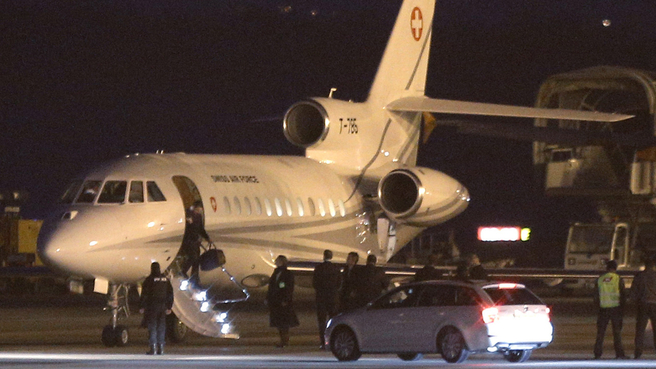
An unidentified man leaves a Dassault Falcon jet of Swiss army at the airport in Geneva, Switzerland, Sunday, Jan 17, 2016. A US government plane waited nearby to bring back to the US the men who were left from imprisonment in Iran the day before. (AP Photo/Laurent Cipriani)

This weekend brought an almost frantic rush of events as the Obama administration and international community lifted economic sanctions against the Iranian regime, while also facilitating a prisoner swap of four Americans being held in Iran with seven Iranian-Americans being held in U.S. prison for trafficking in illegal weapons and nuclear materials.

Three of Americans fly out of Iran and onto Germany to be reunited with loved ones, including Christian pastor Saeed Abedini, former U.S. Marine Amir Hekmati and Washington Post reporter Jason Rezaian. A fourth American, Nosratollah Khosravi whose imprisonment had not been previously reported, opted to stay in Tehran where he has a residence.

The lifting of nuclear sanctions on Saturday allowed Iran to re-enter the world’s oil markets; according to some estimates, by the end of the year its exports may increase by a million barrels a day, yielding about $30 million a day in revenue at current prices. Its ships will be able to enter and leave foreign ports, and its citizens will have access to global financial markets. On top of which the regime is scheduled to being receiving cash transfer of frozen assets that could total as much as a staggering $150 billion.

The Obama administration also took to clearing up several old accounting issues, including a payment of $1.7 billion representing a $400 million refund in payments made for military equipment sold to the government under the former shah, but never delivered because of the revolution along with interest accumulated over 37 years.

With all of this cash now flooding into the Iranian regime’s coffers, the single biggest question hanging over the Middle East is “What will the mullahs do with all that money?”

Considering the nuclear agreement made no attempt to link any restrictions on how the money was to be used, the mullahs are essentially free to do whatever they like with it, which has caused Iran’s neighbors to become very worried.

In Saudi Arabia, there was concern that the lifting of sanctions would bolster Iran and its allies. A statement by 140 Sunni Muslim clerics urged Muslims to unite against the threat of Shiite Iran. It criticized actions by some minority groups in Muslim countries and accused them of “serving foreign agendas,” a veiled reference to what they view as the loyalty of Shiites in Sunni-majority Arab countries to Iran.

Iran’s rivals are also worried that Tehran will spend some of the billions of dollars of oil revenue unfrozen by the lifting of sanctions on aiding regional allies that include Syrian President Bashar al-Assad, the Shiite group Hezbollah in Lebanon and the Shiite-linked Houthi rebels in Yemen.

The prisoner swap and lifting of sanctions was predictably hailed by the Iran lobby, but even the regime’s staunchest supporters recognized the current ambivalent mood of American and European voters who have been unnerved by a rash of terror attacks inspired by Islamic extremism.

“While this diplomatic victory should be celebrated, it is impossible to ignore the ongoing systemic human rights violations in Iran. Recent arrests of activists and artists appear aimed at intimidating reformists and moderates ahead of key elections to Iran’s parliament and Assembly of Experts. Further, an ongoing rise in executions – often for nonviolent drug-related offenses – must be halted without delay. We hope that the moderation that has dramatically impacted Iran’s external relations can now shift inward to produce lasting change,” said the National Iranian American Council, the regime’s leading lobbyist, in a press release. On the same line, it has been trying to put the blame on other factions or “hardliners” within the mullahs regime for the surge in executions and oppressive measures taking place during Rouhani’s tenure, the “moderate” president of the mullahs.

This also represents the double-edged sword the Iran lobby now has to traverse since it has bet everything that the regime will act like a normal civil nation from now on. If the Iranian regime continues to escalate its conflict with Saudi Arabia, continues to fund terror groups or continues to apprehend American sailors at will on the high seas, then public opinion will be turned quickly against the lobby.

Iranian dissident groups that know the regime’s leadership best had the best perspective on this weekend’s events.

“The major part of Iran’s economy (more than 50% of its GDP) is controlled by 14 large entities, all of which are affiliated with the military and security apparatus and controlled by Supreme Leader Ali Khamenei. Much of the released funds will end up in the coffers of these 14 economic entities. A good portion of IRGC expenditures and the monthly financial assistance to the Syrian dictator is paid up by the profits of these institutions. The bulk of the released funds will flow to these economic hubs and will thus serve Khamenei and the IRGC,” said the National Council of Resistance of Iran, one of the leading dissident groups, in a prepared statement.

The NCRI points out, correctly, that the Iranian regime is lurching towards parliamentary elections with a flurry of political arrests and a rapid escalation in public executions – 53 in the first two weeks of January alone – in order to maintain control of the Iranian people, especially if they are anticipating a windfall from the release of funds which they are not likely to receive.

As the Wall Street Journal pointed out in an editorial, this weekend’s events cemented the perception that the Iranian regime essentially swapped four Americans for over $100 billion in cash, access to the international banking system and a re-entry into the global oil markets.

“The timing of Iran’s Saturday release of the Americans is no accident. This was also implementation day for the nuclear deal, when United Nations sanctions on Tehran were lifted, which means that more than $100 billion in frozen assets will soon flow to Iran and the regime will get a lift from new investment and oil sales. The mullahs were taking no chances and held the hostages until President Obama’s diplomatic checks cleared,” the Journal declared.

“But the Iranians negotiated a steep price for their freedom. The White House agreed to pardon or drop charges against seven Iranian nationals charged with or convicted of crimes in the U.S., mostly for violating sanctions designed to retard Iran’s military or nuclear programs. Iran gets back men who were assisting its military ambitions while we get innocents. This is similar to the lopsided prisoner swaps that Mr. Obama previously made with Cuba for Alan Gross and the Taliban for alleged deserter Sgt. Bowe Bergdahl,” the Journal added.

All of this shows that the mullahs tried and true policy of taking hostages will only embolden them to do more. The right policy though seems to be a firm policy much similar to the Sanctions that forced them to come to the nuclear negotiation table.

By Michael Tomlinson

Filed Under: Blog, Current Trend, News Tagged With: Featured, Iran, Iran deal, Iran Lobby

Iran Lobby Glosses Over IAEA Report on Iran Nuclear Work

December 3, 2015 by admin

Iran Lobby Glosses Over IAEA Report on Iran Nuclear Work

Iran Lobby Glosses Over IAEA Report on Iran Nuclear Work

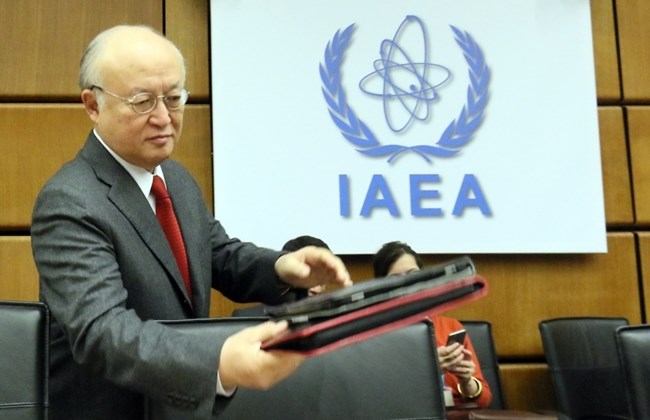
The International Atomic Energy Agency released its long-awaited report detailing the military dimensions of the Iranian regime’s nuclear program and unveiled disturbing new details that have left the Iran lobby, especially the National Iranian American Council, scrambling to cover up.

In the report, Iran was actively designing a nuclear weapon until at least 2009, far later than virtually all intelligence agencies had believed and proving the regime’s ability to conceal its design activities while under intense scrutiny and even spying from various nations.

The report, which according to the New York Times, was compiled largely based on partial answers provided by Iran after completing nuclear talks last July, concluded that the regime was “conducting computer modeling of a nuclear explosive device” before 2004 and continued those efforts right through President Obama’s first term in office.

The IAEA detailed a long list of experiments conducted by the regime “relevant to a nuclear explosive device” directly contradicting claims made by the Iran lobby and the mullahs that Iranian regime’s nuclear program was only for civilian and peaceful purposes.

We now know through Iranian regime’s own admission, it was trying to build nuclear weapons at a feverish pace.

But the IAEA concluded that substantial gaps existed because the regime refused to provide answers to several key questions, restricted the ability to interview key scientific personnel and limited sampling of sites and facilities only after they had been scrubbed.

The nuclear deal negotiated with the Iranian regime mandated limiting Iran’s ability to build a bomb for at least 15 years, but the inability to paint a complete picture and the revelation that Tehran had been conducting work unbeknownst to the rest of the world leaves significant doubt as even that goal is attainable.

According to the Times, Tehran gave no substantive answers to one quarter of the dozen specific questions or documents it was asked about, leaving open the question of how much progress it had made.

At Iran’s Parchin complex, where the agency thought there had been nuclear experimental work in 2000, “extensive activities undertaken by Iran” to alter the site “seriously undermined” the agency’s ability to come to conclusions about past activities, the report said.

The response from Capitol Hill was swift and bipartisan.

“I think we’re getting off to a very, very poor start,” Senate Foreign Relations Committee Chairman Bob Corker (R-Tenn.) told reporters after a roughly two-hour top-secret committee hearing.

“These are exactly the things that we talked about during the hearing process that raised concerns and they’re being validated right now,” he added.

“It just sets a very bad precedent that if Iran thinks it can violate the world’s will, as expressed by Security Council resolutions, and in essence face no consequence for it,” said Sen. Robert Menendez (N.J.), one of the four Democrats who voted against the deal in September.

The defense offered by the NIAC’s Trita Parsi through a press release was tepid and paper thin as he focused on the issue of complying with the terms of the agreement in releasing the report, but not in the report’s findings themselves, praising the IAEA’s “assessment of coordinated ‘activities relevant to the development of a nuclear explosive device,’ in Iran prior to 2003, and that there have been no credible indications of such relevant activities since 2009.”

Parsi of course does not mention the fact the work conducted through 2009 was denied by Tehran and by Parsi himself and that the refusal by the mullahs to answer specific questions left the report, at best incomplete, and at worst a whitewash.

The Iran lobby is now finding it harder and harder to cover for the regime because its own promises and arguments are now all coming to be uncovered as falsehoods and outright deceptions. The fortunate thing about the internet is you can always search and look back at the statements people like Parsi have made and in the context of what is happening now, realize just how really wrong they were.

With the IAEA report, it’s just another blow to any shred of credibility the Iran lobby had.

By Michael Tomlinson

Filed Under: Current Trend, News Tagged With: #NuclearDeal, Featured, Iran deal, Iran Human rights, Iran Lobby, Iran Mullahs, Iran sanctions, Iran Talks, National Iranian American Council, NIAC Action, Rouhani, Sanctions, Trita Parsi

What the Paris Attacks Tell Us About Terror Template

November 16, 2015 by admin

What the Paris Attacks Tell Us About Terror Template

What the Paris Attacks Tell Us About Terror Template

The tragedy of the Paris terrorist attacks this weekend are so startling in their scope, so appalling in the loss of life and so despicable in the choice of victims, that the world has once again been moved to commemorate with demands for stern action and condemnation of the breed of Islamic extremism flowing out of the war torn streets of Syria and now making its way to the wide boulevards of Paris.

With 132 dead as of the latest reporting with scores more in critical condition, the full scope of the killed may not be known for a little while longer, but what is known is that the attack was sophisticated in planning, meticulous in its execution and devastating in its results. It was also spawned and given life from early reports by the ISIS terror network that now dominates vast swaths of Syrian and Iraqi territory, while its influence and recruitment stretches from the Americas to Africa and Asia.

What is unmistakable is the “template of terror” that has come to be the calling card of terror groups such as Hezbollah, Al Qaeda, Boko Haram and ISIS, amongst scores of others. The names might be different, ethnicities varied, even religions at odds with each other, but all share the same fundamental belief in using violence, terror and fear to state their case, sow terror and achieve their aims.

Attacking and striking at these terror groups has de-evolved into a game of “Whack-a-Mole” as militaries strike at individual terrorist leaders like “Jihadi John,” the Briton who was identified as being one of the ringleaders of ISIS who came to the world’s attention decapitating Western hostages.

More astute analysts have pointed out that to curb the threat of global terror, you have to strike at the safe havens offered by sympathetic governments such as the invasion of Afghanistan after the 9/11 attacks to dislodge the Taliban’s support of Al-Qaeda. Others have pointed out the need to support unstable democracies as they struggle with the aftermath and chaos wrought by the changes from the Arab spring protests that toppled governments in Libya, Egypt and elsewhere so that they do not become safe havens for terrorists.

But the single largest supporter of terror in the world today, both financially and spiritually, has been and remains the Iranian regime.

The mullahs in Tehran have been the chief sponsors of Hezbollah and have used Hezbollah fighters in proxy wars in Syria, Afghanistan, Lebanon, Iraq and elsewhere. They have also supported Shiite militias in Iraq with arms, including explosive devices manufactured in Iran, used to kill hundreds of U.S. service personnel in Iraq.

The Iran regime has also provided a spiritual template for ISIS and others through the brutal warped application of sharia law to mete out punishment in often ghastly ways. Before ISIS ever decapitated a captive on video, Iranian regime was hanging prisoners in public squares in front of young relatives. Before ISIS ever machine gunned children, Iranian regime was arresting and executing them. Before ISIS ever imposed harsh religious law in the villages and towns it conquered, Iranian regime was flogging women, cutting off the hands of thieves with power saws and beating demonstrators in the street. The medieval measures that are still being practiced under Rouhani.

The visceral brutality of Iranian regime’s justice has long been used as the standard for invoking a twisted form of Islam to justify violence in the name of territorial gain. The mistake most countries make in dealing with Islamic extremism is in thinking it is a religious war.

It is not.

The violence that stems from the Iran regime and flows out to groups like ISIS and Hezbollah is used as a political tool to achieve practical goals such as toppling governments in Yemen, creating safe havens for forces to operate such as in Iraq and Lebanon and building integrated networks to carry out missions around the world such as Iranian-linked terror attacks in Latin America and the U.S.

What is most telling is the response to the Paris attacks by Iran and its lobbyist allies. In the first few hours of the attacks, while the world expressed, shock, outrage and revulsion, social media linked to Iran’s lobbyists did not offer condolences or sympathy, but rather opened up a full bore attack on Iran’s chief regional rival – Saudi Arabia – in an ongoing effort to destabilize that country.

Trita Parsi, head of the National Iranian American Council, offered up this insightful post on his Twitter feed as the streets of Paris ran thick with blood:

“If it turns out this horrible terror was done by ISIS or AlQaeda, will France rethink its cosy ties with Saudi and those funding Salafists?”

This is the first thing that comes to the mind of Parsi? His next seven posts sought to blame the attacks on Saudi Arabia before he got to his first tweet about Iranians expressing sympathy outside of the French embassy in Tehran.

He even managed to work in a dig at the U.S., tweeting:

“2014, U.S. intel found out that certain equipment sold to Saudi had ended up in ISIS hands. Not sure if they followed up… #ParisAttacks”

Since then, Parsi has continued the drumbeat of linking ISIS to Saudi Arabia, along with other Iran supporters who are marching to the same tune of deflecting blame away from Iranian mullahs.

The only certain thing is that the mullahs in Tehran set the tune and example for the terror industry and by their actions have long validated violence against civilians as a means to an end. It is a pathway that folks like Parsi have never apparently found objectionable judging by their social media accounts and public statements.

Parsi and his colleagues have never made human rights a centerpiece of their lobbying efforts as they have always sought to de-link the issue from any relevancy such as the nuclear talks. The hypocrisy of groups such as NIAC is easily apparent when you peruse their press releases and commentary. The lack of sympathy for the victims of Paris and the all-too-quick efforts to link them to traditional enemies of Iranian regime reveal the true purposes they have.

That true nature of the Iran regime was on front page display in regime newspapers where on its front page, Javan featured an illustration of a masked jihadist with a gun and a machete standing at the top of the Eiffel Tower, waving a mixed flag of the United States and ISIS.

“Return to home,” its headline said, quoting reports that some 200 French extremists had returned to the country after fighting with ISIS abroad.

In Kayhan – Iranian regime’s oldest and most-vocal paper — editor Hossein Shariatmadari, known as the mouth piece for regime’s supreme leader, repeated a conspiracy theory often cited in Iranian media that ISIS is a creation of the West and Israel under an operation dubbed “Hornet’s Nest”.

“Now the designers of the Hornet’s Nest must await the return of the wasps to the real nest — wasps that carry automatic rifles and grenades,” Shariatmadari wrote.

This shouldn’t come as a surprise to long-time observers of the regime or to Iranian dissidents who have long warned that ignoring Iranian mullah’s conduct in supporting terrorist groups has only allowed them to flourish.

Unfortunately, unless the world acts to focus on the source of the terrorism occurring in Iran, we will inevitably be faced with more Paris attacks elsewhere.

By Michael Tomlinson

Filed Under: Blog, Current Trend, News Tagged With: Featured, Iran, Iran Human rights, Iran Lobby, Iran Mullahs, Iran Talks, Khamenei, Moderate Mullahs, National Iranian American Council, NIAC, NIAC Action, Rouhani, Trita Parsi

If You Never Talk About Human Rights, Maybe It Doesn’t Exist?

November 10, 2015 by admin

parsi-MarashiThe first thing they teach you in any 12-step recovery program is that you have to admit you have a problem before you can start the road to getting better. The Iran lobby suffers from the basic problem that it cannot admit it has a problem backing a regime that has absolutely no intention of ever abiding by international norms of civility and normality.

Depending on your point of view, Iran regime supporters such as Trita Parsi of the National Iranian American Council or Jim Lobe of Lobelog, or Gareth Porter is either partners with the regime or unwitting dupes who are hopelessly locked into a myopic point of view regardless of the facts disputing their worldview.

If we take the more charitable view and give them the benefit of the doubt about their motivations, then it is a head scratching moment to think of why they virtually ignore human rights violations in Iran in almost all of their public pronouncements, media interviews and social media postings. Why would anyone proclaiming deep interest in the well-being of the Iranian people never say a contrary word about record levels of arrests, imprisonments and executions?

Take for example the NIAC, which any casual perusal of its website would reveal little criticism of the Iran regime on the issue of human rights. In fact, if you type in “human rights” in its search box, you’ll find the bulk of any mention about human rights issues occurs during the run up with nuclear talks, but after the deal is done…nothing.

Even more impressive, for the entire year of 2015 so far, NIAC only issued one statement even mildly criticizing Iran on the issue of Washington Post reporter Jason Rezaian who was arrested and falsely accused by the regime of espionage.

Considering the litany of human rights abuses so far in 2015 in Iran, including over 1,000 public executions, the holding of five Americans illegally, the suppression of mass demonstrations and the support for terrorist acts and proxy wars in three different countries, it’s a wonder the NIAC could even be bothered to issue the single statement it did.

But like the age-old philosophy question posed by professors everyone, “if a tree falls in the forest and no one is around to hear it, does it make a sound?” The same question could be applied to the NIAC and other regime supporters within the Iran lobby. If you never talk about human rights, do you think they don’t exist?

The only substantial mention about human rights from NIAC comes within the context of passing the nuclear agreement with Iran as a pathway towards a more moderate and forgiving Iran.

As we have seen, the true nature of the Iranian regime has been revealed since passage of the agreement with a wide range of bewildering, militant and aggressive acts ranging from the alarming such as the test firing of new ballistic missile design capable of carrying nuclear warheads to defending the meaning of keeping its “Death to America” chants.

In all of these cases, the NIAC and other regime supporters have been silent as a tomb in raising any concern or these aggressive acts by the regime and in the one specific case where Iranian-American businessman Siamak Namazi, a key supporter of the NIAC and the regime, was arrested in Iran and tossed into the infamous Evin Prison, NIAC issued a statement expressing how “deeply troubled” it was by the report, but then spent most of the statement trying mightily to distance itself from Namazi.

You have to pity Namazi. On the one hand he had devoted considerable time and effort working with Trita Parsi and Reza Marashi during their collective time together at the consulting company Atieh on opening up avenues for the regime past sanctions imposed by the rest of the world, but then once he wears out his own welcome with the regime and gets tossed in prison, his old friends claim no knowledge of him.

You’d think Namazi would have chosen more reliable friends.

But the NIAC’s lack of concern over human rights is more likely a function of the fact that any deep discussion of human rights is ultimately embarrassing to the regime and hinders the process of gaining advantages for the mullahs in Tehran. Since the Obama administration was readily agreeable to the idea of un-linking human rights from nuclear talks, the regime has been essentially freed from the pesky restraints of being sanctioned or held accountable for anything it does from now on.

This explains why the Iran regime has closed its deal with Russia to buy advanced S-300 anti-aircraft missile batteries, launched a series of cyberattacks on U.S. and European computer systems,  broadened its offensive in Syria, and attempted smuggling even more weapons to support Houthi rebels in its proxy war in Yemen aimed at Saudi Arabia next door.

The alarming increase and speed in actions by the Iran regime has spawned a broad and equally alarmed reaction from many and warnings are now being raised on the eve of the presidential election in 2016 that restraining and controlling Iranian regime may now rank as serious a foreign policy issue as combatting ISIS for most Americans.

These reactions come from small community newspapers such as the Staten Island Advance editorializing against the flaws in the nuclear deal to major market editorials such as the New York Post warning how mullahs in Iran have used the nuclear deal as a blank check to go wild.

The negative reactions have also come from both sides of the political aisle as evidenced by an editorial by Reps. Gerald E. Connolly (D-VA) and Richard Hanna (R-NY) in Huffington Post advocating their proposal for a new joint commission to monitor and verify Iran’s compliance with the nuclear deal as an additional safeguard to what they call a flaw in the nuclear agreement.

We can only hope it is not an example of too little, too late.

By Michael Tomlinson


Filed Under: Blog, Current Trend, National Iranian-American Council, News, The Appeasers Tagged With: Featured, Iran, Iran deal

Iran Regime Culture of Terror and Violence Unchanging

October 12, 2015 by admin

Iran Regime Culture of Terror and Violence Unchanging

Iran Regime Culture of Terror and Violence Unchanging

There are several constants in the universe: the theory of relativity, the speed of light and the single-minded commitment of the Iran regime to its path towards expansion of its vision of extremist Islam using all of the tools at its disposal.

Much has been made about the new nuclear deal with the regime as being a harbinger of improved relations; most of those arguments being exclusively made by the loyal Iran lobby led by the National Iranian American Council, but all of those arguments ignore one essential proof which is the regime has shown through its actions just how committed it is towards its revolutionary vision.

At the heart of the regime’s hold over Iran is its willingness to use brutal force and violence to reign in its opponents and liberal use of its prison system and death penalty to remove the most vocal and troublesome resistance elements. While the modern world is moving towards annihilation of the death penalty, in most nations, that still use death penalty, imposition of the ultimate punishment by the state comes as a last resort and is reserved for the most heinous of crimes; usually those involving mass murder, treason or the cruel torture and murder of a child.

But within the Iran regime, the death penalty and the entire judicial system is under political control and often used to silence dissidents, stifle free speech and oppress the dissatisfied. Within the regime judicial system, its various courts, police and paramilitaries fall under the authority of the top mullah, Ali Khamenei, and its religious courts hold sway over virtually every facet of Iranian life.

All of which came into stark relief this weekend as the United Nations designated World Day Against the Death Penalty and a large gathering was held in Paris of anti-death penalty activists from around the world.

The conference sponsored by the Committee Defending Human Rights in Iran, was entitled, “Iran, Human Rights, Stop Executions” and included notable participants such as Gilbert Mitterrand, former member of the French National Assembly and President of France Libertés (Danielle Mitterrand) Foundation, Phumla Makaziwe Mandela, women’s rights advocate and daughter of Nelson Mandela, the late leader of South Africa, David Jones and Mark Williams, members of the British House of Commons, Hanan Al-Balkhi, representative of the Syrian Coalition in Oslo, and Taher Boumedra, former human rights chief of the United Nations Assistance Mission in Iraq – UNAMI.

According to the National Council of Resistance of Iran, a coalition of leading Iranian resistance groups, there have been over 120,000 executions carried out by the regime, often performed as public hangings from construction cranes. Any casual Google image search of “Iran” and “hangings” produces the grisly bounty of the mullahs.

While the world has been concerned over the plight of notable prisoners such as Washington Post reporter Jason Rezaian, who has been convicted and sentenced by a regime court in a sham trial, they are but just a tip of what qualifies as one of the largest state-operated political prison systems since the Soviet-era gulags or Khmer Rouge killing fields.

One of those prisoners, Farzad Madadzadeh, told his story in an interview with The Daily Mail where he detailed routine torture including beatings, electrocution, forced drug use and solitary confinement. His only crime: speaking out against the regime.

Last year, the country had the second highest number of executions in the world after China and also killed the most juvenile offenders, according to Human Rights Watch.

And it remains one of the biggest jailers of bloggers, journalists and social media activists, all part of the strategy by the regime to suppress open political dissent and maintain its control over what is increasingly becoming a fractured society chafing underneath three decades of brutal Islamic rule.

But the regime’s reach is not just confined within the borders of Iran. Regime security agents and their proxy allies have launched attacks in places such as Lebanon, Syria and Iraq to get at its political opponents, such as the large number of dissidents from the People’s Mojahedin Organization of Iran relocated to Camps Ashraf and Liberty and subject to frequent attacks.

The very nature of the regime has given many in Congress pause after approving the nuclear deal, forcing Democrats and Republicans to join and reassess the most pressing question facing them with the 2016 elections looming: What do we do about Iran now?

While the NIAC and other regime allies would have us believe next year will bring economic opportunities and a revival for Iran’s people, the regime’s doubling down in Syria, willingness to call in Russian military aid to save the Assad regime and growing discontent at home points to a year of potentially extreme volatility.

The fact that news came out of a new ballistic missile test by the regime potentially violating the terms of the nuclear agreement tells the world all it needs to know about the Iran regime’s true intentions.

The missile — named Emad, or pillar — is a step up from Iran’s Shahab-3 missiles because it can be guided toward its target, the Iranian defense minister, Hossein Dehghan, told the semiofficial Fars news agency. In recent decades, with Iran’s air force plagued by economic sanctions and other restrictions, the country has invested heavily in its nuclear program and has produced missiles that can reach as far as Europe.

At a time when the world needs to recognize the essential nature of the Iran regime, it is vital that the regime’s most ardent opponents are giving more consideration in developing a strategy to confront the regime.

By Michael Tomlinson

Filed Under: Blog, Current Trend, News Tagged With: Featured, Iran, Iran deal, Iran Economy, Iran Human rights, Iran Lobby, Iran sanctions, National Iranian American Council, NIAC, NIAC Action

NIAC Funded Through Regime Sources as Iran Lobby Ramps Up

July 13, 2015 by admin

Tritta Parsi paying respect to the Iranian regime delegation in Geneva

Trita Parsi paying respect to Iran delegation in Geneva Talks

With the potential announcement of an agreement between the Iran regime and the P5+1 group of nations, the scene will undoubtedly shift to Congress where both houses will have 60 days to review the agreement under legislation authored by Sen. Bob Corker (R-TN), chair of the Senate Foreign Relations Committee, as part of a bipartisan compromise.

With that upcoming debate, a fierce lobbying campaign will break out between those opposed to the agreement and the lobbying machine deployed by Tehran’s mullahs to get it passed. Chief among them will be the National Iranian American Council, the leading advocacy group for the Islamic state, which has formally launched its own full-fledged lobbying arm in anticipation of the fight ahead.

The creation of the lobbying group has come under intense scrutiny given its timing just before congressional review, as well as the need to funnel and direct funds towards supporting the Iran regime. The question of financial support for the NIAC has been a persistent question and a recent story by The Daily Beast shed new light on where the chief cheerleaders for Iran’s mullahs are getting their money.

The story, written by Michael Weiss and Alex Shirazi and contributed by Jackie Kucinich, examined contributions made by Vahid Alaghband, an Iranian businessman who’s Balli Aviation Ltd., tried to sell 747 airliners to Iran despite a federal ban on such sales. His company pled guilty to two criminal counts in 2010 and under the plea deal with the U.S. Justice Department, paid a $2 million criminal fine, served five years of corporate probation and paid an additional $15 million in civil penalties.

“…Alaghband stands out from the rest, because the beneficiary of his firm’s deals with Tehran was an Iranian airline accused by the U.S. government of working with the regime’s foreign intelligence operatives and shipping arms and troops to Syria,” said the article.

“Plus, if an agreement between Iran and the world’s major powers is concluded in the coming days—as is widely expected—operators like Alaghband could stand to benefit.”

The deep ties to the regime also included a conspiracy in to export 747 aircraft by first obtaining export licenses from the U.S. government and then using an Armenian subsidiary to buy the planes for Mahan Air, Iran’s largest airline, which the State Department believes is controlled by former Iranian president Akbar Hashemi Rafsanjani.

Mahan Air was also sanctioned by the Treasury Department in 2011 for “providing financial, material and technological support to the Islamic Revolutionary Guard Corps-Qods Force (IRGC-QF),” or the expeditionary arm of the Islamic Republic’s praetorian military division, now heavily active in both Syria and Iraq. At the time, the Treasury Department accused the Qods Force of “secretly ferrying operatives, weapons and funds” on Mahan flights.

In 2007, Alaghband offered to give a $900,000 donation over three years to the PARSA Foundation, intended for the Brookings Institution to support pro-Iranian rapprochement. This followed a previous donation of $50,000 he made to PARSA.

PARSA’s second-largest recipient of funding was the NIAC which received a total of $591,500 from the group, but funding is not the only link between NIAC and the Iran regime with other news organizations and Iranian dissident groups having pointed out close ties between NIAC leaders such as Trita Parsi with regime officials that came to light as a result of a failed defamation suit brought by Parsi against an investigative journalist.

All of which casts doubt on NIAC Action, the new lobbying muscle being deployed to help the mullahs. As noted in an article in Commentary Magazine, the launching of the lobbying arm was followed by an email sent by NIAC staffer Tyler Cullis (and not from the NIAC Action ironically enough) calling for the immediate lifting of the United Nations arms embargo as part of the nuclear agreement.

As Commentary Magazine writes: “What the vast majority of Iranian-Americans know, and what Congress should ask NIAC, is how lifting the arms embargo meant to repress Iran’s sponsorship of terrorism is in anyway an interest of the United States, the Iranian-American community, or regional stability and security.”

“That NIAC would advocate the lifting of the arms embargo is both curious and revealing. Rather than promote Iranian-American political activism or public diplomacy, NIAC increasingly appears to align itself squarely with the publicly declared interests of the Islamic Republic of Iran,” the article adds.

Indeed, the mere fact that the NIAC is hard at work sending emails to congressional staffers urging the lifting of an arms embargo designed to prevent the Iran regime from exporting arms outside of Iran is hugely significant and provides proof that the mullahs are not intent on fostering peace, but instead are desperate to gets fresh supplies of arms and ammunition to their Hezbollah proxies in Syria, Shiite militias in Iraq and Houthi rebels in Yemen as three wars rage on.

As debate opens in Congress, it would be wise for Democratic and Republican staffers to look at the sender of these email missives and if it comes from the NIAC, they should send it straight to “Junk Mail.”


Filed Under: Current Trend, National Iranian-American Council Tagged With: alaghband, Featured, Iran, Iran sanctions, Irandeal, Irantalks, irantalksvienna

NIAC Discussion on Geopolitical Implications of Iran Deal or shameful Lobbying for mullah

June 27, 2015 by admin

Iran Lobby on the Nuclear Discussions

Iran Lobby on the Nuclear Discussions

In an article published on Center for Security Policy, written by Caitlin Anglemier, The National Iranian American Council (NIAC)’s usual approach in serving as Iran’s lobby in Washington D.C. has been highlighted. Excerpts from this article are published here to describe the path the Iranian lobby and fellow travelers are talking while we are getting very close to the June 30th self claimed nuclear talks deadline.

On June 25, NIAC held a discussion on “The Geopolitical Implications of an Iran Deal”. The panel of speakers included: Peter Beinart, contributing editor for The Atlantic and National Journal; Fred Kaplan, war stories columnist for Slate; Dr. Trita Parsi, President of the National Iranian American Council; and Barbara Slavin, South Asia Center senior fellow for the Atlantic Council, known within the Iranian community for appeasing the mullahs.

In her article, Caitlin Anglemier reports: “The talk began with a discussion on how foreign policy has become a primary focus of the Republican party and how generally, the Democratic party tends to place more emphasis on social and economic issues. The discussion then drifted towards discussing the negotiation talks themselves and the ten-year time period aspect. The panel acknowledged the concern that many have, which is that the ten-year period is just delaying the inevitable truth that Iran could obtain a nuclear weapon within a year. But the panel emphasized the importance of those ten years. While that negative viewpoint is out there, why not try to focus on the time positively and the opportunity it provides for even more talks, negotiations, and compromising?

In trying to frame the ten-year period in such a positive manner, the NIAC panel attempted to depict a reality that is simply not accurate. Solely based on how the nuclear deal negotiations have gone so far, it would be foolish to think that ten years of talks and additional demands would go any better than what has transpired-which has not been good at all.”

The report continues: “The discussion then moved to reflecting on the implications of all the money involved in the deal talks. “…[the US] will have released a total of $11.9 billion to the Islamic Republic [of Iran] by the time nuclear talks are scheduled to end in June, according to figures provided by the State Department”. The panel seemed to indicate that if a deal is successfully reached, Iran would utilize the freedom gained from lifted sanctions as well as the cash assets given from the United States to benefit the people of Iran. The panel’s theory was that if Iran continued, over the next ten years, to send money overseas for alternative projects, the people of Iran would start questioning the government and would become upset. In the past, Iran has used the funds it had to fund terrorism and terrorist organizations. If the country has placed an emphasis on aiding terrorism over taking care of its people in the past, why would that change after a new deal?”

It is also a fact that a big chunk of Iran’s economy is in the hands of IRGC, which is the main force behind all the nuclear activities, Regime’s meddling in Syria, Iraq, Yemen, etc (the Quds force), and therefore it goes without saying that all the money that will return to Iran will be channeled in the same manor it did before.

Caitlin Anglemier refers to the last part of the discussion about another tactic used by the Iranian lobby in counting “benefits of collaborations” with the Iranian regime on the fight against ISIS. She says: The last part of the discussion before questioning commenced revolved around the “misfortunate reality” that the US can’t work in alliance with Iran to combat the Islamic State. The panel emphasized how the Islamic State is well aware of the fact that all of its major opponents are at war with one another, and has already taken advantage of this situation. At first glance it does seem that Iran has taken steps towards combatting the Islamic State. However, Iran is actually continuing to fund Hezbollah as well as Shia tribes and militias. While the US clearly wants to abolish the Islamic State, this must be accomplished without simultaneously strengthening Iran and its militant connections. This hypothetical alliance with Iran against IS could never manifest itself in reality.”

Referring to the questions about the the exact details of the deal talks and their implications, she writes: “More importantly, even if we were able to compromise and establish a negotiation with Iran on their desires and demands, we have no reason to believe that they will be honest and follow through on said demands in the future. Therefore, this essentially indicates that a “deal” is just a blissfully ignorant façade.

Conclusive, the discussion was polite, peaceful, and very informative. It would be easy to imagine a listener walking away with a positive mental image of Iran and the extensive benefits a successful nuclear deal agreement. However, we must take it upon ourselves to not be so easily deceived. Pursuing an agreement with Iran in nuclear talks is not only a waste of time and resources, it would result in directly providing Iran with significant relief from sanctions as well as billions of dollars. And contrary to what some apparently believe, these billions will in fact not be used towards benefiting the wellbeing of the Iranian citizens, but will continue to be used in funding terrorism and terrorist organizations.

We must abandon these attempts at negotiations with Iran before we make ourselves out to be even greater pushovers than we have already portrayed.”

Filed Under: American-Iranian Council, Current Trend, Duping Anti-War Groups, Latest from Lobbies & Appeasers, National Iranian-American Council Tagged With: Barbara Slavin, caitlin Anglemier, Featured, Fred Kaplan, Iran deal, Iran Talks, NIAC, nuclear talks, Peter Beinart, Trita Parsi

The Heartbeat of a Resistance Movement

June 12, 2015 by admin

Rosa-ParksOn December 1, 1955, in Montgomery, Alabama, Rosa Parks was asked by a bus driver to move to the back of a municipal bus for coloreds and leave the section reserved for white passengers. In response she said “No.”

A simple word, but one filled with profound meaning because while her act of defiance landed her in jail and caused her to lose her job as a seamstress in a local department store, it launched the now famous Montgomery Bus Boycott which was immortalized in the movie “Selma” and helped push Rev. Martin Luther King, Jr. to national prominence.

If we consider the context of place and time, Rosa Parks’ decision could not have been an easy one knowing it could land her in an Alabama jail during segregation when scores of blacks had been mistreated or even killed.

“I have learned over the years that when one’s mind is made up, this diminishes fear; knowing what must be done does away with fear,” Parks said in response to questions over her fears.

That same mindset is one that countless activists around the world have as they battle oppressive regimes with acts of defiance great and small; whether it was Malala Yousafzai, the youngest Nobel Laureate who was shot in the face by Taliban opposed to her activism for women’s rights and education, or Maryam Rajavi, a woman who leads one of the largest resistance groups to the Iran regime in the National Council of Resistance and whose members have been arrested, imprisoned, tortured and killed by the Iran’s religious courts.

Parks quote is important because it clearly illustrates what often separates activists from the rest of us; the willingness to put oneself at risk knowing their actions might bring arrest or even worse upon them.

Nowhere is that more true than in the Islamic state of Iran where the ruling mullahs enforce a brutal religious code that rules everything from civil life to economic matters to making war on its neighbors. Anyone offering up dissent is usually ticketed for a one-way trip to Evin Prison and often a nearby public square for a hanging.

It is a barbaric system that many of risen up to oppose. Mrs. Rajavi’s group, including the PMOI/MEK groups, have led a long-suffering campaign to help get the word out on protests inside Iran past the Internet blockades, social media bans and confiscation of satellite dishes imposed by the mullahs.

This includes recent mass protests by Kurds in the north, large protests over the teetering economy, and waves of protests by teachers sweeping across Iran over wages and working conditions all point to a deep level of disaffection and disenfranchisement by the Iranian people and their religious overlords.

It’s worth remembering that the original Iranian revolution to overthrow the Shah was precipitated with a remarkably similar set of circumstances such as severe economic displacement among the people and a harsh crackdown by the government on dissenters which only grew as the protests grew.

The same scenario is now happening in Iran. Given the steep declines in Iranian GDP over the past year because of the massive drains on the treasury in funding Assad in Syria to the tune of $35 billion and to keep Shiite militias in Iraq equipment and Houthi rebels in Yemen supplied has placed the Iranian economy on a precarious ledge.

This Saturday in Paris, the global resistance to the Iran regime will be holding its annual gathering with a livestream available. We can only hope from that meeting of the thousands come a similar number of Rosa Parks whose simple acts of defiance can be the building blocks, brick by brick, of a new, democratic and free Iran.

By Laura Carnahan

Filed Under: Blog, Current Trend, News Tagged With: Maryam Rajavi, mek, pmoi, resistance

Iran Lobby Wrong on Nuclear Deal Stabilizing Region

June 11, 2015 by admin

Parsi-and-FitzpatrickOne of the more extraordinary leaps of logic being propagated by the Iran lobby is that a completed nuclear agreement between the Iran regime and the P5+1 group of nations would help stabilize the Middle East and allow the U.S. to refocus and rebalance on more urgent matters. This flight of fancy was espoused by Mark Fitzpatrick, the director of the Non-Proliferation and Disarmament Program at the International Institute for Strategic Studies (IISS), and Trita Parsi, president of the regime’s chief cheerleading squad at the National Iranian American Council.

The claim being made by the two was that the U.S. could work with Iran’s mullahs on issues such as anti-narcotics trafficking, poverty alleviation, female empowerment and halting the spread of the Islamic State.

Now let’s think about that for a moment. They are contending that a regime with some of the highest narcotics addiction rates in the world and one of the largest traffickers in illicit drugs is somehow going to be a force for change in drugs?

They are contending that a regime with an economy in the tank due to the funding of three proxy wars Syria, Iraq and Yemen and terror groups such as Hezbollah and Shiite militias is somehow going to fight poverty? Especially when it ranks as one of the most corrupt places to do business with regime elites and mullahs’ families skimming off the top everywhere?

They are contending that a regime that empowers the Basij paramilitary to enforce strict adherence to Sharia laws such as prohibitions on women driving alone or holding hands in public by beating them and throwing acid on their faces is best equipped to empower women? Let’s not forget recent passage of laws allowing for child marriages as young as 14 years old and misogynist policies such as allowing fathers to marry their stepdaughters.

And they are contending that Iran can halt the spread of ISIS when it was its own policies that gave birth to ISIS by intervening in Syria and pouring billions of dollars in arms and fighters to prop up Assad and allow Syrian forces to drive out moderate rebel forces and encourage the rapid rise of extremist terror groups to form ISIS.

One would have to be a dolt to think these two have come up with a magic elixir to solve all the problems of the Middle East by granting Iran a deal enriching it with billions of dollars while allowing it to continue development of nuclear weapons without inspection of its military sites.

Iran’s chief rival, Saudi Arabia, has already taken dramatic steps to counter Iranian moves by securing a nuclear development deal of its own with South Korea and an air campaign aimed at defeating Iranian-backed Houthi rebels in Yemen.

How does any of this provide a sense of stability and security in the Middle East when Iran’s actions lie at the heart of some of the greatest human misery and suffering now being felt on the planet today?

Let’s not even mention Iran’s abhorrent human rights record which has been widely and loudly condemned by Amnesty International and the UN Special Rapporteur Ahmed Shaheed, who is mandated by the UN Human Rights Council to monitor and report on the situation in Iran.

It’s a farcical proposition by Parsi and Fitzpatrick, but nothing new with only two weeks left before the self-imposed June 30th deadline for a nuclear agreement as they step up the Iran lobby’s efforts to sell even the most threadbare of Persian carpet ideas.

By Michael Tomlinson

Filed Under: American-Iranian Council, Blog, Current Trend, Duping Anti-War Groups, National Iranian-American Council Tagged With: #NuclearDeal, Iran deal, NIAC

  • « Previous Page
  • 1
  • …
  • 3
  • 4
  • 5
  • 6
  • Next Page »

National Iranian-American Council (NIAC)

  • Bogus Memberships
  • Survey
  • Lobbying
  • Iranians for International Cooperation
  • Defamation Lawsuit
  • People’s Mojahedin
  • Trita Parsi Biography
  • Parsi/Namazi Lobbying Plan
  • Parsi Links to Namazi & Iranian Regime
  • Namazi, NIAC Ringleader
  • Collaborating with Iran’s Ambassador

Recent Posts

  • NIAC Trying to Gain Influence On U.S. Congress
  • While Iran Lobby Plays Blame Game Iran Goes Nuclear
  • Iran Lobby Jumps on Detention of Iranian Newscaster
  • Bad News for Iran Swamps Iran Lobby
  • Iran Starts Off Year by Banning Instagram

© Copyright 2026 IranLobby.net · All Rights Reserved.