Iran Lobby

Exposing the Activities of the lobbies and appeasers of the Mullah's Dictatorship ruling Iran

  • Home
  • About
  • Current Trend
  • National Iranian-American Council(NIAC)
    • Bogus Memberships
    • Survey
    • Lobbying
    • Iranians for International Cooperation
    • Defamation Lawsuit
    • People’s Mojahedin
    • Trita Parsi Biography
    • Parsi/Namazi Lobbying Plan
    • Parsi Links to Namazi& Iranian Regime
    • Namazi, NIAC Ringleader
    • Collaborating with Iran’s Ambassador
  • The Appeasers
    • Gary Sick
    • Flynt Leverett & Hillary Mann Leverett
    • Baroness Nicholson
  • Blog
  • Links
  • Media Reports

Trita Parsi Mounts Defense of Iran Nuclear on Eve of Election

November 7, 2016 by admin

Trita Parsi Mounts Defense of Iran Nuclear on Eve of Election

Trita Parsi Mounts Defense of Iran Nuclear on Eve of Election

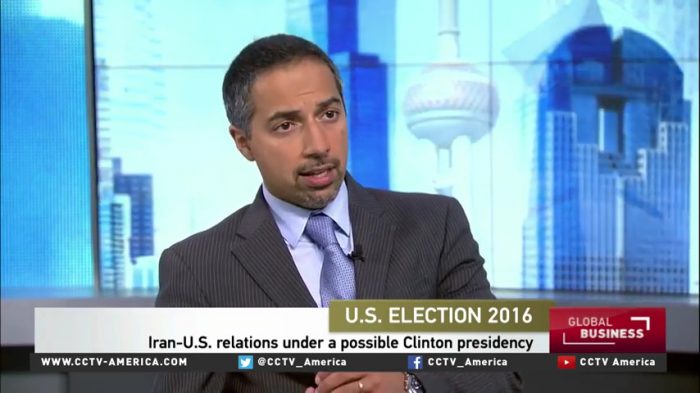
Tirta Parsi, the founder of the National Iranian American Council and one of the Iranian regime’s most ardent supporters, took to the airwaves in a final effort to shape impressions about an Iranian nuclear deal that is getting widely panned in the wake of a year of Iranian aggression and human rights violations.

Oddly though he appeared on CCTV, the Chinese-produced news channel, which doesn’t have a high Iranian-American viewership, but then again, Parsi isn’t trying to reach the constituency his organization is ostensibly supposed to be helping; rather he is trying to make the case to overseas governments to stay on board with the Iranian regime in spite of its involvement in three raging wars now in Iraq, Syria and Yemen.

His appearance amounts to another PR push to try and allay fears that the nuclear deal is going to be trashed by either Hillary Clinton or Donald Trump. He voiced his greatest optimism for saving the deal with Clinton’s election, but even tempered his language slightly from the normal dumping on Trump in light of the candidate’s closing in these last days in most polls.

For Parsi, the effort must be akin to gritting your teeth while getting a root canal since it seems every time he goes out there to be a loyal supporter of the mullahs’ agenda, they go ahead and do something to prove his statements wrong.

His famous claims that the nuclear deal would moderate Iran and empower more liberal elements in the regime to make gains in parliamentary elections fell flat as the ruling leadership wiped thousands of candidates off the ballots to ensure solid majorities for their supporters.

Parsi’s belief in Iran’s future role as a “stabilizing” influence in the Middle East’s conflicts evaporated like water on a hot plate when Iranian regime brought Russia into the Syrian conflict and escalated wars in Iraq and Yemen. Mass killings of civilians, bombed out villages, fleeing refugees, all have become staples of the post-nuclear deal era.

Most appalling of all has been Parsi’s complete silence on the Iranian practice of grabbing dual-national citizens, especially Iranian-Americans? Even the sentencing of his supposed friend Siamak Namazi to an extended prison term earned only minimal statements and none of the grassroots campaigns that have marked previous NIAC efforts to win support for the nuclear deal.

The irony is overwhelming when an organization supporting Iranian-Americans, abandons them to Iranian prisons.

For Parsi, the Iranian regime continually makes him out to be a false prophet and for the mullahs in Tehran, this year’s US presidential election is just another example—in their minds of the Great Satan’s decline—but in fact, they shined a bright light on of the great achievements of the US political system in comparison to theirs.

As the New York Times wrote, “In the past, Iranians looking to mock the United States would burn cardboard effigies of Uncle Sam or Lady Liberty. But in recent months, as the American presidential election took a series of bizarre turns, Iranians seeking to make fun of the ‘Great Satan’ have ditched the arts and crafts and simply switched on their TV sets.”

“Iran’s state television, a bastion of conservative ideologues, for once interrupted its regular programing about the ‘murders and crimes committed’ by the United States and broadcast all three debates between Hillary Clinton and Donald J. Trump — live,” the Times added.

In a country that tightly controls information about the United States and depictions of Western democracy generally, the decision to show the debates was unprecedented but by no means inexplicable: The presidential campaign shows the United States political system in such a poor light, hard-liners evidently want it to speak for itself.

And therein lays their weakness. While the mullahs look to make fun of the American political process they gave Iranians a glimpse of something they cannot have and only dream about; the ability to openly denounce, debate, disagree and even vote out their leaders.

In a regime where the top post of “Supreme Leader” is invested by the Iranian constitution with undisputed powers literally for life, the thought of openly disagreeing, even making fun of the regime’s leaders would be met with knocked down doors, secret trials and public hangings.

While the mullahs may think they are mocking the US, in reality they may have uncorked subtle questioning by their own people who may be asking “Why can’t we do this to our leaders?”

The Iranian people are deeply dissatisfied with the course of their nation, fed up with rampant corruption by regime officials, long wars claiming the lives of the young future of the country and tired of lacking even the most basic freedoms to post selfies, dress as they want or even ride a bicycle.

As Parsi even admits in his CCTV interview, the Iranian people are chafing under the lack of progress and improvements, but while he blames the lack of full implementation of the nuclear agreement, what he doesn’t admit is that the source of that discontent is within the regime’s policies itself.

Michael Tomlinson
Filed Under: Blog, Current Trend, Latest from Lobbies & Appeasers, National Iranian-American Council, News Tagged With: #NuclearDeal, Clinton presidency, Featured, Moderate Mullahs, National Iranian American Council, NIAC, NIAC Action, Nuclear Iran, nuclear talks, Rouhani, Sanctions, Trita Parsi, US election

Terrorism Strikes in Turkey and Iran Regime Runs Away

June 30, 2016 by admin

Terrorism Strikes in Turkey and Iran Regime Runs Away

Terrorism Strikes in Turkey and Iran Regime Runs Away

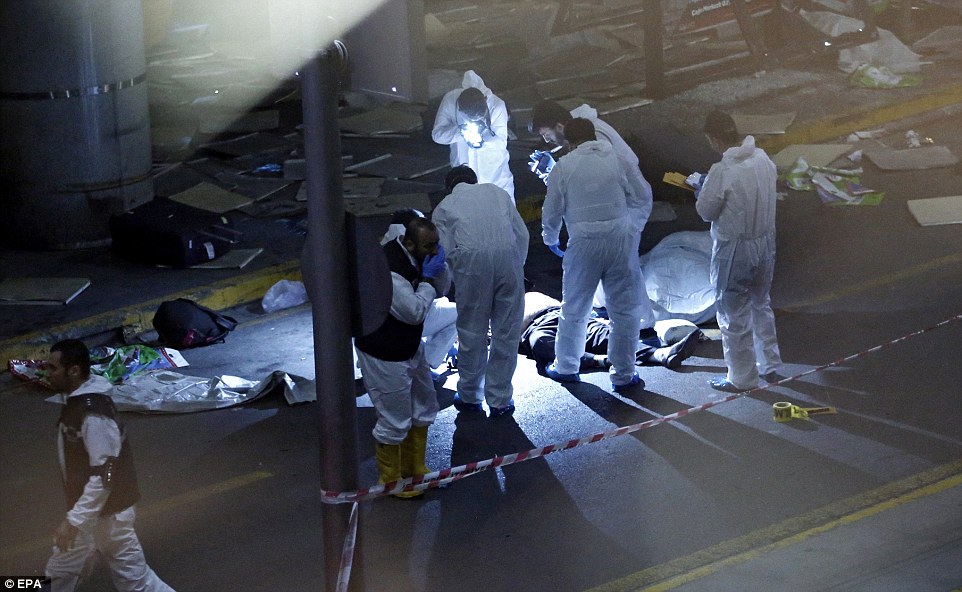
Terror struck another airport again, this time in Turkey, with devastating loss of life. The world was quick to label it terrorism and it brought back fresh memories of similar attacks in Paris and Brussels as suicide bombers fired assault rifles at passengers and then exploded vests.

While no terror group has claimed responsibility so far, suspicion by Turkish officials naturally fell on ISIS which operates extensively along the border with Syria and Iraq. If this attack was perpetrated by the Islamic State, it opens up a widening front in its efforts to destabilize Turkey, which has already suffered steep drops in tourism; a vital component of its economy.

What is worrisome is the larger global trend towards rising violence from radicalized Islamists, either operating directly under the control of terrorist leadership as in Paris, or being self-radicalized as in San Bernardino and Orlando.

The response from many countries to these escalating attacks has been to call for stepped up attacks on ISIS in Syria and Iraq, as witnessed by Wednesday’s attack of an ISIS column leaving Falluja in Iraq by U.S.-led aircraft, or call for a hardening of potential soft targets at home.

What none of these suggestions deal with is the source of this rise in terror from extremist Islamic groups, which is the Iranian regime. Iran and its mullahs sit at the center of the sectarian violence wracking the region.

It was Iranian regime’s intervention in Syria to save the Assad regime that helped to spawn ISIS in the first place. It was Iran that provided safe haven for many of the leaders of Al-Qaeda forced out of Iraq and Afghanistan by the U.S.-led invasions, only to see them go back to fight in Iraq and Syria.

It was Iran that forced the government of former Iraqi prime minister Nouri al-Maliki to force his Sunni coalition partners out of the government, leading to the schism that resulted in the quick fall of Mosul and most of northeastern Iraq to ISIS, giving the terror group its big boost in territory, cash and oil wells.

Predictably, while the rest of the world expressed shock, outrage and sympathy over the attacks in Istanbul, the response by the Iranian regime was understandably muted.

Bahram Ghasemi, newly-appointed spokesperson for the regime’s foreign ministry, officially reacted to the blast when he offered condolences and sympathy to the bereaved families of the victims and Turkish government in state-run media.

“As Foreign Minister Zarif had frequently stated, there is a systematic lack of international resolve to address the vicious phenomenon; extremism and terrorism would not be limited to political and geographical borders,” he said.

There were no similar sentiments expressed by regime leaders such as Ali Khamenei or Hassan Rouhani.

The two-faced nature of the Iranian regime when it comes to condemning acts of terror was highlighted in an editorial by Tom Ridge, former secretary of homeland security, in the Washington Times, in which he took the regime to task for its expressions of sympathy following the mass shooting at the Pulse nightclub in Orlando.

“It’s hard to imagine an expression of sympathy more disingenuous. Tehran’s comments must be viewed against a backdrop of its status as the world’s most active state sponsor of terrorism, its steady propaganda against the United States, and its own brand of homophobia that has its origins in Islamic extremism,” he said.

“Iran is not all talk. The rhetoric about Western ‘arrogance’ and ‘hostility’ has been backed up by the arrests of numerous people who hold both Iranian and Western citizenships. The same goes for journalists, artists and professionals who have any meaningful connections with the West, and for activists the regime deems pro-Western,” he added.

This disconnect between the lip service Iran pays to acts of terror, while fully committing itself to supporting and funding it lies at the heart of the problem with the approach the U.S. and European Union have taken to Iran since the nuclear agreement was reached last year.

You cannot hold a state sponsor of terror such as Iran accountable when you are rushing to do business deals to enrich it. It is dangerous and will eventually lead to only more acts of terror and more chaos across the world.

The rise is terror is only matched by the abhorrent level of human rights abuses being committed by the Iranian regime as well.

Perviz Khazaii, former Ambassador of Iran in Sweden and Norway and the representative of the National Council of Resistance of Iran in Nordic countries, penned an editorial in The Diplomat highlighting these abuses.

“Violent punishments are not confined to Iran’s prisons, either. For instance, in October 2014, gangs affiliated with the regime carried out acid attacks on at least 25 Iranian women and girls who were regarded as being improperly veiled or otherwise in violation of religious norms,” he said.

“This sort of enforcement of the regime’s ruling ideology has also motivated a massive, ongoing crackdown on activists, writers, bloggers, and artists. This has helped Iran to secure its title as the largest jailer of journalists in the Middle East,” he added. “In short, the human rights situation is deteriorating at a fast pace.”

  1. Matthew McInnis, a resident fellow at the American Enterprise Institute, also examined how Iran’s involvement in these conflicts has fueled the rise in sectarian violence as the mullahs seek to solidify a Shia sphere of influence for themselves in Syria and Iraq in an editorial in the National Interest.

“Tehran’s most frequent foreign-policy blind spot remains underestimating the degree to which its aggressive regional activities spur sectarian and ethnic backlash. If it can avoid triggering further Sunni radicalization, an internal Shia civil war, and the potential breakup of the country, however, the Islamic Republic is likely in good shape to continue its ‘Iranianization’ of Iraqi security and political structures,” McInnis writes.

The world should stop enabling the regime and hold it accountable for the spread of  terrors motivated by Islamic extremism.

By Michael Tomlinson

Filed Under: Blog, Latest from Lobbies & Appeasers, News Tagged With: Featured, Iran, Iran deal, Iran Human rights, Iran Terrorism, IRGC, Khamenei, Sanctions, zarif

Iran Lobby Blaming US for Failure of Nuclear Accord

April 1, 2016 by admin


Iran Lobby Blaming US for Failure of Nuclear Accord

Iran Lobby Blaming US for Failure of Nuclear Accord

Like the erupting of Old Faithful or the certainty of the tides and moon, the Iran lobby is now attempting to blame the failure of the nuclear agreement reached with the Iranian regime squarely on the Obama administration and the U.S.

It’s an absurd and bitterly ironic move since it was these same supporters of the Iranian regime who lauded President Obama for disregarding the opinions of the American people, his military and national security advisors and a majority of Congressmen to do a deal with a nation firmly in the thrall of religious extremists.

Since the deal was done last summer, the evidence of Iran’s complete lack of compliance has been laid bare to see ranging from the testing of illegal ballistic missiles and narrowing of inspections to carefully stage-managed media events to the imposition of a vicious human rights crackdown and rigging of parliamentary elections that delivered continued control of Iran to the ruling mullahs.

And in a complete demonstration of weak intestinal fortitude, the doors were opened for Iran to access over $100 billion in cash which is promptly used to begin buying advanced new weapons from Russia, as well as host North Korean officials connected to that regime’s nuclear and missile programs.

Meanwhile, the Iranian people have seen no benefits or improvements in their lives, only greater oppression as detailed by Amnesty International and the UN Special Rapporteur for human rights in Iran who have noted a dizzying climb in executions, including among children and women, and severe crackdowns against religious minorities such as Christians, Sunni Muslims and Bahai, as well as journalists, artists, students and political dissidents.

Now the Iran lobby is blaming the U.S. for the failure of the nuclear accord?

“The nuclear accord between the U.S., other major world powers, and Iran is under threat. But the source of this risk might upset expectations: it is the Obama administration that has failed to resolve persistent ambiguities with the U.S. sanctions relief and, as a result, major foreign banks continue to refuse to handle transactions involving Iran, frustrating the expectations of Iran’s people for economic reprieve and plaguing the ultimate sustainability of the nuclear accord,” said Tyler Cullis of the National Iranian American Council in a piece in Huffington Post.

Last week, Iran’s Supreme Leader Ayatollah Ali Khamenei publicly alleged that the United States was failing to “respect its commitments” under the nuclear accord, particularly by “using roundabout paths to prevent the Islamic Republic” from achieving economic re-integration with the rest of the world. Specifically, the Supreme Leader decried the reticence of foreign banks to re-engage with their Iranian counterparts, chalking it up to pernicious efforts by U.S. sanctions authorities to undermine the benefit of the sanctions relief for Iran, wrote Cullis.

It’s an absurd series of statements that would take an encyclopedia to deconstruct, but let’s take a shot at the highlights or rather, the lowlights:

  • Ali Khamenei, the religious dictator in control of Iran, has long hammered the U.S. and the rest of the world for that matter not only for sanctions and policies aimed against the regime, but also for the failure to free Iran to interact with the rest of the world, even though he has consistently called upon Iranians to embrace a “resistance economy” built on the idea that the regime could be self-sustaining and not subject to future sanctions; thereby freeing it to pursue any policies it wanted free from reprisals;
  • Khamenei and Cullis’ claim that Iran is being kept from re-entering the international financial system is partly true in that the Obama administration is still debating whether or not to lift those restrictions. The problem is that since the regime insisted that the nuclear deal not be tied to other contentious issues such as support for terrorism and human rights violations, the similar lifting of sanctions in place for those “unrelated” activities might violate U.S. laws on the books;
  • Cullis’ contention that failure to lift access to the financial system is burdensome on the Iranian people is a farce since the government of Hassan Rouhani has already announced it is going to keep the bulk of its new-found wealth abroad to be used to buy planes, missiles, telecommunications equipment and other items the regime was prohibited from buying beforehand. Virtually none of that money will find its way back to Iran to provide healthcare for Iranians, boost the consumer economy or even help protect Iran’s environment devastated by gross mismanagement by the mullahs.

Khamenei and Cullis can’t have it both ways. You cannot demand to have items delinked from the deal and then demand the lifting of sanctions not related to the nuclear deal as well. In this case, both are whining like bully children being denied the ability to smack around another child that already waved the white flag.

While Cullis urges to provide foreign banks with clear guidelines on how to tap Iran back into the financial system, he neglects to focus on the real issue which is by treating the nuclear deal by itself and not addressing the vast number of other collateral issues, the sanctions program against Iran regime is frankly a mess and vast loopholes and uncertainty everywhere.

In fact, the Obama administration and U.S. Treasury Dept. have already had to levy additional sanctions and criminal charges against individuals and companies for violating existing sanctions, as well as for brand new cyberattacks on U.S. financial institution and a New York dam.

“Without taking steps such as these, the Obama administration will continue to frustrate Iran’s expectations and risk the nuclear accord in the process. When it comes to U.S.-Iran relations, perceptions matter; and the perception in Iran right now is that the U.S. — whether acting out of malice or negligence — is hindering the practical benefit to Iran of the sanctions relief. Should this perception grow in Tehran that the United States is not a good-faith actor with which Iran can deal, both the historic nuclear accord and the progress in relations between the two bitter adversaries will be placed in bitter peril,” Cullis adds.

It’s a silly statement to make because it pre-supposes that the burden of compliance falls on the U.S. and its allies, not on Iran mullahs which violated international law in the first place by pursuing nuclear weapons!

This is like a serial killer being paroled from prison and then suing the state for not providing him with a beachfront home in Malibu and brand new Tesla in the garage.

Cullis’ gumption is admirable, it’s takes a special kind of chutzpah to push for a terror regime to gain access to the world’s ATM machine.

By Laura Carnahan

Filed Under: Blog, Current Trend, Latest from Lobbies & Appeasers, News Tagged With: Featured, Iran, Iran deal, Iran Human rights, Iran Lobby, Iran Mullahs, Tyler Cullis

What the Detention of 10 US Navy Sailors Tells Us About Iran Regime

January 15, 2016 by admin

What the Detention of 10 US Navy Sailors Tells Us About Iran Regime

What the Detention of 10 US Navy Sailors Tells Us About Iran Regime

The arrest and detention of 10 U.S. Navy sailors by the Iranian regime and their release after 24 hours is being hailed by some regime supporters as proof of how a new cooperative relationship exists between the U.S. and Iran and how a similar situation might have led to armed conflict before the nuclear deal was agreed to last July.

Regime supporters and members of the Obama administration have even attempted to characterize the Iranian detention as a helpful assist to sailors lost in the waters of the Persian Gulf after allegedly suffering mechanical difficulties, but the images released by the regime are anything but designed to reassure Americans.

The detention was a political act and one designed to convey a specific message considering its timing just before President Obama’s State of the Union speech. It has been a hallmark of the mullahs in Tehran to invest heavily in message, meaning and symbolism. They do not do things haphazardly or without purpose.

The founding of the revolutionary Islamic state even had symbolic meaning with the release of 52 American hostages during the swearing in ceremony for President Ronald Reagan and the continued holding of Iranian-American hostages today also has meaning and symbolism for the regime.

When the regime paints an American flag on the streets of Tehran to be marched over, or builds a model of a U.S. aircraft carrier so it can be sunk on live television, or holds weekly prayer meetings to shout “Death to America,” they are all important symbolic acts for a regime controlled by mullahs deeply concerned over appearances and perception.

The mistake made by those who otherwise support the regime in its efforts to re-enter the international community is that they de-link all of the regime’s actions and treat them as specific, individual events with no relationship to one another.

The test firing of illegal ballistic missiles followed by the launching of rockets near U.S. Navy warships followed by the interception and detention of U.S. Navy sailors are not related according to these supporters of the regime.

They could not be more wrong.

Take for example the election of Hassan Rouhani as president of Iranian regime. Even though he served extensively in intelligence and national security capacities within the regime and was regarded as a trusted ally of top mullah Ali Khamenei, his election was portrayed as a win for moderates by the Iran lobby, led by the National Iranian American Council; forgetting that the previous slate of candidates, was wiped off the ballot by the Guardian Council, allowing Rouhani to win with virtually no opposition.

The mullahs learned their lesson from the disputed election of 2009 where street battles throughout Tehran showed the true nature of the regime to the world. Being mindful of appearances, the mullahs simply took everyone off the ballot that could be a problem.

Which is why the response by the Iran lobby has been interesting, as Shireen Hunter, a professor at Georgetown University, writes in the regime supporting Lobelog.com, that “both the tone and the behavior of the IRGC was quite mild, at least according to the institution’s usual standards. It insisted on treating the US personnel with respect and housing them in a comfortable and safe place.”

Anyone who has watched the video released by the Revolutionary Guard Corps can plainly see the U.S. sailors on their knees, being held at gunpoint with their hands clasped above their heads. They can also see video of a Navy Lieutenant apologizing on camera and saying how all of them have been treated well by their captors.

Oddly, the logic of the Iran lobby is that we should be thankful the regime treated their captives well instead of being upset they captured them in the first place. It’s the same bizarre logic applied to most of the regime’s actions where the Iran lobby has argued that the regime’s involvement in Syria has stemmed the tide of ISIS while neglecting to mention Iran’s intervention in Syria gave birth to ISIS in the first place.

You don’t thank a burglar for being neat after he’s robbed your home.

For the Iranian regime, the videos are powerful symbolism depicting the regime’s ability to confront and embarrass the U.S. military.

It also adds to the growing perception by the mullahs that the U.S. will do nothing in response to any provocation they choose to engage in. The litany of aggressive acts by the regime since the nuclear deal was signed leading up to the capture of the U.S. sailors has merited almost no consequences for the regime.

Ironically enough, even though the regime’s own officials deny the filling in of the Arak heavy-water nuclear reactor’s core with concrete, the U.S. is due to release up to $150 billion in cash before Iran’s parliamentary elections in February.

Common sense would dictate you don’t release the money until you know the election results to see who are you dealing with, even though we can already guess since the slates of candidates in the Assembly of Experts have to be approved by the Guardian Council and most dissidents that could have won seats in the lower house have already been rounded up and arrested at Khamenei’s orders.

As Sean Davis writes in The Federalist, “our military personnel were captured, forced to surrender on their knees, blindfolded, and photographed. Their images were then broadcast to the world on Wednesday morning by the Iranian regime, a clear violation of the Geneva Conventions. The American woman who was captured was forced to submit to Islamic law and don a hijab. State-run Iranian media announced that the whole affair was meant to be a “lesson” to “troublemakers” in the U.S. Congress.”

One would think if the Iranian regime really wanted to be helpful, why not just give the Americans a tow out of the area?

By Michael Tomlinson

Filed Under: Blog, Latest from Lobbies & Appeasers, News Tagged With: Appeasement policy, Featured, Iran Lobby

Iran Regime Turns on Its Own

October 29, 2015 by admin

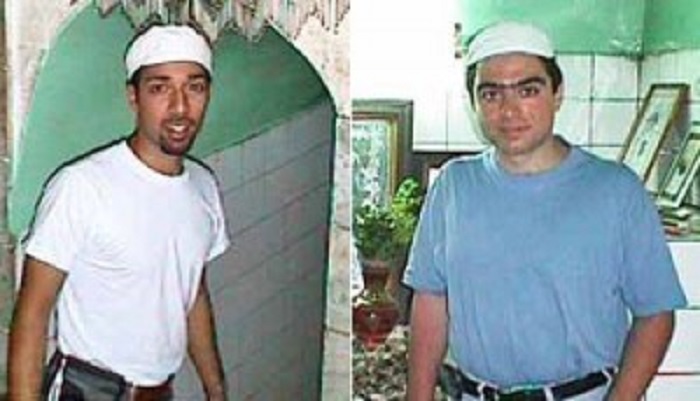
Trita Parsi traveled with Siamak Namazi to Isfahan, Iran’s third largest city, in August 2000. They also toured the Zoroastrian “Fire of Victory” Temple in Yazd. At the time, Siamak was living in Tehran, working for Atieh Bahar, a consultant company with close ties to the government. In 1999, Parsi and Siamak co-authored a paper that recommended setting up a lobbying organization in Washington to influence US-Iran policy. Siamak took a sabbatical in 2005 to complete a fellowship at the Woodrow Wilson Center in Washington, DC. While at the Center, Siamak helped Parsi formulate NIAC policies supportive of the Iranian regime.

Trita Parsi traveled with Siamak Namazi to Isfahan, Iran’s third largest city, in August 2000. They also toured the Zoroastrian “Fire of Victory” Temple in Yazd.
At the time, Siamak was living in Tehran, working for Atieh Bahar, a consultant company with close ties to the government.
In 1999, Parsi and Siamak co-authored a paper that recommended setting up a lobbying organization in Washington to influence US-Iran policy. Siamak took a sabbatical in 2005 to complete a fellowship at the Woodrow Wilson Center in Washington, DC. While at the Center, Siamak helped Parsi formulate NIAC policies supportive of the Iranian regime.

Siamak Namazi, an Iranian-American citizen, has been credited with helping found the Iran lobby including the creation of the National Iranian American Council alongside Trita Parsi as the primary vehicle for advocating for a nuclear agreement lifting economic sanctions on the regime.

The Daily Beast chronicled his family’s involvement as an “intellectual architect” for the NIAC as a pathway for empowering those within the regime whom he had a close relationship with and believed by helping secure an agreement it would boost his fortunes within the regime.

In the immortal words of Kevin Spacey who plays the scheming Frank Underwood on Netflix’s “House of Cards,” “We’re all victims of our own hubris at times.”

Truer words were never spoken about the Iran lobby because on the verge of reaping their perceived successes, they discover all they really are, are puppets for a regime of mullahs whose intent is only focused on preserving their own power.

That is because according to regime media reports, while visiting family in Tehran, Namazi was arrested by Revolutionary Guards Corp soldiers and tossed into the notorious Evin Prison.

There is an irony here on par with Alfred Nobel inventing dynamite and then creating the Nobel Peace Prize after his invention was used in war.

Namazi joins four other Americans who are being held hostage by the regime, including Washington Post reporter Jason Rezaian, Christian pastor Saeed Abedini, former Marine Amir Hekmati and the former FBI agent Robert Levinson.

According to a piece in American Thinker, Parsi and Namazi founded NIAC as a way to lobby for the removal of sanctions against the regime and promote its foreign policy while combatting anti-regime forces in the U.S.

Both Parsi and Namazi reportedly enjoyed close ties and access to Hassan Rouhani and Javad Zarif, the regime’s president and foreign minister, with Parsi being seen traveling with and in close discussions with the regime delegation during nuclear talks.

Conspicuously, the NIAC have been silent on the issue, declining comment and social media feeds for Parsi and other NIAC staff is devoid of any mention of the arrest.

But Hassan Dai, editor of the Iranian American Forum who won a defamation lawsuit filed against him by Parsi, speculated that the arrest suggests a power struggle of sorts within the regime’s leadership.

Dai explained in an interview with Breitbart News that Namazi had consistently “lobbied in favor of a faction of the regime,” which upset the mullahs because it would only be acceptable to “lobby for the whole regime.”

The fight between the factions in Iran is a fight for “the best solution to preserve the regime,” he explained, adding that groups like NIAC have never sided with true “reformists,” but with people who wish to employ a different strategy to empower the regime, such as Rouhani and former President Akbar Rafsanjani.

Because Namazi and NIAC prefer one faction over the other, “they are undermining the Supreme Leader. They are undermining the Revolutionary Guard,” Dai explained. “When you lobby U.S. policymakers to remove sanctions against Iran with the rationale that it will help reform the regime, you undermine the Supreme Leader, because he wants them to accommodate to the regime now.”

The arrest of Namazi sends a message from Iran’s rulers that “Rouhani has no power,” Dai concluded. “He cannot even protect his own friend.”

Breitbart News further speculates – and rightly so – that the arrest pours cold water on the notion that securing the nuclear deal would empower “moderates” within the regime and help reform it. Evidence since agreeing to the nuclear contradicts that idea completely with the conviction of Rezaian, the test launch of an illegal ballistic missile and the launching of a new offensive in Syria alongside Russian forces.

The arrest of Namazi demonstrates that the leadership of the Iran regime is of one mind and firmly in the control of Ali Khamenei and his religious cohorts and that any idea of moderation within the regime is a pipe dream; which may go to explain why coming off of the NIAC’s recent leadership conference to celebrate the nuclear deal, Parsi’s Twitter feed was filled with posts condemning Saudi Arabia, a bitter enemy of Iran and locked in fighting in Yemen.

If Parsi doesn’t tow the mullahs’ line, he might find a different kind of reception party the next time he travels to Tehran and end up sitting next to his buddy Namazi.

By Michael Tomlinson


Filed Under: Blog, Latest from Lobbies & Appeasers, National Iranian-American Council, News Tagged With: #NuclearDeal, Appeasement policy, Featured, hassan rouhani, Iran, Iran deal, Iran Economy, Iran Lobby, Irandeal, Jason Rezaian, Khamenei, Moderate Mullahs, National Iranian American Council, NIAC, Nuclear Deal, Rouhani, siamak Namazi, Syria, Trita Parsi

Iran Lobby Tries Clearing Economic Pathway for Regime

October 10, 2015 by admin

Iran Lobby Tries Clearing Economic Pathway for Regime

Iran Lobby Tries Clearing Economic Pathway for Regime

The Iran lobby, led by the National Iranian American Council, has been busy working to clear the economic runway for the Iran regime now that it has its nuclear deal because now that it has the opportunity to operate more freely in the world, the mullahs have opted to significantly increase the regime’s military operations in Syria, Yemen and Iraq; all of which requires cash and mountains of it.

As part of that NIAC propaganda push, Tyler Cullis and Amir Handjani, posted an editorial in The Hill arguing that the U.S. should open greater economic ties with the Islamic regime; the reason being that European and Asian nations are already quickly seeking to exploit these new markets.

Cullis and Handjani are correct that there are some companies and nations seeking to rush into this economic void. We know that China has a deep interest in securing contracts for cheap Iranian oil, while Russia has already begun selling weapons to the regime despite the fact that embargos on advanced ballistic missiles and weapons remains in effect.

They note however that the Obama administration has put the brakes on the rush to re-open economic ties with the regime. Part of delay comes from the huge groundswell of negative reaction from American voters to the nuclear deal which has forced many representatives who supported the deal to backtracked and offer up new pieces of legislation to address the perception that the Iran regime received a sweetheart deal and the U.S. got nothing in return; most notably Sen. Ben Cardin’s (D-MD) move to introduce to track compliance by the regime.

Most anti-regime critics called the effort too little, too late and still does not address the central and most critical issue surrounding the Iran regime: the delinking of human rights and sponsorship of terror from the deal and thus making no effort to reform or modify the regime’s bloodthirsty policies.

There has also been discussions and disagreements over the conflict between the nuclear deal and the Iran Threat Reduction and Syria Human Rights Act (ITRA) which was signed into law in August 2012 by President Obama which closes the foreign subsidiary loophole that the an annex in the nuclear deal makes open.

According to Fox News, “ITRA contains language, in Section 605, requiring that the terms spelled out in Section 218 shall remain in effect until the president of the United States certifies two things to Congress: first, that Iran has been removed from the State Department’s list of nations that sponsor terrorism, and second, that Iran has ceased the pursuit, acquisition, and development of weapons of mass destruction.

“Additional executive orders and statutes signed by President Obama, such as the Iran Nuclear Agreement Review Act, have reaffirmed that all prior federal statutes relating to sanctions on Iran shall remain in full effect.”

All of which drives a stake through the arguments made by Cullis and Handjani who by using the flawed tactic of supporting “moderates” against “hardliner” mullahs, argue that continued economic isolation of Iran only strengthens the “hardliners” and leaves American companies out in the cold versus their European and Asian competitors.

First of all, it is refreshing Cullis and Handjani are so interested in the economic well-being of American firms, but the reality is they recognize failure to fully open Iran to international trade and commerce will not bring in the cash and investment necessary for the regime to generate the revenue necessary to fund its expansionist policies.

The regime has spent upwards of $15 billion in direct financial aid and military support just to prop up the Assad regime in Syria alone. This doesn’t include the billions being spent to arm Houthis in Yemen and outfit Shiite militias in Iraq, not to mention the regime’s old terrorist partners in Hezbollah. With slumping oil prices, the mullahs desperately need that foreign investment to help keep them in power as ordinary Iranians have staged protests against the “war economy” top mullah Ali Khamenei has mandated for the past decade.

Oddly, Cullis and Handjani use the analogy of President Nixon opening up relations with China in the early ‘70s as an example of opening up to a closed society the U.S. was in conflict with, but what they don’t mention is the fact that coming out of the Vietnam War, China recognized the need to end its sponsorship of armed conflict and instead turn to embracing capitalism.

The fact that a deeply Communist nation that inflicted the Cultural Revolution on its people in brutal repression, recognized it needed to do a complete policy turnaround and embrace the very thing it denounced as part of its founding represents why the Nixon overtures were even possible in the first place; China’s leaders made that opening available by being receptive to change.

Iran’s mullahs have exhibited no such inclination. In fact since the nuclear deal was agreed to, Iran has partnered with Russia to step up an air and ground campaign in Syria, was caught smuggling weapons into Yemen and has turned Iraq into a virtual client state.

So while the Iran lobby may be hard at work trying to rewrite history, the Iran regime is busy trying to shape the future to its own perverted vision.

By Laura Carnahan

Filed Under: Blog, Latest from Lobbies & Appeasers, News Tagged With: Amir Handjani, Appeasement policy, Featured, Iran, Iran deal, Iran Economy, Iran Lobby, Iran Nuclear, Iran sanctions, Iran Talks, Jamal Abdi, National Iranian American Council, NIAC, NIAC Action, Sanctions, Tyler Cullis, Yemen

Well-Funded Iran Lobby Makes Trusting Regime Appealing

August 27, 2015 by admin

Well-Funded Iran Lobby Makes Trusting Regime Appealing

Well-Funded Iran Lobby Makes Trusting Regime Appealing

The central conceit of the proposed nuclear weapons deal with the Iran regime is a simple one: Iran’s mullahs can be trusted to act moderately and peacefully. It’s an idea that is hopeful, optimistic and enticing. It’s an idea propagated by the extensive lobbying and PR machine built up to support the mullahs in Tehran. It is an idea designed to reassure nervous Americans and provide political cover for wavering congressional lawmakers.

It is an idea fatally flawed.

The concept of trust is defined as a “firm belief in the integrity, ability, or character of a person or thing; confidence or reliance.” In order for trust to work, it assumes that the party in question – in this case the religious theocracy ruling Iran – has either demonstrated an ability to be trusted or expressed a desire to be trusted and then lives up to it.

In the case of the mullahs, nothing could be further from the truth. In their every action, the Iran regime has demonstrated again and again that it cannot be a reliable partner in any international agreement.

On the nuclear issue alone, Iran regime signed the Non-Proliferation Treaty yet violated the terms of the treaty by engaging in nuclear weapons development prior to 2003 and through 2012, leading to the stockpiling of 20 percent enriched uranium and the development of related weapons programs such as warhead detonation and missile delivery design. The International Atomic Energy Agency has found Iran in non-compliance repeatedly over the past decade.

Putting the nuclear issue aside for a moment, Iran also signed the Chemical Weapons Convention, but moved forward in supporting the Syrian regime of Bashar al-Assad after he used chemical weapons on his own people. Interestingly enough, while the regime’s top mullah Ali Khamenei has issued a much-ballyhooed “fatwa” or religious edict proscribing the use of nuclear weapons, he did not rule out the development of those weapons, nor did he mention chemical or biological weapons.

For the Iran regime language and its nuances is vital to its aims which is why the proposed nuclear agreement is a paltry 159 pages and does even include two secret side deals with the IAEA. The SALT and START treaties between the U.S. and Soviet Union dwarf it with detailed provisions and requirements.

This explains why the regime has strenuously held out for a finite time limit in any further sanctions or limits on its nuclear development; the mullahs have the patience of Job and are content to outwait the rest of the world. The fact that the proposed deal has no further limitations after 10 years means Iranian regime is free to scale up to industrial capacity in enriching uranium. The fact that its centrifuges will not be destroyed – only unplugged and stored – allowing Iranian regime to keep its refining infrastructure intact.

All we have done is kick the can down the road for a decade and allow another administration and Congress to deal with the mess.

Oddly enough, those elected officials supporting the deal have basically placed their faith and re-election hopes in the hands of the mullahs. There can be no other interpretation of their support. They are betting on the mullahs which seems an inane act unless you consider the lobbying force the mullahs have deployed.

Michael Rubin in a piece for Commentary delves deeply into the financial support for the Iran lobby; looking specifically at the Ploughshares Fund which spreads its millions of dollars around to a number of regime supporters, including the National Iranian American Council. He also connects the dots of how many staffers and activists supporting the regime are funneled through groups and entities with close ties to the regime.

“Those staffing NIAC, for example, have always sought an end to sanctions against the Islamic Republic of Iran. Many had worked for Atieh Bahar, a Tehran-based consultancy close to former Iranian regime President Ali Akbar Hashemi Rafsanjani. They are not chameleons, changing their stripes to match their funders,” Rubin said.

“When NIAC policy director Reza Marashi, an Atieh Bahar alum, worked for the State Department during the George W. Bush years, he was not pro-democracy agenda, but was understood to be sympathetic to an embrace rather than isolation of Iran. Indeed, his persistent questions about the recipients of U.S. aid inside Iran raised security concerns,” he said. “Likewise, when NIAC received a couple hundred thousand dollars from the National Endowment for Democracy, Trita channeled it to organizations close to the Iranian government.”

Rubin lists the extensive donations made by Ploughshares to benefit regime supporters, including:

  • $210,000 to the Arms Control Association for “influencing…US policy toward Iran.”
  • $80,000 to the Atlantic Council to support the Iran Task Force and another $130,000 for the South Asian Program;
  • Funded the Center for New American Security to give “boot camps” to Congressional staffers “on the nature of Iran’s nuclear program,” in other words, to lobby them;
  • Underwrote the Friends Committee on National Legislation’s efforts “to support an integrated lobbying strategy to build support for pragmatic approaches to resolve the Iranian nuclear issue;”
  • $100,000 to J Street to “educate” on behalf of an Iran deal;
  • $150,000 to the National Iranian American Council for its advocacy on behalf of the Iran deal, not including money given individually to its staff;
  • $75,000 to National Security Network to “educate media and policymakers about policy options to prevent Iran from acquiring a nuclear weapon;”
  • Blogger Jeffrey Lewis criticized and downplayed the Associated Press’ revelation about a side deal between Iran and the IAEA gutting verification by allowing Iran to test itself, but did not acknowledge a $75,000 gift to his home institution from Ploughshares;
  • The Aspen Institute also received Ploughshares money to educate Congressmen and senior staffers about Iran policy options, again, effectively to lobby them; and
  • $75,000 to Gulf-2000, a listserv run by former Carter Iran hand and “October Surprise” conspiracy theorist Gary Sick, who has used Gulf-2000 to become a “Journolist”-style clearing house to feed pro-Iran talking points to journalists.

All of these groups work in aligning the interests of the mullahs and in pressing for a deal that releases them of any obligations to change their behavior while setting the stage for turmoil down the road.

By Michael Tomlinson

Filed Under: Blog, Latest from Lobbies & Appeasers, National Iranian-American Council, The Appeasers Tagged With: Atieh Bahar, NIAC, NIAC Action, Ploughshares, Reza Marashi, Trita Parsi

NIAC Discussion on Geopolitical Implications of Iran Deal or shameful Lobbying for mullah

June 27, 2015 by admin

Iran Lobby on the Nuclear Discussions

Iran Lobby on the Nuclear Discussions

In an article published on Center for Security Policy, written by Caitlin Anglemier, The National Iranian American Council (NIAC)’s usual approach in serving as Iran’s lobby in Washington D.C. has been highlighted. Excerpts from this article are published here to describe the path the Iranian lobby and fellow travelers are talking while we are getting very close to the June 30th self claimed nuclear talks deadline.

On June 25, NIAC held a discussion on “The Geopolitical Implications of an Iran Deal”. The panel of speakers included: Peter Beinart, contributing editor for The Atlantic and National Journal; Fred Kaplan, war stories columnist for Slate; Dr. Trita Parsi, President of the National Iranian American Council; and Barbara Slavin, South Asia Center senior fellow for the Atlantic Council, known within the Iranian community for appeasing the mullahs.

In her article, Caitlin Anglemier reports: “The talk began with a discussion on how foreign policy has become a primary focus of the Republican party and how generally, the Democratic party tends to place more emphasis on social and economic issues. The discussion then drifted towards discussing the negotiation talks themselves and the ten-year time period aspect. The panel acknowledged the concern that many have, which is that the ten-year period is just delaying the inevitable truth that Iran could obtain a nuclear weapon within a year. But the panel emphasized the importance of those ten years. While that negative viewpoint is out there, why not try to focus on the time positively and the opportunity it provides for even more talks, negotiations, and compromising?

In trying to frame the ten-year period in such a positive manner, the NIAC panel attempted to depict a reality that is simply not accurate. Solely based on how the nuclear deal negotiations have gone so far, it would be foolish to think that ten years of talks and additional demands would go any better than what has transpired-which has not been good at all.”

The report continues: “The discussion then moved to reflecting on the implications of all the money involved in the deal talks. “…[the US] will have released a total of $11.9 billion to the Islamic Republic [of Iran] by the time nuclear talks are scheduled to end in June, according to figures provided by the State Department”. The panel seemed to indicate that if a deal is successfully reached, Iran would utilize the freedom gained from lifted sanctions as well as the cash assets given from the United States to benefit the people of Iran. The panel’s theory was that if Iran continued, over the next ten years, to send money overseas for alternative projects, the people of Iran would start questioning the government and would become upset. In the past, Iran has used the funds it had to fund terrorism and terrorist organizations. If the country has placed an emphasis on aiding terrorism over taking care of its people in the past, why would that change after a new deal?”

It is also a fact that a big chunk of Iran’s economy is in the hands of IRGC, which is the main force behind all the nuclear activities, Regime’s meddling in Syria, Iraq, Yemen, etc (the Quds force), and therefore it goes without saying that all the money that will return to Iran will be channeled in the same manor it did before.

Caitlin Anglemier refers to the last part of the discussion about another tactic used by the Iranian lobby in counting “benefits of collaborations” with the Iranian regime on the fight against ISIS. She says: The last part of the discussion before questioning commenced revolved around the “misfortunate reality” that the US can’t work in alliance with Iran to combat the Islamic State. The panel emphasized how the Islamic State is well aware of the fact that all of its major opponents are at war with one another, and has already taken advantage of this situation. At first glance it does seem that Iran has taken steps towards combatting the Islamic State. However, Iran is actually continuing to fund Hezbollah as well as Shia tribes and militias. While the US clearly wants to abolish the Islamic State, this must be accomplished without simultaneously strengthening Iran and its militant connections. This hypothetical alliance with Iran against IS could never manifest itself in reality.”

Referring to the questions about the the exact details of the deal talks and their implications, she writes: “More importantly, even if we were able to compromise and establish a negotiation with Iran on their desires and demands, we have no reason to believe that they will be honest and follow through on said demands in the future. Therefore, this essentially indicates that a “deal” is just a blissfully ignorant façade.

Conclusive, the discussion was polite, peaceful, and very informative. It would be easy to imagine a listener walking away with a positive mental image of Iran and the extensive benefits a successful nuclear deal agreement. However, we must take it upon ourselves to not be so easily deceived. Pursuing an agreement with Iran in nuclear talks is not only a waste of time and resources, it would result in directly providing Iran with significant relief from sanctions as well as billions of dollars. And contrary to what some apparently believe, these billions will in fact not be used towards benefiting the wellbeing of the Iranian citizens, but will continue to be used in funding terrorism and terrorist organizations.

We must abandon these attempts at negotiations with Iran before we make ourselves out to be even greater pushovers than we have already portrayed.”

Filed Under: American-Iranian Council, Current Trend, Duping Anti-War Groups, Latest from Lobbies & Appeasers, National Iranian-American Council Tagged With: Barbara Slavin, caitlin Anglemier, Featured, Fred Kaplan, Iran deal, Iran Talks, NIAC, nuclear talks, Peter Beinart, Trita Parsi

The Importance of Linking Iran Sanctions and Human Rights

June 9, 2015 by admin

Bijan Khajehpour

Bijan Khajehpour

Sens. Mark Kirk (R-IL) and Bob Menendez (D-NJ) have put forward an amendment to the defense budget that would extend congressional sanctions against the Iran regime for 10 additional years. The amendment is aimed at extending the Iran Sanctions Act of 1996, currently set to expire at the end of 2016, to the end of 2026.

The amendment is an important step in resetting the expectations associated with the Iran regime’s nuclear weapons program because it links it to the development of intercontinental ballistic missiles and human rights abuses; a significant step towards properly addressing the central issues with the regime’s conduct towards the world.

The regime’s chief cheerleaders, the National Iranian American Council, predictably were quick to denounce the legislation, warning that passage of the bill would derail ongoing negotiations. The NIAC’s statement was noteworthy for a few things, namely that it placed the burden of completion of a deal on the U.S. and not the regime.

“There are legitimate questions about whether the U.S. will be able to deliver on the terms for sanctions relief under a nuclear deal, and the passage of this amendment would give credence to those concerns,” the NIAC statement said.

It is a remarkable sentence because it firmly ignores the chief obstacle to any agreement between the West and Iran, which is Iran’s historic inability to live up to any of its international agreements. As recently as last month, Iran has steadfastly refused to answer outstanding questions from the International Atomic Energy Agency about the “possible military dimensions” of its nuclear program.

On top of that omission are repeated comments by Iran’s top mullah, Ali Khamenei, who has reiterated publicly his opposition to allowing access to any Iranian military facility or Iranian nuclear scientists by international inspectors.

This follows continued denials by Iran that it is involved in proxy wars being waged in Syria and Yemen, not to mention its control of Shiite militias in Iraq that are now being accused of reprisal sectarian killings against Sunni Muslim villagers, all of which points to a disturbing and repeated pattern of deception, denial and distrust.

The action by Senators Kirk and Menendez comes after passage of legislation signed by President Obama and over the vigorous objections of NIAC authorizing congressional review of any nuclear agreement reached with Iran.

This latest bill from Kirk and Menendez addresses a glaring hole in current negotiations, which is the failure of negotiators to hold Iran’s human rights conduct accountable, as well as including the regime’s capacity to deliver a nuclear weapon well outside their neighborhood and threaten Europe and Asia.

The NIAC and the rest of the Iran lobby have fought hard to keep these things out of negotiations because they know full well their inclusion would almost certainly doom Iran’s hopes of securing a deal and lift economic sanctions and flood the regime with billions in new cash and investment.

The proposed amendment is not a deal breaker for the West as much as it is a safety clause assuring the West does not deliver a bad deal that could come back to haunt them.

By Michael Tomlinson


Filed Under: American-Iranian Council, Latest from Lobbies & Appeasers, National Iranian-American Council, The Appeasers Tagged With: Congress bill on Iran, Iran, Iran appeasers, Iran deal, Iran Human rights, Iran Lobby, Iran sanctions, Iran Talks, Irandeal, NIAC, Sanctions

Iran Cannot Have it Both Ways in Nuclear Talks in 2015

January 7, 2015 by admin

Empty-Meeting-RoomOn January 15th, Iran will once again take a seat at the negotiating table with the P5+1 nations and begin a third round of talks over its nuclear weapons program and just as it has done twice before, it will refuse to make any substantial concessions and after another seven tedious months, Iran will undergo its third strike.

Far from crystal-ball gazing, this scenario is more than likely given past history and a newly resurgent Republican majority in both houses of Congress who promise to flex its collective muscle in case President Obama makes any precipitous concessions as he did in normalizing relations with Cuba on his own.

And just as before, Iran’s lobbying and PR machinery has ramped up into overdrive before these talks start to help lay the ground work for another Cuba-like executive action by President Obama for Iran. The initial seeds have been laid by Iran cheerleaders such as Trita Parsi of the National Iranian American Council who have saluted the trial balloons for normalizing relations with Iran with the opening of an American embassy in Tehran again.

Ironically, Parsi has sought to frame this latest round of talks around whether or not the U.S. is willing to offer more concessions and can be trusted by Iran in recent comments, saying:

“There are question marks in the minds of the Iranians as to whether the American promises about sanctions relief actually can be trusted – not to say that they don’t have enough confidence in the president, but they may not have enough confidence in the U.S. Congress,” Parsi said.

One can see how he and other Iran allies are seeking to separate any possible normalization action by the President from a Congress that may object to it.

This, more than anything else, represents the “have their cake and eat it too” approach of Iran to nuclear talks. On the one hand Iran, through its perceived moderate President Hassan Rouhani, holds out an olive branch of concessions and flowery speeches, while on the other is the stern and recalcitrant voice of Iran’s Supreme Leader Ayatollah Ali Khamenei who’s earlier pronouncements sank the other negotiating sessions.

Now Parsi and his cohorts are once again attempting to provide political cover for progressive liberals in Congress who basically want to give Iran whatever it wants in the misguided belief that everything will turn out alright.

But former chairman of the U.S. Joint Chiefs of Staff, Gen. Hugh Shelton recently wrote in an editorial in The Los Angeles Times that “Amnesty International has pointed to the presence of Iran’s proxy militias in Iraq as a key source of instability and sectarian conflict there.”

He goes on to point out that Iran is at the heart of most of the region’s conflicts and instability. All of which has been going on during the time of nuclear talks. One cannot claim to aim for peaceful uses for nuclear power while at the same time sponsor most of the wars and conflicts going on at the same time.

This contradiction lies at the heart of these talks and is the unspoken elephant in the room. Iran cannot claim the mantle of peace while it clutches the proverbial sword of war, no matter what Parsi and others claim.

We can only hope round three ends the same way as rounds one and two.

By Michael Tomlinson


Filed Under: Blog, Latest from Lobbies & Appeasers, News Tagged With: Iran Lobby, Nuclear Iran, nuclear talks

  • « Previous Page
  • 1
  • 2
  • 3
  • Next Page »

National Iranian-American Council (NIAC)

  • Bogus Memberships
  • Survey
  • Lobbying
  • Iranians for International Cooperation
  • Defamation Lawsuit
  • People’s Mojahedin
  • Trita Parsi Biography
  • Parsi/Namazi Lobbying Plan
  • Parsi Links to Namazi & Iranian Regime
  • Namazi, NIAC Ringleader
  • Collaborating with Iran’s Ambassador

Recent Posts

  • NIAC Trying to Gain Influence On U.S. Congress
  • While Iran Lobby Plays Blame Game Iran Goes Nuclear
  • Iran Lobby Jumps on Detention of Iranian Newscaster
  • Bad News for Iran Swamps Iran Lobby
  • Iran Starts Off Year by Banning Instagram

© Copyright 2026 IranLobby.net · All Rights Reserved.