Iran Lobby

Exposing the Activities of the lobbies and appeasers of the Mullah's Dictatorship ruling Iran

  • Home
  • About
  • Current Trend
  • National Iranian-American Council(NIAC)
    • Bogus Memberships
    • Survey
    • Lobbying
    • Iranians for International Cooperation
    • Defamation Lawsuit
    • People’s Mojahedin
    • Trita Parsi Biography
    • Parsi/Namazi Lobbying Plan
    • Parsi Links to Namazi& Iranian Regime
    • Namazi, NIAC Ringleader
    • Collaborating with Iran’s Ambassador
  • The Appeasers
    • Gary Sick
    • Flynt Leverett & Hillary Mann Leverett
    • Baroness Nicholson
  • Blog
  • Links
  • Media Reports

Why the Boeing Sale Matters to Iran Regime

July 12, 2016 by admin

Why the Boeing Sale Matters to Iran Regime

Why the Boeing Sale Matters to Iran Regime

The Iranian regime trumpeted with much fanfare an agreement to buy 80 commercial airliners from Boeing, as well as lease another 29 airliners for a total value estimated upwards of a whopping $25 billion for Iran Air. Far from being a simple transaction for new aircraft any national airline might make, this deal represents far more for both the Iranian regime and the hopes of the mullahs in Tehran to gaining unrestricted access to currency exchanges.

The deal is the linchpin to a larger effort by the regime to lift restrictions put in place limiting the regime’s access to U.S. currency exchanges, as well as access to sensitive technology that could be used by Iran for illegal or military purposes.

While the nuclear deal reached with Iran last year lifted a number of economic sanctions, it did not lift sanctions still in place related to Iran’s abysmal human rights record, support of terrorism and the illegal test launches of nuclear-capable ballistic missiles, but that has not stopped some in the U.S. administration from trying an end-run in supporting the Boeing deal and using loopholes such as the creation of a new Iranian bank located literally offshore its coast on an island to get around currency restrictions.

An effort was mounted in Congress to block the sale with the House approving two amendments by Rep. Peter Roskam (R-Ill.) to block sales by Boeing and Airbus aircraft to Iran to the Financial Services and General Government Appropriations Act 239-185.

The amendments both passed by voice vote, which a statement from Roskam’s office said indicates “overwhelming, bipartisan support.”

One amendment prohibits the Office of Foreign Assets Control (OFAC) from using funds to authorize a license necessary to allow aircraft to be sold to Iran.

The other amendment ensures Iran will not receive loans from U.S. financial institutions to purchase militarily-fungible aircraft, by prohibiting OFAC from using funds to authorize the financing of such transactions.

Democratic Representative Denny Heck of Washington state, where Boeing has major operations, said that if proposed bills to restrict the deal became law they would also affect other companies’ sales to Iran. Because virtually all modern jets have more than 10 percent U.S. content, including those Airbus plans to sell, they already require export licenses from the U.S.

This is precisely the reason why the Boeing deal needs to be blocked because its passage would open the proverbial floodgates for the Iranian regime to pursue unrestricted deals with virtually any business without fear of sanctions or consequences. The deal would also essentially make null and void all sanctions in place for human rights and terrorism violations.

It would be hard to contemplate a more universal dismissal of the importance of human rights than the explicit approval to resume business with the regime and ignore all of the vile acts it commits against its own people and the rest of Middle East.

Can we imagine past “business as usual” deals with the Pol Pot regime in Cambodia during the killing fields or with Serbia or Rwanda as genocides were being committed? When does conscience give way to financial gain?

Republican and Democratic critics of the deal expressed concern that the aircraft would be used by Iran for illicit activities, such as ferrying weapons to Syria in support of Syrian President Bashar Assad.

Rep. Brad Sherman (D-Calif.) wrote a letter to the Obama administration in June saying it is “virtually certain” the aircraft would be used for nefarious purposes, since Iran Air is aligned with the Iranian Revolutionary Guard Corps, which remains under sanction.

Iran Air was removed from a sanctions list as part of the nuclear deal with Iran, which rolled back sanctions in exchange for limits to Iran’s nuclear program.

“Iran Air’s aircraft will undoubtedly be used in the future to continue to funnel lethal assistance to Assad, to Hezbollah, and to other terrorist entities,” Sherman wrote to Secretary of State John Kerry, Treasury Secretary Jacob Lew and Secretary of Commerce Penny Pritzker on June 30.

Opponents of the Boeing deal pointed out that the Treasury imposed sanctions on Iran Air in 2011 for using passenger and cargo planes to transport rockets and missiles to places such as Syria, sometimes disguised as medicine or spare parts. At other times, members of Iran’s Revolutionary Guards took control of flights carrying sensitive cargo. Those sanctions were lifted in July 2015 after the nuclear deal was signed.

“Boeing is signing a deal with an Iranian aviation company and an industry complicit in the regime’s weapons proliferation and destabilizing adventurism,” Mark Dubowitz, executive director of the Foundation for Defense of Democracies, a Washington-based public policy group, testified at the hearing.

Dubowitz said that Iran Air made three trips to Syria just last month carrying weapons and supplies for Bashar al-Assad’s regime in Syria that’s opposed by the U.S.

“The deal between Boeing and Iran risks implicating major U.S. companies in the Islamic Republic’s support for terrorism and regional adventurism,” said Dubowitz, who has advocated tough sanctions against Iran and helped lawmakers craft them.

Predictably, the Iran lobby voiced its displeasure over the efforts to kill the deal.

“By attempting to block Boeing’s pending sale of commercial passenger aircraft to Iran, opponents of the Iran nuclear accord are also seeking to undermine significant U.S. commercial interests and to impose humanitarian suffering on the Iranian people by denying them access to safe air travel,” said Tyler Cullis of the National Iranian American Council in a press release.

It’s a noteworthy sentiment since not many ordinary Iranians are likely to be flying Iran Air flights loaded with military hardware and ammunition bound for Syria, Iraq or Yemen, but naturally Cullis and the rest of the Iran lobby ignore the illicit uses the Iranian regime has used commercial aircraft for previously.

It’s also important to remember that Cullis and the NIAC make no promises or guarantees that the aircraft would not be used for military purposes, which lies at the heart of why this deal frankly stinks. Without any reasonable guarantees or enforcement or monitoring mechanism, the U.S. and Europe through Boeing and Airbus would essentially be providing the Iranian government and military with a massive upgrade in its airlift and cargo capabilities at a time when its’ military is deeply involved in three proxy wars straining the regime’s ability to move supplies, hardware and troops.

While the first step was taken by the House to stop this bad deal, the Senate needs to take the matter up quickly and pass similar legislation.

By Michael Tomlinson
Filed Under: Blog, News Tagged With: #NuclearDeal, Appeasement policy, Featured, Iran, Iran deal, Iran Lobby, Tyler Cullis

When Will Iran Regime Be Held Accountable for Terrorism?

June 30, 2016 by admin

When Will Iran Regime Be Held Accountable for Terrorism?

When Will Iran Regime Be Held Accountable for Terrorism?

One of the earliest lessons any child learns from a parent is that their actions have consequences. You scream, you’re told to be quiet. You hit your sibling; you get a time out in the corner.

These life lessons form the foundation of our behavior into adult life and help us conform to the restrictions and expectations of living in a civilized world. Even as an adult, we are constantly told our actions have consequences.

You show up drunk at work, you get fired. You rob a bank, you go to jail. You murder a person; you get sentenced to life in prison.

These are not hard lessons to follow and we all take to them fairly naturally.

Only in the arena of foreign affairs and politics do things tend to get more muddled and deviate from what we consider to be acceptable norms. In the case of the Iranian regime, those deviations tend to take on galactic-sized proportions.

Take for example Iran’s involvement in the Syrian civil war. It utilizes a proxy in the form of the terror group Hezbollah to fight on the side of the Assad regime. It uses its own Revolutionary Guard and Quds Forces to attack and target Syrian civilians. It recruited Russia to enter the war and used its fighters to target facilities such as Doctors Without Borders hospitals.

Throughout this bloody conflict, Iran has been selling the war to its own people like a variety show of television, using celebrities, actors and rich kids to justify its involvement.

As Varujean Avanessian writes in the National Interest, “Iranian officials rarely mention bolstering Syria’s Bashar al-Assad or maintaining access to Hezbollah in Lebanon as reasons for Iran’s intervention in Syria. Instead, defending the Shiite shrines and keeping ISIS away from Iran’s borders are the official theme vindicating Iran’s presence in Syria.”

“And a rather peculiar method is employed to peddle Iran’s message: formerly or currently banned celebrities now receive coverage from Iran’s conservative outlets, in exchange for offering favorable views on Iranian policies in Syria,” he writes.

Formerly banned TV host Reza Rashidpour—well known for his tough interviews with Iranian politicians and entertainers—was also enthusiastically covered by conservative outlets for trying to dampen the perception in the society that financial incentives are the main motive for Iranian fighters to go to Syria.

What goes unsaid is the regime’s use of financial inducements and pressure to recruit tens of thousands of Afghan refugees to fight in Syria. For the regime, the perception that paying fighters to go to Syria is the only effective tool it has to get the soldiers it needs is troublesome and worrisome to the mullahs in Tehran. It also underscores the inherent weakness of their position as the conflict drags on for years with no appreciable end in sight.

And yet the Iranian regime pays no penalty or suffers any harsh consequences from the international community for its actions in Syria.

The same can also be said with its almost daily threats to tear up an already broken nuclear agreement and restart its nuclear program—a program it historically denied ever existed.

Alaeddin Boroujerdi, chair of the Iranian regime parliament’s national security and foreign policy commission, warned that the Islamic Republic would “resume large-scale uranium enrichment” if leaders feel the international community is not doing enough for Iran under the nuclear deal.

“The Islamic Republic of Iran’s response to the other side’s non-compliance with the implementation of the nuclear deal will be uranium enrichment,” Boroujerdi was quoted as saying in Iran’s state-controlled press.

His bluster follows similar statements made by top mullah Ali Khamenei last month and have come to take on a certain “boy who cried wolf” tenor as regime leaders start focusing their ire on Western nations for the inept handling of their own economy and the rampant corruption running through regime-controlled industries.

Even more alarming were statements made by Hezbollah’s leader Sayyed Hassan Nasrallah were he openly thanked the Iranian regime for its financial and material support over the years to his terror group.

The admission comes on the heels of Financial Action Task Force (FATF), the intergovernmental organization that sets global standards to combat money laundering and finance for terrorism and proliferation, once again placing Iran on its blacklist for supporting terrorism, yet granting the regime a reprieve from any additional sanctions in the hopes the nuclear deal might eventually pan out.

On what planet do you need to be from to connect the dots of Hezbollah’s own admission of support from Iran for terrorist activities and yet no consequences come from it?

Mark Dubowitz and Toby Dershowitz noted in a Forbes editorial that Tehran’s efforts to pass laws that purport to address international counter-terrorism financing standards are hollow and don’t conform to FATF standards. Iran’s definition of terrorism, for example, excludes groups “attempting to end foreign occupation, colonialism and racism,” and has other language used to justify terrorism against America and its allies. Iran’s leaders are telling the world “we will arm and bankroll whomever we want but won’t call them terrorists.”

The White House itself urged Iran on Monday to stop giving financial support to Hezbollah, warning of such continued backing won’t seep into “its interest.”

“We know that Iranian regime supports terrorism,” the White House deputy press secretary Eric Schultz told reporters aboard Air Force One. “And we know that Iran supports Hezbollah. And that is why we’ve issued the most serious and most severe sanctions ever on Iran for doing so. So it’s important for them to recognize their own behavior in enabling this.”

Yet, the same administration is trying to convince foreign banks to bankroll the Iranian regime and ignore the inconvenient truth of its support for terrorism.

It is arguably the most obtuse argument ever made in foreign policy since Neville Chamberlain came back from Munich claiming “peace in our time” from Adolf Hitler.

All of which goes to show that unless the Iranian regime finally understands the consequences of its actions, nothing will ever change there.

By Michael Tomlinson

Filed Under: Blog, News Tagged With: #NuclearDeal, Appeasement policy, Featured, Iran deal, Iran sanctions, Iran Terrorism, IRGC, Sanctions, Syria

Iran Lobby Damaged by Revelations of Funding for Nuclear Deal Campaign

May 24, 2016 by admin

Iran Lobby Damaged by Revelations of Funding for Nuclear Deal Campaign

Iran Lobby Damaged by Revelations of Funding for Nuclear Deal Campaign

The expose of national security staffer Ben Rhodes admission in the New York Times Magazine concocting a string of false messages to sell the Iran nuclear deal sent shock-waves through American politics and around the world as the revelations began to sink in that the entire basis of the agreement with the Iranian regime may have been built on lies.

Even more disturbing news reports has come out now that one of the principal advocates for the deal and a central pillar of the Iran lobbying effort had paid cash directly to news organizations in a brash effort to influence favorable coverage of the agreement.

The Associated Press reported that the Ploughshares Fund gave National Public Radio $100,000 last year to help it report on the nuclear deal according to the group’s own annual report, while also funding reporters and partnerships with a wide array of other news outlets.

In the Times article, Rhodes explained how he  worked with nongovernmental organizations, proliferation experts and even friendly reporters to build support for the seven-nation accord that curtailed Iran’s nuclear activity and softened international financial penalties on Tehran.

“We created an echo chamber,” said Rhodes, a deputy national security adviser, adding that “outside groups like Ploughshares” helped carry out the administration’s message effectively.

Most news organizations, including The Associated Press, have strict rules governing whom they can accept money from and how to protect journalistic independence.

Ploughshares’ backing is more unusual, given its prominent role in the rancorous, partisan debate over the Iran deal.

The Ploughshares grant to NPR supported “national security reporting that emphasizes the themes of U.S. nuclear weapons policy and budgets, Iran’s nuclear program, international nuclear security topics and U.S. policy toward nuclear security,” according to Ploughshares’ 2015 annual report, recently published online.

Ploughshares Fund provided over 90 grants to various organizations in 2015 in order to engage in reporting, research and analysis on Iranian nuclear issues. The over 90 grants given out in 2015 nearly doubles those the organization provided in 2014, and triples the amount given in 2013. Ploughshares’ increases in grant funding directly coincides with the time period during which the Iran nuclear deal was being finalized and presented to Congress.

Also receiving grants were think tanks such as the RAND Institute which was given $40,000 to write “a series of articles that analyze specific elements of the diplomatic agreement with Iran on its nuclear program.”

Ploughshares Fund President Joseph Cirincione spoke about the Iran deal on NPR twice last year. He was identified as a donor to the radio station on only one of the two occasions.

Ploughshares also provided over $280,000 to the Iran lobby leader National Iranian American Council (NIAC) for its work supporting the Iran deal, some of which went directly towards sending NIAC staff to the nuclear negotiations in Vienna. NIAC was accused of engaging in lobbying efforts on behalf of the Iranian regime around 2007, which led to the organization’s president Trita Parsi bringing suit against journalist Hassan Daioleslam for defamation. Parsi eventually lost the protracted legal battle.

The New York Post joined in the mounting criticism of the massive lobbying and PR effort with an editorial casting doubt on Ploughshares’ claims:

“And though Ploughshares claims to be working against nuclear proliferation, it backed a soft line toward Iran and worked to enable a deal that at best will only delay Tehran from acquiring nuclear weapons,” the Post said.

Meanwhile the Washington Free Beacon examined claims by NPR that it did not deliberately deny airtime for anti-Iran deal advocates such as Rep. Mike Pompeo (R-KS) who claimed to have scheduled interviews with NPR cancelled at the last time and spots given instead to Iran deal support Rep. Adam Schiff (D-CA).

While NPR executives claimed to have no records of such bookings, emails reviewed by the Free Beacon between NPR and Pompeo’s office show otherwise, casting more doubt on the validity of NPR’s claims of journalistic integrity on the Iran nuclear deal while it was being funded by the Ploughshares Fund.

These revelations expose the tangled connections between the Iranian lobby, its financial backers and its efforts to manipulate news media and manage directly the so-called “hundreds of often-clueless reporters” as characterized by Robert Malley, senior director at the National Security Council, as quoted in the Times article.

As to where Ploughshares gets its money? Ploughshares is financed by billionaire George Soros’ Open Society Institute, the Buffett Foundation, the Carnegie Corporation of New York, the Ford Foundation, the Rockefeller Brothers Fund and the Rockefeller Foundation, among others including several notable Hollywood celebrities such as actor Michael Douglas and entertainer Barbra Streisand.

Joseph Cirincione, the president of Ploughshares, went on the offensive in an effort to blunt the growing embarrassment of these revelations with an editorial on Huffington Post in which he blamed all the attacks on a right-wing, neo-con conspiracy.

While Cirincione took aim at the writers of the Times and AP stories, he neglected to mention the central characters in this entire episode and it wasn’t Ploughshares.

It was the mullahs in Tehran for which Ploughshares and others of the Iran lobby do their bidding.

The core issue is not about donations, coverage and lobbying. It is very much about how a despotic, extremist, religiously fanatical regime is escaping notice as it executes a record 2,500 people, brutalizes the women of Iran and fights three wars in Syria, Yemen and Iraq which has turned much of the Middle East and Europe into the largest refugee center in history since World War II.

Nowhere does Cirincione defend the recent conduct of the mullahs. Nowhere does he mention the rapid development and launching of illegal ballistic missiles designed to carry nuclear warheads. Nowhere does he mention the blatant violations of even the flimsiest provisions of the Iran nuclear deal such as the inability to inspect Iranian military facilities.

The money Ploughshares has spread around like so much horse manure was never intended to expose the Iranian regime, but only to cover it up.

By Michael Tomlinson

Filed Under: Blog, News Tagged With: Appeasement policy, Featured, Iran, Iran appeasers, Iran deal, Iran Lobby, Iran sanctions, Iran Talks, Irandeal, Joseph Cirincione, National Iranian American Council, NIAC, NIAC Action, Nuclear Deal, nuclear talks, Ploughshares, Trita Parsi

Iran Lobby Scrambles to Save Nuclear Deal

May 19, 2016 by admin

Iran Lobby Scrambles to Save Nuclear Deal

Iran Lobby Scrambles to Save Nuclear Deal

The Iran lobby is in full damage control mode as it seeks to defuse the time bomb left by the New York Times Magazine article on national security staffer Ben Rhodes who detailed how the campaign to push through the Iran nuclear deal was built on essentially lies to the American public and Congress in concert with Iranian regime supporters.

The fallout from the damaging disclosures has the Iran lobby scrambling to develop a credible retort for accusations now being leveled at the nuclear deal and its lead advocate, the National Iranian American Council, has been in the forefront of throwing anything against the proverbial wall hoping something sticks or at least distracts.

The latest effort at damage control was offered by Ryan Costello from NIAC who offered up an editorial decrying the latest revelations as nothing more than partisan bickering in a contentious election year.

“Republican lawmakers focused much of their arguments on the claim that the White House only won the bruising battle over the deal because of spin from Rhodes, suggesting, for instance, that Rhodes and other White House officials had actually invented the notion that there are factional divides between moderates and hardliners in Iran. (Former George W. Bush official Michael) Doran cited NIAC as one of the administration’s allies in this effort,” Costello writes.

It’s a woeful response and short on one incredibly important fact: any denunciation that the Times piece was in error in any way.

It’s remarkable that in Costello piece he never once called what Rhodes did as wrong, nor did he say anything said by Rhodes in the article was incorrect or in error. The lack of any defense of the actual facts in the article contrasts sharply with Costello’s defense which is basically to say this is a rhetorical pie fight between Democrats and Republicans.

The article also skips over the inconvenient truth of that debate which includes the mobilization of the NIAC and other Iran lobby supporters mentioned in the article such as the hearty cooperation of so-called journalists such as Laura Rozen who served as a RSS feed for Rhodes and his team.

What is revealing in the article appearing at Huffington post about Rhodes participation in selling the deal where he “played an important role as well, answering sophisticated questions from skeptical House members in the White House situation room — detailed questions about types of centrifuges, duration of each part of the agreement, facilities at Parchin and Arak, ‘snap-back’ provisions for reinstating sanctions of Iran cheated, and every aspect of the inspection regime.”

This includes Rhodes infamous interviews in which he promised the agreement contained provisions for “anytime, anywhere” inspections of all facilities, which turned out to be untrue and which Secretary of State John Kerry had to walk back the next day.

We now know the agreement does not allow for inspections of military facilities, seals off the Parchin facility from international inspectors, only stores centrifuges instead of destroying them and permits Iranian regime to develop ballistic missile systems to deliver nuclear warheads.

This episode frames the basic problem with the Iran nuclear deal and the promises made by the Iran lobby about the regime’s future behavior: None of it turned out to be true. The facts on the ground have irrevocably refuted everything the Iran lobby promised.

The embarrassing truth of Rhodes statements in the Times article have made him radioactive for any public appearances as he declined to appear before House Oversight and Government Reform Committee; a refusal the White House characterized as being part of its “executive privilege,” but in reality is a face-saving move to prevent a scene where Rhodes is confronted with the truth of his false claims about the nuclear deal.

Rhodes himself echoed the message of the NIAC when, responding to a question Tuesday at an event hosted by the Center for a New American Security, he described the backlash to his comments as “part of what happens in Washington;” caulking it up to partisan politics.

Now that we have had one year to assess the effects of the nuclear deal, we see plainly that is a complete failure, not only for the Middle East and the world, but for the Iranian people too.

Another article in The American Enterprise Institute blog, correctly pointed out that “if there’s any silver lining to the Joint Comprehensive Plan of Action (JCPOA), the Iran nuclear deal, it is that it raised the Iranian people’s expectations that financial benefits would trickle down to them.”

“This was never going to happen, however, because the Islamic Revolutionary Guard Corps (IRGC) dominates the Iranian economy and monopolizes the sectors which benefit most from both assets unfrozen and new investment. Simply put, little if any of the $50 billion or more which the JCPOA enables Iran to collect will ever reach the Iranian people,” The article writes.

The mullahs in Tehran have sought to blame the U.S. and existing sanctions on Iran stemming from human rights violations and sponsorship of terrorism – separate from the nuclear deal agreement – as being the reason why the Iranian economy continues to be at a standstill in spite of the flurry of much-publicized deals Hassan Rouhani proclaimed in the wake of the deal.

The truth is that the mullahs’ inept leadership and devout support of three ongoing proxy wars in Syria, Yemen and Iraq make any turnaround for the Iranian people impossible. This also explains why Rouhani has kept cash reserves abroad to be used as collateral to buy Russian weapons and not brought back home to stimulate the domestic consumer economy.

A fact that Costello and the rest of the Iran lobby have not mentioned in their diatribes.

By Michael Tomlinson

Filed Under: Blog, News Tagged With: Appeasement policy, Featured, Iran, Iran deal, Iran Human rights, Iran Lobby, Iran Talks, NIAC, NIAC Action, Rhodes, Ryan Costello

Iran, Its Missiles and the Failure of the Nuclear Deal

May 17, 2016 by admin

Iran, Its Missiles and the Failure of the Nuclear Deal

Iran, Its Missiles and the Failure of the Nuclear Deal

Ballistic missiles by definition are any kind of missile that achieves powered launch, an arching trajectory and then comes down on a target some distance away. Intercontinental ballistic missiles are ones with the extended range to reach targets outside of the launch area, often traversing into another continental mass or even hemisphere.

They are the most destabilizing and devastating weapons in any nation’s military and have been at the heart of nuclear arsenals since the dawn of the atomic age. Ballistic missiles were at the center of the Cuban missile crisis. The mere threat of ballistic missiles placed in Europe by the U.S. was enough to force landmark reduction treaties with the Soviet Union.

The development of nuclear missiles in North Korea poses one of the most significant threats in the Pacific today and sit at the center of the current crisis with the Iranian regime.

Because ballistic missiles are the primary launch platform for any nuclear, chemical or biological warhead, their development is often part and parcel of any nuclear agreement.

The SALT treaties between the U.S. and Soviet Union dealt not only with warheads, but most importantly launch vehicles. Both sides knew if you did not address the launch systems, simply reducing nuclear warheads would do nothing. Either nation could simply build new warheads and attach them.

Ironically, the nuclear agreement with the Iranian regime and the P5+1 group of nations pointedly excluded launch systems from the agreement. The silence of the agreement on missile development was a key component of efforts by the Iran lobby to push through a deal.

Groups such as the National Iranian American Council and Ploughshares Fund made the argument to the Obama administration that including launch systems would unnecessarily complicate talks and drive a deeper wedge in the “moderate” factions in Iran fighting for normalization with the West.

We know now through revelations in the New York Times that that argument was false. The leadership of the Iranian regime has no moderates within it. It’s a strict religious theocracy that demands absolute dedication and devotion to the Islamic revolution it spawned and has worked hard imprisoning, torturing and executing any dissenters to that vision.

It also fought hard to keep missiles out of the agreement because of its close and ongoing ties to the North Korean regime which has provided Iran with missile designs, launch motors, guidance systems, engineers and expertise in manufacturing under license. For Iran’s mullahs, losing this valuable chain of military supplies – one of the only few available to it illicitly for sophisticated weapons – would be a strategic loss.

For top Ali Khamenei and his handpicked team of Hassan Rouhani and Javad Zarif, preservation of missile technology was critical in maintaining the regime’s ability to project force outside of its borders. For the past three decades, Iran has had to rely on proxy terror groups such as Hezbollah, foreign fighters such as Iraqi Shiite militia and Houthis to project its power.

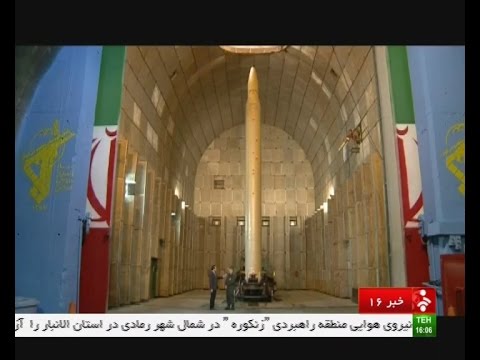
This is why the Iranian regime has ignored United Nations Security Council sanctions against missile development and fights against any restrictions on this technology. It serves the mullahs’ propaganda purposes to show off videos of missile test launches and underground bunkers filled with missiles; given them the appearance of a formidable military.

All of which explains why the Iranian regime continues to push messages through the Iran lobby to sow confusion in the West about the regime’s missile program.

Iran’s military recently publicized a third underground missile facility and showed the launch of a new ballistic missile through the top of a mountain.

U.S. intelligence agencies said in a recent internal report on the launch that the new underground missile facility was disclosed by Iran in March.

It was the third time since October that Tehran showed off an extensive network of underground missile facilities. The new video, however, for the first time shows a missile launch from one of the country’s underground launch facilities.

Even more startling were comments made by Amir Ali Hajizadeh, commander of the Revolutionary Guard Corps’ Aerospace and Missile Force, in recent remarks that the Obama administration does not want Iran to publicize its ongoing missile tests, which have raised questions about the regime’s commitment to the nuclear agreement.

“At this time, the Americans are telling [us]: ‘Don’t talk about missile affairs, and if you conduct a test or maneuver, don’t mention it,’” Hajizadeh was quoted as saying during a recent Persian-language speech that was translated by the Middle East Media Research Institute.

Ali Safavi of the Foreign Affairs Committee of the National Council of Resistance of Iran, a leading Iranian dissident group, warned against continuing to appease the Iranian regime.

“The United States and its European allies must abandon their policy of appeasement. What is needed is quite simply a policy that recognizes the facts: there are no moderates in the Tehran regime; it need not include direct military action against Iran, but it does need to be based on action, not simply harsh words, much less willful ignorance,” he said.

That fact was even more important when compared to news that Russian S-300 mobile anti-aircraft missile systems purchased by the Iranian regime have been installed at the Khatam al-Anbia base, which contains Iran’s entire air-defense system. This represents a serious commitment by the regime’s military to safeguard its missile force with its most valuable new military purchase.

This follows previous announcements that the Iranian regime was finalizing deals for another $8 billion in Russian military hardware, including the high-end Su-30 warplane, Yak-30 training aircraft, military helicopters such as the Mi-8 and Mi-17 and K-300 Bastion coastal defense systems.

Now comes news that the regime is in the midst of new negotiations with Russia to acquire advanced naval weapons and ships to improve its ability to project force into the Persian Gulf and the strategically vital Strait of Hormuz, which the regime has repeatedly threatened to close the past few months.

The nuclear deal has been a failure. The world should not compound it by allowing the Iranian regime to fully deploy its missile force.

By Michael Tomlinson

Filed Under: Blog, News Tagged With: Appeasement policy, Featured, Iran, Iran Lobby, Iran sanctions

“Eye for an Eye” is Literal to Iran’s Mullahs

March 30, 2016 by admin

“Eye for an Eye” is Literal to Iran’s Mullahs

“Eye for an Eye” is Literal to Iran’s Mullahs

Proving that “an eye for an eye” is more than just an Old Testament verse, the Iranian Supreme Court has sentenced a man to have his eye gouged out after blinding another man in a street fight, according to the Independent.

The 28-year-old, identified only as Saman, was convicted under the regime’s strict retribution laws after fighting in the street with his then 25-year-old victim when he was 23.

According to Iran Human Rights, a Norway-based NGO, Saman claimed he had unintentionally blinded the man with a metal rod.

The regime – controlled by a group of religious clerics – uses a strict interpretation of sharia law of “an eye for eye.” Last year, a man convicted of attacking another man with acid – blinding and disfiguring him for life in the city of Qoms – was sedated and had his left eye gouged out.

The regime’s reliance on barbaric and grotesque punishments more akin to the Dark Ages is a product of the mullahs’ utter devotion to their strict extremist ideology which continues unabated during the so-called moderate administration of Hassan Rouhani.

Since coming to power as a supposed moderate in 2013, Rouhani has presided over the execution of more than 2,300 people as well as public beatings, floggings and amputations.

In 2014, a Christian man was sentenced to having his lips burnt off with a cigarette for eating during daylight hours in the Muslim holy month of Ramadan.

In June last year, authorities at the Central Prison in Mashhad, Khorasan Province, amputated four fingers from the right hands of two men sentenced for theft without anesthetic, Amnesty International reports.

These ongoing acts have failed to garner the scrutiny they deserve, but some are beginning to question why Western governments are eager to normalize relations with a regime that regularly engages in such despicable acts.

Case in point was in Australia which has extended diplomatic overtures to the Iranian regime in the wake of the nuclear agreement. On Wednesday, government senators Cory Bernardi and James Paterson expressed their concerns about Saman’s case. Senator Bernardi questioned whether Australia should be cozying up to Iran.

“How can we justify opening diplomatic relations with a country that wants Israel destroyed, imprisons Christians and hangs people for being homosexual?” Senator Bernardi said.

“The world needs to wake up to the reality of what is happening in the Middle East.”

“We should never turn a blind eye to such injustices,” he added.

Senator Paterson said it showed Iran had a long way to go before it would be “recognized and respected” in the international community.

“As Australia and other Western nations seek to normalize our relations with Iran, we cannot ignore its appalling record of human rights abuses and medieval justice,” Senator Paterson said.

The increase in such inhuman punishments, coupled with more violations of sanctions against ballistic missile development and the downward spiral of nearby wars in Syria, Iraq and Yemen are convincing some nations that the Iranian regime needs to be reined in despite the nuclear agreement which the Iran lobby claimed would moderate the regime.

The U.S. and its European allies issued a joint letter saying Iran’s recent ballistic tests involved missiles capable of delivering nuclear weapons and were “inconsistent with” and “in defiance of” council resolution 2231, adopted last July.

The joint U.S., British, French, German letter was sent to Spain’s U.N. Ambassador Roman Oyarzun Marchesi and U.N. chief Ban Ki-moon.

In spite of the clear violations by the regime and the clear lack of regard for human rights, the four powers’ carefully worded letter stopped short of calling the Iranian launches a “violation” of the resolution, which “calls upon” Iran to refrain for up to eight years from activity, including launches, related to ballistic missiles designed with the capability of delivering nuclear weapons in an another sign of continued weakness in the face of Iranian aggression.

That aggression has directly led to the destabilization of much of the Middle East and contributed to the mass exodus of refugees that have flooded into Europe which has helped conceal a reported 400 foreign fighters the terror group ISIS has claimed to slip back into several countries to stage attacks similar to the Paris and Brussels strikes.

This helped set the stage for the ultimate irony of Rouhani canceling his planned state visit to Austria because of “security concerns” since his policies and those of his fellow mullahs have been a largely responsible for causing the terror surge the world is experiencing now.

The postponement appeared to catch Iranian media by surprise as most had prepared special sections detailing trade links between the two nations.

Another area where the promise of a moderate Iran by the Iran lobby has failed to live up to the reality has been the inability of foreign companies to lure Iranian expatriates into going back to Iran to work on new ventures.

According to Reuters, some expatriates whose families left Iran before or soon after the 1979 revolution are skeptical about career prospects and worry that Tehran’s refusal to recognize their dual citizenship status makes them vulnerable to arbitrary arrest.

Security forces have arrested some dual nationals who hold U.S. and European passports in recent years on unspecified national security charges.

Others hesitate because of concerns over the bureaucratic regime, the lower standard of living in traffic-clogged Tehran and restrictions enforced by the “morality police” on Islamic dress and behavior codes.

For many Iranians living inside Iran and abroad, the harsh truth is that as long as the mullahs remain in charge, conditions will not be improving.

By Michael Tomlinson

Filed Under: Blog, News Tagged With: Appeasement policy, Featured, Iran, Iran Human rights, Iran Talks

News Coming Out of Iran Keeps Getting Worse

March 16, 2016 by admin

News Coming Out of Iran Keeps Getting Worse

News Coming Out of Iran Keeps Getting Worse

The Iranian regime has been linked to a cyberattack on a small dam in the state of New York, which Sen. Charles Schumer (D-NY) plans on publicly linking the regime to, but the regime’s online activities have not been limited to cyber-assaults as revealed by a report by the BBC.

“A group of Twitter accounts seems to be designed to pump out crude Iranian propaganda aimed at an English-speaking audience – but the people behind it and their true motivations are a mystery,” the BBC said.

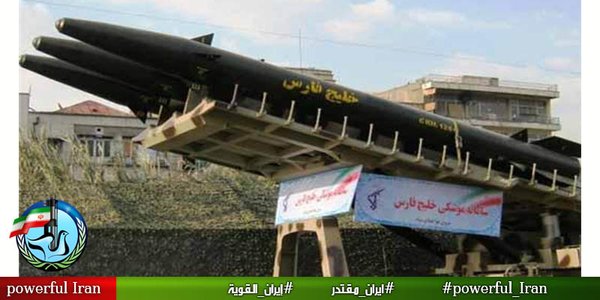
“Dozens of accounts tweet to thousands of followers in waves every few minutes throughout the day using the hashtag ‘Powerful Iran.’ Their profile pictures are Hollywood celebrities or stock photos, but their tweets almost always include pictures of Iranian military equipment along with random and sometimes seemingly irrelevant hashtags,” the BBC added. “All of the tweeted photos bear a logo showing a dove with a rifle on its back bearing the Iranian flag. They also include a caption using the “Powerful Iran” hashtag in three languages: English, Arabic and Persian.”

The mass automated tweet army, while not very effective, does demonstrate the Iranian regime’s efforts to expand its online activities and specifically target Western audiences; even if the language translations offer some stumbling blocks.

“The campaign attempts to leverage hashtags related to the U.S. government (#FBI, #CIA), Israel, Saudi Arabia, and some conservative U.S. hashtags,” says John Little, a security and intelligence expert who writes at Blogs of War. “It also bizarrely attempts to leverage hashtags from popular culture such as #GreaseLive which appears in several tweets.”

Whatever the intention, Little points out, the campaign itself is far from sophisticated.

“In terms of effectiveness the campaign is a miserable failure. Almost all of the tweets have gone unnoticed and have no retweets or favorites. The few interactions that I can find also appear to be faked by other bots. In fact, a review of the top tweets for the hashtag reveals that a large number of them are my tweets exposing the campaign,” he said.

The ham-handed efforts complemented the ongoing social media efforts of the Iran lobby, including Twitter accounts for regime advocates such as Trita Parsi (@tparsi) of the National Iranian American Council, but the regime’s media efforts don’t end there as an Iranian naval commander said Tuesday that Iran retrieved thousands of pages of information from devices used by U.S. sailors who were briefly detained in January.

The claim, published by Iranian state media, marks the latest example of how the authorities in Tehran has kept an incident considered embarrassing to the United States in the media in the two months since it occurred in what only be considered an ongoing PR war Iran is trying to wage over an incident that virtually all U.S. media have moved on from as the presidential race goes into overdrive.

It probably disheartens the regime to see virtually every leading candidate in the U.S. election denounce the Iranian regime and call for additional sanctions in the wake of recent ballistic missile launches.

Hard on the heels of those provocative missile tests, a U.S. official told CNN Iran could launch an even more advanced 3-stage missile “at any minute.”

CNN compares such a vehicle to the rocket North Korea employed to launch a satellite last month, and notes a successful test “would give Iran further insights into intercontinental ballistic missile technology.”

All of which demonstrates that the mullahs in Tehran show no desire to reduce their missile program and in fact intend to move even more aggressively forward; most likely in recognition that a new incoming U.S. president will have a public mandate to act more forcefully with the regime – unlike the Obama administration’s run of public appeasement.

This may also explain why the regime is so focused on crushing any public dissent at home with ever growing human rights violations that have come to the forefront of human rights officials and organizations as pointed out in a story in the Daily Caller.

Ahmed Shaheed, the special rapporteur for Iran, told the U.N. Human Rights Council Monday “at least 966 persons — the highest rate in over two decades — were executed in [Iran in] 2015.” Last year’s executions represented an increase of 213 from the 753 executed in 2014.

“At least 73 juvenile offenders were reportedly executed between 2005 and 2015,” said Shaheed. “At least 160 others are awaiting the same fate on death row.”

Iran’s harsh crackdowns have not been limited to state executions, according to Shaheed. He said that as of January, at least 47 journalists and activists were imprisoned in the country. As many as 270 internet cafes were also closed for their supposed “threat to societal norms and values.”

Amnesty International’s report on Iran for 2015/2016 details many of the various human rights abuses the country continues to engage in, despite the renewed relationships it has made with the world since the Joint Comprehensive Plan of Action (known as the Iran nuclear deal) was inked last July. Iran’s violations range from the aforementioned executions to freedom of speech, and everything in between.

“The authorities continued to severely restrict freedoms of expression, association and assembly,” said Amnesty’s report. “They blocked Facebook, Twitter and other social media websites, closed or suspended media outlets including the Zanan monthly women’s magazine, jammed foreign satellite television stations, arrested and imprisoned journalists and online and other critics, and suppressed peaceful protests.”

The report also noted that Iranian police engage in torture of prisoners during interrogations to illicit confessions. Sentences for those found breaking Iran’s strict penal code include a range of public punishments including “flogging, blinding and amputations.”

Religious persecution continued to be a mainstay in the country. Baha’i, Christians and Sunni Muslims continue to be arrested regularly and are hampered when trying to gain employment, education and the ability to practice their respective religions. Ethnic minorities continue to live under similar conditions.

As the bad news continues to flow out of the Iranian regime, it shouldn’t come as a surprise and had been widely anticipated by Iranian dissident groups. We can only hope the rest of the world will pay attention.

By Michael Tomlinson


Filed Under: News Tagged With: Ahmed Shaheed, Appeasement policy, Featured, Iran, Iran deal, Iran Human rights

Pushback Grows Against Iran Lobby Claims of Moderate Win

March 4, 2016 by admin

Pushback Grows Against Iran Lobby Claims of Moderate Win

Pushback Grows Against Iran Lobby Claims of Moderate Win

Basking in the afterglow of the Iranian regime’s parliamentary election results, the Iran lobby predictably boasted of the massive wins by moderate and reformist forces within Iran, but now the pushback is coming from a wide variety of the political spectrum as the results and actual winning candidates are absorbed and evaluated.

The realization is settling in that far from the moderate tsunami described by regime supporters such as Trita Parsi and Reza Marashi of the National Iranian American Council, the truth is that very little has changed within the regime leadership and the Iranian people still remain firmly in the grip and thrall of the mullahs.

The parade of cold water on the moderate landslide theory was led by the editorial board of the Washington Post, which has intimate first-hand knowledge of the extremist nature of the regime through the hostage taking and eventual prisoner swap of its reporter, Jason Rezaian. It editorialized:

“Claims of a reformist triumph, however, are overblown. Before the elections, an Iranian liberal coalition said that 99 percent of 3,000 pro-reform candidates had been disqualified by a hard-line clerical council. Most of those in Mr. Rouhani’s coalition are, like him, moderate conservatives, meaning they favor economic reforms and greater Western investment, but not liberalization of the political system or a moderation of Iran’s aspiration to become the hegemon of the Middle East. True Iranian religious and political reformers, like those who joined the 2009 Green Movement, are in jail or exile, or were banned from the ballot.

“For now, Iran can be expected to continue the course it has been pursuing in the months since the nuclear deal was struck: waging proxy wars against the United States and its allies around the Middle East, using its unfrozen reserves to buy weapons, and defying non-nuclear limits — such as by testing long-range missiles. The elections won’t make the regime more pliable, and they won’t change the need for a U.S. counter to its aggressions. They shouldn’t provide an excuse for the Obama administration to tolerate Tehran’s provocations,” the Post said.

The Post is correct in its assertions and admits to the basic problem facing those nervously praising the “moderate” wins: they are left with hoping for the best outcome even though it will most likely come to pass since the alternative is to face the difficult choices of pushing for regime change against a regime firmly entrenched.

The Atlantic’s Kathy Gilsinan noted some of the difficulties in the tea leaf reading going on post-election in discerning who actually won.

“Institutions whose members aren’t popularly elected, including the office of the supreme leader, the Guardian Council, the judiciary, and the security services, are the most powerful in Iran’s government. And they remain in the hands of hardliners,” she writes.

“Another reason it’s difficult to know the significance of these elections—aside from the dueling claims of victory from each camp, and the fact that, as Thomas Erdbink of The New York Times reported Wednesday, ‘there has been no official comment on the affiliation of the winning candidates’—is that Iran does not have strong political parties. Knowing that Republicans have a majority in the U.S. Congress, for example, gives you a rough sense of that body’s legislative priorities and how they would differ from those of a Democratic Congress. As Majlis Monitor, a website devoted to Iranian politics, notes, ‘While political parties help us see a country’s political fault-lines, their absence in Iran makes it difficult to understand how politics are actually [organized] and work there.’”

This points out the fundamental problem with the claims being made by Parsi or Jim Lobe over at Lobelog that moderates won the election: the absence of political parties stems from the mullahs aim to eliminate all dissent and organize the government around homogenous support for the Islamic revolution. True dissident parties such as the Mojahedin Khalgh (MEK or PMOI) were outlawed and membership was classified as punishable by death.

There is no doubt that the Iranian people want real reform and a true turn towards democracy. They are tired of living in an oppressive regime where their every online move is monitored and their every economic move is stymied by widespread official corruption.

The New York Times’ Erdbink also explained how results of the election may never be publicly revealed.

“The Interior Ministry, which is overseeing the voting for the 290-seat Parliament and the clerical Assembly of Experts, announced on Tuesday the names of 222 parliamentary candidates who won nationwide. It also announced that there would be a second round of voting for 68 seats in several constituencies in April,” he said. “But there has been no official comment on the affiliation of the winning candidates, and there may never be, making it difficult to determine how many seats the various factions have won.”

The Interior Ministry also oversees the internal security for the regime and already has a checkered history with the hijacking of the 2009 elections. It wouldn’t be unreasonable to see some similar shenanigans with these results to ensure the right kinds of “moderates” eventually won seats.

Former UN ambassador John R. Bolton took a similar viewpoint in writing for the American Enterprise Institute:

“Efforts to distinguish Tehran’s moderates from hard-liners have a long historical record of failure, as have similar precedents in analyzing Moscow and Beijing. Today in Iran, while there are disagreements over economic, social and religious policies among the elite, there is no disagreement over the objective of mastering the difficult science and technology required to achieve nuclear weapons deliverable on ballistic missiles. There is simply no credible evidence that the ayatollahs and other key Iranian leaders have ever diverged on that goal. Moreover, the nuclear and ballistic missile programs are firmly controlled by the Revolutionary Guards, which is about as likely to cede responsibility to the elected Majlis as to America’s Congress,” he writes.

Ultimately the real test of real reform will come if Evin Prison is emptied, ballistic missiles are shelved and support is withdrawn from Syria, Iraq and Yemen.

I wouldn’t hold your breath for that.

By Michael Tomlinson

Filed Under: Blog, News Tagged With: Appeasement policy, Featured, Iran, Iran deal, Iran Lobby, Lobelog, National Iranian American Council, NIAC, Reza Marashi, Trita Parsi

Iran Regime Continues to Stir Controversy

February 1, 2016 by admin

Iran Regime Continues to Stir Controversy

Iran Regime Continues to Stir Controversy

As Hassan Rouhani completed his European tour and was busy basking in the perceived glow of adulation and business deals, his boss back home, top mullah Ali Khamenei, again undermined his message by taking the opportunity to hand out medals to the regime navy commanders who captured and held ten U.S. sailors earlier this month.

Khamenei maintained that the regime needed to remain wary of its arch-enemy in the U.S. even after completion of the nuclear deal that enabled Rouhani’s trip.

“The Guards released the boats and crew, but not before deliberately embarrassing the sailors, the Navy, and the U.S. by broadcasting photos of the Americans in captivity, including the one nearby of the U.S. sailors on their knees with their hands behind their heads under armed Iranian guard,” said the Wall Street Journal in an editorial.

Secretary of State John Kerry later said he was “infuriated” by the footage of the U.S. sailors and that “I immediately contacted my counterpart. And we indicated our disgust,” the Journal added. “Apparently that disgust didn’t register with the people who really run Iran—that is, the Revolutionary Guards and the Ayatollah, who has now slapped the U.S. again by awarding medals to those who humiliated our sailors.”

The regime’s actions since completion of the nuclear deal have left little doubt as to what the true intentions are of the mullahs in charge; choosing to respond to new sanctions for example levied in the wake of the testing of illegal ballistic missiles by vowing to redouble its missile development efforts.

Brigadier Gen. Amir Ali Hajizadeh, commander of the IRGC’s missile force, made his comments in the Iranian capital of Tehran on Saturday, reports Iran’s Fars News Agency. Hajizadeh’s comments come after the Obama administration put new sanctions on Iran’s missile program into effect on Jan. 17.

“They [the U.S.] keep raising the issue of sanctions against Iran over its missile program and they expect us to retreat,” warned Hajizadeh, “Far from it, the IRGC response to the US demands will be offensive. As explicitly stated before, the Islamic Republic of Iran will respond to the [U.S.] propaganda and annoying move by further pursuing its completely legal missile program. Iran will strengthen national defense and security capabilities.”

Iran’s missile program is controlled by the IRGC, which takes orders directly from Iranian regime’s supreme leader, Khameini. Iran’s president Rouhani has essentially no control over the organization, which has been actively undermining Rouhani since his election, according to the Daily Caller.

That aggressive militant stance was reinforced on Sunday by regime saying it still wanted to promote a self-reliant economy even though the sanctions against it have been lifted and its doors are now open to foreign investors.

The regime’s minister of industry, mines and trade Mohammad-Reza Nematzadeh in a letter to Khamenei emphasized that the removal of the sanctions have created no change in plans to strengthen domestic industries and enhance their technical capabilities.

Nematzadeh added that his ministry will continue to consider the guidelines put forward by Khamenei to move toward the establishment of the resistance economy, which promises to emphasis industrial sectors controlled by the Revolutionary Guard and at the expense of consumer growth that might alleviate the economic suffering of the Iranian people.

In another show of escalating tensions with the U.S., the regime media released a video purportedly showing a drone flying over a U.S. aircraft carrier. The video shows a ship covered in fighter jets steaming through the blue seas. Cmdr. William Marks, a U.S. Navy spokesman, said in a statement that he could not confirm the authenticity of the video, but he added that an Iranian drone was spotted flying around the French carrier Charles de Gaulle and the American carrier USS Harry S. Truman on Jan. 12 in the Persian Gulf. The drone was unarmed and determined not to be a threat, but Marks said the incident is still considered “abnormal and unprofessional.”

That incident occurred on the same day the regime’s navy detained the U.S. sailors for which Khamenei handed out his medals.

With the emphasis on renewed aggressive acts and a commitment to a resistance economy, the political situation domestically within the regime grew more precarious for dissidents and any moderates opposing the regime’s mullahs.

“Next month’s elections in Iran do not bode well for Iranians eager for more political and social freedoms or for the promising new relationship with the West symbolized by the recent deal limiting Iran’s nuclear program,” said the New York Times in an editorial that almost sounded like a mea culpa in supporting the nuclear deal in the hopes of a more moderate Iranian regime.

“The hard-liners are in a good position to prevail in the Feb. 26 polls because of political manipulation and a nominating process that gives a small group of people enormous power over who can and cannot run,” the Times wrote. “In a sign of heightened interest in electoral politics, some 12,000 Iranians registered to run in the election for Parliament, more than double the 5,405 who registered in 2012. Yet, more than 7,000 of those would-be candidates were disqualified by the Council of Guardians, a 12-member group appointed partly by the supreme leader and partly by the judiciary.”

Rouhani, who won election in 2013, has yet to deliver on campaign pledges to restore basic freedoms, including free speech and the release of political prisoners. Hundreds of political activists and journalists remain in prison, according to various Human Rights organizations; “Iran is a leading executioner of prisoners, including juveniles,” noted the Times of the worsening situation within Iran. Not to mention that under Rouhani well over 2000 people have been executed in Iran, including at least 63 women, and at least 73 people who were under the age of 18 when committed the alleged crime.

We can only hope that more people who bought into the promises of the Iran lobby about a new moderate Iran will now realize the folly of that hope as the regime tries to cash in on the deal.

By Michael Tomlinson

Filed Under: Blog, News Tagged With: Appeasement policy, Featured, Rouhani

Iran Lobby Worries Gains Will Be Lost With New President

January 21, 2016 by admin

Iran Lobby Worries Gains Will Be Lost With New President

Iran Lobby Worries Gains Will Be Lost With New President

The Iran lobby continues to exhibit the delusional nature that has marked much of its public lobbying efforts on behalf of the Iranian regime. The newest effort was put on display in an editorial posted to the Huffington Post by Trita Parsi and Tyler Cullis of the National Iranian American Council.

The piece offered up helpful suggestions for the next U.S. president to maintain the same policy of appeasing the mullahs in Tehran that the Obama administration has followed the past three years leading up to the fateful decision to lift economic sanctions as part of a deeply flawed nuclear agreement.

Parsi and Cullis offer the suggestions because they realize the clock is ticking down with the incoming presidential election, and the new president, be it either a Republican or Democrat, is likely to forge their own path in dealing with Iran, especially considering much of the Obama administration’s legacy towards the regime has been built largely around executive orders and not full-fledged treaties.

They do ask an important question though which is “Since this new budding relationship with Iran has not been institutionalized, what will be left of it when the Obama administration leaves office?”

Unfortunately, Parsi and Cullis seem to think that international relations is more akin to developing a teenage crush and keeping the love notes going through Snapchats and emojis.

They offer up three steps in their recipe for true love between the U.S. and a theocratic Iranian regime controlled by mullahs who fully support the use of terror as a tool of statecraft, including:

  • The need for the U.S. and Iran to establish a strategic dialogue thought regular meetings;
  • Establishing a dialogue between both countries legislatures; and
  • The need for increased contact and communications between the two societies.

On the surface these seem like worthy, even laudable goals, but like all the bright ideas and sunny promises made by the NIAC, they are not rooted in the reality of the here and now.

Take for example the first idea they offer which is to build a dialogue through regular meetings. It is worth noting that the U.S., even when it did not have formal diplomatic relations, never stopped meeting with Iranian representatives on a whole host of issues, most notably negotiations on the regime’s burgeoning nuclear program through both the Bush and Obama presidencies.

Parsi and Cullis neglect to mention that dialogue between the two countries has always been present, the difference though has been in the general unwillingness to give the mullahs a blank check until the last year in which the Obama administration essentially caved in nuclear talks – first by delinking support for terrorism and human rights abuses from talks – then allowing the Iranian regime to support the Assad regime in Syria even after the use of chemical weapons without repercussions.

The notion that the Middle East would be a remarkably different place if the Bush administration had capitulated earlier is ridiculous when you consider such an act would not have deterred mullahs in Iran from supporting terror groups, would not have deterred them from doing what it could to keep Assad in power and would certainly not have deterred them from continuing the practice of public hangings and mass crackdowns on journalists, dissidents, women and religious minorities.

Most important, the idea that ISIS could have been stymied is absurd since it was Iranian regime’s support of Assad in the first place that spawned ISIS, as well as offering safe haven for Al-Qaeda leaders driven out of Afghanistan by the U.S. invasion who later left to build ISIS out of the carnage of Syria.

The second idea that Parsi and Cullis offer about a dialogue between legislative bodies is even – to borrow a phrase from the Trump lexicon – more stupid than the first idea since the Iranian regime has a long practice of winnowing the field of candidates eligible to run for parliamentary seats, especially in the Assembly of Experts in order to ensure an ironclad control over the government.

Take for example parliamentary elections next month in which out of a field of 12,000 candidates who applied to run, almost two-thirds were disqualified by the Guardian Council. The 12-member council vets political candidates and all legislation passed by parliament. It is made up of six judges elected by parliament and six clerics appointed by top mullah Ali Khamenei, who has the final word on virtually all important state matters.

So-called reformists—those favoring more political and economic freedom and improved relations with the outside world, who have been involved in all previous terrorist activities and domestic repression—say their camp was overwhelmingly targeted, with one saying barely 1% had been approved in a sign that the practical political realities of how the regime is run are completely at odds with the rosy picture painted by Parsi and Cullis.

Considering how the two houses of parliament in the regime are under the thumb of a single man in Khamenei, the notion of a dialogue developing between them and the U.S. Congress is a silly one and unlikely to ever develop.

This brings us to the last ridiculous idea Parsi and Cullis hoist up which is the idea of communications and contact between the Iranian and American people. Again, a nice notion if it was true, but almost impossible to succeed considering how the mullahs have imposed a cyberwall blocking internet access and use of social media platforms for the Iranian people to communicate with the outside world.

From a practical standpoint, the regime’s Revolutionary Guard Corps, which owns the virtually all of the major telecommunications companies, monitors the nation’s communications and often uses those channels to identify dissidents and suppress contrary political activities.

Considering how American culture is largely built around mass media entertainment and consumer marketing, it is highly unlikely that any of that will ever find unrestricted audiences in Iran, where mullahs already impose strict censorship rules on all foreign media content and ban many iconic American brands for fear of cultural “contamination.”

Indeed, what Parsi and Cullis are really worried about is that the broad public perception in America that Iran’s mullah leadership is focused on terror and military expansion at the cost of domestic oppression of its people is true and will become the focus on a new president’s foreign policy. For the Iranian people and the rest of the world, the best hope for a truly new relationship with the regime lies not in following the plan laid out by Parsi and Cullis, but in fact doing the exact opposite.

By Michael Tomlinson


Filed Under: Blog, News Tagged With: #NuclearDeal, Appeasement policy, Featured, Iran Lobby, Iran sanctions, IranLobby, National Iranian American Council, NIAC Action, Trita Parsi, Tyler Cullis

  • « Previous Page
  • 1
  • …
  • 7
  • 8
  • 9
  • 10
  • 11
  • …
  • 13
  • Next Page »

National Iranian-American Council (NIAC)

  • Bogus Memberships
  • Survey
  • Lobbying
  • Iranians for International Cooperation
  • Defamation Lawsuit
  • People’s Mojahedin
  • Trita Parsi Biography
  • Parsi/Namazi Lobbying Plan
  • Parsi Links to Namazi & Iranian Regime
  • Namazi, NIAC Ringleader
  • Collaborating with Iran’s Ambassador

Recent Posts

  • NIAC Trying to Gain Influence On U.S. Congress
  • While Iran Lobby Plays Blame Game Iran Goes Nuclear
  • Iran Lobby Jumps on Detention of Iranian Newscaster
  • Bad News for Iran Swamps Iran Lobby
  • Iran Starts Off Year by Banning Instagram

© Copyright 2026 IranLobby.net · All Rights Reserved.