Iran Lobby

Exposing the Activities of the lobbies and appeasers of the Mullah's Dictatorship ruling Iran

  • Home
  • About
  • Current Trend
  • National Iranian-American Council(NIAC)
    • Bogus Memberships
    • Survey
    • Lobbying
    • Iranians for International Cooperation
    • Defamation Lawsuit
    • People’s Mojahedin
    • Trita Parsi Biography
    • Parsi/Namazi Lobbying Plan
    • Parsi Links to Namazi& Iranian Regime
    • Namazi, NIAC Ringleader
    • Collaborating with Iran’s Ambassador
  • The Appeasers
    • Gary Sick
    • Flynt Leverett & Hillary Mann Leverett
    • Baroness Nicholson
  • Blog
  • Links
  • Media Reports

Iran Lobby Misinforms on Who is Hurt Most by Iran Sanctions

August 13, 2018 by admin

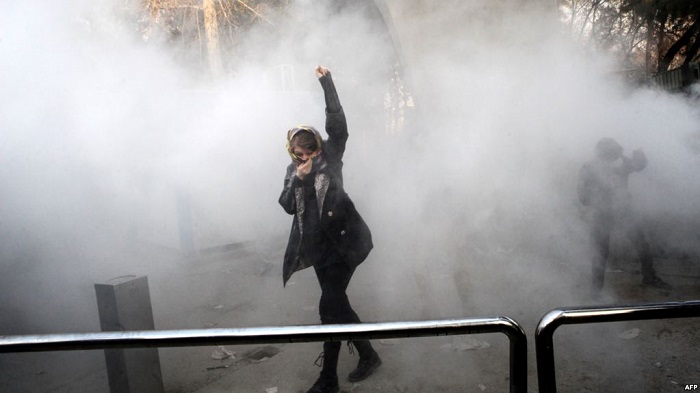
A student raises her arm in protest to the Iranian regime's repressive measures against peaceful protesters in Tehran-January 2018

The Iran lobby has scrambled to find the right kind of response to the re-imposition of economic sanctions by the Trump administration. It has tried to shield the mullahs from any culpability for leading Iran down this path with their support for terrorism and proxy wars that have devastated the region.

It has even tried to argue that sanctions will only spur a new regional arms race as the regime is sure to race towards developing a nuclear weapon now that it is freed from the nuclear agreement’s restrictions by the U.S. withdrawal.

In each case the response from news organizations and international governments has been muted because there is no argument with the facts that the regime is brutal and at fault for virtually all of the sins President Donald Trump cited in his decision to pull out of the nuclear deal.

The only feeble response from supporters of the regime has been the whining wail that the regime was in compliance with the agreement and all of the other despicable acts the regime commits, especially against its own people, are outside of the agreement’s scope.

That technicality is at the heart of what made the nuclear so problematic in the first place and why the Iran lobby is yet again shifting its message to a new tack.

Jamal Abdi, the new president of the National Iranian American Council and chief Iran lobby cheerleader, offered in an editorial in the progressive blog Lobelog.com, that the real victims of economic sanctions were the Iranian people.

“The reality is that Trump’s pressure campaign weakens those within Iran who seek more conciliatory foreign relations and a more open political and social domestic landscape. It also empowers Tehran’s most reactionary forces,” Abdi writes.

If it is impolite to call someone an outright liar, then we would have to watch our language and simply say Abdi is being disingenuous with his comments.

The stark reality is that there was never any hope of moderation within the Iranian regime with the Obama-negotiated nuclear deal since the ruling mullahs never had any intention of loosening their grip on power.

The elimination of any potential rival candidates from presidential and parliamentary election slates following the deal ensured that, as well as historically massive crackdowns on the Iranian people, including a round up and imprisonment of any dissenting viewpoint – real or imaginary – as thousands of women, students, journalists, activists, bloggers, artists and even YouTubers ended up in Iranian prisons.

“The repressive powers in the Islamic Republic are far more threatened by Iran’s integration into the global economy than by a tit-for-tat dispute with the United States. They worry that the lifting of sanctions will undermine the monopolies established by the well connected few who are aligned with the Revolutionary Guards and other government entities. Indeed, after the nuclear deal, the Supreme Leader issued edicts against a broader opening to the United States and hardliners repeatedly warned of ‘foreign infiltration’ in order to obstruct President Hassan Rouhani’s outreach to the West,” Abdi added.

Another fabrication from him as the reality is that virtually all of the Iranian economy is controlled by the state through the family dynasties of ruling mullahs or the Revolutionary Guard Corps which controls the largest companies in the petroleum, telecommunications, banking, manufacturing, transportation and energy industries.

Integration back into the global economy was a boon for the Iranian military, allowing it to refill its coffers, depleted by the wars in Syria and Yemen, and mobilize proxy militias in Iraq and Afghanistan.

When foreign companies such as Peugeot, Total and Airbus quickly moved in to sign deals with the regime, who was getting the benefits? Certainly not the Iranian people who’s standard of living has plummeted under the mullahs’ rule.

The much-promised economic windfall promised to the Iranian people after the nuclear deal was signed never came and in response the Iranian people have chosen to risk their lives in ongoing, massive demonstrations sweeping throughout the country since last December and into a sweltering summer of discontent.

“The real threats to repressive rule in Iran are a growing middle class, an organized civil society movement, and leaders who have the political capital to push for change against entrenched elements in the system. These trends make a democratic Iran inevitable. But outsiders, often led by the United States, have taken actions to arrest these developments. They have propped up Iran’s repressive rulers with threats of war and invasion, and bailed them out by slapping sanctions and travel bans to isolate Iranians and keep them weak,” Abdi said.

This last point is the most damning by the Iran lobby since the regime has done its level best to eradicate the Iranian middle class with manipulation of its currency and restrictions that have skyrocketed inflation and pushed the rial down to near Weimar Republic levels.

The defiance of Abdi’s claims comes in the form of the protests taking place throughout Iran by the Iranian people, including his much-vaunted middle class who have been hit hard by the regime’s deep corruption in the economy.

Couple that with the oppressive human rights situation in which women have been tossed in jail for protesting hijab requirements and the feisty mood of the Iranian people can be seen almost every day on Iranian streets and in town squares and marketplaces.

What many in the Iran lobby are terrified of is that the Iranian people will indeed be able to exert enough pressure internally to force the kinds of liberalization and democratization it promised with the nuclear deal but failed to deliver.

The Financial Times editorialized the same sentiment in but only gets it half-right:

“It would, however, be far preferable if Iran moved towards a more liberal and open regime through a process of domestic reform, rather than as a result of crushing external pressure. The history of Iran and the wider Middle East gives ample warning that sudden violent changes in government have rarely led to happy outcomes — particularly when they have had external sponsors,” the FT’s editorial board said.

Iran’s mullahs are never going to give up power as a result of gentle persuasion. Only a massive build up of outrage by the Iranian people coupled by economic sanctions aimed directly at gutting the financial pipeline to the military is the only pathway to gain the internal regime change the FT describes.

The history of the Middle East tells us that change does not come easily, nor politely. It comes only through the convergence of external pressure coupled with internal reforms.

We believe that opportunity is finally coming to Iran.
Filed Under: Blog, Current Trend, Duping Anti-War Groups, Latest from Lobbies & Appeasers Tagged With: Featured, Iran deal, Iran Lobby, IranLobby, Jamal Abdi, NIAC, Sanctions

Iran Lobby Criticisms of Iran Economic Sanctions Misses the Point

August 7, 2018 by admin

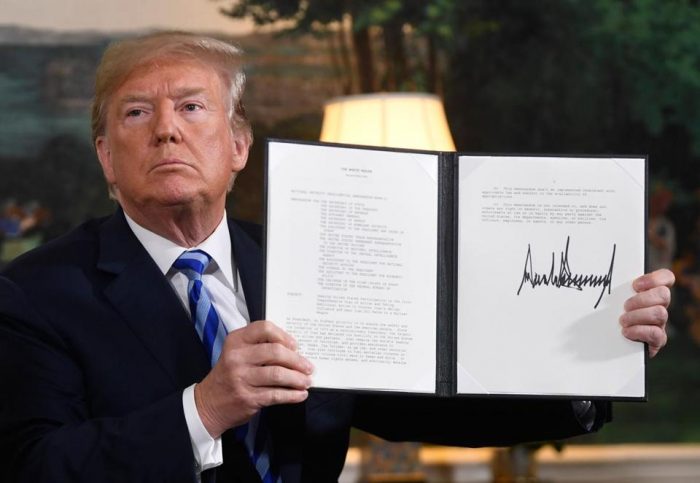
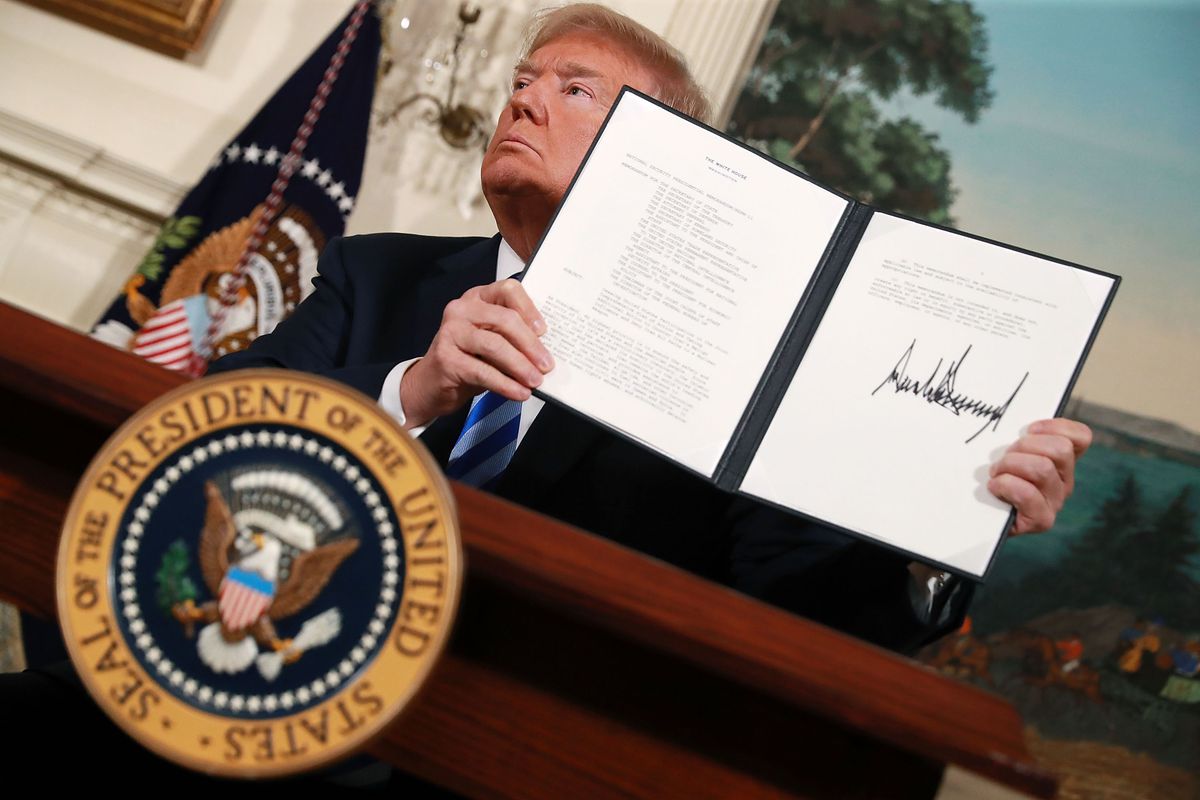
President Trump signs the Presidential order to snap back first series of sanctions - August 6, 2018

For all of the verbose and critical language the Iran lobby has aimed at the Trump administration for de-certifying the Iran nuclear agreement and re-imposing economic sanctions this week, they miss the one essential truth they cannot defend which is this whole mess is the fault of the mullahs in Tehran, not the U.S.

The Iran lobby, most notably the National Iranian American Council, have long argued the nuclear deal negotiated by the Obama administration was “working.” It was a misleading label from the start because the administration, under the influence of the “echo chamber” created by the Iran lobby to bolster American public opinion, literally gave away the proverbial store.

Among the most notable omissions in the agreement:

  • No restrictions on Iranian regime’s ability to develop nuclear-capable intercontinental ballistic missiles designed to deliver payloads around the world;
  • No restrictions on Iran’s ability to funnel cash delivered as part of a payoff to free American hostages held by Iran to terrorist groups such as Hezbollah or to buy weapons from Russia and China later used by terrorists in Yemen, Iraq and Syria; and
  • No requirements for Iran to improve its human rights situation, including releasing political prisoners, halting crackdowns on journalists, students, bloggers, artists, ethnic and religious minorities, and repealing laws that oppress women such as banned jobs, morals codes and misogynistic behavior.

But what the NIAC and others in the Iran lobby fail to ever mention is Iran’s role in the Syrian civil war and the carnage it unleashed resulting in the slaughter of almost half a million men, women and children and creating over four million refugees.

It also spawned the rise of ISIS and a series of terrorist attacks that struck at almost every part of the world including London, Birmingham, Orlando, Brussels, Nice, Ottawa, Sydney, San Bernardino and the list goes on and on.

For these reasons and more, President Trump followed through on a central campaign promise in pulling out the nuclear deal. His decision wasn’t a surprise to anyone, including the Iran lobby, but that hasn’t stopped the NIAC and others from doing their best to stab at the president’s actions.

Among the sanctions being imposed include several that the Obama administration declined to enforce in the first place.

Iran will no longer be able to engage in trade using US dollars, a cornerstone of international business for the country. The country will also, according to Trump administration officials, be blocked from trade in gold and other precious metals, the import of graphite, aluminum, steel, coal, and software used for industrial purposes, and participation in the automobile market, according to BuzzFeed.

The NIAC has called for European countries to bail out Iran and commit to their business deals with the Islamic state, but already a mass exodus of companies including Peugeot and Total has streamed away from Iran.

While the sanctions are sure to be troubling to Iran, even harsher sanctions are on deck to come into effect in November. Those will target Iran’s oil exports as well as transactions between foreign banks and the Central Bank of Iran.

A senior administrative official reiterated that the US goal is to get imports of Iranian crude to zero and that the US is not looking to give exemptions or waivers when those sanctions hit.

The NIAC, in a briefing memo posted on its website, consistently characterizes the nuclear agreement as “successful” but in reality the agreement ended up being the tool by which Iranian regime replenished its cash reserves, went on a massive arms buying spree and proceeded to aid in the gassing and killing of hundreds of thousands of people in the Middle East.

If the mullahs were hoping to save themselves and the Assad regime, then the nuclear deal was indeed a stunning success from that standpoint.

The harsh reality though for the mullahs and the Iran lobby is that conditions have changed significantly over the past three years, not only in Washington, DC, but also on the streets of hundreds of villages, cities and towns throughout Iran as waves of protests push the regime into a decision whether or not to crackdown on its own people again or finally entertain the notion that democracy, a real genuine democracy, needs to take root in Iran.

Thomas Erdbrink in the New York Times was one of only several journalists chronicling the protests erupting in Iran, the likes of which are rarely seen as these protests are being fueled by the poor and middle classes and focused on the poor economy, death spiral in the currency values, gross mismanagement, incompetence in the government and rampant corruption by the ruling elites.

“Some demonstrations — about the weak economy, strict Islamic rules, water shortages, religious disputes, local grievances — have turned deadly. The protesters have shouted harsh slogans against clerical leaders and their policies. The events are broadly shared on social media and on the dozens of Persian language satellite channels beaming into the Islamic republic,” he writes.

“Videos show that some protesters have gone well beyond strictly economic grievances to challenge Iran’s foreign policy and religious rules. Secular protest slogans aimed at Iran’s leadership also criticize its support for Syria and groups in the Palestinian territories and in Lebanon,” he added.

Erdbrink who usually writes in a favorable manner, appeasing the mullahs in Iran, writes that predictably in-fighting among the ruling elites as to who is to blame is rising as the mullahs struggle to offer solutions to the Iranian people that don’t involve slogans or a policeman wielding a baton.

While the Iran lobby struggles to get its message out, the truth is that Americans, are less likely to hear that same echo chamber this time around.

Filed Under: Blog, News Tagged With: Featured, Iran deal, Iran Lobby, JCPOA, National Iranian American Council, NIAC

Trump Invite for Meeting is Trap for Mullahs They Might Not Escape

August 2, 2018 by admin

Trump Offer to Meet Rouhani has Iran Lobby Boxed In

Trump Offer to Meet Rouhani has Iran Lobby Boxed In

President Donald Trump’s nearly off-hand comment about being open to a meeting with Iranian regime leader Hassan Rouhani “anytime” puts the Iranian regime and their Iran lobby supporters between a rock and a hard place.

On the one hand, if they simply denounce the invitation, they reaffirm the belief that the regime was never really interested in meaningful dialogue on topics not to their liking such as improving human rights, support for terrorism or interfering in neighboring countries.

It also calls out the Iran lobby’s persistent braying for diplomatic openings between the U.S. and Iran and once the president presents such an opportunity, critics such as the National Iranian American Council are quick to denounce it.

It seems the Iran lobby can’t have their cake and eat it too under this president.

If on the other hand, the mullahs accept the president’s offer, they might very run into a Trump version of what they have consistently done to others for decades which makes a show of diplomacy but grant nothing of substance and continue to apply pressure.

The prospect of the mullahs getting a dose of their own medicine is ironic and somewhat refreshing.

The varied responses from the regime are proof the mullahs in Tehran seem pretty confused as to what to do since it’s clear that President Trump’s offer is not really without preconditions. Rather, looming over Tehran is the precarious state of the economy, looming economic sanctions due to fall next week and mounting pressure internally from the Iranian people to change how the usual corrupt government operates.

“Unfortunately, right now there is no low-hanging fruit in U.S.-Iran relations or potential negotiations. And the primary reason is that Trump, by violating the Iran nuclear deal and withdrawing from it, he really eviscerated the Iranian trust in the United States,” said Sina Toossi, a research associate at the National Iranian American Council.

“He could potentially give that confidence to international banks and businesses, remove U.S. sanctions and allow Iran to get the benefits from the deal, and that could be used as a stepping stone for broader negotiations,” he added.

Therein lies the crux of the Iran lobby’s problem. It has in Trump a U.S. president who doesn’t care about appearances or how critics view him and is just as intent on forcing regime change as any president in the last 30 years. While the Iran lobby is pushing to recover the gains lost from the failed nuclear deal, it recognizes the awful truth of their position which is that there are no meaningful gambits left it can use on this president.

The Iran lobby and the regime have sought a bailout from Europe by trying to persuade the European Union to stay in the nuclear agreement.

Rouhani met with the new British Ambassador to Tehran Tuesday where he announced, not for the first time, the US withdrawal from the multilateral nuclear deal in May was “illegal,” adding that “the ball is in Europe’s court,” according to CNN.

But that prospect seems as likely as snow falling right now on a California beach as the president is already pressing the EU over the issue of bilateral trade tariffs that has Europe busy focusing on its own trade deals.

The poor mullahs are not at the top of the to-do list for Europe anymore and the trade they represent is a pittance compared to the whopping $690 billion in trade between the EU and U.S.

Nic Robertson at CNN offered his own analysis that the Iran regime may take a long view in responding to President Trump. He posits that Iran is willing to use a subtle approach in trying to divide the U.S. from its allies and by not ramping up extremist acts with its terrorist proxies such as Hezbollah is a sign of this approach.

He also offers that summits with Russian president Vladimir Putin and North Korea’s Kim Jong-Un are different since Iran’s leaders are not in as precarious a position.

With apologies to Robertson, that is a bad misread of the regime.

The mullahs are under intense pressure not only from a rial about to be less valuable than the paper its printed on to massive protests rocking the country since last year that have not abated and have taken on a dire tone with protests aimed directly at the regime’s top leaders.

The basket case economy is so bad, that Iranian parliament members have demanded Rouhani appear before them in one month to answer questions about the economy.

It is the first time parliament has summoned Rouhani, who is under pressure from rivals to change his cabinet following a deterioration in relations with the United States and Iran’s growing economic difficulties.

Lawmakers want to question Rouhani on topics including the rial’s decline, which has lost more than half its value since April, weak economic growth and rising unemployment, according to semi-official ISNA news agency.

Rouhani’s summon coincides with further shows of public discontent. A number of protests have broken out in Iran since the beginning of the year over high prices, water shortage, power cuts, and alleged corruption in the Islamic Republic.

On Tuesday, hundreds of people rallied in cities across the country, including Isfahan, Karaj, Shiraz and Ahvaz, in protest against high inflation caused in part by the weak rial, according to Reuters.

The mullahs are now faced with change or doubling down on crazy and potentially pushing the Iranian people too far or accept the truth that the regime’s days are numbered.

Laura Carnahan

Filed Under: Blog, News Tagged With: #NuclearDeal, Featured, Iran deal, Iran Lobby, Iran sanctions, National Iranian American Council, NIAC, NIAC Action, Rouhani, Sanctions, Sina Toossi

President Trump Warns Rouhani as Pompeo Assails Mullahs

July 23, 2018 by admin

President Trump Warns Rouhani as Pompeo Assails Mullahs

President Trump Warns Rouhani as Pompeo Assails Mullahs

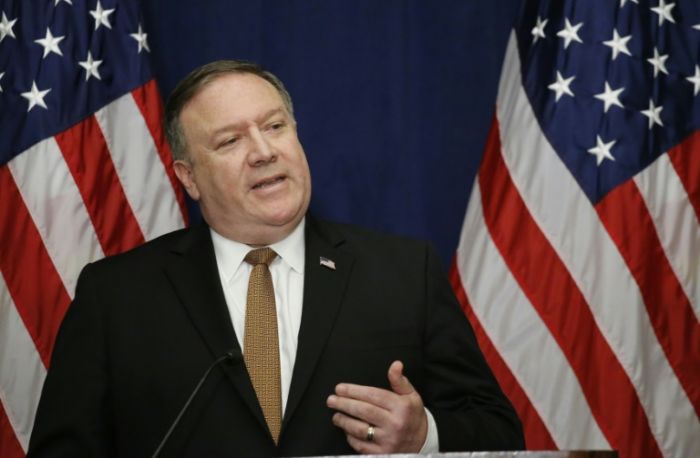
This weekend President Donald Trump and Secretary of State Mike Pompeo as the U.S. bluntly warned the Iranian regime against any further transgressions against the U.S.

It started with Pompeo addressing a gathering of Iranian-American leaders at the Ronald Reagan Presidential Library in which he launched a blistering attack aimed at Iran’s religious and military leaders; likening them to the Mafia.

“The level of corruption and wealth among regime leaders shows that Iran is run by something that resembles the Mafia more than a government,” Pompeo said.

Pompeo’s hardline speech comes just three weeks before the first round of banking sanctions suspended under the Iran nuclear deal is re-imposed after President Trump withdrew from the landmark agreement in May. Bigger sanctions coming in November are aimed at cutting off virtually all Iran’s oil market, according to the Washington Post.

Pompeo’s speech delved deeper into U.S. demands that the Iranian regime stop repressing dissidents and religious minorities, as well as halt its support of militant and terrorist groups throughout the Middle East.

He also said the U.S. Broadcasting Board of Governors was going to attempt and circumvent Internet censorship in Iran by creating a 24-hour Farsi channel for television, radio, digital and social media formats, “so that ordinary Iranians inside Iran and around the globe will know that America stands with them.”

Pompeo’s speech fully realizes the administration’s growing strategy for Iran in which it will make its appeals directly to the Iranian people to propel peaceful, democratic regime change; a policy long advocated by Iranian dissidents, including the National Council of Resistance of Iran.

Pompeo’s speech focused on the rampant corruption within the regime’s leadership which has been the target of mass protests by Iranians across the country since last December. He attacked what he called Iranian regime’s “hypocritical holy men,” saying the ruling elites have enriched themselves through corruption and called out officials by name who he said had plundered government coffers through embezzlement or by winning lucrative contracts.

He singled out “the billionaire general,” Interior Minister Sadegh Mahsouli; Grand Ayatollah Makarem Shirazi, the “Sultan of Sugar”; and Sadeq Ardeshir Larijani, the head of Iran’s judiciary, whom he said had embezzled $300 million in public money.

“Call me crazy,” Pompeo said, “but I’m a little skeptical that a thieving thug under international sanctions is the right man to be Iran’s highest-ranking judicial official.”

He also attacked Ayatollah Ali Khamenei for presiding over a $95 billion “sludge fund” for the Revolutionary Guard Corps.

In delivering this speech Pompeo finally closed the loopholes created by the Obama administration during negotiations on a nuclear deal which let the Iranian regime off the hook for human rights abuses, development of ballistic missiles and sponsorship of militias and terrorist groups in waging proxy wars in Syria, Iraq and Yemen.

Following on Pompeo’s speech, the president himself took to Twitter in response to a speech by Iranian president Hassan Rouhani who warned that the U.S. risked the “mother of all wars” in a conflict with Iran. Rouhani warned against threatening the nation’s oil exports and called for improved relations with its neighbors, including arch-rival Saudi Arabia in what can only be considered a sign of the weakness of the regime in offering an opening to its rival.

In a Twitter post late Sunday, the president said, “To Iranian President Rouhani: NEVER, EVER THREATEN THE UNITED STATES AGAIN OR YOU WILL SUFFER CONSEQUENCES THE LIKES OF WHICH FEW THROUGHOUT HISTORY HAVE EVER SUFFERED BEFORE. WE ARE NO LONGER A COUNTRY THAT WILL STAND FOR YOUR DEMENTED WORDS OF VIOLENCE & DEATH. BE CAUTIOUS!”

The president left little doubt of his intentions in the face of Rouhani’s threat and reminded the Iranian regime that even a blustering speech for domestic political consumption was going to have potentially disastrous consequences for the regime.

Long gone are the days of kowtowing to the regime under the Obama administration where every aggressive act against the U.S. from launching ballistic missiles that could strikes U.S. bases to the funneling to explosives and arms to terrorist groups that killed U.S. service personnel to even taking U.S. sailors hostage was going to be tolerated anymore.

Rouhani and his overlord, Ali Khamenei, find themselves in a pickle as President Trump prepares to re-impose sanctions on Iran’s oil industry as its economy already is reeling from gross mismanagement. A key point for halting Iranian oil exports is through the Strait of Hormuz.

“Mr Trump! We are the honest men who have throughout history guaranteed the safety of this region’s waterways,” Rouhani said in his speech. “Do not play with the lion’s tail, it will bring regret.”

Rouhani’s claims were undercut by threats by regime officials to cut off commerce through Hormuz.

Iran would halt oil shipments through the strait if the U.S. stopped it from exporting, Esmail Kowsari, deputy commander of the Sarollah Revolutionary Guards base in Tehran, said earlier this month, according to the Young Journalists Club, which is affiliated with Iran’s national broadcaster.

But then again lying seems to be a perquisite for being part of the Iranian regime.


Filed Under: Blog, News Tagged With: #NuclearDeal, Appeasement policy, Featured, Iran deal, Iran Lobby, Iran sanctions, Khamenei, Moderate Mullahs, Rouhani

Iran Regime Grows More Desperate

July 18, 2018 by admin

Iran Regime Grows More Desperate

Iran Regime Grows More Desperate

It’s no secret the mullahs controlling the Iranian regime despise any form of dissent, especially anything that could be construed as homegrown. While the mullahs try to brush off criticism from the international community, it’s harder to turn a blind eye when their fellow Iranians are the ones leading the protests.

A proverbial thorn in their side has been the Iranian diaspora made up of exiled and expatriate Iranians living around the world. Many were initially stranded outside of Iran when the Islamic revolution swept through Iran, while others have fled the regime’s extremism over the years.

That diaspora consists of nearly five million Iranians living abroad and large numbers of them actively participate in a variety of human rights and dissident groups dedicated to improving conditions within Iran or peacefully working for regime change or at least better human rights and religious freedoms.

One of the largest and longest active dissident groups has been the Mujahedeen-e-Khalq (MEK) which has earned him top honors on the mullahs’ hit list of most wanted. It has received special attention from the regime, including its infamous Ministry of Intelligence and Security (MOIS) which has waged a decades-long campaign aimed at disinformation, slander and even organizing attacks against MEK members.

Those past attacks have included strikes against refugee camps for Iranians who fled Iran, many of them MEK members. The Iranian regime, working with Shiite militia allies in Iraq, staged frequent attacks at these camps where the residents were unarmed, slaughtering scores of them.

The MEK has continued to be a sore point for the regime by uncovering all sorts of secrets in Iran, including the clandestine nuclear program that soon became the focal point of international sanctions.

The dissident group has also provided one of the few reliable channels to the outside world of what is going on inside the closed of Islamic state, including photos, videos, and testimonials of public executions, abuse of women and mistreatment of ethnic and religious minorities.

The regime has not been able to shake these dissident groups off of itself no matter how hard it tries to kill off its detractors, but most of these efforts have been focused on attacks in distant places, cyberspace and in the arena of public opinion.

Recently the Iranian regime sanctioned what may be its most brazen effort yet in planning to bomb an annual gathering of Iranian dissident groups including the MEK a massive rally outside of Paris with scores of distinguished luminaries in attendance, including former New York Mayor Rudy Giuliani, who now serves as President Donald Trump’s personal attorney.

Assadollah Assadi, a Vienna-based Iranian diplomat, was suspected of contracting a couple in Belgium to attack the according to German federal prosecutors.

He allegedly gave the Antwerp-based couple a device containing 500 grams of the explosive TATP during a meeting in Luxembourg in late June, prosecutors said in a written statement.

Assadi was detained earlier this month near the German city of Aschaffenburg on a European warrant after the couple with Iranian roots was stopped in Belgium and authorities reported finding powerful explosives in their car.

In their statement, German prosecutors allege that Assadi, who has been registered as a diplomat at the Iranian Embassy in Vienna since 2014, was a member of MOIS, whose tasks “primarily include the intensive observation and combatting of opposition groups inside and outside of Iran.”

U.S. Secretary of State Mike Pompeo accused Iran of using its embassies to plot extremist attacks in Europe and warned Tehran that its actions have “a real high cost” after it threatened to disrupt Mideast oil supplies.

“Just this past week there were Iranians arrested in Europe who were preparing to conduct a terror plot in Paris, France. We have seen this malign behavior in Europe,” Pompeo said in an interview with Sky News Arabia.

The extent of the bomb plot and the potential to kill and maim so many non-Iranian dignitaries and journalists attending the gathering demonstrates how desperate the regime has grown as it faces unrelenting pressures at home and abroad with massive protests and demonstrations over a spiraling economy and renewed economic sanctions by the Trump administration.

The National Council of Resistance of Iran, an Iranian dissident umbrella group that sponsored the Paris gathering, quoted its intelligence sources inside the country as saying that Iran’s top mullah, Ali Khamenei, and President Hassan Rouhani approved the bombing plan.

“In Belgium, it is more probable that Assadi will face justice and has to answer all sorts of questions and does not have any diplomatic immunity,” said Shahin Gobadi, a MEK spokesman.

The MEK intelligence report said the Paris attack was approved months ago by every lever of Iranian power, from the supreme leader to the foreign and intelligence ministries to the powerful Islamic Revolutionary Guard Corps.

The report said Assadi’s cover was as a counselor. In fact, he is the MOIS station chief in Vienna and the ministry’s coordinator for other stations in Europe.

“His main task was espionage and conspiracy against the [MEK], and he has been traveling to various European countries in this regard,” the report said.

The level of hubris it takes for the Iranian regime to stage an attack on French soil at an event with a global television audience makes it a worthy parent to terrorist groups such as ISIS and Al-Qaeda.

It may be high time for the mullahs to pay a heavy price for sanctioning such an act of terror.

Laura Carnahan

Filed Under: Blog, News Tagged With: Assadollah Assadi, Featured, Iran deal, Iran Diplomat, Iran Human rights, Iran Terrorism, Iran's Ministry of Intelligence and Security (MOIS), IRGC, MOIS

 Iran Regime Chooses its Path Contrary to Iran Lobby Claims

June 7, 2018 by admin

 Iran Regime Chooses its Path Contrary to Iran Lobby Claims

In this picture released by an official website of the office of the Iranian supreme leader, Supreme Leader Ayatollah Ali Khamenei speaks at a meeting in Tehran, Iran, Saturday, April 14, 2018. Khamenei said that the U.S.-led attack on Syria is a “crime” and said the countries behind it will gain nothing. The Iranian Foreign Ministry strongly condemned the strikes and warned of unspecified consequences. (Office of the Iranian Supreme Leader via AP)

One of the central arguments being made by the Iran lobby, especially led by the National Iranian American Council, has been that the Trump administration is hell-bent on starting a war with Iran and doing all it can to engineer one, including pulling out of the Iran nuclear deal.

In all of its recent editorials and media appearances, NIAC staff have consistently tried to argue that the Trump administration alone was responsible for any negative consequences coming out of Tehran.

One such editorial was authored by Jamal Abdi, executive director for NIAC Action and the incoming leader to replace Trita Parsi as head of the NIAC, in Defense One.

“In the lead-up to Donald Trump’s decision to unilaterally withdraw from the Iran deal, the President operated with near-impunity from Congress and the media. His nomination of Mike Pompeo, an avowed Iran hawk who worked tirelessly in Congress to undercut Obama’s diplomatic efforts and unravel the nuclear deal, met with some controversy but ultimately passed over the toothless opposition of Senate Democrats,” Abdi writes.

“Trump’s appointment of John Bolton to round out his ‘Iran war cabinet’ provoked a handful of headlines but received far less media scrutiny than even Bolton’s 2006 recess appointment to a lower position in the Bush Administration. And in the immediate aftermath of Trump’s decision, it appeared he might also bully his way past Congress, the press, and Europe to begin escalating toward military conflict,” he adds.

Abdi and the rest of the Iran lobby seem to operate under the impression that Iran’s mullahs have no free will of their own and only respond like automatons to whatever provocation President Donald Trump aims at them.

In many ways, Abdi’s argument tries to absolve Iranian regime’s leadership of any responsibility since it can operate under the excuse of being “provoked” by President Trump.

Ultimately, the responsibility for everything Iran does lies not with President Trump, or his cabinet or the European Union or even social media influencers. The mullahs are the only ones who decide what happens in the theocratic dictatorship that is Iran’s government.

This is the inconvenient truth Abdi, Parsi and the rest of the Iran lobby studiously ignore because if the world’s media did affix responsibility on the mullahs for all of Iranian regime’s actions, then all of its atrocities committed in Syria, Iraq, Afghanistan, Lebanon, Yemen and other far flung places around the world—not to mention at home against its own people—would force the regime to pay a heavy price.

The Iran lobby fights mightily to ensure the mullahs do not have to pay that price.

For the NIAC, the war narrative is an important cog in its PR machinery to deflect any attention being focused on the actions of the regime and mullahs. If blame can be affixed on the Trump administration than anything bad that happens must be the president’s fault by this perverse piece of logic.

For example, Abdi boasts of a language inserted by a group of Iran-supporting members in the House in an authorization bill to support Pentagon operations prohibiting the use of U.S. armed forces against Iran as a landmark moment in halting the Trump war train.

What Abdi hopes the American people don’t notice is that the Trump administration is not preparing for war against the Iranian regime, but instead is relying on the diplomatic strategy of applying economic pressure on the regime as it has done with North Korea.

That threat is far greater to the mullahs and the real fear of the Iran lobby since cutting off the economic lifeline to Iran can only exacerbate the pressure on the Iranian economy and further drive deeper the wedge growing between the mullahs and the elites with the common, every day, oppressed Iranian citizen.

The language Abdi puts so much stock in will not survive in the Senate and raises the larger problem looming on the horizon for the Iran lobby which is the complete lack of interest in the American people in supporting the Iran nuclear deal in upcoming midterm elections.

There is literally no Senate or House candidate on either side of the political aisle out there campaigning for reinstatement of the Iran nuclear deal.

In this area, the Iran lobby stands conspicuously alone in the U.S. which is why the Iran lobby is focusing so much of its efforts on trying to keep the European Union in the fold as witnessed with a recent open letter sent to the EU’s High Representative for Foreign Affairs and Security Policy Federica Mogherini.

“In an increasingly unstable global climate and ever-more precarious ‘age of extremes,’ it is essential that one of the great diplomatic successes of the 21st century not find itself carelessly squandered. By your own estimation, it took some 12 years for this agreement to be reached. If Europe in coordination with its Russian and Chinese partners prove unable to salvage the JCPOA, the likelihood of further instability in the region and even war increases exponentially,” the letter said, which was signed by the usual suspects of Iran lobby academics and cheerleaders including Parsi.

It’s apparent how self-important this group sees itself, naming the Iran nuclear deal as being on par with such notable landmark agreements of the 21st century, especially when considering there have been no notable landmark agreements yet in the 21st century.

Typically the signers warn of “war” again but miss the essential point which is the decision of whether or not a pathway to conflict is followed lies firmly in the iron grip of the mullahs in Tehran.

Only leaders such as Ali Khamenei can decide what path the Iranian regime will take. They decided to use the financial windfall from the nuclear deal to prop up the Assad regime in Syria. They decided to build a ballistic missile program. They decided to topple the government in Yemen. They decided to deploy Revolutionary Guard Corps troops to Syria. No one made them do it and the Iran lobby has never criticized the regime for it.

The real threat of war is not in Washington but lies only in Tehran.

Laura Carnahan

Filed Under: Blog, News Tagged With: #NuclearDeal, Featured, Iran deal, Jamal Abdi, Khamenei, National Iranian American Council, NIAC Action, Sanctions, Trita Parsi

Iran Lobby Myth of War Finds Little Traction

May 30, 2018 by admin

Iran Lobby Myth of War Finds Little Traction

Iran Lobby Myth of War Finds Little Traction

“Iran was not about to capitulate,” said Trita Parsi, the now former head of the National Iranian American Council, in an editorial in The Nation blasting the Trump administration’s efforts to rein in Iranian expansionism.

It is a simple statement by Parsi, but one that reflects years of deep connection between the key Iran lobbyist and his masters in Tehran. Parsi knows the minds of the mullahs better than most and is also the one providing the narrative they wish propagated in the wake of President Trump’s decision to pull out of the Iran nuclear agreement by not re-certifying Iranian compliance with its terms.

His editorial lays out the new terms of the debate the Iran lobby wants to have with the Trump administration and the American media landscape moving forward.

In essence, Parsi argues that:

  • The idea that President Obama had Iran on its heels due to strangling economic sanctions and had the opportunity for a more comprehensive deal was a fiction;
  • Iran was already well on its way to becoming a nuclear power in response to those increased sanctions;
  • The breakthrough in negotiations was due to President Obama’s willingness to concede Iran had a right to enrich uranium; and
  • The idea that Iran was brought to the table by economic sanctions was a fabrication by the Obama team to blunt criticism at home.

Unfortunately for Parsi every single one of his arguments have been proven wrong with the passage of time and no thanks to his masters in Tehran who have striven to disprove everything through their own actions.

First and foremost, the impact of economic sanctions was deep and far-reaching and pushed the Iranian regime’s leadership to look for a pathway out. Parsi highlights how the mullahs stepped up their nuclear activities in response to sanctions and credits that as proof that sanctions had no impact, but he misses the point—or more accurately covers the truth—that the mullahs crashed dived their nuclear program to force the issue of negotiations over a nuclear deal in order to gain relief from those sanctions as quickly as possible.

This explains the regime’s adamant demands that the deal be front-loaded with economic relief, such as the immediate release of frozen Iranian assets without oversight or pre-conditions, as well as the immediate sale of Iranian oil back on the open market.

For Iran, its economy was stagnating and its military resembled a shell of itself. And for the regime’s top mullah, Ali Khamenei, the pathway forward was simple: get a deal done as quickly as possible so the regime could begin rebuilding its military.

After the deal was signed, that was exactly what the regime did, going on an epic spending spree with over $100 billion in new orders for everything from new advanced anti-aircraft missile batteries to new jet fighters and main battle tanks.

A little side note that Parsi neglected to mention, prior to the nuclear deal, Iran was prohibited from buying offensive weapons systems, but under the agreement, the regime was free to acquire those weapons which it has put to use in Syria on behalf of the Assad regime.

The most disturbing item never discussed by Parsi and the rest of the Iran lobby is a simple one, which is the mental state of the Iranian leadership.

Any international agreement is predicated on an assumption that both parties are rational, truthful and obligated to the deal, but in the case of the Iranian regime, a religious theocracy is in charge that has little regard for human life and values survival above all else.

Parsi’s argument all fail when you start from the premise that the Iranian leadership has an agenda very different from what he claims. Case in point:

  • If Iran was committed to improving the state of the economy and the lives of its citizens, why did it divert virtually all of the financial windfall it received towards supporting terrorist groups such as Hezbollah, financing the Assad regime in Syria and upgrading its military with offensive weapons?
  • If Iran was hoping to broaden its government to open the door to political moderates and opponents, why did it virtually eliminate all potential candidates from presidential and parliamentary elections following the nuclear deal?

The Iran lobby is left only with two lies in its verbal arsenal. It can only argue that the Trump administration’s true aim with Iran is to seek war but offers no proof.

All of the evidence points to a very different pathway President Trump has chosen. As with the current push for a diplomatic solution to a nuclear North Korea, the strategy towards Iran is to pursue diplomacy and work within the framework of America’s allies; a far cry from the drum beating Parsi is engaged in portraying.

Secondly, Parsi and the rest of Iran lobby is trying to portray U.S. efforts at regime change to topple Iran and install dissident groups he terms as “terrorists.”

It’s another fanciful claim to make since the groups he has singled out such as the Mujahedin-e Khalq (MEK) has publicly staked their future on the idea of a secular, free and democratic Iran in which the people are allowed to make their own choices in free elections.

That hardly sounds like a sinister conspiracy, but then again Parsi is left with little else than making Deep State conspiracy claims.

Laura Carnahan

Filed Under: Blog, News Tagged With: Featured, Iran deal, Iran Lobby, National Iranian American Council, NIAC, Trita Parsi

Trita Parsi Stepping Down But Is He Going Away?

May 21, 2018 by admin

Trita Parsi Stepping Down But Is He Going Away?

Trita Parsi Stepping Down But Is He Going Away?

Our old friend, Trita Parsi, founder of the National Iranian American Council and chief cheerleader for the Iranian regime, announced he was leaving the post of president and turning the reins over to Jamal Abdi, NIAC’s current vice president for policy and head of its NIAC Action lobbying front.

Should we shed a tear or let out a cheer that the nemesis of Mideast peace is transitioning out?

Probably neither since his departure from NIAC is probably less about stepping away from publicly lobbying for the Iranian regime and more about removing the bulls-eye target that has been affixed to him for the past decade.

Parsi personifies the strengths and weaknesses of the Iran lobby in the U.S. He is educated and has the ability to speak in academic circles by convoluting historical events with twisted assumptions about what they mean.

He understands the soft spots of American democracy and the rise of political correctness and progressivism and parlays them to his advantage by catering to populist messages that support Iran without asking any tough questions.

In the Obama administration, he found kindred spirits and was able to translate that into unprecedented access to the White House—with visitor logs showing a stupefying nearly three dozen visits leading to the run-up of the Iran nuclear deal, which amounted to the high-water mark of his tenure.

But like his would-be masters in Tehran, Parsi was trapped by his own dogged refusal to ever find fault with the regime’s actions never let even the most horrific atrocities committed by Iran or its proxies divert him from his cause of supporting Tehran.

The use of chemical weapons to gas scores of Syrian men, women and children—twice—failed to move him to condemn the Iranian regime.

The snatching of dual citizens from the U.S., Great Britain, Canada and other countries wasn’t enough to get Parsi off his regime wagon train; even when one of them was a putative friend of his.

Over 17 years, Parsi has worked hard off a blueprint he envisioned of creating a strong PR machine designed to give the Iranian regime a moderate face and lobby U.S. decision makers on giving the mullahs in Tehran a break.

“Give peace a chance” became more than a slogan for Parsi and the NIAC, it became a mantra to steer U.S. foreign policy into one of the most disastrous decisions ever: a nuclear deal that came with no strings attached for human rights violations, sponsorship of terrorism, funding of proxy wars in neighboring countries and development of a crash ballistic missile program that would make North Korea look like an Erector-Set toy.

What was Parsi able to gain in return for his partners in Tehran? A cash windfall of billions of dollars in repatriated money, opening the global market for Iranian oil and invite scores of European and Asian companies to lock up investment deals.

What did the world get in return? A postponement, but not an eradication of Iran’s nuclear capabilities. A full-blown civil war in Syria creating four million refugees and killing over 400,000 men, women, and children. Destabilization in Yemen and Iraq and the threat of a full-blown war between Israel and Saudi Arabia with Iran.

That’s quite a butcher’s bill for Parsi and his promise of moderation.

Now Parsi is handing off the NIAC to Jamal Abdi, a man who has spent years working his way into the political warrens of Capitol Hill and influencing policy towards moderating views about Tehran. Alongside his fellow cohorts including Reza Marashi, Tyler Cullis, and Ryan Costello, Abdi helped Parsi flog his untruths and even spearheaded the creation of NIAC Action, the formal lobbying arm of the NIAC.

The creation of NIAC Action and the installation of Abdi as its first leader is no accident. The open secret that NIAC was lobbying on behalf of Iranian interests finally became too hard to sweep under a carpet and the NIAC had to come out into the sunlight as an official lobbying force (paradoxically neither NIAC Action or Abdi are registered with the House of Senate lobbying disclosure databases).

Of course, Parsi is not leaving the baby he gave birth to. His announcement on the NIAC website states he will turn over power on August 1, 2018, but he intends to “continue to be involved and fully committed to the organization but through a different role.”

And what role would that be? It’s too much to hope for that Parsi would simply exit the stage he left in tatters as the Trump administration has killed the Iran nuclear deal he worked so hard to secure and a deluge of global companies have announced decisions to back out of contracts with the Iranian regime as renewed U.S. economic sanctions loom large.

Not even the wailing of European interests about trying to salvage the deal through a European Union-only coalition will be enough to safeguard the Iranian regime.

Even the Iran Parsi promised is just a mirage. The mullahs are under tremendous pressure back home from unrelenting and broad protests that they have met with brutal suppression and efforts to ban messaging apps such as the popular Telegram.

Iran’s economy is reeling, its currency sinking to an all-time low and a united front is now on the horizon in forming policies to block Iranian expansionism.

About the only thing left Parsi has to show for all of his efforts now is a photo of him shaking hands with a smiling Mohammad Javad Zarif, Iran’s foreign minister, in the wake of the nuclear deal.

How fast things have changed for the Iran lobby in just a year.

Michael Tomlinson

Filed Under: Blog, Current Trend, National Iranian-American Council, News Tagged With: #NuclearDeal, Featured, Iran deal, Iran Lobby, Jamal Abdi, Reza Marashi, Ryan Costello, Syria, Trita Parsi, Tyler Cullis, Yemen

Trump Pull Out from Iran Nuke Deal is End of Line for Iran Lobby

May 10, 2018 by admin

Trump signs the Presidential Order to pull out of JCPOA

Trump Pull Out from Iran Nuke Deal is End of Line for Iran Lobby

With a quick flourish of his pen, President Donald Trump withdrew the U.S. from the 2015 Iran nuclear deal and signaled the end of the waning influence of the Iran lobby on U.S. foreign policy.

Administration officials said the Iran sanctions suspended under the agreement snapped immediately back into effect, meaning any new contracts and financial deals are banned. They said businesses and banks have either 90 or 180 days to wind down existing ties, depending on the particular type of transaction, according to the Wall Street Journal.

Because of the dominance of the U.S. economy on the global stage and the reach of its financial markets, as well as the status of the U.S. dollar as the world’s currency standard, the effect on the Iranian regime will be devastating no matter what European leaders attempt to keep Iran afloat.

Already the Iran lobby has howled like a pack of mad dogs at the president’s move.

Trita Parsi of the National Iranian American Council sounded the familiar war refrain as he claimed the move sets the U.S. on a path to war.

“Donald Trump has committed what will go down as one of the greatest acts of self-sabotage in America’s modern history. He has put the United States on a path towards war with Iran and may trigger a wider regional war and nuclear arms race,” Parsi said.

It’s a moronic statement since the U.S. is obviously not gearing up for war. There is no military build-up. No aircraft carrier battle groups are steaming for the Persian Gulf. The lack of any U.S. military activity is conspicuous.

The president has been forceful in speaking out against the Iraq invasion and against long-term U.S. foreign commitments, preferring to focus on domestic matters. In his mind, after granting several extensions to the deal giving European allies several months to work on a compromise addressing his concerns, he finally concluded that the only party not interested in changing anything were the mullahs in Tehran.

But that hasn’t stopped the Iran lobby from spreading its falsehoods like fertilizer in the hopes of resurrecting its fortunes, but not even recruiting for Obama officials in a last-ditch effort to save the nuclear deal made a difference because the Iran lobby could never address the real concerns the president had about Iranian regime’s support for terrorism, development of ballistic missiles and crushing human rights abuses.

It didn’t help that the mullahs cracked down by banning the instant messaging app Telegram and snatching yet another British-Iranian dual national citizen with no reason given adding to the large number of hostages the regime seems intent on stockpiling.

In his remarks in the Diplomatic Room of the White House, President Trump spoke directly to the Iranian people, recognizing their oppression and the lack of a government responsive to their needs. His words made plain that his actions were aimed at the mullahs and Revolutionary Guard Corps that backs them rather than the Iranian people who have been engaged in massive protests to this day against their government; most recently taking to the streets to protest the Telegram ban.

Mrs. Maryam Rajavi, the president-elect of the National Council of Resistance of Iran, a coalition of Iranian dissident and human rights groups, addressed a rally in Washington this past weekend opposing the regime in which she correctly pointed out that since the Iran nuclear deal never addressed core issues making the regime dangerous to the stability of the Middle East, the action taken by the president was inevitable.

“Regarding the billions provided to the regime in the framework of this deal, I said that the money poured into the regime’s coffers must be placed under strict United Nations monitoring to ensure that it addresses the Iranian people’s urgent needs, especially the unpaid, meager salaries of workers, teachers, and nurses, and is used to provide food and medicine to citizens. Otherwise, Khamenei will use these funds to further the regime’s policy of export of terrorism and fundamentalism in Syria, Yemen and Lebanon,” she said.

The fact that the Iran nuclear was never submitted to the U.S. Senate for a vote as a treaty, but instead as an executive order and one of dubious legality, its erasure by President Trump was swift and simple.

The Iran lobby argued for this course because it knew it would never survive a Senate confirmation.

Bret Stephens, opinion columnist for the New York Times, argued this same point in an editorial and pointed out how supporters of the deal continued to get everything wrong about it.

“Apologists for the deal answer that the price is worth paying because Iran has put on hold much of its production of nuclear fuel for the next several years. Yet even now Iran is under looser nuclear strictures than South Korea, and would have been allowed to enrich as much material as it liked once the deal expired. That’s nuts,” he writes.

Stephens adds that “even with the sanctions relief, the Iranian economy hangs by a thread: The Wall Street Journal on Sunday reported ‘hundreds of recent outbreaks of labor unrest in Iran, an indication of deepening discord over the nation’s economic troubles.’ This week, the rial hit a record low of 67,800 to the dollar; one member of the Iranian Parliament estimated $30 billion of capital outflows in recent months. That’s real money for a country whose gross domestic product barely matches that of Boston.”

All of which adds up to a simple truth: the Iran lobby has reached the end of its effectiveness in influencing American public opinion and that President Trump has recognized that the Iranian regime can’t be trusted and must be dealt with forcefully and with open eyes.

Michael Tomlinson

Filed Under: Blog, News Tagged With: #NuclearDeal, Appeasement policy, Featured, Iran deal, Iran Lobby, Iran Terrorism, National Iranian American Council, NIAC Action, Trita Parsi

Iran Lobby Desperation Shoots Skyward

May 3, 2018 by admin

Hossein Mousavian-Iran's lobby

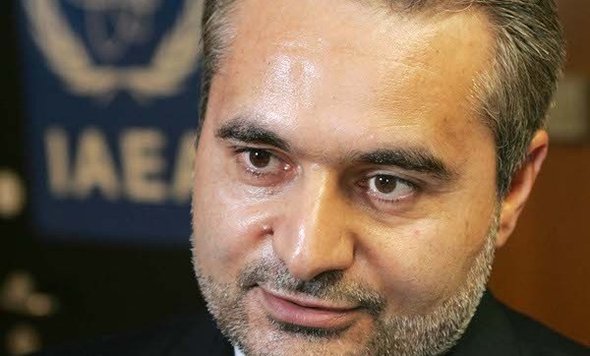
Hossein Mousavian- Former Iranian regime nuclear official and present lobby for the regime.

You can almost smell the desperation coming from the Iran lobby as it scrambles for an all-hands-on-deck effort to save the Iran nuclear deal before President Trump decides whether to withdraw from it by May 12.

One of the dedicated warriors for the Iran lobby is Seyed Hossein Mousavian, a former Iranian regime nuclear official who wrapped himself in the cloak of academia at Princeton University as a faculty member.

In an editorial published by Reuters, Mousavian takes up the gauntlet thrown down by Israeli prime minister Benjamin Netanyahu who earlier this week blistered Iran over its failure to disclose its nuclear program; calling the regime a liar.

Mousavian diligently checks off the talking points the Iran lobby has been flogging lately; namely that it was no secret what Netanyahu revealed, Iran has been in compliance under the nuclear agreement, and that President Trump and his foreign policy team were leading the U.S. to war with Iran.

He goes further by implying that the Trump administration’s “get tough” approach to Iran will not work.

“Implicit in Trump’s approach is that he can bully and pressure Iran into meeting his demands. However, the track record of U.S.-Iran relations since the 1979 Iranian revolution leaves little room to believe that Iran concedes to pressure,” Mousavian writes.

“I know from firsthand experience that Tehran responds to pressure by doing everything it can to produce leverage for itself. The modus operandi of Iranian leaders when it comes to addressing pressure is to become inflexible, steadfast and retaliatory,” he adds.

Mousavian finally reveals the first bit of truth. The mullahs are inflexible, steadfast and retaliatory, but that is not how they respond to pressure, it is their normal course of doing business.

For all of the cries of moderation by the Iran lobby during the negotiations for the deal in 2014-15, the reality has been a regime that have never wavered from its overriding goal of spreading its form of Islamic extremism at all costs around the world and build a Shiite sphere of influence protecting it from its many enemies.

To that end, the regime has admirably stubbornly held true to that goal by leveling Syria, overthrowing the government in Yemen, begging Russia to join the Syrian conflict and controlling Iraq through Iranian-backed Shiite militias.

Which is why Netanyahu’s central claim was never challenged by Mousavian and the rest of the Iran lobby: Iran has never deviated from its long-term plan to have nuclear weapons to use as leverage and a threat to its enemies and rivals.

But where Mousavian and the rest of the Iran lobby get it wrong is in saying that these moves by the Trump administration will push Iran into full-blown nuclear build mode.

The regime is already committed to such a path! Adhering to the deal doesn’t push them off their course. In fact, the appeasement policies practiced by the Obama administration have only made things worse. We have a track record of the past three years to show us exactly what the mullahs will do.

What brought Iran to the bargaining table in the first place back in 2015? Mousavian and his allies would have us believe it was diplomacy.

It wasn’t.

It was backbreaking economic sanctions imposed first by President George W. Bush and increased by President Obama, coupled with blocking Iran from accessing international currency exchanges which put Iran in the deep freeze money-wise.

Add to that the fracking boom in the U.S. driving the global price of oil down fast robbing the Iranian treasury of billions in cash from illicit oil sales and you begin to see how the decision to come to the bargaining table wasn’t driven by some desire for political moderation, but knee-capping sanctions that threatened the very existence of the theocratic state.

“If Trump withdraws from the JCPOA, he should not do so thinking Iran is vulnerable and in dire straits,” Mousavian said.

It is plainly apparent to even a closet regime cheerleader like Mousavian the Trump administration doesn’t view Iran on the brink of disaster. Far from it. It views the Iranian regime as robust, growing and a menacing threat to the entire Middle East.

The reason it is that way is because the nuclear deal held no restrictions on all other facts of the regime’s actions; allowing it to grow into the single biggest threat to global stability today.

The last-ditch nature of Mousavian’s missive is plain in his characterization of the protests rocking the mullahs’ control last year as “far smaller than made out to be” and pro-government demonstrations as “massive.”

The only thing true about that statement is that those government demonstrations were a massive failure and a sign of the desperate nature of the mullahs’ predicament.

It’s laughable that Mousavian ends his tirade by saying the end state for the Trump administration’s is war. The only war that is going to result from a withdrawal from the nuclear deal is an economic war as crippling sanctions are put back into place.

Mousavian says if the president wants “bigger deals” with Iran, he should build trust by implementing the nuclear agreement. The reverse is even more true.

If the mullahs want to avoid an economic meltdown that tosses them out of Tehran, they should build trust by burning their nuclear plans, dismantling their ballistic missiles and getting out of Syrian, Iraq and Yemen.

Michael Tomlinson

Filed Under: Blog, Current Trend, News Tagged With: Featured, Hossein Mousavian, Iran deal, Iran Human rights, Iran Lobby, Iran Mullahs

  • « Previous Page
  • 1
  • 2
  • 3
  • 4
  • …
  • 29
  • Next Page »

National Iranian-American Council (NIAC)

  • Bogus Memberships
  • Survey
  • Lobbying
  • Iranians for International Cooperation
  • Defamation Lawsuit
  • People’s Mojahedin
  • Trita Parsi Biography
  • Parsi/Namazi Lobbying Plan
  • Parsi Links to Namazi & Iranian Regime
  • Namazi, NIAC Ringleader
  • Collaborating with Iran’s Ambassador

Recent Posts

  • NIAC Trying to Gain Influence On U.S. Congress
  • While Iran Lobby Plays Blame Game Iran Goes Nuclear
  • Iran Lobby Jumps on Detention of Iranian Newscaster
  • Bad News for Iran Swamps Iran Lobby
  • Iran Starts Off Year by Banning Instagram

© Copyright 2026 IranLobby.net · All Rights Reserved.