Iran Lobby

Exposing the Activities of the lobbies and appeasers of the Mullah's Dictatorship ruling Iran

  • Home
  • About
  • Current Trend
  • National Iranian-American Council(NIAC)
    • Bogus Memberships
    • Survey
    • Lobbying
    • Iranians for International Cooperation
    • Defamation Lawsuit
    • People’s Mojahedin
    • Trita Parsi Biography
    • Parsi/Namazi Lobbying Plan
    • Parsi Links to Namazi& Iranian Regime
    • Namazi, NIAC Ringleader
    • Collaborating with Iran’s Ambassador
  • The Appeasers
    • Gary Sick
    • Flynt Leverett & Hillary Mann Leverett
    • Baroness Nicholson
  • Blog
  • Links
  • Media Reports

The Proxy War of the Regime in Iran

March 27, 2015 by admin

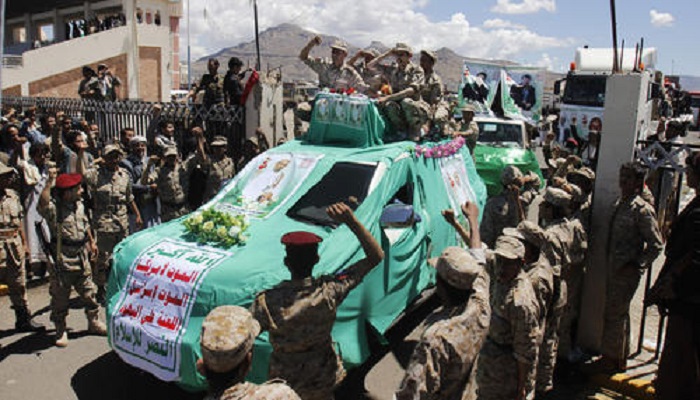
Houthi RebelsEvents in the Mideast are moving fast as Yemen is toppled by Iran-backed Houthi rebels, inviting a response by Saudi Arabia which launched air strikes in Yemen alongside Gulf State allies in an effort to check the progress being made by another Iranian regime proxy.

The stunning advances made by the Houthis shined a spotlight on a favorite tactic of Iran’s mullahs which is the use of proxies to fight their wars. It’s a tactic that harkens back to the Cold War-era fights in Southeast Asia and Africa between the West and old Soviet empire as Third World countries supplied the cannon fodder for countless wars, large and small.

The Iranian regime took a page out of the history books in funding, arming, training and then directing terror networks over the past three decades, most notably Hezbollah which has chalked up several ignominious victories, including:

  • Bombings of the U.S. Embassy and barracks in Beirut, Lebanon in 1983 killing 241 Americans and another bombing of the embassy annex in 1984;
  • Hijacking of TWA Flight 847 in 1985;
  • Systematic kidnapping and hostage taking of Americans and Europeans from 1982 to 1992 in Lebanon;
  • Khobar Towers bombing in 1996 killing 19 American servicemen; and
  • Training and arming of insurgents during the Iraq War targeting thousands of innocent Iraqis and also American service personnel.

Iran’s mullahs have used Hezbollah fighters to prevent the fall of Syria’s President Assad and target moderate rebels which has resulted in ISIS to rise up and form.

The Iranian regime has also used its virtual puppeteering of Shiite militias in Iraq in fighting ISIS that gave it the excuse necessary to move its military wholesale into Iraq and take over vast parts of that country’s military and political arms.

Though the recent Yemen attack by the gulf countries shows that the mullahs will pay a price for overreaching themselves, yet the regime in Iran, desperate to create crisis outside (to cover up the already exploding discontent of the Iranians against mullah’s dictatorship), has moved its proxies on the chessboard and enabled it to now interfere in a swath of territory stretching from the Mediterranean with Lebanon, through Syria and Iraq and now down through Yemen.

Yet, given the long and bloody history of the Iranian regime’s use of proxies to wage war, terror and murder, the regime’s lobbying and PR machine continually seeks to gloss over that record and instead attempt to rehabilitate its leaders. It’s akin to hiring a PR firm to try and redo the brand image of the Nazis.

The most recent example is an editorial from the National Iranian American Council’s Trita Parsi who wrote in The Atlantic that the regime’s top mullah, Ali Khamenei was a misunderstood softie who really wanted peace with the West. Parsi offers as logic, Iran’s historical interactions with the world going back to 1813 as reason for the regime’s natural suspicions of the rest of the world’s motives

Now, I am willing to concede that Khamenei is an old man, but I doubt he was around to be personally offended by anything that happened in the early 19th century. Parsi also never mentions Khamenei’s direction of Iran’s proxies, or his oversight of one of the most brutal human rights periods in Iranian history

Parsi also skips over Khamenei’s annual verbal calisthenics of leading chants of “Death to America” or his angry pronouncements that Iran will give no quarter in its efforts to preserve its multi-billion nuclear development program that was conceived in secret, violating international agreements and to this day, still largely uninspected by international agencies.

One would love to ask Parsi why, if Iran’s history is so important to understanding the motivations of the regime’s leadership, can’t the West use the Iranian regime’s bloody history of using proxies in its wars as evidence of the regime’s desire to wage war until it achieves its goals of establishing an Islamic extremist empire for itself?

Of course, he would probably tell us Iran doesn’t have any proxies.

By Laura Carnahan

Filed Under: Blog Tagged With: Iran deal, Iran Lobby, Iran Proxies, Iran Talks, Proxy war

Yemen as Warning for Iran Regime Nuclear Deal

March 26, 2015 by admin

WarningAs the old saying goes, “Fool me once, shame on you. Fool me twice, shame on me.” But what do you say when you’ve been fooled over and over again? “I’m an idiot?” Maybe and in this case, it almost certainly applies to anyone thinking they can trust the Iranian regime.

News came out of Yemen that Iranian-backed Houthi rebels had taken over the capital Sana and also moved south forcing the popularly-elected President Abdu Rabbu Mansour Hadi to reportedly flee by boat from the port city of Aden.

Yemeni intelligence officers still loyal to Hadi’s failing government attempted to burn secret files in a scene reminiscent of the effort to destroy files in the American embassy in Tehran in 1979 as militants stormed the building before the Iranian revolution was hijacked by radical extremist mullahs.

The fact that the Iranian regime has been deeply involved in the financing, training, equipping and leadership of Hezbollah fighters in Syria, Shiite militias in Iraq and now Houthi rebels in Yemen, all the while pushing for a rapid lifting of economic sanctions as part of ongoing nuclear weapons talks with the P5+1 group of nations, leads any rational person to deeply suspect the West is being played for fools by Iran’s mullahs.

It is hard to imagine anyone at the negotiating table in Switzerland being blind and oblivious to what is happening in Yemen, Iraq and Syria, and yet we know little, if anything, about the substance of these talks or if Iran’s conduct around the world has even been mentioned in a cursory way.

What we do know is that the track record of Iran’s mullahs is soaked in blood and is unquestionably focused on fomenting more of the sectarian violence rippling across the Mideast as Iran pushes its extremist ideology everywhere. No doubt the colossal expenditure of money necessary to fund all of these wars is draining Iranian coffers, which is one reason why Iran’s mullahs are almost frantic in their demands for an immediate lifting of all sanctions immediately.

News agencies report upwards of 18 Iranian oil tankers sitting off the coast filled to the brim with 30 million barrels of Iranian oil waiting to depart for market deliveries the minute sanctions are lifted with an agreement; bringing in billions of dollars to fund its war efforts.

The presence of Iranian military and intelligence officers on the ground in Yemen to take possession of classified files related to intelligence activities against Al Qaeda in the Arabian Peninsula, widely regarded as the terrorist network’s most dangerous branch, can only lead to a single conclusion: Iran’s leadership remains committed to its long-term plan of preserving and even growing terror networks around the world endangering the global peace.

While the White House can easily dismiss Supreme Leader Ali Khamenei’s recent “Death to America” chants and tweets as something for “domestic political consumption,” it is impossible to ignore the active security threats the Iranian regime presents in nations where the U.S. is literally running out the door such as Syria and Yemen.

Trust. It’s a simple word, but one filled with powerful meaning. It is earned and often only after demonstrations to earn trust over a long period of time. We know how trust works in our work lives, families, personal relationships, even in our choices of which brands to buy. Trust is a singularly important human emotion.

If the U.S. closes a deal with the Iranian regime without any pre-conditions on Iranian terror activities, let along relief for its gross human rights abuses at home, then the real fools will be those who support such an agreement and place their trust in Iran’s mullahs to keep their word when their past betrays them.

By Michael Tomlinson


Filed Under: Blog Tagged With: Houthies, Iran deal, Iran Talks, Iran Terrorism, Yemen

The Iran Lobby vs. Congress

March 24, 2015 by admin

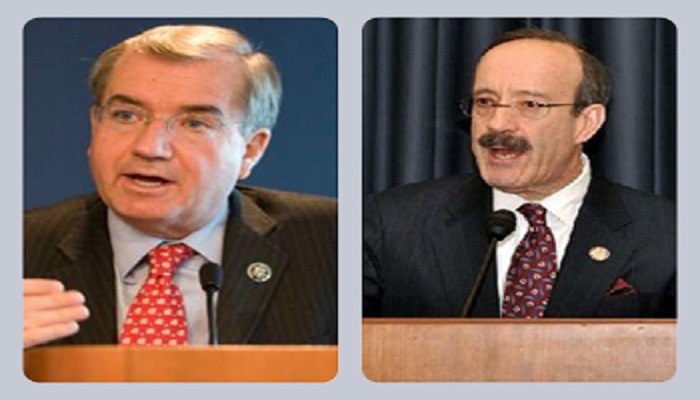
Royce and EngelA veto-proof, bipartisan majority of House lawmakers signed an open letter to President Barack Obama yesterday warning him that any agreement reached with the Iranian regime on its nuclear weapons program will require congressional approval for implementation.

While the Senate has begun considering bipartisan legislation mandating review of any agreement by Congress, the House letter outlined another possible venue for halting an agreement by refusing to roll back any sanctions levied on Iran.

The letter, signed by 367 members of the House represented a large bipartisan swath of both sides of the political aisle, putting efforts by the Iranian lobby working hard to forestall any such congressional action as fruitless so far.

‘Should an agreement with the regime in Iran be reached, permanent sanctions relief from congressionally-mandated sanctions would require new legislation. In reviewing such an agreement, Congress must be convinced that its terms foreclose any pathway to a bomb, and only then will Congress be able to consider permanent sanctions relief,” members wrote in the letter which was led by Foreign Affairs Committee Chairman Ed Royce (R-CA) and ranking member Eliot Engel (D-NY).

The House letter follows a letter sent by 47 Republican Senators to the Iranian regime and precedes what will likely be Senate action after the recess where Senate Foreign Relations Committee Chairman Bob Corker (R-TN) announced on Friday he would schedule a committee vote April 14 on a bill that would allow Congress 60 days to review any deal before its implementation.

The momentum for congressional review and approval continues to grow as the situation in the Middle East continues to deteriorate rapidly, largely because of the Iranian regime’s manipulations and involvement.

Yemen, which had been held up as a showcase in the fight against terror by the Obama administration six months ago, has collapsed with the U.S. embassy closing and all U.S. Special Forces being hastily withdrawn as Iranian-backed Houthi rebel extremists swiftly took over the government. Yemen, which shares a border with Iranian regime foe Saudi Arabia, now appears headed towards a Syria-like civil war.

Meanwhile, Iran’s Quds Force and other Revolutionary Guard Corps units have effectively taken over Iraq and are busy entrenching Shiite militias, supplanting Iraqi army units in the war with ISIS.

The situation with ISIS grows more anxious as Boko Haram and other extremist groups pledge their allegiance and enable the terror group to expand its reach into Libya, Tunisia, Nigeria, Chad, Sudan, Afghanistan and even into Turkey.
All of which has rightly caused Democrat and Republican lawmakers to worry about where the P5+1 negotiations are going. Not helping has been the veritable cloak of secrecy that have covered these talks and failed to win any confidence from the American public faced with growing fears of terrorism and an Iranian regime seemingly with a finger in every terror pie around the world.

In the face of all this, the Iranian lobby, led by the National Iranian American Council, has failed to make much of an appreciable dent. It’s only ally, and arguably its most important, seems to be an Obama administration bent on grasping onto any deal in order to trumpet a foreign policy win amidst a dearth of good news from around the world.

By Michael Tomlinson

Filed Under: Blog Tagged With: Congress open letter, Iran, Iran deal, Irantalks

NIAC Example of Helsinki for Iran Dead Right

March 12, 2015 by admin

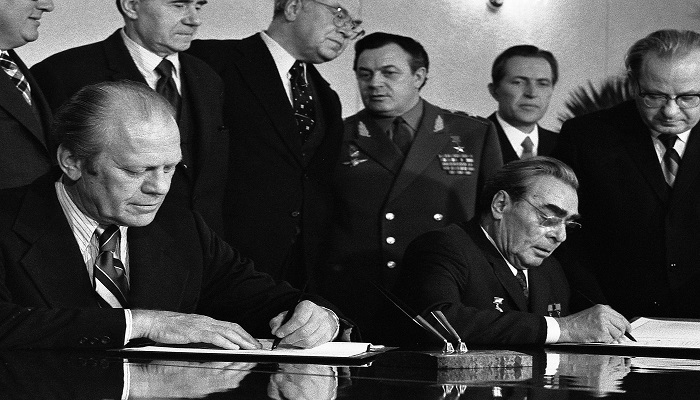
Helsinki AccordsThe lack of intellectual rigor coming from the Iranian regime’s foremost lobbying team in the National Iranian American Council fails to impress and today is no exception with an inane editorial written by Tyler Cullis and appearing in the New York Times.

In it, Cullis attempts to draw parallels between the diplomatic efforts made by President Gerald in overcoming Senate opposition to craft an accord with the old Soviet Union in an effort to lay the groundwork for détente between the East and West. He aligns this scenario with what is currently happening in talks between the Iranian regime and the P5+1 group of nations seeking to restrict the mullahs march to a nuclear weapon.

Cullis fails to mention several key and crucial distinctions between the two that have an even more profound impact on current talks.

For one thing, President Ford attempted to make human rights a core feature of the accords in recognition of the terrible human rights violations occurring regularly within the Warsaw Pact nations. In a speech he gave while trying to sell the Accords to the American public, he said:

“The Helsinki documents involve political and moral commitments aimed at lessening tension and opening further the lines of communication between peoples of East and West. . . We are not committing ourselves to anything beyond what we are already committed to by our own moral and legal standards and by more formal treaty agreements such as the United Nations Charter and Declaration of Human Rights.”

It was significant for President Ford to stress the human rights aspects of the Accords since the agreement would effectively make permanent the Soviet Union’s annexation of the Baltic states of Lithuania, Latvia and Estonia after World War II and place them under harsh rules for the next 30 years.

The Accords were also significant because they were not a treaty per se, as evidenced by the strong objections by nations such as Canada, Spain and Ireland in allowing the Soviets to swallow the Baltic States. In a bit of historical irony, the Accords laid the groundwork for the later Organization for Security and Cooperation in Europe, the same working group which has floundered in building a cohesive response to Russia’s recent annexation of the Crimea and invasion of Eastern Ukraine.

All of which further demonstrates the feebleness of Cullis argument. At no point during the P5+1 talks has the Iranian regime’s dismal human rights record ever been put on the negotiating table, nor its long support and sponsorship of global and Islamic extremist terror groups.

One of the key recognitions of the Helsinki Accords was its commitment and focus to the preservation of human rights as a key element in the dialogue between the West and Soviet Union. It presented the framework by which later talks under détente efforts by preceding Presidents were always framed by the need to dissuade the Soviets from abusing its own people and those of nations under their sway.

It is a model of success that has borne early fruit with the Iranian regime by forcing it to come to the negotiating table after economic sanctions began having their desired effect, but Cullis and other regime sympathizers would have us give Iran’s mullahs the breathing room necessary to rebuild their economy while arming themselves with nuclear weapons under the guise of peaceful talks.

While Cullis holds the Helsinki Accords as a model for Iranian talks, he unwittingly reinforces the true reason why those Accords succeeded and it had nothing to do with President Ford ignoring Congress, but had everything to do with his focus on human rights.

According to the Cold War scholar John Lewis Gaddis in his book “The Cold War: A New History” (2005), “Leonid Brezhnev had looked forward, Anatoly Dobrynin recalls, to the ‘publicity he would gain…when the Soviet public learned of the final settlement of the postwar boundaries for which they had sacrificed so much’… ‘[Instead, the Helsinki Accords] gradually became a manifesto of the dissident and liberal movement’… What this meant was that the people who lived under these systems — at least the more courageous — could claim official permission to say what they thought.”

We can only hope that this proposed agreement with the regime gets scrapped and instead a true human rights-driven manifesto takes its place rightly restoring the importance of Iran’s mullahs getting an agreement conditioned only by their acceptance and implementation of human rights improvements and the renunciation of terror.

Thank you Mr. Culis for so eloquently making my point.

By Michael Tomlinson

Filed Under: Blog, National Iranian-American Council, The Appeasers Tagged With: Helsinki Accord, Iran, Iran deal, Iran Lobby, Iran Talks

Can Iran Mullahs Be Trusted?

March 3, 2015 by admin

TrustIn the Wall Street Journal, Rep. Chris Stewart (R-UT), a former Air Force B-1 pilot and member of the House Permanent Select Committee on Intelligence, authored an editorial that raises the most essential question facing the Congress, American people and frankly the world right now: “In what way is Iran a reliable negotiating partner?”

The short answer to that question is: “None.”

Congressman Stewart forthrightly examines the conundrum facing anyone dealing with Iran’s mullahs. What evidence has there been to give reassurance to anyone sitting across from a negotiating table from them that they would adhere to the letter and spirit of any agreement?

His experiences during the Cold War in dealing with the old Soviet Union are instructive because they teach us that for any agreement to work, both sides have to be considered reliable and trustworthy partners. It is also an axiom of politics and nation states that if breaking an agreement serves the national interest, it is likely going to be broken.

He goes on to recount the litany of acts by Iran’s leaders which would give any normally sane person pause, including listing Iran as an official sponsor of state terrorism for the last 30 years and creation of an indigenous military-industrial complex allowing it to create and ship out its own weapons and ammunition to terror groups.

Stewart cites mullahs in Iran as the primary weapons supplier for two other state sponsors of terrorism in Syria and Sudan, while it supplies arms to terrorist groups such as Hezbollah, as well as Shiite militias in Iraq.

“Tehran’s regime suppresses internal dissent and has executed tens of thousands of its own citizens for opposing the regime. It is responsible for the deaths of hundreds of U.S. military personnel in Iraq through improvised explosive devices supplied to Shiite militias in the past decade. Iran counts as close allies Russia, China and North Korea, which team with the regime in developing ballistic missiles and nuclear capabilities,” Stewart writes.

But Stewart correctly goes on to cite the Iranian regime’s involvement in money laundering, drug and arms trafficking, counterfeiting, promoting extremism and plotting terrorist attacks in South and Central America, demonstrating the mullahs reach and global aspirations.

Besides a long record of regular violations of international and human rights law, Stewart asks how can the regime in Iran be trusted if the primary mechanism for compliance – international inspections – isn’t even allowed by the regime? He cites the International Atomic Energy Agency report from Feb. 20 that was harshly critical of Iran’s stonewalling of inspections and continued non-compliance.

If Iran’s mullahs won’t even comply with inspections at this critical juncture when it claims a heartfelt desire to negotiate a deal, when will it ever allow inspections?

The deep and abiding obstacle starts and ends with the intentions of the ruling mullahs. Unfortunately the U.S. and the rest of the P5+1 group have never conditioned a nuclear deal on a fundamental request; that is Iran’s transition from a religious theocracy to a democratic society.

Unless you can change Iran’s society and government to one that is at its core more law-abiding, more peaceful and more interested in being an international partner, then any agreement negotiated with the current regime isn’t worth the paper it’s printed on.

Trust is something that is earned and built upon. It is not something that one “hopes” is inherent when the track record is so devoid of any trust. Therefore in the case of Iran mullahs, it should be “Verify before you trust.”

By Laura Carnahan

Filed Under: Blog Tagged With: Iran, Iran deal, Iran Lobby, Iran Talks

Khamenei Shows True Colors

February 19, 2015 by admin

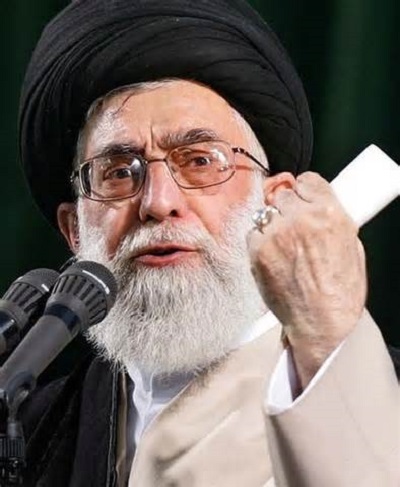
Angry KhameneiBenjamin Franklin famously said “In this world nothing can be said to be certain, except death and taxes.” If Franklin were alive today, he might add mullah’s Supreme Leader Ali Khamenei to the list of certainties.

Yesterday in a public speech in Tehran carried by the official IRNA news agency, Khamenei once again vowed Iran would resist global sanctions in its pursuit of nuclear capability and threatened to cut off natural gas exports in retaliation to any continued sanctions.

“Serious work must take place. We can withstand the sanctions and neutralize and foil the enemy’s goals. If we don’t, the enemy would proceed and place conditions on our nuclear program and impose sanctions,” Khamenei said.

“If sanctions are to be the way, the Iranian nation can also do it. A big collection of the world’s oil and gas is in Iran so Iran if necessary can hold back on the gas that Europe and the world is so dependent on,” he added.

It is noteworthy Khamenei still refers to the West and especially the U.S. as the “enemy.” His worldview is clouded by the long-simmering extremist view he has nurtured for the past several decades and seems unable to move forward into a new era of peace and prosperity. He clings to the notion Iran must resist all attempts at compromise and maintain a virtual war footing.

But Khamenei’s threats ring hollow when you consider Iran’s total oil production is estimated at 2.7 million barrels per day, mostly for domestic use. It also produces 600 million cubic meters of natural gas, of which 500 million cubic meters is used at home, meaning Iranian regime’s ability to “punish” Europe with a natural gas embargo is about as real as finding a unicorn.

But Khamenei didn’t stop there. He went on to accuse the U.S. of secretly supporting ISIS and criticized the European Union for placing sanctions on the National Iranian Tanker Company, the regime’s largest tanker company for carrying its petroleum overseas.

All of which flies in the face of recent frantic efforts by the Iranian regime’s lobbying and PR machine to convince the American public Iran does indeed want a compromise in current nuclear talks, even after two previous rounds of talks failed largely because of Khamenei’s hardline position and refusal to accept any deal compromising Iranian regime’s ability to generate large quantities of enriched uranium for use in nuclear warheads.

One might even feel slightly sorry for Iranian regime loyalists such as Trita Parsi of the National Iranian American Council who wax poetic about Iran’s desire for compromise only to be torpedoed on a regular basis by a new rant by Khamenei that reinforces and reminds Americans how mad the guy really is.

But any sympathy evaporates when we realize the stakes involved in this tense game of chicken Khamenei is playing. For all his bluster, he acts like he has virtually no interest in a deal. He regularly dumps on the U.S. He pushes for harder crackdowns at home in gross human rights violations. He has directed a foreign policy and controls a military and intelligence service involved in conflicts in almost a dozen countries now.

Just as ISIS has designs on a new fanatic Islamic caliphate, Khamenei shares the same vision for an Iranian-controlled sphere of influence. It is a dream born out of his virulent hatred of all things from the West including gender equality, free speech, an uncensored media and an unfettered internet.

As negotiators continue talks, they should not ignore the latest outburst by Khamenei because in most people’s minds, three strikes is usually enough to call someone out.

By Michael Tomlinson

Filed Under: Blog, News Tagged With: Iran deal, Iran sanctions, Irantalks, Khamenei

The Irony that is Iran

February 3, 2015 by admin

Trita Parsi Earplug (1)That ever loyal servant of the Iranian regime, Trita Parsi of the National Iranian American Council, penned an editorial appearing in Reuters where he used a curious turn of phrase saying there were schools of “doubt” in Iran as to who was calling the policy shots in the U.S. He was pointing out a view that held Iran’s mullahs either believed President Obama was genuinely interested in a new rapprochement or was simply being captive to the politics of Congress.

Parsi attempts to lay out the idea that Iran is stuck between a rock and a hard place because it wants to do the best deal it can, but has to contend with confusing American politics.

For Parsi’s benefit, we should point out it is because this is a democracy. Get it?

Democracies are messy affairs. They involve open and sometimes hostile public debate. They require free and fair elections. They generate substantial discussion on news media and social media. They need checks and balances to ensure the rights of minorities are respected. In short, they do all the things Iran’s mullahs are terrified of in their own country.

Parsi also attempts to posit the idea that sanctions against Iran are fast coming undone because of a recent delay proposed by Senate Democrats to give President Obama and Secretary of State John Kerry an additional two months to nudge Iran forward. Considering Iran has already had two years to stall, demand and berate negotiators, two months doesn’t seem like much.

Democrats, led by Senator Robert Menendez (D-NJ) were also clear in demanding any deal be reviewed by Congress and that they would hold any proposal under close scrutiny in meeting their approval. Not exactly a Rose Garden walk-through for Iran, but then again Parsi will take anything. So desperate is Iran to gain any advantage, it would take even this twig and portray it as an olive tree.

Parsi goes on to portray the complete erosion of Democratic support for new sanctions, but the irony is that the Democratic and Republican proposal is not for the imposition of new sanctions, but simply the re-imposition of existing sanctions that were temporarily suspended after the interim agreement was reached and contingent on Iranian regime making substantial progress forward.

Since then, however Iran’s progress has been as quick as a snail and as noticeable as glaciers growing larger. The regime in Iran has consistently refused access to additional nuclear research sites to the International Atomic Energy Agency. It has stepped up a brutal crackdown on human rights against its own citizens. It has engaged in four separate wars in Syria, Yemen, Iraq and Afghanistan now, while still supporting terror groups such as Hezbollah.

At no point has the regime in Iran made any substantial concessions on the core issues of reduction in centrifuge capacity and elimination of missile delivery technology obtained from North Korea, another rogue nuclear state.

With the spread of ISIS and Boko Haram and utter collapse of Yemen, the American people have raised concerns over terror above those of jobs and economy in recent polls. This leads one to wonder why Parsi takes the position that sanctions proponents are now on the margins in this debate.

We might excuse his hyperbole for the simple fact NIAC is a well-greased lackey for the mullahs in Iran, but considering the topic of his editorial, we might be more inclined to think Parsi shares the confusion of the mullahs in simply not understanding how a democratic society truly works.

While Parsi raises his histrionics, the fact remains Congress and a bipartisan coalition of Democrats and Republications numbering at least 62 Senators with an additional 14 patiently waiting two more months before pulling the proverbial trigger on sanctions are more than sufficient to re-impose sanctions and override any presidential veto. We assume Parsi is an intelligent operative for mullahs in Iran and can count votes, which may be why he is throwing everything he can in hopes something sticks before March 24th.

By Michael Tomlinson

Filed Under: Blog Tagged With: Iran deal, Iran Lobby, Iran Nuclear, Iran Talks

Learning the NIAC Two-Step

January 31, 2015 by admin

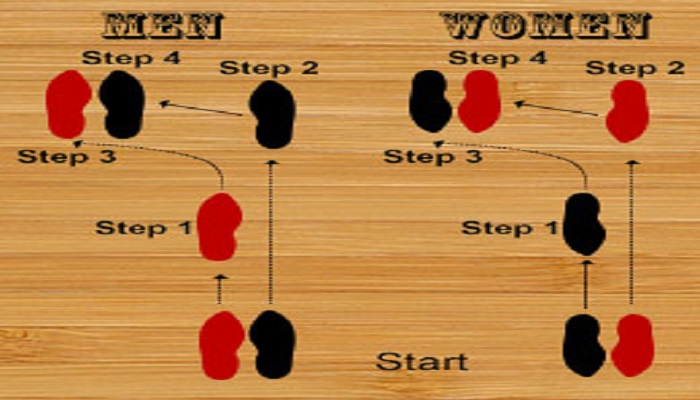
Two Step ChartWhile the cheerleaders for the current Iranian regime at the National Iranian American Council are busy congratulating themselves on a two month extension on the immediate re-imposition of economic sanctions temporarily suspended because of an interim agreement reached last year by the P5+1 nations and Iran, the Senate Banking Committee by a wide bipartisan 18-4 margin passed out a bill over its first procedural hurdle to set the stage for a showdown vote in March on re-imposing sanctions.

It must not be too reassuring to the NIAC and its Iranian overlords to see this bill pass by such a large margin, nor coming on the heels of what they had hoped would be a pause long enough to allow Iran time to bamboozle the administration into accepting a “framework” by March in order to buy more time until July before having the entire negotiating process collapse again as it has done twice before.

NIAC’s Jamal Abdi in fact, in a piece published on the group’s website, breathlessly recounted the blow by blow narrative of how this two-month sanctions pause was achieved; and of course all because of the NIAC’s massive lobbying effort on behalf of Iran. Mine you, on behalf of Iran’s mullahs and not Iranian Americans, but that’s for another day’s editorial.

What he neglected to mention and what has been widely credited by virtually every political commentator and analyst, including Senate Democrats themselves such as Senators Harry Reid (D-NV) and Dianne Feinstein (D-CA), as being the key influencing factor on the delay was Speaker John Boehner’s move to invite Israeli Prime Minister to address a joint session of Congress on Iran and its nuclear weapons program.

For many Democrats, the move smacked of overt politics and stiffened their resolve, but even that was not enough to move them totally off the sanctions bandwagon. All it did was keep alive the central piece of legislation and move the action date from February to March.

The one thing both Democrats and Republicans readily agree on is that the regime in Iran should not be allowed to have a nuclear weapon…period. Both sides of the aisle also agree sanctions should be re-instated broadly and harshly if mullahs in Iran do not deliver a deal agreeable to Congressional review.

So while the NIAC chortle in public, privately they know they are swimming against the tide of sentiment; a sentiment that will inevitably grow stronger as the clock resets and again counts down to March 24 with another round of scrutiny growing day by day with more and more pressure being applied to Senators by a nervous public watching the nightly news of ISIS, Boko Haram, Al-Qaeda and Taliban advances.

So while the NIAC, Al Jazeera and the Obama administration may have excised “Islamic extremism” from their daily use, it has not escaped the attention of Americans who in recent polls have placed concerns about terrorism above even the economy and jobs.

All of which is bad news for mullahs in Iran and its supporters as they try to learn new dance steps.

By Michael Tomlinson

Filed Under: Blog Tagged With: Iran, Iran deal, Iran Lobby, nuclear talks, Sanctions, Veto Sanctions

  • « Previous Page
  • 1
  • …
  • 27
  • 28
  • 29

National Iranian-American Council (NIAC)

  • Bogus Memberships
  • Survey
  • Lobbying
  • Iranians for International Cooperation
  • Defamation Lawsuit
  • People’s Mojahedin
  • Trita Parsi Biography
  • Parsi/Namazi Lobbying Plan
  • Parsi Links to Namazi & Iranian Regime
  • Namazi, NIAC Ringleader
  • Collaborating with Iran’s Ambassador

Recent Posts

  • NIAC Trying to Gain Influence On U.S. Congress
  • While Iran Lobby Plays Blame Game Iran Goes Nuclear
  • Iran Lobby Jumps on Detention of Iranian Newscaster
  • Bad News for Iran Swamps Iran Lobby
  • Iran Starts Off Year by Banning Instagram

© Copyright 2026 IranLobby.net · All Rights Reserved.