Iran Lobby

Exposing the Activities of the lobbies and appeasers of the Mullah's Dictatorship ruling Iran

  • Home
  • About
  • Current Trend
  • National Iranian-American Council(NIAC)
    • Bogus Memberships
    • Survey
    • Lobbying
    • Iranians for International Cooperation
    • Defamation Lawsuit
    • People’s Mojahedin
    • Trita Parsi Biography
    • Parsi/Namazi Lobbying Plan
    • Parsi Links to Namazi& Iranian Regime
    • Namazi, NIAC Ringleader
    • Collaborating with Iran’s Ambassador
  • The Appeasers
    • Gary Sick
    • Flynt Leverett & Hillary Mann Leverett
    • Baroness Nicholson
  • Blog
  • Links
  • Media Reports

Iran Regime Has No Intention of Changing

June 22, 2015 by admin

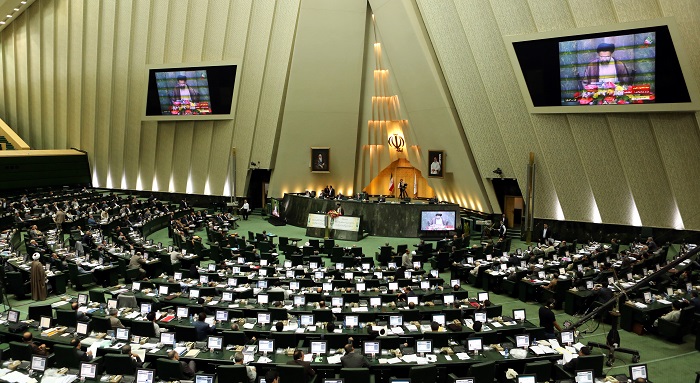
epa03823138 A general view of the parliament during the parliament session on 13 August 2013 in Tehran, Iran. Iranian president Hassan Rowhani proposed his cabinet to the parliament on 12 August 2013. All designated ministers need the majority votes of the 290 deputies before taking office. Rowhani said that his government will take distance from any form of extremism and rather adopt a moderate approach for ending the country?s international isolation.  EPA/ABEDIN TAHERKENAREH

A general view of the parliament during the parliament session on 13 August 2013 in Tehran, Iran. Iranian president Hassan Rowhani proposed his cabinet to the parliament on 12 August 2013. All designated ministers need the majority votes of the 290 deputies before taking office. Rowhani said that his government will take distance from any form of extremism and rather adopt a moderate approach for ending the country?s international isolation. EPA

Trita Parsi, the head of the National Iranian American Council and chief apologist for the Iran regime, has long maintained that the bluster of Iranian lawmakers and other officials in denouncing a proposed nuclear deal was evidence of a schism within Iran between moderates and hardliners and that only agreement on a deal could empower moderate elements to win out.


The NIAC has even gone so far as to claim that heinous and brutal human rights violations are the product of these ideological struggle amongst Iran’s ruling mullahs.

It has been a straw man for the Iran lobby and an effort to divert attention from the truth which is in fact while there are divisions within Iran’s ruling class on how to share power, but both divisions stands firmly united behind a single goal; the preservation and expansion of their power and corrupted extremist Islamic ideology.

With little more than a week remaining before a self-imposed June 30 deadline for a nuclear agreement between Iran and the P5+1 group of nations, Iran’s mullahs have expressed little to no interest in completing a deal.

This Sunday, Iran’s parliament voted to oppose inspections of government military sites as part of any agreement, in direct opposition to what negotiators from the U.S. and France have called a “must-have” condition for any agreement. The legislative move follows similar statements made by the regime’s top mullah, Ali Khamenei, who also declared Iranian regime’s military sites off-limits to inspectors.

The mullah’s legislation states in part: “The International Atomic Energy Agency, within the framework of the safeguard agreement, is allowed to carry out conventional inspections of nuclear sites.”

However, it concludes that “access to military, security and sensitive non-nuclear sites, as well as documents and scientists, is forbidden.”

All of this follows a series of concessions already granted by the P5+1 including the exclusion of ballistic missile technology, the retaining of thousands of enriching centrifuges and moves to accommodate Hezbollah and Pakistani nuclear component exporters. Not to mention the failure of the Iran regime to curb its support for three proxy wars, the release of four American hostages and any loosening of brutal human rights repression. This is while over 1800 people have been executed in Iran during Rouhani’s tenure.

As the Washington Examiner pointed out this weekend, even though the Obama administration is intently focused on securing a nuclear deal with the Iran regime, it has all but ignored the terrorism that Iran sponsors and facilitates throughout the region as outlined in the State Department’s annual report on terrorism released on Friday.

As Sen. Mark Kirk (R-IL) aptly pointed out: “Now that the administration admits nuclear talks haven’t diminished Iran’s support for terrorism, to what extent has Iran used the interim nuclear deal’s $12 billion in sanctions relief payments to fund terrorists or other terror-supporting regimes?”

“As we move closer to the June 30th deadline for a final nuclear deal that could return as much as $140 billion in frozen funds to Iran, the White House remains silent on this critical question.”

And this strikes to the heart of the argument made by Parsi and other regime allies. If there is a battle of moderate and hardline influences within Iran, where is the proof of moderation on the battlefield so to speak? Nowhere has the regime exercised any restraint or moderation as it pursues its extremist policies.

Has Iran regime cut off aid to Hezbollah and Assad in Syria? No, it’s committed another 15,000 troops, this time, including drawing mercenary recruits from Afghanistan. Have mullahs released American prisoners as a show of good faith? No, it is moving ahead with a closed trial of Jason Rezaian, a Washington Post reporter on espionage charges for reporting. Has Iranian regime sought to reassure the world it will comply with nuclear inspection? No, it still refuses to answer questions from the International Atomic Energy Agency in 12 areas of concern over the military dimensions of its nuclear program.

It does not take a leap of logic to see that the Iran regime is firmly committed to its course of nuclear weapons development and is merely taking the world along for a joy ride as its seeks its real prize; the release of $140 billion in frozen cash and opening the floodgates of billions more in foreign investment.

Parsi and his cohorts can’t even hide this truth with their obfuscations.

By Michael Tomlinson
Filed Under: Blog, News Tagged With: IAEA, Iran, Iran deal, Iran Lobby, Iran Nuclear, Jason Rezaian, Military Dimensions of Iran Nuclear Program, Trita Parsi

The Iran Lobby Fig Leaf

June 16, 2015 by admin

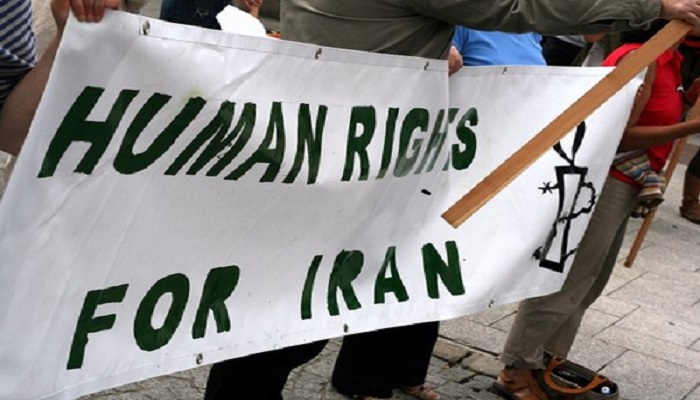
Human Rights for IranThis weekend in Paris was marked by one of the largest gatherings ever assembled of people dedicated to change in the Iran regime and the return of that nation to freedom and democracy.

With a crowd estimated at over 100,000 people, the gathering sponsored by the Iranian diaspora, supporters of the resistance umbrella group, the National Council of Resistance of Iran, featured an eight hour marathon of speeches and remarks by delegations representing over 60 nations, all focused on the brutal nature of the regime and the harsh repression and cruel treatment of Iran’s citizens by their religious mullah overlords.

Even with that much program time, a proper accounting of Iran’s human rights abuses would fill a month’s worth of speeches; so vast and large is the ledger of the abuses by the mullahs. The full extent of Iran’s human rights abuses have been so chronic as to warrant the appointment of a Special Rapporteur by the United Nations focused exclusively on Iran.

The appointment of Ahmed Shaheed as the UN Special Rapporteur on Human Rights for Iran is one of only ten such appointments currently in effect; ranking Iran alongside persistent human rights abusers as Haiti, Myanmar, North Korea and Sudan.

Shaheed has continually spoken out against abuses by the mullahs, most notably as recently as June 5, 2015 over the rapid escalation of arrests and imprisonment of journalists, including American journalist Jason Rezaian.

“The recurrent use of vague references to threats to national security, propaganda against the system and insult to authorities to prosecute and detain journalists or activists is in contradiction to both international norms relating to freedoms of expression and association and the principle of legality,” Mr. Shaheed stated.

Amnesty International’s annual report goes into extensive detail on the litany of human rights abuses flowing from the mullah’s mandates including restrictions on the freedom of expression, association and assembly, widespread use of torture, codified unfair trials, institutional mistreatment of ethnic and religious minorities, the broad denial of women’s rights, lack of privacy, denial of education, and frequent and indiscriminate use of the death penalty.

The chronicle of abuses does not even include the special ire and venom reserved for Iranian dissidents such as those who assembled in Paris by Iran’s mullahs who have sought for the past 35 years to discredit, defame, attack and murder members of Iran’s resistance groups such as the NCRI and People’s Mojahedin Organization of Iran (PMOI).

In the course of resisting Iran’s despotic rule, the groups have seen over 120,000 members murdered by the regime, most recently in hangings from trumped up show trials and at Camp Liberty in Iraq where 2,500 dissident refugees are frequently attacked by Iranian security forces and paramilitaries.

Yet even after the catalogue and almost daily chronicle of abuses against Iranians and Iranian-Americans by the regime, their most vocal supporter, the National Iranian-American Council, has barely uttered a word of protest or criticism even when the abuses are specifically aimed at Iranian-Americans, nominally the reason why the NIAC exists in the first place.

The litany of abuse had become so rampant, so blatant and appearing daily in the front pages of newspapers and global newscasts, that the NIAC finally had to issue some kind of statement recognizing the gross mistreatment going on or risk become a laughingstock every time they opened their mouths; some might argue it already is a laughingstock, but that’s another matter.

So what did the NIAC do to strike fear in the hearts of the mullahs and their prison guards, torturers, hangmen and puppet jurists? It issued a 379-word long press statement in which it “condemns the Iranian government’s recent violations of its international human rights obligations.”

Most notable in the brief statement was that 148 words of it dealt, not with human rights, but with the proposed nuclear deal being negotiated in Switzerland. Even when faced with the overwhelming human misery and suffering being caused by Iran’s leadership, the NIAC can barely force itself to utter a peep about it.

By way of comparison, an editorial written by NIAC policy fellow Ryan Costello in The Hill blog the same week devoted a brawny 891 words to the topic of the issue of inspections of military sites, nearly four times the amount devoted to human rights.

It is a mere fig leaf by the NIAC to cover up for the fact it is a group appearing to be solely dedicated not to the plight of Iranian-Americans, especially four of them languishing in Iran now, but rather towards supporting the political aims of a small cadre of religious rulers in Iran.

By Michael Tomlinson

Filed Under: Blog, News Tagged With: Iran, Iran Lobby, Iran Talks, National Council of resistance of Iran, NCRI, NIAC

The Importance of Linking Iran Sanctions and Human Rights

June 9, 2015 by admin

Bijan Khajehpour

Bijan Khajehpour

Sens. Mark Kirk (R-IL) and Bob Menendez (D-NJ) have put forward an amendment to the defense budget that would extend congressional sanctions against the Iran regime for 10 additional years. The amendment is aimed at extending the Iran Sanctions Act of 1996, currently set to expire at the end of 2016, to the end of 2026.

The amendment is an important step in resetting the expectations associated with the Iran regime’s nuclear weapons program because it links it to the development of intercontinental ballistic missiles and human rights abuses; a significant step towards properly addressing the central issues with the regime’s conduct towards the world.

The regime’s chief cheerleaders, the National Iranian American Council, predictably were quick to denounce the legislation, warning that passage of the bill would derail ongoing negotiations. The NIAC’s statement was noteworthy for a few things, namely that it placed the burden of completion of a deal on the U.S. and not the regime.

“There are legitimate questions about whether the U.S. will be able to deliver on the terms for sanctions relief under a nuclear deal, and the passage of this amendment would give credence to those concerns,” the NIAC statement said.

It is a remarkable sentence because it firmly ignores the chief obstacle to any agreement between the West and Iran, which is Iran’s historic inability to live up to any of its international agreements. As recently as last month, Iran has steadfastly refused to answer outstanding questions from the International Atomic Energy Agency about the “possible military dimensions” of its nuclear program.

On top of that omission are repeated comments by Iran’s top mullah, Ali Khamenei, who has reiterated publicly his opposition to allowing access to any Iranian military facility or Iranian nuclear scientists by international inspectors.

This follows continued denials by Iran that it is involved in proxy wars being waged in Syria and Yemen, not to mention its control of Shiite militias in Iraq that are now being accused of reprisal sectarian killings against Sunni Muslim villagers, all of which points to a disturbing and repeated pattern of deception, denial and distrust.

The action by Senators Kirk and Menendez comes after passage of legislation signed by President Obama and over the vigorous objections of NIAC authorizing congressional review of any nuclear agreement reached with Iran.

This latest bill from Kirk and Menendez addresses a glaring hole in current negotiations, which is the failure of negotiators to hold Iran’s human rights conduct accountable, as well as including the regime’s capacity to deliver a nuclear weapon well outside their neighborhood and threaten Europe and Asia.

The NIAC and the rest of the Iran lobby have fought hard to keep these things out of negotiations because they know full well their inclusion would almost certainly doom Iran’s hopes of securing a deal and lift economic sanctions and flood the regime with billions in new cash and investment.

The proposed amendment is not a deal breaker for the West as much as it is a safety clause assuring the West does not deliver a bad deal that could come back to haunt them.

By Michael Tomlinson


Filed Under: American-Iranian Council, Latest from Lobbies & Appeasers, National Iranian-American Council, The Appeasers Tagged With: Congress bill on Iran, Iran, Iran appeasers, Iran deal, Iran Human rights, Iran Lobby, Iran sanctions, Iran Talks, Irandeal, NIAC, Sanctions

Iran Regime Dangling Dangerous Dollars

June 9, 2015 by admin

Delusional Trita ParsiWith the June 30 deadline looming for the third round of nuclear talks between the P5+1 group of nations and the Iran regime, the news media have picked up steam in discussing the possibility of foreign companies jockeying for position in investing in Iran once a deal is completed.

But in the immortal words of Greek fabulist Aesop “do not count your chickens before they are hatched.” More than a cliché, they are prudent and appropriate words for any companies looking to take advantage of a newly opened market in Iran.

USA Today ran a story looking at visiting business delegations streaming into Tehran, all with an eye towards the completion of these talks and a signing of a deal. The vast majority of these companies are European with only a few American firms kicking the tires of an open Iranian market.

“Even if all sanctions are lifted, there will still be blacklists of Iranian companies that Western companies should avoid,” said Bijan Khajehpour of Atieh International, a consulting firm in Vienna that works to bring companies into the Iranian market. “Assets in the economy controlled by the semi-state organizations are gradually approaching the size of government.”

But Khajehpour is wrong when he says that “developing Iran’s economy will lead to greater peace, political reform and moderation by its revolutionary government” because Khajehpour has a long record of associating with supporters and lobbyists of the Iran regime, including Trita Parsi of the National Iranian American Council, in efforts to direct companies and investment into Iran.

Khajehpour and his firm – co-founded with his wife Pari Namazi who is the sister of Siamak Namazi a close confidante of Parsi – have been boldly supportive of the regime in advocating for the lifting of economic sanctions by working to steer greater interest by foreign companies in Iran. The effort is designed to create a fait accompli and build global momentum towards the “inevitability” of a nuclear deal.

While the potential size of the Iranian market is significant with 81 million people, the obstacles are daunting irrespective of what happens at the negotiating table in Switzerland. For one thing, Iran ranks in the top 40 of most corrupt nations according to Transparency International; listed at 136, tied with Nigeria and Cameroon, with corruption running rampant throughout Iran’s government with much of the nation’s wealth diverted to the mullahs who control the country and their families.

Another facet of this corruption is the shell-company ownership of vast sectors of the Iranian economy by quasi-governmental entities such as Iran’s Revolutionary Guards Corps military which controls nearly a tenth of the entire nation’s economy by some estimates.  The IRGC has made no bones about its desire to see a completed nuclear deal because of the vast wealth that would be pumped into its coffers at a crucial time when it has expended billions of dollars in propping up the Syrian regime, Shiite militias in Iraq and Houthi rebels in Yemen.

The IRGC also recognizes that unless it can secure a deal and have foreign investment flow back in, disaffected Iranians suffering under the mismanagement and general ineptness of the mullahs might very well choose regime change in order to get their Apple iPhones and McDonald’s Big Macs.

The true scope of the conundrum facing Western companies revolves around the central idea of why would you want to invest billions in a corrupt regime who’s very actions might turn all those billions into lost assets in the likelihood that Iran’s mullahs continue their nuclear development in secret as they did before?

Every public hanging, arrest of a religious minority, acid attack on a woman, or assault by Shiite militia poisons the well so to speak and makes it untenable for any politician to give the mullahs what they want, especially in an election cycle.

By Michael Tomlinson

Filed Under: American-Iranian Council, National Iranian-American Council Tagged With: Iran deal, Iran Economy, Iran Human rights, Iran Lobby, Iran Talks, khajehpour, National Iranian American Council, NIAC, Trita Parsi, usa today

Iran Lobby Comes Late to the American Hostage Party

June 4, 2015 by admin

CGrDrmxW0AI6gKWAfter a day of gut wrenching testimony before the House Foreign Affairs Committee earlier this week in which families for four Americans imprisoned unjustly in Iran spoke out about the brutal torture their loved ones have been subjected to, the Iran regime’s trusty lobbyists, the National Iranian American Council, did not even have the wherewithal to join in the condemnation of Iran’s mullahs for this appalling human rights violation.

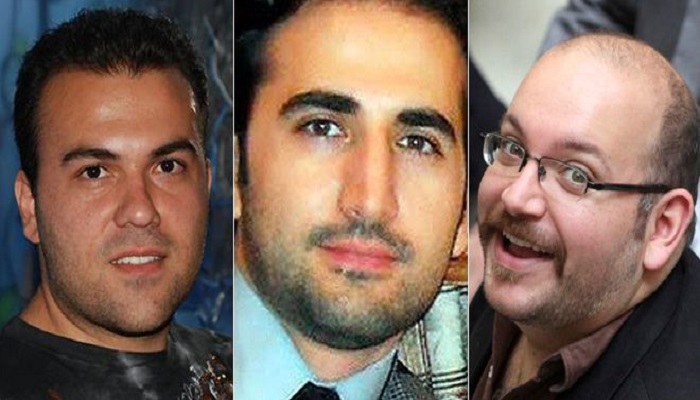
Instead, the NIAC issued a matter-of-fact recitation of the testimony and noted the passage of a bipartisan resolution sponsored by Rep. Dan Kildee (D-MI) calling for the release of Americans detained in Iran, including Amir Hekmati, Jason Rezaian, Saeed Abedini and Robert Levinson.

But the NIAC could not help itself. It seems to be permanently conditioned to always find a way of supporting the regime no matter how debased the actions it undertakes. In this case, Maria Hardman went to great lengths in attempting to explain the hostage-taking was an act committed by “hardliners” in Iran opposed to any rapprochement with the West and seeking to undermine nuclear negotiations.

She went on to take issue with calls by some Congressmen to hold Iran accountable for the illegal detentions, including linking them to ongoing nuclear talks. Hardman seems to posit that linking the two would somehow prove disastrous for nuclear talks.

It is an old argument she espouses, one that regime supporters such as Trita Parsi, Jim Lobe, Eli Clifton and others have consistently offered up – not as a pathway to securing the release of these hostages – but rather in trying to remove any obstacles blocking the regime’s access to a favorable deal that would reward mullahs in Iran with billions of dollars in cash, foreign investment and oil sales.

Rather than take the opportunity to condemn the mullahs for these illegal acts and the very high price being paid by these men and their families, Parsi have hardly uttered a word in support of these innocents. Aside from initial statements calling for their release at the time each of them was arrested, there has been scant mention by any Iran lobby supporter.

All you have to do is Google search “Trita Parsi” and “Saeed Abedini” for example and you will find the lack of quotes from him urging the imprisoned pastor’s release as rare as rain in California these days.

It is also worth remembering that while the Iran lobby attempts to portray Iran as riven by battling hardline and moderate factions, the simple truth is that the various factions within the Iranian regime are no different, when it comes to their treatment of their people. The regime is firmly and completely in the thrall of the mullahs who control – under the constitution – all aspects of Iranian life, including cultural, military, judicial, legal and economic. All power vests solely within top mullah Ali Khamenei and his recent comments have made clear what his expectations are about a nuclear deal.

The regime is firmly committed to twin goals: 1) To remove as quickly and as completely as possible all economic sanctions in order to rescue an economy run aground by rampant corruption and mismanagement by the ruling mullahs; and 2) To maintaining of Iranian regime’s nuclear development in order to extend its control over new territories it has gained through proxy wars in Syria, Iraq and Yemen. A task that the Iran lobby seems to be very dedicated to.

By Michael Tomlinson

Filed Under: Blog Tagged With: American, Amir Hekmati, Iran, Iran Lobby, Jason Rezaian, Robert Levinson, Saeed Abedini

Trita Parsi and Paul Pillar Outdo Themselves

June 3, 2015 by admin

Untitled-1Trita Parsi, head of the Iran regime’s top cheerleader, the National Iranian American Council, and Paul Pillar, a former assistant at the Central Intelligence Agency, authored an editorial in Huffington Post in which they attempted to make the argument that Israel was preparing to attack its adversary Hezbollah in an effort to derail nuclear talks between Iran and the P5+1 group of nations.

It’s an odd editorial since it reinforces the Iran lobby’s belief that in order to save a faltering nuclear deal it needs to raise the boogeyman of Israel. For the Iran lobby, Israel serves the same purpose as neo-cons, Sen. Lindsay Graham (R-SC) or Fox News, it gives people like Parsi and Pillar the opportunity to run hysterical promising war, apocalypse and mayhem should a nuclear deal not be achieved with Iran’s mullahs.

It’s a typical effort to cajole a reaction from American voters by promising war. A curious tactic considering NIAC has consistently promised a pathway to peace, but logic has never been a NIAC strong suit.

In fact, Parsi and Pillar are scraping the bottom of the barrel when they cite a NPR poll as evidence of shifting momentum for a nuclear deal among Americans. A closer reading of the article they cite reveals points quite unfavorable to them. Among those include:

  • An NBC News/Wall Street Journal poll last month found more than 7-in-10 said they thought a deal would “not make a real difference in preventing Iran from producing nuclear weapons.”
  • A Pew survey found that 73 percent said they either knew “a little” or “nothing at all” about nuclear talks. That same poll also found that a strong majority (62 percent) wants Congress to “have the final authority for approving any deal” not President Obama.

The funny thing is that the overwhelming majority of Americans don’t mind talks with Iran on a nuclear deal. Where they disagree with Parsi and Pillar is that the majority of Americans don’t believe Iranian regime will adhere to any deal and that mullahs in Iran simply can’t be trusted.

Americans are an optimistic people. They want to believe negotiations can yield peaceful fruit, but Americans are not stupid – much to the dismay of Parsi and Pillar – they recognize that trust for a regime run by mullahs that has launched and supported three major proxy wars in Syria, Yemen and Iraq can’t be trusted.

Americans also know all too well the brutal human rights situation in Iran and are acutely aware of the inhumane treatment being perpetrated in Iran on these same people.

Anyone typing in the words “Iran” and “hanging” in Google under an image search can see the ample proof on display of how Iranian regime’s judicial system dispenses justice. Americans also see Iran’s mullahs playing games with the lives of four Americans being held in Iranian prisons as pawns in the hopes of bartering concessions in nuclear talks.

It’s also even more galling to see that while Parsi and Pillar produce so much editorial copy aimed at warning of a war, they have never condemned the wars that Iran is already waging:

  • Wars against women, children and anyone who cannot exercise their basic human rights without fear of arrest or public beating;
  • Wars against Christians, Jews, Hindus, Yazadis, Sunni Muslims, or anyone else that doesn’t share their brand of extremist Islam; and
  • Wars against bloggers, journalists, pastors, businessmen, tourists, YouTubers and anyone else that dares shine a light on what is happening within Iran.

These are the wars Parsi and Pillar are not prepared to talk about and the real wars happening now that matter.

By Michael Tomlinson

Filed Under: Blog, National Iranian-American Council, News Tagged With: Hindus, Iran, Iran Christians, Iran Human rights, Iran Lobby, Iran Minorities, Jews, Nuclear, Paul Pillar, Sunni Muslims, Tritta Parsi, Yazadis

Iran Lobby Silent as Religious Persecution Rises

June 3, 2015 by admin

Christian Persecution (1)There are certain truisms in life. Not paying your taxes will get you into trouble. Eating high fat foods makes you gain weight and the paid lobbying machine for the Iran regime will always remain silent when it comes to the mistreatment of those living in Iran.

That was on display the other as Fox News reported that “Iran’s revolutionary court imposed harsh prison sentences on 18 Christian converts for charges including evangelism, propaganda against the regime, and creating house churches to practice their faith.”

The sentences totaled almost 24 years, but the lack of transparency in the regime’s infamous judicial system did not reveal how the sentences were dished out to each person. In addition to prison time, each defendant was barred from organizing home church meetings and given a two-year ban from leaving Iran.

The Christians, many of whom were arrested in 2013, were sentenced in accordance with Article 500 of the Islamic Penal Code, a vague law used as a catch-all criminal statute to penalize threats to Iran’s clerical rulers. According to the law, “Anyone who engages in any type of propaganda against the Islamic Republic of Iran or in support of opposition groups and associations, shall be sentenced to three months to one year of imprisonment.”

It’s a code that has been used widely against religious minority as well as political dissidents as a quick means of throwing them in prison before deciding on more serious charges such as espionage, treason or heresy.

The persecution doesn’t stop with Christians as Iran’s mullahs have also targeted Sunni Muslim sects and other religious minorities such as Baha’is for harassment. The number of Christians in Iran is estimated at between 200,000 and 500,000, out of an overall population of nearly 78 million.

Although the Islamic Republic’s constitution guarantees on paper that Christianity, Judaism, and Zoroastrianism are protected religions, the application of mullah’s constitution relegates the members of the minority religions to second class citizens.

Against that backdrop was testimony given on Capitol Hill yesterday by the families of Americans being held hostage in Iran, including Saeed Abedini, a Christian pastor imprisoned by the regime’s revolutionary court.

The family of Amir Hekmati, an Iranian-American Marine, taken prisoner in 2011, testified before the House Foreign Affairs Committee that he has been subjected to brutal torture both physical and psychological. “Amir’s feet were beaten with cables. His kidneys were shocked with a Taser. He was drugged by his interrogators, who then forced him to suffer through withdrawal. Amir was also kept in solitary confinement for months on end and held in a cell so small for the first year of his imprisonment that he could not fully extend his legs. He was allowed to walk outside his cell once a week,” said Sarah Hekmati, Amir’s sister.

Amir was also kept incommunicado for years. His jailers took advantage of this and falsely told him his mother had been killed in a car accident in a cruel example of the regime’s treatment of its prisoners.

Yet throughout all this mistreatment, Trita Parsi and other advocates for the regime have barely uttered a word of protest, even while Parsi hob nobs with Iranian delegates in Swiss hotel hallways and lounges. Their silence, while deafening, is not unexpected since the brutal treatment of Iranian-Americans could prove troublesome to the end goals of bailing out the Iran regime with a nuclear agreement that lifts all economic sanctions immediately.

It is unfortunate that this Iranian hostage crisis appears to have no end in sight.

By Laura Carnahan

Filed Under: Blog, National Iranian-American Council Tagged With: Baha'is, Human Rights, Iran, Iran Lobby, Iran Talks, Trita Parsi

Iran Lobby Fails Imprisoned Iranian Americans

May 28, 2015 by admin

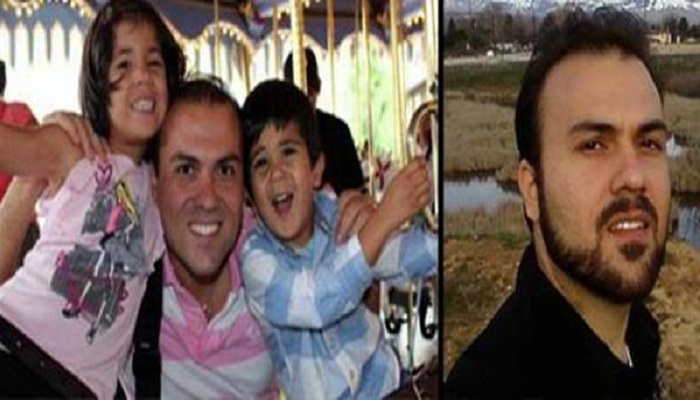
Hekmati Abedini RezaianThe National Iranian American Council touts itself as a champion for Iranian Americans. Its own mission statement trumpets the organization as “a non-profit educational organization dedicated to promoting Iranian-American participation in American civic life.”

One can only assume that its daily verbal assaults against anyone opposing a nuclear deal with the Iran regime is part of that educational process for promoting civic life in America. A casual tallying of public statements, press releases, news quotes and surveys released by NIAC would leave most observers wondering why American civic life happens to be tied so intimately to the foreign policy of the Islamic state.

But the NIAC claims an extended mission to help promote universal human rights in Iran saying on its website:

“NIAC works to ensure that human rights are upheld in Iran and that civil rights are protected in the US. NIAC believes that the principles of universal rights – dignity, due process and freedom from violence – are the cornerstones of a civil society.”

A rational person could then deduce that NIAC would be a vocal and outspoken proponent for the human rights of Iranian Americans who are being abused or mistreated in some fashion. In fact, if you scroll through NIAC’s Issues blog, you cannot find any denunciations, condemnations or calls for better treatment of people within Iran.

Indeed, if NIAC’s mission is to advocate on behalf of Iranian Americans, I can easily come up with three who desperately need its help. Languishing in Iranian prisons are:

  • Jason Rezaian, a Washington Post reporter and Iranian American born in California, who has been held by Iran and only this week has been charged with espionage for reporting Iran news and is not facing trial in the Revolutionary Court in a closed session without even his family allowed in attendance;
  • Amir Hekmati, a former U.S. Marine and the longest-held American prisoner in Iran, who has been sentenced in another sham trial and whose appellate hearing was denied yet again; and
  • Saeed Abedini, a Christian pastor from Idaho, who was convicted for holding religious services in private homes.

In response to the Rezaian closed session trial moving forward, NIAC’s president, Trita Parsi, was quoted in the New York Times saying “If there is a conviction in the Rezaian case and no leniency, it can create a crisis in the nuclear talks, yet another complication.”

It’s a wonder Parsi always seems to find a way to tie everything back to nuclear talks. You think he has a genetic sequence which compels him to burp the word “nuclear” whenever he is asked a question about Iran.

Wouldn’t it be refreshing if Parsi actually lived up to his own organization’s mission statement and said something like: “We think it is horrible that Iranian regime is holding these Iranian Americans in prison without proper due process or transparency. We urge Iran’s authorities to respect international law and all these Americans to come home to their families without any further delay.”

Now was that so hard?

But then again, the Iran regime does seems to share a playbook with other dictatorial regimes which use hostages as political bargaining chips. We can only assume Iran’s mullahs have seen the prisoner swaps and are holding on to these American hostages hoping to leverage them as part of the nuclear talks; talks that Parsi and NIAC seem pathologically tied to as well.

But the plight of these Iranian Americans should be blatant evidence of the true nature of the mission of the NIAC, which is not to help them, but help Iran gain a nuclear deal with the immediate lifting of all economic sanctions as a reward.

By Michael Tomlinson

Filed Under: Blog, National Iranian-American Council Tagged With: Iran, Iran Deals, Iran Lobby, Iran Talks

Iran Lobby Can’t Keep Facts Strai

May 27, 2015 by admin

Lies Truth (1)The National Iranian American Council has been unleashing verbal broadsides at Sen. Lindsey Graham (R-SC) alleging he had called all Iranians “liars” and demanded apologies for what it alleges as racist comments.

NIAC’s head, Trita Parsi, issued a statement condemning Sen. Graham, saying “Senator Graham owes the Iranian-American community – one of the most successful communities in the United States – an apology.”

Sen. Graham might very well owe Iranian-Americans an apology – if he was talking about Iranian Americans, but he wasn’t speaking of them, he instead was focusing his ire at the mullahs leading Iran today, especially as it related to ongoing nuclear talks.

You see, the NIAC again missed the mark in its eagerness to defend the mullahs that it got Sen. Graham’s quotes wrong.

Writing in the Slatest for Slate.com, Ben Mathis-Lilley clarified the error after reviewing the video of Sen. Graham’s remarks to the Southern Republican Leadership Conference in Oklahoma City:

“I met a lot of liars, and I know the Iranians are lying.” The last word is definitely not liars — you can tell by comparing it with when he actually does say liars earlier in the sentence. Moreover, “Iranians” is actually preceded by “the” both times he says the word, which makes a big difference given that referring to “the [name of national population]” is typical diplomatic shorthand for a particular country’s government. See President Obama referring to “the Iranians” here, for example.

Graham’s statement may or may not be correct. But in the context of current events, and with a more accurate transcription, it doesn’t seem to be the attack on an entire nationality that it’s being made out as, Mathis-Lilley wrote.

So if we take Parsi at his word and were feeling generous, we might assume he made an oversight in not checking the video of Sen. Graham’s words and simply relied on the number of liberal-leaning news outlets that mischaracterized the comments. Parsi might be guilty of nothing more than shoddy fact checking.

Considering Parsi’s past track record in losing a libel lawsuit largely on the grounds of shoddy record-keeping, making false statements and discovery abuses, it seems to be par for the course of how Parsi conducts his public business. It is worth noting that Parsi was ordered to pay the journalist he accused of libel for $184,000 to pay for the defendant’s legal expenses.

It does make you wonder how much Sen. Graham might collect from Parsi for making a similar false accusation of racial comments, when the video clearly shows otherwise.

By Michael Tomlinson

Filed Under: Blog, National Iranian-American Council Tagged With: Iran, Iran Lobby, Senator Lindsey Graham, Trita Parsi

Tensions Mount and Iran Lobby Stays Deaf and Mute

May 26, 2015 by admin

Def Blind MuteTo say relations between the U.S. and the Iran regime are growing testier by the day would be an understatement of classic proportions.

In swift moving developments, an Iranian judge overseeing the espionage trial of Washington Post reporter Jason Rezaian has barred everyone except the defendant and his lawyer from being present. Even Rezaian’s mother and wife would not be permitted to be in the courtroom in a glaring example of the opaque nature of the regime’s justice system.

The fact that mullah’s regime in Iran would move swiftly towards what appears to be a sham trial while at the same time negotiating with the P5+1 nations on a nuclear deal has led to rampant speculation about the regime’s endgame.

According to the New York Times: “Political analysts have said they believe that the outcome of the Rezaian case, as well as those of two other Americans imprisoned in Iran, are in some way dependent on the success or failure of the nuclear negotiations.”

In which case, the regime has opted to make Rezaian and other Americans held in Iranian prisons nothing more than bargaining chips.

In another verbal jab shot by Qasem Soleimani, commander of the Iran regime’s Revolutionary Guard’s Quds force, denounced U.S. efforts against ISIS in what appeared to be a sharp rebuke of comments made by U.S. Secretary of Defense Ashton Carter’s comments that Iraqi forces supported by Iranian-backed Shiite militia “showed no will to fight” as ISIS overran the Iraqi city of Ramadi.

It is ironic that Soleimani would be denouncing the U.S. for what he called a lax effort against ISIS when it was his Quds force units that provided instruction and training to Iraqi insurgents using improvised explosive devices against U.S. and coalition forces during the Iraq war.

Both of these incidents come on the heels of an ongoing dispute with Iran at the nuclear bargaining table in which the regime’s top mullah Ali Khamenei publicly denounced any access to military facilities.

This was followed by a statement from France’s foreign minister who reported a demand from the regime to not allow access to any military sites by international inspectors unless 24 days’ worth of advanced notice was given.

Iran reportedly altered that red line in the sand by calling for “managed access” of sites, whatever that means. Iranian Deputy Foreign Minister Abbas Araghchi’s televised comments appeared to contradict comments by the Khamenei. Since Khamenei is indeed the regime’s supreme leader, we’re willing to believe his version of policy rather than the deputy foreign minister.

Meanwhile, as things continue to go badly between the U.S. and Iran regime, the regime’s biggest cheerleader in chief, the National Iranian American Council, has been strangely silent on all of these developments.

It has not issued a denunciation of Rezaiain’s closed trial. It has not tweeted anything about the apparent contradictions in Iranian statements on international inspection access. NIAC and its leadership have not even raised a single word of encouragement for the U.S. not to overreact to what Khamenei has been ranting about lately.

Oddly, its only official statement the last week came as an attack against Sen. Lindsey Graham (R-SC) in which it demanded an apology from him for what it called a “racist” attack in calling Iranians “liars” in regards to the regime’s ability to be trusted on any nuclear agreement.

So while Sen. Graham’s analogy involved an unfortunate choice of imagery, it certainly was accurate in regards to the regime’s lack of abiding to previous international agreements, including breaking promises on allowing inspections of nuclear facilities and still stonewalling questions from the International Atomic Energy Agency.

Of course, the NIAC would never stoop to biting the hands of their masters from Tehran so we are left with the international news media to scrutinize and criticize Iran’s increasingly bizarre behavior.

By Michael Tomlinson

Filed Under: Blog Tagged With: Iran Lobby, Lindsey Graham, NIAC, Qassem Soleimani

  • « Previous Page
  • 1
  • …
  • 31
  • 32
  • 33
  • 34
  • 35
  • …
  • 38
  • Next Page »

National Iranian-American Council (NIAC)

  • Bogus Memberships
  • Survey
  • Lobbying
  • Iranians for International Cooperation
  • Defamation Lawsuit
  • People’s Mojahedin
  • Trita Parsi Biography
  • Parsi/Namazi Lobbying Plan
  • Parsi Links to Namazi & Iranian Regime
  • Namazi, NIAC Ringleader
  • Collaborating with Iran’s Ambassador

Recent Posts

  • NIAC Trying to Gain Influence On U.S. Congress
  • While Iran Lobby Plays Blame Game Iran Goes Nuclear
  • Iran Lobby Jumps on Detention of Iranian Newscaster
  • Bad News for Iran Swamps Iran Lobby
  • Iran Starts Off Year by Banning Instagram

© Copyright 2026 IranLobby.net · All Rights Reserved.