Iran Lobby

Exposing the Activities of the lobbies and appeasers of the Mullah's Dictatorship ruling Iran

  • Home
  • About
  • Current Trend
  • National Iranian-American Council(NIAC)
    • Bogus Memberships
    • Survey
    • Lobbying
    • Iranians for International Cooperation
    • Defamation Lawsuit
    • People’s Mojahedin
    • Trita Parsi Biography
    • Parsi/Namazi Lobbying Plan
    • Parsi Links to Namazi& Iranian Regime
    • Namazi, NIAC Ringleader
    • Collaborating with Iran’s Ambassador
  • The Appeasers
    • Gary Sick
    • Flynt Leverett & Hillary Mann Leverett
    • Baroness Nicholson
  • Blog
  • Links
  • Media Reports

The Delusional Trita Parsi

April 23, 2015 by admin

Delusional Trita ParsiTrita Parsi, head of the National Iranian American Council and apologist-in-chief for the Iran regime, published an opinion piece that may very well be regarded as one of the most delusional pieces of editorial copy written since British Prime Minister Neville Chamberlain brought back the Munich Agreement after meeting with Adolf Hitler in 1938.

The Munich Agreement permitted Nazi Germany to effectively annex large portions of then Czechoslovakia and is widely regarded as the most significant example of failed appeasement in modern times. Paris’ editorial rivals that infamous document because he seeks to rationalize the regime’s actions and portrays a post-nuclear Iran as living in peace and harmony with its neighbors.

The most glaring failed piece of logic he attempts to push is the idea that regime top mullah Ali Khamenei is ideologically flexible and committed to the idea of not wanting conflict with the West.

Let’s think about that statement for a minute. Parsi says Khamenei does not want conflict with the West?

The same Khamenei that has led annual “Death to America” chants on national television? The same Khamenei who authorized the incursion of Iranian military forces into Syria, Iraq and Yemen? The same Khamenei who supported the use of Revolutionary Guard troops and Quds Force operatives to target and kill American and coalition personnel during the Iraq war?

Obviously Parsi also believes in the Tooth Fairy, Bigfoot and aliens. It is amusing though when Parsi characterizes Khamenei as offering “heroic flexibility,” especially when considering less than 24 hours after the framework deal was announced in Geneva, Khamenei went on TV to denounce its terms and accuse the U.S. of lying. Sounds pretty flexible to me.

Parsi then charts a torturous path of logic from revolutionary Iran to 9/11 terror attacks trying to portray the regime as a helpful and willing ally to the U.S. He again conveniently leaves out facts such as Iran’s funding of terror groups such as Hezbollah involved in kidnapping and bombing attacks of Americans, including the infamous Marine barracks attack in Beirut.

Parsi also leaves out that Tehran’s race to the bomb really didn’t take off until the beginning of the rapprochement offered by the Obama administration and the subsequent quadrupling of centrifuges for enriching uranium, maybe in a heretofore secret bunker at Fordo that was not known to Western intelligence agencies until disclosed by the National Council of Resistance of Iran, the leading dissident groups to the regime.

Even more incredible is Parsi’s framing of this period as a “truce” between the U.S. and Iran post-framework announcement, serving as a calm period for the careful finalization of a nuclear accord. What makes this statement frankly insipid are recent events in Yemen where Iran’s overthrow of the government there has led to a proxy war with Saudi Arabia and other Arab nations in an unheard of before Arab coalition and the movement of massive U.S. naval assets, including the nuclear aircraft carrier Theodore Roosevelt, into the Gulf of Aden to interdict Iranian vessels carrying suspected arms to the Houthis.

How Parsi can claim this period as a “truce” while a confrontation brews on the high seas between the U.S. and Iran is beyond imagination.

The real “truce” the mullahs want from the U.S. is not so much a stop in the adversarial relationship against the West they have nurtured for the past three decades, but rather a truce in the crushing economic sanctions placing their hold over the Iranian people in jeopardy. The mullahs would much rather divert their resources to solidifying their hold over their newly acquired territory and expanding their military rather than constantly having to evade the West.

This global strategy is explained away by Parsi when he claims Iran has no ambitions in Syria and that removal of Syrian president Bashar al-Assad would be devastating for peace options. It is the same rhetoric the mullahs use in Iraq when describing the necessity of intervention against ISIS.

The mullahs have created these shadow terrors as a way of engineering access for their military to intervene in wars they helped initiate in the first place. It’s like asking an arsonist to come put out the fires he started.

The one thing Parsi does get right is that “the diplomacy deficit the whole region suffers from exacerbates each of these more localized problems.”

He just neglects to mention that Iran is the one that lacks diplomacy, instead relying on military force, terrorist proxies and militias to exert its will and shape its foreign policy. It bears the question for Parsi; if Tehran was so interested in diplomacy, why not join in the global call to condemn the use of chemical weapons in Syria? Why not urge the Houthis to negotiate with the Yemen government? Why not urge a joint Sunni-Shia coalition government in Baghdad to build a common future for all Iraqis?

A nuclear deal with Iran, without connecting agreements to restrain Iran’s most troublesome actions throughout the region makes any future problematic. Unless Iran’s mullahs are brought to heel, no agreement will ensure a future of peace, only one of Iranian hegemony.

By Michael Tomlinson

 

Filed Under: American-Iranian Council, Blog Tagged With: Iran deal, Iran Lobby, Trita Parsi

Iran Lobby-Attempts To Seal A Deal

April 17, 2015 by admin

Iran Lobby trying to seal  a  deal

Iran Lobby trying to seal a deal

The phrase “cause and effect” can be applied to virtually every facet of life; from history, physics, marketing, politics and even the dinosaurs. Such a small phrase embodies so many connections in today’s world between actions and the aftermath of those actions.

In the context of today’s volatile Middle East, the Iran regime’s top lobbyist, the National Iranian American Council has argued its own cause and effect strenuously saying that failure to seal a deal on nuclear weapons development would inevitably lead to war, regardless of the facts failing to indicate any path to war.

But on the flip side, the NIAC has just as vigorously opposed any causal connection between the actions of the regime’s mullahs in directing a slew of proxy wars and human rights abuses and their ability to abide by any international agreement they sign.

Any objective observer can draw a straight line from point A to point B when looking at the cause and effects of Iran’s actions. For example:

  • The regime’s crackdown on opponents and protests through arrests, torture, imprisonment and public executions have effectively muzzled dissent at home;
  • The regime’s violation of international inspection agreements over the past decade have allowed it to quadruple the number of centrifuges it added to enrich uranium for its nuclear program; and
  • The regime’s support of proxies and terror groups in Lebanon, Syria, Iraq and Yemen have allowed it to build a buffer of extremist Shiite support surrounding it, displacing hundreds of thousands of refugees and killing tens of thousands of men, women and children.

The fact that Iran has engaged in nuclear talks over the past three years while it has engaged in a slew of blatantly arrogant moves in violation of the spirit of those talks has laid bare the hypocrisy of the regime and its supporters.

Even today, cybersecurity firm Norse and the American Enterprise Institute released a new study chronicling the regime’s dramatic increase in cyberattacks on thousands of American targets. According to The New York Times, “the report, and a similar one from Cylance, another cybersecurity firm, make clear that Iranian hackers are moving from ostentatious cyberattacks in which they deface websites or simply knock them offline to much quieter reconnaissance. In some cases, they appear to be probing for critical infrastructure systems that could provide opportunities for more dangerous and destructive attacks.”

Norse’s study shows the Iran regime’s attacks have shown no signs of letting up, even during critical nuclear talks. Between January 2014 and just last month, Norse’s sensors picked up a whopping 115 percent increase in attacks launched from Iranian controlled Internet protocol, or I.P. addresses, with more than 900 attacks daily in the first half of March alone.

At a time when the leverage the West has over the regime through these talks is significant because of the economic mess the mullahs have created, it is a lost opportunity not to force changes upon the conduct of the regime.

The old proverb, “Turnabout is fair play” certainly applies here and especially with the NIAC who have made a living on accusing the West of double standards in its actions towards Iran, but yet do not hold Iran’s mullahs to the same standards.

It makes sense and is imperative that we understand the true nature of the effects the regime’s actions and lay the blame squarely at the feet of the mullahs ruling Iran.


Filed Under: Current Trend Tagged With: Iran, Iran Lobby, NIAC, Nuclear Deal

Iran Lobby Fails Again to Halt Congress

April 15, 2015 by admin

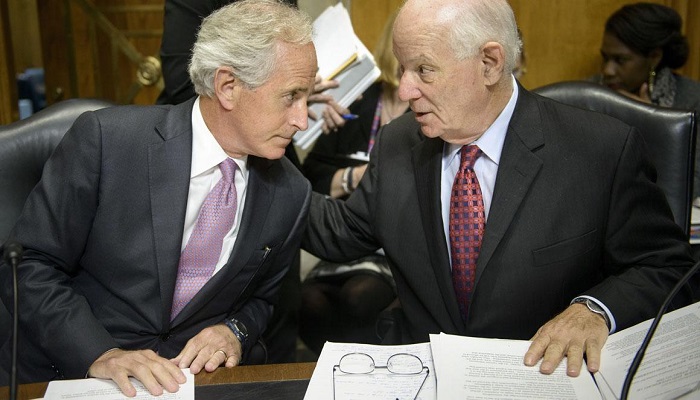
US-IRAN-NUCLEAR-CONGRESSIran’s lobbying machine, led by the National Iranian American Council, failed yet again to sway members of Congress from supporting the Corker-Menendez bill which passed unanimously out of the Senate Foreign Relations Committee and grants Congress a voice in negotiations on the Iran nuclear accord.

The bill now goes to the full Senate where a veto-proof majority is anticipated to approve it. Recognizing the inevitable, the White House signaled the President would sign the bill after gaining some adjustments to the timeline to Congressional review and approvals of any deal negotiated.

The NIAC was left sputtering with a statement denouncing the bill, but powerless to affect its’ almost certain passage. What does this portend for the future of the NIAC and other regime apologists?

It proves once again that no amount of spin can cover up the  harrowing stories coming out of the Mideast of terror groups supported by Iran’s mullahs wreaking havoc across the region, including beheadings, kidnappings, mass murders and government overthrows.

The bill passed out of committee would mandate the administration send the text of a final accord, along with all classified material, to Congress as soon as completed. It halts the lifting of any economic sanctions during congressional review and culminates in a possible vote to forbid lifting congressionally imposed sanctions in exchange for dismantling much of Iran’s nuclear infrastructure.

The provisions are direct repudiation of demands made by Iranian regime’s leaders including Ali Khamenei, Hassan Rouhani and Javad Zarif who all denounced American versions of the framework agreement and demanded lifting of all economic sanctions immediately upon completion of a deal; not just American sanctions, but also European Union and United Nations sanctions.

Quite simply, the American people will have their say over whether or not Iran’s mullahs can be trusted to abide by any agreement.

It is a triumph of democracy over an autocratic theocracy, but it only sets the stage for what will likely prove to be another long summer filled with false hopes, clashing views and endless updates leading to nowhere.

Iran’s mullahs have followed a specific negotiating plan aimed at stalling any final agreement for as long as possible, giving the regime time to destabilize the region through direct military action in Iraq and through proxies in Syria, Lebanon and Yemen, in an effort to force the hand of Western nations into giving in to Iran’s demands in the false hope of enlisting Iran in quelling the very conflicts it has started.

Ultimately though the regime’s plans will fail just as its lobbying machine has failed because it cannot hide its barbarism, nor resist the pathological desire to inflict pain, suffering and death on all those it finds objectionable, such as other Muslims, Christians, Jews, women, gays, kids surfing the Internet, bloggers, artists, journalists, etc.

By Michael Tomlinson

Filed Under: Blog Tagged With: Congress bill on Iran, Iran deal, Iran Lobby, Veto proof bill

The Moral Evil of the Iran Lobby

April 13, 2015 by admin

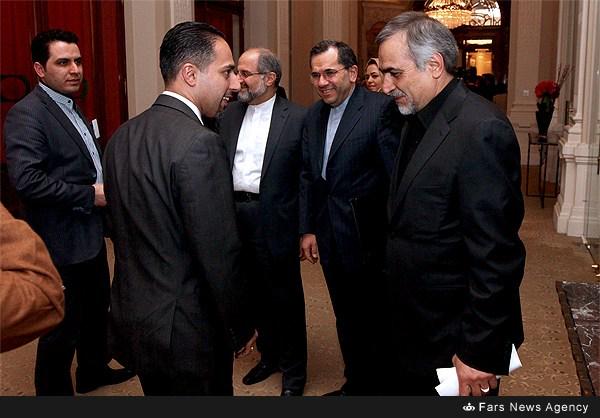
Trita parsi, greeting the mullah's delegation in Geneva during the nuclear negotiations -March 2015

Trita parsi, greeting the mullah’s delegation in Geneva during the nuclear negotiations -March 2015

With debate building over the proposed framework agreement between the P5+1 and the Iran regime, one of the most compelling questions arising is also the most relevant: “How can any agreement signed by an evil and corrupt regime be trusted?”

Any nation state can be relied upon to operate within the confines of an international community based on several factors. These might include the personal conviction and force of will of its leader or the guarantees embodied in its constitution. It might also be as a result of its culture, history or even religion.

In the case of the Iran regime though, the evidence is overwhelming of not only its moral failure to abide by international standards of peace and civility, but also the moral core of its leadership can be summed up as being one of “convenience in service to theology.”

Iran’s mullahs have been guilty of fomenting terror attacks through proxies such as Hezbollah which have claimed thousands of lives all around the world. They have been guilty of spreading an extremist form of Islam that has sparked sectarian conflicts throughout the Mideast and Africa, claiming thousands and displacing hundreds of thousands. They have been guilty of brutal atrocities and human rights violations on their own people in order to stifle dissent including thousands of hangings and punishments that could only be described as medieval.

Iran’s mullahs have denigrated women, targeted religious minorities and even made the simple act of web surfing a crime punishable by imprisonment. It is a leadership willing to contemplate the development of nuclear weapons as a tool of political expediency. It is a leadership claiming the mantle of religious certainty, but instead uses its power to enrich themselves and their families in a familiar reminder of feudal dynasties.

Aiding and abetting that corrupt regime is a lobbying effort that similarly turns a deaf ear and blind eye to the suffering being meted out by these mullahs. Groups such as the National Iranian American Council and its bosses Trita Parsi, Reza Marashi and others, have loyally placed the value of their contracts to Tehran above the morality required to do good in the world.

Haile Selassie, the former emperor of Ethiopia, famously said to the international community in the League of Nations when Italy invaded and used chemical weapons on his people:

“Throughout history, it has been the inaction of those who could have acted; the indifference of those who should have known better; the silence of the voice of justice when it mattered most; that has made it possible for evil to triumph.”

The international community did not rise up. Only five nations protested the invasion and slaughter of his people and in response, Selassie became an outspoken advocate the rest of his life to international security and multilateral support of justice.

The lack of protest, discussion and debate by the Iran lobby over the voluminous injustices and cruelties dispensed by the Iran regime is damning evidence of the lack of moral fiber within groups like the NIAC.

It leaves one wondering just who these men and women are that write editorials, lobby and speak on behalf of the barbarous cruelty of the mullahs. Are they just collecting a paycheck or do they honestly believe and support the mission of the Iran regime to remake the world in the image of its intolerant, extremist and cruel selves?

Selassie was right that by standing by mutely watching these things happen, the NIAC is just as evil and corrupt as the mullahs they defend.

By Michael Tomlinson


Filed Under: Blog, News Tagged With: Iran Lobby, Iran Talks, NIAC, Trita Parsi

Deal With Iran Regime Already Falling Apart

April 10, 2015 by admin

Failed AgreementJust when the Iran regime lobbying network led by the National Iranian American Council tries to make its case, its own masters in Tehran screw things up again it seems for them. Previously message points delivered by Trita Parsi and others were undercut by the regime’s top mullah when Ali Khamenei would call for America’s destruction and vowed to rebuff all efforts to derail Iran’s nuclear program.

Even after crafting a framework agreement with the P5+1 and hailing it as historic, the NIAC and other regime supporters again were faced with contradictions when Iran’s semi-official FARS news agency reported that foreign minister Javad Zarif and its nuclear chief told members of the Iranian parliament that the regime would begin using its latest generation IR-8 centrifuges as soon as its nuclear deal goes into effect.

The news accounts show the empty value of the framework and the lies being perpetuated by the NIAC that the regime truly wants a deal, but already promises to violate key provisions the minute it gets signed.

ccording to the FARS report, “Iran’s foreign minister and nuclear chief both told a closed-door session of the parliament on Tuesday that the country would inject UF6 gas into the latest generation of its centrifuge machines as soon as a final nuclear deal goes into effect by Tehran and the six world powers.”

The IR-8 centrifuges can enrich uranium 20 times faster than the IR-1 centrifuges it currently uses according to the regime.

Additionally, according to FARS, regime defense minister Hossein Dehqan said of the Lausanne Framework “There is no such agreement. Basically, inspection of military facilities is a red line and no inspection of any kind from such facilities would be accepted.”

So what are we to make out of the NIAC’s insistence that Iran’s mullahs are truly interested in peaceful nuclear development? It’s more likely we would believe in unicorns and the Loch Ness monster than the NIAC at this point.

With all of these revelations and statements coming out of Iran, the odds of a Congressional action against the framework and continuing economic sanctions are shrinking to the size of a pinhead with even House Minority Leader Rep. Nancy Pelosi (D-CA) now mulling the odds of being able to derail the momentum building for Congressional review.

As Rep. Ted Deutch (D-FL), the ranking Democrat on the Foreign Affairs Committee’s subpanel on the Middle East, said “Last week’s framework contemplates action by the United Nations Security Council. Surely if U.N. Security Council members should have a vote on sanctions relief, members of the United States Congress should as well.”

The support for continued economic sanctions got a boost inadvertently when Central Intelligence Agency Director John O. Brennan claimed Khamenei was persuaded to approve a deal because of the crippling effects of sanctions on Iran. While Brennan attempted to show this was motivation for the regime to compromise, it was in fact evidence of the what the regime is aiming for all along: relief from economic sanctions in order to flood billions of dollars back into the regime’s coffers as it supports four proxy wars.

The fact the regime’s leadership is already talking about violating the terms of the framework or simply ignoring them demonstrates the regime’s incompetence to make a deal and its commitment to preserving its nuclear infrastructure while getting what it most desperately needs right now, which is cold hard cash.

Already regime representatives are scrambling throughout the world in a mad dash to lock up deals to prop up its economy in anticipation of a final nuclear deal. This includes talks in China for oil sales, and invitations for direct foreign investment.

But as political support for the framework agreement begins to unravel, it is likely these moves for economic support will prove as ephemeral as NIAC’s logic and arguments in support of the regime.

By Michael Tomlinson


Filed Under: Blog, News Tagged With: Iran Lobby, Trita Parsi, Veto proof Sanctions

Iran Regime Rulers Undermine NIAC Claims…Again

April 10, 2015 by admin

Backstabbing BusinessmanIt seems the National Iranian American Council can’t catch a break from its Iran regime taskmasters. Just as NIAC is ramping up a new campaign to try and sway one or two Democratic Senators away from the building coalition in favor of the Corker-Menendez bill to place any nuclear agreement with Iran under Congressional review, the regime’s top mullah, Ali Khamenei and his handpicked president Hassan Rouhani blasted the U.S. version of the framework agreement.

Khamenei strongly denounced two bedrock American principles in nuclear negotiations declaring all economic sanctions from the U.S., European Union and United Nations had to be lifted immediately and military sites would remain strictly off-limits to foreign inspectors.

His comments echoed similar statements made by Foreign Minister Javad Zarif, the regime’s nuclear chief and military officials, all of whom within the past few days have similarly denounced the U.S. position on the framework agreement and reiterated the regime’s red lines in the sand before the June 30th deadline for a final agreement.

The contradictions to U.S. positions extended to Central Intelligence Agency director John O. Brennan who believed Khamenei had been persuaded to approve a deal to avoid economic free fall in Iran, but Khamenei disputed that contention.

“There was no need to take a position,” Khamenei said. “The officials are saying that nothing has been done yet and nothing is obligatory. I neither agree nor disagree.”

Khamenei even took to Twitter claiming that an American fact sheet on the framework deal was “contrary to what was agreed.”

“We will not sign any agreement, unless all economic sanctions are totally lifted on the first day of the implementation of the deal,” Rouhani said during a ceremony marking Iran’s nuclear technology day, which celebrates the country’s nuclear achievements.

The fact that Khamenei is empowered under the regime’s constitution to be the final and authoritative voice on all foreign policy matters leaves its lobbyists like the NIAC in a pickle. While spokesmen such as Trita Parsi have been loud in praising the framework, they’ve been as mute as a monk taking vows of silence over the broad and vociferous denunciations of the same agreement by the Iran regime’s top leadership.

The imposition of a sanctions red-line by Khamenei may again sink nuclear talks for a third time and may very well be the eventual aim of Khamenei unless he gets what he desires most – the immediate lifting of all economic sanctions so he can replenish the coffers of a treasury bled dry by four proxy wars and a plummeting oil market.

“The supreme leader is saying all sanctions must be lifted as soon as a deal is signed, which is an impossible hard line,” said Michael Singh, a fellow at the Washington Institute for Near East Policy and a former senior director for Middle East affairs for the National Security Council. “President Obama can agree to almost anything, but he cannot promise immediate and total sanctions relief because that’s up to Congress and Congress is not going to do that.”

All of which explains NIAC’s desperation to persuade one or two Democratic Senators to switch and support the regime in order to avoid a veto override by Congress. Like the jury in the trial of Boston Marathon bomber Dzhokhar Tsarnaev, the object is to not defend on guilt or innocence, but to simply convince one jury to not impose the death penalty. The NIAC could care less what Iran’s leaders say in denouncing the deal, but what they care about is pressuring just one or two Senators enough to preserve the Administration’s ability to deliver a win for the mullahs.

The real prize for the regime is not nuclear weapons – that would be a bonus – the real win is the lifting of economic sanctions which have placed the mullahs in the uncomfortable position of trying to hold a lid on a dis-satisfied population asking the question: “Why not have regime change and make things better?”

It’s a question worth supporting.

By Michael Tomlinson

Filed Under: Blog, News Tagged With: Iran, Iran Deals, Iran Lobby, Iran Talks, Khamenei, Nuclear Deal

Iran Regime Lobby Losing Grip on Congress

April 8, 2015 by admin

Trita parsi, greeting the mullah's delegation in Geneva during the nuclear negotiations -March 2015

Trita parsi, greeting the mullah’s delegation in Geneva during the nuclear negotiations -March 2015

The Iran regime’s lobbying and PR machine, notably led by the National Iranian American Council, invested significant resources in a blatant effort to lobby and influence members of Congress over the recent negotiations on the regime’s nuclear infrastructure.

The NIAC attempted to portray the negotiations as the only clear path towards peace and any member of Congress denigrating it was no better than a war monger. In response, Congress offered up the Corker-Menendez bill which gives Congress the power to keep economic sanctions in place while it reviewed any deal. Despite NIAC’s objections, it passed out of committee on a bipartisan vote.

Then NIAC was part of the “National Day of Action” involving delivering petitions to local Congressional offices. The effort produced sporadic selfies in scattered offices of volunteers, mostly Democrats already pledging to support the regime. In response, 47 Senate Republicans sent an open letter to the Iran regime promising to overturn any bad deal.

Itching for more failure, the NIAC marshalled its forces again for the stretch drive of talks and went on a media blitz and sent Trita Parsi and Reza Marashi to troll lobby bars in Lausanne, Switzerland. Instead, the House this time sent out a letter signed by 367 Democrats and Republicans, representing a veto-proof majority, calling for review and approval of any deal.

Even after talks concluded with a “framework” agreement that appears to be different in its terms if you read Iranian, American or French versions, NIAC continued to call it an historic agreement. On Monday, Sen. Chuck Schumer (D-NY), who is on track to be the new Democratic Leader succeeding retiring Sen. Harry Reid (D-NV), announced his support for the Corker-Menendez bill and called on Congress to review and halt any deal it deems bad.

His support is crucial and now probably gives Republicans the 60 votes necessary to override any veto from President Obama. Both houses of Congress now stand united in the need to review, debate, verify and approval or disapprove any final agreement coming out of P5+1 talks with the Iran regime.

Why did NIAC fail? Quite simply, it overpromised and underdelivered.

NIAC members, especially Trita Parsi, regularly mistakenly took positions throughout talks over the past three years that ended up having to be retracted or were proved wrong. Most notably were its claims about the Iran regime’s desire for peace, only to be routinely undercut by top mullah Ali Khamenei who gave his annual “Death to America” speech alongside demands that Iran retain all its nuclear infrastructure, immediate lifting of all economic sanctions and promise to keep developing ballistic missile technology.

In a way, you have to pity Trita Parsi and NIAC for having to work for verbal loose cannons like Khamenei who have all the subtlety of a freight train, but then again, Parsi and NIAC enjoy the perks of being mouthpieces for the biggest state sponsor of terrorism. i.e. Iran’s mullahs which explains how they can manage trips to Switzerland and an unlimited bar tab waiting for journalists to ask their opinions.

But has Iran’s mullahs really gotten the results expected from NIAC? If you judge success based on legislative wins in Congress, the answer has to be a resounding “NO!” The NIAC’s grip on Beltway reality grows looser, especially with new revelations from Breitbart News and others about the deep connections now being uncovered between NIAC and national security and foreign policy teams in the Obama administration.

The lack of disclosure by the administration has further tainted arguments made by NIAC for the deal as it becomes increasingly clear the organizations does not stand for the interests of Iranian Americans – four of whom remain in regime prisons without trial or charge – and instead is simply a cheap lobby for the mullahs.

We would urge Khamenei to get a refund from Parsi and cut his expense account for lack of results.

By Michael Tomlinson

Filed Under: Blog, News Tagged With: Iran deal, Iran Lobby, Iran Talks, NIAC, Trita Parsi

Iran – Same Story, Different Year for Regime Talks

April 3, 2015 by admin

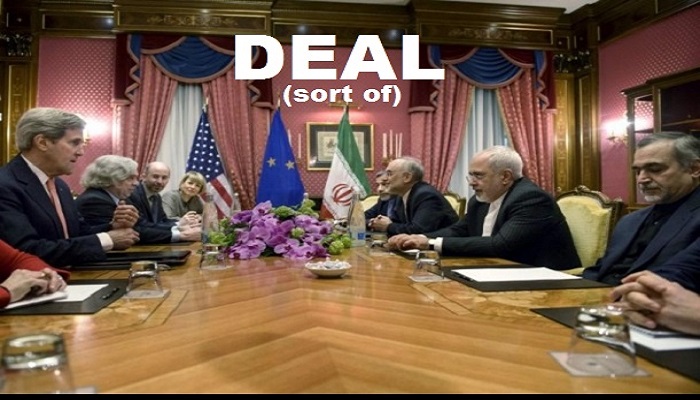
Deal Sort of !

Deal Sort of !

There was much fanfare and speech making in Switzerland as negotiators proclaimed a framework deal had been reached with the Iranian regime. All that remained were the “technical details.” On closer examination, a more appropriate paraphrase might be “same stuff, different day.”

As predicted here, this framework deal is nothing more than a stalling tactic to allow all parties to claim a victory without really putting anything on the line and buy time to go back to the bargaining table again until the June 2015 deadline.

The key world that President Obama and regime officials such as mullah’s Foreign Minister Javad Zarif and even regime apologist-in-chief Trita Parsi of the National Iranian American Council all agree on and used in their respective statements was “If.”

If the details can be worked out. If the Iranian regime can be trusted to implement it. If inspectors are allowed unfettered access. If Iran doesn’t cheat. Never in the annals of diplomacy has the word “If” been used so often by so many people to describe such dramatically different viewpoints.

But critics of the so-called agreement, including Iranian dissidents closest to the reality on the ground, all chimed in and for them, no one was using the word “If.” For them, the reality of the Iran regime’s past history and track record led most of them to abandon any doubts and solidly believe the regime has no intention of honoring this agreement.

In the following weeks there will be plenty of commentary, detailed analysis and criticism of this proposal and the vague loopholes in it large enough to drive a battleship through, but what is worth reflection now is how we got here.

The one essential truth is that punishing economic sanctions, coupled with a revolution in oil production driving down global oil prices brought the Iranian regime to its knees and put its ruling mullahs right in the cross hairs of the same kind of discontent among Iran’s people that drove the last revolution.

The fragile hold the mullahs have was shown to be tenuous even as they ratcheted up the crackdowns at home and proxy wars abroad in an effort to suppress dissent and provide distractions for the world to take attention away from how precarious their hold on power can be.

Since 2002, sanctions and their effectiveness at bringing the regime back to the bargaining table again and again are undisputed. The regime has worked long and hard to create perceptions of Iran’s rise as a regional power a force to be reckoned with. It is a charade and illusion that has helped its cause at the bargaining table by forcing some nervous Western diplomats to capitulate to Iranian demands in a blatant effort of appeasement all too reminiscent of British Prime Minister Neville Chamberlain’s notorious “Peace in our time” boast.

As Mrs. Maryam Rajavi, the head of the National Council of Resistance of Iran and the leading opposition group to the Iranian regime, said: “Nevertheless, a statement of generalities, lacking Khamenei’s signature and official approval, will never block the path to the regime obtaining nuclear weapons nor prevent its intrinsic deception.”

Which brings us to the last and most crucial point about this agreement, which is it is not an agreement unless Iran’s top cleric says so and given his most recent statements he might be smelling blood in the water to the extent the West has caved on many regime demands. Would Khamenei tank this framework in order to make another stab at getting everything he wants which is namely an immediate and complete lifting of all economic sanctions against Iran?

Khamenei knows that the secret to preserving the mullahs’ power is to lift the sanctions to demonstrate that the mullahs can do more than arrest, beat, torture and hang people.

It stands to reason though that with all of the “ifs” involved in this framework, we’re likely to be hashing out the same issues again in just a few more months.

By Michael Tomlinson

Filed Under: Blog Tagged With: Appeasers, Iran Lobby, Iran Talks

Regime Lobbyist NIAC Deep in U.S. Govt.

April 2, 2015 by admin

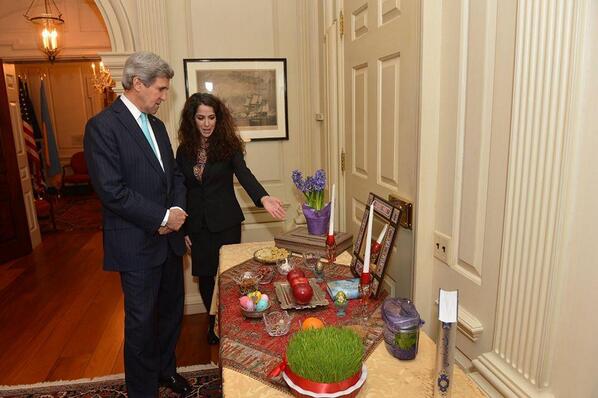
Sahar NowrouzzadehmThe news coming out of Switzerland reads exactly the same as it did last year and the year before that, with negotiators saying there has been progress and agreement reached on the pathway to move forward to finalize a deal. It’s Groundhog Day every day when it comes to the Iranian regime as it patiently waits for external pressures to keep building on the West to give in on its demands without giving anything up of substance.


Ironically the Iranian regime is desperate to ensure no details are leaked since it knows there would be global condemnation if everything was ever put on paper and put online. But through leaks and news stories we know the regime is on the verge of retaining its enrichment capacity through its centrifuges, they will be protected in a deep military bunker in Fordow, they get to keep their reactors, ballistic missile technology and a lifting of economic sanctions, as well as some ramp up in their activities near the end of the deal.


Providing the political cover and PR spin for this process over the past several years has been the loyal work of the National Iranian American Council, whose front-lobbyer is Trita Parsi and other staffers have been near constant fixtures in Lausanne hotel lobby bars, lounges and hallways plying their wares akin to the world’s oldest profession.


The ties between NIAC and the Iranian regime has been long established, including through a recent defamation lawsuit Parsi filed against a journalist, lost and in the process was forced to reveal sensitive emails and documents showing a much closer relationship between NIAC and high-ranking regime officials, including regime Foreign Minister Javad Zarif.


As Eli Lake writes in a Bloomberg article: “In 2006, Zarif and Parsi tried to persuade journalists to write about a peace offer Iran had supposedly offered the George W. Bush administration after the 2003 invasion of Iraq. Yet according to senior Bush administration officials, that 2003 offer was not a serious piece of diplomacy, and was not made through the channels by which the Bush administration communicated with Iran. Nonetheless, the narrative stuck that the Bush team blew a chance at a breakthrough in 2003.”


Secretary of State John Kerry repeated the Zarif line in an interview with ABC’s “This Week” earning three Pinocchios from The Washington Post which judged the claim dubious, but it was another indication of the efforts the regime was going to ensure it controlled the media narrative even while the American public and Congress grew more skeptical as sectarian violence throughout the region boiled over under Iran’s aggressive manipulation.


But the depth of NIAC’s efforts to manipulate the U.S. negotiating approach was revealed in a piece on Breitbart.com which revealed Sahar Nowrouzzadehm the National Security Council Director for Iran was a former staffer for NIAC as late as 2007 before joining the NSC in 2014.


The most galling revelation was her appearance on secure conference calls with President Obama and other top policy advisers including Vice President Joe Biden, Secretary Kerry, Secretary of Defense Ashton Carter, Secretary of Energy Ernie Moniz and National Security Adviser Susan Rice discussing negotiations with the Iranian regime.


The fact that a former staffer of a lobbying group for the Iranian regime is allowed to serve in a sensitive policy position as the U.S. strikes a nuclear deal raises some skepticism to why the U.S. has been so willing to accommodate Iranian regime’s demands.


It is in a way like allowing industry lobbyists to serve in the regulatory agencies overseeing them.


All of which raises an even larger issue. Has Nowrouzzadeh maintained contacts with Parsi and her former colleagues at NIAC? Has there been any insight or understanding to any journalists supportive of the regime, as a result? Any classified information discussed?


The furry of questions arising from this revelation is likely to raise concern for the Congressional investigators busy as they examine whatever deal eventually gets publicly released out of Switzerland, but what is worrying is that NIAC has been allowed to work tirelessly to cover for the regime and spread its influence deep into the heart of the U.S. government.

By Michael Tomlinson

Filed Under: Blog Tagged With: Iran Lobby, Iran Talks

Trita Parsi of NIAC Lobbies for Iran

March 29, 2015 by admin

Trita Parsi has had close working relationship with Javad Zarif, when he was Iran’s Ambassador to the United Nations. In a deposition, Parsi stated he only communicated in 2006 with Zarif in order to “interview him.” But this is not true. Emails made public demonstrate that Parsi and Zarif collaborated on numerous political issues. Parsi publicly distributed an Iranian regime document to influence US policy. He made arrangements for the ambassador to participate in a conference on Capitol Hill and to meet members of Congress, and sought the ambassador’s council regarding the feasibility of a new Persian Gulf security arrangement. About the collusion between Parsi and Zarif, a former Associate Deputy Director of the FBI said Parsi should have been registered as a foreign agent of Iran. Arizona Senator Jon Kyl contacted the US Justice Department, urging an investigation of Parsi.

Trita Parsi has had close working relationship with Javad Zarif, when he was Iran’s Ambassador to the United Nations. In a deposition, Parsi stated he only communicated in 2006 with Zarif in order to “interview him.” But this is not true.
Emails made public demonstrate that Parsi and Zarif collaborated on numerous political issues. Parsi publicly distributed an Iranian regime document to influence US policy. He made arrangements for the ambassador to participate in a conference on Capitol Hill and to meet members of Congress, and sought the ambassador’s council regarding the feasibility of a new Persian Gulf security arrangement.
About the collusion between Parsi and Zarif, a former Associate Deputy Director of the FBI said Parsi should have been registered as a foreign agent of Iran. Arizona Senator Jon Kyl contacted the US Justice Department, urging an investigation of Parsi.

In an article published at the American Thinker titled “Friends of Iran in the United States” Michael Curtis studies Trita Parsi and his lobby firm, NIAC and how they are acting in favor of the mullahs by demanding annihilation of the nuclear related sanctions on Iran. Given the extent of activities by the Iranian lobby, the entire article is published below for our readers.

“On February 19, 2015, a full-page ad was published in the New York Times by the National Iranian American Council (NIAC) opposing the invitation given to Israeli prime minister Benjamin Netanyahu to speak before Congress.  It asked the question: “Will Congress side with our President or a Foreign Leader?”

The ad did not disclose that the founder and president of the organization, Trita Parsi, was an Iranian-Swedish citizen who holds a Green Card and has had links with Iranian authorities, especially the Iranian defense minister, Javad Zarif.  Those links were held to be extremely close by a critic, Hassan Daioleslam, an Iranian-American journalist and human rights activist who left Iran in 1981 and lives in Arizona.  He wrote that NIAC, and its leader Parsi, are an organization engaged in lobbying Congress on behalf of a foreign government – namely, that of Iran.

The invitation to Netanyahu and his speech to Congress became the occasion for dramatic political theater by Team Obama and its supporters, who disliked the Israeli’s criticism of the Obama administration’s attitude toward Iran.  Nothing was said by that team or in the mainstream media on the question of whether the NIAC had lobbied or tried to lobby Congress or had any impact on the current policy of the Obama administration in negotiating with Iran.

In his articles, Daioleslam (Dia) claimed that the NIAC, and former Congressman Bob Ney, who was associated with it, were helping Iran to manipulate U.S. policy on Iran’s behalf.  Among other issues, in 2007, the organization had lobbied to prevent U.S. funds going to democratic elements in Iran.  The NIAC brought a lawsuit in May 2008 in the attempt to halt Daioleslam’s further criticism of the Iranian regime.  But it delayed producing, and sometimes failed to produce, necessary information on its computers, calendar entries, and e-mails.  In addition, the assistant director of the NIAC changed some files from references to “lobbying” to “legislative direct.”

The U.S. District Court for the District of Columbia (Judge John Bates) in September 2012 dismissed the lawsuit.  The Court found that the NIAC had given false information to it, and it ordered the NIAC to pay Daioleslam’s legal expenses – about $184,000.  It held that the work of the NIAC and its founder, Trita Parsi, was not inconsistent with the idea that it was “first and foremost an advocate for the regime.”  Consequently, Daioleslam’s statement could not be considered defamatory.

The court in July 2010 had ordered NIAC three times to submit its server for inspection to determine if all documents had been given to it, and complained that additional computers in the network of the NIAC had not been produced.  The court found that the NIAC had withheld 5,500 e-mails written by its senior officials.  It is unclear whether this refusal or inability to produce documents was deliberate or result or incompetence.

The decision of the District Court was upheld by the opinion of two circuit judges and a senior circuit judge in the U.S. Federal Court of Appeals for the District of Columbia in a decision on February 10, 2015.  The Court of Appeals approved the opinion of the District Court that the NIAC was involved in systematic abuse of the legal discovery process and made false declarations to the court.

The court held that the NIAC had “flouted multiple court orders” and taken “inexcusable” action in delaying delivery of documents to during the lawsuit that it had itself brought, and therefore had driven up the costs imposed on the Daioleslam.  It referred to the NAIC’s conduct as “dilatory, dishonest, and intransigent.”

Ironically, this case is somewhat similar to other events current in Washington where individuals have refused to provide or have misplaced official documents or have given incomplete records after requests by members of Congress for full documentation.

The Court did not finally decide if the NIAC had violated the U.S. Foreign Agents Registration Act (FARA).  The statute, enacted in 1938, requires that persons acting as agents of foreign authorities in a political or quasi-political capacity make periodic public disclosure of their relationship with a foreign entity.  Action of this kind is legally different from advocating better ties with a foreign entity, because this would be in the interests of the U.S.

The NIAC was founded in 2002 by Trita Parsi, who said it would enable Iranian-Americans to condemn the 9/11 attacks.  It is organized as a 501(c)(3) nonprofit organization and states that it is non-partisan and does not receive funds from the Iranian government or from the United States government.  It says it is dedicated to advancing the interests of the Iranian-American community on civic, cultural, and political issues.  It speaks on behalf of that community to which it refers as “one of the most highly educated minority groups in the U.S.”

The founder and president of the NIAC has been invited to the White House, has arranged meetings between the Iranian ambassador to the United Nations and members of Congress, and given talks at the CIA.  He has done so without registering as an agent of a foreign power.

The NIAC also expresses its “vision” to work to ensure that human rights are upheld in Iran and that civil rights are protected in the U.S.  It received funds, almost $200,000, from the National  Endowment for Democracy.

More significantly, the NIAC has pressed for an end to international sanctions on Iran.  The NIAC has also played a partisan role in U.S. and international politics.  It lobbied against the appointment of Dennis Ross to the National Security Council.  The documents revealed to the Court that Parsi had helped prepare reports about Iran and helped send them to Atieh Company in Tehran, which paid Parsi for his work.

One can only hope that the NIAC was not consulted in the current negotiations with Iran on nuclear issues.”

By Michael Curtis, published at American Thinker

Filed Under: American-Iranian Council, News Tagged With: American Thinker, Iran Lobby, Iran Talks, NIAC, Trita Parsi

  • « Previous Page
  • 1
  • …
  • 33
  • 34
  • 35
  • 36
  • 37
  • 38
  • Next Page »

National Iranian-American Council (NIAC)

  • Bogus Memberships
  • Survey
  • Lobbying
  • Iranians for International Cooperation
  • Defamation Lawsuit
  • People’s Mojahedin
  • Trita Parsi Biography
  • Parsi/Namazi Lobbying Plan
  • Parsi Links to Namazi & Iranian Regime
  • Namazi, NIAC Ringleader
  • Collaborating with Iran’s Ambassador

Recent Posts

  • NIAC Trying to Gain Influence On U.S. Congress
  • While Iran Lobby Plays Blame Game Iran Goes Nuclear
  • Iran Lobby Jumps on Detention of Iranian Newscaster
  • Bad News for Iran Swamps Iran Lobby
  • Iran Starts Off Year by Banning Instagram

© Copyright 2026 IranLobby.net · All Rights Reserved.