Iran Lobby

Exposing the Activities of the lobbies and appeasers of the Mullah's Dictatorship ruling Iran

  • Home
  • About
  • Current Trend
  • National Iranian-American Council(NIAC)
    • Bogus Memberships
    • Survey
    • Lobbying
    • Iranians for International Cooperation
    • Defamation Lawsuit
    • People’s Mojahedin
    • Trita Parsi Biography
    • Parsi/Namazi Lobbying Plan
    • Parsi Links to Namazi& Iranian Regime
    • Namazi, NIAC Ringleader
    • Collaborating with Iran’s Ambassador
  • The Appeasers
    • Gary Sick
    • Flynt Leverett & Hillary Mann Leverett
    • Baroness Nicholson
  • Blog
  • Links
  • Media Reports

The Ongoing Appeasement of the Iran Regime

October 23, 2015 by admin

The Ongoing Appeasement of the Iran Regime

The Ongoing Appeasement of the Iran Regime

During the run up towards the completion of negotiations over the nuclear agreement with the Iran regime, the Obama administration and the Iran lobby likened it to the most significant foreign policy issue of our time. The words used by proponents in advocating the deal included “historic,” “transformational,” “ground breaking,” “momentous,” “consequential” and “important.”

You almost thought Trita Parsi, head of the National Iranian American Council and chief cheerleader for the regime, had a word-a-day calendar on his desk with new synonyms for “historic.”

The fact that proponents of the deal characterized the choices as being between “war” and “peace” helped to get the agreement passed, but it also gave the Iran regime the opening to hold the West linguistic hostages since by framing the agreement in that manner, supporters found themselves beholden to the mullahs in Tehran to the extent no matter what they did, supporters of the deal were going to have to cover for them in order to keep the agreement alive.

This leverage cleared the way for the continuing acts of appeasement being afforded to the mullahs in the run up towards implementing the agreement. The perception of needing to keep this deal alive quickly became more important than addressing how much the Iran regime might cheat and what to do in response if the mullahs did cheat.

Two recent developments made that appeasement abundantly clear.

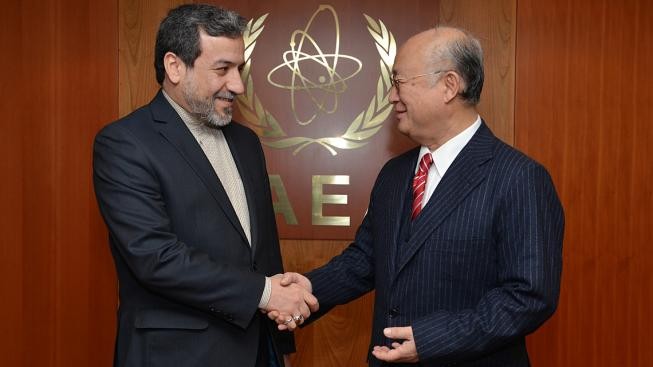
The first was the completion of a secret side agreement between the Iran regime and the International Atomic Energy Agency, the arm of the United Nations Security Council responsible for inspections and compliance of nuclear issues.

The IAEA has worked for the past decade to gain access to regime nuclear facilities, its scientists and technicians, as well as documentation to ascertain the full scope and nature of Iran’s nuclear program. It has been stymied and stonewalled at every turn by the regime.

Beyond the obfuscation by the regime, it is imperative to any future compliance to the nuclear agreement that the IAEA establish a baseline of where Iran’s nuclear program stands. Without it, there is no way to make comparisons to see if the regime is indeed cheating.

The IAEA “is committed under the deal to release a report by year-end about the status of Iran’s alleged weaponization work. U.S. officials over the weekend said the IAEA report would have no bearing on moves by the international community to lift sanctions,” according to the Wall Street Journal.

“That final assessment, which the IAEA is aiming to complete by December 15th, is not a prerequisite for implementation day,” a senior U.S. official said Saturday. “We are not in a position to evaluate the quality…of the data. That is between Iran and the IAEA.”

The irony here is that the U.S. is basing its decision to move ahead with implementing the agreement with the regime on the findings of the IAEA inquiry, but at the same time is not going to evaluate the veracity of those findings. In essence, the U.S. and other nations will simply shrug and say “we believe you” even if Iran provides no information or complete access as per the agreement.

So on December 15th, if the IAEA certifies Iran as being in compliance even though it has no tangible proof the regime is in compliance, the political pressure will be such that the IAEA will rubberstamp the report and allow implementation to move forward.

As Armin Rosen writes in Business Insider: “In the process, the US has essentially decided that the investigation of past nuclear-weapons work, and the state of current Iranian weaponization expertise, is nonbinding on a treaty specifically meant to prevent Iran from obtaining a nuclear weapon.”

If it wasn’t such a serious issue, it would be Orwellian in nature.

The second issue was the recent test firing of a new ballistic missile by the regime which violated a UN ban on development of nuclear-capable ballistic missiles. The ban is tied to the nuclear agreement and sets an eight year ban on ballistic missiles after the agreement is implemented.

The U.S., Britain, France and Germany called on UN Security Council’s Iran sanctions committee to take action over the missile test by Tehran. Diplomats have said it was possible for the sanctions committee to blacklist additional Iranian individuals or entities if it determined that the missile launch had breached the U.N. ban. However, they said Russia and China, which have opposed the sanctions on Iran’s missile program, might block any such moves.

All of which sets up the most obvious question facing everyone. What if Iran cheats? What should the response be?

Even though the U.S. asked the Security Council to take action over the missile test, U.S. officials said in the next breath that the missile test itself didn’t violate the nuclear deal.

Let that sink in for a second. We sent a letter calling for action for a violation of the UN ban, but in the same moment said the launch did not violate the nuclear agreement. So we are scolding the mullahs, but also letting them off the hook.

It’s a bipolar approach to foreign policy worthy of analysis by a psychiatrist.

In both cases, the Iran regime is clearly acting to breach terms of not only the nuclear agreement, but existing sanctions that will remain in effect after the nuclear deal goes into effect and the repercussions of those violations appear to be non-existent or minimal. This does nothing to deter the mullahs and only empowers them into believing they can continue to press their advantage.

By Michael Tomlinson
Filed Under: News Tagged With: #NuclearDeal, Appeasement policy, Featured, Iran, Iran deal, Iran Lobby, Iran Talks, Irandeal, NIAC, NIAC Action, Nuclear Deal, Trita Parsi

Adoption Day for Nuclear Deal Brings Uncertainty

October 19, 2015 by admin

Adoption Day for Nuclear Deal Brings Uncertainty

Adoption Day for Nuclear Deal Brings Uncertainty

Sunday marked what has been dubbed “Adoption Day” and we’re not talking about lost puppies. This weekend marked the start of the of what the Obama administration and other members of the P5+1 called the start of showing readiness to the Iran regime in lifting economic sanctions that have held the mullahs in Tehran in check for the past decade.

In a memo, President Obama directed the secretaries of state, treasury, commerce and energy “to take all necessary steps to give effect to the U.S. commitments with respect to sanctions described in (the Iran deal).”

This will be followed by “Implementation Day” on December 15 in which the U.S. and its partners will begin the actual process of lifting sanctions against the regime after certification by the International Atomic Energy Agency that the regime has lived up to its commitments to curb its nuclear program.

For the Iran regime, Sunday also marks the “put up or shut up” moment for the mullahs in which the regime will have to begin the process of dismantling parts of its nuclear program, including decommissioning nearly 15,000 centrifuges, converting its Arak heavy-water reactor so that it will produce less plutonium and reducing its stockpile of enriched uranium 98%. U.S. officials expect it will take about six months.

Ali Akbar Salehi, the head of Iran’s Atomic Energy Organization, told Iranian state television Sunday that the country would begin taking its next steps under the deal—including reducing the number of uranium centrifuges in operation, and removing the reactor core at the Arak facility—in short order, according to the Wall Street Journal.

But the real question is will the regime move aggressively forward in order to recoup frozen assets and foreign investments needed to stave off economic disaster from corrupt mismanagement at the hands of the mullahs, or will the regime simply slow walk changes while providing its usual propaganda lip-service, supported by loyal Iran lobbyists such as the National Iranian American Council, and stonewall any real changes?

Already we’ve seen efforts by the Obama administration and United Nations to provide some cover for the regime even as the mullahs have undertaken provocative steps in the wake of adopting the nuclear deal.

The most notable action has been the military buildup in Syria, including the mobilization and commitment of Iranian troops directly into the fight and coordination in drawing in Russia to fight the fights the Iran regime has been unable to win so far in support of the Assad regime.

This has been followed by the reported conviction of Washington Post reporter Jason Rezaian for espionage (ironically announced on the exact same number of days Iran held the 52 American embassy hostages), and the launching of a new ballistic missile design that has been denounced as a violation of UN Security Council resolutions banning the Iran regime from pursuing ballistic missile designs that could be used to deliver nuclear payloads.

U.S. Ambassador to the U.N. Samantha Power stopped short of any confrontational rhetoric, affirming Wednesday that the test violated a U.N. Security Council resolution “if the facts are as we believe them to be.” Iran has always considered such resolutions to be invalid and has violated their provisions numerous times since they were adopted in 2010. The Iranian government also denies the ballistic activity violates the Joint Comprehensive Plan of Action, the formal name for the nuclear agreement.

The fact that the U.S. recognizes that the regime has already violated the UN agreement, yet opts not to confront the regime is indicative of what lies in store for us as the regime continues to make its aggressive and increasingly desperate moves throughout the Middle East.

The regime’s actions are remarkably similar to moves made by North Korea as it first agreed to restrictions on its nuclear program, only to continue advancing it in secret until it tested fully functional nuclear weapons in spite of successive efforts to sanction North Korea after the fact with no effect.

The mullahs in Tehran have watched and learned what Pyongyang did in steering tis nuclear program past international sanctions, which may be why Iran unveiled to the world video of once-secret underground missile bunkers where it stored its arsenal of mobile missile launchers.

The most significant aspects of the revelation by the regime are that: a) no one knew about these secret bunkers; and b) that the bunkers hint at the size and scale of secret military facilities that have hardened against attack by being buried as much as 500 meters under a mountain range.

Why this is important is that it basically invalidates significant sections of the nuclear agreement dealing with limited inspections only of “known” facilities and not allowing inspections of military sites. It also puts into proper perspective the nefarious nature of the regime as it hides most aspects of its military capabilities.

According to the Daily Beast, “while details about the alleged 500-meters-down subterranean base are few and difficult to confirm, the bunker and others like it could upset the delicate military balance between the United States and Iran as the two countries move forward on an agreement to limit Tehran’s nuclear program in exchange for a gradual easing of economic and military sanctions targeting the Islamic regime.

“That’s because any facility a quarter mile below ground is way too deep for America’s existing bunker-busting bombs to directly destroy in the event Iran reneges on the nuke deal and tries to put atomic warheads on its long-range rockets,” the Daily Beast reported.

Then again, given the regime’s penchant for hyperbole, bluster and outright fabrication in order to make itself seem more militarily formidable than it really is, all of this could simply be fakery.

That begs the question of whether or not the U.S. and its allies should be making the $150 billion bet that the regime is a sheep in wolves’ clothing.

The people that know the regime best, the dissidents and members of the resistance movement worldwide, should be the ones we should be taking our cues from and in their view, the nuclear deal has only emboldened the Iran regime in its march towards oppression.

By Michael Tomlinson


Filed Under: Blog, News Tagged With: #NuclearDeal, Featured, Iran, Iran deal, Iran Economy, Iran Human rights, Iran Lobby, Irandeal

Iran Lobby Fends Off More Attacks on Regime

October 5, 2015 by admin

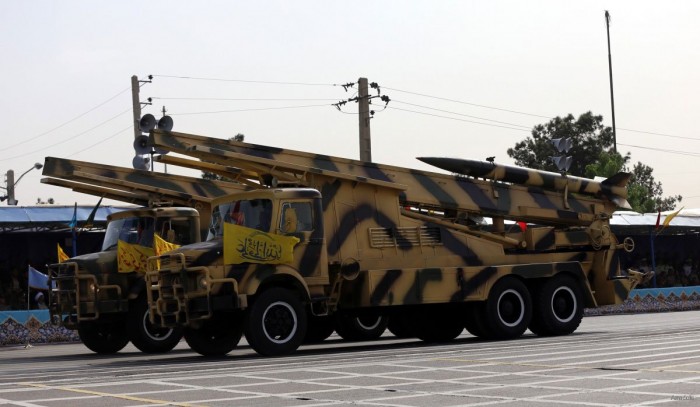
Iranian RocketsAs Congress moves ahead with a flurry of new bills to stymie the Iran regime and hold the conduct of the mullahs in Tehran to some level of accountability, the Iran lobby, most notably the National Iranian American Council (NIAC), went into overdrive spitting out policy positions against any encroachment on Iran’s advances.

Specifically, the NIAC and its lobbying arm, NIAC Action, issued nearly identical denunciations of two pieces of legislation introduced last week. In the House, a Republican proposal entitled the “Justice for Victims of Iranian Terrorism Act” was passed out on a floor vote by a bipartisan majority of 251-173 and seeks to block sanctions relief granted under the nuclear deal until the Iran regime pays all legal judgements and fines levied against it by U.S. courts which found the regime liable for acts of terror totaling $43.5 billion.

This move follows a decision by the U.S. Supreme Court to agree on hearing an appeal of a lower court decision awarding $1.7 billion in damages from Iran’s central state bank in a similar case involving reparation payments to the victims and families of Iranian regime terror incidents.

“The consideration of the bill undermines U.S. national security interests and the perception that the U.S. can abide by its international commitments. It also risks opening the door to reciprocal action in Iran, which could threaten to link its concessions to the U.S. to outstanding claims in Iranian courts,” said Jamal Abdi, executive director of NIAC Action in response.

But Abdi misses the essential point of the move and subsequent decision by the Supreme Court which is the nuclear deal never addressed the most pressing issues, which is the conduct of the regime, specifically its long history of support for acts of terror aimed directly at Americans.

The fact that the regime still holds U.S. citizens in its prisons despite a negotiation that yielded billions of dollars for the mullahs and not one U.S. hostage returned in exchange is more telling about the inadequacy of the nuclear deal and subsequent drive by Congress to act more forcefully than the Obama administration in addressing the rising dissatisfaction of American voters over the deal and perception the mullahs pulled a fast one on the U.S.; which is why the NIAC and other Iran lobbyist allies are left to sputtering short statements which condemn the bills, but spoke nary a word about the ongoing harm Iranian regime is visiting on Syria, Iraq, Yemen and by holding American citizens.

Nowhere was that misleading of the American public on better display than in an editorial by Bardia Rahmani in The Georgetown Voice, a student-run magazine, which makes the argument that the $100 billion in frozen assets to be released back to the regime under the nuclear deal is erroneous and that most of the funds would not be used in supporting terror groups or in proxy wars.

It is a remarkably naïve opinion if genuine and a blatant obfuscation if deliberate. First of all, the estimate of frozen assets to be released is closer to $150 billion if you count assets held by central banks around the world as part of sanctions levied under the United Nations and European Union and include assets held not only by the Iranian government, but private Iranian entities.

The mistake the editorial makes is drawing a distinction between private and public ownership of assets and industries in Iran. Virtually all the national economic infrastructure is owned in part or in whole by institutions controlled by Iran religious government. For example, its telecommunications industry is owned through holding companies controlled by the Revolutionary Guard Corps. The same goes for construction, banking, petroleum, agriculture, trade and even entertainment and media.

Returning these assets to these “private” entities is the same as returning them to the checking account for Ali Khamenei.

The editorial also makes no mention of the significant cash drain the regime has experienced in funding Hezbollah, the Syrian civil war to keep Assad afloat (that alone comes to the tune of $4 billion annually), Shiite militias in Iraq and Houthi rebel forces in Yemen as a shooting war with Saudi Arabia erupts. The threat of a wider conflict with Saudi Arabia was reinforced by remarks made by Iran regime brigadier general Morteza Qurbani who claimed over 2,000 rockets were awaiting orders from Khamenei to be fired at Saudi Arabia.

He explained that the lines of defense for the Iranian revolution are today in Yemen, Syria, Iraq and Lebanon. “We are ready to carry out the orders of Khamenei and move anywhere he wants,” Qurbani added.

The regime has diverted significant funds from its economy to fund these wars – an act Khamenei praises as a “war time economy” – and the regime shows no signs of slackening any of its funding priorities. This was evident in Hassan Rouhani’s decision to suspend social welfare payments to Iranian citizens, sparking large civil unrest as fiscal belt tightening took place throughout the regime.

All of which was supported by multiple news accounts of Iranian military forces being moved en masse to the Syrian border in preparation for large-scale direct military involvement coming on the heels of Russian air strikes against foes of the Assad regime.

Assad himself gave an interview to the regime’s Iran News Network in which he described a coalition between Syria, Russia, Iraq and Iran was the best hope for regional peace, which was an odd statement considering Assad’s brutal crackdown on democracy protestors originally started the civil war which led to his use of chemical weapons against his own people and caused a refugee crisis of four million Syrians fleeing the war zone and flooding into Europe.

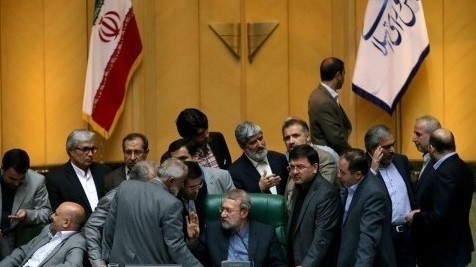
All of this spin control was not just confined to Syria and Iran lobbyists, but reached all the way to Tehran as the regime’s parliament took up the issue of swift passage of the nuclear agreement, but the debate and parliamentary moves were revealing since the regime was already gaming the deal by making a distinction that the regime was only “suspending” its nuclear activities and not removing them, thereby allowing for the future swift restart of the program.

By Michael Tomlinson


Filed Under: Blog Tagged With: #NuclearDeal, Appeasement policy, Congress bill on Iran, Iran, Iran deal, Iran Lobby, Iran sanctions, Iran Talks, Irandeal

NIAC Funded Through Regime Sources as Iran Lobby Ramps Up

July 13, 2015 by admin

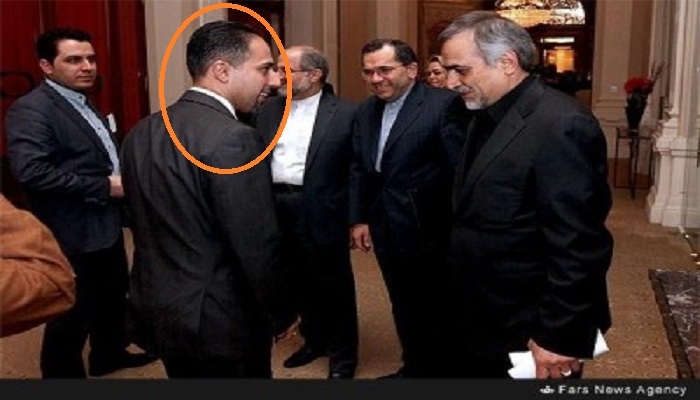
Tritta Parsi paying respect to the Iranian regime delegation in Geneva

Trita Parsi paying respect to Iran delegation in Geneva Talks

With the potential announcement of an agreement between the Iran regime and the P5+1 group of nations, the scene will undoubtedly shift to Congress where both houses will have 60 days to review the agreement under legislation authored by Sen. Bob Corker (R-TN), chair of the Senate Foreign Relations Committee, as part of a bipartisan compromise.

With that upcoming debate, a fierce lobbying campaign will break out between those opposed to the agreement and the lobbying machine deployed by Tehran’s mullahs to get it passed. Chief among them will be the National Iranian American Council, the leading advocacy group for the Islamic state, which has formally launched its own full-fledged lobbying arm in anticipation of the fight ahead.

The creation of the lobbying group has come under intense scrutiny given its timing just before congressional review, as well as the need to funnel and direct funds towards supporting the Iran regime. The question of financial support for the NIAC has been a persistent question and a recent story by The Daily Beast shed new light on where the chief cheerleaders for Iran’s mullahs are getting their money.

The story, written by Michael Weiss and Alex Shirazi and contributed by Jackie Kucinich, examined contributions made by Vahid Alaghband, an Iranian businessman who’s Balli Aviation Ltd., tried to sell 747 airliners to Iran despite a federal ban on such sales. His company pled guilty to two criminal counts in 2010 and under the plea deal with the U.S. Justice Department, paid a $2 million criminal fine, served five years of corporate probation and paid an additional $15 million in civil penalties.

“…Alaghband stands out from the rest, because the beneficiary of his firm’s deals with Tehran was an Iranian airline accused by the U.S. government of working with the regime’s foreign intelligence operatives and shipping arms and troops to Syria,” said the article.

“Plus, if an agreement between Iran and the world’s major powers is concluded in the coming days—as is widely expected—operators like Alaghband could stand to benefit.”

The deep ties to the regime also included a conspiracy in to export 747 aircraft by first obtaining export licenses from the U.S. government and then using an Armenian subsidiary to buy the planes for Mahan Air, Iran’s largest airline, which the State Department believes is controlled by former Iranian president Akbar Hashemi Rafsanjani.

Mahan Air was also sanctioned by the Treasury Department in 2011 for “providing financial, material and technological support to the Islamic Revolutionary Guard Corps-Qods Force (IRGC-QF),” or the expeditionary arm of the Islamic Republic’s praetorian military division, now heavily active in both Syria and Iraq. At the time, the Treasury Department accused the Qods Force of “secretly ferrying operatives, weapons and funds” on Mahan flights.

In 2007, Alaghband offered to give a $900,000 donation over three years to the PARSA Foundation, intended for the Brookings Institution to support pro-Iranian rapprochement. This followed a previous donation of $50,000 he made to PARSA.

PARSA’s second-largest recipient of funding was the NIAC which received a total of $591,500 from the group, but funding is not the only link between NIAC and the Iran regime with other news organizations and Iranian dissident groups having pointed out close ties between NIAC leaders such as Trita Parsi with regime officials that came to light as a result of a failed defamation suit brought by Parsi against an investigative journalist.

All of which casts doubt on NIAC Action, the new lobbying muscle being deployed to help the mullahs. As noted in an article in Commentary Magazine, the launching of the lobbying arm was followed by an email sent by NIAC staffer Tyler Cullis (and not from the NIAC Action ironically enough) calling for the immediate lifting of the United Nations arms embargo as part of the nuclear agreement.

As Commentary Magazine writes: “What the vast majority of Iranian-Americans know, and what Congress should ask NIAC, is how lifting the arms embargo meant to repress Iran’s sponsorship of terrorism is in anyway an interest of the United States, the Iranian-American community, or regional stability and security.”

“That NIAC would advocate the lifting of the arms embargo is both curious and revealing. Rather than promote Iranian-American political activism or public diplomacy, NIAC increasingly appears to align itself squarely with the publicly declared interests of the Islamic Republic of Iran,” the article adds.

Indeed, the mere fact that the NIAC is hard at work sending emails to congressional staffers urging the lifting of an arms embargo designed to prevent the Iran regime from exporting arms outside of Iran is hugely significant and provides proof that the mullahs are not intent on fostering peace, but instead are desperate to gets fresh supplies of arms and ammunition to their Hezbollah proxies in Syria, Shiite militias in Iraq and Houthi rebels in Yemen as three wars rage on.

As debate opens in Congress, it would be wise for Democratic and Republican staffers to look at the sender of these email missives and if it comes from the NIAC, they should send it straight to “Junk Mail.”


Filed Under: Current Trend, National Iranian-American Council Tagged With: alaghband, Featured, Iran, Iran sanctions, Irandeal, Irantalks, irantalksvienna

The Importance of Linking Iran Sanctions and Human Rights

June 9, 2015 by admin

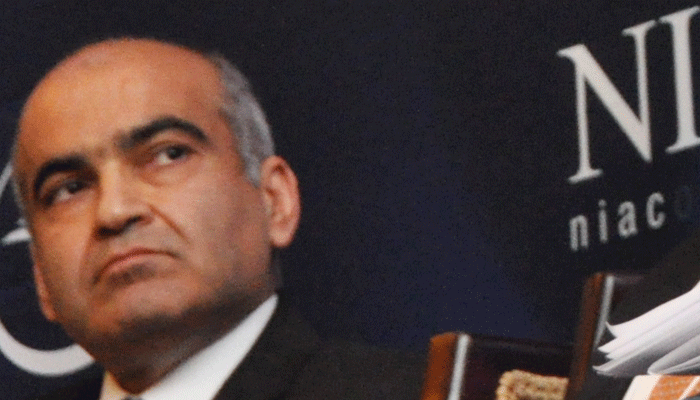
Bijan Khajehpour

Bijan Khajehpour

Sens. Mark Kirk (R-IL) and Bob Menendez (D-NJ) have put forward an amendment to the defense budget that would extend congressional sanctions against the Iran regime for 10 additional years. The amendment is aimed at extending the Iran Sanctions Act of 1996, currently set to expire at the end of 2016, to the end of 2026.

The amendment is an important step in resetting the expectations associated with the Iran regime’s nuclear weapons program because it links it to the development of intercontinental ballistic missiles and human rights abuses; a significant step towards properly addressing the central issues with the regime’s conduct towards the world.

The regime’s chief cheerleaders, the National Iranian American Council, predictably were quick to denounce the legislation, warning that passage of the bill would derail ongoing negotiations. The NIAC’s statement was noteworthy for a few things, namely that it placed the burden of completion of a deal on the U.S. and not the regime.

“There are legitimate questions about whether the U.S. will be able to deliver on the terms for sanctions relief under a nuclear deal, and the passage of this amendment would give credence to those concerns,” the NIAC statement said.

It is a remarkable sentence because it firmly ignores the chief obstacle to any agreement between the West and Iran, which is Iran’s historic inability to live up to any of its international agreements. As recently as last month, Iran has steadfastly refused to answer outstanding questions from the International Atomic Energy Agency about the “possible military dimensions” of its nuclear program.

On top of that omission are repeated comments by Iran’s top mullah, Ali Khamenei, who has reiterated publicly his opposition to allowing access to any Iranian military facility or Iranian nuclear scientists by international inspectors.

This follows continued denials by Iran that it is involved in proxy wars being waged in Syria and Yemen, not to mention its control of Shiite militias in Iraq that are now being accused of reprisal sectarian killings against Sunni Muslim villagers, all of which points to a disturbing and repeated pattern of deception, denial and distrust.

The action by Senators Kirk and Menendez comes after passage of legislation signed by President Obama and over the vigorous objections of NIAC authorizing congressional review of any nuclear agreement reached with Iran.

This latest bill from Kirk and Menendez addresses a glaring hole in current negotiations, which is the failure of negotiators to hold Iran’s human rights conduct accountable, as well as including the regime’s capacity to deliver a nuclear weapon well outside their neighborhood and threaten Europe and Asia.

The NIAC and the rest of the Iran lobby have fought hard to keep these things out of negotiations because they know full well their inclusion would almost certainly doom Iran’s hopes of securing a deal and lift economic sanctions and flood the regime with billions in new cash and investment.

The proposed amendment is not a deal breaker for the West as much as it is a safety clause assuring the West does not deliver a bad deal that could come back to haunt them.

By Michael Tomlinson


Filed Under: American-Iranian Council, Latest from Lobbies & Appeasers, National Iranian-American Council, The Appeasers Tagged With: Congress bill on Iran, Iran, Iran appeasers, Iran deal, Iran Human rights, Iran Lobby, Iran sanctions, Iran Talks, Irandeal, NIAC, Sanctions

NIAC Day of Action-Lobbying for Iran Mullahs

March 2, 2015 by admin

NIAC Day of Action-Lobbying for Iran Mullahs

NIAC Day of Action-Lobbying for Iran Mullahs

The National Iranian American Council serves primarily as a cheerleader, public relations mouthpiece and lobbying force for the Iranian regime. It does these duties with diligence and not the least enthusiasm for its mission of portraying Islamic fanatics in a gentle and favorable light. It’s almost akin to being the PR firm for ISIS, if there ever was one, with all its attendant challenges.

As part of its lobbying efforts, it coordinates its so-called “Day of Action” in which its volunteers gather up petitions to deliver to designated Congressional field offices in the hopes of steering the Congress towards a more favorable view towards Iran’s mullahs; namely you can trust them with a nuclear capacity in a couple of years.

That is the essence of NIAC’s national day of action today in which, according to the group’s website, 23 states will be targeted, mostly their U.S. Senators with a few Representatives. The bulk of the states targeted were blue states that President Obama carried in the last election, with the notable red state exceptions of Texas, Georgia and Kentucky.

Virtually all of the targeted Senators are Democrats and have already expressed some degree of support for the President’s diplomatic efforts with Iran, so what does this day of action tell us?

For one, it’s not very national. At what is arguably the most important point for NIAC in its years-long effort to build support for the Iranian regime, it can’t even muster support in more than half the states. In the overwhelming majority of the states they do plan to deliver petitions, the offices targeted are already in their column. It is in essence preaching to the choir at this point.

Secondly, this national lobbying effort is timed to coincide with Israeli Prime Minister’s address to a joint session of Congress. NIAC in favoring the mullahs, has noted the Democrats who have chosen not to attend; only 38 members have answered NIAC’s call to boycott.

Coming on the heels of the delivery of books to every Senator by NIAC about the life and efforts of Abdol-Hossein Sardari, an Iranian diplomat who saved the lives of Jews escaping the Nazi’s in Paris, NIAC has clearly gone all out in an effort to try every lever to enhance the brand image of Iran’s mullahs.

But, with mullahs being the role model for ISIS and other extremist groups, it certainly didn’t help NIAC’s efforts to have ISIS reveal new videos rampaging through a museum in Mosul, Iraq destroying antiquities, Iran’s military blowing up a replica of a U.S. aircraft carrier in exercises, and Iran starting commercial air service in Yemen after Houthi rebels backed by Iran overthrew the government, a key ally in the war against terror.

But at the heart of the lack of enthusiasm nationally for NIAC’s day of action can be found in recent polls which show the American people now rank ISIS and the threat of terror as their number one concern this year going into the tune up for the 2016 elections; even ahead of jobs and the economy.

NIAC and Iran’s mullahs have consistently placed their hopes in the idea that if you say “Iran is peace loving” enough times, it can overshadow videotaped beheadings and cremations of prisoners and put a fig leaf on turmoil and chaos roiling across Iraq, Syria, Afghanistan, Nigeria, Yemen, Chad, Sudan and Lebanon. It might even be enough to cover up terror in Paris, Sydney, Ottawa, Copenhagen and now Bangladesh where another American journalist was hacked to death alongside his wife by extremists.

The Iranian regime’s biggest export is terror and its extremist Islam and it is destabilizing large parts of the world right now. If the talks on Iran’s nuclear infrastructure were simply about centrifuges and uranium, we might get a deal, but you cannot ignore the other party at the table and it includes people such as Ali Khamenei who are playing the long game in fulfilling an apocalyptic vision of an Islamic empire with Iran’s mullahs at the controls.

So while NIAC is busy passing out petitions today, we should be thankful the vast majority of Congress isn’t listening to them.
By Michael Tomlinso

Filed Under: Blog Tagged With: #NuclearDeal, Iran, Irandeal, IranLobby, Irantalks, Netanyahu

Parallel Nuclear Talks with the Iranian Regime

February 23, 2015 by admin

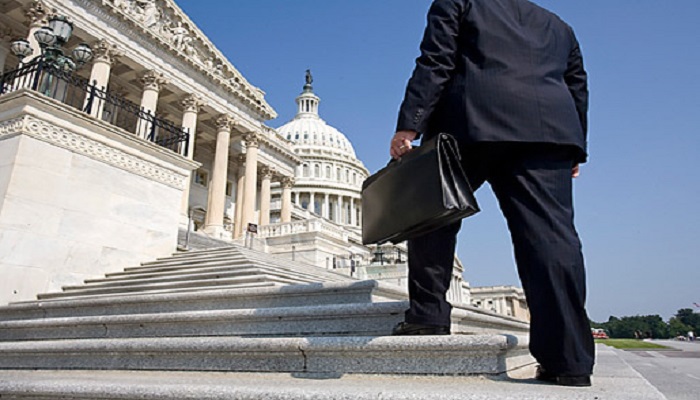
Magnifying GlassWhile U.S. Secretary of State John Kerry leads diplomats from the P5+1 negotiating team in meetings with his counterparts from the Iranian regime, another set of talks have been going on in parallel concerning inspections and access to the Iranian regime’s nuclear facilities by the International Atomic Energy Agency (IAEA) that have so far drawn much less media attention.

But in a secret report issued by the IAEA to its member states and obtained by some Western news agencies including the New York Times and Reuters, the IAEA declared that Iran’s mullahs have stalled for the past three years on several critical areas of concern over nuclear weapons development and have not been provided answers to questions that had been promised by the Iranian regime as late as last year.

The timing of the release of the report, coming as the third round of talks between the Iranian regime and the West gets underway in Geneva is interesting because it demonstrates the level of frustration international inspectors have reached in attempt to squeeze answers out of the Iranian regime over issues such as the use of next-generation centrifuges for enrichment of nuclear fuel and the testing of conventional high explosives which could be used in detonators for nuclear warheads.

The IAEA and the United Nations have always maintained that any accord reached with the Iranian regime be conditional on Iran’s mullahs fully answering the questions that still linger after years of stonewalling.

“We’ve been stonewalled on all those questions,” one European official involved in the talks said recently in the New York Times story. “And the question is does it make sense to lift sanctions against Iran before it satisfies the inspectors?”

In the Times article, an initial report by the IAEA in 2011 published a list of a dozen technologies, most of them necessary to build a nuclear weapon that inspectors said Iran had tried to master. That list was narrowed down to three which the IAEA wanted Iran to explain first.

More than a year later, the Iranian regime has still failed to provide information on even one single topic of concern to inspectors; that being the development of conventional explosives to create focused shock waves sufficient to compress the core of a nuclear device and start the chain reaction necessary for a nuclear blast.

The IAEA has been consistently blocked by the Iranian regime in getting even the most basic answers, which raises more concerns over the apparent shroud of secrecy that has fallen on the most current round of P5+1 talks. Many international observers critical of any agreement with Iran’s religious leaders, including opposition groups such as the National Council of Resistance of Iran, have contended the talks need to be transparent and open in order to allay international concerns and hold Iran’s rulers accountable because of a past history of obstruction and evasion.

In the Reuters story, Western diplomats have viewed such stalling as an indicator of the Iranian regimes unwillingness to cooperate fully until punitive sanctions are lifted in talks with the United States, Russia, China, France, Germany and Britain. This intent to have Iran’s mullahs be rewarded for simply sitting at the table is at the heart of the regime’s negotiating position and the reason why two earlier rounds of talks had failed.

Pressure to craft a framework of a deal by a March 24th deadline has placed both sides on a path towards a complex game of chicken to see who will blink first. Given the Iranian regime’s past willingness to tank previous talks, Western negotiators should be wary of giving in to regime demands simply to satisfy the appearance of progress.

No doubt the regime’s lobbying machine in the U.S. including the National Iranian American Council, that recently published a $200K ad in New York Times in favor of the mullahs, will press for a deal that hides most of the key components from public or Congressional scrutiny, but as the IAEA report has demonstrated, the Iranian regime has and continues to flaunt international concerns even after concessions and shows no interest in changing its ways.

By Michael Tomlinson

Filed Under: Blog, The Appeasers Tagged With: Iran, Irandeal, IranGeneva, Irantalks, NIAC

  • « Previous Page
  • 1
  • 2

National Iranian-American Council (NIAC)

  • Bogus Memberships
  • Survey
  • Lobbying
  • Iranians for International Cooperation
  • Defamation Lawsuit
  • People’s Mojahedin
  • Trita Parsi Biography
  • Parsi/Namazi Lobbying Plan
  • Parsi Links to Namazi & Iranian Regime
  • Namazi, NIAC Ringleader
  • Collaborating with Iran’s Ambassador

Recent Posts

  • NIAC Trying to Gain Influence On U.S. Congress
  • While Iran Lobby Plays Blame Game Iran Goes Nuclear
  • Iran Lobby Jumps on Detention of Iranian Newscaster
  • Bad News for Iran Swamps Iran Lobby
  • Iran Starts Off Year by Banning Instagram

© Copyright 2026 IranLobby.net · All Rights Reserved.