Iran Lobby

Exposing the Activities of the lobbies and appeasers of the Mullah's Dictatorship ruling Iran

  • Home
  • About
  • Current Trend
  • National Iranian-American Council(NIAC)
    • Bogus Memberships
    • Survey
    • Lobbying
    • Iranians for International Cooperation
    • Defamation Lawsuit
    • People’s Mojahedin
    • Trita Parsi Biography
    • Parsi/Namazi Lobbying Plan
    • Parsi Links to Namazi& Iranian Regime
    • Namazi, NIAC Ringleader
    • Collaborating with Iran’s Ambassador
  • The Appeasers
    • Gary Sick
    • Flynt Leverett & Hillary Mann Leverett
    • Baroness Nicholson
  • Blog
  • Links
  • Media Reports

Iranian Regime Under Pressure Everywhere

January 20, 2017 by admin

Iranian Regime Under Pressure Everywhere

Iranian Regime Under Pressure Everywhere

Like some rodent prey being squeezed by a python, the Iranian regime’s mullahs are finding themselves under pressure from all quarters as they find themselves under scrutiny for human rights violations, its militant actions and the deeply flawed nuclear agreement.

The central and most consistent issue confronting the Iranian regime has been its abysmal human rights record which continually has drawn international condemnation for the oppression of dissidents, abuse of women and children, heinous public execution of prisoners and widespread use of torture on political prisoners.

Groups such as Amnesty International have consistently documented these abuses and tried to draw international attention to the suffering at the hands of the mullahs. In its most recent report, Amnesty International described the widespread of medieval punishments including some of the most barbaric practices.

Iran’s persistent use of cruel and inhuman punishments, including floggings, amputations and forced blinding over the past year, exposes the authorities’ utterly brutal sense of justice, said Amnesty International.

Hundreds are routinely flogged in Iran each year, sometimes in public. In the most recent flogging case recorded by Amnesty International, a journalist was lashed 40 times in Najaf Abad, Esfahan Province, on 5 January after a court found him guilty of inaccurately reporting the number of motorcycles confiscated by police in the city.

“The authorities’ prolific use of corporal punishment, including flogging, amputation and blinding, throughout 2016 highlights the inhumanity of a justice system that legalizes brutality. These cruel and inhuman punishments are a shocking assault on human dignity and violate the absolute international prohibition on torture and other ill-treatment,” said Randa Habib, Amnesty International’s Regional Director for the Middle East and North Africa.

“The latest flogging of a journalist raises alarms that the authorities intend to continue the spree of cruel punishments we have witnessed over the past year into 2017.”

According to Amnesty International, under Iranian regime law, more than 100 “offenses” are punishable by flogging. These cover a wide array of acts, ranging from theft, assault, vandalism, defamation and fraud to acts that should not be criminalized at all such as adultery, intimate relationships between unmarried men and women, “breach of public morals” and consensual same-sex sexual relations.

Many of those flogged in Iran are young people under the age of 35 who have been arrested for peaceful activities such as publicly eating during Ramadan, having relationships outside of marriage and attending mixed-gender parties.

The Amnesty International report goes on to document a long list of heinous punishments inflicted by the regime on its own people.

Besides pressure being brought Amnesty International, potential avenues of dialogue may finally be opening between an incoming U.S. administration and Iranian resistance groups that have helped shine a bright light on transgressions by the Iranian regime, not only human rights abuses, but also its then-secret nuclear weapons program.

With the Trump administration taking office, a ripple effect has been moving out affecting the Iranian regime in all sorts of ways, including concern coming from commercial aircraft leasing companies that may be having second thoughts about doing business with the Iranian regime in these uncertain times.

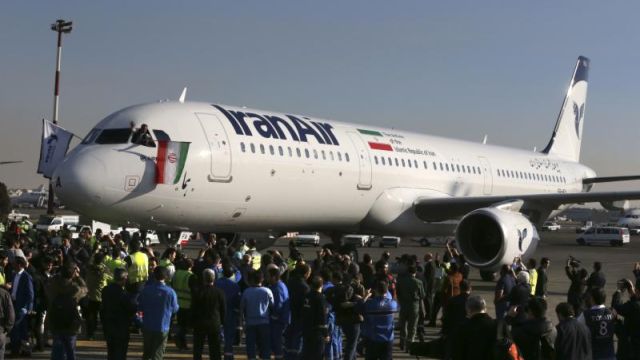
Even though Iran’s flag carrier, Iran Air, last week received the first new jetliner from Airbus, and last year finalized deals to buy 100 planes from the European plane maker and another 80 from Boeing, big aircraft lessors still are reluctant to do business in Iran. “We will remain cautious,” said John Plueger, chief executive of Air Lease Corp.

Trump has voiced skepticism about the Iran accord and “we have to be mindful of that,” Air Lease Corp.’s Plueger said Tuesday at an Airline Economics forum.

U.S. critics of the Iran deal have tried to block financing of the planes. Members of the House of Representatives this week introduced a bill to force the Trump administration’s director of national intelligence to investigate whether planes operated by Iran Air or other carriers are being used to support terrorism.

“We’re asking the intelligence community to provide a full accounting of Iran’s use of commercial airlines to support its global network of terror proxies” including in Syria, Rep. Peter J. Roskam (R-IL) said in a statement Tuesday.

Businesses are worried the U.S. may reimpose sanctions. “There is a substantial snap-back risk,” said Olaf Sachau, chief executive of Intrepid Aviation. Although he sees Iran as an attractive market for plane-leasing companies to do businesses, the U.S. election outcome means tapping the market isn’t on the agenda for now.

These uncertainties have taken the shine off of the anniversary of the nuclear agreement as Hassan Rouhani has tried to celebrate it. Rohani has been saddled by the high expectations he set, as Iran’s economy continues to struggle and the great boost in foreign investment and other benefits he envisioned has so far failed to materialize mostly as a result of the lack of capabilities within the ruling elite and for spending much of the cash in promoting the war in Syria, Iraq, Yemen, etc and on empowering the IRGC at home for domestic repression.

The Iranian currency, the rial, hit a record low against the dollar in recent weeks, prompting fears that efforts to boost the exports of industrial goods will suffer and anticipated foreign goods will be prohibitively costly. The unemployment rate is on the rise, reaching 11.3 percent in 2016 compared to 10.8 in 2015.

In a nutshell, the limited economic progress Rohani’s government has made has yet to trickle down to the average Iranian household in terms of jobs, salaries, and the prices of basic goods. This is something that none other than top mullah Ali Khamenei had to admit, saying in August that Iranians had yet to see a “tangible effect” in their daily lives.

Khamenei has sharpened his criticism. He has continued to emphasize a “resistance economy” aimed at boosting domestic production for export and warned against Western “infiltration” by way of the agreement, highlighting the fact that the mullah’s regime is incapable of making any radical change in country’s economy.

He may be recognizing that as the Iranian regime is getting squeezed again, he and his fellow mullahs will need to crack down harder to keep their tenuous hold on the Iranian people.

Laura Carnahan
Filed Under: Blog, News Tagged With: #NuclearDeal, Appeasement policy, Featured, hassan rouhani, Iran, Iran deal, Iran Lobby, Iran sanctions, IRGC

Iran Lobby Working Feverishly to Avoid Collapse

January 17, 2017 by admin

Iran Lobby Working Feverishly to Avoid Collapse

Iran Lobby Working Feverishly to Avoid Collapse

As the sun sets on the Obama administration and its flawed policy of appeasing the Iranian regime, the Iran lobby is working in overdrive to do anything and everything it can to preserve the few wins it managed to snag over the past eight years; most notably the Iran nuclear deal.

Trita Parsi, the head of the National Iranian American Council, has been trying to insert himself into any Iranian-related news story he can find; most recently the death of Hashem Rafsanjani. He has also weighed in president-elect Donald Trump’s potential scrapping of the nuclear agreement, banking restrictions on Iranians in the U.S., the Boeing deal and if he could manage it discussing the potential of Iranian films in the Oscar race this year.

For Parsi and the rest of the Iran lobby, the biggest potential disaster looming is the possible revocation or alteration of the nuclear agreement once the Trump administration takes office next week. Parsi and the mullahs in Tehran seem resigned to the fact that Trump will almost certainly act on his campaign promise to trash or redo it.

“The deal is in tremendous danger,” Parsi said in the Washington Post. “Iranians are building a case to make sure that once the deal falls apart they can point to a strong record of the U.S. causing it. It’s going to be part of the cost the administration will have to decide if it’s willing to pay.”

Parsi is already trying to frame the debate as the fault of the U.S. knowing that Tehran’s free ride is coming to an end. Similarly, the jockeying for rhetorical position illustrates the key flaw in the nuclear agreement in the first place which was that it did not address the motivations of the Iranian regime in supporting terrorism, oppressive human rights abuses or proxy wars.

Without correcting the underlying behavior of the mullahs, the agreement was doomed from the start, something the Trump team has already publicly acknowledged.

“There’s a recognition in the incoming team that the regime cheats incrementally, not egregiously, even though the sum total of cheating turns out to be egregious,” said Mark Dubowitz, executive director of the Foundation for Defense of Democracies and a prominent critic of the agreement. “Trump should show a zero-tolerance policy to cheating. Which means, at a minimum, using U.S. sanctions to respond. At a maximum, it means building up a case there’s a history of incremental violations, and move to snap back sanctions.”

For the Iranian regime though the deal has served its purposes. It has enabled the regime to:

  • Replenish its coffers with over $100 billion in badly needed cash that was redirected to support the Assad regime in Syria on the brink of collapse and pay for Hezbollah fighters and Afghan mercenaries to fight a holding action there until Russia was dragged into the conflict by Iran;
  • Allowed the regime to burnish the public image of “moderates” winning in Iran when in fact there are virtually no real moderates left in Tehran, only various factions differentiated only by their fight for control of state industries and their piece of the trough of cash, kickbacks and skimmed funds; and
  • Support the renewal of sectarian wars in Iraq and Yemen aimed at building a Shiite sphere of influence there Iraqi Shiite militias and Houthi rebels through the purchase and shipping of massive quantities of guns, ammunition, rockets, mortars and missiles.

The mullahs in Tehran are not stupid. They saw the gravy train coming to an end and have worked to gain as much advantage as they can to jump start a nuclear program that never really stopped as Jennifer Rubin points out in the Washington Post.

We saw just how lopsided the U.S.-Iran relationship has become. “The 2015 nuclear deal obligated Iran to keep no more than 130 metric tons of heavy water, a material used in the production of weapons-grade plutonium,” explains Iran analyst Omri Ceren. “But the Iranians have continued to produce heavy water, and they exceeded the cap in February and November. The violations [are] functionally blackmailing the Obama administration: Either someone would purchase the excess heavy water, allowing Iran to literally profit from violating the deal, or the Iranians would go into formal noncompliance, endangering the deal,” she writes.

Now the Associated Press has reported:

“Iran is to receive a huge shipment of natural uranium from Russia to compensate it for exporting tons of reactor coolant, diplomats say, in a move approved by the outgoing U.S. administration and other governments seeking to keep Tehran committed to a landmark nuclear pact.

“Two senior diplomats said the transfer recently approved by the U.S. and five other world powers that negotiated the nuclear deal with Iran foresees delivery of 116 metric tons (nearly 130 tons) of natural uranium.”

Rather than police the deal to ensure compliance, the Obama administration is assisting Iran in violating the JCPOA. Ceren remarks, “That’s enough for more than 10 nuclear bombs.”  We both allow the Iranians to exceed the heavy-water limits in the deal — and then richly compensate them with uranium that can be used for bombs. Our allies would be excused for thinking we are now promoting Iran’s interests, not the West’s,” Rubin adds.

She also noted that Reuters reported, “Iranian lawmakers approved plans on Monday to expand military spending to five percent of the budget, including developing the country’s long-range missile program which U.S. President-elect Donald Trump has pledged to halt. The vote is a boost to Iran’s military establishment –– the regular army, the elite Islamic Revolutionary Guard Corps (IRGC) and defense ministry — which was allocated almost 2 percent of the 2015-16 budget.” This, of course, refutes the notion peddled by Iran and echoed by the administration that the deal would empower “moderates” and without the deal “hard-liners” would get the upper hand. It seems that the deal has empowered the hard-liners (the IRGC), just as critics of the deal anticipated.

So while Parsi spins away like an Olympic cyclist, the reality of how to confront a double-talking Iranian regime will soon face the Trump team.

Laura Carnahan

Filed Under: Blog, News Tagged With: Featured, Iran deal, Iran Lobby, Iran Mullahs, Iran sanctions, Iran Terrorism, IRGC, National Iranian American Council, NIAC, Trita Parsi

Iran Lobby Pleading to Save Iran Nuclear Deal Despite Regime Militancy

January 17, 2017 by admin

Iran Lobby Pleading to Save Iran Nuclear Deal Despite Regime Militancy

Iran Lobby Pleading to Save Iran Nuclear Deal Despite Regime Militancy

With only a few days left until Donald Trump is sworn in as the next president of the United States, the Iran lobby and their Iranian regime leaders are in an absolute tizzy about the nuclear agreement and its future.

For the Iran lobby, especially the National Iranian American Council and the Ploughshares Fund, the nuclear deal with Iran represented a high water mark for their perceived effectiveness, but like a evaporating lake in a desert, their success was illusory since it was largely built on the decision by the Obama administration to try a policy of appeasing the Iranian regime.

With the ascension of the Trump administration with such noted critics of the Iranian deal in many of cabinet nominees now undergoing confirmation hearings, the Iran lobby is faced with rollback of all of their gains in one fell swoop.

Iran lobby supporters such as Trita Parsi have tried all sorts of tactics in an effort to save the deal in a shotgun approach of messages. First they openly criticized Trump during the presidential election, joining the tactics of his opponents with personal attacks.

When that failed and he won election, Parsi and his cohorts shifted to the threat of war if the Iran nuclear deal was scrapped by Trump. When that fell on deaf ears and gained almost no traction with the media and Trump announced his cabinet picks, the attacks shifted to the nominees.

Now that line of attack has essentially failed, the Iran lobby is now trying to float the idea that the Trump is actually in support of the nuclear deal and not likely to scrap it because the consequences would be so devastating.

Trying to keep track of all the misses by the Iran lobby is like trying to keep track of clanks off the rim by a worst shooting team in the NBA.

And now their worst fears are finally starting to come to fruition: the U.S. is finally beginning to realize that instead of appeasing the mullahs in Tehran, it is now time to hold them accountable for their actions.

The Iranian lobby fears that deeds and not words are likely to be the new currency of diplomacy in 2017.

But it isn’t just a Trump administration that is causing the Iran lobby to freak-out, it is the changeover in Congress and the potential for a whole raft of actions aimed at the mullahs ranging from the re-imposition of economic sanctions on the federal level to state-by-state sanctions means the Iran lobby is poised to be overwhelmed.

Congress has already begun offering up a series of bills taking aim at various aspects of the Iranian regime’s conduct including the near unanimous passage of the Iran Sanctions Act. Now comes a bill offered up last week to initiate an investigation into Iran Air and other regime airlines by the new Director of National Intelligence into whether or not they provide support to the Revolutionary Guard Corps or other terrorist groups.

The timing of this legislation is important to the Iranian regime as it takes delivery of new commercial airliners from Airbus and soon Boeing to replace aging aircraft in its fleet. Iran Air took delivery last week of the first of 100 jets it ordered from Airbus with Boeing scheduled to deliver in 2018.

Should the investigation of Iranian airlines lead to the discovery of a link between them and support for terrorist activities, the suspect airline could end up back on the U.S. sanctions list and be prevented from receiving any new aircraft or U.S.-made parts according to CNN News.

There has always been deep suspicion that the Iranian regime uses commercial airliners to ferry troops, ammunition and cash to hotspots such as Syria and Iraq. Should that link prove true, the Iran lobby could find itself fighting for the economic survival of the regime again.

Mahan Air, Iran’s second biggest carrier, is still on the sanctions list for aiding Iran’s military and is barred from buying Western planes and parts.

Iran Air was removed from the U.S. sanctions list in January 2016 as part of an agreement to convince Iran to restrain its nuclear program. It opened the path for multi-billion dollar sales by Boeing and Airbus. That prompted an outcry from some lawmakers who said the Obama administration offered no proof that Iran Air had stopped its support of the Iranian military or designated terrorist organizations.

The news for the Iran lobby got worse with the release of a letter from 23 former U.S. officials urging the Trump administration to open up a dialogue with Iranian dissident groups, specifically the National Council of Resistance, which counts as one of its members the People’s Mujahedin Organization of Iran; a dissident group the mullahs in Iran have made it their mission to pursue and destroy.

Trump transition officials did not immediately respond to a request for comment. An NCRI spokesman, Ali Safavi, said the group had no “role whatsoever” in the letter, but forwarded a statement from an NCRI official, Soona Samsami, welcoming the letter as an “appropriate and timely initiative.”

In spite of these changing political fortunes, the Iranian regime seems intent on maintaining the same militant attitude to the rest of the world as news came out of Iran of the mass execution of 20 prisoners over the past two days.

Amnesty International reports indicate that Iran executed at least 977 people in 2015, mainly for drug-related crimes.

The human rights activist NGO also blames Iran for continuing to execute juvenile offenders, those aged under 18 at the time of the crime, in violation of the international law.

For the mullahs, some things don’t change.

Michael Tomlinson

Filed Under: Blog, Current Trend, National Iranian-American Council, News Tagged With: #NuclearDeal, Appeasement policy, Featured, Iran, Iran Lobby, Iran Terrorism, IRGC, National Iranian American Council, NIAC, NIAC Action, Nuclear Deal, Ploughshares, Syria

Iran Regime Bulks Up Military In Grab for Power

December 28, 2016 by admin

Iran Regime Bulks Up Military In Grab for Power

Iran Regime Bulks Up Military In Grab for Power

With the nuclear agreement reached almost two years ago, the Iranian regime has used the $1.7 billion cash it received from the Obama administration as part of the swap for American hostages to help solidify its precarious position in Syria, while it has used new oil revenues to pump badly needed cash back into its military operations depleted from years of war abroad.

With three conflicts going on in Syria, Iraq and Yemen, the mullahs placed a priority in supplying the terrorist proxies doing the heavy lifting for the regime such as Hezbollah, but they have also expanded the scope of their funding to include Afghan mercenaries recruited among the multitude of refugees living in Iran, as well as transporting Shiite militias from Iraq to fight in Syria.

The expenditure of ammunition, weapons and arms has been prodigious as the Iranian regime has been the sole supplier to the Houthis in Yemen waging a protracted civil war against the elected government.

The drain in foreign currency has exacerbated the regime’s economy to the point where the rial has plunged against the U.S. dollar and ordinary Iranians still struggle with anemic wages and an economy that is not capable of meeting basic needs leading to widespread discontent.

For the mullahs though the priority is on their military, especially since the Revolutionary Guard Corps leadership controls much of the Islamic state’s economy and reaps tremendous personal wealth from the skimming and corruption running through it.

With that emphasis on the military come the needs to constantly bolster the image of the regime’s armed forces, even if most of the boasting is illusory and aimed more for propaganda effect than practical military applications.

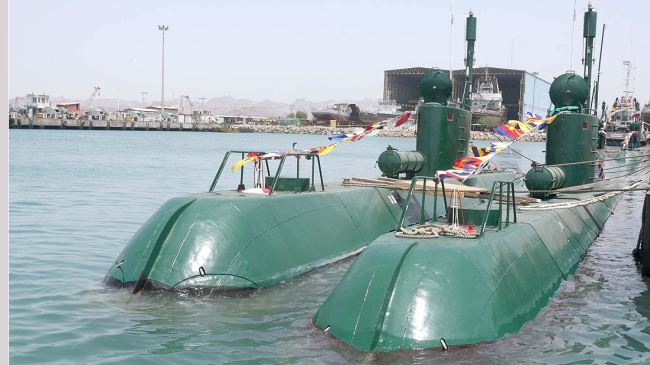
The Iranian regime constantly boasts of new military inventions such as patrol boats, drones, and new missiles, but lately the boasts are getting more grandiose to the point where many military analysts are shaking their heads.

For example, Hassan Rouhani claimed that the regime would now focus on building nuclear-powered ships even though the technology to do so is massively expensive and would require highly enriched uranium well in excess of what the country is allowed under the nuclear agreement.

Now come the latest boasts that the regime is going to build an aircraft carrier, a ship-type that even Russia and China struggle to grasp in building successfully.

“At present, the Defense Ministry and the Navy are both after building military equipment for naval warfare but the Defense Ministry is producing different types of missiles indigenously and the Navy’s needs to missiles are met using this capacity,” Deputy Navy Commander for Coordination Admiral Peiman Jafari Tehrani said on Monday, as cited by semi-official Fars news agency.

“Building an aircraft carrier is also among the goals pursued by the Navy and we hope to attain this objective,” he added.

It’s not the first time Iran has floated the idea of building aircraft carriers, since 2011 and 2014, Iranian defense officials have claimed to be moving forward with the idea even though there has been no evidence of such a building program.

Far from being able to develop advanced weapons systems, the Iranian regime is usually relegated to holding war games exercises and parades in order to beat its chest for public consumption.

For example, Iran kicked off a five-day large scale military exercise in the country’s southern region warning that civilian and military aircraft risk being shot down if they stray into Iranian airspace occupied by the drill.

The exercises, codenamed Modafe’an-e Aseman-e Velayat 7 or Defenders of Velayat Skies 7, include air defense drills and various missile, artillery and radar equipment as well as cyber and electronic warfare exercises, according to regime media.

Speaking Sunday, the commander of the regime’s air force Gen. Farzad Esmaili warned foreign aircraft trespassing the airspace covering the drill area would be shot down immediately, even though there were no foreign aircraft anywhere near the area, demonstrating the regime’s need to appear the bully.

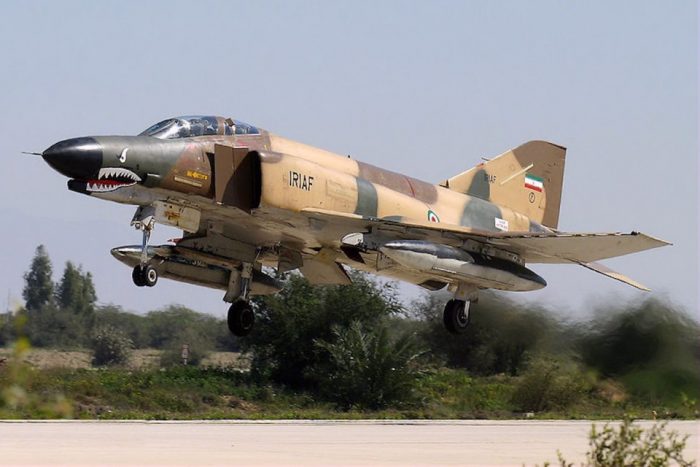
The regime planned on using U.S.-made F-4 Phantom fighter jets older than the pilots flying them, as well as test firings of newly acquired Russian-built S-300 anti-aircraft missile batteries.

All too often the regime’s military displays only succeed in reminding the world how grossly inadequate its military is in today’s modern battlefield. The Iranian regime excels in the kind of low-intensity, urban conflicts where proxies and terror groups can be used, but little else.

This inherent weakness in the regime’s military capability probably leads to a certain level of paranoia amongst the mullahs which is why they spend so much time, effort and energy arresting, torturing, imprisoning and executing any dissenters.

This has included mass arrests of journalists, students, artists, bloggers, social media users, fashion models and just about anyone else you can think of. It also includes a respectable number of dual-national citizens that Iran does not recognize, including Canadians, French, Brits and Americans.

The regime has expanded its efforts during this holiday season to target Christians, arresting any who preach the Gospel or attempt to convert a Muslim to Christianity. This follows the regime’s prior efforts to arrest and abuse others faiths such as Ba’hai and Kurds.

Ultimately much of the Iranian regime’s military boasting is so much hot air, but not the sincerity of the threats it makes against its neighbors. Even an old and weak animal can still cause havoc and mayhem.

Michael Tomlinson

Filed Under: Blog, News Tagged With: #NuclearDeal, Appeasement policy, Featured, Iran, Iran Mullahs, Iran sanctions, Iran Terrorism, IRGC, Khamenei

Evidence Mounts of Iran Leadership in Aleppo Atrocities

December 23, 2016 by admin

Outrage over the carnage in Aleppo has so far been directed mainly at Damascus, but activists on the ground say Tehran has a top general on the scene and has established secret camps where Iraqi mercenaries are trained to root out rebels in the Syrian city.

Evidence Mounts of Iran Leadership in Aleppo Atrocities

Evidence Mounts of Iran Leadership in Aleppo Atrocities

According to information provided to FoxNews.com, the forces currently controlling the city of Aleppo are under the command of the Iranian regime’s Revolutionary Guards Corps (IRGC). The military outfit under its command includes foreign mercenaries such as Lebanese Hezbollah, Iraqi militias, and also the Shiite fighters of the Liwa Fatemiyoun from Afghanistan and the Liwa Zainebiyoun from Pakistan.

At the same time, Iran participated in a summit in Moscow with Turkey and Russia to begin discussions on dividing up the spoils of the conflict now that Aleppo had fallen under merciless bombardment.

The meeting was further evidence of Iran’s emerging role in Syria, both during the ongoing civil war and the expected aftermath.

According to reports received by the opposition to the Iranian regime, the number of IRGC forces and its hired hands in Aleppo and the surrounding area has reached 25,000, while the number of military personnel from Assad’s army is very limited.

“This report leaves no doubt that the Iranian regime is the primary obstacle to any solution in Syria,” Shahin Gobadi, spokesman for the National Council of Resistance of Iran (NCRI) told FoxNews.com. “The current situation in Aleppo and the role of the Iranian regime in the atrocities committed on the ground require the immediate expulsion of the IRGC and its mercenaries from Syria. By meddling in other countries the mullahs try to cover up their vulnerability at home. The survival of the [Iranian] regime has been intertwined with maintaining the Assad dictatorship in power in Syria.”

The reports, which were obtained by the NCRI and its sister organization People’s Mujahedin of Iran (MEK), state that the commander of the Quds Force – as IGRC units operating outside Iran are known – in Aleppo is Brigadier General Javad Ghafari, who is described as the right-hand man of the Revolutionary Guard’s commander-in-chief, Qassem Soleimani, who has been referred to as the architect of Iran’s role in Russian operations in Syria, according to FoxNews.com

The MEK has established a track record of accurately reporting misdeeds by Tehran over the past decade, including its attempts to hide nuclear weapons-related facilities from UN inspectors, according to Middle East Eye.

The NCRI has also alleged that the Revolutionary Guard has established its main headquarters around 20 miles southeast of Aleppo in a garrison called Behuth, or Fort Behuth, which used to be one of the most important centers of missile and chemical weapon production for the Assad regime.

It is now under the supervision of Ghafari, but it also contains a center operated by Lebanese Hezbollah commanders, as well as a number of Syrian army officers who are also present, according to the intel reports.

“The fact is that Aleppo has been occupied by the IRGC and its mercenaries,” Gobadi said to FoxNews.com. “Mass executions, preventing the transfer of civilians including women and children, attacking the civilians – has all been done by the forces of the mullahs’ regime.

“[They] are the main source of crisis in Syria and the region,” he went on. “By abusing the inaction of the international community and being convinced of not being held accountable for its crimes, [Iran] has continuously become more emboldened.”

The U.N. puts the overall death toll in Syria’s civil war at 400,000. More than 30,000 have died in the Battle of Aleppo, a last urban rebel holdout against President Bashar Assad’s regime.

The Institute for the Study of War, a nonprofit research group in Washington, has reported that Iran organized thousands of Shiite militias in Iraq not only to fight the Sunni Muslim Islamic State there, but also to deploy them to fight rebels in Aleppo.

The Washington Times recently interviewed Iranian dissidents who had escaped to Western Europe. They said Iran’s brutality at home and aboard has increased, not decreased, since the landmark nuclear deal with the U.S. that provided Tehran billions of dollars.

The MEK report provided to The Times says that Syrian government forces are scarce around Aleppo, meaning it is Iran doing the lion’s share of offensive maneuvers and killings.

“On two occasions the transfer of Aleppo residents were hindered and their buses were fired upon under the instructions of the IRGC to gain concessions on the residents [of] al-Foua and Kefraya,” said the MEK, referring to two towns north of Aleppo.

State Department spokesman John Kirby was asked Monday whether the U.S. will protest to the U.N. Security Council the fact that Gen. Soleimani has been spotted in Aleppo. The U.N. has banned him from international travel for his role in terrorism.

“We do intend to consult with our partners on the Security Council about how to address our concerns with this,” Kirby said. “We’ve long said that Iran needs to choose whether it’s going to play a positive role in helping peacefully resolve conflicts such as in Syria or whether it will choose to prolong them. And you’re absolutely right: His travel is a violation.”

Jim Phillips, a Middle East expert at The Heritage Foundation, said that Assad’s army is depleted and stretched thin protecting government-held territory.

“Without Iran’s expanding military intervention, the Assad regime would have fallen months ago,” Phillips said. “While Russia’s military intervention has dominated media coverage on Syria, Iran has been responsible for almost all of the ground offensives in recent months that clawed back territory from the rebels and encircled Aleppo. It has deployed thousands of Revolutionary Guards.”

Michael Tomlinson


Filed Under: Blog, News Tagged With: #NuclearDeal, Featured, hassan rouhani, Iran, Iran Mullahs, Iran Terrorism, IRGC, Khamenei, Syria, Yemen

Why Do Sanctions Not Apply to Qasem Soleimani?

December 20, 2016 by admin

Why Do Sanctions Not Apply to Qasem Soleimani?

Why Do Sanctions Not Apply to Qasem Soleimani?

What is the purpose of a sanction? According to the dictionary, a sanction is “a threatened penalty for disobeying a law or rule.” Sanctions come in all forms ranging from your mother grounding you for painting the family dog to imposing economic sanctions on your nation because you’re trying to build nuclear weapons.

In either case, the basic premise is still the same: you do something wrong, you suffer the consequences. It’s not a complex idea and one as basic as human nature, except in the case of the Iranian regime, sanctions don’t seem to apply.

Take for instance the case of Qasem Soleimani who is the commander of the regime’s Quds Force, the arm of the Iranian military often engaged in irregular operations and is the primary contact for terrorist groups and militias around the world.

If Wal-Mart is the world’s largest retailer, the Quds Force is the bazaar for militants, terrorists, mercenaries and rebels.

The Quds Force is unique because it directly and solely reports to the regime’s top mullah, Ali Khamenei. That would be like if the Navy SEALS only reported to the president and were accountable to no one else. As the Quds Force commander, Soleimani wields enormous influence which he has used in carving out a personal theater of operations ranging from Lebanon and Syria to Iraq and Yemen.

Since 2007, the Quds Force has been a supporter of terrorism by the U.S. and Soleimani was singled out and sanctioned by the United Nations as well. He was also cited by the European Union in 2011 for his role in supporting the violent suppression of protests in Syria which sparked that civil war.

Since then, Soleimani has been at the heart of the Syrian conflict and the faceless man standing behind Syrian dictator Bashar al-Assad in a war that has claimed over 800,000 lives and turned large swathes of Syria into desolate wreckage.

Soleimani was also the principle player in flying to Moscow to plead with Russia to intervene militarily in Syria just as rebels had gained the upper hand and Assad was pushed to the brink.

The fact that Soleimani has been able to fly to Russia and travel throughout the Mideast has been amazing considering he is under an international travel ban as part of the sanctions imposed on him and yet he travels as freely and frequently as any reputable businessman.

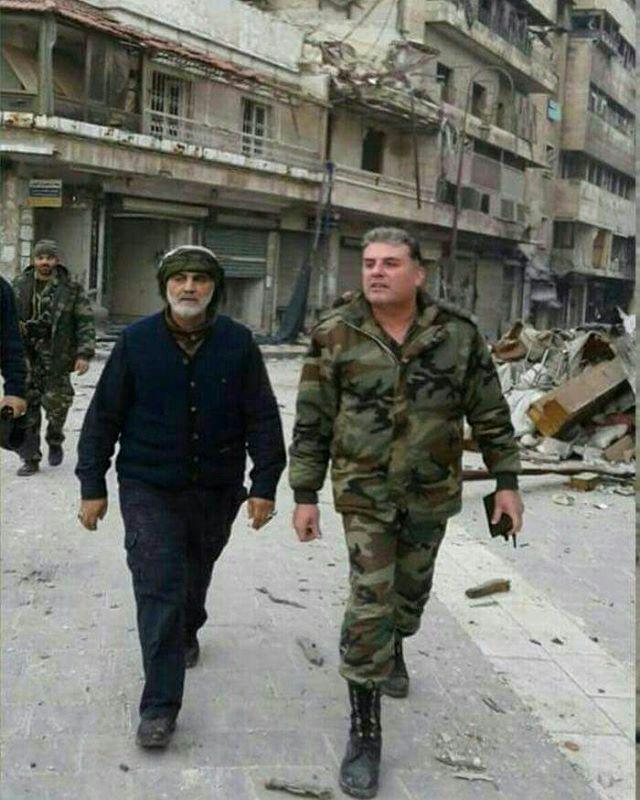
Now we have recent photos and social media posts of him touring the ruins of Aleppo in the wake of that city’s surrender this weekend. Soleimani tour of Aleppo was a demonstration of Iran’s waxing influence in Syria and disregard for international resolutions barring such behavior. Soleimani’s presence in Syria is a direct violation of the United Nations resolution governing the nuclear deal, according to the Washington Free Beacon.

Soleimani’s visit coincided with moves by the terror group Hezbollah, which is controlled by Iran, to establish its own claim in Syria, according to regional reports and footage.

Iran’s public presence in Syria has not been met with action by the Obama administration, which has come under increasing pressure in recent weeks to explain why it is not enforcing current sanctions against Iran. Soleimani continues to direct Iranian forces in both Iraq and Syria and has long been sanctioned for the murder of U.S. citizens.

Mutliple sources who spoke with the Washington Free Beacon about the matter disclosed that the Obama administration is taking a soft approach with Iran, including not enforcing sanctions, in order to preserve the nuclear deal and diplomacy with Tehran, which has threatened repercussions for any new sanctions.

Sanctions imposed by the international community to prevent the flow of arms and foreign fighters to Syria have proven just as impotent as Soleimani has used the Quds Force to recruit Afghan mercenaries from the ranks of refugees living in Iran, as well as shipped in Shiite militias from Iraq to fight for Assad.

He has also orchestrated the dramatic escalation in the use of air power first through Syria and later through Russia resulting in the use of barrel bombs and similar weapons of mass destruction on civilian targets.

Most disturbing, the Quds Force supported Shiite militias in Iraq with IEDs that were responsible for killing hundreds of American service personnel there and Soleimani has never been called to account for those American deaths.

In 2011, Soleimani and other members of the Qods Force were implicated in the failed Iranian plot to assassinate the Saudi Arabian ambassador to the U.S. at a popular restaurant in Washington, D.C. As part of the nuclear deal reached with Iran, the UN travel ban on Soleimani will be lifted either in October 2020 or when the International Atomic Energy Agency determines that all nuclear material in Iran is for peaceful purposes.

That lack of accountability and enforcement of sanctions points the greatest weakness in the argument made by the Iran lobby and other supporters of the nuclear which was that Iran wouldn’t be able to evade it.

Soleimani and the Quds Force are proof that Iran can not only evade international sanctions, but do so freely and without consequences.

Ultimately, the challenge for the incoming Trump administration and the rest of the world will be not in forging new agreements with Iran, but just enforcing the myriad of sanctions already in place.

Michael Tomlinson

Filed Under: Blog, News Tagged With: Featured, Iran Mullahs, Iran sanctions, Iran Terrorism, IRGC, Sanctions, Syria

Iran Lobby Defends Iranian Regime Threats

December 16, 2016 by admin

Iran Lobby Defends Iranian Regime Threats

Iran Lobby Defends Iranian Regime Threats

In the wake of overwhelming votes by both houses of Congress to reauthorize the Iran Sanctions Act, the Iranian regime has been vocal in its threats and bravado, but Iran upped its aggression game when Hassan Rouhani announced that Iran would start developing systems for nuclear-powered marine vessels.

According to Reuters, nuclear experts said that Rouhani’s move, if carried out, would probably require Iran to enrich uranium to a fissile purity above the maximum level set in the nuclear deal. The announcement was the first declarative statement by the regime’s leadership of an action taken in direct response to the ISA vote.

Predictably, the Obama administration downplayed the comments in the hopes of maintaining the badly flawed deal in the face of mounting criticism from the foreign policy team being assembled by incoming president Donald Trump.

“The announcement from the Iranians today does not run counter to the international agreement to prevent Iran from obtaining a nuclear weapon,” White House spokesman Josh Earnest told a news briefing.

Rouhani also ordered planning for production of fuel for nuclear-powered marine vessels “in line with the development of a peaceful nuclear program of Iran.”

But under the nuclear settlement Iran reached with the United States, France, Germany, Britain, Russia and China, it is not allowed to enrich uranium above a 3.67 percent purity for 15 years, a level unlikely to be enough to run such vessels, according to Reuters.

“On the basis of international experience, were Iran to go ahead with such a (nuclear propulsion) project, it would have to increase its enrichment level,” said Mark Hibbs, nuclear expert and senior fellow at Carnegie Endowment for International Peace.

The threat to seek nuclear propulsion would give the Iranian regime a convenient way of circumventing the nuclear agreement and get back into the enrichment game quickly and still claim it was adhering to the deal.

It is ironic that Rouhani is citing the reauthorization of the ISA as the straw that broke the proverbial camel’s back in pushing this announcement since the ISA applied largely to Iran’s ballistic missile program and its sponsorship of terror groups, as well as its nuclear program. The ISA is crucial to fulfilling the Obama administration’s promise of “snapback” sanctions should Iran be found in violation.

Also, the president maintains the authority to waive sanctions under the ISA, which Obama has done. This can only mean Rouhani and his fellow mullahs are terrified of what Trump will do when he takes office.

But one possible motivation for Rouhani may be to goad President Obama into not signing the ISA bill before the deadline expires December 31, 2016, which would ultimately prove futile since the bill easily cleared with unanimous approval—enough to override any veto—but Tehran may be hoping for a symbolic act of defiance in support of them from Obama.

Predictably, the Iran lobby led by the National Iranian American Council voiced its support for the deal and warned of dire consequences with Rouhani’s announcement as proof of impending disaster.

“For months, we warned that ISA’s renewal would have real consequences. Today, those consequences have been realized. While Iran’s move to undertake studies related to nuclear-propelled ships is not in violation of the nuclear accord, it does undermine U.S. foreign policy objectives,” the NIAC statement said. “Iran is signaling that for every negative U.S. action, there will be an Iranian reaction anathema to U.S. interests.”

The NIAC statement is the height of absurdity because the logic to it is akin to having a police officer catch a burglar, only to have the thief produce a weapon and threaten the officer and the officer is held to blame for the escalation.

Iran has already received several waivers and exemptions for violating terms of the nuclear agreement and yet when Congress reauthorizes a bill that the Obama administration has already said does not violate the nuclear agreement, the Iranian regime’s first thought is to threat the U.S.

It is a reaction that is a perfect reflection of why the nuclear deal was doomed from the start and why the Iran lobby cannot be trusted in advancing it.

Instead of urging Iran to reach out diplomatically to the incoming Trump administration, the NIAC has from the beginning sought to characterize Trump as a war monger, Muslim hater, insane person and intellectual idiot. These are not the kinds of comments that would engender a positive reaction from the new president.

While the NIAC has gone all in on supporting Iran, even in the face of outrageous statements, it delegitimizes its stated role as an advocate for Iranian-American interests. How can Iranian-Americans be helped by an organization that does not urge Iran to refrain from making outlandish and dangerous threats?

Michael Tomlinson


Filed Under: Blog, News Tagged With: Featured, hassan rouhani, Iran, Iran deal, Iran Lobby, Iran Terrorism, IRGC, NIAC, Sanctions

Iran Lobby Broadens Attacks Against Trump Nominees

November 30, 2016 by admin

Iran Lobby Broadens Attacks Against Trump Nominees

Iran Lobby Broadens Attacks Against Trump Nominees

The full-scale assault against President-elect Donald Trump’s nominees for key positions by the Iran lobby is underway as Rep. Mike Pompeo (R-KS), his pick for director of the Central Intelligence Agency, became the latest target of a hit piece; this time in Huffington Post by Ryan Costello, a policy fellow at the National Iranian American Council.

Costello attacks Pompeo for his fierce opposition to the Iran nuclear agreement and attempts to portray the nominee as some wild-eye lunatic seeking to carpet bomb Tehran.

“Pompeo has been a fierce ideological opponent of the Iran nuclear accord and gone out of his way to work to roll back the multilateral agreement. Perhaps most disconcertingly, Pompeo has downplayed the costs of bombing Iran, hyped bogus ‘secret side deals’ in order to discredit the accord and engaged in public political stunts harmful to U.S. diplomatic efforts,” Costello writes.

Costello then goes on to laughably attempt to portray the Iran nuclear agreement as having delivered benefits to the U.S. intelligence community by allowing closer monitoring of Iran nuclear activities.

Of course, this is one of more idiotic assertions that could be made since U.S. intelligence largely missed Iran’s burgeoning nuclear program in the first place and even some secret nuclear facilities only came to light when revealed by Iranian dissident groups and not U.S. intelligence assets.

Costello also neglects to mention how since the deal was passed, the United Nation’s nuclear watchdog, the International Atomic Energy Agency, has already reported several violations of the agreement by Iran and sought waivers and exemptions rather than enforcement.

His laundry list of rewriting history includes trying to portray the secret side deal given to Iranian regime and not disclosed to Congress at the time of debate over the agreement as nothing more than a business as usual action.

Even more interesting was Costello’s attempt to brush off Pompeo’s efforts to visit Iran to observe parliamentary elections last February that were widely viewed as rigged given the regime’s decision to wipe off thousands of candidates from the ballot. Costello also criticizes efforts to visit Americans being held captive in Iranian prisons as a political stunt.

It should be noted that not even Costello nor his NIAC colleagues ever expressed a desire to check on the status of their fellow Iranian-Americans being held in Iran, nor did they ever mount a grassroots or media campaign on their behalf for their release.

Hypocrisy seems to be a common thread through NIAC’s public statements versus public actions.

But the NIAC and the rest of the Iran lobby are never ones to miss an opportunity as well as it has issued a fundraising call based on the election results; putting itself squarely in the camp opposed to the Trump administration from the outset.

Elham Khatami, NIAC’s outreach director, posted a fundraising appeal on the group’s website asking for donations to combat the perceived injustices of a future Trump administration.

“Trump has selected a man with ties to the White Nationalist movement, Steve Bannon, as chief strategist, pro-war lawmaker Mike Pompeo as CIA Director, and noted Islamophobe Gen. Michael Flynn as National Security Advisor,” Khatami writes.

Clearly the NIAC has chosen the best course of action to oppose any initiative set for by the new administration and has raised the stakes in describing Trump’s nominees in such graphic and alarming ways.

None of this should be too surprising since the Iran lobby has already calculated the policy of appeasing Iran by the U.S. is rapidly coming to an end and as such is now reduced to essentially fighting a rear-guard action to minimize the damage to Tehran.

The mullahs in Tehran recognize this may be the end of their gravy train as well as more provocative actions by Iran’s military aimed at U.S. forces have stepped up including another incident in the Persian Gulf in which Iranian regime warships aimed their weapons at U.S. helicopters; an action that U.S. defense officials called “provocative.”

Two U.S. defense officials told Reuters on Monday that a small vessel operated by Iran’s Revolutionary Guard Corps (IRGC) trained its weapon on a Navy MH-60 helicopter on Saturday as it flew within half a mile of two Iranian vessels in international waters.

Several similar incidents have occurred this year. In September, a U.S. Navy coastal patrol ship changed course after an Iranian fast-attack craft came within 295 feet of it.

This incident only reinforces the Iranian regime’s intent to advance their extremism as a mean to their survival and hence appearing in confrontation with the West  at every turn since the nuclear deal was agreed to last year, including using its forces to attack U.S.-backed forces in the Syrian civil war, in Iraq in the sectarian war begun by Iran and in Yemen where Iranian-backed Houthis now battle U.S. and Saudi-supported forces.

Ultimately, the sooner Trump’s foreign policy team can be put in place, then the sooner the business of holding the Iranian fully accountable for its actions can begin…and none too soon.

Michael Tomlinson

Filed Under: Blog, News Tagged With: Appeasement policy, Featured, Iran, Iran Lobby, Iran Terrorism, IRGC, NIAC, NIAC Action, Rouhani, Ryan Costello

What Would Make the Iran Lobby Stop Supporting the Iran Regime?

November 4, 2016 by admin

What Would Make the Iran Lobby Stop Supporting the Iran Regime?

What Would Make the Iran Lobby Stop Supporting the Iran Regime?

One of the more interesting questions making the cocktail circuit in the Beltway is what would actually make the Iran lobby’s members, including the National Iranian American Council, Ploughshares Fund and others, stop supporting the Iranian regime?

While said mainly in jest and incredulity at the near slavish devotion maintained by the Iran lobby towards the regime, it does raise a legitimate question worth examination. Where would the NIAC for example draw a red line in the sand?

If we take the NIAC at its word in its own explanations and denials, we have to first start with the assumption that the NIAC’s very existence is not dependent on financial support from the regime or affiliated groups. That in of itself would make the question moot since you could not expect Trita Parsi, Reza Marashi or Tyler Cullis to kiss away their paychecks no matter how odious the source of the funding.

So assuming the NIAC is indeed funded through the generosity of independent-minded people who similarly are willing to overlook the excesses of the Iranian regime, what would make them change their minds?

It’s an important question since the mission statement of the NIAC reads that it supports Iranian-Americans and seeks to build bridges. We did not read anything about eliminating nuclear weapons in the mission statement, but we’ll let that slide.

From the NIAC’s own statements during the nuclear negotiations, it tried to sell the idea that reaching a nuclear agreement would usher in a new “moderate” Iran and this in turn would help Iranian-Americans. Indeed, one of the most compelling arguments used by the Iran lobby and echoed by Hassan Rouhani was the idea that Iranian-Americans and others in the Iranian diaspora could come home to help rebuild and revitalize their homeland.

How did that work out? The Iranian regime began arrested and sentencing dual national Iranians at a fast clip. In fact, Rouhani himself gave an interview in New York before his annual address to the United Nations General Assembly in which he emphatically pointed out that Iran did not recognize dual nationalities.

So for all of the Iranians yearning to come back home, the simple truth was that you were rolling the dice as to whether or not the Revolutionary Guard Corps was going to arrest you for visiting an ailing relative, toss you in prison, rush through a sham, secret trial and then sentence you to 18 years in prison as in the case of San Diegan, Reza “Robin” Shahini.

Obviously the arrest of Iranian-Americans and the statements made by regime officials to hold them hostage for a “few billion” dollars more isn’t enough to get NIAC off the regime wagon.

How about support for terrorism and proxy wars?

It has been well documented how the Iranian regime is now the primary supporter, sponsor and even combatant in three wars in Syria, Iraq and Yemen. Its use of terrorist allies in Hezbollah, recruited Afghan mercenaries, Shiite militias and Houthi rebels has caused a refugee crisis, brought Russia and the US into conflict, threatened the stability of Turkey and pushed Saudi Arabia to the brink of war.

So even though groups such as Ploughshares Fund ostensibly fight against nuclear proliferation for fear of killing people on a global scale, apparently it’s okay to massacre people on a regional scale.

The hypocrisy is rank, but let us be generous and say that “low-intensity” conflicts do not rise to the level of nuclear war. Fine. How about the much talked about moderation from the Iranian regime?

Well, on the anniversary of the US embassy takeover in Tehran in 1979, top mullah Ali Khamenei offered a few pointed comments about the regime’s opinion of the US.

“Negotiations with the US will not resolve our problems, because firstly, it is a liar, disloyal, cheater and stabber in the back, and secondly, the US itself is crisis-stricken – and how can a crisis-hit country resolve another country’s problems?” he said at a gathering of school students and teachers.

It’s nice to see how the Iranian regime’s highest official preaches the children of Iran on the regime’s viewpoint on the US.

Since the NIAC has never condemned any of these or endlessly similar volatile statements we can only assume that Parsi et al operate under the childhood motto of “sticks and stones” when it comes to calling for the destruction of the US.

How about the misery being caused by the regime at home during a ruthless crackdown on human rights including the mass arrests of students and young people using the social media, beating of women for violating dress codes and the execution of nearly 3,000 people (most by grisly public hangings in which children are encouraged to watch) since Rouhani came to power?

Not a peep from the Iran lobby, probably because these were only “Iranians” and not “Iranian-Americans” so we can only assume their human rights are less valuable according to the NIAC.

About the only Iranian-American that has warranted anything resembling ongoing support has been Siamak Namazi, a long-time friend and associate of Parsi and Marashi, who was snatched up by the IRGC along with his father.

Ironically his association with the NIAC was cited by revolutionary courts as the reason he was arrested!

No, it seems there are no real red lines in the sand the NIAC and other members of the Iran lobby would not cross.

It’s a shame really. We were hoping there might be a spark of defiance somewhere there against the injustices being wrought by the regime.

Michael Tomlinson

Filed Under: Blog, News Tagged With: Iran Lobby, Iran Terrorism, IRGC, Khamenei, National Iranian American Council, NIAC, NIAC Action, Reza Marashi, Trita Parsi, Tyler Cullis, Yemen

Why is the Iran Lobby Obsessed with Sanctions?

November 3, 2016 by admin

Why is the Iran Lobby Obsessed with Sanctions?

Why is the Iran Lobby Obsessed with Sanctions?

For an organization that considers itself an activist group fighting for the rights of Iranian-Americans, you would think the National Iranian American Council would be hard at work trying to build grassroots support for the release of Iranian-American hostages.

Maybe Trita Parsi, head of the NIAC, might offer a blistering editorial attacking the regime’s policies of not recognizing dual nationalities?

Maybe Reza Marashi or Tyler Cullis could take a break from giving interviews demanding a lifting of economic sanctions and instead question what else could be done to help get these Iranian-Americans released?

The stark reality is that the NIAC and its members cannot even be bothered to send out tweets, let alone press releases in support of these captive Iranian-Americans, nor try to persuade the Iranian regime to let go of such a damaging and harmful policy that puts countless Iranian-Americans at risk who travel back to Iran to visit relatives.

Instead, the most pressing priority for the Iran lobby—judging by the volume of press releases, statements, editorials, tweets, interviews and speeches—is the lifting of all economic sanctions against the Iranian regime, including all of those not included in the nuclear agreement and were originally imposed because of Iranian regime’s support of terrorism and abysmal human rights record.

The arguments being made by the Iran lobby, especially the NIAC, for lifting of economic sanctions still in place, such as restrictions on Iran’s use of US currency exchanges, resemble the kind of twisted pretzel logic you might find from an extremist that claims to be helping people as he beats them with a club.

One recent example is an editorial by Marashi on the self-publishing blog TopTopic (probably because no self-respecting mainstream publication could print it with a straight face), in which he makes the silly argument that the US is not in compliance with the noxious nuclear deal and is purposely dragging its feet because:

  • It is intentionally squeezing Iran because it has nothing better to do;
  • President Obama wants to protect Hillary Clinton from having to bear an unpleasant political cost of appearing friendly to a bloodthirsty regime widely untrusted by American voters; and
  • The US government is still fighting an internal battle between those committed to punishing Iran and those wanting to set it free.

It is an utterly inane position to advocate since it ignores the most basic and unavoidable truth about the Iranian regime which is compelling most Americans and their leaders to be remain wary of the mullahs in Tehran: the Iranian regime is simultaneously engaged in three wars, while grabbing dual citizens and trying them in secret courts, all during a human rights crackdown that abuses women, religious minorities, children and even gays.

About the only thing most Americans can agree on in this divided political season is that Iran should be restrained, not encouraged.

The sight of pallets full of cash delivered on midnight flights to buy the release of Americans left a sour taste that is hard to forget. The sight of American sailors made to kneel under the guns of Iranian Revolutionary Guard Corps soldiers was unforgettable.

The sight of Iranians hanged publicly almost on a daily basis, including women and children as young as 15 when convicted horrifies most Americans.

And yet, the Iran lobby does not tackle any of these issues. Instead, it focuses on trying to get the mullahs more cash. One might think NIAC’s fundraising budget is dependent on earning commissions for every billion raised for Iran’s coffers.

The fact that the Iran lobby ignores the almost daily pronouncements proving the regime’s true intentions demonstrates clearly it has no regard for the enormous human suffering being caused by the Iranian regime.

Take for example statements made by Salar Abnoush, deputy coordinator of Iran’s Khatam-al-Anbia Garrison, an IRGC command front, who was quoted as saying in an Iranian state-controlled publication closely tied to the IRGC that is sending assets to infiltrate the United States and Europe at the direction of Iran’s top mullah Ali Khamenei.

The IRGC “will be in the U.S. and Europe very soon,” according to Abnoush, who said that these forces would operate with the goal of bolstering Iran’s hardline regime and thwarting potential plots against the Islamic Republic.

“The whole world should know that the IRGC will be in the U.S. and Europe very soon,” he said.

According to Fox News, the military leader’s comments come as Iran is spending great amounts of money to upgrade its military hardware and bolster its presence throughout the Middle East and beyond. Iran intends to spend billions to purchase U.S.-made planes that are likely to be converted for use in its air force.

Given these developments, it’s easier to understand the rationale for NIAC’s emphasis on lifting sanctions and it’s not about the poor Americans being held in Iranian prisons.

It’s about cash for Iran, plain and simple.

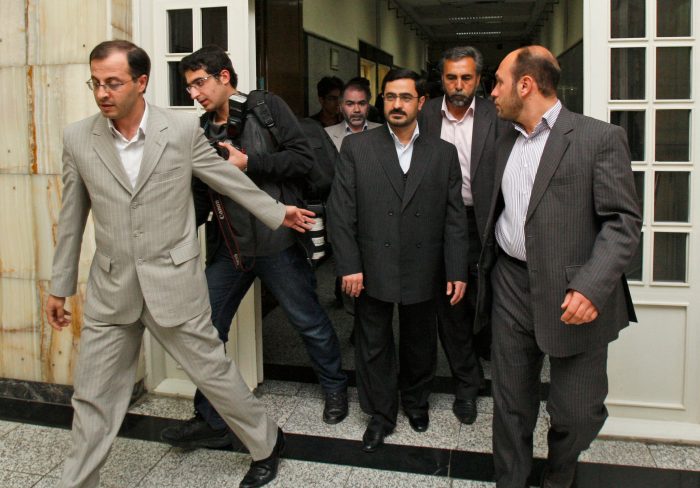
Not even the sham punishment of 135 lashes given to Saeed Mortazavi, former head of the regime’s Social Security, because of accusations of widespread financial violations and irregularities could cover from his past record as a former prosecutor who was responsible for the mass killings of detainees and political dissidents following the infamous 2009 protests over the stolen presidential election.

It seems in Tehran, you get punished for ripping off your fellow regime leaders, but not for killing innocent protestors.

Too bad the NIAC didn’t have anything to say about it.

Michael Tomlinson

Filed Under: Blog, News Tagged With: Featured, Iran, Iran deal, Iran Terrorism, IRGC, Khamenei, Marashi, Moderate Mullahs, National Iranian American Council, NIAC, NIAC Action, Nuclear Deal, nuclear talks, Reza Marashi, Sanctions, Trita Parsi, Tyler Cullis

  • « Previous Page
  • 1
  • …
  • 7
  • 8
  • 9
  • 10
  • 11
  • 12
  • Next Page »

National Iranian-American Council (NIAC)

  • Bogus Memberships
  • Survey
  • Lobbying
  • Iranians for International Cooperation
  • Defamation Lawsuit
  • People’s Mojahedin
  • Trita Parsi Biography
  • Parsi/Namazi Lobbying Plan
  • Parsi Links to Namazi & Iranian Regime
  • Namazi, NIAC Ringleader
  • Collaborating with Iran’s Ambassador

Recent Posts

  • NIAC Trying to Gain Influence On U.S. Congress
  • While Iran Lobby Plays Blame Game Iran Goes Nuclear
  • Iran Lobby Jumps on Detention of Iranian Newscaster
  • Bad News for Iran Swamps Iran Lobby
  • Iran Starts Off Year by Banning Instagram

© Copyright 2026 IranLobby.net · All Rights Reserved.