Iran Lobby

Exposing the Activities of the lobbies and appeasers of the Mullah's Dictatorship ruling Iran

  • Home
  • About
  • Current Trend
  • National Iranian-American Council(NIAC)
    • Bogus Memberships
    • Survey
    • Lobbying
    • Iranians for International Cooperation
    • Defamation Lawsuit
    • People’s Mojahedin
    • Trita Parsi Biography
    • Parsi/Namazi Lobbying Plan
    • Parsi Links to Namazi& Iranian Regime
    • Namazi, NIAC Ringleader
    • Collaborating with Iran’s Ambassador
  • The Appeasers
    • Gary Sick
    • Flynt Leverett & Hillary Mann Leverett
    • Baroness Nicholson
  • Blog
  • Links
  • Media Reports

Myth of Hardliners vs. Moderates in the Iran Regime

November 9, 2015 by admin

Myth of Hardliners vs. Moderates in the Iran Regime

Myth of Hardliners vs. Moderates in the Iran Regime

One of the cornerstones of the arguments made by the Iran lobby in favor of the nuclear agreement with the Iran regime was that its passage would empower “moderate” coalitions within Iran to push against “hardliners” in opening up the regime to the outside world.

It was a nice fairy tale, but like most children’s stories, it’s not based in facts or the real world. Regime advocates such as Trita Parsi and Reza Marashi of the National Iranian American Council and Joseph Cirincione of the Ploughshares Fund yelled from the rooftops that the nuclear deal would serve as the bridge towards a more open and inclusive relationship between the regime and the rest of the world.

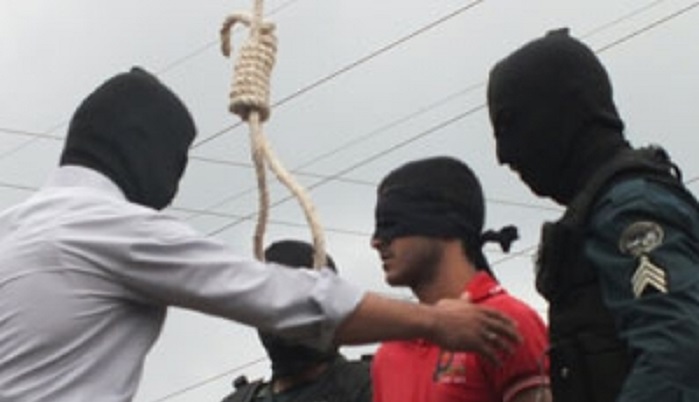
But the reality has been very different and well documented as the mullahs in Tehran doubled down on a policy of aggressive militarism in Syria and Yemen, while also launching a new brutal crackdown at home with scores of new arrests and executions that have been widely condemned by human rights and dissident groups.

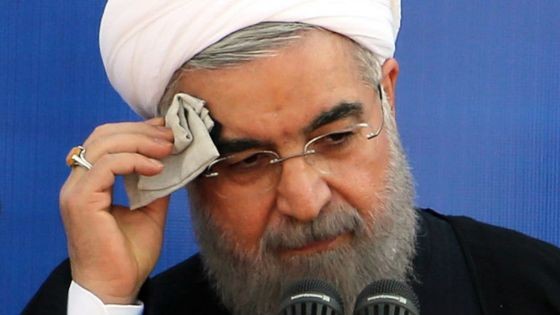
But for Iran, the mythology of the “moderate” factions within a fractured government is just too good to let go, so the regime continues to push the story of a “battle” within the regime as personified by Hassan Rouhani leading the charge for moderation and inclusiveness vs. Ali Khamenei and the hardline elements in the military and judiciary.

Many Western news media are lulled into the same storyline by giving it plenty of play such events over the weekend in which Rouhani gave a broadcast speech in which he criticized “hardline media” hinting that some outlets are connected to security forces responsible for a wave of recent arrests in the country aimed at crippling Western influence, according to the New York Times.

The Times dutifully reported that Rouhani had spoken out against the wave of arrests and leveled a veiled criticism at the regime’s 12-member Guardian Council at the potential exclusion of candidates in the upcoming elections.

First of all, the mere fact that Rouhani could be criticizing the Guardian Council for restricting candidates is particularly ironic since it was the Council that cleared the pathway for Rouhani to become president by eliminating hundreds of potential candidates.

Also, the reporting of this so-called rift reveals the knowledge and cultural gap Western news media have about the workings of the regime government. The authority vested in Khamenei is near absolute, as is his control over the military, judiciary and economy. Rouhani’s portfolio by comparison is Spartan at best and serves largely to fulfill the policies and goals of the religious cadre of mullahs that run Iran.

Khamenei, and by extension the mullahs, were interested in a nuclear deal solely to relieve the regime of crippling economic sanctions that were threatening their grip on power by inciting an increasingly restive Iranian people to protests against the impoverished lives they were living.

The object for Khamenei was to secure release of billions of dollars in frozen assets and be given a free pass by the West to pursue his goals without fear of retaliation of threatened new sanctions. To that end, Khamenei achieved his goals which is why he has embarked on his latest plans to secure his domestic base by cracking down on dissidents and the media; even going so far as to arrest another American, Siamak Namazi who is closely tied to Rouhani, and launch a deadly attack on Camp Liberty in Iraq which houses members of the Iranian resistance.

Given the regime’s past history of dealing with internal dissent, including the ouster of officials who speak out against Khamenei or imprisonment of dissenters, one wonders why Rouhani would risk censure or even expulsion by Khamenei for his perceived bold statements supporting a free press and opposing Khamenei.

Simply put: Because it’s just a show. Rouhani always has been and remains a loyal foot solider for the regime and was hand selected by Khamenei for his post. His value to Khamenei comes from being perceived by the West as a “moderate” face. This allows Khamenei the luxury of running the oldest scam anyone watching a police procedural like “Law and Order” would recognize.

Rouhani is the good cop to Khamenei’s bad cop.

Together they have manipulated the West into believing the idea of a schism within Iran to the extent the West needs to do more to help empower Rouhani against the “hardliners.” In essence, the nuclear negotiations are not over for Iran; they never stopped. For Khamenei and Rouhani, the nuclear agreement is still being negotiated and the West needs to deliver in order to gain the regime’s continued “compliance.”

This was evident in the inspection of the Parchin military site by the International Atomic Energy Agency after it had been scrubbed and sanitized. It was also shown by the invitation from the U.S. to include Iran in international talks on Syria even after Iran mullahs mounted a large-scale offensive there alongside Russia.

Sadly Western governments seem to be playing the game the mullah Rouhani and Khamenei want them to, pretending that there are “moderates” within a regime that has plus 2000 executions on his record just during the recent two years.

By Michael Tomlinson


Filed Under: Blog, News Tagged With: #NuclearDeal, Appeasement policy, Featured, Iran, National Iranian American Council, NIAC, NIAC Action, nuclear talks, Parchin, Reza Marashi, Sanctions, Trita Parsi

NIAC Discussion on Geopolitical Implications of Iran Deal or shameful Lobbying for mullah

June 27, 2015 by admin

Iran Lobby on the Nuclear Discussions

Iran Lobby on the Nuclear Discussions

In an article published on Center for Security Policy, written by Caitlin Anglemier, The National Iranian American Council (NIAC)’s usual approach in serving as Iran’s lobby in Washington D.C. has been highlighted. Excerpts from this article are published here to describe the path the Iranian lobby and fellow travelers are talking while we are getting very close to the June 30th self claimed nuclear talks deadline.

On June 25, NIAC held a discussion on “The Geopolitical Implications of an Iran Deal”. The panel of speakers included: Peter Beinart, contributing editor for The Atlantic and National Journal; Fred Kaplan, war stories columnist for Slate; Dr. Trita Parsi, President of the National Iranian American Council; and Barbara Slavin, South Asia Center senior fellow for the Atlantic Council, known within the Iranian community for appeasing the mullahs.

In her article, Caitlin Anglemier reports: “The talk began with a discussion on how foreign policy has become a primary focus of the Republican party and how generally, the Democratic party tends to place more emphasis on social and economic issues. The discussion then drifted towards discussing the negotiation talks themselves and the ten-year time period aspect. The panel acknowledged the concern that many have, which is that the ten-year period is just delaying the inevitable truth that Iran could obtain a nuclear weapon within a year. But the panel emphasized the importance of those ten years. While that negative viewpoint is out there, why not try to focus on the time positively and the opportunity it provides for even more talks, negotiations, and compromising?

In trying to frame the ten-year period in such a positive manner, the NIAC panel attempted to depict a reality that is simply not accurate. Solely based on how the nuclear deal negotiations have gone so far, it would be foolish to think that ten years of talks and additional demands would go any better than what has transpired-which has not been good at all.”

The report continues: “The discussion then moved to reflecting on the implications of all the money involved in the deal talks. “…[the US] will have released a total of $11.9 billion to the Islamic Republic [of Iran] by the time nuclear talks are scheduled to end in June, according to figures provided by the State Department”. The panel seemed to indicate that if a deal is successfully reached, Iran would utilize the freedom gained from lifted sanctions as well as the cash assets given from the United States to benefit the people of Iran. The panel’s theory was that if Iran continued, over the next ten years, to send money overseas for alternative projects, the people of Iran would start questioning the government and would become upset. In the past, Iran has used the funds it had to fund terrorism and terrorist organizations. If the country has placed an emphasis on aiding terrorism over taking care of its people in the past, why would that change after a new deal?”

It is also a fact that a big chunk of Iran’s economy is in the hands of IRGC, which is the main force behind all the nuclear activities, Regime’s meddling in Syria, Iraq, Yemen, etc (the Quds force), and therefore it goes without saying that all the money that will return to Iran will be channeled in the same manor it did before.

Caitlin Anglemier refers to the last part of the discussion about another tactic used by the Iranian lobby in counting “benefits of collaborations” with the Iranian regime on the fight against ISIS. She says: The last part of the discussion before questioning commenced revolved around the “misfortunate reality” that the US can’t work in alliance with Iran to combat the Islamic State. The panel emphasized how the Islamic State is well aware of the fact that all of its major opponents are at war with one another, and has already taken advantage of this situation. At first glance it does seem that Iran has taken steps towards combatting the Islamic State. However, Iran is actually continuing to fund Hezbollah as well as Shia tribes and militias. While the US clearly wants to abolish the Islamic State, this must be accomplished without simultaneously strengthening Iran and its militant connections. This hypothetical alliance with Iran against IS could never manifest itself in reality.”

Referring to the questions about the the exact details of the deal talks and their implications, she writes: “More importantly, even if we were able to compromise and establish a negotiation with Iran on their desires and demands, we have no reason to believe that they will be honest and follow through on said demands in the future. Therefore, this essentially indicates that a “deal” is just a blissfully ignorant façade.

Conclusive, the discussion was polite, peaceful, and very informative. It would be easy to imagine a listener walking away with a positive mental image of Iran and the extensive benefits a successful nuclear deal agreement. However, we must take it upon ourselves to not be so easily deceived. Pursuing an agreement with Iran in nuclear talks is not only a waste of time and resources, it would result in directly providing Iran with significant relief from sanctions as well as billions of dollars. And contrary to what some apparently believe, these billions will in fact not be used towards benefiting the wellbeing of the Iranian citizens, but will continue to be used in funding terrorism and terrorist organizations.

We must abandon these attempts at negotiations with Iran before we make ourselves out to be even greater pushovers than we have already portrayed.”

Filed Under: American-Iranian Council, Current Trend, Duping Anti-War Groups, Latest from Lobbies & Appeasers, National Iranian-American Council Tagged With: Barbara Slavin, caitlin Anglemier, Featured, Fred Kaplan, Iran deal, Iran Talks, NIAC, nuclear talks, Peter Beinart, Trita Parsi

Stopping Concessions to Iran Regime Key to Regional Peace

June 26, 2015 by admin


Stopping Concessions to Iran Regime Key to Regional Peace

Stopping Concessions to Iran Regime Key to Regional Peace

With only a week left before the June 30 deadline for an agreement between the P5+1 group of nations and the Iran regime, the Iran lobby is working overtime spitting out editorials, policy papers and other propaganda stressing the same messages it has been hammering on for three years.

This was no more evident than in a piece published in Foreign Policy by Trita Parsi, head of the regime’s chief cheerleader the National Iranian American Council, who trotted out the old standard that the only choices at the bargaining table was between war and peace; claiming that this dispute was “rarely resolved through diplomacy without the various sides going to war first.”

Of course that is a false choice and a weak scare tactic because the choices are much more varied and numerous than Parsi would have us believe. In fact, the National Council of Resistance of Iran, the largest Iranian dissident groups in the world, held a press conference today where they released a report outlining the laundry list of same deceptions and falsehoods Parsi has been flogging.

Alireza Jafarzadeh, the NCRI-US deputy director, outlined some of these other choices for negotiators and chief among them was the potential for regime change itself within the Iran regime which has been wracked by large scale demonstrations across the country by disgruntled teachers and workers who are fed up with large-scale corruption and the diversion of the nation’s wealth away from the economy and to fund terror groups and proxy wars in places such as Syria, Iraq and Yemen.

It certainly did not help that the mullahs decided to fortify a faltering Assad government in Syria with an additional 15,000 troops, comprised heavily of paid mercenaries from Iraq and Afghanistan.

And this is what Parsi attempts to misled with his editorial. While he claims the choices are stark between war and peace, he neglects to mention that Iran mullahs are already at war with Saudi Arabia in Yemen, Sunnis tribes in Iraq and the Syrian people who are standing up against he dictatorship ruling the country. The regime’s Revolutionary Guards and Quds Force are already fighting on battlefields throughout the Middle East.

And this even isn’t a recent development. Iranian regime’s military has long supplied local militias in Iraq in their fight against U.S. and coalition forces, including training in constructing improvised explosive devices, LEDs, which have claimed thousands of American lives.

“What does this mean? It means that Iran doesn’t seem particularly interested in entering into a dialogue with the Obama Administration at the moment,” wrote Jeffrey Goldberg in the Atlantic in 2011.

All of which puts the lie to Parsi’s chief argument since Iran’s mullahs have already been waging war against U.S. interests and personnel for the past five years. This brings us to another of Parsi’s ham-handed arguments, namely that a deal represents a watershed moment in the relationship between Iran and the U.S. and would make Iran more amenable to working with the U.S.

Another silly proposition since Iran’s mullahs have shown a shocking willingness to turn American hostages into bargaining pawns and demanded – and received – the exclusion of human rights and ballistic missile technology from any part of the negotiations.

The NCRI report clearly showed this by delving deeply into how Tehran has approached nuclear talks by consistently keeping military sites out of inspections, foot dragging requests for disclosure by the International Atomic Energy Agency, retaining its nuclear infrastructure in its entirety including its centrifuges, uranium stockpiles and heavy water reactors, and keeping talks alive after three years with false promises and interim agreements, leaving it free to pursue its military actions abroad.

By Michael Tomlinson


Filed Under: Blog, National Iranian-American Council, News Tagged With: Iran, Iran deal, Iran deceptions, Iran Lobby, Iran Talks, NIAC, nuclear talks, P5+1 negotiations with Iran, Trita Parsi

What Price Appeasement of Iran Regime?

June 18, 2015 by admin

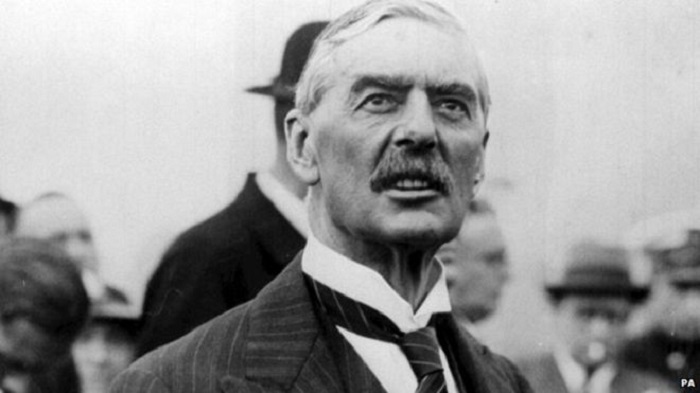
ChamberlainAny kind of negotiation is often an exercise in incremental concession. There is a give and take bound by the needs and desires of the participants at the table. While outside forces influence what happens, the real outcome of any negotiation results strictly from what the parties at the table are willing to give up in order to get what they desire more.

In the case of the ongoing negotiations between the P5+1 group of nations and the Iran regime, the results of nearly three years of talk have revealed these to be less about what the give and take of hard bargaining is, but rather what the U.S. is seemingly willing to give up in order to claim any kind of PR victory in sealing a deal.

As part of that process, the U.S. has steadily given ground on a remarkable range of concessions to mullahs in Iran without securing anything nearly comparable in return. If this was a negotiation between a labor union and company; with the union being Iran and the company being the U.S., the union would have already had the name changed on the building, the managers fired, pay hikes conceded with three days off each week.

So thoroughly have Iran’s mullahs fleeced the world that is it remarkable no one has bothered to catalogue the litany of concessions. Some news media have tried, but the scope of what has been given up exceeds the space available in most daily newspapers.

One columnist taking exception to the Iran fire sale is Lawrence J. Haas of U.S. News and World Report who writes in his World Report blog:

“Facing a June 30 deadline to complete an agreement, U.S. negotiators reportedly are dropping the central demand that, as part of an agreement, Iran must come clean about the ‘possible military dimensions,’ or PMDs, of its nuclear program – that is, the past weapons-related activities,” Haas said.

“Washington’s reversal is particularly striking in light of its insistence – when reports surfaced three months ago that it was considering backing down on possible military dimensions – that it would do no such thing. When, for instance, The Wall Street Journal reported in March that U.S. negotiators were preparing to cave on the issue, Secretary of State John Kerry stated unequivocally that the Iranians would have to come clean about possible military dimensions before the United States would strike a final agreement,” Haas added.

This follows a New York Times report that Secretary of State John Kerry signaled the administration’s willingness to ease economic sanctions without fully resolving evidence suggesting Iranian regime’s scientists have been involved in secret nuclear weapons development.

The ledger of concessions have filled steadily with major heavyweight concessions dealt with years ago including exempting ballistic missile development, improvements in domestic human rights conditions, suspension of death penalty executions and ceasing support for terror groups and militia involved in proxy wars; all given away without any reciprocal concession from Iran’s mullahs.

The most stunning concession came over the weekend in which the Obama administration proposed the U.S. closing the International Atomic Energy Agency’s as yet unresolved case against Iran’s undeclared military sites and forgo actual IAEA inspections of suspect Iranian nuclear sites.

Instead, the U.S. proposed allowing the IAEA conduct token inspections of a handful of sites already publicly known and not allowing inspections of undeclared sites. The stunning news was an about face of a “red-line in the sand” set by the administration for enforcing an agreement with “anytime, anywhere” inspection provisions.

This latest concession effectively permits Iran to develop and assemble nuclear weapons in relative peace and quiet and is an admission by the Obama administration it is prepared to give the mullahs their nuclear weapon.

The Wall Street Journal took a look at more subtle concessions the U.S. has provided during the course of negotiations including pulling U.S. funding support for a Lebanese civil society group aggressively opposed by Hezbollah, the terror group which has enjoyed long-term support from mullahs in Iran.

The Journal also cited the case of Buhary Seyed Abu Tahir, a Dubai-based Sri Lankan businessman who in 2004 was cited personally by President George W. Bush as the “chief financial officer and money launderer” for the nuclear-proliferation network of Pakistani scientist A.Q. Khan. According to a 2004 investigation by Malaysian authorities, in 1994 or 1995 Mr. Khan asked Mr. Tahir to ship uranium centrifuges to Iran.

“The Bush Administration put Mr. Tahir on the U.S. Office of Foreign Assets Control (OFAC) list of sanctioned persons. But the Treasury Department removed his name from that list on April 3, exactly one day after the framework agreement was announced,” the Journal said.

The concessions keep coming at a steadily increasing pace to June 30 and indicate a worrisome trend the Obama administration is basically negotiating against itself at this point in making offer after offer to the Iranians without receiving anything in return in a glaring example of desperation.

The policy of appeasement has never succeeded in history and there is no reason to think doing so to mullahs in Iran will yield any different outcome.

By Michael Tomlinson

Filed Under: Blog, News Tagged With: Iran, Iran deal, Iran Talks, nuclear talks, Obama administration bad deal with Iran.

Learning the NIAC Two-Step

January 31, 2015 by admin

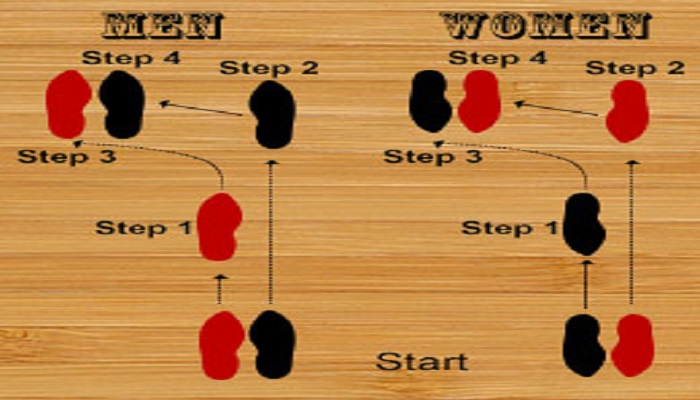
Two Step ChartWhile the cheerleaders for the current Iranian regime at the National Iranian American Council are busy congratulating themselves on a two month extension on the immediate re-imposition of economic sanctions temporarily suspended because of an interim agreement reached last year by the P5+1 nations and Iran, the Senate Banking Committee by a wide bipartisan 18-4 margin passed out a bill over its first procedural hurdle to set the stage for a showdown vote in March on re-imposing sanctions.

It must not be too reassuring to the NIAC and its Iranian overlords to see this bill pass by such a large margin, nor coming on the heels of what they had hoped would be a pause long enough to allow Iran time to bamboozle the administration into accepting a “framework” by March in order to buy more time until July before having the entire negotiating process collapse again as it has done twice before.

NIAC’s Jamal Abdi in fact, in a piece published on the group’s website, breathlessly recounted the blow by blow narrative of how this two-month sanctions pause was achieved; and of course all because of the NIAC’s massive lobbying effort on behalf of Iran. Mine you, on behalf of Iran’s mullahs and not Iranian Americans, but that’s for another day’s editorial.

What he neglected to mention and what has been widely credited by virtually every political commentator and analyst, including Senate Democrats themselves such as Senators Harry Reid (D-NV) and Dianne Feinstein (D-CA), as being the key influencing factor on the delay was Speaker John Boehner’s move to invite Israeli Prime Minister to address a joint session of Congress on Iran and its nuclear weapons program.

For many Democrats, the move smacked of overt politics and stiffened their resolve, but even that was not enough to move them totally off the sanctions bandwagon. All it did was keep alive the central piece of legislation and move the action date from February to March.

The one thing both Democrats and Republicans readily agree on is that the regime in Iran should not be allowed to have a nuclear weapon…period. Both sides of the aisle also agree sanctions should be re-instated broadly and harshly if mullahs in Iran do not deliver a deal agreeable to Congressional review.

So while the NIAC chortle in public, privately they know they are swimming against the tide of sentiment; a sentiment that will inevitably grow stronger as the clock resets and again counts down to March 24 with another round of scrutiny growing day by day with more and more pressure being applied to Senators by a nervous public watching the nightly news of ISIS, Boko Haram, Al-Qaeda and Taliban advances.

So while the NIAC, Al Jazeera and the Obama administration may have excised “Islamic extremism” from their daily use, it has not escaped the attention of Americans who in recent polls have placed concerns about terrorism above even the economy and jobs.

All of which is bad news for mullahs in Iran and its supporters as they try to learn new dance steps.

By Michael Tomlinson

Filed Under: Blog Tagged With: Iran, Iran deal, Iran Lobby, nuclear talks, Sanctions, Veto Sanctions

Postponing the Inevitable on Iran

January 28, 2015 by admin

hourglassIn calling a Hail Mary pass from his own party, President Obama managed to secure a two-month reprieve from Senate Democrats who were on the verge of joining their Republican colleagues in offering up a new sanctions bill on Iran should the third and latest round of talks fail to produce an agreement.

The new deadline is now March 24th and in a letter to the President, Senator Robert Menendez (D-NJ), the ranking Democrat on the Senate Foreign Relations Committee left no doubt that he and other Democrats remained “deeply skeptical that Iran is committed to making the concessions required to demonstrate to the world that its nuclear program is exclusively peaceful.”

Adding in the letter “we will only vote for this legislation on the Senate floor if Iran fails to reach agreement on a political framework that addresses all parameters of a comprehensive agreement.”

Other Senators signing the letter included Charles E. Schumer of New York, Richard Blumenthal of Connecticut and Debbie Stabenow of Michigan.

Iran loyalists such as the National Iranian American Council were quick to hail the agreement as a “breakthrough” for nuclear talks and patted themselves on the back publicly for their perceived win.

What they and other Iran sympathizers failed to realize or admit publicly is that the Democrats letter only cemented the very real possibility of sanctions since the last round of talks having ended last November there has been a virtual stalemate and no movement from the Iranian side towards any meaningful agreement.

The prospects of substantial movement occurring during the next two months are remote and Senate Republicans know this which is why they agreed to the Democratic proposal in the hope of gaining a veto-proof supermajority by March 24th.

Ironically, The New York Times noted that while the Democrats were offering up their extension, the Iranian Parliament was moving forward with proposals to bind their own negotiating team and preventing them from any agreement on production limits on nuclear fuel.

“In fact, their own proposals would require Tehran to deploy centrifuges that can enrich uranium far more efficiently than ever,” according to the Times.

Coupling this with the periodic statements given by Iran’s Supreme Leader Ayatollah Ali Khamenei bolstering this position and one can easily see why Senator Menendez’s concession to President Obama wasn’t much of a concession. The decision gives Democrats the breathing room to say they want to support the Administration, yet retain the flexibility to quickly join Republicans to move ahead with sanctions.

So while the NIAC may be dancing with joy, it’s a Pyrrhic victory since the essential facts surrounding negotiations have not changed. Iranian regime is hardening its stance and continues on a human rights and terror rampage that alarms the American people every night while they watch the news and emboldens them to urge their Congressional representatives to take a harder stance with respect to Iran.

On March 24th, Iran and its lobbying allies are in for a rude awakening.

By Michael Tomlinson

Filed Under: Blog Tagged With: Iran, Iran Lobby, Iran sanctions, Iran Talks, nuclear talks, Sanctions, Senate Democrats

Iran Sanctions Are Sanctions Are Sanctions

January 27, 2015 by admin

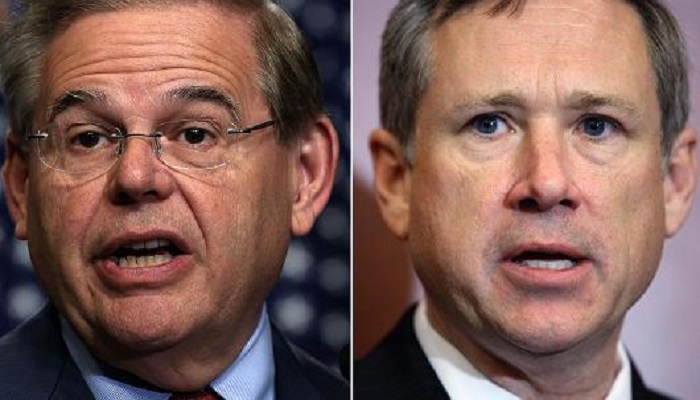
Senators Menendez and KirkThere is an interesting effort being mounted by the Iranian lobby in the wake of a growing strong consensus within Congress to support stiffer sanctions on the regime in Iran should nuclear talks fail for a third time.

But Iran boosters such as the National Iranian American Council have lately preached a line of reasoning pointing towards the potential of various pieces of legislation being proposed in Congress as evidence of a splintering of support for harsher sanctions. They point to proposals by Senators Robert Menendez (D-NJ) and Mark Kirk (R-IL), as well as ideas being floated by Senators Barbara Boxer (D-CA) and Rand Paul (R-KY) and even stream of thought comments made by Senators Chris Murphy (D-CT) and Bob Corker (R-TN) as proof of disagreement on the question of sanctions.

What NIAC and other Iran sympathizers fail to mention is the one constant amongst all these proposals; the support for some sort of enhanced sanctions should talks fail. The only disagreement is one of timing and severity.

Virtually no Senator in Congress has taken an anti-sanctions stand, nor has there been any vocal support for granting mullahs in Iran a blank check in nuclear talks. At a time when Democrats and Republican can’t seem to agree on what’s on the menu in the Senate cafeteria, there is broad, deep and universal agreement that Iran should not get a nuclear weapon and that Iran is a central character in the global rise in Islamic extremism.

Various analysis of the joint proposal from Senators Menendez and Kirk, the Nuclear Weapon Free Iran Act of 2015, clearly shows this trend. It reinstates sanctions that were suspended as part of the interim agreement if a new and comprehensive agreement is not reached. It also specifically targets Iranian senior officials who are part of the religious leadership and its judicial and military systems which have been responsible for the unprecedented crackdown on human rights the past year and the expansion of militant extremism taking place around the world.

It also explicitly grants the President the ability to waive the application of sanctions should he certify to Congress it is necessary for national security, completion of a nuclear deal or Iran is making no further progress on nuclear development and is in compliance with all interim agreements.

One would have to wonder where the idea is coming from that there is large disagreement within Congress over Iranian regime’s sanctions giving the fact the basic outline of these terms were originally supported by an overwhelming majority of Democrats and Republicans two years ago when sanctions were originally imposed.

What Iran’s mullahs see is a small window of opportunity coming on President Obama’s unilateral decision to normalize relations with Cuba to gain the same benefit in the lame duck years of the presidency. Consequently, the NIAC and other Iranian lobbyists are pushing hard the concept that sanctions are not universally supported.

It is a line of reasoning doomed to failure given the massive support the idea of sanctions has right now in light of growing public unease and concern over gains being made by ISIS and Boko Haram, the collapse of Yemen and Iraq and the ongoing social media efforts by terror groups to frighten and bully the West for more beheadings.

Iran mullahs and their brand of Islamic extremism is at the heart of these groups flourishing since the regime in Iran essentially wrote the manual with its own broad range of torture and public punishments such as hangings and amputations on its own people that these extremist groups have since adopted.

But you will not find NIAC others denounce these growing atrocities, nor even condemn the most heinous ones. In fact, if one were to peruse the social media feeds for NIAC and its officers such as Trita Parsi, you would find virtually no condemnations. This only reveals their true nature and cheerleaders for mullahs in Iran and nothing more.

By Michael Tomlinson

Filed Under: Blog, News Tagged With: Iran Lobby, Iran sanctions, Iran Talks, nuclear talks

The State of the Union and Iran

January 21, 2015 by admin

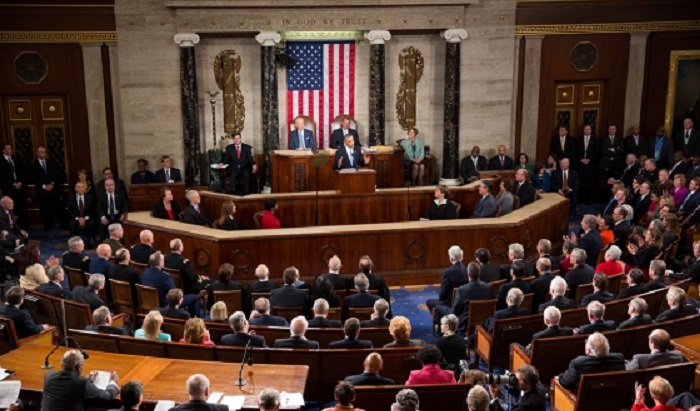
State of the UnionPresident Barack Obama delivered his sixth State of the Union address and like the previous five other speeches, he largely dealt with domestic issues as the nation continues to struggle with a lingering recession, stagnant wage growth and deadlocked politics in Washington.

And like his other speeches, this one ran slightly under 7,000 words in length and in it, President Obama mentioned Iran a grand total of four times, which is comparable to how many times he spoke about Iran in 2014, 2013, and 2012. The only difference in this speech was a slightly longer emphasis on the need to avoid the additional levying of economic sanctions on Iran during the third and latest round of nuclear negotiations.

Similarly, Iran’s coterie of apologists and cheerleaders went on the offensive in advance of the speech as early copies were circulated amongst administration supporters. The National Iranian American Council notably and predictably lauded the President’s statement with a statement warning of the possibility of war breaking out with Iran should sanctions be levied.

Of course what NIAC fails to address is that this so-called last best hope for peace for Iran is actually the third go-around for this administration and doesn’t include efforts by every previous Presidential administration who had attempted to rein in Iran’s ruling mullahs.

While Iran has played revolving chairs with presidents in order to first get tough with the West with Ahmadinejad, it then tried a different tack with a so-called moderate face now under Hassan Rouhani. In both cases, the heavy hand of Supreme Leader Ayatollah Ali Khamenei continues to sabotage any nuclear deal with his insistence that Iran retain not only its refining and enrichment capacity, but also its missile technology to potentially deliver a nuclear warhead.

NIAC’s hyperbole is indicative of the simple truth surrounding the issue of Iran; the American people simply do not trust the mullahs running Iran, least of all with nuclear weapons.

The fact that previous sanctions bills and the most recent one being proposed in Congress have been highly bipartisan with large numbers of Democrats joining with Republicans in an overwhelming show of solidarity on the issue demonstrates more powerfully than any speech that the President and NIAC are very much alone on this issue.

The funny thing is that the only people who are mentioning a possibility of war are only the NIAC and Iranian regime’s supporters, that have engaged in hyperventilating over the inevitable onset of war should sanctions come.

They neglect to mention that the same claims were made when previous sanctions were levied and in each case, war did not come. In fact the opposite occurred as Iran was forced to the bargaining table as its ability to export its brand of radicalized Islam became more difficult with fewer resources available. Couple that with crushing oil prices, and the timing is near perfect to forge a historic agreement with Iran to not only halt nuclear weapons development, but also seek improvements in Iran’s horrific human rights record, worsened under the “moderate” president Hassan Rouhani.

The U.S. and the West are being provided with an opportunity to use its significant leverage to move Iran forward back into the community of nations as a more democratic, pluralistic and free society than at any other time in recent memory. While the President focuses on nuclear talks, the window that has opened here is much more significant and should be taken advantage of immediately.

In short, the President needs to aim higher on behalf of the Iranian people, as well as the American people; a notion that the NIAC would be well served to adopt as well.

By Michael Tomlinson

Filed Under: Blog Tagged With: Iran, Iran Lobby, NIAC, Nuclear Iran, nuclear talks, Obama state of the Union

Iran Cannot Have it Both Ways in Nuclear Talks in 2015

January 7, 2015 by admin

Empty-Meeting-RoomOn January 15th, Iran will once again take a seat at the negotiating table with the P5+1 nations and begin a third round of talks over its nuclear weapons program and just as it has done twice before, it will refuse to make any substantial concessions and after another seven tedious months, Iran will undergo its third strike.

Far from crystal-ball gazing, this scenario is more than likely given past history and a newly resurgent Republican majority in both houses of Congress who promise to flex its collective muscle in case President Obama makes any precipitous concessions as he did in normalizing relations with Cuba on his own.

And just as before, Iran’s lobbying and PR machinery has ramped up into overdrive before these talks start to help lay the ground work for another Cuba-like executive action by President Obama for Iran. The initial seeds have been laid by Iran cheerleaders such as Trita Parsi of the National Iranian American Council who have saluted the trial balloons for normalizing relations with Iran with the opening of an American embassy in Tehran again.

Ironically, Parsi has sought to frame this latest round of talks around whether or not the U.S. is willing to offer more concessions and can be trusted by Iran in recent comments, saying:

“There are question marks in the minds of the Iranians as to whether the American promises about sanctions relief actually can be trusted – not to say that they don’t have enough confidence in the president, but they may not have enough confidence in the U.S. Congress,” Parsi said.

One can see how he and other Iran allies are seeking to separate any possible normalization action by the President from a Congress that may object to it.

This, more than anything else, represents the “have their cake and eat it too” approach of Iran to nuclear talks. On the one hand Iran, through its perceived moderate President Hassan Rouhani, holds out an olive branch of concessions and flowery speeches, while on the other is the stern and recalcitrant voice of Iran’s Supreme Leader Ayatollah Ali Khamenei who’s earlier pronouncements sank the other negotiating sessions.

Now Parsi and his cohorts are once again attempting to provide political cover for progressive liberals in Congress who basically want to give Iran whatever it wants in the misguided belief that everything will turn out alright.

But former chairman of the U.S. Joint Chiefs of Staff, Gen. Hugh Shelton recently wrote in an editorial in The Los Angeles Times that “Amnesty International has pointed to the presence of Iran’s proxy militias in Iraq as a key source of instability and sectarian conflict there.”

He goes on to point out that Iran is at the heart of most of the region’s conflicts and instability. All of which has been going on during the time of nuclear talks. One cannot claim to aim for peaceful uses for nuclear power while at the same time sponsor most of the wars and conflicts going on at the same time.

This contradiction lies at the heart of these talks and is the unspoken elephant in the room. Iran cannot claim the mantle of peace while it clutches the proverbial sword of war, no matter what Parsi and others claim.

We can only hope round three ends the same way as rounds one and two.

By Michael Tomlinson


Filed Under: Blog, Latest from Lobbies & Appeasers, News Tagged With: Iran Lobby, Nuclear Iran, nuclear talks

Whitewashing Iran’s human right’s records to lobby softer position on nuclear talks

December 6, 2014 by admin

Photo credit: The gulf and Middle East Association for civil society-August 2014

Photo credit: The gulf and Middle East Association for civil society-August 2014

The Ministry of Intelligence and Security of Iran had instructed its agents to try to advocate themselves as opposition by writing 80% against the regime and the violation of human rights in Iran, but they have to dedicate 20% to denying the opposition, namely the MEK (Mujahedin-e-Khalq), by spreading rumors discredit them. This seems to be the copy framework agreement with the Iranian regime’s lobby and appeasers with respect to the failed Iran talks in Vienna.

Recently, some advocates of Iranian origin who claim to be human rights activists are expressing concerns over the recent resolution of the House of Representatives against the human rights violation in Iran.

One of these “human rights activists” has written an article in The Hill today, expressing concerns that “seeking ways to achieve tangible human rights improvements inside Iran is also closely related to the outcome of the nuclear negotiations” and that including “separate issues – such as Iran’s rights record, or its support for terrorism – will make it more difficult to reach a nuclear deal”.

The author who by the way is a well-known advocate and affiliate of “NIAC” claims that “the Iranian human rights community strongly supports a successful diplomatic resolution of the nuclear crisis, particularly because many believe that without a deal, the human rights crisis in Iran will worsen”. He goes further in whitewashing the regime’s president Rouhani who is just another mullah within the hierarchy of the theocracy ruling Iran, saying: “the perpetuation of tensions over the nuclear file is likely to result in continued and even increased gross human rights violations. For example, throughout the past decade, Iranian hardliners, opposed to a deal, have thrived by capitalizing on the nuclear confrontation and using it to justify their repressive measures. Failure of the negotiations would embolden them. They would seek to weaken the government of relative moderate President Hassan Rouhani.”

This is while in Iran under the so called “moderate” Rouhani, over 1,100 people have been executed and thousands are on death row. Based on the number of executions that mainly appear on state newspapers in Iran, on average every 8 hours one person is being executed. Women are disgracefully attacked by regime-related thugs, either by acid or being stabbed under the pretext of disobeying the dress code. There is no free access to information, Iran is the biggest prison for journalists and the situation of religious minorities is outrageous, to name a few.

Last November, the United Nations General Assembly’s third committee adopted the UN’s 61st resolution condemning human rights abuses in Iran and urged the regime to stop the executions, in such conditions, overlooking the human rights in Iran and ignoring the fact that people and particularly women in Iran are living under despicable conditions is nothing but cruel, shameful and immoral. Asking the US politicians to be softer on the regime with such inhumane records of human rights, is even worse.

The author is also quoting some activists to strengthen his proposition and represent it as a request by the Iranian human rights community. He writes: “As Nasrin Sotoudeh , the prominent human rights lawyer and former political prisoner put it: ‘It is obvious that we welcome peaceful relations with all countries and as such support the negotiations’.”  This is while reading Nasrin Sotoudeh’s entire quote, you can see that she is actually demanding the human rights issues to be discussed during negotiations and not to be ignored, exactly the opposite of what the Iranian lobby is criticizing the congress for in the Hill article. Here is her quote from the same source:

“if the Iranian state wants to rehabilitate its relations with the international community, it must certainly address fundamental human rights concerns on issues such as juvenile executions and freedom of expression. The Iranian government should clearly state its position on these issues during the nuclear negotiations. In my opinion, keeping silent on such issues until the end of negotiations will make it more difficult. My understanding is the European countries say we cannot easily bring up human rights issues because it will potentially threaten the negotiations. We say at a minimum ask the Iranian negotiators to express their position on fundamental human rights concerns such as juvenile executions which are banned by all international conventions.”

The truth of the matter is that the Iranian regime has strategically invested in its nuclear program. It is doing everything to get more time to complete the program and will not shift from this unless faced with more pressure and more sanctions. After all it was the sanctions that finally forced the mullahs to go to the negotiation table and accept the Geneva accord, not the appeasement policy that has unfortunately been the dominant policy of the West towards Iran in the past two decades.

Filed Under: Current Trend, Latest from Lobbies & Appeasers, News Tagged With: Iran, Iran Human rights, Iran Lobby, Iran Talks, Iran Talks Vienna, Iranian Lobby, nuclear talks

  • « Previous Page
  • 1
  • 2
  • 3
  • 4
  • Next Page »

National Iranian-American Council (NIAC)

  • Bogus Memberships
  • Survey
  • Lobbying
  • Iranians for International Cooperation
  • Defamation Lawsuit
  • People’s Mojahedin
  • Trita Parsi Biography
  • Parsi/Namazi Lobbying Plan
  • Parsi Links to Namazi & Iranian Regime
  • Namazi, NIAC Ringleader
  • Collaborating with Iran’s Ambassador

Recent Posts

  • NIAC Trying to Gain Influence On U.S. Congress
  • While Iran Lobby Plays Blame Game Iran Goes Nuclear
  • Iran Lobby Jumps on Detention of Iranian Newscaster
  • Bad News for Iran Swamps Iran Lobby
  • Iran Starts Off Year by Banning Instagram

© Copyright 2026 IranLobby.net · All Rights Reserved.