Iran Lobby

Exposing the Activities of the lobbies and appeasers of the Mullah's Dictatorship ruling Iran

  • Home
  • About
  • Current Trend
  • National Iranian-American Council(NIAC)
    • Bogus Memberships
    • Survey
    • Lobbying
    • Iranians for International Cooperation
    • Defamation Lawsuit
    • People’s Mojahedin
    • Trita Parsi Biography
    • Parsi/Namazi Lobbying Plan
    • Parsi Links to Namazi& Iranian Regime
    • Namazi, NIAC Ringleader
    • Collaborating with Iran’s Ambassador
  • The Appeasers
    • Gary Sick
    • Flynt Leverett & Hillary Mann Leverett
    • Baroness Nicholson
  • Blog
  • Links
  • Media Reports

Iran Lobby Fends Off More Attacks on Regime

October 5, 2015 by admin

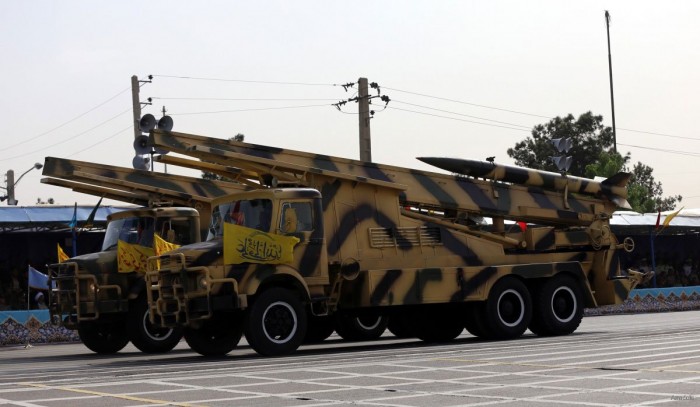
Iranian RocketsAs Congress moves ahead with a flurry of new bills to stymie the Iran regime and hold the conduct of the mullahs in Tehran to some level of accountability, the Iran lobby, most notably the National Iranian American Council (NIAC), went into overdrive spitting out policy positions against any encroachment on Iran’s advances.

Specifically, the NIAC and its lobbying arm, NIAC Action, issued nearly identical denunciations of two pieces of legislation introduced last week. In the House, a Republican proposal entitled the “Justice for Victims of Iranian Terrorism Act” was passed out on a floor vote by a bipartisan majority of 251-173 and seeks to block sanctions relief granted under the nuclear deal until the Iran regime pays all legal judgements and fines levied against it by U.S. courts which found the regime liable for acts of terror totaling $43.5 billion.

This move follows a decision by the U.S. Supreme Court to agree on hearing an appeal of a lower court decision awarding $1.7 billion in damages from Iran’s central state bank in a similar case involving reparation payments to the victims and families of Iranian regime terror incidents.

“The consideration of the bill undermines U.S. national security interests and the perception that the U.S. can abide by its international commitments. It also risks opening the door to reciprocal action in Iran, which could threaten to link its concessions to the U.S. to outstanding claims in Iranian courts,” said Jamal Abdi, executive director of NIAC Action in response.

But Abdi misses the essential point of the move and subsequent decision by the Supreme Court which is the nuclear deal never addressed the most pressing issues, which is the conduct of the regime, specifically its long history of support for acts of terror aimed directly at Americans.

The fact that the regime still holds U.S. citizens in its prisons despite a negotiation that yielded billions of dollars for the mullahs and not one U.S. hostage returned in exchange is more telling about the inadequacy of the nuclear deal and subsequent drive by Congress to act more forcefully than the Obama administration in addressing the rising dissatisfaction of American voters over the deal and perception the mullahs pulled a fast one on the U.S.; which is why the NIAC and other Iran lobbyist allies are left to sputtering short statements which condemn the bills, but spoke nary a word about the ongoing harm Iranian regime is visiting on Syria, Iraq, Yemen and by holding American citizens.

Nowhere was that misleading of the American public on better display than in an editorial by Bardia Rahmani in The Georgetown Voice, a student-run magazine, which makes the argument that the $100 billion in frozen assets to be released back to the regime under the nuclear deal is erroneous and that most of the funds would not be used in supporting terror groups or in proxy wars.

It is a remarkably naïve opinion if genuine and a blatant obfuscation if deliberate. First of all, the estimate of frozen assets to be released is closer to $150 billion if you count assets held by central banks around the world as part of sanctions levied under the United Nations and European Union and include assets held not only by the Iranian government, but private Iranian entities.

The mistake the editorial makes is drawing a distinction between private and public ownership of assets and industries in Iran. Virtually all the national economic infrastructure is owned in part or in whole by institutions controlled by Iran religious government. For example, its telecommunications industry is owned through holding companies controlled by the Revolutionary Guard Corps. The same goes for construction, banking, petroleum, agriculture, trade and even entertainment and media.

Returning these assets to these “private” entities is the same as returning them to the checking account for Ali Khamenei.

The editorial also makes no mention of the significant cash drain the regime has experienced in funding Hezbollah, the Syrian civil war to keep Assad afloat (that alone comes to the tune of $4 billion annually), Shiite militias in Iraq and Houthi rebel forces in Yemen as a shooting war with Saudi Arabia erupts. The threat of a wider conflict with Saudi Arabia was reinforced by remarks made by Iran regime brigadier general Morteza Qurbani who claimed over 2,000 rockets were awaiting orders from Khamenei to be fired at Saudi Arabia.

He explained that the lines of defense for the Iranian revolution are today in Yemen, Syria, Iraq and Lebanon. “We are ready to carry out the orders of Khamenei and move anywhere he wants,” Qurbani added.

The regime has diverted significant funds from its economy to fund these wars – an act Khamenei praises as a “war time economy” – and the regime shows no signs of slackening any of its funding priorities. This was evident in Hassan Rouhani’s decision to suspend social welfare payments to Iranian citizens, sparking large civil unrest as fiscal belt tightening took place throughout the regime.

All of which was supported by multiple news accounts of Iranian military forces being moved en masse to the Syrian border in preparation for large-scale direct military involvement coming on the heels of Russian air strikes against foes of the Assad regime.

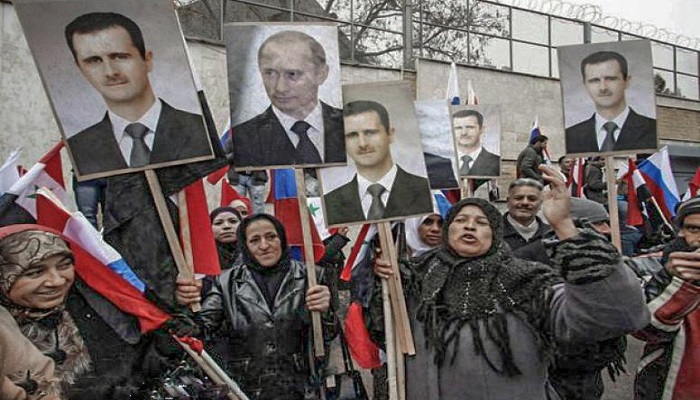
Assad himself gave an interview to the regime’s Iran News Network in which he described a coalition between Syria, Russia, Iraq and Iran was the best hope for regional peace, which was an odd statement considering Assad’s brutal crackdown on democracy protestors originally started the civil war which led to his use of chemical weapons against his own people and caused a refugee crisis of four million Syrians fleeing the war zone and flooding into Europe.

All of this spin control was not just confined to Syria and Iran lobbyists, but reached all the way to Tehran as the regime’s parliament took up the issue of swift passage of the nuclear agreement, but the debate and parliamentary moves were revealing since the regime was already gaming the deal by making a distinction that the regime was only “suspending” its nuclear activities and not removing them, thereby allowing for the future swift restart of the program.

By Michael Tomlinson
 

Filed Under: Blog Tagged With: #NuclearDeal, Appeasement policy, Congress bill on Iran, Iran, Iran deal, Iran Lobby, Iran sanctions, Iran Talks, Irandeal

Iran Regime Actions Bolster Efforts to Halt Extremism

October 2, 2015 by admin

Iran Regime Actions Bolster Efforts to Halt Extremism

Iran Regime Actions Bolster Efforts to Halt Extremism

Reuters reported that hundreds of fresh Iran regime troops have flooded back into Syria over the past 10 days and will soon join their Hezbollah allies in a major ground offensive backed by Russian air strikes aimed at retaking territory lost by the Assad regime to rebels; contrary to Iranian and Russian claims they would be focusing their attacks against ISIS.

It seems clear the mullahs in Tehran are focused on securing the Assad regime by eliminating Western-backed moderate rebel units, rather than tackling their Islamic State rivals. The new offensive clearly points out the false propaganda the regime has been pumping out through its lobbyist allies such as the National Iranian American Council.

Peace is certainly the end goal for the Iran regime, but a peace that eradicates any opposition to Assad and leaves Iranian mullahs in control of a swath of territory stretching from the Mediterranean through Syria, Iraq, Iran, Yemen and the Indian Ocean. Their territorial ambitions have come fully to light and the bill for accommodating the regime with the nuclear deal is finally coming due.

“The vanguard of Iranian ground forces began arriving in Syria: soldiers and officers specifically to participate in this battle. They are not advisors … we mean hundreds with equipment and weapons. They will be followed by more,” said a Lebanese military source, adding that Iraqis would also take part in the operation.

Interestingly, Hassan Rouhani, the handpicked puppet leader of the Iran regime, tipped the regime’s hand in his speech before the United Nations last week in which he firmly insisted that U.S. policy should be focused on common actions to defeat ISIS before any discussion takes place on the future of Assad. Rouhani laid out the narrative in which the regime justifies the placement of boots on the ground in Syria openly and blatantly instead of relying on proxies such as Hezbollah in what is sure to be a virtual takeover of Syria by the Iranian military.

As Gareth Porter, an appeaser of the mullahs points out in Middle East Eye, “Iran’s national security strategy has had two primary objectives ever since Khamenei became Iran’s leader: to integrate the Iranian economy into the global system of finance and technology and to deter the threats from the United States and Israel. And Rouhani had primary responsibility for achieving both tasks.”

We are now witnessing what the Iran regime’s future plans are now that they have secured these twin goals and it is causing renewed efforts in Congress to stymie the regime in spite of the nuclear deal.

The House voted Thursday by the hefty margin of 251 to 173 to stop the Obama administration from lifting sanctions against the Iran regime “until Tehran pays the $43.5 billion it still owes in damages to the families of terror victims in cases where responsibility can be linked back to Iran — such as the 1983 bombings of the U.S. Embassy and Marine barracks in Beirut and Hezbollah’s 1985 hijacking of TWA Flight 847,” said the Washington Post.

“Should Iran receive United States sanctions relief before it pays the victims of its terrorism all of what U.S. courts say those victims are owed?” said Rep. Patrick Meehan (R-Pa.), who introduced the measure. “I say no. Not one cent.”

If the survivors or victims’ relatives are not paid now, “it definitely won’t happen later,” House Foreign Affairs Committee Chairman Edward R. Royce (R-Calif.) said. He argued that Iran would spend the money freed up from sanctions relief on building up its military force and other nefarious activities, rather than paying the balance of restitution payments ordered by U.S. courts.

Those same voters may also be alarmed at news coming out of Tehran in which Saeed Abedini, the Iranian-American pastor serving an eight-year prison sentence on charges of undermining national security may face more trumped up charges by the regime, including links to antigovernment groups, said Naghbeh Abedini, his wife. Abedini is one of four Americans being held hostage in Iranian prisons including Washington Post reporter Jason Rezaian and former Marine Amir Hekmati.

The move by the regime to place new charges on Abedini flies in the face of the PR move made by Rouhani at the UN in which he floated the idea of a prisoner swap for 19 Iranian agents convicted on arms trading and smuggling of nuclear components.

All of which leads us full circle back to the question of how to check the ambitions of the mullahs in Iran and in what form? One answer was provided by Mrs. Maryam Rajavi, the president-elect of the National Council of Resistance of Iran, a coalition of Iranian opposition groups, who wrote an editorial in the New York Daily News.

“My message to the United States and the West is that the long-term solution to the Iranian threat lies neither in foreign military intervention nor in collaboration with a regime that is so oppressive at home and so destabilizing abroad,” she said.

“With the nuclear deal, however misguided it may be, in place, the right policy going forward is to encourage and support the Iranian people’s desire for democratic change and to speak out for human rights,” she added.

Sound advice the West would be wise to follow.

By Michael Tomlinson

Filed Under: News Tagged With: #NuclearDeal, Appeasement policy, hassan rouhani, Iran deal, Iran Lobby, Iran sanctions, NIAC, NIAC Action, Sanctions

As Syria Chaos Spreads, Iran Lobby Works Overtime

October 1, 2015 by admin

As Syria Chaos Spreads, Iran Lobby Works Overtime

As Syria Chaos Spreads, Iran Lobby Works Overtime

Events moved fast in Syria as Russian warplanes mounted air strikes at what they claimed were ISIS strongholds, but U.S. defense officials countered were instead Western-backed rebels opposed to the Assad regime. Coming on announcements by Russian officials of the creation of an intelligence-sharing unit with Iran regime and Iraq officials, the Russian action does not bode well for hopes to topple Assad.

The political calculation made by the Iran regime and its new Russian friends is that the U.S. lacks the political willpower and means to move forward on efforts to dislodge Assad, who has proven to be the mullahs in Tehran’s most stalwart ally and proxy.

Mohammed Alaa Ghanem of the Syrian American Council made the same analysis in Huffington Post as he looked at an editorial by Philip Gordon, the former Middle East chief in the Obama administration, in Politico.

Gordon argues that the goal of “displacing the Assad regime has proven unachievable,” and argues for a new U.S.-led contact group, different from the original one created in 2012, and instead include Russia and Iran in a new one.

Ghanem recites the failures in stemming Iranian backing of Assad at key points such as “when over 3,000 Iranian proxies first flooded into Syria, Secretary of State John Kerry provided no support to stop the assault and even strong-armed the Syrian rebels into attending peace talks. When Assad regime barrel bombs began raining down on Syrian cities, The U.S. again dragged the rebels into talks while blocking weapons transfers to stop the onslaught. U.N. Envoy Lakhdar Brahimi, who convened those later talks, has since blamed the regime for their failure.”

The Iran regime’s support of Assad and the unwillingness of the U.S. to halt that support – instead prioritizing approval of a nuclear agreement with Tehran – has led to an unimaginable refugees crisis of four million Syrians and civilian deaths numbering in the hundreds of thousands with another 600,000 Syrians opposed to Assad under virtual siege by Syria’s military and Iran regime mercenaries and Quds Forces.

But even with the rollout of the nuclear deal, there remain defiant voices in Congress still working to place restrictions on the Iran regime and connect the dots to the mullahs’ reign of human rights abuses. The fact that incidents of atrocities are sharply on the rise with increased news coverage, which has forced the Iran lobby to step up efforts to portray the regime as being a force for change.

Trita Parsi and Tyler Cullis of the National Iranian American Council, a leading Iran regime lobbying group, have been busy trying to convince news media that the rapid escalation in Syria is not the result of a new Russia-Iran-Iraq axis of terror, but rather the work of neocons bent on sending U.S. troops in.

Putting aside the fact that the only boots on the ground are now Russian and Iranian, the solution to Syria has always been centered in Tehran, not Washington. This point was driven home by protestors outside of the UN during Rouhani’s visit who represented a broad cross section of Iranian dissidents, Iranian-American community groups and Syrian activists opposed to the Assad regime.

Another advocate against the Iran regime is renowned author and Harvard Professor Emeritus Alan Dershowitz who published a new book, “The Case Against the Iran Deal: How Can We Stop Iran from Getting Nukes?.”

Dershowitz argues that policy makers have bit into a “bill of goods” which states that “any deal is better than no deal.” Historically, the objective of Iran to eliminate the barriers between it and a nuclear arsenal, and simple common sense proves that this deal makes the US and the rest of the world decidedly less safe.

The nuclear deal promises to release the Iran regime from the sanctions that have effectively isolated it for much of the past decade and held back the tidal wave of Islamic extremism that we are now seeing being unleashed.

More evidence of the spread of the Iran regime’s destabilizing influence came when Saudi-led coalition forces seized an Iranian fishing boat loaded with weapons on its way to deliver them to Iran regime-backed Houthi rebels in Yemen according to Reuters.

The announcement came a day after tribal fighters backed by the coalition won control of a strategic dam in central Yemen from Houthi forces following weeks of fighting east of the capital Sanaa.

The coalition, which also includes Bahrain, Qatar, Egypt and the United Arab Emirates, has been battling the Iranian-backed Houthis for more than six months.

A coalition statement said 14 Iranian sailors were detained on the boat, which was carrying 18 anti-armored Concourse shells, 54 anti-tank shells, shell-battery kits, firing guidance systems, launchers and batteries for binoculars.

I’m sure Parsi and Cullis would argue that the anti-tank shells and guidance systems were actually meant for an Iranian-sponsored fireworks display for children in Yemen.

By Michael Tomlinson

Filed Under: News Tagged With: #NuclearDeal, Appeasement policy, Iran deal, Iran Lobby, National Iranian American Council, NIAC, NIAC Action, Trita Parsi

Iran Lobby Wrong on Nuclear Deal Stabilizing Region

June 11, 2015 by admin

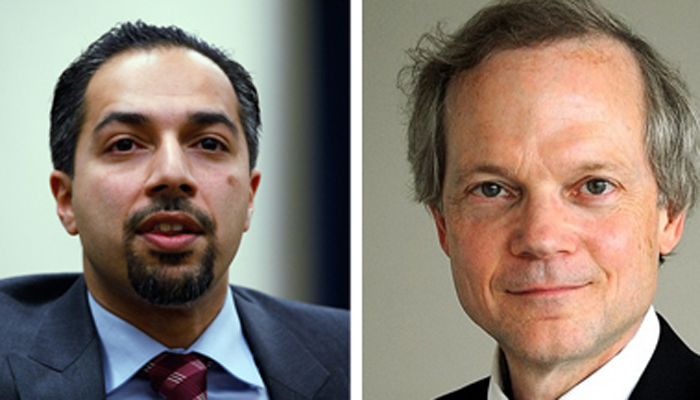
Parsi-and-FitzpatrickOne of the more extraordinary leaps of logic being propagated by the Iran lobby is that a completed nuclear agreement between the Iran regime and the P5+1 group of nations would help stabilize the Middle East and allow the U.S. to refocus and rebalance on more urgent matters. This flight of fancy was espoused by Mark Fitzpatrick, the director of the Non-Proliferation and Disarmament Program at the International Institute for Strategic Studies (IISS), and Trita Parsi, president of the regime’s chief cheerleading squad at the National Iranian American Council.

The claim being made by the two was that the U.S. could work with Iran’s mullahs on issues such as anti-narcotics trafficking, poverty alleviation, female empowerment and halting the spread of the Islamic State.

Now let’s think about that for a moment. They are contending that a regime with some of the highest narcotics addiction rates in the world and one of the largest traffickers in illicit drugs is somehow going to be a force for change in drugs?

They are contending that a regime with an economy in the tank due to the funding of three proxy wars Syria, Iraq and Yemen and terror groups such as Hezbollah and Shiite militias is somehow going to fight poverty? Especially when it ranks as one of the most corrupt places to do business with regime elites and mullahs’ families skimming off the top everywhere?

They are contending that a regime that empowers the Basij paramilitary to enforce strict adherence to Sharia laws such as prohibitions on women driving alone or holding hands in public by beating them and throwing acid on their faces is best equipped to empower women? Let’s not forget recent passage of laws allowing for child marriages as young as 14 years old and misogynist policies such as allowing fathers to marry their stepdaughters.

And they are contending that Iran can halt the spread of ISIS when it was its own policies that gave birth to ISIS by intervening in Syria and pouring billions of dollars in arms and fighters to prop up Assad and allow Syrian forces to drive out moderate rebel forces and encourage the rapid rise of extremist terror groups to form ISIS.

One would have to be a dolt to think these two have come up with a magic elixir to solve all the problems of the Middle East by granting Iran a deal enriching it with billions of dollars while allowing it to continue development of nuclear weapons without inspection of its military sites.

Iran’s chief rival, Saudi Arabia, has already taken dramatic steps to counter Iranian moves by securing a nuclear development deal of its own with South Korea and an air campaign aimed at defeating Iranian-backed Houthi rebels in Yemen.

How does any of this provide a sense of stability and security in the Middle East when Iran’s actions lie at the heart of some of the greatest human misery and suffering now being felt on the planet today?

Let’s not even mention Iran’s abhorrent human rights record which has been widely and loudly condemned by Amnesty International and the UN Special Rapporteur Ahmed Shaheed, who is mandated by the UN Human Rights Council to monitor and report on the situation in Iran.

It’s a farcical proposition by Parsi and Fitzpatrick, but nothing new with only two weeks left before the self-imposed June 30th deadline for a nuclear agreement as they step up the Iran lobby’s efforts to sell even the most threadbare of Persian carpet ideas.

By Michael Tomlinson

Filed Under: American-Iranian Council, Blog, Current Trend, Duping Anti-War Groups, National Iranian-American Council Tagged With: #NuclearDeal, Iran deal, NIAC

NIAC Day of Action-Lobbying for Iran Mullahs

March 2, 2015 by admin

NIAC Day of Action-Lobbying for Iran Mullahs

NIAC Day of Action-Lobbying for Iran Mullahs

The National Iranian American Council serves primarily as a cheerleader, public relations mouthpiece and lobbying force for the Iranian regime. It does these duties with diligence and not the least enthusiasm for its mission of portraying Islamic fanatics in a gentle and favorable light. It’s almost akin to being the PR firm for ISIS, if there ever was one, with all its attendant challenges.

As part of its lobbying efforts, it coordinates its so-called “Day of Action” in which its volunteers gather up petitions to deliver to designated Congressional field offices in the hopes of steering the Congress towards a more favorable view towards Iran’s mullahs; namely you can trust them with a nuclear capacity in a couple of years.

That is the essence of NIAC’s national day of action today in which, according to the group’s website, 23 states will be targeted, mostly their U.S. Senators with a few Representatives. The bulk of the states targeted were blue states that President Obama carried in the last election, with the notable red state exceptions of Texas, Georgia and Kentucky.

Virtually all of the targeted Senators are Democrats and have already expressed some degree of support for the President’s diplomatic efforts with Iran, so what does this day of action tell us?

For one, it’s not very national. At what is arguably the most important point for NIAC in its years-long effort to build support for the Iranian regime, it can’t even muster support in more than half the states. In the overwhelming majority of the states they do plan to deliver petitions, the offices targeted are already in their column. It is in essence preaching to the choir at this point.

Secondly, this national lobbying effort is timed to coincide with Israeli Prime Minister’s address to a joint session of Congress. NIAC in favoring the mullahs, has noted the Democrats who have chosen not to attend; only 38 members have answered NIAC’s call to boycott.

Coming on the heels of the delivery of books to every Senator by NIAC about the life and efforts of Abdol-Hossein Sardari, an Iranian diplomat who saved the lives of Jews escaping the Nazi’s in Paris, NIAC has clearly gone all out in an effort to try every lever to enhance the brand image of Iran’s mullahs.

But, with mullahs being the role model for ISIS and other extremist groups, it certainly didn’t help NIAC’s efforts to have ISIS reveal new videos rampaging through a museum in Mosul, Iraq destroying antiquities, Iran’s military blowing up a replica of a U.S. aircraft carrier in exercises, and Iran starting commercial air service in Yemen after Houthi rebels backed by Iran overthrew the government, a key ally in the war against terror.

But at the heart of the lack of enthusiasm nationally for NIAC’s day of action can be found in recent polls which show the American people now rank ISIS and the threat of terror as their number one concern this year going into the tune up for the 2016 elections; even ahead of jobs and the economy.

NIAC and Iran’s mullahs have consistently placed their hopes in the idea that if you say “Iran is peace loving” enough times, it can overshadow videotaped beheadings and cremations of prisoners and put a fig leaf on turmoil and chaos roiling across Iraq, Syria, Afghanistan, Nigeria, Yemen, Chad, Sudan and Lebanon. It might even be enough to cover up terror in Paris, Sydney, Ottawa, Copenhagen and now Bangladesh where another American journalist was hacked to death alongside his wife by extremists.

The Iranian regime’s biggest export is terror and its extremist Islam and it is destabilizing large parts of the world right now. If the talks on Iran’s nuclear infrastructure were simply about centrifuges and uranium, we might get a deal, but you cannot ignore the other party at the table and it includes people such as Ali Khamenei who are playing the long game in fulfilling an apocalyptic vision of an Islamic empire with Iran’s mullahs at the controls.

So while NIAC is busy passing out petitions today, we should be thankful the vast majority of Congress isn’t listening to them.
By Michael Tomlinso

Filed Under: Blog Tagged With: #NuclearDeal, Iran, Irandeal, IranLobby, Irantalks, Netanyahu

  • « Previous Page
  • 1
  • …
  • 13
  • 14
  • 15

National Iranian-American Council (NIAC)

  • Bogus Memberships
  • Survey
  • Lobbying
  • Iranians for International Cooperation
  • Defamation Lawsuit
  • People’s Mojahedin
  • Trita Parsi Biography
  • Parsi/Namazi Lobbying Plan
  • Parsi Links to Namazi & Iranian Regime
  • Namazi, NIAC Ringleader
  • Collaborating with Iran’s Ambassador

Recent Posts

  • NIAC Trying to Gain Influence On U.S. Congress
  • While Iran Lobby Plays Blame Game Iran Goes Nuclear
  • Iran Lobby Jumps on Detention of Iranian Newscaster
  • Bad News for Iran Swamps Iran Lobby
  • Iran Starts Off Year by Banning Instagram

© Copyright 2026 IranLobby.net · All Rights Reserved.