Iran Lobby

Exposing the Activities of the lobbies and appeasers of the Mullah's Dictatorship ruling Iran

  • Home
  • About
  • Current Trend
  • National Iranian-American Council(NIAC)
    • Bogus Memberships
    • Survey
    • Lobbying
    • Iranians for International Cooperation
    • Defamation Lawsuit
    • People’s Mojahedin
    • Trita Parsi Biography
    • Parsi/Namazi Lobbying Plan
    • Parsi Links to Namazi& Iranian Regime
    • Namazi, NIAC Ringleader
    • Collaborating with Iran’s Ambassador
  • The Appeasers
    • Gary Sick
    • Flynt Leverett & Hillary Mann Leverett
    • Baroness Nicholson
  • Blog
  • Links
  • Media Reports

Human Rights and Nuclear Issues Move to Forefront of Iran

November 21, 2015 by admin


Human Rights and Nuclear Issues Move to Forefront of Iran

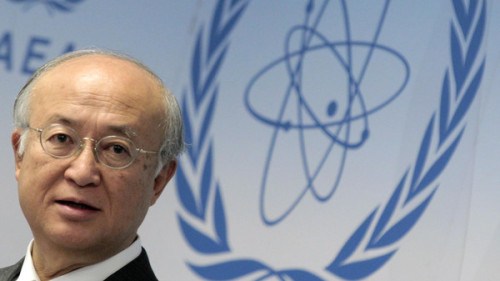
International Atomic Energy Agency (IAEA) Director General Yukiya Amano reacts as he attends a news conference during a board of governors meeting at the UN headquarters in Vienna November 29, 2012. The U.N. nuclear agency made no progress in a year-long push to find out if Iran worked on developing an atomic bomb, its chief said on Thursday, calling for urgent efforts to end Tehran’s standoff with the West. Amano said he would not give up seeking to end what Western diplomats describe as Iranian stonewalling of the agency’s investigation into possible military dimensions to the Islamic state’s nuclear programme. REUTERS/Herwig Prammer (AUSTRIA – Tags: POLITICS ENERGY HEADSHOT TPX IMAGES OF THE DAY) – RTR3B0LF

Like twin hammer blows, breaking news concerning the Iranian regime came out revealing that the two issues the Iran lobby have tried mightily to keep separate and growing more entwined; namely human rights and the nuclear agreement given to the regime last July.

The Iran lobby, led by the National Iranian American Council, rabidly argued that human rights issues – which the regime has an abysmal record on – needed to be decoupled from any nuclear agreement because it could jeopardize momentum for an accord and was outweighed by the perceived benefit of gaining an agreement with the regime.

The logic being, as advanced by regime stalwarts such as Trita Parsi, was that an agreement would empower “moderate” elements led by Hassan Rouhani and usher in a new period of cooperation with the West.

Unfortunately for Parsi, the opposite has come to happen. Reuters reported on a confidential International Atomic Energy Agency report it gained access to which describes that the regime’s stockpile of low-enriched uranium has actually increased instead of decreased under the terms of the agreement.

Iran’s stockpile of low-enriched uranium had increased by 460.2 kg in the past three months to 8,305.6 kg, the report said. Under the deal with major powers, that stockpile must be slashed to no more than 300 kg.

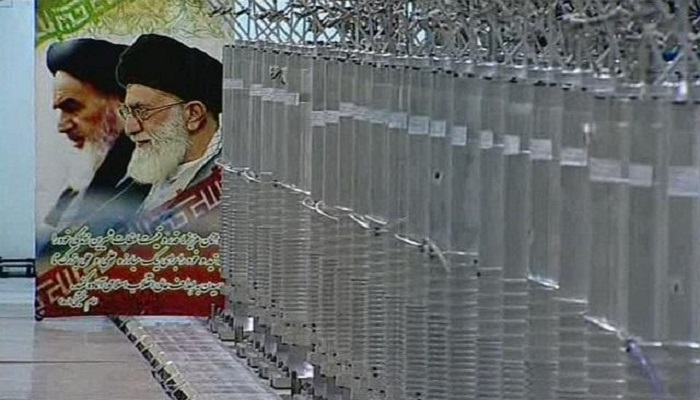
Additionally, the centrifuges being dismantled are only ones previously unused by the regime and those that have been dismantled are only being stored, not destroyed, allowing the regime the flexibility to quickly put them back into service whenever it wants.

That quick restart ability is being preserved also at the Arak nuclear reactor where a regime member of Parliament said it could be reactivated within as little as six months unless all sanctions against the regime were lifted quickly.

“If the Americans break the terms of the Joint Comprehensive Plan of Action (JCPOA) regarding lifting the sanctions, Iran will activate the Arak reactor within six months,” ISNA news agency quoted head of National Security and Foreign Policy Commission, Alaeddin Boroujerdi, as saying.

The threats have only increased as top mullah Ali Khamenei has voiced displeasure over the slow pace of lifting sanctions repeatedly warned the regime would restart its nuclear program unless all sanctions were lifted at once. This is of course at odds with what was actually agreed to last July under the Joint Comprehensive Plan of Action (JCPOA), but it fits with the regime’s pattern of rewriting international accords even before the ink dries to suit its needs.

This pattern of purposeful evasion by the regime also applies to its callous treatment of human rights of its own people, including religious minorities such as those who follow the Baha’i faith who recently have been subjected to mass arrests, Iranian women who have been threatened with arrest for driving cars without proper coverings, and even social media administrators getting rounded up.

But the world is beginning to take notice and coming on the heels of the Friday the 13th massacres in Paris, showing a greater willingness to confront extremist views prevalent in the Iran regime and terror networks such as ISIS, as evidenced by a vote by the United Nations General Assembly’s human rights committee which approved a resolution expressing deep concern about rights violations in Iran by a 76 to 35 vote.

The resolution is the 62nd resolution the UN has adopted censuring the regime for its ongoing human rights violations. This resolution stemmed from the recent report issued by Ahmad Shaheed, the UN Special Rapporteur for human rights in Iran.

It calls on the Iranian regime “to abolish, in law and in practice, public executions… and executions carried out in violation of its international obligations” and “to ensure, in law and in practice, that no one is subjected to torture or other cruel, inhuman or degrading treatment or punishment.”

The victims of such treatment include political opponents, human rights defenders, women’s and minority rights activists, labor leaders, students’ rights activists and others, the resolution said.

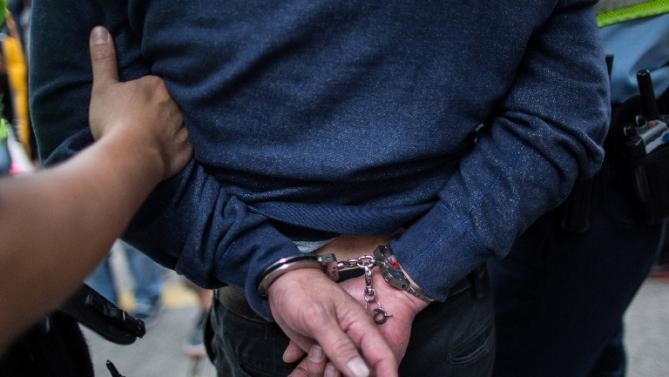
The regime’s notorious Revolutionary Guards Corps has rounded up artists, journalists and U.S. citizens as part of a crackdown on what it has called Western infiltration.

The crackdown includes announcements this week of 170 people arrested in Qazvin Province in Iran, a number of others in Gilan Province, and five journalists in Tehran, all by Iran’s Revolutionary Guards, amounts to the largest crackdown since the violent state suppression of the protests that followed the disputed 2009 presidential election in Iran.

The 170 arrested were called “managers of groups active in mobile social networks,” which the regime claimed for acting “against moral security” and distributing “indecent and immoral” content in the form of text and images that “encouraged people to commit obscene acts” and “insult ethnic minorities, officials and distinguished national figures,” according to the Fars news service.

Even with the increased criticism over human rights, the mullahs in Tehran may believe they have an ace up their sleeve with the Paris attacks which they believe may aid the regime in keeping Assad in power and shifting attention away from its involvement in the civil war.

The Guardian in an interview with a MacArthur fellow at King’s College London, said:“I think Iran might think that the Paris attacks give it an upper hand over Syria because naturally it gives a little bit more credibility to the rhetoric that combating Isis is more important than combating Assad.

“Iran will think that its position will be strengthened as the result of the attack but I am not sure it necessarily will. The only thing that the Paris attacks will really change is rhetoric in the west but I’m not sure if it changes much on the ground. France is going to say that the focus is going to be on attacking Isis. To be fair, that’s always been the focus but that hasn’t detracted away [from] trying to get rid of Assad,” she said.

Ultimately, the West must focus on tying the Iranian regime’s human rights record back into judging its progress towards dismantling its nuclear infrastructure as well as its support for terrorism abroad. Without that linkage, the regime is as well shielded against any meaningful reforms as ISIS is from attack if it was using human shields.

By Michael Tomlinson
Filed Under: Blog, News Tagged With: #NuclearDeal, Appeasement policy, Featured, Iran deal, Iran Human rights, Iran sanctions, NIAC, Parchin, Trita Parsi

Iran Lobby Ramps Up Efforts to Influence US Presidential Campaign

November 19, 2015 by admin

Iran Lobby Ramps Up Efforts to Influence US Presidential Campaign

Iran Lobby Ramps Up Efforts to Influence US Presidential Campaign

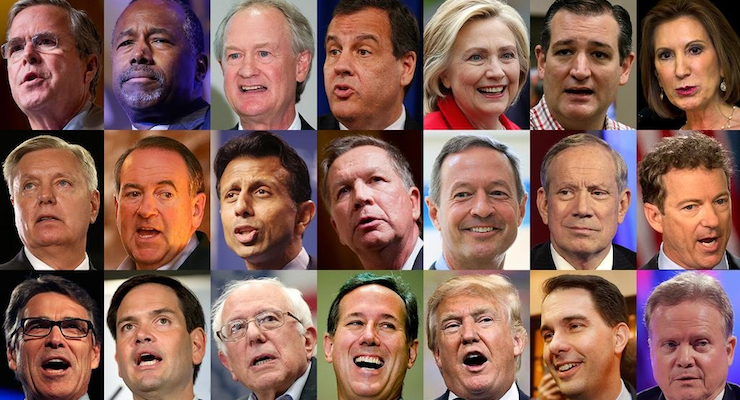
The silly season is upon us and we don’t mean the College Football Playoff selection process. We mean the quadrennial presidential election season and with it, what promises to be a year filled with debates, poll results, gaffes, blizzard of television advertising and a healthy barrage of social media postings.

But the stakes for this election cycle are enormous and carry with it a sense of gravity we have not seen since during the height of the Cold War when Lyndon B. Johnson famously aired the “Daisy” ad against Barry Goldwater hinting that electing the Arizona conservative would start World War III.

Even though the ad only aired once, it has become one of the most controversial political ads ever aired used in American politics, but it did show what some political candidates are willing to entertain in terms of tackling controversial topics and issues.

Every campaign season has its own rhythms and rollercoaster swings in emotions and momentum. This season has been no different starting with a Republican field of candidates that has been dominated by two total outsiders in Donald Trump and Ben Carson, while the Democratic side was stuck in relative limbo while Vice President Joe Biden was deciding if he was in or out of the race and Hillary Clinton waded through her email controversy as Sen. Bernie Sanders rallied huge numbers of supporters.

But with the recent nuclear deal with the Iranian regime and the bloody Friday the 13th massacre in Paris, terrorism and what to do with Syria has moved front and center in the consciousness of American voters.

According to a new Reuters/lpsos poll done after the Paris attacks, showed that terrorism had moved to the front of all topics of concern to voters (20.5%), ahead of the economy (15.9%) and healthcare (8.8%) and unemployment (8.6%).

The five-day tracking showed concern over terror effectively doubled over the weekend of the Paris attacks and shows only signs of increasing as France battles additional terror cells in its suburbs while French warplanes bomb targets in Syria.

“What is almost certain is that the demands on the candidates will grow more exacting. As previous presidential campaigns jarred by outside events have demonstrated, how a candidate responds can be as important to a campaign as the event itself,” speculated Jonathan Martin in the New York Times.

What is certain has been the tepid response from the Iran lobby which has gone virtually mute and deaf over the Paris attacks. Iranian regime loyalists such as Trita Parsi and Reza Marashi of the National Iranian American Council, Jim Lobe of Lobelog, The Ploughshares Fund, just to name a few, have offered little in the way of sympathy over the victims, nor condemnation of the terrorists themselves.

If anything, their social media feeds and public statements have been largely focused on centering blame for the attacks and creation of ISIS on the doorstep of Saudi Arabia as the primary regional rival to the mullahs in Tehran.

It’s a curious stand to make since clearly sectarian violence is at the heart of most of what ails the Middle East both historically and moving forward. In fact, Iran’s all-in support for Assad in Syria help spawn ISIS in the first place as Al-Qaeda fighters pushed out of Afghanistan and Iraq by the U.S. surge flocked to Syria and splintered off to form their own groups, eventually coalescing into the ISIS we know today.

The fact that the Iranian regime has also served as a terror blueprint of sorts through its longtime sponsorship of Hezbollah in Lebanon and Shiite militias in Iraq has given ISIS a roadmap for exploiting the shock value of its attacks and dominate the news cycle; gives it the dubious honor of being a “godfather” to ISIS.

This in turn has placed a burden on the Iranian lobby to step up to the proverbial plate to try and influence the presidential elections since a new president – especially if it’s a Republican – will feel no obligation to stay the course President Obama has set with the nuclear deal with Iranian regime and the hands-off policy he has largely taken in Syria and Iraq.

To that end, NIAC Action, the official lobbying arm of NIAC, launched a petition drive directed at all presidential candidates to refrain from using rhetoric that would be deemed “hostile” at the Iranian regime.

The letter it is circulating reads in part:

“That is why we urge you and everyone running for the White House to retire the hostile rhetoric of the past. This hostile rhetoric often makes no distinction between the Iranian government and the Iranian people. It empowers hardliners, undermines those working to resolve challenges, and promotes conflict.

“Instead, we urge you to articulate how you will seize the opportunity created by the diplomatic breakthrough with Iran to build a more peaceful future.”

To say it is a shameful misdirection of the truth would be generous, because the mullahs in Iran have been very open and specific since the nuclear agreement was secured last July in venting their vitriol about the U.S., let alone keeping up the ritual “Death to America” chants at Friday prayers.

As we move deeper into the election cycle, we can be assured of increased action by the Iran lobby as it seeks to keep a lid on American voters’ concerns over terrorism and it combats any damaging news coming out of the Middle East such as more terror attacks or the Iranian regime’s complicity in some new human rights atrocity.

But from the early signs, it seems that Republican candidates have firmly chosen to not swallow the Kool-Aid on a “moderate” Iran and the Democrats will hedge their bets and set terms for Iran that only aid in ensuring a more stable and cooperative Middle East – both goals that the mullahs are opposed to.

By Laura Carnahan

Filed Under: Blog, News Tagged With: #NuclearDeal, Appeasement policy, Featured, Iran deal, Iran Lobby, National Iranian American Council, NIAC, NIAC Action, Reza Marashi, Trita Parsi

As Rouhani Goes on European Shopping Trip Dissidents Raise Voices

November 13, 2015 by admin


As Rouhani Goes on European Shopping Trip Dissidents Raise Voices

As Rouhani Goes on European Shopping Trip Dissidents Raise Voices

This week regime’s assigned president, Hassan Rouhani will become the first leader of the mullah’s regime to travel to Europe in a decade as part of effort to establish trade and foreign investment pacts in the wake of the nuclear agreement completed last July.

To say the tour begins on a rocky footing is an understatement. In France, a diplomatic row over French wine erupted when Rouhani snubbed the French with a demand for no alcohol at an official state dinner. Telling the French they can’t serve wine in their own palace is like telling a French chef he cannot use truffles.

A counterproposal by French officials for a breakfast was snubbed by Rouhani’s delegation as being a “cheap” offering by the French. Rouhani and French President Francois Hollande will instead just have a simple meet and greet moment for the cameras.

All of which underscores an important point for the regime: everything will always be on Iran’s terms.

While Hollande’s advisors have called the situation “ridiculous,” it is anything but ridiculous for Rouhani who has been busy trying to keep up the charade that he is a champion of opening Iran to the West, while at the same time towing the party line from top mullah Ali Khamenei on the brutal crackdown happening at home as scores of journalists are harassed and arrested.

Rouhani’s European trip has a more practical and important aspect for the regime. Rouhani hopes to pursue deals in car manufacturing, agriculture and most importantly Airbus aircraft to upgrade its aging fleet of airliners.

But his trip will be met with that is expected to be a week-long series protests from human rights and dissident groups aimed at raising the issue of the regime’s harsh human rights records; especially the dramatic rise in executions being carried out in Iran.

A large march and rally is planned for November 16th in Paris with other actions planned during the week to include:

  • Declarations by human rights organizations, including sponsors of this week’s protests, on the deteriorating human rights situation in Iran under Rouhani and the need for immediate action;
  • Delivery of a letter by 100 French MPs from different parties to the French president insisting that relations with the regime in Tehran must be contingent upon a moratorium on executions and improvement of the human rights situation in Iran;
  • Release of a statement by French political, social and intellectual figures condemning the deterioration of the human rights situation in Iran and the regime’s export of fundamentalism and terrorism;
  • Street exhibitions and displays in central Paris explaining the human rights situation in Iran.

In a reminder of just how much the Iran regime expects the rest of the world to dance to its tune, Rouhani said in an interview with the Italian newspaper, Corriere della Sera, that the U.S. and Iran could normalize relations but that the U.S. should “apologize” first without going into further detail as to what kind of apology the regime was demanding.

It’s an odd demand to make considering that the regime currently holds several Americans hostage and in a report just released this week, was identified as the source of manufacturing bombs that killed hundreds of U.S. service personnel in Iraq through its Quds Forces.

But nothing this outrageous would be unexpected from a regime that has been growing more aggressive towards the world since the nuclear deal was completed.

The discontent in the U.S. has grown substantially as the Iran regime acts so belligerently. The New York Observer ran an editorial warning of the regime’s actions, saying:
“Since President Obama pushed through his Iran nuclear deal without a congressional vote, the folks in Tehran have responded in some mighty unusual ways.

“First, they’ve jailed five visiting Americans—and are holding them hostage. Then they launched a massive cyberattack against the U.S. State Department, Aramco and several American banks. Plus, they are cracking down on Iranians who advocate better ties with the United States, even shutting down businesses that have American connections—including a KFC knock-off in Tehran. But most significantly, the Ayatollahs are threatening to renege on the nuclear deal if we push too hard to get our citizens back.

“We hope this gives pause to President Obama and the deal’s supporters in Congress. If this is how Iran acts before we have released the $100 billion-plus in frozen funds, how might they behave when we have no more Iranian funds to use as leverage?”

As Rouhani tours Europe, we can only hope Pope Francis raises the issue of executions, the Italian prime minister stresses the importance of human rights and the French president discusses the need for an end to executions in Iran and releasing all political prisoners in Iran’s prisons.

By Michael Tomlinson


Filed Under: Blog, News Tagged With: #NuclearDeal, Appeasement policy, Featured, Iran deal, Iran Lobby

Push Back Begins As UN Condemns Iran Regime Arrests of Journalists

November 12, 2015 by admin


Push Back Begins As UN Condemns Iran Regime Arrests of Journalists

Push Back Begins As UN Condemns Iran Regime Arrests of Journalists

“The Government of Iran should not silence critical or dissenting voices under the guise of vague and unsubstantiated national security concerns,” Ahmed Shaheed, Special Rapporteur on the situation of human rights in Iran, said in a news release.

Shaheed, along with other UN human rights experts, called on the Iran regime to halt a new wave of intimidation aimed at journalists in the wake of the recently agreed to nuclear deal that proponents such as the National Iranian American Council claimed would usher in a new period of moderation by the Islamic state.

The Iran regime has one of the highest numbers of journalists and activists in detention in the world. According to figures released by the UN, from April 2015, at least 45 were being held for their peaceful activities. On November 2nd, five journalists were arrested by plainclothes members of the Revolutionary Guard and accused of taking part in an infiltration network and seeking to undermine Iran on behalf of Western governments.

“Freedom of expression is central to guarantee open, free and fair political processes,” David Kaye, the Special Rapporteur on the right to freedom of opinion and expression, echoed in a similar vein, underscoring that “democratic processes are unsustainable if media workers and activists have no safety to perform their vital role.”

Both human rights experts further warned that arrests and prosecution of journalists not only affect their free operation in the country, but also make public participation in any electoral process impossible. However, this concern had been raised before the last elections in Iran said the human rights experts.

The sudden crackdown on journalists follows the incarceration of Iranian-Americans such as Washington Post reporter Jason Rezaian, and a broad range of aggressive moves by the regime in Syria, Yemen and domestically as it seeks to assert its perceived position of strength following the nuclear deal.

But underlying all of these recent moves is the growing belief that in advance of parliamentary elections scheduled next year in Iran, the mullahs are contending with rising discontent and a widely held expectation by the Iranian people that the nuclear deal will open up the regime to foreign investment, trade, travel and culture.

For the mullahs, the prospect of a more open and inclusive Iran fueled by foreign companies, corporate brands and their marketing campaigns aimed at Iran’s young people frankly terrifies them.

To that end, the mullahs – at the behest and blessing of top mullah Ali Khamenei – have given the Revolutionary Guard free rein to arrest dissidents and journalists, launch a major new offensive in Syria and acquire and develop new military hardware as fast as possible.

Conveniently enough for the mullahs, all of this comes fueled by a level of anti-American rhetoric reminiscent of the early days of the Islamic revolution in 1979 as the mullahs seek to reignite hatred for the U.S. at a time when most Iranians would rather buy an iPhone and get on Facebook.

According to Helle Dale of the Heritage Foundation writing in the Daily Signal; the “targeting of the United States is connected with a new crack-down on the media. Independent journalism is as dangerous an occupation in Iran as it ever was.”

As “reported” by the revolutionary guard “news agencies” Tasnim and Fars, the journalists were charged with being “members of an illegal network linked with the governments of the US and Britain who were active in Iranian media.”

The fact that the Revolutionary Guard has been in the forefront of this crackdown as the chosen instrument of force employed by Khamenei has led many in Congress to renew a push to have the infamous group labeled as a “foreign terrorist organization” (FTO).

Legislation has been introduced in the House by Rep. Michael McCaul (R-Texas), and in the Senate by Sen. Ted Cruz (R-Texas), calling on the secretary of state to designate the IRGC as an FTO under U.S. law – or provide the legal justification for not doing so.

The IRGC is also heavily engaged in the Iranian economy, including the banking, construction and energy sectors, and Iran experts say it stands to benefit significantly from the unfreezing of assets and ongoing easing of sanctions under the nuclear agreement reached with Iran last summer.

The depth of the IRGC’s involvement in the death of Americans was outlined in a report released by the U.S. Central Command which cited the regime’s responsibility in the deaths of nearly 200 U.S. soldiers, comprising 14 percent of U.S. forces in Iraq between 2003 and 2011.

The Iran regime is also responsible for wounding nearly 1,000 other U.S. soldiers during the eight-year period, said the new disclosures from a partially declassified government report, according to Fox News.

The attacks were principally carried out by Iranian regime-made explosive devices that were manufactured and supplied to Shiite militias throughout Iraq by Quds Force members and directed by Qassem Soleimani, the commander who is now coordinating the regime’s offensive operations in Syria alongside Russia against Syrian rebel forces.

The arrests of journalists is only the tip of a much larger iceberg as the Iran regime expands its activities and disprove all of the claims made by supporters such as the NIAC.

By Laura Carnahan

Filed Under: News Tagged With: #NuclearDeal, Featured, Iran deal

Iran Regime Breaks Nuclear Agreement Already

November 11, 2015 by admin

Iran Regime Breaks Nuclear Agreement Already

Iran Regime Breaks Nuclear Agreement Already

The 159 pages in the nuclear agreement with the Iran regime is by the standards of most international agreements, pretty flimsy, but even its meager few pages specify clearly the expectations the rest of the world has for the regime’s centrifuges used to enrich uranium: dismantling them.

Reuters reported that the regime has halted work in dismantling centrifuges at the Natanz and Fordow nuclear enrichment plants. The nuclear agreement struck last July specified that initial dismantling work would begin on some 10,000 decommissioned centrifuges at the two facilities.

The halt in work was announced by Ali Shamkhani, secretary of the National Security Council for the regime, who was quoted as saying by the ISNA student news agency that “the (dismantling) process stopped with a warning.”

He did not specify what the warning was or who issued it, but the head of the regime parliament’s nuclear deal commission, Alireza Zakani, told Mehr news agency that the dismantling had stopped in Fordow because of a letter to Hassan Rouhani from a group of lawmakers complaining that the dismantling process was moving too swiftly and contradicted directives from top mullah Ali Khamenei.

Khamenei has publicly stated his opposition to several terms within the treaty, including refusal to allow regime military facilities to be inspected and the need for all Western sanctions to be lifted at once before the regime would comply fully with the agreement.

Khamenei has also said the deal should only be implemented once allegations of past military dimensions of the regime’s nuclear program had been settled.

The International Atomic Energy Agency is expected to announce its conclusions on PMD by Dec. 15, according to Reuters.

The 10,000 older, decommissioned centrifuges are only half of what the regime has available to it to enrich low-grade uranium into highly enriched weapons-grade fuel. The nuclear agreement only allows for the regime to actively use a few thousand centrifuges for medical and scientific research purposes.

As Rick Moran in American Thinker notes, “there’s very little difference between the so-called ‘hardliners’ and those the Western press has designated as ‘moderates.’ And Rouhani may try to use the hardliners as an excuse to not fully implement the deal.  Supreme Leader Khamenei has already redefined key elements of the deal to favor Iran’s nuclear program, which Rouhani will probably cite when he violates the terms of the agreement as we go along.”

It is clear now that the regime has no intention of complying with the nuclear agreement and in fact is doing everything it can to push the West with aggressive moves designed to take advantage of the Obama administration’s lame duck political status and lack of desire to force a confrontation on the eve of U.S. presidential elections.

This is why the mullahs in Tehran have doubled down on wiping out opposition to Assad in Syria with a new offensive alongside Russia, test fired a new ballistic missile that violates United Nations Security Council restrictions, attacked and killed Iranian resistance members in Iraq, smuggled new arms to Houthi rebels in Yemen, completed the sale of advanced anti-aircraft missiles from Russia, and cracked down at home by arresting and jailing dissidents and inflaming ethnic tensions with the Azeri minority group in northern Iran.

All of this has been done because the mullahs have already decided to break from the nuclear agreement and see the opportunity for significant gains in the absence of any real threat of retaliation from the U.S. and the rest of the world.

As the Iran lobby, led by the National Iranian American Council, put so eloquently during the debate over the nuclear agreement, the choice for Americans was between “war” and “peace.”

In fact, they were correct, but only in reverse. Approving the pact has surely put the world on a more dangerous path towards greater conflict, while rejecting it may very well have stopped Iranian aggression and brought about stability in the region.

By Michael Tomlinson

Filed Under: News Tagged With: #NuclearDeal, Appeasement policy, Featured, hassan rouhani, Iran, Iran deal, Iran Human rights, Iran Lobby, Iran sanctions, National Iranian American Council, NIAC, NIAC Action, nuclear talks, Parchin

Myth of Hardliners vs. Moderates in the Iran Regime

November 9, 2015 by admin

Myth of Hardliners vs. Moderates in the Iran Regime

Myth of Hardliners vs. Moderates in the Iran Regime

One of the cornerstones of the arguments made by the Iran lobby in favor of the nuclear agreement with the Iran regime was that its passage would empower “moderate” coalitions within Iran to push against “hardliners” in opening up the regime to the outside world.

It was a nice fairy tale, but like most children’s stories, it’s not based in facts or the real world. Regime advocates such as Trita Parsi and Reza Marashi of the National Iranian American Council and Joseph Cirincione of the Ploughshares Fund yelled from the rooftops that the nuclear deal would serve as the bridge towards a more open and inclusive relationship between the regime and the rest of the world.

But the reality has been very different and well documented as the mullahs in Tehran doubled down on a policy of aggressive militarism in Syria and Yemen, while also launching a new brutal crackdown at home with scores of new arrests and executions that have been widely condemned by human rights and dissident groups.

But for Iran, the mythology of the “moderate” factions within a fractured government is just too good to let go, so the regime continues to push the story of a “battle” within the regime as personified by Hassan Rouhani leading the charge for moderation and inclusiveness vs. Ali Khamenei and the hardline elements in the military and judiciary.

Many Western news media are lulled into the same storyline by giving it plenty of play such events over the weekend in which Rouhani gave a broadcast speech in which he criticized “hardline media” hinting that some outlets are connected to security forces responsible for a wave of recent arrests in the country aimed at crippling Western influence, according to the New York Times.

The Times dutifully reported that Rouhani had spoken out against the wave of arrests and leveled a veiled criticism at the regime’s 12-member Guardian Council at the potential exclusion of candidates in the upcoming elections.

First of all, the mere fact that Rouhani could be criticizing the Guardian Council for restricting candidates is particularly ironic since it was the Council that cleared the pathway for Rouhani to become president by eliminating hundreds of potential candidates.

Also, the reporting of this so-called rift reveals the knowledge and cultural gap Western news media have about the workings of the regime government. The authority vested in Khamenei is near absolute, as is his control over the military, judiciary and economy. Rouhani’s portfolio by comparison is Spartan at best and serves largely to fulfill the policies and goals of the religious cadre of mullahs that run Iran.

Khamenei, and by extension the mullahs, were interested in a nuclear deal solely to relieve the regime of crippling economic sanctions that were threatening their grip on power by inciting an increasingly restive Iranian people to protests against the impoverished lives they were living.

The object for Khamenei was to secure release of billions of dollars in frozen assets and be given a free pass by the West to pursue his goals without fear of retaliation of threatened new sanctions. To that end, Khamenei achieved his goals which is why he has embarked on his latest plans to secure his domestic base by cracking down on dissidents and the media; even going so far as to arrest another American, Siamak Namazi who is closely tied to Rouhani, and launch a deadly attack on Camp Liberty in Iraq which houses members of the Iranian resistance.

Given the regime’s past history of dealing with internal dissent, including the ouster of officials who speak out against Khamenei or imprisonment of dissenters, one wonders why Rouhani would risk censure or even expulsion by Khamenei for his perceived bold statements supporting a free press and opposing Khamenei.

Simply put: Because it’s just a show. Rouhani always has been and remains a loyal foot solider for the regime and was hand selected by Khamenei for his post. His value to Khamenei comes from being perceived by the West as a “moderate” face. This allows Khamenei the luxury of running the oldest scam anyone watching a police procedural like “Law and Order” would recognize.

Rouhani is the good cop to Khamenei’s bad cop.

Together they have manipulated the West into believing the idea of a schism within Iran to the extent the West needs to do more to help empower Rouhani against the “hardliners.” In essence, the nuclear negotiations are not over for Iran; they never stopped. For Khamenei and Rouhani, the nuclear agreement is still being negotiated and the West needs to deliver in order to gain the regime’s continued “compliance.”

This was evident in the inspection of the Parchin military site by the International Atomic Energy Agency after it had been scrubbed and sanitized. It was also shown by the invitation from the U.S. to include Iran in international talks on Syria even after Iran mullahs mounted a large-scale offensive there alongside Russia.

Sadly Western governments seem to be playing the game the mullah Rouhani and Khamenei want them to, pretending that there are “moderates” within a regime that has plus 2000 executions on his record just during the recent two years.

By Michael Tomlinson


Filed Under: Blog, News Tagged With: #NuclearDeal, Appeasement policy, Featured, Iran, National Iranian American Council, NIAC, NIAC Action, nuclear talks, Parchin, Reza Marashi, Sanctions, Trita Parsi

Iran Regime Picks and Chooses What It Wants

November 3, 2015 by admin

Iran Regime Picks and Chooses What It Wants

Iran Regime Picks and Chooses What It Wants

There are many aspects to the collective decision-making of the mullahs in Tehran. On the one hand, they support opening up negotiations on a nuclear deal to help unlock the bank vaults to billions in frozen assets. Then on the other hand, they denounce the terms of the deal and claim it doesn’t apply to them unless all sanctions are lifted at once.

The same double standard applies to what is happening in Syria. The Iran regime has fought endlessly to keep Assad in power there to the extent it even begged the Russians for military support to save him from being overthrown as rebels made serious inroads. The mullahs sought to legitimize the idea of Assad staying in power and seemed to reach a breakthrough by finally being invited to multilateral talks on finding a political solution to the crisis.

But now the regime has threatened to walk away from talks if it found them unconstructive, specifically citing Saudi Arabia’s role in the talks as the bitter rivals escalate their growing conflicts that now stretch from Yemen to Syria.

“In the first round of talks, some countries, especially Saudi Arabia, played a negative and unconstructive role … Iran will not participate if the talks are not fruitful,” regime media cited deputy Foreign Minister Hossein Amir Abdollahian as saying.

Delivering unusually personal criticism, regime president Hassan Rouhani appeared to reprimand Saudi Foreign Minister Adel al-Jubeir, who, on Saturday, lashed out at Tehran for what he termed its interference in regional countries.

“An inexperienced young man in a regional country will not reach anywhere by rudeness in front of elders,” Rouhani was quoted as saying by state news agency IRNA on Monday. He did not name the ‘young man’ but Jubeir was assumed to be his target according to Reuters.

It’s this kind of “I’ll take my ball and play elsewhere” response that has come to typify Iranian regime’s reactions in foreign affairs now. It pushed for a nuclear agreement and then complained about it and threatened to walk away. It pushed for a role for Assad and a seat at the table and now that it has it, it threatens to walk away.

While some psychologists might label this bipolar behavior, long-time regime watchers within the Iranian dissident community have long warned this was how the mullahs do business by pushing a false façade and then changing the rules at the last minute.

It was behavior that typified nearly two years of nuclear talks in which Iran refused to commit to the fine print in order to avoid being boxed in; resulting in a 159-page agreement that is dwarfed by the thousands of pages in similar nuclear agreements with the old Soviet Union and North Korea.

That split behavior has been most explicit in Ali Khamenei, the regime’s top mullah, who has persistently and publicly undercut Rouhani following the nuclear agreement in order to demonstrate his firm control over regime matters and relegate Rouhani to the figurehead status many have claimed he remains.

According to Dr. Majid Rafizadeh, head of the International American Council, writing in Huffington Post, Khamenei has ruled out any “snap-back” option with regards to the sanctions.

“First, he wants sanctions to be lifted at the outset, then he wants to make sure that the international community will not have any mechanism through which it can re-impose sanctions in the very likely scenario that Iran decides to pull out of the nuclear agreement and go full speed ahead on uranium enrichment,” he writes.

“But wait, that’s not all, there is another condition to be met as well. After Khamenei had his president and nuclear team add the condition of the removal of an arms embargo to the nuclear agreement in the eleventh hour, he is now adding the removal of all sanctions (including the ones linked to Iran’s terrorism and human rights violations) to the already-done nuclear deal,” he added.

Another sign of the growing tightening of control by Khamenei was discussed by Gerald F. Seib in the Wall Street Journal.

“Iran also has arrested Nizar Zakka, a Lebanese information-technology specialist who lives in Washington and has permanent-resident status in the U.S. At the same time, Iranian businessmen with ties to foreign firms are being harassed by Iran’s state-security apparatus,” Seib writes. “These detentions are likely the work of Iran’s Revolutionary Guards, who function as a kind of parallel government operating alongside—and apparently beyond the influence of—the official government of President Hassan Rouhani and Foreign Minister Javad Zarif, with whom the U.S. and other world powers negotiated the nuclear deal.”

The broad range of actions by the regime over the last few months leaves very little doubt about the intentions of the mullahs and Khamenei in particular.

He is not interested in accommodation. He has no time for negotiations. He has no belief in moderation.

The regime has even stepped up arrests domestically, including two journalists, one a former deputy culture minister who was jailed in the 2009 crackdown that followed the disputed reelection of then-President Mahmoud Ahmadinejad.

The son of ex-official Issa Saharkhiz told news media his father was arrested this week at his residence in Tehran on charges that include “insulting the supreme leader” and “propaganda against the regime.” The arrests are likely to have a chilling effect on journalists and activists ahead of major elections early next year in Iran.

Meanwhile, a relative of Ehsan Mazandarani, editor in chief of the Iranian regime’s daily Farhikhtegan, said that Mazandarani was detained the same day, also in the capital by agents of the Revolutionary Guards Corps.

Even as these crackdowns increase – and in spite of criticism from human rights and dissident groups – in a vote held Monday, regime lawmakers opted overwhelmingly to continue pushing the “Death to America” slogan chanted across the country on Fridays, after regime ally’s Friday prayer services, and with special zeal every November 4th – the day Iranian mullahs commemorates the beginning of the 1977 siege on the U.S. Embassy in Tehran.

Khamenei picks and chooses his fights and he clearly intends on fighting any notion of moderation.

By Michael Tomlinson

Filed Under: Blog, News Tagged With: #NuclearDeal, Appeasement policy, Featured, hassan rouhani, Iran sanctions, Irantalks, Nuclear Deal, Rouhani, Sanctions

What the Taking of Another American by Iran Regime Tells Us

November 2, 2015 by admin

What the Taking of Another American by Iran Regime Tells Us

What the Taking of Another American by Iran Regime Tells Us

The sudden and surprising arrest by Iran regime officials of Siamak Namazi raised the eyebrows of many veteran Iran watchers; not the least because Namazi has been an integral part of efforts to build a lobbying force in the U.S. used to support the regime’s political goals, namely passage of a just-completed nuclear agreement.

In fact, the ties between Namazi and Trita Parsi, the founder of the National Iranian American Council and leading lobbyist for the regime, have been well documented, all of which raised the question of why would regime leaders order the arrest of one of their own?

The very question indicates how wrong most analysts are about Iranian mullahs in the first place. Many people, including apparently Namazi, long assumed that if you towed the party line of the mullahs, you were always going to be in their good graces and in Namazi’s case, he hoped to reap the financial rewards that came from that association in the form of guiding foreign investment into Iran following the nuclear deal.

But what he failed to understand and what many others have failed to grasp even as they tried appeasing these same mullahs is that they are never going to allow anyone into their tight circle of control who does not follow their proscribed fundamentalist and extremist religious beliefs.

For the mullahs in Tehran, the coin of the realm is not just money; the constitution vests absolute authority with Ali Khamenei and his cadre of mullahs who oversee the judiciary, military and foreign affairs and vast tracts of the economy, while have an unrelaxing temptation for expansion of their authorities in to neighboring countries.

The Iranian Revolutionary Guard Corps wields disproportionate influence through its monopolistic control of entire industries such as telecommunications, petroleum, finance and agriculture. Iran’s theocracy controls planning of the economy and dispenses its meager rewards to the Iranian people, while reserving the bulk of the financial gains for its elites, their families and the military campaigns it funds overseas in Lebanon, Syria, Iraq and Yemen.

For Namazi and Parsi and their fellow Iran lobbyists, the suddenness of the arrest was jarring, but it should have not comes as a complete surprise since the mullahs have long practiced the art of score-settling amongst their factions with sham trials, imprisonments and even executions.

But unlike what Parsi and his ilk would have the rest of the world believe, the fight in Iran’s leadership is not between “moderates” and “hardliners,” but in fact is between factions of corrupt mullahs bickering over the booty they rob from the Iranian people. The fact that every effort to promote a “moderate” faction within Iran has met with utter failure is indicative not of the lack of passion within the Iranian people for regime change, but rather the ruthless willingness of the mullahs to use deadly force against their own people to keep tight their grip on power.

Also since signing of the nuclear agreement, Khamenei has made it his mission to remind the world the he does not view adherence to the terms of the agreement to be beneficial to the regime, nor indispensable. In fact, in his mind, anything that compromises the extremist Islamic fanaticism is the antithesis of what the mullahs want. For Khamenei, getting a $150 billion check from unfrozen assets with no strings attached is the best possible alternative.

Khamenei is eager for the money in order to continue funding his vision of an expanding Islamic sphere of influence stretching from the Mediterranean to the Indian Ocean, but he does not want to jeopardize it with young Iranians clamoring for access to Snapchat on their iPhones while wearing clothes from Old Navy, which is why the arrest of Namazi, a putative supporter of the regime, tells us clearly that the regime intends to be the one calling the shots and not the other way around.

By Michael Tomlinson

Filed Under: Blog, National Iranian-American Council, News, The Appeasers Tagged With: #NuclearDeal, Appeasement policy, Featured, Iran, Iran deal, Iran Lobby, Iran sanctions, Khamenei, National Iranian American Council, NIAC, Trita Parsi

Iran Regime Turns on Its Own

October 29, 2015 by admin

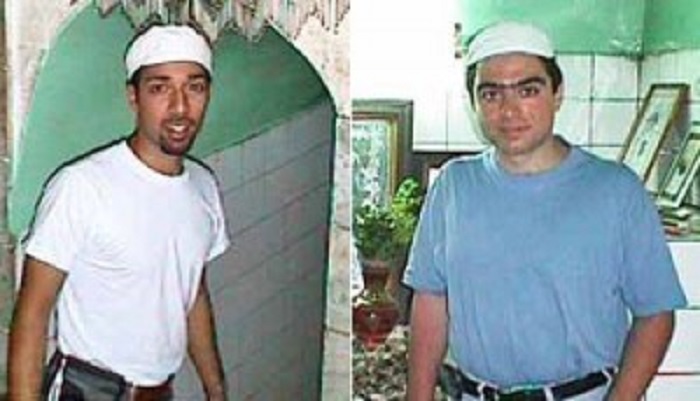
Trita Parsi traveled with Siamak Namazi to Isfahan, Iran’s third largest city, in August 2000. They also toured the Zoroastrian “Fire of Victory” Temple in Yazd. At the time, Siamak was living in Tehran, working for Atieh Bahar, a consultant company with close ties to the government. In 1999, Parsi and Siamak co-authored a paper that recommended setting up a lobbying organization in Washington to influence US-Iran policy. Siamak took a sabbatical in 2005 to complete a fellowship at the Woodrow Wilson Center in Washington, DC. While at the Center, Siamak helped Parsi formulate NIAC policies supportive of the Iranian regime.

Trita Parsi traveled with Siamak Namazi to Isfahan, Iran’s third largest city, in August 2000. They also toured the Zoroastrian “Fire of Victory” Temple in Yazd.
At the time, Siamak was living in Tehran, working for Atieh Bahar, a consultant company with close ties to the government.
In 1999, Parsi and Siamak co-authored a paper that recommended setting up a lobbying organization in Washington to influence US-Iran policy. Siamak took a sabbatical in 2005 to complete a fellowship at the Woodrow Wilson Center in Washington, DC. While at the Center, Siamak helped Parsi formulate NIAC policies supportive of the Iranian regime.

Siamak Namazi, an Iranian-American citizen, has been credited with helping found the Iran lobby including the creation of the National Iranian American Council alongside Trita Parsi as the primary vehicle for advocating for a nuclear agreement lifting economic sanctions on the regime.

The Daily Beast chronicled his family’s involvement as an “intellectual architect” for the NIAC as a pathway for empowering those within the regime whom he had a close relationship with and believed by helping secure an agreement it would boost his fortunes within the regime.

In the immortal words of Kevin Spacey who plays the scheming Frank Underwood on Netflix’s “House of Cards,” “We’re all victims of our own hubris at times.”

Truer words were never spoken about the Iran lobby because on the verge of reaping their perceived successes, they discover all they really are, are puppets for a regime of mullahs whose intent is only focused on preserving their own power.

That is because according to regime media reports, while visiting family in Tehran, Namazi was arrested by Revolutionary Guards Corp soldiers and tossed into the notorious Evin Prison.

There is an irony here on par with Alfred Nobel inventing dynamite and then creating the Nobel Peace Prize after his invention was used in war.

Namazi joins four other Americans who are being held hostage by the regime, including Washington Post reporter Jason Rezaian, Christian pastor Saeed Abedini, former Marine Amir Hekmati and the former FBI agent Robert Levinson.

According to a piece in American Thinker, Parsi and Namazi founded NIAC as a way to lobby for the removal of sanctions against the regime and promote its foreign policy while combatting anti-regime forces in the U.S.

Both Parsi and Namazi reportedly enjoyed close ties and access to Hassan Rouhani and Javad Zarif, the regime’s president and foreign minister, with Parsi being seen traveling with and in close discussions with the regime delegation during nuclear talks.

Conspicuously, the NIAC have been silent on the issue, declining comment and social media feeds for Parsi and other NIAC staff is devoid of any mention of the arrest.

But Hassan Dai, editor of the Iranian American Forum who won a defamation lawsuit filed against him by Parsi, speculated that the arrest suggests a power struggle of sorts within the regime’s leadership.

Dai explained in an interview with Breitbart News that Namazi had consistently “lobbied in favor of a faction of the regime,” which upset the mullahs because it would only be acceptable to “lobby for the whole regime.”

The fight between the factions in Iran is a fight for “the best solution to preserve the regime,” he explained, adding that groups like NIAC have never sided with true “reformists,” but with people who wish to employ a different strategy to empower the regime, such as Rouhani and former President Akbar Rafsanjani.

Because Namazi and NIAC prefer one faction over the other, “they are undermining the Supreme Leader. They are undermining the Revolutionary Guard,” Dai explained. “When you lobby U.S. policymakers to remove sanctions against Iran with the rationale that it will help reform the regime, you undermine the Supreme Leader, because he wants them to accommodate to the regime now.”

The arrest of Namazi sends a message from Iran’s rulers that “Rouhani has no power,” Dai concluded. “He cannot even protect his own friend.”

Breitbart News further speculates – and rightly so – that the arrest pours cold water on the notion that securing the nuclear deal would empower “moderates” within the regime and help reform it. Evidence since agreeing to the nuclear contradicts that idea completely with the conviction of Rezaian, the test launch of an illegal ballistic missile and the launching of a new offensive in Syria alongside Russian forces.

The arrest of Namazi demonstrates that the leadership of the Iran regime is of one mind and firmly in the control of Ali Khamenei and his religious cohorts and that any idea of moderation within the regime is a pipe dream; which may go to explain why coming off of the NIAC’s recent leadership conference to celebrate the nuclear deal, Parsi’s Twitter feed was filled with posts condemning Saudi Arabia, a bitter enemy of Iran and locked in fighting in Yemen.

If Parsi doesn’t tow the mullahs’ line, he might find a different kind of reception party the next time he travels to Tehran and end up sitting next to his buddy Namazi.

By Michael Tomlinson


Filed Under: Blog, Latest from Lobbies & Appeasers, National Iranian-American Council, News Tagged With: #NuclearDeal, Appeasement policy, Featured, hassan rouhani, Iran, Iran deal, Iran Economy, Iran Lobby, Irandeal, Jason Rezaian, Khamenei, Moderate Mullahs, National Iranian American Council, NIAC, Nuclear Deal, Rouhani, siamak Namazi, Syria, Trita Parsi

Halloween Comes Early for Iran Lobby

October 27, 2015 by admin


Halloween Comes Early for Iran Lobby

Halloween Comes Early for Iran Lobby

Halloween involves kids (and adults) firing up their imaginations to come up with costumes and then go knocking door to door seeking treats and getting the odd trick played on them maybe in a haunted house. For the Iran lobby, Halloween came a week early as the chief advocate, the National Iranian American Council, held its annual leadership conference this weekend.

It’s worth noting that the NIAC bills its event as a premier conference for the nation’s Iranian-American community, but its agenda and participants hardly represent the views and beliefs of the estimated one million Iranian-Americans living in the U.S.

In fact, the line-up of speakers at this year’s conference reads more like a line-up card of Iran regime boosters and potential business partners than any group seriously examining the daunting challenges remaining between the U.S. and Iran. What is even more amazing are the lack of any speakers who have first-hand experience with the abysmal human rights situation in Iran, nor were there any speakers offering views on the sizable opposition worldwide to the regime amongst the Iranian diaspora.

Among the highlights of this gallery of apologists and appeasers includes:

  • Bijan Khajehpour, who founded Atieh International and the related Atieh Bahar which employed NIAC staffers to serve as a conduit for directing foreign companies to invest into the regime through the access it provided to top regime officials who controlled most of Iran’s economy through a complex web of shadow companies. Atieh was the subject of an in-depth piece in The Daily Beast on its start and close relationship with leading supporters of the regime and how it profited from those ties and in advocating for a lifting of sanctions against Iran;
  • Joseph Cirincione, president of Ploughshares Fund which was the largest funder of the lobbying campaign in support of the nuclear deal and the lifting of sanctions against the regime. It alone provided NIAC with at $150,000 for its advocacy work on behalf of the nuclear deal; not including money given by its staff. Commentary Magazine poured through tax records to glean the wide scope of Ploughshares giving to groups working on behalf of the regime’s cause; and
  • Alan Eyre, the U.S. State Department’s Persian-language spokesman who came under fire recently for promoting anti-Semitic conspiracy sites demonizing American Jewish groups, as well as postings on his personal social media praising the regime’s controversial Quds Force commander Qassem Soleimani according to the Washington Free Beacon. Eyre also posted links to Lobelog, a well-known blog dedicated to supporting the regime’s key messages.

The conference also featured several speakers who are actively seeking business deals within the regime including: Ned Lamont, chairman of Lamont Digital Systems; Jay Pelosky, a self-described advisor on emerging markets who recently visited Iran; and Amir Handjani, president of PG International Commodity Trading Services, a leading importer of agricultural commodities in the Iranian market.

We can’t resist one dig at Reza Marashi of NIAC who called the gathering the “world cup of Iranian-Americans.”

One interesting tidbit were comments made by Dr. Farideh Farhi who lamented the fact the nuclear deal had not led to substantial changes in U.S. policy towards the regime, but failed to note the swift shifts in Iranian policy towards the rest of the world in the rapid buildup of its military in Syria and launching of a new ballistic missile in violation of United Nations Security Council sanctions; both provocative acts.

This was followed by a tweet by Trita Parsi, NIAC’s head honcho, who described comments made by Shadi Hamid, a senior fellow at the Brookings Institution, and Mehdi Hasan, a commentator for Al Jazeera’s English broadcast, as saying about the panic from neighboring Arab nations about the nuclear deal: “If someone panics, you slap them in the face, you don’t indulge them.”

An appropriate comment since it neatly encapsulates the Iran lobby’s response to concerns over what the Iran regime will do now in the wake of the nuclear agreement. The recent rise in belligerent military action, coordination with Russia in blasting Syrian rebels back to the Stone Age and the conviction of Washington Post reporter Jason Rezaian all point to a slide into anarchy which has even alarmed Democratic lawmakers who initially supported the nuclear deal, but now have begun offering up new legislation designed to keep the regime in check.

The NIAC conference was predictable in celebrating its perceived win with the nuclear deal and the effort now to safeguard potential foreign investment after “Implementation Day” on December 15 when the U.S. will pave the way by lifting economic sanctions and allow Iran to rejoin the world of international commerce.

But the conference also revealed the biggest weaknesses of the lobby which was its inability or unwillingness to meet the most troublesome aspects of the Iran regime head-on; namely it horrific human rights record which leaves a deep and wide trail for the world’s media to follow.

With every arrest, every beating, every public hanging and every denunciation of a minority religious or ethnic group, the regime weakens any argument the lobby can make and increases the pressure on groups such as the NIAC to answer basic questions of “why aren’t you speaking out against the killing of X group?”

Which is why the NIAC conference was so focused on economic issues since the regime is desperate to not only get its hands on the estimated $150 billion in frozen assets to help pay off its military obligations in Syria, Lebanon, Afghanistan, Iraq and Yemen, but is equally anxious to bring in foreign investment to help prop up an economy devastated by gross mismanagement and corruption by regime officials.

By Laura Carnahan


Filed Under: Blog, National Iranian-American Council, News Tagged With: #NuclearDeal, Bijan Khajehpour, Farideh Farhi, Featured, Iran, Iran deal, Iran Lobby, Jason Rezaian, Joseph Cirincione, National Iranian American Council, NIAC, NIAC Action, Nuclear Deal, Reza Marashi, Trita Parsi

  • « Previous Page
  • 1
  • …
  • 11
  • 12
  • 13
  • 14
  • 15
  • Next Page »

National Iranian-American Council (NIAC)

  • Bogus Memberships
  • Survey
  • Lobbying
  • Iranians for International Cooperation
  • Defamation Lawsuit
  • People’s Mojahedin
  • Trita Parsi Biography
  • Parsi/Namazi Lobbying Plan
  • Parsi Links to Namazi & Iranian Regime
  • Namazi, NIAC Ringleader
  • Collaborating with Iran’s Ambassador

Recent Posts

  • NIAC Trying to Gain Influence On U.S. Congress
  • While Iran Lobby Plays Blame Game Iran Goes Nuclear
  • Iran Lobby Jumps on Detention of Iranian Newscaster
  • Bad News for Iran Swamps Iran Lobby
  • Iran Starts Off Year by Banning Instagram

© Copyright 2026 IranLobby.net · All Rights Reserved.