Iran Lobby

Exposing the Activities of the lobbies and appeasers of the Mullah's Dictatorship ruling Iran

  • Home
  • About
  • Current Trend
  • National Iranian-American Council(NIAC)
    • Bogus Memberships
    • Survey
    • Lobbying
    • Iranians for International Cooperation
    • Defamation Lawsuit
    • People’s Mojahedin
    • Trita Parsi Biography
    • Parsi/Namazi Lobbying Plan
    • Parsi Links to Namazi& Iranian Regime
    • Namazi, NIAC Ringleader
    • Collaborating with Iran’s Ambassador
  • The Appeasers
    • Gary Sick
    • Flynt Leverett & Hillary Mann Leverett
    • Baroness Nicholson
  • Blog
  • Links
  • Media Reports

Iran Lobby Worries Gains Will Be Lost With New President

January 21, 2016 by admin

Iran Lobby Worries Gains Will Be Lost With New President

Iran Lobby Worries Gains Will Be Lost With New President

The Iran lobby continues to exhibit the delusional nature that has marked much of its public lobbying efforts on behalf of the Iranian regime. The newest effort was put on display in an editorial posted to the Huffington Post by Trita Parsi and Tyler Cullis of the National Iranian American Council.

The piece offered up helpful suggestions for the next U.S. president to maintain the same policy of appeasing the mullahs in Tehran that the Obama administration has followed the past three years leading up to the fateful decision to lift economic sanctions as part of a deeply flawed nuclear agreement.

Parsi and Cullis offer the suggestions because they realize the clock is ticking down with the incoming presidential election, and the new president, be it either a Republican or Democrat, is likely to forge their own path in dealing with Iran, especially considering much of the Obama administration’s legacy towards the regime has been built largely around executive orders and not full-fledged treaties.

They do ask an important question though which is “Since this new budding relationship with Iran has not been institutionalized, what will be left of it when the Obama administration leaves office?”

Unfortunately, Parsi and Cullis seem to think that international relations is more akin to developing a teenage crush and keeping the love notes going through Snapchats and emojis.

They offer up three steps in their recipe for true love between the U.S. and a theocratic Iranian regime controlled by mullahs who fully support the use of terror as a tool of statecraft, including:

  • The need for the U.S. and Iran to establish a strategic dialogue thought regular meetings;
  • Establishing a dialogue between both countries legislatures; and
  • The need for increased contact and communications between the two societies.

On the surface these seem like worthy, even laudable goals, but like all the bright ideas and sunny promises made by the NIAC, they are not rooted in the reality of the here and now.

Take for example the first idea they offer which is to build a dialogue through regular meetings. It is worth noting that the U.S., even when it did not have formal diplomatic relations, never stopped meeting with Iranian representatives on a whole host of issues, most notably negotiations on the regime’s burgeoning nuclear program through both the Bush and Obama presidencies.

Parsi and Cullis neglect to mention that dialogue between the two countries has always been present, the difference though has been in the general unwillingness to give the mullahs a blank check until the last year in which the Obama administration essentially caved in nuclear talks – first by delinking support for terrorism and human rights abuses from talks – then allowing the Iranian regime to support the Assad regime in Syria even after the use of chemical weapons without repercussions.

The notion that the Middle East would be a remarkably different place if the Bush administration had capitulated earlier is ridiculous when you consider such an act would not have deterred mullahs in Iran from supporting terror groups, would not have deterred them from doing what it could to keep Assad in power and would certainly not have deterred them from continuing the practice of public hangings and mass crackdowns on journalists, dissidents, women and religious minorities.

Most important, the idea that ISIS could have been stymied is absurd since it was Iranian regime’s support of Assad in the first place that spawned ISIS, as well as offering safe haven for Al-Qaeda leaders driven out of Afghanistan by the U.S. invasion who later left to build ISIS out of the carnage of Syria.

The second idea that Parsi and Cullis offer about a dialogue between legislative bodies is even – to borrow a phrase from the Trump lexicon – more stupid than the first idea since the Iranian regime has a long practice of winnowing the field of candidates eligible to run for parliamentary seats, especially in the Assembly of Experts in order to ensure an ironclad control over the government.

Take for example parliamentary elections next month in which out of a field of 12,000 candidates who applied to run, almost two-thirds were disqualified by the Guardian Council. The 12-member council vets political candidates and all legislation passed by parliament. It is made up of six judges elected by parliament and six clerics appointed by top mullah Ali Khamenei, who has the final word on virtually all important state matters.

So-called reformists—those favoring more political and economic freedom and improved relations with the outside world, who have been involved in all previous terrorist activities and domestic repression—say their camp was overwhelmingly targeted, with one saying barely 1% had been approved in a sign that the practical political realities of how the regime is run are completely at odds with the rosy picture painted by Parsi and Cullis.

Considering how the two houses of parliament in the regime are under the thumb of a single man in Khamenei, the notion of a dialogue developing between them and the U.S. Congress is a silly one and unlikely to ever develop.

This brings us to the last ridiculous idea Parsi and Cullis hoist up which is the idea of communications and contact between the Iranian and American people. Again, a nice notion if it was true, but almost impossible to succeed considering how the mullahs have imposed a cyberwall blocking internet access and use of social media platforms for the Iranian people to communicate with the outside world.

From a practical standpoint, the regime’s Revolutionary Guard Corps, which owns the virtually all of the major telecommunications companies, monitors the nation’s communications and often uses those channels to identify dissidents and suppress contrary political activities.

Considering how American culture is largely built around mass media entertainment and consumer marketing, it is highly unlikely that any of that will ever find unrestricted audiences in Iran, where mullahs already impose strict censorship rules on all foreign media content and ban many iconic American brands for fear of cultural “contamination.”

Indeed, what Parsi and Cullis are really worried about is that the broad public perception in America that Iran’s mullah leadership is focused on terror and military expansion at the cost of domestic oppression of its people is true and will become the focus on a new president’s foreign policy. For the Iranian people and the rest of the world, the best hope for a truly new relationship with the regime lies not in following the plan laid out by Parsi and Cullis, but in fact doing the exact opposite.

By Michael Tomlinson
 

Filed Under: Blog, News Tagged With: #NuclearDeal, Appeasement policy, Featured, Iran Lobby, Iran sanctions, IranLobby, National Iranian American Council, NIAC Action, Trita Parsi, Tyler Cullis

Iran Regime Unveils More Missiles as World Hardens Stance

January 6, 2016 by admin

Iran Regime Unveils More Missiles as World Hardens Stance

Iran Regime Unveils More Missiles as World Hardens Stance

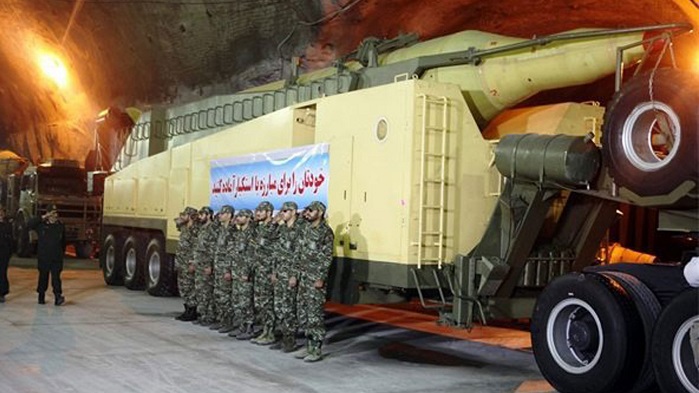
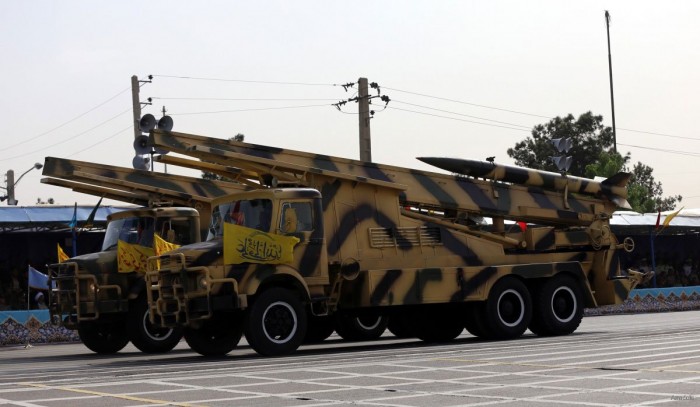
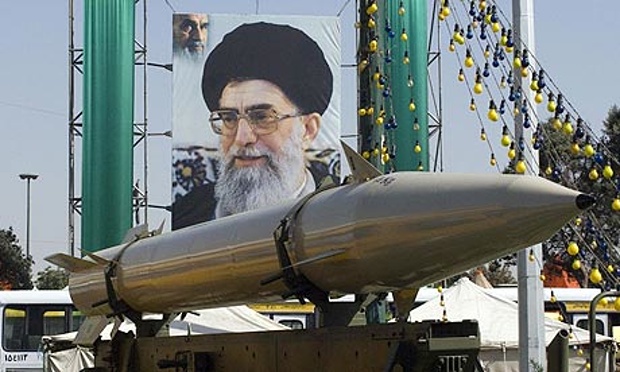
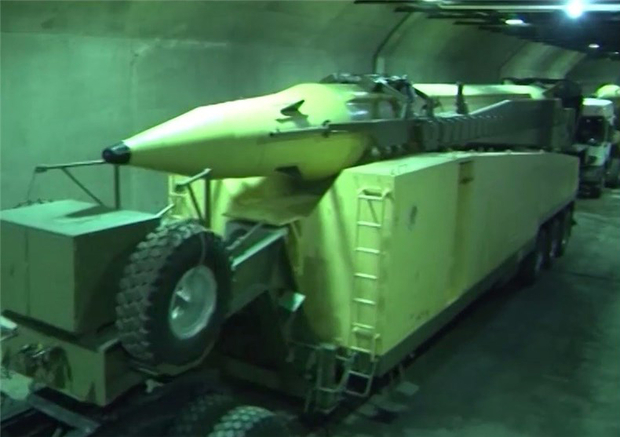
In the wake of the flip flop by the Obama administration to halt the imposition of new sanctions on the Iranian regime for its test firings of Emad ballistic missiles violating a United Nations Security Council resolution last week, the regime unveiled a new underground missile depot prominently featuring the same Emad missile in a blatant thumbing of its nose to the rest of the world.

Regime news agencies and state television video said the underground facility, situated in mountains and run by its Revolutionary Guards Corps, was inaugurated by the speaker of parliament, Ali Larijani. Release of the one-minute video followed footage of another underground missile depot released last October.

U.S. officials say the Emad, which Iran tested fired in October, would be capable of carrying a nuclear warhead and they say Washington will respond to the Emad tests with fresh sanctions against Iranian individuals and businesses linked to the program, but the administration reversed course at the last minute, first announcing a press conference and then canceling it.

The Iranian regime’s boasting about its missile capabilities is a direct challenge for the Obama administration as the U.S. and European Union plan to dismantle nearly all international sanctions against Tehran under the nuclear deal reached in July.

The regime’s provocations undermine all of the reassurances given by supporters of the nuclear deal who claimed it would pave the way for a more moderate and engaged Iranian regime.

After Iran tested the Emad missile in October, the UN Security Council’s panel of experts declared Iran in violation of resolution 1929, adopted in 2010. It prohibits the launching of any missile capable of carrying a nuclear warhead, and remains valid until the July nuclear deal between Iran and the five permanent members of the UN Security Council — the US, UK, Russia, China, and France — plus Germany goes into full effect. That won’t happen until Iran has fulfilled all of its obligations to scale back its program under the agreement, at which point Iran will be “called upon” by the Security Council to cease any missile testing for a period of eight years.

As the Chicago Tribune editorialized yesterday: “As the U.S. backpedaled, the Iranians pressed their advantage: Iranian President Hassan Rouhani proclaimed on Thursday that he was so incensed by proposed U.S. sanctions that he had instructed the military to expand Tehran’s missile program ‘in terms of range and accuracy.’ You don’t like two missile launches? How about 20?

“Days later, the Iranian Navy launched rockets within 1,500 feet of an American aircraft carrier and a French frigate in the Strait of Hormuz.”

“The U.S. and its partners have only one chance to establish that strict compliance from Iran will be expected through the course of this nuclear deal. That chance comes right now, before sanctions are lifted, before millions of dollars flow into Tehran’s economy,” the Tribune went on to say. “The U.S. should impose those sanctions for the missile tests. Iran won’t walk from the deal. It desperately needs that sanctions relief. And if it does walk away, that will serve notice that Iran never did intend to comply.”

The Tribune was not alone in its skepticism of the Iranian regime. Daniel W. Drezner, a professor of international politics at the Fletcher School of Law and Diplomacy at Tufts University, writing in the Washington Post said:

“It is possible that no amount of Obama administration hand-holding and backstopping was going to placate the anxiety of the Sunni states in the wake of the Iran deal. Still, if you look at the past year, the administration seems to have devoted very little time to gardening in the Gulf region. Which guarantees continued bloodshed in Syria, Yemen, Iraq, and . . . I’ve lost count of the sectarian conflicts at this point,” Drezner says.

“It is still likely that the Iran deal will continue to be implemented. But it also seems increasingly likely that the negative externalities of negotiating the deal are rendering it far less significant in advancing the oxymoron that is ‘Middle East stability,’” he added.

All of which goes a long way in explaining the recent escalation in tensions between the Iranian regime and its Arab Gulf state neighbors as Saudi Arabia, Kuwait, Bahrain, Sudan and the United Arab Emirates have all severed ties to the Iranian regime.

For those states which lie only a few hundred miles away from Iran, the threat of the Emad missile is much more real and practical than for the U.S., but no less worrisome is the retreat of U.S. willpower in the face of Iranian aggression under this administration. The message has been unmistakable for many of U.S.’s long-time allies in the region:

You’re on your own.

The Iran lobby was particularly humorous in its most recent statements of support for the mullahs in Tehran as Trita Parsi from the National Iranian American Council actually advocated the idea that Saudi Arabia was pushing for an armed conflict with Iran in order to gain back U.S. support against its long-time foe.

Predictably, Parsi raised the potential of the U.S. cutting loose Saudi Arabia as part of its strategic “realignment” towards Iran with a certain amount of glee.

He offers up the most ironic statement of all when he writes:

“If Washington’s priority is the defeat of IS and other jihadist movements, then a balancing act between an Iran that ferociously opposes IS and a Saudi Arabia that has played an undeniable role in promoting jihadi extremism may not be the right answer.”

The fact that Parsi actually tries to portray the Iranian regime as a standard bearer against Islamic extremism is the height of hypocrisy. It’s like saying the Nazi Party are sponsors of Jewish festivals. We would suggest Parsi reacquaint himself with Iranian regime justice by Googling “Iran executions” and watching some video of the mullahs’ “moderation.”

By Michael Tomlinson

Filed Under: Blog, News Tagged With: #NuclearDeal, Featured, Iran Lobby, Sanctions, Trita Parsi

NIAC List of Accomplishments Misses on Human Rights

January 5, 2016 by admin


NIAC List of Accomplishments Misses on Human Rights

NIAC List of Accomplishments Misses on Human Rights

The National Iranian American Council, the leading advocate and lobbyist for the Iranian regime, published its list of accomplishments for 2015. It was a revealing list giving insight into the top priorities for the NIAC.

For an organization that claims as its mission the “strengthening the voice of Iranian Americans and promoting greater understanding between the American and Iranian people” one would think some of its top priorities would include:

  • Lifting of restrictions within Iran in the use of social media and access to the internet;
  • Halting censorship of news media and a stop to the arrest and imprisonment of journalists;
  • Freeing of Iranian-Americans currently being held in Iranian prisons, including Washington Post reporter Jason Rezaian, Christian pastor Saeed Abedini and former U.S. Marine Amir Hekmati;
  • Withdrawing support for terrorist organizations such as Hezbollah and a halt to proxy wars in Syria, Lebanon, Iraq and Yemen;
  • Releasing over 90 Christians currently imprisoned in regime prisons for practicing their faith;
  • Stopping all executions and imposition of punishments such as public amputations, stoning and beatings; and
  • Restoring basic rights to Iranian women to be free from abuse, spousal murder and misogyny laws.

On the surface, that would seem like an eminently reasonable list of goals for any organization interested in advancing humanitarians causes, but in the case of the NIAC, none of those goals are in its list of accomplishments, nor are they in its 2016 resolutions for future action.

That’s right, zero, zilch, nada.

So what exactly were the NIAC’s best accomplishments for the year? According to its website, the NIAC lays proud claim to nine achievements in its list, of which seven were related to the nuclear agreement with the Iranian regime.

The single most important achievement for the NIAC in 2015 according to its own boasts was securing a nuclear deal already dead on arrival with the test firing of ballistic missiles in violation of United Nations Security Council sanctions and threats by the mullahs to walk away from the deal if there are any threats to impose new sanctions for its missile violations.

Not exactly a recipe for “promoting greater understanding.”

Unsurprisingly, among its four stated “resolutions” for 2016, half relate to the nuclear deal.

Nowhere does NIAC mention the Iranian-Americans being held in Iran.

Nowhere does NIAC mention the brutal human rights situation in Iran.

Nowhere does NIAC mention the growing sectarian rift being fueled by extremist statements being made by top mullah Ali Khamenei who has been calling for the destruction of Sunni Arab states.

Nowhere does NIAC give any mention to the need to ratchet down tensions by calling on the Iranian regime to withdrawal support for proxy wars that have turned the Middle East into a battlefield stretching from the Mediterranean to Indian Oceans.

Instead, the NIAC’s sole focus is to keep the nuclear agreement alive long enough for $100 billion in cash to be wire transferred into regime bank accounts.

Trita Parsi must be looking to buy a new house.

It is a sad situation when the NIAC spells out in its own words its top priorities and none of them address the concerns of Iranian-Americans who yearn for a return to a homeland free from religious control, free from harsh brutality and open to all forms of religious worship and freedoms.

Far from serving Iranian-Americans, the NIAC serves only the mullahs in Tehran and has no other agenda than to take its orders from them.

One would think just for the sake of appearances the NIAC would throw a bone to human rights advocates and mention or cite as a goal the release of these Iranian-American hostages as a priority. It doesn’t even have to be the top priority, maybe number five or six on its list, but the NIAC can’t even bring itself to do that.

It should be apparent to any member of Congress, to any Congressional candidate, to any presidential campaign, who looks at this list, the NIAC is nothing more than a lobbying arm of the Iranian regime and does not accurately reflect the concerns of Iranian-Americans.

In this new year of 2016, we can only hope everyone wakes up to the charade the NIAC has been playing in 2015.

By Michael Tomlinson

Filed Under: Blog, National Iranian-American Council Tagged With: #NuclearDeal, Featured, Iran, Iran deal, Iran Human rights, Iran Lobby, Iran Terrorism, National Iranian American Council, NIAC, Trita Parsi

Iran Regime Threats about Visa Waiver Program Hide a Dirty Secret

December 21, 2015 by admin

Iran Regime Threats about Visa Waiver Program Hide a Dirty Secret

Iran Regime Threats about Visa Waiver Program Hide a Dirty Secret

Within the omnibus $1.1 trillion spending bill is a provision being hotly debated concerning modifications to the Visa Waiver Program which allows citizens from 38 designated countries the ability to travel freely to the U.S. without a visa and vice versa for Americans traveling to those countries. The provision requires citizens from Iran, Iraq, Sudan and Syria to obtain a visa before being able to visit the U.S.

The change has brought substantial and intense political debate and its eventual outcome will no doubt be determined by diplomacy and even legal action, but what cannot be denied is how the Iranian regime is using the opportunity to leverage itself into another threatening posture over the nuclear deal it agreed to earlier this year.

The mullahs see an opportunity to maximize the controversy in two ways. First, they have proclaimed that the changes to the waiver program might amount to the levying of a new sanction on the regime and thus void the nuclear agreement; freeing the regime to resume its nuclear program.

This position was articulated by regime foreign minister Javad Zarif who claimed in an interview in New York that the change amounted to a new sanction; a position echoed by deputy foreign minister Abbas Araghchi.

Reneging on the nuclear agreement at this point would allow the regime to reap all of the benefits it has received since July when the agreement was reached and move forward with a restarted nuclear program without much fear of a new round of sanctions being imposed by a United Nations Security Council clearly reluctant to revisit the issue after burying the most recent incomplete assessment of the regime’s past nuclear program by the International Atomic Energy Agency.

The regime is clearly eager to cash in their rewards including an estimated $150 billion in frozen assets, a return to the international financial system, access to global oil markets and freedom to go on a buying binge of new military hardware from Russia.

But the second and more interesting position taken by the regime is the long-held contention by the regime that anyone born in Iran can never shed their citizenship, even if they moved to another country as a child and became a citizen in their new homeland.

It is this twisted logic the mullahs have followed in being able to snatch up Iranian-Americans and hold them and sentence them in sham trials such as in the case of Washington Post reporter Jason Rezaian.

By contending that Iranians are never allowed to leave their citizenship, the regime retains the ability to inflict its form of brutal justice on anyone it deems fit for any inconsequential act. In Rezaian’s case, the mere act of reporting on Iranian news events qualified him as being a spy. It is the same perverse logic applied to fellow American hostages, Amir Hekmati and Saeed Abedini.

The fact that the regime is using the controversy over the visa waiver program to advance its political goals is telling, just as the Iran lobby ramps up the decibel level in denouncing the program changes as a means of shifting global attention away from the reverses it is suffering in Syria and in its other provocative actions.

Article in the New York Post, refers to the regime practice of “khalibandi” in using charade as a means of statecraft and deception. It applies the term in looking at the nuclear deal and the regime’s decision to test fire new ballistic missiles violating UN sanctions.

“These tests make sense only if Tehran continues to contemplate a military nuclear dimension to its program. The two new missiles are designed to carry warheads of between 75 to 100 kilograms. It makes no sense to deploy a ballistic missile over a distance of 1,800 to 2,000 kilometers — that is to say, capable of reaching all capitals in the Middle East and parts of Europe — simply to carry a payload of TNT,” the article writes.

All of which is being made possible under the false impressions the Iranian regime and its lobby have worked diligently to project while being duplicitous behind the scenes.

While we won’t debate the merits and shortfalls of the visa waiver program, we cannot argue with the impact it is having in giving the regime a pathway out of having to explain some of the more nefarious aspects of its policies, especially as it relates to its pitiful human rights record.

For example, the National Council of Resistance of Iran, a leading dissident group, announced details of the execution of three political prisoners by the regime by hanging. The news garnered almost no notice from global news organizations and marks another entry in the bloody ledger of the regime which has already claimed over 1,100 victims – most being political prisoners.

By Michael Tomlinson


Filed Under: News Tagged With: #NuclearDeal, Featured, Iran Lobby

Iran Regime Promises More Missiles in Spite of UN Ban

December 17, 2015 by admin

Iran Regime Promises More Missiles in Spite of UN Ban

Iran Regime Promises More Missiles in Spite of UN Ban

Sounding as defiant as ever, the Iranian regime announced it would not accept any restrictions over its ballistic missile program after the United Nations Security Council’s Panel of Experts concluded in a confidential report that last October’s test firings of a new ballistic missile violated UN restrictions banning development of nuclear-capable missiles by the Islamic state.

“We tested Emad to show the world that the Islamic Republic will only act based on its national interests and no country or power can impose its will on us,” Defense Minister Hossein Dehghan was quoted as saying by the state news agency, IRNA.

Ballistic missile tests by Iran are banned under Security Council resolution 1929, which dates from 2010 and remains valid until the July nuclear deal between Iran and world powers goes into effect, according to Reuters which first broke the news about the confidential UN report.

Once the deal takes effect, Iran will still be “called upon” according to Reuters not to undertake any ballistic missile work designed to deliver nuclear weapons for a period of up to eight years, according to a Security Council resolution adopted in July right after the nuclear deal.

The regime contends that the resolution would only ban missiles “designed” to carry a nuclear warhead, not “capable of”, so it would not affect its military program as Tehran does not pursues nuclear weapons. The distinction is akin to saying a gun that is not designed to kill humans expressly, but is capable of killing humans is somehow different.

It is that kind of linguistic gymnastics which has characterized the regime’s approach to nuclear negotiations and its support of terror groups and the Assad regime in Syria. Regime leaders such as top mullah Ali Khamenei have consistently issued statements inconsistent with public statements made by other regime officials such as Hassan Rouhani and foreign minister Javad Zarif. The contradictions coming out from the regime could give anyone fits trying to detangle the mess.

Therein lay the strategy of the mullahs in that they seek to create this confusion in order to provide the wiggle room necessary to justify any action they see fit. By declaring its missiles not expressly designed for nuclear weapons, they can ignore international bans. By declaring the lifting of any sanction under the nuclear deal tardy or slow, the regime could declare the agreement null and void at any time and build a nuclear weapon at will.

It is the false promises made during the nuclear talks that are now coming to haunt the rest of the world as they see the Iranian regime do whatever it pleases to fit the narrative it chooses to articulate.

Rouhani himself couldn’t stop from making a verbal slam dunk when he went on state television calling the vote by the International Atomic Energy Agency’s board of governors to close out its inquiry into the regime’s past military practices in its nuclear program in spite of highly critical findings by inspectors that the regime continued to develop nuclear weapons well into 2009 and still had not fully answered outstanding questions.

The Tehran regime has announced its intentions to bulk up on Russian military hardware in a buying binge that started with completion of the sale of S-300 advanced anti-aircraft missile batteries.

On the shopping list by the regime’s military are advanced, fifth-generation Russian T-90 battle tank, along with a range of other major defense items, according to Brig. Gen. Ahmad Reza Pourdastan, the regime’s top ground commander, during a defense conference in the Khorasan region of northern Iran.

With the regime due to receive an estimated $150 billion in frozen assets from the lifting of economic sanctions from the nuclear deal, it is clear now the intention of the regime is to spend heavily on military hardware, not in jumpstarting a moribund economy that is punishing Iran’s citizens contrary to the claims made by Iran lobby members such as Trita Parsi of the National Iranian American Council.

Pourdastan also said during the conference that the military needs helicopters, heavy weaponry and advanced combat equipment. While the new requests undermine Iran’s own defense industry, the ground forces commander said that the country’s military industrial complex will continue to develop, according to the International Business Times.

“The Iranian defense industry has strong potential. Nevertheless, we will constantly take care of modernizing it,” he said.

The new moves on the military front have many in Washington calling for new and increased sanctions on the Iranian regime to address all of the issues not addressed by the original nuclear agreement.

Jennifer Rubin writes in the Washington Post suggesting that “new pressure needs to be applied to Iran.”

She also quotes from Eliot A. Cohen, Ray Takeyh and Eric Edelman in a piece in Foreign Policy, suggesting:

“In addition to revising the nuclear agreement, the United States should punish Iran for its regional aggression, sponsorship of terrorism, or human rights abuses. To do so, it should segregate Iran from the global economy by restoring as much of the sanctions architecture as possible. . . . And it should launch a campaign of political warfare to intensify the Iranian public’s disenchantment with the regime and deepen dissension within the ruling circle.”

It would be wise for the world to recognize another race has begun on trying to restrain a newly militant Iranian regime.

By Michael Tomlinson

Filed Under: News Tagged With: #NuclearDeal, Featured, Iran Human rights, Iran's frozen assets, Sanctions, Trita Parsi

As IAEA Closes Nuclear Probe UN Finds Iran Regime Cheated

December 16, 2015 by admin

As IAEA Closes Nuclear Probe UN Finds Iran Regime Cheated

As IAEA Closes Nuclear Probe UN Finds Iran Regime Cheated

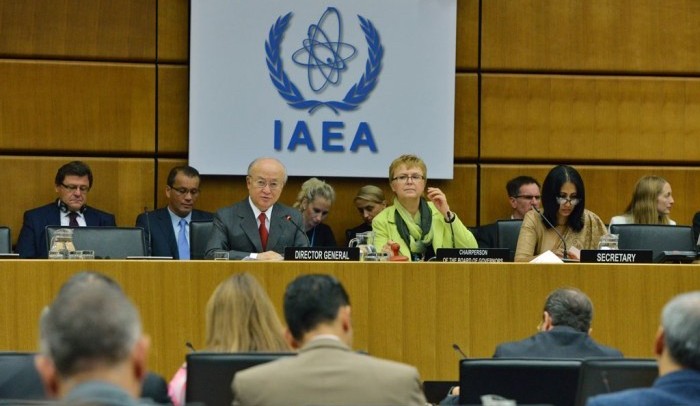
The International Atomic Energy Agency’s board of governors, the United Nations nuclear watchdog, met and voted to close out its investigation in the past military dimensions of the Iranian regime’s nuclear program even though the IAEA’s own report faulted the regime for secretly hiding the existence of its program until 2009 and still refused to come clean on a wide range of outstanding issues.

The irony of giving the regime essentially a get out of jail free card was compounded when it was revealed that a UN panel of experts issued a confidential report stating that the Iranian regime violated a Security Council resolution on October 10 when it test fired a new medium-range ballistic missile capable of delivering a nuclear warhead.

That is what is called a gigantic irony.

The fact that the regime launched a second missile on November 21 only reinforced the mullahs blatant disregard for the UN sanction and demonstrated the contempt they hold for obeying international laws.

Although the U.S. requested the UN Security Council to take action in the wake of the violations (which in of itself is bitterly ironic considering the U.S. has been hell-bent on lifting all sanctions against the regime), the Security Council took no action with most diplomats saying privately punitive measures were unlikely to be taken since Russia and China are now engaged in deep military and trade talks with the regime.

The report on the missile launch, reviewed by The Wall Street Journal, said the ballistic missile, dubbed Emad, was an improved version of Iran’s previous missiles, with a range of up to 1,300 kilometers (800 miles), a payload of up to 1,400 kilograms (1.5 tons), and better maneuvering capability when descending on a target.

“Iran is continuing to focus on further improvement of the performance of its existing ballistic missile system with a particular focus on accuracy,” said the report.

All of which begs the question, if the regime has foresworn nuclear weapons, why does it need to develop nuclear-capable missiles?

The reaction from members of Congress was swift and bipartisan as Sen. Chris Coons pushed the Obama administration to hold the regime accountable for violating UN sanctions.

“While these ballistic missile tests are outside of the parameters of the [joint comprehensive plan of action], our response has to be strategic and we have to make sure Iran knows that it can’t continue to simply blatantly disregard the international community and the U.N. Security Council,” the Democratic senator said.

Coons, a member of the Foreign Relations Committee, added that if the United Nations Security Council doesn’t taken action against Iran over the tests, which he said violated U.N. resolutions, that the administration should be ready to take a “series of unilateral American actions including direct sanctions.”

The fact that a new Gallup poll released Monday showed that terrorism and national security fears has risen to become the number one concern of Americans in the wake of the Paris and San Bernardino attacks and the shutdown of public schools in Los Angeles have sent lawmakers a crystal clear message about new priorities.

This follows polls by Pew Research Center and the Wall Street Journal/NBC News all of which show Americans citing security and terrorism as their top concerns and even persuaded the White House to say if additional sanctions needed to be levied on the Iranian regime, President Obama would not stand in the way.

The Iranian regime remains a concern because it continues to act in provocative ways that do little to diminish Americans’ concerns about the harsh nature of the mullahs’ rule as evidenced by reports that the regime has impounded more than tens of thousands of cars from women who were cited for violating dress codes requiring women to wear hijabs.

Police patrols have kept up campaigns to enforce the law and authorities also use a network of “trustees” who inform on violations according to The National.

In addition, over the past eight months, 609 men and 114 women have been arrested for cybercrimes because of alleged “economic, moral and social” transgressions, official figures show as the regime steps up enforcement of vague morality codes covering use of the internet and banning social media for most Iranians.

All of these actions have gone unmentioned by the Iran lobby even as global media have focused more closely on the recent actions of the regime. Faithful regime supporters such as the National Iranian American Council have been mute in the media and on social media in discussing any of these crackdowns on Iranians.

We can only hope the world’s media continue to hold the regime accountable as we move into the new year.

By Michael Tomlinson

Filed Under: Blog, News Tagged With: #NuclearDeal, Featured, Nuclear Deal

When Past Conduct Means Nothing for Future Actions

December 15, 2015 by admin

When Past Conduct Means Nothing for Future Actions

When Past Conduct Means Nothing for Future Actions

In all facets of our daily lives, we always take into consideration past conduct. If the plumber you hired did a lousy job fixing a leak, you aren’t going to hire them again. If the chef at a restaurant leaves a fly in your soup, you’re liable to walk out without paying and post a nasty review on Yelp.


But only in the case of the Iranian regime does this rule somehow not apply as evidenced by the turmoil over the recently completed nuclear agreement.


As Judith Miller and Charles Duelfer point out in an editorial for Fox News, “is Iran’s past – its habit of cheating on its international nuclear agreements — prologue? Should the Obama Administration accept Iran’s lies about its earlier efforts to design and develop a bomb in exchange for insisting on its strict compliance with the new deal it has made limiting the size, scale and nature of its nuclear program?”


The question is an important one as the International Atomic Energy Agency board of governors meets today to vote on a final report that largely overlooks the Iranian regime’s past history of lying and deceit over its nuclear program and instead rubber stamp approval of closing the file on the regime’s case even though the mullahs have not complied with the original scope of questions the IAEA had about its program.


As Miller and Duelfer explain, the IAEA’s own report damns the mullahs with faint praise:


The IAEA report states that Iran provided only partial or incorrect answers to some questions about efforts to design and test components of a nuclear weapon design (as distinct from the process of enriching the component nuclear material). Specifically, it concludes, Iran’s cover up has “seriously undermined the agency’s ability to conduct effective verification” at Parchin, a military site where Iran is thought to have tested implosion devices in a now-missing chamber. Based partly on a visit there which did not conform to usual Agency inspection procedures, satellite imagery and sampling at the site conducted by Iran but supervised remotely by the IAEA, inspectors dispute Iran’s assertions that only chemical weapons were stored there. The evidence to date, the report declares, “does not support Iran’s statements.”


“Overlooking Iranian stonewalling about aspects of its earlier work,” Miller and Duelfergo on to write. “Only makes it harder to devise an effective monitoring scheme for Iran’s current nuclear program, but also establishes a terrible precedent for arms control accords with other states. Because Washington and its allies are permitting Iran to begin implementing the new deal and get sanctions lifted with a lie, Iran’s past cheating is destined to be prologue.”


The fact that – moving forward – the agreement with the regime is built on a lie only means the mullahs have been given the green light to continue the same behavior in the future. It is a fact already made apparent with Tehran’s recent test firings of two ballistic missiles that violated United Nations sanctions prohibiting the development of nuclear-capable missiles.


Add to that the rest of the world basically did nothing about it except use harsh language.

It is a crucial point that Michael Singh, managing director of the Washington Institute for Near East Policy, and Simond de Galbert, a French diplomat and visiting fellow at the Center for Strategic and International Studies, elaborate on in an editorial in the Wall Street Journal.


“Continuing to insist on a complete investigation into Iran’s nuclear weapons activities is the first test of international determination to strictly implement the nuclear deal. Failing this test would signal to Tehran that the West will allow it to dictate the terms under which the agreement is implemented in the coming years. It would also undermine the credibility of international non-proliferation mechanisms, encouraging other would-be nuclear powers that they can escape scrutiny. If these mechanisms are to succeed in deterring Iran and others in the future, their integrity must be zealously guarded,” they write.


James Phillips, senior research fellow for Middle Eastern affairs at the Douglas and Sarah Allison Center for Foreign Policy Studies at the Heritage Foundation, was even more blunt in a piece in the Daily Signal.


“In short, Tehran is actively undermining longstanding U.S. nonproliferation goals on two fronts. Yet the Obama administration has done little to push back for fear of jeopardizing its risky nuclear agreement, which it believes will enhance its foreign policy legacy,” Phillips writes. “But the administration’s complacent acquiescence to Tehran’s disturbing actions is likely to result in a dangerous and unwanted legacy: an arsenal of nuclear-tipped missiles in the hands of the world’s foremost state sponsor of terrorism.”


Even members of President Obama’s own party are expressing alarm at the free pass being given the Iranian regime.


“I understand that most of Congress and the administration are very distracted by the global refugee crisis, by the terrorist attacks in Paris, by our conflicts with ISIS,” said Sen. Chris Coons (D-Del.) “The reality is with this deal, I’m on the administration’s side, but they need to be doing more…. We have to have a menu of responses that we and our allies have agreed on and that we will take. Or the Iranians will pocket it and keep moving.”


“We know even from the IAEA reports that they were engaged in a program — they weren’t truthful about that,” said Rep. Jan Schakowsky adding that “we need to be on top of what Iran is doing and do everything we can to have full compliance”


It is against this potential future where the Iranian regime is not held accountable that holds the greatest threat to global security and peace. It is a future that is zealously protected by the Iran lobby which has ignored the Paris attacks, the San Bernardino murders and the rise of extremist Islam fueled by the mullahs in Tehran who preach far and wide their radical beliefs.


It is also why even as San Bernardino attack victim Bennetta Bet-Badal, an Iranian who fled at age 18 during the Islamic revolution, was laid to rest at her funeral in California, the Iran lobby such as the National Iranian American Council could not even issue a simple tweet commemorating her death or the acknowledge the suffering of her family.


So while TritaParsi or Reza Marashi cannot send their condolences, we do on behalf of everyone around the world who yearns for peace and stands up to the threat of Islamic extremism.


To the family of Bet-Badal, we send our sincerest condolences and hope you will see a day when the world is free of mullahs issuing fatwas and dispensing brutality in the name of a faith of peace and love.

By Michael Tomlinson

Filed Under: Blog, News Tagged With: #NuclearDeal, Appeasement policy, Featured, Iran deal, Nuclear Deal, Sanctions

With Rising Extremism Hillary Clinton Hardens Iran Regime Stand

December 7, 2015 by admin


With Rising Extremism Hillary Clinton Hardens Iran Regime Stand

With Rising Extremism Hillary Clinton Hardens Iran Regime Stand

In the wake of the Paris and San Bernardino attacks, the world is coming to grips with the new face of terror on so-called “soft” targets of opportunity by native-born residents who become radicalized under the siren call of extremists emanating from terror groups such as ISIS and Al-Qaeda and sponsors of terror such Syria and the Iranian regime.

As the federal investigation uncovers more about the history and background of the husband and wife terrorist team in San Bernardino, facts about how they were radicalized and where they learned their deadly skills in bomb making and planning will undoubtedly emerge.

But what these attacks do point to is an unmistakable strain of extremist belief snaking its way around the world through social media, blogs and videos perpetuating a mythology that has its roots in the apocalyptic beliefs formed out of the Iranian revolution taken over by extremist mullahs who have since controlled Iran and turned it into an perpetual terror factory.

The fact that since the negotiations that yield a nuclear agreement last July purportedly helping support “moderate” elements in the regime’s government, the evidence to the contrary has flooded out of Iran as the mullahs in Tehran launched a massive offensive in Syria, cracked down with broad arrests of journalists and dissidents, went on a military hardware buying binge and doubled down on incendiary and extremist messages broadcast through a sophisticated online and PR effort.

The reaction of the regime since the nuclear deal was completed has alarmed virtually everyone in the U.S. and Europe and led to a broad hardening of stump speeches and policy positions from virtually all the main contenders in the U.S. presidential campaign.

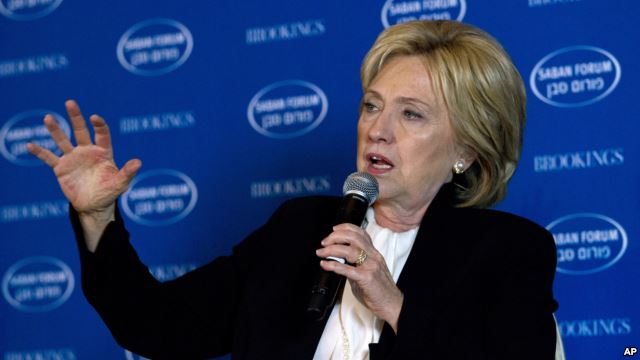
Most notable has been the former Secretary of State Hillary Clinton who promised the U.S. would “act decisively” if the regime sought to violate the nuclear agreement in a speech at the Saban Forum, a conference on Middle East policy at the Brookings Institute think tank.

“Iran will test our resolve. They have already started to do so with a ballistic missile test and other provocative behavior. We have to respond to these provocations including with further sanction designations as necessary,” Clinton said.

She threatened to use military force for incursions on the deal. “Our approach must be distrust and verify. There can be no doubt in Tehran that if we see any indication that Iran’s leaders are violating their commitments in the deal not to seek, develop or acquire any nuclear weapons, we will stop them. And we will make sure the Iranians and the world understand that the United States will act decisively if necessary, including taking military action,” Clinton said.

The tougher stance was reflective of the national mood in the U.S. turned fearful by the San Bernardino attacks, but also the seeming spread of extremism by the simple preaching of it from strongholds and bully pulpits such as Syria and Iran.

Just as Al-Qaeda was able to plan and mount the 9/11 attacks from the relative safety and comfort of a Taliban-controlled Afghanistan, there is a growing sense that the security of Syria and Iran offer extremists a safe haven to recruit and cultivate potential jihadists around the world.

As FBI Director James Comey has warned, the “outsourcing” of terrorism represents an alarming and hard to control new threat the world has not seen before.

It is also a logical explanation as to why the Iran lobby has not voiced any criticism not only of the Iranian regime, but the rise in terror attacks themselves, which is frankly inexplicable given the chorus of voices coming out of the American-Muslim community calling on a new frank and open dialogue about combatting the rise of extremism.

One such forum was sponsored by the Heritage Foundation in Washington, DC where a collection of Muslim groups denounced extremism and called for an unfiltered national discussion to combat the propaganda being offered by terror groups and nations such as the Iranian regime.

The leaders announced the formation of a new initiative called the Muslim Reform Movement, focusing on confronting extremist segments of the religion. According to the Washington Examiner, the group quickly released:

“…a declaration of principles calling on Muslims to reject violent jihad and endorse religious freedom for all and secular government, and saying they will call out those who reject it.”

It’s a similar call previously made by leading Iranian dissident leaders such as Mrs. Maryam Rajavi of the National Council of Resistance of Iran who has long advocated for a return to secular, democratic government in Iran.

Notably, Iran lobby group, the National Iranian American Council, was absent and silent on the topic.

While the PC crowd may dither with the terminology of calling these extremists plain old “terrorists” or “Islamic extremists,” what is not in dispute is the threat they pose and the encouragement and support they receive from places like Tehran where mullahs lay out a theological justification for violence and murder. What they actually practice unabated on their own Muslim population.

The world will soon have to make the hard, but necessary choice of whether or not to put a finger in the dike of the rising tide of extremism, or address the source of it in places like Syria and Iran.

By Michael Tomlinson

Filed Under: Blog, News Tagged With: #NuclearDeal, Featured, Iran Lobby, Iran Terrorism, NIAC, NIAC Action, Nuclear Deal, Rouhani, San Bernardino

Iran Lobby Glosses Over IAEA Report on Iran Nuclear Work

December 3, 2015 by admin

Iran Lobby Glosses Over IAEA Report on Iran Nuclear Work

Iran Lobby Glosses Over IAEA Report on Iran Nuclear Work

The International Atomic Energy Agency released its long-awaited report detailing the military dimensions of the Iranian regime’s nuclear program and unveiled disturbing new details that have left the Iran lobby, especially the National Iranian American Council, scrambling to cover up.

In the report, Iran was actively designing a nuclear weapon until at least 2009, far later than virtually all intelligence agencies had believed and proving the regime’s ability to conceal its design activities while under intense scrutiny and even spying from various nations.

The report, which according to the New York Times, was compiled largely based on partial answers provided by Iran after completing nuclear talks last July, concluded that the regime was “conducting computer modeling of a nuclear explosive device” before 2004 and continued those efforts right through President Obama’s first term in office.

The IAEA detailed a long list of experiments conducted by the regime “relevant to a nuclear explosive device” directly contradicting claims made by the Iran lobby and the mullahs that Iranian regime’s nuclear program was only for civilian and peaceful purposes.

We now know through Iranian regime’s own admission, it was trying to build nuclear weapons at a feverish pace.

But the IAEA concluded that substantial gaps existed because the regime refused to provide answers to several key questions, restricted the ability to interview key scientific personnel and limited sampling of sites and facilities only after they had been scrubbed.

The nuclear deal negotiated with the Iranian regime mandated limiting Iran’s ability to build a bomb for at least 15 years, but the inability to paint a complete picture and the revelation that Tehran had been conducting work unbeknownst to the rest of the world leaves significant doubt as even that goal is attainable.

According to the Times, Tehran gave no substantive answers to one quarter of the dozen specific questions or documents it was asked about, leaving open the question of how much progress it had made.

At Iran’s Parchin complex, where the agency thought there had been nuclear experimental work in 2000, “extensive activities undertaken by Iran” to alter the site “seriously undermined” the agency’s ability to come to conclusions about past activities, the report said.

The response from Capitol Hill was swift and bipartisan.

“I think we’re getting off to a very, very poor start,” Senate Foreign Relations Committee Chairman Bob Corker (R-Tenn.) told reporters after a roughly two-hour top-secret committee hearing.

“These are exactly the things that we talked about during the hearing process that raised concerns and they’re being validated right now,” he added.

“It just sets a very bad precedent that if Iran thinks it can violate the world’s will, as expressed by Security Council resolutions, and in essence face no consequence for it,” said Sen. Robert Menendez (N.J.), one of the four Democrats who voted against the deal in September.

The defense offered by the NIAC’s Trita Parsi through a press release was tepid and paper thin as he focused on the issue of complying with the terms of the agreement in releasing the report, but not in the report’s findings themselves, praising the IAEA’s “assessment of coordinated ‘activities relevant to the development of a nuclear explosive device,’ in Iran prior to 2003, and that there have been no credible indications of such relevant activities since 2009.”

Parsi of course does not mention the fact the work conducted through 2009 was denied by Tehran and by Parsi himself and that the refusal by the mullahs to answer specific questions left the report, at best incomplete, and at worst a whitewash.

The Iran lobby is now finding it harder and harder to cover for the regime because its own promises and arguments are now all coming to be uncovered as falsehoods and outright deceptions. The fortunate thing about the internet is you can always search and look back at the statements people like Parsi have made and in the context of what is happening now, realize just how really wrong they were.

With the IAEA report, it’s just another blow to any shred of credibility the Iran lobby had.

By Michael Tomlinson

Filed Under: Current Trend, News Tagged With: #NuclearDeal, Featured, Iran deal, Iran Human rights, Iran Lobby, Iran Mullahs, Iran sanctions, Iran Talks, National Iranian American Council, NIAC Action, Rouhani, Sanctions, Trita Parsi

Iran Lobby Weighs in On Hillary Clinton as Nuclear Agreement Draws Scrutiny

December 1, 2015 by admin


Iran Lobby Weighs in On Hillary Clinton as Nuclear Agreement Draws Scrutiny

Iran Lobby Weighs in On Hillary Clinton as Nuclear Agreement Draws Scrutiny

If there is any silver lining in the wave of terrorist attacks, sectarian wars being waged and ominous threats and provocative actions coming out of the Iranian regime, it is that virtually all of the candidates running for president in 2016 are united in their collective wariness of the mullahs in Tehran.

That lack of desire among the presidential candidates ranges from outright hostility to the regime to a recognition that the mullahs are committed to an agenda that does not support moderation or regional peace hopes, but that certainly has not stopped the Iran lobby from attempting to influence those campaigns or the American voting public.

The lobby’s chief advocate has long been the National Iranian American Council and its newly created lobbying arm, NIAC Action, which has been urging its supporters to sign and send in petitions and letters to the various campaigns urging them to support the nuclear deal and a broadened dialogue with the regime should they win the White House.

Judging by the lack of enthusiasm from the various campaigns, we can assume that the petition drive by NIAC is being received with less than stellar applause, which might explain by Reza Marashi of NIAC took to Huffington Post with an editorial criticizing Hillary Clinton for taking a harder line against the Iran regime and Islamic extremism in some of her stump speeches.

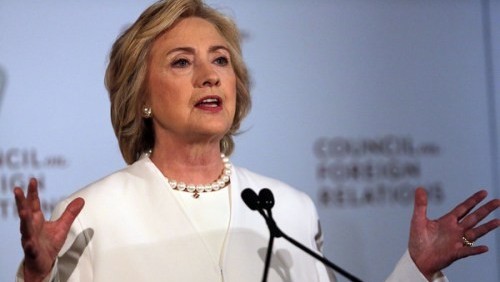
Marashi took exception to a speech Clinton delivered the Council of Foreign Relations where she said:

“We cannot view Iran and ISIS as separate challenges. Regional politics are too interwoven,” she said. “Raising the confidence of our Arab partners and raising the cost to Iran for bad behavior will contribute more effectively to the fight against ISIS.”

Her views that Iran’s Arab neighbors could become more effective partners in the fight against rising Islamic extremism only if the Iranian regime was held accountable for its actions, such as the recent attempt to overthrow the government in Yemen and the effort to take over the Iraqi government, is both a prudent and smart foreign policy declaration for someone who could very well be sitting in the Oval Office in 2017.

The fact that Marashi takes the well-worn Iranian regime talking point blaming its Arab neighbors for the supporting these terror groups is evidence of how paltry and bereft of substance the arguments are from the Iran lobby. The NIAC and other regime supporters have opted to try and shift blame for the rise in terror, including the bloody attacks in Paris on anyone else but the Iranian regime.

But Secretary Clinton recognizes a key point that Marashi and his ilk are desperate to cover up, which is Iran, as a theocratic state, uses its status as a country to support and prop up many terror groups around the world and engage actively in proxy wars that have threaten to draw the rest of the world into bloody conflict. While the flow of funds to some terror groups may be traced back to donations from individual donors, Iranian regime is the only nation-state that has devoted its treasury, military, economy and political influence in supporting groups such as Hezbollah and the Houthis, as well as provided safe harbor and shelter for members of Al-Qaeda and ISIS in the past.

The one true statement Marashi makes is when he says “the more options America has, the greater its leverage becomes.”

In this he is correct, but not in the way he intended because in agreeing to the nuclear deal with Iranian mullahs, the U.S. has unwittingly hampered itself by taking a whole host of tools off the table ranging from continued sanctions to restrictions on the flow of cash coming from the Iranian regime and into the coffers of various terror groups.

But what is even more surprising are the revelations in a recent National Review story that pointed out that the nuclear agreement had not even been signed by the regime and in effect has no legal standing.

“The Joint Comprehensive Plan of Action (JCPOA) is not a treaty or an executive agreement, and is not a signed document,” wrote Julia Frifield, the State Department assistant secretary for legislative affairs, in a November 19 letter written in response to an inquiry sent to Secretary of State John Kerry by Rep. Mike Pompeo (R-Kan.).

Regime leader Hassan Rouhani discouraged his nation’s parliament from voting on the nuclear deal in order to avoid placing legal burdens on the regime, saying “If the Joint Comprehensive Plan of Action is sent to [and passed by] parliament, it will create an obligation for the government. It will mean the president, who has not signed it so far, will have to sign it,” Rouhani said in August. “Why should we place an unnecessary legal restriction on the Iranian people?”

That statement has led to rampant speculation on Capitol Hill that the nuclear deal is already null and void, which explains why most of the presidential candidates have already staked out policy positions visibly diverging from what the Obama administration negotiated with regime.

As more journalists point out this inconvenient truth, such as Michael Ledeen writing of the lack of any signatures in Forbes, we can expect an even more desperate attempt by the Iran lobby and Marashi to try and shift more attention away and onto another false canard. Maybe they can blame El Nino on too much methane coming from cows next.

By Michael Tomlinson


Filed Under: Blog, News Tagged With: #NuclearDeal, Featured, Hilary Clinton, NIAC, NIAC Action, Nuclear Deal, Reza Marashi

  • « Previous Page
  • 1
  • …
  • 10
  • 11
  • 12
  • 13
  • 14
  • 15
  • Next Page »

National Iranian-American Council (NIAC)

  • Bogus Memberships
  • Survey
  • Lobbying
  • Iranians for International Cooperation
  • Defamation Lawsuit
  • People’s Mojahedin
  • Trita Parsi Biography
  • Parsi/Namazi Lobbying Plan
  • Parsi Links to Namazi & Iranian Regime
  • Namazi, NIAC Ringleader
  • Collaborating with Iran’s Ambassador

Recent Posts

  • NIAC Trying to Gain Influence On U.S. Congress
  • While Iran Lobby Plays Blame Game Iran Goes Nuclear
  • Iran Lobby Jumps on Detention of Iranian Newscaster
  • Bad News for Iran Swamps Iran Lobby
  • Iran Starts Off Year by Banning Instagram

© Copyright 2026 IranLobby.net · All Rights Reserved.