Iran Lobby

Exposing the Activities of the lobbies and appeasers of the Mullah's Dictatorship ruling Iran

  • Home
  • About
  • Current Trend
  • National Iranian-American Council(NIAC)
    • Bogus Memberships
    • Survey
    • Lobbying
    • Iranians for International Cooperation
    • Defamation Lawsuit
    • People’s Mojahedin
    • Trita Parsi Biography
    • Parsi/Namazi Lobbying Plan
    • Parsi Links to Namazi& Iranian Regime
    • Namazi, NIAC Ringleader
    • Collaborating with Iran’s Ambassador
  • The Appeasers
    • Gary Sick
    • Flynt Leverett & Hillary Mann Leverett
    • Baroness Nicholson
  • Blog
  • Links
  • Media Reports

US Warns of Travel to Iran as Regime Shows off Military Might

August 24, 2016 by admin

US Warns of Travel to Iran as Regime Shows off Military Might

US Warns of Travel to Iran as Regime Shows off Military Might

In what is becoming annual rite of summer, the U.S. State Department on Monday issued a warning urging U.S. citizens to avoid traveling to Iran. This latest advisory, which emphasizes Iran’s desire to capture U.S. citizens, comes on the heels of a growing scandal over the Obama administration’s decision to pay Iran $400 million in cash on the same day that it freed several U.S. hostages, according to the Washington Free Beacon.

The new warning replaces an existing one the department issued on March 14, 2016 and reiterates and highlights the risk of arrest and detention of Americans, particularly dual national Iranian-Americans, which the Iranian regime does not recognize.

“Iranian authorities continue to unjustly detain and imprison U.S. citizens, particularly Iranian-Americans, including students, journalists, business travelers, and academics, on charges including espionage and posing a threat to national security,” the advisory said.

“Iranian authorities have also prevented the departure, in some cases for months, of a number of Iranian-American citizens who traveled to Iran for personal or professional reasons. U.S. citizens traveling to Iran should very carefully weigh the risks of travel and consider postponing their travel. U.S. citizens residing in Iran should closely follow media reports, monitor local conditions, and evaluate the risks of remaining in the country,” the advisory added.

The advisory goes on to warn of the threats posed to religious minorities and a wide range of other classifications of individual at risk of arrest, harassment and detention by regime authorities.

“The Iranian government continues to repress some minority religious and ethnic groups, including Christians, Baha’i, Arabs, Kurds, Azeris, and others.  Consequently, some areas within the country where these minorities reside, including the Baluchistan border area near Pakistan and Afghanistan, the Kurdish northwest of the country, and areas near the Iraqi border, remain unsafe.

“Iranian authorities have detained and harassed U.S. citizens, particularly those of Iranian origin. Former Muslims who have converted to other religions, religious activists, and persons who encourage Muslims to convert are subject to arrest and prosecution,” the advisory said.

Despite the warning, Iran remains a tourism destination for some with The New York Times offering two-week trips to Iran several times a year. It is noteworthy that the Times has long been an editorial supporter of accommodating the Iranian regime as part of the Obama administration’s echo chamber of support.

The warning flies in the face of the all of the claims made by the Iran lobby during the nuclear talks last year when prominent advocates for the regime such as Trita Parsi of the National Iranian American Council, bloggers Ali Gharib and Jim Lobe, all promised a more moderate and stabilizing Iranian regime.

Clearly the opposite has happened if the U.S. government has to update warnings about its citizens being kidnapped by the Iranian government and then warning that it can do little to help you out if you are taken hostage.

Top that level of aggressive militancy with new announcements by the Iranian regime of is newly grown military muscle which it puts on display with the glee of a child showing off a new bicycle.

The regime released images of its first domestically built long-range missile defense system on Sunday, a project started when the country was under international sanctions.

Images on multiple state news agencies showed President Hassan Rouhani and Minister of Defense Hossein Dehghan standing in front of the new Bavar 373 missile defense system, according to France 24 News.

The system was designed to intercept cruise missiles, drones, combat aircraft and ballistic missiles, according to earlier statements by Dehghan. He claimed that Iran’s missile range capabilities have been expanded by two to three times across its arsenal. The upgrades now give Iran’s current stock of cruise missiles the ability to hit targets 62 miles off its coast, easily putting ships traveling through the Persian Gulf’s Strait of Hormuz at risk.

Rouhani said in a televised speech on Sunday that Iran’s military budget had more than doubled compared with last year.

“If we are able to discuss with world powers around the negotiating table, it is because of our national strength” he said.

Rouhani also unveiled the first Iranian-made turbo-jet engine on Sunday, saying it was capable of flight at 50,000 feet.

“The Islamic republic is one of eight countries in the world who have mastered the technology to build these engines,” Rouhani said.

Dehghan added that Iran was now looking to develop seaborne cruise missiles capable of supersonic speed.

The new missile was developed as a response to the suspension of delivery of a Russian-made S-300 missile system because of earlier sanctions, but with those sanctions lifted because of the nuclear agreement, Russia completed delivery of the advanced weapons system this year.

Dehghan also boasted on regime television that the regime would also negotiate with Russia to acquire its sophisticated Sukhoi fighter and attack aircraft to bring its air force capability for long-range force projection and air combat against the more sophisticated air forces of regional rivals such as Saudi Arabia and the Gulf states.

Iran has also discussed with Russia the production licensing of the Russian T-90 tank inside Iran. The focus of the Iranian regime is on acquiring the capability and technology to produce the systems in-country rather than depending on the mood of the Kremlin to sell Iran weapons.

The world should be aware now that the Iranian regime’s intentions are anything but peaceful and moderate.

By Michael Tomlinson
Filed Under: Blog, News Tagged With: #NuclearDeal, Featured, hassan rouhani, Iran, Iran deal, Iran Human rights, Iran Terrorism, Khamenei, nuclear talks

Iran Lobby Assurances Proven False Again

August 21, 2016 by admin

Iran Lobby Assurances Proven False Again

Iran Lobby Assurances Proven False Again

The “echo chamber” created by the Obama administration to help push through passage of the badly flawed Iran nuclear deal has beat the drum repeatedly in efforts to defend the deal in the face of growing and incontrovertible proof that all of the assumptions of the Iran lobby have been proven false.

The revelations of the falsehoods surrounding the Iran lobby’s participation in that now infamous echo chamber have almost become legendary:

  • Allen S. Weiner, a Stanford law professor and contributor to the Washington Post’s opinions section who co-authored a piece arguing in favor of the $400 million “ransom payment” failed to disclose he had long been on the payroll of the Ploughshares Fund, an organization recently exposed as a key cog in a White House-orchestrated campaign to build what it called a pro-Iran “echo chamber;”
  • Shortly after approval of the nuclear deal, in which the Iran lobby argued it would empower “moderate” forces within the regime, parliamentary elections were rigged to eliminate virtually all perceived moderates and usher in solid majorities loyal to the ruling mullahs; and
  • Promises by the Iran lobby, especially the National Iranian American Council, that the deal would help steer Iran as a player in the Middle East to stabilize regional conflicts was proven wrong when wars in Syria and Iraq widened, ISIS rose up and Iran launched a rebellion in Yemen by the Houthis.

In each case, the Iran lobby has sought to assure the world of the good intentions of the Iranian regime, only to have those assurances fall flat in the face of new regime transgressions, but for the Iran lobby the battle being waged by its members is the battle of public perception.

It serves the purposes of the mullahs to have the perception there is a chance for moderation, rather than actually delivering any.

Nothing illustrates that point more than the controversy over the $400 million cash payment made by the Obama administration in what appeared to be linkage for the release of several American hostages.

Even though the Iran lobby remained relatively silent on the issue, “echo chamber” participants such as Weiner made a strong case for denouncing any link of cash for hostages. Of course, the Iranian regime did nothing to steer speculation away from that scenario; with various regime officials all but boasting of how the Islamic state cowed the U.S. and forced it to pay it millions of dollars.

Even though the Obama administration at first vigorously denied any connection, the issue was never what the administration thought, but what the regime thought since if the mullahs indeed believed this was a straight cash for hostage swap, it would only serve to validate their belief that this was a sound policy to pursue in advancing the goals of the regime.

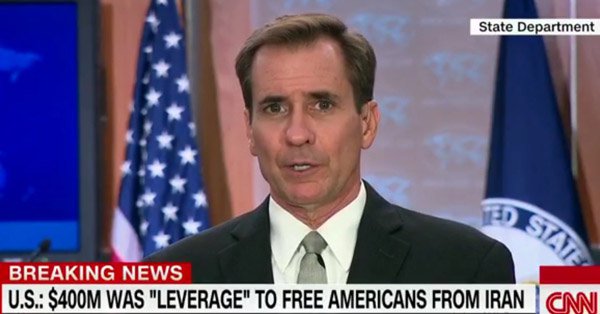
That much was true when the Obama administration finally admitted the other day that the $400 million ransom payment was held up until confirmation of the hostages’ release and flight back home, thereby validating the use of the money as leverage tied directly to the hostages’ plight.

For months the Obama administration had maintained that the payment was part of a settlement over an old dispute and did not amount to a “ransom” for the release of the Americans. Instead, administration officials said, it was the first installment of the $1.7 billion that the United States intends to pay Iran to reimburse it for military equipment it bought before the Iranian revolution that the United States never delivered.

But at a briefing on Thursday, John Kirby, the State Department spokesman, said the United States “took advantage of the leverage” it felt it had that weekend in mid-January to obtain the release of the hostages and “to make sure they got out safely and efficiently.”

According to the New York Times, the acknowledgment by Kirby on Thursday touched off a torrent of criticism from Republicans.

“It was ransom,” said Representative Ed Royce of California, chairman of the House Foreign Affairs Committee. “We now know it was ransom. And on top of that it put more American lives at risk. And we’ve emboldened Iran. We’ve encouraged them, frankly, to take more hostages and put more American lives at risk of being taken hostage.”

Iranian regime press has described the payment as a ransom — which fits Tehran’s narrative that it has outmaneuvered the Obama administration.

Kirby conceded that while the deals were negotiated separately, the timing of the final transactions was linked. “As we said at the time, we deliberately leveraged that moment to finalize these outstanding issues nearly simultaneously,” he said.

The Wall Street Journal editorial board took a harsh tack with the ransom payment, saying the Obama Administration’s handling of the Iran ransom-for-hostages story brings to mind the classic Chico Marx line in the movie “Duck Soup”: “Who are you going to believe—me or your own eyes?”

“Mr. Obama, meanwhile, spent August denying that a ransom was a ransom. Since the January “leverage” moment, Iran has taken three more Americans as hostage and is now demanding the return of $2 billion in funds that U.S. courts have ordered held for the victims of Iranian-sponsored terrorism. The eyes of the world can simply stare,” the Journal added.

The campaign to pass this ill-fated nuclear deal has also been undergoing even more scrutiny with disclosures that Ploughshares Fund sought $750,000 from billionaire financier’s George Soro’s Open Society Foundation to pay off “experts and validators” to vouch for the nuclear agreement.

The disclosure of the Ploughshares request shines further light on backroom efforts by the White House and its top allies to create what they called an “echo chamber” to galvanize public support for the nuclear deal with Iran.

According to the Washington Free Beacon, one foreign policy consultant who has worked intimately with Congress on the Iran deal said that the Ploughshares funding request is further proof that the White House’s efforts were well funded and highly influential.

“You couldn’t turn around last summer without bumping into some Iran deal booster complaining about all the money that skeptics were spending,” the source said. “Now we find out that the architects of the Iran echo chamber were soliciting hundreds of thousands of dollars from dark money groups to pour into manipulating the media and pushing fabricated experts into the mainstream.

By Michael Tomlinson

Filed Under: Blog, News Tagged With: #NuclearDeal, Appeasement policy, Featured, Iran Lobby, National Iranian American Council, NIAC, Nuclear Deal, nuclear talks, Ploughshares

The Disconnect Between Iran Lobby Priorities and Reality

August 9, 2016 by admin


The Disconnect Between Iran Lobby Priorities and Reality

The Disconnect Between Iran Lobby Priorities and Reality

Money makes the world go around

The world go around

The world go around

Money makes the world go around

It makes the world go ’round.


A mark, a yen, a buck, or a pound

A buck or a pound

A buck or a pound

Is all that makes the world go around,

That clinking clanking sound

Can make the world go ’round.


These are lyrics from the 1972 Academy Award-winning movie “Cabaret” which depicted the last final days of freedom in the Weimar Republic of Germany in 1931 during the rise of the Nazi Party.

The tune entitled “Money, Money” is sung by the cabaret’s emcee as a narrative about the pervasive influence of money and the desperate pursuit of it.

The movie was also noteworthy because of its depiction of issues such as homosexuality and hedonistic club life, as well as the virulence of anti-Semitism and even abortion. It was a movie widely considered to be one of the best 100 movies of all time.

The show tune is appropriate though for our world today and is still powerfully relevant as we consider the current priorities of the Iran lobby and its most conspicuous leaders such as the National Iranian American Council (NIAC).

It also helps illustrate the wide disparity between the priorities of the Iran lobby and the most pressing issues surrounding the Iranian regime today. If we examine the public statements and recent policy memos issued by the NIAC especially this week, we would assume that the most pressing issues confronting the U.S. and Iranian regime is how to get the mullahs more money.

At the top of NIAC’s legislative priorities is to prevent renewal of the Iran Sanctions Act of 1996 (ISA) which is up for consideration by Congress before the end of this year and along with it, the tacit lifting of all remaining restrictions and sanctions against the Iranian regime.

The impetus for the legislative push by NIAC and other Iran lobby allies is recognition that the upcoming presidential election is likely to bring significant changes in the U.S. foreign policy approach to the Iranian regime no matter who wins, be it Hillary Clinton or Donald Trump, because an incoming administration is likely to gain political capital by taking an aggressive stand against Iran, especially in light of the global deterioration of stability with terrorism and proxy wars on the rise.

To that end, the NIAC has been busy churning out policy papers arguing not only against renewing the ISA, but also the lifting of all remaining sanctions, especially prohibitions against the regime’s access to U.S. currency exchanges and the reluctance of foreign banks to handle Iranian regime transactions for fear of running afoul sanctions still in place pertaining to Iran’s human rights abuses and support for terrorism.

Interestingly, one policy paper authored by Ryan Costello of NIAC, argued that expiration of the ISA would still allow the president the ability to re-impose the same sanctions, but he neglects to mention the real reason the mullahs wish to shift authority away from Congressional legislation and onto the president: President Obama has demonstrated with his policies of appeasement the value to the mullahs of a president willing to accommodate their wishes and avoid the messy spectacle of a Congressional hearing and floor debate which would almost certainly go against them on almost any issue given the current climate.

More importantly, by trying to sell the idea that a new president could re-impose sanctions at will, ignores the most obvious flip side of that proposition, which is that the same president could choose to ignore Iran’s conduct and not impose sanctions that might otherwise be forced by a renewed ISA.

The NIAC and its allies in the Iran lobby are counting on their ability to duplicate last year’s “echo chamber” to apply political pressure on a new administration to keep the Iranian regime off the sanctions hit list.

Another policy memo authored by Tyler Cullis of NIAC, goes even further to make the explicit link between the need to lift all sanctions and the potential for the nuclear agreement with Iran—the  Joint Comprehensive Plan of Action (JCPOA)—to fail.

What Cullis and the NIAC fail to admit is that the limits of the JCPOA stop at the issue of human rights violations and support for terrorism; issues that the regime stridently wanted to be de-linked from the nuclear negotiations for fear that they would bring down any hope of a deal and the lifting of economic sanctions that had succeeded in crippling the Iranian economy and weakened the mullahs grip on power.

Cullis’ conclusion reveals the true goals of the Iran lobby when he writes:

“Despite the formal lifting of U.S. nuclear-related sanctions, implementation of U.S. obligations under the JCPOA has not proceeded altogether smoothly. In order to safeguard the decades-long restrictions on Iran’s nuclear program, the U.S. must faithfully observe its JCPOA sanctions-related obligations in full. To do so, though, there must be a common understanding as to the full scope of those U.S. sanctions-related commitments.”

It is a bizarre statement to make since it places the burden solely on U.S. actions and speaks of nothing in regards to growing Iranian regime’s recalcitrance and militant stances; nor takes into account the abysmal state of human rights in Iran.

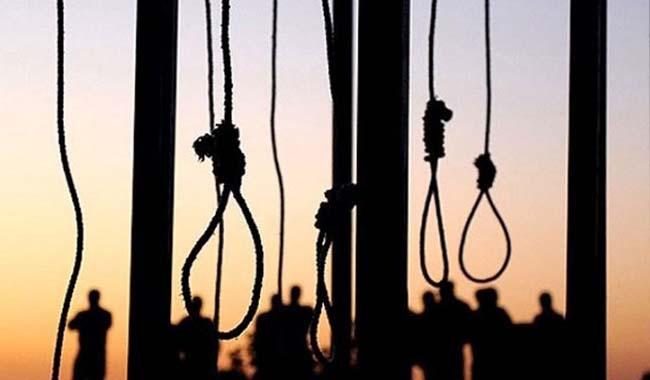
That situation has grown appallingly worse as the regime has moved aggressively to execute citizens at a fast and monstrous clip, including the mass execution of 25 Sunni Muslims it accuses of “enmity against God,” which earned the regime a blistering condemnation from Human Rights Watch and other human rights groups.

“Iran’s mass execution of prisoners on August 2 at Rajai Shahr prison is a shameful low point in its human rights record,” said Middle East director at Human Rights Watch. “With at least 230 executions since January 1, Iran is yet again the regional leader in executions but a laggard in implementing the so far illusory penal code reforms meant to bridge the gap with international standards.”

Two lawyers who represented some of the men told Human Rights Watch that their clients did not get a fair trial and that their due process rights had been violated.

Ultimately, while the Iran lobby fights to fill the Iranian regime’s coffers, we have to ask why it doesn’t also fight to save Iranian lives.

Indeed, money does make the world go round.

By Michael Tomlinson

Filed Under: Blog, Current Trend, News Tagged With: #NuclearDeal, Appeasement policy, Featured, Iran deal, Iran Human rights, Iran Lobby, Iran Mullahs, Iran sanctions, National Iranian American Council, NIAC Action, Ryan Costello, Tyler Cullis

How Much Are Four Americans Worth to Iran? $400 Million

August 3, 2016 by admin

How Much Are Four Americans Worth to Iran? $400 Million

How Much Are Four Americans Worth to Iran? $400 Million

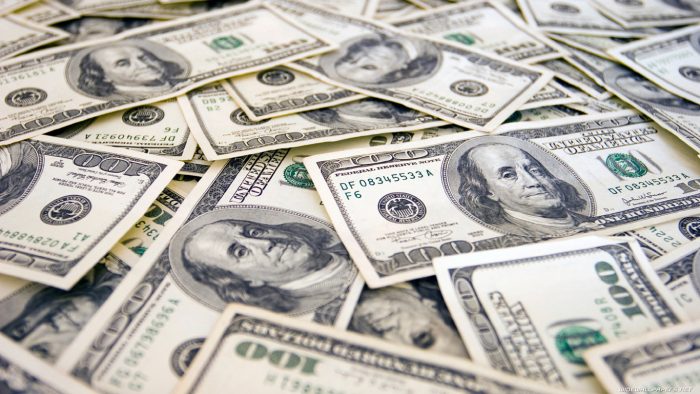
How much are four Americans worth to the Iranian regime? Apparently $400 million since news reports indicate the Obama administration secretly shipped $400 million worth of cash to Iran coinciding with the release of four Americans detained in Tehran and released as part of the nuclear agreement.

According to the Wall Street Journal, Wooden pallets stacked with euros, Swiss francs and other currencies were flown into Iran on an unmarked cargo plane, according to these officials. The U.S. procured the money from the central banks of the Netherlands and Switzerland, they said.

The money represented the first installment of a $1.7 billion settlement the Obama administration reached with Iran to resolve a decades-old dispute over a failed arms deal signed just before the 1979 fall of Iran’s last monarch, Shah Mohammad Reza Pahlavi.

While Obama officials denied any quid pro quo of cash for the prisoners, U.S. officials also acknowledged that Iranian regime negotiators on the prisoner exchange said they wanted the cash to show they had gained something tangible.

Sen. Tom Cotton, a Republican from Arkansas and a fierce foe of the Iran nuclear deal, accused the Obama administration of paying “a $1.7 billion ransom to the ayatollahs for U.S. hostages.”

“This break with longstanding U.S. policy put a price on the head of Americans, and has led Iran to continue its illegal seizures” of Americans, he said.

Since the cash shipment, the intelligence arm of the Revolutionary Guard has arrested two more Iranian-Americans. Tehran has also detained dual-nationals from France, Canada and the U.K. in recent months.

The Iranian regime’s news media quoted senior regime defense officials who described the cash as a ransom payment themselves putting into proper focus how they perceive the cash payment.

Ironically, the $400 million was paid in foreign currency because any transaction with Iran in U.S. dollars is still illegal under existing sanctions not related to the nuclear agreement for violations of human rights and sponsorship of terrorism.

A report by an Iranian news site close to the Revolutionary Guard, the Tasnim agency, said the cash arrived in Tehran’s Mehrabad airport on the same day the Americans departed.

Revolutionary Guard commanders boasted at the time that the Americans had succumbed to Iranian pressure. “Taking this much money back was in return for the release of the American spies,” said Gen. Mohammad Reza Naghdi, commander of the Guard’s Basij militia, on state media.

Among the Americans currently being held are an energy executive named Siamak Namazi and his 80-year old father, Baqer, according to U.S. and Iranian officials. Iran’s judiciary spokesman last month confirmed Tehran had arrested the third American, believed to be a San Diego resident named Reza “Robin” Shahini.

Friends and family of the Namazis believe the Iranians are seeking to increase their leverage to force another prisoner exchange or cash payment in the final six months of the Obama administration. Secretary of State John Kerry and other U.S. officials have been raising their case with Iranian diplomats, U.S. officials say.

Iranian officials have demanded in recent weeks the U.S. return $2 billion in Iranian funds that were frozen in New York in 2009. The Supreme Court recently ruled that the money should be given to victims of Iranian-sponsored terror attacks.

Clearly the Iranian regime expects to use the same tried and true tactics to squeeze more cash out of the Obama administration in its waning days as the three proxy wars it funds in Syria, Iraq and Yemen drain it of cash as fast as it can replenish it.

The $100 million value per American hostage is a stunning amount. As a point of comparison, the four highest paid professional athletes in the world make less money: Soccer stars Cristiano Ronaldo and Lionel Messi make $88 and $81.4 million respectively, basketball star LeBron James banks $77.2 million and tennis great Roger Federer brings in a paltry $67.8 million compared to what the Iranian regime received.

The fact that the last days of the Obama administration are coming and with both presidential candidates—Hillary Clinton and Donald Trump—promising to hold the Iranian regime more accountable, the regime’s leaders may be seeing the end of the road to the usefulness of the nuclear deal.

Top mullah Ali Khamenei harshly denounced the Iran nuclear deal Monday, referring to the negotiations as a “lethal poison” that will prevent his country from negotiating with the U.S. in the future.

“They [the U.S.] want us to negotiate with them on the regional issues but the nuclear deal experience tells us that this is a lethal poison and we cannot trust the Americans’ words in any issue,” Khamenei told a gathering of Iranian citizens Monday.

Various officials within the Islamic Republic have criticized the U.S. for implementing new sanctions against Iran since the JCPOA went into effect in January. They claim the deal prevents the U.S. from implementing any new sanctions against their country, however, the deal only pertains to nuclear related sanctions that existed before the accord was signed. Khamenei threatened to “set fire” to the deal in June should the West violate it, he did not elaborate on what exactly entailed a violation.

It’s a silly claim since the Iranians specifically demanded the deal be de-linked from non-nuclear issues such as human rights and terrorism. In essence, the mullahs have trapped themselves.

Khamenei cautioned against talks with the United States on other regional crises, presumably including the wars in Syria and Yemen and the Islamic State extremist group. The experience of the nuclear deal, he said, “tells us that taking this step would be a deadly poison and that the Americans’ remarks cannot be trusted on any issue.”

His remarks are a verbal backflip from the original promises made by the Iran lobby, especially the National Iranian American Council, that passage of the agreement would help in moderating the various conflicts going on in the region with Iran’s help.

Those claims, like most made in support of the Iranian regime, have proven false.

By  Michael Tomlinson

Filed Under: Blog, News Tagged With: #NuclearDeal, Appeasement policy, Featured, Iran Human rights, Iran Lobby, Iran sanctions, Iran Talks, Khamenei, National Iranian American Council

Iran Lobby Tries to Hold Off Iran Sanctions

August 2, 2016 by admin

Iran Lobby Tries to Hold Off Iran Sanctions

Iran Lobby Tries to Hold Off Iran Sanctions

The Iran lobby, led by the National Iranian American Council, has consistently raised the idea that Iran has not been rewarded with the full lifting of economic sanctions per the nuclear agreement reached last year.

It makes this case based on the continued shaky nature of the Iranian economy, and by the threatening statements of various regime officials such as top mullah Ali Khamenei and foreign minister Javad Zarif who maintain the U.S. is deliberately trying to sabotage the deal.

It is a profoundly ludicrous ideal given the fact that the Obama administration has broken with past U.S. policy over the past three decades in maneuvering to get this deal done in the first place. The Obama administration has set new standards for political gymnastics in trying to secure this policy win, including treating the agreement as a political framework and not a formal treaty in order to avoid an uncertain Senate vote.

It even de-linked Iranian regime’s notoriously bad human rights record and sponsorship of terrorism as conditions for doing the deal; an unheard of step in modern diplomacy.

It also ignored blatant tampering by the Iranian regime in sanitizing military sites where prior uranium enrichment had been ongoing and ignored copious mountains of evidence that Iran was still pursuing dual-use nuclear technology from Germany and ballistic missile designs from North Korea.

Even after all that, the Iran lobby and regime still blame the U.S. for not following through on its commitments.

With friends like these, who needs enemies?

A key goal for the regime remains the lifting of the remaining sanctions put in place by the U.S. in response to Iran’s abysmal human rights record and terror support. These items were ostensibly left out from the nuclear deal since—by the Iranians argument—they had nothing to do with nuclear production, but now the mullahs want these sanctions lifted even though Iranian regime has done nothing to improve its conduct in either area.

The fact that the Iran lobby and regime are now trying to link these sanctions—previously off the table—now back on the table and have threatened to walk away from a deal they have already walked away from, demonstrates how completely useless the nuclear exercise has become.

In a posting on its website, the NIAC, argued that the pending renewal of the Iran Sanctions Act could bring disastrous consequences if it was amended with so-called “poison pills” to impose new restrictions, sanctions or even lengthen its term.

“There is a danger that passage of new sanctions legislation, even if it is to renew sanctions already on the books, could exacerbate tensions over JCPOA sanctions relief. The prospect of Congress renewing ISA, especially extending them beyond the 2023 deadline for lifting sanctions, could send troubling signals regarding the U.S. commitment to the JCPOA at a time of ongoing political uncertainty. Iranian officials and many in the broader Iranian public say the sanctions relief promised under the deal has not been delivered,” the NIAC statement said.

It’s a perverse position to take since the gross mismanagement of the regime’s economy and the decision to support three ongoing wars in Syria, Iraq and Yemen have badly hobbled an economy already rife with public corruption and battered by plummeting oil prices that have nothing to do with the sanctions; especially since Iranian regime is now free to sell the country’s oil back on the open market.

The Iranian people are rightly angry and upset at the stagnant economy, but Tehran’s streets and the channels of social media are not being filled with vocal denunciations of the U.S., instead it is filled with harsh protests of inflated paychecks for regime officials and the pouring of thousands of young Iranian lives to die on the battlefields far from Iran’s borders.

The effort to misdirect attention away from the real failings of the regime and try to blame it on the U.S.—even after the U.S. has tried to do everything it can to appease the Iranian regime short of baking cookies—is a time-worn tactic of the mullahs and we should not fall for it.

Robert Spencer, noted author and director of Jihad Watch, wrote an editorial in the New York Post warning that the Iranian regime is the greatest threat the U.S. and West face right now and dwarfs ISIS in its threat.

“Iran is not as flashy as ISIS but is actively working now on numerous anti-American initiatives that could turn out to be even more lethal than anything ISIS has yet perpetrated,” he said. “The nation is a breeding ground for terrorist activity: funding and controlling a global network of jihad terror organizations with a truly global reach, ready to do Iran’s bidding up to and including the killing of its perceived enemies.”

“Iran’s Hezbollah doesn’t just operate in Lebanon. It continues to target the United States through Mexico, where it has teamed with drug cartels along the US border. This partnership is mutually beneficial: Hezbollah gets massive amounts of cash to finance its jihad operations, and the drug cartels receive extensive training in ways to strike terror into the hearts of their enemies. That is one principal reason why the Mexican drug cartels have adopted what up until recently had been two trademarks of jihad groups: kidnapping and beheading,” he added.

Bob Blackman, a member of the British Parliament, similarly warned of trusting the Iranian regime in a piece in The Hill after the United Nations released a report assessing the regime’s compliance with the nuclear agreement, which found it had failed to meet the higher standards for compliance.

“The critical report by the UN is only the latest in a long series of marks against the Rouhani administration’s supposedly moderate credentials. In order to believe in that moderation in the first place, Western policy-makers had to ignore Rouhani’s long history in the security apparatus of Iran’s clerical regime, including his former role as lead nuclear negotiator, about which he boasted of raising Tehran’s nuclear profile while keeping international scrutiny at bay. And in order to keep the moderation narrative alive to the current date, those same policy-makers have had to ignore various statistical indicators and warnings from the Iranian opposition,” he said.

“The U.S. gave up important leverage in hope of improved relations, but it remained the main object of Tehran’s wrath. The UN closed the file on Tehran’s nuclear weapons program and Iran has continued to accuse it of political bias. And the six major powers involved in the JCPOA, having given in to even last-minute demands by the Islamic Republic, received nothing in return but the most cursory and minimal compliance with the deal. As the Associated Press reported last week, secret side-agreements already outline the expanded nuclear activities that Iran plans to pursue at its earliest possible opportunity,” Blackman added in a warning we should all heed.

By Michael Tomlinson

Filed Under: Blog, News Tagged With: #NuclearDeal, Appeasement policy, Featured, Iran, Iran deal, Iran Human rights, Iran Lobby, Iran sanctions, Iran Terrorism, NIAC Action

Iran Lobby Working Hard to Preserve Flawed Nuclear Deal

July 19, 2016 by admin

Iran Lobby Working Hard to Preserve Flawed Nuclear Deal

Iran Lobby Working Hard to Preserve Flawed Nuclear Deal

It has been one year since the Iran nuclear deal was agreed approved and freed the Iranian regime from a host of economic sanctions, as well as gave itself truckloads of political and diplomatic capital it has spread around the world in support of three proxy wars it is now waging.

By any objective standard, the Iranian nuclear deal has been a failure because it never was tied to modifying the behavior of the mullahs in Tehran. If the mullahs suffer no consequences for actions to support terror, commit cruel human rights violations and continue to build the infrastructure necessary to deliver a nuclear warhead to a target, then they are going to continue with that abhorrent behavior.

Nowhere was that point made more clear than in revelations by the Associated Press that in a secret side deal with the Iranian regime granted by the Obama administration, key restrictions on Iran’s nuclear program will start to ease years before the publicly-stated 15 year accord’s expiration, thus allowing the regime to pursue full development of a nuclear bomb well before the end of the pact.

The confidential document is the only text linked to last year’s deal between Iran and six foreign powers that hasn’t been made public, although U.S. officials say members of Congress who expressed interest were briefed on its substance. It was given to the AP by a diplomat whose work has focused on Iran’s nuclear program for more than a decade, and its authenticity was confirmed by another diplomat who possesses the same document.

although some of the constraints extend for 15 years, documents in the public domain are short on details of what happens with Iran’s most proliferation-prone nuclear activity — its uranium enrichment — beyond the first 10 years of the agreement.

The document obtained by the AP fills in the gap. It says that as of January 2027 — 11 years after the deal was implemented — Iran will start replacing its mainstay centrifuges with thousands of advanced machines.

Continue reading the main story

Centrifuges churn out uranium to levels that can range from use as reactor fuel and for medical and research purposes to much higher levels for the core of a nuclear warhead. From year 11 to 13, says the document, Iran will install centrifuges up to five times as efficient as the 5,060 machines it is now restricted to using.

Those new models will number less than those being used now, ranging between 2,500 and 3,500, depending on their efficiency, according to the document. But because they are more effective, they will allow Iran to enrich at more than twice the rate it is doing now, according to the New York Times.

The blockbuster revelations mean that Iran can massively expand its uranium enrichment capacity to produce several nuclear warheads within a time frame as little as 10 years, which contradicts virtually every public reassurance uttered by Iran lobby proponents such as the National Iranian American Council and Ploughshares Fund.

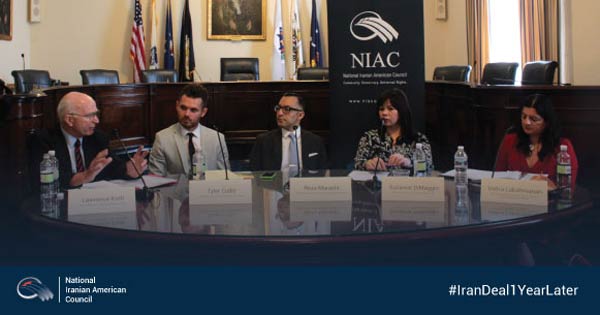
The NIAC’s deliberate misleading of the public continued during a briefing on Capitol Hill in which the NIAC was represented by noted regime apologists Reza Marashi and Tyler Cullis. Also attending were Suzanne DiMaggio of New America and Lawrence Korb of the Center for American Progress.

DiMaggio was especially adept at turning verbal gymnastics in trying to pound home the idea that the nuclear agreement should not be tied to other issues such as Iran’s consistent support for the Assad regime as it busily wipes out virtually the entire civilian population of Syria.

It is funny DiMaggio also mentioned the heightened state of crisis in the Strait of Hormuz and thought it would be a good idea for the U.S. and the regime to negotiate an agreement government interactions at sea. That would be nice since Iran has been busy continually threatening U.S. and foreign vessels, capturing and parading U.S. sailors and threatening to blow up commercial shipping repeatedly, as well as use its own vessels to smuggle illicit weapons and arms to Houthi rebels in Yemen, threatening Saudi Arabia and opening a new war front.

Yeah, that would be a nice idea. So would hitting the lottery three times in a row, but you shouldn’t count on it.

Most remarkable of all was the complete absence of any discussions about human rights in the presentations. Only during questioning did Marashi mention human rights in the context of having a dialogue, which is cold comfort to the thousands of Iranians and dual-nationality citizens currently being held in Evin prison.

The fact that the Iran lobby never discusses human rights reveals the Achilles heel of its position in trying to defend the nuclear deal. Regime apologists such as Trita Parsi of NIAC understand the threat that discussing human rights poses to the nuclear deal since the topic is deadly radioactive to them. They have no defense for the barbaric actions of the regime and no deflection of the human misery being suffered by Iranians at the hands of their own leaders.

In a lengthy piece in Politico, Indira A.R. Lakshmanan, a Boston Globe columnist, wrote extensively about efforts to derail the nuclear deal, taking special effort to go after Mark Dubowitz of the Foundation for Defense of Democracies, and staunch opponent of the nuclear deal.

She also ironically only mentions human rights once in her piece and only in terms of what Dubowitz is focusing on in working against the flawed deal. She quotes Parsi in his efforts to portray the potential consequences of the nuclear deal failing and blaming it on the U.S. exclusively, even though the Iranian regime has moved aggressively to exceed the limits of the agreement with a huge increase in testing of ballistic missiles outlawed by United Nations sanctions.

Iran is barred from conducting ballistic missile tests for eight years under UN Resolution 2231, which went effect July 20, 2015, days after the nuclear accord was signed.

Iran is “called upon not to undertake any activity related to ballistic missiles designed to be capable of delivering nuclear weapons, including launches using such ballistic missile technology,” according to the text of the resolution.

Yet, only two days before the anniversary of the agreement, Iran conducted its fourth missile test since the deal was signed in clear violation of the sanction and has boldly proclaimed it would accelerate its missile program; choosing the same path that pariah state North Korea has taken in missile development.

With the looming end of the Obama administration and the very real possibility of a Trump or Clinton administration seeking to redo the deal to address these concerns, the Iran lobby is working feverishly to buy the mullahs more time to accelerate its nuclear infrastructure work before the start of 2017.

By Michael Tomlinson

Filed Under: Blog, News Tagged With: #NuclearDeal, Featured, Indira A.R. Lakshmanan, Iran, Iran Human rights, Iran Lobby, National Iranian American Council, NIAC, NIAC Action, Reza Marashi, Suzanne DiMaggi, Trita Parsi, Tyler Cullis

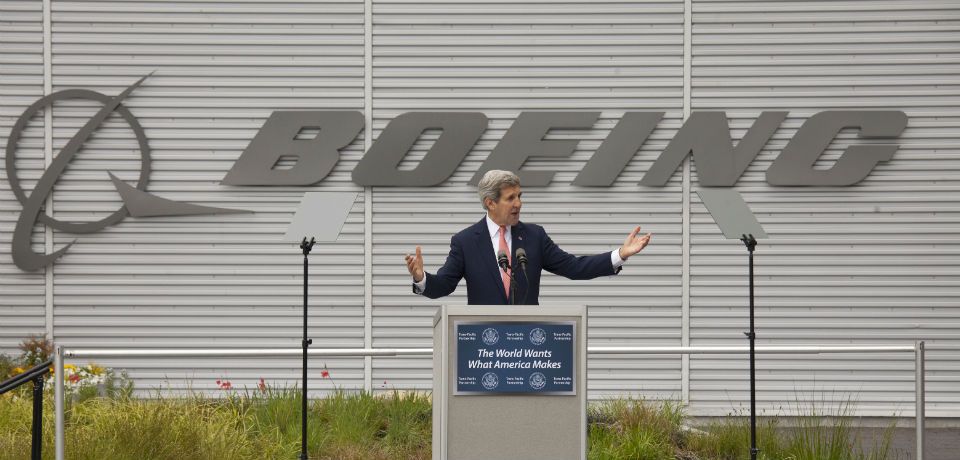
Why the Boeing Sale Matters to Iran Regime

July 12, 2016 by admin

Why the Boeing Sale Matters to Iran Regime

Why the Boeing Sale Matters to Iran Regime

The Iranian regime trumpeted with much fanfare an agreement to buy 80 commercial airliners from Boeing, as well as lease another 29 airliners for a total value estimated upwards of a whopping $25 billion for Iran Air. Far from being a simple transaction for new aircraft any national airline might make, this deal represents far more for both the Iranian regime and the hopes of the mullahs in Tehran to gaining unrestricted access to currency exchanges.

The deal is the linchpin to a larger effort by the regime to lift restrictions put in place limiting the regime’s access to U.S. currency exchanges, as well as access to sensitive technology that could be used by Iran for illegal or military purposes.

While the nuclear deal reached with Iran last year lifted a number of economic sanctions, it did not lift sanctions still in place related to Iran’s abysmal human rights record, support of terrorism and the illegal test launches of nuclear-capable ballistic missiles, but that has not stopped some in the U.S. administration from trying an end-run in supporting the Boeing deal and using loopholes such as the creation of a new Iranian bank located literally offshore its coast on an island to get around currency restrictions.

An effort was mounted in Congress to block the sale with the House approving two amendments by Rep. Peter Roskam (R-Ill.) to block sales by Boeing and Airbus aircraft to Iran to the Financial Services and General Government Appropriations Act 239-185.

The amendments both passed by voice vote, which a statement from Roskam’s office said indicates “overwhelming, bipartisan support.”

One amendment prohibits the Office of Foreign Assets Control (OFAC) from using funds to authorize a license necessary to allow aircraft to be sold to Iran.

The other amendment ensures Iran will not receive loans from U.S. financial institutions to purchase militarily-fungible aircraft, by prohibiting OFAC from using funds to authorize the financing of such transactions.

Democratic Representative Denny Heck of Washington state, where Boeing has major operations, said that if proposed bills to restrict the deal became law they would also affect other companies’ sales to Iran. Because virtually all modern jets have more than 10 percent U.S. content, including those Airbus plans to sell, they already require export licenses from the U.S.

This is precisely the reason why the Boeing deal needs to be blocked because its passage would open the proverbial floodgates for the Iranian regime to pursue unrestricted deals with virtually any business without fear of sanctions or consequences. The deal would also essentially make null and void all sanctions in place for human rights and terrorism violations.

It would be hard to contemplate a more universal dismissal of the importance of human rights than the explicit approval to resume business with the regime and ignore all of the vile acts it commits against its own people and the rest of Middle East.

Can we imagine past “business as usual” deals with the Pol Pot regime in Cambodia during the killing fields or with Serbia or Rwanda as genocides were being committed? When does conscience give way to financial gain?

Republican and Democratic critics of the deal expressed concern that the aircraft would be used by Iran for illicit activities, such as ferrying weapons to Syria in support of Syrian President Bashar Assad.

Rep. Brad Sherman (D-Calif.) wrote a letter to the Obama administration in June saying it is “virtually certain” the aircraft would be used for nefarious purposes, since Iran Air is aligned with the Iranian Revolutionary Guard Corps, which remains under sanction.

Iran Air was removed from a sanctions list as part of the nuclear deal with Iran, which rolled back sanctions in exchange for limits to Iran’s nuclear program.

“Iran Air’s aircraft will undoubtedly be used in the future to continue to funnel lethal assistance to Assad, to Hezbollah, and to other terrorist entities,” Sherman wrote to Secretary of State John Kerry, Treasury Secretary Jacob Lew and Secretary of Commerce Penny Pritzker on June 30.

Opponents of the Boeing deal pointed out that the Treasury imposed sanctions on Iran Air in 2011 for using passenger and cargo planes to transport rockets and missiles to places such as Syria, sometimes disguised as medicine or spare parts. At other times, members of Iran’s Revolutionary Guards took control of flights carrying sensitive cargo. Those sanctions were lifted in July 2015 after the nuclear deal was signed.

“Boeing is signing a deal with an Iranian aviation company and an industry complicit in the regime’s weapons proliferation and destabilizing adventurism,” Mark Dubowitz, executive director of the Foundation for Defense of Democracies, a Washington-based public policy group, testified at the hearing.

Dubowitz said that Iran Air made three trips to Syria just last month carrying weapons and supplies for Bashar al-Assad’s regime in Syria that’s opposed by the U.S.

“The deal between Boeing and Iran risks implicating major U.S. companies in the Islamic Republic’s support for terrorism and regional adventurism,” said Dubowitz, who has advocated tough sanctions against Iran and helped lawmakers craft them.

Predictably, the Iran lobby voiced its displeasure over the efforts to kill the deal.

“By attempting to block Boeing’s pending sale of commercial passenger aircraft to Iran, opponents of the Iran nuclear accord are also seeking to undermine significant U.S. commercial interests and to impose humanitarian suffering on the Iranian people by denying them access to safe air travel,” said Tyler Cullis of the National Iranian American Council in a press release.

It’s a noteworthy sentiment since not many ordinary Iranians are likely to be flying Iran Air flights loaded with military hardware and ammunition bound for Syria, Iraq or Yemen, but naturally Cullis and the rest of the Iran lobby ignore the illicit uses the Iranian regime has used commercial aircraft for previously.

It’s also important to remember that Cullis and the NIAC make no promises or guarantees that the aircraft would not be used for military purposes, which lies at the heart of why this deal frankly stinks. Without any reasonable guarantees or enforcement or monitoring mechanism, the U.S. and Europe through Boeing and Airbus would essentially be providing the Iranian government and military with a massive upgrade in its airlift and cargo capabilities at a time when its’ military is deeply involved in three proxy wars straining the regime’s ability to move supplies, hardware and troops.

While the first step was taken by the House to stop this bad deal, the Senate needs to take the matter up quickly and pass similar legislation.

By Michael Tomlinson

Filed Under: Blog, News Tagged With: #NuclearDeal, Appeasement policy, Featured, Iran, Iran deal, Iran Lobby, Tyler Cullis

When Will Iran Regime Be Held Accountable for Terrorism?

June 30, 2016 by admin

When Will Iran Regime Be Held Accountable for Terrorism?

When Will Iran Regime Be Held Accountable for Terrorism?

One of the earliest lessons any child learns from a parent is that their actions have consequences. You scream, you’re told to be quiet. You hit your sibling; you get a time out in the corner.

These life lessons form the foundation of our behavior into adult life and help us conform to the restrictions and expectations of living in a civilized world. Even as an adult, we are constantly told our actions have consequences.

You show up drunk at work, you get fired. You rob a bank, you go to jail. You murder a person; you get sentenced to life in prison.

These are not hard lessons to follow and we all take to them fairly naturally.

Only in the arena of foreign affairs and politics do things tend to get more muddled and deviate from what we consider to be acceptable norms. In the case of the Iranian regime, those deviations tend to take on galactic-sized proportions.

Take for example Iran’s involvement in the Syrian civil war. It utilizes a proxy in the form of the terror group Hezbollah to fight on the side of the Assad regime. It uses its own Revolutionary Guard and Quds Forces to attack and target Syrian civilians. It recruited Russia to enter the war and used its fighters to target facilities such as Doctors Without Borders hospitals.

Throughout this bloody conflict, Iran has been selling the war to its own people like a variety show of television, using celebrities, actors and rich kids to justify its involvement.

As Varujean Avanessian writes in the National Interest, “Iranian officials rarely mention bolstering Syria’s Bashar al-Assad or maintaining access to Hezbollah in Lebanon as reasons for Iran’s intervention in Syria. Instead, defending the Shiite shrines and keeping ISIS away from Iran’s borders are the official theme vindicating Iran’s presence in Syria.”

“And a rather peculiar method is employed to peddle Iran’s message: formerly or currently banned celebrities now receive coverage from Iran’s conservative outlets, in exchange for offering favorable views on Iranian policies in Syria,” he writes.

Formerly banned TV host Reza Rashidpour—well known for his tough interviews with Iranian politicians and entertainers—was also enthusiastically covered by conservative outlets for trying to dampen the perception in the society that financial incentives are the main motive for Iranian fighters to go to Syria.

What goes unsaid is the regime’s use of financial inducements and pressure to recruit tens of thousands of Afghan refugees to fight in Syria. For the regime, the perception that paying fighters to go to Syria is the only effective tool it has to get the soldiers it needs is troublesome and worrisome to the mullahs in Tehran. It also underscores the inherent weakness of their position as the conflict drags on for years with no appreciable end in sight.

And yet the Iranian regime pays no penalty or suffers any harsh consequences from the international community for its actions in Syria.

The same can also be said with its almost daily threats to tear up an already broken nuclear agreement and restart its nuclear program—a program it historically denied ever existed.

Alaeddin Boroujerdi, chair of the Iranian regime parliament’s national security and foreign policy commission, warned that the Islamic Republic would “resume large-scale uranium enrichment” if leaders feel the international community is not doing enough for Iran under the nuclear deal.

“The Islamic Republic of Iran’s response to the other side’s non-compliance with the implementation of the nuclear deal will be uranium enrichment,” Boroujerdi was quoted as saying in Iran’s state-controlled press.

His bluster follows similar statements made by top mullah Ali Khamenei last month and have come to take on a certain “boy who cried wolf” tenor as regime leaders start focusing their ire on Western nations for the inept handling of their own economy and the rampant corruption running through regime-controlled industries.

Even more alarming were statements made by Hezbollah’s leader Sayyed Hassan Nasrallah were he openly thanked the Iranian regime for its financial and material support over the years to his terror group.

The admission comes on the heels of Financial Action Task Force (FATF), the intergovernmental organization that sets global standards to combat money laundering and finance for terrorism and proliferation, once again placing Iran on its blacklist for supporting terrorism, yet granting the regime a reprieve from any additional sanctions in the hopes the nuclear deal might eventually pan out.

On what planet do you need to be from to connect the dots of Hezbollah’s own admission of support from Iran for terrorist activities and yet no consequences come from it?

Mark Dubowitz and Toby Dershowitz noted in a Forbes editorial that Tehran’s efforts to pass laws that purport to address international counter-terrorism financing standards are hollow and don’t conform to FATF standards. Iran’s definition of terrorism, for example, excludes groups “attempting to end foreign occupation, colonialism and racism,” and has other language used to justify terrorism against America and its allies. Iran’s leaders are telling the world “we will arm and bankroll whomever we want but won’t call them terrorists.”

The White House itself urged Iran on Monday to stop giving financial support to Hezbollah, warning of such continued backing won’t seep into “its interest.”

“We know that Iranian regime supports terrorism,” the White House deputy press secretary Eric Schultz told reporters aboard Air Force One. “And we know that Iran supports Hezbollah. And that is why we’ve issued the most serious and most severe sanctions ever on Iran for doing so. So it’s important for them to recognize their own behavior in enabling this.”

Yet, the same administration is trying to convince foreign banks to bankroll the Iranian regime and ignore the inconvenient truth of its support for terrorism.

It is arguably the most obtuse argument ever made in foreign policy since Neville Chamberlain came back from Munich claiming “peace in our time” from Adolf Hitler.

All of which goes to show that unless the Iranian regime finally understands the consequences of its actions, nothing will ever change there.

By Michael Tomlinson

Filed Under: Blog, News Tagged With: #NuclearDeal, Appeasement policy, Featured, Iran deal, Iran sanctions, Iran Terrorism, IRGC, Sanctions, Syria

Iran Lobby Tries to Pivot to Immigration to Hide Abuses

June 27, 2016 by admin


Iran Lobby Tries to Pivot to Immigration to Hide Abuses

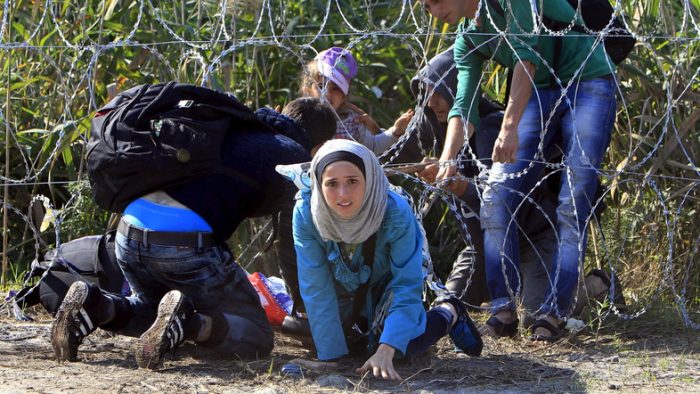
A Syrian migrant family enters Hungary at the border with Serbia near Roszke, Hungary August 28, 2015. REUTERS/Bernadett Szabo

Political events in Europe and the U.S. have pushed immigration issues to the forefront of talk shows and government agendas, but many of the most pressing immigration have their roots not in an escape from economic poverty, but rather the specter of terrorism and war, especially as a result of the Iranian regime’s involvement in the three largest wars going on right now in Syria, Iraq and Yemen.

It was not an accident that in the wake of World Refugee Day, there was broad acknowledgement that the source of most of the world’s refugee problem comes from the instability sweeping across the Middle East.

While the political discussion of immigration in the U.S. presidential election and the controversial Brexit vote has revolved around the impact mass immigration is posing to countries, the real underlying discussion is only now starting to focus on the roots causes of these mass movements of people fleeing violence in their own lands.

Also, in the wake of numerous terrorist attacks ranging from San Bernardino, California to Sydney, Australia and Paris, France to Ottawa, Canada, the infectious and noxious influence of spreading Islamic extremism is being felt; much of it flowing from the mullahs in Tehran and through their agents in the Revolutionary Guards and Quds Forces who organize, recruit, train, arm and fund extremists.

Predictably though, the Iran lobby has sought to capitalize on the immigration debate by focusing the discussion not on the root causes of these mass displacements. It’s a necessary gambit and typical of the Iran lobby to deflect attention from the real core issue of bloody sectarian conflict fueled by the mullahs.

The National Iranian American Council took the lead with several editorials and statements it has issued attempting to blame everyone else but the Iranian regime for the misery being inflicted on the millions of refugees fleeing these conflict zones.

Sarah Sakha offered up the idea on NIAC’s website that Americans opposed any bans on Muslims and refugees based on a Brookings Institute poll, but failed to address the core concern these same Americans have which is how to stop the spread of Islamic-inspired terrorism washing across the U.S. through Boston, Fort Hood, Chattanooga, San Bernardino and now Orlando.

She also fails to discuss the increase in terrorism and the harshness of the treatment of men, women and children in Iran by the regime is disingenuous and ignores the root causes of these problems. Likewise it lays bare how transparent the Iran lobby is in defending the regime from any criticism of its policies.

Similarly, the NIAC gave space to cover a recent meeting by the Atlantic Council and Iran Project with national security staffer Ben Rhodes who was famously revealed to have crafted the “echo chamber” supporting the Iran nuclear deal on a foundation of lies. The symposium was designed to defend the faltering nuclear deal from blistering criticism that it has failed to moderate Iran and instead has led to the great instability and bloodshed we see now.

Rhodes even used the examples of the openings made to Cuba and Burma as templates for why Iran should be treated in of those countries agreed to renounce terrorism h of those countries agreed to renounce terrorism and in Burma’s case actually held free elections that installed long-time dissidents in control of the government for the first time.

The Iran regime has done none of those things.

The NIAC even took on the recently unveiled the House Republican’s policy paper listing its priorities in the upcoming election including the re-imposition of sanctions on Iran for continued violations of human rights and sponsorship of terrorism, as well as its deliberate efforts to violate the nuclear agreement with ballistic missile tests and the clandestine sanitizing of sites of any evidence of prior testing of nuclear materials.

Ironically, while the NIAC attacks the idea that imposing new sanctions for continued human rights violations, it never denies that severe human rights violations are taking place in Iran. Instead, it attributes the suffering and misery being inflicted on the Iranian people with mass arrests and executions not to the actions of the mullahs, but rather the lack of U.S. currency flowing to the regime as a result of the nuclear deal.

It is the height of stupidity to equate torture in Iran to a lack of cash.

That seems to be the mantra being repeated most often by the Iran lobby these days as it pushes to get cash into the hands of the regime as quickly as possible, but not for the benefit of ordinary Iranians it seems as the regime is being rocked by protests over disclosures that high-ranking executives at state-owned businesses are being paid obscene salaries while Iranians are being exhorted by the mullahs to continue a “resistance economy” of deprivation.

The Daily Beast also disclosed that a former Clinton administration official has been on the payroll of Boeing as it strived to close a deal with Iran to sell $25 billion worth of commercial airliners.

Thomas Pickering, one of the country’s most famous diplomats and a former ambassador to Israel and the United Nations, has been quietly taking money from Boeing while vocally supporting the Iran nuclear deal—testifying before Congress, writing letters to high-level officials, and penning op-eds for outlets like The Washington Post.

Pickering confirmed via email—from his Boeing corporate email address—that he was on staff at the company from 2001 to 2006 and has been a paid consultant for them ever since.

Neil Gordon—an investigator for the Project on Government Oversight, a Washington watchdog organization—said Pickering should have been upfront about his work for Boeing when testifying before Congress on the Iran nuclear deal and making the case for it in op-eds for major publications.

“In Pickering’s case, he has a direct connection to Boeing, which I think should be disclosed,” he said.

Over the past few years, Pickering has been one of the most vocal and visible advocates for the nuclear agreement with Iran. On June 19, 2014, he testified before the House Armed Services Committee about his views on the need for a comprehensive agreement with Iran. He did not mention Boeing in the disclosure form he provided to the committee prior to his testimony. Boeing also isn’t mentioned in his bio that the House kept on file.

The lack of disclosure of his work in support of the nuclear deal and his participation in Rhodes’ “echo chamber” is disturbing and shows the complicated and extraordinary efforts made by the Iran lobby to secure the nuclear deal for Iran.

Most disturbing, his bio on the NIAC website where he serves as an advisory board member, notes that he worked at Boeing until 2006 but does not note that he still consults for the company. Same for his bio at the anti-nuclear weapon group Global Zero. His bio at The Iran Project doesn’t mention Boeing at all.

The lack of disclosure and his active work with leading members of the Iran lobby while also collecting fees from Boeing which the Obama administration is doing all it can to facilitate business with the regime raises alarm bells everywhere of conflicts of interest and outright deception.

Trita Parsi of the NIAC also using the same scape goat, blamed the suffering of Iranians on the lack of business deals with Iran following the nuclear deal.

“If the Iranians end up de facto not getting sanctions relief, the deal will collapse,” he said. “That’s right now the biggest threat to the sustainability of the deal.”

He is right, but the threat isn’t coming from foreign companies, but rather the mullahs themselves as they pursue policies turning most of Europe into a massive refugee center.

By Michael Tomblinson

Filed Under: Blog, Current Trend, News Tagged With: #NuclearDeal, Ben Rhodes, Featured, Iran, Iran deal, Iran Human rights, Iran Lobby, Iran sanctions, National Iranian American Council, NIAC, Sarah Sakha, Thomas Pickering, Trita Parsi

Iran Regime Continues on Path of Extremism

May 27, 2016 by admin

Iran Regime Continues on Path of Extremism

Iran Regime Continues on Path of Extremism

Recent revelations of the fraudulent nature of the debate about the Iran nuclear deal have forced news media outlets to rethink coverage of the Iranian regime and members of Congress from both sides of the political aisle to crackdown on ever rising acts of extremism coming from Iran.

Conventional wisdom would dictate that once the Iran lobby’s efforts to buy favorable media coverage, push false messages about moderation in Iran and hopeful scenarios of a more stable Middle East, were discovered that the lobby and mullahs in Tehran would retreat to preserve their ill-gotten gains.

Instead, the opposite has happened as the Iranian regime has widened the conflict in neighboring countries, cracked down at dissent at home, and is seeking to forge more military sales to bolster its weakened military.

The regime’s top leader, Ali Khamenei, has spent considerable television time reiterating the policy of opposing the West, warning of infiltration and corruption of its clerical tyranny through American pop culture and social media, and maintained the need to keep up a “resistance economy” to meet the demands for continued proxy wars in Syria, Iraq and Yemen, as major parts of countries resources are spent on these wars.

Khamenei expanded on that militancy by calling for vigilance against what he described as a “soft war” mounted by the West and aimed at weakening the clerical establishment, state television reported on Thursday.

“Our officials and all parts of the establishment should be vigilant about the West’s continued soft war against Iran…the enemies want to weaken the system from inside,” Khamenei said.

In a meeting with members of the Assembly of Experts, with authority to appoint and dismiss the supreme Leader, Khamenei told Iranian officials:

“By impairing centers of powers in Iran, it will be easy to harm the establishment from inside.”

The 88-member assembly, consisting mostly of elderly clerics, is expected to choose any successor to Khamenei, who has the final say on all state matters.

“The only way to materialize the (1979) revolution’s goals is national unity and not to obey the enemy,” he said.

The fact that Khamenei continues to describe the U.S. as the “enemy” demonstrates clearly his views on the relationship between the two countries and undermines the narrative put forward by groups such as the National Iranian American Council of an improvement in relations with Iran.

That desire to continue ruling Iran with an iron fist has led to such a widespread crackdown on human rights that the only avenues of informal protest left to ordinary Iranians are becoming few and far between as the regime deploys new morality police squads and arrests women, journalists, artists, bloggers and pretty much anyone else expressing a divergent opinion.

For example, last Saturday, the Independent reported how a number of women living in Iran chose to cut their hair short and dress as men in a bid to bypass morality police and evade hijabs which are a legal requirement in all public places and strictly enforced, often with public beatings.

But in recent weeks, women have started sharing photos of themselves with their hair short in some images and dressed in clothes more typically associated with men in others, which campaigns against compulsory hijab, in order to move freely in public.

Enforced hijab is just one of a number of laws in Iran which discriminate against women, who need permission from male relatives to study after marrying and leave the country in some cases. Single mothers are left equally disempowered as Iranian law gives all legal rights to the father after children turn seven.

On the foreign policy front, new revelations came out in the wake of the death of mullah Akhtar Mohammad Mansour, the Taliban leader who was recently killed in a U.S. drone strike along the Iran-Afghanistan border, showing he had several trips to Iran as part of efforts to raise funds for the terrorist organization.

Mansour’s death is a major blow to Pakistan and possibly also Iran, which may have forged links with the Taliban to spread extremism in the region, according to Waheed Muzhda, a former Foreign Ministry official in the Taliban regime who is now a political analyst in Kabul.

“Iran may also have been behind the curtain to stab the U.S. in the back using Taliban militants.” Muzhda said.

Although it is Pakistan that has traditionally been condemned for secretly supporting Afghan insurgents, analysts say Iranian regime also provides weapons, cash and sanctuary to the Taliban. Despite the deep ideological antipathy between a hardline Sunni group and cleric-run Shia state the two sides have proved themselves quite willing to cooperate where necessary against mutual enemies and in the pursuit of shared interests.

Mansoor first entered Iran almost two months ago, according to immigration stamps in a Pakistani passport found in a bag near the wreckage of the taxi he was travelling in when he was killed by a US drone strike.

The potential of close coordination between the Taliban and the Iranian regime would offer more proof of the regime’s chief role in supporting virtually all of the major Middle Eastern terrorist groups such as Hezbollah, Houthis, Shiite militias and now the Taliban.

Nonetheless police and intelligence officials in western Afghanistan often complain the local insurgency is being managed and supplied with weapons and training from Iran.

We can only hope more truth emerges from the wreckage of the Iran nuclear deal’s “echo chamber” revelations.

By Michael Tomlinson

Filed Under: Blog, News Tagged With: #NuclearDeal, Featured, Iran, Iran deal, Iran Human rights, Iran Lobby, Khamenei, National Iranian American Council, NIAC

  • « Previous Page
  • 1
  • …
  • 8
  • 9
  • 10
  • 11
  • 12
  • …
  • 15
  • Next Page »

National Iranian-American Council (NIAC)

  • Bogus Memberships
  • Survey
  • Lobbying
  • Iranians for International Cooperation
  • Defamation Lawsuit
  • People’s Mojahedin
  • Trita Parsi Biography
  • Parsi/Namazi Lobbying Plan
  • Parsi Links to Namazi & Iranian Regime
  • Namazi, NIAC Ringleader
  • Collaborating with Iran’s Ambassador

Recent Posts

  • NIAC Trying to Gain Influence On U.S. Congress
  • While Iran Lobby Plays Blame Game Iran Goes Nuclear
  • Iran Lobby Jumps on Detention of Iranian Newscaster
  • Bad News for Iran Swamps Iran Lobby
  • Iran Starts Off Year by Banning Instagram

© Copyright 2026 IranLobby.net · All Rights Reserved.