Iran Lobby

Exposing the Activities of the lobbies and appeasers of the Mullah's Dictatorship ruling Iran

  • Home
  • About
  • Current Trend
  • National Iranian-American Council(NIAC)
    • Bogus Memberships
    • Survey
    • Lobbying
    • Iranians for International Cooperation
    • Defamation Lawsuit
    • People’s Mojahedin
    • Trita Parsi Biography
    • Parsi/Namazi Lobbying Plan
    • Parsi Links to Namazi& Iranian Regime
    • Namazi, NIAC Ringleader
    • Collaborating with Iran’s Ambassador
  • The Appeasers
    • Gary Sick
    • Flynt Leverett & Hillary Mann Leverett
    • Baroness Nicholson
  • Blog
  • Links
  • Media Reports

“NIAC Leadership” Conference Showcases Influence Pedaling

September 26, 2016 by admin

“NIAC Leadership” Conference Showcases Influence Pedaling

“NIAC Leadership” Conference Showcases Influence Pedaling

How much does it cost to meet your lawmakers in a venue where you can exert the influence of the mullahs in Tehran? Apparently only $349 and that also gets you three lunches and two breakfasts!

What a deal.

But if you’re strapped for cash, maybe because you have to pitch in for your family to hire a lawyer in an effort to reach your dual-nationality relative who is sitting in Evin prison in Iran, for only $175 you can still get access to lawmakers, but you miss out on a “Gala Reception” and hors d’oeuvres.

So less pizazz, but still you can buy access and who is selling this access at such bargain rate prices? The National Iranian American Council which held its “Leadership Conference” this weekend in Washington, DC.

The conference was a veritable who’s who of Iranian regime activists and lobbyists, all previously dedicated foot soldiers in the fight for securing a nuclear deal with Iran, as well as the fight to buy reprieves for the regime from ongoing sanctions for violations of human rights and sponsorship of terrorism.

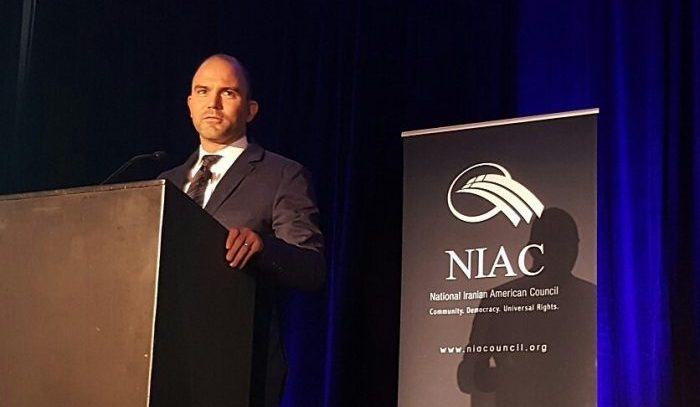
Some of the more notable speakers included Joseph Cirincione of the Ploughshares Fund,which received and distributed cash to various members of the Iran lobby including NIAC according to investigative media reports, Ben Rhodes, deputy national security advisor to President Obama and architect of the now-infamous “echo chamber” of supporters used to deceive media and the American people as to the inherent flaws of the nuclear agreement.

Other key participants curiously included Christopher Backemeyer, deputy coordinator of sanctions policy in the State Department, and Michael Mosier, associate director at the Office of Sanctions Policy & Implementation in the Office of Foreign Assets Control. These two men hold considerable power over the question of whether or not Iran is complying with the nuclear agreement and whether or not certain sanctions should be enforced such as bans against the regime accessing US currency exchanges.

The fact that such key regulatory officials are participating in a conference sponsored by an organization identified as having strong links to high ranking Iranian officials should prove troubling. It is similar to having members of the Treasury Department’s securities enforcement division having drinks with executives from Enron or Lehman Brothers prior to the mortgage meltdown.

What is always fascinating about the NIAC’s annual confab is the packing of the speakers list with its own staffers, in this case Trita Parsi, Reza Marashi and Tyler Cullis, each of whom have worked diligently to carry Iran’s water and make excuses for the worst excesses of the regime. Watching these three “stooges” try to divert attention away from ballistic missile launches, mass arrests of journalists, public hangings of Iranians or arrests of Americans, Brits and other citizens is like watching a bad sketch comedy troupe.

Considering that one of the self-proclaimed mandates of the NIAC is “to ensure that human rights are upheld in Iran and that civil rights are protected in the US. NIAC believes that the principles of universal rights – Freedom of assembly, religion, and speech, as well as dignity, due process and freedom from violence – are the cornerstones of a civil society” one might ask why NIAC never invites any of the Iranian-Americans who can tell their story first hand of what Iranian justice is like.

Why is it that NIAC never has people such as Saeed Abedini, the Christian pastor held and tortured in Iran, or Amir Hekmati, the former US Marine brutalized in prison, or Jason Rezaian, the Washington Post reporter, to attend a conference and tell their story in furthering an understanding of the terrible forces at work within Iran’s religious leadership?

Of course the NIAC would never showcase any of these Americans since their presence would be a terrible embarrassment and highlight the true nature of the Iranian regime which is cruelty, punishment, abuse and control. Even though these Americans were released in exchange for $1.7 billion in cash, more Americans have been taken this year and the NIAC holds no fundraiser for them; launches no grassroots campaign for their release and holds no protest in their honor.

Even after the regime’s president, Hassan Rouhani, appeared on NBC prior to his speech before the United Nations General Assembly, he confidently admitted to Chuck Todd that Iran did not recognize dual nationalities.

“Therefore those who have dual citizenship, from the interpretation of the Iranian laws, are Iranian citizens solely and only,” Rouhani said. “And any legal prosecution is carried out on the foundation that they are Iranian citizens subject to Iranian law.”

And yet the NIAC issued no condemnation, no rebuke, not even a single tweet objecting to the extralegal procedures against Iranian-Americans, which the NIAC was ostensibly working on behalf of.

The height of absurdity was reached and exceeded by several speakers at this weekend’s proceedings, including this juicy quote from Rhodes.

“Acceleration of tensions between Gulf partners and Iran is a serious problem across the region,” said Rhodes as quoted by NIAC.

You think? It might be one of the better understatements, ranking up there with “peace in our time” by Neville Chamberlain.

The Iranian regime has pushed the possibility of all-out conflict with regional rival Saudi Arabia, while at the time supporting three proxy wars in Syria, Iraq and Yemen that have claimed the lives of almost 750,000 people. NIAC’s promises that Iran would be a partner for peace and moderation following the nuclear deal have turned out to be false and alarmingly so.

What was promising was the position taken by Philip Gordon, a senior foreign policy advisor to Hillary Clinton and senior fellow at the Council of Foreign Relations, who reiterated the presidential candidates public statements of skepticism about Iran’s conduct and the need to “distrust and verify” when it comes to enforcing the nuclear deal, much to the chagrin of Parsi who tried everything short of begging to get Gordon to make positive statements about the regime.

Gordon’s reticence provides hope that the next president will approach Iran with a clean slate and not be motivated to the falsehoods and “echo chamber” of the NIAC.

By Laura Carnahan
Filed Under: Blog, News Tagged With: #NuclearDeal, Ben Rhodes, Featured, hassan rouhani, Iran, Iran deal, Iran Human rights, Iran Lobby, Jason Rezaian, Joseph Cirincione, Marashi, National Iranian American Council, NIAC, NIAC Action, Ploughshares, Reza Marashi, Rouhani, Trita Parsi, Tyler Cullis, Yemen

Hassan Rouhani Tries to Fool the World

September 23, 2016 by admin

Hassan Rouhani Tries to Fool the World

Hassan Rouhani Tries to Fool the World

In each prior appearance before the United Nations General Assembly session, the Iranian regime’s Hassan Rouhani has sought to project an image of moderation and openness. His entourage usually consisted of large swarms of advisers, economic aides and other dignitaries.

His schedule usually consisted of media interviews with network anchors and newspapers in which he offered a beguiling smile and chuckle to preserve the image of some kind of avuncular uncle.

But in his fourth and most recent appearance the other day, his schedule was a limited two day layover and consisted of few meetings on the sidelines with only one network interview with MSNBC’s Chuck Todd. Gone was the large retinue, but wasn’t missing was the same sly effort to try and conceal the truth behind Iran’s moves.

The Wall Street Journal noted the distinct change in this visit by Rouhani.

“Iran’s posture and agenda this year at the U.N. stands in contrast to years past, when the president brought large teams of advisers and ministers and capitalized on the trip by holding meetings with scholars, editors, Iranian-American business moguls and ordinary citizens,” wrote the Journal.

“The Iranian-American business community, which was heavily courted by Mr. Rouhani and his team during previous U.N. summits, kept its distance this year. Iran’s arrests of dual nationals, particularly Iranian-American businessman Saimak Namazi and his father, Baqir Namazi, who was formerly a U.N. official, sent chills through businesses considering investing in Iran,” the Journal added.

The circumstances have changed dramatically for Iran and the rest of the world in just one year with the nuclear agreement reached last year. Wars now rage throughout the region in Syria, Iraq, Afghanistan and Yemen and bloody extremist Islamic attacks of all stripes have peppered the world from Australia to Canada and the U.S. to throughout Europe and Africa.

Also, with the nuclear deal in hand, the mullahs in Tehran have focused their efforts on trying to press for more concessions before the window closes and either Hillary Clinton or Donald Trump are elected since both have expressed varying degrees of skepticism of the regime and the nuclear deal.

The hotly disputed ransom payment made by the US of $1.7 billion in cash for American hostages earlier this year emboldened the regime and spurred another round of hostage taking of dual national citizens, which Rouhani noted in an interview, Iran does not recognize.

Iran is currently detaining five British dual nationals, a Canadian-Iranian professor and four Iranian-Americans. In the past, Iran has jailed dual nationals as leverage to swap prisoners.

When asked about the case of the British-Iranian charity worker Nazanin Zaghari-Ratcliffe, who was sentenced to five years in prison in August, Rouhani simply said Iran doesn’t recognize dual nationals and denied using them as pawns. Zaghari-Ratcliffe’s husband has said Iran hasn’t revealed specific charges against his wife.

What hasn’t changed is the drivel that spewed out of Rouhani in his speech in which he heaped one absurd notion on top of another, first blaming sectarian violence in the region solely on Saudi Arabia, its chief regional rival, and assuring the world Iran supported inclusive, democratic governments.

It’s an appalling statement to make for Rouhani considering the Iranian regime is the most brutal nation in the Middle East, unless you count ISIS as a separate entity. His statement that Syria’s unrest could only be resolved by rooting out terrorist groups, neglected to mention that Iran’s military support of the brutal Assad regime has not targeted terror groups such as ISIS, but rather Syrian rebel groups opposed to Assad.

“If the Saudi government is serious about its vision for development and regional security, it must cease and desist from divisive policies, spread of hate ideology and trampling upon the rights of neighbors,” Rouhani said.

His blaming of the Saudi’s is beyond incredulous considering Iran’s mullahs run a 24/7 hate mongering propaganda machines through its state-owned media, cyberattacks and lobbying groups all aimed at pushing its own peculiar brand of extremist ideology.

In his speech, Rouhani criticized the United States for its “lack of compliance” with a landmark nuclear deal reached with six major powers and Iran in 2015 aimed at curbing Tehran’s nuclear program in exchange for lifting sanctions, which is the crux of the issue most concerning Rouhani and his cohorts.

The Iranian economy is stalled and unemployment, wage growth and household incomes have all stayed persistently below the targets Rouhani promised when he gained office. Making matters worse, the perception that Iranians would receive economic benefits from the nuclear deal have failed to materialize making ordinary Iranians restless and angry at their continued plight.

With the financial drains of supporting three proxy wars emptying the regime treasury, the money it has received from unfrozen assets and the hostage payment have principally been used to replenish its depleted military stores.

The irony of Rouhani praising peace while the Revolutionary Guard Corps showed off new long-range ballistic missiles with cluster bomb warheads against the backdrop of mass demonstrations and protests in Iran of people frustrated with deep seated corruption was not lost on most observers.

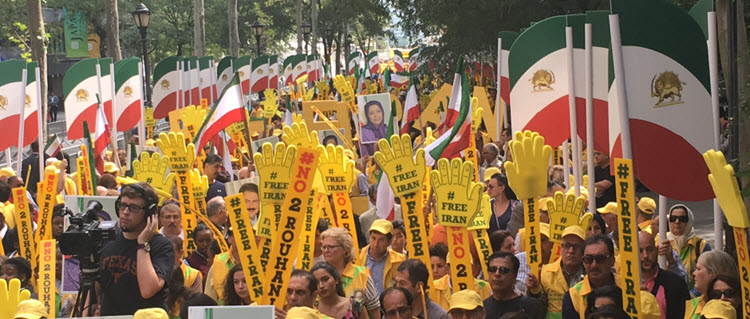
Nor did the thousands of protesters outside of the UN made up of human rights groups and Iranian dissidents let UN delegations forget that Rouhani should not be getting a free ride and ought to be held accountable for the lies he pedaled at the General Assembly.

As the hashtag said, #No2Rouhani on hundreds of signs, the world should say no more to his deceptions.

By Michael Tomlinson

Filed Under: Blog, News Tagged With: #NuclearDeal, Featured, hassan rouhani, Iran, Iran deal, Iran Human rights, Nuclear Deal, Rouhani

Iran Regime Threatens to Shoot Down American Planes as Tensions RiseIran Regime Threatens to Shoot Down American Planes as Tensions Rise

September 18, 2016 by admin

Iran Regime Threatens to Shoot Down American Planes as Tensions Rise

US Claims Iran Threatened to Shoot down US Military Planes near Iranian Airspace

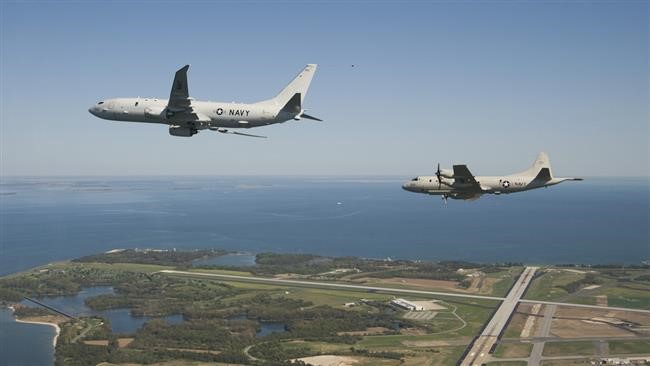
In a sign of the growing escalation in confrontations being manufactured by the Iranian regime, two U.S. Navy surveillance aircraft flying in international airspace near Iran were challenged and threatened by regime air defense stations over the weekend and told to change course or be shot down.

U.S. officials disclosed the aircraft were flying over the Strait of Hormuz on routine patrols, which the Iranian regime has used as a platform to intimidate commercial and naval ships with frequent run-ins with regime patrol and attack boats, often running courses directly at ships, ignoring warnings as severe as gunfire across their bows.

Using ground-to-air communications, officials at the Iranian air defense station told the crews they were flying near Iranian airspace and that if they didn’t change their course quickly they risked being fired upon, according to a spokesman for U.S. Naval Forces Central Command in Bahrain, Cmdr. Bill Urban.

“We will fire Iranian missile,” was one of the transmissions from the ground, he said. Both the American planes were threatened in three separate radio calls, Cmdr. Urban said in a statement.

U.S. State Department officials decried the incident, saying it showed Iran had yet to show signs of shifting from its aggressive stance in the region even after the international nuclear agreement reached last year.

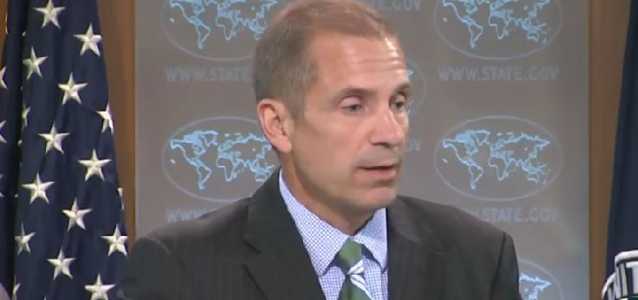
“Frankly, there’ve been previous incidents much like this, and they’re concerning, obviously. They escalate tensions,” said Mark Toner, a State Department spokesman. ”We have conveyed our concerns to Iran.”

The Navy P-8 Poseidon with a crew of nine and an EP-3 Eries with a crew of roughly 24, were flying a reconnaissance mission 13 miles off the coast of Iran, through the Persian Gulf, Strait of Hormuz and Gulf of Oman, according to officials who call the boundary Iran’s “black line.”

Iran’s territorial waters—like all nations–extend 12 miles into the sea, according to international maritime law, neither aircraft breached the boundary line.

The US military planes ignored the warning and continued flying in international airspace, although close to Iranian territory, the officials told Fox News.

“We wanted to test the Iranian reaction,” one US official told Fox News when asked why the US jets were flying close to Iran.

“It’s one thing to tell someone to get off your lawn, but we weren’t on their lawn,” the official continued.  “Anytime you threaten to shoot someone down, it’s not considered professional.”

“This been a continuing issue with respect to Iranian intercepts,” said Lt. Gen. Jeffrey Harrigian, who is the top U.S. commander of the coalition air war against the Islamic State in Iraq and Syria.

The increasing frequency of incidents raises the question of why the regime is acting in such a provocative manner. Many within the Iran lobby have argued these acts are being committed by a small segment of hardliners within the Revolutionary Guard Corps who object to the opening up of Iran to the West as signaled by the nuclear agreement reached 14 months ago.

The line of reasoning attempts to mask the growing militant nature of the regime and the almost earnest efforts by regime officials to spark a conflict. One could almost surmise the mullahs actually are trying to provoke a response from the U.S. military in order to claim the moral high ground against the Great Satan, but why? For what purpose?

Most analysts agree that the supposed benefits of the nuclear agreement with the lifting of economic sanctions have not benefitted ordinary Iranians at all. Their economic condition remains bleak and as a result, there has been significant restlessness amongst the population, with large demonstrations over stagnant wages and rampant corruption taking place.

The regime, especially top mullah Ali Khamenei, have been vocal and outspoken in blaming the U.S. for the struggling economy and the perceived lack of benefits flowing from the nuclear deal, but what the mullahs don’t want to talk about is how they have decided to use most of the financial windfall the regime received, including the “ransom” payments of $1.7 billion for American hostages, to continue funding proxy wars in Syria, Iraq and Yemen and not spend it to improve the lives of Iranians.

Also, while the U.S. did lift its nuclear related sanctions last January, other sanctions, including financial ones, related to Iran’s ballistic missile program, allegations of state sponsoring of terror groups and human rights abuse claims remain.

Major international banks are unwilling to risk losing access to the dollar market or huge fines out of fear of inadvertently falling afoul of what they say are ambiguous U.S. regulations.

It is an ironic turn of events since the regime was adamant during negotiations that issues not related to nuclear programs be de-linked. Now the mullahs are paying the price for that decision.

This may explain why the regime is acting so aggressively in order to divert attention from the economic turmoil and political unrest and create a false crisis internationally. It is an old tactic and one the mullahs are dusting off in the hopes of overcoming the domestic discontent they are facing in spite of a massive crackdown at home on journalists, students and dissidents.

Ultimately it should not come as any surprise to see the regime increase these confrontations and try to provoke a response. Otherwise, their own necks might be on the line.

By Michael Tomlinson

Filed Under: Blog, News Tagged With: #NuclearDeal, Featured, Iran, Iran Human rights, Iran Mullahs, Iran sanctions, Iran Talks, Irandeal

Study Points to Iran Regime Funding of Terror from US Payment

September 16, 2016 by admin

Study Points to Iran Regime Funding of Terror from US Payment

Study Points to Iran Regime Funding of Terror from US Payment

Last year the US stacked bundles of euros and Swiss francs on pallets and loaded them onto a transport aircraft bound for Tehran. The $400 million was destined to be used as leverage in securing the release of American hostages being held illegally by the Iranian regime as part of the nuclear deal.

That $400 million would later swell to a total of $1.7 billion in cash paid out to the mullahs as part of a settlement agreement over a longstanding dispute regarding payment made by the deposed Shah of Iran’s government for US military hardware prior to the Islamic revolution.

What has caused concern among elected officials and policymakers is the doubt surrounding what the regime would do with the cash windfall. A recent study by the American Action Forum, a non-profit research organization, estimated that as much as $37.4 million of this $1.7 billion were funneled directly to fund operations of the Iranian Revolutionary Guard Corps.

These operations have stretched from supporting the Assad regime in Syria to Shiite militias and death squads in Iraq to Houthi rebel forces in Yemen, according to the Washington Free Beacon.

Leading US lawmakers now suspect that the IRGC played a key role in assuming control of this cash, which the White House has admitted to putting directly in Iranian hands, the Free Beacon disclosed Monday evening.

“Applying the official spending levels to the U.S. payment to Iran, the $1.7 billion would mean $37.4 million for the IRGC,” according to research published by Rachel Hoff, AAF’s director of defense analysis. “Paying ransoms in exchange for Americans held abroad is one bad policy—indirectly funding terrorism is another.”

AAF has determined based on public reports by Iran that the country spends 3.4 percent of its total budget on defense needs, though some experts, including Iranian dissident groups, estimate the number is much higher.

At least “65 percent of that funding [goes] to the Islamic Revolutionary Guard Corps (IRGC), the Iranian elite paramilitary force,” according to AAF. “That works out to 2.2 percent of Iran’s total budget for the IRGC, which actively supports terrorist organizations throughout the Middle East. It is unlikely that Iran accurately reports its military or paramilitary spending, but the reported budget figures are useful as a baseline.”

Most disturbing is the very real possibility that the US exchanged the cash payments directly to IRGC agents and members of its military intelligence units which have been at the forefront attacks against US personnel in Lebanon, Saudi Arabia, Afghanistan and Iraq over the past three decades.

The Iranian regime’s long support for terrorism has included more recent revelations about the mullahs links to Al-Qaeda; a fact that regime and Iran lobby have worked frantically to cover up by trying point blame on Saudi Arabia instead.

Thomas Joscelyn, a senior fellow at the Foundation for the Defense of Dmeocracies, recently took regime foreign minister Javad Zarif to task in a series of tweets lambasting an editorial Zarif penned in the New York Times.

“Where is Abu Hamzah al Khalidi, the head of al Qaeda’s military commission, currently? He’s in #Iran:http://www.longwarjournal.org/archives/2016/07/treasury-designates-three-senior-al-qaeda-members-in-iran.php …” read one of his tweets, correctly pointing out how the Iran regime provides safe havens for Al-Qaeda leaders.

Joscelyn reminds us that the State Department’s original sanction against Iran in 2011 was because of the revelations of a “secret deal” between Iran and Al-Qaeda to provide the terror group behind the 9/11 attacks support.

That burgeoning conflict between Saudi Arabia and the Iranian regime drew a strong rebuke a warning from Mecca province governor Prince Khaled al-Faisal who urged Iran to end what he called wrong attitudes toward Arabs and warned it against any use of force in its rivalry with the kingdom.

The Saudi Press Agency quoted Prince Khaled as telling journalists his message to the Iranian leadership was “I pray to God Almighty to guide them and to deter them from their transgression and their wrong attitudes toward their fellow Muslim among the Arabs in Iraq, Syria, Yemen and around the world”.

“But if they are preparing an army to invade us, we are not easily taken by someone who would make war on us.”

Alarmingly, it now seems in addition to the $1.7 billion in cash the regime received from the US, the total amount of cash released back to Iran as part of the nuclear deal could have reached as high as $34 billion, with no tracking of how that money is being used by the mullahs.

The Associated Press reports Iran brought home roughly $20 billion dollars from this deal. But nearly $12 billion dollars in previously frozen U.S. sanctions were given to Tehran as nuclear talks progressed. Add to that the $1.7-billion-dollar cash payout the White House gave Tehran before the release of several U.S. hostages this year and the sum total soars to nearly $34 billion dollars.

“So every dollar that goes to Iran you have to assume is going to go to Hezbollah,” said Senator Marco Rubio (R) FL. “Or it’s going to go to their missile program, or their nuclear ambition or their military.”

Unlike digital transfers of money, cash is untraceable. Some experts say we likely will never know how Iran will take advantage of this windfall.

By Laura Carnahan

Filed Under: Blog, News Tagged With: #NuclearDeal, Appeasement policy, Featured, Iran, Iran deal, Iran sanctions, IRGC, zarif

State Dept. Concedes Nuclear Deal May Have Fed Iran Regime Aggression

September 15, 2016 by admin

State Dept. Concedes Nuclear Deal May Have Fed Iran Regime Aggression

State Dept. Concedes Nuclear Deal May Have Fed Iran Regime Aggression

Ever since the U.S. and other nations entered into negotiations with the Iranian regime over a nuclear deal and completed it more than a year ago, critics including the Iranian resistance movement have been warning that a deal that did not also address the regime’s poor human rights record, oppressive government and support of terrorism would inevitably prove fruitless and only empower and embolden the mullahs in Tehran.

The Iran lobby also argued strongly that the nuclear deal would help “moderate” the regime and open the door for more liberal elements of the government to make gains. Notable regime supporters such as Trita Parsi of the National Iranian American Council and Ali Gharib pushed the idea that Iran could help stabilize the volatile Middle East once a deal had been passed.

Even sympathetic editorial pages and commentators were actively encouraged by the administration to support the deal on the basis that it would bring economic benefits to the Iranian people long beleaguered by crippling sanctions and gross corruption and mismanagement by regime officials.

Over the past year, reality has set in and the world has discovered that virtually none of those promises and assurances ever came true and in fact the litany of woe heaped on the world by the rising tide of radicalized extremism flowing from Iran since the nuclear deal has all but reshaped the landscape of the U.S., Europe, the Middle East, Africa and even touched Latin America.

The luxury of 20/20 hindsight has allowed the world to see the results of the nuclear deal and it is hard for even the most ardent member of the Iran lobby to put a positive spin that is remotely believable.

Things are so blatantly obvious that even the State Department has finally conceded that the nuclear deal may have in fact emboldened the Iranian regime to commit even more aggressive and militant acts; not diminish it.

Under questioning from Fox News reporter James Rosen, State Department spokesman Mark Toner could not rule out that the deal “has served as a cause for this more aggressive posture” by the regime.

Rosen noted, Iran had recently threatened to shoot down two US Navy surveillance planes in international airspace. This was just the latest in a growing list of provocations, including taking 10 US sailors hostage and abusing them in violation of international law.

The New York Post editorial board was flabbergasted by the admission since if the Obama administration had even an inkling of this aberrant behavior on the part of the mullahs, it made no sense to continue a policy of appeasing them, including bending over backwards to ship the regime $1.7 billion in hard cash in exchange for American hostages.

The Post said that of course, after citing incidents that “needlessly escalate tensions” Toner then said it all makes the deal even “more important, because the last thing anyone would want to see in the region is a nuclear-armed Iran.”

“Especially, we’d add, an Iran grown even more aggressive and hostile precisely because of that very deal.

“The logic here is just mind-boggling.

“Yes, Iran has been emboldened by a deal that gives it billions in cash now and an easy road to going nuclear in a few years — thanks to a president who won’t dare challenge Tehran’s behavior and risk undoing his dubious diplomatic legacy.

“Nice to see someone finally admitting as much,” the Post added.

The Iranian regime isn’t taking the potential for blowback lightly. Iran’s semi-official ISNA news agency reports that the country’s foreign minister and his international counterparts will meet this month to discuss “some differences” over the implementation of the landmark nuclear deal.

The Wednesday report says they will focus on banking sanctions, which Iran complains have not been fully lifted. The meeting will take place Sep. 22, on the sidelines of the United Nations General Assembly, where the regime’s Hassan Rouhani is scheduled to speak in what we can only assume will be a verbal tongue lashing blaming the U.S. for a wide range of problems resulting from a now failed nuclear deal.

It has been clear from statements made by regime officials such as Ali Khamenei and members of the Iran lobby that the regime has shifted focus now to condemning the U.S. for the inability of the regime to participate in U.S. currency exchanges because of sanctions put in place for its support of terrorism and not related to the original nuclear deal.

The Iranian regime also recognizes that since the deal was passed, its conflict with Saudi Arabia, especially in Syria and Yemen, is stalling its plans for regional hegemony under a radicalized Shiite banner. The influence of Saudi Arabia in standing up to Iran including its active fighting in Yemen and interception of Iranian boast trying to smuggle illicit weapons through the Persian Gulf to Houthi rebels in Yemen has been effective and annoying to the mullahs in Tehran.

This helps explain why the Iranian regime has turned its attention and that of the Iran lobby into a full-blown smear campaign aimed at Saudi Arabia, and by association the U.S.

This can be seen in an editorial appearing in the New York Times penned by Mohammad Javad Zarif, the regime’s foreign minister, blaming Wahhabism and Saudi Arabia in particular for literally every terrorist act being committed around the world and chastised the Kingdom’s large lobbying efforts.

It is a preposterous piece since it blames Saudi Arabia for exactly what the Iranian regime is doing itself with its own substantial investment in PR firms, lobbyists, paid analysts, bloggers and commentators, as well as spreading cash to a large number of so-called grassroots organizations such as the Ploughshares Fund which strongly advocated for the nuclear deal.

Danielle Pletka, senior vice president for foreign and defense policy studies at the American Enterprise Institute, took Zarif to task and ticked off the Iranian regime’s own bloody history of support for terrorism around the world in a piece appearing on AEI’s site.

“It was the Islamic Republic that created Hezbollah and sponsored the groups that kidnapped and murdered Americans through Lebanon’s long civil war,” Pletka writes. “It is Iran that props up the murderous Assad regime — you know, the guys that have repeatedly gassed their own people. It is Iran that has assassinated its enemies the world over, and it is Iran’s own Islamic Revolutionary Guard Corps (and its expeditionary Quds Force) that was responsible, during the Iraq war, for hundreds of US servicemen dying.”

The first step in recovery for any addict is to admit they have a problem. We can only hope this admission by the State Department will be the first step in confronting the Iranian regime forcefully, honestly and openly again.

By Michael Tomlinson

Filed Under: Blog, News Tagged With: #NuclearDeal, Appeasement policy, Featured, Iran, Iran deal, Iran Human rights, Iran Lobby, Iran Mullahs, National Iranian American Council, Ploughshares, Sanctions, Trita Parsi, Yemen

The Oddity of Excusing the Iranian Regime All the Time

September 10, 2016 by admin

The Oddity of Excusing the Iranian Regime All the Time

Vector illustration of stop excuses concept background

Over the past few years, there has been a concerted effort by many to open up a dialogue to the Iranian regime. The most noteworthy of these efforts has been the nuclear deal struck last year and the creation of the Iran lobby and “echo chamber” of sympathetic journalists, bloggers, think tanks and lobbyists working to change perceptions about the mullahs in Tehran.

These efforts have included blasting out press releases, running letter writing campaigns, pushing messages on social media and even cornering Congressmen in hallways to press them on supporting this outreach.

Media such as the New York Times have even gone so far as to offer package deals for tourists to visit Iran in an effort to spur the idea of cultural and tourism exchanges in the hopes of portraying Iran as a friendly destination like Disney World in Orlando.

Unfortunately, that offer should probably come with the proviso that if you are a dual citizen Iranian-American, you might get arrested and tossed in prison for no reason and exchanged eventually for a few million dollars.

A curious side effect of these efforts has been the global effort to overlook and even make excuses for almost any egregious act committed by the regime by these sympathizers and apologists.

That apology train rolled out throughout the nuclear negotiations and in the year since.

  • The launching of illegal ballistic missiles? Technically not covered by the nuclear agreement and the UN sanctions were THAT explicit in banning them;
  • The escalation of the conflict in Syria that has led to 600,000 Syrian deaths at the hands of Hezbollah, Quds Force and Revolutionary Guard fighters? Peace in Syria was not part of the nuclear agreement;
  • The payment of $400 million in cash directly linked to the release of American hostages? We owed the mullahs the money anyway;
  • The executions of almost 3,000 Iranians under the administration of “moderate” Hassan Rouhani? Regrettable, but not part of the nuclear deal;
  • The start of the civil war in Yemen and Sunni/Shiite conflict in Iraq through IRGC units and backing? The Iranian regime is not explicitly in control of those wars; and
  • The snatching of even more foreign hostages including Americans, Canadians and British citizens? Hardliners are just trying to embarrass moderates in the regime.

At a certain point you just have to ask yourself when does the charade end and reality start to settle in people’s heads? Are we going to continue to ignore the transgressions of the Iranian regime simply because we are living on the “hope” they will eventually somehow magically change and become avid fans of Apple iPhones, McDonald’s burgers and the NFL?

Even the actual implementation of the nuclear agreement itself has been fraught with transgressions, exemptions and excuse-making.

Take for instance the release of an update from the UN’s International Atomic Energy Agency which assured the world that Iran was not violating the agreement, but buried within it was a disturbing notation that the regime had begun manufacturing new rotor tubes for centrifuges, allowing them to produce enriched uranium fuel that could be turned into nuclear warheads.

Iran is allowed to make the parts, but only under certain conditions.

For the 5,060 low-tech centrifuges now producing limited amounts of fuel-grade enriched uranium in Iran, Tehran must use spare parts stripped from old or idle machines. Parts for more advanced centrifuges would fall under even tighter regulations.

In its confidential report obtained by The Associated Press, the atomic energy agency said “related technical discussions” with Iran on rotor tube manufacturing are ongoing.

The agency needs to keep a close eye on how many rotor tubes are being made and for what models of centrifuges to make sure they are being produced only in quantities and for machines allowed under the 2015 nuclear agreement that sets a schedule for when and how many advanced centrifuges can be tested.

Any overproduction could hint at possible plans by Iran to expand advanced centrifuge testing beyond pact limits. That could be a significant issue, considering enriched uranium is a potential pathway to nuclear arms because more technically sophisticated models can enrich the uranium much more quickly than Iran’s present mainstay centrifuges, according to US News and World Report.

This was the same IAEA that was prohibited by Iran from having inspectors on the ground to collect soil samples from a nuclear site that was reportedly scrubbed clean by the regime, only to have radioactive particles show up in subsequent testing.

Earlier this month, a U.S. think-tank said Iran had been secretly allowed to overstep certain thresholds in order to get the deal through on time, but a diplomat said no limits had been exceeded apart from one incident which the agency reported in February.

The Institute for Science and International Security think-tank, headed by a former IAEA inspector, said one of the secret concessions exempted unknown quantities of low-enriched uranium contained in liquid, solid and sludge wastes.

It also said Iran had been allowed to keep operating 19 radiation containment chambers more than set out in the deal. These so-called “hot cells” are used for handling radioactive material but can be “misused for secret, mostly small-scale plutonium separation efforts,” it said.

All of these actions demonstrate that as long as the world seems willing to continue looking the other way, the Iranian regime is certainly willing to continue engaging in unlawful behavior. This presents the central problem with the West’s approach to the Iranian regime.

Unless and until you hold the mullahs accountable and stop giving them a blank check or get out of jail card, you are never going to get them to change their behavior or change their leadership.

The great lesson of the tough sanctions imposed earlier that actually brought Iran to the bargaining table in the first place has been lost on world leaders: When they had the opportunity to change Iranian behavior and hold it accountable for terrorism and human rights violations, the world blinked and let the mullahs slide based on the false hope that change was possible without leverage or consequences.

By Michael Tomlinson

Filed Under: Blog, Current Trend, News Tagged With: #NuclearDeal, Appeasement policy, Featured, Iran, Iran Lobby

Shocking Report Reveals Secret Side Deals to Iran Nuke Agreement

September 2, 2016 by admin

Shocking Report Reveals Secret Side Deals to Iran Nuke Agreement

Shocking Report Reveals Secret Side Deals to Iran Nuke Agreement

In what is bound to be one of the most startling revelations made about the Iran nuclear agreement, the Institute for Science and International Security, a Washington-based non-profit, non-partisan institution dedicated to informing the public about science and policy issues affecting international security, issued a damning report outlining “secret” concessions granted to the Iranian regime.

In the report, the United States and its negotiating partners agreed “in secret” to allow the Iranian regime to evade some restrictions in last year’s landmark nuclear agreement in order to meet the deadline for it to start getting relief from economic sanctions, according to the think tank’s report published on Thursday.

“The exemptions or loopholes are happening in secret, and it appears that they favor Iran,” said David Albright, the group’s president, in an interview with Reuters.

Among the exemptions outlined in the think tank’s report were two that allowed Iran to exceed the deal’s limits on how much low-enriched uranium (LEU) it can keep in its nuclear facilities, the report said. LEU can be purified into highly enriched, weapons-grade uranium.

Other provisions would allow Iran to continue operating 19 “hot cell” radiation containment chambers; and permission for Iran to store 50 tons of heavy water in Oman under its control, instead of selling it, as required by the nuclear deal.

The exemptions, the report said, were approved by the joint commission the deal created to oversee implementation of the accord. The commission is comprised of the United States and its negotiating partners — called the P5+1 — and Iran.

The Institute noted that the low-enriched uranium could be processed into weapons-grade material, so the secret side deal makes it effectively impossible to know how much bomb material Iran could produce, on fairly short notice. The hot cells can also be “misused for secret, mostly small-scale plutonium separation efforts,” according to the report.

The White House claims these changes to the JCPOA were not kept secret from Congress, but at least one prominent critic of the nuclear deal, Senator Bob Menendez (D-NJ), who is a senior member of the Foreign Relations Committee, told Reuters he was “not aware” of the exemptions, and was never briefed on them.

Sen. Kelly Ayotte, (R-N.H.), who sits on the Armed Services Committee, also issued a statement. Ayotte argued that the new evidence of “secret exemptions” underscores “the willingness of the Obama administration to bend over backwards to accommodate Tehran, conceal information from the American people, and protect a fundamentally flawed and deeply dangerous agreement that is only getting worse.”

Rep. Ileana Ros-Lehtinen (R-Fla.), who formerly chaired the House Foreign Affairs Committee, was far harsher: “Secret exemptions, ballistic missile tests, ransom payments, heavy water purchases but no sanctions. #Iran’s bent + broken horrid nuke deal,” she tweeted.

“Since the JCPOA is public, any rationale for keeping these exemptions secret appears unjustified. Moreover, the Joint Commission’s secretive decision making process risks advantaging Iran by allowing it to try to systematically weaken the JCPOA. It appears to be succeeding in several key areas,” wrote Albright and his co-author, Andrea Stricker, who has written extensively on the illegal nuclear trade and Iran’s nuclear program.

State Department spokesman John Kirby declined to comment on the work of the joint commission, saying it was confidential, but the lack of transparency flies in the face of the original promises made by the Iran lobby, such as the Ploughshares Fund and National Iranian American Council, which reassured skeptical members of Congress that there were no other provisions in the deal other than what was presented to Congress for review.

That assertion was proven false within days when secret appendices were revealed by the media to exist and now follow up decisions by the join commission can now carve out wide exemptions for the mullahs in Tehran without public review or knowledge.

“The current arrangement has been overly secret and amounts to the generation of additional secret or confidential arrangements directly linked to the JCPOA that do not have adequate oversight and scrutiny,” the report states. “Moreover, the process in general raises the question of whether Iran is exploiting the exemption mechanism, outside of any public oversight, to systematically weaken as many JCPOA limitations as possible.”

A “senior knowledgeable official” quoted by the report said that without the secret exemptions, Iran’s nuclear facilities would not have been in compliance with the nuclear deal by Jan. 16, which was set as the implementation day.

That statement alone should give people pause since it clearly indicates that the Iranian regime was not prepared to abide by the agreement from Day One and since then it has used the commission to receive more and more exemptions allowing it to violate the agreement without penalty.

At every step of the negotiations and through the implementation of the Iranian nuclear agreement, both U.S. and European officials have been consistently misled by the regime and yet bizarrely accommodating of the mullahs, granting exemptions, leading trade delegations to Tehran even while political prisoners are being executed, keeping mum about a rash of hostage-takings of dual-national citizens and refusing to demand the halt of Iran’s participation in proxy wars in Syria, Yemen and Iraq.

The world has given the Iranian regime so many second-chances, the mullahs must be wondering how they can keep this gravy train of appeasement going into 2017.

By Michael Tomlinson

Filed Under: Blog, News Tagged With: #NuclearDeal, Appeasement policy, Featured, Iran, Iran deal, Iran Human rights, Iran Lobby, Iran Talks, National Iranian American Council, Nuclear Deal

British Official in Hot Water Over $26,000 Payment from Iran

September 1, 2016 by admin

British Official in Hot Water Over $26,000 Payment from Iran

British Official in Hot Water Over $26,000 Payment from Iran

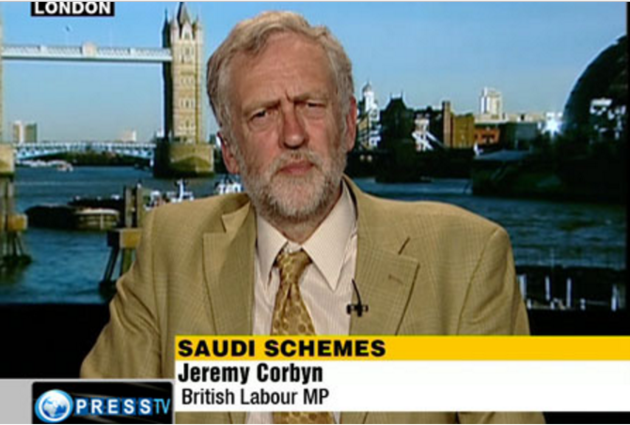
British Labor Party Leader Jeremy Corbyn found himself in some hot water when he admitted in a televised interview on Pink News that he took a $26,000 payment to appear on the Iranian regime’s state broadcaster as a pundit in which he criticized other countries human rights record.

He accepted these payments after hosting five shows on Press TV between 2009 and 2012. The irony of his admission on Pink News, a news outlet focusing on LGBT community issues, wasn’t lost on one viewer who called into the show calling him a “hypocrite” for appearing on a channel that was banned from the UK for its role in filming the torture of an Iranian journalist according to the Daily Mail.

What was even more incredible was Corbyn’s attempt to defend the payment, insisting it “wasn’t an enormous amount” of money.

Corbyn was rightly challenged by viewers considering the regime’s dismal human rights record.

It was during one of his appearances on Press TV when he made his much-criticized comments saying it was a “tragedy” that Osama bin Laden had been killed and not put on trial.

Famed Harry Potter author, JK Rowling, who has long been an opponent of Corbyn, commented when a fan tried to compare him to the Hogwarts headmaster of her books, that “Corbyn. Is. Not. Dumbledore.”

Corbyn’s appearances and the timing of his appearances reinforces what has recently been revealed about then depth and scope of efforts by the Iranian regime to influence Western countries during the run-up to the negotiations for the nuclear agreement last year.

Corbyn’s recruitment and payment is especially troubling since he is a sitting member of government and his appearances came shortly after the brutal crackdown over the disputed elections of 2009 in Iran and the crushing of democracy demonstrations as part of the so-called Arab Spring movement.

The fact that the regime was paying Corbyn, coincides with its support of the broader Iran lobby including support for institutions such as the National Iranian American Council and Ploughshares Fund that were part of the Obama administration’s “echo chamber” of support for the nuclear deal.

The Iran lobby’s shadowy connections to various bloggers and journalists such as Jim Lobe and Ali Gharib, as well as academics and members of so-called think tanks have been examined by many news organizations that have worked to uncover the tentacles of the regime’s effort to influence government policies in the West.

Now the NIAC’s official lobbying arm, NIAC Action, is actively trying to influence various U.S. Senate races this fall in an effort to unseat opponents of the Iran nuclear deal and replace them with other candidates more publicly sympathetic and supportive of the regime.

The Iran lobby has also sought to provide more political cover for those supporters and elected officials who are feeling the heat of critics of the regime, especially in light of the past year since the deal, which has seen the situation in the Middle East deteriorate badly and the Iranian regime at the center of three proxy wars in Syria, Iraq and Yemen.

One supporter of the Iran agreement is Sen. Cory Booker (D-NJ) who was on the receiving end of blistering editorial by Shmuley Boteach, executive director of The World Values Network in The Hill.

“Would Cory condone the Obama Administration sending Iran $400 million in cash in January, which experts say is utterly unprecedented, and which will undoubtedly be funneled to terror groups like Hezbollah”? Boteach writes.

“And speaking of Hezbollah, how could Cory, on the one hand, tell us that on his trip he saw firsthand the terrible humanitarian disaster of Syrian refugees, yet on the other defend giving $150 billion to Iran which is being used to prop up the genocidal government of Bashar Assad? Assad’s government, and its wholesale slaughter of the Syrian people, is what created this humanitarian disaster in the first place, along with nearly half a million Arab dead and millions of refugees. And Iran is a key ally keeping Assad in power. Cory could easily have condemned Iran’s support of Assad’s Arab genocide. Instead, he chose to remain silent,” he added.

The ability of regime supporters and the Iran lobby to cover for the regime’s bad actions is proving more difficult as the regime obliges by engaging in more provocative behavior, such as the recent deployment of Russian S-300 missile batteries at its Fordow nuclear facilities; an action the Wall Street Journal said was clear sign of the failure of the nuclear agreement in an editorial.

“Iran seems bent on exposing the nuclear-deal illusions of President Obama even before he leaves office. The latest sign came Sunday, when Iran’s state-run media aired footage of the S-300 air-defense system maneuvering around Fordow,” the Journal said.

“Meanwhile, the Obama Administration refuses to sanction Moscow for the transfer. Congress has enacted at least three bills either requiring or authorizing the President to sanction actors that help Iran acquire or develop advanced, destabilizing weapons like the S-300. Yet so far Washington has done little more than grumble and vow to ‘monitor’ Iran’s S-300 capability. President Obama made nonproliferation one of his priorities, but he will leave office amid a spreading nuclear threat thanks in part to his infinite patience with global rogues,” the paper added.

There is going to be a price to be paid for supporting the Iranian regime. We only hope officials such as Corbyn and Booker figure out they should stop being beholden to the mullahs in Tehran.

By Michael Tomlinson

Filed Under: Blog, News Tagged With: #NuclearDeal, Featured, Iran Lobby, National Iranian American Council, NIAC Action, Ploughshares

Iran Regime Cannot Stop From Arresting Everyone

August 30, 2016 by admin

Iran Regime Cannot Stop From Arresting Everyone

Iran Regime Cannot Stop From Arresting Everyone

The famous physicist Albert Einstein is credited with coining the phrase: “Insanity: doing the same thing over and over again and expecting different results.”

While Einstein was referring to the area of physics, quantum theories and the nature of the universe, his quote is very much appropriate for something a bit more rooted in the here and now: the Iranian regime.

It seems the mullahs in Tehran have an addiction to arresting people. They arrest dual nationals visiting from other countries. They arrest journalists. They arrests dissidents. They arrest Christians and other religious minorities. They arrest bloggers. They arrest women, children, students, artists, professors and just about anyone else that annoys them.

They even arrest members of their own government that helped bring them a nuclear deal that lined their pockets with billions of dollars in sanctions relief.

Yes, sometimes it doesn’t even protect you from being arrested if you are even part of the regime.

The regime said on Sunday that a person close to the government team that negotiated the nuclear agreement with foreign powers had been arrested on accusations of espionage and released on bail.

The disclosure, reported in the state media, appeared to be the latest sign of the Iranian regime’s leadership’s frustration over the agreement, which has failed so far to yield the significant economic benefits for the country that the accord’s advocates had promised. Regime officials and members of the Iran lobby have blamed the United States for that problem.

According to the New York Times, there had been unconfirmed reports last week that regime authorities arrested Abdolrasoul Dorri Esfahani, who has dual Iranian and Canadian citizenship, on espionage suspicions. Esfahani, an adviser to Iran’s central bank, was involved in helping the Iranian nuclear negotiators bargain for sanctions relief in exchange for Iran’s pledges of verifiably peaceful nuclear work.

The official Islamic Republic News Agency said a spokesman for Iran’s judiciary, Gholam Hossein Mohseni Ejei, speaking at a weekly news conference on Sunday in Tehran, had “confirmed the arrest of an individual from the negotiating team.”

There was no immediate comment on Esfahani’s fate from the government of Canada, which already has wrestling with the arrest of another dual citizen in Iran; Homa Hoodfar, a Canadian-Iranian anthropologist who studies the role of women in Muslim societies. There has been no announcement from the regime as to why she was arrested.

This new arrest occurrs against the backdrop of other hostile actions from regime, including:

  • Regime officials announced the execution of a nuclear scientist who had returned home from the United States, where, he claimed, he had been kidnapped by the U.S. government. The Iranians said the scientist had betrayed secrets to the enemy;
  • Last week, a series of run-ins with high-speed boats from the regime’s Islamic Revolutionary Guard Corps Navy harassed American warships patrolling international waters in the Persian Gulf region at least four times, U.S. Navy officials called the actions dangerous, unsafe, unprofessional and illegal.

The rash of arrests, especially of dual national citizens who seem to be the latest targets of the regime, has caused consternation among supporters of the regime within the Iran lobby and the Obama administration’s vaunted “echo chamber” all of whom have remained studiously silent on the matter.

The uptick in arrests is worrisome given the contention that the $400 million cash payment made by the U.S. was done explicitly in exchange for U.S. hostages and has convinced the mullahs in Tehran that this is a more profitable and quicker tactic for recouping gains than tiresome diplomatic forays, which many in the regime leadership, including top mullah Ali Khamenei, have openly called a waste of time.

Khamenei himself seems perfectly happy in his usual vein of saber rattling and lengthy denunciations of the West as the regime’s Tasnim News Service issued a press release this weekend of his remarks in which again threatened the world.

The fact that Khamenei and the rest of the clerical leadership of the Iranian regime seems intent on committing the Islamic state to a course regional proxy wars, conflict, hostility and unremitting bombastic hatred of the liberal and pluralistic West, the obvious question now is just what the heck should the next Congress and president do about it next year?

That question seems to preoccupy the Iran lobby to no end as its official lobbying arms, such as NIAC Action, have fully engaged in U.S. Congressional races, especially Senate ones to ensure that candidates supportive of the nuclear deal and of maintaining friendly relations with the Iranian regime are elected.

What is interesting is that NIAC Action has clearly decided on a partisan course in only supporting Democratic candidates in key races who have come out in favor of the Iran nuclear deal, even though many of those same candidates, when questioned about Iran’s human rights situation and support for terrorism, quickly disavow any support for the mullahs.

The real litmus test is not going to be in who controls the Senate, but in ensuring that no matter what party controls the Congress and White House, they continue to hold the regime accountable for these transgressions or face more multi-million dollar ransom payments for our citizens.

By Michael Tomlinson

Filed Under: Blog, News Tagged With: #NuclearDeal, Featured, Iran, Iran deal, Iran Human rights, Iran Lobby, National Iranian American Council, NIAC Action

Week of Living Dangerously in Persian Gulf By Iran Regime

August 27, 2016 by admin

Week of Living Dangerously in Persian Gulf By Iran Regime

Week of Living Dangerously in Persian Gulf By Iran Regime

A lot can happen in one week. According to the Bible, God created the heavens and earth and all the creatures in just a week’s time. You can have half of an Olympic Games run in one week.

For the Iranian regime, one week is enough time to create an international crisis in the Persian Gulf and threaten to spark a shooting war with the U.S. Navy.

The week started out on Tuesday with the Iranian regime’s Revolutionary Guard Corps sending several ships to harass the U.S. Navy destroyer Nitze by closing at high rates of speed, then veering off and returning again.

The Arleigh Burke-class destroyer issued several warnings including radioed messages, fired flares and whistles at the regime ships which did not respond as it transited international waters; well away from Iranian waters. A Navy spokesman described the Iranian maneuvers as “unsafe and unprofessional.”

That incident was followed on Wednesday by another one in which three IRGC ships approached the U.S. coastal patrol ships Squall and Tempest at high speed in the northern Persian Gulf.

According to the Washington Post, “later in the day, an Iranian vessel came within 200 yards of the Tempest. After the Tempest shot flares and tried to communicate using the ship’s loudspeaker, Squall personnel fired three shots into the water from that ship’s .50-caliber gun. The Iranian ship then departed.”

That same Iranian ship later approached the USS Stout, a guided-missile destroyer, later Wednesday. “The [IRGC] vessel proceeded to cross the bow of the Stout at close range on three separate occasions,” said William Urban, a spokesman for the U.S. 5th Fleet.

Responding to a U.S. complaint, the Iranian regime rejected the American version of events. The defense minister, Brig. Gen. Hossein Dehghan, said in remarks quoted by the state news media that the Iranian boats patrolled only Iran’s territorial waters and had a mission to “counter any unintentional or aggressive intrusion.”

“If an American ship enters Iran’s maritime region, it will definitely get a warning. We will monitor them and, if they violate our waters, we will confront them,” Dehghan said in a statement reported by the Iranian Students’ News Agency.

It clearly shows the regime’s intentions of antagonizing the U.S. at a time when the Iran lobby had promised a new era of cooperation following the Iran nuclear deal.

Obama administration officials say Iran has abided by its commitments on the nuclear program, but there have been few signs of change in Iranian regime’s behavior in other arenas, including tensions in the Persian Gulf, clashes with U.S. allies in the region and the civil wars in Syria and Yemen.

Congressional Republicans and critical private analysts have been angry about this behavior since late last year, when the Islamic republic conducted two tests of nuclear-capable ballistic missiles in defiance of U.N. sanctions and then staged a live-fire exercise dangerously close to a U.S. warship in the Persian Gulf.

The situation worsened in January, when the Iranian regime detained 10 U.S. Navy sailors whose boats had drifted mistakenly into Iranian waters in the Gulf.

Although administration officials hoped the deal might lead to a less-confrontational posture from Iran, House Foreign Affairs Committee Chairman Edward R. Royce, California Republican, said Iran continues to pursue policies that are “destabilizing the region.”

“Iran is on a roll, and the perception is that the administration is getting rolled at this moment,” Mr. Royce said in January. “We need to see more backbone, not backing down.”

Revelations this month of how the Obama administration worked out a $1.7 billion settlement of a failed Iranian missile sale in January at virtually the same time as the release of five American prisoners held in Iran has only fueled criticism that the Obama administration is overlooking continued misbehavior by Tehran to preserve the nuclear deal.

Stephen Bryen, a senior fellow in defense studies at the American Foreign Policy Council, authored an editorial in U.S. News and World Report, in which he criticizes the administration’s oddly held belief that somehow the Iranian regime can still be a friend to the U.S.

“This view, strongly held by the White House, State Department, Pentagon and CIA, is a true fantasy. … Washington persists in fostering the illusion. There is no immediate cure for a political disease: We have yet to invent an anti-regime-biotic that, when injected into the insane, returns them to normalcy,” Bryen writes.

“As there is no solution, the Obama administration will explain the Persian Gulf incident as some sort of aberration or unauthorized action by the Iranian Revolutionary Guards, or a mistake, but not an act of overt hostility,” he adds.

More darkly, he raises the specter that the Iranian regime is merely testing a “swarming boat attack” tactic to learn how they might fling multiple small, fast attack boats at much larger U.S. warships.

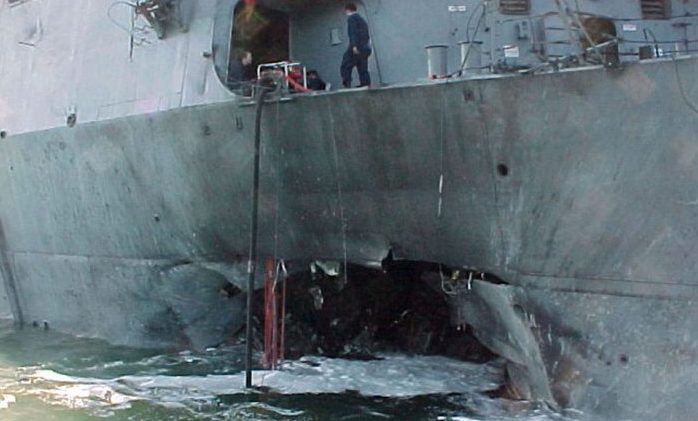
“Recently the Iranians added another dimension to the swarming boats: a vessel known as the Ya Mahdi, a remotely piloted fast patrol boat that can fire rockets or be stuffed with explosives. It is a new version of the boat that attacked the USS Cole in Aden in 2000 at a cost of 17 lives, 39 injuries and severe damage to the ship,” Bryen warns.

Criticism from the White House is sorely lacking as these provocations increase. One explanation may be the announcement that Ben Rhodes, the national security advisor who created the so-called “echo chamber” of support for the Iranian regime and nuclear deal, is now scheduled to keynote a conference sponsored by Iran lobby loyalist, the National Iranian American Council.

Outside organizations such as NIAC and the Ploughshares Fund, which is co-sponsoring the upcoming conference, were cited as key parts of the White House’s effort to mislead the public about the deal.

The NIAC event is being viewed as another sign that the White House is seeking to boost these organizations in return for their efforts to push the nuclear deal and support the pro-Iran “echo chamber.”

“Pro-Iran lobbies like NIAC were helpful to Ben Rhodes when he created his echo chamber to sell the Iran nuclear deal and the Iran money-for-hostages deal,” said one senior foreign policy consultant who has worked with Congress on the Iran deal. “It’s only fair that Rhodes would return the favor by keynoting NIAC’s conference. It’s not clear what he’ll talk about more: Iran developing its nuclear program, Iran expanding across the region, or Iran seizing more American hostages including those with close links to NIAC itself.”

The cozy relationship between Iran lobbyists and Obama administration may well explain why this past week it has been silent on the provocations, but it does not explain how to stop the regime.

BY Michael Tomlinson

Filed Under: Blog, News Tagged With: #NuclearDeal, Appeasement policy, Ben Rhodes, Featured, Iran deal, Iran Lobby, Iran Terrorism, IRGC, National Iranian American Council, NIAC Action

  • « Previous Page
  • 1
  • …
  • 7
  • 8
  • 9
  • 10
  • 11
  • …
  • 15
  • Next Page »

National Iranian-American Council (NIAC)

  • Bogus Memberships
  • Survey
  • Lobbying
  • Iranians for International Cooperation
  • Defamation Lawsuit
  • People’s Mojahedin
  • Trita Parsi Biography
  • Parsi/Namazi Lobbying Plan
  • Parsi Links to Namazi & Iranian Regime
  • Namazi, NIAC Ringleader
  • Collaborating with Iran’s Ambassador

Recent Posts

  • NIAC Trying to Gain Influence On U.S. Congress
  • While Iran Lobby Plays Blame Game Iran Goes Nuclear
  • Iran Lobby Jumps on Detention of Iranian Newscaster
  • Bad News for Iran Swamps Iran Lobby
  • Iran Starts Off Year by Banning Instagram

© Copyright 2026 IranLobby.net · All Rights Reserved.