Iran Lobby

Exposing the Activities of the lobbies and appeasers of the Mullah's Dictatorship ruling Iran

  • Home
  • About
  • Current Trend
  • National Iranian-American Council(NIAC)
    • Bogus Memberships
    • Survey
    • Lobbying
    • Iranians for International Cooperation
    • Defamation Lawsuit
    • People’s Mojahedin
    • Trita Parsi Biography
    • Parsi/Namazi Lobbying Plan
    • Parsi Links to Namazi& Iranian Regime
    • Namazi, NIAC Ringleader
    • Collaborating with Iran’s Ambassador
  • The Appeasers
    • Gary Sick
    • Flynt Leverett & Hillary Mann Leverett
    • Baroness Nicholson
  • Blog
  • Links
  • Media Reports

NIAC Tries to Fool the Public on Iran Again

November 19, 2016 by admin

NIAC Tries to Fool the Public on Iran Again

NIAC Tries to Fool the Public on Iran Again

The National Iranian American Council is in overdrive using the proverbial firehouse to blanket websites, blogs and comment forums in the hope that the incoming Trump administration doesn’t undo the past three years of achievements on behalf of the Iranian regime.

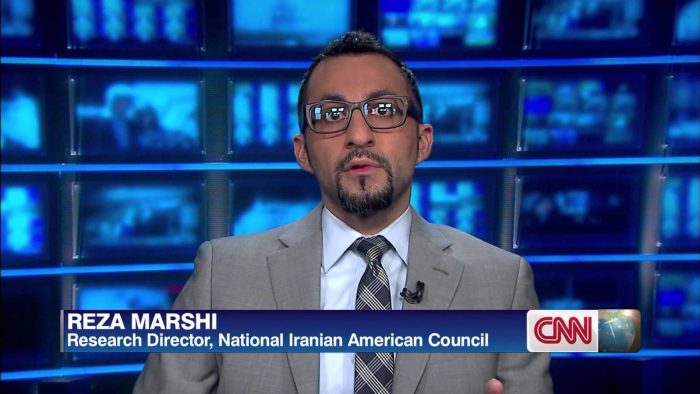
It’s latest contribution was a piece appearing on CNN authored by Trita Parsi and Reza Marashi who again attempt to portray the choices facing the new administration in regards to the nuclear agreement reached with Iran as an either or proposition of leaving it alone or ripping it up and risking grave consequences.

It’s a Hobson’s choice that the NIAC has become adept at: Follow our suggestion and everything will be fine, but dare threaten Iran and risk cataclysm.

The 800,000 people killed in the Syrian conflict so far at the hands of the Assad regime, Hezbollah and Iranian fighters would be hard pressed to agree with those choices.

The Iranian regime has established itself clearly as uninterested in peaceful conflict resolution and instead has doubled down and gone all in using military force and violence in an effort to impose its religious will on its neighbors in Syria, Iraq and Yemen.

Parsi and Marashi argue that Trump should take the “political risk necessary to broaden the opening to Iran precisely to avoid replicating recent US policy failures in the Middle East.”

This may be the stupidest statement made yet by Parsi and Marashi.

Why on Earth would Donald Trump want to take a political risk on behalf of Iran, especially as he is already being assailed by the mainstream press and the political elites that turned their noses up at his candidacy (Parsi and Marashi included)?

Parsi and Marashi attempt to force the focus on the survival of the nuclear agreement with Iran when the issue has never been the agreement itself, but rather the behavior of the mullahs in Tehran.

No agreement is worth the paper it’s printed on if one of the participants in the agreement willfully ignores it right from the beginning. The fact that the Obama administration and European Union granted several waivers and exemptions right at the start made the agreement ineffectual and impotent.

During the campaign, Trump correctly focused not on the agreement itself, but the conduct of the mullahs after the agreement was reached. His criticism of the billions of dollars in cash released to Iran and its use in funding conflicts in Syria, Iraq and Yemen demonstrates he looked at the optics correctly, optics that Parsi and Marashi are trying hard to change now with their desperate lobbying campaign.

Parsi and Marashi attempt to frame the discussion around one of Trump’s biggest pledges which was to destroy ISIS and argue that “he cannot walk away or renegotiate the nuclear deal without undermining the coalition against the terror group.”

Unfortunately, Parsi and Marashi never acknowledge that Iranian regime itself is part of the axis of terrorist sponsors with its long-running support for Hezbollah and its sheltering of Al-Qaeda leaders in Iran after the U.S. invasion of Afghanistan drove them out.

They also incorrectly state that the Iran nuclear deal cannot be re-negotiated when in fact any agreement can be re-negotiated; a simple fact that the businessman in Trump knows full well. When you have a rotten deal on the table, it’s the idiot that accepts it as gospel. Trump is no idiot, much as Parsi and Marashi have claimed in the past.

Parsi and Marashi are correct when they characterize Iran as having “substantial latent power – population size and potential for wealth generation,” but miss the most crucial aspect of that power, which is “how will Iran’s leaders choose to apply it?”

Will clerical leaders such as Ali Khamenei and Hassan Rouhani seek to use that potential to improve the lives of ordinary Iranians? Of course not.

Iran’s economy has spiraled downward generating massive protests from small businessmen to school teachers, only to engender a broad and punishing crackdown on dissenters that have filled Iran’s prisons to capacity.

Will the Iranian regime seek to stabilize the Middle East and seek to reduce tensions and conflict? Absolutely not.

Iranian regime deepened the Syrian conflict and broadened it, while bringing Russia into the fight and setting the stage for a return to Cold War confrontations between the U.S. and Russian armed forces. Iran mullahs ignited the Yemen civil war with its clandestine military support for Houthi rebels and plunged Iraq back into sectarian conflict by raising Shiite militias in fighting Sunni insurgents tossed out of the power-sharing government of former president Nouri al-Maliki.

What is even more astonishing is Parsi and Marashi’s suggestion that the solution to the Middle East’s problems is to solve the “Saudi-Iran cold war”; an observation that is ludicrous given the fact that any solution to the current crop of problems in the Middle East starts and stops in Tehran.

Until Parsi and Marashi actually admit that Iran needs to curb its military adventures and support for insurgency and terrorism in order to advance the prospects for peace, nothing they say or write should be considered legitimate policy discussions and instead simply be viewed as propaganda for the mullahs in Tehran.

The quest for peace begins only when Tehran stops trying to rule its neighbors.

Laura Carnahan
Filed Under: Blog, News Tagged With: #NuclearDeal, Featured, hassan rouhani, Iran, Iran Mullahs, Khamenei, National Iranian American Council, NIAC, NIAC Action, Reza Marashi, Rouhani, Trita Parsi, Yemen

Why the NIAC Has Lost All Credibility

November 17, 2016 by admin

Why the NIAC Has Lost All Credibility

Why the NIAC Has Lost All Credibility

The National Iranian American Council has gotten virtually nothing correct over the last three years when it comes to predicting the behavior and actions of the Iranian regime.

That in and of itself should not be too surprising since in its role as a chief advocate and lobbying force for the Iranian regime, its responsibility is not to journalistic fact, but to lobbyist advocacy. That fact alone should make any journalist talking to them or reading their publications slightly skeptical from the outset.

Also, it is erroneous to consider the NIAC a “human rights” organization when its stated mission goal of helping Iranian-Americans is plainly shown to be ignored at best and duplicitous at worst since the NIAC does not mount media or grassroots efforts on behalf of imprisoned Iranian-Americans in Iran. Nor does the NIAC ever join with mainstream human rights groups such as Amnesty International in pressing the Iranian government to release these American hostages.

While the NIAC takes out full page ads in the New York Times touting the moderation of the Iranian regime, it does not similarly take out full page ads critical of Hassan Rouhani’s public statements in which he reaffirms the regime’s policy of not recognizing dual citizenship; the only nation on the planet to do so.

The NIAC promised Iranian moderation in light of a new nuclear agreement, but in the 18 months since, Iran has embarked on what is arguably the widest range of war, insurrection and human rights abuses spanning four countries including Syria, Iraq and Yemen.

At home it has defeated, removed and imprisoned virtually all political opponents. It has resorted to mass arrests of students, journalists, artists, bloggers and anyone else showing any inkling of rebellion to the mullahs.

It has conscripted Afghan refugees to fight and die as mercenaries in Syria, while it brought Russia into the conflict resulting in the mass bombing of civilians, hospitals and reduced Aleppo to a pile of dust.

All of these things NIAC promised would not happen, yet it has all come to pass.

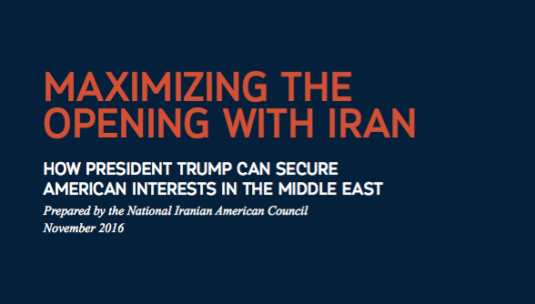
Now the NIAC has issued a 45 page “report” of recommendations to the incoming Trump administration on how to secure American interests in the Middle East.

While mildly entertaining as a work of fiction, the Trump transition team would be wise to consider using this report to wrap up food leftovers since that is all it is good for.

This document is nothing more than a retread of the same tired and now proven false assumptions the NIAC has been peddling now for the past decade. It loses all credibility for one basic omission: It never acknowledges nor criticizes Iran’s role in the escalation of tensions and bloodshed in the Middle East.

That’s like blaming the weather for a mass murderer on the loose.

If one understands that the NIAC is an Iranian regime advocate and not a human rights organization, it is easy to understand the priorities it places on its discussion topics in the document.

It places the nuclear agreement and the U.S. alliance with Saudi Arabia as its two more important topics, which coincidentally are the two most pressing concerns for the Iranian regime.

It then dives into Iraq and Syria, the two principle battlefields Iran is involved with in creating its Shiite sphere of influence. Oddly, the report does not mention Yemen or the rise of Islamic militants in sub-Saharan Africa which are now responsible for instability stretching from Egypt to Nigeria to Yemen.

Lastly, the report devotes a scant three pages to human rights and only from the perspective that Washington can only improve human rights by essentially trusting the Iranian regime to do the right thing if Washington caves in and appeases the mullahs fully.

The one thing the report does say is that the Trump administration “should heed the advice of Iranians themselves.” On this point, NIAC is correct, but not in whom it believes are the right Iranians to listen to.

The Trump administration needs to part ways from failed policies of the Obama administration and muzzle the “echo chamber” of Iranian lobbying it created. It needs to chart its own pathway and listen to the concerns, thoughts and advice of Iranian dissidents and opponents both within Iran and outside.

Let the Iranian people counsel on what are the best approaches to bringing back a secular, democratic government in Iran. That kind of advice is not likely to come from the NIAC, Ploughshares Fund or similar Iranian lobbyists.

It will come from opponents such as the National Council of Resistance of Iran, Amnesty International and outspoken leaders on the human rights situation in Iran such as Rudy Giuliani and Sen. Robert Menendez (D-NJ).

The most amusing part of the NIAC report is the claim that was signed by 76 “national security experts” but a closer review of those names and titles reveals that:

  • 3 are staff members of NIAC
  • 47 are professors, mostly from history, linguistics and anthropology disciplines
  • 1 has a military background
  • Zero are human rights activists

The overwhelming number of these so-called “experts” is in reality advocates and lobbyists for the Iranian regime or commercial interests tied to the Iranian regime such as Bijan Khajehpour, managing partner of Atieh International which works to line up foreign businesses with Iranian-state industries.

Mainstream media outlets would do well to finally stop quoting these sources that are as accurate as pollsters on election night.

Michael Tomlinson

Filed Under: Blog, News Tagged With: #NuclearDeal, Appeasement policy, Featured, Iran, Iran deal, Iran Human rights, Iran Lobby, Iran sanctions, Khamenei, Moderate Mullahs, National Iranian American Council, NIAC, NIAC Action, Ploughshares, Rouhani, Trita Parsi

Near Unanimous Vote to Extend Iran Sanctions Act Shows Weakness of Iran Lobby

November 16, 2016 by admin

Near Unanimous Vote to Extend Iran Sanctions Act Shows Weakness of Iran Lobby

Near Unanimous Vote to Extend Iran Sanctions Act Shows Weakness of Iran Lobby

The decision by the House to renew the Iran Sanctions Act is noteworthy for two things: One is the margin, an overwhelming 419-1 vote that clearly demonstrates on this one issue, both Democrats and Republicans universally agreed on the outcome.

The second is that the age of appeasing the Iranian regime and giving credence to the Iran lobby’s echo chamber on “moderation” has finally died in the wake of an unrelenting year of war, carnage and bloodshed by Iranian regime and its terrorist proxies following approval of the nuclear deal.

It is universally agreed to even among the most ardent supporters of the mullahs in Tehran that Iran could have done more to demonstrate its commitment to being a reliable international partner.

The fact that a lame duck session of the House voted these sanctions through says lots about how members truly feel. While there is no disagreement about wanting to compel Iran mullahs to not build nuclear weapons, the methodology of how to get there is clearly and appropriately back up for debate.

The ISA itself, extended for another decade by this vote, is not even connected to the nuclear deal since it deals with sanctions imposed for Iran’s support for terrorism and development of ballistic missiles; items that Iran lobby supporters such as the National Iranian American Council famously argued should be disconnected from the nuclear deal. They are now paying for that disconnect.

The other sanction, which was passed on a unanimous voice vote no less, imposes sanctions on anyone assisting the Syrian regime in the wholesale slaughter of civilians and contributing to the largest refugee crisis since World War II. Given that Iran is Syria’s biggest sponsor and supporter, the message to Tehran is clear: Get out of Syria and stop supporting the mass murder of men, women and children.

Ultimately the best thing to come out of these moves will be to refocus the debate on human rights and the barbaric practices of the Iranian regime and Syria.

The renewal and extension of the ISA and the sanctions connected to Syria provides the incoming Trump enormous flexibility and tools as it takes up the thorny question of how to roll back Iranian aggressions.

The Iran lobby has been busy trying to make the case that the status quo needs to continue and in fact grant Iranian regime even more concessions with the further lifting of restrictions preventing the regime from tapping into U.S. currency exchanges to finance its activities, but even a blind man can recognize the American voter was in no mood to accommodate Iranian regime during a time when fears over terrorism was ranked as the second-highest concern they had in exit polling right after the state of the economy.

Both Democrats and Republicans realize their political careers might be cut short if they followed through with President Obama’s desire to maintain the status quo. It is clear from the dramatic results from the election that Americans want change and they are willing to decimate the political class to get it.

For the Iran lobby, especially long-time advocates such the NIAC and Ploughshares Fund, their options have narrowed dramatically to have any leverage with the new Congress and the Trump administration, which is why they have shifted their focus to a shotgun approach of trying out any number of message points and see if any of them stick.

One of the stranger rationalizations offered by Trita Parsi of NIAC, is that trying to isolate the Iranian regime may prove difficult for Trump since the Obama administration first made the case that Iran had failed to cooperate and thus was able to assemble an international coalition.

But Parsi must be nuts to think the international community doesn’t recognize that Iran has been at the very center of three of the worst raging wars on the planet today in Syria, Iraq and Yemen.

Parsi even pins his hopes on Iran’s fight with ISIS as a saving grace for Trump that may spare Iran from retaliatory sanctions for sponsoring other terrorist groups such as Hezbollah. By his logic, giving Iran a hall pass for fighting one murderous group of thugs while supporting another murderous group of thugs is somehow a good thing.

In another example of how the Iranian regime axis of Shiite influence is trying to recalibrate to the new reality of a Trump administration, even Syrian strongman Bashar al-Assad said in an interview on Tuesday that Trump was a “natural ally” if he was committed to fighting “terrorists.”

Of course Assad’s definition of “terrorist” might be very different from the American definition given his military’s targeting of civilian neighborhoods and hospitals with airstrikes, barrel bombs and chemical weapons.

What Parsi, Assad and even the mullahs in Tehran do not understand is that Trump is far from the knee-jerk, knuckle dragger they tried to portray him as during the presidential campaign. Far from it, Trump has focused his policies on the idea of restraining Iranian regime influence and resetting the power balance in the Middle East away from Iran and back towards global powers.

His openness towards working with Russia and Vladimir Putin presents a more subtle and unique threat to Iran since Putin might even make the calculation that forging a partnership with the U.S. negates the need for supporting Iran’s interests so long as preservation of a warm water port in the Mediterranean from Russian ships is guaranteed.

For Iranian mullahs, the field is narrowing in terms of their ability to affect outcomes, which is why the Iran lobby has been campaigning hard to influence who will be sitting on key positions of the upcoming administration.

Laura Carnahan

Filed Under: Blog, News Tagged With: #NuclearDeal, Appeasement policy, Featured, Iran, Iran deal, Iran Human rights, Iran sanctions, National Iranian American Council, NIAC, NIAC Action, Ploughshares, Trita Parsi

Iran Lobby Takes Aim at Iranian Regime Critics

November 15, 2016 by admin

Iran Lobby Takes Aim at Iranian Regime Critics

Iran Lobby Takes Aim at Iranian Regime Critics

The election of Donald Trump as the next president of the United States presents a thorny dilemma for the Iranian regime and its core of lobbyists and supporters in the U.S. and Europe; not the least of which the gravy train of concessions and naïve thoughts of Iranian “moderation” are finally coming to an end with the change in administrations.

This explains why the regime’s leadership and members of the Iran lobby are busy issuing press statements and making stern speeches warning the incoming president and the next Congress not to abandon the Iran nuclear deal or re-impose sanctions.

There is an unmistakable air of bluster as well as fear that permeates much of what top leaders such as Hassan Rouhani and key advocates such as Trita Parsi of the National Iranian American Council have had to say about the U.S. election results.

But there is a nuance here that is being largely ignored by much of the media in which while the Iranian leadership is claiming dire consequences should the U.S. back out of the nuclear deal, Trump’s own statements and those of opponents of the nuclear deal provide a better insight as to what the real goals are for the U.S.

Namely, no one has ever said they opposed a nuclear deal that restricted the regime’s ability to build weapons of mass destruction. The intentions of such a deal are laudable and important and deserving of support from the global community.

What is in dispute is whether or not this deal actually accomplishes that goal and the answer is a resounding “NO.”

The world has had the luxury of a year’s worth of hindsight to see how badly constructed the agreement was, which was undermined every step of the way by concessions, exemptions and waivers that were granted for everything from the ability to inspect suspected nuclear sites in Iran to the amount of heavy water produced and kept illegally by the regime.

It is this consistent practice of exempting Iran from the provisions of the deal, as well as agreeing to not tie other aspects of the Iranian regime’s conduct such as support for terrorism and human rights abuses, that have rendered the deal ineffective at best and enabling at worst.

Of course, Trump and long-time critics of the regime including current and former US officials don’t want to start a shooting war, but the Iran lobby is certainly not letting up in its rhetorical histrionics, even going so far as starting to assail Trump campaign supporters for their prior support for Iranian resistance groups such as the People’s Mojahedin Organization of Iran (PMOI), which opposed the mullahs’ rule in Tehran in support of the restoration of a democratic, secular government.

A who’s who of fringe blogs have started regurgitating the same propaganda and lies told by Iranian intelligence services almost word for word in a two-pronged effort to try and discredit any association with Iranian dissident groups from having any kind of input with the organization of a new Trump administration and also start up a new “echo chamber” promoting the continuation of the same policies of accommodation and appeasement to the regime.

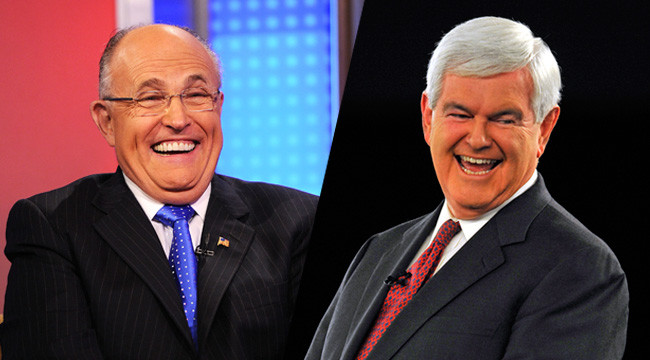
Examples of such renewed efforts include posts attempting to portray Trump loyalists such as former New York mayor Rudy Giuliani and former House Speaker Newt Gingrich as being in the “control” of groups such as PMOI and this past association should preclude their ability to work in a future Trump administration on Iranian issues.

It is no secret that they and other prominent European and U.S. officials have appeared at forums, rallies and demonstrations held by a wide range of human rights groups such as Amnesty International and Iranian dissident groups such as PMOI and the National Council of Resistance of Iran to voice support for democratic reforms in Iran and denounce human rights violations and the regime’s long support of terrorism.

It is also important to note that support for the Iranian resistance movement globally isn’t limited just to those who supported Trump’s candidacy, but includes prominent Democrats such as Sen. Richard Menendez (D-NJ) and Robert Torricelli.

A senior Iran analyst at the Foundation for Defense of Democracies, said that Iran is likely to test the future Trump administration as part of this new effort to shape U.S. foreign policy next year.

“Despite much of the attention being paid to what President-Elect Trump’s Iran policy has to do with the [Iran] nuclear deal, another domain the next administration will have to contend with Iranian belligerence in is in the Persian Gulf and Strait of Hormuz,” the analyst said. “Trump’s statements about having Iran’s IRGC speedboats—which have been overtly harassing the U.S. Navy in international waters—’shot out of the water,’ appears to indicate a desire to respond more aggressively to Iranian provocations.”

An aggressive U.S. response may send a message to Iran, the senior analyst at Foundation for Defense of Democracies said.

The potential for a Trump administration to scrap the nuclear deal as one of its first foreign policy items has the full attention of the Iranian regime.

Department of State Spokesman Mark Toner confirmed to reporters “the agreement is valid only as long as all parties uphold it.”

Since the nuclear deal was signed by Russia, Britain, France, China, the U.S. and Germany, the withdrawal from the agreement by the U.S. would make it null and void. With the American and several other European companies beginning to re-engage economically with Iran, such as Boeing signing a multi-million dollar deal with Iran Air, to provide a brand new fleet of planes, the very real threat of the deal’s collapse looms large.

While Trump has ample reasons to tear up the deal as he has promised to do, he should also recognize the golden opportunity afforded to him to put the mullahs to the test and gauge how badly they want economic improvements given the deep dissatisfaction among the Iranian people.

The sanctions relief provided to Iran as part of the deal needs to be renewed every 120 to 180 days, which means Trump will need to actively enforce the agreement within his first few months in office, wrote Richard Nephew in a paper published by the Columbia Center for Global Energy Policy. It’s possible, said Nephew, who coordinated Iran sanctions policy when he was at the State Department, that Trump would withhold sanctions relief and use the leverage as part of his push to renegotiate the deal.

All of which means Trump is holding all the cards and the mullahs are left essentially powerless as evidenced by their desperate attempts to smear the long-standing Iranian resistance movement and attack its supporters.

Michael Tomlinson


Filed Under: Blog, Current Trend, News Tagged With: #NuclearDeal, Appeasement policy, Featured, Iran, Iran deal, Iran Human rights, Iran Lobby, Iran sanctions, Iran Talks, Iran Terrorism, National Iranian American Council, NIAC, NIAC Action, Nuclear Deal, PMOI/MEK, Trita Parsi

Next President Must Address Iran Regime Comprehensively

November 8, 2016 by admin

Next President Must Address Iran Regime Comprehensively

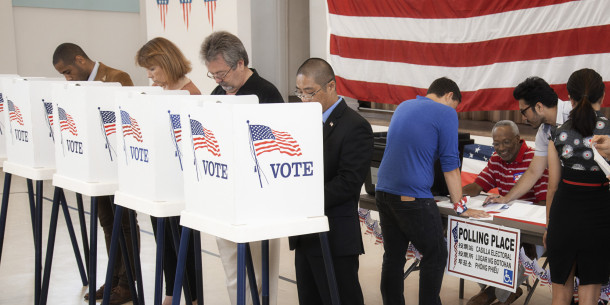
People voting in polling place

One of the great fundamental flaws in the negotiations over the Iran nuclear agreement was the concession to the mullahs in Tehran to unlink non-nuclear activities such as support for terrorism and human rights violations from the deal in an act of appeasement in the vain hope of moderating their behavior.

In the year since the agreement, the Iranian regime’s actions have proven those hopes to be false and the appeasement merely a reward for continued Iranian aggression. While that policy turned out to be a failure, the next president—be it Hillary Clinton or Donald Trump—will need to face the challenge of Iran with a more comprehensive approach.

The challenges facing the new president will be numerous and complicated. The current policies of trying to appease the Iranian regime have only made matters worse not only in the Middle East, but around the world.

It has also fractured what once was a globally united front against the Iranian regime which placed uniform and complete economic sanctions so effective that it threatened the mullahs hold on their regime and drove them finally to the bargaining table for the first time since this regime has been in power.

Unfortunately the nuclear agreement gave them a free hall pass and they have taken it to exploit it. The new president will find on his or her plate an Iran that:

  • Is at the center of the regions three major conflicts by supplying weapons, cash and fighters in Syria, Iraq and Yemen;
  • Those same conflicts have caused the greatest refugee crisis since World War II and radically reshaped the global flow of refugees and migrants and caused internal chaos throughout Europe, Africa and even the Americas;
  • Iranian regime is committed to expanding its extremism and made no attempts to conceal its agenda and willingness to use force to achieve it, including creating a Shia sphere of influence stretching from the Mediterranean to the Indian Ocean;
  • Is actively arresting and imprisoning dual-national citizens from the US and Europe for no reason other than to acquire new bargaining chips to exchange for even more concessions or ransom payments;
  • Forcing changes in alliances and partnerships that have created deep rifts for the US among traditional partners and allies such as Egypt, Israel, Saudi Arabia, Turkey, Jordan and the Gulf states; and
  • Imposed new and brutal crackdowns on human rights on the Iranian people, leaving a negative sentiment about the West, that continues to ignore that in its dealing with the regime.

The new president will also have to rebuild and forge a new consensus on to effective deal with Iranian extremism in the face of a rush by European, Asian and American firms to try and cash in on the perceived riches available in the Iranian marketplace; a perception that may prove just as illusory as the hopes for moderation.

At least one former hostage is working to remind whoever is elected to take a harder line against the Iranian regime. Barry Rosen, a survivor of the 1979 hostage crisis, serves as an advisory board member for United Against Nuclear Iran and penned an editorial for Time magazine.

“In this unusual presidential campaign cycle, we have seen a lack of substantive discussion about Iran and foreign policy from the candidates. This oversight comes at the most critical time in decades, with the nuclear deal well underway despite continued hostile behavior from the Iranian regime. It is imperative that the Presidential candidates and our policymakers in Congress understand that the Iranian regime that held my colleagues and me hostage has not reformed its ways,” Rosen writes.

“It’s likely that the next U.S. President will not be through the first 100 days of the administration before Iran is once again a problem that cannot be ignored. The nuclear deal has done nothing to bring about crucial change in Iran. And there is no more clear an example of this than Iran’s involvement in the Syrian crisis. The American government is foolish to ignore the growing threat that is Iran,” he added.

“The next President must acknowledge the realities of inner turmoil in Iran, and be prepared to take a hard line against Khamenei and his regime as they push the envelope. Regardless of who wins the Iranian elections in March, we already know the regime holds the power and has no intention of working diplomatically with the West. The fanciful notion that the nuclear deal would bring about better relations between our two countries has been dispelled; a new administration will have the chance to cast a spotlight on Iran for the bad global actor it is,” Rosen said.

Rosen’s admonitions for the next president are prescient and valid. He also raises the uncomfortable truth for many of those that originally supported the Iranian nuclear which is that the deal has become almost toxic to publicly support anymore.

Too many Americans recall the videos and photos showing American sailors forced to kneel at gunpoint from Iranian Revolutionary Guard Corps members, while anyone on Google can simply type in “Iran” and “executions” and see the regime’s justice system on gruesome display.

So for a new president the complexities of the Iranian problem will require stern action, as well as a deft hand in reassembling the global consensus that has been damaged over the past year as foreign companies look for dollars instead of relief for the long-suffering Iranian people.

No matter who is elected, we can only hope that dealing with Iran with more than hope and sentiment is on their agenda.

Michael Tomlinson

Filed Under: Blog, News Tagged With: #NuclearDeal, Appeasement policy, Featured, hassan rouhani, Iran, Iran Human rights, Iran Mullahs, Iran sanctions, Rouhani, Sanctions

Trita Parsi Mounts Defense of Iran Nuclear on Eve of Election

November 7, 2016 by admin

Trita Parsi Mounts Defense of Iran Nuclear on Eve of Election

Trita Parsi Mounts Defense of Iran Nuclear on Eve of Election

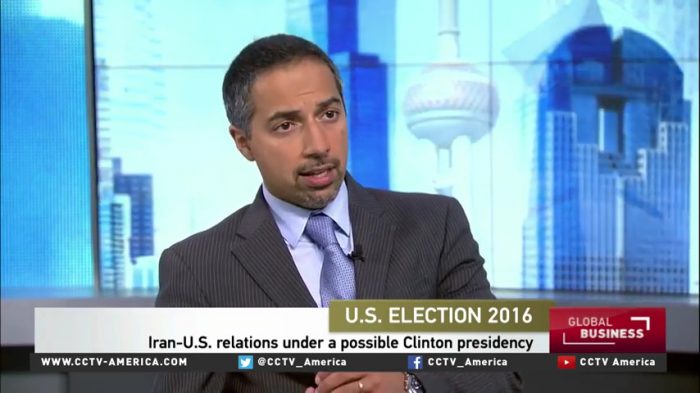
Tirta Parsi, the founder of the National Iranian American Council and one of the Iranian regime’s most ardent supporters, took to the airwaves in a final effort to shape impressions about an Iranian nuclear deal that is getting widely panned in the wake of a year of Iranian aggression and human rights violations.

Oddly though he appeared on CCTV, the Chinese-produced news channel, which doesn’t have a high Iranian-American viewership, but then again, Parsi isn’t trying to reach the constituency his organization is ostensibly supposed to be helping; rather he is trying to make the case to overseas governments to stay on board with the Iranian regime in spite of its involvement in three raging wars now in Iraq, Syria and Yemen.

His appearance amounts to another PR push to try and allay fears that the nuclear deal is going to be trashed by either Hillary Clinton or Donald Trump. He voiced his greatest optimism for saving the deal with Clinton’s election, but even tempered his language slightly from the normal dumping on Trump in light of the candidate’s closing in these last days in most polls.

For Parsi, the effort must be akin to gritting your teeth while getting a root canal since it seems every time he goes out there to be a loyal supporter of the mullahs’ agenda, they go ahead and do something to prove his statements wrong.

His famous claims that the nuclear deal would moderate Iran and empower more liberal elements in the regime to make gains in parliamentary elections fell flat as the ruling leadership wiped thousands of candidates off the ballots to ensure solid majorities for their supporters.

Parsi’s belief in Iran’s future role as a “stabilizing” influence in the Middle East’s conflicts evaporated like water on a hot plate when Iranian regime brought Russia into the Syrian conflict and escalated wars in Iraq and Yemen. Mass killings of civilians, bombed out villages, fleeing refugees, all have become staples of the post-nuclear deal era.

Most appalling of all has been Parsi’s complete silence on the Iranian practice of grabbing dual-national citizens, especially Iranian-Americans? Even the sentencing of his supposed friend Siamak Namazi to an extended prison term earned only minimal statements and none of the grassroots campaigns that have marked previous NIAC efforts to win support for the nuclear deal.

The irony is overwhelming when an organization supporting Iranian-Americans, abandons them to Iranian prisons.

For Parsi, the Iranian regime continually makes him out to be a false prophet and for the mullahs in Tehran, this year’s US presidential election is just another example—in their minds of the Great Satan’s decline—but in fact, they shined a bright light on of the great achievements of the US political system in comparison to theirs.

As the New York Times wrote, “In the past, Iranians looking to mock the United States would burn cardboard effigies of Uncle Sam or Lady Liberty. But in recent months, as the American presidential election took a series of bizarre turns, Iranians seeking to make fun of the ‘Great Satan’ have ditched the arts and crafts and simply switched on their TV sets.”

“Iran’s state television, a bastion of conservative ideologues, for once interrupted its regular programing about the ‘murders and crimes committed’ by the United States and broadcast all three debates between Hillary Clinton and Donald J. Trump — live,” the Times added.

In a country that tightly controls information about the United States and depictions of Western democracy generally, the decision to show the debates was unprecedented but by no means inexplicable: The presidential campaign shows the United States political system in such a poor light, hard-liners evidently want it to speak for itself.

And therein lays their weakness. While the mullahs look to make fun of the American political process they gave Iranians a glimpse of something they cannot have and only dream about; the ability to openly denounce, debate, disagree and even vote out their leaders.

In a regime where the top post of “Supreme Leader” is invested by the Iranian constitution with undisputed powers literally for life, the thought of openly disagreeing, even making fun of the regime’s leaders would be met with knocked down doors, secret trials and public hangings.

While the mullahs may think they are mocking the US, in reality they may have uncorked subtle questioning by their own people who may be asking “Why can’t we do this to our leaders?”

The Iranian people are deeply dissatisfied with the course of their nation, fed up with rampant corruption by regime officials, long wars claiming the lives of the young future of the country and tired of lacking even the most basic freedoms to post selfies, dress as they want or even ride a bicycle.

As Parsi even admits in his CCTV interview, the Iranian people are chafing under the lack of progress and improvements, but while he blames the lack of full implementation of the nuclear agreement, what he doesn’t admit is that the source of that discontent is within the regime’s policies itself.

Michael Tomlinson

Filed Under: Blog, Current Trend, Latest from Lobbies & Appeasers, National Iranian-American Council, News Tagged With: #NuclearDeal, Clinton presidency, Featured, Moderate Mullahs, National Iranian American Council, NIAC, NIAC Action, Nuclear Iran, nuclear talks, Rouhani, Sanctions, Trita Parsi, US election

Hassan Rouhani Comments on US Election Despite Troubles Ahead

October 24, 2016 by admin

Hassan Rouhani Comments on US Election Despite Troubles Ahead

Hassan Rouhani Comments on US Election Despite Troubles Ahead

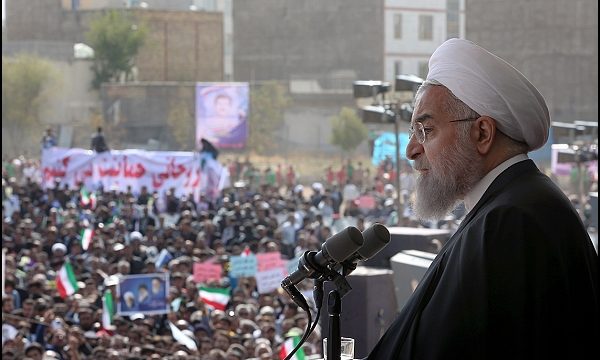
Hassan Rouhani addressed a crowd in the Iranian city of Arak and deplored what he called a “lack of morality” in the US presidential campaign and mocked the recent presidential debates in the his first public comments on a race to elect the next president who will have to decide to confront growing Iranian extremism.

“We have seen the way the (US presidential) candidates speak, accuse and mock (one another); and this is the American democracy and election,” Rouhani said.

Rouhani’s comments followed similar critical remarks made by top mullah Ali Khamenei who also lashed out at both Hillary Clinton and Donald Trump.

“The (ongoing) election campaigns in America and issues raised by the two candidates constitute a clear and evident example of the consequences of lack of spirituality and faith among those in power,” Khamenei said this weekend.

“During the coming weeks, one of these two candidates of America’s (presidential) election, whose remarks and condition you observe, will become the president of a country which has power and wealth and the biggest amount of nuclear weapons as well as the biggest media in the world,” he added in regime-controlled media.

The ramp up in comments by Khamenei and Rouhani indicate a new level of interest and worry by the Iranian regime as the sun sets on the Obama administration which has pursued a policy of appeasing the regime through the nuclear deal, lifting of economic sanctions and payment of ransom to gain the release of American hostages.

For the mullahs in Tehran the upcoming election is worrisome since both candidates have been especially harsh in condemning actions of the Iranian regime such as its long-running support for the Assad regime in Syria and the continued arrests of Iranian-American dual nationals.

The fact that Rouhani and Khamenei are wrestling with a stagnant economy, restless population, skyrocketing youth unemployment and the drain of maintaining three separate proxy wars in Syria, Iraq and Yemen, has threatened their hold over power, which has forced them to pursue an even harsher crackdown on human rights at home to prevent dissent.

The uncertainty of what a new US president will do in regards to Iranian policy has also trickled down to foreign banks and potential investor putting a hold on future investments until next year.

One can almost feel the sweat bead up on Rouhani’s forehead again.

It is ironic though to see Rouhani and Khamenei weigh in on the US election given the handling of their elections.  The Iranian regime historically has rigged its own elections as to make any outcome other than the one desired by the mullahs as moot.

The “stolen” election of 2009 that saw unpopular Mahmoud Ahmadinejad re-elected in a contest widely viewed as fraudulent is just one example. Another was the election of Rouhani himself in which all potential opponents were cleared off the ballot by a committee hand-picked by Khamenei.

The creation of the Iran lobby through organizations such as the National Iranian American Council helped facilitate the false perception that Rouhani was a “moderate.” Fortunately the world has had the benefit of seeing Rouhani in action—especially the year following the nuclear agreement—and has come to the realization that the Iranian regime is not interested in truly becoming a moderate nation.

Rouhani’s comments are even more ridiculous when you consider statements made by Ali Akbar Velayati, a key foreign policy advisor to Khamenei with Iran’s al-Alam television network, in which he claimed the regime opposed interference in the internal affairs of other countries.

“Iran opposes interference by any country, including Turkey or others, in the internal affairs of another country,” he said, adding that the domestic affairs of any country are its own concern.

The regime official rejected claims that Iran is interfering in the affairs of Iraq and said Tehran only provides Baghdad with military consultation at the request of the Arab country’s legitimate government, according to the regime’s PressTV.

The audacity for the regime to peddle such an obvious lie is amazing since the Iranian regime has almost gleefully inserted itself into the internal affairs of its neighbors in Syria and Iraq to a point where Syrians and Iraqis have openly complained of an Iranian takeover of their governments.

The regime’s use of terrorist proxies such as Hezbollah to carry out attacks and bombings in places such as Saudi Arabia, Lebanon, Afghanistan and even Argentina point out how far the mullahs are willing to go to meddle in other countries’ affairs.

Even the use of cyberhackers within the Revolutionary Guard Corps to attack US and European computer systems demonstrates the level of willingness to interfere in virtually all aspects of other nations’ affairs.

It’s now clear that the policy of appeasement of the mullahs to help “moderates” in Iran has failed, and the next president must define a firm policy towards the mullahs in Iran, if it wants to prevent the spread of terror and extremism in the region.

Michael Taylor

Filed Under: Blog, News Tagged With: #NuclearDeal, Appeasement policy, Featured, hassan rouhani, Iran, Iran deal, Iran Human rights, Iran Mullahs, NIAC

Iran Regime Pushes Oil Contracts to Raise Cash for Wars

October 19, 2016 by admin

Iran Regime Pushes Oil Contracts to Raise Cash for Wars

Iran Regime Pushes Oil Contracts to Raise Cash for Wars

The Iranian regime’s Hassan Rouhani put out the invitation to a select group of high-powered investors to come visit the regime in the hopes of garnering new investments to help jump-start a stagnant economy that has only gotten worse after promises for improvements by Rouhani proved false after the nuclear agreement. Rouhani did not mention anything about the dual citizens who will end up in prison for a cash ransom.

Rouhani’s invite went to the 20-20 Investment Association, a group of influential investors overseeing $7 trillion of assets, much of it though is held within government-run pension funds which are prohibited by many state laws from investing in Iran because of its support of terrorism. This includes some of the biggest pension funds run by California, New York and Texas.

James Donald, head of emerging markets at Lazard Asset Management, the US fund company that oversees $174 billion of assets, and a board member of the 20-20 association, said the invitation reflected the Iranian regime’s desire to attract more foreign investors.

Donald said: “The group at this stage has not accepted the invitation. An awful lot of large government pension plans have restrictions on Iranian investments and [on] any company that does business in Iran. There is talk of [the remaining sanctions being removed]. I think there would have to be a federal law change [for banks and asset managers to move en masse into the Iranian market].”

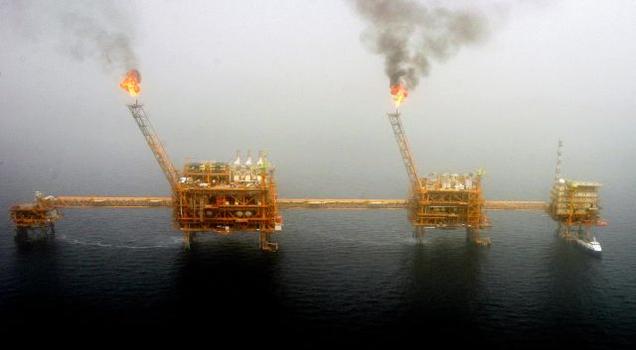
In addition Rouhani’s pleas, the regime-controlled National Iranian Oil Co. issued a request for bidders to invest in Iran’s slumping oil industry which powers much of the regime’s overseas and military activities.

The Iranian regime wants to attract more than $100 billion in investment to increase its oil production by 1 million barrels a day by the start of the next decade and raise its current oil output of 3.63 million barrels a day under a compromise agreement reached with other oil producing countries.

The mullahs in Tehran are anxious to try and diversify its investors because in the prior decade of sanctions imposed stemming from its illicit nuclear weapons program, the only dominant investor willing to ignore Western sanctions was China. In many cases, Iran’s oil, telecommunications, manufacturing and other heavy industries are run almost entirely by Chinese workers and managers.

According to the Chicago Tribune, Western investors have been slow to arrive. That’s especially true in the energy sector, where pressure to increase production is intense. Elsewhere, Western clearing banks still refuse to do business with Iran for fear of falling foul of non-nuclear U.S. sanctions that remain in effect, meaning Western companies can’t raise project finance.

This has created intense pressure on the mullahs to find some way to bring in foreign dollars to modernize its antiquated oil industry in order to get more oil out of the ground and sold to bring in hard dollars to fund three widespread wars Iran is now fighting in Syria, Iraq and Yemen.

The regrettable end game for the mullahs is to rip off Iran’s natural resources not for the benefit of the Iranian people, but rather fund the Islamic revolutionary expansion they are pushing abroad.

Recognizing the limitations of sanctions still in place, in spite of recent moves by the Obama administration to further accommodate a regime threatening to walk away from the nuclear deal in order to extort more concessions, the Central Bank of Iran announced it had informed banks throughout Iran that any failure by non-American banks to provide dollar-related services to Iranians would be “unacceptable” according to regime-controlled media.

“Providing dollar-related services [to Iranians] will no longer expose non-American banks to the risks of sanctions provided that they stay clear of US financial system,” the CBI said in its statement.

“Therefore, non-American banks cannot use US sanctions against Iran as an excuse for refusing to provide dollar-related services to Iranian individuals and entities.”

It is a desperate statement to make since Iran is not the final arbiter of what is and is not allowed under existing sanctions still in place, but the regime is so desperate for cash it is bullying financial institutions into handling US currency in order to get the flow of cash moving through Iran again.

It’s an explicit warning aimed especially at European and Asian banks who have been reluctant to engage in US currency exchanges with Iran for fear of running afoul of US officials, especially since there is significant uncertainty with the upcoming presidential election virtually guaranteeing a change in policy towards Iran come next January.

All of which highlights the futility of the promises and claims made by the Iran lobby following the nuclear deal in which leading supporters of the regime such as the National Iranian American Council promised a more moderate Iran willing to work to end the series of conflicts in the Middle East.

Instead, the world has amply seen the exact opposite with the breaking out of a shooting war between the US Navy and Iranian-backed Houthi forces in Yemen, the ferrying of thousands of Iranian-backed Shiite militias from Iraq into Syria via Iranian airlines to fight for the Assad regime.

The rapid escalation in fighting in these countries is draining the regime’s treasury in spite of the billions of dollars it received as part of the hostage exchange of Americans and the release of frozen assets back to the Iranian regime.

The mullahs squandered those funds and it seems that they are now rapidly trying to squander billions more in foreign investment.

By Michael Tomlinson

Filed Under: Blog, News Tagged With: #NuclearDeal, Featured, hassan rouhani, Iran, Iran Lobby, Iran Mullahs, Iran sanctions, Iran Terrorism

Starting With US Navy Versus Iran Missiles

October 13, 2016 by admin

Starting With US Navy Versus Iran Missiles

Starting With US Navy Versus Iran Missiles

You may not have noticed the news, but there is a shooting war going on off the coast of Yemen between the US Navy and Iranian-backed Houthi rebels trying to overthrow the government in Yemen.

According to US military sources, the US Navy destroyer, USS Mason, was targeted in a failed missile attack as it operated north of the Bab al-Mandab Strait. It was the second attack in the last week against US warships.

The Mason fired defensive salvos in response, bringing down one of the missiles fired at it according to the Pentagon.

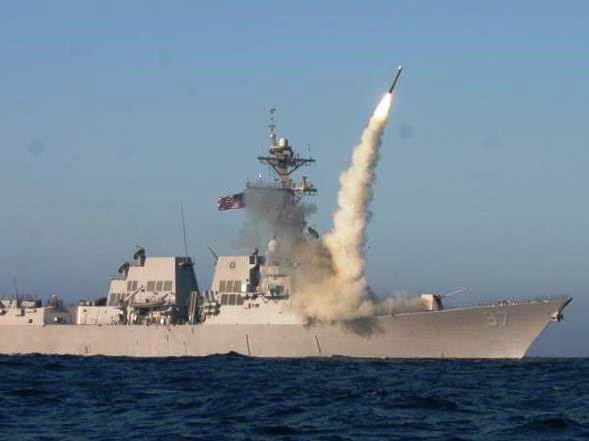
In response, the US Navy reportedly fired Tomahawk cruise missiles Thursday morning from the Red Sea at coastal radar sites in Yemen, destroying targets believed to have targeted the US warships.

The missiles were launched from the destroyer USS Nitze at three locations north of the Bab el-Mandeb strait, said Pentagon press spokesman Peter Cook.

“These limited self-defense strikes were conducted to protect our personnel, our ships, and our freedom of navigation in this important maritime passageway,” Cook said. “The United States will respond to any further threat to our ships and commercial traffic, as appropriate, and will continue to maintain our freedom of navigation in the Red Sea, the Bab al-Mandeb, and elsewhere around the world.”

Michael Knights, an expert on Yemen’s conflict at the Washington Institute for Near East Policy, said the targeting of U.S. warship suggested the Houthis, fighters from a Shi’ite sect that ruled a 1,000-year kingdom in northern Yemen until 1962, could be becoming more militarily aligned with groups like Lebanon’s Shi’ite militant group Hezbollah, according to Reuters.

“Targeting U.S. warships is a sign that the Houthis have decided to join the axis of resistance that currently includes Lebanese Hezbollah, Hamas and Iran,” Knight said.

The Mason was also the target of a failed missile attack off Yemen on Sunday, and the Navy praised the resolve of sailors aboard the ship.

U.S. officials have told Reuters there are growing indications that Houthi rebels, despite those denials, were responsible for Sunday’s incident. The rebels appeared to use small skiffs as spotters to help direct the missile attack on the warship on Sunday.

The United States is also investigating the possibility that a radar station under Houthi control in Yemen might have also “painted” the USS Mason, something that would have helped the Houthi fighters pass along coordinates for a strike, the officials have said.

Reuters has learned that the coastal defense cruise missiles used against the USS Mason on Sunday had considerable range, adding to concerns about the kind of heavy weaponry that the Houthis appear willing to employ and some of which U.S. officials believe is supplied by Iran.

Another missile launched Oct. 1 caused near-catastrophic damage to the HSV-2 Swift, a catamaran-style high-speed vessel that was operated by the Emiratis and once was a part of the U.S. Navy. Video of the strike published online shows the ship engulfed in a fireball.

It’s no secret that the Iranian regime has been supplying the Houthis in their insurgency campaign and warships from Saudi Arabia and other Gulf states have intercepted ships coming from Iran to Yemen loaded with illegal weapons, including rockets, mortars and launchers.

Even the U.S. Navy intercepted an Iranian shipping vessel sending vast shipments of arms to the Houthis in April 2016.

Attacking American ships in Yemen is becoming a disturbingly all too common affair since this Wednesday also marked the 16th anniversary of the terrorist attack against the USS Cole in Aden harbor, which killed 17 American sailors.

The fact that Iranian regime supplies virtually all of the arms to the Houthis, especially sophisticated weapons such as the cruise missiles fired at the US Navy ships, many members of Congress suspect that some of the $1.7 billion cash ransom payment made to the Iranian regime in exchange for the release of American hostages may have paid for the Houthi weapons.

The weekend attack on the U.S. Navy by Iranian-backed Houthi rebels has sparked another official inquiry surrounding the cash payment to Iran, with a group of 17 senators now seeking to obtain an official assessment by the Pentagon of how Iranian regime has allocated this cash to its military operations, according to the Washington Free Beacon.

Lawmakers, led by Sens. Kelly Ayotte (R., N.H.) and Ted Cruz (R., Texas), are petitioning the Pentagon to provide a full analysis of Iran’s military activity since last summer’s nuclear agreement went into effect.

Senior Pentagon leaders have said in recent weeks that the Obama administration kept them in the dark about the cash payment to Iran. The U.S. defense establishment widely believes this money will help Iran foster instability across the Middle East.

The 17 senators sent a letter late Tuesday to Secretary of Defense Ash Carter and Joint Chiefs of Staff Chairman Joseph Dunford. The inquiry centers around evidence that Iran has significantly increased its military activity since the nuclear accord went into effect.

“The plain purpose of transferring the payment in cash to Tehran was to circumvent the effects of U.S. and international financial sanctions,” the lawmakers wrote, according to a copy of the letter obtained by the Free Beacon. “Iran is almost certainly using this windfall to skirt the arms embargo and illicitly purchase weapons for the Islamic Revolutionary Guard Corps (IRGC), the terrorist organization Hezbollah, and/or the murderous Assad regime in Syria.”

The Wall Street Journal editorial board took a hard line at the possibility of Iran supplying and directing the use of these weapons against US forces, which “were attacked by two Chinese-built C-802 cruise missiles fired from territory controlled by Iranian-backed Houthi militia. Iran is a major operator of the C-802; its proxy Hezbollah used it in 2006 to punch a hole in an Israeli corvette off the coast of Lebanon.”

“More significantly, the attack on the Navy ships—with hundreds of American sailors aboard—is another reminder that the nuclear deal has done more to embolden than moderate Tehran’s ambitions, despite a cascade of U.S. concessions.”

“The Journal’s Jay Solomon and Carole Lee reported last month that the Administration secretly agreed in January to lift sanctions on two of Iran’s state banks involved in financing its ballistic-missile program seven years ahead of schedule. More recently, the Administration has granted Boeing and Airbus export licenses to sell passenger jets to Iran, and last week it issued new guidelines to facilitate dollar transactions with Iranian firms.”

“So let’s get this straight: The Administration grants the mullahs unprecedented concessions not called for by the nuclear deal, and they respond by attacking the U.S. Maybe President Obama sees a foreign-policy paradox at work. A better way of describing the dynamic might be cause-and-effect.”

So while the Iran lobby, especially the Ploughshares Fund and National Iranian American Council promised better relations with Iran, the US Navy already finds itself in a shooting war against Iranian proxies and missiles.

Michael Tomlinson

Filed Under: Blog, News Tagged With: #NuclearDeal, Appeasement policy, Ballistic Missiles, Featured, Houthi, Iran, Iran Human rights, Yemen

How Did the Iran Nuclear Deal Become a Partisan Talking Point?

October 6, 2016 by admin


How Did the Iran Nuclear Deal Become a Partisan Talking Point?

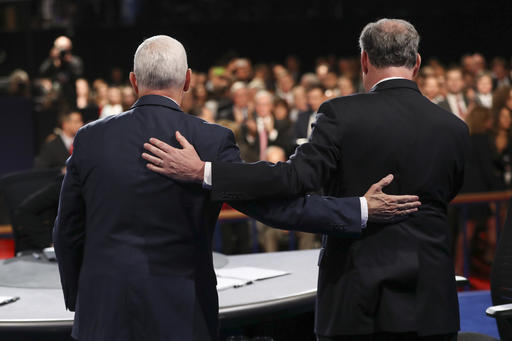
Republican vice-presidential nominee Gov. Mike Pence and Democratic vice-presidential nominee Sen. Tim Kaine stand after the vice-presidential debate at Longwood University in Farmville, Va., Tuesday, Oct. 4, 2016. (Joe Raedle/Pool via AP)

Last night’s vice presidential debate had its usual highs and lows, sprinkled with verbal fisticuffs and even some thoughtful answers, but the most interesting tidbit that came through was the sharp disparity over the Iran nuclear deal in which Democratic running mate, Sen. Tim Kaine (D-VA) all but gushed over the deal’s alleged stoppage of nuclear weapons versus Gov. Mike Pence’s (R-ID) blistering retorts against it.

Putting aside the relative merits of each side’s arguments, the larger question that needs addressing is “how did the nuclear deal ever become a partisan talking point?”

In many ways, it’s lamentable and regrettable that it has gotten to this point. For much of the past three decades both parties have been uniformly united over confronting Iran. That lock-step solidarity is what has driven the vast majority of successes against the Iranian regime such as the imposition of stiff sanctions following the crackdown on demonstrators to the stolen 2009 presidential elections.

Even top mullah Ali Khamenei recognized the terrible blows to the regime’s economy that resulted from those bipartisan sanctions when he summarily decided that the regime needed a new “moderate” face to win back international support after a deplorable eight years of Mahmoud Ahmadinejad.

The regime also recognized that in putting forth a “moderate” face, it had to cobble together a better lobbying effort to drive wedges in the united political front America and its allies had presented for much of the regime’s existence.

Those twin goals led to Hassan Rouhani’s selection and the creation of lobbying groups such as the National Iranian American Council and its offspring, NIAC Action.

Happily for the mullahs, the Obama administration was looking for a foreign policy win to close out its term having been unable to solve the puzzle of wars in Iraq and Afghanistan and the rising tide of Islamic extremism that sprang forth from the Syrian civil war and Iranian regime’s use of terror proxies throughout the region.

It was an unfortunate decision because it enabled the Iran lobby to begin driving that wedge between Democrats and Republicans and shaping a message that if you supported Iran deal you were for peace and if you were against Iran deal you had to be for war.

Most Democrats frankly didn’t buy it as leading members of Congress such as Sen. Robert Menendez (D-NJ), Sen. Ben Cardin (D-MD), Sen. Chuck Schumer (D-NY) and Rep. Eliot Engel (D-NY) opposed the Iran nuclear deal, but the Iran lobby worked furiously to try and shape the debate as a Democrat vs. Republican one when in fact it wasn’t.

For other Democrats, the choices were simpler in which they chose party loyalty in an election cycle, many privately hoping to impose additional sanctions after the presidential elections.

In fact, in the year since the Iran deal was approved, and the mullahs have showed their true nature with the widening of the wars in Syria, Iraq and Yemen, as well as the renewed crackdowns and human rights violations at home and escalation of its ballistic missile program, many of these same Democrats have offered up new proposals to impose new watchdogs or sanctions on Iranian regime.

Coupled with the fact that the mullahs have obliged by going on a binge of militant and aggressive acts including threatening US warships in the Persian Gulf and snatching up even more dual nationals for future hostage swapping, it is almost certain that after the November elections, the US will once again present a united front in confronting Iranian regime’s extremism.

But that prospect hasn’t stopped the Iran lobby from desperately trying to make Iran a partisan issue as NIAC head, Trita Parsi was busy tweeting out his enthusiastic support for Kaine’s comments in support of the nuclear deal, probably had to make many Clinton supporters cringe slightly.

In regards to the actual facts surrounding the nuclear deal, the media fact checkers waded through the statements and found some by Kaine to be slightly wanting of clarity.

From the Washington Post: “The deal, which has been sharply criticized by Republicans, did increase the amount of time that Iran would need to build a nuclear weapon by reducing its centrifuges for uranium enrichment and its stockpile of enriched uranium. But the deal expires in 15 years, and Iran’s nuclear infrastructure remains in place.

“While Iran has insisted it has no interest in building nuclear weapons, the deal does not eliminate the risk that it will obtain nuclear bombs.”

The New York Times called the claim that the Iran nuclear deal eliminated Iran’s nuclear weapons program an “exaggeration.”

A report released this September by the Institute for Science and International Security found that the deal will also allow, through an exemption, Iran to keep 50 tons of heavy water and “continue operating 19 ‘hot cell’ radiation containment chambers.”

Possessing materials such as enriched uranium and heavy water does not necessarily mean Iran will have the capacity to restore its nuclear program. The deal will not allow nuclear inspectors to confirm, however, whether or not Iran is complying with the deal. Iran got negotiators to agree that no U.S. nuclear inspectors will be allowed on Iranian soil, according to Breitbart News.

Ultimately, the issue of containing and confronting the Iranian regime has historically been a bipartisan effort. We hope that after November, it once again becomes bipartisan.

By Michael Tomlinson

Filed Under: Blog, News Tagged With: #NuclearDeal, Featured, hassan rouhani, Iran, Iran deal, Iran Human rights, Iran Lobby, Iran Mullahs, Iran sanctions, Iran Terrorism, National Iranian American Council, NIAC, Trita Parsi

  • « Previous Page
  • 1
  • …
  • 6
  • 7
  • 8
  • 9
  • 10
  • …
  • 15
  • Next Page »

National Iranian-American Council (NIAC)

  • Bogus Memberships
  • Survey
  • Lobbying
  • Iranians for International Cooperation
  • Defamation Lawsuit
  • People’s Mojahedin
  • Trita Parsi Biography
  • Parsi/Namazi Lobbying Plan
  • Parsi Links to Namazi & Iranian Regime
  • Namazi, NIAC Ringleader
  • Collaborating with Iran’s Ambassador

Recent Posts

  • NIAC Trying to Gain Influence On U.S. Congress
  • While Iran Lobby Plays Blame Game Iran Goes Nuclear
  • Iran Lobby Jumps on Detention of Iranian Newscaster
  • Bad News for Iran Swamps Iran Lobby
  • Iran Starts Off Year by Banning Instagram

© Copyright 2026 IranLobby.net · All Rights Reserved.