Iran Lobby

Exposing the Activities of the lobbies and appeasers of the Mullah's Dictatorship ruling Iran

  • Home
  • About
  • Current Trend
  • National Iranian-American Council(NIAC)
    • Bogus Memberships
    • Survey
    • Lobbying
    • Iranians for International Cooperation
    • Defamation Lawsuit
    • People’s Mojahedin
    • Trita Parsi Biography
    • Parsi/Namazi Lobbying Plan
    • Parsi Links to Namazi& Iranian Regime
    • Namazi, NIAC Ringleader
    • Collaborating with Iran’s Ambassador
  • The Appeasers
    • Gary Sick
    • Flynt Leverett & Hillary Mann Leverett
    • Baroness Nicholson
  • Blog
  • Links
  • Media Reports

A Year of Proof the Iran Nuclear Deal Failed

August 24, 2016 by admin

A Year of Proof the Iran Nuclear Deal Failed

A Year of Proof the Iran Nuclear Deal Failed

Jay Solomon of the Wall Street Journal wrote an engrossing look back at the Iran nuclear deal after one year and why the Iranian regime’s mullahs, especially its top leader, Ali Khamenei, believe they were the true winners following the deal.

The proof of that belief is in tallying the butcher’s bill of death, misery and military expenditure the regime has dispensed over the last 12 months.

It is a record that cannot be hidden by the Iran lobby. It cannot be explained away by the Obama administration’s “echo chamber” of regime supporters. It will not be ignored by news media intent on trying to resuscitate the quaint notion that somewhere within the Iranian regime is some cadre of “moderates.”

What Solomon notes, is that while the Iranian regime, especially Khamenei, has engaged in almost virulent anti-Western rhetoric since the deal was passed, he and his fellow mullahs are unlikely to willfully walk away from the nuclear deal since it was heavily weighted in the favor of their regime—not the Iranian people mind you, but to the mullahs and their military forces.

As Solomon writes, “for all his complaints about American treachery, Mr. Khamenei and his allies recognize that the nuclear deal has produced significant benefits for their hobbled theocracy.”

“Since the accord was announced last summer, Mr. Khamenei and his elite military unit, the Islamic Revolutionary Guard Corps, have moved to solidify their hold. As international sanctions against Iran have slackened, the ayatollah and his core allies have expanded the Iranian military and pursued new business opportunities for the companies and foundations that finance the regime’s key ideological cadres. Iran has continued to fund and arm its major regional allies, including the Assad regime in Syria, the Lebanese militia Hezbollah and Houthi rebels in Yemen—all of which are at war with America’s regional partners—and the regime has continued to test and develop ballistic missiles. The government has also stepped up arrests of opposition leaders and political activists,” he added.

What brought Khamenei and the mullahs to the bargaining table in the first place was the effect tough sanctions were having on the regime’s finances and their shaky hold over the Iranian people. Coupled with plunging oil prices, the squeeze on the mullahs was considerable.

The mandate Khamenei gave to Iranian negotiators was explicit: preserve the regime’s military and nuclear infrastructure, delink any changes to the regime’s human rights policies or domestic political agenda and ensure financial benefits flowed to refill their depleted coffers immediately.

The nuclear deal agreed to by the U.S. and the other P5+1 nation’s did all that and recouped nothing in terms of moving Iran closer towards a true democracy. As Solomon describes, if anything, the deal has helped control of the nation and its people firmly in the hands of the religious leadership and Revolutionary Guards.

The most overused rationale for the deal by the Obama administration and Iran lobby was that the agreement severely constrained the regime from a pathway to a nuclear weapon, but Khamenei himself espoused the greatest omission in the deal which is the exemption of Iran’s civilian nuclear program.

While the Iran lobby, especially the Ploughshares Fund and National Iranian American Council, have loudly boasted the deal brings Iran’s centrifuge capacity to 5,000 machines, Khamenei has openly called for a “civilian” centrifuge capacity of a whopping 100,000 machines.

“After a decade, the international community would go along with Mr. Khamenei’s vision of an Iran that could develop an industrial-scale, civilian nuclear program without checks on the number or capacity of the centrifuges spinning. The U.S. had won only a short-term pause in the expansion of the Iranian program, and the supreme leader had gained international approval for his longer-term plan,” Solomon writes.

“Indeed, in recent weeks, Iranian officials have talked of their preparations to build 10 new nuclear reactors with Russian help. This will require a steady supply of nuclear fuel from centrifuges that will be allowed to go online in a decade,” he adds.

That close cooperation with Russia has become a major foreign policy headache for U.S. as Russia has sold Iran billions in new sophisticated military hardware and intervened in the Syrian conflict at Iran’s urging and has now begun flying bombers from Iranian airfields.

Most importantly of all for the regime and its mullahs has been the lifting of sanctions to finally sell oil and gas products on the open market and the allowance for foreign investment back into Iran, especially its heavy industries such as agriculture, chemicals and manufacturing which had all but fallen apart.

That influx of investment, as well as the reportedly $400 million in cash the U.S. paid in exchange for the release of American hostages, has essentially saved the regime from collapse with its military commitments in three full-scale wars draining their treasury.

With the financial gain, the mullahs have moved aggressively to secure their prospects domestically with the rigging of parliamentary elections by the removal of almost two-thirds of candidates from the ballot, instituting a harsh crackdown on dissent including mass arrests of journalists, bloggers, dissidents and artists, mass execution of Sunni political prisoners, along with a steep increase in the arrest of dual national citizens that can be used for more ransom payments or hostage exchanges since it worked so well already.

Tied together with the advances made in driving anti-Assad rebels back in Syria, solidifying control over Iraq through Shiite militias now comprising the bulk of Iraqi military activity and now with the backing of the Houthis in Yemen, the Middle East can safely be called the most instable it’s been in the last four decades.

All of this poses a significant challenge for the next American president.

By Michael Tomlinson
Filed Under: Blog, News Tagged With: echo-chamber, Featured, Iran deal, Iran Human rights, Iran Lobby, Khamenei, Ploughshares

Iran Lobby Assurances Proven False Again

August 21, 2016 by admin

Iran Lobby Assurances Proven False Again

Iran Lobby Assurances Proven False Again

The “echo chamber” created by the Obama administration to help push through passage of the badly flawed Iran nuclear deal has beat the drum repeatedly in efforts to defend the deal in the face of growing and incontrovertible proof that all of the assumptions of the Iran lobby have been proven false.

The revelations of the falsehoods surrounding the Iran lobby’s participation in that now infamous echo chamber have almost become legendary:

  • Allen S. Weiner, a Stanford law professor and contributor to the Washington Post’s opinions section who co-authored a piece arguing in favor of the $400 million “ransom payment” failed to disclose he had long been on the payroll of the Ploughshares Fund, an organization recently exposed as a key cog in a White House-orchestrated campaign to build what it called a pro-Iran “echo chamber;”
  • Shortly after approval of the nuclear deal, in which the Iran lobby argued it would empower “moderate” forces within the regime, parliamentary elections were rigged to eliminate virtually all perceived moderates and usher in solid majorities loyal to the ruling mullahs; and
  • Promises by the Iran lobby, especially the National Iranian American Council, that the deal would help steer Iran as a player in the Middle East to stabilize regional conflicts was proven wrong when wars in Syria and Iraq widened, ISIS rose up and Iran launched a rebellion in Yemen by the Houthis.

In each case, the Iran lobby has sought to assure the world of the good intentions of the Iranian regime, only to have those assurances fall flat in the face of new regime transgressions, but for the Iran lobby the battle being waged by its members is the battle of public perception.

It serves the purposes of the mullahs to have the perception there is a chance for moderation, rather than actually delivering any.

Nothing illustrates that point more than the controversy over the $400 million cash payment made by the Obama administration in what appeared to be linkage for the release of several American hostages.

Even though the Iran lobby remained relatively silent on the issue, “echo chamber” participants such as Weiner made a strong case for denouncing any link of cash for hostages. Of course, the Iranian regime did nothing to steer speculation away from that scenario; with various regime officials all but boasting of how the Islamic state cowed the U.S. and forced it to pay it millions of dollars.

Even though the Obama administration at first vigorously denied any connection, the issue was never what the administration thought, but what the regime thought since if the mullahs indeed believed this was a straight cash for hostage swap, it would only serve to validate their belief that this was a sound policy to pursue in advancing the goals of the regime.

That much was true when the Obama administration finally admitted the other day that the $400 million ransom payment was held up until confirmation of the hostages’ release and flight back home, thereby validating the use of the money as leverage tied directly to the hostages’ plight.

For months the Obama administration had maintained that the payment was part of a settlement over an old dispute and did not amount to a “ransom” for the release of the Americans. Instead, administration officials said, it was the first installment of the $1.7 billion that the United States intends to pay Iran to reimburse it for military equipment it bought before the Iranian revolution that the United States never delivered.

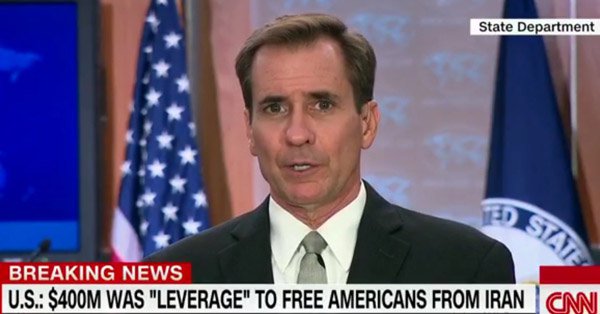
But at a briefing on Thursday, John Kirby, the State Department spokesman, said the United States “took advantage of the leverage” it felt it had that weekend in mid-January to obtain the release of the hostages and “to make sure they got out safely and efficiently.”

According to the New York Times, the acknowledgment by Kirby on Thursday touched off a torrent of criticism from Republicans.

“It was ransom,” said Representative Ed Royce of California, chairman of the House Foreign Affairs Committee. “We now know it was ransom. And on top of that it put more American lives at risk. And we’ve emboldened Iran. We’ve encouraged them, frankly, to take more hostages and put more American lives at risk of being taken hostage.”

Iranian regime press has described the payment as a ransom — which fits Tehran’s narrative that it has outmaneuvered the Obama administration.

Kirby conceded that while the deals were negotiated separately, the timing of the final transactions was linked. “As we said at the time, we deliberately leveraged that moment to finalize these outstanding issues nearly simultaneously,” he said.

The Wall Street Journal editorial board took a harsh tack with the ransom payment, saying the Obama Administration’s handling of the Iran ransom-for-hostages story brings to mind the classic Chico Marx line in the movie “Duck Soup”: “Who are you going to believe—me or your own eyes?”

“Mr. Obama, meanwhile, spent August denying that a ransom was a ransom. Since the January “leverage” moment, Iran has taken three more Americans as hostage and is now demanding the return of $2 billion in funds that U.S. courts have ordered held for the victims of Iranian-sponsored terrorism. The eyes of the world can simply stare,” the Journal added.

The campaign to pass this ill-fated nuclear deal has also been undergoing even more scrutiny with disclosures that Ploughshares Fund sought $750,000 from billionaire financier’s George Soro’s Open Society Foundation to pay off “experts and validators” to vouch for the nuclear agreement.

The disclosure of the Ploughshares request shines further light on backroom efforts by the White House and its top allies to create what they called an “echo chamber” to galvanize public support for the nuclear deal with Iran.

According to the Washington Free Beacon, one foreign policy consultant who has worked intimately with Congress on the Iran deal said that the Ploughshares funding request is further proof that the White House’s efforts were well funded and highly influential.

“You couldn’t turn around last summer without bumping into some Iran deal booster complaining about all the money that skeptics were spending,” the source said. “Now we find out that the architects of the Iran echo chamber were soliciting hundreds of thousands of dollars from dark money groups to pour into manipulating the media and pushing fabricated experts into the mainstream.

By Michael Tomlinson

Filed Under: Blog, News Tagged With: #NuclearDeal, Appeasement policy, Featured, Iran Lobby, National Iranian American Council, NIAC, Nuclear Deal, nuclear talks, Ploughshares

The Echo Chamber of Iran Rings with Hardliners

May 25, 2016 by admin

The Echo Chamber of Iran Rings with Hardliners

The Echo Chamber of Iran Rings with Hardliners

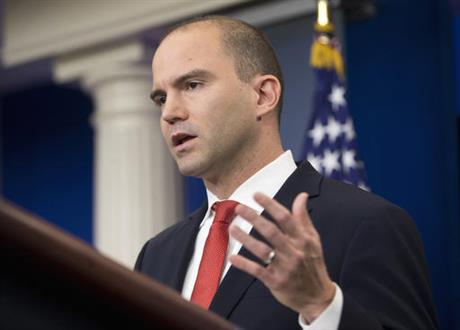
In the now-infamous article by the New York Times Magazine on how a network of Iranian regime lobbyists, activists and journalists was created to feed a false narrative about the Iran nuclear deal. National security staffer Ben Rhodes called it an “echo chamber” where so-called independent experts were in actuality actively working at the direction of the White House media operation.

The key messages, social media postings and parade of so-called “experts” was designed to put forward the story that the nuclear deal would put a stop to Iran’s nuclear development, empower moderate elements within the Iranian government and stabilize the Middle East.

Alternatively, this same echo chamber fought against any effort to link human rights, sponsorship of terrorism or strict guidelines on inspections of Iran military facilities as being destabilizing the prospects of an agreement.

Since the deal was struck last year, the world has discovered how completely wrong all those assumptions were, but worse, how the Iran lobby, directly funded with cash from groups aligned with Iran, was essentially lying.

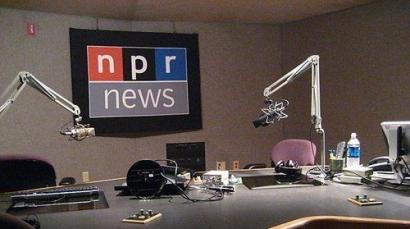
The avalanche of disclosures now come fast and furious as we begin to see the scope, size and sophistication of the Iran lobby’s efforts, especially in swaying favorable media coverage by paying news outlets such as National Public Radio hundreds of thousands of dollars for positive coverage of the deal.

Bloomberg in a report examined the full scale of the Iran lobby’s network and operations in supporting the Iran nuclear deal based a series of leaked emails he received.

It discovered that the actual campaign for the nuclear deal did not start in 2015 with negotiations as Iran regime supporters claim, but rather launched a full four years earlier with Ploughshares Fund leading the initial organization long before Rhodes began meeting with progressive groups on shaping the Iran narrative, which may indicate that the administration itself may have been played for fools by the mullahs in Tehran all along.

Beginning in August 2011, Ploughshares and its grantees formed the Iran Strategy Group. Over time this group created a sophisticated campaign to reshape the national narrative on Iran. That campaign sought to portray skeptics of diplomacy as “pro-war,” and to play down the dangers of the Iranian nuclear program before formal negotiations started in 2013 only to emphasize those dangers after there was an agreement in 2015, Bloomberg writes.

The strategy group, which included representatives of the Arms Control Association, the National Security Network, the National Iranian American Council, the Federation of American Scientists, the Atlantic Council and others, sought to “develop process and mechanism to implement Iran campaign strategies, tactics and narrative,” according to an agenda for the first meeting of the group on Aug. 17, 2011, Lake adds.

The fact that Ploughshares funds the NIAC, the chief lobbyist for the Iran regime, and convened these strategy sessions back in 2011 clearly shows the planning by the Iran lobby to create a false narrative and then sell it to the White House. That sales job was undoubtedly helped in no small part by the inclusion of former NIAC staffers hired into the National Security Council, with one former Iran lobby staffer now heading up the NSC’s Iran desk.

The centerpiece of those early strategy meetings was that the Iran lobby needed to change the “message” narrative, even though facts on the ground in Iran proved otherwise. While Iran was developing links to Al-Qaeda and exporting terrorism via Hezbollah and Houthi proxies, the Iran lobby needed to kill those stories in the media and substitute a more favorable one.

According to Bloomberg, in an Aug. 20, 2013, e-mail to the Iran Strategy Group, Joseph Cirincione, president of Ploughshares, encouraged the Ploughshares grantees to “create a social media, web, expert push that carries our main points into the media and policy discussions in the first 12-24 hours.”

The rest is – as they say – history, as the Iran lobby, led by Ploughshares money and NIAC staff, began pushing alternative messages into the media and spread around cash to news media, as well as recruiting supportive journalists such as Laura Rozen of Al-Monitor to serve as mouthpieces.

The group relied on their own network of “experts” such as Paul Pillar to serve as “impartial” third-party analysts to discuss the nuclear deal on news outlets such as NPR which was receiving funding from Ploughshares.

The sad truth is that the Middle East is by far more chaotic and dangerous than at any other time in recent memory. The international community essentially has no idea what Iranian regime’s military is doing in developing ballistic missiles or nuclear warheads in fortified bunkers that no one even knew existed until the regime showed them off in videos.

Human rights in Iran are abysmal and thousands of innocent Iranian men, women and children have been hanged, had limbs amputated, acid thrown into their faces and eyes gouged out as part of the normal Iranian justice system.

And yet, the Iran lobby utters not one word of protest. Makes no harsh remark and takes no blame for essentially creating the world we have today.

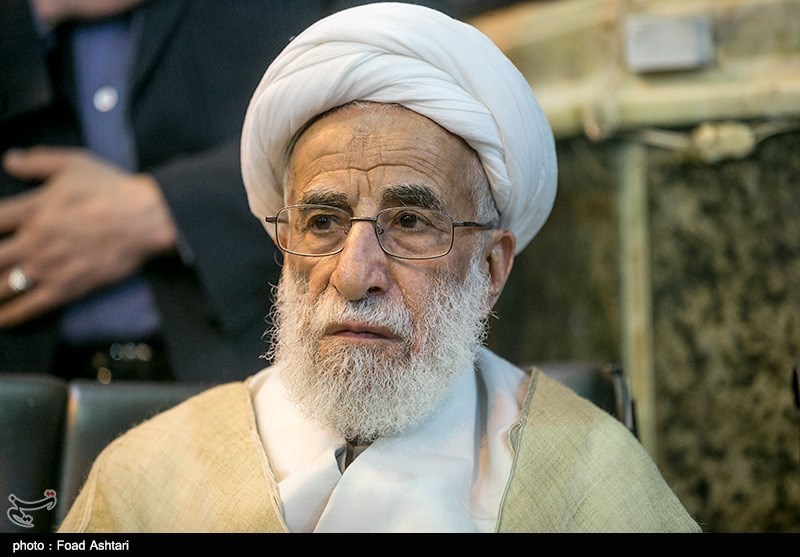
Even their most basic claim of empowering moderate elements in Iran’s government was slapped hard in the face by the announcement of the appointment of Ahmad Jannati to head up the powerful Assembly of Experts.

The 89-year old hardliner is well known for being a religious radical devoutly committed to exporting the Islamic extremism and protecting the mullahs and their ill-gotten gains.

In addition to his new post, Jannati leads the influential Guardian Council, a vetting body that disqualified over 3,000 less loyal candidates for the February elections, which were held in parallel with the vote for the Assembly of Experts.

All of which just goes to show how there are really no moderates within Iranian politics and government and to make any such distinction is to play into the narrative the Iran lobby has so studiously cultivated over the last five years.

By Michael Tomlinson


Filed Under: Blog, News Tagged With: Featured, Iran, Iran deal, Iran Human rights, Iran Lobby, Iran sanctions, Iran Talks, Joseph Cirincione, National Iranian American Council, NIAC, NIAC Action, Paul Pillar, Ploughshares

Iran Lobby Damaged by Revelations of Funding for Nuclear Deal Campaign

May 24, 2016 by admin

Iran Lobby Damaged by Revelations of Funding for Nuclear Deal Campaign

Iran Lobby Damaged by Revelations of Funding for Nuclear Deal Campaign

The expose of national security staffer Ben Rhodes admission in the New York Times Magazine concocting a string of false messages to sell the Iran nuclear deal sent shock-waves through American politics and around the world as the revelations began to sink in that the entire basis of the agreement with the Iranian regime may have been built on lies.

Even more disturbing news reports has come out now that one of the principal advocates for the deal and a central pillar of the Iran lobbying effort had paid cash directly to news organizations in a brash effort to influence favorable coverage of the agreement.

The Associated Press reported that the Ploughshares Fund gave National Public Radio $100,000 last year to help it report on the nuclear deal according to the group’s own annual report, while also funding reporters and partnerships with a wide array of other news outlets.

In the Times article, Rhodes explained how he  worked with nongovernmental organizations, proliferation experts and even friendly reporters to build support for the seven-nation accord that curtailed Iran’s nuclear activity and softened international financial penalties on Tehran.

“We created an echo chamber,” said Rhodes, a deputy national security adviser, adding that “outside groups like Ploughshares” helped carry out the administration’s message effectively.

Most news organizations, including The Associated Press, have strict rules governing whom they can accept money from and how to protect journalistic independence.

Ploughshares’ backing is more unusual, given its prominent role in the rancorous, partisan debate over the Iran deal.

The Ploughshares grant to NPR supported “national security reporting that emphasizes the themes of U.S. nuclear weapons policy and budgets, Iran’s nuclear program, international nuclear security topics and U.S. policy toward nuclear security,” according to Ploughshares’ 2015 annual report, recently published online.

Ploughshares Fund provided over 90 grants to various organizations in 2015 in order to engage in reporting, research and analysis on Iranian nuclear issues. The over 90 grants given out in 2015 nearly doubles those the organization provided in 2014, and triples the amount given in 2013. Ploughshares’ increases in grant funding directly coincides with the time period during which the Iran nuclear deal was being finalized and presented to Congress.

Also receiving grants were think tanks such as the RAND Institute which was given $40,000 to write “a series of articles that analyze specific elements of the diplomatic agreement with Iran on its nuclear program.”

Ploughshares Fund President Joseph Cirincione spoke about the Iran deal on NPR twice last year. He was identified as a donor to the radio station on only one of the two occasions.

Ploughshares also provided over $280,000 to the Iran lobby leader National Iranian American Council (NIAC) for its work supporting the Iran deal, some of which went directly towards sending NIAC staff to the nuclear negotiations in Vienna. NIAC was accused of engaging in lobbying efforts on behalf of the Iranian regime around 2007, which led to the organization’s president Trita Parsi bringing suit against journalist Hassan Daioleslam for defamation. Parsi eventually lost the protracted legal battle.

The New York Post joined in the mounting criticism of the massive lobbying and PR effort with an editorial casting doubt on Ploughshares’ claims:

“And though Ploughshares claims to be working against nuclear proliferation, it backed a soft line toward Iran and worked to enable a deal that at best will only delay Tehran from acquiring nuclear weapons,” the Post said.

Meanwhile the Washington Free Beacon examined claims by NPR that it did not deliberately deny airtime for anti-Iran deal advocates such as Rep. Mike Pompeo (R-KS) who claimed to have scheduled interviews with NPR cancelled at the last time and spots given instead to Iran deal support Rep. Adam Schiff (D-CA).

While NPR executives claimed to have no records of such bookings, emails reviewed by the Free Beacon between NPR and Pompeo’s office show otherwise, casting more doubt on the validity of NPR’s claims of journalistic integrity on the Iran nuclear deal while it was being funded by the Ploughshares Fund.

These revelations expose the tangled connections between the Iranian lobby, its financial backers and its efforts to manipulate news media and manage directly the so-called “hundreds of often-clueless reporters” as characterized by Robert Malley, senior director at the National Security Council, as quoted in the Times article.

As to where Ploughshares gets its money? Ploughshares is financed by billionaire George Soros’ Open Society Institute, the Buffett Foundation, the Carnegie Corporation of New York, the Ford Foundation, the Rockefeller Brothers Fund and the Rockefeller Foundation, among others including several notable Hollywood celebrities such as actor Michael Douglas and entertainer Barbra Streisand.

Joseph Cirincione, the president of Ploughshares, went on the offensive in an effort to blunt the growing embarrassment of these revelations with an editorial on Huffington Post in which he blamed all the attacks on a right-wing, neo-con conspiracy.

While Cirincione took aim at the writers of the Times and AP stories, he neglected to mention the central characters in this entire episode and it wasn’t Ploughshares.

It was the mullahs in Tehran for which Ploughshares and others of the Iran lobby do their bidding.

The core issue is not about donations, coverage and lobbying. It is very much about how a despotic, extremist, religiously fanatical regime is escaping notice as it executes a record 2,500 people, brutalizes the women of Iran and fights three wars in Syria, Yemen and Iraq which has turned much of the Middle East and Europe into the largest refugee center in history since World War II.

Nowhere does Cirincione defend the recent conduct of the mullahs. Nowhere does he mention the rapid development and launching of illegal ballistic missiles designed to carry nuclear warheads. Nowhere does he mention the blatant violations of even the flimsiest provisions of the Iran nuclear deal such as the inability to inspect Iranian military facilities.

The money Ploughshares has spread around like so much horse manure was never intended to expose the Iranian regime, but only to cover it up.

By Michael Tomlinson

Filed Under: Blog, News Tagged With: Appeasement policy, Featured, Iran, Iran appeasers, Iran deal, Iran Lobby, Iran sanctions, Iran Talks, Irandeal, Joseph Cirincione, National Iranian American Council, NIAC, NIAC Action, Nuclear Deal, nuclear talks, Ploughshares, Trita Parsi

Group that helped sell Iran nuke deal also funded media

May 21, 2016 by admin

Group that helped sell Iran nuke deal also funded media

Group that helped sell Iran nuke deal also funded media

WASHINGTON (AP) — A group the White House recently identified as a key surrogate in selling the Iran nuclear deal gave National Public Radio $100,000 last year to help it report on the pact and related issues, according to the group’s annual report. It also funded reporters and partnerships with other news outlets.

The Ploughshares Fund’s mission is to “build a safe, secure world by developing and investing in initiatives to reduce and ultimately eliminate the world’s nuclear stockpiles,” one that dovetails with President Barack Obama’s arms control efforts. But its behind-the-scenes role advocating for the Iran agreement got more attention this month after a candid profile of Ben Rhodes, one of the president’s top foreign policy aides.

In The New York Times Magazine article, Rhodes explained how the administration worked with nongovernmental organizations, proliferation experts and even friendly reporters to build support for the seven-nation accord that curtailed Iran’s nuclear activity and softened international financial penalties on Tehran.

“We created an echo chamber,” said Rhodes, a deputy national security adviser, adding that “outside groups like Ploughshares” helped carry out the administration’s message effectively.

The magazine piece revived Republican criticism of the Iran agreement as they suggested it was evidence of a White House spin machine misleading the American people. The administration accused opponents of trying to re-litigate the deal after failing to defeat it in congressional votes last year.

Outside groups of all stripes are increasingly giving money to news organizations for special projects or general news coverage. Most news organizations, including The Associated Press, have strict rules governing whom they can accept money from and how to protect journalistic independence.

Ploughshares’ backing is more unusual, given its prominent role in the rancorous, partisan debate over the Iran deal.

The Ploughshares grant to NPR supported “national security reporting that emphasizes the themes of U.S. nuclear weapons policy and budgets, Iran’s nuclear program, international nuclear security topics and U.S. policy toward nuclear security,” according to Ploughshares’ 2015 annual report, recently published online.

“It is common practice for foundations to fund media coverage of underreported stories,” Ploughshares spokeswoman Jennifer Abrahamson said. Funding “does not influence the editorial content of their coverage in any way, nor would we want it to.”

Ploughshares has funded NPR’s coverage of national security since 2005, the radio network said. Ploughshares reports show at least $700,000 in funding over that time. All grant descriptions since 2010 specifically mention Iran.

“It’s a valued partnership, without any conditions from Ploughshares on our specific reporting, beyond the broad issues of national and nuclear security, nuclear policy, and nonproliferation,” NPR said in an emailed statement. “As with all support received, we have a rigorous editorial firewall process in place to ensure our coverage is independent and is not influenced by funders or special interests.”

Republican lawmakers will have concerns nonetheless, especially as Congress supplies NPR with a small portion of its funding. Just this week, the GOP-controlled House Oversight Committee tried to summon Rhodes to a hearing entitled “White House Narratives on the Iran Nuclear Deal,” but he refused.

Ploughshares’ links to media are “tremendously troubling,” said Rep. Mike Pompeo of Kansas, an Iran-deal critic.

Pompeo told the AP he repeatedly asked NPR to be interviewed last year as a counterweight to a Democratic supporter of the agreement, Rep. Adam Schiff of California, who he said regularly appeared on the station. But NPR refused to put Pompeo on the air, he said. The station said it had no record of Pompeo’s requests, and listed several prominent Republicans who were featured speaking about the deal or economic sanctions on Iran.

Another who appeared on NPR is Joseph Cirincione, Ploughshares’ president. He spoke about the negotiations on air at least twice last year. The station identified Ploughshares as an NPR funder one of those times; the other time, it didn’t.

Ploughshares boasts of helping to secure the deal. While success was “driven by the fearless leadership of the Obama administration and supporters in Congress,” board chairwoman Mary Lloyd Estrin wrote in the annual report, “less known is the absolutely critical role that civil society played in tipping the scales towards this extraordinary policy victory.”

The 33-page document lists the groups that Ploughshares funded last year to advance its nonproliferation agenda.

The Arms Control Association got $282,500; the Brookings Institution, $225,000; and the Atlantic Council, $182,500. They received money for Iran-related analysis, briefings and media outreach, and non-Iran nuclear work.

Other groups, less directly defined by their independent nuclear expertise, also secured grants.

J-Street, the liberal Jewish political action group, received $576,500 to advocate for the deal. More than $281,000 went to the National Iranian American Council.

Princeton University got $70,000 to support former Iranian ambassador and nuclear spokesman Seyed Hossein Mousavian’s “analysis, publications and policymaker engagement on the range of elements involved with the negotiated settlement of Iran’s nuclear program.”

Ploughshares has set its sights on other media organizations, too.

In a “Cultural Strategy Report” on its website, the group outlined a broader objective of “ensuring regular and accurate coverage of nuclear issues in reputable and strategic media outlets” such as The Guardian, Salon, the Huffington Post or Pro Publica.

Previous efforts failed to generate enough coverage, it noted. These included “funding of reporters at The Nation and Mother Jones and a partnership with The Center for Public Integrity to create a national security desk.” It suggested using “web videos, podcasts, photo-based stories” and other “attention-grabbing formats” for “creatively reframing the issue.”

The Center for Public Integrity’s CEO, Peter Bale, confirmed the grant.

“None of the funding received by Ploughshares was for coverage of the Iran deal,” said Bale, whose company received $70,000. “In general, we avoided that subject because the topic did not lend itself to the type of investigative reporting the Center does.”

Caitlin Graf, a spokeswoman at The Nation, said her outlet had no partnership with Ploughshares. She referred queries to The Nation Institute, a nonprofit associated with the magazine that seeks to strengthen the independent press and advance social justice. Taya Kitman, the institute’s director, said Ploughshares’ one-year grant supported reporting on U.S.-Iran policy, but strict editorial control was maintained.

Mother Jones’ media department didn’t respond to several messages seeking comment.

The AP has taken grants from nonpolitical groups and journalism foundations such as the Knight Foundation. As with all grants, “AP retains complete editorial control of the final news product, which must fully meet AP standards for independence and integrity,” Standards Editor Thomas Kent said.

By BRADLEY KLAPPER
May. 20, 2016 3:43 PM EDT
http://bigstory.ap.org/article/7044e805a95a4b7da5533b1b9ab75cd2/group-helped-sell-iran-nuke-deal-also-funded-media#

Filed Under: Media Reports, News Tagged With: Featured, Iran deal, Iran Lobby, Iran sanctions, Iran Talks, Joseph Cirincione, Ploughshares

Iran Regime Gets New Missiles and Acts More Deadly

April 16, 2016 by admin

Iran Regime Gets New Missiles and Acts More Deadly

Iran Regime Gets New Missiles and Acts More Deadly

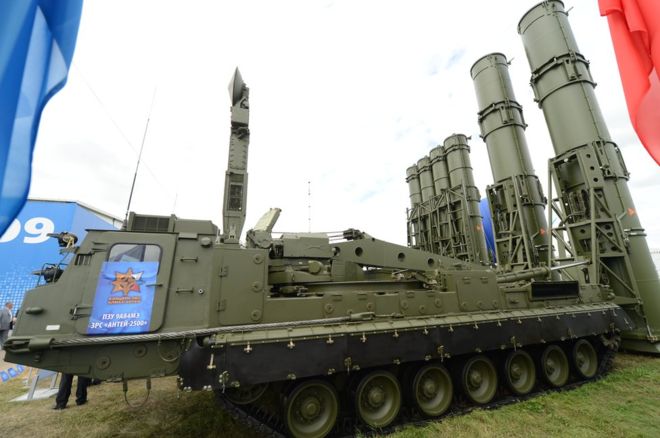
Russia has reportedly begun delivery of the first components in the new S-300 surface-to-air missile batteries to the Iranian regime as part of a larger military build-up utilizing a portion of the financial windfall the mullahs received from the nuclear deal reached last July allowing previously frozen deals to now go through.

The $800 million contract originally signed in 2007 was frozen due to international sanctions in 2010, but was unfrozen last year in the wake of the nuclear agreement.

The S-300, made by Rostec, can be used against multiple targets including jets, or to shoot down other missiles. It is one of the most advanced medium-range defensive weapons in the world. It can engage multiple aircraft at low to high altitude, up to 90 miles away. It is battle tested and in high demand from militaries around the world.

The S-300V4 variant, delivered to the Russian armed forces in 2014, can shoot down any medium-range missile in the world today, flies at five times the speed of sound and has a range of 400km (249 miles), Russia’s Tass news agency reports.

In addition to the S-300, Iran plans to license production of the Russian T-90 tank and has expressed interest in front-line Russian fighters like the SU-34. Russia is also assisting Iranian regime in rebuilding its nuclear energy capability.

The significant rebuilding and upgrading of Iran’s military capability in both offensive and defensive categories comes at the same time the regime has test fired new ballistic missile designs capable of carrying nuclear, chemical or biological payloads reaching deep into Europe, Africa and Asia.

The introduction of advanced missiles, anti-aircraft batteries, fighter jets and battle tanks clearly indicate the Iranian regime’s desire to significantly improve its combat capabilities as well as its military reach far beyond its own borders.

The delivery of S-300 systems is problematic for the U.S. and other nations concerned over Iran’s nuclear program since one of the promises made by the Iran lobby during nuclear talks was that the West would still retain the ability to bomb out of existence any illegal nuclear program. The introduction of the new missile systems makes such a response that much more difficult and protects the regime from military response should it cheat.

This points out the serious flaw in the arguments posed by Iran lobby supporters such as the National Iranian American Council and the Ploughshares Fund; by separating other corresponding acts by the regime – such as support of terrorism or proxy wars from the nuclear talks – the mullahs were empowered to engage in other provocative acts with impunity.

The next link in the chain of restrictions the mullahs are trying to break now involves accessing the international financial system, specifically trading and exchanging in and out of U.S. currency markets which would allow the mullahs to engage in commerce worldwide.

But many foreign banks remain uncertain about allowing the regime into their systems since the U.S. government still has sanctions in place related to Iran’s support of terrorism. This has proven to be a sore spot for the mullahs to such an extent that leaders such as Ali Khamenei and Hassan Rouhani have made the issue of access to U.S. dollars almost a “red line” in the sand and have threatened to walk away from the nuclear deal and restart its nuclear program.

It is clear however from the regime’s actions since the deal, that the mullahs have every intention of breaking the deal anyway after they get everything they want from West.

That possibility was only reinforced by repeated statements by senior regime leaders about its ballistic missile program, the most recent coming from regime foreign minister Javad Zarif who rejected making any concessions to the international community on the missile topic according to the Guardian newspaper.

“Secretary Kerry and the U.S. State Department know well that Iran’s missile and defense capabilities are not open to negotiation,” state media quoted Zarif as saying during a joint press conference with his visiting Estonian counterpart.

Meanwhile the regime continues a broad human rights crackdown at home and has now reached out beyond its borders to focus on its oldest enemies; Iranian dissident groups that have long worked to oppose the regime and bring democratic reforms to Iran.

German prosecutors on Friday accused two Iranian men, 31-year-old Maysam P. and 33-year-old Saied R., of spying on the People’s Mujahedin of Iran (MEK) and the National Council of Resistance of Iran (NCRI) on behalf of Iranian intelligence.

Prosecutors said both men infiltrated MEK with Maysam P. starting in January 2013 and Saied R. in August 2014 to gather information for Iranian intelligence on opposition members in Germany and other EU countries.

The NCRI welcomed “the fact that German prosecutor has brought the case of espionage targeting PMOI and NCRI to justice and calls on the German government and relevant officials to disclose and make public the details of the case of espionage and illegal activities of the Iranian regime and its agents in Germany. This is an imperative step to prevent these criminal activities.”

The crazy nature of the see-saw back and forth between lifting sanctions and imposing sanctions was highlighted as the European Union announced the extension of sanctions against 82 Iranian regime officials until 2017 because of deteriorating human rights in Iran.

The 28-nation bloc has had asset freezes and travel bans in place against Iranians since 2011 because of perceived violations of human rights.

By Michael Tomlinson


Filed Under: Blog, News Tagged With: Featured, Iran, Iran deal, NIAC, Ploughshares, S 300 Missiles, spying on people's Mojahedin

Iran Regime Sympathizers Downplay Paris Attacks

November 24, 2015 by admin


Iran Regime Sympathizers Downplay Paris Attacks

Iran Regime Sympathizers Downplay Paris Attacks

In what has to be one of more astounding editorials written about the Paris attacks, Paul R. Pillar, a frequent supporter of the Iranian regime, penned a piece in the National Interest in which he actually tried to make the argument that the attacks were an example of “amateurish” tactics and that the outsized response from governments and media bordered on hysteria and ISIS did not warrant much respect.

“It is a mistake to regard the ISIS entity as a font of critical skills needed to kill people,” Pillar writes.

Let’s think about that statement for a moment. Pillar actually makes the claim that ISIS lacks the skills to kill people. That absurd statement ranks right up there with his previous editorials arguing vociferously for the nuclear agreement with the Iranian regime and his claims that doing so would usher in a new and peaceful phase in Middle East tensions.

Well, we certainly know how that worked out.

Pillar’s piece was reprinted faithfully in Lobelog.com, another loyal member of the Iran lobbying effort alongside the National Iranian American Council and Ploughshares Fund just to name a few; all of whom have recently made efforts to divert attention away from the bloody carnage in Paris and now Mali, and instead try to shift the discussion onto discrimination of Syrian refugees or warning of an overreaction in cracking down on civil liberties.

All of the members of the Iran lobby neglect to mention that the center and source of all of these problems starts and ends with the Iranian regime’s fanatical support of the Assad regime in Syria which started the conflict in the first place and helped spawn ISIS in the sectarian fight that sprang up when the mullahs in Tehran sent in thousands of Hezbollah fighters from Lebanon, Shiite Militias from Iraq and mercenaries from Afghanistan added to milliards of dollars to help keep its proxy in power in Syria.

The fact that Pillar attempts to gloss over the planning and execution necessary for the Paris attacks is unfathomable, other than he is trying hard to minimize the import of what the attacks mean for the West. He argues:

“Some organizational aptitude was needed to put together an operation that involved simultaneous dispatch of multiple attack teams, but this did not require organizing any more people than would be needed to put together a neighborhood soccer team,” Pillar said.

Most rational people would not think their local neighborhood soccer team could build eight suicide bomb vests, acquire and equip three teams with automatic weapons, arrange timetables, scout locations, determine how to funnel panicked people fleeing a bombed sports stadium into a kill zone and communicate via text messaging on disposable cell phones while arranging the attack via encrypted communications evading virtually all national intelligence agencies.

But Pillar exhibits the singular trait that afflicts all supporters of the Iranian regime; the desire to absolve it of any responsibility for spreading and fostering the kind of extremist Islamic belief that is now shaking the world with widespread, multiple and frequent attacks.

Pillar also neglects to mention another key facet of these attacks that is significantly more disturbing than the actual loss of human life; it’s the fact these attacks are not supported with any public demands.

There are no calls to release political prisoners or comrades. No demands for ransom or payments. No negotiations over territorial claims or grievances.

These attacks are based solely on the nihilistic extremist beliefs that also power and drive the mullahs in Tehran.

“The death toll for all of the Paris attacks, as shocking as it understandably was, nonetheless was much less than a more skillfully conducted operation involving a comparable number of attackers would have inflicted,” Pillar writes. “The attack team that went after the most target-rich location—a sports arena with tens of thousands of people—managed to kill only one other person besides themselves.”

I’m sure the families of those slain would disagree with Pillar on the skill level involved in murdering their loved ones, but his comments reflect the almost callous disregard the Iran lobby has for human suffering. Very similar to the Iranian regime’s initial condemnation of the attack but its consequent show of happiness by shamefully putting the blame on the French authorities in its state wide papers and media.

At key points in the travesty that is the human rights record of the Iranian regime, Pillar and his cohorts including Trita Parsi and Reza Marashi of NIAC, Jim Lobe of Lobelog.com and others have been struck deaf and mute when it comes to protesting the abhorrent human rights abuses of the mullahs in Tehran either in their comments to news media or in their own social media posts.

Americans held hostage, journalists rounded up, religious minorities imprisoned, social media administrators tossed in jail, dissidents executed, all these actions and more and warranted hardly a murmur of protest and yet Pillar deigns to call terror attacks in Paris as “amateurish.”

The only real amateurish act in this tragedy is the effort by the Iran lobby to whitewash the blood off the streets of Paris.

By Michael Tomlinson

Filed Under: News Tagged With: Featured, Iran, Iran Lobby, Lobelog, National Iranian American Council, NIAC, NIAC Action, Paul Pillar, Ploughshares, Reza Marashi, Syria, Trita Parsi

Well-Funded Iran Lobby Makes Trusting Regime Appealing

August 27, 2015 by admin

Well-Funded Iran Lobby Makes Trusting Regime Appealing

Well-Funded Iran Lobby Makes Trusting Regime Appealing

The central conceit of the proposed nuclear weapons deal with the Iran regime is a simple one: Iran’s mullahs can be trusted to act moderately and peacefully. It’s an idea that is hopeful, optimistic and enticing. It’s an idea propagated by the extensive lobbying and PR machine built up to support the mullahs in Tehran. It is an idea designed to reassure nervous Americans and provide political cover for wavering congressional lawmakers.

It is an idea fatally flawed.

The concept of trust is defined as a “firm belief in the integrity, ability, or character of a person or thing; confidence or reliance.” In order for trust to work, it assumes that the party in question – in this case the religious theocracy ruling Iran – has either demonstrated an ability to be trusted or expressed a desire to be trusted and then lives up to it.

In the case of the mullahs, nothing could be further from the truth. In their every action, the Iran regime has demonstrated again and again that it cannot be a reliable partner in any international agreement.

On the nuclear issue alone, Iran regime signed the Non-Proliferation Treaty yet violated the terms of the treaty by engaging in nuclear weapons development prior to 2003 and through 2012, leading to the stockpiling of 20 percent enriched uranium and the development of related weapons programs such as warhead detonation and missile delivery design. The International Atomic Energy Agency has found Iran in non-compliance repeatedly over the past decade.

Putting the nuclear issue aside for a moment, Iran also signed the Chemical Weapons Convention, but moved forward in supporting the Syrian regime of Bashar al-Assad after he used chemical weapons on his own people. Interestingly enough, while the regime’s top mullah Ali Khamenei has issued a much-ballyhooed “fatwa” or religious edict proscribing the use of nuclear weapons, he did not rule out the development of those weapons, nor did he mention chemical or biological weapons.

For the Iran regime language and its nuances is vital to its aims which is why the proposed nuclear agreement is a paltry 159 pages and does even include two secret side deals with the IAEA. The SALT and START treaties between the U.S. and Soviet Union dwarf it with detailed provisions and requirements.

This explains why the regime has strenuously held out for a finite time limit in any further sanctions or limits on its nuclear development; the mullahs have the patience of Job and are content to outwait the rest of the world. The fact that the proposed deal has no further limitations after 10 years means Iranian regime is free to scale up to industrial capacity in enriching uranium. The fact that its centrifuges will not be destroyed – only unplugged and stored – allowing Iranian regime to keep its refining infrastructure intact.

All we have done is kick the can down the road for a decade and allow another administration and Congress to deal with the mess.

Oddly enough, those elected officials supporting the deal have basically placed their faith and re-election hopes in the hands of the mullahs. There can be no other interpretation of their support. They are betting on the mullahs which seems an inane act unless you consider the lobbying force the mullahs have deployed.

Michael Rubin in a piece for Commentary delves deeply into the financial support for the Iran lobby; looking specifically at the Ploughshares Fund which spreads its millions of dollars around to a number of regime supporters, including the National Iranian American Council. He also connects the dots of how many staffers and activists supporting the regime are funneled through groups and entities with close ties to the regime.

“Those staffing NIAC, for example, have always sought an end to sanctions against the Islamic Republic of Iran. Many had worked for Atieh Bahar, a Tehran-based consultancy close to former Iranian regime President Ali Akbar Hashemi Rafsanjani. They are not chameleons, changing their stripes to match their funders,” Rubin said.

“When NIAC policy director Reza Marashi, an Atieh Bahar alum, worked for the State Department during the George W. Bush years, he was not pro-democracy agenda, but was understood to be sympathetic to an embrace rather than isolation of Iran. Indeed, his persistent questions about the recipients of U.S. aid inside Iran raised security concerns,” he said. “Likewise, when NIAC received a couple hundred thousand dollars from the National Endowment for Democracy, Trita channeled it to organizations close to the Iranian government.”

Rubin lists the extensive donations made by Ploughshares to benefit regime supporters, including:

  • $210,000 to the Arms Control Association for “influencing…US policy toward Iran.”
  • $80,000 to the Atlantic Council to support the Iran Task Force and another $130,000 for the South Asian Program;
  • Funded the Center for New American Security to give “boot camps” to Congressional staffers “on the nature of Iran’s nuclear program,” in other words, to lobby them;
  • Underwrote the Friends Committee on National Legislation’s efforts “to support an integrated lobbying strategy to build support for pragmatic approaches to resolve the Iranian nuclear issue;”
  • $100,000 to J Street to “educate” on behalf of an Iran deal;
  • $150,000 to the National Iranian American Council for its advocacy on behalf of the Iran deal, not including money given individually to its staff;
  • $75,000 to National Security Network to “educate media and policymakers about policy options to prevent Iran from acquiring a nuclear weapon;”
  • Blogger Jeffrey Lewis criticized and downplayed the Associated Press’ revelation about a side deal between Iran and the IAEA gutting verification by allowing Iran to test itself, but did not acknowledge a $75,000 gift to his home institution from Ploughshares;
  • The Aspen Institute also received Ploughshares money to educate Congressmen and senior staffers about Iran policy options, again, effectively to lobby them; and
  • $75,000 to Gulf-2000, a listserv run by former Carter Iran hand and “October Surprise” conspiracy theorist Gary Sick, who has used Gulf-2000 to become a “Journolist”-style clearing house to feed pro-Iran talking points to journalists.

All of these groups work in aligning the interests of the mullahs and in pressing for a deal that releases them of any obligations to change their behavior while setting the stage for turmoil down the road.

By Michael Tomlinson

Filed Under: Blog, Latest from Lobbies & Appeasers, National Iranian-American Council, The Appeasers Tagged With: Atieh Bahar, NIAC, NIAC Action, Ploughshares, Reza Marashi, Trita Parsi

  • « Previous Page
  • 1
  • 2

National Iranian-American Council (NIAC)

  • Bogus Memberships
  • Survey
  • Lobbying
  • Iranians for International Cooperation
  • Defamation Lawsuit
  • People’s Mojahedin
  • Trita Parsi Biography
  • Parsi/Namazi Lobbying Plan
  • Parsi Links to Namazi & Iranian Regime
  • Namazi, NIAC Ringleader
  • Collaborating with Iran’s Ambassador

Recent Posts

  • NIAC Trying to Gain Influence On U.S. Congress
  • While Iran Lobby Plays Blame Game Iran Goes Nuclear
  • Iran Lobby Jumps on Detention of Iranian Newscaster
  • Bad News for Iran Swamps Iran Lobby
  • Iran Starts Off Year by Banning Instagram

© Copyright 2026 IranLobby.net · All Rights Reserved.