Iran Lobby

Exposing the Activities of the lobbies and appeasers of the Mullah's Dictatorship ruling Iran

  • Home
  • About
  • Current Trend
  • National Iranian-American Council(NIAC)
    • Bogus Memberships
    • Survey
    • Lobbying
    • Iranians for International Cooperation
    • Defamation Lawsuit
    • People’s Mojahedin
    • Trita Parsi Biography
    • Parsi/Namazi Lobbying Plan
    • Parsi Links to Namazi& Iranian Regime
    • Namazi, NIAC Ringleader
    • Collaborating with Iran’s Ambassador
  • The Appeasers
    • Gary Sick
    • Flynt Leverett & Hillary Mann Leverett
    • Baroness Nicholson
  • Blog
  • Links
  • Media Reports

After Syria Strike Next Move Should be Pushing Iran Out

April 13, 2017 by admin

After Syria Strike Next Move Should be Pushing Iran Out

After Syria Strike Next Move Should be Pushing Iran Out

You can almost pinpoint to the day when things turned really bad in Syria. For much of the fall and spring of 2012-2013, the Assad regime was on the ropes from a series of victories by rebel forces including the loss of a key airbase and provincial capital.

The Syrian army suffered from several publicized defections of key leaders and the rebel coalition had grown significantly around moderate groups backed by the U.S.

Then in April of 2013, the Iranian regime directed its terrorist proxy Hezbollah to join in the fray, along with advisors and commanders from the Iranian Revolutionary Guard Corps. Coupled with a massive influx of cash and weapons, the restocked Syrian army launched a series of counteroffensives that began to turn the tide.

Up until that point, the rebels had pushed to within eyesight of Damascus and Assad was frantically figuring out where his exile should take place.

For the mullahs in Tehran, it was an equally scary time as its major Shia partner was about to fall.

But with the reinforcements and direct intervention by Iran, the tide of the war changed and with it the situation we are now mired in.

Not only did Syria alongside Iranian forces fight rebels, they specifically targeted, moderate Western-backed units in order to decimate their numbers and leave only radical Islamic groups on the battlefield forcing the U.S. and its allies to pick between a certifiable mass murderer in Assad or groups such as ISIS and Al-Nusra.

It was a clever strategy and one that worked too well given the Obama’s support of the corrupt Al-Maliki government in Iraq, preserving ISIS at a critical time when its numbers were small and lacked cash and weapons. It gained both when it exploited the divided government in Iraq; split apart by Iranian regime’s insistence on a Shia only leadership thereby pushing some of the Sunnis straight into the waiting arms of ISIS and leading directly to the blitzkrieg that toppled Mosul and delivered ISIS its first major victories.

Less than two years later, as Iran was again on the ropes with its resources depleted and rebel forces on the verge of breaking out again in Syria, Iranian mullahs took the step of begging Russia to intervene and save its proverbial goat, which Vladimir Putin was all too happy to oblige, sensing an opportunity to preserve its naval base on the Mediterranean while filling the power vacuum left by the Obama administration’s total withdrawal from the region.

But President Trump’s decision to retaliate against Syria for the use of chemical weapons changed the game plan entirely and now raises the question of how to best move forward?

There is no doubt that the most desirable solution in Syria is a diplomatic one, but focusing on removing Assad from power is only treating the symptom. The real sickness that afflicts Syria is the presence of the Iranian regime there; it is so embedded many Syrians have taken to view Iranian soldiers as an occupation force.

By removing Iran from Syria, the situation resolves itself in a myriad of ways: Russia would lose its key partner on the ground; A peace deal with rebels will definitely prevail; and the Syrian people would have the chance to choose their own destiny.

It would also allow for the repatriation and resettlement of the four million refugees that have fled Syria since the war began.

And the key to pushing Iran out of Syria lies within supporting—fully—the dissident movement within Iran itself.

As Reuel Gerecht, a senior fellow at the Foundation for Defense of Democracies, and Ray Takeyh, a senior fellow at the Council on Foreign Relations, explained in an editorial in the New York Post:

“The regime’s survival is now dependent on unsteady security services and the power of patronage, which ebbs and flows with the price of oil. Iran’s continuing stage-managed elections and colorless apparatchiks, including President Hassan Rouhani, a founding father of the feared intelligence ministry who mimics reformist slogans, have failed to convince, much less inspire,” they said.

“Today, the Islamist regime resembles the Soviet Union of the 1970s — an exhausted entity incapable of reforming itself while drowning in corruption and bent on costly imperialism,” they added. “If Washington were serious about doing to Iran what it helped to do to the USSR, it would seek to weaken the theocracy by pressing it on all fronts. A crippling sanctions regime that punishes the regime for its human-rights abuses is a necessity. Such a move would not just impose penalties on Tehran for violating international norms but send a signal to the Iranian people that the United States stands behind their aspirations.”

Re-prioritizing human rights as a dominant issue with Iran moving forward would place the U.S. back on the moral high ground that the Obama administration vacated and serve as an effective counter to the ceaseless arguments made by the Iran lobby opining about potential economic benefits of trade with Iran.

A new report by human rights group Amnesty International showed that Iran remained a dominant executioner of its own people, second in the world only to China, which makes hammering the regime on human rights all the more critical.

That emphasis on human rights was boosted by the European Union’s decision to extend sanctions until April 2018 on Iran for “serious human rights violations.”

The bloc has also extended by a year its travel ban and an asset freeze on 82 Iranian people and one entity, as well as a ban on exports to Iran of equipment for monitoring telecommunications and other gear that “might be used for internal repression.”

Sir David Amess, a member of the British Parliament, pointed out in an editorial in the Washington Examiner that the key to confronting Iran ultimately is to cut off the IRGC’s commerce as outlined by a leading Iranian dissident group.

“The National Council of Resistance of Iran (NCRI) specifically identified the sites of some 90 docks operated exclusively by the IRGC within Iranian ports. The information was obtained from the network of the People’s Mojahedin Organization of Iran (PMOI/MEK), which has assets within the clerical regime and the IRGC itself and made international headlines in 2002 when it revealed key details about the regime’s nuclear program,” Amess said.

“Iran’s destabilizing regional influence and its subversive activities will only be diminished if the domestic and international power of the IRGC is confronted and constrained, first through the rightful designation of the organization as a terrorist organization and then through the sanctioning of all its economic activities followed by financing regional conflicts and threats against the West,” he added.

Ultimately the U.S. should use its influence to specifically diminish the IRGC and its influence in Syria if there is ever to be any hope of a lasting peace there.

Michael Tomlinson
Filed Under: Blog, News Tagged With: Featured, Hezbollah, Iran, Iran Terrorism, IRGC, Khamenei, Rouhani, Sanctions, Syria

Iran Regime Plays With Lives of Innocent Pawns

April 4, 2017 by admin

Iran Regime Plays With Lives of Innocent Pawns

Iran Regime Plays With Lives of Innocent Pawns

One of the hallmarks of the Iranian regime has been its callous disregard for the value of human life. It is a characteristic that pervades much of the regime’s activities from its foreign policy to judicial process to economy.

If one examines history, totalitarian and fascist governments have often worked diligently to reduce the value of an individual life in favor of the collective good as a means of exerting greater control over the people.

Iran is no different as the mullahs figured out that the pathway to ironclad control in the wake of the revolution was to ensure that dissenters could be arrested, beaten, imprisoned, exiled and even killed with virtual impunity.

That philosophy has been at the center ever since and to this day has manifested itself in policies that have caused pain and suffering across the entire Middle East.

In foreign policy, the Iranian regime has pursued conflicts that have resulted in some of the worst humanitarian disasters since the end of World War II, namely the Syrian civil war which has claimed 400,000 lives and displaced over four million people.

The mullahs’ decision to enter that war—after the Assad regime was found to be using chemical weapons on its own people—and save Assad sparked a sectarian conflict that now rages across Iraq, Yemen and has sparked now into the Gulf States.

The fact that Iranian regime is so willing to start conflicts, especially through the use of proxies such as terror groups like Hezbollah and the Houthis. Now come increasingly more worrisome reports over evidence that the Iranian regime may be behind terror activities in Bahrain including the operation of a secret bomb factory.

According to the Washington Post, the men who built the secret bomb factory had been clever — suspiciously so, Bahraini investigators thought, for a gang known mostly for lobbing Molotov cocktails at police. The underground complex had been hewed, foot by foot, beneath the floor of a suburban villa, with no visible traces at street level and only a single entrance, hidden behind a kitchen cabinet.

But the real surprises lay inside. In one room, police found $20,000 lathes and hydraulic presses for making armor-piercing projectiles capable of slicing through a tank. Another held box upon box of the military explosive C-4, all of foreign origin, in quantities that could sink a battleship the Post said.

“Most of these items have never been seen in Bahrain,” the country’s investigators said in a confidential technical assessment provided to U.S. and European officials this past fall that offered new detail on the arsenals seized in the villa and in similar raids that have occurred sporadically over nearly three years. In sheer firepower, the report said, the caches were both a “game-changer” and — matched against lightly armed police — “overkill.”

The report, a copy of which was shown to The Washington Post, partly explains the growing unease among some Western intelligence officials over tiny Bahrain, a stalwart U.S. ally in the Persian Gulf and home to the Navy’s Fifth Fleet. Six years after the start of a peaceful Shiite protest movement against the country’s Sunni-led government, U.S. and European analysts now see an increasingly grave threat emerging on the margins of the uprising: heavily armed militant cells supplied and funded, officials say, by Iran.

That disturbing revelation shows that the mullahs’ decision to widen conflict in the region and continue pursuing their vision of a greater sphere of Shia influence; contrary to all the protestations and messaging of the Iran lobby, is a core cause of most of the turmoil in the Middle East.

Even the practice of snatching hostages has become a standard practice for the mullahs from the very beginning of the revolution with the American embassy takeover to the recent practice of arresting and imprisoning dual-national citizens based on the despicable principle that Iran does not recognize dual citizenship.

For the mullahs, the value of hostages has been unfortunately proven true by the rash and unwise decision by the Obama administration to effectively ransom American hostages as part of the nuclear agreement negotiations. That only emboldened the mullahs to continue the practice.

Several of their current prisoners include a British mother and charity aid worker, a missing American former FBI agent, two businessmen and an American college student who was recently released on bail.

The American of Iranian descent was arrested in Iran in July and sentenced to 18 years’ imprisonment on dubious charges has been released on bail after he went on a hunger strike, rights activists reported on Monday, according to the New York Times.

The American, Robin Shahini was released about two weeks ago, just before the start of Nowruz, the Persian New Year, according to news by rights groups.

It was unclear whether Shahini’s release was temporary or if he could leave the country, Shahini had been required to post bail of 2 billion rials — about $60,000 — and that he could be sent back to prison if his conviction were affirmed on appeal.

Shahini, a graduate student at San Diego State University, is one of at least four Americans of Iranian descent who have been imprisoned in Iran since the country negotiated a nuclear agreement with major powers including the United States in 2015.

Many rights activists regard the imprisonments as a warning to Americans of Iranian descent not to view the nuclear agreement as a sign of better relations between the United States and Iran.


Other Americans held in Iran include Siamak and Baquer Namazi, a father and son who were sentenced in October to 10 years’ imprisonment, as well as Karan Vafadari, an art gallery owner, and his wife, Afarin Niasari, an Iranian with permanent United States residency status. The precise nature of the charges against them are unclear.

Iranian regime considers imprisoned Iranian-Americans to be citizens of Iran and does not afford them consular privileges ordinarily granted to foreign citizens.

For the mullahs, granting any individual basic human rights seems to be out of their plans.

Michael Tomlinson

Filed Under: Blog, News Tagged With: Bahrain, Featured, Iran Terrorism, IRGC, Moderate Mullahs, Rouhani, Sanctions, Syria

Iran Regime Desperate for Foreign Policy Wins

March 29, 2017 by admin

Iran Regime Desperate for Foreign Policy Wins

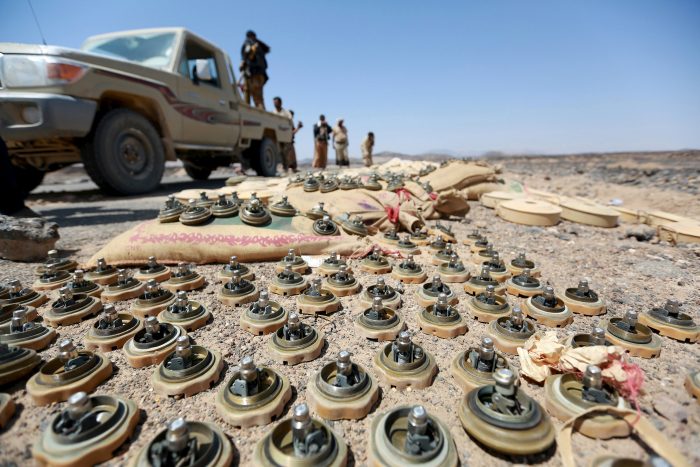
Soldiers loyal to Yemen’s government stand next to mines planted by the al-Houthi group in locations where they controlled in frontline in the province of Marib, October 4, 2015. REUTERS/Stringer TPX IMAGES OF THE DAY

Next May Iran will hold a presidential “election” that will lack for one thing: suspense. In the Iranian regime, uncertainty is anathema to the mullahs, especially Ali Khamenei and his handpicked minions on the various parliamentary councils that review and decide which candidates will appear on the ballot.

For all the handwringing and angst being generated by the Iran lobby over the perceived vulnerability of current president Hassan Rouhani, there is no doubt that if Khamenei wants Rouhani back to carry out his policies, he’s going to be the next president.

Given that certainty, the domestic situation for the ruling mullahs is anything but favorable to them. The Iranian economy remains stuck in reverse. Any hopes for it to be jumpstarted by the billions of dollars released as part of the nuclear agreement evaporated as the mullahs chose to redirect those funds to support the teetering Assad regime in Syria and the war in Yemen, as well as go on a multi-billion dollar buying binge of Russia weapons.

Unemployment remains high, especially among Iranian youth, coupled with rising prices for everything from fuel to consumer goods. Add that to miserable environmental conditions that have resulted in long droughts that have devastated farming and turned vast stretches of Iran into desert, and you get massive street protests—not about politics, but about economic conditions.

The mullahs are not fools, they are crafty political hands, adept at deception and misdirection, and they have dredged up another diversion in constantly pitting Iran in perpetual cycles of war and foreign policy crisis.

If it wasn’t the Syrian civil war, it was the rebellion in Yemen. If it wasn’t the sectarian conflict in Iraq, it was the decades-long civil war in Lebanon. Throughout all of it, the mullahs have used foreign policy to divert attention from the misery at home and gin up a jingoistic fervor.

Now as Iran stares at another presidential election, the mullahs don’t want a repeat of 2009 where massive street protests were violently put down in response to cries of a rigged election.

This explains why Rouhani has made a trek to Moscow to call upon Russia to serve as a guarantor of sorts for Iranian regime’s interests in Syria. Rouhani is dangling the prospect of forming a mutual barrier to U.S. policy interests in the Middle East, as well as the tempting offer of access to Iranian bases for Russian military forces.

Iran’s foreign minister Javad Zarif reopened the door to Russian use of Iranian airbases to carry out strikes in Syria, in another sign of increasing cooperation between the two countries, according to the Daily Caller.

Russia carried out some airstrikes on Syria from an Iranian airbase in August, but was later rebuked by Iranian authorities for bragging about it. After Russian state media trumpeted the strike as a major strategic coup, Iran’s minister of defense accused them of a “betrayal of trust” publicly. He declared at the time, “it is finished, for now.”

Zarif signaled that this time-out may be over saying “Russia doesn’t have a military base (in Iran), we have good cooperation, and on a case by case basis, when it is necessary for Russians fighting terrorism to use Iranian facilities, we will make a decision.”

In Moscow, Rouhani and Putin signed several bilateral agreements that served as window dressing for these kinds of state visits. The two leaders affirmed their commitment to peace in Syria, where they have both backed the Assad regime, as well as introducing new economic cooperation mostly in energy and industry, especially calls for reduction in oil production as a means of boosting global oil prices.


Both nations’ economies have been severely impacted by the steep decline in petroleum as a result of stepped up production from the U.S. and Saudi Arabia.


Though Moscow and Tehran both support Assad, their views on Turkey and its involvement in the conflict have differed. Though Moscow envisions Ankara as a part of the solution to the Syrian conflict, Tehran has been more wary – particularly after Moscow and Ankara left Tehran out of a truce they brokered in December, according to Voice of America News.


Aside from the photo opportunities for Rouhani, the Iranian regime stayed the course in maintaining its ever-increasing variety of militant and extremes actions, including reports of a renewed military commitment to Houthi rebels in Yemen in an increasingly volatile war that threatens to drag Saudi Arabia and the Gulf States into direct conflict with Iran.

A group of analysts known for research in global security threats said in a new report that the increase in Iranian involvement is to offset the gains made by Yemeni government troops supported by the Saudi-led Arab coalition forces.

An increased Iranian role will prolong Yemen’s civil war and make the conflict more sectarian, worsening Yemen’s humanitarian crisis and allowing Al Qaeda in the Arabian Peninsula (AQAP) to expand its support base within Yemen, according to Gulf News.

“The deployment of inter-operable proxy forces is part of Iran’s evolution of a form of hybrid warfare that will allow it to project significant force far from its borders and fundamentally alter the balance of power in the region. Iran may increase its engagement in Yemen if US support for the Saudi-led coalition threatens the Al Houthi-Saleh faction’s survival,” they said.

The Critical Threats Project run by the public policy think tank the American Enterprise Institute has published the analysis on their website, providing information on Iranian military assistance to Yemeni rebels.

“Iran may attempt to incorporate the Al Houthis into its Axis of Resistance coalition, which Iran uses to contain the US and its regional allies,” the report stresses, warning that further escalation in the Yemeni civil war will threaten freedom of navigation in the Red Sea, risking both global commercial markets and the US Navy’s freedom of movement in the region.”

The analysis claimed that Iran had attempted to smuggle over 2,000 small arms into Yemen in 2015 and 2016, in addition to a large stockpile of other weapons.

“Iran likely facilitated the development of an Al Houthi-Saleh naval mining program. Mines struck a government coast guard ship near Mokha port, Taiz governorate on March 11 and a fishing vessel near Midi district, northwestern Hajjah governorate on March 8. Iran provides sophisticated weaponry that allows the Al Houthi-Saleh faction to hold terrain, counter Saudi-led coalition capabilities, and threaten US freedom of movement in the Red Sea,” the report warned.

As the flashes go off in Moscow, the rest of the Middle East is dreading what next chapter of hell the Iranian regime is set to unleash.

Michael Tomlinson

Filed Under: Blog, News Tagged With: al houthis, Featured, hassan rouhani, Iran Terrorism, IRGC, Khamenei, Rouhani, Sanctions

Bipartisan Senators Move New Iran Sanctions Bill Forward

March 24, 2017 by admin

Bipartisan Senators Move New Iran Sanctions Bill Forward

Bipartisan Senators Move New Iran Sanctions Bill Forward

While the political divide between Democrats and Republicans may feel like the Grand Canyon, one at least one subject both sides seem to be able to agree: New sanctions need to be levied against the Iranian regime.

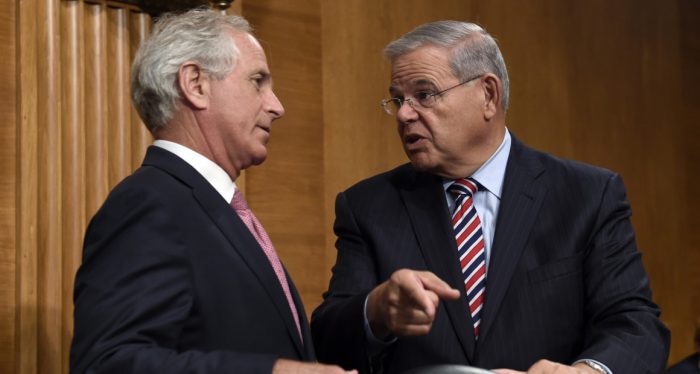
Senate Foreign Relations Chairman Bob Corker (R-Tenn.) on Thursday unveiled a bipartisan bill to slap the Iranian regime with new sanctions because of the country’s ballistic missile development, support for U.S.-designated terrorist groups and human rights violations, according to Politico.

Democratic co-sponsors, including Robert Menendez of New Jersey and Foreign Relations ranking member Ben Cardin of Maryland, emphasized that the measure was designed explicitly so as not to undermine the 2015 Iran nuclear deal.

The bill is supported by more than a dozen senators, according to a news release, including Marco Rubio (R-Fla.), Tom Cotton (R-Ark.), Bob Casey (D-Pa.) and Chris Coons (D-Del.) — giving it a strong chance of being taken up in the Senate.

“This legislation demonstrates the strong bipartisan support in Congress for a comprehensive approach to holding Iran accountable by targeting all aspects of the regime’s destabilizing actions,” Corker said in a statement. “These steps will allow us to regain the initiative on Iran and push back forcefully against this threat to our security and that of our allies.”

Menendez, who didn’t vote for the nuclear deal, said that the legislation was crafted to specifically avoid any sanctions lifted as part of the nuclear agreement, according to the Hill.

“This legislation was carefully crafted not to impede with the United States’ ability to live up to its commitments under the JCPOA, while still reaffirming and strengthening our resolve by imposing tough new sanctions,” he said.

Lawmakers were expected to roll out new sanctions on the Iranian regime ahead of a key foreign policy conference taking place early next week, Reuter reported.

The Senate legislation, according to an outline from Corker’s office, would include mandatory new sanctions on individuals tied to Iranian regime’s ballistic missile program and would expand terrorism-related sanctions to include the Islamic Revolutionary Guard Corps (IRGC).

It would also codify who is sanctioned over Iranian regime’s support for terrorism and force President Trump to enforce an arms embargo by blocking property for anyone tied to Iran’s sale or transfer of military arms.

In February, the Trump administration imposed sanctions on 25 individuals and entities in Iran, which it said were just “initial steps” in response to the regime’s repeated testing of ballistic missiles, which the United States maintains is in violation of UN resolutions.

Tehran has been supporting Yemen’s rebel Houthi movement, and Syrian President Bashar al-Assad in his country’s six-year-long civil war.

Menendez told Reuters the bill was intended to take a “regional” strategy because of the breadth of Iran’s activities in the Middle East.

“It calls for a regional strategy because Iran is obviously involved in the region in various ways, whether it be in Yemen or Syria and beyond,” he said.

The bipartisan action taken in the Senate is a response to the growing provocations coming from the Iranian regime as it prepares for its presidential election in May.

On Tuesday, the aircraft carrier USS George W. Bush entered the Strait of Hormuz from the Indian Ocean, a vital waterway that handles about 30 percent of the world’s oil shipping. As it has done so often over the past few years, Iran sent a swarm of speedboats to harass the carrier, according to Breitbart News.

“What reason were they to be in an international corridor, other than to harass us? Was today the day they were going to come out and potentially deploy kinetic actions against us?” asked Rear Admiral Kenneth Whitesell, commander of Carrier Strike Group 2, as reported by Japan Times.

Captain Will Pennington of the George W. Bush said the U.S. Navy changed its security procedures after a Saudi ship was attacked off the coast of Yemen by what some describe as a “drone” boat, roughly comparable in size to the Iranian Revolutionary Guard Corps patrol boats.

“It’s unprofessional behavior, it’s harassment behavior and it’s something you wouldn’t expect when you’ve got a hundred giant vessels per day going through the Strait of Hormuz, and – at least from the flow of oil – the most critical strait in the world,” Whitesell said. “This is their routine behavior, which in any other area of the world, any other maritime environment, this would be seen as a violation of international law.”

The allegations of Iranian-made drones extended to ones used by Houthi rebel forces to attack Saudi and UAE missile defense sites in Yemen, an arms research organization said in a report Wednesday, according to the Washington Post.

The report, put out by the group Conflict Armament Research, or CAR, looks at seven Houthi Qasef-1 drones and one drone engine recovered by forces from the United Arab Emirates. Six of the drones were captured in October on a known Iranian smuggling route that runs through Oman, while another was found after an attack by Houthi forces near Aden, Yemen, last month.

The Qasef-1 is “consistent with descriptions and imagery” of an Iranian drone called the Ababil-T, produced by Iran’s Aircraft Manufacturing Industrial Company, according to the report.

The identification of the Qasef-1 as a possible Iranian drone variant comes almost two months after Houthi forces used an explosive drone boat to attack a Saudi frigate. Vice Adm. Kevin M. Donegan, commander of the U.S. Fifth Fleet, told Defense News that the drone boat probably had been supplied by Iran. The attack killed one, and the frigate returned to port with minor damage.

On Tuesday, Reuters reported that Maj. Gen. Qasem Soleimani, the head of Iranian regime’s Quds Force, recently met with top military officials in the Iranian capital in a bid to explore ways to better assist the Houthis. The outcome of the meeting appears to be an influx of military equipment and advisers into the civil war, which has now been running for two years.

Michael Tomlinson


Filed Under: Blog, News Tagged With: Featured, Iran, Iran deal, Iran Human rights, Iran Mullahs, Iran sanctions, Sanctions

Iran Lobby Working Overtime Pushing Fake News

March 21, 2017 by admin

Iran Lobby Working Overtime Pushing Fake News

Iran Lobby Working Overtime Pushing Fake News

Merriam-Webster defines “hypocrisy” as “a feigning to be what one is not or to believe what one does not: behavior that contradicts what one claims to be believe or feel.”

In the case of the Iran lobby, hypocrisy runs deep within its press releases, background papers, editorials and blog entries, especially the National Iranian American Council. In the aftermath of the end of the Obama administration’s policies of trying to appease the Iranian regime, the NIAC has been working overtime to push narratives that have come to define this era of “fake news.”

The NIAC website was busy this weekend pumping out several storylines, including attempting to shift blame for global terrorism from the Iranian regime to Saudi Arabia; attempting to character assassinate a vocal critic of the regime in the Trump administration; and tried to claim that Yemen was an example of a failed U.S. policy.

The most hypocritical position taken by the NIAC was an opinion piece by Adam Weinstein in which he called Saudi Arabia the world’s “biggest state sponsor of terrorism.” He makes this claim largely on the basis that many terrorist groups such as ISIS are comprised of Sunni members, while largely ignoring the magnitude of death and destruction meted out by Iranian-backed Shiite terror groups such as Hezbollah.

Weinstein goes on to try and specifically link Wahhabism to the Saudi government, while ignoring the direct support Shiite terror groups receive directly from the Iranian regime through the Revolutionary Guard Corps and its Quds Force operations.

While the Saudi government has a myriad of its own problems, such as the status and role of women in Saudi society and the need to rein in rogue Saudis that have engaged in terror, such as Osama bin Laden, the Saudi government does not purse and enact a policy of global terror, nor a systematic effort to attack and kill its enemies and dissidents at home and abroad; all things the Iranian regime does.

Weinstein delves into the complexities of the Islamic religion and its various offshoots and varieties in an attempt to confuse readers when in fact the issue is not about religion, but national policy instead.

What makes the Iranian regime the center point of terrorist activities is that the regime relies heavily on terrorist proxies to conduct military operations, terrorist attacks and assassinations. Notable examples include the bombing of the U.S. Marine barracks in Beirut, the bombing of the Khobar Towers in Saudi Arabia and the flood of Iranian-built IEDs into Iraq targeting U.S. service personnel.

Iran also provided shelter and support for Al-Qaeda leaders fleeing the U.S. invasion in Afghanistan and then later provided passage for these same fighters to enter Syria and from there spawned ISIS and other radical militant groups who were originally turned loose to attack U.S.-backed rebel groups.

But the NIAC’s fake news didn’t end there as Ryan Costello issued a press release attacking Trump national security aide Sebastian Gorka, a vocal and harsh critic of past policies towards the Iranian regime, especially the deeply flawed nuclear agreement.

The irony of Costello’s statement was his attempt to blame Gorka for anti-Semitism, a crazy concept considering the Iranian regime’s naked hostility to Jews and Israel; advocating for its destruction about as often as it holds public “Death to America” chants.

The effort to attack Gorka is not about racism, but about dislodging a strong opponent of the Iranian regime from any position of influence within the administration. This is an especially important consideration when viewed in light of recent disclosures that former Obama administration staffers have managed to burrow their way into the State Department to maintain influence over Iran policy; including one who was a former NIAC staffer.

The strangest piece was another one written by Adam Weinstein in which he attempted to show a clash of policy views over the conflict in Yemen amongst American legislators at a Senate Foreign Relations Committee hearing.

“As is too often the case on Capitol Hill, the hearing – which was framed as an examination of U.S. interests and risks to U.S. policy in the war in Yemen – devolved into a conversation dominated by Iran hawks who inflated Iran’s influence and sought to play down Saudi Arabia’s role in the conflict,” Weinstein writes.

During the hearing, former Ambassador to Yemen (2010-2013) Gerald Feierstein testified that Iran is benefiting from the conflict in Yemen and even claimed Saudi Arabia’s image was suffering as a result.

Weinstein then goes on to make the extraordinary claim that the Iranian regime attempted to persuade Houthi rebels from moving on Sanaa, the capital and blamed a Saudi naval blockade in 2015 for escalating the conflict.

It’s another silly argument to make since Iran’s Quds Forces have been the primary supplier of arms to the Houthis, with several Iranian fishing vessels being intercepted on their way to Yemen carrying guns, ammunition, mortars, rockets and missiles, many bearing Iranian serial numbers.

What Weinstein characterizes as an “obsession” by Saudi Arabia over Iran in Yemen, belies a basic aspect of Iran’s strategy which is to foment a civil war in a country sharing a border with Saudi Arabia in an effort to place the kingdom under duress even as it opposes Iranian forces in the Syrian conflict.

It is a strategy Iranian regime has used for decades in neighboring countries such as Lebanon and Iraq.

Weinstein goes on to claim the Houthis are not proxies for the Iranian regime because they are “indigenous” to Yemen as if accident of birth defines one as a proxy or not for the Islamic state. The true definition of an Iranian proxy is not where they are from, but rather if you are supplied, controlled and commanded by the mullahs in Tehran.

On that score, the Houthis are identical twins to Hezbollah, Shiite militias in Iraq and recruited Afghan mercenaries, all fighting on behalf of the Iranian regime.

Michael Tomlinson


Filed Under: Blog, Latest from Lobbies & Appeasers, National Iranian-American Council, News Tagged With: Featured, Iran deal, Iran Lobby, Iran Mullahs, Iran sanctions, National Iranian American Council, NIAC, NIAC Action, Nuclear Deal, Reza Marashi, Ryan Costello, Sanctions

Nowruz Should Bring Hope to Iranian People

March 16, 2017 by admin

Nowruz Should Bring Hope to Iranian People

Nowrouz Should Bring Hope to Iranian People

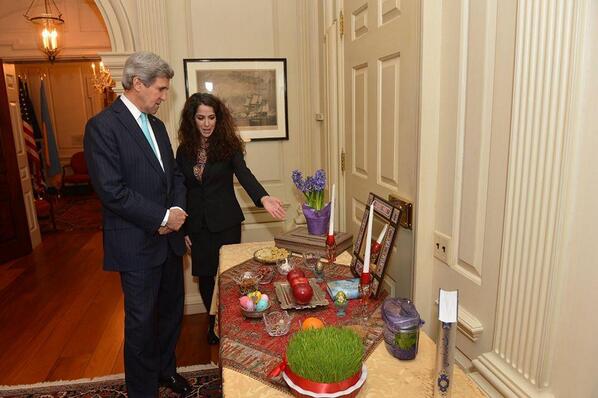
The Iranian New Year is marked with the feast of Nowrouz and falls on March 21. Translated, Nowrouz means “new day” and fittingly it should be a new day for the oppressed Iranian people as the effort begins to reverse the damage caused by years of efforts by the Obama administration to appease the mullahs in Tehran.

F.H. Buckley, a professor at the Scalia Law School, wrote an editorial in the New York Post about this need to provide the Iranian people with hope during this year’s Nowrouz observances.

“It would be a good opportunity for President Trump to mark a new day in US-Iran relations — one that corrects his predecessor’s poor treatment of the Iranian people,” Buckley writes.

“Last year at this time, the regime announced that an additional 7,000 undercover officers would patrol the streets to arrest women who had too much hair showing from under a headscarf or were out walking with a boyfriend,” he added.

“That’s why change will come to Iran, if at all, from the streets, from an Iranian Spring. And the Iranians who want to rid their country of its oppressive regime must be told that America shares their goals.” Buckley offered.

Buckley took to task the Obama administration for failing to support mass protests against the Iranian regime during the disputed presidential elections in 2009; a missed opportunity for the U.S. and urged the Trump administration to demonstrate its support for the Iranian people.

“I have a suggestion for Trump. After we ignored the street protests against the Iranian dictatorship, after we cut our disastrous Iran deal, after we abandoned Israel to the threat of medium-range missiles from the Iranian Revolutionary Guards, after American hostages were allowed to rot in Iranian jails, let the president welcome NowRuz with a message to the Iranian people,” Buckley said.

“Let him wish them a happy and prosperous new year, and the freedom that all men deserve from their cruel oppressors.”

It’s a noble sentiment and an important one since the Obama administration was quick to offer Iranians a traditional Nowrouz greeting, but never one directed specifically at the Iranian people’s desires for more freedom and democracy in their country. Such a message from the Trump administration would be an important symbol and one that would go a long way to putting the mullahs on notice that this administration will act in a much more conservative manner towards the regime.

Trump has already offered the political rhetoric chastising the regime and the much-maligned nuclear deal, but he needs to keep that momentum going in order to restore stability and balance in the Middle East; a process that Nathan Field, founder and former CEO of Industry Arabic, a translation company that provided services to over 300 high-profile customers throughout the Middle East, praised in a piece for The Hill.

“President Trump’s hardline but pragmatic approach to Iran is paving the way for the restoration of a semblance of order and regional stability. That’s a significant accomplishment for an administration still in its first 100 days,” Field writes.

“Effective foreign policy is not necessarily a matter of complicated treaties that take years to negotiate or opaque theories on international relations that only PhDs can understand. A simple message and tone set at the top is often all that’s needed.”

Field notes how President Trump has made Iranian adventurism throughout the Middle East an issue requiring a coordinated, but firm response, thereby correcting the errors made by the Obama administration.

The deal not only does not “guarantee that Iran will never obtain nuclear weapons, in the process of negotiating it, Iranian leaders, sensing that the U.S. wanted the deal more than they did, felt emboldened throughout the region in countries such as Syria, Lebanon and Yemen,” he said.

One telling example was the American non-response to a series of Iranian cyber-attacks on U.S. banks because, as one official noted, “If we had unleashed the fury in response to that DDoS attack, I don’t know if we would have gotten an Iran deal.”

“The Obama administration, by contrast, alienated nearly every traditional U.S. Middle East ally. Having thrown all of its prestige into a nuclear deal with Iran, opposed by most of the countries of the region, Washington had no leverage.”

The payoffs for the Trump administration’s tougher line against Iran has already yielded some benefits with Saudi Arabia’s willingness to send more troops to Syria and set up safe zones for refugees to stem the flood of a Syrian exodus from the war.

In many ways, Iran is slowly finding itself nudged back onto an island of isolation, even as the mullahs desperately reach out to Russia, China and Turkey in efforts to remain politically and diplomatically relevant.

We can only hope this Nowrouz brings a much better new year to the Iranian people; one that will eventually see them freed from the oppression of the mullahs.

Laura Carnahan

Filed Under: Blog, News Tagged With: #NuclearDeal, Featured, Iran, Iran deal, Iran Human rights, Iran Lobby, Iran Mullahs, Irandeal, Nowrouz, Sanctions

Former Iran Lobby Staffer Burrowing Deeper into State Department

March 15, 2017 by admin

Former Iran Lobby Staffer Burrowing Deeper into State Department

Former Iran Lobby Staffer Burrowing Deeper into State Department

Sahar Nowrouzzadeh, the Iran director for former President Obama’s National Security Council (NSC), has burrowed into the government under President Trump. She’s now in charge of Iran and the Persian Gulf region on the policy planning staff at the State Department, according to Conservative Review.

The reason why this is of concern is because of her previous employment at the National Iranian American Council, an organization with well-documented ties to the Iranian regime and a long-time supporter and advocate as part of the larger Iran lobby apparatus created to help support the loosening of sanctions on the regime.

In February, a group of over 100 prominent Iranian dissidents called for Congress to investigate NIAC’s ties to the Iranian regime.

“One of Nowrouzzadeh’s primary duties under President Obama was to promote initiatives that pushed the Iran deal. As President Obama’s NSC director for Iran, Nowrouzzadeh sat in on high-level briefings along with President Obama, former VP Joe Biden, and former Secretary of State John Kerry, as top White House staff crafted false narratives on the Iran deal to sell to the American public,” reported Jordan Schachtel.

According to the head of a state-run Iranian newspaper, Nowrouzzadeh was an essential element to pushing through the Iran deal. Editor-in-Chief Emad Abshenass said that she opened up a direct line of communication with the Iranian president’s brother. “She helped clear a number of contradictions and allowed the entire endeavor to succeed,” Abshenass said of her efforts.

Towards the end of President Obama’s tenure, Nowrouzzadeh was embedded into the State Department and for a brief time served as its Persian language spokesperson.

Breitbart News had earlier investigated Nowrouzzadeh’s prior employment with NIAC, finding that a person with the same name has previously written several publications on behalf of NIAC. According to what appears to be her LinkedIn account, Nowrouzzadeh became an analyst for the Department of Defense in 2005 before moving her way up to the National Security Council in 2014.

A NIAC profile from 2007 reveals that Sahar Nowrouzzadeh appears to be the same person as the one who is currently the NSC Director for Iran. The profiles indicate that she had the same double major and attended the same university (George Washington).

Critics have alleged that NIAC is a lobby for the current Iranian dictatorship under Ayatollah Khamenei. A dissident journalist revealed recently that NIAC’s president and founder, Trita Parsi, has maintained a years-long relationship with Iranian Foreign Minister, Javad Zarif.

The rise of this NIAC mole within the State Department is troubling since it allows a member of the Iran lobby to still maintain a position of significant influence in developing U.S. policy towards Iran.

The timing of her continued work within the State Department coincides with the upcoming Iranian election for president which is already shaping up to be another rigged cakewalk for Hassan Rouhani to continue as parliament speaker Ali Larijani publicly threw his support behind Rouhani.

Of further note, Rouhani has been selected as the only candidate of the so-called “Reformists” for the election by the Electoral Supreme Council of Reformists for Policymaking, headed by Mohammad-Reza Aref, who was the sole candidate of the Reformists in the 2013 presidential elections but in the final days ahead of that vote withdrew in favor of Rouhani.

The coronation of Rouhani comes as estimates of the Iranian regime’s military expenditures in Syria have risen a whopping $6 billion a year to $20 billion a year, including $4 billion in direct costs as well as subsidies for Hezbollah and other Iranian-controlled irregulars, according to an editorial by David P. Goldman in Asia Times.

“The Iranian regime is ready to sacrifice the most urgent needs of its internal economy in favor of its ambitions in Syria. Iran cut development spending to just one-third of the intended level as state income lagged forecasts during the three quarters ending last December, according to the country’s central bank. Iran sold $29 billion of crude during the period, up from $25 billion the comparable period last year,” Goldman added.

Goldman went on to describe Iran’s financial system as a “black hole,” and how the regime cannot refinance its arrears, recapitalize its bankrupt banks, and finance a substantial budget deficit at the same time. Its infrastructure requirements are not only urgent, but existential.  The country’s much-discussed water crisis threatens to empty whole cities and displace millions of Iranians, particularly the farmers who consume more than nine-tenths of its disappearing water supply. Despite what the Tehran Times called “a desperate call for action” by Iranian environmental scientists, the government slashed infrastructure spending by two-thirds during the last fiscal year.

This leaves American policy in a quandary. The Obama administration— as Lieutenant General Michael Flynn warned in this and numerous other statements — inadvertently stood godfather to the birth of ISIS by blundering into the milieu of Syrian Sunni rebels.

All of which places a greater emphasis on just who is developing U.S. policy moving forward and why a housecleaning of former Iran lobby associates is necessary.

Michael Tomlinson

Filed Under: Blog, News Tagged With: #NuclearDeal, Appeasement policy, Featured, hassan rouhani, Iran, Iran deal, Iran Lobby, Moderate Mullahs, National Iranian American Council, NIAC, nuclear talks, Sanctions

Iran Regime Charting a Pathway for Aggression

March 14, 2017 by admin

Iran Regime Charting a Pathway for Aggression

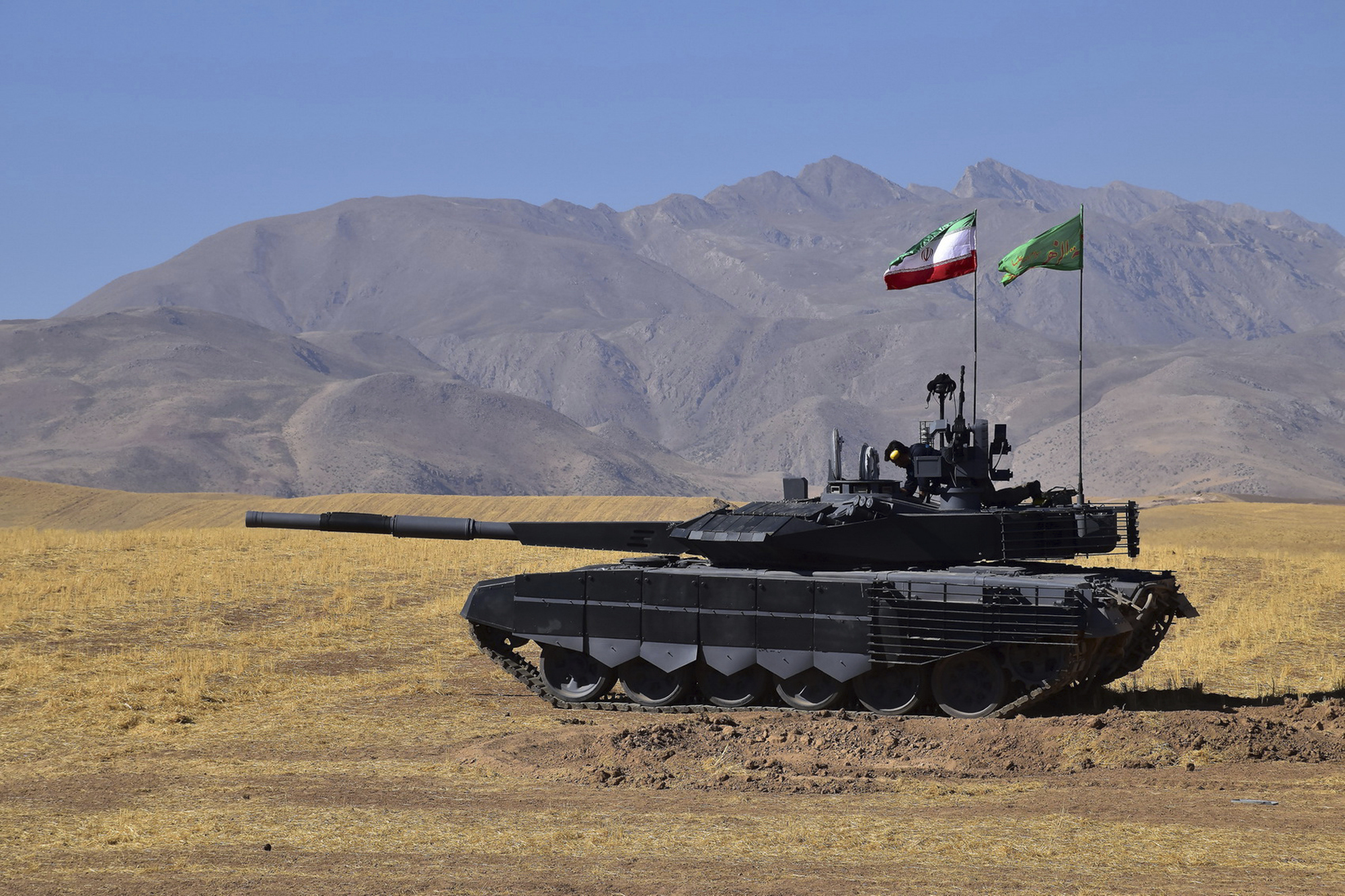
This picture released by the official website of the Iranian Defense Ministry on Sunday, March 12, 2017, shows domestically manufactured tank called “Karrar” in an undisclosed location in Iran. Iran’s semi-official Fars news agency is reporting that the country has unveiled a domestically manufactured tank and has launched a mass-production line. (Iranian Defense Ministry via AP)

The Iran lobby has consistently pushed a message that the Iranian regime was always interested in pursuing a pathway towards moderation and only needed the cooperation of the U.S. and its allies in empowering “moderate” elements in the government to take control and nudge the religious theocracy back to center.

The truth has been far bleaker and starker and nowhere has that been more obvious than in Iran’s constant efforts to build out its military capabilities and size of forces. Already possessing one of the largest standing armies in the world, the Iranian regime has been on a buying and building binge lately to expand its military using billions in new cash garnered from the lifting of sanctions under the nuclear agreement.

Iran has used its newfound wealth to buy advanced missile systems from Russia, along with sophisticated radar and communications equipment, as well as licenses to mass produce arms such as guns, rockets, missiles, drones and in its latest unveiling, a new main battle tank.

Tehran formally announced it will begin mass producing its domestically built main battle tank during a ceremony attended by the country’s defense leadership, according to Russia Today.

The tank has been compared to Russia’s T-90MS, the latest variant in the Kremlin’s T-90 series.

Russia’s Uralvagonzavod production corporation announced it was ready to export the new variant to foreign customers during the IDEX 2017 trade show in late February.

The T-90MS is able to conduct self-testing and self-diagnostics on the field, and is designed to integrate with foreign components including communication systems and air-cooling units.

The introduction of a new advanced tank system paves the way for a major upgrade to the Iranian Revolutionary Guard Corps and an imposing threat to its neighbors, which have already been under near constant assault from Iranian-backed proxies in Yemen, Iraq, Afghanistan, Lebanon and Syria.

  1. Todd Wood, a contributor to Fox Business, wrote about the concerns of this new found arms bazaar between Iran and Russia in the Washington Times.

“Russia has been keen to sell Iran military equipment and technology since the sanctions were lifted on the Islamic theocracy and the billions started flowing from the Obama administration. In fact, you could say that President Obama was the best thing that ever happened to the Russian armament industry. You could also say Hezbollah, the Iranian terror army in Lebanon and Syria, feels the same about Mr. Obama, as they were surely the recipient of all those pallets of billions in cash, but that’s another story,” he writes.

“The Iranian armor capability was severely degraded during the Iran-Iraq War and the real Shia Islamic state never had the money to change that reality. After the dollars started flowing, thanks to Valerie Jarrett and Ben Rhodes, Iran made noise about wanting to license the Russian T-90 tank technology and build the war machines ‘in-country,’” Wood added.

In addition to the upgrade in armor, the National Council of Resistance of Iran, a coalition of Iranian dissident and human rights groups, released information about claims made by a IRGC commander detailing the construction of several arms factories throughout Lebanon and handed over to Hezbollah three months ago.

These factories are able to build various types of missiles with ranges of over 500 kilometers. This includes surface-to-surface, surface-to-sea, and torpedoes designed to be launched from light and fast-attack boats. Armed drones, anti-tank missiles and fast armored boats are also built in these factories.

The weapons produced in these factories have been successfully tested in Syria, this IRGC commander added. These factories were handed over to Hezbollah experts through a step-by step process.

Anti-tank weapons built by these factories have been used time and again in Syria.

Rifles, cannons, anti-air artillery, mortar launchers, various types of missiles and bullets, especially anti-armor are other weapons built and tested by Hezbollah arms experts in these factories.

These sites, spread across the country in unknown locations, are located more than 50 meters below ground level and protected by numerous layers of armored cement to prevent Israeli fighter jets from destroying them, sources say.

Each factory produces a particular part of the missiles and weaponry, and they are assembled at yet another unknown site, according to a report published Saturday in the al-Jarida daily.

All of this military build-up is also being put on display in an aggressive fashion by the regime as detailed by Dr. Majid Rafizadeh in a piece in Huffington Post.

“It has become an alarming and dangerous pattern; a pattern of provocative actions initiated by Iran against many nations in the region, the U.K., the U.S. and its allies,” he writes.

“Just in the last week, several of these provocative operations unfolded. On March 4 U.S. officials pointed out that several of Iran’s assault crafts came dangerously close to the USNS, within 150 meters. A similar incident occurred two days earlier, on March 2 as well,” he added.

These swift-moving assault vessels operate under Iran’s Revolutionary Guard Corps (IRGC), which has been empowered and emboldened by the continuing relief of sanctions as well as the lack of a robust reaction against Iran from the international community.

These incidents clearly highlight the fact that Iran is attempting to showcase its military power and regional preeminence to the United States. Some of Iran’s Persian-language newspapers boasted about Tehran’s military capacity to counter the U.S. navy and dominate the Strait of Hormuz, an area that roughly a third of all oil traded by sea must pass through. Iran has frequently exploited the strategic location of the Strait of Hormuz by threatening to shut it down or conducting military exercises meant to intimidate, Rafizadeh points out.

As Iran puts its military might on display, it is clear that the mullahs in Tehran are not preparing for moderation, but a showdown.

Michael Tomlinson

Filed Under: Blog, News Tagged With: Featured, Iran Mullahs, Iran Terrorism, IRGC, Moderate Mullahs, NIAC, Sanctions

Iranian Revolutionary Guard Corps Stands at Center of Terror

March 7, 2017 by admin

Iranian Revolutionary Guard Corps Stands at Center of Terror

Iranian Revolutionary Guard Corps Stands at Center of Terror

Like the beating heart of a wild animal, the Iranian regime’s Revolutionary Guard Corps stands at the center of almost every piece of chaos, violence and extremism happening in the Middle East today it seems.

The IRGC pumps the engine that powers all the arms of the Iranian war machine that results in terrible human rights abuses and proxy wars raging throughout the region. Its tentacles stretch into almost every part of Iranian society and have been well documented over the past three decades.

Its control of all aspects of Iran’s military and its leadership position in instigating almost every violent act militarily is impressive and deeply disturbing. Needless to say, its conducts warrants nary a word of protest from the Iran lobby. Not even the allegedly peace-loving Ploughshares Fund utters any protests over the IRGC’s worst military excesses.

Just recently, the Pentagon blasted the “unprofessional” behavior of the Iranian navy after two separate incidents in the Strait of Hormuz last week.

According to the Pentagon, an Iranian frigate on Thursday came within 150 yards of the civilian-crewed USNS Invincible.

Then on Saturday, a number of small assault craft came within 350 yards of the Invincible and other ships.

“This was assessed to be a combination of unsafe or unprofessional behavior,” Pentagon spokesman Navy Captain Jeff Davis said.

In both cases, the US ship had to change course to avoid any collision, he added.

According to Fox News, Iran test-fired a pair of ballistic missiles into the Gulf of Oman over the weekend as well. It was the first time Fateh-110 short-range ballistic missiles have been tested in two years. One of the missiles successfully destroyed a target barge at a range of 155 miles.

One of the missiles launched from the IRGC base in Bandar-e-Jask successfully destroyed a target barge at a range of 155 miles. The other missed its target. U.S. officials told Fox News the latest version of the Fateh-110 missile has an “active seeker” system that helps it target ships at sea.

The new Iranian short-range ballistic missile launches come a week after Iran successfully test-fired Russian surface-to-air missiles, part of the S-300 air defense system Russia sent to Iran recently.

According to the Foundation for Defense of Democracies, Iran has conducted as many as 14 ballistic missile launches since the landmark nuclear agreement in July 2015.

A senior U.S. military official told Fox News that Iran had made great advances in its ballistic missile program over the past decade.

Domestically, the IRGC also leads in the brutal crackdowns that have targeted political dissidents, journalists, artists, women and religious minorities.

The Center for Human Rights in Iran (CHRI) reported that two Iranian Catholic converts were arrested in their home by the IRGC in West Azerbaijan Province.

“At 7 a.m. on February 20 (2017), two plainclothes intelligence agents of the Islamic Revolutionary Guards Corps (IRGC) entered the home of Christian converts Anoohe Rezabakhsh and her son Sohail (Augustin) Zargarzadeh in Oroumiyeh (city) without prior notice and searched the premises and took away personal items such as religious and holy books,” Mansour Borji, the spokesperson for the Alliance of Iranian Churches known as Hamgam, told CHRI on March 3, 2017.

Despite President Hassan Rouhani’s pledges during his election campaign in 2013 that “all ethnicities, all religions, even religious minorities, must feel justice,” the targeting of Christian converts has continued unabated under his administration according to the CHRI.

The central role the IRGC plays in all of these actions means that its leaders are key players in the destabilization going on throughout the Middle East. As Dr. Majid Rafizadeh points out in an editorial in Arab News, the Quds Forces Qassem Soleimani could be called Iran’s “Osama Bin Laden” for his key role in directing much of this chaos.

“He is well-known as the Middle East’s deadliest and Iran’s most dangerous man. He prioritizes offensive tactics and operations over defensive ones, and rejoices in taking overconfident selfies with his troops and proxies in battlefields in many countries, including Iraq, Syria, Yemen and Lebanon,” Rafizadeh said. “When it comes to authority, he is Iran’s second man after Supreme Leader Ali Khamenei. Being a staunchly loyal confidante to Khamenei, Qassem Soleimani has great influence over foreign policy.”

“Soleimani commands at least 150,000 militants, many designated as terrorists and belonging to designated terrorist groups. This is why Iran has been repeatedly ranked as the top state sponsor of terrorism by the US State Department,” he added. “Based on my research, there are more than 250 terrorist groups worldwide, with different religious and sociopolitical backgrounds. Roughly 25 percent of them are funded, trained or supported by only one entity, the Quds Force.”

All of this is important as the Trump administration debates whether or not to designate the IRGC as a Foreign Terrorist Organization as a whole rather than simply designating individuals such as Soleimani.

No doubt the Iran lobby will raise its collective voices into another shrill call opposing any designation and warning of dire consequences, but this time the push back is coming strongly from many quarters.

Michael Tomlinson

Filed Under: Blog, News Tagged With: Featured, Iran, Iran deal, Iran Terrorism, IRGC, Khamenei, Sanctions

Iran Lobby Echo Chamber Banging Loudly for Iran Regime

March 5, 2017 by admin

Iran Lobby Echo Chamber Banging Loudly for Iran Regime

Iran Lobby Echo Chamber Banging Loudly for Iran Regime

It seems that the “echo chamber” created by members of the Obama administration and the Iran lobby is still alive and kicking and trying desperately to keep support flowing to the Iranian regime in light of increasing calls to get tough on Iranian regime because of its continued support for terrorism, brutal human rights abuses and flagrant violations of international sanctions with ballistic missile launches.

The Iran lobby, especially the National Iranian American Council, has been especially busy making excuses every time Iran hangs a dissident, puts down a protest or sentences a dual national to prison.

Many of those “experts” sympathetic to the regime and preserving the nuclear deal at all costs continue to push false narratives like a used car salesman pushing a clunker with a rolled back odometer.

One example is a piece authored by Jeffrey A. Sinclair in Foreign Affairs in which he argues that President Trump needs to strengthen Iran’s “moderates.”

“The goal should be to guard against any further escalation of hostilities. After all, unless the administration is willing to wage war with Iran, this confrontation won’t achieve anything useful for the United States. What it will do is further strengthen the hardliners in Tehran, a process that is already underway, and undermine moderates such as President Hassan Rouhani and Foreign Minister Mohammad Javad Zarif less than three months before Iran’s presidential election,” Sinclair writes.

Rarely has a paragraph been loaded with more inaccuracies than that one.

First of all, Trump has made it clear with his criticisms of the war in Iraq during the campaign that he is not in favor of nation-building by military force, but he has also made clear he was not going to offer a blank check to regimes such as Iran and Syria to do whatever they wanted since the end result of those kinds of actions has brought chaos to the Middle East.

Trump has laid out a belief that ignoring Iranian regimes’s militant actions does little to ensure regional stability and peace. Confronting the regime on issues such as human rights, proxy wars or provocative military acts are the right policy if Trump’s administration takes up that road, but saying that such a path only leads to war is one of the boldest falsehoods of the echo chamber.

Trump has at his disposal of plethora of tools, many used successfully by previous administrations, to force Iran to the bargaining table which is exactly what happened recently. The only problem was that the Obama administration fumbled the ball by caving in to every demand the Iranian mullahs had and getting little in return.

Contrary to Sinclair’s missives, confronting Iranian regime is exactly the right course of action since to do nothing except issue paper condemnations does nothing to rectify the situation. Using harsh language as Iran’s Quds Forces supply Houthi rebels in Yemen with arms so they can destabilize the country and risk a regional war between Saudi Arabia and Iran breaking out is not only bad foreign policy, it’s stupid.

Also, when Sinclair calls Rouhani and Zarif “moderates” the only polite thing to do is to keep from laughing hysterically out loud.

The only real moderates in Iran sit in Iranian prisons or have been driving out of the country as political refugees. As a religious theocracy, Iran’s mullahs maintain an iron grip on power. Rouhani did not become president to push a liberalizing agenda for reform. He was hand selected by Ali Khamenei to present the West with a more benign face in order to trigger negotiations to ease crippling sanctions.

The world is not going to see any competition during these upcoming presidential elections in Iran. Nothing is left to chance by the mullahs, which is why the vast majority of political dissidents, journalists, artists, filmmakers, students and anyone else stepping out of line has already been rounded up in advance of the elections.

“Because other U.S. and Western sanctions relating to Iran’s alleged terrorist activities remained in place, and because international banks remained highly skittish when it came to dealing with Iran, economic relief did not come quickly enough,” Sinclair said. “Overall, the administration made too few efforts to help Iran economically, as other terrorism-related sanctions were kept in place. The Obama team, it seemed, had taken its eye off the ball. U.S. Secretary of State John Kerry and others knew that Iranian moderates needed a post-deal economic boost to secure their position.”

This is another fallacious argument being made that the U.S. somehow was responsible for jumpstarting an Iranian economy that ranks almost dead last in the world in transparency and corruption. Also, since sanctions related to terrorism were not part of the nuclear deal, the U.S. and Trump are under no obligation to lift them, especially since Iranian regime regularly supports terrorist groups such as Hezbollah and Shiite militias responsible for wholesale slaughter of Sunni villages in Iraq.

Sinclair also criticizes discussions to designate Iran’s Revolutionary Guard Corps as a foreign terrorist organization and contends such a move would “escalate tensions.”

It’s hard to imagine how much worse tensions can get when Iranian regime’s navy detains American sailors, American citizens are being held in Iranian prisons and Iran’s proxies are causing the biggest refugee crisis since World War II.

Sinclair—and the rest of the Iran lobby—seems to place its collective hopes on the few wispy strands of less intensive anti-American actions than in the past as positive signs for change.

“For now, signs from Iran are somewhat positive. The yearly celebration of the founding of the Islamic Republic (expected to be a bonanza for the hardliners) turned out to be muted—excessively so, which was a clear sign of at least momentary moderation from the top leadership,” he writes. “In addition, a series of prominent hardliner clerics—including some of the leading clerics in Qom—have in recent days publicly expressed their support for keeping the nuclear deal in place.”

The claimed positive step is at a time that the Iranian regime test fired another Ballistic missile during this period and of course the mullahs are going to express support for the nuclear deal since its amounts to a giant ATM card the regime has been using to buy billions of dollars in new weapons from Russia.

These are not encouraging signs no matter what the echo chamber says and it’s about time we ignore it.

Michael Tomlinson

Filed Under: Blog, Current Trend, News, The Appeasers Tagged With: echo-chamber, Featured, Iran deal, Iran Human rights, Iran Lobby, Iran Terrorism, Jeffrey A. Sinclair, National Iranian American Council, nuclear talks, Rouhani, Sanctions, Sinclair

  • « Previous Page
  • 1
  • 2
  • 3
  • 4
  • 5
  • …
  • 9
  • Next Page »

National Iranian-American Council (NIAC)

  • Bogus Memberships
  • Survey
  • Lobbying
  • Iranians for International Cooperation
  • Defamation Lawsuit
  • People’s Mojahedin
  • Trita Parsi Biography
  • Parsi/Namazi Lobbying Plan
  • Parsi Links to Namazi & Iranian Regime
  • Namazi, NIAC Ringleader
  • Collaborating with Iran’s Ambassador

Recent Posts

  • NIAC Trying to Gain Influence On U.S. Congress
  • While Iran Lobby Plays Blame Game Iran Goes Nuclear
  • Iran Lobby Jumps on Detention of Iranian Newscaster
  • Bad News for Iran Swamps Iran Lobby
  • Iran Starts Off Year by Banning Instagram

© Copyright 2026 IranLobby.net · All Rights Reserved.