Iran Lobby

Exposing the Activities of the lobbies and appeasers of the Mullah's Dictatorship ruling Iran

  • Home
  • About
  • Current Trend
  • National Iranian-American Council(NIAC)
    • Bogus Memberships
    • Survey
    • Lobbying
    • Iranians for International Cooperation
    • Defamation Lawsuit
    • People’s Mojahedin
    • Trita Parsi Biography
    • Parsi/Namazi Lobbying Plan
    • Parsi Links to Namazi& Iranian Regime
    • Namazi, NIAC Ringleader
    • Collaborating with Iran’s Ambassador
  • The Appeasers
    • Gary Sick
    • Flynt Leverett & Hillary Mann Leverett
    • Baroness Nicholson
  • Blog
  • Links
  • Media Reports

Iran’s Mullahs Get Ready for a Spending Spree

July 2, 2015 by admin

Iran’s Mullahs Get Ready for a Spending Spree

Iran’s Mullahs Get Ready for a Spending Spree

Who doesn’t like shopping; especially when you’re about to get a $140 billion credit line? The Iran regime’s mullahs are eagerly anticipating the windfall due to them with a completed nuclear agreement. The cornerstone of nuclear talks for the regime has been the condition for the immediate and total lifting of all economic sanctions from the UN Security Council, European Union and U.S.

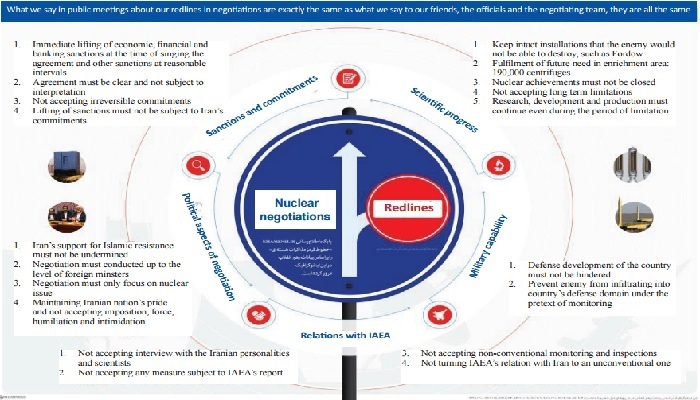
In fact, there has been no ambiguity about what Iran’s top mullah, Ali Khamenei is seeking in a nuclear deal having posted his very own infographic listing his specific “red lines” where he would not allow regime negotiators to cross in order to gain a deal with the P5+1 group of nations.

The value of those frozen assets has already been demonstrated when the U.S. released over $17 billion in cash to the regime since the interim framework agreement was announced in April of 2015 and follows a prior interim agreement reached in 2013. In fact the regime just received over 13 tons of gold released by South Africa at the direction of the U.S. as part of those agreements. The massive influx of cash came at an opportune time for the regime.

The benchmark price of crude oil had plummeted from a high of $107.89 per barrel in June of 2014 to only $57.30 per barrel in April of 2015, crushing the Iranian economy and its black market sales of illegal crude.

The 47 percent drop in oil came at the same time that the Iran regime had significantly stepped up its support for Houthi rebels as they overthrew the government in Yemen, spent over $6 billion annually to prop up the Assad regime in Syria, and billions more to fund Shiite militias throughout Iraq.

The cash delivered by the U.S. was a godsend for the mullahs and kept their precarious hold over an increasingly embittered Iranian population firm. The mullahs recognize that replenishing their coffers remains the most vital aspect of these negotiations and would normally provide enormous leverage for the P5+1 – particularly the U.S. – but the Obama administration seems to be intent on securing a deal, any deal, without using this economic leverage to gain substantial changes in Iran’s foreign policy direction or abysmal human rights record.

This hasn’t been lost on the mullahs or their circle of supporters who have sought to push forward foreign investment in order to create the feeling of inevitability of a lifting of sanctions. Economists have estimated the regime could receive an additional windfall of over $100 billion in direct foreign investment with the lifting of sanctions in addition to the $140 billion it would get from unfrozen assets.

Already regime supporters such as Reza Marashi of the National Iranian American Council and Bijan Khajehpour of Atieh International are already posturing and trying to facilitate this influx of foreign investment. In Khajehpour’s case, he would personally gain by helping direct investors to regime industries through his consulting firm.

But any thought of this enormous windfall benefitting the Iranian people is foolish and misplaced given past history. Khamenei himself delivered a speech February of 2014 in which he called for an “economy of resistance” and set the stage for preparing the Iranian people for continued hardships. Those hardships have resulted in widespread, but lightly reported, mass protests and demonstrations throughout Iran from everyone ranging from school teachers to factory workers to ethnic minorities.

The fact that regime mullahs directed the massive shifting of funds to fund proxy wars, terror groups and its nuclear program at the expense of its own citizens clearly demonstrates what will happen with this $140 billion payday and is bearing more intense media scrutiny as journalists and columnists delve deeper into where all those billions will most likely go.

As Michael Singh, managing director of the Washington Institute for Near East Policy, writes in the Wall Street Journal: “The agreement terms reportedly under discussion provide Iran with substantial economic relief while demanding precisely nothing from it regarding its sponsorship of terrorism and destabilizing regional behavior.”

Sounding a similar warning is Ray Takeyh, a senior fellow at the Council on Foreign Relations, who wrote in the Washington Post: “The massive financial gains from the deal would enable the Islamic Republic’s imperial surge while allowing a repressive regime that was on the brink of collapse in 2009 to consolidate power. This would be no small achievement for Iran’s emboldened rulers.”

As the regime continues to manipulate the U.S. with false promises, the mullahs are busy getting their shopping list ready for the day their bank accounts are flush with cash again.

By Laura Carnahan

Filed Under: Blog, News Tagged With: Iran, Iran Lobby, Iran Talks, Jamal Abdi, Marashi, NIAC, Sanction, Sanction relief

Iran Lobby Admits Skirting Lobbying Laws

July 1, 2015 by admin


Iran Lobby Admits Skirting Lobbying Laws

Iran Lobby Admits Skirting Lobbying Laws

There was an admission made yesterday during ongoing nuclear talks between the Iran regime and the P5+1 and it wasn’t that the negotiators were going to miss yet another deadline. No, the real news that leaked out and escaped the notice of most news organizations came from the National Iranian American Council, the regime’s longtime loyal lobbying group.

The NIAC announced the formation of a 501(c)4 lobbying arm dubbed “NIAC Action” dedicated to openly carrying the mullahs water through the halls of Congress and collect funds on behalf of the mullahs to advance a nuclear agreement giving Tehran’s cash-starved mullahs access to $140 billion in frozen funds and allow it to retain its nuclear infrastructure without intrusive international scrutiny or inspection.

While the NIAC claims it launched its lobbying group to counter what it feels is the strong anti-regime lobby already operating in the U.S., the more practical reality is that the NIAC had been skirting federal lobbying laws and had to make this move in order to avoid further investigation and possible charges for violating federal laws.

News media have previously chronicled the suspicious and often blatant lobbying efforts by members of the NIAC, especially its founder Trita Parsi who recently lost a defamation suit aimed at a journalist who reported on Parsi and the NIAC’s lobbying actions on behalf of the regime.

An appeal by Parsi resulted not only in another loss but also resulted in NIAC being forced to pay $184,000 and condemnation for blatant and systematic abuse of the discovery process and repeated false and misleading declarations to the court.

NIAC’s Jamal Abdi attempted to spin the lack of coordination between the NIAC and Iran regime officials by saying “We are not lobbying on behalf of the Iranian government. We don’t coordinate. We don’t take money from the Iranian government or the U.S. government.”

But Abdi neglected to mention any prohibition on accepting funding from individuals who receive funding directly or indirectly from the Iranian regime or its vast network of shell companies and false fronts built over the past decade to evade economic sanctions and fund worldwide terror groups such as Hezbollah.

The NIAC has been a constant fixture at the sites of nuclear talks, in news media and online through its aggressive social media efforts. It skirted the letter of federal law by claiming status as a 501(c)3 “social welfare” group even though it organized “legislative action days” where it sent teams to Congressional offices and “lobbied” key representatives and Senators on important Iran-related legislation.

Unsurprisingly, key NIAC staff who have long sought to pressure and influence members of Congress have moved over to key slots at the lobbying arm, including Abdi who is now the executive director, Ryan Costello and Tyler Cullis who move over as policy and legal fellows respectively. It will bear watching to see the amount of cross-over and coordination that occurs between these two groups and whether or not federal lobbying laws will be violated.

It is unsurprising that this new lobbying arm for the NIAC is not devoted the stated mission of the NIAC which is to promote “greater understanding between the American and Iranian people,” but instead was specifically created “to protecting a nuclear deal.”

This will also allow the NIAC to even endorse U.S. political candidates, although an endorsement by a group so closely identified as a mouthpiece for a state sponsor of terrorism, currently holding American hostages and engaging in three proxy wars responsible for the murder and displacement of millions of people would hardly be a welcome endorsement by any Republican or Democratic candidate.

At least the truth is unveiled and we now know the full extent of what the Iran lobby is willing to do to secure a deal for the mullahs.

By Michael Tomlinson


Filed Under: Blog, National Iranian-American Council, News Tagged With: Iran, Iran Lobby, Iran Talks, Jamal Abdi, NIAC, Ryan Costello, Trita Parsi, Tyler Cullis

The Iran Regime’s Red Lines in Nuclear Talks

June 30, 2015 by admin

Khamenei's Redliens on Nuclear Talks-New deception tecnics

Khamenei’s Redliens on Nuclear Talks-New deception tecnics

With June 30 having arrived and no nuclear agreement being reached between the Iran regime and the P5+1 group of nations, one could call everything “business as usual” with yet another deadline preceded by frantic talks and then slipping away without a ripple of consequence.

Of course the “new” immediate deadline will be July 9, in which the Obama administration needs to deliver an agreement to Congress to trigger a 30 day review period, otherwise if they miss it, Congress will have 60 days to review as part of a compromise deal struck between the administration and Sens. Bob Corker (R-TN) and Robert Menendez (D-NJ).

But this new deadline is just as likely to slide by as the one today and the reason for it was put on display today in bright, bold red lines by the regime’s top mullah, Ali Khamenei, who wasted no time taking to Twitter and his official website to post his own version of “Major Red Lines in Nuclear Negotiations” for the regime.

Khamenei’s red lines, unlike those laid down by President Obama after Assad in Syria gassed his own people, are firmly set and unlikely to change since Khamenei is empowered by the mullahs’ constitution to hold the final approval of any foreign agreements, which makes his red lines worth examining.

Khamenei’s red lines essentially repudiates every pointed allegedly agreed upon condition in earlier interim, framework agreements and reasserts the regime’s opposition to virtually all the conditions the P5+1 have sought over the past three years; even after making significant and grave concessions to the regime.

They include:

  • No long-term restrictions on the regime’s nuclear program as opposed to the decade-long restriction sought by negotiators;
  • Continuation of the regime’s nuclear research and development program during the restriction period in spite of prior agreements to halt such research;
  • Immediate lifting of all economic, financial and banking sanctions with signing of an agreement, including all sanctions imposed by the UN Security Council, European Union and U.S. Congress and administration without requirements the regime was in compliance;
  • Lifting of sanctions must be conditioned on the start of the regime’s implementation of the agreement, not after international inspections have verified its compliance;
  • Verification by the UN’s inspectors at the International Atomic Energy Agency will not be accepted by the regime, nor will inspectors be granted unconditional access to any regime facility;
  • No inspection of military facilities will be allowed, nor will interviews of any regime scientist or technical personnel; and
  • The regime opposes any longer term period of review, inspection or compliance beyond the fixed term, which means no 15 or 25 year window to maintain compliance.

The fact that Khamenei repudiated almost every condition regime foreign minister Javad Zarif and its president, Hassan Rouhani touted as landmark agreements should come as no surprise really. Khamenei’s public tweets and statements following the interim agreement announced jointly by the regime and the P5+1 to much fanfare on April, 2015 clearly showed his displeasure and contention that the regime had not submitted to any of these conditions.

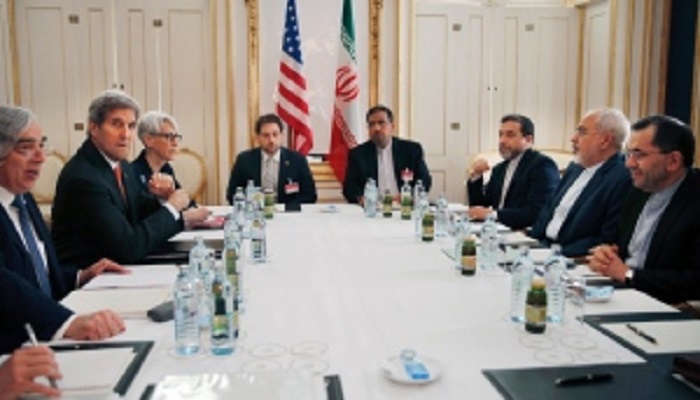
Not even regime cheerleader Trita Parsi of the National Iranian American Council could alter the inevitable outcome with his unsurprising appearance in Vienna, Austria, the site of these talks where he attempted to convince any reporter with a notebook, camera or microphone that the regime was indeed serious about these talks and on the verge of closing a deal.

But given the clear and unmistakable conditions laid out by Khamenei, the only real question is how willing is the Obama administration to concede even more and essentially give the regime a blank check or at least a $140 billion check, the amount in frozen assets the regime’s mullahs are lusting after to replenish their coffers drained by three proxy years in Syria, Iraq and Yemen.

William Kristol writing in The Weekly Standard warns the administration may have very well caved in on the all-important issue of inspection access by conceding that since the U.S. would not allow universal access to its own military sites, it could afford Iran the same consideration.

All of which sets the stage for the final act before July 9 of whether or not the P5+1 completely cave and adhere to all of Khamenei’s conditions or recognize in the final act that Iran’s mullahs really have no desire for an agreement and instead have been fooling the world for the past three years.

By Michael Tomlinson

Filed Under: Blog, News Tagged With: Iran, Iran deal, Iran Talks, Iran Talks Vienna

What You Need to Know About the Iran Nuclear Talks

June 29, 2015 by admin


What You Need to Know About the Iran Nuclear Talks

With only a day left before the self-imposed deadline of June 30 for this third and latest round of talks between the Iran regime and the P5+1 group of nations over Iran’s nuclear development program, it is becoming increasingly clear with leaked news reports that the deadline will be missed as regime foreign minister Javad Zarif heads back to consult with his mullah masters in Tehran.

It really is not surprising this deadline will be missed as well. Remember, this session was allegedly set to work out the “details” of the so-called “framework agreement” from last April in which both sides had supposedly agreed on the broad outlines, but within 24 hours conflicting documents were produced on what the framework agreement actually contained.

That “agreement” followed a similar missed deadline the year before and yet another agreement in November of 2013. Remember the 2013 deal? It released $17 billion in cash and assets to the regime for its alleged compliance with reduction in the stockpiles of enriched uranium, but instead, during the past two years under that interim agreement, those stockpiles actually increased by a whopping 20 percent.

It’s worth mentioning that the Iran regime got those billions just as global oil prices slumped and it was shelling out $6 billion to support Assad in Syria with Hezbollah fighters, not to mention the additional billions it spent to support the Houthi revolt in Yemen and Shiite militias in Iraq.

In essence, we have been paying for Iran’s proxy wars for the last two years.

But given the past three years of negotiating, what has been the common thread of failure in each of the previous sessions? Two words: Ali Khamenei.

The regime’s top mullah is empowered by mullah’s constitution with dictatorial powers over virtually all aspects of Iranian life including the judiciary, culture, foreign policy, economy and military matters. Jay Solomon reports in the Wall Street Journal how Khamenei’s constantly shifting demands, almost schizophrenic public rants and hardline stances have doomed every prior negotiating session and has potentially derailed this one as well.

“Mr. Khamenei’s hardline positions, announced in a nationally televised speech, appeared to back away from commitments his negotiators made in April to restrain parts of Iran’s nuclear program and to allow international inspections of the country’s military sites,” Solomon writes. “

“But there is concern in Washington and Europe that Iran’s paramount political leader may be boxing in his own diplomats by establishing terms they can’t deliver on. The 75-year-old cleric is viewed by the White House as the final decision maker on all issues concerning Iran’s nuclear program and foreign policy,” he added.

Solomon also disclosed the existence of secret messages passed between the regime and President Obama in which the mullahs in Tehran demanded as a sign of U.S. good faith the release of certain prisoners in 2009. The regime also demanded the blacklisting of certain Iranian opposition resistance groups and an increase in U.S. visas for regime students to study at U.S. universities.

It is noteworthy that the regime specifically called for actions against Iranian resistance groups, which have helped marshal global opinion against the regime over the years – and in the case of the National Council of Resistance of Iran – have helped disclose once-secret Iranian nuclear facilities angering the mullahs.

But in a startling concession, the U.S. arranged for the release of four Iranians including two convicted arms smugglers and a prominent scientist convicted of illegal exports to Iran. That early example of American concessions set the stage for the regime and Khamenei to believe they could get whatever they wanted from the U.S. and led to two years of mind-numbing talks in which the P5+1 caved on a whole series of concessions designed to appease Khamenei and hardline mullahs.

Now with admission that the June 30 deadline is moot, Western diplomats are breaking their silence and raising the scenario that the Iran regime is now backing out of its earlier commitments.

“There are a number of different areas where we still have major differences of interpretation in detailing what was agreed in Lausanne,” said British Foreign Minister Philip Hammond in a Reuters report.

“There is going to have to be some give or take if we are to get this done in the next few days,” he added. “No deal is better than a bad deal.”

Other Western officials echoed Hammond’s remarks, saying some of the backtracking involved the mechanics of monitoring Iranian compliance with proposed limits on nuclear activities according to Reuters.

The final clues of how far away the regime is removed from reality came in a posting by Reza Marashi from the National Iranian American Council and a lead supporter of the mullahs who is in Geneva along with his colleague Trita Parsi hobnobbing with the Iranian delegation in hotel hallways and lobbies.

Since Marashi and Parsi enjoy such close access to the confidential nature of these talks through the Iranian delegation, it’s worth noting the issue areas they call “myths” as clues to what frightens the mullahs the most.

  • The appearance that the regime will receive a windfall from immediate lifting of all sanctions;
  • The lack of verified inspection measures to prevent Iranian regime from cheating;
  • The emboldening of Iran’s mullahs to act freely in the region now that a deal is in place;
  • The worsening of human rights in Iran now that there is no leverage to improve the situation;
  • The ability to secure a better deal with mounting pressure on the regime from wider protest within Iran and abroad.

Ironically, Marashi has laid out the case precisely posed by opponents of a bad nuclear deal in which Khamenei’s mouth has uttered all of these points in direct contradiction to Marashi over the past two years.

The kicker is the trial balloon floated by Parsi in which he basically delivers the regime’s position on Huffington Post of a three phase approval deal which includes the U.S. Congress approving the lifting of sanctions and the terms of a deal without it even being signed by the Iranians. He must have gotten the idea from Rep. Nancy Pelosi (D-CA) during the healthcare debate when she argued Congress had to pass the law to find out what was in it.

Parsi and Marashi seem to believe Congress and the American people will fall for the same trick twice.

By Michael Tomlinson


Filed Under: Blog, National Iranian-American Council, News Tagged With: Iran, Iran Talks, Iran Talks Vienna, Marashi, NIAC, Trita Parsi

Stopping Concessions to Iran Regime Key to Regional Peace

June 26, 2015 by admin


Stopping Concessions to Iran Regime Key to Regional Peace

Stopping Concessions to Iran Regime Key to Regional Peace

With only a week left before the June 30 deadline for an agreement between the P5+1 group of nations and the Iran regime, the Iran lobby is working overtime spitting out editorials, policy papers and other propaganda stressing the same messages it has been hammering on for three years.

This was no more evident than in a piece published in Foreign Policy by Trita Parsi, head of the regime’s chief cheerleader the National Iranian American Council, who trotted out the old standard that the only choices at the bargaining table was between war and peace; claiming that this dispute was “rarely resolved through diplomacy without the various sides going to war first.”

Of course that is a false choice and a weak scare tactic because the choices are much more varied and numerous than Parsi would have us believe. In fact, the National Council of Resistance of Iran, the largest Iranian dissident groups in the world, held a press conference today where they released a report outlining the laundry list of same deceptions and falsehoods Parsi has been flogging.

Alireza Jafarzadeh, the NCRI-US deputy director, outlined some of these other choices for negotiators and chief among them was the potential for regime change itself within the Iran regime which has been wracked by large scale demonstrations across the country by disgruntled teachers and workers who are fed up with large-scale corruption and the diversion of the nation’s wealth away from the economy and to fund terror groups and proxy wars in places such as Syria, Iraq and Yemen.

It certainly did not help that the mullahs decided to fortify a faltering Assad government in Syria with an additional 15,000 troops, comprised heavily of paid mercenaries from Iraq and Afghanistan.

And this is what Parsi attempts to misled with his editorial. While he claims the choices are stark between war and peace, he neglects to mention that Iran mullahs are already at war with Saudi Arabia in Yemen, Sunnis tribes in Iraq and the Syrian people who are standing up against he dictatorship ruling the country. The regime’s Revolutionary Guards and Quds Force are already fighting on battlefields throughout the Middle East.

And this even isn’t a recent development. Iranian regime’s military has long supplied local militias in Iraq in their fight against U.S. and coalition forces, including training in constructing improvised explosive devices, LEDs, which have claimed thousands of American lives.

“What does this mean? It means that Iran doesn’t seem particularly interested in entering into a dialogue with the Obama Administration at the moment,” wrote Jeffrey Goldberg in the Atlantic in 2011.

All of which puts the lie to Parsi’s chief argument since Iran’s mullahs have already been waging war against U.S. interests and personnel for the past five years. This brings us to another of Parsi’s ham-handed arguments, namely that a deal represents a watershed moment in the relationship between Iran and the U.S. and would make Iran more amenable to working with the U.S.

Another silly proposition since Iran’s mullahs have shown a shocking willingness to turn American hostages into bargaining pawns and demanded – and received – the exclusion of human rights and ballistic missile technology from any part of the negotiations.

The NCRI report clearly showed this by delving deeply into how Tehran has approached nuclear talks by consistently keeping military sites out of inspections, foot dragging requests for disclosure by the International Atomic Energy Agency, retaining its nuclear infrastructure in its entirety including its centrifuges, uranium stockpiles and heavy water reactors, and keeping talks alive after three years with false promises and interim agreements, leaving it free to pursue its military actions abroad.

By Michael Tomlinson


Filed Under: Blog, National Iranian-American Council, News Tagged With: Iran, Iran deal, Iran deceptions, Iran Lobby, Iran Talks, NIAC, nuclear talks, P5+1 negotiations with Iran, Trita Parsi

NIAC Leads Charge for Great Iran Giveaway

June 25, 2015 by admin

GiveawayReza Marashi, another one of the National Iranian American Council’s regime cheerleaders, offered an editorial on the final hurdles facing nuclear negotiators in Switzerland. It is an impressive piece of fiction, worthy of a Hugo Award for fantasy writing.

His ignoring the televised rants by top mullah Ali Khamenei in denouncing any freeze on Iran’s nuclear program and opposition to any inspections of military or secret sites and demand for an immediate lifting of economic sanctions by the entire world even before ink is dry on an agreement is proof that Marashi is attempting that unique political high wire act; covering for a boss who suffers foot-in-mouth disease.

But I sympathize with Marashi. It can’t be easy to spin a line when your top guy goes on national television to basically undermine everything you’re saying. Marashi might find better luck defending the Confederate battle flag these days.

In another flight of fancy, Marashi claims that “Iran gave more than it received in the interim nuclear deal, and is looking to collect on that investment.” We certainly agree on the second part of that statement, Iran’s mullahs are certainly looking to collect – about $140 billion in frozen assets in what would be a gigantic payday, but the first part of the statement is disingenuous.

The Wall Street Journal, amongst scores of other news media, has documented the avalanche of concessions granted to the Iran regime by P5+1 negotiators without any comparable concessions from the mullahs. Those concessions began with the most important and earliest concession which was to move away from dismantling Iran’s nuclear program to complex Rube Goldberg structure of stretching out the “breakout” time for creating a nuclear weapon.

Marashi, his colleague at the NIAC Trita Parsi and other regime sympathizers, have created a new vocabulary of deceit with newly invented terms such as “snapback sanctions” and “breakout times” to replace conditions such as “dismantling centrifuges” and “eliminating fuel stockpiles.” It amounts to a shell game any tourist on the sidewalks of New York city would recognize with Iran’s mullahs hiding their nuclear program under a walnut and moving it rapidly around.

But what Iran’s mullahs truly want – and badly – is the cash. The $140 billion at the end of their nuclear rainbow is desperately needed – not by the ordinary Iranian citizen strangled by a corrupted economy – but a religious theocracy bled dry from three costly proxy wars in Syria, Iraq and Yemen and crashing oil prices. The mullahs need that money to prop their floundering regime afloat and keep their extremists allies well-equipped with guns, rockets and cash to pay mercenaries recruited from Afghanistan, Lebanon, Somalia and Nigeria.

To put it into perspective, according to the International Monetary Fund, Iran’s total foreign currency reserves amounts to only $110 billion, ranking it 21st in the world. The U.S. only has currency reserves of $121.5 billion, ranking it 19th. A $140 billion cash infusion into Iran would vault it to 11th place, ahead of Mexico, Germany, the U.K., France and Italy and just behind powerhouses Russia, Saudi Arabia, Japan and China.

That, more than anything else, is what the mullahs are craving like heroin to an addict. They need that cash to pay for their military adventures, to support terror groups and to maintain the massive expenditures required to continue building its nuclear infrastructure including new equipment it intends to buy from Russia and North Korea.

And if that wasn’t enough, Marashi also proposes that UN sanctions be rewritten to exclude tying sanctions to non-nuclear issues “such as arms procurement and export, human rights, and terrorism.” In effect, giving Iran a free pass to acquire arms, export them to its proxies, continue hanging people at a breakneck pace and lavish terror groups with more support.

Clearly Marashi has given up all pretense of finding common ground with negotiating countries and instead is all-in with the mullahs in trying to get everything they can before the June 30th deadline. The “throw everything in the basket” approach is reminiscent of looters sweeping through a CVS store grabbing everything they can before burning it down.

The end result will leave a deeply destabilized world with a nuclear-capable and flush with cash Iran still controlled by a small cadre of extremist mullahs.

By Michael Tomlinson

Filed Under: Blog, National Iranian-American Council Tagged With: Iran, Iran deal, Iran Lobby, Iran Talks, Irantalks, NIAC, Reza Marashi, Sanctions, Trita Parsi

Iran’s Top Mullah Doubling Down on Hardline

June 24, 2015 by admin

Khamenei Military SpeechPity Trita Parsi of the National Iranian American Council and chief cheerleader for the Iran regime. He toils tirelessly to spin arguments in favor of closing a nuclear deal with Iran by emphasizing a newfangled moderation within Iran and the need to empower Iran’s “moderates” against the uncompromising “hardliners.”

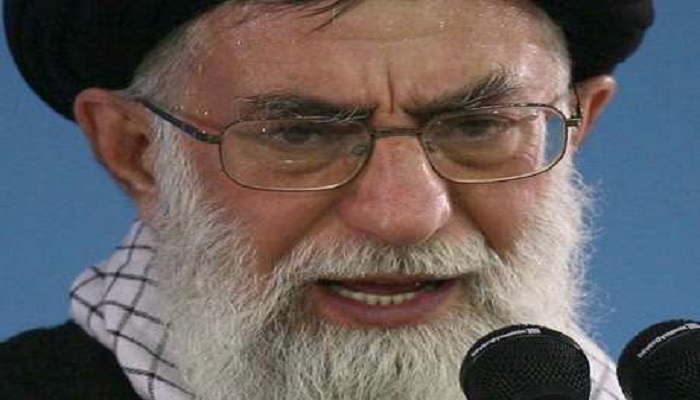
Unfortunately for him, the key player in Iran, Ali Khamenei, who under the Islamic state’s constitution basically gets the final word on almost every aspect of Iranian life, undercut Parsi yet again with another of his now-famous rants denouncing all things Parsi previously hailed as significant milestones during these three torturous years of talks.

One might feel compassion for Parsi if it wasn’t for the fact that obfuscation has become a high art form for him in defending a regime that by all objective standards is corrupt and bloodthirsty.

In a speech broadcast live on Iranian state television and widely reported in global media, Khamenei doubled down on previous demands and called for sanctions against Iran to be lifted before the regime dismantled one bolt of its nuclear infrastructure and before any verification by international inspectors takes place. He also ruled out any freeze on Iran’s nuclear enrichment for a decade – as previously announced in the interim framework agreement – and repeated his refusal to allow inspections of any military sites.

“All financial and economic sanctions imposed by the U.N. Security Council, the U.S. Congress or the U.S. government should be lifted immediately when we sign a nuclear agreement,” Khamenei said.

Khamenei’s statements, when taken into context of what it means to not suspend nuclear development and not allow international inspections, show clearly the regime’s intent of not only maintaining the capability for developing a nuclear weapon, but dramatically shorten the window from years to mere months.

In an editorial in the New York Times by Prof. Alan Kuperman of the Nuclear Proliferation Prevention Project at the University of Texas, the good professor calculated that Iran’s breakout window actually shrinks from a proposed year to only three months.

Guy Benson in a Townhall.com piece reminds us of the perplexing revelation that during nuclear talks, Iran had actually already increased its stockpile of enriched uranium by 20 percent instead of shrinking it as previously agreed to.

Guy Taylor of the Washington Times began a series of reports examining the regime’s awful history of evasion and duplicity in hiding its nuclear program and denying access to inspections and raised red flags over the Obama administration’s assertions that it already knew for certain Iran’s prior history on nuclear development and didn’t need to know more.

“If you look forward without looking back, then you miss decades of Iranian nuclear mendacity and a well-established record of Iranian(regime’s) cheating and challenging the IAEA,” said Mark Dubowitz, executive director of the Foundation for Defense of Democracies, in the Washington Times report. “I think Secretary Kerry should be more cautious in assuming that the U.S. intelligence community has ‘absolute knowledge’ of Iran’s nuclear program.

“The Iranians stonewalled the IAEA for years. They’ve been denying inspectors’ access, and they’ve been building illicit nuclear facilities that we’ve been unable to detect,” he said. “We’ve gone through six separate U.N. Security Council resolutions since 2006, and time and time again, in every report, the IAEA has said it was unable to certify that Iran’s nuclear program is peaceful — that there are no undeclared sites or activities and there is no illicit diversion of nuclear material.”

Taylor further writes:

“Indeed, a timeline on the official website of the IAEA outlines a history of back-and-forth between the U.N. nuclear inspectors and Iranian authorities dating back to 2002.

“Although there is sporadic evidence of cooperation from Tehran over the years, the period was highlighted by repeated incidents of frustration by IAEA inspectors, who felt they were either outright blocked or intentionally misled during investigative visits to Iran.

“Such frustration reached a critical moment in 2006, when the U.N. Security Council responding by passing a resolution demanding that “Iran suspend uranium enrichment by 31 August or face possible economic [and] diplomatic sanctions.”

It is those sanctions and ones imposed by the U.S. that Khamenei has doubled down on to see removed in order to gain access to an estimated $140 billion windfall in frozen regime assets. Given the regime’s past use of funds in proxy wars and terror activities, we can only assume what a payday like that would mean to Hezbollah in Syria and Lebanon, Houthi rebels in Yemen and Shiite militias in Iraq.

By Michael Tomlinson

Filed Under: Blog Tagged With: Iran, Iran deal, Iran Lobby, Khamenei, Trita Parsi

Apologizing for Iran Regime is a Full-Time Job

June 23, 2015 by admin

ApologyIn our politically-correct, social-media driven society, many smart people have taken to complaining over the use of the public apology for almost every conceivable slight; perceived or otherwise.

In the arena of politics and diplomacy though, the art of apologizing sometime reaches historic proportions with a refinement worthy of a well-aged wine. Often times a political or diplomatic apology takes the form of the “non-apology apology” which is when a politician will often not apologize for a given action or policy, but apologize instead for the perceived distress such action causes.

It usually includes phrases such as “I’m sorry you feel that way” and “to anyone who may be offended” and is a calculated effort to demonstrate compassion and empathy when in fact there is none. For those who have long defended the Iran regime, it is a veritable way of life.

Apologists such as Trita Parsi of the National Iranian American Council, Jim Lobe of Lobelog, Bijan Khajehpour of Atieh International and Mark Fitzpatrick of the International Institute of Strategic Studies, have been loud and vocal supporters of the Iran regime and have taken great pains to excuse its actions; even its most barbarous and callous acts.

Parsi for example has historically apologized for Iran’s human rights violations such as the holding of American hostages on trumped up charges with no open trials as being evidence of a political schism amongst moderate and hardline factions within the regime’s ranks.

Fitzpatrick has also made excuses for Iran’s foreign policy adventures and proxy wars in places such as Syria and Yemen as potentially stabilizing actions, rather than the chaotic acts they actually are. Not to mention that mullahs in Iran are indeed the source of the chaos in most cases.

In each case, the Iran lobby’s apologists have gone out of their way to come up with every possible answer explaining the regime’s actions except the obvious, most logical and correct one which is Iran’s mullahs are firmly set on pursuing a course of action that solidifies their grip on power and expands their extremist ideology.

Sohrab Ahmari, an editorial page writer for the Wall Street Journal, has exhaustively written in Commentary Magazine of the deep and incontrovertible connections between the regime and the wide range of apologists covering for Iran’s mullahs, including Parsi.

“Parsi holds views that have surely warmed the ayatollahs’ hearts. An Iranian-born Swedish citizen, Parsi had made a name with his 2008 book Treacherous Alliance. The book’s basic claim was that the conflict between Khomeinist Iran and the U.S. and Israel was primarily a matter of Tehran’s seeking strategic respect in the region and not, as Jerusalem insisted, on anti-Semitic ideology,” Ahmari writes.

“His argument elided the many ways in which the regime had actually attempted to back its ideological proclamations with action. It also invited readers in effect to excuse the regime’s ugly rhetoric as the lashing out of a rising power,” he added.

The failure of constant apologizing for the regime is that it eventually does nothing to cover up the actions the regime takes and rings hollow to anyone with a brain.

As Tyron Edwards, an American theologian best known for a book of quotations called “A Dictionary of Thoughts,” wrote in the 19th century: “Right actions for the future are the best apologies for wrong ones in the past.”

What he wrote over 170 years ago still applies today. Actions and not words are the best guide to future behavior and the Iran regime has exhibited plenty of actions which are the only real ruler nuclear negotiators in Switzerland should go by.

By Michael Tomlinson


Filed Under: Blog, National Iranian-American Council Tagged With: Bijan Khajehpour, Iran, Iran deal, Iran Lobby, Iran Talks, Lobelog, Mark Fitzpatrick, Trita Parsi

Iran Regime Has No Intention of Changing

June 22, 2015 by admin

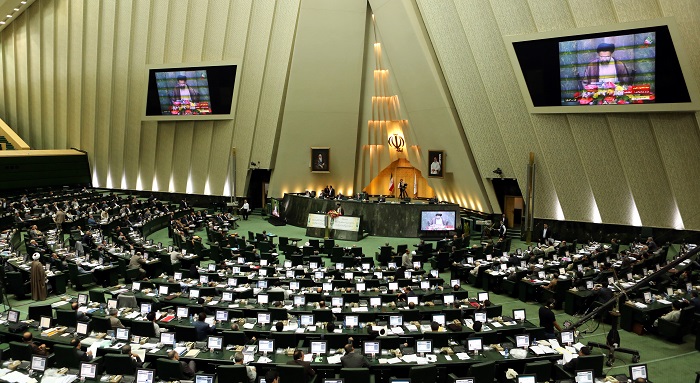
epa03823138 A general view of the parliament during the parliament session on 13 August 2013 in Tehran, Iran. Iranian president Hassan Rowhani proposed his cabinet to the parliament on 12 August 2013. All designated ministers need the majority votes of the 290 deputies before taking office. Rowhani said that his government will take distance from any form of extremism and rather adopt a moderate approach for ending the country?s international isolation.  EPA/ABEDIN TAHERKENAREH

A general view of the parliament during the parliament session on 13 August 2013 in Tehran, Iran. Iranian president Hassan Rowhani proposed his cabinet to the parliament on 12 August 2013. All designated ministers need the majority votes of the 290 deputies before taking office. Rowhani said that his government will take distance from any form of extremism and rather adopt a moderate approach for ending the country?s international isolation. EPA

Trita Parsi, the head of the National Iranian American Council and chief apologist for the Iran regime, has long maintained that the bluster of Iranian lawmakers and other officials in denouncing a proposed nuclear deal was evidence of a schism within Iran between moderates and hardliners and that only agreement on a deal could empower moderate elements to win out.


The NIAC has even gone so far as to claim that heinous and brutal human rights violations are the product of these ideological struggle amongst Iran’s ruling mullahs.

It has been a straw man for the Iran lobby and an effort to divert attention from the truth which is in fact while there are divisions within Iran’s ruling class on how to share power, but both divisions stands firmly united behind a single goal; the preservation and expansion of their power and corrupted extremist Islamic ideology.

With little more than a week remaining before a self-imposed June 30 deadline for a nuclear agreement between Iran and the P5+1 group of nations, Iran’s mullahs have expressed little to no interest in completing a deal.

This Sunday, Iran’s parliament voted to oppose inspections of government military sites as part of any agreement, in direct opposition to what negotiators from the U.S. and France have called a “must-have” condition for any agreement. The legislative move follows similar statements made by the regime’s top mullah, Ali Khamenei, who also declared Iranian regime’s military sites off-limits to inspectors.

The mullah’s legislation states in part: “The International Atomic Energy Agency, within the framework of the safeguard agreement, is allowed to carry out conventional inspections of nuclear sites.”

However, it concludes that “access to military, security and sensitive non-nuclear sites, as well as documents and scientists, is forbidden.”

All of this follows a series of concessions already granted by the P5+1 including the exclusion of ballistic missile technology, the retaining of thousands of enriching centrifuges and moves to accommodate Hezbollah and Pakistani nuclear component exporters. Not to mention the failure of the Iran regime to curb its support for three proxy wars, the release of four American hostages and any loosening of brutal human rights repression. This is while over 1800 people have been executed in Iran during Rouhani’s tenure.

As the Washington Examiner pointed out this weekend, even though the Obama administration is intently focused on securing a nuclear deal with the Iran regime, it has all but ignored the terrorism that Iran sponsors and facilitates throughout the region as outlined in the State Department’s annual report on terrorism released on Friday.

As Sen. Mark Kirk (R-IL) aptly pointed out: “Now that the administration admits nuclear talks haven’t diminished Iran’s support for terrorism, to what extent has Iran used the interim nuclear deal’s $12 billion in sanctions relief payments to fund terrorists or other terror-supporting regimes?”

“As we move closer to the June 30th deadline for a final nuclear deal that could return as much as $140 billion in frozen funds to Iran, the White House remains silent on this critical question.”

And this strikes to the heart of the argument made by Parsi and other regime allies. If there is a battle of moderate and hardline influences within Iran, where is the proof of moderation on the battlefield so to speak? Nowhere has the regime exercised any restraint or moderation as it pursues its extremist policies.

Has Iran regime cut off aid to Hezbollah and Assad in Syria? No, it’s committed another 15,000 troops, this time, including drawing mercenary recruits from Afghanistan. Have mullahs released American prisoners as a show of good faith? No, it is moving ahead with a closed trial of Jason Rezaian, a Washington Post reporter on espionage charges for reporting. Has Iranian regime sought to reassure the world it will comply with nuclear inspection? No, it still refuses to answer questions from the International Atomic Energy Agency in 12 areas of concern over the military dimensions of its nuclear program.

It does not take a leap of logic to see that the Iran regime is firmly committed to its course of nuclear weapons development and is merely taking the world along for a joy ride as its seeks its real prize; the release of $140 billion in frozen cash and opening the floodgates of billions more in foreign investment.

Parsi and his cohorts can’t even hide this truth with their obfuscations.

By Michael Tomlinson

Filed Under: Blog, News Tagged With: IAEA, Iran, Iran deal, Iran Lobby, Iran Nuclear, Jason Rezaian, Military Dimensions of Iran Nuclear Program, Trita Parsi

Iran Lobby Calls “Czar” Key to Sanctions Relief

June 19, 2015 by admin

Czar Nicholas (1)Czar Nicholas II of Russia was the last monarch to bear that title until his execution during the Russian Revolution in 1918, but the title of “czar” would still stay in fashion in American politics as an informal description of high-ranking officials named to oversee specific programs or issue areas.

The first use of “czar” by an American president was Franklin Roosevelt who named 11 “czars” during his administration to oversee areas such as transportation, censorship, petroleum, war production and even rubber; often as part of the recovery from the Great Depression and in response to the demands of World War II.

Since then presidents have used czars sparingly with latter administrations naming one or two periodically. It wasn’t until Presidents George W. Bush and Barack Obama that the practice mushroomed with the naming of 33 and 38 czars respectively. In President Obama’s case, he has appointed czars for Ebola response, faith-based partnerships, AIDS, trade, information technology and even one for the invasive Asian carp.

But now the Obama administration is considering the appointment of a new czar to oversee final negotiations and implementation of a nuclear agreement between the P5+1 group of nations and the Iran regime. The idea behind this new czar would be to have a single point person serving as lead coordinator for implementation and enforcement.

While State Department sources have mulled the idea of a czar in response to the failure of the U.S. to enforce the 1994 nuclear agreement with North Korea, which eventually was ignored by the rogue state as it violated its terms to build a nuclear arsenal, the Iran lobby views the position as being a key instrument by which to ensure the speedy lifting of economic sanctions.

“It would also send a message to the American bureaucracy to be efficient, not just in making sure that Iran holds up its end of the deal, but also in ensuring that the U.S. fulfills its promises, especially when it comes to easing sanctions,” said Trita Parsi, head of the regime’s chief cheerleading lobby the National Iranian American Council.

The viewpoint of Parsi and other regime supporters is that the consolidation of U.S. responsibility for Iran nuclear issues within a single point person provides an incredibly advantageous opportunity to manipulate a single high-ranking official who could cut through the clutter and get sanctions lifted quickly on the pretext of complying with the terms of an agreement.

Having an Iran czar solves several problems for regime supporters at once:

  • It takes the Obama administration off the hook by de-escalating talks from Secretary Kerry to another official who may face less media scrutiny to complete a deal;
  • It provides direct access for the Iran lobby to a single person responsible for all things related to Iran. Instead of having to slug it out with State Department bureaucrats or intelligence officials at the Defense Department or even members of Congress, the regime’s lobby could have just one “go-to” person; and
  • Given the Iran lobby’s ability to place former employees in high-ranking administration positions, the appointment of a non-Senate approved czar allows them to slide one of their own into the position.

On the other hand, floating the idea of an Iran czar also strikes many observers as an act of desperation in the effort to close a floundering deal with less than two weeks left before a self-imposed June 30 deadline. Under the terms of compromise legislation passed by Congress and signed by President Obama, the U.S. is hoping to have an agreement in place by July 9 in order to trigger the 30 day congressional review period, rather than the 60 day review period should they miss that deadline.

Reports in the Associated Press from diplomats from all six nations participating indicate  “Iran and six powers are still apart on all main elements of a nuclear deal with less than two weeks to go to their June 30 target date and will likely have to extend their negotiations. Their comments enforce concerns that obstacles to a pact remain beyond the public debate on how far Iran must open its nuclear program to outside purview under any deal.”

The appointment of a czar to complete a deal would follow similar pronouncements made of “agreements in principle” with only details to be worked out. Having a designated czar allows the Obama administration to walk away from the bargaining table, away from global press scrutiny, and allow for rapid concessions to be made to Iran’s mullahs in relative privacy.

The scenario becomes increasingly likely as disclosures of new concessions granted to the regime seem to leak out daily from Switzerland. Indeed, the agreement is becoming riddled with as many holes as Swiss cheese.

By Michael Tomlinson

Filed Under: Blog, National Iranian-American Council Tagged With: appointing a new czar, Iran, Iran deal, Iran Talks, NIAC, Trita Parsi

  • « Previous Page
  • 1
  • …
  • 51
  • 52
  • 53
  • 54
  • 55
  • …
  • 64
  • Next Page »

National Iranian-American Council (NIAC)

  • Bogus Memberships
  • Survey
  • Lobbying
  • Iranians for International Cooperation
  • Defamation Lawsuit
  • People’s Mojahedin
  • Trita Parsi Biography
  • Parsi/Namazi Lobbying Plan
  • Parsi Links to Namazi & Iranian Regime
  • Namazi, NIAC Ringleader
  • Collaborating with Iran’s Ambassador

Recent Posts

  • NIAC Trying to Gain Influence On U.S. Congress
  • While Iran Lobby Plays Blame Game Iran Goes Nuclear
  • Iran Lobby Jumps on Detention of Iranian Newscaster
  • Bad News for Iran Swamps Iran Lobby
  • Iran Starts Off Year by Banning Instagram

© Copyright 2026 IranLobby.net · All Rights Reserved.