Iran Lobby

Exposing the Activities of the lobbies and appeasers of the Mullah's Dictatorship ruling Iran

  • Home
  • About
  • Current Trend
  • National Iranian-American Council(NIAC)
    • Bogus Memberships
    • Survey
    • Lobbying
    • Iranians for International Cooperation
    • Defamation Lawsuit
    • People’s Mojahedin
    • Trita Parsi Biography
    • Parsi/Namazi Lobbying Plan
    • Parsi Links to Namazi& Iranian Regime
    • Namazi, NIAC Ringleader
    • Collaborating with Iran’s Ambassador
  • The Appeasers
    • Gary Sick
    • Flynt Leverett & Hillary Mann Leverett
    • Baroness Nicholson
  • Blog
  • Links
  • Media Reports

It’s About the Humanity Stupid

February 5, 2015 by admin

HumanityDuring President Bill Clinton’s campaign, his manager James Carville coined the now famous phrase “It’s the economy stupid” when deciding on the campaign’s key themes. It proved to be simple, powerful and ultimately successful.

Today we are faced with a variation of that theme with the fast-moving developments occurring on two fronts: the rapid growth of ISIS and the ongoing talks with Iran on nuclear weapons.

In both cases, the nature of the public debate and discussion about each has moved to almost polar opposites for these two issues. On the one hand, ISIS is generating a visceral, deep emotional horror as the world watches video after video revealing beheadings and now burnings. ISIS is attempting and succeeding in forcing an almost gag-like reflex at the barbarity and cruelty it is displaying. ISIS has few if any supporters outside of the few radicalized state sponsors of terror and rival terror groups.

In contrast, the ongoing negotiations with Iran over its nuclear weapons program have begun to take on a more technical, dry and almost boring aura. Discussions over centrifuges, enrichment capability, stockpiles of fuel and their purity are topics sometimes more avidly discussed in college physics courses than on late night talk shows. Iran also employs a vast and well-funded lobbying and PR machine that encompasses public interest groups, public relations firms, high-priced lobbyists, columnists and journalists and the occasional ex-public official.

But in weighing the importance of the two issues, there is no greater threat to the stability and peace on a global stage than mullah’s regime in Iran and its quest for a nuclear weapon; which brings me back to Carville’s turn of phrase.

The debate and discussion about Iran’s nuclear weapons program needs a literary jump start and the lexicon of humanity needs to be re-injected back into the issue. Iran has worked mightily to keep any link to its dismal human rights record or sponsorship of terrorist groups from being attached to ongoing nuclear talks. Iran’s mullahs have sought and succeeded to some degree in keeping the discussion as dry as the desert sands.

But these talks do need the context of the impacts Iran is having on the rest of the world in order for the P5+1 group of nations to gain a greater understanding of exactly who sits across the table from them. The difficulty is that after two previous failed rounds of talks and almost three years of unrelenting compromise from the Iranian side, any sane and normal person might be feeling a bit exhausted by this exercise.

The political pressure the Obama administration is under to deliver a foreign policy win of any kind has pushed the talks forward into giving Iran access to over $11 billion in frozen assets for few if any meaningful concessions. The West, in large part, has lost the language battle by no longer including terms such as “human rights,” “political dissidents,” “public executions” or “terror sponsorship” as part of the discussions.

Secretary of State John Kerry briefly introduced a fig leaf when he brought up the plight of imprisoned Washington Post reporter Jason Rezaian, but that brought little result and still leaves unmentioned the plight of literally thousands that are imprisoned by Iran, including other American citizens.

What has also been notable is the lack of vocabulary amongst Iran’s supporters over the increasing levels of barbarity and violence coming from ISIS. Aside from a statement from the Iranian government, there has been no similar reaction from Iran loyalists such as the National Iranian American Council or their affiliates.

The very absence of any humane commentary illuminates what is missing from any dialogue concerning Iran. It is also the key issue that leaves many Senators on both sides of the political aisle uneasy about any deal negotiated with Iran. Can the U.S. trust a regime whose concepts of human rights and fair and equal treatment of its own people are as foreign to us and ISIS seems to be from the rest of humanity?

Ultimately Congress has marked a red line in the sand in which any deal reached by the P5+1 must be reviewed by Congress and meet with its approval. Senators recognize giving mullahs in Iran a deal providing even the smallest wiggle room to push a nuclear warhead through would forever change the outlook not only for the region, but the rest of the world. Iran is no North Korea. It has proven oil reserves giving it access to all the military technology capability it needs to build and deliver a nuclear weapon.

When negotiators next sit down with their Iranian counterparts, they should be telling themselves “It’s about the humanity stupid.”

By Laura Carnahan
Filed Under: Blog, Current Trend Tagged With: Iran Lobby, Iran Nuclear, Iran Talks, Sanctions

ISIS New Low and the Change It Brings

February 4, 2015 by admin

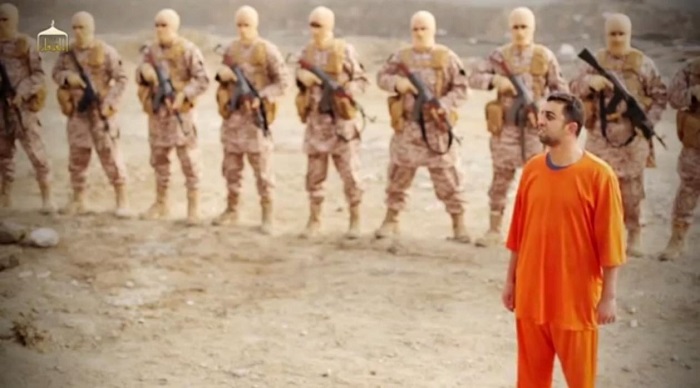
Jordan PilotThe world watched in horror yesterday as the terror group ISIS broadcast video of its execution of Jordanian pilot Moaz al-Kassasbeth by burning him alive in a cage and then burying him with a bulldozer. The imagery was graphic, searing into the international consciousness a new level of revulsion that even surpassed the beheadings ISIS had delivered earlier with regularity.

But what happened in the 24 hours following al-Kassabeth’s death was more revealing of where exactly the world stands in the face of such unremitting brutality. Jordan acted swiftly, executing two prisoners it had in its custody with a promise from official sources of swift and harsh response and retribution.

Japan and Great Britain joined in solidarity as did many other nations who have had nationals at risk or killed by ISIS during its rampage across Iraq and Syria. The death was so shocking and in contradiction to Islamic practices which forbid cremation that other moderate Muslim nations quickly expressed their own revulsion at this act.

Predictably, Iranian regime was not one of those nations and gave a formal condemnation with notable delay almost a day after the international outrage about the crime. Its supporters in the U.S. were even more quiescent; not even offering a simple tweet of revulsion at the act. In fact, in the case of Iran’s chief lobbying ally, the National Iranian American Council, there were no public statements. Its leading official, Trita Parsi made only one mention of the incident before launching into tweets criticizing Jordan’s King Hussein.

The rest of Iran’s supporters and sympathizers ranging from Ali Gharib to others were similarly silent on any condemnation of the brutal act. It does foster the question of why?

One could assume that it does not serve Iran’s interest to condemn ISIS since its intervention in Syria’s civil war on behalf of President Bashar al-Assad is in large part responsible for the growth of ISIS in the first place. But why would U.S.-based groups, sympathetic to Iran, such as NIAC simply not join the vocal outrage over this death? What would it cost them to send out a single tweet saying this was “gross” or “horrible” or even “tragic”?

But none of those things occurred and we are left with a better understanding of the true nature of Iran’s support network. Its sole aim and mission is to represent the interests of Iran here and most importantly to lobby hard against any re-imposition of economic sanctions during the ongoing third round of negotiations with the P5+1.

In contrast though to the NIAC has been the vocal condemnation sent out by Iranian resistance groups, most notably the National Council of Resistance of Iran. Its denouncement by Mrs. Maryam Rajavi, a woman at the head of a leading Muslim organization, is noteworthy because it forcefully takes a stand other Muslim groups do not and joins with the broader global outrage over the event.

Therein lays another odd quirk of the Iranian regime’s obsessive interest in fabricating regular attacks on the NCRI. Even with the world debating this violent act, the Iranian lobby spends considerable energy posting editorials attacking NCRI.

Why?

Because the mere existence of a group of Iranians dedicated to opposing the mullahs regime is anathema to them and puts a spotlight on the lie they perpetuate that all of Iran is united behind their rule. It is the most glaring blind spot mullahs ruling Iran have and a constant reminder to them of the essential weakness of their position in nuclear talks.

At the end of the day, Iran’s mullahs cannot be trusted and that is at the heart of why both Senate Democrats and Republicans are more than willing to toe the line and impose sanctions on March 24th should Iran not deliver a substantial and meaningful agreement to their liking.

The intelligence uncovered by the NCRI on human rights abuses and covert nuclear research sites has been instrumental in revealing the deceit of the regime and the mere fact they cannot recognize the barbarity of the death of al-Kassasbeth adds to the damning truth that Iran tacitly approves of what happened.

By Michael Tomlinson

Filed Under: Blog, National Iranian-American Council Tagged With: Iran Lobby, ISIS, NIAC

The Irony that is Iran

February 3, 2015 by admin

Trita Parsi Earplug (1)That ever loyal servant of the Iranian regime, Trita Parsi of the National Iranian American Council, penned an editorial appearing in Reuters where he used a curious turn of phrase saying there were schools of “doubt” in Iran as to who was calling the policy shots in the U.S. He was pointing out a view that held Iran’s mullahs either believed President Obama was genuinely interested in a new rapprochement or was simply being captive to the politics of Congress.

Parsi attempts to lay out the idea that Iran is stuck between a rock and a hard place because it wants to do the best deal it can, but has to contend with confusing American politics.

For Parsi’s benefit, we should point out it is because this is a democracy. Get it?

Democracies are messy affairs. They involve open and sometimes hostile public debate. They require free and fair elections. They generate substantial discussion on news media and social media. They need checks and balances to ensure the rights of minorities are respected. In short, they do all the things Iran’s mullahs are terrified of in their own country.

Parsi also attempts to posit the idea that sanctions against Iran are fast coming undone because of a recent delay proposed by Senate Democrats to give President Obama and Secretary of State John Kerry an additional two months to nudge Iran forward. Considering Iran has already had two years to stall, demand and berate negotiators, two months doesn’t seem like much.

Democrats, led by Senator Robert Menendez (D-NJ) were also clear in demanding any deal be reviewed by Congress and that they would hold any proposal under close scrutiny in meeting their approval. Not exactly a Rose Garden walk-through for Iran, but then again Parsi will take anything. So desperate is Iran to gain any advantage, it would take even this twig and portray it as an olive tree.

Parsi goes on to portray the complete erosion of Democratic support for new sanctions, but the irony is that the Democratic and Republican proposal is not for the imposition of new sanctions, but simply the re-imposition of existing sanctions that were temporarily suspended after the interim agreement was reached and contingent on Iranian regime making substantial progress forward.

Since then, however Iran’s progress has been as quick as a snail and as noticeable as glaciers growing larger. The regime in Iran has consistently refused access to additional nuclear research sites to the International Atomic Energy Agency. It has stepped up a brutal crackdown on human rights against its own citizens. It has engaged in four separate wars in Syria, Yemen, Iraq and Afghanistan now, while still supporting terror groups such as Hezbollah.

At no point has the regime in Iran made any substantial concessions on the core issues of reduction in centrifuge capacity and elimination of missile delivery technology obtained from North Korea, another rogue nuclear state.

With the spread of ISIS and Boko Haram and utter collapse of Yemen, the American people have raised concerns over terror above those of jobs and economy in recent polls. This leads one to wonder why Parsi takes the position that sanctions proponents are now on the margins in this debate.

We might excuse his hyperbole for the simple fact NIAC is a well-greased lackey for the mullahs in Iran, but considering the topic of his editorial, we might be more inclined to think Parsi shares the confusion of the mullahs in simply not understanding how a democratic society truly works.

While Parsi raises his histrionics, the fact remains Congress and a bipartisan coalition of Democrats and Republications numbering at least 62 Senators with an additional 14 patiently waiting two more months before pulling the proverbial trigger on sanctions are more than sufficient to re-impose sanctions and override any presidential veto. We assume Parsi is an intelligent operative for mullahs in Iran and can count votes, which may be why he is throwing everything he can in hopes something sticks before March 24th.

By Michael Tomlinson

Filed Under: Blog Tagged With: Iran deal, Iran Lobby, Iran Nuclear, Iran Talks

Why Human Rights Matter in Iran Nuke Talks

February 2, 2015 by admin

Prison BarsThere has been a dirty little secret about the negotiations going on between Iran and the P5+1 group of nations seeking to limit Iran’s nuclear capability. It has hung like a cloud over two previous rounds of failed talks over the past years and threatens the third round of talks now underway.

What is it? The unwillingness of the P5+1 group to seriously raise the issue of Iran’s dismal human rights record and the need to make steep improvements in order for Iran to secure any kind of agreement.

For years now Iran’s ruling mullahs and their lobbying and PR machine in Washington, DC have argued strenuously that human rights issues are domestic ones and have no place at the bargaining table. In fact, the chief public face for Iran in the U.S., the National Iranian American Council has made the inclusion of human rights in talks a de facto red line in the sand, akin to asking mullahs in Iran to give up its military capabilities.

It is an odd position to be in since the U.S. has historically pushed for improved human rights situations as a condition of moving forward with international treaties and agreements with totalitarian regimes for decades. For example:

• The U.S. threatened to hold up China’s membership in the World Trade Organization if it did not improve its human rights situation in the wake of the Tiananmen Square massacre;
• The U.S. threatened to hold back on the North American Free Trade Agreement unless Mexico improved the plight of migrant workers and narco-terror gangs; and

So it is not unusual or inappropriate to broach such topics. In fact, Secretary of State John Kerry just recently raised the issue of the arrest of Washington Post reporter Jason Rezaian during the most recent round of talks, opening the door to a broader discussion of Iran’s human rights violations.

Iran and its lobbying allies have long contended that talks should be strictly centered on the issue of nuclear research and development, but even that position is a canard since Iran routinely seeks to tie other issues to the talks such as the immediate suspension of economic sanctions or the release of frozen assets.

Why are human rights important to these talks?

Under Secretary for Terrorism and Financial Intelligence David Cohen, the Treasury Department’s outgoing point man on Iran sanctions, said in this weekend’s Wall Street Journal that Iran was “stuck. They can’t fix this economy unless they get sanctions relief.” Adding “I think they are coming to the negotiations with their backs to the wall.”

A hopeful sign, but also one that reinforces the historic opportunity the West has to seek real and meaningful change in Iran for the Iranian people. In the past year under Hassan Rouhani, there has been a significant rise in a broad crackdown on political dissent, cultural expression, gender restrictions and access to uncensored information and sources.

According to Amnesty International, the United Nations Special Rapporteur for Human Rights in Iran and various human rights groups on the ground such as the National Council of Resistance of Iran, public executions have taken off over the past year and reached over 1,000 men and women. Iranian regime’s notorious Evin Prison is now filled to capacity and the mullahs continues to aggressively fund terror groups such as Hezbollah and Houthis and engage in open wars in Syria, Afghanistan, Iraq and Yemen.

More importantly, a nation’s view on human rights towards its own people is the most accurate gauge of its views on its neighbors and the world. By not involving human rights in these discussions, we leave out the one element that could truly make the West trust any agreement reached with Iran. Without a marked improvement in human rights, there can be no guarantees or assurances that Iran would ever live up to whatever bargain it brokered out of economic necessity and not from a worldview that it was right or a moral decision.

By Michael Tomlinson

Filed Under: Blog Tagged With: Iran, Iran Human rights, Iran Nuclear, Iran Talks

Super Bowl Sunday and Iran

February 1, 2015 by admin

FootballAn estimated 184 million people will be noshing on guacamole, hot wings and downing beverages of all kinds on Super Bowl Sunday. They will be gathering in bars, house parties, military bases and casino sportsbooks to watch what is arguably one of the best demonstrations of American cultural and commercial celebration.

People will flood Twitter with comments about the game, the commercials and results. Instagram and SnapChat will distribute millions of photos and videos from fans. Facebook, Tumblr and reddit will host endless debates about the plays and outcome. Satellite dishes, cable modems and WiFi signals will beam it all.

Unfortunately, the people of Iran won’t have the same options and choices available to them.

They live in a regime ruled by a cabal of religious mullahs whose interpretation of God’s will defines the choices and punishments their people face.

Satellite dishes are routinely ripped from rooftops to keep Iranians from watching news programs unfiltered by Iranian officials. The internet is routinely monitored to capture IP addresses of Iranians viewing “inappropriate” or opposition websites. Iranians using proxy servers to get around the regime’s Great Wall blocking unapproved websites may find police knocking their doors down to confiscate computers and sending them off to Evin Prison.

Iranians don’t have access to most of the social media websites Americans take for granted. They can’t express their feelings, or share their joys or frustrations, let alone their criticisms of the government. Even kids who want to share a mash up video lip synching to a popular song are routinely arrested.

While Americans are enjoying a growing economy and experiencing an unexpected windfall in lower gas prices, Iranians suffer through chronic food shortages and bleak economic opportunities as the mullahs siphons off billions of dollars to fund terror groups such as Hezbollah fighting in faraway places such as Lebanon, Yemen, Afghanistan, and Syria.

Americans are expected to spend a whopping $14.3 billion on new high definition TVs, athletic gear, decorations and game day food. Iranians won’t see any of the anticipated $11 billion being released by the U.S. as part of the interim nuclear agreement; those funds going to pay for ongoing nuclear development, missile technology from North Korea and funding for the lavish lifestyles enjoyed by the families of the mullahs and those in the Iranian Revolutionary Guard Corps.

In America, politicians decry the widening gap between the rich and poor, but in Iran, any public protest or outcry about the plight of ordinary Iranians and the money going to the elite and powerful yields arrests, imprisonment and even a public hanging.

You won’t hear any calls for reforms in Iran or help for ordinary Iranians from the extensive lobbying and PR network Iran employs in the U.S. Groups such as the National Iranian American Council are not concerned about such things. They prefer the West not hear video testimonials, see selfies from anguished Iranians. They prefer our Super Bowl Sunday isn’t disturbed Facebook posts or Tumblr blogs talking about the sad state of affairs in Iran.

While Americans bask in the glow of their freedoms and bounty, Iranians struggle under the yoke of oppression. Many in the U.S. Congress have heard and seen their suffering and have pushed the Obama Administration hard to hold Iran’s leaders accountable for the plight of their people; both Democrats and Republicans.

In a political environment where Americans can’t seem to agree on Seahawks or Patriots, there is common agreement that Iran needs to be free and democratic.

It would be a great outcome if we could simply line up on a football field to decide the fate of Iran and not worry about the dangers from the Iranian regime due to terrorism, nukes and foreign battlefields.

By Laura Carnahan

Filed Under: Blog

Learning the NIAC Two-Step

January 31, 2015 by admin

Two Step ChartWhile the cheerleaders for the current Iranian regime at the National Iranian American Council are busy congratulating themselves on a two month extension on the immediate re-imposition of economic sanctions temporarily suspended because of an interim agreement reached last year by the P5+1 nations and Iran, the Senate Banking Committee by a wide bipartisan 18-4 margin passed out a bill over its first procedural hurdle to set the stage for a showdown vote in March on re-imposing sanctions.

It must not be too reassuring to the NIAC and its Iranian overlords to see this bill pass by such a large margin, nor coming on the heels of what they had hoped would be a pause long enough to allow Iran time to bamboozle the administration into accepting a “framework” by March in order to buy more time until July before having the entire negotiating process collapse again as it has done twice before.

NIAC’s Jamal Abdi in fact, in a piece published on the group’s website, breathlessly recounted the blow by blow narrative of how this two-month sanctions pause was achieved; and of course all because of the NIAC’s massive lobbying effort on behalf of Iran. Mine you, on behalf of Iran’s mullahs and not Iranian Americans, but that’s for another day’s editorial.

What he neglected to mention and what has been widely credited by virtually every political commentator and analyst, including Senate Democrats themselves such as Senators Harry Reid (D-NV) and Dianne Feinstein (D-CA), as being the key influencing factor on the delay was Speaker John Boehner’s move to invite Israeli Prime Minister to address a joint session of Congress on Iran and its nuclear weapons program.

For many Democrats, the move smacked of overt politics and stiffened their resolve, but even that was not enough to move them totally off the sanctions bandwagon. All it did was keep alive the central piece of legislation and move the action date from February to March.

The one thing both Democrats and Republicans readily agree on is that the regime in Iran should not be allowed to have a nuclear weapon…period. Both sides of the aisle also agree sanctions should be re-instated broadly and harshly if mullahs in Iran do not deliver a deal agreeable to Congressional review.

So while the NIAC chortle in public, privately they know they are swimming against the tide of sentiment; a sentiment that will inevitably grow stronger as the clock resets and again counts down to March 24 with another round of scrutiny growing day by day with more and more pressure being applied to Senators by a nervous public watching the nightly news of ISIS, Boko Haram, Al-Qaeda and Taliban advances.

So while the NIAC, Al Jazeera and the Obama administration may have excised “Islamic extremism” from their daily use, it has not escaped the attention of Americans who in recent polls have placed concerns about terrorism above even the economy and jobs.

All of which is bad news for mullahs in Iran and its supporters as they try to learn new dance steps.

By Michael Tomlinson

Filed Under: Blog Tagged With: Iran, Iran deal, Iran Lobby, nuclear talks, Sanctions, Veto Sanctions

The Curious Thing About NIAC

January 29, 2015 by admin

NIAC Word CloudDuring the past few weeks, the leading cheerleader for Iran has been the National Iranian American Council. A curious institution in that its mission statement discusses the need to bridge cultural understanding and empowerment of Iranians living in America, but instead it fills its websites, blogs, Twitter feeds, YouTube channels and other social media feeds with a relentless stream of vocal support for the Iranian regime; sometimes bordering on the hysterical.

It is an odd position to take since while the NIAC is ostensibly here to support IranianAmericans, it spends almost its entire bandwidth on issues related to Iran and more specifically the policies of the Iranian government.

Why?

As documented throughout this website, the NIAC has a nefarious history of being supported by the Iranian regime itself and was created to help bolster Iran’s positions within the American media, Congress and various non-governmental organizations. Most of NIAC’s internal workings were revealed through a defamation lawsuit that NIAC eventually lost and in the process was forced to reveal its connections to the Iranian regime.

But a more scientific and entirely more interesting social media look at NIAC reveals a similar commitment to Iran without any attention to the pressing issues the vast majority of Americans and Congressional Representatives and Senators are interested in.

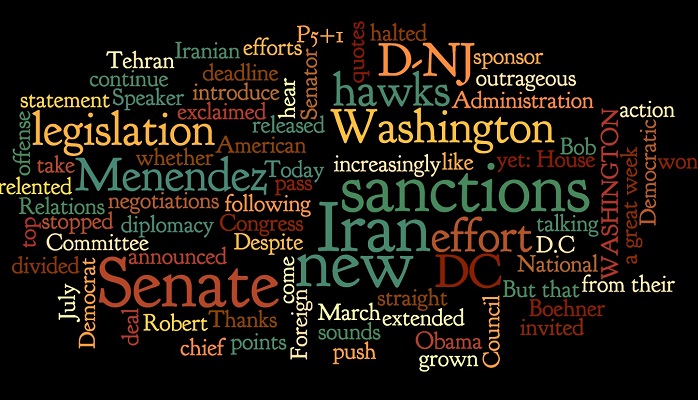
By using a word cloud generator through NIAC’s own RSS feeds, we gain some insights through NIAC’s own words what its priorities are. At a time when ISIS is exercising brutal murders on video and Boko Haram is rampaging across Nigeria and Yemen is collapsing, while Iraq and Syria are gripped tighter by Iran’s Revolutionary Guard Corps, NIAC’s word cloud is amazingly devoid of any of these issues.

In fact, even a casual perusal of the Twitter feeds of NIAC’s leaders such as TritaParsi, Tyler Cullis, Reza Marashi, Jamal Abdi and Ryan Costello for example reveals virtually no mention of human rights, terrorism, radicalization, extremists, or anything remotely connected to what is happening in the real world.

In fact, NIAC and its employees and supporters seem to be gripped with the same linguistic disease afflicting members of the Obama Administration; the inability to utter words like those related to the despicable activities being perpetrated by Iran and its terrorist allies.

If we look at a word cloud for NIAC, we see ample use of words such as “Menendez,” “Washington,” “Sanctions,” and “Senate” but nothing about “human rights,” “terror,” “abuse” or even “women.” An odd scenario for an organization supposedly dedicated to the plight of Iranian Americans, and yet American Iranians remained imprisoned in Iran and await an uncertain fate. None of their names get mentioned by NIAC even though they are the ones the NIAC is supposedly championing their causes.

This all leads us to the basic truth about NIAC: It is nothing more than a mouthpiece for Iranian government policy and should be treated within the same context as official Iranian news organizations. There is no perspective within their pronouncements except those approved by the Iranian government.

In a way, it is a tragic development since there is a strong need for a passionate and loud voice on behalf of Iranian Americans here at home who pine for a return of their homeland to a pluralistic democracy, free from religious edicts and censorship, where women and people of differing faiths are free to pursue bright and promising futures. NIAC is indeed far away from that.

By Laura Carnahan

Filed Under: Blog

Postponing the Inevitable on Iran

January 28, 2015 by admin

hourglassIn calling a Hail Mary pass from his own party, President Obama managed to secure a two-month reprieve from Senate Democrats who were on the verge of joining their Republican colleagues in offering up a new sanctions bill on Iran should the third and latest round of talks fail to produce an agreement.

The new deadline is now March 24th and in a letter to the President, Senator Robert Menendez (D-NJ), the ranking Democrat on the Senate Foreign Relations Committee left no doubt that he and other Democrats remained “deeply skeptical that Iran is committed to making the concessions required to demonstrate to the world that its nuclear program is exclusively peaceful.”

Adding in the letter “we will only vote for this legislation on the Senate floor if Iran fails to reach agreement on a political framework that addresses all parameters of a comprehensive agreement.”

Other Senators signing the letter included Charles E. Schumer of New York, Richard Blumenthal of Connecticut and Debbie Stabenow of Michigan.

Iran loyalists such as the National Iranian American Council were quick to hail the agreement as a “breakthrough” for nuclear talks and patted themselves on the back publicly for their perceived win.

What they and other Iran sympathizers failed to realize or admit publicly is that the Democrats letter only cemented the very real possibility of sanctions since the last round of talks having ended last November there has been a virtual stalemate and no movement from the Iranian side towards any meaningful agreement.

The prospects of substantial movement occurring during the next two months are remote and Senate Republicans know this which is why they agreed to the Democratic proposal in the hope of gaining a veto-proof supermajority by March 24th.

Ironically, The New York Times noted that while the Democrats were offering up their extension, the Iranian Parliament was moving forward with proposals to bind their own negotiating team and preventing them from any agreement on production limits on nuclear fuel.

“In fact, their own proposals would require Tehran to deploy centrifuges that can enrich uranium far more efficiently than ever,” according to the Times.

Coupling this with the periodic statements given by Iran’s Supreme Leader Ayatollah Ali Khamenei bolstering this position and one can easily see why Senator Menendez’s concession to President Obama wasn’t much of a concession. The decision gives Democrats the breathing room to say they want to support the Administration, yet retain the flexibility to quickly join Republicans to move ahead with sanctions.

So while the NIAC may be dancing with joy, it’s a Pyrrhic victory since the essential facts surrounding negotiations have not changed. Iranian regime is hardening its stance and continues on a human rights and terror rampage that alarms the American people every night while they watch the news and emboldens them to urge their Congressional representatives to take a harder stance with respect to Iran.

On March 24th, Iran and its lobbying allies are in for a rude awakening.

By Michael Tomlinson

Filed Under: Blog Tagged With: Iran, Iran Lobby, Iran sanctions, Iran Talks, nuclear talks, Sanctions, Senate Democrats

Iran Sanctions Are Sanctions Are Sanctions

January 27, 2015 by admin

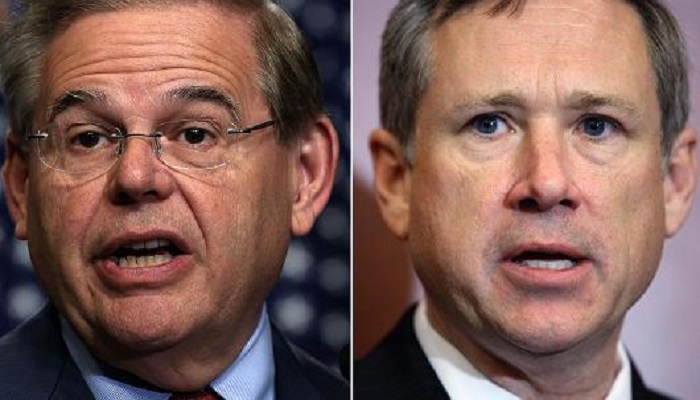
Senators Menendez and KirkThere is an interesting effort being mounted by the Iranian lobby in the wake of a growing strong consensus within Congress to support stiffer sanctions on the regime in Iran should nuclear talks fail for a third time.

But Iran boosters such as the National Iranian American Council have lately preached a line of reasoning pointing towards the potential of various pieces of legislation being proposed in Congress as evidence of a splintering of support for harsher sanctions. They point to proposals by Senators Robert Menendez (D-NJ) and Mark Kirk (R-IL), as well as ideas being floated by Senators Barbara Boxer (D-CA) and Rand Paul (R-KY) and even stream of thought comments made by Senators Chris Murphy (D-CT) and Bob Corker (R-TN) as proof of disagreement on the question of sanctions.

What NIAC and other Iran sympathizers fail to mention is the one constant amongst all these proposals; the support for some sort of enhanced sanctions should talks fail. The only disagreement is one of timing and severity.

Virtually no Senator in Congress has taken an anti-sanctions stand, nor has there been any vocal support for granting mullahs in Iran a blank check in nuclear talks. At a time when Democrats and Republican can’t seem to agree on what’s on the menu in the Senate cafeteria, there is broad, deep and universal agreement that Iran should not get a nuclear weapon and that Iran is a central character in the global rise in Islamic extremism.

Various analysis of the joint proposal from Senators Menendez and Kirk, the Nuclear Weapon Free Iran Act of 2015, clearly shows this trend. It reinstates sanctions that were suspended as part of the interim agreement if a new and comprehensive agreement is not reached. It also specifically targets Iranian senior officials who are part of the religious leadership and its judicial and military systems which have been responsible for the unprecedented crackdown on human rights the past year and the expansion of militant extremism taking place around the world.

It also explicitly grants the President the ability to waive the application of sanctions should he certify to Congress it is necessary for national security, completion of a nuclear deal or Iran is making no further progress on nuclear development and is in compliance with all interim agreements.

One would have to wonder where the idea is coming from that there is large disagreement within Congress over Iranian regime’s sanctions giving the fact the basic outline of these terms were originally supported by an overwhelming majority of Democrats and Republicans two years ago when sanctions were originally imposed.

What Iran’s mullahs see is a small window of opportunity coming on President Obama’s unilateral decision to normalize relations with Cuba to gain the same benefit in the lame duck years of the presidency. Consequently, the NIAC and other Iranian lobbyists are pushing hard the concept that sanctions are not universally supported.

It is a line of reasoning doomed to failure given the massive support the idea of sanctions has right now in light of growing public unease and concern over gains being made by ISIS and Boko Haram, the collapse of Yemen and Iraq and the ongoing social media efforts by terror groups to frighten and bully the West for more beheadings.

Iran mullahs and their brand of Islamic extremism is at the heart of these groups flourishing since the regime in Iran essentially wrote the manual with its own broad range of torture and public punishments such as hangings and amputations on its own people that these extremist groups have since adopted.

But you will not find NIAC others denounce these growing atrocities, nor even condemn the most heinous ones. In fact, if one were to peruse the social media feeds for NIAC and its officers such as Trita Parsi, you would find virtually no condemnations. This only reveals their true nature and cheerleaders for mullahs in Iran and nothing more.

By Michael Tomlinson

Filed Under: Blog, News Tagged With: Iran Lobby, Iran sanctions, Iran Talks, nuclear talks

Stopping the Welcome Wagon for Iran

January 27, 2015 by admin

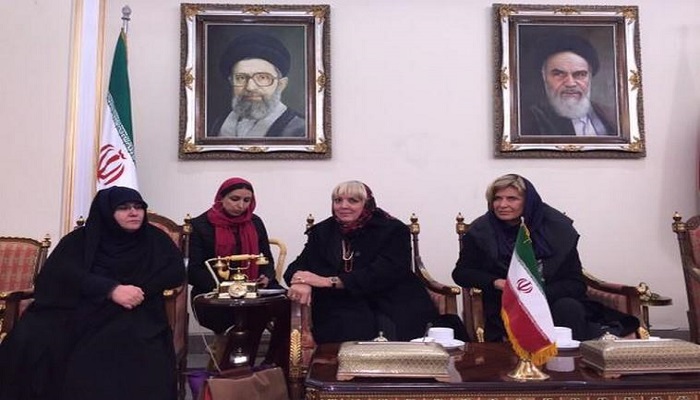
Claudia Roth in Iran (1)In the wake of another round of talks underway between Iran and the P5+1 negotiating team of countries, there is emerging a pattern of perceived public support being built by those who support Iran and seek to see its quick re-admission to the international community without making any substantial concessions as part of any agreement.

Many of these Iran apologists are seeking to build what can only be called a “wave of inevitability” towards a normalization of relations between Iran and the West.

There has been a push by Iran’s global network of supporters to create a situation by ginning up a parade of officials, corporate representatives and news media who are speaking and acting on the impending possibility of the lifting of economic sanctions against Iran; even without a nuclear agreement in place.

One glaring example of that effort was the recent delegation of German lawmakers who journeyed to Iran and decided to inappropriately meet with a Holocaust denier and another official implicated in the kidnapping of American diplomatic personnel back in 1979.

A European-wide public interest known as Stop the Bomb, which is dedicated to halting Iran’s development of nuclear weapons, raised the alarm in Berlin over the German delegation’s meeting with Ali Larijani, the president of the Majlis parliament and a notorious Holocaust denier who defended then Iranian President Mahmoud Ahmadinejad and his own incomprehensible positions on the Holocaust.

This comes on the heels of other recent overtures extended by Russian and European companies looking to cash in on the possibility of economic sanctions being lifted, as well as the infusion of upwards of $11.9 billion in frozen Iranian assets now being made available and transferred to Tehran’s accounts by the U.S. as part of the interim nuclear agreement struck by negotiators last year.

The Iranian lobby hopes to build momentum on these various trends and create a perception that a deal is all but inevitable, thereby building more pressure on the West in the face of growing violent Islamic extremism which is ironically being spread by Iranian regime itself as part of its religious campaign to remake the Middle East in its own twisted image. Tried and true Iran apologists such as the National Iranian American Council have led the charge.

The leader of the German delegation, Bundestag Vice President Claudia Roth, has already been widely criticized in Germany and internationally for her all too cozy relationship with Iran’s mullahs, culminating in an infamous high-five greeting of Iran’s then-ambassador to Germany Reza Sheikh Attar, whom Iranian Kurdish dissidents accuse of massacring Kurds during his tenure as governor of the Kurdistan and western Azerbaijan provinces in the 1980s.

But what all of these disparate efforts on behalf of the mullahs in Iran fail to realize is the growing anxiety the rest of the world is feeling towards violent extremism and the negotiation fatigue setting in amongst international capitals and news media as yet another round of talks take place with no hope of agreement coming into focus as long as Iran’s Supreme Leader Ayatollah Ali Khamenei and his handpicked puppet, President Hassan Rouhani, publicly denounce making any concessions to the West, which sank the two previous sessions.

The regime in Iran has never expressed any desire whatsoever to not only meet the International terms on nuclear reduction, but has never even uttered any inkling of improvements to its dismal human rights record at home and its sponsorship of terror abroad.

Iranian regime’s coercive tactics to normalize economic relations even before any kind of agreement is reached in talks that have only begun last week, explains its over eager lobbying

By Michael Tomlinson.

Filed Under: Blog Tagged With: Claudia Roth, Iran Lobby, Iran Talks

  • « Previous Page
  • 1
  • …
  • 60
  • 61
  • 62
  • 63
  • 64
  • Next Page »

National Iranian-American Council (NIAC)

  • Bogus Memberships
  • Survey
  • Lobbying
  • Iranians for International Cooperation
  • Defamation Lawsuit
  • People’s Mojahedin
  • Trita Parsi Biography
  • Parsi/Namazi Lobbying Plan
  • Parsi Links to Namazi & Iranian Regime
  • Namazi, NIAC Ringleader
  • Collaborating with Iran’s Ambassador

Recent Posts

  • NIAC Trying to Gain Influence On U.S. Congress
  • While Iran Lobby Plays Blame Game Iran Goes Nuclear
  • Iran Lobby Jumps on Detention of Iranian Newscaster
  • Bad News for Iran Swamps Iran Lobby
  • Iran Starts Off Year by Banning Instagram

© Copyright 2026 IranLobby.net · All Rights Reserved.