Iran Lobby

Exposing the Activities of the lobbies and appeasers of the Mullah's Dictatorship ruling Iran

  • Home
  • About
  • Current Trend
  • National Iranian-American Council(NIAC)
    • Bogus Memberships
    • Survey
    • Lobbying
    • Iranians for International Cooperation
    • Defamation Lawsuit
    • People’s Mojahedin
    • Trita Parsi Biography
    • Parsi/Namazi Lobbying Plan
    • Parsi Links to Namazi& Iranian Regime
    • Namazi, NIAC Ringleader
    • Collaborating with Iran’s Ambassador
  • The Appeasers
    • Gary Sick
    • Flynt Leverett & Hillary Mann Leverett
    • Baroness Nicholson
  • Blog
  • Links
  • Media Reports

Is the Open for Business Sign for Iran Now Closed?

July 11, 2017 by admin

Is the Open for Business Sign for Iran Now Closed?

Is the Open for Business Sign for Iran Now Closed?

One of the primary reasons why the Iran lobby was conceived and brought to life was a recognition by the mullahs in Tehran that they lacked all credibility when it came to the Western news media and needed surrogates to help shape the world’s perception of them as more open, accommodating and moderate than they really were.

This was especially important in light of the crippling economic sanctions that were bringing the Iranian regime’s economy to its knees, which was part of the discontent that was on display in the aftermath of the scandalous 2009 presidential election.

The massive street protests came at the height of the Arab Spring protests toppling governments throughout the Middle East and threatened to take down the mullahs in Tehran.

After brutally putting down the protests, the mullahs figured out they needed help to keep their grip on power which led to the election of “moderate” Hassan Rouhani in 2013 and a massive PR push aimed at the Obama administration to craft a nuclear deal that would lift the economic sanctions on Iran.

Much has already been written about the launching of Iran lobby advocates such as the National Iranian American Council and its prominent role in pushing for the nuclear deal by working in coordination with the Obama administration in creating the much-discussed “echo chamber” of supporters.

The aftermath of the nuclear deal and hasty implementation by the outgoing Obama administration created a narrow window of opportunity for the Iranian regime to get what it needed most at that time: cash and lots of it.

The regime was bleeding cash in its support of wars in Syria, Iraq and Yemen so accessing frozen assets, as well as the planeloads of cash paid as part of ransom payments for American hostages, helped stave off imminent collapse.

The next aim for the regime and Iran lobby was the lifting of economic sanctions so that business and investment deals could be struck to provide steady future sources of revenue.

After an initial rush by some European companies, later followed by Russian and Chinese military sales, the proverbial land rush slowed to a crawl amid uncertainty that the Trump administration and U.S. Congress might reinstitute sanctions because of Iranian regime’s support for terrorism and an alarming increase in ballistic missile launches.

It didn’t help the mullahs that their technological partner, North Korea, was busy flinging ballistic missiles into orbit faster than reruns of Real Housewives of Orange County, and alarming most of the nations in the Pacific.

The prospect that the U.S. might levy new sanctions slowed investment to a crawl, aside from a few high-profile sales of commercial jetliners, there has been few business deals announced.

That drought of new investment once again stirred ordinary Iranians to anger in the most recent presidential election a few months ago which saw mass protests throughout Iran; even including harsh demonstrations aimed at Rouhani himself.

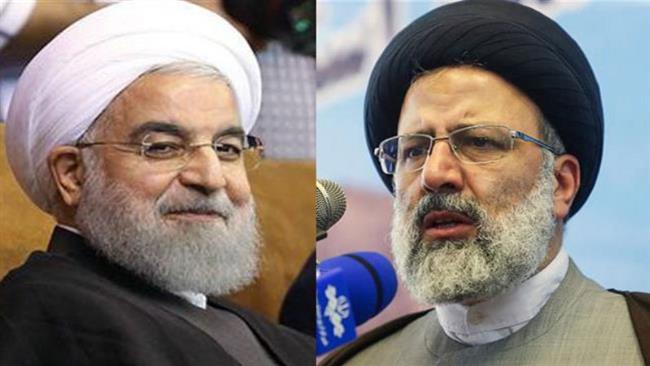
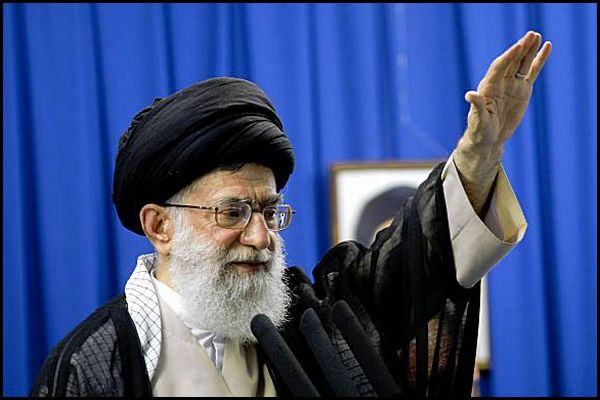
The poor condition of the Iranian economy was also a contributing factor to the implosion of the candidacy of Ebrahim Raisi, the handpicked would-be successor by top mullah Ali Khamenei, leading to broad speculation that the mullahs’ grip on power was slipping.

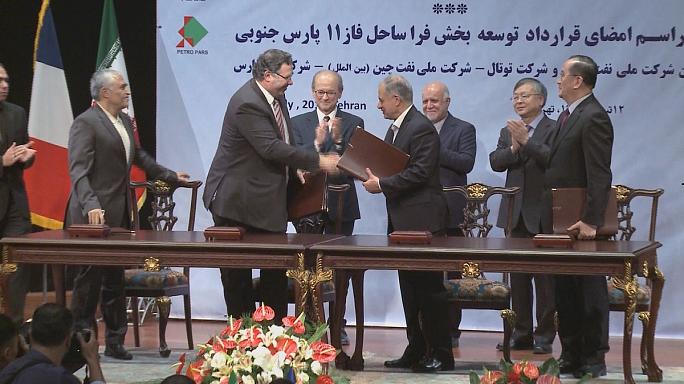
The most recent high-profile deal announced by Iran was with French petroleum giant Total, which agreed to a deal to jointly develop Iran’s massive South Pars gas field. Total was the first, and so far, only major oil player to commit to returning to Iran, while other firms, especially U.S. and British ones remain on the sidelines uncertain of the potential of the re-imposition of economic sanctions.

The risks for Total, and for that matter any other foreign company, doing business with Iran are substantial, as outlined in an insightful editorial by Dr. Majid Rafizadeh, president of the International American Council, in Arab News.

“U.S. pressure and sanctions on Tehran will likely continue to escalate, affecting American and non-American companies. The US may re-impose its sanctions bill that targets non-American companies doing business with Iran. If a company does business with both countries, its investments could be in peril. Quitting Iran’s market would not be easy for those with long-term investments,” Rafizadeh said.

He also alludes to the increasing political instability within Iran, as well as the tightening grip on the Iranian economy by Khamenei and the Revolutionary Guard Corps. That grip exists because of the rising need by the IRGC to funnel even more funds for its foreign adventures which have expanded in various fronts.

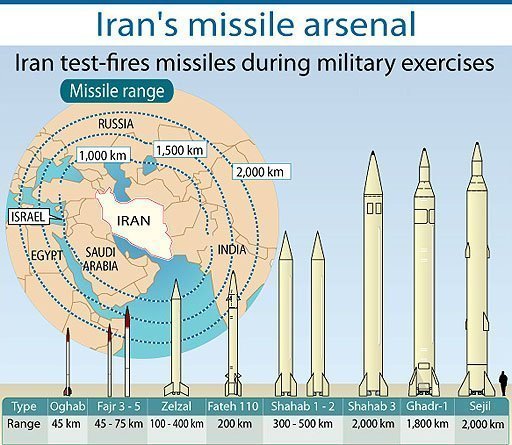
Also, as Iranian regime ramps up its ballistic missile program, the United Nations may feel compelled to act and sanction Iran lest it has to deal with both an Iran and North Korea crisscrossing the sky with ballistic missiles.

Recognizing the threat of possibly having its economy shutdown once again, the mullahs are moving rapidly to take advantage of the Total deal to ready an additional 14 oil and gas exploration for tender offers to foreign companies.

Sitting on some of the world’s biggest energy reserves, Iran has already been working on deals to develop fields such as South Pars, South Azadegan, Yadavaran, West Karoun, Mansouri and Abteymour, Reuters reported.

France’s Total last week became the first major to sign a post-sanctions development deal with Iran. Russia’s Lukoil and Denmark’s Maersk are also potential investors.

“Next on the horizon is the search for new oil, with the National Iranian Oil Company planning to tender 14 oil and gas blocks for exploration in the next two to three months,” NIOC’s deputy director for exploration blocks, Rahim Nematollahi, said in Istanbul.

But these deals may become moot should either the U.S. or UN act to impose new sanctions, especially any sanctions once again removing Iran from accessing the international wire transfer network or currency exchanges.

All of which places any foreign entity in a precarious position should it decide to invest in Iran. A company also runs the risk being labelled a supporter of terrorism since the vast majority of revenue Iran generates from one of these deals would inevitably be used to fund its proxy wars and support its terrorist allies.

This may mean that for the short-term at least, the “open for business” sign for Iran may be just another example of fake news.

Laura Carnahan
Filed Under: Blog, Current Trend, News Tagged With: #NuclearDeal, Appeasement policy, Featured, hassan rouhani, Iran, Iran deal, Iran Economy, Iran Lobby, Iran Mullahs, Iran sanctions, Iran Talks, Iran Terrorism, IRGC, Khamenei, National Iranian American Council

Iran Regime Tries to Blame ISIS Attacks on Opposition

June 8, 2017 by admin

Iran Regime Tries to Blame ISIS Attacks on Opposition

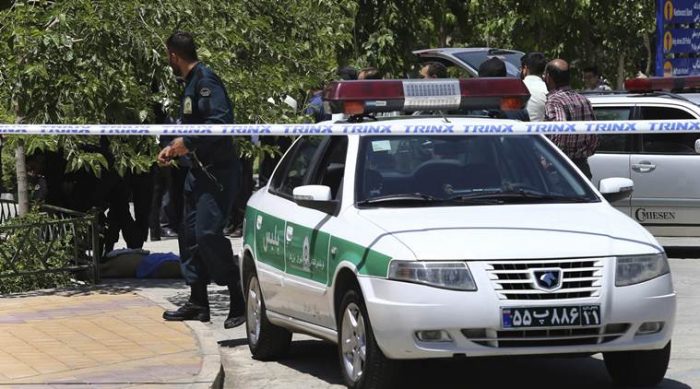
The body of a terrorist, at background left, lies on the ground while police control the scene at the shine of late Iranian revolutionary founder Ayatollah Khomeini, just outside Tehran, Iran, Wednesday, June 7, 2017. Several attackers stormed into Iran’s parliament and a suicide bomber targeted the shrine of Ayatollah Ruhollah Khomeini on Wednesday, killing a security guard and wounding 12 other people in rare twin attacks, with the shooting at the legislature still underway. (AP Photo/Ebrahim Noroozi)

An attack by six assailants armed with rifles and explosives took Iranian regime security forces by surprise the other day in a series of attacks aimed at the heart of the government, including a takeover of the Parliament building and the tomb of the regime’s founder, leaving a dozen dead and 46 wounded that shook the religious theocracy ruling Iran.

The attacks lasted for hours and was claimed by ISIS, which if true, would represent the first successful attack by the terror group on Iranian soil and a significant and somewhat ironic turn of events in the growing sectarian conflict between and extremist Sunni and extremist Shiite ideologies.

Predictably, the default response from Iranian officials was to point the finger of blame at regional rival Saudi Arabia and even Iranian dissident groups such as the Mujahedeen-e Khalq. As Iranian officials struggled in the wake of the attack, one could sense confusion and even a slight note of panic setting in as the prospect of Tehran joining the ranks of cities such as London, Paris and Berlin as prime terror targets began to seep.

For the Iranian regime, much of the blame for the notable rise in Islamic extremist groups lies squarely on its doorstep. The mullahs constant vitriol aimed at Israel, the U.S. and the its Sunni Arab neighbors has only made routine the kind of hate that groups like Hezbollah have acted on for decades.

The use of proxies and terrorist groups has always been a part of the statecraft toolbox for Iran as it has used Hezbollah and the Houthis to conduct open warfare in Syria and Yemen, meanwhile bolstering Shiite militias in Iraq to push Sunnis out of the coalition government there and into the waiting arms of ISIS recruiters.

According to the New York Times, tensions in the Middle East were already high following a visit by President Trump last month, in which he exalted and emboldened Saudi Arabia, Iran’s regional rival. Saudi Arabia and several Sunni allies led a regional effort on Monday to isolate Qatar, the tiny Persian Gulf country that maintains good relations with Iran

In a statement, the Revolutionary Guards Corps said, “The public opinion of the world, especially Iran, recognizes this terrorist attack — which took place a week after a joint meeting of the U.S. president and the head of one of the region’s backward governments, which constantly supports fundamentalist terrorists — as very meaningful,” a reference to Saudi Arabia’s ruling monarchy.

Saudi Arabia swiftly rejected the claim and the Trump White House, while expressing sympathy for the victims, was quick to note that “states that sponsor terrorism risk falling victim to the evil they promote” in a statement.

The MEK also denied any involvement and accused regime officials of a smear attack saying “their intention is to either use this event” against the group or justify their own previous crimes” in a statement.

But that didn’t stop members of the Iran lobby from stepping up to also blame Iranian dissident groups for the attack either directly or indirectly.

Paul R. Pillar, a stalwart for the Iran lobby, wrote in Consortium News blaming the MEK for alleged terrorist attacks in Iran and claiming that prior attacks had left the regime much better prepared to counter terrorism.

We hate to tell Pillar that his measure of “preparedness” by Iranian security forces leaves much to be desired judging by the daylong standoff at the Parliament building.

Pillar even begins laying the ground work for the Iranian regime to step up its terrorist activities in the wake of the attacks saying “in the months ahead, Iran may take actions outside its borders in response to the attacks.”

“Iran may see a need to be more aggressive in places such as Iraq or Syria in the interest of fighting back against ISIS,” Pillar said.

His comments are instructive since the mullahs are likely to use the attacks as an excuse to step up their fights in Syria in to preserve the Assad regime and in Yemen to continue destabilizing the border to Saudi Arabia.

It is not inconceivable that the Iranian regime will use the attacks as a pretext to launch fresh initiatives in places such as Bahrain and Qatar to further split apart the Gulf states and weaken opposition to its regional ambitions to build a Shiite sphere of influence.

Pillar wasn’t alone in trying to drag the MEK into the mud, as Trita Parsi of the National Iranian American Council, gleefully attacked the resistance group in interviews claiming that the MEK was equipped to carry out these attacks because of its channels into the regime and its ties to Saudi Arabia.

“If the goal was to penetrate and destabilize Iran, the MEK clearly was Saudi Arabia’s best bet,” Parsi said. “Still unclear who’s behind the current attack in Iran, but the MEK (and their Saudi backers) are a main suspect. Timing is of course curious. Just last month, A Saudi Crown Prince said Riyadh is working hard to take battle to inside of Iran.”

Parsi and Pillar offered no proof, only suspicions that read like they came from a talking points memo from Ali Khamenei’s office as Iran struggles with the aftermath of the attacks and desperately seeks any scapegoat other than its own support for terrorism.

The roots for these attacks lie squarely in the Iranian regime’s long history of exporting terror as a tool and it has finally come home to bite them.

Michael Tomlinson

Filed Under: Blog, Current Trend, News Tagged With: Featured, hassan rouhani, Iran Attacks, Iran Lobby, Iran Mullahs, Iran Terrorism, IRGC, Khamenei, National Iranian American Council, NIAC, Paul Pillar, Syria, Trita Parsi

Iran Lobby Sets Up Expectations of Moderate vs Hardliner

May 22, 2017 by admin

Iran Lobby Sets Up Expectations of Moderate vs Hardliner

Iran Lobby Sets Up Expectations of Moderate vs Hardliner

The Iran lobby has been posturing to depict the Iranian presidential election as a battle between “moderates” and “hardliners” as personified by Hassan Rouhani versus Ebrahim Raisi. It has also sought to downplay any role top mullah Ali Khamenei plays in determining the outcome of the election.

The National Iranian American Council has been the most vocal of these groups in pushing this narrative. Examples of this includes pieces appearing in Huffington Post.

The first one by Reza Marashi of the NIAC argues this central conceit of reformists and pragmatists fending off hardline conservatives. The way Marashi describes it, it is almost a heroic struggle. The only thing missing is a dramatic musical score.

Marashi argues that the Iranian people want moderation and reform in their president. Not an unreasonable idea and one that he argues is supported by the election history of Mohammad Khatami and Rouhani, as well as the dismal election effort of Mahmoud Ahmadinejad.

He even portrays Rouhani as a trailblazer in opening political discourse with his election in 2013.

“While it’s true that election season in Iran traditionally allows for an expansion of otherwise taboo political discourse, Rouhani taken it to uncharted waters. First, he publicly committed to engaging in the process of lifting all non-nuclear sanctions if he wins a second term. Then he told a rally that he had not forgotten his 2013 campaign promises, openly stating: ‘Either they have been achieved, or I have been prevented from keeping them.’ And remarkably, he directly told voters: ‘I’ll need votes higher than 51% in order to do certain things,’” Marashi writes.

He goes on to portray Rouhani’s statement as threatening to the regime and a minor miracle he wasn’t hauled off to Evin Prison for daring to utter such statements.

Pardon us while we laugh hysterically at Marashi.

Rouhani has never been, nor ever will be considered a true moderate. He is a loyal member of the regime, pledging allegiance to the same radical theology that all office holders swear to. His past record in military, religious and judicial matters have provided him with bona fides as a harsh punisher of dissent.

His term over the past four years clearly demonstrates his willingness to go to extraordinary lengths to protect the Islamic revolution. During his tenure, the pace of executions rose to the highest level since the revolution, earning annual condemnations from the United Nations, Amnesty International and just about every other human rights organization on the planet.

He has also enforced a broad crackdown on free speech that Iranians access to unmonitored internet access is non-existent. Add to that mass arrests of journalists, the shutdown of blogs and newspapers, and efforts to crack the encryption of social apps such as Telegraph and WhatsApp and you start getting the picture of how bleak things are in Iran right now.

Marashi is correct on one point, which is that this election really is not about the presidency, but rather the positioning going on to succeed Khamenei at the top of the mullah pyramid.

In that regard Marashi and the Iran lobby are getting their cake and eating it too. If Rouhani is elected, they will get to trumpet the victory of moderation even though Rouhani is no moderate.

If Raisi is elected, they can blame it on a newly muscular approach by the Trump administration towards Iran and Middle East policy and never address the horrific crimes of the Iranian regime.

It is a neat solution for the Iran lobby.

Tyler Cullis of the NIAC takes up this issue in his piece in Huffington Post when he questions why Democratic members of Congress seem willing to give the Trump administration leeway in leveling additional sanctions on Iran.

“Democrats have signed up as co-sponsors for Senate and House legislation, believing their political fortunes best lie in supporting aggressive action against Iran rather than acting as a buffer against the Trump administration’s efforts to derail a nuclear accord that, by all accounts, is working as intended,” Cullis writes.

“Democrats are risking a historic mistake – an error in judgment that could end up both alienating their progressive base and costing them hoped-for electoral gains, not to mention setting the stage for a new conflict in the Middle East,” he adds.

Cullis raises the apocalyptic specter of war with Iran as the inevitable path from tightening sanctions against Iran.

It’s the same argument the NIAC has made repeatedly ever since Congress moved to get tougher with Iran as the regime fired off ballistic missiles, sent ships to aggressively confront the U.S. Navy and supported bloody conflicts in Syria, Iraq and Yemen with men, arms and cash.

Cullis proclaims that war with Iran is the sure outcome from any effort to get tougher with Iran. Of course, that assumes that the mullahs only reaction is to go to war with the U.S by this logic.

In fact, the real story is that the mullahs purposely used the nuclear deal to buy time and get out from crushing economic sanctions that were threatening the very existence of the regime.

Now that Iran has received the benefits of billions in cash, foreign investment and the sale of its oil back on the open market, the usefulness and utility of keeping up the pretense of wanting to reach out to the global community is at an end.

Consequently, whether Rouhani or Raisi gets elected is a moot point, since the policies of the regime are not going to change no matter who gets elected. The NIAC has long acknowledged that the office of president in Iran lacks real power, which makes its impassioned arguments for “moderates” to win there even more incomprehensible.

Then again, logic was never a strong suit of the NIAC.

Cullis even makes the outrageous assumption that getting together on Iran will inevitably compel North Korea to take bolder action and not trust the word of the U.S. in any agreement.

“North Korea will view the U.S.’s abrogation of the Iran nuclear accord as clear evidence that the U.S. cannot be trusted to keep to its commitments and will refuse to deal with the Trump administration. In this case, peace will be impossible and war inevitable. Congress’s failings on Iran will spill over and deter peaceful settlement in other areas of conflict such as the Korean peninsula. Democrats will be on the hook once again,”

Really? Are we to assume that a North Korean regime that has broken every agreement it entered into, detonated nuclear devices and openly launches missiles with increasing range is going to be dissuaded by the U.S. commitment to Iran?

The lack of logic from the NIAC never ceases to amaze.

Filed Under: Blog, Current Trend, News Tagged With: Featured, hassan rouhani, Iran, Iran Human rights, Iran Lobby, National Iranian American Council, NIAC, NIAC Action, Reza Marashi, Tyler Cullis

Iran Lobby Frantically Tries to Counter Trump Administration Warnings

April 21, 2017 by admin

Iran Lobby Frantically Tries to Counter Trump Administration Warnings

Iran Lobby Frantically Tries to Counter Trump Administration Warnings

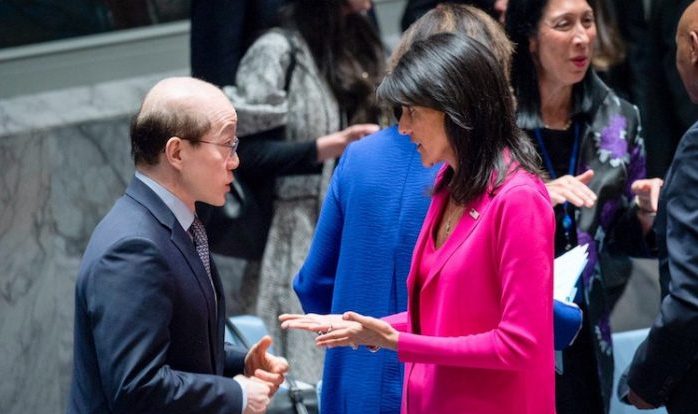
Less than 24 hours the Iran lobby was crowing about the Trump administration’s decision to re-certify the Iranian regime in compliance for another 90 days with the nuclear agreement, it went on the offensive as it faced a barrage of explicit statements from high-ranking officials denouncing the Iranian regime including United Nations ambassador Nikki Haley, Defense Secretary James Mattis and Secretary of State Rex Tillerson.

All three, top foreign policy and defense officials made the same statement that the source of trouble in the Middle East today was based in Tehran and that only a policy comprehensively dealing with all aspects of the Iranian regime was going to work moving forward in returning stability to the region.

For the mullahs in Tehran and their Iran lobby supporters, the objective has always been to divide and conquer the issues the rest of the world finds objectionable towards Iran; such as its support for terrorist groups like Hezbollah and dictators like Bashar al-Assad in Syria, as well as a dismal human rights record that would make Joseph Goebbels proud.

Which is why the Iran lobby’s cheering for the 90-day compliance notice had a lifespan of a gnat since it was merely a formality while the administration conducts a national security review of policy towards Iran.

But that didn’t stop the National Iranian American Council from bloviating like a water buffalo in heat.

“It’s a significant contradiction to first come out and say that the Iranians – contrary to all of their claims that Iran would be cheating – actually is living up to the deal only to come out the day after and saying, well, we hate the deal anyways and signaling that the U.S. might actually be walking away from the deal, unless of course the aim is to get rid of the deal without the U.S. having to pay the cost for it, meaning instead of the U.S. violating the deal directly by not renewing these sanctions waivers, killing the deal by escalating tensions in Yemen and elsewhere in the region and hoping that that will force the Iranians out of the deal,” said Trita Parsi, NIAC president on NPR.

Parsi is trying to have it both ways in separating the nuclear from other issues such as human rights or Iran’s meddling in wars raging in Syria and Yemen, but he deliberately skips over the most glaring consequence of the nuclear deal which is because we separated these issues, the mullahs were free to act without fear of reprisal in their ambitions for Syria or in the crushing of dissent at home.

The cold hard truth is that these are all connected issues like the strings of a spider web; the web would never succeed or exist unless all the strands were connected and working together.

The Iranian regime, for lack of a better comparison, is a legal criminal enterprise on a national scale. It concentrates power ruthlessly at the very top, uses the judicial system and religion to enforce disciple and stifle dissent while its military owns just about every industrial activity and skims off the top to line the pockets of the elites.

It’s like the Sopranos on steroids, except Ali Khamenei isn’t seeing a shrink unfortunately.

Of course other members of the Iran lobby weighed in too as Reza Marashi from the NIAC penned a ludicrous piece on TopTopic in which he claimed the European Union was galvanized and united in supporting the Iranian regime.

Unfortunately, yesterday’s terror attack on the Champs-Elysees in Paris only reinforced a growing uncertainty throughout a Europe that has been rattled by Islamic extremists attacks in Berlin, Brussels, Paris and elsewhere.

“While U.S. policy congeals, most European stakeholders remain in wait-and-see mode before making policy decisions – rather than taking steps to shape American policy,” Marashi writes.

We’re sure Marashi wishes for the good old Obama days when the NIAC could pick up the phone and call the White House and find a receptive audience, but it and Europe and finding that shaping policy in the White House now is not about lobbying, but about answering the central question the Obama administration never bothered to ask: “How do we rein in Iranian excesses across the board?”

Parsi reinforced that complete lack of understanding in an editorial in the New York Times in which he cited “a number of potential land mines on the near horizon. The first is in Congress, where a bipartisan effort is underway to introduce new sanctions on Iran that, despite the protestations of the legislation’s sponsors, would violate the terms of the nuclear agreement by adding new conditions onto the deal.”

Once again Parsi ignores the inconvenient truth for the Iran lobby which is that in their mind anything “new” in terms of sanctions levied against the Iranian regime would be considered a violation of the terms of the agreement, even though the agreement was purposely devoid of any clauses or mention of issues such as human rights.

Their twisted pretzel logic has them boxed in where now they are forced to denounce any and all efforts to sanction Iran as a threat to the regime. If Iranian warplanes dropped sarin gas on Sunni refugees in Iraq, Parsi and his colleagues would undoubtedly argue against any sanctions as a violation of the agreement; a convenient catch-all.

It’s also hilarious Parsi raises the prospect of a “moderate” Hassan Rouhani being defeated at the ballot box in next month’s elections since he ignores Iran’s long history of rigging every election. In fact, the regime’s Guardian Council only yesterday tossed former president Mahmoud Ahmadinejad off the ballot after much fanfare of him registering as a candidate.

In Iran, you don’t get on the ballot unless you are expected to get the blessing of the mullahs.

The most absurd comment Parsi makes is the assertion that if the U.S. reneges on the deal, Iran will undoubtedly move forward with its nuclear ambitions.

We hate to break it to the regime lackey, but the deal—by Parsi’s own admission—was never designed to halt Iranian nuclear work, only slow it down by a decade before the much ballyhooed “breakout period,” but even that has been whittled down by most analysts to just a few years.

All of which makes the statement issued by the NIAC in response to Secretary Tillerson’s remarks the other day even more laughable.

“There is little room to interpret this statement as anything less than a proclamation of the Trump administration’s intent to scrap the nuclear deal and reset the United States on a path to war,” said the NIAC.

Have they not been paying attention to Syria, Iraq, Yemen or Bahrain lately?

Michael Tomlinson

Filed Under: Blog, Current Trend, National Iranian-American Council, News Tagged With: #NuclearDeal, Appeasement policy, Featured, Iran, Iran deal, Iran Human rights, Iran Lobby, Iran Mullahs, Iran sanctions, National Iranian American Council, NIAC, NIAC Action, Reza Marashi, Syria, Trita Parsi, Yemen

There is No Battle Between Moderates and Hardliners in Iran

March 21, 2017 by admin

There is No Battle Between Moderates and Hardliners in Iran

There is No Battle Between Moderates and Hardliners in Iran

One of the cornerstones of the Iran lobby’s messaging has been the contention that a monumental battle is being waged in Iran between moderate elements in the Iranian regime and hardline conservatives intent on winning at all costs.

To the extent hardliners want to hang onto their power that part of the story is correct, but the image of moderates existing and having a meaningful role within the regime government is as illusory as a mirage of a desert oasis to a thirsty wanderer.

The regime’s leadership, under the hard rule of Ali Khamenei, has done a methodical job of eliminating any shred of moderate opposition. Ever since the original Islamic revolution was taken over by the religious clerics that now run Tehran, the regime has systematically arrested, imprisoned, tortured and executed anyone publicly voicing a dissenting point of view.

This has even extended to targeting and attack Iranian dissidents outside of Iran; the most notably example are members of the People’s Mujahedin Organization of Iran, one of the largest and oldest resistance groups to the mullahs. Many of these PMOI members had resided in refugee camps in Iraq that were constantly under attack by Iranian operatives, as well as local Shiite militias acting on Iranian control.

The most egregious example of Iran’s crushing of dissent was on display in the wake of the 2009 presidential elections in which mass demonstrations by ordinary Iranians was met with bullets and mass arrests that led to a near daily parade to the gallows.

Before each election cycle since, the regime has instituted broad crackdowns to remove any dissenting views. This has included mass arrests of journalists, bloggers, politicians, activists and even students and artists.

The regime’s highest policy making bodies have also ensured that only carefully vetted and approved candidates were on the ballot for presidential and parliamentary elections which is why Hassan Rouhani was elected before and may be re-elected this May and Iran’s parliament remains firmly in the control of the ruling mullahs.

Dr. Majid Rafizadeh, president of the International American Council and a leading expert on Iran and U.S. foreign policy, wrote about this Iran lobby myth in Arab News.

The truth is that Iran’s moderates are a critical part of the political establishment. Many of them, including the current President Hassan Rouhani, were robust supporters or founding fathers of the Islamic Republic’s Shiite theocracy. These “moderates,” such as the late former President Akbar Hashemi Rafsanjani, were once called “hard-liners,” Rafizadeh writes.

“In addition, it is crucial to point out that to be a politician in Iran, your loyalty to the core pillars of the political establishment should be firmly proven. Vilayat-e Faqih is the core pillar of Shiite political thought expounded by the late Ayatollah Ruhollah Khomeini, and forces a guardianship-based political system on the people, and requires that a Shiite religious figure be the leader of the nation,” he adds.

The terms “moderates” and “hardliners” are also a Western invention and not used in Iranian politics according to Rafizadeh. Consequently, the Iranian regime makes no distinction in political allegiances. You are either a loyal member of the regime or you are not. If you are not, your ticket is punched for a trip to Evin Prison.

The Iran lobby uses these terms with Western media in order to create the appearance of fissures in Iran’s political system where there is none.

“Iran’s supreme leader and the senior cadre of IRGC hold the final say when it comes to Iran’s foreign policy. They also have significant control over Iran’s economic, financial, and political sectors. For example, at the end of the presidential term of the so-called ‘moderate’ Hassan Rouhani, Iran has not altered its policies toward Syria, in supporting President Bashar Assad, along with Iraq, Lebanon, Yemen and other nations’ domestic affairs. In fact, it has intensified its expansionist policies through its military and additional revenues,” Rafizadeh said.

Since 1979 Iran has not altered the cornerstone of its foreign policy and revolutionary principles regardless of who was president and therein lays the harshest rebuttal to the Iran lobby. If Iran was indeed going to moderate its behavior as a result of the nuclear deal as the National Iranian American Council insisted on, then where has the emptying of Iran’s prisons begun of political prisoners?

Ultimately the price being paid by Iran’s religious and ethnic minorities such as Kurds, Christians, Sunni, Arabs and others demonstrate exactly how little has changed in Iran since 1979.

Not surprisingly, there has been a marked increase in human rights abuses including the ghastly use of acid in attacks against women.

After almost a year of calm, spraying people with burning acid has returned in Iran where a family of four has been attacked on Saturday in Sharada, within Isfahan province, Iran’s top tourist destination, according to Al-Arabiya.

Last month, unidentified people also attacked two women in Maashour, within the Ahwaz province, according to Iranian news agencies.

Isfahan’s Investigative Police Chief Sitar Khasraoui said in press statement that the families were taken to the hospital to treat the burns. The family consists of the father, 53, the mother, 48, the son, 23, and the daughter, 20. Both parents are said to be in critical condition.

In 2014, attacks in Isfahan shocked the public and provoked a major protest there from citizens who demanded better security and action over such violent crimes.

Reports on social networks have claimed that the victims were doused on the face and body because they were not properly veiled. They were targeted by assailants on motorcycles.

The next time the Iran lobby professes that moderates are battling for control in Iran, one might ask if that battle is being done from the back of a motorcycle.

Laura Carnahan


Filed Under: Blog, Current Trend, News Tagged With: #NuclearDeal, Featured, hardliners, hassan rouhani, Iran Mullahs, IRGC, Moderate Mullahs

Iran Lobby Goes to Bat for IRGC and Ballistic Missiles

March 13, 2017 by admin

Iran Lobby Goes to Bat for IRGC and Ballistic Missiles

Iran Lobby Goes to Bat for IRGC and Ballistic Missiles

The twin pillars of the Iranian regime’s military future lies within the Revolutionary Guard Corps which puts boots on the ground to fight its battles and the development of intercontinental ballistic missiles capable of carrying out its biggest threats of global destruction.

They represent the center of power within the Iranian regime since without the IRGC to enforce its’ will, the mullahs in Tehran would be turned out like beggars in the streets by an oppressed Iranian people, while the threat of ballistic missiles hangs like a dagger over Europe and neighboring Arab countries.

It is no surprise then to see the Iran lobby going all out in pushing silly arguments in support of the IRGC and the regime’s missiles as evidenced by two pieces of fiction from the National Iranian American Council.

In one piece authored by Tyler Cullis and appearing in Foreign Affairs, the Iran lobby argues vehemently against designating the IRGC a “foreign terrorist organization, although many of its leaders and subsidiary commercial entities it controls have already been targeted for sanctions by the U.S. and other government for supporting terrorism.

Cullis argues that designating the IRGC would put “U.S. forces in Iraq” in danger and undermine the nuclear agreement reached with Iran, but Cullis argues against his own position when he readily admits that the IRGC is already heavily sanctioned because of its “Iran’s ballistic missile program, its human rights abuses around Iran’s June 2009 presidential election and its disruption and monitoring of Iranian citizens’ communications.”

He also calls any further sanctions a duplicate of current U.S. sanctions so why does he argue against this effort?

Because he knows, as does the rest of the Iran lobby, that designation of the IRGC as an organizational whole is vastly different that current sanctions which only target individuals within the IRGC and some entities. A designation of the whole effectively targets all of the criminal enterprises the IRGC is involved with that siphon monies away from the Iranian people and economy and directly into the coffers of the regime and the pocketbooks of the elites.

Cullis makes the same claim the Iran lobby has made over and over again which is that anything and everything needs to be done to preserve a badly flawed nuclear deal; including treating the chief sponsor of terrorism in Iran with kid gloves.

Cullis makes the absurd claim that Shiite militias controlled by the IRGC—which have been responsible for the deaths and attacks on American service personnel in Iraq through IEDs—would end up trying to frustrate American efforts against ISIS. It’s a claim so ridiculous that it doesn’t even deserve a response since we already know very well that Shiite militias already actively engage and fight American-backed forces and advisors in Iraq and Syria.

But the IRGC defense is only half the battle, as the NIAC’s Ryan Costello takes up the cause of defending Iran’s ballistic missile program in a briefing memo on NIAC’s website.

Costello bases his arguments on a lawyerly-like parsing of fine print to excuse Iran’s missile program, but ignores the intent of United Nations resolutions which seek to actively discourage Iran from becoming another North Korea. The fact that Costello is arguing against that development is deeply disturbing and indicative of how little the Iran lobby fears Iran’s crash course race to catch up to North Korea.

Where Costello falls in lock-step with his partner Cullis’ editorial, is in making the same silly argument that sanctions against ballistic missiles threatens the nuclear agreement. Using the same twisted pretzel logic virtually anything the mullahs dislikes threatens the nuclear agreement:

  • Protest the hanging of Iranian dissidents? That threatens the nuclear agreement;
  • Demand the freeing of American prisoners? That threatens the nuclear agreement;
  • Call for a halt to Iran’s support for Houthi rebels in Yemen? That threatens the nuclear agreement;
  • Force Iranian-backed Shiite militias to stop killing Sunnis in Iraq and Syria? That threatens the nuclear agreement;
  • Ask that Iran stop allowing its morality police to beat women on the streets? That threatens the nuclear agreement.

At a certain point, the NIAC’s logic becomes insanely stupid and that’s the point it has reached with Costello and Cullis’ propaganda pieces.

Costello even makes the excuse FOR the mullahs that Iran’s ballistic missiles program is “intrinsically” tied to its experience in the Iran-Iraq war and thus Iran has a right to these missiles to prevent any future attacks.

While Costello claims Iran has no interest in developing missiles with a range beyond 2,300 kilometers, he neglects to mention that allowing Iran to have a missile fleet with those ranges puts most of Europe, North Africa, the entire Middle East and virtually every important American military and naval base in the region in the crosshairs of Iranian missiles.

Neither Costello nor Cullis ever address the basic problem with their positions which is the lack of fundamental trust the world has in the religious leadership of Iran. The mullahs are fanatical in their pursuit of expanding the Islamic revolution and zealous in the crackdown of any dissenting opinions.

These heinous positions are illustrated in the decision over the weekend to sentence to death an Iranian and American-Iranian dual national on charges of promoting moral corruption.

The defendants, who have not been named, are believed to be a couple involved in the art industry who were arrested in July last year. They ran a leading art gallery in Tehran, the Iranian capital, and were known to associate with foreign diplomats, according to the Financial Times.

Iran has arrested several Iranians holding dual nationality in recent months in a move analysts suggest is intended to intimidate those associated with foreign businesses or who have social connections with foreigners, the Times said.

Abbas Jafari Dolatabadi, Tehran prosecutor-general, said on Sunday that the man and woman had been sentenced because they established “a new cult” and made “alcoholic beverages, encouraged vice . . . through throwing mixed parties [and] . . . exhibiting and selling obscene images at gallery”.

Laura Carnahan

Filed Under: Blog, Current Trend, News Tagged With: Featured, Iran Human rights, Iran Lobby, Iran Terrorism, IRGC, National Iranian American Council, NIAC, NIAC Action, Rouhani, Ryan Costello, Trita Parsi, Tyler Cullis

Iran Lobby Echo Chamber Banging Loudly for Iran Regime

March 5, 2017 by admin

Iran Lobby Echo Chamber Banging Loudly for Iran Regime

Iran Lobby Echo Chamber Banging Loudly for Iran Regime

It seems that the “echo chamber” created by members of the Obama administration and the Iran lobby is still alive and kicking and trying desperately to keep support flowing to the Iranian regime in light of increasing calls to get tough on Iranian regime because of its continued support for terrorism, brutal human rights abuses and flagrant violations of international sanctions with ballistic missile launches.

The Iran lobby, especially the National Iranian American Council, has been especially busy making excuses every time Iran hangs a dissident, puts down a protest or sentences a dual national to prison.

Many of those “experts” sympathetic to the regime and preserving the nuclear deal at all costs continue to push false narratives like a used car salesman pushing a clunker with a rolled back odometer.

One example is a piece authored by Jeffrey A. Sinclair in Foreign Affairs in which he argues that President Trump needs to strengthen Iran’s “moderates.”

“The goal should be to guard against any further escalation of hostilities. After all, unless the administration is willing to wage war with Iran, this confrontation won’t achieve anything useful for the United States. What it will do is further strengthen the hardliners in Tehran, a process that is already underway, and undermine moderates such as President Hassan Rouhani and Foreign Minister Mohammad Javad Zarif less than three months before Iran’s presidential election,” Sinclair writes.

Rarely has a paragraph been loaded with more inaccuracies than that one.

First of all, Trump has made it clear with his criticisms of the war in Iraq during the campaign that he is not in favor of nation-building by military force, but he has also made clear he was not going to offer a blank check to regimes such as Iran and Syria to do whatever they wanted since the end result of those kinds of actions has brought chaos to the Middle East.

Trump has laid out a belief that ignoring Iranian regimes’s militant actions does little to ensure regional stability and peace. Confronting the regime on issues such as human rights, proxy wars or provocative military acts are the right policy if Trump’s administration takes up that road, but saying that such a path only leads to war is one of the boldest falsehoods of the echo chamber.

Trump has at his disposal of plethora of tools, many used successfully by previous administrations, to force Iran to the bargaining table which is exactly what happened recently. The only problem was that the Obama administration fumbled the ball by caving in to every demand the Iranian mullahs had and getting little in return.

Contrary to Sinclair’s missives, confronting Iranian regime is exactly the right course of action since to do nothing except issue paper condemnations does nothing to rectify the situation. Using harsh language as Iran’s Quds Forces supply Houthi rebels in Yemen with arms so they can destabilize the country and risk a regional war between Saudi Arabia and Iran breaking out is not only bad foreign policy, it’s stupid.

Also, when Sinclair calls Rouhani and Zarif “moderates” the only polite thing to do is to keep from laughing hysterically out loud.

The only real moderates in Iran sit in Iranian prisons or have been driving out of the country as political refugees. As a religious theocracy, Iran’s mullahs maintain an iron grip on power. Rouhani did not become president to push a liberalizing agenda for reform. He was hand selected by Ali Khamenei to present the West with a more benign face in order to trigger negotiations to ease crippling sanctions.

The world is not going to see any competition during these upcoming presidential elections in Iran. Nothing is left to chance by the mullahs, which is why the vast majority of political dissidents, journalists, artists, filmmakers, students and anyone else stepping out of line has already been rounded up in advance of the elections.

“Because other U.S. and Western sanctions relating to Iran’s alleged terrorist activities remained in place, and because international banks remained highly skittish when it came to dealing with Iran, economic relief did not come quickly enough,” Sinclair said. “Overall, the administration made too few efforts to help Iran economically, as other terrorism-related sanctions were kept in place. The Obama team, it seemed, had taken its eye off the ball. U.S. Secretary of State John Kerry and others knew that Iranian moderates needed a post-deal economic boost to secure their position.”

This is another fallacious argument being made that the U.S. somehow was responsible for jumpstarting an Iranian economy that ranks almost dead last in the world in transparency and corruption. Also, since sanctions related to terrorism were not part of the nuclear deal, the U.S. and Trump are under no obligation to lift them, especially since Iranian regime regularly supports terrorist groups such as Hezbollah and Shiite militias responsible for wholesale slaughter of Sunni villages in Iraq.

Sinclair also criticizes discussions to designate Iran’s Revolutionary Guard Corps as a foreign terrorist organization and contends such a move would “escalate tensions.”

It’s hard to imagine how much worse tensions can get when Iranian regime’s navy detains American sailors, American citizens are being held in Iranian prisons and Iran’s proxies are causing the biggest refugee crisis since World War II.

Sinclair—and the rest of the Iran lobby—seems to place its collective hopes on the few wispy strands of less intensive anti-American actions than in the past as positive signs for change.

“For now, signs from Iran are somewhat positive. The yearly celebration of the founding of the Islamic Republic (expected to be a bonanza for the hardliners) turned out to be muted—excessively so, which was a clear sign of at least momentary moderation from the top leadership,” he writes. “In addition, a series of prominent hardliner clerics—including some of the leading clerics in Qom—have in recent days publicly expressed their support for keeping the nuclear deal in place.”

The claimed positive step is at a time that the Iranian regime test fired another Ballistic missile during this period and of course the mullahs are going to express support for the nuclear deal since its amounts to a giant ATM card the regime has been using to buy billions of dollars in new weapons from Russia.

These are not encouraging signs no matter what the echo chamber says and it’s about time we ignore it.

Michael Tomlinson

Filed Under: Blog, Current Trend, News, The Appeasers Tagged With: echo-chamber, Featured, Iran deal, Iran Human rights, Iran Lobby, Iran Terrorism, Jeffrey A. Sinclair, National Iranian American Council, nuclear talks, Rouhani, Sanctions, Sinclair

Possible Designation of IRGC as Terror Organization Huge Step Forward

February 9, 2017 by admin

Possible Designation of IRGC as Terror Organization Huge Step Forward

Possible Designation of IRGC as Terror Organization Huge Step Forward

The Trump White House’s deliberations over designating the Iranian regime’s Revolutionary Guard Corps as a Foreign Terrorist Organization (FTO) is a monumental and long overdue step on the road to finally blocking the expansion of extremism in the region.

For too long, past administrations have placed sanctions on aspects of the IRGC, including specific leaders and even units within it such as the Quds Force, but none had been willing to seriously raise the question about designating the IRGC as a whole.

For the U.S., this administration’s team is making a series of calculations based on the fundamental truth about the IRGC, which is that to solve the puzzle of rising Islamic extremism, you cannot nibble at the edges, but have to attack it at its center.

The White House is likely to move more quickly on the designation of the Islamic Revolutionary Guard Corps, which could be less of a challenge to implement, one person familiar with the discussions said. It was unclear when a decision would be made on that designation, according to the Wall Street Journal.

The Revolutionary Guard is the Iranian regime’s elite military unit and reports directly to top mullah, Ali Khamenei, with a command separate from Iran’s traditional military. It was established following the 1979 Islamic revolution in Iran and over the past decade has also grown to dominate Iran’s economy, with holdings in property, oil and gas and telecommunications. U.S. officials estimate the IRGC controls as much as 50% of Iran’s economy.

The Trump administration last week imposed new sanctions on more than two dozen Iranian individuals and entities in retaliation for the country’s latest ballistic missile test launch, in January.

Taking the step of designating the Revolutionary Guard as a terrorist organization would give the U.S. further latitude to target the IRGC’s finances and companies, which would affect large sectors of Iranian regime’s economy.

Emanuele Ottolenghi, an expert at the Foundation for Defense of Democracies who supports the move to designate the IRGC, said it would go beyond efforts by the Bush administration to more narrowly target the military group’s illicit trade and funding for terrorism.

“The net effect would be more significant. It would cast the net more widely,” he said.

According to the Journal, there is broad and bipartisan support within Congress to designate the IRGC and levy additional sanctions much to the chagrin of the Iran lobby which went into full-defense mode and scrambled to block this latest in a string of moves aimed at the regime.

Loyal regime ally, the National Iranian American Council issued talking points opposing the designation which was a verbatim regurgitation of past defenses of the regime and offered nothing new; hanging its hat on the sole prospect that the nuclear deal would be jeopardized.

The move to designate the IRGC strikes at the very heart of the economic engine that fuels the mullahs rule and expansion of terrorism in the region.

Without access to the ill-gotten gains they secure from the industries controlled by the IRGC, the mullahs could not support their proxy wars, could not upgrade its military and could not continue to funnel cash to the Assad regime in Syria or keep Hezbollah afloat.

As pointed at in a piece for the Daily Caller, targeting the IRGC is the culmination of a long series of militant actions by the IRGC that has resulted in loss of U.S. lives.

Iran and elements of the IRGC were implicated several times in assisting in the killing of U.S. soldiers in Iraq. Marine Gen. Joseph Dunford, chairman of the Joint Chiefs of Staff, told Congress a year ago, “I know the total number of soldiers, sailors, airmen and Marines that were killed by Iranian activities, and the number has been recently quoted as about 500.”

It could also cripple the Iranian regime to a point where the prospect of true democratic reforms could finally emerge.

Of course all of this is only hopeful speculation at this point, but the prospect of aggressive action against the regime after years of trying to appease the mullahs bore no fruit is a welcome turnaround for critics of the regime and should provide a valuable morale boost to the long struggle against the regime waged by Iranian dissident groups.


Shahriar Kia, a political analyst and member of the Iranian opposition, the People’s Mujahedin Organization of Iran (PMOI, also known as the MEK), wrote in the Hill that the Kayhan daily, the known Khamenei mouthpiece, revealed the Iranian regime’s terrified status quo, describing this as a “historic turn.”

“There are times when developments take such an unprecedented pace, making any forecasting about the future quite difficult,” the piece reads.

Iranian Deputy Foreign Minister Abbas Araqchi said in a recent TV interview Tehran’s foreign policy will face serious crises with Donald Trump coming to the White House.

Ali Khorram, an Iranian Foreign Ministry official, suggested the mullahs’ regime should use “common sense” and keep a low profile during such times.

The state-run Iran daily wrote, “This measure by Iran provides an excuse for Trump to take actions against Iran, increasing his intention to disrupt the status quo resulting from the Iran nuclear deal.”

That has to be pretty disturbing to them.

Laura Carnahan

Filed Under: Blog, Current Trend, National Iranian-American Council, News Tagged With: Featured, Iran, Iran deal, Iran Human rights, Iran Lobby, Iran Terrorism, National Iranian American Council, NIAC, NIAC Action, Sanctions

Obama White House Logs Disclose Access to Iran Lobbyists

January 26, 2017 by admin

Obama White House Logs Disclose Access to Iran Lobbyists

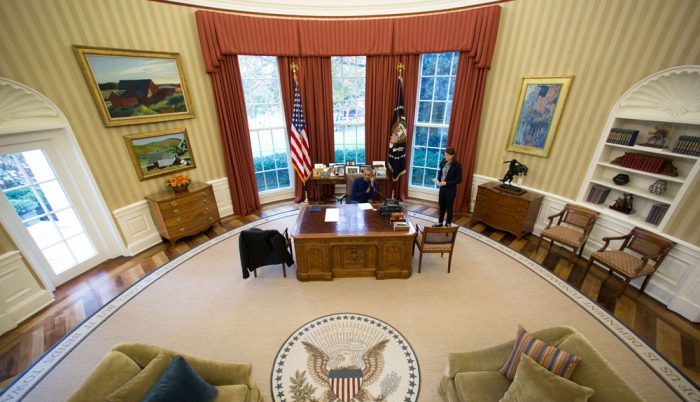
President Barack Obama makes Thanksgiving Day phone calls from the Oval Office to U.S. troops stationed around the world, Nov. 24, 2016. The President’s Coast Guard military aide, LCDR Ginny Nadolny is at right.
(Official White House Photo by Pete Souza)

The Washington Free Beacon disclosed that a former Iranian regime official and a leader in the Iran lobby enjoyed unprecedented access to the White House under the Obama administration.

The two were hosted at the White House for more than 30 meetings with top officials at key junctures in the former administration’s contested diplomacy with Iran, according to White House visitor logs that provide a window into the former administration’s outreach to leading pro-Iran advocates, according to the Free Beacon.

Seyed Mousavian, a former Iranian diplomat and head of the regime’s national security council, was hosted at the White House at least three times, while Trita Parsi, a pro-Iran advocate long accused of hiding his ties to the Iranian government, met with Obama administration officials a stunning 33 times, according to recently updated visitor logs.

Sources familiar with the nature of the meetings told the Washington Free Beacon that both Parsi and Mousavian helped the White House craft its pro-Iran messaging and talking points that helped lead to the nuclear agreement with Iran. These efforts were part of a larger pro-Iran deal “echo chamber” led by senior Obama administration officials who were tasked with misleading Congress about the nature of the deal.

Mousavian, who also served as Iran’s spokesperson during negotiations with the international community on the Iran deal, visited with White House National Security Council official Robert Malley, who advised the former president about the Middle East and the Islamic State terror group.

“Mousavian was Iran’s ambassador to Germany back in the 1990s, when that embassy was the central node of Iran’s European terror network and those in Germany were murdering dissidents in Berlin,” one veteran Iran analyst who frequently works with Congress on the issue told the Free Beacon. “Later he came to the U.S., where he’s being paid for with tens of thousands of dollars from the Ploughshares Fund, which funded the Ben Rhodes echo chamber.”

Parsi, head of the National Iranian American Council, a group tied to the broader Iran lobbying movement and tied to the Obama White House that helped spearhead a pro-Iran narrative, met with several senior Obama administration officials during dozens of visits to the White House, the logs show.

This included private, one-on-one meetings with Obama adviser Ben Rhodes, who helmed what he described as the White House’s pro-Iran deal “echo chamber,” as well as meetings with Malley and Colin Kahl, national security adviser to former Vice President Joe Biden. Parsi also met with the White House NSC’s director for Iran, its senior director, legislative liaisons, and public engagement officials, according to sources familiar with the nature of these meetings.

In one instance, Parsi was signed into the White House by Solomon Tarlin, a West Wing intern and supporter of the Middle East advocacy group J Street.

Free Beacon quoting an expert on Pentagon writes: “Talk about letting the fox into the hen house. Letting the head of an organization whose foreign policy positions are indistinguishable from the Islamic Republic more than 30 times would be analogous to letting the Soviet Union’s chief lobbyist help guide policy during the Cold War.”

“During the Bush administration, Parsi thought nothing of dining with [Former Iranian President] Mahmoud Ahmadinejad, and his private emails, released as part of a court-ordered discovery process, show that he lied to the U.S. press and coached Iranian officials in order to weaken sanctions and promote the Islamic Republic,” The expert said.

The visitor’s logs reveal the depth of Parsi’s involvement in building the false narrative of the Iran nuclear deal and also may explain why the Obama administration was quick to appease the mullahs in Tehran, by forgoing linking such important issues as ballistic missiles, human rights and terrorism.

With the incoming Trump administration, it is almost assured that Parsi’s access to the White House and key advisors has been reduced to zero, which explains why Parsi now has taken to authoring editorials in a tedious effort to influence a monumental shift in American foreign policy.

In many ways Parsi efforts are more akin to the Little Dutch Boy sticking his finger in dike than his previous august position as White House visitor.

In a piece for Foreign Policy, Parsi trotted out the same, tired talking points: Iran is good. Saudi Arabia is bad. Hard liners will be empowered in Iran. Trump’s cabinet picks are war mongers. Iran does not support proxies.

Parsi’s efforts to try and convince everyone that Iran does not fund and control Hezbollah or Shiite militias in Iraqi or Houthi rebels in Yemen is pathetic and patently false. All anyone has to do is follow the trail of cash and arms from Tehran to all parts of the Middle East and you can see how the Iranian regime sits at the center of the proxy wars in the region.

But Parsi’s efforts may be waning as he and his Iran lobby colleagues shift chaotically from issue to issue in an effort to keep up with the wide ranging agenda of the Trump administration which called for a moratorium on Syrian refugees pending verification of their backgrounds in a nod to the Islamic extremist terror attacks taking place across Europe in Paris, Nice, Brussels and Berlin.

A new poll revealed in the Wall Street Journal that support for Hassan Rouhani among the Iranian people has plummeted as years of war and economic stagnation coupled with unrelenting human rights abuses had sapped his favorability.

The survey results paint a picture of an Iranian public wary and skeptical about the economic benefits they thought it would bring as a result of the Iran Deal.

Conducted in December for the University of Maryland, the survey is based on telephone interviews with 1,000 Iranians and provides a gauge of public opinion in a country where independent polling is rare.

“Rouhani’s popularity is taking a hit primarily because he is perceived to have failed to deliver on his campaign promises,” said the president and chief executive of Toronto-based company which conducted the survey on the school’s behalf.

About 51% said the country’s economic conditions were worsening, up from 43% in June. Almost three-quarters of the Iranians surveyed said the deal hadn’t improved people’s living conditions.

With the presidential election looming in May, it is almost assured that the regime will once again rig the election to deliver a candidate in lock-step with the mullahs’ policies and those of top mullah Ali Khmenei.

Michael Tomlinson

Filed Under: Blog, Current Trend, Latest from Lobbies & Appeasers, National Iranian-American Council, News Tagged With: Appeasement policy, Featured, hassan rouhani, Iran, Iran deal, Iran Human rights, Iran Lobby, National Iranian American Council, NIAC, NIAC Action, Rouhani, Trita Parsi

Iran Lobby Pleading to Save Iran Nuclear Deal Despite Regime Militancy

January 17, 2017 by admin

Iran Lobby Pleading to Save Iran Nuclear Deal Despite Regime Militancy

Iran Lobby Pleading to Save Iran Nuclear Deal Despite Regime Militancy

With only a few days left until Donald Trump is sworn in as the next president of the United States, the Iran lobby and their Iranian regime leaders are in an absolute tizzy about the nuclear agreement and its future.

For the Iran lobby, especially the National Iranian American Council and the Ploughshares Fund, the nuclear deal with Iran represented a high water mark for their perceived effectiveness, but like a evaporating lake in a desert, their success was illusory since it was largely built on the decision by the Obama administration to try a policy of appeasing the Iranian regime.

With the ascension of the Trump administration with such noted critics of the Iranian deal in many of cabinet nominees now undergoing confirmation hearings, the Iran lobby is faced with rollback of all of their gains in one fell swoop.

Iran lobby supporters such as Trita Parsi have tried all sorts of tactics in an effort to save the deal in a shotgun approach of messages. First they openly criticized Trump during the presidential election, joining the tactics of his opponents with personal attacks.

When that failed and he won election, Parsi and his cohorts shifted to the threat of war if the Iran nuclear deal was scrapped by Trump. When that fell on deaf ears and gained almost no traction with the media and Trump announced his cabinet picks, the attacks shifted to the nominees.

Now that line of attack has essentially failed, the Iran lobby is now trying to float the idea that the Trump is actually in support of the nuclear deal and not likely to scrap it because the consequences would be so devastating.

Trying to keep track of all the misses by the Iran lobby is like trying to keep track of clanks off the rim by a worst shooting team in the NBA.

And now their worst fears are finally starting to come to fruition: the U.S. is finally beginning to realize that instead of appeasing the mullahs in Tehran, it is now time to hold them accountable for their actions.

The Iranian lobby fears that deeds and not words are likely to be the new currency of diplomacy in 2017.

But it isn’t just a Trump administration that is causing the Iran lobby to freak-out, it is the changeover in Congress and the potential for a whole raft of actions aimed at the mullahs ranging from the re-imposition of economic sanctions on the federal level to state-by-state sanctions means the Iran lobby is poised to be overwhelmed.

Congress has already begun offering up a series of bills taking aim at various aspects of the Iranian regime’s conduct including the near unanimous passage of the Iran Sanctions Act. Now comes a bill offered up last week to initiate an investigation into Iran Air and other regime airlines by the new Director of National Intelligence into whether or not they provide support to the Revolutionary Guard Corps or other terrorist groups.

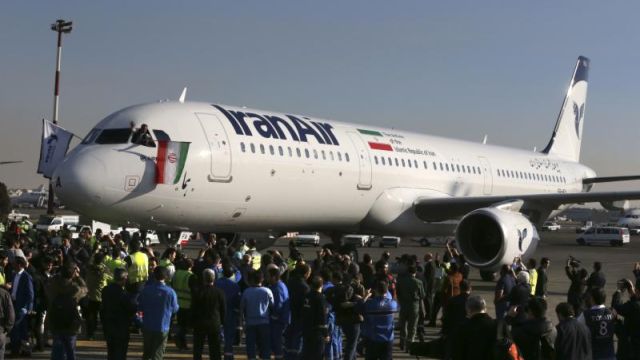
The timing of this legislation is important to the Iranian regime as it takes delivery of new commercial airliners from Airbus and soon Boeing to replace aging aircraft in its fleet. Iran Air took delivery last week of the first of 100 jets it ordered from Airbus with Boeing scheduled to deliver in 2018.

Should the investigation of Iranian airlines lead to the discovery of a link between them and support for terrorist activities, the suspect airline could end up back on the U.S. sanctions list and be prevented from receiving any new aircraft or U.S.-made parts according to CNN News.

There has always been deep suspicion that the Iranian regime uses commercial airliners to ferry troops, ammunition and cash to hotspots such as Syria and Iraq. Should that link prove true, the Iran lobby could find itself fighting for the economic survival of the regime again.

Mahan Air, Iran’s second biggest carrier, is still on the sanctions list for aiding Iran’s military and is barred from buying Western planes and parts.

Iran Air was removed from the U.S. sanctions list in January 2016 as part of an agreement to convince Iran to restrain its nuclear program. It opened the path for multi-billion dollar sales by Boeing and Airbus. That prompted an outcry from some lawmakers who said the Obama administration offered no proof that Iran Air had stopped its support of the Iranian military or designated terrorist organizations.

The news for the Iran lobby got worse with the release of a letter from 23 former U.S. officials urging the Trump administration to open up a dialogue with Iranian dissident groups, specifically the National Council of Resistance, which counts as one of its members the People’s Mujahedin Organization of Iran; a dissident group the mullahs in Iran have made it their mission to pursue and destroy.

Trump transition officials did not immediately respond to a request for comment. An NCRI spokesman, Ali Safavi, said the group had no “role whatsoever” in the letter, but forwarded a statement from an NCRI official, Soona Samsami, welcoming the letter as an “appropriate and timely initiative.”

In spite of these changing political fortunes, the Iranian regime seems intent on maintaining the same militant attitude to the rest of the world as news came out of Iran of the mass execution of 20 prisoners over the past two days.

Amnesty International reports indicate that Iran executed at least 977 people in 2015, mainly for drug-related crimes.

The human rights activist NGO also blames Iran for continuing to execute juvenile offenders, those aged under 18 at the time of the crime, in violation of the international law.

For the mullahs, some things don’t change.

Michael Tomlinson

Filed Under: Blog, Current Trend, National Iranian-American Council, News Tagged With: #NuclearDeal, Appeasement policy, Featured, Iran, Iran Lobby, Iran Terrorism, IRGC, National Iranian American Council, NIAC, NIAC Action, Nuclear Deal, Ploughshares, Syria

  • « Previous Page
  • 1
  • 2
  • 3
  • 4
  • 5
  • 6
  • Next Page »

National Iranian-American Council (NIAC)

  • Bogus Memberships
  • Survey
  • Lobbying
  • Iranians for International Cooperation
  • Defamation Lawsuit
  • People’s Mojahedin
  • Trita Parsi Biography
  • Parsi/Namazi Lobbying Plan
  • Parsi Links to Namazi & Iranian Regime
  • Namazi, NIAC Ringleader
  • Collaborating with Iran’s Ambassador

Recent Posts

  • NIAC Trying to Gain Influence On U.S. Congress
  • While Iran Lobby Plays Blame Game Iran Goes Nuclear
  • Iran Lobby Jumps on Detention of Iranian Newscaster
  • Bad News for Iran Swamps Iran Lobby
  • Iran Starts Off Year by Banning Instagram

© Copyright 2026 IranLobby.net · All Rights Reserved.