Iran Lobby

Exposing the Activities of the lobbies and appeasers of the Mullah's Dictatorship ruling Iran

  • Home
  • About
  • Current Trend
  • National Iranian-American Council(NIAC)
    • Bogus Memberships
    • Survey
    • Lobbying
    • Iranians for International Cooperation
    • Defamation Lawsuit
    • People’s Mojahedin
    • Trita Parsi Biography
    • Parsi/Namazi Lobbying Plan
    • Parsi Links to Namazi& Iranian Regime
    • Namazi, NIAC Ringleader
    • Collaborating with Iran’s Ambassador
  • The Appeasers
    • Gary Sick
    • Flynt Leverett & Hillary Mann Leverett
    • Baroness Nicholson
  • Blog
  • Links
  • Media Reports

Iran Regime Cheating Already Undermines Nuclear Deal

August 31, 2015 by admin

Iran Regime Cheating Already Undermines Nuclear Deal

Iran Regime Cheating Already Undermines Nuclear Deal

The United Nations nuclear watchdog, the International Atomic Energy Agency, released a new report showing that the Iran regime was engaged in new construction activities at its Parchin military facility which has been at the center of the growing controversy about Iran retaining the ability to self-inspect suspected nuclear facilities.

The document states the IAEA “has continued to observe, through satellite imagery, the presence of vehicles, equipment and probable construction materials” at Parchin.

“In addition,” the report continues, “a small extension to an existing building appears to have been constructed.”

But the IAEA report comes amid renewed scrutiny with regard to the Parchin site after it was revealed that Iranian inspectors would be taking an active role in IAEA-monitored inspections there.

“Allowing the Iranians to inspect their own nuclear sites, particularly a notorious military site, is like allowing the inmates to run the jail,” Republican presidential candidate Lindsey Graham said of the arrangement in an interview with CNN.

The move to begin construction activities at a key military site the Iran regime has continually denied access to for inspectors is another clear sign of the regime’s efforts to cover up aspects of its nuclear program in advance of the deal being closed. The fact that the IAEA does not even know what exactly the regime is doing at Parchin demonstrates how ineffectual it will be in policing the regime’s compliance with the agreement.

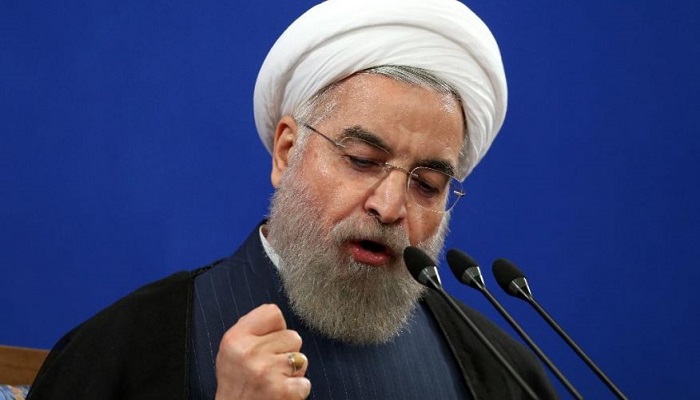
And in another move demonstrating the regime’s commitment to military superiority in the region, regime presidential puppet Hassan Rouhani again took to state-run television to declare Iran’s military capability would not be affected by the nuclear deal and the regime “did not and will not accept any limitations.”

With the Iran regime already cheating at Parchin and reiterating its commitment to military expansion, it comes as no surprise the regime is beefing up its direct lobbying efforts through campaign contributions from pro-regime groups with ties to the Iranian government to at least ten Congressional members as reported in FrontPage Magazine by Daniel Greenfield.

Legislators who took contributions from the Iranian American Political Action Committee and have already announced their support for the nuclear deal included:

  • Edward Markey (D-MA)
  • Alan Franken (D-MN)
  • Jeanne Shaheen (D-NH)
  • Kirsten Gillibrand (D-NY)
  • Barbara Boxer (D-CA)
  • Michael Honda (D-CA)
  • André Carson (D-IN)
  • Gerald Connolly (D-VA)
  • Donna Edwards (D-MD)
  • Jackie Speier (D-CA)

Iranian dissident Hassan Daioleslam, who won a defamation lawsuit brought by Trita Parsi of the National Iranian American Council, a leading pro-regime lobbying group, detailed the origins of IAPAC in 2007 according to Spryridon Mitsotakis in Breitbart:

“During the eight years of Rafsanjani’s presidency, which ended in 1997, the Iranian regime had attempted without success to attract the Iranian Diaspora to its cause. Khatami’s presidency recharged Tehran’s efforts. With the Supreme Leader’s direct involvement, the High Council for Iranian Compatriots Overseas was created in 2000 under the auspices of the Foreign Ministry. The President heads the Council, and the Foreign Minister serves as its deputy director. The Ministry of Intelligence and the Ministry of Culture and Islamic Guidance collaborate to implement the decisions of the council. The objective was to create a network of organizations to infiltrate and seemingly represent the Iranian community abroad, and promote policies favorable to the Iranian government. Tehran anticipated that this strategy would neutralize opposition activities abroad and legitimize the new lobby.”

He goes on to detail Parsi’s close work with Iran regime officials in launching the Iran lobby in the U.S. modeled closely on Jewish lobbying groups and made to have the appearance of a citizen’s lobby and impede the work of Iranian dissident and opposition groups such as the National Council of Resistance of Iran.

The NIAC, IAPAC and a host of other regime front groups have worked hard to reshape and distort the truth about the mullahs’ true intentions which have come to light with this new IAEA report on Parchin. The sheer brazenness of openly working to alter the Parchin site shows the contempt and lack of fear the mullahs have in snookering the rest of the world.

By Michael Tomlinson

Filed Under: Blog, National Iranian-American Council, The Appeasers Tagged With: IAEA report, NIAC, NIAC Action, Parchin, Trita Parsi

Iran Lobby Turns to Dubious List of Hate Apologists

August 28, 2015 by admin

Iran Lobby Turns to Dubious List of Hate Apologists

Iran Lobby Turns to Dubious List of Hate Apologists

The National Iranian American Council demonstrated its full-fledged commitment to supporting the Iran regime at any cost by issuing what could only be described as anarchist’s playlist of a press release full of terror supporters, hate apologists and regime sympathizers in a letter purporting to show “prominent international relations scholars” voicing their support for the Iran nuclear deal.

The letter is a farce – to put it mildly – because it omits the one phrase that dominates everything about the Iran regime: Human Rights.

Feel free to search the text of the NIAC release. It doesn’t exist anywhere in the letter, which should come as no surprise since it is the fatal flaw in all things the NIAC is involved in. Human rights for the NIAC are an inconvenient truth. It is the Achilles heel of its arguments in portraying a new “moderate” Iran.

While NIAC staffers such as Trita Parsi, Reza Marashi, Jamal Abdi and Tyler Cullis shout until veins bulge out of their collective necks that the mullahs deserve a break, they continue to blatantly ignore the incalculable human suffering being inflicted by those same mullahs on women, children, Christians, Iranian-Americans, Sunnis in Iraq, moderates in Syria or refugees in Yemen. The swatch of human suffering and misery caused by the mullahs has earned neither reproach nor condemnation by the NIAC and its allies.

The fact that this bogus letter excludes any mention of human rights is not unusual since the signers of the letter are culled from some of the most notorious corners of the academic world funded by regime sponsors and used as tools in defending terror groups, propagating hatred and applauding murder and mayhem.

Article in Breitbart delved deep into the histories and backgrounds of many of these academic frauds, noting “quite a few of the ‘prominent’ professors share radical views pertaining to issues of concern to everyday Americans. This list includes terror group sympathizers, Muslim Brotherhood sympathizers, Iranian regime apologists, Islamist supremacists, anti-Israel conspiracy theorists, overt anti-Semites, and other deplorable characters.”

“One of the most notable signatories is Noam Chomsky, who rose to fame as an MIT linguistics expert and now considers himself an international relations scholar. Chomsky, whom some believe is an anti-Semite, openly supports Iran-backed terror groups Hezbollah and Hamas,” Schahtel added.

Article published in Breitbart also reminds us that Parsi, also a signatory on the list of pro-deal “scholars,” made headlines last week when he alleged there was an Israeli conspiracy behind a report that presented the text of the “side deal” between Iran and the International Atomic Energy Agency. Additionally, several prominent Iranian dissidents have complained that Parsi’s agenda parallels that of the theocracy in Tehran.

But that has been the glaring aspect of NIAC’s fanatical devotion to the Iran regime agenda; the open unwillingness to criticize or comment on the human toll inflicted by the regime’s actions. NIAC has not argued against the retribution murders committed by Shiite militias supported by Iranian regime’s Quds Forces in Iraq as they slaughter entire Sunni villages.

NIAC has not commented on the horrific conditions in refugee camps caused by Iran regime proxy wars in Syria and Yemen. Nor has Parsi or his cohorts ever applauded efforts by groups such as Amnesty International or the United Nations Special Rapporteur for Human Rights in Iran as they have condemned and battled the over 2,000 executions conducted by the regime in less than two years; a staggering assembly line of death.

It would be a public service for those opposing the Iran nuclear deal and the policies of the regime and mullahs in Tehran to peruse the list of professors and send letters to the administrations of each of these universities – the vast majority of which are public and taxpayer funded – and ask why these academics are allowed bully pulpits to argue in favor of a regime that stifles free thinking and political discourse at home and brutally tortures students and teachers in Iran.

The sheer audacity of arguing for an accommodation of a regime that makes no accommodation for dissenters has helped persuade a majority of Americans that the mullahs cannot be trusted in spite of the efforts by NIAC, aided and abetted by groups such as J Street and MoveOn.org, to hold demonstrations that have generated small crowds.

The ultimate proof of the complete lack of authenticity within NIAC is the complete lack of honesty about the regime’s abuses.

By Michael Tomlinson

Filed Under: Blog, National Iranian-American Council, The Appeasers Tagged With: Iran deal, Jamal Abdi, NIAC, NIAC Action, Noam Chomsky, Reza Marashi, Trita Parsi

Well-Funded Iran Lobby Makes Trusting Regime Appealing

August 27, 2015 by admin

Well-Funded Iran Lobby Makes Trusting Regime Appealing

Well-Funded Iran Lobby Makes Trusting Regime Appealing

The central conceit of the proposed nuclear weapons deal with the Iran regime is a simple one: Iran’s mullahs can be trusted to act moderately and peacefully. It’s an idea that is hopeful, optimistic and enticing. It’s an idea propagated by the extensive lobbying and PR machine built up to support the mullahs in Tehran. It is an idea designed to reassure nervous Americans and provide political cover for wavering congressional lawmakers.

It is an idea fatally flawed.

The concept of trust is defined as a “firm belief in the integrity, ability, or character of a person or thing; confidence or reliance.” In order for trust to work, it assumes that the party in question – in this case the religious theocracy ruling Iran – has either demonstrated an ability to be trusted or expressed a desire to be trusted and then lives up to it.

In the case of the mullahs, nothing could be further from the truth. In their every action, the Iran regime has demonstrated again and again that it cannot be a reliable partner in any international agreement.

On the nuclear issue alone, Iran regime signed the Non-Proliferation Treaty yet violated the terms of the treaty by engaging in nuclear weapons development prior to 2003 and through 2012, leading to the stockpiling of 20 percent enriched uranium and the development of related weapons programs such as warhead detonation and missile delivery design. The International Atomic Energy Agency has found Iran in non-compliance repeatedly over the past decade.

Putting the nuclear issue aside for a moment, Iran also signed the Chemical Weapons Convention, but moved forward in supporting the Syrian regime of Bashar al-Assad after he used chemical weapons on his own people. Interestingly enough, while the regime’s top mullah Ali Khamenei has issued a much-ballyhooed “fatwa” or religious edict proscribing the use of nuclear weapons, he did not rule out the development of those weapons, nor did he mention chemical or biological weapons.

For the Iran regime language and its nuances is vital to its aims which is why the proposed nuclear agreement is a paltry 159 pages and does even include two secret side deals with the IAEA. The SALT and START treaties between the U.S. and Soviet Union dwarf it with detailed provisions and requirements.

This explains why the regime has strenuously held out for a finite time limit in any further sanctions or limits on its nuclear development; the mullahs have the patience of Job and are content to outwait the rest of the world. The fact that the proposed deal has no further limitations after 10 years means Iranian regime is free to scale up to industrial capacity in enriching uranium. The fact that its centrifuges will not be destroyed – only unplugged and stored – allowing Iranian regime to keep its refining infrastructure intact.

All we have done is kick the can down the road for a decade and allow another administration and Congress to deal with the mess.

Oddly enough, those elected officials supporting the deal have basically placed their faith and re-election hopes in the hands of the mullahs. There can be no other interpretation of their support. They are betting on the mullahs which seems an inane act unless you consider the lobbying force the mullahs have deployed.

Michael Rubin in a piece for Commentary delves deeply into the financial support for the Iran lobby; looking specifically at the Ploughshares Fund which spreads its millions of dollars around to a number of regime supporters, including the National Iranian American Council. He also connects the dots of how many staffers and activists supporting the regime are funneled through groups and entities with close ties to the regime.

“Those staffing NIAC, for example, have always sought an end to sanctions against the Islamic Republic of Iran. Many had worked for Atieh Bahar, a Tehran-based consultancy close to former Iranian regime President Ali Akbar Hashemi Rafsanjani. They are not chameleons, changing their stripes to match their funders,” Rubin said.

“When NIAC policy director Reza Marashi, an Atieh Bahar alum, worked for the State Department during the George W. Bush years, he was not pro-democracy agenda, but was understood to be sympathetic to an embrace rather than isolation of Iran. Indeed, his persistent questions about the recipients of U.S. aid inside Iran raised security concerns,” he said. “Likewise, when NIAC received a couple hundred thousand dollars from the National Endowment for Democracy, Trita channeled it to organizations close to the Iranian government.”

Rubin lists the extensive donations made by Ploughshares to benefit regime supporters, including:

  • $210,000 to the Arms Control Association for “influencing…US policy toward Iran.”
  • $80,000 to the Atlantic Council to support the Iran Task Force and another $130,000 for the South Asian Program;
  • Funded the Center for New American Security to give “boot camps” to Congressional staffers “on the nature of Iran’s nuclear program,” in other words, to lobby them;
  • Underwrote the Friends Committee on National Legislation’s efforts “to support an integrated lobbying strategy to build support for pragmatic approaches to resolve the Iranian nuclear issue;”
  • $100,000 to J Street to “educate” on behalf of an Iran deal;
  • $150,000 to the National Iranian American Council for its advocacy on behalf of the Iran deal, not including money given individually to its staff;
  • $75,000 to National Security Network to “educate media and policymakers about policy options to prevent Iran from acquiring a nuclear weapon;”
  • Blogger Jeffrey Lewis criticized and downplayed the Associated Press’ revelation about a side deal between Iran and the IAEA gutting verification by allowing Iran to test itself, but did not acknowledge a $75,000 gift to his home institution from Ploughshares;
  • The Aspen Institute also received Ploughshares money to educate Congressmen and senior staffers about Iran policy options, again, effectively to lobby them; and
  • $75,000 to Gulf-2000, a listserv run by former Carter Iran hand and “October Surprise” conspiracy theorist Gary Sick, who has used Gulf-2000 to become a “Journolist”-style clearing house to feed pro-Iran talking points to journalists.

All of these groups work in aligning the interests of the mullahs and in pressing for a deal that releases them of any obligations to change their behavior while setting the stage for turmoil down the road.

By Michael Tomlinson

Filed Under: Blog, Latest from Lobbies & Appeasers, National Iranian-American Council, The Appeasers Tagged With: Atieh Bahar, NIAC, NIAC Action, Ploughshares, Reza Marashi, Trita Parsi

Iran Lobby Keeps Pedaling Same Distortions

August 26, 2015 by admin

Iran Lobby Keeps Pedaling Same Distortions

Iran Lobby Keeps Pedaling Same Distortions

The Iran lobby, especially the National Iranian American Council, is in full-speed-ahead mode as it churns out editorials and press releases quicker than Donald Trump quips, with virtually all of them rehashing the same themes designed to mislead and misdirect Americans from the damning facts surrounding the Iran regime and the proposed nuclear agreement.

One example is an editorial authored by Reza Marashi, NIAC’s research director who apparently doesn’t do much research, but instead parrots what runs on Iranian state media it seems, which ran on Quartz, a blog dedicated to supporting the regime.

In it, Marashi claims President Obama’s “all in” push on the nuclear deal proves his commitment to choose peace over war, but in fact what it does represent is the administration’s desire to leave with a foreign policy win at all costs on the president’s resume.

The world will likely be paying the butcher’s bill for P5+1 decision to appease the mullahs in Tehran with generous terms in the decade to come since at the end of the deal’s time limit (and yes there is a finite time limit) mullahs will be free to scale up industrial-scale production of uranium without any consequences.

Marashi goes on to pedal another fallacy and that is Iranian-Americans wholeheartedly endorse the deal. He offers up as proof polling done on behalf of the Public Affairs Alliance of Iranian Americans, another front supporting the mullahs. The poll conducted by Zogby Research Services is flawed – as are other polls purported to show support for the Iran deal – because it asks questions related to the desires of Iranian Americans for peace, not on their beliefs on whether or not the Iran regime can be trusted to comply with any deal.

The one question PAAIA did ask (but probably wish it hadn’t) was what were the top issues affecting U.S.-Iran relations and a majority 55% said the promotion of human rights and democracy with a minority of 40% citing the nuclear deal.

Polling done for CNN, NBC, Wall Street Journal and others all show when the question of supporting a nuclear deal is tied to the idea of “trusting” the Iran regime, support plummets below the Mendoza Line and that is the misdirection employed by the NIAC and other regime supporters. This whole thing works only if they never discuss trusting the mullahs.

But Marashi goes one step further, he actually tries to portray Hassan Rouhani as a staunch moderate, even pointing out his tenure as secretary for the Supreme National Security Council as evidence of the support he enjoys from top mullah Ali Khamenei.

The claim is deliciously insipid because Marashi neglects to mention during his 16 year tenure, Rouhani oversaw some of the most brutal crackdowns on political dissent in Iran, as well as being the chief negotiator with the International Atomic Energy Agency when the first disclosures came of Iranian cheating in developing its nuclear infrastructure. Rouhani, far from being a moderate role-model, was in fact the model Iranian hardliner in carrying out the regime’s initiatives without public dissent or comment.

But the ridiculous claims keep on rolling as NIAC Action, the new lobbying arm of the NIAC, issued a press release in which it claimed growing momentum for the deal citing several Democratic Senators who had publicly endorsed the deal. It notes that 18 Democratic Senators are still undecided, placing approval in jeopardy, but what Jamal Abdi, NIAC Action’s executive director, fails to mention is the key item holding uncertain Democrats back, which is the doubts they have in placing their political futures in the hands of the mullahs.

That fact poses the most significant obstacle since undecided lawmakers have to basically choose to throw their lot in with the mullahs and “trust” that the mullahs will not end up killing their political careers by cheating on the agreement or engaging in more sectarian wars in the years to come.

The biggest leap in logic by the Iran lobby came courtesy of Trita Parsi, NIAC’s cheerleader-in-chief, who posted a piece on Huffington Post reiterating the same theme that Abdi and Marashi made of overwhelming momentum for the deal, but Parsi goes further by trotting out the concept that human rights activists support the deal.

He cites several Iranians who have been or are currently imprisoned by the regime voicing their support for the deal. The entire exercise by Parsi has a distinct Orwellian tinge to it as the regime picks prisoners for Parsi to quote in the same way the old Soviet Union would trot out prisoners from its gulags for appearance to Western media to talk about how their confinement is filled with gardening and cooking classes.

It is incredibly noteworthy that Parsi does not mention any of the Iranian Americans currently held in Iranian prisons, including Jason Rezaian, Saeed Abedini and Amir Hekmati. We can be assured that none of them would be endorsing the deal, nor their treatment at the hands of the mullahs.

By Michael Tomlinson


Filed Under: Blog, National Iranian-American Council, The Appeasers

The Iran Lobby’s Guide to Distorting the Truth

August 14, 2015 by admin

The Iran Lobby’s Guide to Distorting the Truth

The Iran Lobby’s Guide to Distorting the Truth

The Iran regime’s leading lobby, the National Iranian American Council, launched an official lobbying arm in the form of NIAC Action since it was coming under greater scrutiny for engaging in lobbying activities in violation of federal law. Also, Trita Parsi, the head of the NIAC, recently lost a defamation lawsuit he brought against an Iranian American journalist who wrote on the same topic.

NIAC Action was launched ostensibly to help advocate for Iranian American issues, but anyone looking at its site will quickly realize its sole purpose for existence is to push for the proposed nuclear deal and enable the mullahs in Tehran to get their hands on $100 billion in frozen assets and relief from economic sanctions that had threatened their hold over the Iranian people.

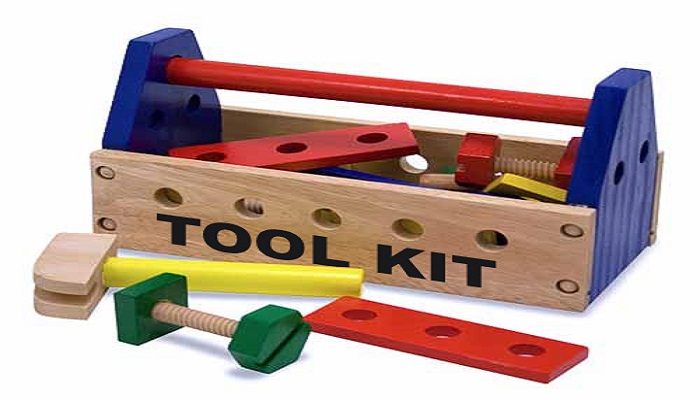
Interestingly enough, NIAC Action provides its followers a tool kit to help them at local town hall meetings being held by members of Congress over the summer recess who will hear from their constituents about their feelings on the nuclear deal. The tool kit is classic tactical programming to help feed and stoke the narrative the Iran lobby has been pushing from day one; namely that the deal is a choice between war and peace.

NIAC Action has taken that absurd one step further by trying to align a vote on the nuclear deal to the vote on going to war in Iraq. One of their talking points to supporters reads:

“The President has said that Congress’ vote on the Iran deal is the most important foreign policy vote lawmakers will take since the vote to authorize the war with Iraq. Many lawmakers have come to regret that they did not stand up to vote against the war with Iraq. Will you stand up and vote in support of the nuclear deal to prevent a war with Iran?”

The message point is an excellent example of the desperation regime supporters must feel and their willingness to troll the depths of fear mongering to get their point across. In many ways, the NIAC Action talking points are revealing for what they don’t say.

They make no mention of the need to carefully watch the behavior of Iran’s mullahs going forward. They make no mention of the need to reassure Americans that the mullahs can be trusted. They make no mention of how the mullahs will use the $100 billion windfall they are about to receive. They make no mention of the mullahs’ commitment to improve human rights and release Iranian American hostages being held in Iranian prisons.

Why? Simply put, they know it would be lying.

So absent the ability to tell the truth in order to reassure highly skeptical Americans as evidenced by a string of recent public opinion polls, NIAC Action has chosen to double down on fear tactics in an effort to cow the American people. It’s a tactic being shared in recent comments by Secretary of State John Kerry who warned that the value of America’s currency would take a hit on the global market should the deal fail to pass.

He warned of the potential for “the American dollar to cease to be the reserve currency of the world, which is already bubbling out there.”

If we give them another week, I’m sure the administration and Trita Parsi will also tell us global warming will increase and polar bears will become extinct if the nuclear deal is not approved.

The histrionics coming from NIAC Action are the strongest indication yet of how weak its position is and how blatant a tool for the mullahs it has become.

Rest assured the inventive and fanciful minds at the NIAC will probably include the eventual downfall of Western civilization as a result of a failed nuclear deal next.

By Michael Tomlinson

Filed Under: Blog, National Iranian-American Council Tagged With: Iran deal, NIAC, NIAC Action, Trita Parsi

NIAC Funded Through Regime Sources as Iran Lobby Ramps Up

July 13, 2015 by admin

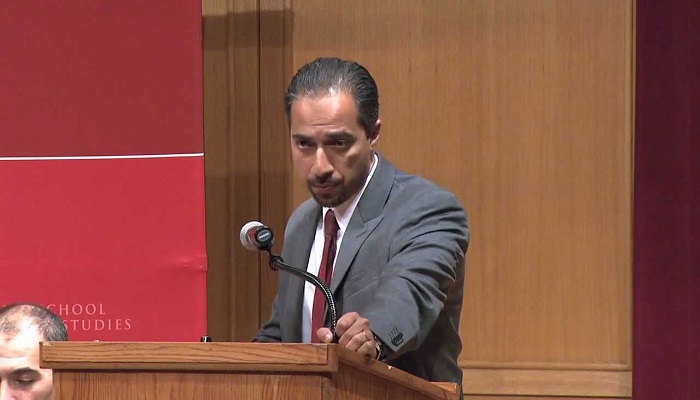
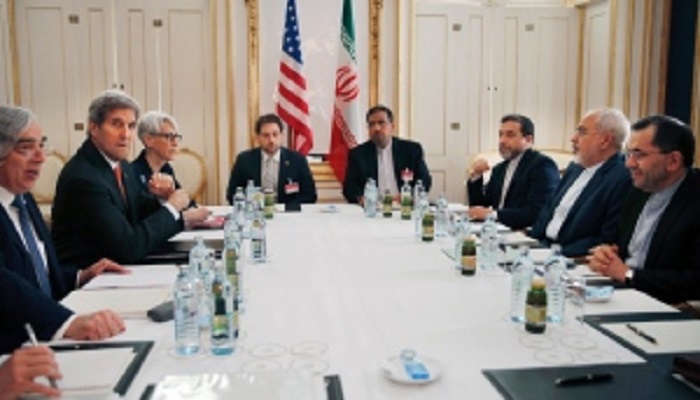
Tritta Parsi paying respect to the Iranian regime delegation in Geneva

Trita Parsi paying respect to Iran delegation in Geneva Talks

With the potential announcement of an agreement between the Iran regime and the P5+1 group of nations, the scene will undoubtedly shift to Congress where both houses will have 60 days to review the agreement under legislation authored by Sen. Bob Corker (R-TN), chair of the Senate Foreign Relations Committee, as part of a bipartisan compromise.

With that upcoming debate, a fierce lobbying campaign will break out between those opposed to the agreement and the lobbying machine deployed by Tehran’s mullahs to get it passed. Chief among them will be the National Iranian American Council, the leading advocacy group for the Islamic state, which has formally launched its own full-fledged lobbying arm in anticipation of the fight ahead.

The creation of the lobbying group has come under intense scrutiny given its timing just before congressional review, as well as the need to funnel and direct funds towards supporting the Iran regime. The question of financial support for the NIAC has been a persistent question and a recent story by The Daily Beast shed new light on where the chief cheerleaders for Iran’s mullahs are getting their money.

The story, written by Michael Weiss and Alex Shirazi and contributed by Jackie Kucinich, examined contributions made by Vahid Alaghband, an Iranian businessman who’s Balli Aviation Ltd., tried to sell 747 airliners to Iran despite a federal ban on such sales. His company pled guilty to two criminal counts in 2010 and under the plea deal with the U.S. Justice Department, paid a $2 million criminal fine, served five years of corporate probation and paid an additional $15 million in civil penalties.

“…Alaghband stands out from the rest, because the beneficiary of his firm’s deals with Tehran was an Iranian airline accused by the U.S. government of working with the regime’s foreign intelligence operatives and shipping arms and troops to Syria,” said the article.

“Plus, if an agreement between Iran and the world’s major powers is concluded in the coming days—as is widely expected—operators like Alaghband could stand to benefit.”

The deep ties to the regime also included a conspiracy in to export 747 aircraft by first obtaining export licenses from the U.S. government and then using an Armenian subsidiary to buy the planes for Mahan Air, Iran’s largest airline, which the State Department believes is controlled by former Iranian president Akbar Hashemi Rafsanjani.

Mahan Air was also sanctioned by the Treasury Department in 2011 for “providing financial, material and technological support to the Islamic Revolutionary Guard Corps-Qods Force (IRGC-QF),” or the expeditionary arm of the Islamic Republic’s praetorian military division, now heavily active in both Syria and Iraq. At the time, the Treasury Department accused the Qods Force of “secretly ferrying operatives, weapons and funds” on Mahan flights.

In 2007, Alaghband offered to give a $900,000 donation over three years to the PARSA Foundation, intended for the Brookings Institution to support pro-Iranian rapprochement. This followed a previous donation of $50,000 he made to PARSA.

PARSA’s second-largest recipient of funding was the NIAC which received a total of $591,500 from the group, but funding is not the only link between NIAC and the Iran regime with other news organizations and Iranian dissident groups having pointed out close ties between NIAC leaders such as Trita Parsi with regime officials that came to light as a result of a failed defamation suit brought by Parsi against an investigative journalist.

All of which casts doubt on NIAC Action, the new lobbying muscle being deployed to help the mullahs. As noted in an article in Commentary Magazine, the launching of the lobbying arm was followed by an email sent by NIAC staffer Tyler Cullis (and not from the NIAC Action ironically enough) calling for the immediate lifting of the United Nations arms embargo as part of the nuclear agreement.

As Commentary Magazine writes: “What the vast majority of Iranian-Americans know, and what Congress should ask NIAC, is how lifting the arms embargo meant to repress Iran’s sponsorship of terrorism is in anyway an interest of the United States, the Iranian-American community, or regional stability and security.”

“That NIAC would advocate the lifting of the arms embargo is both curious and revealing. Rather than promote Iranian-American political activism or public diplomacy, NIAC increasingly appears to align itself squarely with the publicly declared interests of the Islamic Republic of Iran,” the article adds.

Indeed, the mere fact that the NIAC is hard at work sending emails to congressional staffers urging the lifting of an arms embargo designed to prevent the Iran regime from exporting arms outside of Iran is hugely significant and provides proof that the mullahs are not intent on fostering peace, but instead are desperate to gets fresh supplies of arms and ammunition to their Hezbollah proxies in Syria, Shiite militias in Iraq and Houthi rebels in Yemen as three wars rage on.

As debate opens in Congress, it would be wise for Democratic and Republican staffers to look at the sender of these email missives and if it comes from the NIAC, they should send it straight to “Junk Mail.”


Filed Under: Current Trend, National Iranian-American Council Tagged With: alaghband, Featured, Iran, Iran sanctions, Irandeal, Irantalks, irantalksvienna

Iran Lobby Pulling Out All the Stops

July 7, 2015 by admin

Iran Lobby Pulling Out All the Stops

Iran Lobby Pulling Out All the Stops

The 4th of July weekend was filled with more than fireworks and celebration. It had more than BBQs and hot dog eating contests or mesmerizing Women’s World Cup finale. The holiday weekend also a blizzard of last minute lobbying by supporters of the Iran regime in a desperate attempt to push for a final key concessions including some new disturbing demands by the mullahs in Tehran.

In the vanguard were staffers from the regime’s chief lobbying group, the National Iranian American Council, which sent its representatives anywhere they could find a microphone, camera, notebook or warm body willing to listen to them.

There was no limit to what they were willing to comment about, even if it had no real tie in with ongoing nuclear negotiations or for that matter, anything of relevance to Iranian-Americans, the purported audience they were founded to help.

Reza Marashi of the NIAC spent his weekend being quoted in Voice of America about an online campaign to foster love for the Iran regime. I’m still trying to figure out just how that movement halts Iran’s funding of three proxy wars in Syria, Iraq and Yemen.

He also attempted to persuade the BBC in the Viennese hotel lobby where negotiations were taking place that talks had moved from the “expert” level and now was in the hands of “ministers.” An interesting observation since he said the exact same thing last year and in April when the interim framework agreement was announced with much fanfare and 24 hours later each side disputed what was agreed to.

But give Marashi credit for attempting wild spin control such as when he told Bloomberg News that “both sides have more maneuvering ability in their negotiating position than they are willing to let on.”

An interesting contention when regime leader Ali Khamenei laid down several red lines in the sand in the form of a detailed infographic repudiating almost everything regime negotiators had hinted at in terms of compromises.

Public lobbying for the regime’s positions wasn’t limited to the NIAC though. Long-time regime business associate Bijan Khajehpour of Atieh International has made the argument that the immediate lifting of sanctions would benefit the Iranian people with the injection of fresh capital into the economy. While everyone knows that the estimated $140 billion in frozen assets and nearly $100 billion in direct foreign investment was being eagerly awaited by the regime’s ruling mullahs who desperately need the cash to replenish coffers drained dry by three proxy wars, plunging oil prices and deep-seated corruption resulted from regime elites and their families skimming off the economy.

The most impressive linguistic gymnastics have come from Trita Parsi, the leader-for-life of the NIAC, who has given full-throated support for all of the demands laid out by Khamenei. Ironically, Parsi’s own book has been used to explain how during the Bush administration, the opportunity arose for a deal with Iran to be struck only to fail because of the “unreasonable” demands by the U.S. for regime change.

History has demonstrated though that Iran’s mullahs have never been serious about delivering a deal that undercuts their power, ability to control their neighbors, nor reduce their ongoing sectarian warfare against other religions. While Parsi contends the mullahs were perfectly willing to give up supporting terror groups like Hezbollah and cooperate with nuclear inspectors, the opposite has been the truth.

Parsi has never explained why a regime he himself has portrayed as being committed to a path of peace has instead turned into the single source of bloodshed, war, sectarian violence, terrorism and practitioner of unrivaled human rights abuses on the planet right now.

Indeed, Iran is appropriately enough the “godfather” of much of what troubles the world now. About the only thing Iran’s mullahs are not responsible for are the Greek Eurozone vote and the collapse of the Japanese women’s soccer team in the Women’s World Cup championship game.

But Parsi deserves our final attention since it has been his championing of the mullahs that has turned the once promising idea of a voice for Iranian-Americans into a propaganda megaphone for the mullahs.

In a question and answer session with Deutsche Welle, Parsi was asked if “a deal only helps Iran’s elite, the hardliners, or do you think a deal could actually help to unleash Iran’s moderate society?”

“It is the moderates in Iran who are pushing for this deal. It is the pro-democracy movement that is overwhelmingly in favor of this deal,” Parsi said.

That statement, more than any other he has made over the past few weeks, sheds the brightest light on the rank hypocrisy Parsi spouts. He attempts to convince us moderate forces are in control in Iran; the same moderate forces that:

  • Instituting brutal put downs of any street demonstration or protests over the past four years;
  • Proclaiming a “moderate” president in Hassan Rouhani who has overseen 1,800 executions in the past 2 years at a clip almost double that of his deranged predecessor, Ahmadinejad;
  • Plunged the Middle East into three massive wars in Syria, Iraq and Yemen with the full military, economic and political backing of the regime, including committing thousands of Iranian soldiers and paramilitary militias;
  • Oversaw the most massive crackdown on communications in Iran, essentially blacking out the entire country through installation of a cyberwall, confiscation of satellite dishes and banning of access to social media.

These things and more are the proof that puts to lies what Parsi, Marashi and all other regime supporters’ contend are the true nature of the mullahs’ intentions.

By Michael Tomlinson

Filed Under: Blog, National Iranian-American Council Tagged With: Iran, Iran Lobby, Reza Marashi, Trita Parsi

Trita Parsi Tries to Dignify Terror

July 3, 2015 by admin

Trita Parsi- Iran Lobby

Trita Parsi- Iran Lobby

With the 4th of July upon us, it’s appropriate for us to reflect back on some words from one of the Founding Fathers; in this case Thomas Jefferson who wrote in 1774:

“A free people claim their rights as derived from the laws of nature, and not as the gift of their chief magistrate.”

It’s an appropriate thought as we look at negotiations between the Iran regime and the P5+1 group of nations wrestling with how to keep Iran from possessing nuclear weapons, but if that issue is really just a tangent of an ever greater problem facing the world today which is the recalcitrant and predatory nature of the regime’s mullah leadership.

Jefferson was right thought in 1774 and his words apply today because the claim of authority assumed by Iran’s mullahs was forcibly wrested away from the Iranian people in the 1979 revolution and subverted into the perverse extremist theocracy it has become now.

All of which makes what Trita Parsi, leader of the regime’s chief lobbying group, the National Iranian American Council, wrote in National Interest patently absurd and indicative of how craven Parsi has become in shilling for the mullahs.

“But the necessity to uphold dignity is at the very center of both the problems and the solutions in the ongoing nuclear negotiations,” Parsi said.

Parsi’s contention that affording Iran’s mullahs “dignity” is the clear path an agreement. He equates this by using the example of the demands by the P5+1 to allow inspections of regime military sites in order to ascertain if Iran has militarized its nuclear development and whether or not the U.S. would allow similar inspections of its military bases under similar circumstances.

It’s an absurd proposition on Parsi’s part for two significant reasons: 1) Mullahs in Iran and not the U.S. was violating international agreements it had signed to not develop nuclear weapons; and 2) Under nuclear treaties with the Soviet Union and later Russia, the U.S. allowed access to its nuclear bases and facilities for international monitors and Soviet and Russian personnel to witness the dismantling of warheads and missiles.

Parsi also takes exception to the idea of “anytime, anywhere” inspections, blaming that condition for offending Iranian dignity and precipitating a crisis in talks. He further suggests that Iran has always given inspectors access and has no problem with it if it was delivered in a manner preserving of Iranian dignity.

I give Parsi credit for his imagination. He might make a good fantasy writer some day with these fairy tales he concocts, but the truth of the situation is that the regime has repeatedly halted inspections, cutting locks off of monitoring lockers and removing inspection cameras. In fact, the regime still to this day has refused answering questions in a dozen areas raised by the International Atomic Energy Agency over the military dimensions of Iran’s nuclear program.

Far from preserving Iranian dignity, Ali Khamenei and his fellow mullahs have refused these questions and concessions not out some sense of national pride, but rather from the very real fear their military secrets would be discovered and the entire false façade they had constructed of a peaceful nuclear program would come crashing down.

Remember, the regime had hidden even the existence of secret nuclear facilities at Parchin, Natanz and Arak.

The fact that Khamenei himself has posted his own definitive red lines where he will brook no compromise renders Parsi’s arguments moot since the regime’s top mullah has taken upon himself to repudiate Parsi’s claims over and over again.

Why does Parsi discuss Iranian dignity when he never deals with the primary factor which is the regime is the violator of international law and agreements in the first place? Does the dignity of a murderer become important as part of his trial? Do a war criminal’s actions deserve dignity when being examined by prosecutors?

The fact that Iran has been caught in criminal activities effectively negates its right to be treated as an equal amongst nations who abide by international law. China does not fund Hezbollah. France does not supply Houthi rebels with arms. The United Kingdom does not recruit Afghan mercenaries and send 15,000 of them to support the Assad regime in Syria, but the Iran regime does all these things and more.

Instead of writing about the dignity of the regime’s mullahs, Parsi would do better about writing of the indignities being suffered by American hostages such as Jason Rezaian of the Washington Post, or the Iranian families whose loved ones have been hanged by the thousands by the mullahs. Parsi might consider the plight of the millions of Syrians, Iraqis, Yemens and Lebanonese who have been displaced as refugees fleeing the proxy wars Iran has started.

By Laura Carnahan

Filed Under: Blog, National Iranian-American Council Tagged With: Iran, Iran Lobby, Iran Talks, Trita Parsi

Iran Lobby Admits Skirting Lobbying Laws

July 1, 2015 by admin


Iran Lobby Admits Skirting Lobbying Laws

Iran Lobby Admits Skirting Lobbying Laws

There was an admission made yesterday during ongoing nuclear talks between the Iran regime and the P5+1 and it wasn’t that the negotiators were going to miss yet another deadline. No, the real news that leaked out and escaped the notice of most news organizations came from the National Iranian American Council, the regime’s longtime loyal lobbying group.

The NIAC announced the formation of a 501(c)4 lobbying arm dubbed “NIAC Action” dedicated to openly carrying the mullahs water through the halls of Congress and collect funds on behalf of the mullahs to advance a nuclear agreement giving Tehran’s cash-starved mullahs access to $140 billion in frozen funds and allow it to retain its nuclear infrastructure without intrusive international scrutiny or inspection.

While the NIAC claims it launched its lobbying group to counter what it feels is the strong anti-regime lobby already operating in the U.S., the more practical reality is that the NIAC had been skirting federal lobbying laws and had to make this move in order to avoid further investigation and possible charges for violating federal laws.

News media have previously chronicled the suspicious and often blatant lobbying efforts by members of the NIAC, especially its founder Trita Parsi who recently lost a defamation suit aimed at a journalist who reported on Parsi and the NIAC’s lobbying actions on behalf of the regime.

An appeal by Parsi resulted not only in another loss but also resulted in NIAC being forced to pay $184,000 and condemnation for blatant and systematic abuse of the discovery process and repeated false and misleading declarations to the court.

NIAC’s Jamal Abdi attempted to spin the lack of coordination between the NIAC and Iran regime officials by saying “We are not lobbying on behalf of the Iranian government. We don’t coordinate. We don’t take money from the Iranian government or the U.S. government.”

But Abdi neglected to mention any prohibition on accepting funding from individuals who receive funding directly or indirectly from the Iranian regime or its vast network of shell companies and false fronts built over the past decade to evade economic sanctions and fund worldwide terror groups such as Hezbollah.

The NIAC has been a constant fixture at the sites of nuclear talks, in news media and online through its aggressive social media efforts. It skirted the letter of federal law by claiming status as a 501(c)3 “social welfare” group even though it organized “legislative action days” where it sent teams to Congressional offices and “lobbied” key representatives and Senators on important Iran-related legislation.

Unsurprisingly, key NIAC staff who have long sought to pressure and influence members of Congress have moved over to key slots at the lobbying arm, including Abdi who is now the executive director, Ryan Costello and Tyler Cullis who move over as policy and legal fellows respectively. It will bear watching to see the amount of cross-over and coordination that occurs between these two groups and whether or not federal lobbying laws will be violated.

It is unsurprising that this new lobbying arm for the NIAC is not devoted the stated mission of the NIAC which is to promote “greater understanding between the American and Iranian people,” but instead was specifically created “to protecting a nuclear deal.”

This will also allow the NIAC to even endorse U.S. political candidates, although an endorsement by a group so closely identified as a mouthpiece for a state sponsor of terrorism, currently holding American hostages and engaging in three proxy wars responsible for the murder and displacement of millions of people would hardly be a welcome endorsement by any Republican or Democratic candidate.

At least the truth is unveiled and we now know the full extent of what the Iran lobby is willing to do to secure a deal for the mullahs.

By Michael Tomlinson


Filed Under: Blog, National Iranian-American Council, News Tagged With: Iran, Iran Lobby, Iran Talks, Jamal Abdi, NIAC, Ryan Costello, Trita Parsi, Tyler Cullis

What You Need to Know About the Iran Nuclear Talks

June 29, 2015 by admin


What You Need to Know About the Iran Nuclear Talks

With only a day left before the self-imposed deadline of June 30 for this third and latest round of talks between the Iran regime and the P5+1 group of nations over Iran’s nuclear development program, it is becoming increasingly clear with leaked news reports that the deadline will be missed as regime foreign minister Javad Zarif heads back to consult with his mullah masters in Tehran.

It really is not surprising this deadline will be missed as well. Remember, this session was allegedly set to work out the “details” of the so-called “framework agreement” from last April in which both sides had supposedly agreed on the broad outlines, but within 24 hours conflicting documents were produced on what the framework agreement actually contained.

That “agreement” followed a similar missed deadline the year before and yet another agreement in November of 2013. Remember the 2013 deal? It released $17 billion in cash and assets to the regime for its alleged compliance with reduction in the stockpiles of enriched uranium, but instead, during the past two years under that interim agreement, those stockpiles actually increased by a whopping 20 percent.

It’s worth mentioning that the Iran regime got those billions just as global oil prices slumped and it was shelling out $6 billion to support Assad in Syria with Hezbollah fighters, not to mention the additional billions it spent to support the Houthi revolt in Yemen and Shiite militias in Iraq.

In essence, we have been paying for Iran’s proxy wars for the last two years.

But given the past three years of negotiating, what has been the common thread of failure in each of the previous sessions? Two words: Ali Khamenei.

The regime’s top mullah is empowered by mullah’s constitution with dictatorial powers over virtually all aspects of Iranian life including the judiciary, culture, foreign policy, economy and military matters. Jay Solomon reports in the Wall Street Journal how Khamenei’s constantly shifting demands, almost schizophrenic public rants and hardline stances have doomed every prior negotiating session and has potentially derailed this one as well.

“Mr. Khamenei’s hardline positions, announced in a nationally televised speech, appeared to back away from commitments his negotiators made in April to restrain parts of Iran’s nuclear program and to allow international inspections of the country’s military sites,” Solomon writes. “

“But there is concern in Washington and Europe that Iran’s paramount political leader may be boxing in his own diplomats by establishing terms they can’t deliver on. The 75-year-old cleric is viewed by the White House as the final decision maker on all issues concerning Iran’s nuclear program and foreign policy,” he added.

Solomon also disclosed the existence of secret messages passed between the regime and President Obama in which the mullahs in Tehran demanded as a sign of U.S. good faith the release of certain prisoners in 2009. The regime also demanded the blacklisting of certain Iranian opposition resistance groups and an increase in U.S. visas for regime students to study at U.S. universities.

It is noteworthy that the regime specifically called for actions against Iranian resistance groups, which have helped marshal global opinion against the regime over the years – and in the case of the National Council of Resistance of Iran – have helped disclose once-secret Iranian nuclear facilities angering the mullahs.

But in a startling concession, the U.S. arranged for the release of four Iranians including two convicted arms smugglers and a prominent scientist convicted of illegal exports to Iran. That early example of American concessions set the stage for the regime and Khamenei to believe they could get whatever they wanted from the U.S. and led to two years of mind-numbing talks in which the P5+1 caved on a whole series of concessions designed to appease Khamenei and hardline mullahs.

Now with admission that the June 30 deadline is moot, Western diplomats are breaking their silence and raising the scenario that the Iran regime is now backing out of its earlier commitments.

“There are a number of different areas where we still have major differences of interpretation in detailing what was agreed in Lausanne,” said British Foreign Minister Philip Hammond in a Reuters report.

“There is going to have to be some give or take if we are to get this done in the next few days,” he added. “No deal is better than a bad deal.”

Other Western officials echoed Hammond’s remarks, saying some of the backtracking involved the mechanics of monitoring Iranian compliance with proposed limits on nuclear activities according to Reuters.

The final clues of how far away the regime is removed from reality came in a posting by Reza Marashi from the National Iranian American Council and a lead supporter of the mullahs who is in Geneva along with his colleague Trita Parsi hobnobbing with the Iranian delegation in hotel hallways and lobbies.

Since Marashi and Parsi enjoy such close access to the confidential nature of these talks through the Iranian delegation, it’s worth noting the issue areas they call “myths” as clues to what frightens the mullahs the most.

  • The appearance that the regime will receive a windfall from immediate lifting of all sanctions;
  • The lack of verified inspection measures to prevent Iranian regime from cheating;
  • The emboldening of Iran’s mullahs to act freely in the region now that a deal is in place;
  • The worsening of human rights in Iran now that there is no leverage to improve the situation;
  • The ability to secure a better deal with mounting pressure on the regime from wider protest within Iran and abroad.

Ironically, Marashi has laid out the case precisely posed by opponents of a bad nuclear deal in which Khamenei’s mouth has uttered all of these points in direct contradiction to Marashi over the past two years.

The kicker is the trial balloon floated by Parsi in which he basically delivers the regime’s position on Huffington Post of a three phase approval deal which includes the U.S. Congress approving the lifting of sanctions and the terms of a deal without it even being signed by the Iranians. He must have gotten the idea from Rep. Nancy Pelosi (D-CA) during the healthcare debate when she argued Congress had to pass the law to find out what was in it.

Parsi and Marashi seem to believe Congress and the American people will fall for the same trick twice.

By Michael Tomlinson


Filed Under: Blog, National Iranian-American Council, News Tagged With: Iran, Iran Talks, Iran Talks Vienna, Marashi, NIAC, Trita Parsi

  • « Previous Page
  • 1
  • …
  • 3
  • 4
  • 5
  • 6
  • 7
  • …
  • 9
  • Next Page »

National Iranian-American Council (NIAC)

  • Bogus Memberships
  • Survey
  • Lobbying
  • Iranians for International Cooperation
  • Defamation Lawsuit
  • People’s Mojahedin
  • Trita Parsi Biography
  • Parsi/Namazi Lobbying Plan
  • Parsi Links to Namazi & Iranian Regime
  • Namazi, NIAC Ringleader
  • Collaborating with Iran’s Ambassador

Recent Posts

  • NIAC Trying to Gain Influence On U.S. Congress
  • While Iran Lobby Plays Blame Game Iran Goes Nuclear
  • Iran Lobby Jumps on Detention of Iranian Newscaster
  • Bad News for Iran Swamps Iran Lobby
  • Iran Starts Off Year by Banning Instagram

© Copyright 2026 IranLobby.net · All Rights Reserved.