Iran Lobby

Exposing the Activities of the lobbies and appeasers of the Mullah's Dictatorship ruling Iran

  • Home
  • About
  • Current Trend
  • National Iranian-American Council(NIAC)
    • Bogus Memberships
    • Survey
    • Lobbying
    • Iranians for International Cooperation
    • Defamation Lawsuit
    • People’s Mojahedin
    • Trita Parsi Biography
    • Parsi/Namazi Lobbying Plan
    • Parsi Links to Namazi& Iranian Regime
    • Namazi, NIAC Ringleader
    • Collaborating with Iran’s Ambassador
  • The Appeasers
    • Gary Sick
    • Flynt Leverett & Hillary Mann Leverett
    • Baroness Nicholson
  • Blog
  • Links
  • Media Reports

Iran Regime About to Go All Out in Syria

October 15, 2015 by admin

Iran Regime About to Go All Out in Syria

Iran Regime About to Go All Out in Syria

“This agreement could be the key that unlocks solutions to some of the most intractable conflicts in the Middle East. The region suffers from a diplomacy deficit and the nuclear deal paves the way for an increase in dialogue and diplomacy on a whole set of issues – which is critical for stability in the Middle East,” said Trita Parsi, head of the National Iranian American Council, August 27, 2015.

“Iran has sent hundreds of troops into northern and central Syria in the first such open deployment in the country’s civil war, joining fighters from its Lebanese ally Hezbollah in an offensive against rebels and taking advantage of cover from Russia’s air campaign, a regional official and Syrian activists said Wednesday.

“Their arrival is almost certain to fuel a civil war in Syria which has already claimed the lives of more than 250,000 people and displaced half of the country’s population. It also highlights the far-reaching goals of Russia’s military involvement in Syria,” from the Associated Press, October 14, 2015.

You have to admire the chutzpah of Trita Parsi to shovel the kind of fragrant stuff he does only to be proven wrong time and time again, which begs the question of why anyone ever listens to him.

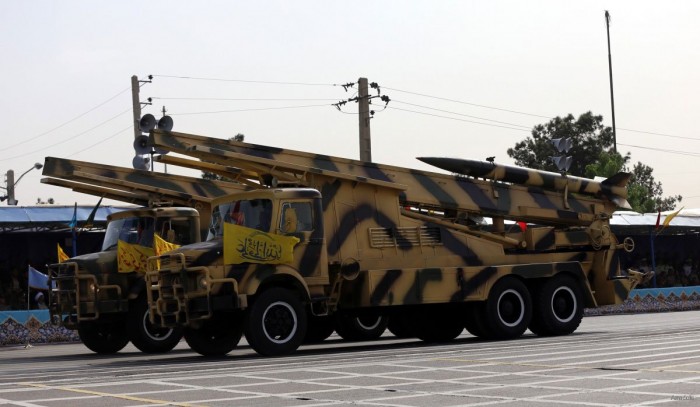
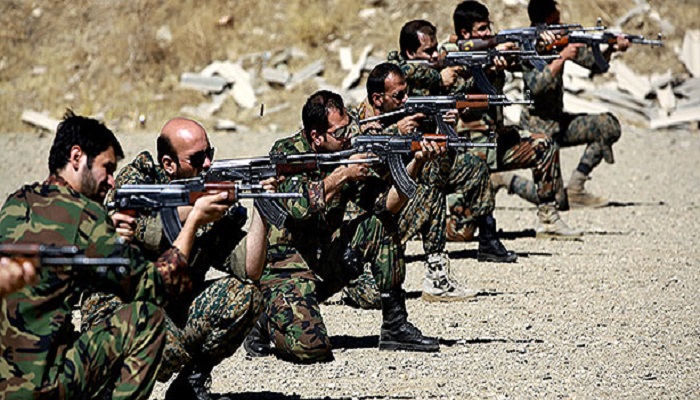
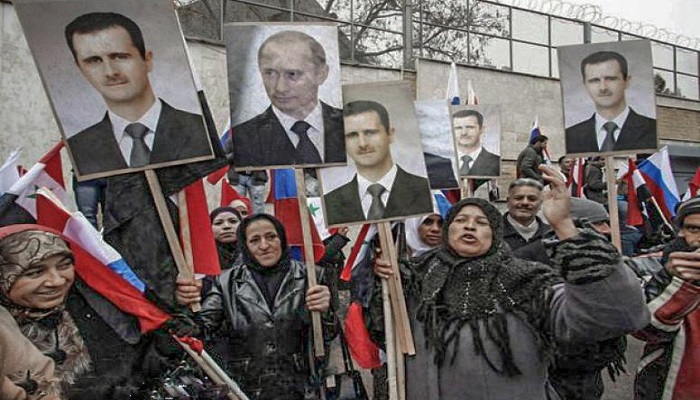
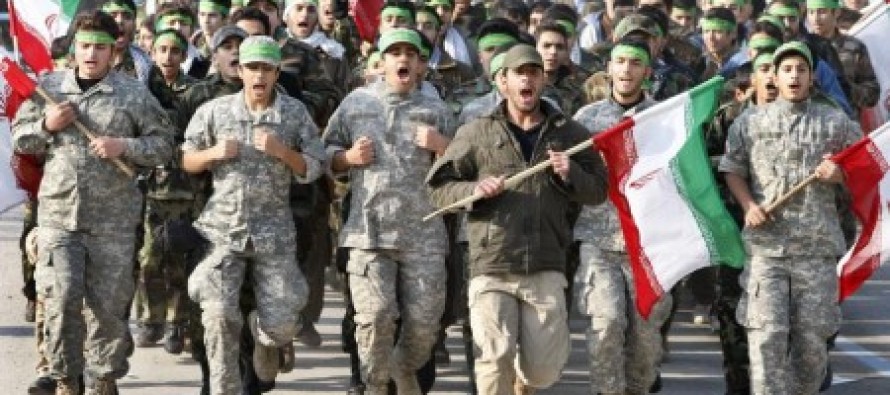
As the AP reports that upwards of 1,500 Iranian regime fighters begin arriving in Damascus, the picture in Syria is becoming increasingly bleak as combatants from Iran, Syria, Russia, Turkey, Iraq, Afghanistan, Lebanon, Jordan, Egypt, U.S. and pretty much from every country in the European Union now rush in for what promises to be the start of a new phase of bloody sectarian conflict.

What is even more impressive about Parsi’s comment only two months ago was that he held out the promise of diplomacy when the Iran regime in fact had absolutely no interest in diplomacy. Instead, the mullahs are committed to a path of military conquest in an all-or-nothing scenario.

Whether intentionally or not, Syria has quickly shaped up to becomes the ultimate bellwether of the ability of the Iran regime to stay alive because of Assad falls, Russia is likely to take a dim view of Iranian promises since Syria contains the only naval base Russia has in the Mediterranean. The loss of Syria would also prove conclusively the mullahs have no ability to expand their dominion beyond using the kinds of terror tactics it has relied on for the past three decades.

The buildup comes as Iranian Deputy Foreign Minister, Hossein Amir Abdollahian said on Tuesday that Tehran was working with Russia on drafting a peace plan for Syria. But Western powers, and many countries in the Middle East, say Assad must go as a precondition for peace.

Some peace plan, it just requires thousands of Iranian troops to make it work.

But the pending offensive in Syria also serves the Iran regime’s purposes by diverting attention from its other activities throughout the region as Tom Watson points out in The Independent:

“Events in Syria have, however, distracted attention away from Iran’s activities elsewhere in the region. Recently the Iranians were caught supplying weapons to Houthis rebels in Yemen, something Iran has long denied doing. Meanwhile, as a new report for The Henry Jackson Society: ‘Tehran’s Servants’ by Jonathan Spyer demonstrates, Iran has taken control of a vast force of Shia militias in Iraq that are now dominating much of the country. Western leaders may welcome these activities for helping to drive back IS, but no one should be under any illusions about just how extreme these Iranian-backed militias really are,” Watson writes.

“A glance across what is already a very troubled region endlessly turns up signs of Iranian involvement. Tehran has exploited the turmoil to advance its own hegemonic ambitions. It is doing exactly the same with the void left by Obama’s retreat from the world stage. Even as the Iranians look set to adopt the nuclear agreement, the Islamic Republic’s actual conduct rather suggests that the regime in Iran remains far from being a friendly or benign force in the world,” he added.

But why the rush by the regime in so many places around the world at once? The answer is simple: time is the enemy of the mullahs.

A presidential race in the U.S. will usher in what will most likely be a new president un-beholden to the nuclear agreement, and a new Congress eager to pass more sanction legislation against the regime on the wave of American public opinion polls showing vast dissatisfaction with Iran.

Military moves made by the regime have backfired in Syria, Iraq and Yemen and seen their allies in Hezbollah, Houthis and Shiite militias stall and even retreat from gains made earlier this year.

Ali Khamenei’s advanced age and recent health problems add to the uncertainty as does the surge in anti-regime protests that have now stretched into their third year and reveal a vast amount of discontent within the Iranian people.

The mullahs are on the clock and the big push in Syria is their wild last attempt to push all their chips on the table in a desperate bid to hang on.

Now if only Trita Parsi would tell us the offensive is just a new form of diplomacy then the cha  rade would be complete.

Michael Tomlinson
Filed Under: Blog Tagged With: #NuclearDeal, Appeasement policy, Featured, Iran, Iran deal, Iran Lobby, Iran sanctions, National Iranian American Council, NIAC, NIAC Action, Trita Parsi, Yemen

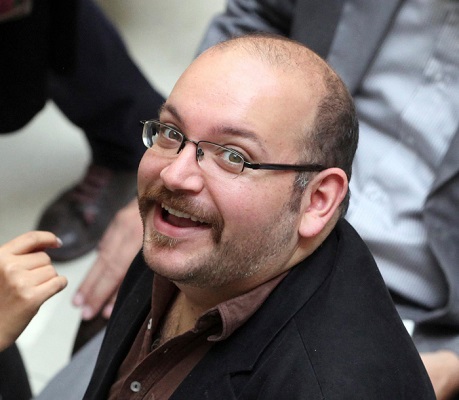
What the Conviction of Jason Rezaian Tells Us About Iran Regime

October 13, 2015 by admin

What the Conviction of Jason Rezaian Tells Us About Iran Regime

What the Conviction of Jason Rezaian Tells Us About Iran Regime

News media and journalists around the world have reacted strongly to the announcement that Washington Post reporter Jason Rezaian had been convicted in an espionage trial after 14 months of imprisonment. The verdict from the Revolutionary Court was reported through regime state television, but not the specific decision even though the trial ended in August.

According to the Washington Post, “Rezaian faced four charges — the most serious of which was espionage — and it was not immediately clear whether he was convicted of all charges. Rezaian and The Post have strongly denied the accusations, and his case has drawn wide-ranging denunciations including statements from the White House and media freedom groups.”

Depending on which charges he was convicted on, Rezaian could face upwards of 20 more years in prison.

“Iran has behaved unconscionably throughout this case, but never more so than with this indefensible decision by a Revolutionary Court to convict an innocent journalist of serious crimes after a proceeding that unfolded in secret, with no evidence whatsoever of any wrongdoing,” said Martin Baron, executive editor of the Post, in a statement.

“The contemptible end to this ‘judicial process’ leaves Iran’s senior leaders with an obligation to right this grievous wrong,” Baron said. “Jason is a victim — arrested without cause, held for months in isolation, without access to a lawyer, subjected to physical mistreatment and psychological abuse, and now convicted without basis. He has spent nearly 15 months locked up in Iran’s notorious Evin Prison, more than three times as long than any other Western journalists.”

Ironically, on October 10, Rezaian passed the dubious milestone of having been locked up in Iran longer than the original 52 American embassy hostages three decades ago.

Rezaian’s case, as well as the plight of other Americans being held in Iranian regime’s prisons; including Amir Hekmati, a former U.S. Marine, and Saeed Abedini, a Christian pastor, are defining signposts of how the Iran regime’s leadership acts, plans, thinks and executes its national policy. They have become unfortunate pawns in a much larger game the mullahs have been playing at for the past three decades.

Abedini of Boise, Idaho, was imprisoned for organizing home churches. Hekmati of Flint, Mich., has spent four years in prison since his arrest during a visit to see his grandmother. Rezaian was accused by the regime of providing information on Iranian companies and individuals violating economic sanctions and thereby providing intelligence to regime foes.

These higher profile victims share a similar fate as countless thousands of other Iranians who have been arrested, tortured, falsely imprisoned and often publicly executed as the regime seeks to stamp out dissent, curb free speech and hang onto people to be used as bargaining chips should it need them.

In the case of the Americans, Hassan Rouhani, the regime’s handpicked leader, openly floated the idea of prisoner swaps with the Americans exchanged for up to 19 Iranian agents convicted of trafficking in arms and smuggling nuclear components for the regime’s nuclear program.

In many ways though, approval the nuclear agreement may have inadvertently sunk hopes of getting these Americans released since the mullahs perceive they got what they originally wanted in the potential lifting of economic sanctions, which raises the question of why would the regime double down and sentence Rezaian when there would be no clear political reason to?

The conviction certainly disproves the idea – long floated by Iran lobbyists such as the National Iranian American Council – that supporting the nuclear deal would empower so-called “moderates” within the Iranian government. If anything, this conviction demonstrates that Ali Khamenei, to whom the courts answer to, is still firmly in charge of the regime’s policies.

What all of this tells us is that the Iran regime leadership does not value human life, other than to use it as a commodity. It tells us the judicial system is controlled and used for political and religious purposes. It tells us there is always linkage in the mullahs’ mindset and willingness to traffic in human life.

The regime shows us every day examples that it views international law and norms with contempt, be it the brutal treatment of its people or the almost daily threats its generals and leaders make against the U.S. and other nations and neighbors.

Alireza Tangsiri, a Revolutionary Guard Corps lieutenant commander, said that suicide bombers are on stand by and ready to “blow up themselves” to “destroy the U.S. warships,” according to remarks made Monday in Iran’s state-controlled Fars News Agency.

“They [the U.S.] have tested us once and if necessary, there are people who will blow up themselves with ammunitions to destroy the U.S. warships,” Tangsiri was quoted as saying.

He added that if the United States takes any hostile action against Iran, the country’s military forces would pursue the Americans into the Gulf of Mexico.

“I declare now that if the enemy wants to spark a war against Iran, we will chase them even to the Gulf of Mexico and we will (certainly) do it,” he said.

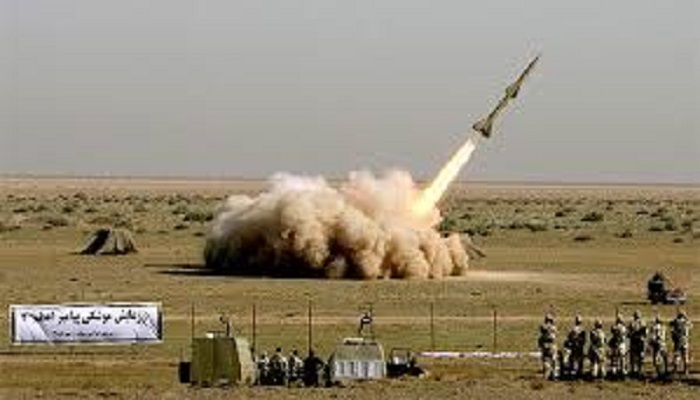
The threats come a day after Iran test fired ballistic missiles in the region, in a potential violation of international agreements barring such activity.

That missile, the Emad or “Pillar,” is designed to evade missile defenses and is supposedly much more accurate than previous missile designs, putting neighbors such as Saudi Arabia, Turkey, Egypt and even Southern Europe within range.

While execution of Iranians under Rouhani’s watch is surging, it is more obvious now that despite the Iran Lobby’s pitch, mullahs ruling Iran, emboldened by the concessions received as a result of the flawed Iran deal, are now more of a threat to the international community than ever before.

By Michael Tomlinson

Filed Under: News Tagged With: #NuclearDeal, Appeasement policy, Featured, Iran, Iran deal, Iran Lobby, Iran Mullahs, Iran sanctions, National Iranian American Council, NIAC, NIAC Action, Rouhani, Sanctions

Iran Lobby Tries Clearing Economic Pathway for Regime

October 10, 2015 by admin

Iran Lobby Tries Clearing Economic Pathway for Regime

Iran Lobby Tries Clearing Economic Pathway for Regime

The Iran lobby, led by the National Iranian American Council, has been busy working to clear the economic runway for the Iran regime now that it has its nuclear deal because now that it has the opportunity to operate more freely in the world, the mullahs have opted to significantly increase the regime’s military operations in Syria, Yemen and Iraq; all of which requires cash and mountains of it.

As part of that NIAC propaganda push, Tyler Cullis and Amir Handjani, posted an editorial in The Hill arguing that the U.S. should open greater economic ties with the Islamic regime; the reason being that European and Asian nations are already quickly seeking to exploit these new markets.

Cullis and Handjani are correct that there are some companies and nations seeking to rush into this economic void. We know that China has a deep interest in securing contracts for cheap Iranian oil, while Russia has already begun selling weapons to the regime despite the fact that embargos on advanced ballistic missiles and weapons remains in effect.

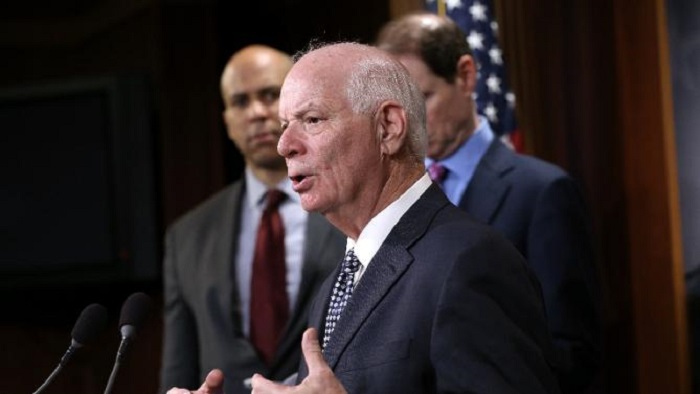
They note however that the Obama administration has put the brakes on the rush to re-open economic ties with the regime. Part of delay comes from the huge groundswell of negative reaction from American voters to the nuclear deal which has forced many representatives who supported the deal to backtracked and offer up new pieces of legislation to address the perception that the Iran regime received a sweetheart deal and the U.S. got nothing in return; most notably Sen. Ben Cardin’s (D-MD) move to introduce to track compliance by the regime.

Most anti-regime critics called the effort too little, too late and still does not address the central and most critical issue surrounding the Iran regime: the delinking of human rights and sponsorship of terror from the deal and thus making no effort to reform or modify the regime’s bloodthirsty policies.

There has also been discussions and disagreements over the conflict between the nuclear deal and the Iran Threat Reduction and Syria Human Rights Act (ITRA) which was signed into law in August 2012 by President Obama which closes the foreign subsidiary loophole that the an annex in the nuclear deal makes open.

According to Fox News, “ITRA contains language, in Section 605, requiring that the terms spelled out in Section 218 shall remain in effect until the president of the United States certifies two things to Congress: first, that Iran has been removed from the State Department’s list of nations that sponsor terrorism, and second, that Iran has ceased the pursuit, acquisition, and development of weapons of mass destruction.

“Additional executive orders and statutes signed by President Obama, such as the Iran Nuclear Agreement Review Act, have reaffirmed that all prior federal statutes relating to sanctions on Iran shall remain in full effect.”

All of which drives a stake through the arguments made by Cullis and Handjani who by using the flawed tactic of supporting “moderates” against “hardliner” mullahs, argue that continued economic isolation of Iran only strengthens the “hardliners” and leaves American companies out in the cold versus their European and Asian competitors.

First of all, it is refreshing Cullis and Handjani are so interested in the economic well-being of American firms, but the reality is they recognize failure to fully open Iran to international trade and commerce will not bring in the cash and investment necessary for the regime to generate the revenue necessary to fund its expansionist policies.

The regime has spent upwards of $15 billion in direct financial aid and military support just to prop up the Assad regime in Syria alone. This doesn’t include the billions being spent to arm Houthis in Yemen and outfit Shiite militias in Iraq, not to mention the regime’s old terrorist partners in Hezbollah. With slumping oil prices, the mullahs desperately need that foreign investment to help keep them in power as ordinary Iranians have staged protests against the “war economy” top mullah Ali Khamenei has mandated for the past decade.

Oddly, Cullis and Handjani use the analogy of President Nixon opening up relations with China in the early ‘70s as an example of opening up to a closed society the U.S. was in conflict with, but what they don’t mention is the fact that coming out of the Vietnam War, China recognized the need to end its sponsorship of armed conflict and instead turn to embracing capitalism.

The fact that a deeply Communist nation that inflicted the Cultural Revolution on its people in brutal repression, recognized it needed to do a complete policy turnaround and embrace the very thing it denounced as part of its founding represents why the Nixon overtures were even possible in the first place; China’s leaders made that opening available by being receptive to change.

Iran’s mullahs have exhibited no such inclination. In fact since the nuclear deal was agreed to, Iran has partnered with Russia to step up an air and ground campaign in Syria, was caught smuggling weapons into Yemen and has turned Iraq into a virtual client state.

So while the Iran lobby may be hard at work trying to rewrite history, the Iran regime is busy trying to shape the future to its own perverted vision.

By Laura Carnahan

Filed Under: Blog, Latest from Lobbies & Appeasers, News Tagged With: Amir Handjani, Appeasement policy, Featured, Iran, Iran deal, Iran Economy, Iran Lobby, Iran Nuclear, Iran sanctions, Iran Talks, Jamal Abdi, National Iranian American Council, NIAC, NIAC Action, Sanctions, Tyler Cullis, Yemen

As Russian Missiles Land in Iran, Dissidents Plan Action

October 9, 2015 by admin

As Russian Missiles Land in Iran, Dissidents Plan Action

As Russian Missiles Land in Iran, Dissidents Plan Action

Things got a little weirder and much worse in Syria as Russia launched a barrage of cruise missiles at targets in Syria, only to have them land in presumptive ally Iran’s territory as reported by CNN. U.S. Defense Secretary Ashton B. Carter sharply criticized the Russian move which came without advance notice or warning.

Significantly the official Iranian regime state media did not issue any statements acknowledging the gaffe except for a short statement criticizing the CNN report and calling it “psychological warfare.” An interesting choice of phrase since the mullahs would be hard pressed to explain to the Iranian people why the ally Qassem Soleimani, the head of the regime’s Quds Forces, recruited ended up dropping bombs on Iran.

The Iranian role points to the influence of the country, which is the strongest backer of Syrian President Bashar Assad and is close to the Shiite-led leadership in Iraq’s U.S.-backed government.

Meanwhile, key lawmakers on both sides of the political aisle began pressing the Obama administration to do more to help relocate and protect members of the Iranian resistance who are confined to a camp in Iraq and subjected to periodic attack and assault by Iranian agents and Iraqi forces operating under Iran regime control.

The assertions came at a hearing Wednesday, during which President Obama’s former national security adviser warned that Iranian leaders have turned Iraq into a “client state” and are bent on exploiting the war against the extremist group Islamic State in the nation to promote their own brand of Shiite extremism.

Iran’s expanding influence in Baghdad, the general added, does not bode well for the members of the Iranian dissident Mujahedin-e-Khalq (MEK) group — some 2,500 members of which have been kept in a state of semi-captivity by the Iraqi government since U.S. forces pulled out of the nation in 2011. The MEK and other Iranian dissident groups have proven invaluable in getting information out from within Iran on the regime’s secret nuclear program, including disclosures about the Natanz enrichment facility and Arak heavy water nuclear reactor.

Sen. Jack Reed, the ranking Democrat on the Armed Services Committee, said that the “deteriorating security situation in Iraq only highlights the need to find safe refuge for these individuals outside that country.”

The resurgence of the Iranian resistance has been met head on by almost rabid-like hatred by the Iran lobby which has used every dirty trick in an attempt to discredit anything from the resistance. This has been especially true in using the tactic of calling any criticism of the Iran regime being sourced by the massive “Israel” lobby. In many ways, efforts by the National Iranian American Council(NIAC) and others in the Iran lobby to tie actions by the resistance movement to the traditional Israeli lobby is some kind of “guilt by association” move in order to try to make whatever the resistance has to say less worthy.

This has certainly been pushed by members of the Obama administration who have close ties to the NIAC and other Iran lobbyists such as Alan Eyre, the State Department’s Persian-language spokesman, who was taken to task by the Washington Free Beacon’s Adam Kredo for his efforts to downplay Iran regime terror acts and promote the ideas of such noted anti-Israel advocates such as Stephen Walt and Paul Pillar; both are staunch supporters of the NIAC and Iran regime.

Kredo notes that Eyre even appeared as the keynote speaker at the NIAC conference in Washington, DC.

The effort to continually denounce the Iranian resistance and somehow link it to Israeli politics is a ham-handed effort to cover up for the fact that large portions of the Iranian people actively and secretly oppose the mullahs and are living proof that their regime hangs precariously.

By Michael Tomlinson

Filed Under: Blog, News Tagged With: Appeasement policy, Featured, Iran, Iran deal, Iran Lobby, National Iranian American Council, NIAC

Iran Regime Reveals True Intentions

October 8, 2015 by admin


Iran Regime Reveals True Intentions

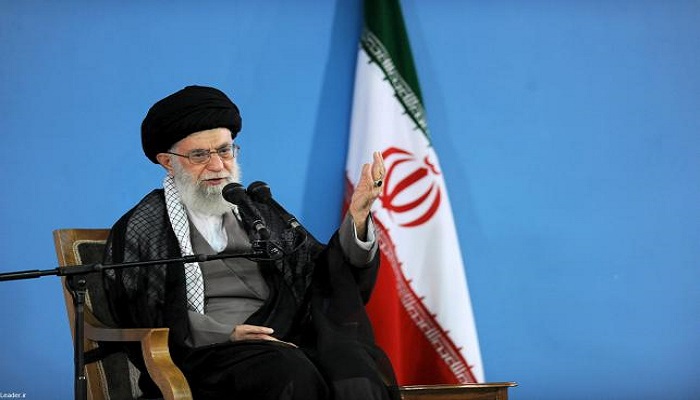
Iran’s Supreme Leader Ayatollah Ali Khamenei gestures as he delivers a speech during a gathering by Iranian forces, in Tehran October 7, 2015. REUTERS/leader.ir/Handout via Reuters

Ali Khamenei, the highest authority in the Iran regime, banned any further negotiations between the regime and the U.S. according to a statement released on his website, firmly putting the brakes to any idea of accommodation or moderation following the approval of a nuclear deal.

“Negotiations with the United States open gates to their economic, cultural, political and security influence. Even during the nuclear negotiations they tried to harm our national interests,” Khamenei was quoted as saying on his website.

Khamenei had previously said there would be no more talks with the U.S. last month, but this move was a step further in declaring an outright ban on any further discussions on any other topics.

The Obama administration, fed a steady stream of misrepresentations and false promises by the Iran lobby – led by the National Iranian American Council – expected a new phase of relaxed, open negotiations with the regime on a variety of issues including the ISIS, the Syrian conflict and sponsorship of terror.

Instead, now that the regime has achieved its goals in the nuclear deal – a lifting of economic and military sanctions, preservation of its nuclear infrastructure, delinking of human rights issues and release of billions in frozen cash – the regime sees no other reason to carry on the façade of moderation it has so assiduously pushed since the handpicked elevation of Hassan Rouhani as regime president.

In his address to Revolutionary Guards Navy commanders, Khamenei said talks with the U.S. brought only disadvantages to Iran.

“Through negotiations Americans seek to influence Iran”, Khamenei was quoted as saying to the IRGC commanders, who are also running much of Iran’s military involvement in Syria.

The bill of goods sold by the Iran lobby for hopes of a release of American hostages, removal of Assad and a reigning in of sectarian violence has now come due as Iranian regime’s leadership seeks to make all those promises false.

Michael Goodwin, a New York Post columnist wrote in Fox News:

“The White House deliberately downplayed the Russian buildup because it undercut central promises Obama made to Congress about the Iran nuke deal, which was then being debated.

“One of those promises was that Russia would help enforce the terms. Instead, Putin actually was making common cause with Iran, and both are now killing the Syrian rebels we supported.

“Here’s the scorecard: Obama got his Iran deal, and the world got a more aggressive Iran, an expanded Syrian war and wider Russian influence. With each passing day, the cost of stopping Putin grows more expensive.”

The yawning chasm between the promises made by the Iran lobby and the reality of what is taking place was discussed in another piece in Foreign Policy by Aaron David Miller and Jason Brodsky in which they write:

“One thing seems pretty clear: Somewhere in a parallel universe far, far away, the logic of a linear path to Iran’s moderation may be alive and well. But back here on planet earth, the odds on the health and prosperity of reform and the reformers, too, are still very long ones indeed.”

But supporters of the regime are still fighting back in trying to hold the line that a force for moderation exists in Iran and is fueled by post-nuclear deal euphoria, rather than the hangover the world is witnessing today.

One of those peddling this snake oil is Kourosh Ziabari who writes in Huffington Post:

“To the detriment of hardliners, Iran is reemerging as a regional power, and it’s easily predictable that with another four years in office plus the two intact years he has in hand – unless Ahmadinejad comes up with a new wizardry and wins the 2017 elections, President Rouhani will be able to build a strong and peace-making Iran which nobody will be able to demonize or depict as a threat to world peace and security.”

Ziabari pushes the Iran lobby message that there exists within Iran “moderate” and hard line” forces when in fact Khamenei has indelibly proven there exists only one voice on all policy matters and it is firmly his.

Even as Iran and Russia join with Hezbollah in launching a new phase in Syria, Iran’s mullahs are busy in other parts of the Middle East, including Yemen, where the Houthi rebels they support have been spotted in Iran getting support and new arms according to Al Arabiya.

The Houthi delegation “will convey to Iranian officials an urgent request by Houthi leader Abdulmalik al-Houthi to attain additional shipments of weapons after the Saudi-led coalition forces made several gains against the militia,” according to the report.

“Before visiting Tehran, the delegation had allegedly visited Beirut where it met with Hezbollah leader Hassan Nasrallah,” according to al Arabiya. “During the visit, the delegation allegedly voiced Abdulmalik’s al-Houthi’s gratitude for Hezbollah’s support in sending military experts to Yemen.”

President Obama’s former national security adviser also warned that Iranian regime leaders have effectively turned Iraq into a “client state” and are bent on exploiting the regional war against ISIS to promote their own brand of Shiite extremism throughout the Middle East.

“Iran’s grand strategy entails consolidating the hold it has gained in Iraq — a grip it seeks to tighten, directly and through proxies — and by stoking the sectarian fires,” said retired Marine Corps Gen. James L. Jones.

Gen. Jones testified alongside former Sen. Joe Lieberman, an independent, and both men lamented the administration’s failure to provide more assistance and refuge to members of the Iranian dissident group — commonly known in Washington as the “MEK” or “PMOI” — who have been left in the lurch in Iraq since the departure of U.S. forces in 2011.

On top of all this, word comes out that cybersecurity researchers have uncovered a network of fake LinkedIn profiles, which they suspect were being used by hackers in Iran to build relationships with potential victims around the world, according to a new report to be published by security firm Dell SecureWorks Inc.

This tactic, known as “social engineering,” is one where hackers trick people to get them to cough up personal or sensitive information. “Having those trust relationships gives [hackers] a platform to do a bunch of different things,” said Tom Finney, a security researcher at Dell Secureworks.

The 25 fake profiles described in the report were connected to more than 200 legitimate LinkedIn profiles — mostly individuals based in the Middle East who worked in sectors like telecom and defense. Those individuals and their companies likely have information that would be of interest to an Iranian cyber group, Dell Secureworks said.

Yes, the post nuclear deal world has indeed brought much change, just not the kind the Iran lobby promised.

By Michael Tomlinson

Filed Under: Blog, The Appeasers Tagged With: #NuclearDeal, Appeasement policy, Featured, Iran, Iran deal, Iran Economy, Iran Lobby, Iran Mullahs, Iran sanctions, Khamenei, NIAC, NIAC Action, Syria, Yemen

Syria is Just Tip of Iran Regime Iceberg

October 7, 2015 by admin

The Restocking of Iran Regime Bank Accounts and Weapons

The Restocking of Iran Regime Bank Accounts and Weapons

In what has to be regarded as one of the strangest lobbying efforts being mounted, Iran regime foreign minister Javad Zarif is being put forward for the Nobel Peace Prize Award for his work in actually duping the West, during the P5+1 talks that resulted in crafting a deeply flawed nuclear deal. Putting him forward as Nobel recipient would be akin to giving the peace prize to António Caetano de Abreu Freire Egas Moniz in 1949 for inventing the prefrontal lobotomy, and almost as appropriate.

If the idea wasn’t so serious, it would be laughable given what has happened since the agreement was reached.

Zarif himself has echoed public statements by Hassan Rouhani and Ali Khamenei in drawing a firm red line in the sand that Syria’s dictator, Bashar al-Assad, has to be part of any Syria plan and that Russia is on board with efforts to keep him in power.

Ironically, Zarif put forward the idea that any decision on Assad has to be made by the Syrian people. He neglected to mention that Assad and Iran’s Quds Forces and Hezbollah allies have driven four million Syrians out of the country and gassed and barrel bombed the remaining 600,000 who oppose Assad in a virtual siege aided by Russian air strikes.

But the coordination between the Tehran and Moscow goes much deeper than the regime has let on. In a compelling Reuters story, Iran’s Qassem Soleimani, the head of the regime’s Quds Forces, went secretly to Moscow last July and laid out the strategy for Russian intervention to save Assad in Syria.

“Soleimani put the map of Syria on the table. The Russians were very alarmed, and felt matters were in steep decline and that there were real dangers to the regime. The Iranians assured them there is still the possibility to reclaim the initiative,” a senior regional official said. “At that time, Soleimani played a role in assuring them that we haven’t lost all the cards.”

The decision for a joint Iranian-Russian military effort in Syria was taken at a meeting between Russia’s foreign minister and Khamenei a few months ago, said a senior official of a country in the region, involved in security matters according to Reuters.

“Soleimani, assigned by Khamenei to run the Iranian side of the operation, traveled to Moscow to discuss details. And he also traveled to Syria several times since then,” the official said.

In the biggest deployment of Iranian forces yet, sources told Reuters last week that hundreds of troops have arrived since late September to take part in a major ground offensive planned in the west and northwest.

Around 3,000 fighters from the Iranian-backed Lebanese group Hezbollah have also mobilized for the battle, along with Syrian army troops, said one of the senior regional sources.

The military intervention in Syria is set out in an agreement between Moscow and Tehran that says Russian air strikes will support ground operations by Iranian, Syrian and Lebanese Hezbollah forces, said one of the senior regional sources.

The agreement also included the provision of more sophisticated Russian weapons to the Syrian army, and the establishment of joint operations rooms that would bring those allies together, along with the government of Iraq, which is allied both to Iran and the United States.

All of this flies in the face of claims made by the Iran lobby that the nuclear deal would bring forth a more moderate Iran intent on bringing stability to region and fighting ISIS. Nothing could be further from the truth as the mullahs have boldly flexed their military muscle openly now.

The regime isn’t even hiding its military intentions now that it’s been given tacit approval by the rest of the world with the nuclear deal.

Brigadier General Amir Ali Hajizadeh, commander of the Iranian Revolutionary Guard Corps Aerospace Force, said that “all U.S. military bases in the Middle East are within the range of” Iran’s missiles and emphasized that the Islamic Republic will continue to break international bans on the construction of ballistic missiles, in a statement to the regime’s state-controlled Fars News Agency.

“We do not see any restriction for our missiles and the IRGC’s preparedness and missile drills are conducted without a halt and according to our annual time-table, but only some of them are publicized through the media,” Hajizadeh said.

The comments echo similar rhetoric of IRGC Navy Commander Ali Fadavi, who warned last month that “the U.S. knows the damages of any war and firing bullets in the Persian Gulf.”

“The U.S. is obedient and passive in the Persian Gulf and we impose our sovereignty right in the Persian Gulf very powerfully,” Fadavi said.

It doesn’t take a rocket scientist to figure out the Iran regime has been planning this coordinated military mission to save Assad long before the nuclear deal was finalized and with full knowledge and consent of Iran’s top mullahs. It is also clear that the messages delivered by the regime’s lobbyist allies such as the National Iranian American Council, Ploughshares Fund and J-Street were fundamentally wrong.

The mullahs have now gained a valuable military partner in Russia and are intent on pushing their gains across the rest of the Middle East.

By Michael Tomlinson

Filed Under: News Tagged With: Appeasement policy, Iran, Iran Talks, IRGC, Khamenei, Nuclear Deal

Iran Lobby Struggles with Tide of Bad Regime News

October 6, 2015 by admin

Sen Ben Cardin

Passage of the nuclear agreement between the Iran regime and the P5+1 group of nations was aided by a coalition of liberal Zionist groups, progressive organizations and the regime lobbying network, but in the aftermath the fault lines have cracked that coalition and broken it apart as the world struggles with the still unanswered fundamental problem with the Iran regime: How do you restrain its support for terror, proxy wars and sectarian conflict?

Philip Weiss, writing in Mondoweiss, takes note of efforts by Senate Democrats, most of whom supported the nuclear deal, to offer up legislation that the regime lobby has said contains potential “poison pills” liable to derail the agreement.

It’s understandable as many voters are appalled at the downward spiral of events in the Middle East, especially Iran’s newly formed alliance with Syria, Iraq and Russia.

Republicans have pounced on recently announced deals by the Iran regime to acquire $20 billion in new jet aircraft and satellite technology from the Russians as evidence the mullahs are more interested in upgrading their aerospace and defense capabilities than in jump starting a moribund economy driven to near bankruptcy by a corrupt government and siphoning of billions to fund three proxy wars.

This new “Axis of Terror” has greatly unsettled a world that naïvely thought the nuclear deal would usher in a period of greater stability and moderation. Instead, the world has seen Russia – almost overnight – launch an air campaign in Syria, coupled with a large build-up of Iranian and Hezbollah forces along the Syrian border, bolstered by a fresh influx of Afghan mercenaries paid for by the Iran regime’s Quds Force.

The list of acts by the Iran regime according to the Wall Street Journal since the nuclear deal was approved has forced the Iran lobby to work overtime to cover for it:

  • Despite a string of high-level talks with Western leaders, including two bilaterals between Iranian Foreign Minister Javad Zarif and U.S. Secretary of State John Kerry, Iran has displayed little interest in cooperation with the West;
  • Iranian officials publicly backed a Russian military campaign in Syria that is aimed at propping up President Bashar al-Assad, a leader Washington wants out;
  • Saudi Arabia said it seized a large shipment of Iranian arms headed toward Houthi rebels in Yemen who overthrew an allied government this year. Yemen President Abed Rabbo Mansour used his speech to the U.N.’s General Assembly last Tuesday to accuse Iran of seeking his country’s destruction;
  • Meanwhile, Iranian officials publicly demanded that the White House release Iranian prisoners held in U.S. jails in exchange for Americans detained by Tehran—a considerable hardening of the Iranian position; and
  • Western diplomats said regime officials consistently claim Tehran is open to ideas and discussion on Syria. But they add that Iran’s bottom line, like Russia’s, is that Assad is a guarantor of stability in Syria and they will accept no threats to his rule.

In a sign of how bad things have gotten for the region, “dozens of conservative Saudi Arabian clerics have called for Arab and Muslim countries to ‘give all moral, material, political and military’ support to what they term a jihad, or holy war, against Syria’s government and its Iranian and Russian backers,” according to Vice.com

But in spite of the sharp escalation in tensions with the Iran regime, the mullahs still seem intent on keeping their economy on a war footing. Agence France-Press disclosed warnings from Iran regime ministers overseeing the economy, industry, labor and defense who warned of an economic collapse.

Mohammad Gholi Yousefi, an economics professor at Allameh Tabatabai University in Tehran, said the letter had exposed tensions over the allocation of cash from Iran’s own banks.

“Almost half the banks’ resources is practically blocked by the government, special customers and banks themselves,” he told AFP, meaning it is not reaching businesses crucial to the economy and that much of the regime’s anticipated cash hoard is not accessible by middle class and poor Iranians who have seen their purchasing power plummet since 2012 and the local rial currency losing two-thirds of its value.

The recent aggressive moves by the Iran regime to acquire new military hardware and boost military forces involved in Syria has been fueled in part by the softening of sanctions even during nuclear talks as claimed by many critics of the nuclear deal.

According to  Reuters, “the U.S. government has pursued far fewer violations of a long-standing arms embargo against Iran in the past year compared to recent years, according to a review of court records and interviews with two senior officials involved in sanctions enforcement.”

“The sharp fall in new prosecutions did not reflect fewer attempts by Iran to break the embargo, the officials said. Rather, uncertainty among prosecutors and agents on how the terms of the deal would affect cases made them reluctant to commit already scarce resources with the same vigor as in previous years, the officials said.”

All of these accommodations and acts of appeasing the mullahs in Tehran in the hopes of creating a more moderate Iran regime have come home to roost and borne no fruit other than more war and chaos.

Filed Under: News Tagged With: #NuclearDeal, Appeasement policy, Congress bill on Iran, Iran, Iran deal, Iran Economy, Iran Lobby, Iran sanctions, NIAC, NIAC Action

Iran Lobby Fends Off More Attacks on Regime

October 5, 2015 by admin

Iranian RocketsAs Congress moves ahead with a flurry of new bills to stymie the Iran regime and hold the conduct of the mullahs in Tehran to some level of accountability, the Iran lobby, most notably the National Iranian American Council (NIAC), went into overdrive spitting out policy positions against any encroachment on Iran’s advances.

Specifically, the NIAC and its lobbying arm, NIAC Action, issued nearly identical denunciations of two pieces of legislation introduced last week. In the House, a Republican proposal entitled the “Justice for Victims of Iranian Terrorism Act” was passed out on a floor vote by a bipartisan majority of 251-173 and seeks to block sanctions relief granted under the nuclear deal until the Iran regime pays all legal judgements and fines levied against it by U.S. courts which found the regime liable for acts of terror totaling $43.5 billion.

This move follows a decision by the U.S. Supreme Court to agree on hearing an appeal of a lower court decision awarding $1.7 billion in damages from Iran’s central state bank in a similar case involving reparation payments to the victims and families of Iranian regime terror incidents.

“The consideration of the bill undermines U.S. national security interests and the perception that the U.S. can abide by its international commitments. It also risks opening the door to reciprocal action in Iran, which could threaten to link its concessions to the U.S. to outstanding claims in Iranian courts,” said Jamal Abdi, executive director of NIAC Action in response.

But Abdi misses the essential point of the move and subsequent decision by the Supreme Court which is the nuclear deal never addressed the most pressing issues, which is the conduct of the regime, specifically its long history of support for acts of terror aimed directly at Americans.

The fact that the regime still holds U.S. citizens in its prisons despite a negotiation that yielded billions of dollars for the mullahs and not one U.S. hostage returned in exchange is more telling about the inadequacy of the nuclear deal and subsequent drive by Congress to act more forcefully than the Obama administration in addressing the rising dissatisfaction of American voters over the deal and perception the mullahs pulled a fast one on the U.S.; which is why the NIAC and other Iran lobbyist allies are left to sputtering short statements which condemn the bills, but spoke nary a word about the ongoing harm Iranian regime is visiting on Syria, Iraq, Yemen and by holding American citizens.

Nowhere was that misleading of the American public on better display than in an editorial by Bardia Rahmani in The Georgetown Voice, a student-run magazine, which makes the argument that the $100 billion in frozen assets to be released back to the regime under the nuclear deal is erroneous and that most of the funds would not be used in supporting terror groups or in proxy wars.

It is a remarkably naïve opinion if genuine and a blatant obfuscation if deliberate. First of all, the estimate of frozen assets to be released is closer to $150 billion if you count assets held by central banks around the world as part of sanctions levied under the United Nations and European Union and include assets held not only by the Iranian government, but private Iranian entities.

The mistake the editorial makes is drawing a distinction between private and public ownership of assets and industries in Iran. Virtually all the national economic infrastructure is owned in part or in whole by institutions controlled by Iran religious government. For example, its telecommunications industry is owned through holding companies controlled by the Revolutionary Guard Corps. The same goes for construction, banking, petroleum, agriculture, trade and even entertainment and media.

Returning these assets to these “private” entities is the same as returning them to the checking account for Ali Khamenei.

The editorial also makes no mention of the significant cash drain the regime has experienced in funding Hezbollah, the Syrian civil war to keep Assad afloat (that alone comes to the tune of $4 billion annually), Shiite militias in Iraq and Houthi rebel forces in Yemen as a shooting war with Saudi Arabia erupts. The threat of a wider conflict with Saudi Arabia was reinforced by remarks made by Iran regime brigadier general Morteza Qurbani who claimed over 2,000 rockets were awaiting orders from Khamenei to be fired at Saudi Arabia.

He explained that the lines of defense for the Iranian revolution are today in Yemen, Syria, Iraq and Lebanon. “We are ready to carry out the orders of Khamenei and move anywhere he wants,” Qurbani added.

The regime has diverted significant funds from its economy to fund these wars – an act Khamenei praises as a “war time economy” – and the regime shows no signs of slackening any of its funding priorities. This was evident in Hassan Rouhani’s decision to suspend social welfare payments to Iranian citizens, sparking large civil unrest as fiscal belt tightening took place throughout the regime.

All of which was supported by multiple news accounts of Iranian military forces being moved en masse to the Syrian border in preparation for large-scale direct military involvement coming on the heels of Russian air strikes against foes of the Assad regime.

Assad himself gave an interview to the regime’s Iran News Network in which he described a coalition between Syria, Russia, Iraq and Iran was the best hope for regional peace, which was an odd statement considering Assad’s brutal crackdown on democracy protestors originally started the civil war which led to his use of chemical weapons against his own people and caused a refugee crisis of four million Syrians fleeing the war zone and flooding into Europe.

All of this spin control was not just confined to Syria and Iran lobbyists, but reached all the way to Tehran as the regime’s parliament took up the issue of swift passage of the nuclear agreement, but the debate and parliamentary moves were revealing since the regime was already gaming the deal by making a distinction that the regime was only “suspending” its nuclear activities and not removing them, thereby allowing for the future swift restart of the program.

By Michael Tomlinson


Filed Under: Blog Tagged With: #NuclearDeal, Appeasement policy, Congress bill on Iran, Iran, Iran deal, Iran Lobby, Iran sanctions, Iran Talks, Irandeal

Iran Regime Actions Bolster Efforts to Halt Extremism

October 2, 2015 by admin

Iran Regime Actions Bolster Efforts to Halt Extremism

Iran Regime Actions Bolster Efforts to Halt Extremism

Reuters reported that hundreds of fresh Iran regime troops have flooded back into Syria over the past 10 days and will soon join their Hezbollah allies in a major ground offensive backed by Russian air strikes aimed at retaking territory lost by the Assad regime to rebels; contrary to Iranian and Russian claims they would be focusing their attacks against ISIS.

It seems clear the mullahs in Tehran are focused on securing the Assad regime by eliminating Western-backed moderate rebel units, rather than tackling their Islamic State rivals. The new offensive clearly points out the false propaganda the regime has been pumping out through its lobbyist allies such as the National Iranian American Council.

Peace is certainly the end goal for the Iran regime, but a peace that eradicates any opposition to Assad and leaves Iranian mullahs in control of a swath of territory stretching from the Mediterranean through Syria, Iraq, Iran, Yemen and the Indian Ocean. Their territorial ambitions have come fully to light and the bill for accommodating the regime with the nuclear deal is finally coming due.

“The vanguard of Iranian ground forces began arriving in Syria: soldiers and officers specifically to participate in this battle. They are not advisors … we mean hundreds with equipment and weapons. They will be followed by more,” said a Lebanese military source, adding that Iraqis would also take part in the operation.

Interestingly, Hassan Rouhani, the handpicked puppet leader of the Iran regime, tipped the regime’s hand in his speech before the United Nations last week in which he firmly insisted that U.S. policy should be focused on common actions to defeat ISIS before any discussion takes place on the future of Assad. Rouhani laid out the narrative in which the regime justifies the placement of boots on the ground in Syria openly and blatantly instead of relying on proxies such as Hezbollah in what is sure to be a virtual takeover of Syria by the Iranian military.

As Gareth Porter, an appeaser of the mullahs points out in Middle East Eye, “Iran’s national security strategy has had two primary objectives ever since Khamenei became Iran’s leader: to integrate the Iranian economy into the global system of finance and technology and to deter the threats from the United States and Israel. And Rouhani had primary responsibility for achieving both tasks.”

We are now witnessing what the Iran regime’s future plans are now that they have secured these twin goals and it is causing renewed efforts in Congress to stymie the regime in spite of the nuclear deal.

The House voted Thursday by the hefty margin of 251 to 173 to stop the Obama administration from lifting sanctions against the Iran regime “until Tehran pays the $43.5 billion it still owes in damages to the families of terror victims in cases where responsibility can be linked back to Iran — such as the 1983 bombings of the U.S. Embassy and Marine barracks in Beirut and Hezbollah’s 1985 hijacking of TWA Flight 847,” said the Washington Post.

“Should Iran receive United States sanctions relief before it pays the victims of its terrorism all of what U.S. courts say those victims are owed?” said Rep. Patrick Meehan (R-Pa.), who introduced the measure. “I say no. Not one cent.”

If the survivors or victims’ relatives are not paid now, “it definitely won’t happen later,” House Foreign Affairs Committee Chairman Edward R. Royce (R-Calif.) said. He argued that Iran would spend the money freed up from sanctions relief on building up its military force and other nefarious activities, rather than paying the balance of restitution payments ordered by U.S. courts.

Those same voters may also be alarmed at news coming out of Tehran in which Saeed Abedini, the Iranian-American pastor serving an eight-year prison sentence on charges of undermining national security may face more trumped up charges by the regime, including links to antigovernment groups, said Naghbeh Abedini, his wife. Abedini is one of four Americans being held hostage in Iranian prisons including Washington Post reporter Jason Rezaian and former Marine Amir Hekmati.

The move by the regime to place new charges on Abedini flies in the face of the PR move made by Rouhani at the UN in which he floated the idea of a prisoner swap for 19 Iranian agents convicted on arms trading and smuggling of nuclear components.

All of which leads us full circle back to the question of how to check the ambitions of the mullahs in Iran and in what form? One answer was provided by Mrs. Maryam Rajavi, the president-elect of the National Council of Resistance of Iran, a coalition of Iranian opposition groups, who wrote an editorial in the New York Daily News.

“My message to the United States and the West is that the long-term solution to the Iranian threat lies neither in foreign military intervention nor in collaboration with a regime that is so oppressive at home and so destabilizing abroad,” she said.

“With the nuclear deal, however misguided it may be, in place, the right policy going forward is to encourage and support the Iranian people’s desire for democratic change and to speak out for human rights,” she added.

Sound advice the West would be wise to follow.

By Michael Tomlinson

Filed Under: News Tagged With: #NuclearDeal, Appeasement policy, hassan rouhani, Iran deal, Iran Lobby, Iran sanctions, NIAC, NIAC Action, Sanctions

As Syria Chaos Spreads, Iran Lobby Works Overtime

October 1, 2015 by admin

As Syria Chaos Spreads, Iran Lobby Works Overtime

As Syria Chaos Spreads, Iran Lobby Works Overtime

Events moved fast in Syria as Russian warplanes mounted air strikes at what they claimed were ISIS strongholds, but U.S. defense officials countered were instead Western-backed rebels opposed to the Assad regime. Coming on announcements by Russian officials of the creation of an intelligence-sharing unit with Iran regime and Iraq officials, the Russian action does not bode well for hopes to topple Assad.

The political calculation made by the Iran regime and its new Russian friends is that the U.S. lacks the political willpower and means to move forward on efforts to dislodge Assad, who has proven to be the mullahs in Tehran’s most stalwart ally and proxy.

Mohammed Alaa Ghanem of the Syrian American Council made the same analysis in Huffington Post as he looked at an editorial by Philip Gordon, the former Middle East chief in the Obama administration, in Politico.

Gordon argues that the goal of “displacing the Assad regime has proven unachievable,” and argues for a new U.S.-led contact group, different from the original one created in 2012, and instead include Russia and Iran in a new one.

Ghanem recites the failures in stemming Iranian backing of Assad at key points such as “when over 3,000 Iranian proxies first flooded into Syria, Secretary of State John Kerry provided no support to stop the assault and even strong-armed the Syrian rebels into attending peace talks. When Assad regime barrel bombs began raining down on Syrian cities, The U.S. again dragged the rebels into talks while blocking weapons transfers to stop the onslaught. U.N. Envoy Lakhdar Brahimi, who convened those later talks, has since blamed the regime for their failure.”

The Iran regime’s support of Assad and the unwillingness of the U.S. to halt that support – instead prioritizing approval of a nuclear agreement with Tehran – has led to an unimaginable refugees crisis of four million Syrians and civilian deaths numbering in the hundreds of thousands with another 600,000 Syrians opposed to Assad under virtual siege by Syria’s military and Iran regime mercenaries and Quds Forces.

But even with the rollout of the nuclear deal, there remain defiant voices in Congress still working to place restrictions on the Iran regime and connect the dots to the mullahs’ reign of human rights abuses. The fact that incidents of atrocities are sharply on the rise with increased news coverage, which has forced the Iran lobby to step up efforts to portray the regime as being a force for change.

Trita Parsi and Tyler Cullis of the National Iranian American Council, a leading Iran regime lobbying group, have been busy trying to convince news media that the rapid escalation in Syria is not the result of a new Russia-Iran-Iraq axis of terror, but rather the work of neocons bent on sending U.S. troops in.

Putting aside the fact that the only boots on the ground are now Russian and Iranian, the solution to Syria has always been centered in Tehran, not Washington. This point was driven home by protestors outside of the UN during Rouhani’s visit who represented a broad cross section of Iranian dissidents, Iranian-American community groups and Syrian activists opposed to the Assad regime.

Another advocate against the Iran regime is renowned author and Harvard Professor Emeritus Alan Dershowitz who published a new book, “The Case Against the Iran Deal: How Can We Stop Iran from Getting Nukes?.”

Dershowitz argues that policy makers have bit into a “bill of goods” which states that “any deal is better than no deal.” Historically, the objective of Iran to eliminate the barriers between it and a nuclear arsenal, and simple common sense proves that this deal makes the US and the rest of the world decidedly less safe.

The nuclear deal promises to release the Iran regime from the sanctions that have effectively isolated it for much of the past decade and held back the tidal wave of Islamic extremism that we are now seeing being unleashed.

More evidence of the spread of the Iran regime’s destabilizing influence came when Saudi-led coalition forces seized an Iranian fishing boat loaded with weapons on its way to deliver them to Iran regime-backed Houthi rebels in Yemen according to Reuters.

The announcement came a day after tribal fighters backed by the coalition won control of a strategic dam in central Yemen from Houthi forces following weeks of fighting east of the capital Sanaa.

The coalition, which also includes Bahrain, Qatar, Egypt and the United Arab Emirates, has been battling the Iranian-backed Houthis for more than six months.

A coalition statement said 14 Iranian sailors were detained on the boat, which was carrying 18 anti-armored Concourse shells, 54 anti-tank shells, shell-battery kits, firing guidance systems, launchers and batteries for binoculars.

I’m sure Parsi and Cullis would argue that the anti-tank shells and guidance systems were actually meant for an Iranian-sponsored fireworks display for children in Yemen.

By Michael Tomlinson

Filed Under: News Tagged With: #NuclearDeal, Appeasement policy, Iran deal, Iran Lobby, National Iranian American Council, NIAC, NIAC Action, Trita Parsi

  • « Previous Page
  • 1
  • …
  • 10
  • 11
  • 12
  • 13
  • Next Page »

National Iranian-American Council (NIAC)

  • Bogus Memberships
  • Survey
  • Lobbying
  • Iranians for International Cooperation
  • Defamation Lawsuit
  • People’s Mojahedin
  • Trita Parsi Biography
  • Parsi/Namazi Lobbying Plan
  • Parsi Links to Namazi & Iranian Regime
  • Namazi, NIAC Ringleader
  • Collaborating with Iran’s Ambassador

Recent Posts

  • NIAC Trying to Gain Influence On U.S. Congress
  • While Iran Lobby Plays Blame Game Iran Goes Nuclear
  • Iran Lobby Jumps on Detention of Iranian Newscaster
  • Bad News for Iran Swamps Iran Lobby
  • Iran Starts Off Year by Banning Instagram

© Copyright 2026 IranLobby.net · All Rights Reserved.