Iran Lobby

Exposing the Activities of the lobbies and appeasers of the Mullah's Dictatorship ruling Iran

  • Home
  • About
  • Current Trend
  • National Iranian-American Council(NIAC)
    • Bogus Memberships
    • Survey
    • Lobbying
    • Iranians for International Cooperation
    • Defamation Lawsuit
    • People’s Mojahedin
    • Trita Parsi Biography
    • Parsi/Namazi Lobbying Plan
    • Parsi Links to Namazi& Iranian Regime
    • Namazi, NIAC Ringleader
    • Collaborating with Iran’s Ambassador
  • The Appeasers
    • Gary Sick
    • Flynt Leverett & Hillary Mann Leverett
    • Baroness Nicholson
  • Blog
  • Links
  • Media Reports

Iran Lobby Members Step Up Their Own PR Efforts

November 28, 2016 by admin

Iran Lobby Members Step Up Their Own PR Efforts

Iran Lobby Members Step Up Their Own PR Efforts

Prior to the Thanksgiving holiday, the Iran lobby launched a large PR effort aimed at trying to influence the debate starting to form as to how the incoming Trump administration should approach the problem of Iranian extremism in the Middle East, especially its support for terrorism and the escalating conflicts in Syria, Iraq and Yemen.

President-elect Trump has already begun forming his national security team with the announced appointments of South Carolina Gov. Nikki Haley as United Nations ambassador, Lt. Gen. Michael T. Flynn as national security advisor, Fox News commentator K.T. McFarland as deputy national security advisor, and Rep. Mike Pompeo (R-KS) as CIA director.

His selections signal a likely end to the previous administration’s policies of trying to appease the Iranian regime in order to secure a more accommodating stance from Tehran. Those policies—as evidenced by the aftermath of the nuclear agreement—clearly demonstrated that the mullahs in Tehran were no mood for moderation and clearly believed they could take advantage of the U.S. and other nations that brokered the agreement.

Since the election, the Iran lobby has been faced with the uncomfortable truth that its influence in Washington is going to be greatly diminished in light of the new election results and the continued skepticism of the Iran nuclear deal by leaders like Rep. Ed Royce (R-CA) and Sen. Robert Menendez (D-NJ).

But the Iran lobby is doing the bidding of the mullahs by ramping up its efforts in a last-ditch effort to try and spin a new web of obfuscations to replace the failed “echo chamber” of voices urging accommodation with Iranian leaders.

The most offensive product to be produced as part of that effort was a so-called “report” issued by the National Iranian American Council and signed by 76 so-called “national security” specialists, the vast majority of whom lack any national security or military credentials or experience at all. Most were either paid staffers or consultants allied with the NIAC or academics from fields as national security related as linguistics and anthropology.

While the issuance of the report itself and accompanying NIAC statement did not garner much media attention outside of blogs such as Lobelog.com supportive of the Iranian regime, some of the individuals named in the report have taken up the cause with their own media efforts to flog the idea of support for Iran.

One of those was Stephen Kinzer, who penned an editorial in the Boston Globe urging Donald Trump to pursue a pathway of what he calls “dual conciliation” which reads more like a warmed over version of the failed policy of appeasement he previously urged.

Kinzer’s piece is interesting for several reasons, especially one thing he wrote which was that the U.S. should judge Iran not by sentiment, “but strictly according to whether their actions promote our interests. Our central interest in the Middle East is containing violent radicalism.”

It is an odd thing to say since the actions of the Iranian regime have not matched the sentiments it has publicly urged. While leaders such as Hassan Rouhani have purred lines of peace and moderation, the leadership of Ali Khamenei has directed Iranian forces to deepen the war in Syria, widen sectarian violence in Iraq and start an insurgency in Yemen that threatens a direct conflict with Saudi Arabia.

Kinzer is right, we should judge Iran on its actions and not the sentiments the Iran lobby would have us believe. It’s a path that Trump’s national security team has already publicly advocated during the course of the campaign in urging significant reforms to the nuclear deal, as well as holding Iran accountable for its actions.

Kinzer also tries to portray Iranian mullahs as a valiant enemy of Islamic extremism in the form of ISIS, but does not even attempt to distinguish the type of Islamic extremism Iranian regime itself is responsible for. It’s another attempt by Kinzer to try and portray Iran as a “good” Islamic extremist and ISIS as a “bad” Islamic extremist.

The distinction he tries to make is like trying to distinguish between Hitler’s SS and Brownshirts. To their victims, there is no difference.

Similarly, he fails to note that the Iranian regime is the central source of the instability raging through the Middle East. By trying to link the unrest to a supposed Saudi Arabia vs. Iran conflict, he ignores Iranian regime’s use of terrorist proxies in Hezbollah or insurgents such as the Houthis in Yemen or Shiite militias in Iraq to wage unrelenting war. Therefore unlike his proposal, Iranian regime is not going to be any kind of security partner for the rest of the world.

Iranian regime has attempted to build a Shiite extremist dominant empire with wars in Syria, Iraq and Yemen to wrest those controls under its control alongside Lebanon and possible Egypt.

None of this should be unexpected since Kinzer is widely known to be a left leaning and a strong critic of the correct policies, especially as it relates to in confronting Latin American and Middle Eastern dictatorships, authoring books on the subject, which we assume makes him a “national security” expert.

Kinzer has long advocated policies of non-intervention which makes him an adequate tool for the NIAC in trying to protect Iranian regime from any repercussions for its actions.

Like his fellow Iran lobby advocates such as Trita Parsi of the NIAC, they are finding a shrinking audience for their message of appeasing the mullahs in Tehran in light of the evidence of a year of Iranian human rights crackdowns and several violations of the nuclear agreement.

We can only hope the Trump administration maintains its skeptical eye to future promises of Iranian moderation.

Michael Tomlinson
Filed Under: Blog, News, The Appeasers Tagged With: #NuclearDeal, Appeasement policy, Featured, hassan rouhani, Iran, Iran Lobby, Iran Mullahs, NIAC, NIAC Action, Nuclear Deal, Rouhani, Stephen Kinzer, Trita Parsi, Yemen

Why the NIAC Has Lost All Credibility

November 17, 2016 by admin

Why the NIAC Has Lost All Credibility

Why the NIAC Has Lost All Credibility

The National Iranian American Council has gotten virtually nothing correct over the last three years when it comes to predicting the behavior and actions of the Iranian regime.

That in and of itself should not be too surprising since in its role as a chief advocate and lobbying force for the Iranian regime, its responsibility is not to journalistic fact, but to lobbyist advocacy. That fact alone should make any journalist talking to them or reading their publications slightly skeptical from the outset.

Also, it is erroneous to consider the NIAC a “human rights” organization when its stated mission goal of helping Iranian-Americans is plainly shown to be ignored at best and duplicitous at worst since the NIAC does not mount media or grassroots efforts on behalf of imprisoned Iranian-Americans in Iran. Nor does the NIAC ever join with mainstream human rights groups such as Amnesty International in pressing the Iranian government to release these American hostages.

While the NIAC takes out full page ads in the New York Times touting the moderation of the Iranian regime, it does not similarly take out full page ads critical of Hassan Rouhani’s public statements in which he reaffirms the regime’s policy of not recognizing dual citizenship; the only nation on the planet to do so.

The NIAC promised Iranian moderation in light of a new nuclear agreement, but in the 18 months since, Iran has embarked on what is arguably the widest range of war, insurrection and human rights abuses spanning four countries including Syria, Iraq and Yemen.

At home it has defeated, removed and imprisoned virtually all political opponents. It has resorted to mass arrests of students, journalists, artists, bloggers and anyone else showing any inkling of rebellion to the mullahs.

It has conscripted Afghan refugees to fight and die as mercenaries in Syria, while it brought Russia into the conflict resulting in the mass bombing of civilians, hospitals and reduced Aleppo to a pile of dust.

All of these things NIAC promised would not happen, yet it has all come to pass.

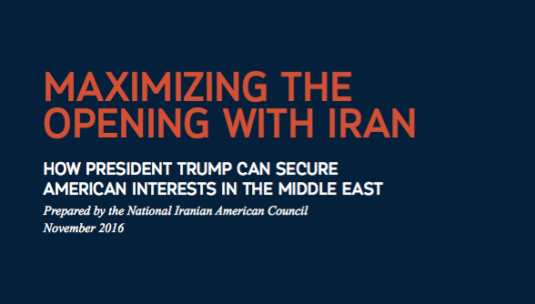
Now the NIAC has issued a 45 page “report” of recommendations to the incoming Trump administration on how to secure American interests in the Middle East.

While mildly entertaining as a work of fiction, the Trump transition team would be wise to consider using this report to wrap up food leftovers since that is all it is good for.

This document is nothing more than a retread of the same tired and now proven false assumptions the NIAC has been peddling now for the past decade. It loses all credibility for one basic omission: It never acknowledges nor criticizes Iran’s role in the escalation of tensions and bloodshed in the Middle East.

That’s like blaming the weather for a mass murderer on the loose.

If one understands that the NIAC is an Iranian regime advocate and not a human rights organization, it is easy to understand the priorities it places on its discussion topics in the document.

It places the nuclear agreement and the U.S. alliance with Saudi Arabia as its two more important topics, which coincidentally are the two most pressing concerns for the Iranian regime.

It then dives into Iraq and Syria, the two principle battlefields Iran is involved with in creating its Shiite sphere of influence. Oddly, the report does not mention Yemen or the rise of Islamic militants in sub-Saharan Africa which are now responsible for instability stretching from Egypt to Nigeria to Yemen.

Lastly, the report devotes a scant three pages to human rights and only from the perspective that Washington can only improve human rights by essentially trusting the Iranian regime to do the right thing if Washington caves in and appeases the mullahs fully.

The one thing the report does say is that the Trump administration “should heed the advice of Iranians themselves.” On this point, NIAC is correct, but not in whom it believes are the right Iranians to listen to.

The Trump administration needs to part ways from failed policies of the Obama administration and muzzle the “echo chamber” of Iranian lobbying it created. It needs to chart its own pathway and listen to the concerns, thoughts and advice of Iranian dissidents and opponents both within Iran and outside.

Let the Iranian people counsel on what are the best approaches to bringing back a secular, democratic government in Iran. That kind of advice is not likely to come from the NIAC, Ploughshares Fund or similar Iranian lobbyists.

It will come from opponents such as the National Council of Resistance of Iran, Amnesty International and outspoken leaders on the human rights situation in Iran such as Rudy Giuliani and Sen. Robert Menendez (D-NJ).

The most amusing part of the NIAC report is the claim that was signed by 76 “national security experts” but a closer review of those names and titles reveals that:

  • 3 are staff members of NIAC
  • 47 are professors, mostly from history, linguistics and anthropology disciplines
  • 1 has a military background
  • Zero are human rights activists

The overwhelming number of these so-called “experts” is in reality advocates and lobbyists for the Iranian regime or commercial interests tied to the Iranian regime such as Bijan Khajehpour, managing partner of Atieh International which works to line up foreign businesses with Iranian-state industries.

Mainstream media outlets would do well to finally stop quoting these sources that are as accurate as pollsters on election night.

Michael Tomlinson

Filed Under: Blog, News Tagged With: #NuclearDeal, Appeasement policy, Featured, Iran, Iran deal, Iran Human rights, Iran Lobby, Iran sanctions, Khamenei, Moderate Mullahs, National Iranian American Council, NIAC, NIAC Action, Ploughshares, Rouhani, Trita Parsi

Near Unanimous Vote to Extend Iran Sanctions Act Shows Weakness of Iran Lobby

November 16, 2016 by admin

Near Unanimous Vote to Extend Iran Sanctions Act Shows Weakness of Iran Lobby

Near Unanimous Vote to Extend Iran Sanctions Act Shows Weakness of Iran Lobby

The decision by the House to renew the Iran Sanctions Act is noteworthy for two things: One is the margin, an overwhelming 419-1 vote that clearly demonstrates on this one issue, both Democrats and Republicans universally agreed on the outcome.

The second is that the age of appeasing the Iranian regime and giving credence to the Iran lobby’s echo chamber on “moderation” has finally died in the wake of an unrelenting year of war, carnage and bloodshed by Iranian regime and its terrorist proxies following approval of the nuclear deal.

It is universally agreed to even among the most ardent supporters of the mullahs in Tehran that Iran could have done more to demonstrate its commitment to being a reliable international partner.

The fact that a lame duck session of the House voted these sanctions through says lots about how members truly feel. While there is no disagreement about wanting to compel Iran mullahs to not build nuclear weapons, the methodology of how to get there is clearly and appropriately back up for debate.

The ISA itself, extended for another decade by this vote, is not even connected to the nuclear deal since it deals with sanctions imposed for Iran’s support for terrorism and development of ballistic missiles; items that Iran lobby supporters such as the National Iranian American Council famously argued should be disconnected from the nuclear deal. They are now paying for that disconnect.

The other sanction, which was passed on a unanimous voice vote no less, imposes sanctions on anyone assisting the Syrian regime in the wholesale slaughter of civilians and contributing to the largest refugee crisis since World War II. Given that Iran is Syria’s biggest sponsor and supporter, the message to Tehran is clear: Get out of Syria and stop supporting the mass murder of men, women and children.

Ultimately the best thing to come out of these moves will be to refocus the debate on human rights and the barbaric practices of the Iranian regime and Syria.

The renewal and extension of the ISA and the sanctions connected to Syria provides the incoming Trump enormous flexibility and tools as it takes up the thorny question of how to roll back Iranian aggressions.

The Iran lobby has been busy trying to make the case that the status quo needs to continue and in fact grant Iranian regime even more concessions with the further lifting of restrictions preventing the regime from tapping into U.S. currency exchanges to finance its activities, but even a blind man can recognize the American voter was in no mood to accommodate Iranian regime during a time when fears over terrorism was ranked as the second-highest concern they had in exit polling right after the state of the economy.

Both Democrats and Republicans realize their political careers might be cut short if they followed through with President Obama’s desire to maintain the status quo. It is clear from the dramatic results from the election that Americans want change and they are willing to decimate the political class to get it.

For the Iran lobby, especially long-time advocates such the NIAC and Ploughshares Fund, their options have narrowed dramatically to have any leverage with the new Congress and the Trump administration, which is why they have shifted their focus to a shotgun approach of trying out any number of message points and see if any of them stick.

One of the stranger rationalizations offered by Trita Parsi of NIAC, is that trying to isolate the Iranian regime may prove difficult for Trump since the Obama administration first made the case that Iran had failed to cooperate and thus was able to assemble an international coalition.

But Parsi must be nuts to think the international community doesn’t recognize that Iran has been at the very center of three of the worst raging wars on the planet today in Syria, Iraq and Yemen.

Parsi even pins his hopes on Iran’s fight with ISIS as a saving grace for Trump that may spare Iran from retaliatory sanctions for sponsoring other terrorist groups such as Hezbollah. By his logic, giving Iran a hall pass for fighting one murderous group of thugs while supporting another murderous group of thugs is somehow a good thing.

In another example of how the Iranian regime axis of Shiite influence is trying to recalibrate to the new reality of a Trump administration, even Syrian strongman Bashar al-Assad said in an interview on Tuesday that Trump was a “natural ally” if he was committed to fighting “terrorists.”

Of course Assad’s definition of “terrorist” might be very different from the American definition given his military’s targeting of civilian neighborhoods and hospitals with airstrikes, barrel bombs and chemical weapons.

What Parsi, Assad and even the mullahs in Tehran do not understand is that Trump is far from the knee-jerk, knuckle dragger they tried to portray him as during the presidential campaign. Far from it, Trump has focused his policies on the idea of restraining Iranian regime influence and resetting the power balance in the Middle East away from Iran and back towards global powers.

His openness towards working with Russia and Vladimir Putin presents a more subtle and unique threat to Iran since Putin might even make the calculation that forging a partnership with the U.S. negates the need for supporting Iran’s interests so long as preservation of a warm water port in the Mediterranean from Russian ships is guaranteed.

For Iranian mullahs, the field is narrowing in terms of their ability to affect outcomes, which is why the Iran lobby has been campaigning hard to influence who will be sitting on key positions of the upcoming administration.

Laura Carnahan

Filed Under: Blog, News Tagged With: #NuclearDeal, Appeasement policy, Featured, Iran, Iran deal, Iran Human rights, Iran sanctions, National Iranian American Council, NIAC, NIAC Action, Ploughshares, Trita Parsi

Iran Lobby Takes Aim at Iranian Regime Critics

November 15, 2016 by admin

Iran Lobby Takes Aim at Iranian Regime Critics

Iran Lobby Takes Aim at Iranian Regime Critics

The election of Donald Trump as the next president of the United States presents a thorny dilemma for the Iranian regime and its core of lobbyists and supporters in the U.S. and Europe; not the least of which the gravy train of concessions and naïve thoughts of Iranian “moderation” are finally coming to an end with the change in administrations.

This explains why the regime’s leadership and members of the Iran lobby are busy issuing press statements and making stern speeches warning the incoming president and the next Congress not to abandon the Iran nuclear deal or re-impose sanctions.

There is an unmistakable air of bluster as well as fear that permeates much of what top leaders such as Hassan Rouhani and key advocates such as Trita Parsi of the National Iranian American Council have had to say about the U.S. election results.

But there is a nuance here that is being largely ignored by much of the media in which while the Iranian leadership is claiming dire consequences should the U.S. back out of the nuclear deal, Trump’s own statements and those of opponents of the nuclear deal provide a better insight as to what the real goals are for the U.S.

Namely, no one has ever said they opposed a nuclear deal that restricted the regime’s ability to build weapons of mass destruction. The intentions of such a deal are laudable and important and deserving of support from the global community.

What is in dispute is whether or not this deal actually accomplishes that goal and the answer is a resounding “NO.”

The world has had the luxury of a year’s worth of hindsight to see how badly constructed the agreement was, which was undermined every step of the way by concessions, exemptions and waivers that were granted for everything from the ability to inspect suspected nuclear sites in Iran to the amount of heavy water produced and kept illegally by the regime.

It is this consistent practice of exempting Iran from the provisions of the deal, as well as agreeing to not tie other aspects of the Iranian regime’s conduct such as support for terrorism and human rights abuses, that have rendered the deal ineffective at best and enabling at worst.

Of course, Trump and long-time critics of the regime including current and former US officials don’t want to start a shooting war, but the Iran lobby is certainly not letting up in its rhetorical histrionics, even going so far as starting to assail Trump campaign supporters for their prior support for Iranian resistance groups such as the People’s Mojahedin Organization of Iran (PMOI), which opposed the mullahs’ rule in Tehran in support of the restoration of a democratic, secular government.

A who’s who of fringe blogs have started regurgitating the same propaganda and lies told by Iranian intelligence services almost word for word in a two-pronged effort to try and discredit any association with Iranian dissident groups from having any kind of input with the organization of a new Trump administration and also start up a new “echo chamber” promoting the continuation of the same policies of accommodation and appeasement to the regime.

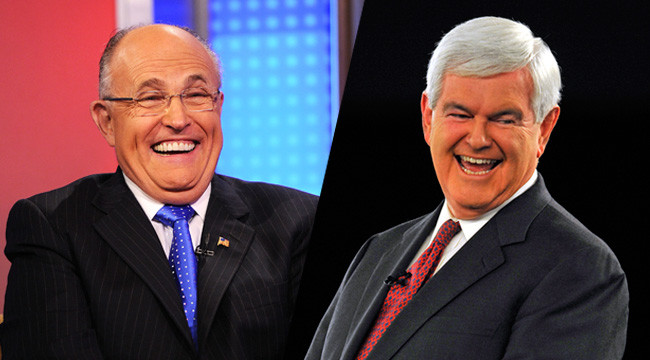
Examples of such renewed efforts include posts attempting to portray Trump loyalists such as former New York mayor Rudy Giuliani and former House Speaker Newt Gingrich as being in the “control” of groups such as PMOI and this past association should preclude their ability to work in a future Trump administration on Iranian issues.

It is no secret that they and other prominent European and U.S. officials have appeared at forums, rallies and demonstrations held by a wide range of human rights groups such as Amnesty International and Iranian dissident groups such as PMOI and the National Council of Resistance of Iran to voice support for democratic reforms in Iran and denounce human rights violations and the regime’s long support of terrorism.

It is also important to note that support for the Iranian resistance movement globally isn’t limited just to those who supported Trump’s candidacy, but includes prominent Democrats such as Sen. Richard Menendez (D-NJ) and Robert Torricelli.

A senior Iran analyst at the Foundation for Defense of Democracies, said that Iran is likely to test the future Trump administration as part of this new effort to shape U.S. foreign policy next year.

“Despite much of the attention being paid to what President-Elect Trump’s Iran policy has to do with the [Iran] nuclear deal, another domain the next administration will have to contend with Iranian belligerence in is in the Persian Gulf and Strait of Hormuz,” the analyst said. “Trump’s statements about having Iran’s IRGC speedboats—which have been overtly harassing the U.S. Navy in international waters—’shot out of the water,’ appears to indicate a desire to respond more aggressively to Iranian provocations.”

An aggressive U.S. response may send a message to Iran, the senior analyst at Foundation for Defense of Democracies said.

The potential for a Trump administration to scrap the nuclear deal as one of its first foreign policy items has the full attention of the Iranian regime.

Department of State Spokesman Mark Toner confirmed to reporters “the agreement is valid only as long as all parties uphold it.”

Since the nuclear deal was signed by Russia, Britain, France, China, the U.S. and Germany, the withdrawal from the agreement by the U.S. would make it null and void. With the American and several other European companies beginning to re-engage economically with Iran, such as Boeing signing a multi-million dollar deal with Iran Air, to provide a brand new fleet of planes, the very real threat of the deal’s collapse looms large.

While Trump has ample reasons to tear up the deal as he has promised to do, he should also recognize the golden opportunity afforded to him to put the mullahs to the test and gauge how badly they want economic improvements given the deep dissatisfaction among the Iranian people.

The sanctions relief provided to Iran as part of the deal needs to be renewed every 120 to 180 days, which means Trump will need to actively enforce the agreement within his first few months in office, wrote Richard Nephew in a paper published by the Columbia Center for Global Energy Policy. It’s possible, said Nephew, who coordinated Iran sanctions policy when he was at the State Department, that Trump would withhold sanctions relief and use the leverage as part of his push to renegotiate the deal.

All of which means Trump is holding all the cards and the mullahs are left essentially powerless as evidenced by their desperate attempts to smear the long-standing Iranian resistance movement and attack its supporters.

Michael Tomlinson


Filed Under: Blog, Current Trend, News Tagged With: #NuclearDeal, Appeasement policy, Featured, Iran, Iran deal, Iran Human rights, Iran Lobby, Iran sanctions, Iran Talks, Iran Terrorism, National Iranian American Council, NIAC, NIAC Action, Nuclear Deal, PMOI/MEK, Trita Parsi

Next President Must Address Iran Regime Comprehensively

November 8, 2016 by admin

Next President Must Address Iran Regime Comprehensively

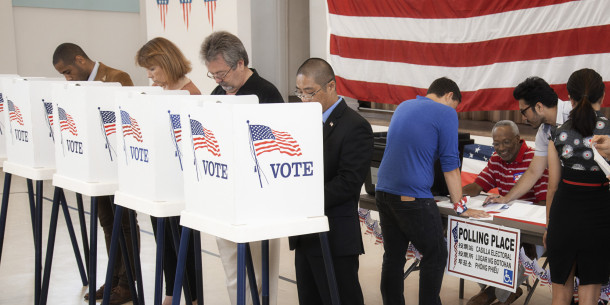
People voting in polling place

One of the great fundamental flaws in the negotiations over the Iran nuclear agreement was the concession to the mullahs in Tehran to unlink non-nuclear activities such as support for terrorism and human rights violations from the deal in an act of appeasement in the vain hope of moderating their behavior.

In the year since the agreement, the Iranian regime’s actions have proven those hopes to be false and the appeasement merely a reward for continued Iranian aggression. While that policy turned out to be a failure, the next president—be it Hillary Clinton or Donald Trump—will need to face the challenge of Iran with a more comprehensive approach.

The challenges facing the new president will be numerous and complicated. The current policies of trying to appease the Iranian regime have only made matters worse not only in the Middle East, but around the world.

It has also fractured what once was a globally united front against the Iranian regime which placed uniform and complete economic sanctions so effective that it threatened the mullahs hold on their regime and drove them finally to the bargaining table for the first time since this regime has been in power.

Unfortunately the nuclear agreement gave them a free hall pass and they have taken it to exploit it. The new president will find on his or her plate an Iran that:

  • Is at the center of the regions three major conflicts by supplying weapons, cash and fighters in Syria, Iraq and Yemen;
  • Those same conflicts have caused the greatest refugee crisis since World War II and radically reshaped the global flow of refugees and migrants and caused internal chaos throughout Europe, Africa and even the Americas;
  • Iranian regime is committed to expanding its extremism and made no attempts to conceal its agenda and willingness to use force to achieve it, including creating a Shia sphere of influence stretching from the Mediterranean to the Indian Ocean;
  • Is actively arresting and imprisoning dual-national citizens from the US and Europe for no reason other than to acquire new bargaining chips to exchange for even more concessions or ransom payments;
  • Forcing changes in alliances and partnerships that have created deep rifts for the US among traditional partners and allies such as Egypt, Israel, Saudi Arabia, Turkey, Jordan and the Gulf states; and
  • Imposed new and brutal crackdowns on human rights on the Iranian people, leaving a negative sentiment about the West, that continues to ignore that in its dealing with the regime.

The new president will also have to rebuild and forge a new consensus on to effective deal with Iranian extremism in the face of a rush by European, Asian and American firms to try and cash in on the perceived riches available in the Iranian marketplace; a perception that may prove just as illusory as the hopes for moderation.

At least one former hostage is working to remind whoever is elected to take a harder line against the Iranian regime. Barry Rosen, a survivor of the 1979 hostage crisis, serves as an advisory board member for United Against Nuclear Iran and penned an editorial for Time magazine.

“In this unusual presidential campaign cycle, we have seen a lack of substantive discussion about Iran and foreign policy from the candidates. This oversight comes at the most critical time in decades, with the nuclear deal well underway despite continued hostile behavior from the Iranian regime. It is imperative that the Presidential candidates and our policymakers in Congress understand that the Iranian regime that held my colleagues and me hostage has not reformed its ways,” Rosen writes.

“It’s likely that the next U.S. President will not be through the first 100 days of the administration before Iran is once again a problem that cannot be ignored. The nuclear deal has done nothing to bring about crucial change in Iran. And there is no more clear an example of this than Iran’s involvement in the Syrian crisis. The American government is foolish to ignore the growing threat that is Iran,” he added.

“The next President must acknowledge the realities of inner turmoil in Iran, and be prepared to take a hard line against Khamenei and his regime as they push the envelope. Regardless of who wins the Iranian elections in March, we already know the regime holds the power and has no intention of working diplomatically with the West. The fanciful notion that the nuclear deal would bring about better relations between our two countries has been dispelled; a new administration will have the chance to cast a spotlight on Iran for the bad global actor it is,” Rosen said.

Rosen’s admonitions for the next president are prescient and valid. He also raises the uncomfortable truth for many of those that originally supported the Iranian nuclear which is that the deal has become almost toxic to publicly support anymore.

Too many Americans recall the videos and photos showing American sailors forced to kneel at gunpoint from Iranian Revolutionary Guard Corps members, while anyone on Google can simply type in “Iran” and “executions” and see the regime’s justice system on gruesome display.

So for a new president the complexities of the Iranian problem will require stern action, as well as a deft hand in reassembling the global consensus that has been damaged over the past year as foreign companies look for dollars instead of relief for the long-suffering Iranian people.

No matter who is elected, we can only hope that dealing with Iran with more than hope and sentiment is on their agenda.

Michael Tomlinson

Filed Under: Blog, News Tagged With: #NuclearDeal, Appeasement policy, Featured, hassan rouhani, Iran, Iran Human rights, Iran Mullahs, Iran sanctions, Rouhani, Sanctions

Why is the Iran Lobby Silent About Ransom Demands?

October 28, 2016 by admin

Why is the Iran Lobby Silent About Ransom Demands?

Why is the Iran Lobby Silent About Ransom Demands?

One of the curious side notes during the increasing concerns over news streaming out of Iran about harsh prison sentences being imposed on Iranian-Americans is that the Iran lobby has been relatively silent on the issue as a whole.

Leading Iranian regime supporter, the National Iranian American Council, felt compelled to issue a statement when Siamak Namazi and his father received 10-year prison sentences. Earlier news reports detailed a personal friendship between Namazi and NIAC founder Trita Parsi which may explain the latter’s willingness to criticize the Iranian regime on this one issue.

But for the rest of the Iran lobby, leading sympathetic journalists and bloggers such as Jim Lobe of Lobelog.com have been virtually silent on the issue of hostage taking of dual nationals by Iran.

Considering the goals and aims of the Iran lobby to preserve a badly flawed nuclear agreement and combat negative stories about the regime, it’s understandable why this practice hasn’t received much defense from them because it really is an indefensible action.

What compounds the problem for the Iran lobby has been the open statements being made by Iranian regime officials speculating on the amount of ransom they can extort from the US and other nations it has arrested, calling it many “billions of dollars.”

The issue of ransom and hostage-taking is deeply troubling and likely to only increase since the Obama administration has made it clear it will do nothing to jeopardize the nuclear agreement which it considers its signature foreign policy agreement.

But while the administration does not consider the shipment of $1.7 billion in pallets of cash to be a “ransom” for the release of five Americans last year, the mullahs in Tehran certainly and eagerly perceive it that way; all of which presents a problem for the arguments made by the Iran lobby of a newly moderate Iran.

If the US does not call this hostage taking and ransom payments, but Iran does, then in whose scenario should we be more worried about? The US government for acting as if these are part of the normal diplomatic process or a regime that views this as a new form of commerce?

For many lawmakers on Capitol Hill, the distinction is not difficult to discern. For many Republicans and Democrats, the practice of hostage taking, sham secret trials, lengthy prison sentences and demands for cash are to be taken seriously and dealt with strongly.
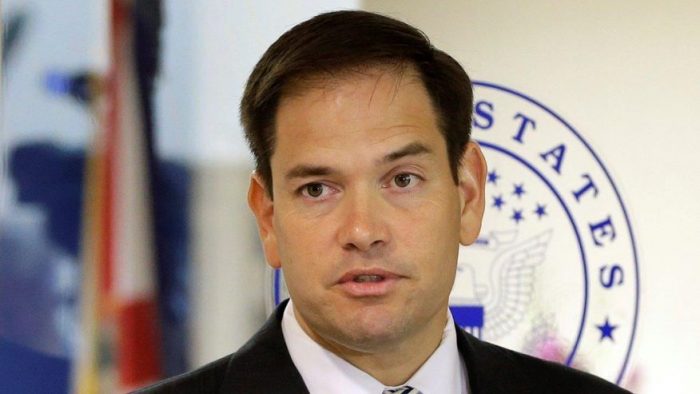
“President Obama’s cash ransom payment to Iran makes Americans more vulnerable and encourages unjustified prison sentences and blatant kidnapping like this,” Florida GOP Sen. Marco Rubio told FoxNews.com on Wednesday.
“Senior Justice Department officials warned the White House that Iran would view the pallets of cash as ransom, but the president didn’t listen, and now Iran is taking more hostages and demanding more money,” he added.
“Once again Iran has made a mockery of its own legal system in convicting wrongfully detained Iranian-Americans,” California GOP Rep. Ed Royce, chairman of House Foreign Affairs Committee, said after reports of the Namazis’ sentencing.
The State Department last week said the Namazis were “unjustly detained” and called for their immediate release.
The department also said U.S. officials are especially concerned by reports of the elder Namazi’s “declining health and well-being.”
Lawmakers also have suggested that Iran has been further empowered by the U.S.-led international pact signed in July 2015 in which Tehran agreed to curb its development of a nuclear weapon in exchange for countries lifting billions in sanctions.
Most distressing were reports from Nizar Zakka, a Lebanese citizen and permanent resident of the United States, who said through his attorney Tuesday that Iranian officials in April told him it would take as much as $2 billion to ensure his release from captivity.

In September, Iranian officials lowered that amount to $4 million, and told him that he was spared the death penalty but would remain in prison for 10 years until the payments are made.
“This is a grave breach of, among [other international laws and treaties], the Geneva Conventions against hostage-taking,” his lawyer, Jason Poblete, said in a statement Tuesday. “Iran is using Nizar, other Americans and dual nationals, as political chattel to exact concessions from the U.S. and other powers.”
“On behalf of Nizar, we request that all be done by the U.S. and other governments to secure his unconditional release from captivity on humanitarian grounds,” he added.
Zakka, an advocate for Internet freedom whose nonprofit group did work for the U.S. government, denies the spying charges. He believes the Iranian government, lured him to Tehran in order to seize and imprison him. He was arrested in Iran after traveling there to attend an International Conference and Exhibition on Women in Sustainable Development at the invitation of an Iranian office who asked him to serve as one of the events speakers.

If this is true, it is even more disturbing since it implies the regime is now actively targeting dual nationals and working to bring them back to Iran for arrest and imprisonment.

In the case, of Reza “Robin” Shahini, the San Diego, California resident just sentenced to 18 years in prison, regime officials indicated he was being sentenced based on posts he made on his Facebook page during the protests against the 2009 elections, which were widely considered fraudulent and condemned by international observers.

If so, that would indicate the regime’s active scouring of social media to pick up tidbits that could be used as justification to arresting any dual national, even though those just coming to Iran to visit relatives.

It is a disservice for the Iran lobby to remain mute on this subject. Every day the NIAC and other supporters stay silent, it only heightens the legitimate criticisms of them being tools and puppets of the mullahs.
Michael Tomlinson

Filed Under: Blog, News Tagged With: Appeasement policy, Featured, Iran deal, Iran Human rights, Iran Lobby, National Iranian American Council, NIAC, Nuclear Deal, Ploughshares, Trita Parsi

Hassan Rouhani Comments on US Election Despite Troubles Ahead

October 24, 2016 by admin

Hassan Rouhani Comments on US Election Despite Troubles Ahead

Hassan Rouhani Comments on US Election Despite Troubles Ahead

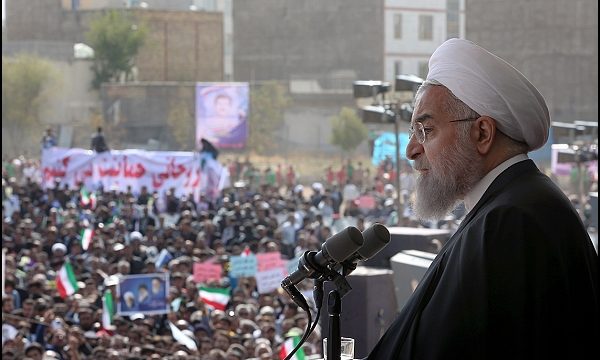
Hassan Rouhani addressed a crowd in the Iranian city of Arak and deplored what he called a “lack of morality” in the US presidential campaign and mocked the recent presidential debates in the his first public comments on a race to elect the next president who will have to decide to confront growing Iranian extremism.

“We have seen the way the (US presidential) candidates speak, accuse and mock (one another); and this is the American democracy and election,” Rouhani said.

Rouhani’s comments followed similar critical remarks made by top mullah Ali Khamenei who also lashed out at both Hillary Clinton and Donald Trump.

“The (ongoing) election campaigns in America and issues raised by the two candidates constitute a clear and evident example of the consequences of lack of spirituality and faith among those in power,” Khamenei said this weekend.

“During the coming weeks, one of these two candidates of America’s (presidential) election, whose remarks and condition you observe, will become the president of a country which has power and wealth and the biggest amount of nuclear weapons as well as the biggest media in the world,” he added in regime-controlled media.

The ramp up in comments by Khamenei and Rouhani indicate a new level of interest and worry by the Iranian regime as the sun sets on the Obama administration which has pursued a policy of appeasing the regime through the nuclear deal, lifting of economic sanctions and payment of ransom to gain the release of American hostages.

For the mullahs in Tehran the upcoming election is worrisome since both candidates have been especially harsh in condemning actions of the Iranian regime such as its long-running support for the Assad regime in Syria and the continued arrests of Iranian-American dual nationals.

The fact that Rouhani and Khamenei are wrestling with a stagnant economy, restless population, skyrocketing youth unemployment and the drain of maintaining three separate proxy wars in Syria, Iraq and Yemen, has threatened their hold over power, which has forced them to pursue an even harsher crackdown on human rights at home to prevent dissent.

The uncertainty of what a new US president will do in regards to Iranian policy has also trickled down to foreign banks and potential investor putting a hold on future investments until next year.

One can almost feel the sweat bead up on Rouhani’s forehead again.

It is ironic though to see Rouhani and Khamenei weigh in on the US election given the handling of their elections.  The Iranian regime historically has rigged its own elections as to make any outcome other than the one desired by the mullahs as moot.

The “stolen” election of 2009 that saw unpopular Mahmoud Ahmadinejad re-elected in a contest widely viewed as fraudulent is just one example. Another was the election of Rouhani himself in which all potential opponents were cleared off the ballot by a committee hand-picked by Khamenei.

The creation of the Iran lobby through organizations such as the National Iranian American Council helped facilitate the false perception that Rouhani was a “moderate.” Fortunately the world has had the benefit of seeing Rouhani in action—especially the year following the nuclear agreement—and has come to the realization that the Iranian regime is not interested in truly becoming a moderate nation.

Rouhani’s comments are even more ridiculous when you consider statements made by Ali Akbar Velayati, a key foreign policy advisor to Khamenei with Iran’s al-Alam television network, in which he claimed the regime opposed interference in the internal affairs of other countries.

“Iran opposes interference by any country, including Turkey or others, in the internal affairs of another country,” he said, adding that the domestic affairs of any country are its own concern.

The regime official rejected claims that Iran is interfering in the affairs of Iraq and said Tehran only provides Baghdad with military consultation at the request of the Arab country’s legitimate government, according to the regime’s PressTV.

The audacity for the regime to peddle such an obvious lie is amazing since the Iranian regime has almost gleefully inserted itself into the internal affairs of its neighbors in Syria and Iraq to a point where Syrians and Iraqis have openly complained of an Iranian takeover of their governments.

The regime’s use of terrorist proxies such as Hezbollah to carry out attacks and bombings in places such as Saudi Arabia, Lebanon, Afghanistan and even Argentina point out how far the mullahs are willing to go to meddle in other countries’ affairs.

Even the use of cyberhackers within the Revolutionary Guard Corps to attack US and European computer systems demonstrates the level of willingness to interfere in virtually all aspects of other nations’ affairs.

It’s now clear that the policy of appeasement of the mullahs to help “moderates” in Iran has failed, and the next president must define a firm policy towards the mullahs in Iran, if it wants to prevent the spread of terror and extremism in the region.

Michael Taylor

Filed Under: Blog, News Tagged With: #NuclearDeal, Appeasement policy, Featured, hassan rouhani, Iran, Iran deal, Iran Human rights, Iran Mullahs, NIAC

Starting With US Navy Versus Iran Missiles

October 13, 2016 by admin

Starting With US Navy Versus Iran Missiles

Starting With US Navy Versus Iran Missiles

You may not have noticed the news, but there is a shooting war going on off the coast of Yemen between the US Navy and Iranian-backed Houthi rebels trying to overthrow the government in Yemen.

According to US military sources, the US Navy destroyer, USS Mason, was targeted in a failed missile attack as it operated north of the Bab al-Mandab Strait. It was the second attack in the last week against US warships.

The Mason fired defensive salvos in response, bringing down one of the missiles fired at it according to the Pentagon.

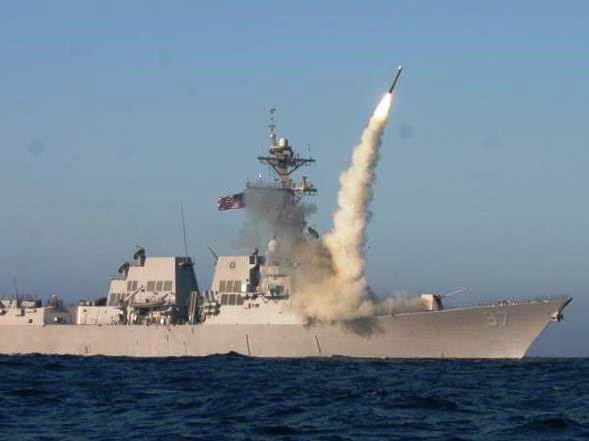
In response, the US Navy reportedly fired Tomahawk cruise missiles Thursday morning from the Red Sea at coastal radar sites in Yemen, destroying targets believed to have targeted the US warships.

The missiles were launched from the destroyer USS Nitze at three locations north of the Bab el-Mandeb strait, said Pentagon press spokesman Peter Cook.

“These limited self-defense strikes were conducted to protect our personnel, our ships, and our freedom of navigation in this important maritime passageway,” Cook said. “The United States will respond to any further threat to our ships and commercial traffic, as appropriate, and will continue to maintain our freedom of navigation in the Red Sea, the Bab al-Mandeb, and elsewhere around the world.”

Michael Knights, an expert on Yemen’s conflict at the Washington Institute for Near East Policy, said the targeting of U.S. warship suggested the Houthis, fighters from a Shi’ite sect that ruled a 1,000-year kingdom in northern Yemen until 1962, could be becoming more militarily aligned with groups like Lebanon’s Shi’ite militant group Hezbollah, according to Reuters.

“Targeting U.S. warships is a sign that the Houthis have decided to join the axis of resistance that currently includes Lebanese Hezbollah, Hamas and Iran,” Knight said.

The Mason was also the target of a failed missile attack off Yemen on Sunday, and the Navy praised the resolve of sailors aboard the ship.

U.S. officials have told Reuters there are growing indications that Houthi rebels, despite those denials, were responsible for Sunday’s incident. The rebels appeared to use small skiffs as spotters to help direct the missile attack on the warship on Sunday.

The United States is also investigating the possibility that a radar station under Houthi control in Yemen might have also “painted” the USS Mason, something that would have helped the Houthi fighters pass along coordinates for a strike, the officials have said.

Reuters has learned that the coastal defense cruise missiles used against the USS Mason on Sunday had considerable range, adding to concerns about the kind of heavy weaponry that the Houthis appear willing to employ and some of which U.S. officials believe is supplied by Iran.

Another missile launched Oct. 1 caused near-catastrophic damage to the HSV-2 Swift, a catamaran-style high-speed vessel that was operated by the Emiratis and once was a part of the U.S. Navy. Video of the strike published online shows the ship engulfed in a fireball.

It’s no secret that the Iranian regime has been supplying the Houthis in their insurgency campaign and warships from Saudi Arabia and other Gulf states have intercepted ships coming from Iran to Yemen loaded with illegal weapons, including rockets, mortars and launchers.

Even the U.S. Navy intercepted an Iranian shipping vessel sending vast shipments of arms to the Houthis in April 2016.

Attacking American ships in Yemen is becoming a disturbingly all too common affair since this Wednesday also marked the 16th anniversary of the terrorist attack against the USS Cole in Aden harbor, which killed 17 American sailors.

The fact that Iranian regime supplies virtually all of the arms to the Houthis, especially sophisticated weapons such as the cruise missiles fired at the US Navy ships, many members of Congress suspect that some of the $1.7 billion cash ransom payment made to the Iranian regime in exchange for the release of American hostages may have paid for the Houthi weapons.

The weekend attack on the U.S. Navy by Iranian-backed Houthi rebels has sparked another official inquiry surrounding the cash payment to Iran, with a group of 17 senators now seeking to obtain an official assessment by the Pentagon of how Iranian regime has allocated this cash to its military operations, according to the Washington Free Beacon.

Lawmakers, led by Sens. Kelly Ayotte (R., N.H.) and Ted Cruz (R., Texas), are petitioning the Pentagon to provide a full analysis of Iran’s military activity since last summer’s nuclear agreement went into effect.

Senior Pentagon leaders have said in recent weeks that the Obama administration kept them in the dark about the cash payment to Iran. The U.S. defense establishment widely believes this money will help Iran foster instability across the Middle East.

The 17 senators sent a letter late Tuesday to Secretary of Defense Ash Carter and Joint Chiefs of Staff Chairman Joseph Dunford. The inquiry centers around evidence that Iran has significantly increased its military activity since the nuclear accord went into effect.

“The plain purpose of transferring the payment in cash to Tehran was to circumvent the effects of U.S. and international financial sanctions,” the lawmakers wrote, according to a copy of the letter obtained by the Free Beacon. “Iran is almost certainly using this windfall to skirt the arms embargo and illicitly purchase weapons for the Islamic Revolutionary Guard Corps (IRGC), the terrorist organization Hezbollah, and/or the murderous Assad regime in Syria.”

The Wall Street Journal editorial board took a hard line at the possibility of Iran supplying and directing the use of these weapons against US forces, which “were attacked by two Chinese-built C-802 cruise missiles fired from territory controlled by Iranian-backed Houthi militia. Iran is a major operator of the C-802; its proxy Hezbollah used it in 2006 to punch a hole in an Israeli corvette off the coast of Lebanon.”

“More significantly, the attack on the Navy ships—with hundreds of American sailors aboard—is another reminder that the nuclear deal has done more to embolden than moderate Tehran’s ambitions, despite a cascade of U.S. concessions.”

“The Journal’s Jay Solomon and Carole Lee reported last month that the Administration secretly agreed in January to lift sanctions on two of Iran’s state banks involved in financing its ballistic-missile program seven years ahead of schedule. More recently, the Administration has granted Boeing and Airbus export licenses to sell passenger jets to Iran, and last week it issued new guidelines to facilitate dollar transactions with Iranian firms.”

“So let’s get this straight: The Administration grants the mullahs unprecedented concessions not called for by the nuclear deal, and they respond by attacking the U.S. Maybe President Obama sees a foreign-policy paradox at work. A better way of describing the dynamic might be cause-and-effect.”

So while the Iran lobby, especially the Ploughshares Fund and National Iranian American Council promised better relations with Iran, the US Navy already finds itself in a shooting war against Iranian proxies and missiles.

Michael Tomlinson

Filed Under: Blog, News Tagged With: #NuclearDeal, Appeasement policy, Ballistic Missiles, Featured, Houthi, Iran, Iran Human rights, Yemen

Iran Lobby Working Feverishly to Save Nuclear Deal

October 11, 2016 by admin

treasury-logo

Since talks began with the Iranian regime on a potential nuclear agreement, the Obama administration has redefined generously its interpretations of “sanctions” on the regime to the point where billions of dollars have flowed to Tehran in ways unthinkable just a year ago.

The justification for the broad easing of sanctions has been the mantra that the alternative would be worse for the world; that failure to do so would empower “hardline” elements in Iran to seize the opportunity to take control and force out “moderates” and abandon the deal and start a nuclear arms race.

The administration’s position echoes the positions pushed by the Iran lobby, including prominent supporters such as the National Iranian American Council, which repeatedly claimed that the deal was helping cement support for perceived moderates such as Hassan Rouhani.

In response, the Obama administration has ignored, overlooked and even enabled a long string of accommodations for the Iranian regime that has emboldened the mullahs in Tehran. While no one disputes the intentions of the president in wanting to make a world free from nuclear weapons, we respectfully judge his efforts to have been a monumental waste of time.

The misguided belief by the US that Rouhani is a moderate that needs to be supported and whose re-election should be a priority is dumbfounding given the year of bloodshed caused by Rouhani’s policies including the massive escalation in the Syrian war, severe domestic crackdowns on human rights and the unprecedented executions of almost 3,000 Iranians, including women and children ranking Iran second in the world in state-sanctioned killing.

The latest act of appeasing the regime comes in the form of new guidance from the Treasury Department that effectively lifts the last remaining sanctions on the regime’s access to US currency exchanges.

The New York Post editorial board issued a blistering response to the action:

“The latest betrayal: The Treasury Department just lifted key restrictions on Iran’s ability to do business in US dollars and access world financial markets — breaking Team Obama’s explicit vows as it lobbied Congress not to nix the deal.

“Iran’s banks weren’t even cut off from the US financial system over the nuclear issue — but over Tehran’s funding of terrorism, its regional aggression and so on.

“Which makes another Treasury move even more squalid: It will now also let foreign firms and branches of US firms do business with Iranian groups like the Revolutionary Guard.

“The Guard is the chief conduit for Tehran’s support of terrorism, tied to numerous plots, including one in DC aimed at a Saudi envoy. And it’s also a prime force helping Syria’s Bashar al-Assad massacre civilians in his bloody bid to keep power.”

The guidance offered by the Treasury Department was designed to provide reassurance to foreign banks which have been skittish about conducting business in US dollar transactions with Iran.

According to Reuters, the guidance comes after months of complaints from Tehran, which says that remaining US sanctions have frightened away trade partners and robbed Iran of the benefits it was promised under the nuclear deal it concluded with world powers last year.

The guidelines, issued by the US Treasury Department’s Office of Foreign Assets Control on Friday, clarify that non-U.S. banks can do dollar trades with Iran, provided those transactions don’t pass through financial institutions in the United States.

What is even more incredible was that Michael Mosier, the associate director at the Office of Sanctions Policy & Implementation of Foreign Assets Control, and Christopher Backemeyer, deputy coordinator of Sanctions Policy, both were featured speakers at the NIAC’s Leadership Conference in an appalling act of conflict of interest.

The timing of their appearance before the leading lobbying arm of the Iranian regime shortly before the release of guidelines that effectively encourages and shows foreign banks how to avoid existing US sanctions put in place to stem the flood of cash flowing to terrorist groups such as Hezbollah is mind boggling.

Ironically, in an effort to minimize the impact of the Treasury Department’s guidance, the NIAC quickly issued a press release in an attempt to explain that this was not an evasion of existing sanctions, as well as encouraged the expansion of even more channels to accommodate the regime.

“The administration should take steps consistent with the U.S.’s stated policy that it will not stand in the way of legitimate business involving Iran.  Such measures include licensing U.S. person employees of foreign companies to engage in transactions involving Iran and licensing U.S. persons in general to facilitate transactions between foreign persons and Iran,” read the NIAC’s statement from Tyler Cullis.

Of course, the NIAC neglected to mention that any dual-national Iranian-American that traveled to Iran on business was likely to be arrested and held for ransom or a future prisoner swap.

The guidelines earned a quick rebuke from Congressional critics who warned of dire consequences in allowing the Iranian regime easier access to US dollars.

“The new guidance overturns the long-running understanding that the U.S. dollar cannot be used to facilitate international trade with any Iranian entities, let alone sanctioned entities. And by allowing foreign subsidiaries of U.S. companies to transact business with Iranian entities, the president is ignoring the clear text of a law passed by Congress,” Sen. Tom Cotton (R., Ark.) said on Sunday.

Sen. Mark Kirk of Illinois, who chairs a Senate banking committee with oversight over Iran sanctions law, said the new guidelines amounted to the White House granting Tehran new concessions.

Meanwhile, Rep. Mike Pompeo (R., Kan.) said Treasury’s changes “green-light business with terrorists. The updated FAQs remove barriers for foreigners to engage with firms the Islamic Revolutionary Guard Corps controls.”

By Michael Tomlinson

Filed Under: Blog, News Tagged With: Appeasement policy, Featured, Iran Human rights, Iran Terrorism, IRGC, National Iranian American Council, NIAC, NIAC Action, Nuclear Deal, Rouhani, Sanctions, Tyler Cullis

Hassan Rouhani Peddling Fantasies in New York

September 25, 2016 by admin

Hassan Rouhani Peddling Fantasies in New York

Hassan Rouhani Peddling Fantasies in New York

The Iranian regime’s front man, Hassan Rouhani, was in New York for his annual propaganda address to the United Nations General Assembly session last week. During his New York stop, Rouhani availed himself of the usual media opportunities to pedal some pretty farfetched fantasies about the state of the Middle East and Iranian regime’s role in it.

One of his media stops was on NBC News in which he spun the story to Chuck Todd that the Syrian conflict must be solved politically.

Politically.

Let’s let that word sink in for a minute. The leader of the Iranian regime, which spent billions of dollars to prop up the brutal Assad regime at the brink of its collapse under protests by the Syrian people, was telling the American people that Syria required a political solution.

This is the same Iranian regime that sent thousands of Hezbollah fighters, led by Iranian Revolutionary Guard Corps commanders to fight alongside Syrian troops targeting rebel forces.

This is the same Iranian regime that gang pressed thousands of Afghan refugees into becoming mercenaries and sent them to fight in Syria.

This is the same Iranian regime that begged Russia to enter the war and save Assad from toppling as Iran’s forces were being exhausted by the years-long conflict. Russia’s entry included targeting and attacking of civilian locations and rebel military units not affiliated with ISIS or other radicalized Islamic militants.

Let’s also not forget that this is the same Iranian regime that supported Assad after he used chemical weapons to mass kill his own people.

The death toll in Syria is over 500,000 according to human rights groups with more than 11 million people displaced and becoming refugees.

“The rule of the ballot box and the rule of the Syrian people and the will of the Syrian people should be the sole determinant of the future of the country,” Rouhani said.

Rouhani also dismissed U.S. Secretary of State John Kerry’s demand Wednesday that Syria and Russia ground all aircraft in the northern part of the country after the bombing of a humanitarian convoy threatened a precarious ceasefire. The Pentagon has blamed Russia for the attack.

It is an absurd contention by Rouhani since Syrian elections are as about as free as the ones engineered in Iran. Assad has never held a truly free and open election subject to international monitoring, much as Rouhani was elected in similar fashion as thousands of moderate candidates were kicked off election ballots in Iran.

Beyond Rouhani’s fanciful ideas of Syrian democracy, his real goal on this tour was to loosen the purse strings and gain access to US currency exchanges for Iran. These sanctions were put in place as part of the punishments for Iran’s dismal human rights record and sponsorship of terrorism and were not part of the nuclear agreement reached last year.

Rouhani and his boss, top mullah Ali Khamenei, have banged the drum loudly warning of dire consequences if the sanctions are not lifted and are pushing to get relief before the US presidential election takes place and the Obama administration, which has followed a policy of appeasing the regime, leaves office.

Even the New York Times, which has been a sympathetic supporter of the nuclear agreement, recognizes the difficulty Rouhani faces and the consequences the regime faces if these sanctions are not lifted.

“Scared off by penalties imposed by the United States Treasury Department, European banks have not provided credit for large-scale projects in Iran. In fact, because of the American regulations, it remains nearly impossible for ordinary businesses to transfer money to and from Iran — a problem that has been enormously frustrating to Mr. Rouhani, who promoted the nuclear agreement by promising a new economic era,” writes Thomas Erdbrink in the Times.

“Mr. Rouhani faces an election in five months, and his hard-line opponents are sharpening their knives. Ayatollah Ali Khamenei, the supreme leader of Iran, has been hinting in speeches that he considers the nuclear deal to be a failure,” he adds.

That threat to walk away from what has proven to be an ineffective agreement anyway has been the pressure point on the Obama administration as it seeks to preserve its landmark foreign policy achievement at all costs; a pressure point that was again pushed by Tehran in getting the administration to approve licenses for the sale of new aircraft to Iran.

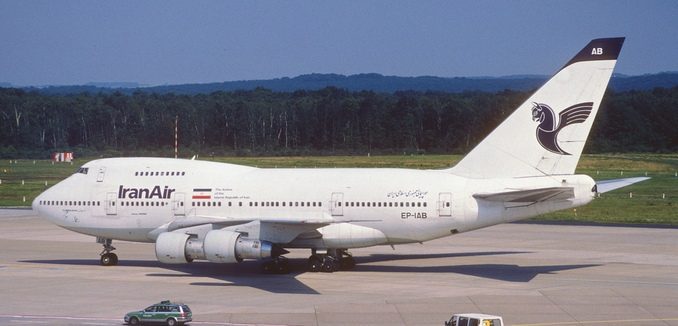
The U.S. government has given plane makers Boeing Co. and Airbus Group SE the all-clear to deliver jetliners to Iran Air. Iran Air announced in January it planned to buy Airbus planes, but the transaction stalled amid a lack of approvals from the U.S. Department of the Treasury’s Office of Foreign Assets Control rules. OFAC had to approve the license because a portion of Airbus planes are made in the U.S.

Iran’s plan to buy western planes has run into opposition in its own country and the U.S. Some U.S. lawmakers are trying to bar the sale of Boeing planes to Iran.

Rep. Peter J. Roskam (R., Ill.), a critic of Iran plane deals, said, “There is a still a long way to go and many more hurdles to overcome before Iran can actually take delivery of these planes—and thankfully Congress is committed to making the process as difficult and expensive as possible.”

The concern over the sale lies in the fact that the Iranian regime has often used its civilian airliners for military purposes in ferrying men, weapons, cash and supplies to it many proxies such as Hezbollah in Syria, Shiite militias in Iraq and Houthi rebels in Yemen.

The Treasury Department has previously sanctioned IranAir in recent years for helping Iran’s Islamic Revolutionary Guard Corps “transport military related equipment.”

With this action and others, we can only hope the US and Europe will not be able to finish caving in to the Iranian regime before it’s too late.

By Michael Tomlinson

Filed Under: Blog, News Tagged With: Appeasement policy, Featured, Iran, Iran deal, Iran Human rights, Iran Lobby, Khamenei, Rouhani, Sanctions

  • « Previous Page
  • 1
  • …
  • 5
  • 6
  • 7
  • 8
  • 9
  • …
  • 13
  • Next Page »

National Iranian-American Council (NIAC)

  • Bogus Memberships
  • Survey
  • Lobbying
  • Iranians for International Cooperation
  • Defamation Lawsuit
  • People’s Mojahedin
  • Trita Parsi Biography
  • Parsi/Namazi Lobbying Plan
  • Parsi Links to Namazi & Iranian Regime
  • Namazi, NIAC Ringleader
  • Collaborating with Iran’s Ambassador

Recent Posts

  • NIAC Trying to Gain Influence On U.S. Congress
  • While Iran Lobby Plays Blame Game Iran Goes Nuclear
  • Iran Lobby Jumps on Detention of Iranian Newscaster
  • Bad News for Iran Swamps Iran Lobby
  • Iran Starts Off Year by Banning Instagram

© Copyright 2026 IranLobby.net · All Rights Reserved.