Iran Lobby

Exposing the Activities of the lobbies and appeasers of the Mullah's Dictatorship ruling Iran

  • Home
  • About
  • Current Trend
  • National Iranian-American Council(NIAC)
    • Bogus Memberships
    • Survey
    • Lobbying
    • Iranians for International Cooperation
    • Defamation Lawsuit
    • People’s Mojahedin
    • Trita Parsi Biography
    • Parsi/Namazi Lobbying Plan
    • Parsi Links to Namazi& Iranian Regime
    • Namazi, NIAC Ringleader
    • Collaborating with Iran’s Ambassador
  • The Appeasers
    • Gary Sick
    • Flynt Leverett & Hillary Mann Leverett
    • Baroness Nicholson
  • Blog
  • Links
  • Media Reports

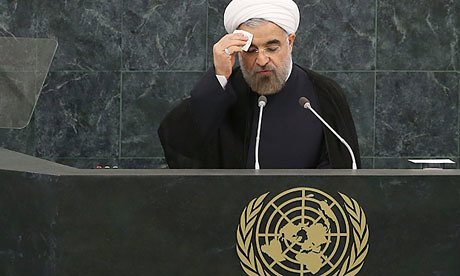
Hassan Rouhani Tries to Fool the World

September 23, 2016 by admin

Hassan Rouhani Tries to Fool the World

Hassan Rouhani Tries to Fool the World

In each prior appearance before the United Nations General Assembly session, the Iranian regime’s Hassan Rouhani has sought to project an image of moderation and openness. His entourage usually consisted of large swarms of advisers, economic aides and other dignitaries.

His schedule usually consisted of media interviews with network anchors and newspapers in which he offered a beguiling smile and chuckle to preserve the image of some kind of avuncular uncle.

But in his fourth and most recent appearance the other day, his schedule was a limited two day layover and consisted of few meetings on the sidelines with only one network interview with MSNBC’s Chuck Todd. Gone was the large retinue, but wasn’t missing was the same sly effort to try and conceal the truth behind Iran’s moves.

The Wall Street Journal noted the distinct change in this visit by Rouhani.

“Iran’s posture and agenda this year at the U.N. stands in contrast to years past, when the president brought large teams of advisers and ministers and capitalized on the trip by holding meetings with scholars, editors, Iranian-American business moguls and ordinary citizens,” wrote the Journal.

“The Iranian-American business community, which was heavily courted by Mr. Rouhani and his team during previous U.N. summits, kept its distance this year. Iran’s arrests of dual nationals, particularly Iranian-American businessman Saimak Namazi and his father, Baqir Namazi, who was formerly a U.N. official, sent chills through businesses considering investing in Iran,” the Journal added.

The circumstances have changed dramatically for Iran and the rest of the world in just one year with the nuclear agreement reached last year. Wars now rage throughout the region in Syria, Iraq, Afghanistan and Yemen and bloody extremist Islamic attacks of all stripes have peppered the world from Australia to Canada and the U.S. to throughout Europe and Africa.

Also, with the nuclear deal in hand, the mullahs in Tehran have focused their efforts on trying to press for more concessions before the window closes and either Hillary Clinton or Donald Trump are elected since both have expressed varying degrees of skepticism of the regime and the nuclear deal.

The hotly disputed ransom payment made by the US of $1.7 billion in cash for American hostages earlier this year emboldened the regime and spurred another round of hostage taking of dual national citizens, which Rouhani noted in an interview, Iran does not recognize.

Iran is currently detaining five British dual nationals, a Canadian-Iranian professor and four Iranian-Americans. In the past, Iran has jailed dual nationals as leverage to swap prisoners.

When asked about the case of the British-Iranian charity worker Nazanin Zaghari-Ratcliffe, who was sentenced to five years in prison in August, Rouhani simply said Iran doesn’t recognize dual nationals and denied using them as pawns. Zaghari-Ratcliffe’s husband has said Iran hasn’t revealed specific charges against his wife.

What hasn’t changed is the drivel that spewed out of Rouhani in his speech in which he heaped one absurd notion on top of another, first blaming sectarian violence in the region solely on Saudi Arabia, its chief regional rival, and assuring the world Iran supported inclusive, democratic governments.

It’s an appalling statement to make for Rouhani considering the Iranian regime is the most brutal nation in the Middle East, unless you count ISIS as a separate entity. His statement that Syria’s unrest could only be resolved by rooting out terrorist groups, neglected to mention that Iran’s military support of the brutal Assad regime has not targeted terror groups such as ISIS, but rather Syrian rebel groups opposed to Assad.

“If the Saudi government is serious about its vision for development and regional security, it must cease and desist from divisive policies, spread of hate ideology and trampling upon the rights of neighbors,” Rouhani said.

His blaming of the Saudi’s is beyond incredulous considering Iran’s mullahs run a 24/7 hate mongering propaganda machines through its state-owned media, cyberattacks and lobbying groups all aimed at pushing its own peculiar brand of extremist ideology.

In his speech, Rouhani criticized the United States for its “lack of compliance” with a landmark nuclear deal reached with six major powers and Iran in 2015 aimed at curbing Tehran’s nuclear program in exchange for lifting sanctions, which is the crux of the issue most concerning Rouhani and his cohorts.

The Iranian economy is stalled and unemployment, wage growth and household incomes have all stayed persistently below the targets Rouhani promised when he gained office. Making matters worse, the perception that Iranians would receive economic benefits from the nuclear deal have failed to materialize making ordinary Iranians restless and angry at their continued plight.

With the financial drains of supporting three proxy wars emptying the regime treasury, the money it has received from unfrozen assets and the hostage payment have principally been used to replenish its depleted military stores.

The irony of Rouhani praising peace while the Revolutionary Guard Corps showed off new long-range ballistic missiles with cluster bomb warheads against the backdrop of mass demonstrations and protests in Iran of people frustrated with deep seated corruption was not lost on most observers.

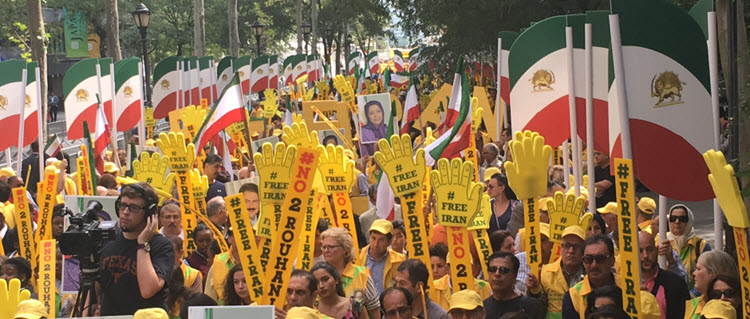
Nor did the thousands of protesters outside of the UN made up of human rights groups and Iranian dissidents let UN delegations forget that Rouhani should not be getting a free ride and ought to be held accountable for the lies he pedaled at the General Assembly.

As the hashtag said, #No2Rouhani on hundreds of signs, the world should say no more to his deceptions.

By Michael Tomlinson
Filed Under: Blog, News Tagged With: #NuclearDeal, Featured, hassan rouhani, Iran, Iran deal, Iran Human rights, Nuclear Deal, Rouhani

While Rouhani Speaks at UN Relatives of Hostages Plead for Their Freedom

September 21, 2016 by admin


While Rouhani Speaks at UN Relatives of Hostages Plead for Their Freedom

While Rouhani Speaks at UN Relatives of Hostages Plead for Their Freedom

Far from the pomp and pageantry of the United Nations General Assembly session opening and its parade of speeches from world leaders, small acts of defiance help shine a light on one leader in particular who will do his best to put a happy face of a skull and crossbones situation.

A mother and daughter have bravely filmed themselves cycling in an Iranian city in defiance of a fatwa that says it is a danger to women’s “chastity”.

The fatwa, which has been announced by Iran’s top mullah Ali Khamenei, prevents women from cycling because it “exposes society to corruption”.

The video shows two women wearing hijabs and face veils cycling on a road in what they say is Kish, an island territory belonging to Iran.

“My mum and I are from Tehran,” the woman holding the camera says.

“Bicycle riding is part of our lives. We heard Khamenei’s fatwa banning women from cycling,” the woman says. “We immediately rented two bicycles to say we’re not giving up cycling.”

“It’s our absolute right and we’re not going to give up,” she adds defiantly according to the Independent newspaper.

As protests go, this one is not likely to go down in history akin to Martin Luther King’s march in Selma or even the mass Arab Spring protests that rocked the Middle East, but in Iran, where almost any act of civil disobedience can lead to imprisonment, torture and even death, riding a bicycle if you’re a woman is a pretty brave act.

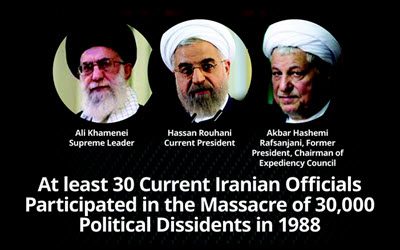
But for 30,000 Iranians in 1988, the penalty for their alleged act of disobedience—by being associated even remotely with the People’s Mojahedin Organization of Iran (PMOI/MEK)—earned execution at the hands of the leaders who now hold leadership positions in Iran.

The mass killings recently re-entered the international spotlight when audio recordings of former top cleric, Hossein-Ali Montazeri came to light last month. The late ayatollah had been the heir-apparent to the founder of the Islamic Republic in the 1980s, but was ousted from his position and from the regime itself as a result of the contents of the recording, in which he condemned the mass killings, calling them a stain on the memory of Iran’s honor.

Tom Ridge, the former secretary for homeland security, noted in an editorial in The Hill that Montazeri’s long-suppressed tirade specifically confirms some of the most shocking details of the proceedings sentencing these people to death, including the execution of teenage girls and pregnant women.

A large demonstration was held today in front of the UN protesting Rouhani’s scheduled appearance and the continued presence of so many regime leaders in power today who participated in those massacres.

As Ridge points out, one of the individuals heard on the 1988 recording is today the justice minister in the Rouhani administration, Mostafa Pourmohammadi, who was the Intelligence Ministry’s representative on the Tehran “death commission,” which held the minutes-long trials to determine which of the local political prisoners would be put to death. On the recording, Pourmohammadi eagerly defends the activities that Montazeri described as the “worst crime of the Islamic Republic.” And today he characterizes the massacre as the enactment of “God’s commandment” regarding the MEK.

Rouhani comes to the UN session though with more baggage as news comes out of Iran of more crackdowns and human rights violations, which clearly demonstrate that under his “moderate” reign, things have gone from bad to worse; a prospect that seemed unimaginable after the brutal terms of the former president Ahmadinejad.

According to Al-Monitor, reports surfaced of the arrest of Sadra Mohaghegh, the society editor of the Reformist Shargh Daily. His sudden detention has caused an outcry among journalists, activists and Iranian netizens, who have turned Mohaghegh’s name into a hashtag — especially after Mohaghegh’s Twitter account was taken down on Tuesday for unknown reasons.

According to Basij News, Mohaghegh was arrested “during an intelligence operation by security forces,” without specifying which agency was responsible for his arrest. Media reports accuse him of having collaborated with “counter-revolutionary” foreign media. The detention comes only days after the arrest of another Iranian journalist, Yashar Soltani, who is in charge of Memari News, a website that focuses on urban news and architecture.

Rouhani’s appearance in New York is also being met with heavy pressure from the family and relatives of Western hostages being held by the regime, including Kamran Foroughi who has flown from London to New York for the past three years to beg Rouhani for the release of his ailing father, Kamal Foroughi, 76, on humanitarian grounds. The British-Iranian dual national has cataracts, spent 18 months in solitary confinement, and is barely halfway through his 5-year sentence on espionage charges.

Foroughi came to New York with Richard Ratcliffe, whose wife, Nazanin, also a British-Iranian dual national, was sentenced last month to five years in prison on espionage charges while visiting her parents. Their 2-year-old daughter, Gabriella, has had her passport confiscated.

The same judge, Abolghassem Salavati, presided over the trials of Zakka, Foroughi and Ratcliffe. He is known for handing down harsh sentences in high-profile political cases. He also sentenced Washington Post reporter Jason Rezaian, who was released along with three other Iranian-Americans in a prisoner swap in January when the nuclear deal was implemented, according to the Washington Post.

Even newly-installed British Prime Minister Theresa May was under pressure to raise the plight of Ratcliffe in her meeting with Rouhani on the sidelines of the UN session.

It is hard to imagine how any objective observer can now claim that Rouhani’s term has been a moderate one. The human rights violations have been so prevalent, so brutal and so constant that it is a wonder why the world’s representatives simply don’t walk out on his speech.

By Laura Carnahan

Filed Under: Blog, News Tagged With: Featured, hassan rouhani, Iran, Iran Human rights, Iran Mullahs, Khamenei

Rouhani UN Appearance Protested as Terror Strikes Again

September 20, 2016 by admin

Rouhani UN Appearance Protested as Terror Strikes Again

Rouhani UN Appearance Protested as Terror Strikes Again

A coalition of Iranian dissident and human rights groups held a protest outside of the United Nations in advance of a speech by the Iranian regime’s president, Hassan Rouhani, who is currently wrapping up a tour of countries that have all been hostile to the U.S.

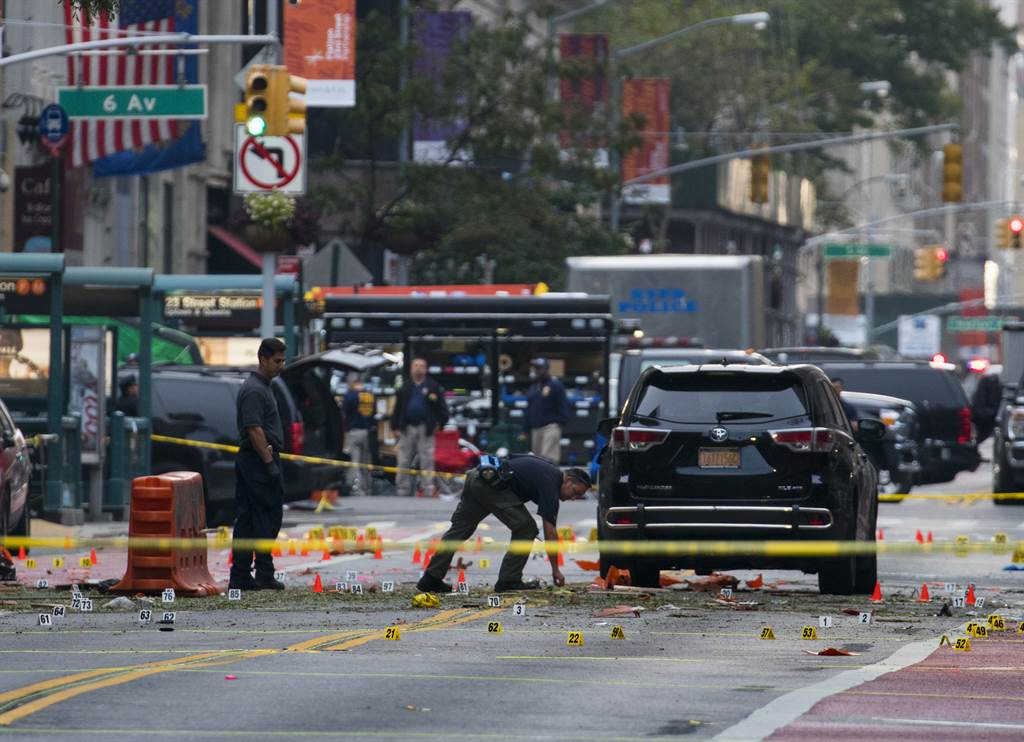
The anticipated speech by Rouhani comes at a precarious time in the tri-state area, which is recovering from bomb attacks in New York and New Jersey allegedly committed by Ahmad Khan Rahami, an Afghan immigrant who was captured after being wounded in a shootout with police.

Coupled with the stabbing attack at a Minnesota shopping mall by a man who was claimed by ISIS as a “soldier of the Islamic State,” these attacks have reminded the U.S. and the world of the ever present danger of radicalized individuals, lured by the seductive siren call of Islamic extremism.

These attacks have left nearly 40 people injured, fortunately none were killed, but in light of the growing list of terror-related attacks stretching from Boston to San Bernardino to Chattanooga to Dallas and to Orlando, it is clear that the U.S. is being subjected to the kind of waves of attacks that have become commonplace in the Middle East and increasingly in Europe.

What is becomingly increasingly clear is that radicalization of these new wave of would-be terrorists is coming rapidly through the easy access of materials online and the propaganda efforts of regimes such as ISIS and Iran to make their radical messages appealing to disaffected young people.

The protest takes a stand against the long running support of terrorism by the Iranian regime and its cruel indifference for human rights both at home and abroad. According to the Organization of Iranian American Communities (OIAC), the demonstrators called for a halt in Tehran’s extensive funding and sponsoring of terrorism in the region and demanded a halt in the executions in Iran, and urge the prosecution of the regime’s leaders.

According to the National Council of Resistance of Iran, the Iranian people have been the main domestic victims of the Iranian regime’s political violence. More than 2,500 have been hanged during Rouhani’s tenure, including dozens of dissidents, women, minors, ethnic and religious minorities.

Also new evidence implicates Rouhani’s cabinet ministers, in the 1988 massacre of 30,000 political prisoners in Iran. The demonstrators held a symbolic enactment of the mass execution of thousands of political prisoners in Iran.

The Hon. Joe Lieberman, former Senator from Connecticut, Pastor Saeed Abedini, recently released from prison in Iran, and Sir Geoffrey Robertson, QC, President of the UN Special Court for Sierra Leone, were among the speakers alongside young Iranian-Americans.

Rouhani has been on a tour of some countries prior to his arrival in New York this week, including a meeting with Raul Castro in Havana. His stopover in Cuba came after a meeting of only a dozen heads of state of the 120-nation Non-Aligned Movement on the Caribbean island of Margarita off Venezuela’s coast. The meeting was a who’s who of some of the world’s most unpopular leaders including Venezuela’s Nicolas Maduro, Zimbabwe’s Robert Mugabe and Rouhani.

Syria’s ambassador to the United Nations, Bashar Ja’afari, used the forum to denounce U.S.-led air strikes he said had killed 83 Syrian soldiers, saying they were aimed at sinking a fragile U.S.-Russia ceasefire plan.

About the only dictators missing were North Korea’s leader and Syria’s Assad himself.

Far from burnishing his foreign policy credentials, Rouhani’s trip only highlights the isolation of the Iranian regime and inability to build any kind of legitimate diplomatic support; especially in light of worsening human rights moves by the regime and increased confrontations in the Persian Gulf.

Sadra Mohaqeq, a journalist with Iran’s reformist Sharq daily, was arrested in Tehran this week with no explanation by regime officials. Mohaqeq was also arrested in 2013 in a crackdown on media.

The semi-official Mehr news agency reported that Mohaqeq was arrested by a “security body.”

In April, four journalists arrested in November 2015 were sentenced to between five and 10 years in prison for “colluding” with foreign governments and acting against “national security”.

Media watchdogs say journalists in Iran have to work in a climate of fear and censorship.

In another example of how the regime cares little about world opinion, it also announced the sentencing of Nizar Zakka, a Lebanese citizen and U.S. permanent resident, to 10 years in prison as part of a wide crackdown on those with any foreign ties. Zakka advocates for Internet freedom and whose nonprofit group did work for the U.S. government.

“There’s no regard for any international order, any international agreement or any international state of relations that they care about,” said David Ramadan, a former Virginia state legislator who co-founded a group called Friends of Nizar Zakka.

A statement early Tuesday from Jason Poblete, a U.S. lawyer representing Zakka, said a Revolutionary Court in Tehran handed down the sentence in a 60-page verdict that Zakka’s supporters have yet to see. Amnesty International has said Zakka had only two court hearings before the ruling and received only limited legal assistance before the court, a closed-door tribunal which handles cases involving alleged attempts to overthrow the government.

Other known to have been detained in Iran since the nuclear deal include:

— Homa Hoodfar , an Iranian-Canadian woman who is a retired professor at Montreal’s Concordia University;

— Siamak Namazi , an Iranian-American businessman who has advocated for closer ties between the two countries and whose father is also held in Tehran;

— Baquer Namazi, a former Iranian and U.N. official in his 80s who is the father of Siamak;

— Robin Shahini , an Iranian-American detained while visiting family who previously had made online comments criticizing Iran’s human rights record; and

— Nazanin Zaghari-Ratcliffe , a British-Iranian woman sentenced to five years in prison on allegations of planning the “soft toppling” of Iran’s government while traveling with her young daughter.

Obviously it is not a priority of Rouhani’s to release any of these people, but only to hob nob with dictators. The world should listen to his speech at the UN with a critical ear.

By Michael Tomlinson

Filed Under: Blog, News Tagged With: Featured, Iran, Iran deal, Iran Human rights, Iran Mullahs, Iran Terrorism, Khamenei, Rouhani

Iran Regime Threatens to Shoot Down American Planes as Tensions RiseIran Regime Threatens to Shoot Down American Planes as Tensions Rise

September 18, 2016 by admin

Iran Regime Threatens to Shoot Down American Planes as Tensions Rise

US Claims Iran Threatened to Shoot down US Military Planes near Iranian Airspace

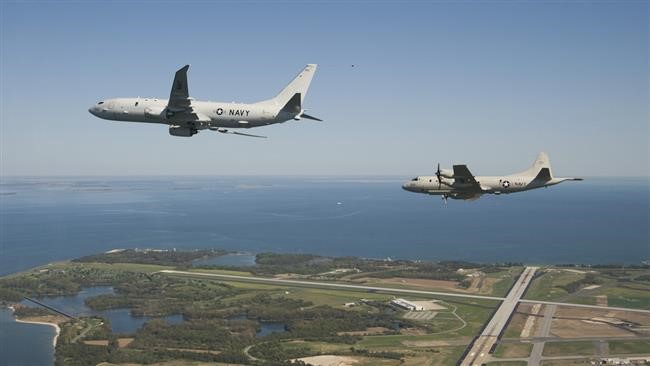
In a sign of the growing escalation in confrontations being manufactured by the Iranian regime, two U.S. Navy surveillance aircraft flying in international airspace near Iran were challenged and threatened by regime air defense stations over the weekend and told to change course or be shot down.

U.S. officials disclosed the aircraft were flying over the Strait of Hormuz on routine patrols, which the Iranian regime has used as a platform to intimidate commercial and naval ships with frequent run-ins with regime patrol and attack boats, often running courses directly at ships, ignoring warnings as severe as gunfire across their bows.

Using ground-to-air communications, officials at the Iranian air defense station told the crews they were flying near Iranian airspace and that if they didn’t change their course quickly they risked being fired upon, according to a spokesman for U.S. Naval Forces Central Command in Bahrain, Cmdr. Bill Urban.

“We will fire Iranian missile,” was one of the transmissions from the ground, he said. Both the American planes were threatened in three separate radio calls, Cmdr. Urban said in a statement.

U.S. State Department officials decried the incident, saying it showed Iran had yet to show signs of shifting from its aggressive stance in the region even after the international nuclear agreement reached last year.

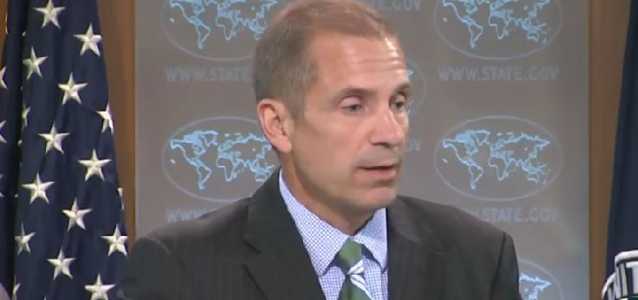
“Frankly, there’ve been previous incidents much like this, and they’re concerning, obviously. They escalate tensions,” said Mark Toner, a State Department spokesman. ”We have conveyed our concerns to Iran.”

The Navy P-8 Poseidon with a crew of nine and an EP-3 Eries with a crew of roughly 24, were flying a reconnaissance mission 13 miles off the coast of Iran, through the Persian Gulf, Strait of Hormuz and Gulf of Oman, according to officials who call the boundary Iran’s “black line.”

Iran’s territorial waters—like all nations–extend 12 miles into the sea, according to international maritime law, neither aircraft breached the boundary line.

The US military planes ignored the warning and continued flying in international airspace, although close to Iranian territory, the officials told Fox News.

“We wanted to test the Iranian reaction,” one US official told Fox News when asked why the US jets were flying close to Iran.

“It’s one thing to tell someone to get off your lawn, but we weren’t on their lawn,” the official continued.  “Anytime you threaten to shoot someone down, it’s not considered professional.”

“This been a continuing issue with respect to Iranian intercepts,” said Lt. Gen. Jeffrey Harrigian, who is the top U.S. commander of the coalition air war against the Islamic State in Iraq and Syria.

The increasing frequency of incidents raises the question of why the regime is acting in such a provocative manner. Many within the Iran lobby have argued these acts are being committed by a small segment of hardliners within the Revolutionary Guard Corps who object to the opening up of Iran to the West as signaled by the nuclear agreement reached 14 months ago.

The line of reasoning attempts to mask the growing militant nature of the regime and the almost earnest efforts by regime officials to spark a conflict. One could almost surmise the mullahs actually are trying to provoke a response from the U.S. military in order to claim the moral high ground against the Great Satan, but why? For what purpose?

Most analysts agree that the supposed benefits of the nuclear agreement with the lifting of economic sanctions have not benefitted ordinary Iranians at all. Their economic condition remains bleak and as a result, there has been significant restlessness amongst the population, with large demonstrations over stagnant wages and rampant corruption taking place.

The regime, especially top mullah Ali Khamenei, have been vocal and outspoken in blaming the U.S. for the struggling economy and the perceived lack of benefits flowing from the nuclear deal, but what the mullahs don’t want to talk about is how they have decided to use most of the financial windfall the regime received, including the “ransom” payments of $1.7 billion for American hostages, to continue funding proxy wars in Syria, Iraq and Yemen and not spend it to improve the lives of Iranians.

Also, while the U.S. did lift its nuclear related sanctions last January, other sanctions, including financial ones, related to Iran’s ballistic missile program, allegations of state sponsoring of terror groups and human rights abuse claims remain.

Major international banks are unwilling to risk losing access to the dollar market or huge fines out of fear of inadvertently falling afoul of what they say are ambiguous U.S. regulations.

It is an ironic turn of events since the regime was adamant during negotiations that issues not related to nuclear programs be de-linked. Now the mullahs are paying the price for that decision.

This may explain why the regime is acting so aggressively in order to divert attention from the economic turmoil and political unrest and create a false crisis internationally. It is an old tactic and one the mullahs are dusting off in the hopes of overcoming the domestic discontent they are facing in spite of a massive crackdown at home on journalists, students and dissidents.

Ultimately it should not come as any surprise to see the regime increase these confrontations and try to provoke a response. Otherwise, their own necks might be on the line.

By Michael Tomlinson

Filed Under: Blog, News Tagged With: #NuclearDeal, Featured, Iran, Iran Human rights, Iran Mullahs, Iran sanctions, Iran Talks, Irandeal

State Dept. Concedes Nuclear Deal May Have Fed Iran Regime Aggression

September 15, 2016 by admin

State Dept. Concedes Nuclear Deal May Have Fed Iran Regime Aggression

State Dept. Concedes Nuclear Deal May Have Fed Iran Regime Aggression

Ever since the U.S. and other nations entered into negotiations with the Iranian regime over a nuclear deal and completed it more than a year ago, critics including the Iranian resistance movement have been warning that a deal that did not also address the regime’s poor human rights record, oppressive government and support of terrorism would inevitably prove fruitless and only empower and embolden the mullahs in Tehran.

The Iran lobby also argued strongly that the nuclear deal would help “moderate” the regime and open the door for more liberal elements of the government to make gains. Notable regime supporters such as Trita Parsi of the National Iranian American Council and Ali Gharib pushed the idea that Iran could help stabilize the volatile Middle East once a deal had been passed.

Even sympathetic editorial pages and commentators were actively encouraged by the administration to support the deal on the basis that it would bring economic benefits to the Iranian people long beleaguered by crippling sanctions and gross corruption and mismanagement by regime officials.

Over the past year, reality has set in and the world has discovered that virtually none of those promises and assurances ever came true and in fact the litany of woe heaped on the world by the rising tide of radicalized extremism flowing from Iran since the nuclear deal has all but reshaped the landscape of the U.S., Europe, the Middle East, Africa and even touched Latin America.

The luxury of 20/20 hindsight has allowed the world to see the results of the nuclear deal and it is hard for even the most ardent member of the Iran lobby to put a positive spin that is remotely believable.

Things are so blatantly obvious that even the State Department has finally conceded that the nuclear deal may have in fact emboldened the Iranian regime to commit even more aggressive and militant acts; not diminish it.

Under questioning from Fox News reporter James Rosen, State Department spokesman Mark Toner could not rule out that the deal “has served as a cause for this more aggressive posture” by the regime.

Rosen noted, Iran had recently threatened to shoot down two US Navy surveillance planes in international airspace. This was just the latest in a growing list of provocations, including taking 10 US sailors hostage and abusing them in violation of international law.

The New York Post editorial board was flabbergasted by the admission since if the Obama administration had even an inkling of this aberrant behavior on the part of the mullahs, it made no sense to continue a policy of appeasing them, including bending over backwards to ship the regime $1.7 billion in hard cash in exchange for American hostages.

The Post said that of course, after citing incidents that “needlessly escalate tensions” Toner then said it all makes the deal even “more important, because the last thing anyone would want to see in the region is a nuclear-armed Iran.”

“Especially, we’d add, an Iran grown even more aggressive and hostile precisely because of that very deal.

“The logic here is just mind-boggling.

“Yes, Iran has been emboldened by a deal that gives it billions in cash now and an easy road to going nuclear in a few years — thanks to a president who won’t dare challenge Tehran’s behavior and risk undoing his dubious diplomatic legacy.

“Nice to see someone finally admitting as much,” the Post added.

The Iranian regime isn’t taking the potential for blowback lightly. Iran’s semi-official ISNA news agency reports that the country’s foreign minister and his international counterparts will meet this month to discuss “some differences” over the implementation of the landmark nuclear deal.

The Wednesday report says they will focus on banking sanctions, which Iran complains have not been fully lifted. The meeting will take place Sep. 22, on the sidelines of the United Nations General Assembly, where the regime’s Hassan Rouhani is scheduled to speak in what we can only assume will be a verbal tongue lashing blaming the U.S. for a wide range of problems resulting from a now failed nuclear deal.

It has been clear from statements made by regime officials such as Ali Khamenei and members of the Iran lobby that the regime has shifted focus now to condemning the U.S. for the inability of the regime to participate in U.S. currency exchanges because of sanctions put in place for its support of terrorism and not related to the original nuclear deal.

The Iranian regime also recognizes that since the deal was passed, its conflict with Saudi Arabia, especially in Syria and Yemen, is stalling its plans for regional hegemony under a radicalized Shiite banner. The influence of Saudi Arabia in standing up to Iran including its active fighting in Yemen and interception of Iranian boast trying to smuggle illicit weapons through the Persian Gulf to Houthi rebels in Yemen has been effective and annoying to the mullahs in Tehran.

This helps explain why the Iranian regime has turned its attention and that of the Iran lobby into a full-blown smear campaign aimed at Saudi Arabia, and by association the U.S.

This can be seen in an editorial appearing in the New York Times penned by Mohammad Javad Zarif, the regime’s foreign minister, blaming Wahhabism and Saudi Arabia in particular for literally every terrorist act being committed around the world and chastised the Kingdom’s large lobbying efforts.

It is a preposterous piece since it blames Saudi Arabia for exactly what the Iranian regime is doing itself with its own substantial investment in PR firms, lobbyists, paid analysts, bloggers and commentators, as well as spreading cash to a large number of so-called grassroots organizations such as the Ploughshares Fund which strongly advocated for the nuclear deal.

Danielle Pletka, senior vice president for foreign and defense policy studies at the American Enterprise Institute, took Zarif to task and ticked off the Iranian regime’s own bloody history of support for terrorism around the world in a piece appearing on AEI’s site.

“It was the Islamic Republic that created Hezbollah and sponsored the groups that kidnapped and murdered Americans through Lebanon’s long civil war,” Pletka writes. “It is Iran that props up the murderous Assad regime — you know, the guys that have repeatedly gassed their own people. It is Iran that has assassinated its enemies the world over, and it is Iran’s own Islamic Revolutionary Guard Corps (and its expeditionary Quds Force) that was responsible, during the Iraq war, for hundreds of US servicemen dying.”

The first step in recovery for any addict is to admit they have a problem. We can only hope this admission by the State Department will be the first step in confronting the Iranian regime forcefully, honestly and openly again.

By Michael Tomlinson

Filed Under: Blog, News Tagged With: #NuclearDeal, Appeasement policy, Featured, Iran, Iran deal, Iran Human rights, Iran Lobby, Iran Mullahs, National Iranian American Council, Ploughshares, Sanctions, Trita Parsi, Yemen

Relocation of Iranian Dissidents a Triumph Against Regime Efforts

September 14, 2016 by admin

Relocation of Iranian Dissidents a Triumph Against Regime Efforts

Relocation of Iranian Dissidents a Triumph Against Regime Efforts

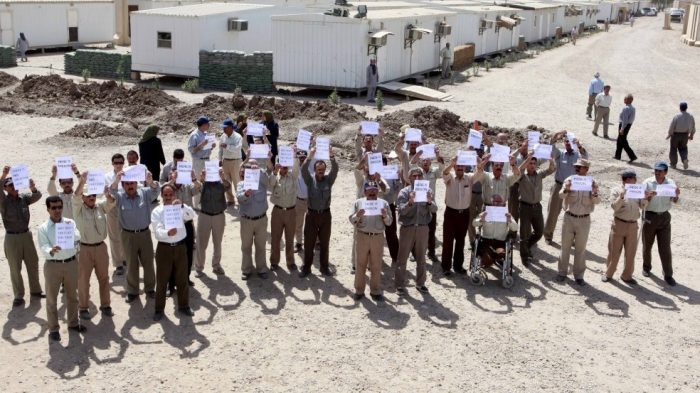
A camp in Iraq has been home to a large group of Iranian dissidents and a constant thorn in the side of the mullahs in Tehran. Since 1986, the People’s Mujahedin Organization of Iran (PMOI/MEK), one of the largest and oldest Iranian resistance groups opposed to religious rule of the Iranian regime, has resided in Iraq, its numbers swelled by Iranians fleeing the mullahs’ rule over the years.

Camp Ashraf was a monument to the tenacity and endurance of the Iranian resistance movement which took over a barren piece of land without facilities, infrastructure or even a source of water and turned it into a modern city complete with schools, medical and manufacturing facilities and even sports fields.

It was partly used as a U.S. military base during the Iraq invasion and eventually turned over to the Iraqi government in 2009 with the PMOI population rising to as much as 3,400 residents by 2012.

In the aftermath of the U.S. drawdown of forces in Iraq, the Iranian regime increased its influence within the Iraqi government of Nouri al-Maliki, eventually forcing the expulsion of Sunnis from the coalition government and rearming the Shiite militias, part of the terrorist Quds force a branch of IRGC.

The Iranian regime influence manifested itself with an increasing number of deadly attacks on the residents of Camp Ashraf by Iraqi security forces at the behest of Iranian officials. Over the past 10 years, Camp Ashraf has been attacked several times, the worst being on April 8, 2011 when Iraqi security forces stormed the camp and killed as many as 36 and wounding 320 residents, and on September 1, 2013, leaving a death toll of 52 victims.

The attacks had been widely condemned by human rights groups such as Amnesty International and the United Nations.

For the PMOI members living there, surviving against this constant harassment was a symbol of the resistance to the mullahs’ efforts and a constant reminder to Tehran that Iranians stood against their tyrannical rule.

As part of a U.S.-brokered agreement, relocation of the PMOI members to safe third-countries willing to take them became the compromise that ultimately helped save these lives and place them out of the reach of the Iranian regime.

For the Iranian regime, the continued existence of PMOI/MEK was anathema to it because it represented a viable alternative to the rule of the mullahs and offered a narrative of a free, open, democratic and pluralistic government alternative to what the Iranian people experienced, which is why the regime placed such an emphasis on attacking Camp Ashraf, as well as banning membership in the group in Iran; making it punishable by imprisonment or death.

Almost 2,000 dissident Iranians resettled in nearly a dozen European countries, including the UK, since the start of 2016.

Shahin Gobadi, spokesperson for PMOI/MEK, said the successful relocation of the group represented a “major blow to the clerical regime and a major victory for the Iranian Resistance”.

He added: “One has to keep in mind that this happened despite all the conniving and conspiracy and obstructions by the clerical regime which sought to force the residents to either give up resistance and succumb or to be massacred.”

A milestone was reached when the last PMOI/MEK members were safely relocated out of Camp Ashraf to Albania this week. Maryam Rajavi, the president-elect of the Iranian Resistance, heralded this as a major setback for the totalitarian regime.

“In these 14 years, thanks to the endurance of the PMOI and its members in Ashraf and Camp Liberty, and relentless political and international campaigns, the clerical regime’s schemes to destroy and annihilate the Iranian Resistance were thwarted. The Iranian people’s movement for freedom thus took a substantial step forward against the clerical regime. The regime’s plan to guarantee its own survival with the physical elimination of the PMOI/MEK was foiled,” she said.

The significance of the move should not be lost as the regime and its allies in the Iran lobby have tried over the past decade to demonize and denigrate the Iranian resistance movement, but failed in their efforts.

The resistance movement embodied in PMOI/MEK and the umbrella National Council of Resistance of Iran, has been responsible for many of the most devastating disclosures about the illicit activities of the mullahs in Tehran, including the first revelations of Iran’s secret nuclear program, as well as the ongoing deterioration of human rights in Iran.

It is for those reasons and more that the Iranian regime has tried hard to eradicate the movement and its members, but after nearly five years, the last members of the Iranian resistance are finally in safety and security.

By Michael Tomlinson

Filed Under: Blog, News Tagged With: Camp Liberty, Featured, Iran, Iran Human rights, mek, NCRI, pmoi

Hassan Rouhani Begins Charm Tour Leading to UN Speech

September 13, 2016 by admin

Hassan Rouhani Begins Charm Tour Leading to UN Speech

Hassan Rouhani Begins Charm Tour Leading to UN Speech

The United Nations General Assembly Session over the years has been the scene of many speeches both famous and infamous. Some of the more memorable addresses by some infamous people include Venezuelan strong man Hugo Chavez in 2006, Libyan dictator Moammar Gadhafi in 2009 and Iranian regime leader Mahmoud Ahmadinejad in 2010.

It has been used as a platform to bully the world. It has been used to make extravagant accusations. It has been used to charm and lull the world into believing false narratives.

It has also been used to raise human rights issues. It has been used to advocate for peace, democracy and tolerance. It has been used to raise the hope for a world seeking to make a better place for the future.

The General Assembly exists to serve the aims of whoever chooses to speak and the annual general session is a free for all so world leaders can make their rhetorical claims on whatever topic they choose.

Into this platform has stepped Hassan Rouhani, the handpicked president of the Iranian regime who has used previous sessions to make lofty promises of openness, moderation and dedication to finding diplomatic solutions to intractable problems.

Unfortunately, the reality of the Iranian regime’s actions has never lived up to his rhetoric.

As recently as Rouhani’s address to the UN last year, he suggested that the nuclear agreement reached with Iran and world powers would help create the basis for broader engagement, in a speech that was noted for its departure from the strident tone of his boss, top mullah Ali Khamenei.

Last year Rouhani spent considerable time extolling the diplomatic success of the agreement, claiming it would lift years of painful economic sanctions on Iran in exchange for verifiable guarantees that its nuclear activities remain peaceful.

In the year since he gave that optimistic speech, relations between the Iranian regime and the rest of the world has plummeted to new lows. Among the regime low-lights since he gave his speech:

  • Iranian regime has stepped up arrests of dual-national citizens following the linking of releasing American hostages in exchange for $1.7 billion from the U.S.;
  • Iranian regime has expanded proxy wars in Syria, Iraq and Yemen through its continued support of terror groups such as Hezbollah and its recruitment of Afghan mercenaries and arming of Shiite militias and Houthi rebels;
  • The regime has continued development and test firing of ballistic missiles in defiance of UN restrictions, alongside being granted exemptions from the nuclear deal allowing it to maintain large stockpiles of heavy water and operating “hot cells” for the handling of nuclear materials;
  • Iranian regime has instituted large crackdowns against dissidents, students, journalists, ethnic and religious minorities, including knocking off the majority dissident and moderate candidates from parliamentary election ballots; and
  • Iranian regime stepped up open confrontations in the Persian Gulf with U.S. Navy warships, necessitating evasive maneuvers and even warning shots to be fired, even as the regime engages in a massive military build-up with purchases from Russia.

It has hardly been a year of peace and moderation as Rouhani claimed and the Iran lobby has argued for since the nuclear deal was reached.

A closer look at Rouhani’s travel itinerary shows his focus on a tour of designed to expand the regime’s sphere of influence into Latin America as he visits Venezuela this week.

At the UN General Assembly though, Rouhani’s task will be more difficult—not only because more people are likely disbelieve his assertions given the regime’s track record—but also that Khamenei may be finding Rouhani’s utility waning and the need for this particular puppet lessening.

Many analysts and Iranian dissidents have predicted that Rouhani’s selection in a purportedly rigged presidential election was designed to allow the regime to present a more genial and media-savvy face to open a rapprochement with the U.S. in order to secure a favorable deal alleviating the regime of crippling economic sanctions.

Now that the regime has been appeased through the nuclear agreement, the need for friendly regime face may be fading as Khamenei has indulged his desire for more aggressive confrontations with the U.S. and its allies.

Dr. Majid Rafizadeh, president of the International American Council, says a sign of that shift may come if Rouhani’s speech criticizes the U.S., highlighting Washington’s failure to let Tehran rejoin the financial global system.

Iran’s UN speech will most likely repeat Khamenei’s message, in a more diplomatic way, that the US has been “breaking oaths, not acting on their commitments and creating obstacles,” he said.

Rouhani’s speech is also unlikely to make any mention of the current hostages being held by the regime, including Nazanin Zaghari-Ratcliffe, a British-Iranian dual citizen, who was detained in April at Tehran’s Imam Khomeini Airport.

An Iranian court just handed down a harsh five year prison sentence on her, even though the exact charges have not been disclosed by the regime. Zaghari-Ratcliffe works at the Thomson Reuters Foundation, the charitable arm of the company that owns the Reuters news agency and her plight, along with other hostages such as Canadian professor Homa Hoodfar, have revived concern about the regime’s plans for more cash for hostage swaps.

As the Wall Street Journal editorialized in an opinion piece:

“One purpose of the harsh sentence is to remind Iranians in the diaspora tempted to return home in the wake of the nuclear deal that the regime sees them as traitors. It’s also no accident that the sentence came shortly after the U.K. upgraded its diplomatic relations back to ambassador level.

“Foreign Secretary Boris Johnson cheered the new opening to Tehran last Monday, only to receive a rude awakening days later. Now the regime has a new political and financial bargaining chip, and Mr. Obama has created a cash-for-hostages incentive system with his earlier ransom. Let’s hope the British government is wiser than to stuff briefcases with unmarked bills.”

The UN should plan on asking Rouhani the tough questions it didn’t ask him the last three times he spoke at the General Assembly.

By Michael Tomlinson

Filed Under: Blog, News Tagged With: Featured, General Assembly, hassan rouhani, Iran, Iran deal, Iran Human rights, Iran sanctions, UNGA

Important to Remember Iran Role in 9/11 Attacks

September 8, 2016 by admin

Important to Remember Iran Role in 9/11 AttacksImportant to Remember Iran Role in 9/11 Attacks

Important to Remember Iran Role in 9/11 Attacks

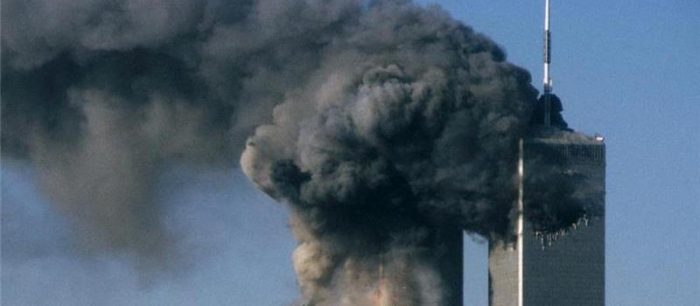
This Sunday marks the 15th anniversary of the 9/11 attacks which killed 3,000 people and changed the course of U.S. involvement in the Middle East. After a decade and half, much has changed in the world in regards to the global fight against terrorism and much of it not in a good way.

At the center of the shifting sands of terrorism lies the Iranian regime. Its enabling role in much of the terror, death and destruction that has raged across the region over the last 15 years has been documented, but not fully appreciated by the world until lately.

One of those shedding a light on the regime’s role in terror, especially in the 9/11 attacks, is former Sen. Joseph Lieberman, chair of United Against Nuclear Iran, who wrote an editorial in the Wall Street Journal examining Iran’s role.

“A key al Qaeda partner, Iran, has never been held responsible for its enabling role—even though the 9/11 Commission found that ‘there is strong evidence that Iran facilitated the transit of al Qaeda members into and out of Afghanistan before 9/11, and that some of these were future 9/11 hijackers,’” Lieberman writes.

Lieberman notes correctly that although the U.S. State Department says Iran is the world’s leading state sponsor of terrorism, the regime is willing to work with extremists of the Sunni sect in the Arab world and elsewhere—even though it views itself as the vanguard of the world’s Shiite community. Iran is aiding both Sunni and Shiite terror organizations—including Sunni Hamas and Sunni Islamic Jihad, and Shiite Hezbollah and Shiite Iraqi militias.

For the mullahs in Tehran, terrorism is an equal opportunity vocation that knows no religious boundaries.

He details the long road Osama bin Laden took in developing a relationship with Iran that started Sudan in the 1990s with a meeting with Sheikh Nomani, an emissary of Iran who “had access to the highest echelons of power in Tehran.”

The Washington Institute’s Matthew Levitt and Michael Jacobson concluded, “Iran and al-Qaeda reached an informal agreement to cooperate, with Iran providing critical explosives, intelligence, and security training to bin Laden’s organization.” Because Islamic Revolutionary Guard Corps (IRGC) already supported Hezbollah operationally and financially, a vehicle was in place through which they could support and influence al Qaeda.

“After 9/11, Iran became a more important haven for al Qaeda fighters who fled from Afghanistan as the Taliban collapsed,” Lieberman said. “Iran regularly granted the terrorists freedom to move within Iran and to cross into Iraq and Afghanistan to carry out attacks. From their safe base in Iran, al Qaeda members planned terrorist operations, including the 2003 attack in Riyadh, Saudi Arabia that killed 26 people, including eight Americans, and the 2008 attack on the American Embassy in Yemen that claimed 16 lives, including six terrorists.”

Newly declassified letters captured in the May 2011 raid that killed Osama bin Laden reveal how crucial Iran has been to al Qaeda. In a 2007 letter, bin Laden directed al Qaeda not to target Iran because “Iran is our main artery for funds, personnel, and communication,” Lieberman added.

The fact that the Iranian regime has waged a destabilizing war against its neighbors and the U.S. for decades has somehow been glossed over and ignored by the Iran lobby which pushes the idiotic theory that the mullahs are somehow going to change their ways and embrace pluralistic democracy, joining hands and singing songs.

Nothing illustrates the mullahs desire to confront the U.S. in every way as yet another incident occurred in the Persian Gulf as another IRGC fast-attack craft came within 100 yards of a U.S. Navy coastal patrol ship, forcing it to change course this week.

It was at least the fourth such incident in less than a month and demonstrates an escalation in the confrontations ordered by the mullahs in what is becoming an increasingly dangerous game of high seas saber rattling.

Pentagon spokesman Captain Jeff Davis said the Iranian vessel sailed directly in front of the USS Firebolt, forcing the 174-foot (53-metre) U.S. ship to change course.

The incident began when seven Iranian ships “harassed” the Firebolt, Davis said.

A U.S. Defense official, speaking on the condition of anonymity, said the interaction was “unsafe and unprofessional due to lack of communications and the close-range harassing maneuvering,” adding that uncovered and manned weapons were seen on the Iranian vessel.

The U.S. official said there have been 31 similar interactions with Iranian ships this year, almost double the amount from the same period last year.

The sharp increase in incidents shows how feeble the arguments made by the Iran lobby were in promising a more moderate Iran put forth by regime supporters such as Trita Parsi of the National Iranian American Council.

All of which makes news of the Obama administration completing its $1.7 billion cash payment to the Iranian regime all the more dubious considering the regime is more than likely using the funds to replenish the coffers of its terrorist clients such as Hezbollah in Syria and the Houthis in Yemen.

Ultimately, given the Iranian regime’s deep and long history of terrorist support, including its relationship with Al-Qaeda, this 9/11 anniversary deserves recognition of the mullahs’ role in supporting terrorism.

By Laura Carnahan

Filed Under: Blog, News Tagged With: al Qaeda, Featured, Iran, Iran Human rights, Iran Lobby, Iran Terrorism, IRGC

Holding Mullahs Accountable Should be Human Rights Priority

September 7, 2016 by admin

Holding Mullahs Accountable Should be Human Rights Priority

Holding Mullahs Accountable Should be Human Rights Priority

Whistleblowing is—by its very nature—a risky and sometimes hazardous activity to engage in, but it also is vital if any society is to be expected to be free and democratic. The U.S. has struggled with whistleblowers going back to the Pentagon Papers case with Daniel Ellsberg exposing the Vietnam War to the modern era with Edward Snowden and Julian Assange of WikiLeaks.

On the one hand we applaud people like them for exposing corruption or threats to democracy, but on the other hand we worry about national security or exposure of agents who might be caught and killed.

The strength of any free and open society though has been that exposing wrong doing, even if done for a worthy cause, eventually makes that society stronger. An informed public can hold its leaders accountable and for better or worse, the decisions they make are ones the public is responsible for eventually.

In dictatorial regimes though, whistleblowing is regarded with anathema, akin to treason and often prosecuted with the vigor of hunting down spies and traitors. In the case of the Iranian regime speaking out about any transgressions by the regime often gets you killed.

One case of Iranian whistleblowing involved Dr. Ramin Pourandarjani, who was an Iranian physician that examined prisoners who had been wounded or killed during the mass demonstrations against the stolen 2009 election.

He had worked at the Kahrizak detention center and was responsible for the medical care of several prisoners believed to have been tortured by regime officials. One of his patients was Mohsen Ruholamini, a government scientist’s son, arrested following his participation in the post-election protests.

Ruholamini, who was 25 years old, died in prison in July 2009. The death certificate originally identified Ruholamini’s cause of death as multiple blows to the head. A report given to judicial authorities stated that Ruholamini had died of “physical stress, the effects of being held in bad conditions, multiple blows and severe injuries to the body.”

Pourandarjani publicly testified about conditions at the center and following his testimony he was arrested by regime police. During his own imprisonment, Pourandarjani was repeatedly interrogated by an escalating range of regime agencies, after which he was released on bail, but was told to remain silent and received a stream of death threats.

He died under mysterious circumstances at the age of 26. Tehran’s public prosecutor’s office said he died of poisoning from a delivery salad laced with an overdose of blood pressure medication, but regime officials claimed at various points that Pourandarjani had been injured in a car accident, committed suicide, or died of a heart attack in his sleep at the health center at the police headquarters in Tehran where he worked.

That tradition of abusing whistleblowers was giving new life when the son of an Iranian cleric once in line to be supreme leader has reportedly been charged with acting against national security interests by releasing material from his late father that denounces senior Iranian figures for the mass killings of 30,000 dissidents almost 30 years ago.

After interrogation at a religious court in Qom, Ahmad Montazeri was released on bail of almost $23,000, and told to reappear on Wednesday, according to a report by the Iranian opposition group, National Council of Resistance of Iran/People’s Mujahedeen Organization of Iran, which claimed the vast majority of those massacred were affiliated with their groups.

Last month, Montazeri released an audio recording of a 1988 meeting between his father, Grand Ayatollah Hossein Ali Montazeri, and members of a so-called “death panel” charged with carrying out supreme leader Ayatollah Ruhollah Khomeini’s mass execution decree.

One of those on the “death panel” – and at the meeting featured on the audio file – was Mostafa Pourmohammadi, an official who has served in several cabinet positions over the years and was controversially appointed Minister of Justice by “moderate” Hassan Rouhani in 2013. In 1988 he was the intelligence and security ministry’s representative at Tehran’s notorious Evin prison.

“Standing up to the violations of human rights in Iran is also the responsibility of Western governments, because its consequences do not remain within Iran. The terrorism and fundamentalism emanating from it, have been hurting defenseless people in Nice, Paris, and Brussels,” said Maryam Rajavi, the leader of the NCRI at an event in Paris which included friends and relatives of those slain.

Bernard Kouchner, former French Foreign Minister and co-founder of Doctors without Borders (MSF) said: “I ask myself what were the human rights defenders doing at that time?” He called for a “special tribunal to prosecute the mullahs for their crimes.”

“The massacres did not take place only in 1988. Iran continues to have the highest execution rate per capita. The executions have even increased after the nuclear deal,” Kouchner added.

According to Mrs. Rajavi, since Rouhani took office over 2,700 executions have taken place Iran, including the latest, a mass execution of 25 Sunnis prisoners from Iranian Kurdistan.

The fact that the Iranian regime has willfully sought to suppress any dissent and execute those who publicly denounce its actions, means the regime acts with the impunity of a serial murderer that isn’t being hunted by law enforcement. The mullahs feel they can get away with the violence they dole out because the West has failed to hold them accountable.

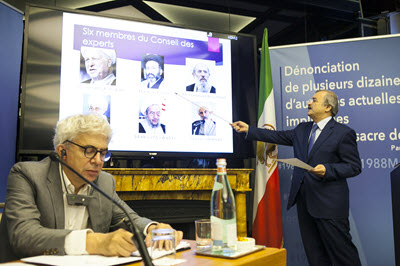
The revelations by the NCRI of the composition of the infamous death panel in 1988 and how many of those same members have risen to hold important positions within the current regime shows how the promises of the Iran lobby of a new “moderate” regime in the wake of the nuclear agreement were all false.

Ultimately, the U.S. and its allies must no longer ignore the truth of these massacres, nor the willing participation of the mullahs now in power in Tehran to hide the truth from the world.

By Michael Tomlinson

Filed Under: Blog, News Tagged With: Featured, Iran, Iran deal, Iran Human rights, Iran Lobby, Maryam Rajavi, Moderate Mullahs

Shocking Report Reveals Secret Side Deals to Iran Nuke Agreement

September 2, 2016 by admin

Shocking Report Reveals Secret Side Deals to Iran Nuke Agreement

Shocking Report Reveals Secret Side Deals to Iran Nuke Agreement

In what is bound to be one of the most startling revelations made about the Iran nuclear agreement, the Institute for Science and International Security, a Washington-based non-profit, non-partisan institution dedicated to informing the public about science and policy issues affecting international security, issued a damning report outlining “secret” concessions granted to the Iranian regime.

In the report, the United States and its negotiating partners agreed “in secret” to allow the Iranian regime to evade some restrictions in last year’s landmark nuclear agreement in order to meet the deadline for it to start getting relief from economic sanctions, according to the think tank’s report published on Thursday.

“The exemptions or loopholes are happening in secret, and it appears that they favor Iran,” said David Albright, the group’s president, in an interview with Reuters.

Among the exemptions outlined in the think tank’s report were two that allowed Iran to exceed the deal’s limits on how much low-enriched uranium (LEU) it can keep in its nuclear facilities, the report said. LEU can be purified into highly enriched, weapons-grade uranium.

Other provisions would allow Iran to continue operating 19 “hot cell” radiation containment chambers; and permission for Iran to store 50 tons of heavy water in Oman under its control, instead of selling it, as required by the nuclear deal.

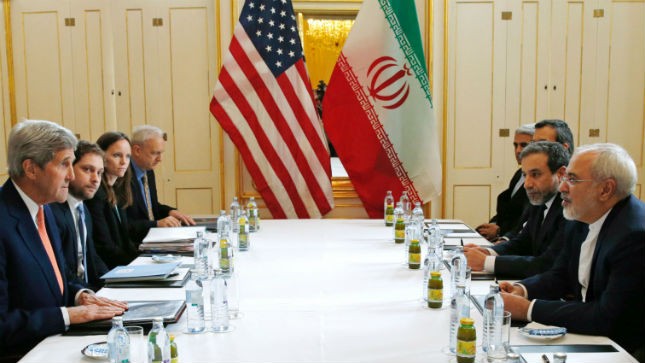
The exemptions, the report said, were approved by the joint commission the deal created to oversee implementation of the accord. The commission is comprised of the United States and its negotiating partners — called the P5+1 — and Iran.

The Institute noted that the low-enriched uranium could be processed into weapons-grade material, so the secret side deal makes it effectively impossible to know how much bomb material Iran could produce, on fairly short notice. The hot cells can also be “misused for secret, mostly small-scale plutonium separation efforts,” according to the report.

The White House claims these changes to the JCPOA were not kept secret from Congress, but at least one prominent critic of the nuclear deal, Senator Bob Menendez (D-NJ), who is a senior member of the Foreign Relations Committee, told Reuters he was “not aware” of the exemptions, and was never briefed on them.

Sen. Kelly Ayotte, (R-N.H.), who sits on the Armed Services Committee, also issued a statement. Ayotte argued that the new evidence of “secret exemptions” underscores “the willingness of the Obama administration to bend over backwards to accommodate Tehran, conceal information from the American people, and protect a fundamentally flawed and deeply dangerous agreement that is only getting worse.”

Rep. Ileana Ros-Lehtinen (R-Fla.), who formerly chaired the House Foreign Affairs Committee, was far harsher: “Secret exemptions, ballistic missile tests, ransom payments, heavy water purchases but no sanctions. #Iran’s bent + broken horrid nuke deal,” she tweeted.

“Since the JCPOA is public, any rationale for keeping these exemptions secret appears unjustified. Moreover, the Joint Commission’s secretive decision making process risks advantaging Iran by allowing it to try to systematically weaken the JCPOA. It appears to be succeeding in several key areas,” wrote Albright and his co-author, Andrea Stricker, who has written extensively on the illegal nuclear trade and Iran’s nuclear program.

State Department spokesman John Kirby declined to comment on the work of the joint commission, saying it was confidential, but the lack of transparency flies in the face of the original promises made by the Iran lobby, such as the Ploughshares Fund and National Iranian American Council, which reassured skeptical members of Congress that there were no other provisions in the deal other than what was presented to Congress for review.

That assertion was proven false within days when secret appendices were revealed by the media to exist and now follow up decisions by the join commission can now carve out wide exemptions for the mullahs in Tehran without public review or knowledge.

“The current arrangement has been overly secret and amounts to the generation of additional secret or confidential arrangements directly linked to the JCPOA that do not have adequate oversight and scrutiny,” the report states. “Moreover, the process in general raises the question of whether Iran is exploiting the exemption mechanism, outside of any public oversight, to systematically weaken as many JCPOA limitations as possible.”

A “senior knowledgeable official” quoted by the report said that without the secret exemptions, Iran’s nuclear facilities would not have been in compliance with the nuclear deal by Jan. 16, which was set as the implementation day.

That statement alone should give people pause since it clearly indicates that the Iranian regime was not prepared to abide by the agreement from Day One and since then it has used the commission to receive more and more exemptions allowing it to violate the agreement without penalty.

At every step of the negotiations and through the implementation of the Iranian nuclear agreement, both U.S. and European officials have been consistently misled by the regime and yet bizarrely accommodating of the mullahs, granting exemptions, leading trade delegations to Tehran even while political prisoners are being executed, keeping mum about a rash of hostage-takings of dual-national citizens and refusing to demand the halt of Iran’s participation in proxy wars in Syria, Yemen and Iraq.

The world has given the Iranian regime so many second-chances, the mullahs must be wondering how they can keep this gravy train of appeasement going into 2017.

By Michael Tomlinson

Filed Under: Blog, News Tagged With: #NuclearDeal, Appeasement policy, Featured, Iran, Iran deal, Iran Human rights, Iran Lobby, Iran Talks, National Iranian American Council, Nuclear Deal

  • « Previous Page
  • 1
  • …
  • 10
  • 11
  • 12
  • 13
  • 14
  • …
  • 22
  • Next Page »

National Iranian-American Council (NIAC)

  • Bogus Memberships
  • Survey
  • Lobbying
  • Iranians for International Cooperation
  • Defamation Lawsuit
  • People’s Mojahedin
  • Trita Parsi Biography
  • Parsi/Namazi Lobbying Plan
  • Parsi Links to Namazi & Iranian Regime
  • Namazi, NIAC Ringleader
  • Collaborating with Iran’s Ambassador

Recent Posts

  • NIAC Trying to Gain Influence On U.S. Congress
  • While Iran Lobby Plays Blame Game Iran Goes Nuclear
  • Iran Lobby Jumps on Detention of Iranian Newscaster
  • Bad News for Iran Swamps Iran Lobby
  • Iran Starts Off Year by Banning Instagram

© Copyright 2026 IranLobby.net · All Rights Reserved.