Iran Lobby

Exposing the Activities of the lobbies and appeasers of the Mullah's Dictatorship ruling Iran

  • Home
  • About
  • Current Trend
  • National Iranian-American Council(NIAC)
    • Bogus Memberships
    • Survey
    • Lobbying
    • Iranians for International Cooperation
    • Defamation Lawsuit
    • People’s Mojahedin
    • Trita Parsi Biography
    • Parsi/Namazi Lobbying Plan
    • Parsi Links to Namazi& Iranian Regime
    • Namazi, NIAC Ringleader
    • Collaborating with Iran’s Ambassador
  • The Appeasers
    • Gary Sick
    • Flynt Leverett & Hillary Mann Leverett
    • Baroness Nicholson
  • Blog
  • Links
  • Media Reports

Iran Regime Plays Absurd Sanctions Game

March 27, 2017 by admin

Iran Regime Plays Absurd Sanctions Game

Iran Regime Plays Absurd Sanctions Game

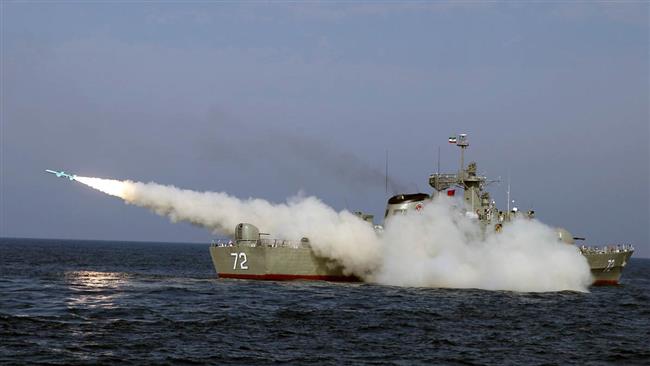
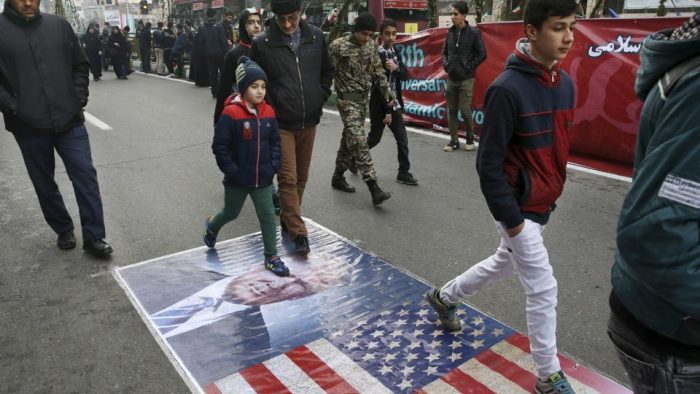
In what has to be considered one of the more absurd acts by the Iranian regime, the mullahs decided to impose their own sanctions on 15 U.S. companies for alleged human rights violations and cooperating with Israel, the state news agency IRNA reported on Sunday, in a tit-for-tat reaction to a move by Washington, according to Reuters.

The agency quoted Iran’s foreign ministry as saying the companies had “flagrantly violated human rights” and cooperated with Israel in its “terrorism” against the Palestinians and the expansion of Jewish settlements.

It was not immediately clear if any of the companies, which included defense technology firm Raytheon, had any dealings with Iran or whether they would be affected in any way by Tehran’s action, which IRNA said would include seizure of their assets and a ban on contacts with them.

The sanctioned companies also included ITT Corporation, United Technologies and specialty vehicles maker Oshkosh Corp. For a full list click on: bit.ly/2noZWNo

The Iranian move came two days after the United States imposed sanctions on 11 companies or individuals from China, North Korea or the United Arab Emirates for technology transfers that could boost Tehran’s ballistic missile program. This was on top of sanctions levied against 30 foreign companies or individuals for transferring sensitive technology to Iran for its missile program or for violating export controls on Iran, North Korea and Syria.

Iran could face tighter U.S. sanctions over ballistic missile launches and other non-nuclear activities under a bill announced on Thursday by a bipartisan group of senators, echoing a harder line on Tehran espoused by President Donald Trump.

While the move by the Iranian regime has practically no effect on the U.S. economy, nor on the companies being sanctioned since few have any assets or business dealings with the regime, who is not on the list is telling.

Boeing for example is not on the list of firms sanctioned, even though it is one of the largest military suppliers to Israel, but also happens to be selling Iran new commercial airliners to replace its aging fleet.

The hypocrisy of the Iranian regime doesn’t end there since it ostensibly is imposing these sanctions for human rights violations against the Palestinian people by Israel, but excuses its own blatant human rights violations against the Syrian people through its proxies and armed forces fighting on behalf of the Assad regime.

It is also hypocritical for the Iran lobby and the regime to consistently oppose any new sanctions and claim they threaten the nuclear agreement with Iran, but in this case the regime has no problem in engaging in the same behavior it condemns.

We have no doubt that if any of the U.S. companies on Iran’s list wanted to sell equipment or arms to Iran, the mullahs would be eager to do business with them.

As with the constant harassment of U.S. Navy ships throughout the Persian Gulf by Iranian speed boats, the net effect is akin to a gnat bothering a bear and these sanctions are typical of the real strength of the Iranian regime which is in propaganda and visuals and not in practical effect.

It is interesting though how the Iran lobby, especially the National Iranian American Council is silent on these new sanctions since it has been so vocal about the threat U.S. sanctions would have on the nuclear deal and the future of relations between the two countries.

In fact, a casual Google search would reveal a trove of apocalyptic warnings from Trita Parsi and his cohorts at the NIAC about the damage future sanctions could bring and yet when Iran engages in the same practice there is not a signal note of dissent from them.

It is damning proof once again that the Tehran can do no wrong in their eyes and how they are solely a mouthpiece for the mullahs in Tehran.

It is also interesting how U.S. sanctions were aimed specifically for effect at Iranian Revolutionary Guard Corps leaders directly involved in ballistic missile activities or control of terrorist activities, including past actions that killed American service personnel, while these Iranian sanctions are aimed at the Israeli-Palestinian conflict.

Iran has frequently trotted out the plight of the Palestinian people as a Trojan horse to try and galvanize support within the Arab world, but it has lost much of its morale standing since it now engages in wars in Syria and Yemen that are setting Muslims to kill Muslims on a wholesale basis.

Ultimately the mullahs in Tehran care not a whit about the Palestinian people and use them in the same way they have used Afghan refugees to serve as mercenaries in Syria or Shiite militias or Houthi rebels to serve their twisted purposes.

Michael Tomlinson
 

Filed Under: Blog, News Tagged With: Featured, Iran, Iran Human rights, Iran Mullahs, Iran sanctions, IRGC, National Iranian American Council, Nuclear Iran

Bipartisan Senators Move New Iran Sanctions Bill Forward

March 24, 2017 by admin

Bipartisan Senators Move New Iran Sanctions Bill Forward

Bipartisan Senators Move New Iran Sanctions Bill Forward

While the political divide between Democrats and Republicans may feel like the Grand Canyon, one at least one subject both sides seem to be able to agree: New sanctions need to be levied against the Iranian regime.

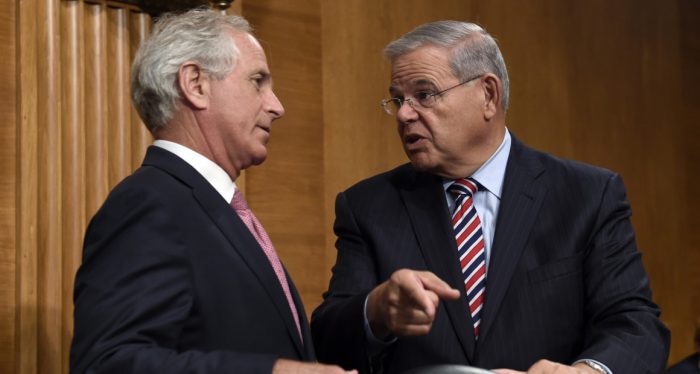
Senate Foreign Relations Chairman Bob Corker (R-Tenn.) on Thursday unveiled a bipartisan bill to slap the Iranian regime with new sanctions because of the country’s ballistic missile development, support for U.S.-designated terrorist groups and human rights violations, according to Politico.

Democratic co-sponsors, including Robert Menendez of New Jersey and Foreign Relations ranking member Ben Cardin of Maryland, emphasized that the measure was designed explicitly so as not to undermine the 2015 Iran nuclear deal.

The bill is supported by more than a dozen senators, according to a news release, including Marco Rubio (R-Fla.), Tom Cotton (R-Ark.), Bob Casey (D-Pa.) and Chris Coons (D-Del.) — giving it a strong chance of being taken up in the Senate.

“This legislation demonstrates the strong bipartisan support in Congress for a comprehensive approach to holding Iran accountable by targeting all aspects of the regime’s destabilizing actions,” Corker said in a statement. “These steps will allow us to regain the initiative on Iran and push back forcefully against this threat to our security and that of our allies.”

Menendez, who didn’t vote for the nuclear deal, said that the legislation was crafted to specifically avoid any sanctions lifted as part of the nuclear agreement, according to the Hill.

“This legislation was carefully crafted not to impede with the United States’ ability to live up to its commitments under the JCPOA, while still reaffirming and strengthening our resolve by imposing tough new sanctions,” he said.

Lawmakers were expected to roll out new sanctions on the Iranian regime ahead of a key foreign policy conference taking place early next week, Reuter reported.

The Senate legislation, according to an outline from Corker’s office, would include mandatory new sanctions on individuals tied to Iranian regime’s ballistic missile program and would expand terrorism-related sanctions to include the Islamic Revolutionary Guard Corps (IRGC).

It would also codify who is sanctioned over Iranian regime’s support for terrorism and force President Trump to enforce an arms embargo by blocking property for anyone tied to Iran’s sale or transfer of military arms.

In February, the Trump administration imposed sanctions on 25 individuals and entities in Iran, which it said were just “initial steps” in response to the regime’s repeated testing of ballistic missiles, which the United States maintains is in violation of UN resolutions.

Tehran has been supporting Yemen’s rebel Houthi movement, and Syrian President Bashar al-Assad in his country’s six-year-long civil war.

Menendez told Reuters the bill was intended to take a “regional” strategy because of the breadth of Iran’s activities in the Middle East.

“It calls for a regional strategy because Iran is obviously involved in the region in various ways, whether it be in Yemen or Syria and beyond,” he said.

The bipartisan action taken in the Senate is a response to the growing provocations coming from the Iranian regime as it prepares for its presidential election in May.

On Tuesday, the aircraft carrier USS George W. Bush entered the Strait of Hormuz from the Indian Ocean, a vital waterway that handles about 30 percent of the world’s oil shipping. As it has done so often over the past few years, Iran sent a swarm of speedboats to harass the carrier, according to Breitbart News.

“What reason were they to be in an international corridor, other than to harass us? Was today the day they were going to come out and potentially deploy kinetic actions against us?” asked Rear Admiral Kenneth Whitesell, commander of Carrier Strike Group 2, as reported by Japan Times.

Captain Will Pennington of the George W. Bush said the U.S. Navy changed its security procedures after a Saudi ship was attacked off the coast of Yemen by what some describe as a “drone” boat, roughly comparable in size to the Iranian Revolutionary Guard Corps patrol boats.

“It’s unprofessional behavior, it’s harassment behavior and it’s something you wouldn’t expect when you’ve got a hundred giant vessels per day going through the Strait of Hormuz, and – at least from the flow of oil – the most critical strait in the world,” Whitesell said. “This is their routine behavior, which in any other area of the world, any other maritime environment, this would be seen as a violation of international law.”

The allegations of Iranian-made drones extended to ones used by Houthi rebel forces to attack Saudi and UAE missile defense sites in Yemen, an arms research organization said in a report Wednesday, according to the Washington Post.

The report, put out by the group Conflict Armament Research, or CAR, looks at seven Houthi Qasef-1 drones and one drone engine recovered by forces from the United Arab Emirates. Six of the drones were captured in October on a known Iranian smuggling route that runs through Oman, while another was found after an attack by Houthi forces near Aden, Yemen, last month.

The Qasef-1 is “consistent with descriptions and imagery” of an Iranian drone called the Ababil-T, produced by Iran’s Aircraft Manufacturing Industrial Company, according to the report.

The identification of the Qasef-1 as a possible Iranian drone variant comes almost two months after Houthi forces used an explosive drone boat to attack a Saudi frigate. Vice Adm. Kevin M. Donegan, commander of the U.S. Fifth Fleet, told Defense News that the drone boat probably had been supplied by Iran. The attack killed one, and the frigate returned to port with minor damage.

On Tuesday, Reuters reported that Maj. Gen. Qasem Soleimani, the head of Iranian regime’s Quds Force, recently met with top military officials in the Iranian capital in a bid to explore ways to better assist the Houthis. The outcome of the meeting appears to be an influx of military equipment and advisers into the civil war, which has now been running for two years.

Michael Tomlinson


Filed Under: Blog, News Tagged With: Featured, Iran, Iran deal, Iran Human rights, Iran Mullahs, Iran sanctions, Sanctions

Khamenei Promises More Crackdowns on Election Protests

March 22, 2017 by admin

Khamenei Promises More Crackdowns on Election Protests

Khamenei Promises More Crackdowns on Election Protests

Back in 2009, the Middle East was being rocked by the Arab Spring, a pro-democracy movement that toppled governments throughout the region and put despotic regimes on the defensive.

At the time, the Iranian regime’s much despised president Mahmoud Ahmadinejad was running for “re-election” in a contest widely viewed as unlikely for him given the historic disapproval of the Iranian people and their deep desire for democratic change.

But as with all things under the careful watch of the mullahs, his election was essentially guaranteed in what the international community dubbed a rigged election.

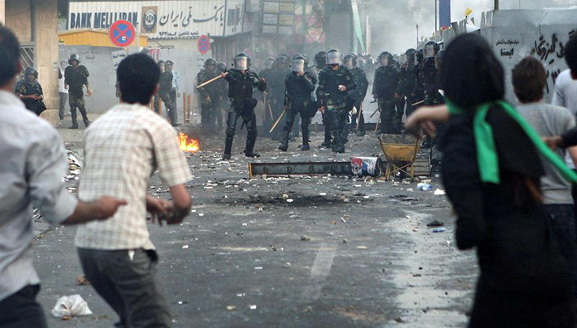
In response, Iran was rocked with mass protests and demonstrations the likes of which the Iranian regime had not seen before in the most serious threat to the iron rule of the religious establishment. Alarmed and in response to keep their hold on power, the top mullah Ali Khamenei ordered a widespread crackdown that set human rights back in Iran decades in resulted in scores killed and thousands beaten, arrested and imprisoned.

The mass protests were aided in large part by the emergence of social media which helped rally young and old Iranians alike to dispute the election and served as a splash of cold water in the regime’s face that it would have to change as well, but not in terms of granting more freedoms.

By the time 2013 rolled around, the mullahs had gotten wise to international opinion and instead staged an election by removing anyone from the ballot that could even be considered a dissident and instead offered up an old loyalist in Hassan Rouhani repackaged as a smiling, tweeting, kindly “moderate.”

The end result was another sham election and in comparison to 2009 with favorable media attention abroad. It was also aided by the creation of an Iran lobby apparatus designed to push forward more positive narratives about the regime in news media and among elected officials, especially the National Iranian American Council.

Since then, while Rouhani has paraded himself as ca champion of the oppressed, Iran has plunged even further into disrepair.

It is involved now in two full-blown wars in Syria and Yemen, while spending billions of dollars in cash to support the Assad regime, Shiite militias in Iraq, its long-time Hezbollah proxy, and a rebuilding of its vast military.

It has also cracked down viciously at home, oppressing women, religious and ethnic minorities and even going on a binge of hostage taking amongst dual-national citizens including Americans, Canadians and Brits.

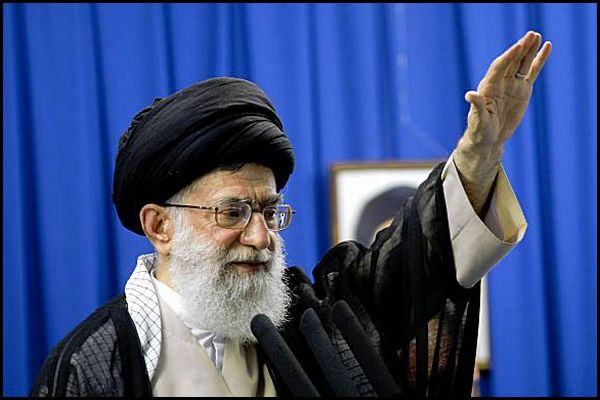
Now the stage is set for another election this May and once Khamenei has set the table by declaring that the regime would not tolerate any interference; meaning only the regime’s candidate will be elected and everyone should stay off the streets.

“I will confront anyone who wants to tamper with the results of the people’s vote. In previous years and previous elections …, it was the same. Some of it was in front of people’s eyes and they became aware of it. And some of it they were not aware of but I was informed about it,” he said in Iranian New Year remarks carried live on state television, according to Reuters.

“It was revealed in 2009 – they came out and drew battle lines. And in other years in other ways, but in all these years I stood against them and said whatever the results of the election are, they must be carried out.”

Two of the candidates from the 2009 presidential election, which put hardliner Mahmoud Ahmadinejad into office for a second term despite large protests over alleged vote fraud that shook the Islamic Republic, have been under house arrest since 2011. Although part of the regime apparatus, they were detained for calling for street protests at the same time that pro-democracy uprisings were convulsing Tunisia and Egypt.

This year’s election will never be in doubt. Whoever Khamenei wants is going to win, this is a matter of course since he controls the policy making body that will have final say on whoever gets on the ballot in the first place.

Imagine if the Democratic or Republican parties had final say on who got on a presidential ballot without having to suffer through the rigors of a primary contest? In essence, that is what the Iranian regime does on a regular basis; it’s a rigged game.

But the Iranian regime is becoming more sophisticated in the ways of politics. Just as it adjusted to the brutal crackdowns following the 2009 elections, it is following up on the initial creation of the Iran lobby with a broader call for more Iranians in the West to become active lobbyists for the regime’s causes as outlined in an editorial by Michael Rubin in Commentary.

“An Iran watcher and Iranian citizen recently alerted me to this clip showing Mahmoud Alavi, Iran’s intelligence minister, on Iranian national television suggesting there are Iranians in the West who have a lobby for the regime,” Rubin said.

“Alavi does not mention NIAC, but the number of politically active groups that focus on issues of sanctions, defending Iran’s ballistic missile program, and Iran’s nuclear program can like be counted not only on one hand but rather on one finger. If Iran’s intelligence minister believes that Tehran can leverage a specific lobby in the West on behalf not of Iranians but rather of the Islamic Republic, perhaps it is time for American counterintelligence authorities to take a far harder look at whatever lobby to which Alavi might be referring,” he added.

Rouhani’s election will be critical as the regime enters a new phase of expansion and aggression as it puts its newfound billions in cash it received as part of the nuclear deal to good use in furthering the war in Yemen and securing Syria as part of its Shiite sphere of influence.

According to Reuters, Iran is sending advanced weapons and military advisers to Yemen’s rebel Houthi movement, stepping up support for its Shiite ally in a civil war whose outcome could sway the balance of power in the Middle East, regional and Western sources say.

Sources with knowledge of the military movements, who declined to be identified, say that in recent months Iran has taken a greater role in the two-year-old conflict by stepping up arms supplies and other support. This mirrors the strategy it has used to support its Lebanese ally Hezbollah in Syria.

A senior Iranian official said Major General Qassem Soleimani, commander of the Qods Force – the external arm of the Islamic Revolutionary Guard Corps – met top IRGC officials in Tehran last month to look at ways to “empower” the Houthis.

We may very soon see the Arabian Peninsula erupt in a war not unlike what has convulsed Syria if the mullahs have their way.

Michael Tomlinson

Filed Under: Blog, News Tagged With: Appeasement policy, Featured, Iran, Iran Human rights, Iran Lobby, Iran Mullahs, Iran Terrorism, IRGC, Khamenei, National Iranian American Council, NIAC, NIAC Action, Rouhani

There is No Battle Between Moderates and Hardliners in Iran

March 21, 2017 by admin

There is No Battle Between Moderates and Hardliners in Iran

There is No Battle Between Moderates and Hardliners in Iran

One of the cornerstones of the Iran lobby’s messaging has been the contention that a monumental battle is being waged in Iran between moderate elements in the Iranian regime and hardline conservatives intent on winning at all costs.

To the extent hardliners want to hang onto their power that part of the story is correct, but the image of moderates existing and having a meaningful role within the regime government is as illusory as a mirage of a desert oasis to a thirsty wanderer.

The regime’s leadership, under the hard rule of Ali Khamenei, has done a methodical job of eliminating any shred of moderate opposition. Ever since the original Islamic revolution was taken over by the religious clerics that now run Tehran, the regime has systematically arrested, imprisoned, tortured and executed anyone publicly voicing a dissenting point of view.

This has even extended to targeting and attack Iranian dissidents outside of Iran; the most notably example are members of the People’s Mujahedin Organization of Iran, one of the largest and oldest resistance groups to the mullahs. Many of these PMOI members had resided in refugee camps in Iraq that were constantly under attack by Iranian operatives, as well as local Shiite militias acting on Iranian control.

The most egregious example of Iran’s crushing of dissent was on display in the wake of the 2009 presidential elections in which mass demonstrations by ordinary Iranians was met with bullets and mass arrests that led to a near daily parade to the gallows.

Before each election cycle since, the regime has instituted broad crackdowns to remove any dissenting views. This has included mass arrests of journalists, bloggers, politicians, activists and even students and artists.

The regime’s highest policy making bodies have also ensured that only carefully vetted and approved candidates were on the ballot for presidential and parliamentary elections which is why Hassan Rouhani was elected before and may be re-elected this May and Iran’s parliament remains firmly in the control of the ruling mullahs.

Dr. Majid Rafizadeh, president of the International American Council and a leading expert on Iran and U.S. foreign policy, wrote about this Iran lobby myth in Arab News.

The truth is that Iran’s moderates are a critical part of the political establishment. Many of them, including the current President Hassan Rouhani, were robust supporters or founding fathers of the Islamic Republic’s Shiite theocracy. These “moderates,” such as the late former President Akbar Hashemi Rafsanjani, were once called “hard-liners,” Rafizadeh writes.

“In addition, it is crucial to point out that to be a politician in Iran, your loyalty to the core pillars of the political establishment should be firmly proven. Vilayat-e Faqih is the core pillar of Shiite political thought expounded by the late Ayatollah Ruhollah Khomeini, and forces a guardianship-based political system on the people, and requires that a Shiite religious figure be the leader of the nation,” he adds.

The terms “moderates” and “hardliners” are also a Western invention and not used in Iranian politics according to Rafizadeh. Consequently, the Iranian regime makes no distinction in political allegiances. You are either a loyal member of the regime or you are not. If you are not, your ticket is punched for a trip to Evin Prison.

The Iran lobby uses these terms with Western media in order to create the appearance of fissures in Iran’s political system where there is none.

“Iran’s supreme leader and the senior cadre of IRGC hold the final say when it comes to Iran’s foreign policy. They also have significant control over Iran’s economic, financial, and political sectors. For example, at the end of the presidential term of the so-called ‘moderate’ Hassan Rouhani, Iran has not altered its policies toward Syria, in supporting President Bashar Assad, along with Iraq, Lebanon, Yemen and other nations’ domestic affairs. In fact, it has intensified its expansionist policies through its military and additional revenues,” Rafizadeh said.

Since 1979 Iran has not altered the cornerstone of its foreign policy and revolutionary principles regardless of who was president and therein lays the harshest rebuttal to the Iran lobby. If Iran was indeed going to moderate its behavior as a result of the nuclear deal as the National Iranian American Council insisted on, then where has the emptying of Iran’s prisons begun of political prisoners?

Ultimately the price being paid by Iran’s religious and ethnic minorities such as Kurds, Christians, Sunni, Arabs and others demonstrate exactly how little has changed in Iran since 1979.

Not surprisingly, there has been a marked increase in human rights abuses including the ghastly use of acid in attacks against women.

After almost a year of calm, spraying people with burning acid has returned in Iran where a family of four has been attacked on Saturday in Sharada, within Isfahan province, Iran’s top tourist destination, according to Al-Arabiya.

Last month, unidentified people also attacked two women in Maashour, within the Ahwaz province, according to Iranian news agencies.

Isfahan’s Investigative Police Chief Sitar Khasraoui said in press statement that the families were taken to the hospital to treat the burns. The family consists of the father, 53, the mother, 48, the son, 23, and the daughter, 20. Both parents are said to be in critical condition.

In 2014, attacks in Isfahan shocked the public and provoked a major protest there from citizens who demanded better security and action over such violent crimes.

Reports on social networks have claimed that the victims were doused on the face and body because they were not properly veiled. They were targeted by assailants on motorcycles.

The next time the Iran lobby professes that moderates are battling for control in Iran, one might ask if that battle is being done from the back of a motorcycle.

Laura Carnahan


Filed Under: Blog, Current Trend, News Tagged With: #NuclearDeal, Featured, hardliners, hassan rouhani, Iran Mullahs, IRGC, Moderate Mullahs

Iran Lobby Working Overtime Pushing Fake News

March 21, 2017 by admin

Iran Lobby Working Overtime Pushing Fake News

Iran Lobby Working Overtime Pushing Fake News

Merriam-Webster defines “hypocrisy” as “a feigning to be what one is not or to believe what one does not: behavior that contradicts what one claims to be believe or feel.”

In the case of the Iran lobby, hypocrisy runs deep within its press releases, background papers, editorials and blog entries, especially the National Iranian American Council. In the aftermath of the end of the Obama administration’s policies of trying to appease the Iranian regime, the NIAC has been working overtime to push narratives that have come to define this era of “fake news.”

The NIAC website was busy this weekend pumping out several storylines, including attempting to shift blame for global terrorism from the Iranian regime to Saudi Arabia; attempting to character assassinate a vocal critic of the regime in the Trump administration; and tried to claim that Yemen was an example of a failed U.S. policy.

The most hypocritical position taken by the NIAC was an opinion piece by Adam Weinstein in which he called Saudi Arabia the world’s “biggest state sponsor of terrorism.” He makes this claim largely on the basis that many terrorist groups such as ISIS are comprised of Sunni members, while largely ignoring the magnitude of death and destruction meted out by Iranian-backed Shiite terror groups such as Hezbollah.

Weinstein goes on to try and specifically link Wahhabism to the Saudi government, while ignoring the direct support Shiite terror groups receive directly from the Iranian regime through the Revolutionary Guard Corps and its Quds Force operations.

While the Saudi government has a myriad of its own problems, such as the status and role of women in Saudi society and the need to rein in rogue Saudis that have engaged in terror, such as Osama bin Laden, the Saudi government does not purse and enact a policy of global terror, nor a systematic effort to attack and kill its enemies and dissidents at home and abroad; all things the Iranian regime does.

Weinstein delves into the complexities of the Islamic religion and its various offshoots and varieties in an attempt to confuse readers when in fact the issue is not about religion, but national policy instead.

What makes the Iranian regime the center point of terrorist activities is that the regime relies heavily on terrorist proxies to conduct military operations, terrorist attacks and assassinations. Notable examples include the bombing of the U.S. Marine barracks in Beirut, the bombing of the Khobar Towers in Saudi Arabia and the flood of Iranian-built IEDs into Iraq targeting U.S. service personnel.

Iran also provided shelter and support for Al-Qaeda leaders fleeing the U.S. invasion in Afghanistan and then later provided passage for these same fighters to enter Syria and from there spawned ISIS and other radical militant groups who were originally turned loose to attack U.S.-backed rebel groups.

But the NIAC’s fake news didn’t end there as Ryan Costello issued a press release attacking Trump national security aide Sebastian Gorka, a vocal and harsh critic of past policies towards the Iranian regime, especially the deeply flawed nuclear agreement.

The irony of Costello’s statement was his attempt to blame Gorka for anti-Semitism, a crazy concept considering the Iranian regime’s naked hostility to Jews and Israel; advocating for its destruction about as often as it holds public “Death to America” chants.

The effort to attack Gorka is not about racism, but about dislodging a strong opponent of the Iranian regime from any position of influence within the administration. This is an especially important consideration when viewed in light of recent disclosures that former Obama administration staffers have managed to burrow their way into the State Department to maintain influence over Iran policy; including one who was a former NIAC staffer.

The strangest piece was another one written by Adam Weinstein in which he attempted to show a clash of policy views over the conflict in Yemen amongst American legislators at a Senate Foreign Relations Committee hearing.

“As is too often the case on Capitol Hill, the hearing – which was framed as an examination of U.S. interests and risks to U.S. policy in the war in Yemen – devolved into a conversation dominated by Iran hawks who inflated Iran’s influence and sought to play down Saudi Arabia’s role in the conflict,” Weinstein writes.

During the hearing, former Ambassador to Yemen (2010-2013) Gerald Feierstein testified that Iran is benefiting from the conflict in Yemen and even claimed Saudi Arabia’s image was suffering as a result.

Weinstein then goes on to make the extraordinary claim that the Iranian regime attempted to persuade Houthi rebels from moving on Sanaa, the capital and blamed a Saudi naval blockade in 2015 for escalating the conflict.

It’s another silly argument to make since Iran’s Quds Forces have been the primary supplier of arms to the Houthis, with several Iranian fishing vessels being intercepted on their way to Yemen carrying guns, ammunition, mortars, rockets and missiles, many bearing Iranian serial numbers.

What Weinstein characterizes as an “obsession” by Saudi Arabia over Iran in Yemen, belies a basic aspect of Iran’s strategy which is to foment a civil war in a country sharing a border with Saudi Arabia in an effort to place the kingdom under duress even as it opposes Iranian forces in the Syrian conflict.

It is a strategy Iranian regime has used for decades in neighboring countries such as Lebanon and Iraq.

Weinstein goes on to claim the Houthis are not proxies for the Iranian regime because they are “indigenous” to Yemen as if accident of birth defines one as a proxy or not for the Islamic state. The true definition of an Iranian proxy is not where they are from, but rather if you are supplied, controlled and commanded by the mullahs in Tehran.

On that score, the Houthis are identical twins to Hezbollah, Shiite militias in Iraq and recruited Afghan mercenaries, all fighting on behalf of the Iranian regime.

Michael Tomlinson


Filed Under: Blog, Latest from Lobbies & Appeasers, National Iranian-American Council, News Tagged With: Featured, Iran deal, Iran Lobby, Iran Mullahs, Iran sanctions, National Iranian American Council, NIAC, NIAC Action, Nuclear Deal, Reza Marashi, Ryan Costello, Sanctions

Nowruz Should Bring Hope to Iranian People

March 16, 2017 by admin

Nowruz Should Bring Hope to Iranian People

Nowrouz Should Bring Hope to Iranian People

The Iranian New Year is marked with the feast of Nowrouz and falls on March 21. Translated, Nowrouz means “new day” and fittingly it should be a new day for the oppressed Iranian people as the effort begins to reverse the damage caused by years of efforts by the Obama administration to appease the mullahs in Tehran.

F.H. Buckley, a professor at the Scalia Law School, wrote an editorial in the New York Post about this need to provide the Iranian people with hope during this year’s Nowrouz observances.

“It would be a good opportunity for President Trump to mark a new day in US-Iran relations — one that corrects his predecessor’s poor treatment of the Iranian people,” Buckley writes.

“Last year at this time, the regime announced that an additional 7,000 undercover officers would patrol the streets to arrest women who had too much hair showing from under a headscarf or were out walking with a boyfriend,” he added.

“That’s why change will come to Iran, if at all, from the streets, from an Iranian Spring. And the Iranians who want to rid their country of its oppressive regime must be told that America shares their goals.” Buckley offered.

Buckley took to task the Obama administration for failing to support mass protests against the Iranian regime during the disputed presidential elections in 2009; a missed opportunity for the U.S. and urged the Trump administration to demonstrate its support for the Iranian people.

“I have a suggestion for Trump. After we ignored the street protests against the Iranian dictatorship, after we cut our disastrous Iran deal, after we abandoned Israel to the threat of medium-range missiles from the Iranian Revolutionary Guards, after American hostages were allowed to rot in Iranian jails, let the president welcome NowRuz with a message to the Iranian people,” Buckley said.

“Let him wish them a happy and prosperous new year, and the freedom that all men deserve from their cruel oppressors.”

It’s a noble sentiment and an important one since the Obama administration was quick to offer Iranians a traditional Nowrouz greeting, but never one directed specifically at the Iranian people’s desires for more freedom and democracy in their country. Such a message from the Trump administration would be an important symbol and one that would go a long way to putting the mullahs on notice that this administration will act in a much more conservative manner towards the regime.

Trump has already offered the political rhetoric chastising the regime and the much-maligned nuclear deal, but he needs to keep that momentum going in order to restore stability and balance in the Middle East; a process that Nathan Field, founder and former CEO of Industry Arabic, a translation company that provided services to over 300 high-profile customers throughout the Middle East, praised in a piece for The Hill.

“President Trump’s hardline but pragmatic approach to Iran is paving the way for the restoration of a semblance of order and regional stability. That’s a significant accomplishment for an administration still in its first 100 days,” Field writes.

“Effective foreign policy is not necessarily a matter of complicated treaties that take years to negotiate or opaque theories on international relations that only PhDs can understand. A simple message and tone set at the top is often all that’s needed.”

Field notes how President Trump has made Iranian adventurism throughout the Middle East an issue requiring a coordinated, but firm response, thereby correcting the errors made by the Obama administration.

The deal not only does not “guarantee that Iran will never obtain nuclear weapons, in the process of negotiating it, Iranian leaders, sensing that the U.S. wanted the deal more than they did, felt emboldened throughout the region in countries such as Syria, Lebanon and Yemen,” he said.

One telling example was the American non-response to a series of Iranian cyber-attacks on U.S. banks because, as one official noted, “If we had unleashed the fury in response to that DDoS attack, I don’t know if we would have gotten an Iran deal.”

“The Obama administration, by contrast, alienated nearly every traditional U.S. Middle East ally. Having thrown all of its prestige into a nuclear deal with Iran, opposed by most of the countries of the region, Washington had no leverage.”

The payoffs for the Trump administration’s tougher line against Iran has already yielded some benefits with Saudi Arabia’s willingness to send more troops to Syria and set up safe zones for refugees to stem the flood of a Syrian exodus from the war.

In many ways, Iran is slowly finding itself nudged back onto an island of isolation, even as the mullahs desperately reach out to Russia, China and Turkey in efforts to remain politically and diplomatically relevant.

We can only hope this Nowrouz brings a much better new year to the Iranian people; one that will eventually see them freed from the oppression of the mullahs.

Laura Carnahan

Filed Under: Blog, News Tagged With: #NuclearDeal, Featured, Iran, Iran deal, Iran Human rights, Iran Lobby, Iran Mullahs, Irandeal, Nowrouz, Sanctions

Iran Regime Charting a Pathway for Aggression

March 14, 2017 by admin

Iran Regime Charting a Pathway for Aggression

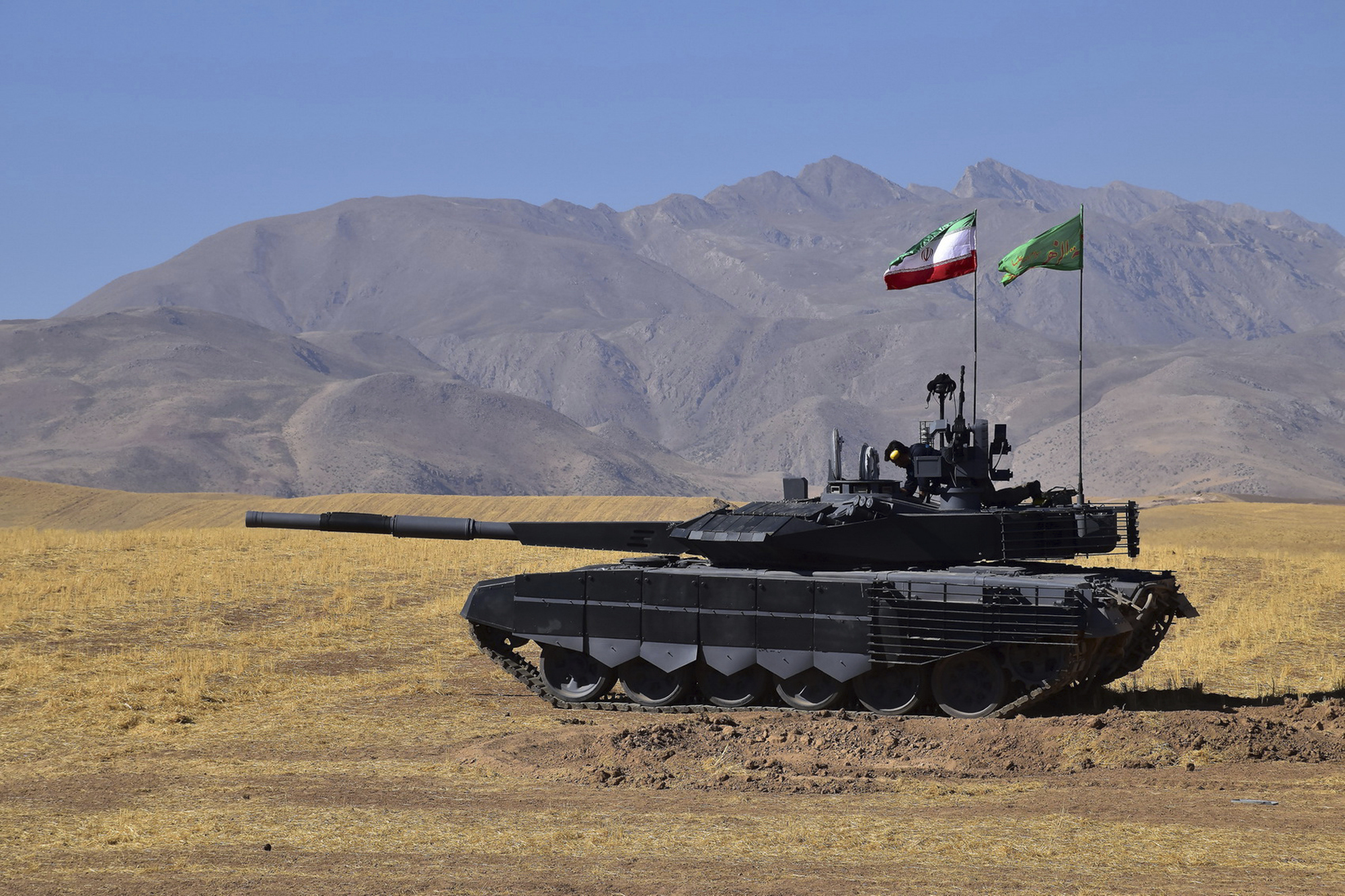
This picture released by the official website of the Iranian Defense Ministry on Sunday, March 12, 2017, shows domestically manufactured tank called “Karrar” in an undisclosed location in Iran. Iran’s semi-official Fars news agency is reporting that the country has unveiled a domestically manufactured tank and has launched a mass-production line. (Iranian Defense Ministry via AP)

The Iran lobby has consistently pushed a message that the Iranian regime was always interested in pursuing a pathway towards moderation and only needed the cooperation of the U.S. and its allies in empowering “moderate” elements in the government to take control and nudge the religious theocracy back to center.

The truth has been far bleaker and starker and nowhere has that been more obvious than in Iran’s constant efforts to build out its military capabilities and size of forces. Already possessing one of the largest standing armies in the world, the Iranian regime has been on a buying and building binge lately to expand its military using billions in new cash garnered from the lifting of sanctions under the nuclear agreement.

Iran has used its newfound wealth to buy advanced missile systems from Russia, along with sophisticated radar and communications equipment, as well as licenses to mass produce arms such as guns, rockets, missiles, drones and in its latest unveiling, a new main battle tank.

Tehran formally announced it will begin mass producing its domestically built main battle tank during a ceremony attended by the country’s defense leadership, according to Russia Today.

The tank has been compared to Russia’s T-90MS, the latest variant in the Kremlin’s T-90 series.

Russia’s Uralvagonzavod production corporation announced it was ready to export the new variant to foreign customers during the IDEX 2017 trade show in late February.

The T-90MS is able to conduct self-testing and self-diagnostics on the field, and is designed to integrate with foreign components including communication systems and air-cooling units.

The introduction of a new advanced tank system paves the way for a major upgrade to the Iranian Revolutionary Guard Corps and an imposing threat to its neighbors, which have already been under near constant assault from Iranian-backed proxies in Yemen, Iraq, Afghanistan, Lebanon and Syria.

  1. Todd Wood, a contributor to Fox Business, wrote about the concerns of this new found arms bazaar between Iran and Russia in the Washington Times.

“Russia has been keen to sell Iran military equipment and technology since the sanctions were lifted on the Islamic theocracy and the billions started flowing from the Obama administration. In fact, you could say that President Obama was the best thing that ever happened to the Russian armament industry. You could also say Hezbollah, the Iranian terror army in Lebanon and Syria, feels the same about Mr. Obama, as they were surely the recipient of all those pallets of billions in cash, but that’s another story,” he writes.

“The Iranian armor capability was severely degraded during the Iran-Iraq War and the real Shia Islamic state never had the money to change that reality. After the dollars started flowing, thanks to Valerie Jarrett and Ben Rhodes, Iran made noise about wanting to license the Russian T-90 tank technology and build the war machines ‘in-country,’” Wood added.

In addition to the upgrade in armor, the National Council of Resistance of Iran, a coalition of Iranian dissident and human rights groups, released information about claims made by a IRGC commander detailing the construction of several arms factories throughout Lebanon and handed over to Hezbollah three months ago.

These factories are able to build various types of missiles with ranges of over 500 kilometers. This includes surface-to-surface, surface-to-sea, and torpedoes designed to be launched from light and fast-attack boats. Armed drones, anti-tank missiles and fast armored boats are also built in these factories.

The weapons produced in these factories have been successfully tested in Syria, this IRGC commander added. These factories were handed over to Hezbollah experts through a step-by step process.

Anti-tank weapons built by these factories have been used time and again in Syria.

Rifles, cannons, anti-air artillery, mortar launchers, various types of missiles and bullets, especially anti-armor are other weapons built and tested by Hezbollah arms experts in these factories.

These sites, spread across the country in unknown locations, are located more than 50 meters below ground level and protected by numerous layers of armored cement to prevent Israeli fighter jets from destroying them, sources say.

Each factory produces a particular part of the missiles and weaponry, and they are assembled at yet another unknown site, according to a report published Saturday in the al-Jarida daily.

All of this military build-up is also being put on display in an aggressive fashion by the regime as detailed by Dr. Majid Rafizadeh in a piece in Huffington Post.

“It has become an alarming and dangerous pattern; a pattern of provocative actions initiated by Iran against many nations in the region, the U.K., the U.S. and its allies,” he writes.

“Just in the last week, several of these provocative operations unfolded. On March 4 U.S. officials pointed out that several of Iran’s assault crafts came dangerously close to the USNS, within 150 meters. A similar incident occurred two days earlier, on March 2 as well,” he added.

These swift-moving assault vessels operate under Iran’s Revolutionary Guard Corps (IRGC), which has been empowered and emboldened by the continuing relief of sanctions as well as the lack of a robust reaction against Iran from the international community.

These incidents clearly highlight the fact that Iran is attempting to showcase its military power and regional preeminence to the United States. Some of Iran’s Persian-language newspapers boasted about Tehran’s military capacity to counter the U.S. navy and dominate the Strait of Hormuz, an area that roughly a third of all oil traded by sea must pass through. Iran has frequently exploited the strategic location of the Strait of Hormuz by threatening to shut it down or conducting military exercises meant to intimidate, Rafizadeh points out.

As Iran puts its military might on display, it is clear that the mullahs in Tehran are not preparing for moderation, but a showdown.

Michael Tomlinson

Filed Under: Blog, News Tagged With: Featured, Iran Mullahs, Iran Terrorism, IRGC, Moderate Mullahs, NIAC, Sanctions

Hypocrisy of Iran Lobby Extends to Criticizing Trump Speech to Congress

March 1, 2017 by admin

Hypocrisy of Iran Lobby Extends to Criticizing Trump Speech to Congress

Hypocrisy of Iran Lobby Extends to Criticizing Trump Speech to Congress

There is no doubt that President Donald Trump is a polarizing figure and has become a lightning rod for criticism for everything ranging from his affinity for tweeting to his policies such as his roll back of regulations and imposition of a temporary moratorium on visas from several countries in the Middle East.

The jury is still out on much of his agenda since he has yet to collaborate with Congress to bring forth specific legislative proposals, but that has not stopped the torrent of criticism being directed at him by the Iran lobby as it works to oppose anything that might be perceived as upsetting the goals and plans of the mullahs in Tehran.

This was true when Iran lobby advocates such as the National Iranian American Council’s Trita Parsi blasted Trump’s decision to impose fresh sanctions on members of the regime’s Revolutionary Guard Corps for its support for ballistic missile launches that violated United Nations sanctions.

It has also been true of the Iran lobby’s efforts to deflect attention away from the Iran regime’s litany of problems at home with increasing mass demonstration and protests to issues abroad as it encounters growing calls for resistance amongst its Sunni neighbors such as Saudi Arabia and the Gulf States; alarmed at the turmoil surrounding them caused by the Iranian regime.

The Iran lobby has been particularly focused on the debate over Trump’s immigration policies leveraging it to its advantage to raise funds and maintain its ties to progressive Democratic groups that it previously aligned with in the efforts to support the Iran nuclear deal.

The reasons for these efforts are simple: In a post-Obama world, the Iran lobby is desperately trying to stay relevant.

Since the electoral sweep that not only saw Trump elected, but also radically changed the complexion of the Congress, the Iran lobby has been on the defensive ever since. It has found little support within the much-vaunted “echo chamber” of support previously cobbled together to help push for negotiations with the regime.

Iranian regime’s ever growing militant actions in launching ballistic missiles, supplying proxy wars in Yemen and Syria and flexing its military muscle in expansive war games have proven to be almost impossible for the Iran lobby to defend.

Predictably, after President Trump’s first address to a joint session of Congress, the NIAC’s Jamal Abdi sent out a statement criticizing the speech, but in his criticism he revealed the bias and hypocrisy of the NIAC and the Iran lobby.

Abdi makes the claim that “no Iranian has ever been implicated in a terrorism-related death inside America,” which is a convenient distinction since it ignores the fact that the Iranian regime has been directly responsible for the deaths of hundreds of Americans in terrorist attacks in Beirut, Lebanon, the Khobar Towers in Saudi Arabia and in IED attacks throughout the Iraqi war.

In each case, Iranian regime controlled, supplied, participated or directed the attacks directly resulting in the deaths of Americans. In fact, several court decisions have held the Iranian regime responsible for these deaths and injuries and confiscated financial assets of the regime as part of court settlements to the victims and their families.

Abdi also fails to mention the violence fueled by the Iranian regime’s efforts to export its brand of extremist Islamic vision that has sparked sectarian violence between Sunnis and Shiites all across the Middle East, including the Syrian civil war, the Houthi coup attempt in Yemen and the expansion of ISIS arising out of the dissolution of the coalition government in Iraq.

All of these debacles were fueled by the Iranian regime and have cost the lives of hundreds of thousands of men, women and children and Abdi and his colleagues have remained stonily silent.

But the hypocrisy of criticizing Trump’s policies while ignoring the much harsher realities of the regime’s policies echoes the same treatment given by regime foreign minister Mohammad Javad Zarif who lauded the protest by Iranian filmmaker Asghar Farhadi who won the Oscar for best foreign film against Trump’s immigration policies, yet at the same time did not acknowledge the regime’s imprisonment and torture of several prominent Iranian filmmakers for engaging in acts against the Islamic state.

The rank hypocrisy of the Iranian regime and Iran lobby was taken to task by prominent journalists such as CNN anchor Jake Tapper and Human Rights Watch.

“Farhadi’s movie deserves the praise it has received – and much more. Iranian cinema has a long-established and well-earned reputation for providing a powerful, nuanced perspective into Iranian society,” said Sarah Leah Whitson, executive director for Human Rights Watch’s Middle East and North Africa Division in an editorial. “Yet while Iranian officials bask in pride on the international stage, their rhetorical support does not translate into respect for filmmakers at home, where they have harassed and jailed movie directors and other artists for work they find displeasing.”

“In the aftermath of the 2009 presidential elections, authorities arrested Jafar Panahi, a prominent director, for allegedly attempting to make a movie about protests that followed the vote. In December 2010, Tehran’s revolutionary court sentenced Panahi to six years in prison and a 20-year ban on all his artistic activities. Following international outcry, the government did not execute Panahi’s sentence but kept the ban in place, forcing him to make movies without an official permit,” Whitson added.

“These filmmakers could serve as powerful messengers for the diversity and talent in Iran today. But until the authorities stop censoring and imprisoning them, they put into question the Iranian government’s expressed commitment to supporting the country’s millennia of “culture & civilization,” she warned.

Michael Tomlinson


Filed Under: Blog, News Tagged With: Iran Mullahs, Iran Terrorism, IRGC, Jamal Abdi, National Iranian American Council, NIAC, NIAC Action, Nuclear Deal, Syria, Trita Parsi, Yemen

Academy Awards Shocker Came From Iran Regime Comments Not Best Picture Gaffe

February 28, 2017 by admin

Academy Awards Shocker Came From Iran Regime Comments Not Best Picture Gaffe

Academy Awards Shocker Came From Iran Regime Comments Not Best Picture Gaffe

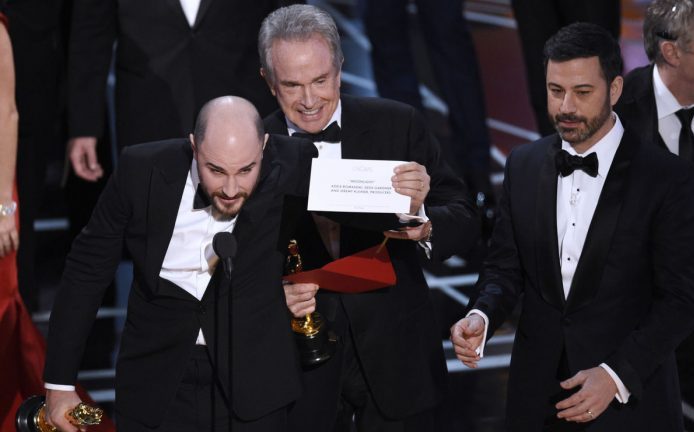
Pretty much the entire planet has seen or heard about the mistaken Best Picture announcement for “La La Land” only to find out that “Moonlight” had indeed won instead in a mistake that put Steve Harvey’s mistaken Miss Universe crowning to shame.

Aside from the stunned faces of the audience at the Dolby Theatre in Hollywood, the moment became an instant viral sensation as social media buzzed about the historic mistake, but the real shocker came a day later when the Iranian regime’s foreign minister Mohammad Javad Zarif lauded comments made by the cast and crew of the film “The Salesman” which won an Oscar for best foreign film critical of the Trump administration’s immigration visa moratorium.

Zarif tweeted out his own congratulations for the statement read for Iranian film director Asghar Farhadi who chose to stay away from the 89th Annual Academy Awards ceremony in protest over President Trump’s travel ban.

“Proud of cast & crew of ‘The Salesman’ for Oscar & stance against #MuslimBan. Iranians have represented culture & civilization for millennia,” said Zarif’s tweet.

Zarif’s tweet was met by a blistering series of responses from CNN anchor Jake Tapper who took Zarif to task for lauding an Iranian filmmaker while the regime regularly imprisons other dissident Iranian filmmakers.

On Monday, Tapper tweeted how Iran has treated filmmakers in the past, which included long jail sentences and not being permitted to leave the country for decades, according to the Daily Caller.

Tapper went on to list several prominent Iranian filmmakers who are languishing in regime prisons.

“2/Iran regularly jails its filmmakers. Such as Keywan Karimi guilty of ‘insulting sanctities’ in October 2015,” he tweeted.

“3/Jafar Panahi was sentenced to six years in prison for trying to make an ‘antiregime’ documentary,” he continued.

“4/Documentary filmmaker/women’s rights activist Mahnaz Mohammadi was jailed for collaborating with the BBC,” he added.

“5/ Musician Mehdi Rajabjan and filmmaker Hossein Rajabian were jailed for “insulting Islamic sanctities,” he tweeted.

“6/ So FM @JZarif? The traditions of your brilliant people are being oppressed by the tyranny of your government. Tweets notwithstanding,” Tapper concluded.

Tapper correctly points out the hypocrisy of the Iranian regime when it lauds comments that support its propaganda efforts, and yet deals harshly with anyone caught criticizing the regime of stepping outside of approved cultural or moral norms.

All of which makes comments made by top mullah Ali Khamenei earlier this month even more interesting when seen in the light of Zarif’s tweets.

In a speech in the East Azerbaijan region of Iran, Khamenei said that a war on Iran’s culture and economy is more dangerous to his Islamic regime than any military threat from the West, according to Breitbart News.

“A European official said to our officials that a war in Iran would have been inevitable if it had not been for the Bar-Jaam,” Khamenei said, referring to the nuclear agreement brokered by the Obama administration and Western allies. “That official said that if the Bar-Jaam had not been signed, the war would have been definite.”

“This is a blatant lie!” Khamenei said in the speech. “Why do they speak about war? They do so because they want to switch our minds to a military war, but the real war is something else.”

“The real war is an economic war, the real war is the war of sanctions, the real war is the arenas of work, activity, and technology inside the country,” Khamenei said. “This is the real war!”

“They draw our attention to a military war so that we ignore this war,” Khamenei said. “The real war is a cultural war.

“There are so many television and internet networks which are busy diverting the hearts and minds of our youth away from religion, our sacred beliefs, morality, modesty and the like,” Khamenei said.

In this regard Khamenei is correct since what the mullahs abhor more than anything else is free and independent thinking it seems. Free expression and divergent opinion is met with a fury from the mullahs akin to a full scale invasion; except for the ruling mullahs an invasion of ideas seems to be more dangerous than U.S. Marines landing on the beaches of Iran.

This also explains why the regime has always been especially brutal in its crackdowns of artists, journalists, bloggers and filmmakers as a means of controlling public discourse and the flow of creativity among the Iranian people.

It also explains why the regime has worked so hard at restricting access to social media platforms and web sites judged to have anti-regime materials on it.

Inevitably though, the slow creep of the arts have proven to be a strong antidote to totalitarian thinking and we can only hope that the Academy Awards will one day be celebrating the work of an Iranian filmmaker who know sits in prison.

Laura Carnahan

Filed Under: Blog, News Tagged With: #NuclearDeal, Featured, Iran deal, Iran Human rights, Iran Mullahs, Iran Terrorism, IRGC, Rouhani

Iran Regime Continues to Ramp up Tensions with Naval War Games

February 27, 2017 by admin

Iran Regime Continues to Ramp up Tensions with Naval War Games

Iran Regime Continues to Ramp up Tensions with Naval War Games

The Iranian regime has been busy lately playing at war games with the gusto of a 10-year-old boy with his new toys. After going on a multi-billion dollar shopping spree using cash provided courtesy of the U.S. for the release of American hostages and as a result of lifting economic sanctions with the nuclear agreement, the mullahs in Tehran have been busy showing off their new toys.

This has included test firing new ballistic missiles, launching new Russian-made anti-aircraft missiles, flying new aerial drones and sailing new ships designed to launch small ship raids against larger warships such as the U.S. Navy.

The Iranian regime has also been busy resupplying Houthi rebels in Yemen with smuggled shipments of rockets, mortar rounds, ammunition and guns. It has also been sending a steady stream of fighters culled from Afghan mercenaries, Shiite militias in Iraq and its own Quds Forces and Revolutionary Guard Corps to fight in Syria.

Meanwhile its navy has been busy flitting about the Persian Gulf and Red Sea to run aggressively at U.S. Navy warships in an attempt to intimidate and possibly cause an incident on the high seas.

This sort of action continued with the launch of a series of war games both on the ground and at sea. The regime just completed three days of war games and launched another series of war games; these to be conducted in a massive area stretching 772,000 square miles from the Strait of Hormuz, the Sea of Oman, through the Indian Ocean and the Bab-el-Mandeb Strait.

Announcing the exercise on Sunday, regime Navy Commander Rear Admiral Habibollah Sayyari said: “The aim of the Velayat 95 drill is to upgrade the country’s defensive capabilities and send Iran’s message of peace and friendship to the regional countries.”

Millions of barrels of oil are transported daily to Europe, the US and Asia through the Bab el-Mandab and the Strait of Hormuz, waterways that run along the coasts of Yemen and Iran and has often been used by the Iranian regime as a threat to global trade.

The US Navy’s Fifth Fleet is based in the region and protects shipping lanes in the Gulf and nearby waters.

On top of the regime banging the war drum loudly, it announced its intentions to buy 950 tons of uranium ore from Kazakhstan over the next three years and is relying on Russia to help refining the uranium into nuclear fuel.

The deal would not technically violate the horrifically bad nuclear agreement between Iran and the U.S. and other nations because the deal did not set limits on the Iranian regime’s ability to produce supplies of uranium ore, which gives you an idea of how idiotic the deal was to begin with.

Ali Akbar Salehi, head of Iran’s Atomic Energy Organisation, told the ISNA news agency that the purchase was supposed to happen “within three years.”

“650 tons will enter the country in two consignments and 300 tons will enter Iran in the third year,” he said.

Salehi said the final shipment of concentrate, known as yellow cake, would be turned into uranium hexafluoride gas and sold back to Kazakhstan — its first international sale of the compound which is used in the uranium enrichment process, according to Breitbart News.

Salehi said Iran has already received around 382 tons of yellow cake, primarily from Russia, since the nuclear deal came into force in January last year.

Under the deal, Iran is allowed to run around 5,000 “IR-1” centrifuges and has been testing more advanced models that can produce greater quantities of enriched uranium.

Taken together, the order to buy tons of uranium along with an almost constant string of military actions set an unsettling stage for the world in 2017. Couple these developments with the upcoming Iranian presidential elections in which it is assured that no dissident candidate will be allowed on the ballot by the regime’s ultraconservative Guardian Council, Iran will remain firmly in the control of mullah Ali Khamenei.

Amidst all of these provocative moves, the Iran lobby has been completely silent, never raising any objections to the escalation in Iran’s military activities, nor its desire to ramp up a civilian nuclear program that could be easily converted to military purposes.

For example, the Ploughshares Fund, which partly funds the National Iranian American Council, has been aggressive in making the claims that it works to stop nuclear proliferation, but in the case of the Iranian regime expanding its nuclear capacity, it is as deaf and dumb as a door post.

The lack of objections from the Iran lobby demonstrates its complicity in supporting these aggressive acts by the mullahs.

Michael Tomlinson

Filed Under: Blog, News Tagged With: #NuclearDeal, Featured, Iran deal, Iran Lobby, Iran Mullahs

  • « Previous Page
  • 1
  • …
  • 7
  • 8
  • 9
  • 10
  • 11
  • …
  • 16
  • Next Page »

National Iranian-American Council (NIAC)

  • Bogus Memberships
  • Survey
  • Lobbying
  • Iranians for International Cooperation
  • Defamation Lawsuit
  • People’s Mojahedin
  • Trita Parsi Biography
  • Parsi/Namazi Lobbying Plan
  • Parsi Links to Namazi & Iranian Regime
  • Namazi, NIAC Ringleader
  • Collaborating with Iran’s Ambassador

Recent Posts

  • NIAC Trying to Gain Influence On U.S. Congress
  • While Iran Lobby Plays Blame Game Iran Goes Nuclear
  • Iran Lobby Jumps on Detention of Iranian Newscaster
  • Bad News for Iran Swamps Iran Lobby
  • Iran Starts Off Year by Banning Instagram

© Copyright 2026 IranLobby.net · All Rights Reserved.