Iran Lobby

Exposing the Activities of the lobbies and appeasers of the Mullah's Dictatorship ruling Iran

  • Home
  • About
  • Current Trend
  • National Iranian-American Council(NIAC)
    • Bogus Memberships
    • Survey
    • Lobbying
    • Iranians for International Cooperation
    • Defamation Lawsuit
    • People’s Mojahedin
    • Trita Parsi Biography
    • Parsi/Namazi Lobbying Plan
    • Parsi Links to Namazi& Iranian Regime
    • Namazi, NIAC Ringleader
    • Collaborating with Iran’s Ambassador
  • The Appeasers
    • Gary Sick
    • Flynt Leverett & Hillary Mann Leverett
    • Baroness Nicholson
  • Blog
  • Links
  • Media Reports

For Iran Regime Religion Defines Policies

August 16, 2016 by admin

For Iran Regime Religion Defines Policies

For Iran Regime Religion Defines Policies

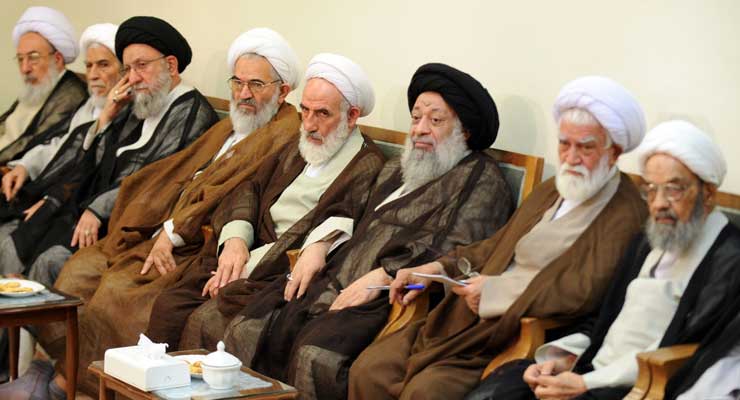
From the beginning of the Islamic revolution, the mullahs and religious cleric followers of Ruhollah Khomeini secured for themselves a nation-state completely under their control. Over three decades before ISIS spawned its own dreams of an Islamic caliphate, the mullahs in Tehran had already achieved that goal.

As a religious state, the Iranian regime stands virtually alone in a secular world of nations governed by parliaments, democracies, constitutional monarchies and even communist or socialist regimes.

Aside from the Vatican city-state, Iran is unique among nations, which makes understanding its religious leaders vital in understanding its national goals and policies.

For the mullahs, there were only one goal they had: To preserve power under the banner of the Islamic revolution and expansion and exporting of that same revolution.

Iranian regime’s constitution is emblematic of those priorities; vesting all final authority with the supreme leader, especially critical areas such as foreign policy, the military and judiciary. The control of virtually all sectors of Iranian life places the Iranian people squarely under the thumb of the mullahs.

They subject the Iranian people to the harshness of the religious courts that control daily family life. They subject the Iranian people to legions of morality police that enforce moral codes for everything from women driving cars and their style of dress to the gathering of young men and women at cafes.

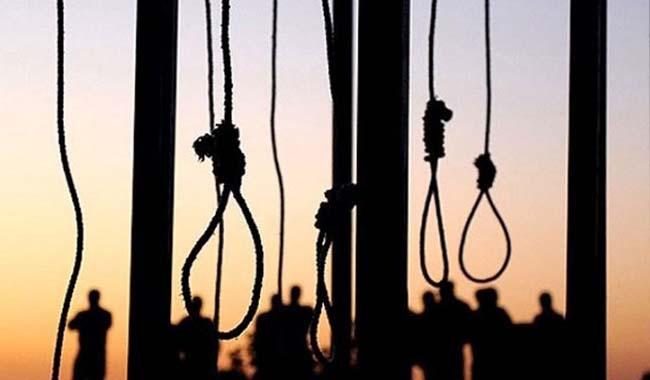
With each beating given out, with each Iranian thrown into prison, with each public execution, the mullahs attempt to enforce their control over the Iranian people and in doing so only sow the seeds of discontent deeper into the soil of Iranian society from which springs for dissent and discontent in ways large and small.

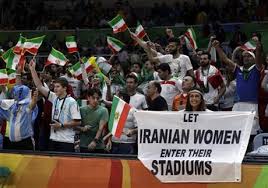
Opposition to the mullahs rule can come in the form of a selfie by a young Iranian woman posting without a hijab or another young Iranian woman holding up a sign courtside of a volleyball game at the Rio Olympics.

It can take the form in mass protests and street demonstrations or it can take the form of hooking up a simple satellite dish to watch banned newscasts from Europe or the U.S.

For the mullahs, each rising level of defiance has to be met with even more brutal suppression because allowing even a small crack or glimmer of hope to shine through would only undermine their rule and bring forward the prospect of regime change.

This explains why the mullahs are always seeking provocations to fight against or blame for their own inadequacies. It is also why they regularly snatch hostages and balance their fate against the needs of the religious regime.

The mullahs inability to improve the economy following the nuclear deal points to their own ineptness, as well as their priorities to shift billions in recovered funds, as well as a $400 million ransom payment for American hostages, to use not for the Iranian people, but to line their own pockets and continue to fund their terrorist proxies in wars in Syria, Iraq and Yemen.

Regime-controlled media, as well as the Iran lobby have been busy pushing the idea that the lack of progress in improving the Iranian economy is to be blamed on the U.S. failure to open up all financial channels for the mullahs’ use.

Mohammad Javad Larijani, the head of the regime’s judiciary council , was quoted citing perceived serious flaws in the nuclear agreement leaving Iran without benefits it was promised.

“The US has completely retained the structure of the sanctions, and is not intending to lift them in the near future,” he said.

The flawed documentation and ill-definition of commitments in the JCPOA and the subsequent UN Security Council Resolution 2231 enable Washington to make very little concessions to Iran, Larijani explained, adding that having control over how to interpret the deal has given US politicians the power to impose what they want.

That point of view by the regime was reinforced over and over by statements by top mullah Ali Khamenei who claims that the duty to lift all sanctions lies with the U.S. and failure to do so would end up negating the agreement.

It is conspicuous Khamenei makes these claims on the eve of the U.S. presidential elections in which the days of the current administration are numbered as is the continuation of the same policy of appeasement it has been following for the past two years.

What remains is a violent regime bent on preserving its religious control over the Iranian people and willing to commit any atrocity to achieve it and preserve its Islamic revolution.

If the world truly wants a free and democratic Iran, the first step will have to be the continued opposition to the rule of the mullahs and the empowerment of the Iranian people through the dissidents and oppressed fighting for their freedom.

By Michael Tomlinson
Filed Under: Blog, News Tagged With: Featured, Iran, Iran deal, Iran Human rights, Iran sanctions, Iran Terrorism, Khamenei

Abuses and Reach of Iranian Regime is Proof to Keep Sanctions

August 16, 2016 by admin

Abuses and Reach of Iranian Regime is Proof to Keep Sanctions

Abuses and Reach of Iranian Regime is Proof to Keep Sanctions

The sign read “Let Iranian women enter their stadiums.”

As protest signs go against the Iranian regime, this one was pretty tame, but the setting of where it was held aloft made for news; it was at the Rio Olympics.

Darya Safai, an Iranian-born Belgian, held aloft the sign during the men’s volleyball match between Iran and Egypt. As security personnel approached her to take down the sign, she broke into tears. Safai was allowed to stay and keep her sign and she vowed to show up—with sign—at all other matches with Iran’s volleyball team, even though the International Olympic Committee bans political statements at games.

Safai was protesting an Iranian regime edict that bans women from attending sporting events. She has lived in Belgium since 2000, after being arrested in Iran in 1999 and put in prison for taking part in anti-government demonstrations. She has been staging sports protests since 2014.

Since 2012, the Iranian government has banned women from attending volleyball tournaments as the sport became increasingly popular in Iran with both sexes.

It has arrested women for trying to enter stadiums, human rights groups say.

Her small protest is emblematic of the much larger protests and demonstrations that have become part and parcel against the Iranian regime, including a recent hunger strike staged in front of 10 Downing Street in London and the recent mass gathering outside of Paris by 100,000 human rights activists and Iranian dissidents.

The protests have stepped up as the Iranian regime has stepped up its various human rights abuses, most notably the renewal of its penchant for nabbing dual-nationality citizens without charge and tossing them into prison.

An editorial by Dr. Majid Rafizadeh, president of the International American Council on the Middle East, in Huffington Post, talked about the sharp spike in arrests of foreigners by the Iranian regime.

“Even the State Department has acknowledged the increasing threat ‘Iran has continued to harass, arrest, and detain US citizens, in particular dual nationals,” he said.

“Many believed that Iran would open up politically and socially after rejoining the global financial system and after sanctions were lifted. Rouhani encouraged the Iranian Diaspora to visit Iran without fear,” he added. “Iranian authorities use dual citizens as pawns for extracting economic concessions or receiving political and financial gains and can also use them to swap prisoners.”

The use of hostages pales in comparison though to the regime’s heavy use of executions, especially mass executions lately, to reinforce its policies of fear and dread, as described in a piece for The Hill by Shahriar Kia, a press spokesman for residents of Camp Liberty, Iraq, and members of the People’s Mujahedin Organization of Iran opposition group (PMOI, also known as MEK).

Iran is known for its skyrocketing number of executions and practice of obtaining coerced confessions through torture and other banned methods. The mullahs have also proved their “sickening enthusiasm” of sending juveniles to the gallows, all in violation of international laws and respecting no bounds in this regard, said Magdalena Mughrabi, Deputy Middle East and North Africa Program Director of Amnesty International. International law, including the Convention on the Rights of the Child to which Iran is a state party, absolutely prohibits the use of death penalty for crimes committed when the defendant was below 18 years of age. Yet apparently this is a pretext Iran refuses to respect.

“The recent execution of nearly three dozen Sunni Kurds in one day adds to Iran’s already dismal human rights history, especially in the past three years after the ‘moderate’ Hassan Rouhani came to power,” he writes.

The Iranian regime’s brutal policies have also helped serve as a breeding ground of discontent that is driving willing Sunni recruits into the arms of ISIS. Far from the public perceptions being pounded by the Iran lobby the truth is that Iran is doing more to drive ISIS’s growth than anything the West is doing.

Wahab Raofi, a former interpreter for NATO forces in Afghanistan, described such a problem in a piece for Huffington Post.

“Politicians keep taking jabs at ISIS, yet the world’s most notorious terrorist group continues to carry out spectacular, deadly attacks around the world. This is because politicians jab only at the extremities of their foe – they cannot win unless they deliver a knockout blow to the head. And that target is Iran,” he said.

“Peace-seeking governments need to pinpoint the source of the problem. Why is ISIS, for all its brutality, still able to recruit young Sunni Muslims from around the world? The path of destruction leads to the doorstep of Shiite Iran,” he added.

The Iranian regime stands as the most destabilizing influence throughout the world today and ignoring that threat under the misguided hope of gaining favor with “moderate” forces within Iran is a mistake of monumental proportions.

The fact that human rights and sponsorship of terrorism were not attached to the Iran nuclear agreement and thus the opportunity exists to reauthorize the Iran Sanctions Act, as well as maintain existing sanctions related to those areas where the regime’s conduct has been plain for the world to see.

A reminder of what the mullahs in Tehran believe in comes from an editorial penned by Barry Rosen, one of the 51 Americans taken hostage 40 years ago in the takeover of the American embassy during the Islamic revolution, in the Telegraph where he voiced his support and concern for Nazanin Zaghari-Ratcliffe, a British-Iranian aid worker imprisoned by the regime who’s health is reported to be in steep decline.

“She is a young mother of British-Iranian citizenship who has dedicated her life to aid and charity work. And, simply because she was in the wrong place at the wrong time, she has been taken from her family, and is subject to the brutality of the Iranian prison regime,” he writes.

“In 1979, the Iranians were very clear that I and the other hostages would only be released if there was a financial payment to Iran. The deal was made in 1981 and that’s why we were free. And no matter how much the agencies dress it up, the $400m that has just been paid to Iran by the US, at the same time as five Americans were released from Iranian jails, was just the same. Some $400m in foreign currency, packed onto crates and delivered to Iran on the same day as our hostages being released is a quid pro-quo that bad timing alone cannot explain,” he added.

Rosen knows the regime well and has found that in 40 years very little has changed.

“Businesses, organizations, charities and agencies that operate in Iran are at risk, and the people who work for them – especially if they have dual nationality – are in a very dangerous position. It is my deep concern that further investment in Iran will, rather than open it to the world, will actually put more dual citizens at risk; will help the country obtain nuclear weapons; and will help fund human rights abuses,” Rosen warns.

It is a warning the world would be well served to remember.

By Laura Carnahan

Filed Under: Blog, News Tagged With: Featured, Iran, Iran Human rights, Iran Lobby, Iran sanctions, Iran Terrorism, Rouhani

The Disconnect Between Iran Lobby Priorities and Reality

August 9, 2016 by admin


The Disconnect Between Iran Lobby Priorities and Reality

The Disconnect Between Iran Lobby Priorities and Reality

Money makes the world go around

The world go around

The world go around

Money makes the world go around

It makes the world go ’round.


A mark, a yen, a buck, or a pound

A buck or a pound

A buck or a pound

Is all that makes the world go around,

That clinking clanking sound

Can make the world go ’round.


These are lyrics from the 1972 Academy Award-winning movie “Cabaret” which depicted the last final days of freedom in the Weimar Republic of Germany in 1931 during the rise of the Nazi Party.

The tune entitled “Money, Money” is sung by the cabaret’s emcee as a narrative about the pervasive influence of money and the desperate pursuit of it.

The movie was also noteworthy because of its depiction of issues such as homosexuality and hedonistic club life, as well as the virulence of anti-Semitism and even abortion. It was a movie widely considered to be one of the best 100 movies of all time.

The show tune is appropriate though for our world today and is still powerfully relevant as we consider the current priorities of the Iran lobby and its most conspicuous leaders such as the National Iranian American Council (NIAC).

It also helps illustrate the wide disparity between the priorities of the Iran lobby and the most pressing issues surrounding the Iranian regime today. If we examine the public statements and recent policy memos issued by the NIAC especially this week, we would assume that the most pressing issues confronting the U.S. and Iranian regime is how to get the mullahs more money.

At the top of NIAC’s legislative priorities is to prevent renewal of the Iran Sanctions Act of 1996 (ISA) which is up for consideration by Congress before the end of this year and along with it, the tacit lifting of all remaining restrictions and sanctions against the Iranian regime.

The impetus for the legislative push by NIAC and other Iran lobby allies is recognition that the upcoming presidential election is likely to bring significant changes in the U.S. foreign policy approach to the Iranian regime no matter who wins, be it Hillary Clinton or Donald Trump, because an incoming administration is likely to gain political capital by taking an aggressive stand against Iran, especially in light of the global deterioration of stability with terrorism and proxy wars on the rise.

To that end, the NIAC has been busy churning out policy papers arguing not only against renewing the ISA, but also the lifting of all remaining sanctions, especially prohibitions against the regime’s access to U.S. currency exchanges and the reluctance of foreign banks to handle Iranian regime transactions for fear of running afoul sanctions still in place pertaining to Iran’s human rights abuses and support for terrorism.

Interestingly, one policy paper authored by Ryan Costello of NIAC, argued that expiration of the ISA would still allow the president the ability to re-impose the same sanctions, but he neglects to mention the real reason the mullahs wish to shift authority away from Congressional legislation and onto the president: President Obama has demonstrated with his policies of appeasement the value to the mullahs of a president willing to accommodate their wishes and avoid the messy spectacle of a Congressional hearing and floor debate which would almost certainly go against them on almost any issue given the current climate.

More importantly, by trying to sell the idea that a new president could re-impose sanctions at will, ignores the most obvious flip side of that proposition, which is that the same president could choose to ignore Iran’s conduct and not impose sanctions that might otherwise be forced by a renewed ISA.

The NIAC and its allies in the Iran lobby are counting on their ability to duplicate last year’s “echo chamber” to apply political pressure on a new administration to keep the Iranian regime off the sanctions hit list.

Another policy memo authored by Tyler Cullis of NIAC, goes even further to make the explicit link between the need to lift all sanctions and the potential for the nuclear agreement with Iran—the  Joint Comprehensive Plan of Action (JCPOA)—to fail.

What Cullis and the NIAC fail to admit is that the limits of the JCPOA stop at the issue of human rights violations and support for terrorism; issues that the regime stridently wanted to be de-linked from the nuclear negotiations for fear that they would bring down any hope of a deal and the lifting of economic sanctions that had succeeded in crippling the Iranian economy and weakened the mullahs grip on power.

Cullis’ conclusion reveals the true goals of the Iran lobby when he writes:

“Despite the formal lifting of U.S. nuclear-related sanctions, implementation of U.S. obligations under the JCPOA has not proceeded altogether smoothly. In order to safeguard the decades-long restrictions on Iran’s nuclear program, the U.S. must faithfully observe its JCPOA sanctions-related obligations in full. To do so, though, there must be a common understanding as to the full scope of those U.S. sanctions-related commitments.”

It is a bizarre statement to make since it places the burden solely on U.S. actions and speaks of nothing in regards to growing Iranian regime’s recalcitrance and militant stances; nor takes into account the abysmal state of human rights in Iran.

That situation has grown appallingly worse as the regime has moved aggressively to execute citizens at a fast and monstrous clip, including the mass execution of 25 Sunni Muslims it accuses of “enmity against God,” which earned the regime a blistering condemnation from Human Rights Watch and other human rights groups.

“Iran’s mass execution of prisoners on August 2 at Rajai Shahr prison is a shameful low point in its human rights record,” said Middle East director at Human Rights Watch. “With at least 230 executions since January 1, Iran is yet again the regional leader in executions but a laggard in implementing the so far illusory penal code reforms meant to bridge the gap with international standards.”

Two lawyers who represented some of the men told Human Rights Watch that their clients did not get a fair trial and that their due process rights had been violated.

Ultimately, while the Iran lobby fights to fill the Iranian regime’s coffers, we have to ask why it doesn’t also fight to save Iranian lives.

Indeed, money does make the world go round.

By Michael Tomlinson

Filed Under: Blog, Current Trend, News Tagged With: #NuclearDeal, Appeasement policy, Featured, Iran deal, Iran Human rights, Iran Lobby, Iran Mullahs, Iran sanctions, National Iranian American Council, NIAC Action, Ryan Costello, Tyler Cullis

How Much Are Four Americans Worth to Iran? $400 Million

August 3, 2016 by admin

How Much Are Four Americans Worth to Iran? $400 Million

How Much Are Four Americans Worth to Iran? $400 Million

How much are four Americans worth to the Iranian regime? Apparently $400 million since news reports indicate the Obama administration secretly shipped $400 million worth of cash to Iran coinciding with the release of four Americans detained in Tehran and released as part of the nuclear agreement.

According to the Wall Street Journal, Wooden pallets stacked with euros, Swiss francs and other currencies were flown into Iran on an unmarked cargo plane, according to these officials. The U.S. procured the money from the central banks of the Netherlands and Switzerland, they said.

The money represented the first installment of a $1.7 billion settlement the Obama administration reached with Iran to resolve a decades-old dispute over a failed arms deal signed just before the 1979 fall of Iran’s last monarch, Shah Mohammad Reza Pahlavi.

While Obama officials denied any quid pro quo of cash for the prisoners, U.S. officials also acknowledged that Iranian regime negotiators on the prisoner exchange said they wanted the cash to show they had gained something tangible.

Sen. Tom Cotton, a Republican from Arkansas and a fierce foe of the Iran nuclear deal, accused the Obama administration of paying “a $1.7 billion ransom to the ayatollahs for U.S. hostages.”

“This break with longstanding U.S. policy put a price on the head of Americans, and has led Iran to continue its illegal seizures” of Americans, he said.

Since the cash shipment, the intelligence arm of the Revolutionary Guard has arrested two more Iranian-Americans. Tehran has also detained dual-nationals from France, Canada and the U.K. in recent months.

The Iranian regime’s news media quoted senior regime defense officials who described the cash as a ransom payment themselves putting into proper focus how they perceive the cash payment.

Ironically, the $400 million was paid in foreign currency because any transaction with Iran in U.S. dollars is still illegal under existing sanctions not related to the nuclear agreement for violations of human rights and sponsorship of terrorism.

A report by an Iranian news site close to the Revolutionary Guard, the Tasnim agency, said the cash arrived in Tehran’s Mehrabad airport on the same day the Americans departed.

Revolutionary Guard commanders boasted at the time that the Americans had succumbed to Iranian pressure. “Taking this much money back was in return for the release of the American spies,” said Gen. Mohammad Reza Naghdi, commander of the Guard’s Basij militia, on state media.

Among the Americans currently being held are an energy executive named Siamak Namazi and his 80-year old father, Baqer, according to U.S. and Iranian officials. Iran’s judiciary spokesman last month confirmed Tehran had arrested the third American, believed to be a San Diego resident named Reza “Robin” Shahini.

Friends and family of the Namazis believe the Iranians are seeking to increase their leverage to force another prisoner exchange or cash payment in the final six months of the Obama administration. Secretary of State John Kerry and other U.S. officials have been raising their case with Iranian diplomats, U.S. officials say.

Iranian officials have demanded in recent weeks the U.S. return $2 billion in Iranian funds that were frozen in New York in 2009. The Supreme Court recently ruled that the money should be given to victims of Iranian-sponsored terror attacks.

Clearly the Iranian regime expects to use the same tried and true tactics to squeeze more cash out of the Obama administration in its waning days as the three proxy wars it funds in Syria, Iraq and Yemen drain it of cash as fast as it can replenish it.

The $100 million value per American hostage is a stunning amount. As a point of comparison, the four highest paid professional athletes in the world make less money: Soccer stars Cristiano Ronaldo and Lionel Messi make $88 and $81.4 million respectively, basketball star LeBron James banks $77.2 million and tennis great Roger Federer brings in a paltry $67.8 million compared to what the Iranian regime received.

The fact that the last days of the Obama administration are coming and with both presidential candidates—Hillary Clinton and Donald Trump—promising to hold the Iranian regime more accountable, the regime’s leaders may be seeing the end of the road to the usefulness of the nuclear deal.

Top mullah Ali Khamenei harshly denounced the Iran nuclear deal Monday, referring to the negotiations as a “lethal poison” that will prevent his country from negotiating with the U.S. in the future.

“They [the U.S.] want us to negotiate with them on the regional issues but the nuclear deal experience tells us that this is a lethal poison and we cannot trust the Americans’ words in any issue,” Khamenei told a gathering of Iranian citizens Monday.

Various officials within the Islamic Republic have criticized the U.S. for implementing new sanctions against Iran since the JCPOA went into effect in January. They claim the deal prevents the U.S. from implementing any new sanctions against their country, however, the deal only pertains to nuclear related sanctions that existed before the accord was signed. Khamenei threatened to “set fire” to the deal in June should the West violate it, he did not elaborate on what exactly entailed a violation.

It’s a silly claim since the Iranians specifically demanded the deal be de-linked from non-nuclear issues such as human rights and terrorism. In essence, the mullahs have trapped themselves.

Khamenei cautioned against talks with the United States on other regional crises, presumably including the wars in Syria and Yemen and the Islamic State extremist group. The experience of the nuclear deal, he said, “tells us that taking this step would be a deadly poison and that the Americans’ remarks cannot be trusted on any issue.”

His remarks are a verbal backflip from the original promises made by the Iran lobby, especially the National Iranian American Council, that passage of the agreement would help in moderating the various conflicts going on in the region with Iran’s help.

Those claims, like most made in support of the Iranian regime, have proven false.

By  Michael Tomlinson

Filed Under: Blog, News Tagged With: #NuclearDeal, Appeasement policy, Featured, Iran Human rights, Iran Lobby, Iran sanctions, Iran Talks, Khamenei, National Iranian American Council

Iran Lobby Tries to Hold Off Iran Sanctions

August 2, 2016 by admin

Iran Lobby Tries to Hold Off Iran Sanctions

Iran Lobby Tries to Hold Off Iran Sanctions

The Iran lobby, led by the National Iranian American Council, has consistently raised the idea that Iran has not been rewarded with the full lifting of economic sanctions per the nuclear agreement reached last year.

It makes this case based on the continued shaky nature of the Iranian economy, and by the threatening statements of various regime officials such as top mullah Ali Khamenei and foreign minister Javad Zarif who maintain the U.S. is deliberately trying to sabotage the deal.

It is a profoundly ludicrous ideal given the fact that the Obama administration has broken with past U.S. policy over the past three decades in maneuvering to get this deal done in the first place. The Obama administration has set new standards for political gymnastics in trying to secure this policy win, including treating the agreement as a political framework and not a formal treaty in order to avoid an uncertain Senate vote.

It even de-linked Iranian regime’s notoriously bad human rights record and sponsorship of terrorism as conditions for doing the deal; an unheard of step in modern diplomacy.

It also ignored blatant tampering by the Iranian regime in sanitizing military sites where prior uranium enrichment had been ongoing and ignored copious mountains of evidence that Iran was still pursuing dual-use nuclear technology from Germany and ballistic missile designs from North Korea.

Even after all that, the Iran lobby and regime still blame the U.S. for not following through on its commitments.

With friends like these, who needs enemies?

A key goal for the regime remains the lifting of the remaining sanctions put in place by the U.S. in response to Iran’s abysmal human rights record and terror support. These items were ostensibly left out from the nuclear deal since—by the Iranians argument—they had nothing to do with nuclear production, but now the mullahs want these sanctions lifted even though Iranian regime has done nothing to improve its conduct in either area.

The fact that the Iran lobby and regime are now trying to link these sanctions—previously off the table—now back on the table and have threatened to walk away from a deal they have already walked away from, demonstrates how completely useless the nuclear exercise has become.

In a posting on its website, the NIAC, argued that the pending renewal of the Iran Sanctions Act could bring disastrous consequences if it was amended with so-called “poison pills” to impose new restrictions, sanctions or even lengthen its term.

“There is a danger that passage of new sanctions legislation, even if it is to renew sanctions already on the books, could exacerbate tensions over JCPOA sanctions relief. The prospect of Congress renewing ISA, especially extending them beyond the 2023 deadline for lifting sanctions, could send troubling signals regarding the U.S. commitment to the JCPOA at a time of ongoing political uncertainty. Iranian officials and many in the broader Iranian public say the sanctions relief promised under the deal has not been delivered,” the NIAC statement said.

It’s a perverse position to take since the gross mismanagement of the regime’s economy and the decision to support three ongoing wars in Syria, Iraq and Yemen have badly hobbled an economy already rife with public corruption and battered by plummeting oil prices that have nothing to do with the sanctions; especially since Iranian regime is now free to sell the country’s oil back on the open market.

The Iranian people are rightly angry and upset at the stagnant economy, but Tehran’s streets and the channels of social media are not being filled with vocal denunciations of the U.S., instead it is filled with harsh protests of inflated paychecks for regime officials and the pouring of thousands of young Iranian lives to die on the battlefields far from Iran’s borders.

The effort to misdirect attention away from the real failings of the regime and try to blame it on the U.S.—even after the U.S. has tried to do everything it can to appease the Iranian regime short of baking cookies—is a time-worn tactic of the mullahs and we should not fall for it.

Robert Spencer, noted author and director of Jihad Watch, wrote an editorial in the New York Post warning that the Iranian regime is the greatest threat the U.S. and West face right now and dwarfs ISIS in its threat.

“Iran is not as flashy as ISIS but is actively working now on numerous anti-American initiatives that could turn out to be even more lethal than anything ISIS has yet perpetrated,” he said. “The nation is a breeding ground for terrorist activity: funding and controlling a global network of jihad terror organizations with a truly global reach, ready to do Iran’s bidding up to and including the killing of its perceived enemies.”

“Iran’s Hezbollah doesn’t just operate in Lebanon. It continues to target the United States through Mexico, where it has teamed with drug cartels along the US border. This partnership is mutually beneficial: Hezbollah gets massive amounts of cash to finance its jihad operations, and the drug cartels receive extensive training in ways to strike terror into the hearts of their enemies. That is one principal reason why the Mexican drug cartels have adopted what up until recently had been two trademarks of jihad groups: kidnapping and beheading,” he added.

Bob Blackman, a member of the British Parliament, similarly warned of trusting the Iranian regime in a piece in The Hill after the United Nations released a report assessing the regime’s compliance with the nuclear agreement, which found it had failed to meet the higher standards for compliance.

“The critical report by the UN is only the latest in a long series of marks against the Rouhani administration’s supposedly moderate credentials. In order to believe in that moderation in the first place, Western policy-makers had to ignore Rouhani’s long history in the security apparatus of Iran’s clerical regime, including his former role as lead nuclear negotiator, about which he boasted of raising Tehran’s nuclear profile while keeping international scrutiny at bay. And in order to keep the moderation narrative alive to the current date, those same policy-makers have had to ignore various statistical indicators and warnings from the Iranian opposition,” he said.

“The U.S. gave up important leverage in hope of improved relations, but it remained the main object of Tehran’s wrath. The UN closed the file on Tehran’s nuclear weapons program and Iran has continued to accuse it of political bias. And the six major powers involved in the JCPOA, having given in to even last-minute demands by the Islamic Republic, received nothing in return but the most cursory and minimal compliance with the deal. As the Associated Press reported last week, secret side-agreements already outline the expanded nuclear activities that Iran plans to pursue at its earliest possible opportunity,” Blackman added in a warning we should all heed.

By Michael Tomlinson

Filed Under: Blog, News Tagged With: #NuclearDeal, Appeasement policy, Featured, Iran, Iran deal, Iran Human rights, Iran Lobby, Iran sanctions, Iran Terrorism, NIAC Action

World Will be Paying for Flawed Iran Nuclear Deal for Years

July 21, 2016 by admin


World Will be Paying for Flawed Iran Nuclear Deal for Years

World Will be Paying for Flawed Iran Nuclear Deal for Years

The Iran nuclear deal has moved front and center in the attention of the media and among policymakers since it has been a year now since the agreement was hailed as a ground breaking exercise in diplomacy.

The Iran lobby has predictably cheered its perceived successes in keeping the Iranian regime in check, with regime apologists such as the National Iranian American Council in the vanguard of that cheerleading squad.

For the mullahs in Tehran, the past year has yielded some fruit as a result of the deal; namely the release of badly needed cash reserves they have been able to tap for a massive shopping expedition to Russia to replenish arms used up in fighting three proxy wars in Syria, Yemen and Iraq.

The deal has also helped the regime upgrade the technical sophistication of its military with the purchase of state-of-the-art anti-aircraft missile batteries from Russia, alongside new fighter jets, battle tanks and anti-ship missiles.

Most importantly for the regime is the political cover the deal has provided in allowing Iran to continue its brutal crackdown on human rights at home while receiving a free pass from the U.S. and other nations since linking the deal to improvements in human rights was left out.

The most recent revelation of the deal in hindsight has been the disclosure by the Associated Press of a secret side deal that grants Iran an accelerated pathway to enriching uranium back to full capacity well before the 15-year time frame outlined in the deal.

The damning disclosure has wrecked the Iran lobby’s carefully laid arguments and brought on a wave of negative media coverage pointing out the irregularity in the promise of nuclear containment. The disclosure also undercuts the central conceit of the nuclear deal, which was that it could buy time to push Iran’s ability to build a nuclear weapon back over a decade and half.

The reality is that Iranian regime has been freed of adequate international inspection and monitoring and can legally accelerate its enrichment program to produce enough nuclear material to produce several warheads in short order.

When you tie in that fact with the accelerated development of Iran’s ballistic missile program, you can see the blueprint laid out by North Korea a decade earlier that enabled it to join the ranks of nuclear weaponized nations.

James Phillips, a senior research fellow for Middle Eastern Affairs at the Heritage Foundation, outlined this key failing in the nuclear deal in a piece in the Daily Signal.

“The published text of the nuclear agreement was vague on the exact timing of what happens to Iran’s uranium enrichment program after ten years,” he writes. ““But the new document indicates that after ten years, Iran plans to start replacing its current centrifuges with thousands of more advanced models that would be up to five times more efficient than the 5,060 centrifuges that it is allowed to operate currently under the agreement.”

“This concession could allow Tehran to enrich at more than twice the rate that it is now doing, even if the total number of operating centrifuges are reduced. This is a major concern because if the enrichment rate doubles, the time Tehran would need to stage a nuclear breakout would be reduced from the 12 months promised by the Obama administration to six months or less, much earlier than the administration had advertised when it was trying to sell the nuclear deal,” he added.

The fact that the side deal was part of an add-on document prepared and submitted by the Iranian regime to the United Nations as part of its report on Iran’s compliance essentially codifies the regime’s ability to accelerate its enrichment program.

This poses a monumental problem for the future of the world in any new nuclear negotiations—not just with Iran, but any rogue nation—since a country such as Saudi Arabia or even Egypt might be tempted to develop a nuclear capability in response to the Iranian regime and point out, correctly, it is deserving of the same concessions.

A Non-Resident Iran Research Fellow at the Foundation for Defense of Democracies, pointed out this dangerous pathway for the future of nuclear agreements in a piece in the National Interest.

FDD report points out that by appeasing the Iranian regime, the U.S. has set the precedents that “intransigence can lead the international community to accept domestic enrichment” and “that being a Western ally does not guarantee more flexible treatment when accessing nuclear technology.”

“Key American allies that have previously limited their nuclear activities—like South Korea or the United Arab Emirates—have already noted that Iran, which has been repeatedly sanctioned for its nuclear noncompliance, has been permitted to sign a deal allowing it to develop industrial-scale nuclear capacity,” he writes.

The report also correctly points that creating an artificial divide between fissile material and development of warhead delivery systems is useless since Iran has already moved quickly to possess the ability to lob a nuclear warhead across continents. This “de-linking” process sets the precedent for any other nation to demand similar concessions.

The final lesson he writes about is that just because an agreement is lengthy (159 pages) does not mean it is always specific. The JCPOA contains a vague condition called “significant non-performance” under which parties can walk away from the deal. Such legalese incentivizes a devious negotiator like the Islamic State to define violations on its own terms.

Jed Babbin, former deputy undersecretary of defense in the George H.W. Bush administration and a senior fellow of the London Center for Policy Research, also noted in a piece in the Washington Times how the nuclear deal has actually prevented international monitoring of Iran’s nuclear activities.

“Parts of the side deals evidently bar Americans from participating in the inspection of Iranian nuclear sites. The side deals also allow Iran to inspect some of its own sites, preventing U.N. inspectors any access. To no one’s surprise, the Iranians have reported they are complying with the deal even in the uninspected sites,” he said.

“In 2003 Iraq, mistaken intelligence led to war. In 2016 Iran, the lack of intelligence is leading to a false peace” he adds.

The warning is explicit here. Because of the failures of the Iran nuclear deal, the world will have to suffer the consequences of a militant, extremist Iranian regime armed with nuclear weapons in the very near future and that prospect is one that the next incoming U.S. president must prevent.

By Michael Tomlinson

Filed Under: Blog, News Tagged With: Featured, Iran deal, Iran Lobby, Iran sanctions, National Iranian American Council, NIAC Action

When Will Iran Regime Be Held Accountable for Terrorism?

June 30, 2016 by admin

When Will Iran Regime Be Held Accountable for Terrorism?

When Will Iran Regime Be Held Accountable for Terrorism?

One of the earliest lessons any child learns from a parent is that their actions have consequences. You scream, you’re told to be quiet. You hit your sibling; you get a time out in the corner.

These life lessons form the foundation of our behavior into adult life and help us conform to the restrictions and expectations of living in a civilized world. Even as an adult, we are constantly told our actions have consequences.

You show up drunk at work, you get fired. You rob a bank, you go to jail. You murder a person; you get sentenced to life in prison.

These are not hard lessons to follow and we all take to them fairly naturally.

Only in the arena of foreign affairs and politics do things tend to get more muddled and deviate from what we consider to be acceptable norms. In the case of the Iranian regime, those deviations tend to take on galactic-sized proportions.

Take for example Iran’s involvement in the Syrian civil war. It utilizes a proxy in the form of the terror group Hezbollah to fight on the side of the Assad regime. It uses its own Revolutionary Guard and Quds Forces to attack and target Syrian civilians. It recruited Russia to enter the war and used its fighters to target facilities such as Doctors Without Borders hospitals.

Throughout this bloody conflict, Iran has been selling the war to its own people like a variety show of television, using celebrities, actors and rich kids to justify its involvement.

As Varujean Avanessian writes in the National Interest, “Iranian officials rarely mention bolstering Syria’s Bashar al-Assad or maintaining access to Hezbollah in Lebanon as reasons for Iran’s intervention in Syria. Instead, defending the Shiite shrines and keeping ISIS away from Iran’s borders are the official theme vindicating Iran’s presence in Syria.”

“And a rather peculiar method is employed to peddle Iran’s message: formerly or currently banned celebrities now receive coverage from Iran’s conservative outlets, in exchange for offering favorable views on Iranian policies in Syria,” he writes.

Formerly banned TV host Reza Rashidpour—well known for his tough interviews with Iranian politicians and entertainers—was also enthusiastically covered by conservative outlets for trying to dampen the perception in the society that financial incentives are the main motive for Iranian fighters to go to Syria.

What goes unsaid is the regime’s use of financial inducements and pressure to recruit tens of thousands of Afghan refugees to fight in Syria. For the regime, the perception that paying fighters to go to Syria is the only effective tool it has to get the soldiers it needs is troublesome and worrisome to the mullahs in Tehran. It also underscores the inherent weakness of their position as the conflict drags on for years with no appreciable end in sight.

And yet the Iranian regime pays no penalty or suffers any harsh consequences from the international community for its actions in Syria.

The same can also be said with its almost daily threats to tear up an already broken nuclear agreement and restart its nuclear program—a program it historically denied ever existed.

Alaeddin Boroujerdi, chair of the Iranian regime parliament’s national security and foreign policy commission, warned that the Islamic Republic would “resume large-scale uranium enrichment” if leaders feel the international community is not doing enough for Iran under the nuclear deal.

“The Islamic Republic of Iran’s response to the other side’s non-compliance with the implementation of the nuclear deal will be uranium enrichment,” Boroujerdi was quoted as saying in Iran’s state-controlled press.

His bluster follows similar statements made by top mullah Ali Khamenei last month and have come to take on a certain “boy who cried wolf” tenor as regime leaders start focusing their ire on Western nations for the inept handling of their own economy and the rampant corruption running through regime-controlled industries.

Even more alarming were statements made by Hezbollah’s leader Sayyed Hassan Nasrallah were he openly thanked the Iranian regime for its financial and material support over the years to his terror group.

The admission comes on the heels of Financial Action Task Force (FATF), the intergovernmental organization that sets global standards to combat money laundering and finance for terrorism and proliferation, once again placing Iran on its blacklist for supporting terrorism, yet granting the regime a reprieve from any additional sanctions in the hopes the nuclear deal might eventually pan out.

On what planet do you need to be from to connect the dots of Hezbollah’s own admission of support from Iran for terrorist activities and yet no consequences come from it?

Mark Dubowitz and Toby Dershowitz noted in a Forbes editorial that Tehran’s efforts to pass laws that purport to address international counter-terrorism financing standards are hollow and don’t conform to FATF standards. Iran’s definition of terrorism, for example, excludes groups “attempting to end foreign occupation, colonialism and racism,” and has other language used to justify terrorism against America and its allies. Iran’s leaders are telling the world “we will arm and bankroll whomever we want but won’t call them terrorists.”

The White House itself urged Iran on Monday to stop giving financial support to Hezbollah, warning of such continued backing won’t seep into “its interest.”

“We know that Iranian regime supports terrorism,” the White House deputy press secretary Eric Schultz told reporters aboard Air Force One. “And we know that Iran supports Hezbollah. And that is why we’ve issued the most serious and most severe sanctions ever on Iran for doing so. So it’s important for them to recognize their own behavior in enabling this.”

Yet, the same administration is trying to convince foreign banks to bankroll the Iranian regime and ignore the inconvenient truth of its support for terrorism.

It is arguably the most obtuse argument ever made in foreign policy since Neville Chamberlain came back from Munich claiming “peace in our time” from Adolf Hitler.

All of which goes to show that unless the Iranian regime finally understands the consequences of its actions, nothing will ever change there.

By Michael Tomlinson

Filed Under: Blog, News Tagged With: #NuclearDeal, Appeasement policy, Featured, Iran deal, Iran sanctions, Iran Terrorism, IRGC, Sanctions, Syria

Iran Lobby Tries to Spin Continued Blacklisting of Iran Regime

June 27, 2016 by admin

Iran Lobby Tries to Spin Continued Blacklisting of Iran Regime

Iran Lobby Tries to Spin Continued Blacklisting of Iran Regime

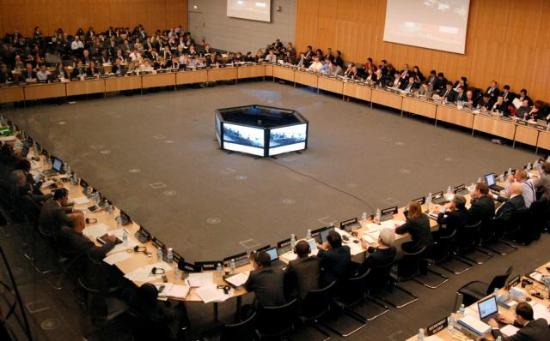
An international group that monitors and combats money laundering worldwide decided this weekend to keep the Iranian regime on its blacklist of high-risk countries, which included notably Syria, Iraq, Yemen and Afghanistan; all countries the regime is currently engaged in proxy wars.

At a meeting of its 37 members in South Korea, the Financial Action Task Force also moved to keep North Korea on its blacklist and urged countries to be on guard against Pyongyang’s attempts to bypass sanctions to finance illicit weapons programs.

“The FATF, therefore, calls on its members and urges all jurisdictions to continue to advise their financial institutions to apply enhanced due diligence to business relationships and transactions with natural and legal persons from Iran,” read the statement FATF issued.

The FATF deferred to the potential for the Iran nuclear deal to help motivate Iran’s support of terrorism, and opted to defer further sanctions for another 12 months to see if the Iranian regime follows through on its promises.

But it is interesting to note the FATF only list 11 nations as being high-risk or non-cooperative in the areas of money laundering and support for terrorism and the Iranian regime is affiliated in its support with five of them. Almost half of the nations on the planet engaged in these activities are tied to the mullahs in Tehran.

That is a remarkable achievement for any regime to take, especially one that is constantly defended by the Iran lobby as a peaceful and moderate nation.

The absurdity of that defense reached new levels with a statement issued by the National Iranian American Council’s Tyler Cullis, which welcomed the deferred action by the FATF, but ignored the continued presence of the regime on the blacklist; choosing instead to look at the glass half-full scenario.

“FATF has suspended its call for Member-States and other jurisdictions to impose counter-measures against Iran and its financial institutions, which should send a clear signal to international banks and businesses that economic opportunities with Iran can move forward,” Cullis said.

It’s a rather willfully ignorant statement since the FATF clearly warned member countries to exercise due diligence when dealing with anyone connected to Iran. When applied to financial institutions such as commercial banks, that is a clear warning to stay away from Iranian regime, which virtually all major banks have opted to do given the uncertainty raised by the FATF.

Cullis claims that the regime has made meaningful steps to counter the financing of terrorism in what has to be the biggest obfuscation since Adolf Hitler said Czechoslovakia invited the Nazis in.

Cullis ignores the interception of several Iranian boats attempting to smuggle guns, rockets and ammunition to Houthi rebels in Yemen. Cullis ignores the arming and support Shiite militias in Iraq which are now meting out retribution against Sunni tribes in furthering sectarian bloodshed. Cullis ignores the long-term funding of Hezbollah and the use of terror in the Syrian conflict in targeting civilians and Doctors Without Borders hospitals.

There is good reason why Transparency International ranks the Iranian regime 130th out of 168 countries in the world for corruption with a score of 27 out of 100. Cullis claiming there are meaningful reforms coming from the mullahs in Tehran to combat terrorism is like claiming a butcher shop is trying to go vegan.

Sanctions experts, banking sources and Western officials say little will change regarding financial institutions’ “hands off” approach to Iran, above all due to concerns about the Islamic Revolutionary Guard Corps’ (IRGC) omnipresence in the Iranian economy. The IRGC is still under international sanctions, according to Reuters.

“Practically speaking the FATF decision changes little since global financial institutions will continue to voluntarily implement strict counter-measures given their serious concerns over Iran’s illicit financial conduct,” said sanctions expert Mark Dubowitz of the Foundation for Defense of Democracies.

To further illustrate how Cullis and the rest of the Iran lobby is wrong, the regime’s top mullah Ali Khamenei obliged with yet another warning of violence to a neighbor, in this case Bahrain.

He blasted as “foolishness” a decision by Bahrain’s leaders to strip a top Shi’ite Muslim cleric of his citizenship, and said it could provoke violence from Shi’ites, who make up the majority in the Sunni-ruled Gulf kingdom.

The speech by Khamenei, carried by state media, came after Bahrain’s Sunni authorities stepped up measures against the island’s Shi’ites and stripped their spiritual leader, Ayatollah Isa Qassim, of his citizenship.

“This is blatant foolishness and insanity. When he still could address the Bahraini people, Sheikh Isa Qassim… would advise against radical and armed actions,” Khamenei said in remarks carried by state television on Sunday.

“Attacking Sheikh Isa Qassim means removing all obstacles blocking heroic Bahraini youths from attacking the regime,” he said.

Of course he neglected to mention that Bahrain has long maintained that Iran funnels financial material support to would-be insurgents.

Again, that pesky “funding terrorism” problem.

Aside from funding terrorism, the Iranian regime still remains a black hole for human rights and its continued arrests of foreign nationals alone should keep it in the sanctions pokey.

In the case of Montreal-based university professor, Homa Hoodfar is being held in an Iranian jail and being investigated for “dabbling in feminism and security matters,” according to her family, while in the case of Nazanin Zaghari-Ratcliffe, a British woman arrested by regime authorities, who claimed she was being held in solitary confinement for three months because she helped to “design a website.”

If the Iranian regime is afraid of women like these, its days in power are surely numbered.

By Michael Tomlinson

Filed Under: Blog, News Tagged With: Featured, Iran, Iran deal, Iran Human rights, Iran Lobby, Iran sanctions, Iran Terrorism, IRGC, Khamenei, National Iranian American Council, NIAC, Tyler Cullis

Iran Lobby Tries to Pivot to Immigration to Hide Abuses

June 27, 2016 by admin


Iran Lobby Tries to Pivot to Immigration to Hide Abuses

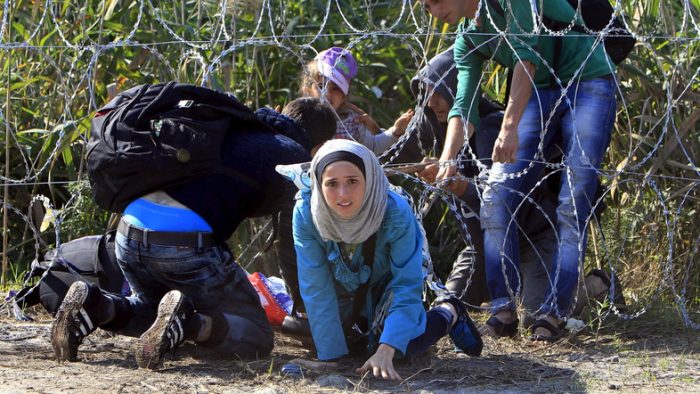
A Syrian migrant family enters Hungary at the border with Serbia near Roszke, Hungary August 28, 2015. REUTERS/Bernadett Szabo

Political events in Europe and the U.S. have pushed immigration issues to the forefront of talk shows and government agendas, but many of the most pressing immigration have their roots not in an escape from economic poverty, but rather the specter of terrorism and war, especially as a result of the Iranian regime’s involvement in the three largest wars going on right now in Syria, Iraq and Yemen.

It was not an accident that in the wake of World Refugee Day, there was broad acknowledgement that the source of most of the world’s refugee problem comes from the instability sweeping across the Middle East.

While the political discussion of immigration in the U.S. presidential election and the controversial Brexit vote has revolved around the impact mass immigration is posing to countries, the real underlying discussion is only now starting to focus on the roots causes of these mass movements of people fleeing violence in their own lands.

Also, in the wake of numerous terrorist attacks ranging from San Bernardino, California to Sydney, Australia and Paris, France to Ottawa, Canada, the infectious and noxious influence of spreading Islamic extremism is being felt; much of it flowing from the mullahs in Tehran and through their agents in the Revolutionary Guards and Quds Forces who organize, recruit, train, arm and fund extremists.

Predictably though, the Iran lobby has sought to capitalize on the immigration debate by focusing the discussion not on the root causes of these mass displacements. It’s a necessary gambit and typical of the Iran lobby to deflect attention from the real core issue of bloody sectarian conflict fueled by the mullahs.

The National Iranian American Council took the lead with several editorials and statements it has issued attempting to blame everyone else but the Iranian regime for the misery being inflicted on the millions of refugees fleeing these conflict zones.

Sarah Sakha offered up the idea on NIAC’s website that Americans opposed any bans on Muslims and refugees based on a Brookings Institute poll, but failed to address the core concern these same Americans have which is how to stop the spread of Islamic-inspired terrorism washing across the U.S. through Boston, Fort Hood, Chattanooga, San Bernardino and now Orlando.

She also fails to discuss the increase in terrorism and the harshness of the treatment of men, women and children in Iran by the regime is disingenuous and ignores the root causes of these problems. Likewise it lays bare how transparent the Iran lobby is in defending the regime from any criticism of its policies.

Similarly, the NIAC gave space to cover a recent meeting by the Atlantic Council and Iran Project with national security staffer Ben Rhodes who was famously revealed to have crafted the “echo chamber” supporting the Iran nuclear deal on a foundation of lies. The symposium was designed to defend the faltering nuclear deal from blistering criticism that it has failed to moderate Iran and instead has led to the great instability and bloodshed we see now.

Rhodes even used the examples of the openings made to Cuba and Burma as templates for why Iran should be treated in of those countries agreed to renounce terrorism h of those countries agreed to renounce terrorism and in Burma’s case actually held free elections that installed long-time dissidents in control of the government for the first time.

The Iran regime has done none of those things.

The NIAC even took on the recently unveiled the House Republican’s policy paper listing its priorities in the upcoming election including the re-imposition of sanctions on Iran for continued violations of human rights and sponsorship of terrorism, as well as its deliberate efforts to violate the nuclear agreement with ballistic missile tests and the clandestine sanitizing of sites of any evidence of prior testing of nuclear materials.

Ironically, while the NIAC attacks the idea that imposing new sanctions for continued human rights violations, it never denies that severe human rights violations are taking place in Iran. Instead, it attributes the suffering and misery being inflicted on the Iranian people with mass arrests and executions not to the actions of the mullahs, but rather the lack of U.S. currency flowing to the regime as a result of the nuclear deal.

It is the height of stupidity to equate torture in Iran to a lack of cash.

That seems to be the mantra being repeated most often by the Iran lobby these days as it pushes to get cash into the hands of the regime as quickly as possible, but not for the benefit of ordinary Iranians it seems as the regime is being rocked by protests over disclosures that high-ranking executives at state-owned businesses are being paid obscene salaries while Iranians are being exhorted by the mullahs to continue a “resistance economy” of deprivation.

The Daily Beast also disclosed that a former Clinton administration official has been on the payroll of Boeing as it strived to close a deal with Iran to sell $25 billion worth of commercial airliners.

Thomas Pickering, one of the country’s most famous diplomats and a former ambassador to Israel and the United Nations, has been quietly taking money from Boeing while vocally supporting the Iran nuclear deal—testifying before Congress, writing letters to high-level officials, and penning op-eds for outlets like The Washington Post.

Pickering confirmed via email—from his Boeing corporate email address—that he was on staff at the company from 2001 to 2006 and has been a paid consultant for them ever since.

Neil Gordon—an investigator for the Project on Government Oversight, a Washington watchdog organization—said Pickering should have been upfront about his work for Boeing when testifying before Congress on the Iran nuclear deal and making the case for it in op-eds for major publications.

“In Pickering’s case, he has a direct connection to Boeing, which I think should be disclosed,” he said.

Over the past few years, Pickering has been one of the most vocal and visible advocates for the nuclear agreement with Iran. On June 19, 2014, he testified before the House Armed Services Committee about his views on the need for a comprehensive agreement with Iran. He did not mention Boeing in the disclosure form he provided to the committee prior to his testimony. Boeing also isn’t mentioned in his bio that the House kept on file.

The lack of disclosure of his work in support of the nuclear deal and his participation in Rhodes’ “echo chamber” is disturbing and shows the complicated and extraordinary efforts made by the Iran lobby to secure the nuclear deal for Iran.

Most disturbing, his bio on the NIAC website where he serves as an advisory board member, notes that he worked at Boeing until 2006 but does not note that he still consults for the company. Same for his bio at the anti-nuclear weapon group Global Zero. His bio at The Iran Project doesn’t mention Boeing at all.

The lack of disclosure and his active work with leading members of the Iran lobby while also collecting fees from Boeing which the Obama administration is doing all it can to facilitate business with the regime raises alarm bells everywhere of conflicts of interest and outright deception.

Trita Parsi of the NIAC also using the same scape goat, blamed the suffering of Iranians on the lack of business deals with Iran following the nuclear deal.

“If the Iranians end up de facto not getting sanctions relief, the deal will collapse,” he said. “That’s right now the biggest threat to the sustainability of the deal.”

He is right, but the threat isn’t coming from foreign companies, but rather the mullahs themselves as they pursue policies turning most of Europe into a massive refugee center.

By Michael Tomblinson

Filed Under: Blog, Current Trend, News Tagged With: #NuclearDeal, Ben Rhodes, Featured, Iran, Iran deal, Iran Human rights, Iran Lobby, Iran sanctions, National Iranian American Council, NIAC, Sarah Sakha, Thomas Pickering, Trita Parsi

Rush to do Business with Iranian Regime Carries High Cost

June 16, 2016 by admin

Rush to do Business with Iranian Regime Carries High Cost

Rush to do Business with Iranian Regime Carries High Cost

Since the Iranian nuclear accord was brokered last April, the Iran lobby has been breathlessly pushing the idea of the doors to Iran being thrown open to commerce empowering the moderates in the government to a position of strength.

Hassan Rouhani quickly embarked on a European tour to enhance that perception and announce several high profile deals with European companies in a carefully orchestrated show of economic success and many companies have followed that message with dreams of riches to be made in the Iranian marketplace.

The reality has not lived up to the hype though. Even though the nuclear deal lifted sanctions related to Iran’s nuclear program, it did not touch sanctions imposed on Iran related to violations of human rights or its sponsorship and support for terrorism, including groups such as Hezbollah.

The disconnect has thrown the proverbial monkey wrench into the regime’s plans to quickly profit off the nuclear deal. In their haste to secure a nuclear agreement, the mullahs in Tehran pressed for a deal that was not linked to any issue other than the nuclear infrastructure itself. The regime did not want to face scrutiny over its human rights record and the growth of terrorism it sponsored.

The Iran lobby, including leading advocates such as the National Iranian American Council and Ploughshares Fund, was happy to oblige in pushing that narrative. The inconvenient truth for them though was that even though they got a nuclear deal, Iran was still restricted from accessing U.S. currency exchanges which crippled its ability to conduct international business since virtually all European, U.S. and Asian financial institutions resisted handling transactions for the regime out of fear of being sanctioned later for enabling terrorism.

The issue has become such an obstacle, the regime has taken the unusual step of attempting to set an offshore bank on a small island Iran controls in the Persian Gulf in an effort to skate around the financial sanctions.

This is why most of the business deals announced by the regime with foreign companies involve investments in the regime, but sales outside of it and even then most companies are approaching this process cautiously since Iran is a notoriously corrupt government and economy, ranking in the top ten in most transparency indexes.

The mullahs realize their perceived windfall could evaporate just as quickly as the sharp rise in Islamic extremist attacks in Paris, Orlando, San Bernardino and other cities around the world have made world capitals skittish about appearing to funnel cash to countries that support terrorism. Add to that the backdrop of a highly contentious U.S. presidential election in which both leading candidates in Hillary Clinton and Donald Trump have talked tough about radical Islam and its spread from Iran, then the outlook for the mullahs in Tehran appears even bleaker.

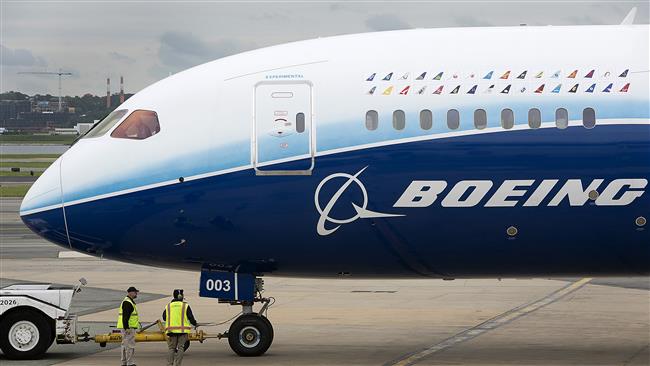
All of which makes the rush to announce a preliminary deal by the Iranian regime to purchase passenger aircraft from U.S. manufacturer Boeing all the more perplexing. Could it be the Iranian regime is worried Congress would intervene to block the sale in the wake of the Orlando mass killings and needed to jump the gun so to speak?

Details of the agreement were left vague, but Western and Middle East sources said that once approved, it would involve flag carrier Iranair acquiring more than 100 Boeing jets, both directly from Boeing and from leasing companies, according to Reuters.

“In coming days details of the deal with this company will be announced,” Roads and Urban Development Minister Abbas Akhoundi said, according to the semi-official Mehr news agency.

The sources said the agreement was so far only a broad outline of what a formal deal would look like once Boeing has the necessary U.S. government approvals to sell planes to Iran, which has been banned from buying U.S. jets for almost 40 years.

The concern over the sale to Iran not includes potential technology transfers to the regime, but the potential for the regime to use these commercial aircraft for military or illicit purposes as in previous cases in which state airliners have been used to ferry troops and weapons to Syria as part of the civil war effort there.

Rep. Peter Roskam (R., Ill.), who has criticized Boeing and others for pursuing business with Iran, told the Washington Free Beacon that Congress could take action to stop the sale.

“We’ve heard reports of a pending deal between an iconic American company and terrorism’s central bank,” Roskam said. “To say we have national security concerns would be an understatement. Boeing and the Islamic Republic should know the U.S. Congress will not look favorably upon any deal that jeopardizes the safety and security of the American people.”

Several GOP lawmakers recently summoned the heads of Boeing and French air manufacturer Airbus for a meeting about their dealings with Iran.

Three House members from Washington state, a major base for Boeing operations, wrote to the company in May to request a meeting.

“We write to express our serious concerns over the sale of airplanes, parts, and other aircraft-related services to the Islamic Republic of Iran,” wrote Republican Reps. Cathy McMorris Rodgers, the GOP conference chair, Dave Reichert, chair of the House committee that regulates trade, and Dan Newhouse.

Predictably, Trita Parsi of the NIAC hailed the Boeing deal and ignored the past use of Iranian commercial airliners for illicit purposes.

“The Iranian-American community not only has had to fear for the safety of loved ones flying in Iran, but has also flown on many of the outdated craft when visiting friends and family in the country,” Parsi said.

It’s notable that the most significant threat to Iranian-Americans traveling to Iran is not the safety of their aircraft, but rather the high probability they would be arrested and imprisoned without charge or trial or explanation by the regime as it has already done to a large number of dual citizen Iranians, such as Americans Jason Rezaian, Saeed Abedini and Amir Hekmati.

By Michael Tomlinson

Filed Under: Blog, News Tagged With: Featured, Iran, Iran deal, Iran Lobby, Iran sanctions, NIAC, Trita Parsi

  • « Previous Page
  • 1
  • …
  • 8
  • 9
  • 10
  • 11
  • 12
  • …
  • 15
  • Next Page »

National Iranian-American Council (NIAC)

  • Bogus Memberships
  • Survey
  • Lobbying
  • Iranians for International Cooperation
  • Defamation Lawsuit
  • People’s Mojahedin
  • Trita Parsi Biography
  • Parsi/Namazi Lobbying Plan
  • Parsi Links to Namazi & Iranian Regime
  • Namazi, NIAC Ringleader
  • Collaborating with Iran’s Ambassador

Recent Posts

  • NIAC Trying to Gain Influence On U.S. Congress
  • While Iran Lobby Plays Blame Game Iran Goes Nuclear
  • Iran Lobby Jumps on Detention of Iranian Newscaster
  • Bad News for Iran Swamps Iran Lobby
  • Iran Starts Off Year by Banning Instagram

© Copyright 2026 IranLobby.net · All Rights Reserved.