Iran Lobby

Exposing the Activities of the lobbies and appeasers of the Mullah's Dictatorship ruling Iran

  • Home
  • About
  • Current Trend
  • National Iranian-American Council(NIAC)
    • Bogus Memberships
    • Survey
    • Lobbying
    • Iranians for International Cooperation
    • Defamation Lawsuit
    • People’s Mojahedin
    • Trita Parsi Biography
    • Parsi/Namazi Lobbying Plan
    • Parsi Links to Namazi& Iranian Regime
    • Namazi, NIAC Ringleader
    • Collaborating with Iran’s Ambassador
  • The Appeasers
    • Gary Sick
    • Flynt Leverett & Hillary Mann Leverett
    • Baroness Nicholson
  • Blog
  • Links
  • Media Reports

Why Hassan Rouhani’s Calls for Co-Existence Are Meaningless

October 21, 2016 by admin

Why Hassan Rouhani’s Calls for Co-Existence Are Meaningless

Why Hassan Rouhani’s Calls for Co-Existence Are Meaningless

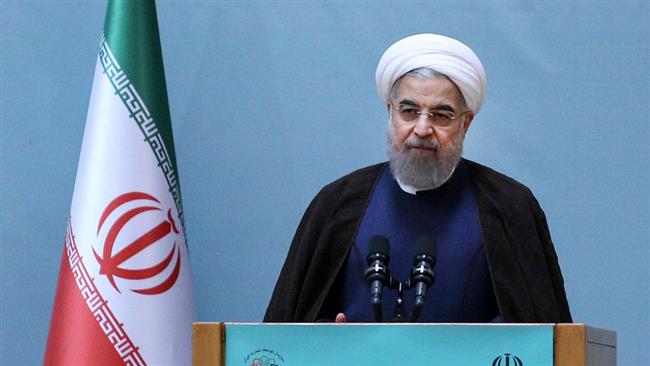
Iranian regime controlled media loudly broadcast remarks made by Hassan Rouhani at a ceremony marking National Exports Day in Tehran in which he called for peaceful co-existence with the rest of the world and Iran’s neighbors.

No, this was not an April’s Fool joke come early, nor was it an attempt at early Halloween gallows humor.

Rouhani was making his appeal because the world has not reacted well to the regime’s militant and aggressive moves since a nuclear agreement was reach over 18 months ago. There has arisen significant uncertainty among foreign companies, institutional investors and many governments over entering into business agreements at a time when new sanctions may be coming.

Rouhani was making his appeal on a strictly commercial basis in which he hoped to see Iran enter the global marketplace as a significant consumer market, as well as an eventual exporter of goods.

According to Trend News Agency, “Iran has no choice other than forming a constructive interaction with the world in order to boost its export,” he said.

He further said that constructive interaction with the world means establishing suitable ties with global community for exports, and import of capital goods and raw materials as well as employment of youth.

There is good reason for Rouhani and his fellow mullahs to be worried. Iran’s economy remains stagnant, with little benefits trickling down to ordinary Iranians as promised by Rouhani. Youth unemployment remains staggeringly high and wages have not risen significantly in over a decade leading to widespread discontent and protests throughout Iran.

Scandals involving excessive compensation for high-placed executives at regime-controlled industries have rocked Rouhani’s term, as does a high-profile crackdown against journalists, students, artists, bloggers, dissidents, and religious and ethnic minorities.

The mullahs’ “morals” police squads are working overtime arresting and abusing everyone from Iranian women riding bicycles to Iranian youth congregating in coffee shops.

But what has most foreign companies and investors worried is the regime’s rapid escalation in its involvement in three widening proxy wars in Syria, Iraq and Yemen, in which US armed forces are increasingly being drawn into direct conflict with Iranian and Iranian-backed forces.

In Yemen, Iranian regime-backed Houthi rebels reportedly fired cruise missiles at US warships three times in one week; resulting a response from the US of three cruise missiles hitting radar installations in Yemen.

US Army Gen. Joseph Votel, commander of US forces in the Middle East, said on Wednesday that he believes Iran was behind the missile strikes on US Navy ships in Yemen.

“I do think that Iran is playing a role in some of this. They have a relationship with the Houthis, so I do suspect there is a role in that,” said Votel at the Center for American Progress, The Hill’s Kristina Wong reports.

Now news reports have surfaced detailing how the Iranian regime has stepped up weapons transfers to the Houthis threatening to widen and prolong the now 19-month-old war.

Much of the recent smuggling activity has been through Oman, which neighbors Yemen, including via overland routes that take advantage of porous borders between the two countries, the officials said.

U.S. and Western officials who spoke to Reuters about the recent trend in arms transfers said it was based on intelligence they had seen but did not elaborate on its nature. They said the frequency of transfers on known overland smuggling routes had increased notably, though the scale of the shipments was unclear.

A senior Iranian diplomat confirmed a “sharp surge in Iran’s help to the Houthis in Yemen” since May, referring to weapons, training and money.

“The nuclear deal gave Iran an upper hand in its rivalry with Saudi Arabia, but it needs to be preserved,” the diplomat said.

Ironically, the timing of the increased flow of cash and arms to the Houthis coincides with the ransom payments of $1.7 billion made to the Iranian regime by the US to free four American hostages.

Meanwhile in Syria, the growing failure of repeated cease-fires have placed US personnel dangerously close to being targeted by Russian and Syrian airstrikes, as well as facing Shiite militias imported from Iraq by Iranian airliners to fight alongside Syrian forces against US-backed rebels.

It is against this backdrop of global uncertainty that Rouhani is making one of the most absurd sales pitches anyone can recall since it is exactly because of the Iranian regime’s acts that have made many companies and investors skittish at risking billions of dollars.

That idea of co-existence draws little weight as Rouhani himself has admitted that the regime does not recognize dual national citizens and is in the midst of an unprecedented binge of hostage-taking of US, British, Canadian and other citizens.

Even more disturbing has been taunting statements made on regime-controlled websites demanding “billions in cash” as ransom payments for these new hostages.

Even Rouhani has taken a personal hand in tightening the figurative noose among his fellow Iranians by firing Minister of Culture and Islamic Guidance Ali Jannati, Education Minister Ali Asghar Fani and Minister of Youth Affairs and Sports Mahmoud Goudarzi all on the same day.

It’s interesting to note that all three ministers oversaw parts of Iranian society which enjoyed a bit more creative freedom during the run-up of the nuclear negotiations in an effort to present a more “open” society to the world. With the nuclear deal accomplished, their dismissals and subsequent crackdown on freedoms should not be a surprise.

Laura Caranahan
Filed Under: Blog, News Tagged With: Featured, Iran, Iran Mullahs, Iran sanctions, Iran Terrorism, IRGC, Nuclear Deal, nuclear talks, Sanctions, Syria, Yemen

Iran Regime Pushes Oil Contracts to Raise Cash for Wars

October 19, 2016 by admin

Iran Regime Pushes Oil Contracts to Raise Cash for Wars

Iran Regime Pushes Oil Contracts to Raise Cash for Wars

The Iranian regime’s Hassan Rouhani put out the invitation to a select group of high-powered investors to come visit the regime in the hopes of garnering new investments to help jump-start a stagnant economy that has only gotten worse after promises for improvements by Rouhani proved false after the nuclear agreement. Rouhani did not mention anything about the dual citizens who will end up in prison for a cash ransom.

Rouhani’s invite went to the 20-20 Investment Association, a group of influential investors overseeing $7 trillion of assets, much of it though is held within government-run pension funds which are prohibited by many state laws from investing in Iran because of its support of terrorism. This includes some of the biggest pension funds run by California, New York and Texas.

James Donald, head of emerging markets at Lazard Asset Management, the US fund company that oversees $174 billion of assets, and a board member of the 20-20 association, said the invitation reflected the Iranian regime’s desire to attract more foreign investors.

Donald said: “The group at this stage has not accepted the invitation. An awful lot of large government pension plans have restrictions on Iranian investments and [on] any company that does business in Iran. There is talk of [the remaining sanctions being removed]. I think there would have to be a federal law change [for banks and asset managers to move en masse into the Iranian market].”

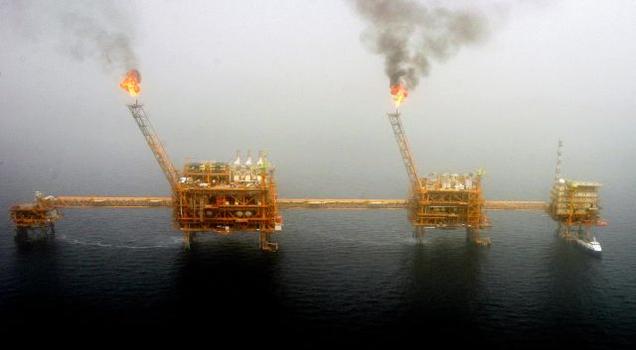
In addition Rouhani’s pleas, the regime-controlled National Iranian Oil Co. issued a request for bidders to invest in Iran’s slumping oil industry which powers much of the regime’s overseas and military activities.

The Iranian regime wants to attract more than $100 billion in investment to increase its oil production by 1 million barrels a day by the start of the next decade and raise its current oil output of 3.63 million barrels a day under a compromise agreement reached with other oil producing countries.

The mullahs in Tehran are anxious to try and diversify its investors because in the prior decade of sanctions imposed stemming from its illicit nuclear weapons program, the only dominant investor willing to ignore Western sanctions was China. In many cases, Iran’s oil, telecommunications, manufacturing and other heavy industries are run almost entirely by Chinese workers and managers.

According to the Chicago Tribune, Western investors have been slow to arrive. That’s especially true in the energy sector, where pressure to increase production is intense. Elsewhere, Western clearing banks still refuse to do business with Iran for fear of falling foul of non-nuclear U.S. sanctions that remain in effect, meaning Western companies can’t raise project finance.

This has created intense pressure on the mullahs to find some way to bring in foreign dollars to modernize its antiquated oil industry in order to get more oil out of the ground and sold to bring in hard dollars to fund three widespread wars Iran is now fighting in Syria, Iraq and Yemen.

The regrettable end game for the mullahs is to rip off Iran’s natural resources not for the benefit of the Iranian people, but rather fund the Islamic revolutionary expansion they are pushing abroad.

Recognizing the limitations of sanctions still in place, in spite of recent moves by the Obama administration to further accommodate a regime threatening to walk away from the nuclear deal in order to extort more concessions, the Central Bank of Iran announced it had informed banks throughout Iran that any failure by non-American banks to provide dollar-related services to Iranians would be “unacceptable” according to regime-controlled media.

“Providing dollar-related services [to Iranians] will no longer expose non-American banks to the risks of sanctions provided that they stay clear of US financial system,” the CBI said in its statement.

“Therefore, non-American banks cannot use US sanctions against Iran as an excuse for refusing to provide dollar-related services to Iranian individuals and entities.”

It is a desperate statement to make since Iran is not the final arbiter of what is and is not allowed under existing sanctions still in place, but the regime is so desperate for cash it is bullying financial institutions into handling US currency in order to get the flow of cash moving through Iran again.

It’s an explicit warning aimed especially at European and Asian banks who have been reluctant to engage in US currency exchanges with Iran for fear of running afoul of US officials, especially since there is significant uncertainty with the upcoming presidential election virtually guaranteeing a change in policy towards Iran come next January.

All of which highlights the futility of the promises and claims made by the Iran lobby following the nuclear deal in which leading supporters of the regime such as the National Iranian American Council promised a more moderate Iran willing to work to end the series of conflicts in the Middle East.

Instead, the world has amply seen the exact opposite with the breaking out of a shooting war between the US Navy and Iranian-backed Houthi forces in Yemen, the ferrying of thousands of Iranian-backed Shiite militias from Iraq into Syria via Iranian airlines to fight for the Assad regime.

The rapid escalation in fighting in these countries is draining the regime’s treasury in spite of the billions of dollars it received as part of the hostage exchange of Americans and the release of frozen assets back to the Iranian regime.

The mullahs squandered those funds and it seems that they are now rapidly trying to squander billions more in foreign investment.

By Michael Tomlinson

Filed Under: Blog, News Tagged With: #NuclearDeal, Featured, hassan rouhani, Iran, Iran Lobby, Iran Mullahs, Iran sanctions, Iran Terrorism

Iran Regime Escalating Tensions With US Navy

October 14, 2016 by admin

Iran Regime Escalating Tensions With US Navy

Iran Regime Escalating Tensions With US Navy

This week has seen tensions rise off the coast of Yemen to unheard of levels as Iranian-backed Houthi rebels twice fired cruise missiles at US Navy warships and in response, a US Navy destroyer fired Tomahawk cruise missiles destroying three coastal radar installations that were used to track the American ships.

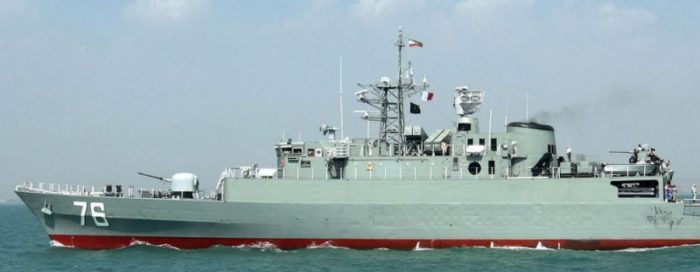
Tensions rose even more when the Iranian regime announced it was sending two Iranian warships to the Gulf of Aden in close proximity to one of the world’s most important shipping routes.

“Iran’s Alvand and Bushehr warships have been dispatched to the Gulf of Aden to protect trade vessels from piracy,” regime-controlled Tasnim News Agency reported.

The move introduces Iranian warships far from their operating bases and coastline along the Persian Gulf and puts them adjacent to US warships at a time when threatening behavior is being met with salvos rather than radio warnings.

The Iranian regime has used its navy over the past year to engage in an escalating game of chicken in the Persian Gulf, including having ships make aggressive high speed runs at US warships and ignore radioed warnings and even shots fired across their bows.

Earlier, the Iranian regime detained two US patrol boats that had strayed into waters claimed by the regime and paraded captive US sailors on television and even built a monument to the episode.

The move was seen as the latest escalation in U.S.-Iran tension related to a proxy war in Yemen, where the two are backing opposing sides. The U.S. in March 2015 joined a Saudi-led military coalition to support the embattled Yemeni government against Iranian-backed Houthi rebels, according to The Hill.

Although the Tasnim News Agency reported that the Iran ship deployments were to “protect the country’s trade vessels against piracy in the unsafe zone,” it also noted that it “coincides with the US decision to directly get involved in a Saudi-led war against Yemen.”

For the Iranian regime and its mullahs, Yemen is rapidly rising in importance as it becomes a proxy war for the larger conflict it is pursuing in the region. The use of Houthi rebels as proxies is similar to the game plan used by the mullahs with Hezbollah in Syria and Shiite militias in Iraq, all of which are supplied by Iran’s Quds Forces and Revolutionary Guard Corps with weapons, ammunition and training.

The Houthi’s use of Chinese-made cruise missiles against the US Navy warships is a disturbing escalation since the weapons are not cheap and require a fairly high level of technical know-how to operate in coordination with radar tracking; technical expertise almost surely provided by the Iranian military.

Sen. Mark Kirk (R-Ill.), a leading advocate of a tough foreign policy toward Iran, said it was unacceptable that the Obama administration continues to relax financial sanctions on Iran while it supports the Houthi rebels in Yemen.

“I am relieved the crew of the USS Mason remain safe and unharmed in the Red Sea after Iran-backed Houthi rebels repeatedly launched missile attacks at them,” Kirk said in a statement.

“It’s counterproductive, absurd and unacceptable that the White House keeps unilaterally relaxing financial sanctions against the Iranian terror-sponsoring regime while Iran continues to actively support Houthi militants in Yemen that are trying to kill American servicemen and servicewomen in the Middle East,” he said.

The inconvenient truth for the White House is that after over a year of appeasing the Iranian regime, the US now finds itself on a brink of an actual shooting war with Iran; a fact that the Wall Street Journal editorial board warned about.

“The White House doesn’t want Americans to notice, but the tide of war is not receding in the Middle East. The Navy this week became part of the hot war in Yemen, with a U.S. warship launching missiles against radar targets after American vessels were fired on this week. Just when President Obama promised that American retreat would bring peace to the region, the region pulls him back in,” the Journal wrote.

“Don’t expect the White House to acknowledge this because the ironies here are something to behold. Mr. Obama is backing the Saudis in Yemen in part to reassure them of U.S. support after the U.S.-Iran nuclear deal that the Saudis opposed. Mr. Obama’s Iran deal was supposed to moderate Iran’s regional ambitions, so Mr. Obama could play a mediating role between Tehran and Riyadh. But the nuclear deal has emboldened Iran, and fortified it with more money, so now the U.S. is being drawn into what amounts to a proxy war against Iran. Genius,” the Journal added.

The increase in attacks against the US by Iran may be designed to weaken its support for Saudi Arabia and further fragment the coalition fighting Iranian adventures in Syria, Iraq and Yemen right now.

By Michael Tomlinson

Filed Under: Blog, News Tagged With: Featured, Iran, Iran sanctions, Iran Talks, Iran Terrorism, Irandeal, Nuclear Deal, Syria, Yemen

Key to Syrian Solution Lies in Pushing Iran Out

October 10, 2016 by admin


Key to Syrian Solution Lies in Pushing Iran Out

Key to Syrian Solution Lies in Pushing Iran Out

Sunday night’s presidential debate between Hillary Clinton and Donald Trump is sure to be analyzed, dissected and poured over for days, but while both candidates traded accusations on Syria and its effect to refugees, terrorism and geopolitics, neither candidate hit the mark when it came to highlighting the real solution to the Syrian civil war.

The real solution to stopping the bloodshed in Syria lies in getting the Iranian regime out of Syria.

The Syrian civil war has been raging since 2011 and it is easy to forget its beginnings and how it grew into the global conflagration it has become, but what has been indisputable has been the influence of the Iranian regime from the very beginning.

It is useful to recall that the source of the original unrest were protests by ordinary Syrians demanding democratic reforms in March of 2011 and the release of political prisoners. In many respects, the protests taking place on the streets of Damascus were eerily similar to protests on the streets of Tehran by Iranians protesting similar issues in the wake of a presidential election widely recognized as being fraudulent.

Within a month protests had spread throughout Syria and the Assad regime responded just as the mullahs in Tehran did two years earlier; with massive crackdowns by the military that included the indiscriminate shooting of civilians in the streets.

The images of dead and dying civilians in Tehran and Damascus are not the only things that connected the two regimes.

The Iranian regime acted quickly to funnel funds to the cash-strapped Assad regime after a series of punishing international sanctions were imposed for the regime’s use of chemical weapons and mass killing weapons such as barrel bombs on civilians, including hospitals; that support was estimated by the UN to be as high as $6 billion annually, with other human rights groups doubling that amount.

Additionally, the Iranian regime sent senior commanders from its Quds Forces to plan and lead operations involving Hezbollah terrorists to help repel the gains of Syrian rebels. This level of involvement increased with the forced recruitment of thousands of Afghan refugees as mercenaries, along with the shifting of Shiite militias from Iraq to fight in Syria.

The involvement of so much Iranian military capacity led to declarations from Syrian military officials that Syria might as well become a province of Iran.

Even with all of that Iranian regime interferences, the rebels were still making gains leading up to the actual shelling of Assad regime buildings in Damascus, which led to the now not-so-secret trip to Moscow by Quds Force commanders to beg for Russian intervention in Syria.

The increasing tempo of military actions collapsed a proposed cease-fire and led to claims and counter charges between the US and Russia reminiscent of the Cold War. Nothing illustrated that confusion more than the situation in the northern Syrian city of Aleppo.

The New York Times examined the zany alliances at work in Aleppo where there are Iraqi Shiite militiamen cheering for clerics who liken the enemy to foes from seventh-century battles. There are Iranian Revolutionary Guards fighting on behalf of a Shiite theocracy. There are Afghan refugees hoping to gain citizenship in Iran, and Hezbollah militants whose leaders have long vowed to fight “wherever needed.”

The messy mosaic of ground fighters on both sides has challenged Washington’s tangled allegiances. The United States is effectively allied with Iraqi Shiite militias to thwart the Islamic State in Iraq, but in Syria, some of those same militias are fighting on the side of the Assad government, which the United States opposes, and against a mix of rebel groups, some of them backed by the Obama administration.

The Daily Caller discussed the vast increases in Shiite militias in Syria.

“Most estimates of the total number of Shi’a militia fighters in all of Syria now exceed 60,000,” U.S. strategic advisory firm The Soufan Group notes. The Soufan Group highlights that this number may even exceed that of the actual Syrian Arab Army under command of Assad. These Shiite militias take orders only from Iran’s Revolutionary Guard Corps.

Alarmingly, even though the evidence is overwhelming that the only viable solution to Syria’s war lies in containing and ultimately removing Iran’s control of the Assad regime, the Washington Post reported efforts were underway by the Obama administration to actually weaken sanctions imposed on Syria.

According to lawmakers and staffers in both parties, the White House is secretly trying to water down the Caesar Syria Civilian Protection Act, a bipartisan bill that would sanction the Assad regime for mass torture, mass murder, war crimes and crimes against humanity. The bill, guided by House Foreign Affairs Committee ranking Democrat Eliot Engel (N.Y.), would also sanction entities that aid the Syrian government in these atrocities; that includes Russia and Iran.

The bill, named after a Syrian defector who presented the world with 55,000 pictures documenting Assad’s mass torture and murder of more than 11,000 civilians in custody, has 70 co-sponsors, a majority of whom are Democrats.

Now the White House has told members and staffers that the bill’s sanctions on Iran could violate the nuclear agreement the Obama administration struck with Tehran last year and the Russia sanctions could hurt any future efforts to work with Moscow diplomatically on Syria.

It is a stunning position to take and one disturbingly similar to arguments made by Iran lobby members such as the National Iranian American Council.

It seems that the similarities between Syria and Iran be beyond just murdered civilians in the street.

By Michael Tomlinson

Filed Under: Blog, News Tagged With: Featured, Iran, Iran deal, Iran Human rights, Iran Lobby, Iran Mullahs, Iran sanctions, Iran Talks, Iran Terrorism, IRGC, National Iranian American Council, NIAC, NIAC Action, Sanctions, Syria

How Did the Iran Nuclear Deal Become a Partisan Talking Point?

October 6, 2016 by admin


How Did the Iran Nuclear Deal Become a Partisan Talking Point?

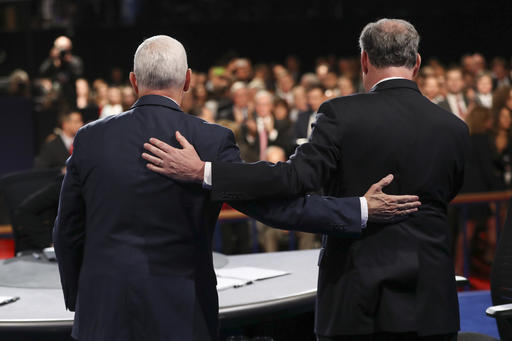
Republican vice-presidential nominee Gov. Mike Pence and Democratic vice-presidential nominee Sen. Tim Kaine stand after the vice-presidential debate at Longwood University in Farmville, Va., Tuesday, Oct. 4, 2016. (Joe Raedle/Pool via AP)

Last night’s vice presidential debate had its usual highs and lows, sprinkled with verbal fisticuffs and even some thoughtful answers, but the most interesting tidbit that came through was the sharp disparity over the Iran nuclear deal in which Democratic running mate, Sen. Tim Kaine (D-VA) all but gushed over the deal’s alleged stoppage of nuclear weapons versus Gov. Mike Pence’s (R-ID) blistering retorts against it.

Putting aside the relative merits of each side’s arguments, the larger question that needs addressing is “how did the nuclear deal ever become a partisan talking point?”

In many ways, it’s lamentable and regrettable that it has gotten to this point. For much of the past three decades both parties have been uniformly united over confronting Iran. That lock-step solidarity is what has driven the vast majority of successes against the Iranian regime such as the imposition of stiff sanctions following the crackdown on demonstrators to the stolen 2009 presidential elections.

Even top mullah Ali Khamenei recognized the terrible blows to the regime’s economy that resulted from those bipartisan sanctions when he summarily decided that the regime needed a new “moderate” face to win back international support after a deplorable eight years of Mahmoud Ahmadinejad.

The regime also recognized that in putting forth a “moderate” face, it had to cobble together a better lobbying effort to drive wedges in the united political front America and its allies had presented for much of the regime’s existence.

Those twin goals led to Hassan Rouhani’s selection and the creation of lobbying groups such as the National Iranian American Council and its offspring, NIAC Action.

Happily for the mullahs, the Obama administration was looking for a foreign policy win to close out its term having been unable to solve the puzzle of wars in Iraq and Afghanistan and the rising tide of Islamic extremism that sprang forth from the Syrian civil war and Iranian regime’s use of terror proxies throughout the region.

It was an unfortunate decision because it enabled the Iran lobby to begin driving that wedge between Democrats and Republicans and shaping a message that if you supported Iran deal you were for peace and if you were against Iran deal you had to be for war.

Most Democrats frankly didn’t buy it as leading members of Congress such as Sen. Robert Menendez (D-NJ), Sen. Ben Cardin (D-MD), Sen. Chuck Schumer (D-NY) and Rep. Eliot Engel (D-NY) opposed the Iran nuclear deal, but the Iran lobby worked furiously to try and shape the debate as a Democrat vs. Republican one when in fact it wasn’t.

For other Democrats, the choices were simpler in which they chose party loyalty in an election cycle, many privately hoping to impose additional sanctions after the presidential elections.

In fact, in the year since the Iran deal was approved, and the mullahs have showed their true nature with the widening of the wars in Syria, Iraq and Yemen, as well as the renewed crackdowns and human rights violations at home and escalation of its ballistic missile program, many of these same Democrats have offered up new proposals to impose new watchdogs or sanctions on Iranian regime.

Coupled with the fact that the mullahs have obliged by going on a binge of militant and aggressive acts including threatening US warships in the Persian Gulf and snatching up even more dual nationals for future hostage swapping, it is almost certain that after the November elections, the US will once again present a united front in confronting Iranian regime’s extremism.

But that prospect hasn’t stopped the Iran lobby from desperately trying to make Iran a partisan issue as NIAC head, Trita Parsi was busy tweeting out his enthusiastic support for Kaine’s comments in support of the nuclear deal, probably had to make many Clinton supporters cringe slightly.

In regards to the actual facts surrounding the nuclear deal, the media fact checkers waded through the statements and found some by Kaine to be slightly wanting of clarity.

From the Washington Post: “The deal, which has been sharply criticized by Republicans, did increase the amount of time that Iran would need to build a nuclear weapon by reducing its centrifuges for uranium enrichment and its stockpile of enriched uranium. But the deal expires in 15 years, and Iran’s nuclear infrastructure remains in place.

“While Iran has insisted it has no interest in building nuclear weapons, the deal does not eliminate the risk that it will obtain nuclear bombs.”

The New York Times called the claim that the Iran nuclear deal eliminated Iran’s nuclear weapons program an “exaggeration.”

A report released this September by the Institute for Science and International Security found that the deal will also allow, through an exemption, Iran to keep 50 tons of heavy water and “continue operating 19 ‘hot cell’ radiation containment chambers.”

Possessing materials such as enriched uranium and heavy water does not necessarily mean Iran will have the capacity to restore its nuclear program. The deal will not allow nuclear inspectors to confirm, however, whether or not Iran is complying with the deal. Iran got negotiators to agree that no U.S. nuclear inspectors will be allowed on Iranian soil, according to Breitbart News.

Ultimately, the issue of containing and confronting the Iranian regime has historically been a bipartisan effort. We hope that after November, it once again becomes bipartisan.

By Michael Tomlinson

Filed Under: Blog, News Tagged With: #NuclearDeal, Featured, hassan rouhani, Iran, Iran deal, Iran Human rights, Iran Lobby, Iran Mullahs, Iran sanctions, Iran Terrorism, National Iranian American Council, NIAC, Trita Parsi

Iran Regime Inks Oil Deal Benefiting Khamenei

October 5, 2016 by admin

Iran Regime Inks Oil Deal Benefiting Khamenei

Iran Regime Inks Oil Deal Benefiting Khamenei

The Iranian regime signed its first oil production deal under a new less restrictive model that it hopes will boost its production output in spite of a new agreement with other oil producing nations to curb production in an effort to boost sagging oil prices worldwide.

The clincher is that the Iranian oil ministry’s news agency Shana said the government had signed a $2.2 billion contract with a unit of Iranian company Tadbir Energy, which is controlled by a religious foundation overseen by top mullah Ali Khamenei, according to the Wall Street Journal.

The regime hopes its new Iran Petroleum Contracts (IPC), part of an effort to sweeten the terms it offers on oil development deals, will attract foreign investors and boost production after years of sanctions.

The National Iranian Oil Company also signed a contract with Persia Oil & Gas Industry Development Co., an Iranian firm, according to Reuters. The U.S. Treasury Department named Persia Oil & Gas in 2013 as part of Setad Ejraiye Farman-e Emam, or Setad, a secretive and powerful organization overseen by Khamenei.

With stakes in nearly every sector of Iran’s economy, Setad built its empire on the seizure of thousands of properties belonging to religious minorities, business people and Iranians living abroad, according to a 2013 Reuters investigation, which estimated the network’s holdings at about $95 billion. (reut.rs/1g1qkCg)

The U.S. Treasury in 2013 sanctioned Setad and 37 companies it said it oversees, calling it “a major network of front companies controlled by Iran’s leadership.” Those sanctions were lifted in January, as part of the historic nuclear deal reached between Iran and world powers in 2015.

The deal, the first to be clinched under new improved terms for oil companies, is aimed at increasing output from four fields located near the Iraqi border to 260,000 barrels a day, compared with 185,000 barrels a day previously.

The deals target an increase in overall output to 5.7 million barrels a day by the end of 2020, compared to only 3.6 million barrels a day reached just last August. The increase in production is being allowed under an exemption granted to the Iranian regime by the Organization of Petroleum Exporting Countries (OPEC), which may threaten the long-term prospects of the reduction deal.

Ali Kardor, the head of the National Iranian Oil Co., said Monday that Iran intended to return to the market share it held before international sanctions, implying a production level of over 4 million barrels a day.

The near-desperate desire by the regime to hit the increased production levels reflects the mullahs need to gain market share and sell aggressively in order to bring badly needed revenue back into the regime’s bank accounts, which have been largely drained dry through its support of the prolonged wars in Syria, Iraq and Yemen.

The United Nations special envoy for Syria previously estimated the Iranian regime’s support for the Assad regime in Syria topped a whopping $6 billion annually alone, with other analysts estimating the total Iranian support for Syria more than double that amount to $15 billion in military and economic aid in 2012 and 2013.

By signing the first deal under this new IPC structure, the regime hopes to entice foreign oil companies to return to Iran and invest in the development of these fields. Previously, foreign firms were reluctant because of buy-back contracts that only benefitted the regime and often left foreign operators with little to no profit.

The push to boost production is also seen as an attempt by Hassan Rouhani to boast of better economic news as he prepares to run for re-election in next year’s presidential election. Iran’s economy has remained stagnant even after the completion of the nuclear deal last year in which Rouhani promised significant economic benefits that have failed to materialize.

The lack of economic improvement for ordinary Iranians have led to renewed discontent in the form of protests by large sectors of the Iranian economy; from teachers protesting low wages to small business owners chafing under poor sales and workers angry over inflated salaries for high-ranking regime officials.

The inclusion of the first oil deal with a firm under the control of Khamenei also signals that the regime’s leadership is still in primary control over Iran’s future and alongside the Revolutionary Guard Corps, virtually every sector of the Iranian economy is controlled by the regime’s leadership.

That belief in the re-opening of the oil markets to Iranian oil may also be behind the recent snub of the German Economy Minister Sigmar Gabriel who was in Tehran on a high profile visit, but took the opportunity to urge the Iranian regime to pursue reforms at home and act more responsibly in Syria.

He also said Iran, which provides economic and military support to Syrian President Bashar al-Assad, should help push for a ceasefire in Syria’s civil war, adding: “I think Iran knows its responsibility there.”

His comments did not go over well with Iran’s parliament speaker, Ali Larijani, who opted to skip a meeting with the German cabinet member in a display of annoyance over the criticism.

Sadeq Larijani, brother of the parliament speaker and head of Iran’s judiciary, criticized Gabriel on Monday for his comments. “If I were in the government’s position or in the foreign minister’s shoes I would never let such a person come to Iran,” he said.

As Iran tries to re-enter the global markets, it should be ready for even more criticism as the world takes greater notice of the regime’s policies and practices.

Ultimately, Iranian mullah’s desire to regain a spot on the global stage may eventually make it once again even more vulnerable to new sanctions for its bad behavior.

By Michael Tomlinson

Filed Under: Blog, News Tagged With: Featured, hassan rouhani, Iran, Iran deal, Iran Mullahs, Iran sanctions, Iran Talks, Iran Terrorism, Khamenei

Why Does the Iran Lobby Want to Make Iran a Partisan Issue?

September 27, 2016 by admin

Why Does the Iran Lobby Want to Make Iran a Partisan Issue?

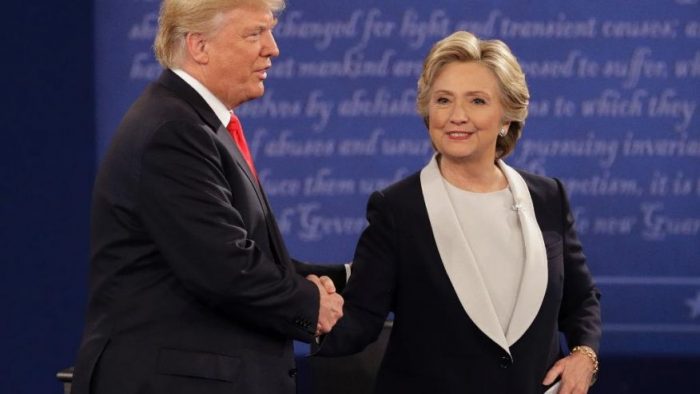
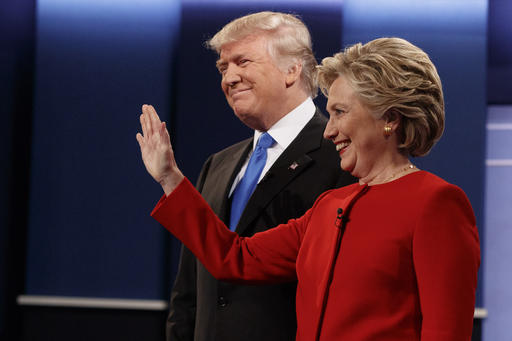
Republican presidential candidate Donald Trump, left, stands with Democratic presidential candidate Hillary Clinton before the first presidential debate at Hofstra University, Monday, Sept. 26, 2016, in Hempstead, N.Y. (AP Photo/ Evan Vucci)

The first debate between Hillary Clinton and Donald Trump was billed as literally the fight of the century; bigger than Ali vs. Frazier, bigger than Coke vs. Pepsi. While an innumerable number of columnists, analysts, lobbyists and anyone else with “-sts” at the end of their job description will critique this debate to death, we should be asking a question that didn’t come up in the debate.

Why does the Iran lobby want to make the issue of Iran a partisan political issue?

From the moment the Iran lobby was created, especially the launch of its principal leader—the National Iranian American Council—it has sought to wedge itself into the partisan political environment by trying to align itself with Democrats and attacking Republicans for the past several years.

At first it may have been because Republicans were the most visibly opposed to accommodating the mullahs in Tehran, but the NIAC even held its fire when it came to criticizing prominent Democrats opposed to Iran accommodation such as Sen. Robert Menendez (D-NJ), a prominent critic of the Iranian regime.

It was also no coincidence that many of NIAC’s staffers formerly worked for Democratic office holders and organizations, but that is a superficial reason for its efforts to politicize Iran issues.

The blueprint for this tactic comes from the mullahs themselves as displayed in their energetic efforts to tar and feather Saudi Arabia and portray its chief regional rival as the source of all terrorism and evil in the world. It’s a blatant effort at diverting attention away from Iran’s own failings and blunt criticism for its long support for terrorism and brutal human rights record.

If you treat any criticism of the Iranian regime as merely political point scoring, the NIAC and other supporters are hoping it diminishes the power and effectiveness of the criticism. The only problem with that argument is when both Democrats and Republicans both take aim at the regime anyway.

In stark contrast to that cynical tactic, Iranian dissident and opposition groups such as the National Council of Resistance of Iran have worked diligently to build bridges on both sides of the political aisle and worked on unifying themes such as human rights, support for women and opposition to sponsorship of terrorism.

Those efforts have won over many on both sides of the aisle with members such as Democratic House Leader Nancy Pelosi (D-CA), former Democratic Sen. Joe Lieberman, House Foreign Affairs Committee chair Ed Royce (R-CA), and former New York mayor Rudy Giuliani just to name a few.

Ultimately the Iran lobby must pursue this diversion strategy since its typical message points about Iranian cooperation and moderation have dissolved in a flurry of aggressive, militant and shocking moves by the mullahs since the nuclear deal was sealed and the “echo chamber” of support was revealed by the news media.

With the news coming out of Iran since the passage of the nuclear deal being mostly bad and only getting worse, the Iran lobby finds itself in a pickle with the upcoming presidential election promising a new president who plans to hold the Iranian regime much more accountable whoever wins.

For the Iranian regime, the pressure is on to grab as much as it can before that happens so the news coming out of Tehran is fast and furious. In the last day alone, we have seen:

  • The proposed cease-fire in Syria collapse as Russian and Syria aircraft have resumed massive bombing of primarily civilians in rebel-controlled areas, such as Aleppo as a major ground has been observed moving into the area with as many as 3,000 Iranian-backed fighters hoping to crush the rebellion against the Assad regime;
  • Iran will continue to test and improve the range and accuracy of its ballistic missiles to deter or coerce potential adversaries — the United States operating in the region, Gulf Arab states, Turkey and Israel – four Middle East experts said in a meeting of the Atlantic Council;
  • Hassan Rouhani and other regime leaders are under intense pressure back home from dissatisfied Iranians upset with the lack of benefits trickling down to them from the nuclear agreement and the perception that rampant corruption is siphoning off any economic improvement;
  • The head of Iran’s atomic energy agency warned that the landmark nuclear deal could be jeopardized by perceived foot-dragging on sanctions relief, promised in exchange for Tehran’s commitment to curb key atomic activities, even though US officials said those commitments were fulfilled but uncertainty over investing in Iran has been responsible for the delays; and
  • The regime’s top mullah, Ali Khamenei, tried to snuff out an insurgent return to the political stage by widely reviled past president Mahmoud Ahmadinejad who has hinted at a challenge to Khamenei’s handpicked minion, Rouhani.

The turmoil the Iranian regime is facing highlights the schisms that are running through Iranian society and the deepening split between the mullahs and the Iranian people. It also explains why the Iran lobby is so intent on trying to portray Iran policy issues as partisan political ones and not worthy of the attention of media.

Unfortunately for the Iran lobby, the American people, who have been subjected to near constant attacks inspired by extremist Islamists and worry about the growing carnage around the Middle East caused by Iranian regime’s active support of three proxy wars, have begun to suspect any supporter of the mullahs.

This may explain why the only people in America openly supporting the Iranian regime are those directly connected to the Iran lobby such as the NIAC, Ploughshares Fund and their cohorts.

By Michael Tomlinson

Filed Under: Blog, News Tagged With: Featured, Iran, Iran deal, Iran Human rights, Iran Lobby, Iran Mullahs, Iran sanctions, National Iranian American Council, NIAC, NIAC Action, Ploughshares

Iran Regime Threatens to Shoot Down American Planes as Tensions RiseIran Regime Threatens to Shoot Down American Planes as Tensions Rise

September 18, 2016 by admin

Iran Regime Threatens to Shoot Down American Planes as Tensions Rise

US Claims Iran Threatened to Shoot down US Military Planes near Iranian Airspace

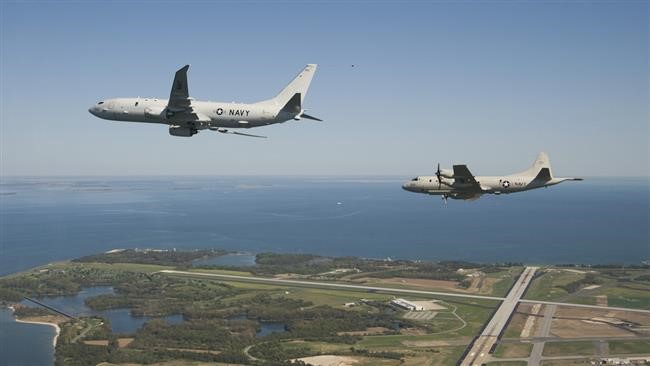
In a sign of the growing escalation in confrontations being manufactured by the Iranian regime, two U.S. Navy surveillance aircraft flying in international airspace near Iran were challenged and threatened by regime air defense stations over the weekend and told to change course or be shot down.

U.S. officials disclosed the aircraft were flying over the Strait of Hormuz on routine patrols, which the Iranian regime has used as a platform to intimidate commercial and naval ships with frequent run-ins with regime patrol and attack boats, often running courses directly at ships, ignoring warnings as severe as gunfire across their bows.

Using ground-to-air communications, officials at the Iranian air defense station told the crews they were flying near Iranian airspace and that if they didn’t change their course quickly they risked being fired upon, according to a spokesman for U.S. Naval Forces Central Command in Bahrain, Cmdr. Bill Urban.

“We will fire Iranian missile,” was one of the transmissions from the ground, he said. Both the American planes were threatened in three separate radio calls, Cmdr. Urban said in a statement.

U.S. State Department officials decried the incident, saying it showed Iran had yet to show signs of shifting from its aggressive stance in the region even after the international nuclear agreement reached last year.

“Frankly, there’ve been previous incidents much like this, and they’re concerning, obviously. They escalate tensions,” said Mark Toner, a State Department spokesman. ”We have conveyed our concerns to Iran.”

The Navy P-8 Poseidon with a crew of nine and an EP-3 Eries with a crew of roughly 24, were flying a reconnaissance mission 13 miles off the coast of Iran, through the Persian Gulf, Strait of Hormuz and Gulf of Oman, according to officials who call the boundary Iran’s “black line.”

Iran’s territorial waters—like all nations–extend 12 miles into the sea, according to international maritime law, neither aircraft breached the boundary line.

The US military planes ignored the warning and continued flying in international airspace, although close to Iranian territory, the officials told Fox News.

“We wanted to test the Iranian reaction,” one US official told Fox News when asked why the US jets were flying close to Iran.

“It’s one thing to tell someone to get off your lawn, but we weren’t on their lawn,” the official continued.  “Anytime you threaten to shoot someone down, it’s not considered professional.”

“This been a continuing issue with respect to Iranian intercepts,” said Lt. Gen. Jeffrey Harrigian, who is the top U.S. commander of the coalition air war against the Islamic State in Iraq and Syria.

The increasing frequency of incidents raises the question of why the regime is acting in such a provocative manner. Many within the Iran lobby have argued these acts are being committed by a small segment of hardliners within the Revolutionary Guard Corps who object to the opening up of Iran to the West as signaled by the nuclear agreement reached 14 months ago.

The line of reasoning attempts to mask the growing militant nature of the regime and the almost earnest efforts by regime officials to spark a conflict. One could almost surmise the mullahs actually are trying to provoke a response from the U.S. military in order to claim the moral high ground against the Great Satan, but why? For what purpose?

Most analysts agree that the supposed benefits of the nuclear agreement with the lifting of economic sanctions have not benefitted ordinary Iranians at all. Their economic condition remains bleak and as a result, there has been significant restlessness amongst the population, with large demonstrations over stagnant wages and rampant corruption taking place.

The regime, especially top mullah Ali Khamenei, have been vocal and outspoken in blaming the U.S. for the struggling economy and the perceived lack of benefits flowing from the nuclear deal, but what the mullahs don’t want to talk about is how they have decided to use most of the financial windfall the regime received, including the “ransom” payments of $1.7 billion for American hostages, to continue funding proxy wars in Syria, Iraq and Yemen and not spend it to improve the lives of Iranians.

Also, while the U.S. did lift its nuclear related sanctions last January, other sanctions, including financial ones, related to Iran’s ballistic missile program, allegations of state sponsoring of terror groups and human rights abuse claims remain.

Major international banks are unwilling to risk losing access to the dollar market or huge fines out of fear of inadvertently falling afoul of what they say are ambiguous U.S. regulations.

It is an ironic turn of events since the regime was adamant during negotiations that issues not related to nuclear programs be de-linked. Now the mullahs are paying the price for that decision.

This may explain why the regime is acting so aggressively in order to divert attention from the economic turmoil and political unrest and create a false crisis internationally. It is an old tactic and one the mullahs are dusting off in the hopes of overcoming the domestic discontent they are facing in spite of a massive crackdown at home on journalists, students and dissidents.

Ultimately it should not come as any surprise to see the regime increase these confrontations and try to provoke a response. Otherwise, their own necks might be on the line.

By Michael Tomlinson

Filed Under: Blog, News Tagged With: #NuclearDeal, Featured, Iran, Iran Human rights, Iran Mullahs, Iran sanctions, Iran Talks, Irandeal

Study Points to Iran Regime Funding of Terror from US Payment

September 16, 2016 by admin

Study Points to Iran Regime Funding of Terror from US Payment

Study Points to Iran Regime Funding of Terror from US Payment

Last year the US stacked bundles of euros and Swiss francs on pallets and loaded them onto a transport aircraft bound for Tehran. The $400 million was destined to be used as leverage in securing the release of American hostages being held illegally by the Iranian regime as part of the nuclear deal.

That $400 million would later swell to a total of $1.7 billion in cash paid out to the mullahs as part of a settlement agreement over a longstanding dispute regarding payment made by the deposed Shah of Iran’s government for US military hardware prior to the Islamic revolution.

What has caused concern among elected officials and policymakers is the doubt surrounding what the regime would do with the cash windfall. A recent study by the American Action Forum, a non-profit research organization, estimated that as much as $37.4 million of this $1.7 billion were funneled directly to fund operations of the Iranian Revolutionary Guard Corps.

These operations have stretched from supporting the Assad regime in Syria to Shiite militias and death squads in Iraq to Houthi rebel forces in Yemen, according to the Washington Free Beacon.

Leading US lawmakers now suspect that the IRGC played a key role in assuming control of this cash, which the White House has admitted to putting directly in Iranian hands, the Free Beacon disclosed Monday evening.

“Applying the official spending levels to the U.S. payment to Iran, the $1.7 billion would mean $37.4 million for the IRGC,” according to research published by Rachel Hoff, AAF’s director of defense analysis. “Paying ransoms in exchange for Americans held abroad is one bad policy—indirectly funding terrorism is another.”

AAF has determined based on public reports by Iran that the country spends 3.4 percent of its total budget on defense needs, though some experts, including Iranian dissident groups, estimate the number is much higher.

At least “65 percent of that funding [goes] to the Islamic Revolutionary Guard Corps (IRGC), the Iranian elite paramilitary force,” according to AAF. “That works out to 2.2 percent of Iran’s total budget for the IRGC, which actively supports terrorist organizations throughout the Middle East. It is unlikely that Iran accurately reports its military or paramilitary spending, but the reported budget figures are useful as a baseline.”

Most disturbing is the very real possibility that the US exchanged the cash payments directly to IRGC agents and members of its military intelligence units which have been at the forefront attacks against US personnel in Lebanon, Saudi Arabia, Afghanistan and Iraq over the past three decades.

The Iranian regime’s long support for terrorism has included more recent revelations about the mullahs links to Al-Qaeda; a fact that regime and Iran lobby have worked frantically to cover up by trying point blame on Saudi Arabia instead.

Thomas Joscelyn, a senior fellow at the Foundation for the Defense of Dmeocracies, recently took regime foreign minister Javad Zarif to task in a series of tweets lambasting an editorial Zarif penned in the New York Times.

“Where is Abu Hamzah al Khalidi, the head of al Qaeda’s military commission, currently? He’s in #Iran:http://www.longwarjournal.org/archives/2016/07/treasury-designates-three-senior-al-qaeda-members-in-iran.php …” read one of his tweets, correctly pointing out how the Iran regime provides safe havens for Al-Qaeda leaders.

Joscelyn reminds us that the State Department’s original sanction against Iran in 2011 was because of the revelations of a “secret deal” between Iran and Al-Qaeda to provide the terror group behind the 9/11 attacks support.

That burgeoning conflict between Saudi Arabia and the Iranian regime drew a strong rebuke a warning from Mecca province governor Prince Khaled al-Faisal who urged Iran to end what he called wrong attitudes toward Arabs and warned it against any use of force in its rivalry with the kingdom.

The Saudi Press Agency quoted Prince Khaled as telling journalists his message to the Iranian leadership was “I pray to God Almighty to guide them and to deter them from their transgression and their wrong attitudes toward their fellow Muslim among the Arabs in Iraq, Syria, Yemen and around the world”.

“But if they are preparing an army to invade us, we are not easily taken by someone who would make war on us.”

Alarmingly, it now seems in addition to the $1.7 billion in cash the regime received from the US, the total amount of cash released back to Iran as part of the nuclear deal could have reached as high as $34 billion, with no tracking of how that money is being used by the mullahs.

The Associated Press reports Iran brought home roughly $20 billion dollars from this deal. But nearly $12 billion dollars in previously frozen U.S. sanctions were given to Tehran as nuclear talks progressed. Add to that the $1.7-billion-dollar cash payout the White House gave Tehran before the release of several U.S. hostages this year and the sum total soars to nearly $34 billion dollars.

“So every dollar that goes to Iran you have to assume is going to go to Hezbollah,” said Senator Marco Rubio (R) FL. “Or it’s going to go to their missile program, or their nuclear ambition or their military.”

Unlike digital transfers of money, cash is untraceable. Some experts say we likely will never know how Iran will take advantage of this windfall.

By Laura Carnahan

Filed Under: Blog, News Tagged With: #NuclearDeal, Appeasement policy, Featured, Iran, Iran deal, Iran sanctions, IRGC, zarif

Hassan Rouhani Begins Charm Tour Leading to UN Speech

September 13, 2016 by admin

Hassan Rouhani Begins Charm Tour Leading to UN Speech

Hassan Rouhani Begins Charm Tour Leading to UN Speech

The United Nations General Assembly Session over the years has been the scene of many speeches both famous and infamous. Some of the more memorable addresses by some infamous people include Venezuelan strong man Hugo Chavez in 2006, Libyan dictator Moammar Gadhafi in 2009 and Iranian regime leader Mahmoud Ahmadinejad in 2010.

It has been used as a platform to bully the world. It has been used to make extravagant accusations. It has been used to charm and lull the world into believing false narratives.

It has also been used to raise human rights issues. It has been used to advocate for peace, democracy and tolerance. It has been used to raise the hope for a world seeking to make a better place for the future.

The General Assembly exists to serve the aims of whoever chooses to speak and the annual general session is a free for all so world leaders can make their rhetorical claims on whatever topic they choose.

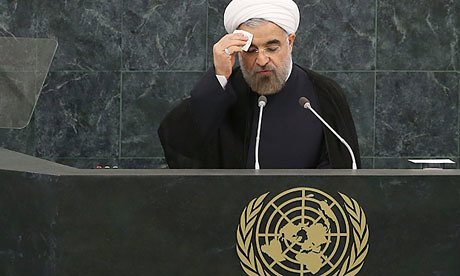
Into this platform has stepped Hassan Rouhani, the handpicked president of the Iranian regime who has used previous sessions to make lofty promises of openness, moderation and dedication to finding diplomatic solutions to intractable problems.

Unfortunately, the reality of the Iranian regime’s actions has never lived up to his rhetoric.

As recently as Rouhani’s address to the UN last year, he suggested that the nuclear agreement reached with Iran and world powers would help create the basis for broader engagement, in a speech that was noted for its departure from the strident tone of his boss, top mullah Ali Khamenei.

Last year Rouhani spent considerable time extolling the diplomatic success of the agreement, claiming it would lift years of painful economic sanctions on Iran in exchange for verifiable guarantees that its nuclear activities remain peaceful.

In the year since he gave that optimistic speech, relations between the Iranian regime and the rest of the world has plummeted to new lows. Among the regime low-lights since he gave his speech:

  • Iranian regime has stepped up arrests of dual-national citizens following the linking of releasing American hostages in exchange for $1.7 billion from the U.S.;
  • Iranian regime has expanded proxy wars in Syria, Iraq and Yemen through its continued support of terror groups such as Hezbollah and its recruitment of Afghan mercenaries and arming of Shiite militias and Houthi rebels;
  • The regime has continued development and test firing of ballistic missiles in defiance of UN restrictions, alongside being granted exemptions from the nuclear deal allowing it to maintain large stockpiles of heavy water and operating “hot cells” for the handling of nuclear materials;
  • Iranian regime has instituted large crackdowns against dissidents, students, journalists, ethnic and religious minorities, including knocking off the majority dissident and moderate candidates from parliamentary election ballots; and
  • Iranian regime stepped up open confrontations in the Persian Gulf with U.S. Navy warships, necessitating evasive maneuvers and even warning shots to be fired, even as the regime engages in a massive military build-up with purchases from Russia.

It has hardly been a year of peace and moderation as Rouhani claimed and the Iran lobby has argued for since the nuclear deal was reached.

A closer look at Rouhani’s travel itinerary shows his focus on a tour of designed to expand the regime’s sphere of influence into Latin America as he visits Venezuela this week.

At the UN General Assembly though, Rouhani’s task will be more difficult—not only because more people are likely disbelieve his assertions given the regime’s track record—but also that Khamenei may be finding Rouhani’s utility waning and the need for this particular puppet lessening.

Many analysts and Iranian dissidents have predicted that Rouhani’s selection in a purportedly rigged presidential election was designed to allow the regime to present a more genial and media-savvy face to open a rapprochement with the U.S. in order to secure a favorable deal alleviating the regime of crippling economic sanctions.

Now that the regime has been appeased through the nuclear agreement, the need for friendly regime face may be fading as Khamenei has indulged his desire for more aggressive confrontations with the U.S. and its allies.

Dr. Majid Rafizadeh, president of the International American Council, says a sign of that shift may come if Rouhani’s speech criticizes the U.S., highlighting Washington’s failure to let Tehran rejoin the financial global system.

Iran’s UN speech will most likely repeat Khamenei’s message, in a more diplomatic way, that the US has been “breaking oaths, not acting on their commitments and creating obstacles,” he said.

Rouhani’s speech is also unlikely to make any mention of the current hostages being held by the regime, including Nazanin Zaghari-Ratcliffe, a British-Iranian dual citizen, who was detained in April at Tehran’s Imam Khomeini Airport.

An Iranian court just handed down a harsh five year prison sentence on her, even though the exact charges have not been disclosed by the regime. Zaghari-Ratcliffe works at the Thomson Reuters Foundation, the charitable arm of the company that owns the Reuters news agency and her plight, along with other hostages such as Canadian professor Homa Hoodfar, have revived concern about the regime’s plans for more cash for hostage swaps.

As the Wall Street Journal editorialized in an opinion piece:

“One purpose of the harsh sentence is to remind Iranians in the diaspora tempted to return home in the wake of the nuclear deal that the regime sees them as traitors. It’s also no accident that the sentence came shortly after the U.K. upgraded its diplomatic relations back to ambassador level.

“Foreign Secretary Boris Johnson cheered the new opening to Tehran last Monday, only to receive a rude awakening days later. Now the regime has a new political and financial bargaining chip, and Mr. Obama has created a cash-for-hostages incentive system with his earlier ransom. Let’s hope the British government is wiser than to stuff briefcases with unmarked bills.”

The UN should plan on asking Rouhani the tough questions it didn’t ask him the last three times he spoke at the General Assembly.

By Michael Tomlinson

Filed Under: Blog, News Tagged With: Featured, General Assembly, hassan rouhani, Iran, Iran deal, Iran Human rights, Iran sanctions, UNGA

  • « Previous Page
  • 1
  • …
  • 7
  • 8
  • 9
  • 10
  • 11
  • …
  • 15
  • Next Page »

National Iranian-American Council (NIAC)

  • Bogus Memberships
  • Survey
  • Lobbying
  • Iranians for International Cooperation
  • Defamation Lawsuit
  • People’s Mojahedin
  • Trita Parsi Biography
  • Parsi/Namazi Lobbying Plan
  • Parsi Links to Namazi & Iranian Regime
  • Namazi, NIAC Ringleader
  • Collaborating with Iran’s Ambassador

Recent Posts

  • NIAC Trying to Gain Influence On U.S. Congress
  • While Iran Lobby Plays Blame Game Iran Goes Nuclear
  • Iran Lobby Jumps on Detention of Iranian Newscaster
  • Bad News for Iran Swamps Iran Lobby
  • Iran Starts Off Year by Banning Instagram

© Copyright 2026 IranLobby.net · All Rights Reserved.