Iran Lobby

Exposing the Activities of the lobbies and appeasers of the Mullah's Dictatorship ruling Iran

  • Home
  • About
  • Current Trend
  • National Iranian-American Council(NIAC)
    • Bogus Memberships
    • Survey
    • Lobbying
    • Iranians for International Cooperation
    • Defamation Lawsuit
    • People’s Mojahedin
    • Trita Parsi Biography
    • Parsi/Namazi Lobbying Plan
    • Parsi Links to Namazi& Iranian Regime
    • Namazi, NIAC Ringleader
    • Collaborating with Iran’s Ambassador
  • The Appeasers
    • Gary Sick
    • Flynt Leverett & Hillary Mann Leverett
    • Baroness Nicholson
  • Blog
  • Links
  • Media Reports

The Importance of Linking Iran Sanctions and Human Rights

June 9, 2015 by admin

Bijan Khajehpour

Bijan Khajehpour

Sens. Mark Kirk (R-IL) and Bob Menendez (D-NJ) have put forward an amendment to the defense budget that would extend congressional sanctions against the Iran regime for 10 additional years. The amendment is aimed at extending the Iran Sanctions Act of 1996, currently set to expire at the end of 2016, to the end of 2026.

The amendment is an important step in resetting the expectations associated with the Iran regime’s nuclear weapons program because it links it to the development of intercontinental ballistic missiles and human rights abuses; a significant step towards properly addressing the central issues with the regime’s conduct towards the world.

The regime’s chief cheerleaders, the National Iranian American Council, predictably were quick to denounce the legislation, warning that passage of the bill would derail ongoing negotiations. The NIAC’s statement was noteworthy for a few things, namely that it placed the burden of completion of a deal on the U.S. and not the regime.

“There are legitimate questions about whether the U.S. will be able to deliver on the terms for sanctions relief under a nuclear deal, and the passage of this amendment would give credence to those concerns,” the NIAC statement said.

It is a remarkable sentence because it firmly ignores the chief obstacle to any agreement between the West and Iran, which is Iran’s historic inability to live up to any of its international agreements. As recently as last month, Iran has steadfastly refused to answer outstanding questions from the International Atomic Energy Agency about the “possible military dimensions” of its nuclear program.

On top of that omission are repeated comments by Iran’s top mullah, Ali Khamenei, who has reiterated publicly his opposition to allowing access to any Iranian military facility or Iranian nuclear scientists by international inspectors.

This follows continued denials by Iran that it is involved in proxy wars being waged in Syria and Yemen, not to mention its control of Shiite militias in Iraq that are now being accused of reprisal sectarian killings against Sunni Muslim villagers, all of which points to a disturbing and repeated pattern of deception, denial and distrust.

The action by Senators Kirk and Menendez comes after passage of legislation signed by President Obama and over the vigorous objections of NIAC authorizing congressional review of any nuclear agreement reached with Iran.

This latest bill from Kirk and Menendez addresses a glaring hole in current negotiations, which is the failure of negotiators to hold Iran’s human rights conduct accountable, as well as including the regime’s capacity to deliver a nuclear weapon well outside their neighborhood and threaten Europe and Asia.

The NIAC and the rest of the Iran lobby have fought hard to keep these things out of negotiations because they know full well their inclusion would almost certainly doom Iran’s hopes of securing a deal and lift economic sanctions and flood the regime with billions in new cash and investment.

The proposed amendment is not a deal breaker for the West as much as it is a safety clause assuring the West does not deliver a bad deal that could come back to haunt them.

By Michael Tomlinson
 

Filed Under: American-Iranian Council, Latest from Lobbies & Appeasers, National Iranian-American Council, The Appeasers Tagged With: Congress bill on Iran, Iran, Iran appeasers, Iran deal, Iran Human rights, Iran Lobby, Iran sanctions, Iran Talks, Irandeal, NIAC, Sanctions

Iran Lobby Comes Late to the American Hostage Party

June 4, 2015 by admin

CGrDrmxW0AI6gKWAfter a day of gut wrenching testimony before the House Foreign Affairs Committee earlier this week in which families for four Americans imprisoned unjustly in Iran spoke out about the brutal torture their loved ones have been subjected to, the Iran regime’s trusty lobbyists, the National Iranian American Council, did not even have the wherewithal to join in the condemnation of Iran’s mullahs for this appalling human rights violation.

Instead, the NIAC issued a matter-of-fact recitation of the testimony and noted the passage of a bipartisan resolution sponsored by Rep. Dan Kildee (D-MI) calling for the release of Americans detained in Iran, including Amir Hekmati, Jason Rezaian, Saeed Abedini and Robert Levinson.

But the NIAC could not help itself. It seems to be permanently conditioned to always find a way of supporting the regime no matter how debased the actions it undertakes. In this case, Maria Hardman went to great lengths in attempting to explain the hostage-taking was an act committed by “hardliners” in Iran opposed to any rapprochement with the West and seeking to undermine nuclear negotiations.

She went on to take issue with calls by some Congressmen to hold Iran accountable for the illegal detentions, including linking them to ongoing nuclear talks. Hardman seems to posit that linking the two would somehow prove disastrous for nuclear talks.

It is an old argument she espouses, one that regime supporters such as Trita Parsi, Jim Lobe, Eli Clifton and others have consistently offered up – not as a pathway to securing the release of these hostages – but rather in trying to remove any obstacles blocking the regime’s access to a favorable deal that would reward mullahs in Iran with billions of dollars in cash, foreign investment and oil sales.

Rather than take the opportunity to condemn the mullahs for these illegal acts and the very high price being paid by these men and their families, Parsi have hardly uttered a word in support of these innocents. Aside from initial statements calling for their release at the time each of them was arrested, there has been scant mention by any Iran lobby supporter.

All you have to do is Google search “Trita Parsi” and “Saeed Abedini” for example and you will find the lack of quotes from him urging the imprisoned pastor’s release as rare as rain in California these days.

It is also worth remembering that while the Iran lobby attempts to portray Iran as riven by battling hardline and moderate factions, the simple truth is that the various factions within the Iranian regime are no different, when it comes to their treatment of their people. The regime is firmly and completely in the thrall of the mullahs who control – under the constitution – all aspects of Iranian life, including cultural, military, judicial, legal and economic. All power vests solely within top mullah Ali Khamenei and his recent comments have made clear what his expectations are about a nuclear deal.

The regime is firmly committed to twin goals: 1) To remove as quickly and as completely as possible all economic sanctions in order to rescue an economy run aground by rampant corruption and mismanagement by the ruling mullahs; and 2) To maintaining of Iranian regime’s nuclear development in order to extend its control over new territories it has gained through proxy wars in Syria, Iraq and Yemen. A task that the Iran lobby seems to be very dedicated to.

By Michael Tomlinson

Filed Under: Blog Tagged With: American, Amir Hekmati, Iran, Iran Lobby, Jason Rezaian, Robert Levinson, Saeed Abedini

Trita Parsi and Paul Pillar Outdo Themselves

June 3, 2015 by admin

Untitled-1Trita Parsi, head of the Iran regime’s top cheerleader, the National Iranian American Council, and Paul Pillar, a former assistant at the Central Intelligence Agency, authored an editorial in Huffington Post in which they attempted to make the argument that Israel was preparing to attack its adversary Hezbollah in an effort to derail nuclear talks between Iran and the P5+1 group of nations.

It’s an odd editorial since it reinforces the Iran lobby’s belief that in order to save a faltering nuclear deal it needs to raise the boogeyman of Israel. For the Iran lobby, Israel serves the same purpose as neo-cons, Sen. Lindsay Graham (R-SC) or Fox News, it gives people like Parsi and Pillar the opportunity to run hysterical promising war, apocalypse and mayhem should a nuclear deal not be achieved with Iran’s mullahs.

It’s a typical effort to cajole a reaction from American voters by promising war. A curious tactic considering NIAC has consistently promised a pathway to peace, but logic has never been a NIAC strong suit.

In fact, Parsi and Pillar are scraping the bottom of the barrel when they cite a NPR poll as evidence of shifting momentum for a nuclear deal among Americans. A closer reading of the article they cite reveals points quite unfavorable to them. Among those include:

  • An NBC News/Wall Street Journal poll last month found more than 7-in-10 said they thought a deal would “not make a real difference in preventing Iran from producing nuclear weapons.”
  • A Pew survey found that 73 percent said they either knew “a little” or “nothing at all” about nuclear talks. That same poll also found that a strong majority (62 percent) wants Congress to “have the final authority for approving any deal” not President Obama.

The funny thing is that the overwhelming majority of Americans don’t mind talks with Iran on a nuclear deal. Where they disagree with Parsi and Pillar is that the majority of Americans don’t believe Iranian regime will adhere to any deal and that mullahs in Iran simply can’t be trusted.

Americans are an optimistic people. They want to believe negotiations can yield peaceful fruit, but Americans are not stupid – much to the dismay of Parsi and Pillar – they recognize that trust for a regime run by mullahs that has launched and supported three major proxy wars in Syria, Yemen and Iraq can’t be trusted.

Americans also know all too well the brutal human rights situation in Iran and are acutely aware of the inhumane treatment being perpetrated in Iran on these same people.

Anyone typing in the words “Iran” and “hanging” in Google under an image search can see the ample proof on display of how Iranian regime’s judicial system dispenses justice. Americans also see Iran’s mullahs playing games with the lives of four Americans being held in Iranian prisons as pawns in the hopes of bartering concessions in nuclear talks.

It’s also even more galling to see that while Parsi and Pillar produce so much editorial copy aimed at warning of a war, they have never condemned the wars that Iran is already waging:

  • Wars against women, children and anyone who cannot exercise their basic human rights without fear of arrest or public beating;
  • Wars against Christians, Jews, Hindus, Yazadis, Sunni Muslims, or anyone else that doesn’t share their brand of extremist Islam; and
  • Wars against bloggers, journalists, pastors, businessmen, tourists, YouTubers and anyone else that dares shine a light on what is happening within Iran.

These are the wars Parsi and Pillar are not prepared to talk about and the real wars happening now that matter.

By Michael Tomlinson

Filed Under: Blog, National Iranian-American Council, News Tagged With: Hindus, Iran, Iran Christians, Iran Human rights, Iran Lobby, Iran Minorities, Jews, Nuclear, Paul Pillar, Sunni Muslims, Tritta Parsi, Yazadis

Iran Lobby Silent as Religious Persecution Rises

June 3, 2015 by admin

Christian Persecution (1)There are certain truisms in life. Not paying your taxes will get you into trouble. Eating high fat foods makes you gain weight and the paid lobbying machine for the Iran regime will always remain silent when it comes to the mistreatment of those living in Iran.

That was on display the other as Fox News reported that “Iran’s revolutionary court imposed harsh prison sentences on 18 Christian converts for charges including evangelism, propaganda against the regime, and creating house churches to practice their faith.”

The sentences totaled almost 24 years, but the lack of transparency in the regime’s infamous judicial system did not reveal how the sentences were dished out to each person. In addition to prison time, each defendant was barred from organizing home church meetings and given a two-year ban from leaving Iran.

The Christians, many of whom were arrested in 2013, were sentenced in accordance with Article 500 of the Islamic Penal Code, a vague law used as a catch-all criminal statute to penalize threats to Iran’s clerical rulers. According to the law, “Anyone who engages in any type of propaganda against the Islamic Republic of Iran or in support of opposition groups and associations, shall be sentenced to three months to one year of imprisonment.”

It’s a code that has been used widely against religious minority as well as political dissidents as a quick means of throwing them in prison before deciding on more serious charges such as espionage, treason or heresy.

The persecution doesn’t stop with Christians as Iran’s mullahs have also targeted Sunni Muslim sects and other religious minorities such as Baha’is for harassment. The number of Christians in Iran is estimated at between 200,000 and 500,000, out of an overall population of nearly 78 million.

Although the Islamic Republic’s constitution guarantees on paper that Christianity, Judaism, and Zoroastrianism are protected religions, the application of mullah’s constitution relegates the members of the minority religions to second class citizens.

Against that backdrop was testimony given on Capitol Hill yesterday by the families of Americans being held hostage in Iran, including Saeed Abedini, a Christian pastor imprisoned by the regime’s revolutionary court.

The family of Amir Hekmati, an Iranian-American Marine, taken prisoner in 2011, testified before the House Foreign Affairs Committee that he has been subjected to brutal torture both physical and psychological. “Amir’s feet were beaten with cables. His kidneys were shocked with a Taser. He was drugged by his interrogators, who then forced him to suffer through withdrawal. Amir was also kept in solitary confinement for months on end and held in a cell so small for the first year of his imprisonment that he could not fully extend his legs. He was allowed to walk outside his cell once a week,” said Sarah Hekmati, Amir’s sister.

Amir was also kept incommunicado for years. His jailers took advantage of this and falsely told him his mother had been killed in a car accident in a cruel example of the regime’s treatment of its prisoners.

Yet throughout all this mistreatment, Trita Parsi and other advocates for the regime have barely uttered a word of protest, even while Parsi hob nobs with Iranian delegates in Swiss hotel hallways and lounges. Their silence, while deafening, is not unexpected since the brutal treatment of Iranian-Americans could prove troublesome to the end goals of bailing out the Iran regime with a nuclear agreement that lifts all economic sanctions immediately.

It is unfortunate that this Iranian hostage crisis appears to have no end in sight.

By Laura Carnahan

Filed Under: Blog, National Iranian-American Council Tagged With: Baha'is, Human Rights, Iran, Iran Lobby, Iran Talks, Trita Parsi

Iran Lobby Fails Imprisoned Iranian Americans

May 28, 2015 by admin

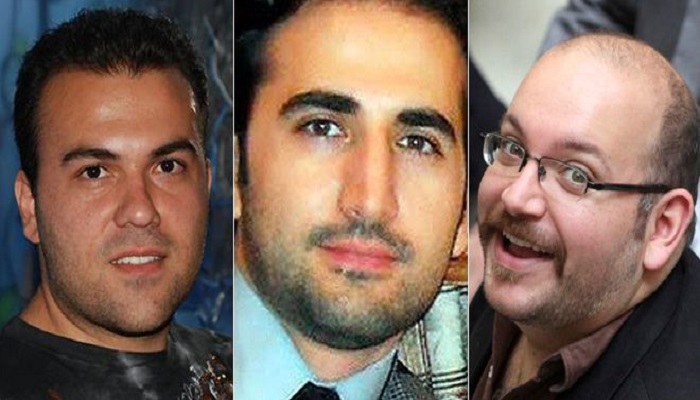
Hekmati Abedini RezaianThe National Iranian American Council touts itself as a champion for Iranian Americans. Its own mission statement trumpets the organization as “a non-profit educational organization dedicated to promoting Iranian-American participation in American civic life.”

One can only assume that its daily verbal assaults against anyone opposing a nuclear deal with the Iran regime is part of that educational process for promoting civic life in America. A casual tallying of public statements, press releases, news quotes and surveys released by NIAC would leave most observers wondering why American civic life happens to be tied so intimately to the foreign policy of the Islamic state.

But the NIAC claims an extended mission to help promote universal human rights in Iran saying on its website:

“NIAC works to ensure that human rights are upheld in Iran and that civil rights are protected in the US. NIAC believes that the principles of universal rights – dignity, due process and freedom from violence – are the cornerstones of a civil society.”

A rational person could then deduce that NIAC would be a vocal and outspoken proponent for the human rights of Iranian Americans who are being abused or mistreated in some fashion. In fact, if you scroll through NIAC’s Issues blog, you cannot find any denunciations, condemnations or calls for better treatment of people within Iran.

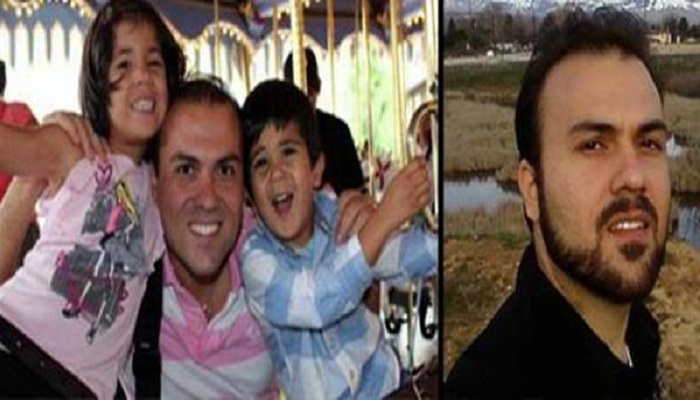
Indeed, if NIAC’s mission is to advocate on behalf of Iranian Americans, I can easily come up with three who desperately need its help. Languishing in Iranian prisons are:

  • Jason Rezaian, a Washington Post reporter and Iranian American born in California, who has been held by Iran and only this week has been charged with espionage for reporting Iran news and is not facing trial in the Revolutionary Court in a closed session without even his family allowed in attendance;
  • Amir Hekmati, a former U.S. Marine and the longest-held American prisoner in Iran, who has been sentenced in another sham trial and whose appellate hearing was denied yet again; and
  • Saeed Abedini, a Christian pastor from Idaho, who was convicted for holding religious services in private homes.

In response to the Rezaian closed session trial moving forward, NIAC’s president, Trita Parsi, was quoted in the New York Times saying “If there is a conviction in the Rezaian case and no leniency, it can create a crisis in the nuclear talks, yet another complication.”

It’s a wonder Parsi always seems to find a way to tie everything back to nuclear talks. You think he has a genetic sequence which compels him to burp the word “nuclear” whenever he is asked a question about Iran.

Wouldn’t it be refreshing if Parsi actually lived up to his own organization’s mission statement and said something like: “We think it is horrible that Iranian regime is holding these Iranian Americans in prison without proper due process or transparency. We urge Iran’s authorities to respect international law and all these Americans to come home to their families without any further delay.”

Now was that so hard?

But then again, the Iran regime does seems to share a playbook with other dictatorial regimes which use hostages as political bargaining chips. We can only assume Iran’s mullahs have seen the prisoner swaps and are holding on to these American hostages hoping to leverage them as part of the nuclear talks; talks that Parsi and NIAC seem pathologically tied to as well.

But the plight of these Iranian Americans should be blatant evidence of the true nature of the mission of the NIAC, which is not to help them, but help Iran gain a nuclear deal with the immediate lifting of all economic sanctions as a reward.

By Michael Tomlinson

Filed Under: Blog, National Iranian-American Council Tagged With: Iran, Iran Deals, Iran Lobby, Iran Talks

Iran Lobby Can’t Keep Facts Strai

May 27, 2015 by admin

Lies Truth (1)The National Iranian American Council has been unleashing verbal broadsides at Sen. Lindsey Graham (R-SC) alleging he had called all Iranians “liars” and demanded apologies for what it alleges as racist comments.

NIAC’s head, Trita Parsi, issued a statement condemning Sen. Graham, saying “Senator Graham owes the Iranian-American community – one of the most successful communities in the United States – an apology.”

Sen. Graham might very well owe Iranian-Americans an apology – if he was talking about Iranian Americans, but he wasn’t speaking of them, he instead was focusing his ire at the mullahs leading Iran today, especially as it related to ongoing nuclear talks.

You see, the NIAC again missed the mark in its eagerness to defend the mullahs that it got Sen. Graham’s quotes wrong.

Writing in the Slatest for Slate.com, Ben Mathis-Lilley clarified the error after reviewing the video of Sen. Graham’s remarks to the Southern Republican Leadership Conference in Oklahoma City:

“I met a lot of liars, and I know the Iranians are lying.” The last word is definitely not liars — you can tell by comparing it with when he actually does say liars earlier in the sentence. Moreover, “Iranians” is actually preceded by “the” both times he says the word, which makes a big difference given that referring to “the [name of national population]” is typical diplomatic shorthand for a particular country’s government. See President Obama referring to “the Iranians” here, for example.

Graham’s statement may or may not be correct. But in the context of current events, and with a more accurate transcription, it doesn’t seem to be the attack on an entire nationality that it’s being made out as, Mathis-Lilley wrote.

So if we take Parsi at his word and were feeling generous, we might assume he made an oversight in not checking the video of Sen. Graham’s words and simply relied on the number of liberal-leaning news outlets that mischaracterized the comments. Parsi might be guilty of nothing more than shoddy fact checking.

Considering Parsi’s past track record in losing a libel lawsuit largely on the grounds of shoddy record-keeping, making false statements and discovery abuses, it seems to be par for the course of how Parsi conducts his public business. It is worth noting that Parsi was ordered to pay the journalist he accused of libel for $184,000 to pay for the defendant’s legal expenses.

It does make you wonder how much Sen. Graham might collect from Parsi for making a similar false accusation of racial comments, when the video clearly shows otherwise.

By Michael Tomlinson

Filed Under: Blog, National Iranian-American Council Tagged With: Iran, Iran Lobby, Senator Lindsey Graham, Trita Parsi

Iran Regime’s Role as Provocateur

May 20, 2015 by admin

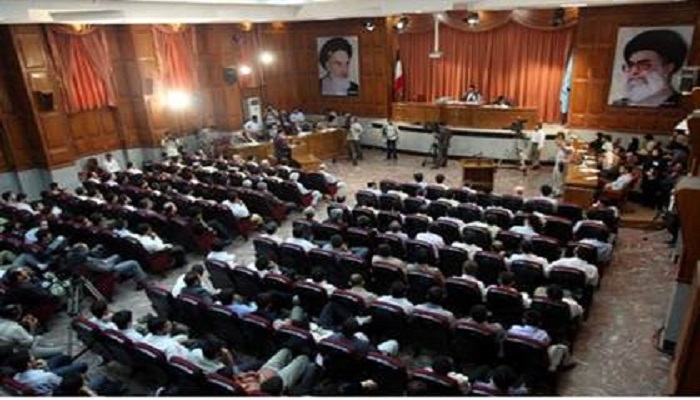
Revolutionary CourtIf there is one thing you can always bank on, it is the desire by Iran’s mullahs to always figure out a way to antagonize and terrify the rest of the world even as it says it only wants a nuclear and conflict-free relationship with the rest of the world.

It is an amazing stretch of creativity by Tehran that would rival anything Don Draper could come up with on “Mad Men,” but unlike that seminal cable show which ended its run this weekend with Draper dreaming up the “I Want to Teach the World to Sing” commercial for Coca-Cola, Iran’s mullahs have opted for a repertoire of brutality and provocation.

For example, the regime announced its intention to put Washington Post correspondent Jason Rezaian, imprisoned for the past 10 months, on trial on May 26 alongside his wife, Yeganeh Salehi, who is also a journalist, on charges of spying for the U.S.

What is unusual is Iran’s decision to try the case in the Revolutionary Court which typically handles cases of national security, drug smuggling and espionage. The Court was notorious for holding a series of show trials of more than 250 journalists, human rights advocates, dissidents and protestors after the disputed 2009 presidential election that involved forced confessions, stiff prison time and publicized executions.

To say the move by the regime is worrisome is an understatement. It is also even more mindboggling that while social media such as Twitter was flooded by statements of outrage from news organizations and human rights groups, Iran’s lobbying cohorts in the U.S. such as the National Iranian American Council was conspicuously silent. In fact, a casual perusal of Trita Parsi’s Twitter feed showed no condemnation or mention of Rezaian’s plight.

The regime certainly kept busy sending out aggressive messages including one by top mullah Ali Khamenei who in a speech in which he promised the regime’s support for the “oppressed” peoples of the Persian Gulf region, including Yemen and Bahrain. His comments were aimed squarely at Saudi Arabia and other Gulf States who are currently engaged in an air campaign against Iran-backed Houthi rebel forces in Yemen.

Those tensions were exacerbated when an Iranian ship headed to Yemen in violation of a coalition naval blockade was joined by Iranian warships as it headed into the Gulf of Aden.

This comes on top of Iran welcoming a delegation from the Taliban from Afghanistan, while Ramadi in Iraq fell to ISIS and Iranian-controlled Shiite militias prepared to move in what could be a sectarian bloodbath with 25,000 refugees caught in the middle.

But the discontent Iran that is brewing isn’t just abroad. In a move to bolster an economy bled dry from corruption, mismanagement and the diversion of billions of dollars into funding proxy wars in Syria, Iraq and Yemen, Hassan Rouhani announced the suspension of a program that provided financial handouts to Iranians which was itself a replacement for another broken promise for subsidized electricity, gas, water and bread.

Suspension of the payments is likely to fuel even greater discontent among ordinary Iranians whose economic situation worsens while the elites and families of the politically connected enjoy a luxurious lifestyle.

All of which adds up to what promises to be the beginning of a hot summer for Iran filled with domestic discontent.

By Laura Carnahan

Filed Under: Blog Tagged With: Gulf, Iran, Jason Rezaian, Spies, Trita Parsi, Yeganeh salehi, Yemen

Things To Know About the Iran Regime This Week

May 18, 2015 by admin

Sen. Lindsey Graham (R-SC) questions Supreme Court nominee Elena Kagan, President Obama's pick to replace retiring Justice John Paul Stevens, during during the second day of her confirmation hearing before the Senate Judiciary Committee on Capitol Hill in Washington on June 29, 2010. UPI/Kevin Dietsch

Sen. Lindsey Graham (R-SC) questions Supreme Court nominee Elena Kagan, President Obama’s pick to replace retiring Justice John Paul Stevens, during the second day of her confirmation hearing before the Senate Judiciary Committee on Capitol Hill in Washington on June 29, 2010. UPI/Kevin Dietsch

Sen. Lindsey Graham (R-SC) wrote in this weekend’s Wall Street Journal an editorial outlining eight conditions the Iran regime must meet before any nuclear agreement is reached. The points included common sense ideas such as closure of all hardened or formerly secret nuclear sites and allowing anytime, anywhere inspections of all Iranian military and nonmilitary facilities.

His points are valid and important in order to ensure any deal removes the threat of nuclear weapons from coming into the possession of the Islamic state., but the most important point he outlined as the conditioning of relief from economic sanctions on certification by the International Atomic Energy Agency that Iran was in full compliance and demonstrate that compliance over a sustained period of time.

The reason why this condition stands out above all others lies in the most pressing need Iran has right now which is cash. Iran’s mullahs have followed a policy of destabilizing the Middle East over the last three years including the funding of Shiite militias in Iraq and virtually taking over its government, supplying arms and support to the Syrian regime in its bloody civil war, and supporting a Houthi rebel army that has overthrown the government of Yemen and plunged the Arabian peninsula into a dangerous proxy war with Saudi Arabia and Sunni gulf states.

Iran’s mullahs have pressed hard for the lifting of all economic sanctions at once should a deal be completed because it needs the estimated $100 billion in frozen assets to help resupply its coffers depleted by proxy wars and plunging oil prices.

But even with this thirst for cash, Iran remains obstinate on even the most basic parts of an agreement. The regime’s top negotiator and Deputy Foreign Minister Abbas Araqchi opened talks with the IAEA recently which has been demanding access to Iranian military sites such as Parchin. “Iran, which is extremely reluctant to allow atomic inspectors access to military sites, has been stalling the investigation since last August,” reported Reuters.

This shows that mullahs’ desire for cash does have limits, namely they do not want to limit their ability to produce nuclear weapons. Iran’s mullahs believe that possession of nukes places Iran in a prime position to be the power in the region and weapons of mass destruction allow it to offset a nuclear-capable Israel, while also holding a hammer over the heads of Sunni states such as Saudi Arabia.

But this pursuit of weapons and funding of proxy wars have come at a steep price for ordinary Iranians. As Al Arabiya News Channel recently reported in a new series of stories focused on poverty in Iran:

“In 1979, shortly after the shah had been toppled, the new theocratic ruler Ruhollah Khomeini promised free electricity, water supplies and transportation services to all Iranians, to be paid for by oil revenues under a ‘just’ Islamic economic system.  Yet this promise – repeated by several regime presidents after him to make the poor feel the benefits of Iran’s oil wealth – was never delivered.”

Oddly enough though, U.S. Secretary of State John Kerry seems to think North Korea can somehow learn a positive lesson from any completed deal with Iran, which leaves objective observers dumbstruck since it was North Korea that provided the mullahs with the template for achieving nuclear capability by negotiating an agreement and then violating every aspect of it. In fact, North Korea has supplied Iran with much of its nuclear research and virtually all of its ballistic missile capability under manufacturing license.

Unfortunately while the rhetoric is starting to heat up on the near presidential campaign trail, the news media have all but ignored violent protests that have broken out in Iranian cities. The recent protests against the regime’s oppression began after a May 4 incident in which 27-year-old Farinaz Khosravani jumped to her death from a window when an Iranian intelligence officer allegedly tried to rape her at the hotel where she worked in the city of Mahabad according to the International Business Times.

The mass protests have been met harshly by Iranian regime’s security forces with the potential for even more deaths as a result.

All of which leads us to the most combustible issue coming to a head this week as an Iranian ship heads towards Yemen with what the regime calls a cargo of “humanitarian supplies,” but with no ability to independently verify it.

Iranian Gen. Masoud Jazayeri, the deputy chief of staff, warned that any attempt to interfere with the vessel would “spark a fire” in a clear warning to the U.S. Navy. The stakes rise higher as the Iran regime starts the weekend talking about a nuclear peace and ends it with warnings of war.

By Michael Tomlinson

Filed Under: Blog, News Tagged With: Iran, Iran sanctions, Iran Talks, Syria, Yemen

Shrinking Hopes of the Iran Regime

May 12, 2015 by admin

Shrinking Man (1)The Iran regime continues to suffer reversals on several fronts as it becomes increasingly clear it has overreached in supporting proxy wars and acting as an international rogue state, alarming its neighbors, as well as members of Congress even as it seeks to close a favorable nuclear deal.

Even while the third round of nuclear talks to move the April framework forward begins shortly, Iran’s mullahs have exhibited a callous disregard for international opinion as it engages in an ever brutal human rights crackdown which was highlighted by the arrest of noted human rights lawyer and death penalty opponent Narges Mohammadi without warning or explanation.

According to report released by Iran Human Rights group, in the 18 months since the election of President Rouhani in June 2013, Iranian authorities executed more than 1,193 people. This is an average of more than two executions every day.

The number of executions in that period was 31 percent higher than the number in the 18 months before President Rouhani assumed power. The number of juvenile offenders executed in 2014 was the highest since 1990.

Other human rights and Iranian resistance groups have pegged the number of executed by the regime even higher at 1,500 men, women and children.

But the prospect of a nuclear agreement is being met with growing skepticism with unexpected signs of trouble emerging including the potential for Iran to vastly increase its cyber warfare capabilities.

In a piece in The Hill, Fred Kagan, a national security scholar at the American Enterprise Institute (AEI) and co-author of a recent report on the Iranian cyber threat, said “We’re in a lose-lose situation from that standpoint. Would you rather have them do that with more resources or fewer?”

Rep. John Ratcliffe (R-Texas), recalled a speech last year in which Iran’s top mullah Ali Khamenei reminded university students they were “cyberwar agents.”

“I do not expect Iran’s quest for power to decrease if an agreement is reached, and cyber warfare is clearly part of its strategy,” he said.

In another clear signal about the threat the Iran regime poses to the region, a summit organized by the Obama administration in Washington invited the leaders of the six Arab Gulf states involved in the military campaign in Yemen against Iran-backed Houthi rebels, but only two monarchs confirmed their attendance with Saudi Arabia’s King Hamad bin Isaa Al Khalifa conspicuously declining the invitation.

The decision amounts to a public vote of no confidence in the U.S.-led response to Iranian aggression and proxy wars in Yemen, Syria and Iraq fueled by Iranian cash, weapons and fighters.

All of which served as a backdrop to a vote in the U.S. Senate yesterday by an unanimous zhi90-0 margin calling for the Iran regime to release three Americans – Saeed Abedini, Amir Hekmati and Jason Rezaian – that it holds in its prisons and assist in locating still-missing former FBI agent Robert Levinson.

Sen. James Risch (R-Idaho), who introduced the measure, argued the four should have been released before the U.S. started negotiating a nuclear agreement with Iran.

“Iran thinks it elevates its position in the world because it does these kinds of things. It does not,” Risch said. “Certainly it shows toughness, but a barbarian type of toughness that the world is not impressed with at all.”

The contradictions in these nuclear talks were described by Jennifer Rubin writing in the Washington Post’s Right Turn blog:

“In short, not only can we not trust the Iranians to comply with whatever is in a final deal but we also cannot trust the administration to call them on it when Iran again cheats, as we know it will. In big ways and small, the administration has already signaled it will have a high tolerance for violations so as not to upset its diplomatic goals. Imagine how much more tolerant the Obama administration will be when cheating would spell the demolition of the president’s ‘legacy.’”

As the scrutiny deepens and expands on the Iran regime, more of the world’s news media are beginning to ask the kinds of hard questions the mullahs do not want to answer as they see their hopes for pulling a fast one on the world quickly shrinking.

By Michael Tomlinson

Filed Under: Blog Tagged With: Iran, Iran deal, Iran executions, Iran Human rights, Iran Rouhani, Iran Talks, Nuclear Deal, Sanctions

The Dark Years of Iran Regime Can End

May 11, 2015 by admin

Parsi HeadshotThe reliable foot soldier for the Iran regime, Trita Parsi of the National Iranian American Council, offered an editorial over the weekend in the Huffington Post in which he blamed the decision to invade Iraq by former President George W. Bush as being the pivotal turning point for the deterioration of the Middle East.

Parsi goes on to say the regime in Tehran can be a key actor “by virtue of its strong state, Iran can play a critical stabilizing role in the region.”

Unfortunately, Parsi is once again drinking the Kool-Aid of the mullahs and ignoring history and its obvious lessons.

While the Bush administration’s decisions in Iraq are certainly debatable, pointing to the Middle East’s problems from only a decade back in time is silly. The hijacking of the Iranian revolution by the religious fanatics of Khomeini’s mullahs and turning Iran into a giant sectarian factory for terrorism and extremism over the past three decades can be viewed as a much more significant act.

The Iran regime’s involvement as the chief sponsor of Hezbollah turned Lebanon, a once-thriving economic and multi-cultural jewel into a bloody sectarian battlefield since the 1980s.

The regime’s infiltration of Iraq during the U.S.-led invasion resulted in the deaths and injuries of thousands of military personnel and civilians, while also laying the ground work for the rise of Shiite militias and death squads plunging that country back into civil war.

Iran’s unconditional support of Syria’s embattled president allowed the formation of ISIS to spring up as Iran’s Quds Force fighters alongside Syrian army units targeted moderate, Western-backed Syrian rebels.

And only last month have we seen the wreckage caused by Iran’s backing of Houthi rebels in Yemen with the collapse of that government and a full-blown proxy war now being waged by Saudi Arabia and a coalition of Arab states against Iran’s proxies.

Top that off with Iran’s secret drive to build a nuclear weapon and you now have introduced an unrestrained arms race into the Middle East as Saudi Arabia and other neighbors to Iran seriously consider the need to arm themselves against the threat from Tehran.

What the U.S. or for that matter any other country has done in the Middle East has paled compared to the damage and destruction wrought by Iran’s relentless mullahs over the past 30 years.

But what is most incredulous about Parsi’s claims is the idea that a nuclear deal with Iran will forge a new framework by which cooperation between the U.S. and Iran would be the norm moving forward. To say that Iran’s mullahs do not have an adversarial view of the West and the U.S. in particular is absurd, given the annual rituals in Tehran to lead national “Death to America” chants and hold American citizens as hostages in prison without charge or trial to be used as political pawns like some nightmarish replay of North Korea’s negotiating tactics.

The regime in Iran has never followed an international agreement it later viewed as being inconvenient towards their objectives. Iran has never offered any example where it has reigned in extremist behavior in favor of acting in accordance with international law.

There is little reason to think things would be different regardless of Parsi’s assurances to the contrary.

By Michael Tomlinson


Filed Under: Blog Tagged With: Iran, Iran Lobby, Iran Talks

  • « Previous Page
  • 1
  • …
  • 29
  • 30
  • 31
  • 32
  • 33
  • 34
  • Next Page »

National Iranian-American Council (NIAC)

  • Bogus Memberships
  • Survey
  • Lobbying
  • Iranians for International Cooperation
  • Defamation Lawsuit
  • People’s Mojahedin
  • Trita Parsi Biography
  • Parsi/Namazi Lobbying Plan
  • Parsi Links to Namazi & Iranian Regime
  • Namazi, NIAC Ringleader
  • Collaborating with Iran’s Ambassador

Recent Posts

  • NIAC Trying to Gain Influence On U.S. Congress
  • While Iran Lobby Plays Blame Game Iran Goes Nuclear
  • Iran Lobby Jumps on Detention of Iranian Newscaster
  • Bad News for Iran Swamps Iran Lobby
  • Iran Starts Off Year by Banning Instagram

© Copyright 2026 IranLobby.net · All Rights Reserved.