Iran Lobby

Exposing the Activities of the lobbies and appeasers of the Mullah's Dictatorship ruling Iran

  • Home
  • About
  • Current Trend
  • National Iranian-American Council(NIAC)
    • Bogus Memberships
    • Survey
    • Lobbying
    • Iranians for International Cooperation
    • Defamation Lawsuit
    • People’s Mojahedin
    • Trita Parsi Biography
    • Parsi/Namazi Lobbying Plan
    • Parsi Links to Namazi& Iranian Regime
    • Namazi, NIAC Ringleader
    • Collaborating with Iran’s Ambassador
  • The Appeasers
    • Gary Sick
    • Flynt Leverett & Hillary Mann Leverett
    • Baroness Nicholson
  • Blog
  • Links
  • Media Reports

Iran Lobby – Trita Parsi Can’t Escape His Past

March 13, 2015 by admin

Boxed InTrita Parsi, the head of the National Iranian American Council (NIAC) and apologist-in-chief for the Iranian regime, was caught in another embarrassing revelation about his past conduct when Breitbart.com ran a story detailing a previous effort by Parsi between 2006-2007 to arrange a meeting between 12 Democratic Senators and Iranian officials to coordinate efforts against then President George W. Bush’s foreign policy.

The revelation came in email correspondence that was only made available after NIAC brought a failed defamation suit against Iranian journalist Hassan Dai, in which the enterprising reporter revealed the NIAC’s connections and lobbying efforts on behalf of the regime.

According to Breitbart.com, “Parsi and his group started a campaign called the ‘Iran Negotiation Project,’ where NIAC would help to link up Democratic Congressmen with the state-sponsor of terrorism. Dai reported that NIAC arranged for a group of 12 Democrat ‘Congress members that opposed Bush’s policy toward Iran’ and that they ‘met regularly to coordinate their efforts and planned to meet members of the Iranian parliament.’”

Parsi’s actions are even more ironic considering his statement to the American Thinker at the time in which he said:

“These [Democratic Party] members are very disillusioned with the Bush foreign policy and are tired to sit on the sidelines as Bush undermines the US’s global position. As a result, they are willing to take matters in their own hands and they accept the political risk that comes with it.”

All of which makes his recent condemnation of the efforts by Senate Republicans to hold the Obama administration accountable in current nuclear talks with the Iranian regime the height of hypocrisy. Parsi cannot help but be boxed in by how own past deeds and actions.

More evidence of NIAC’s hypocrisy was on display with a joint letter signed by it and 50 self-claimed groups largely compassionate to the criminal regime of mullahs sent to Senators urging more accommodation with Iran’s mullahs who urged them to not hold a proposed agreement accountable and subject to review.

But these types of mental gymnastics are nothing new for an organization that has so often tossed logic to the wind all in the service of the mullahs in Tehran that maintain an iron grip over their people and serve as the launching point for a large number of the world’s terror groups.

NIAC’s position in favoring the Iranian regime maintaining its nuclear infrastructure in the absurd piece of logic that it would foster regional peace was put to shame with the news reported in the Wall Street Journal out that Saudi Arabia had reached an agreement with South Korea to launch a feasibility study for building two nuclear reactors worth $2 billion over the next 20 years.

“Saudi Arabia’s former intelligence chief, Prince Turki al-Faisal, a member of the royal family, has publicly warned in recent months that Riyadh will seek to match the nuclear capabilities Iran is allowed to maintain as part of any final agreement reached with world powers. This could include the ability to enrich uranium and to harvest the weapons-grade plutonium discharged in a nuclear reactor’s spent fuel,” wrote the Journal.

Far from making the region a safer place, the Iranian regime’s relentless pursuit of nuclear weapons is now triggering a full-scale arms race.

The NIAC has long advocated positions that it later contradicts whenever it suits the whims of its regime masters and Senators are right to be skeptical of anything produced by it.

By Michael Tomlinson
Filed Under: Blog, National Iranian-American Council Tagged With: Appeasement, Iran, Iran Lobby, NIAC, Trita Parsi

NIAC Example of Helsinki for Iran Dead Right

March 12, 2015 by admin

Helsinki AccordsThe lack of intellectual rigor coming from the Iranian regime’s foremost lobbying team in the National Iranian American Council fails to impress and today is no exception with an inane editorial written by Tyler Cullis and appearing in the New York Times.

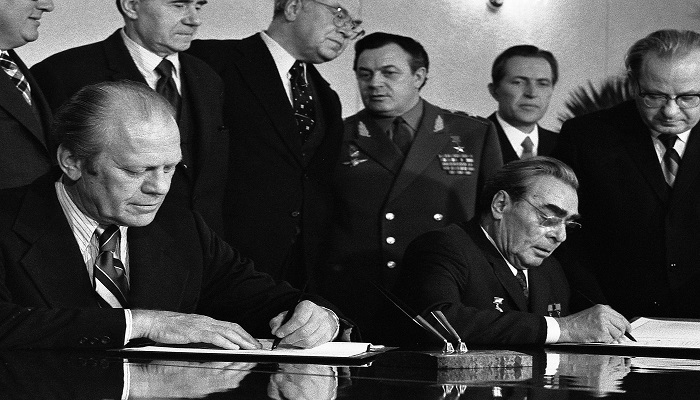
In it, Cullis attempts to draw parallels between the diplomatic efforts made by President Gerald in overcoming Senate opposition to craft an accord with the old Soviet Union in an effort to lay the groundwork for détente between the East and West. He aligns this scenario with what is currently happening in talks between the Iranian regime and the P5+1 group of nations seeking to restrict the mullahs march to a nuclear weapon.

Cullis fails to mention several key and crucial distinctions between the two that have an even more profound impact on current talks.

For one thing, President Ford attempted to make human rights a core feature of the accords in recognition of the terrible human rights violations occurring regularly within the Warsaw Pact nations. In a speech he gave while trying to sell the Accords to the American public, he said:

“The Helsinki documents involve political and moral commitments aimed at lessening tension and opening further the lines of communication between peoples of East and West. . . We are not committing ourselves to anything beyond what we are already committed to by our own moral and legal standards and by more formal treaty agreements such as the United Nations Charter and Declaration of Human Rights.”

It was significant for President Ford to stress the human rights aspects of the Accords since the agreement would effectively make permanent the Soviet Union’s annexation of the Baltic states of Lithuania, Latvia and Estonia after World War II and place them under harsh rules for the next 30 years.

The Accords were also significant because they were not a treaty per se, as evidenced by the strong objections by nations such as Canada, Spain and Ireland in allowing the Soviets to swallow the Baltic States. In a bit of historical irony, the Accords laid the groundwork for the later Organization for Security and Cooperation in Europe, the same working group which has floundered in building a cohesive response to Russia’s recent annexation of the Crimea and invasion of Eastern Ukraine.

All of which further demonstrates the feebleness of Cullis argument. At no point during the P5+1 talks has the Iranian regime’s dismal human rights record ever been put on the negotiating table, nor its long support and sponsorship of global and Islamic extremist terror groups.

One of the key recognitions of the Helsinki Accords was its commitment and focus to the preservation of human rights as a key element in the dialogue between the West and Soviet Union. It presented the framework by which later talks under détente efforts by preceding Presidents were always framed by the need to dissuade the Soviets from abusing its own people and those of nations under their sway.

It is a model of success that has borne early fruit with the Iranian regime by forcing it to come to the negotiating table after economic sanctions began having their desired effect, but Cullis and other regime sympathizers would have us give Iran’s mullahs the breathing room necessary to rebuild their economy while arming themselves with nuclear weapons under the guise of peaceful talks.

While Cullis holds the Helsinki Accords as a model for Iranian talks, he unwittingly reinforces the true reason why those Accords succeeded and it had nothing to do with President Ford ignoring Congress, but had everything to do with his focus on human rights.

According to the Cold War scholar John Lewis Gaddis in his book “The Cold War: A New History” (2005), “Leonid Brezhnev had looked forward, Anatoly Dobrynin recalls, to the ‘publicity he would gain…when the Soviet public learned of the final settlement of the postwar boundaries for which they had sacrificed so much’… ‘[Instead, the Helsinki Accords] gradually became a manifesto of the dissident and liberal movement’… What this meant was that the people who lived under these systems — at least the more courageous — could claim official permission to say what they thought.”

We can only hope that this proposed agreement with the regime gets scrapped and instead a true human rights-driven manifesto takes its place rightly restoring the importance of Iran’s mullahs getting an agreement conditioned only by their acceptance and implementation of human rights improvements and the renunciation of terror.

Thank you Mr. Culis for so eloquently making my point.

By Michael Tomlinson

Filed Under: Blog, National Iranian-American Council, The Appeasers Tagged With: Helsinki Accord, Iran, Iran deal, Iran Lobby, Iran Talks

Iran – Another Step for Regime Hardliners

March 11, 2015 by admin

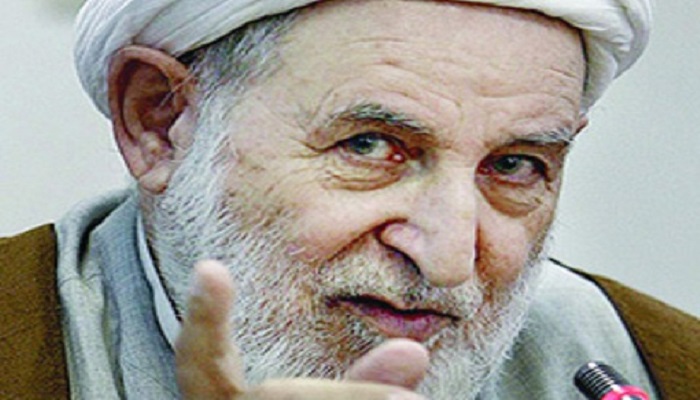
Mohammad YazdiThe Wall Street Journal ran a story the other day saying the Iranian regime had announced the installation of conservative mullah Mohammad Yazdi as the new chairman to the Assembly of Experts, the body that chooses and supervises the regime’s Supreme Leader, a post currently held by Ali Khamenei, who – if news reports are to be believed – is in poor declining health.

While the news, in and of itself, might not be too surprising, it does illustrate a key point about the nature of the Iranian regime that has a direct bearing on current nuclear talks between the Islamic state and the P5+1 group of nations and that is no matter what the public perception might be about a more “moderate” face to Iran, the nation is still firmly and unquestionably in the control of the religious conservatives.

The timing of the move is also interesting considering other moves the regime has taken in the past few weeks to reinforce the perception that it will remain a bastion of Islamic extremists and is not interested in moderating its policies just to gain a deal.

These include regular public denunciations of America as the “Great Satan” and the blowing up of a mock U.S. aircraft carrier in military exercises. The regime has also stepped up its tactical command and control of Iraqi military forces and Shiite militias in the fight with ISIS as it bulks up its ability to extend military power by the commissioning of a new home-made naval warship.

The decision to appoint Yazdi is a crucial one since Khamenei’s death would require a selection of a successor and he is the natural choice given his elevation within the mullahs hierarchy. Yazdi also is a member of the mullah’s Guardian Council and former regime Chief Justice, with lots of blood on his hand.

He has regularly espoused conservative views over the years according to the Journal story, including a quote in 2013 “when he told the Mehr news agency that it wasn’t appropriate for women to run as presidential candidates.”

Why his election is significant, because it illustrates a key conundrum Obama administration officials have been reluctant to talk about which is there are no divisions between “moderates” and “conservatives” in a religious theocracy where the wishes of a small cadre of ruling mullahs carry the power of law.

This narrative of moderates vs. hardliners in Iran is largely a fabrication of the news media controlled by the Iranian regime in order to present to the world the perception there is a battle of wills and ideas and that by acting in a certain way, the forces of moderation will be supported.

In contract talks for free agent professional athletes, we call that “negotiating against oneself.”

Which are exactly what the West and the U.S. in particular has been doing the past three years. There is a perception in the Western media that Hassan Rouhani is some kind of soft, lovable teddy bear of a moderate who is only interested in holding back the dread forces of darkness and medieval thinking in his own country. It’s a perception bolstered by the non-stop lobbying and branding efforts of the regime’s U.S.-based supporters including the National Iranian American Council.

The truth of the matter is that Rouhani is in lock step with his hardline brethren since his days running the regime’s National Security Council and a past negotiator on previous nuclear talks that also collapsed and failed. The fact that during his tenure of president, Iran has stepped up executions to over 1,200 according to Amnesty International and instituted broad crackdowns on internet access, news media, social media and minority religious freedoms leaves little doubt Iran has veered even more conservative since his election.

In fact, in 1999 after student protests, Rouhani was said in a speech at a pro-government rally during his tenure at the National Security Council:

“At dusk yesterday we received a decisive revolutionary order to crush mercilessly and monumentally any move of these opportunist elements wherever it may occur. From today our people shall witness how in the arena our law enforcement force . . . shall deal with these opportunists and riotous elements, if they simply dare to show their faces.”

This is not a man of moderation, but a man that can work well with either Khamenei or Yazdi.

By Michael Tomlinson

Filed Under: Blog Tagged With: Iran, Iran Lobby, Moderate Mullahs, Rouhani, Yazdi

Women’s Rights in Iran or Lack Thereof

March 5, 2015 by admin

IWD LogoThis Sunday, March 8th will mark International Women’s Day (IWD), a global celebration of women’s economic, political and social achievements and a rallying cry to further women’s rights at a time when they are under serious threat in a number of countries.

Each year the United Nations designates an official theme for IWD and this year’s theme is “Empowering Women, Empowering Humanity: Picture It” with a dedicated social media hashtag of #IWD15, while other popular hashtags making the rounds this weekend include:

#MakeItHappen
#womensday
#IWD2015
#internationalwomensday
#PaintItPurple

All of them aim to raise awareness for women and show support for their causes around the world and support is exactly what women need at a time when their rights and physical safety are under the greatest threats in modern history.

There has been an unprecedented assault against women around the world, especially from Islamic extremist groups who have sought to drastically turn back the clock and treat women as livestock or possessions to be sold, bartered, enslaved and abused.

In Nigeria and now neighboring Chad and Sudan, Boko Haram has gone to great lengths to publicize its kidnappings of thousands of young girls and sell them into sexual slavery. While the nifty little hashtag of #BringOurGirlsBack generated some celebrity support, it did little to actually change things on the ground.

In Syria and Iraq, ISIS has captured thousands of women and girls from Yazadi, Kurdish, Iraqi and Syrian villages and towns and turned them in ISIS fighter brides or simply sold them as sex slaves. Amnesty International and the UN have extensively documented eyewitness accounts of the brutality these women and girls have suffered at the hands of extremists who have used a perverted view of Islam to justify their actions.

Meanwhile an active online recruitment process has enticed unsuspecting young women to flock to Syria and join ISIS, most notably three British teenagers who left for Syria via Turkey.

Sitting at the heart of all of these abuse of women lays the greatest offender of all: the Iranian regime.

Iran’s autocratic and theocratic regime ruled by iconoclastic mullahs regularly oppresses the women of Iran in order to bend them into conforming to its harsh and unyielding views of the role of women in the society that is both oppressive and actually against the teachings of Islam.

For example, Iran has few if any laws specifically safeguarding the rights of women. Instead the laws on the books, both civil and criminal adversely affect women in how they dress, how they act in public and what they can do from shopping to transportation to education to careers.

There are nearly 70 university degrees banned from women, which is absurdly ironic given the lobbying efforts recently by the regime’s U.S. mouthpieces, the National Iranian American Council, which took a U.S. university to task for banning Iranian students from taking classes that could teach technology used in Iran’s nuclear development program.

Iran’s religious and paramilitary police also enforce religious law on the streets through abusive tactics that include public beatings and assaults or arrest and imprisonment. In a further abomination of traditional Islamic values, Iran’s mullahs have allowed over 40,000 child brides to be wedded just in 2014 and recently adopted a new law allowing men to marry their adopted children.

All of these acts flies in the face of the actual teachings of the Muslim faith and demonstrates how religious leaders can twist anything to their own whims and needs, as well as use religion as a blunt weapon to bludgeon dissidents into submission.

But the bright hope still remains in the Muslim world with moderate groups fighting this kind of oppression, most notably Mrs. Maryam Rajavi, a strong woman leader who leads the largest global resistance group to the Iranian regime.

While women and girls undergo acid attacks and shootings just for disobeying the mullah’s dress code, we should all remember them this weekend not just with hashtags, but also action such as telling our Congressmen to hold Iran’s mullahs for their actions and demand change.

By Laura Carnahan

Filed Under: Blog, News Tagged With: international Women's Day, Iran, IWD2015

Can Iran Mullahs Be Trusted?

March 3, 2015 by admin

TrustIn the Wall Street Journal, Rep. Chris Stewart (R-UT), a former Air Force B-1 pilot and member of the House Permanent Select Committee on Intelligence, authored an editorial that raises the most essential question facing the Congress, American people and frankly the world right now: “In what way is Iran a reliable negotiating partner?”

The short answer to that question is: “None.”

Congressman Stewart forthrightly examines the conundrum facing anyone dealing with Iran’s mullahs. What evidence has there been to give reassurance to anyone sitting across from a negotiating table from them that they would adhere to the letter and spirit of any agreement?

His experiences during the Cold War in dealing with the old Soviet Union are instructive because they teach us that for any agreement to work, both sides have to be considered reliable and trustworthy partners. It is also an axiom of politics and nation states that if breaking an agreement serves the national interest, it is likely going to be broken.

He goes on to recount the litany of acts by Iran’s leaders which would give any normally sane person pause, including listing Iran as an official sponsor of state terrorism for the last 30 years and creation of an indigenous military-industrial complex allowing it to create and ship out its own weapons and ammunition to terror groups.

Stewart cites mullahs in Iran as the primary weapons supplier for two other state sponsors of terrorism in Syria and Sudan, while it supplies arms to terrorist groups such as Hezbollah, as well as Shiite militias in Iraq.

“Tehran’s regime suppresses internal dissent and has executed tens of thousands of its own citizens for opposing the regime. It is responsible for the deaths of hundreds of U.S. military personnel in Iraq through improvised explosive devices supplied to Shiite militias in the past decade. Iran counts as close allies Russia, China and North Korea, which team with the regime in developing ballistic missiles and nuclear capabilities,” Stewart writes.

But Stewart correctly goes on to cite the Iranian regime’s involvement in money laundering, drug and arms trafficking, counterfeiting, promoting extremism and plotting terrorist attacks in South and Central America, demonstrating the mullahs reach and global aspirations.

Besides a long record of regular violations of international and human rights law, Stewart asks how can the regime in Iran be trusted if the primary mechanism for compliance – international inspections – isn’t even allowed by the regime? He cites the International Atomic Energy Agency report from Feb. 20 that was harshly critical of Iran’s stonewalling of inspections and continued non-compliance.

If Iran’s mullahs won’t even comply with inspections at this critical juncture when it claims a heartfelt desire to negotiate a deal, when will it ever allow inspections?

The deep and abiding obstacle starts and ends with the intentions of the ruling mullahs. Unfortunately the U.S. and the rest of the P5+1 group have never conditioned a nuclear deal on a fundamental request; that is Iran’s transition from a religious theocracy to a democratic society.

Unless you can change Iran’s society and government to one that is at its core more law-abiding, more peaceful and more interested in being an international partner, then any agreement negotiated with the current regime isn’t worth the paper it’s printed on.

Trust is something that is earned and built upon. It is not something that one “hopes” is inherent when the track record is so devoid of any trust. Therefore in the case of Iran mullahs, it should be “Verify before you trust.”

By Laura Carnahan

Filed Under: Blog Tagged With: Iran, Iran deal, Iran Lobby, Iran Talks

NIAC Day of Action-Lobbying for Iran Mullahs

March 2, 2015 by admin

NIAC Day of Action-Lobbying for Iran Mullahs

NIAC Day of Action-Lobbying for Iran Mullahs

The National Iranian American Council serves primarily as a cheerleader, public relations mouthpiece and lobbying force for the Iranian regime. It does these duties with diligence and not the least enthusiasm for its mission of portraying Islamic fanatics in a gentle and favorable light. It’s almost akin to being the PR firm for ISIS, if there ever was one, with all its attendant challenges.

As part of its lobbying efforts, it coordinates its so-called “Day of Action” in which its volunteers gather up petitions to deliver to designated Congressional field offices in the hopes of steering the Congress towards a more favorable view towards Iran’s mullahs; namely you can trust them with a nuclear capacity in a couple of years.

That is the essence of NIAC’s national day of action today in which, according to the group’s website, 23 states will be targeted, mostly their U.S. Senators with a few Representatives. The bulk of the states targeted were blue states that President Obama carried in the last election, with the notable red state exceptions of Texas, Georgia and Kentucky.

Virtually all of the targeted Senators are Democrats and have already expressed some degree of support for the President’s diplomatic efforts with Iran, so what does this day of action tell us?

For one, it’s not very national. At what is arguably the most important point for NIAC in its years-long effort to build support for the Iranian regime, it can’t even muster support in more than half the states. In the overwhelming majority of the states they do plan to deliver petitions, the offices targeted are already in their column. It is in essence preaching to the choir at this point.

Secondly, this national lobbying effort is timed to coincide with Israeli Prime Minister’s address to a joint session of Congress. NIAC in favoring the mullahs, has noted the Democrats who have chosen not to attend; only 38 members have answered NIAC’s call to boycott.

Coming on the heels of the delivery of books to every Senator by NIAC about the life and efforts of Abdol-Hossein Sardari, an Iranian diplomat who saved the lives of Jews escaping the Nazi’s in Paris, NIAC has clearly gone all out in an effort to try every lever to enhance the brand image of Iran’s mullahs.

But, with mullahs being the role model for ISIS and other extremist groups, it certainly didn’t help NIAC’s efforts to have ISIS reveal new videos rampaging through a museum in Mosul, Iraq destroying antiquities, Iran’s military blowing up a replica of a U.S. aircraft carrier in exercises, and Iran starting commercial air service in Yemen after Houthi rebels backed by Iran overthrew the government, a key ally in the war against terror.

But at the heart of the lack of enthusiasm nationally for NIAC’s day of action can be found in recent polls which show the American people now rank ISIS and the threat of terror as their number one concern this year going into the tune up for the 2016 elections; even ahead of jobs and the economy.

NIAC and Iran’s mullahs have consistently placed their hopes in the idea that if you say “Iran is peace loving” enough times, it can overshadow videotaped beheadings and cremations of prisoners and put a fig leaf on turmoil and chaos roiling across Iraq, Syria, Afghanistan, Nigeria, Yemen, Chad, Sudan and Lebanon. It might even be enough to cover up terror in Paris, Sydney, Ottawa, Copenhagen and now Bangladesh where another American journalist was hacked to death alongside his wife by extremists.

The Iranian regime’s biggest export is terror and its extremist Islam and it is destabilizing large parts of the world right now. If the talks on Iran’s nuclear infrastructure were simply about centrifuges and uranium, we might get a deal, but you cannot ignore the other party at the table and it includes people such as Ali Khamenei who are playing the long game in fulfilling an apocalyptic vision of an Islamic empire with Iran’s mullahs at the controls.

So while NIAC is busy passing out petitions today, we should be thankful the vast majority of Congress isn’t listening to them.
By Michael Tomlinso

Filed Under: Blog Tagged With: #NuclearDeal, Iran, Irandeal, IranLobby, Irantalks, Netanyahu

Parallel Nuclear Talks with the Iranian Regime

February 23, 2015 by admin

Magnifying GlassWhile U.S. Secretary of State John Kerry leads diplomats from the P5+1 negotiating team in meetings with his counterparts from the Iranian regime, another set of talks have been going on in parallel concerning inspections and access to the Iranian regime’s nuclear facilities by the International Atomic Energy Agency (IAEA) that have so far drawn much less media attention.

But in a secret report issued by the IAEA to its member states and obtained by some Western news agencies including the New York Times and Reuters, the IAEA declared that Iran’s mullahs have stalled for the past three years on several critical areas of concern over nuclear weapons development and have not been provided answers to questions that had been promised by the Iranian regime as late as last year.

The timing of the release of the report, coming as the third round of talks between the Iranian regime and the West gets underway in Geneva is interesting because it demonstrates the level of frustration international inspectors have reached in attempt to squeeze answers out of the Iranian regime over issues such as the use of next-generation centrifuges for enrichment of nuclear fuel and the testing of conventional high explosives which could be used in detonators for nuclear warheads.

The IAEA and the United Nations have always maintained that any accord reached with the Iranian regime be conditional on Iran’s mullahs fully answering the questions that still linger after years of stonewalling.

“We’ve been stonewalled on all those questions,” one European official involved in the talks said recently in the New York Times story. “And the question is does it make sense to lift sanctions against Iran before it satisfies the inspectors?”

In the Times article, an initial report by the IAEA in 2011 published a list of a dozen technologies, most of them necessary to build a nuclear weapon that inspectors said Iran had tried to master. That list was narrowed down to three which the IAEA wanted Iran to explain first.

More than a year later, the Iranian regime has still failed to provide information on even one single topic of concern to inspectors; that being the development of conventional explosives to create focused shock waves sufficient to compress the core of a nuclear device and start the chain reaction necessary for a nuclear blast.

The IAEA has been consistently blocked by the Iranian regime in getting even the most basic answers, which raises more concerns over the apparent shroud of secrecy that has fallen on the most current round of P5+1 talks. Many international observers critical of any agreement with Iran’s religious leaders, including opposition groups such as the National Council of Resistance of Iran, have contended the talks need to be transparent and open in order to allay international concerns and hold Iran’s rulers accountable because of a past history of obstruction and evasion.

In the Reuters story, Western diplomats have viewed such stalling as an indicator of the Iranian regimes unwillingness to cooperate fully until punitive sanctions are lifted in talks with the United States, Russia, China, France, Germany and Britain. This intent to have Iran’s mullahs be rewarded for simply sitting at the table is at the heart of the regime’s negotiating position and the reason why two earlier rounds of talks had failed.

Pressure to craft a framework of a deal by a March 24th deadline has placed both sides on a path towards a complex game of chicken to see who will blink first. Given the Iranian regime’s past willingness to tank previous talks, Western negotiators should be wary of giving in to regime demands simply to satisfy the appearance of progress.

No doubt the regime’s lobbying machine in the U.S. including the National Iranian American Council, that recently published a $200K ad in New York Times in favor of the mullahs, will press for a deal that hides most of the key components from public or Congressional scrutiny, but as the IAEA report has demonstrated, the Iranian regime has and continues to flaunt international concerns even after concessions and shows no interest in changing its ways.

By Michael Tomlinson

Filed Under: Blog, The Appeasers Tagged With: Iran, Irandeal, IranGeneva, Irantalks, NIAC

Trita Parsi and The Big Lie

February 11, 2015 by admin

Court GavelYesterday the District of Columbia Court of Appeals issued an order in regards to damages and compensation awarded by the District Court to Seid Hassan Daioleslam, an Iranian American who investigated the National Iranian American Council’s ties to the Iranian regime, as a result of a defamation suit brought by NIAC and its president, Trita Parsi.

The order by the Court only dealt with the issue of reimbursements owed by NIAC to Mr. Daioeslam as a result of the costs he incurred in responding to and researching of NIAC’s claims against him.

It is worth noting the Court upheld the factual elements of the case, which included a litany of bad-faith actions by Parsi and NIAC to avoid, evade, hide and in some cases destroy evidence linking both to key members of the Iranian regime. The core elements of the case against Mr. Daioleslam were thrown out and instead valuable information was unearthed during the course of discovery that proved highly problematic for Parsi and NIAC.

A good roundup of the case merits appeared on Breitbart.com (http://www.breitbart.com/big-journalism/2013/05/26/distorting-niac-s-court-defeat/) so I will save readers from the blow-by-blow descriptions of the case facts.

The Court of Appeal’s order also does a fine job in reiterating the central facts of the case and the lengths to which the NIAC and Parsi attempted to hide their ties to the mullahs in Iran. It is a case of missing computer hard drives, servers and software worthy of Lois Lerner and the IRS fiasco.

The full order is available for reading at http://www.cadc.uscourts.gov/internet/opinions.nsf/95D577149121951685257DE80053C062/$file/12-7111-1536782.pdf

The relevant portion of the order comes last in which the appellate panel writes:

“For the foregoing reasons, we affirm in part the District Court’s award of sanctions, and reverse the award of Mr. Daioleslam’s expenses in preparing the portions of his sanctions motion related to NIAC’s alteration of a document and Parsi’s interrogatory responses, as well as the award of post-judgment interest to run from September 13, 2012. We remand to the District Court for reconsideration of those aspects of its judgment under the proper standard. So ordered.”

What is remarkable is the NIAC’s response in which it issued a statement implying a colossal win over Mr. Daisoleslam. At no point did the Court order dispute the facts of the case.

  • The NIAC willfully over 4,000 entries in electronic calendars detailing who Parsi and other NIAC officers had met with over the years, including representatives of the Iranian regime;
  • The NIAC willfully withheld 5,500 emails of conversations and correspondence between Parsi and other NIAC officers with Iranian officials and supporters;
  • The NIAC never proved any of Mr. Daisoleslam’s conclusions or results from his investigations were in fact defamatory. The first defense from defamation is truth;
  • The NIAC’s failure to produce computers and servers whose existence was only discovered through a forensic sweep of hard drives.

A full listing of all of the charges made against NIAC can be found here at The Legal Project: http://www.legal-project.org/4024/predatory-lawsuit-rebounds-back-on-iranian-front

In short, the Court of Appeals asked the District Court to recalculate the compensation owed to Mr. Daisoleslam by NIAC, taking into account a change in which interest had to be calculated and the costs for preparing a motion related to Parsi’s interrogatory and NIAC’s changing of documents.

The Court never said that any of the facts of the case regarding NIAC and Parsi’s conduct and evasions were in error. It simply required a slight accounting change from the $183,000 award originally given. Once the lower court recalculates the award, NIAC will have no choice but to finally pay up.

Interestingly, NIAC’s statement attempts to reposition the accounting change as a vindication over the facts of the case, which is absurd since they lost of a summary judgment which found all claims made by NIAC to be false.

But trying to make gold out of manure is nothing new for Parsi and NIAC as evidenced by the most recent debacle where they pushed for a delay for a framework nuclear deal and instead of securing the June 30th deadline, they ineptly pushed a new deadline up by two months to March 24th.

Any rational person reading the first two pages of the appellate ruling will quickly come to the conclusion that NIAC and Parsi in particular are accomplished practitioners of the Big Lie for Iran mullahs.


Filed Under: Current Trend, National Iranian-American Council, News Tagged With: Iran, Iran Lobby, Trita Parsi

Why Human Rights Matter in Iran Nuke Talks

February 2, 2015 by admin

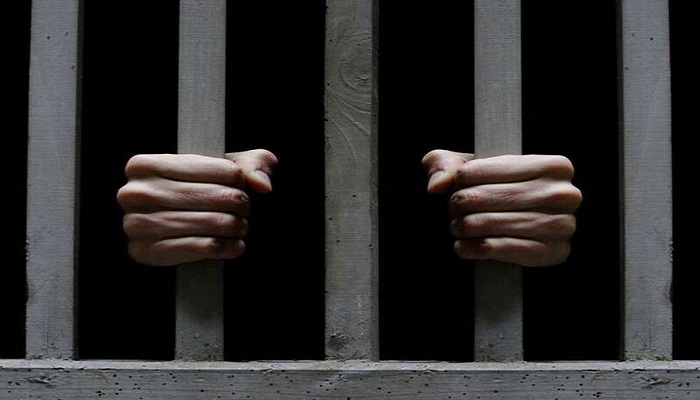
Prison BarsThere has been a dirty little secret about the negotiations going on between Iran and the P5+1 group of nations seeking to limit Iran’s nuclear capability. It has hung like a cloud over two previous rounds of failed talks over the past years and threatens the third round of talks now underway.

What is it? The unwillingness of the P5+1 group to seriously raise the issue of Iran’s dismal human rights record and the need to make steep improvements in order for Iran to secure any kind of agreement.

For years now Iran’s ruling mullahs and their lobbying and PR machine in Washington, DC have argued strenuously that human rights issues are domestic ones and have no place at the bargaining table. In fact, the chief public face for Iran in the U.S., the National Iranian American Council has made the inclusion of human rights in talks a de facto red line in the sand, akin to asking mullahs in Iran to give up its military capabilities.

It is an odd position to be in since the U.S. has historically pushed for improved human rights situations as a condition of moving forward with international treaties and agreements with totalitarian regimes for decades. For example:

• The U.S. threatened to hold up China’s membership in the World Trade Organization if it did not improve its human rights situation in the wake of the Tiananmen Square massacre;
• The U.S. threatened to hold back on the North American Free Trade Agreement unless Mexico improved the plight of migrant workers and narco-terror gangs; and

So it is not unusual or inappropriate to broach such topics. In fact, Secretary of State John Kerry just recently raised the issue of the arrest of Washington Post reporter Jason Rezaian during the most recent round of talks, opening the door to a broader discussion of Iran’s human rights violations.

Iran and its lobbying allies have long contended that talks should be strictly centered on the issue of nuclear research and development, but even that position is a canard since Iran routinely seeks to tie other issues to the talks such as the immediate suspension of economic sanctions or the release of frozen assets.

Why are human rights important to these talks?

Under Secretary for Terrorism and Financial Intelligence David Cohen, the Treasury Department’s outgoing point man on Iran sanctions, said in this weekend’s Wall Street Journal that Iran was “stuck. They can’t fix this economy unless they get sanctions relief.” Adding “I think they are coming to the negotiations with their backs to the wall.”

A hopeful sign, but also one that reinforces the historic opportunity the West has to seek real and meaningful change in Iran for the Iranian people. In the past year under Hassan Rouhani, there has been a significant rise in a broad crackdown on political dissent, cultural expression, gender restrictions and access to uncensored information and sources.

According to Amnesty International, the United Nations Special Rapporteur for Human Rights in Iran and various human rights groups on the ground such as the National Council of Resistance of Iran, public executions have taken off over the past year and reached over 1,000 men and women. Iranian regime’s notorious Evin Prison is now filled to capacity and the mullahs continues to aggressively fund terror groups such as Hezbollah and Houthis and engage in open wars in Syria, Afghanistan, Iraq and Yemen.

More importantly, a nation’s view on human rights towards its own people is the most accurate gauge of its views on its neighbors and the world. By not involving human rights in these discussions, we leave out the one element that could truly make the West trust any agreement reached with Iran. Without a marked improvement in human rights, there can be no guarantees or assurances that Iran would ever live up to whatever bargain it brokered out of economic necessity and not from a worldview that it was right or a moral decision.

By Michael Tomlinson

Filed Under: Blog Tagged With: Iran, Iran Human rights, Iran Nuclear, Iran Talks

Learning the NIAC Two-Step

January 31, 2015 by admin

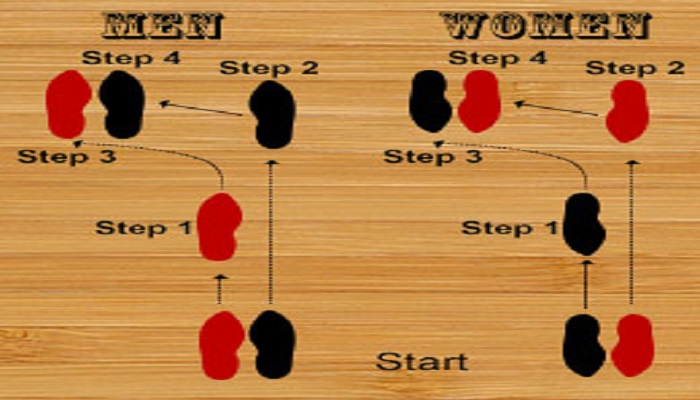
Two Step ChartWhile the cheerleaders for the current Iranian regime at the National Iranian American Council are busy congratulating themselves on a two month extension on the immediate re-imposition of economic sanctions temporarily suspended because of an interim agreement reached last year by the P5+1 nations and Iran, the Senate Banking Committee by a wide bipartisan 18-4 margin passed out a bill over its first procedural hurdle to set the stage for a showdown vote in March on re-imposing sanctions.

It must not be too reassuring to the NIAC and its Iranian overlords to see this bill pass by such a large margin, nor coming on the heels of what they had hoped would be a pause long enough to allow Iran time to bamboozle the administration into accepting a “framework” by March in order to buy more time until July before having the entire negotiating process collapse again as it has done twice before.

NIAC’s Jamal Abdi in fact, in a piece published on the group’s website, breathlessly recounted the blow by blow narrative of how this two-month sanctions pause was achieved; and of course all because of the NIAC’s massive lobbying effort on behalf of Iran. Mine you, on behalf of Iran’s mullahs and not Iranian Americans, but that’s for another day’s editorial.

What he neglected to mention and what has been widely credited by virtually every political commentator and analyst, including Senate Democrats themselves such as Senators Harry Reid (D-NV) and Dianne Feinstein (D-CA), as being the key influencing factor on the delay was Speaker John Boehner’s move to invite Israeli Prime Minister to address a joint session of Congress on Iran and its nuclear weapons program.

For many Democrats, the move smacked of overt politics and stiffened their resolve, but even that was not enough to move them totally off the sanctions bandwagon. All it did was keep alive the central piece of legislation and move the action date from February to March.

The one thing both Democrats and Republicans readily agree on is that the regime in Iran should not be allowed to have a nuclear weapon…period. Both sides of the aisle also agree sanctions should be re-instated broadly and harshly if mullahs in Iran do not deliver a deal agreeable to Congressional review.

So while the NIAC chortle in public, privately they know they are swimming against the tide of sentiment; a sentiment that will inevitably grow stronger as the clock resets and again counts down to March 24 with another round of scrutiny growing day by day with more and more pressure being applied to Senators by a nervous public watching the nightly news of ISIS, Boko Haram, Al-Qaeda and Taliban advances.

So while the NIAC, Al Jazeera and the Obama administration may have excised “Islamic extremism” from their daily use, it has not escaped the attention of Americans who in recent polls have placed concerns about terrorism above even the economy and jobs.

All of which is bad news for mullahs in Iran and its supporters as they try to learn new dance steps.

By Michael Tomlinson

Filed Under: Blog Tagged With: Iran, Iran deal, Iran Lobby, nuclear talks, Sanctions, Veto Sanctions

  • « Previous Page
  • 1
  • …
  • 31
  • 32
  • 33
  • 34
  • Next Page »

National Iranian-American Council (NIAC)

  • Bogus Memberships
  • Survey
  • Lobbying
  • Iranians for International Cooperation
  • Defamation Lawsuit
  • People’s Mojahedin
  • Trita Parsi Biography
  • Parsi/Namazi Lobbying Plan
  • Parsi Links to Namazi & Iranian Regime
  • Namazi, NIAC Ringleader
  • Collaborating with Iran’s Ambassador

Recent Posts

  • NIAC Trying to Gain Influence On U.S. Congress
  • While Iran Lobby Plays Blame Game Iran Goes Nuclear
  • Iran Lobby Jumps on Detention of Iranian Newscaster
  • Bad News for Iran Swamps Iran Lobby
  • Iran Starts Off Year by Banning Instagram

© Copyright 2026 IranLobby.net · All Rights Reserved.