Iran Lobby

Exposing the Activities of the lobbies and appeasers of the Mullah's Dictatorship ruling Iran

  • Home
  • About
  • Current Trend
  • National Iranian-American Council(NIAC)
    • Bogus Memberships
    • Survey
    • Lobbying
    • Iranians for International Cooperation
    • Defamation Lawsuit
    • People’s Mojahedin
    • Trita Parsi Biography
    • Parsi/Namazi Lobbying Plan
    • Parsi Links to Namazi& Iranian Regime
    • Namazi, NIAC Ringleader
    • Collaborating with Iran’s Ambassador
  • The Appeasers
    • Gary Sick
    • Flynt Leverett & Hillary Mann Leverett
    • Baroness Nicholson
  • Blog
  • Links
  • Media Reports

Iran Regime Tapping Into Smartphones with Apps

February 23, 2018 by admin

Iran Regime Tapping Into Smartphones with Apps

Iran Regime Tapping Into Smartphones with Apps

One of the hallmarks of the Iran lobby, especially the National Iranian American Council, has been its consistent boasting of looking out of the interests of average, ordinary Iranian-Americans. That’s why it has spent considerable energy burnishing its credentials through attacking the Trump administration’s immigration proposals aimed at curbing terrorism and supporting the Iran nuclear agreement.

Of course, that’s exactly why the Iran lobby, especially the NIAC, cannot be trusted to advocate on behalf of ordinary Iranians; it is in the bag with the mullahs in Tehran.

This explains why the NIAC has been silent on blockbuster revelations by the National Council of Resistance of Iran, the largest dissident group to the Iranian regime, that Iran was using false front smartphone apps to secretly collect data on smartphone users in Iran, as well as around the world and may have been using the data to target and arrest protestors sweeping across Iran recently.

NCRI researchers allege in this new investigation that there are not only hundreds of smartphone apps currently being used by the Iranian regime to spy on its own citizens, some of them are available to users around the world via online marketplaces like Apple’s App Store, Google Play and GitHub.com, according to a Fox News report.

“The Iranian regime is currently hard at work to test the success of these apps on the people of Iran first,” said Alireza Jafarzadeh, the deputy director of the NCRI’s Washington office. “If not confronted, its next victims will be the people of other nations,” Jafarzadeh added, noting that the Iranian intel unit responsible for this alleged surveillance is the same group tasked with cyberwarfare against the West.

The NCRI report lists a handful of supposedly problematic apps that are available outside of Iran, despite these alleged connections to Iranian intelligence. The list includes Mobogram, Telegram Farsi and Telegram Black. Fox was able to confirm that most, if not all, are indeed still available for download.

The regime apps leverage the ability to text and communicate in native Farsi as an attribute driving many Iranians to download and use them, not knowing they are secretly developed by special cyberwarfare units within the Revolutionary Guard Corps.

It is estimated that some 40 million people in Iran were using the official Telegram app as a series of deadly protests broke out at the end of 2017, and the beginning of 2018. The apps have become popular because people outside of Iran are able to communicate with their family and friends, and because domestic users are able to evade government crackdowns on the internet.

This raises the very real specter that the regime is spying on family communications between Iranians and their American relatives and using that information to arrest and imprison any who might be viewed as dissenters.

During the mass protests that broke out last year and into this year, the regime shut down the popular Telegram app that many protestors were using to communicate with the outside world, including Western news agencies. This prompted many Iranians to switch to the fake regime apps and unwittingly placed them square in the bullseye of regime intelligence agencies.

Fox News reported that based on the NCRI revelations, Google was one of the first internet giants to remove some of the suspect apps from its Google Play and Android stores. We can only hope that Apple follows suit.

All of which makes curious why the NIAC remains silent on an issue of tremendous import to Iranian-Americans, but it silence should be surprising given its complete reticence in attacking any aspect of the Iranian regime’s policies.

In fact, why Iranian-Americans are being spied upon, the NIAC’s Trita Parsi was traveling through Kentucky to speak at a local World Affairs Council gathering and appear on local radio to again shill for the flawed Iran nuclear deal and flog the same tired myth that ditching the deal would surely lead the U.S. to war with Iran.

Ironically, it might be the Iranian regime and not the U.S. that ditches the nuclear deal first based on comments by Iranian Deputy Foreign Minister Abbas Araqchi who said if Iran did not continue to gain any benefits from the deal, especially more foreign investment, it would walk away from it first.

“If the same policy of confusion and uncertainties about the JCPOA (Joint Comprehensive Plan of Action) continues, if companies and banks are not working with Iran, we cannot remain in a deal that has no benefit for us,” Araqchi said. “That’s a fact.”

For Iran, the deal only serves as a means to an end, which is to reopen the flood-gates so cash could flow back into a regime dangerously teetering on the brink of insolvency from the cash it spent in supporting the Assad regime in Syria and the Houthi rebellion in Yemen, as well as development of its ballistic missile program.

It also means that the Iran lobby really doesn’t care much what happens to Iranians unless it benefits its PR efforts on behalf of the regime.

Laura Carnahan
Filed Under: Blog, News Tagged With: Featured, Iran deal, Iran Lobby, IRGC, National Iranian American Council, NIAC, NIAC Action, Sanctions, Trita Parsi

NIAC Tries to Diminish Iran Protests

February 14, 2018 by admin

NIAC Tries to Diminish Iran Protests

NIAC Tries to Diminish Iran Protests

The National Iranian American Council has a problem; well it has several problems. It has lost its influential position in the “echo chamber” created by the Obama administration. It has lost its currency with many mainstream news organizations as the Iranian regime it defends has clearly shown itself to be a staunch supporter of sectarian wars and terrorism.

It finds itself having to retool on the fly and recast itself as a loyal and faithful partner to the progressive wing of American politics in the hopes of finding continued relevancy in an era of conservative politics dominating the White House, Congress, and electorate.

Much of that more conservative view among Americans has been driven by unrelenting terrorist attacks inspired by Islamic extremism; much of it flowing from the Iranian regime. It was also helped by extensive coverage of Iran’s own appalling human rights record over the past two years in the face of a so-called moderate administration by Hassan Rouhani.

Now the NIAC is faced with the specter of a widespread series of grassroots protests ranging throughout Iran and based largely within the working classes and poor of Iran’s population. It is the type of revolt that fueled the revolution against the Shah before it was hijacked by the mullahs that turned Iran into a theocracy.

The protests in Iran have been largely fueled by deep distrust of the regime, backbreaking poor economic conditions, the perception of rampant government corruption and a rigged game that rewards the scions of the Revolutionary Guards and mullahs, but punishes everyone else with strict morality codes, ever-vigilant policing and ruthless religious courts.

So, the leaders of the NIAC, including Trita Parsi, are faced with having to defend an Iranian regime in the face of broad and deep protests from the Iranian people – many of whom communicate with American-based relatives that find the NIAC virtually silent and absent in advocating for their Iranian brethren.

What does the NIAC do then? It does what it has always done: try to confuse the public and media about the true nature of resistance to the Iranian regime.

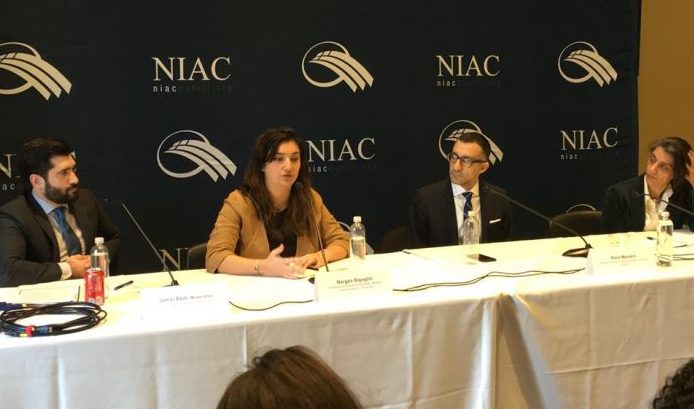
In this case, it involved putting on a panel discussion in Washington, DC in the hopes of communicating that Iran was changing in response to the protests.

Among the panelists were notable advocates for the Iran nuclear deal and noted apologists for the Iranian regime.

“Public dialogue with the (Iranian) state occurs through protest and those protests force changes to come about,” said Sanam Anderlini, Executive Director and co-founder of the International Civil Society Action Network. “Each time there are protests, the regime gives some space and the public moves along, and there is an accommodation” that pushes the country in a more progressive direction.

It is one of the more inane comments said in relation to the political reality in Iran since the Iranian regime has never responded to public protest with a push towards a “more progressive direction.”

In fact, past history clearly demonstrates the regime’s willingness to use brutal force and murder to suppress protest. It happened in the wake of the 2009 mass demonstrates over a presidential election widely considered stolen in favor of re-electing Mahmoud Ahmadinejad.

This most recent rounds of protests around the country have been suppressed by police and IRGC plain clothes and resulted in scores of deaths and arrests of nearly 8,000 men and women, 12 of which are known to have been slain under torture, which the government claims have been cases of suicide.

By the regime’s own admission, fewer than a thousand of those arrested have so far been released weeks later.

Another panelist, a research associate at the Watson Institute at Brown University, pushed the other favorite theory of the Iran lobby which was that these protests were in fact not products of discontent by ordinary Iranians, but were instead fomented by “hardliners” opposed to Rouhani’s “moderate” policies.

She again also emphasized the lack of sanctions relief by the U.S. as a major reason why the regime’s economy has sputtered and spurred protests. She, of course, neglected to mention the diversion of billions in new funds resulting from the lifting of sanctions from the nuclear that was instead used on building a ballistic missile program and funding wars in Syria and Yemen rather than boosting the economy.

In another Iran lobby message, she squarely lays blame on President Donald Trump as if the president was personally cooking the books in Tehran.

Predictably, the NIAC’s Reza Marashi weighed in by comparing the Trump administration to the Obama administration as if he was mourning a long-lost lover.

The panelist from Brown University’s biggest lie was describing the political response in Iran to the protests as being markedly different than previous major demonstrations.

“Unlike the 2009 protests, in which the political establishment eventually decided they should be suppressed, in this protest almost all factions have said publicly ‘we should let the people protest and let the people air their grievances’ because no one wanted to be seen as suppressing their base,” she claimed.

It is a bald-faced distortion given the ample video and photographic evidence of regime police and IRGC plainclothes wading into crowds throughout Iran in running street battles as chants of death to Rouhani and top mullah Ali Khamenei rang out.

It is amazing that the NIAC can continue to deny the evidence that every Iranian-American knows now which is that Iran is not on a course to moderation, but steering straight towards a reckoning with its own people.

Laura Carnahan

Filed Under: Blog, News Tagged With: Featured, hassan rouhani, Iran deal, Iran Lobby, IRGC, Jamal Abdi, Khamenei, Marashi, Moderate Mullahs, National Iranian American Council, NIAC, NIAC Action, Rouhani, Sanam Anderlini, Trita Parsi

Seyed Hossein Mousavian Gets It Wrong Again

February 14, 2018 by admin

Seyed Hossein Mousavian Gets It Wrong Again

Seyed Hossein Mousavian Gets It Wrong Again

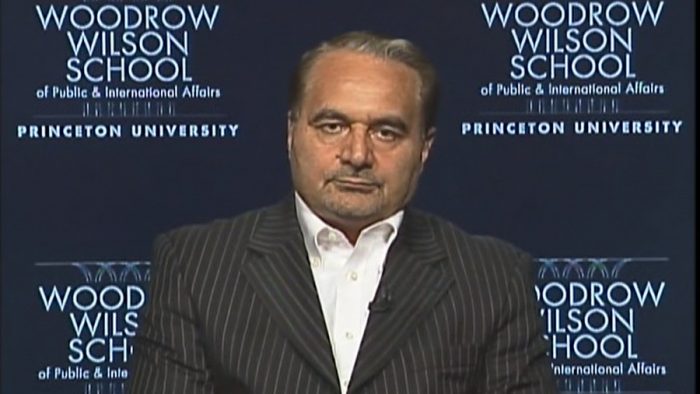
Seyed Hossein Mousavian, a former official with the Iranian regime who transplanted to Princeton University and remade himself into a scholar, has been busy advocating for his old bosses; the mullahs in Tehran.

Even though he presided over various aspects of the regime’s security apparatus and was responsible for essentially hiding its clandestine nuclear program, he has worked diligently from his university perch to push the same old narratives supporting the Iranian regime.

One of his most recent key messages has been to push the narrative surrounding the growing confrontations between Iran and Saudi Arabia. In an essay he wrote for the Cairo Review of Global Affairs, Mousavian dives deeply into the discussion and tries to frame Saudi Arabia’s opposition to growing Iranian influence as part of a larger U.S. security plan to maintain control in the region.

“The chief rivalry in the region—between Saudi Arabia and Iran—is in fact a proxy for the competition between states seeking multipolarity (Iran) and those seeking to bandwagon off continued U.S. regional and global hegemony (Saudi Arabia),” he writes.

“Given Iran’s expanding regional influence, the foremost concern of Israel, Saudi Arabia, and some other regional Arab states is that as the United States disengages from the Middle East and Persian Gulf, the subsequent vacuum is not filled by Iran and Iran’s allied powers. This worry is amplified by the fact that the Arab World is in decline and traditional Arab powers have either collapsed or are stricken with domestic crises,” Mousavian adds.

He tries to make the same stale argument similarly made by other Iran lobby supporters such as Trita Parsi of the National Iranian American Council that Iran is merely filling in the natural power vacuum resulting from waning American influence and that Iran is on the ascendancy, so it should naturally take a more preeminent position.

Couple this with a decaying and decadent Arab world, it makes sense for Iran to be a natural power in the Middle East according to Mousavian.

Unfortunately, the reality is much different than the picture he tries to paint. Far from being a rising power that used its economic clout, political influence of even cultural impact to influence the region, the Iranian regime has instead used its Revolutionary Guards and Quds Force to militarily intervene in neighbors such as Syria, Iraq and Yemen, while it has funded and directed proxies such as terror groups like Hezbollah and Houthi rebels to topple government and carry out attacks.

Far from using the financial windfall it gained from the nuclear deal to better and improve its own economy and lift the poorest Iranians, the mullahs instead opted to divert billions on a crash program to build and deploy an intercontinental ballistic missile capability that has threatened its neighbors with the prospect of weapons of mass destruction raining down on them.

These are not the acts of a nation interested in being a friendly partner, but rather a brutal regime intent on subverting and controlling its neighbors in order to create an extremist Islamic version of the old Warsaw Pact to protect itself.

Mousavian also touts Iran’s willingness to fight terrorist groups such as Al-Qaeda and ISIS, but neglects to mention that through its own terrorist network through Hezbollah, Iran conducts terrorist operations far from the battlegrounds of the Middle East and specifically targets and kills U.S. personnel; most recently in Iraq and Afghanistan.

Appallingly, Mousavian takes Saudi Arabia to task for the conflict in Yemen, blaming it for causing a humanitarian crisis there. He attempts to draw on historical claims of Houthi governance there and that the Saudis had engineered an overthrow.

What he again fails to point out is that the war in Yemen didn’t start until Iran armed Houthi rebels, supplying them with guns, mortars, rockets and communications equipment and regularly supplies them through clandestine Iranian fishing vessels; some of which have been intercepted by U.S. and Saudi navy ships.

Mousavian goes on to make similar claims that Saudi Arabia is responsible for instability in Lebanon, Iraq, Egypt and even Palestine and Israel. For Mousavian, Saudi Arabia seems to be the most powerfully destabilizing force in the Middle East. About the only thing he doesn’t seem to blame Saudi Arabia and its primary patron, the U.S., for is global warming.

Lastly, Mousavian takes aim at Iranian resistance groups, including the Mojahedin-e Khalq (MEK), which he claims conducts terrorist acts on Iranian soil, but also neglects to mention the long history of open warfare by the Iranian regime against its members and other Iranian dissidents; including assassinations carried out by its Quds Forces and attacks on unarmed refugees at camps in Iraq.

“These realities have compelled Iran to have an active, preemptive, and deterrent role in the region in order to secure it borders, centralized governance, and national cohesion. To achieve these aims, Iran’s foreign policy goals have been centered on confronting threats, stabilizing the region, and improving its self-sufficiency in the production of weapons of deterrence, including ballistic missiles,” Mousavian claims.

But ultimately Iranian regime has done little to stabilize the Middle East. In fact, since the nuclear deal, it has in fact been the chief antagonist and leading participant in the wars that have raged there. Even as of this month, the Iranian regime escalated conflicts in Syria when its forces approached a U.S. base along the Syria-Iraq border which resulted in attacks by U.S. aircraft.

If any nation is interested in establishing permanent military bases far from its borders, it is the Iranian regime and the rapid pace of confrontations with the U.S., Saudi Arabia and others only underscore the regime’s willingness to up the ante in terms of spreading conflict.

The real enemy isn’t Saudi Arabia as Mousavian claims, but rather the mullahs in Tehran and the Iran lobbyist that cover for them.

Michael Tomlinson

Filed Under: Blog, Current Trend, News Tagged With: Featured, Hossein Mousavian, Iran Mullahs, Iran Terrorism, IRGC, Seyed Hossein Mousavian, Trita Parsi

Hassan Rouhani Mounts PR Offensive to Rebuild Moderate Image

February 7, 2018 by admin

Hassan Rouhani Mounts PR Offensive to Rebuild Moderate Image

Hassan Rouhani Mounts PR Offensive to Rebuild Moderate Image

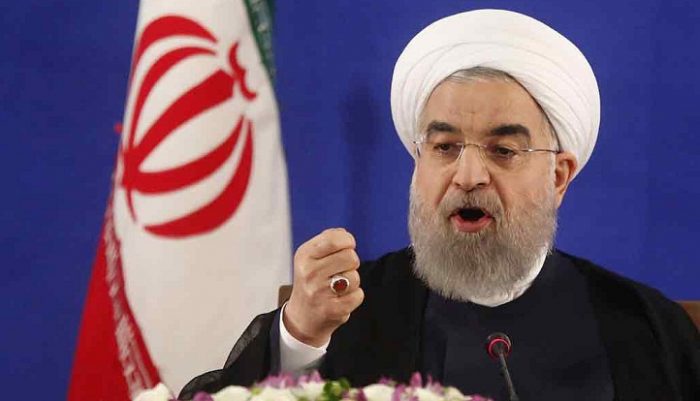
One of the inconvenient truths for Iranian regime president Hassan Rouhani has been the growing irrelevance of the Iran lobby and its inability to drive the narrative in the U.S., especially among leading media outlets.

Where once loyal allies such as Trita Parsi of the National Iranian American Council were common fixtures on CNN, NPR and the New York Times, they are now largely relegated to small, progressive blogs and websites.

Much of that has been due to the revelations over the years of the existence of the Iran lobby and its cooperation with the Obama administration to create an “echo chamber” in support of passing the Iran nuclear deal and its ties to the Iranian regime through the work of investigative journalists and lawsuits.

Iran itself didn’t help with its long support and intervention in the bloody Syrian civil war and sectarian fights in Iraq and Yemen that have claimed tens of thousands of lives. Neither did the election of Donald Trump as president; who took a much dimmer view of the regime’s claims towards moderation and has all but ignored anything the Iran lobby says.

All of which may explain why the regime has decided to put Rouhani out in front aggressively shilling a moderate/hard line on topics ranging from the economy to recent protests in effort to reinforce the illusion of moderation it once projected.

It’s important to remember that this is really what Rouhani was elected to do in the first place. His position lacks any real substantive power within regime since he does not control the Revolutionary Guards Corps, nor its Quds Force. Neither does he wield any power over the paramilitaries that brutally enforce morals codes on the people or the religious courts that are often used to sentence and imprison Iranians by the thousands.

Which is why the original messages put forth by regime supporters such as Parsi and the NIAC that Rouhani’s election was a sign of a seismic shift within the regime government weren’t worth much more than used toilet paper.

As a prophet, Parsi falls somewhere between David Koresh of the Branch Davidians and the Weekly World News.

What is true is that Rouhani put on a PR blitz this week to try and shore up support from the regime in a number of areas at a wide ranging press conference:

  • Rouhani conducts a televised news conference in which he states that Iranians have political, economic and social demands that must be met. “Our ears must be completely open to listen and know what the people want. The government is trying to solve the problems with all its power,” he said. Unfortunately, that didn’t help the over two dozen people that were killed and more than 8,000 arrested and tossed into prison as the protests were put down by Rouhani’s government;
  • At the same press conference, Rouhani reiterated that the regime would abide by the nuclear agreement’s terms even if President Trump opted out and withdrew from the agreement. “We will stay in the JCPOA [nuclear agreement] as long as our interests are observed. The US staying in or out of [the accord] will not be the main criteria for our decision,” Rouhani said. “We have principles and will continue [our commitment to the deal] based on our principles.” He neglected to mention that the regime got all of the benefits it already wanted from the agreement such as billions in cash, relief from sanctions and the ability to see oil back on the open market without giving up hardly anything;
  • Rouhani adds that the Revolutionary Guard Corps would divest itself from a range of companies it controls, including some in the energy sector, in order to “rescue the country’s economy.” Claiming that Iran needed outside investment to modernize its petroleum production facilities, Rouhani neglects to mention that under his corrupt government, billions were siphoned off to fund war and terrorist activities, allowing industry to falter and fall apart; and
  • In taking a harder stance, Rouhani said that Iran’s ballistic missile program would be off-limits to any restriction or sanctions. “We will negotiate with no one on our weapons,” Rouhani said. “Iranian-made missiles have never been offensive and never will be. They are defensive and are not designed to carry weapons of mass destruction, since we don’t have any.” He neglected to discuss why the regime’s missile program was the linchpin to a new regional military strategy to put its neighbors and most of Europe and Asia within missile striking distance as a means of political leverage or even blackmail;

So, while Rouhani was all sweet and moderate, behind his words were the real iron fist of a regime unwilling to bend or compromise or deny itself the ability to stifle dissent or control its own destiny.

Add to that statements made by two Iranian-backed Shiite militias in Iraq that demanded the full withdrawal of U.S. forces from Iraq in order to allow Iran a dominant position as the only foreign military power within Iraq.

Kataib Hezbollah, a more militant, secretive and anti-American group, repeated threats to attack US forces.

“We are serious about getting the Americans out, using the force of arms because the Americans don’t understand any other language,” its spokesman, Jaafar Al-Husseini, told Beirut-based Al-Mayadeen TV on Monday evening.

Kataib Hezbollah has strong links to Iran’s Revolutionary Guards Corps and has threatened to attack US forces several times in the past, describing their presence as an occupation.

But what has Rouhani most troubled, as well as the Iran lobby, is the persistent protests by ordinary Iranians that are not going away, no matter how many are imprisoned.

That is what concerns Rouhani and the mullahs the most; that this organic and natural protest movement will continue to spread and take deep root within Iran and pose the most significant threat to their rule.

Laura Carnahan

Filed Under: Blog, News Tagged With: Featured, hassan rouhani, Iran deal, Iran Lobby, Iran Mullahs, Iran sanctions, IRGC, Trita Parsi

Devastating Report Shows Obama Blocked Hezbollah Sting

December 20, 2017 by admin

Devastating Report Shows Obama Blocked Hezbollah Sting

Devastating Report Shows Obama Blocked Hezbollah Sting

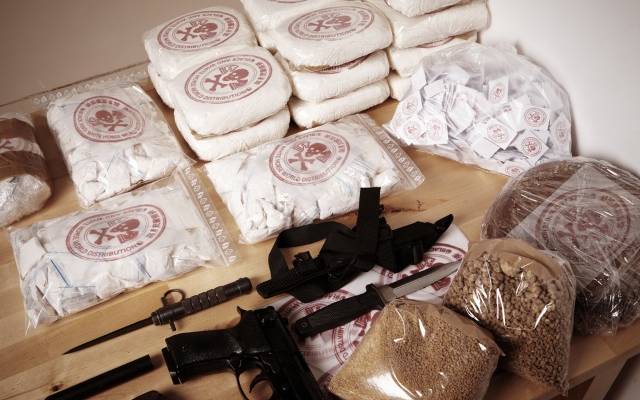
Politico published a devastating story of how the Obama administration derailed a Drug Enforcement Administration operation aimed at Hezbollah, a Lebanese-based, Iranian-backed terrorist group, which used trafficking in drugs and weapons to fund its operations, in order to prevent jeopardizing the Iran nuclear deal.

The blockbuster revelation came in an exhaustive three-part series by Politico’s Josh Meyer who delved deep into Hezbollah’s criminal and terrorist operations, its support from the Iranian regime and the Obama administration’s desperate moves to keep the DEA’s investigation from jeopardizing a flawed nuclear deal alive.

Known as Project Cassandra, the DEA’s extensive campaign was aimed at toppling the terrorist group’s elaborate network smuggling and selling narcotics and weapons around the world; whose profits were used to fund the terror network worldwide.

“This was a policy decision, it was a systematic decision,” David Asher, who helped establish Project Cassandra as a Defense Department illicit finance analyst in 2008, told Politico. “They serially ripped apart this entire effort that was very well supported and resourced, and it was done from the top down.”

When Project Cassandra leaders, who were working out of a DEA’s Counter facility in Chantilly, Virginia, sought an OK for some significant investigations, prosecutions, arrests and financial sanctions, Justice and Treasury Department officials delayed, hindered or rejected their requests, according to Politico.

Project Cassandra members said Obama officials blocked or undermined their efforts to chase down top Hezbollah operatives, including one of the world’s biggest cocaine traffickers who was also a top supplier of conventional and chemical weapons used by Syrian President Bashar Assad against his own citizens.

Former Obama administration officials told Politico their decisions were guided by improving relations with Iran, stalling its nuclear weapons program and freeing four American hostages held by the country.

According to Politico, the DEA followed cocaine shipments, some from Latin America to West Africa and on to Europe and the Middle East, and others through Venezuela and Mexico to the United States. They tracked the river of dirty cash as it was laundered by, among other tactics, buying American used cars and shipping them to Africa. And with the help of some key cooperating witnesses, the agents traced the conspiracy, they believed, to the innermost circle of Hezbollah and its state sponsors in Iran.

It is ironic that the other countries involved in the smuggling operation include countries such as Venezuela who is closely tied to the Iranian regime.

It is even more ironic that the Iran lobby has been deaf, dumb and mute on the disclosures since they fly directly in the face of the claims made by Iran advocates such as Trita Parsi of the National Iranian American Council who extolled the virtues of the nuclear deal as a moderating force within Iran and throughout the Middle East, but now we know that the promise of the deal in fact persuaded the Obama administration to give Hezbollah a free pass in shipping narcotics to Western nations and arms to proxies who later used them in conflicts stretching from Syria to Yemen to Nigeria.

The Obama-led Justice Department declined requests by Project Cassandra and other authorities to file criminal charges against major players such as Hezbollah’s high-profile envoy to Iran, a Lebanese bank that allegedly laundered billions in alleged drug profits, and a central player in a U.S.-based cell of the Iranian paramilitary Quds force. And the State Department rejected requests to lure high-value targets to countries where they could be arrested, according to Politico.

In hindsight, the Obama administration’s Pollyanna-ish view of the Iranian regime and Hezbollah since at best naive, and at worst deliberately obstructive.

Obama’s then CIA director, John Brennan, even recommended that Obama “has the opportunity to set a new course for relations between the two countries” through not only a direct dialogue, but “greater assimilation of Hezbollah into Lebanon’s political system.”

The logic that believed the mullahs in Tehran could be trusted to act in a civilized manner also seemed to guide the belief that Hezbollah could be assimilated into a normal political party in war-torn Lebanon.

The disclosure that Brennan actually believed that “moderate elements” within Hezbollah could be cultivated is a shocking echo of the same arguments made about empowering “moderate elements” within the Iranian regime through a negotiated nuclear agreement.

It is clear now that the pervasive idea of appeasement was hatched almost from the day President Obama was sworn into office and guided U.S. policy moving forward and eventually set the stage for the carnage and bloodshed Iran has unleashed over the past three years.

Politico cited the example of Lebanese arms dealer Ali Fayad, a suspected top Hezbollah operative whom agents believed reported to Russian President Vladimir Putin as a key supplier of weapons to Syria and Iraq, who was arrested in Prague in the spring of 2014.

But for the nearly two years Fayad was in custody, top Obama administration officials declined to apply serious pressure on the Czech government to extradite him to the United States, even as Putin was lobbying aggressively against it.

Fayad, who had been indicted in U.S. courts on charges of planning the murders of U.S. government employees, attempting to provide material support to a terrorist organization and attempting to acquire, transfer and use anti-aircraft missiles, was ultimately sent to Beirut. He is now believed by U.S. officials to be back in business, and helping to arm militants in Syria and elsewhere with Russian heavy weapons.

We know that the Obama administration’s policy of appeasement has been a complete failure in reining in Iranian extremism. It has made the world a much more dangerous place and resulted in the deaths of hundreds of thousands of people.

We can only hope that the Politico story revelations will serve as a harsh reminder for the Trump administration not to make the same mistakes.

Michael Tomlinson

Filed Under: Blog, News Tagged With: Featured, Hezbollah, Iran, Iran Terrorism, IRGC, Khamenei, National Iranian American Council, NIAC, Rouhani, Trita Parsi

Iran Lobby Shows its Hypocrisy in Latest Attacks on US

December 4, 2017 by admin

Iran Lobby Shows its Hypocrisy in Latest Attacks on US

Iran Lobby Shows its Hypocrisy in Latest Attacks on US

The recent media speculation over U.S. Secretary of State Rex Tillerson’s alleged precarious employment status has given rise to a cottage industry overnight of second-guessing by various talking heads and analysts over what a potential change at Foggy Bottom might look like in terms of future US policy.

The Iran lobby, specifically the National Iranian American Council, was swift to jump on the bandwagon and raise the specter of a push by “neocons” to put one of their own into the seat and go to war against the Iranian regime.

The focus of that smear attack was Sen. Tom Cotton (R-Arkansas) who has been a vocal critic of the Iranian regime, especially the nuclear agreement.

It serves the Iran lobby’s purposes to push the narrative that Trump administration’s primary focus is to somehow foment a war with Iran; even though no administration official—from the president on down—has never even hinted at such an outcome, let alone advocated it.

The narrative though helps the Iran lobby by feeding into the fear factor it has long used in warning against taking any aggressive actions to restrain the mullahs in Tehran. Remember how during the run up in negotiations over the nuclear agreement how the NIAC and its allies pushed the image of a war between Iran and the US as the reason for completing the deal?

The Iran lobby has always used fear mongering as a PR tactic and in the case of Secretary Tillerson, it is going all out to push it again.

The best example was an editorial authored by Trita Parsi and Ryan Costello of the NIAC on its website with the provocative headline of: “Cotton, Pompeo and Trump are a Recipe for War with Iran.”

Hyperbole aside, Parsi and Costello argue a scenario where Tillerson is replaced by current CIA director Mike Pompeo and he is replaced at the intelligence agency by Cotton. Of course Parsi and Costello offer no proof for such a scenario other than a vague “reported plan.”

There is no better example of trolling fake news than what Parsi and Costello are doing.

They go on to recite a history of Pompeo and Cotton’s record—which is already well known—of their doubts about the Iran nuclear deal and of the ability to rein in Iranian extremism, but couch it in a way to convey the idea that both are some crazed blood thirsty war mongers.

“What of the man that Pompeo would replace, Rex Tillerson? It is indisputable that Tillerson has been a disaster on many fronts, in particular, his campaign to gut the State Department which will do untold damage to American diplomacy for years to come. Yet, on the Iran nuclear deal, Tillerson has actually allied with Secretary of Defense James Mattis to urge Trump against ripping up the deal. The loss of Tillerson, combined with Cotton’s elevation, would mean that Pompeo and Cotton could face little resistance in their campaign to unravel a nuclear accord that is working and downplay the likely alternative ― war,” Parsi and Costello write.

In the twisted little world that Parsi and Costello are trying to fabricate, they stick to the logic that unraveling the nuclear accord can only lead to war; a preposterous idea when considered alongside the reality of since the deal was passed.

In the wake of the Iran nuclear deal, the Middle East has devolved into a region-wide war zone due largely to actions by Tehran, including the bloody civil war in Syria that sent four million refugees flooding across Europe and another sectarian uprising in Yemen that now threatens to bring Saudi Arabia into direct conflict with Iran.

Far from producing a peaceful world, Iranian regime has been at the epicenter of some of the worst conflicts taking place now; a far cry from the absurdist claims made by Parsi and Costello.

Of course, neither ever takes Tehran to task for supporting those wars, nor for its North Korean-like fanatical support for developing ballistic missiles; a point reinforced by a regime spokesman in denouncing comments made by French president Emmanuel Macron criticizing the missile expansion program.

“French official, other officials, who want to speak about Iran’s affairs need to pay attention to the deep developments that have come to pass in the region in past decades and the big changes between the current situation and the past,” said Bahram Qassemi, regime foreign ministry spokesman, according to state media.

“The Islamic Republic of Iran will definitely not negotiate on defense and missile issues,” he added.

Tension between Iran and France increased last month when Macron said that Iran should be less aggressive in the region and should clarify its ballistic missile program. His foreign minister also denounced, during a visit to Saudi Arabia, Iran’s “hegemonic temptations.”

France’s criticisms only echo those made by then-candidate Donald Trump and his current administration’s positions, and yet Parsi and Costello avoid criticizing the French on the same issue.

The hypocrisy of their positions is readily apparent as they fabricate Tillerson’s potential demise in order to create a false narrative, but not apply the same standard in criticizing the much-more revealing truth behind Iranian actions over the past four years.

Pompeo and national security adviser HR McMaster spoke at length about Iranian expansion in “weak states” in the Middle East at the 2017 Reagan National Defense Forum in California this weekend.

Pompeo confirmed he sent a letter recently to Maj. Gen Qassem Soleimani, head of the Iranian Revolutionary Guard’s foreign operations arm or Quds Force.

“I sent a note. I sent it because he had indicated that forces under his control might in fact threaten US interests in Iraq,” Pompeo said.

“He refused to open the letter. It didn’t break my heart to be honest with you. What we were communicating to him in that letter was that we will hold he and Iran accountable for any attacks on American interests in Iraq by forces that are under their control. We wanted to make sure he and the leadership in Iran understood that in a way that was crystal clear.”

Far from being a call to war, Pompeo’s effort to reach out to Soleimani only illustrated the focus of the Trump administration to rein in Iranian expansionism, not start a shooting war.

If there are any real war mongers here, they live in Tehran, not Washington.

Michael Tomlinson

Filed Under: Blog, News Tagged With: Featured, Iran deal, Iran Lobby, Iran Talks, IRGC, Khamenei, National Iranian American Council, NIAC, NIAC Action, Pompeo, Ryan Costello, Tom Cotton, Trita Parsi

Iran Ups Ante with Warships Near the US

December 1, 2017 by admin

Iran Ups Ante with Warships Near the US

Iran Ups Ante with Warships Near the US

Back in the height of the Cold War, the saying “the Russians are coming!” often filled the political dialogue of the day with the kind of anxiety that came naturally at a time when everyone worried about building fallout shelters and conducting duck and cover drills at school as the old Soviet Union placed nuclear missiles 90 miles offshore in Cuba.

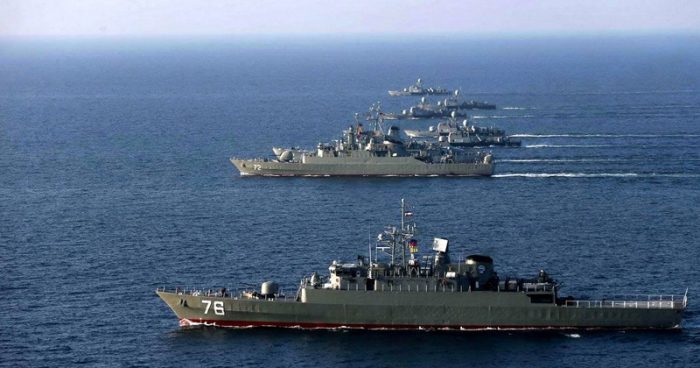
The Cuban missile crisis precipitated the closest episode to an all-out nuclear war the world had ever seen and hoped would never see again, but now the specter of confrontation along the U.S. coastline is again raising its ugly head as the Iranian regime announced plans this week to send a naval flotilla to the Gulf of Mexico in a show of power designed to thumb the mullahs’ collective noses at America and its allies.

Following orders from Iran’s top mullah, Ali Khamenei, the newly installed commander of its navy, Rear Adm. Hossein Khanzadi, announced a fleet of Iranian warships would soon be making their way into the Atlantic Ocean, despite what Iran claims is opposition by U.S. officials.

As Iran continues to deploy military assets to Syria, Yemen, Lebanon, and other Middle Eastern hotspots, its navy is placing a renewed focus on displaying force in international waters, according to the military leaders.

The latest military displays follow a series of provocative moves by Tehran aimed at rattling U.S. officials in the Trump administration, which has increasingly sought to confront Iran’s regional intransigence. Any Iranian presence in the Atlantic Ocean is certain to put U.S. military leaders in edge, according to the Washington Free Beacon.

The naval maneuver is designed to bolster Iranian influence with Latin American nations hostile to the U.S.; namely Venezuela and Bolivia.

More importantly, the exercise is designed to provide a propaganda boost at a time when the mullahs are clearly beleaguered back home; wracked with the devastation caused by massive earthquakes along the Iran-Iraq border and a moribund economy that continues to drag along in stark contrast to the promises made by Hassan Rouhani in the wake of the nuclear agreement which lifted economic sanctions.

Iranian efforts to sail its warships into the Atlantic Ocean coincide with a call by Khamenei to boost the regime’s military presence in international waters.

“The navy is in the frontline of defending the country with important regions, such as Makran, the Sea of Oman, and the international waters, in front of it,” Khamenei said in Tuesday remarks celebrating Iran’s Navy Day.

“Presence in free waters should continue similar to the past,” Khamenei added ahead of a meeting with Iranian military leaders.

Khamenei further disclosed that Iran is working to produce more advanced military equipment.

“The navy is more advanced and capable compared with 20 years ago, but this level of advance is not convincing; and a high-speed move should be pursued with determination, high morale, lots of efforts, innovation, and action,” he was quoted as saying.

The Iranian regime has often resorted to military displays as a means of diverting attention from disasters or setbacks at home; relying on jingoism to cover up inadequacies in the regime’s handling of the economy and widespread dissent at home.

The massive influx of cash the regime received as a result of the nuclear deal has helped solidify and steady its military at a time when intervention in the Syrian civil war nearly bankrupted the Iranian economy.

The diversion of fresh capital from the needs of the Iranian people and boosting the economy towards the regime’s ballistic missile program and its military adventures abroad—including this jaunt to the other side of the globe—no doubt bolsters the mullahs, but does little to improve the lives of ordinary Iranians.

But then again, the regime has announced the voyage which is a far cry from actually pulling it off with its limited resources. The Iranian navy has famously never been a blue-water navy, content to ply the shallow Persian Gulf and hug the coastlines around the Arabian Sea and Indian Ocean and play games of cat and mouse with U.S. Navy warships.

Back in 2014, the last Iranian navy commander, Rear Adm. Habibollah Sayyari, said that Iran planned to send ships near the U.S. to counter the American presence in the Persian Gulf.

Sayyari later said the sailings had been canceled “due to a change in schedule.” No other effort to send Iranian warships on such a voyage have ever been mounted until now.

Of course, that is not to say the regime cannot accomplish the task, but it does point out doubts as to the credibility of anything the mullahs announce.

What is clear though is that the regime is desperately casting about for anything to take attention away from its growing domestic problems at home.

The Iran lobby, led by the National Iranian American Council, has been busy focused on domestic U.S. policy such as the fight over immigration policies and even focusing on the shooting death of a local Iranian-American in a traffic stop; anything to avoid talking about what is happening in Iran today.

It is ironic, that during the negotiations for the nuclear deal, NIAC leaders such as Trita Parsi talked almost non-stop about conditions in Iran as a result of international sanctions, but since then have been largely silent—even as conditions worsen.

The disparity between reality and fiction under the Iranian regime and its allies is as wide as the Atlantic Ocean.

Michael Tomlinson

Filed Under: News Tagged With: #NuclearDeal, Featured, Iran Lobby, Iran sanctions, Iran Terrorism, IRGC, NIAC

Reasons for Comparing Iran Top Mullah to Hitler

November 27, 2017 by admin

Reasons for Comparing Iran Top Mullah to Hitler

Reasons for Comparing Iran Top Mullah to Hitler

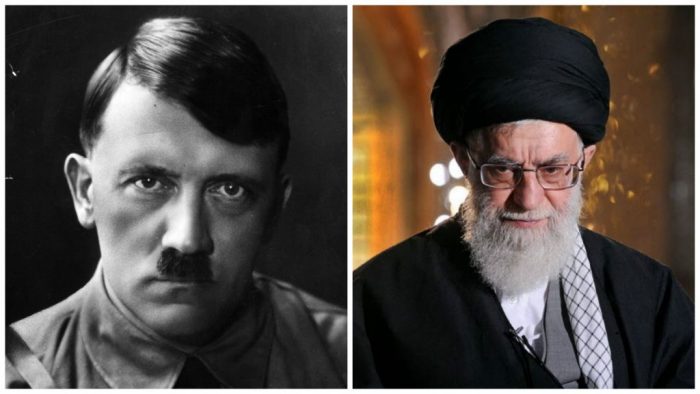
In an escalating verbal war of words, Saudi Arabia’s crown prince Mohammad bin Salman called the Iranian regime’s top mullah, Ali Khamenei, “the new Hitler of the Middle East” and warned that like the history of Europe, “appeasement doesn’t work.”

“We don’t want the new Hitler in Iran to repeat what happened in Europe in the Middle East,” bin Salman, told The New York Times in an interview published last week.

What is remarkable is not that the crown prince made those comments, but that news media treated it as earth-shattering. Human rights groups, Iranian dissidents, families of prisoners languishing in regime prisons have long called out Khamenei and his procession of handpicked presidents such as Mahmoud Ahmadinejad and Hassan Rouhani as tyrants long modelled on the bloody blueprint of Hitler’s Nazi Germany.

It is also remarkable that for once the Iran lobby was virtually silent on the crown prince’s remarks. Maybe Trita Parsi at the National Iranian American Council is finally getting the hint that shamelessly defending Khamenei is a useless exercise.

The comparison to Hitler is really neither extreme, nor shocking given the Iranian regime’s bloody history and the comparisons don’t start and stop with two megalomaniacal dictators who were power hungry for an apocalyptic vision for their countries.

No, the comparisons between the Iranian regime and Nazi Germany extend far into policies, military intervention and political propaganda.

The Nazi annexation of the Sudetenland and Austria is eerily like Iranian regime’s moves into Yemen and Syria, even using the pretext of fighting ISIS the same as the Nazi’s used the excuse of Bolsheviks to invade its neighbors.

But where the two regimes share the most is in their respective preferences for oppressing minorities and making liberal use of state courts to weed out less desirables from their societies.

For the Nazis, their policies of “racial purity” not only targeted Jews for extermination, but sent millions of Russians, Poles, gypsies, the mentally ill, gays and countless others to their deaths.

For the Iranian regime, its litmus test is religious where the mullahs view anyone not adhering to their branch of extremist belief an apostate and worthy of elimination. This explains why the regime has historically targeted minorities such as the Baha’i, Kurds, Christians and Sunnis for imprisonment and oppression.

Also, while the Nazis relied on the dreaded Gestapo and SS to enforce security at home and wage war abroad, the Iranian regime relies on its morality paramilitaries and zealous Revolutionary Guard Corps and Quds Force to achieve the same goals.

The resemblance between the two regimes is eerie and the crown prince does not make the comparison lightly.

Just as Nazi Germany gained appeasement with the West through the much-maligned Munich Agreement, Iranian regime did the same with the Iran nuclear deal; both documents weren’t worth the paper they were printed on and both launched a period of global unrest as the Nazis and mullahs took the opportunity to pursue their ambitions.

The Saudi crown prince has recognized that failure to act in defiance of the Iranian regime will only beg for another potential for war. The need for confronting the mullahs has long been a key talking point for Iranian dissidents who have warned repeatedly that failure to act to restrain the Iranian regime only emboldens the mullahs into acting more aggressively.

It is no coincidence that after Rouhani was elected to his first term and widely lauded as a “moderate” by news media that the regime undertook one of its most brutal crackdowns on dissent rounding up and imprisoning thousands of journalists, students, artists and activists.

Now the world is left to pick up the wrecked pieces of the Middle East that sees the Iranian regime now in control of Syria and Lebanon outright and having a pervasive influence over Iraq, Afghanistan and Yemen.

It’s almost like comparing Iran to Nazi Germany after the blitzkrieg of 1940 that saw it claim most of Western Europe.

But like Great Britain, Saudi Arabia has offered itself as a regional bulwark, opposing Iran in Syria, Yemen and the Gulf region and loudly calling on the rest of the world to recognize the danger the regime poses.

If the crown prince’s words are not enough, the Iranian regime added fuel to the fire when the regime’s deputy head of the IRGC warned Europe that the regime was increasing the range of its missiles to over 2,000 km, allowing it to strike at the heart of Europe.

The comments come as the French president has warned of the threat Iranian regime’s missile program poses and the Trump administration expands its sanctions list to include elements of the IRGC and those connected to its missile program.

The warning from Iran should not be considered superfluous, but rather a clear threat to the continent and an unmistakable shot across Europe’s bow.

The irony of Iran’s actions to Hitler’s speeches to blaming its enemies for driving Germany into the ground in the aftermath of World War I is striking and serves as a reminder that repeating the mistakes of the 1930s today will only lead down a path of regional conflict and even more suffering for the Iranian people.

Laura Carnahan

Filed Under: Blog, News Tagged With: #NuclearDeal, Featured, Iran, Iran Lobby, Iran Mullahs, Iran Terrorism, IRGC, Khamenei

Iran Regime Pushing Saudi Arabia to Brink of War

November 14, 2017 by admin

Iran Regime Pushing Saudi Arabia to Brink of War

Iran Regime Pushing Saudi Arabia to Brink of War

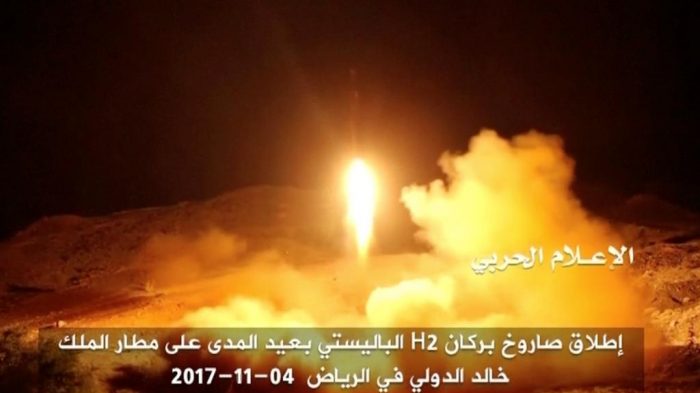
Over the weekend, Iranian regime-backed Houthi rebels lobbed a missile at the Saudi Arabian capital of Riyadh from Yemen in what is being described as an “act of war” by Saudi officials by the Iranian regime.

While tensions have long simmered between Saudi Arabia and Iran—rising to a boiling point with confrontations between the two in the Syrian civil war and Yemen—this is the marks the first-time theater-wide weapons have been introduced aimed at either countries’ capitals.

“We see this as an act of war,” said Adel Jubair, Saudi Arabia’s foreign minister, in a CNN interview. “Iran cannot lob missiles at Saudi cities and towns and expect us not to take steps.”

This latest provocation seems to be part of the larger chess game being played out between the two countries that includes clashes in Lebanon and Iraq as Saudi Arabia seems determined to step up to the plate and blunt the Iranian regime’s expansionist moves over the past several years as part of an effort to build a Shiite sphere of influence controlled by Tehran.

The two countries had only recently appeared to be working towards a rapprochement offered by the Iranians only to see the regime launch proxy military efforts in backing Houthi rebels in Yemen and using Hezbollah fighters from Lebanon in Syria; both moves seemingly aimed at isolating and diminishing Saudi influence.

The missile launched by the Houthis was intercepted before reaching the capital and while causing no damage, pushed the region dangerously closer to all-out war between the two countries.

The move by Iranian regime to allow such an act underlines how vastly stupefying promises were made earlier by Iran supporters and advocates such as the National Iranian American Council two years ago during negotiations over the Iran nuclear agreement that passage of the deal would embolden moderate forces within Iran and usher in a more moderate and stabilizing Iran.

It’s worth noting again how utterly wrong people such as Trita Parsi of the NIAC have been since then.

While it may be eminently satisfying to call out Parsi and his cohorts on how blatantly obvious it was to simply be shilling for the mullahs, the ramifications of the PR push to essentially grant Tehran a hall pass to sow terror and conflict throughout the Middle East are coming home to bear poisonous fruit.

Far from accepting the blame and pushing for moderation from the mullahs in Tehran, Parsi and the NIAC have only doubled down by aggressively going after the Saudi regime with a spate of editorials, social media posts and statements blasting Riyadh for everything from manipulating the Trump administration’s policies towards Iran to conspiring with conservative Republicans to start to eradicate Iran.

On the surface, the NIAC’s claims are ludicrous, but given the dark history of complicity by it and its allies within the Iran lobbying machine, it’s no wonder that Tehran feels emboldened enough to start lobbing missiles at Saudi Arabia.

Jubair detailed how the missile was smuggled into Yemen in parts and assembled by Hezbollah and Iran’s Revolutionary Guard Corps operatives and fired by Hezbollah from Yemen.

The fact that U.S., Saudi and other coalition naval warships have periodically caught Iranian fishing and commercial vessels smuggling weapons, ammunition and parts to Yemen from Iran have only strengthened these claims over the years of direct Iranian activity in the escalating war in Yemen.

Hezbollah’s participation is worrisome since the IRGC has often used the Lebanese-based terror group as its shock troops in conflicts such as Syria and in targeting U.S. service personnel over the past three decades around the world.

Earlier news disclosures of U.S. State Department cables published on WikiLeaks show that Yemen had acquired stockpiles of missiles from North Korea and that Iran may have shipped components of North Korean missiles to its Houthi allies who in 2015, with the support of Tehran, toppled the internationally-recognized government of President Abdu Rabbu Mansour Hadi and now control much of the countryside since then.

This new-found “Axis of Evil” between Iran, North Korea and terror groups such as Hezbollah, point out the highly volatile nature of Iranian regime’s expansion plans and how it has built a formula for conquest around using terror groups and insurgents to destabilize a country and then move in to consolidate its power and use it as a base of operations to stage even more actions.

It is a model used effectively in Lebanon, Syria and Yemen and has gained traction in Iraq, but was stymied in the Gulf states by swift action by Saudi Arabia.

Saudi Arabia has called for an urgent meeting of Arab League foreign ministers in Cairo next week to discuss Iran’s intervention in the region, an official league source told Egypt’s MENA state news agency.

The call came after the resignation of Lebanon’s prime minister pushed Beirut back into the center of a rivalry between Saudi Arabia and Iran and threatens to re-open that country to bloody conflict.

Even French President Emmanuel Macron is blaming Iran for the missile attack targeting Riyadh and said it illustrates the need for negotiations with Tehran over its missile development.

“The missile which was intercepted by Saudi Arabia launched from Yemen, which obviously is an Iranian missile, shows precisely the strength of their” program, Macron said late as he visited the United Arab Emirates and Saudi Arabia.

“There are extremely strong concerns about Iran” among its Arab neighbors in the Persian Gulf region over the missile launch, and “there are negotiations we need to start on Iran’s ballistic missiles,” he said.

All this flies in the face of the false promises made by Parsi and the NIAC and demonstrates clearly why any reputable news organization should think twice before providing air time or space for them to make such disreputable claims.

Clearly the Iran lobby has become one of the largest machines churning out “fake news” today.

Michael Tomlinson

Filed Under: Blog, News Tagged With: Ballistic Missiles, Featured, Hezbollah, Houthis, Iran, Iran Lobby, Iran Terrorism, IRGC, National Iranian American Council, NIAC, NIAC Action, Syria, Trita Parsi, Yemen

The Importance of the Hate Machine to Iran

November 6, 2017 by admin

The Importance of the Hate Machine to Iran

The Importance of the Hate Machine to Iran

Ever since the Iranian revolution that deposed the Shah and installed an Islamic theocracy in Tehran, the ruling mullahs have invested heavily in a state-supported hate machine designed to gin up fierce hatred of the U.S., which typically reaches a crescendo on the anniversary of the 1979 U.S. Embassy takeover.

Last Saturday marked the latest iteration of a heavily choreographed spectacle designed to communicate Iranian hatred of the U.S., but also to divert the attention of the Iranian people away from the ever-growing mountain of problems they are struggling with under the mullahs’ rule and towards a perceived common enemy.

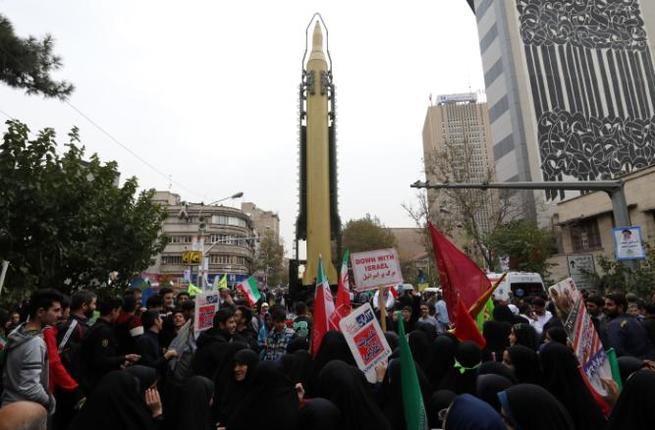
For the last nearly four decades, the mullahs have used the anniversary as the culmination of weekly and monthly demonstrations that include the now ritual “Death to America” chants and the parades across painted American flags and posters plastered on city walls mocking American political leaders.

The protests and observances have taken a different tone and edge over the years though; ceasing to be filled with vitriol by the Iranian people and carry more of a resigned air matched only by skies increasingly polluted by lack of regard by the mullahs for the environment or the health of the Iranian people.

For the mullahs these events commemorate a rare victory when hundreds of extremist regime related militant students (The very same militants that later formed the “Islamic Revolutionary Guards Corps”, IRGC) took 52 Americans hostage for 444 days in an event that helped cement the mullahs in power as they used the event for its propaganda value to legitimize the theocratic state they wanted to build; thereby stealing the promise of democracy ordinary Iranians had hoped for after the downfall of the Shah.

The mullahs learned from that singular event which is why they have carefully crafted a government built on a state-driven hate machine that attacks not only the U.S., but also other enemies such as the Sunni Arab nations such as Saudi Arabia, as well as perceived enemies from within like the Iranian resistance movement.

That machine is comprised of state-controlled media encompassing newspapers, television networks, bloggers, social media and pretty much every other avenue of communication within the regime.

It is backed by the thuggery of the Islamic Revolutionary Guard Corps and the paramilitaries that enforce the dreaded “morals codes” that oppress the Iranian people. Together with the Islamic religious courts and police, they work in concert to tightly orchestrate these observances and ensure obedience from the Iranian people.

In this aspect, the Iranian regime acts like a mirror image of the cultish North Korean dictatorship that forces citizens there to treat their leader as a deified entity.

While top mullah Ali Khamenei may not aspire to godhood, he certainly relishes having his wishes obeyed as if he was one.

To reinforce the militant aspects of this year’s anniversary celebrations, the Iranian regime’s military rolled out a surface-to-surface Sejjil ballistic missile with a range of 1,200 miles in a show of force. It marks the first time the regime has displayed this particular missile and comes shortly after President Donald Trump moved to decertify the Iranian regime under the current nuclear deal, partly because of the regime’s accelerated missile program.

The Fars news agency posted pictures of demonstrators burning an effigy of Trump and holding up signs saying “Death to America,” Reuters reported.

A statement read out at Saturday’s protest said Iranians “see the criminal America as their main enemy and condemn the denigrating remarks of the hated US president against the great Iranian people and the Revolutionary Guards.”

Khamenei speaking to the regime supporters urged them to never forget that “America is the enemy”. “To give in to the Americans makes them more aggressive and insolent. The only solution is to resist,” he said.

Ali Shamkhani, former chief commander of IRGC and current secretary of the regime’s Supreme National Security Council, addressed the crowd, saying Iran will make any sanctions imposed by the U.S. “ineffective” even as the U.S. targets Iran’s economic, nuclear and defensive power.

Shamkhani, alluding to Trump’s threats against North Korea, said even U.S. allies know that Trump “has no power to realize his bluffs, against Iran, too.” He called the U.S. the “eternal enemy” of Iran.

The regime needs to continually turn up the volume on the hate meter to continue using force and intimidation to keep the Iranian people in line and Iran in a perpetual state of conflict. The mullahs need to generate fear as a means of control as a way for justifying their increasingly punitive decisions.

Entry into the Syrian civil war? Necessary to save the Assad regime and preserve a Shiite ally.

Fostering of another civil war in Yemen? Necessary to counter Saudi expansion.

Fast tracking a ballistic missile program? Necessary to maintain a threat to the U.S. and Israel.

Ultimately though the deepest fears of the mullahs are that the Iranian people will see past these charades and choose a different path for their futures.

The Los Angeles Times quoted one such Iranian at the anniversary observances.

“I wish the hostility between the two countries would end as soon as possible because we are suffering from it,” said Hasan Mahmoudi, a shopkeeper near the embassy. “We want to have normal relations with America and foreign investment here to create jobs for our educated youth.”

For the mullahs, nothing would be more of a threat to their rule than the desire of the Iranian people for a normal life, devoid of fear, hate and conflict, where they could live in a democracy and focus on building a better life for their children.

It’s the one future that can defeat the Iranian regime’s hate machine.

Laura Carnahan

Filed Under: Blog, News Tagged With: Ballistic Missiles, Featured, Iran Human rights, Iran Mullahs, Iran sanctions, Iran Terrorism, IRGC, Khamenei, Syria, Yemen

  • « Previous Page
  • 1
  • 2
  • 3
  • 4
  • …
  • 12
  • Next Page »

National Iranian-American Council (NIAC)

  • Bogus Memberships
  • Survey
  • Lobbying
  • Iranians for International Cooperation
  • Defamation Lawsuit
  • People’s Mojahedin
  • Trita Parsi Biography
  • Parsi/Namazi Lobbying Plan
  • Parsi Links to Namazi & Iranian Regime
  • Namazi, NIAC Ringleader
  • Collaborating with Iran’s Ambassador

Recent Posts

  • NIAC Trying to Gain Influence On U.S. Congress
  • While Iran Lobby Plays Blame Game Iran Goes Nuclear
  • Iran Lobby Jumps on Detention of Iranian Newscaster
  • Bad News for Iran Swamps Iran Lobby
  • Iran Starts Off Year by Banning Instagram

© Copyright 2026 IranLobby.net · All Rights Reserved.