Iran Lobby

Exposing the Activities of the lobbies and appeasers of the Mullah's Dictatorship ruling Iran

  • Home
  • About
  • Current Trend
  • National Iranian-American Council(NIAC)
    • Bogus Memberships
    • Survey
    • Lobbying
    • Iranians for International Cooperation
    • Defamation Lawsuit
    • People’s Mojahedin
    • Trita Parsi Biography
    • Parsi/Namazi Lobbying Plan
    • Parsi Links to Namazi& Iranian Regime
    • Namazi, NIAC Ringleader
    • Collaborating with Iran’s Ambassador
  • The Appeasers
    • Gary Sick
    • Flynt Leverett & Hillary Mann Leverett
    • Baroness Nicholson
  • Blog
  • Links
  • Media Reports

What the Paris Attacks Tell Us About Terror Template

November 16, 2015 by admin

What the Paris Attacks Tell Us About Terror Template

What the Paris Attacks Tell Us About Terror Template

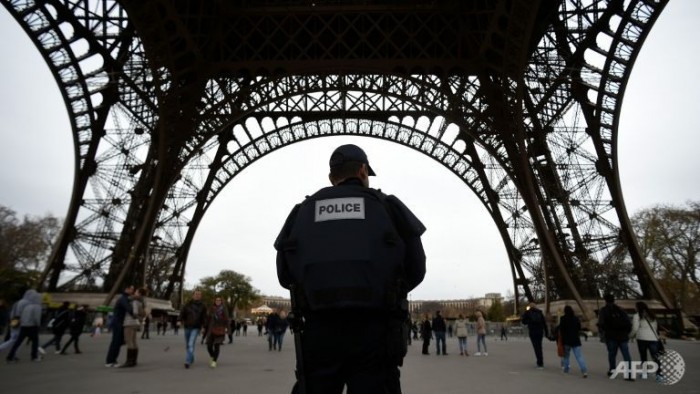
The tragedy of the Paris terrorist attacks this weekend are so startling in their scope, so appalling in the loss of life and so despicable in the choice of victims, that the world has once again been moved to commemorate with demands for stern action and condemnation of the breed of Islamic extremism flowing out of the war torn streets of Syria and now making its way to the wide boulevards of Paris.

With 132 dead as of the latest reporting with scores more in critical condition, the full scope of the killed may not be known for a little while longer, but what is known is that the attack was sophisticated in planning, meticulous in its execution and devastating in its results. It was also spawned and given life from early reports by the ISIS terror network that now dominates vast swaths of Syrian and Iraqi territory, while its influence and recruitment stretches from the Americas to Africa and Asia.

What is unmistakable is the “template of terror” that has come to be the calling card of terror groups such as Hezbollah, Al Qaeda, Boko Haram and ISIS, amongst scores of others. The names might be different, ethnicities varied, even religions at odds with each other, but all share the same fundamental belief in using violence, terror and fear to state their case, sow terror and achieve their aims.

Attacking and striking at these terror groups has de-evolved into a game of “Whack-a-Mole” as militaries strike at individual terrorist leaders like “Jihadi John,” the Briton who was identified as being one of the ringleaders of ISIS who came to the world’s attention decapitating Western hostages.

More astute analysts have pointed out that to curb the threat of global terror, you have to strike at the safe havens offered by sympathetic governments such as the invasion of Afghanistan after the 9/11 attacks to dislodge the Taliban’s support of Al-Qaeda. Others have pointed out the need to support unstable democracies as they struggle with the aftermath and chaos wrought by the changes from the Arab spring protests that toppled governments in Libya, Egypt and elsewhere so that they do not become safe havens for terrorists.

But the single largest supporter of terror in the world today, both financially and spiritually, has been and remains the Iranian regime.

The mullahs in Tehran have been the chief sponsors of Hezbollah and have used Hezbollah fighters in proxy wars in Syria, Afghanistan, Lebanon, Iraq and elsewhere. They have also supported Shiite militias in Iraq with arms, including explosive devices manufactured in Iran, used to kill hundreds of U.S. service personnel in Iraq.

The Iran regime has also provided a spiritual template for ISIS and others through the brutal warped application of sharia law to mete out punishment in often ghastly ways. Before ISIS ever decapitated a captive on video, Iranian regime was hanging prisoners in public squares in front of young relatives. Before ISIS ever machine gunned children, Iranian regime was arresting and executing them. Before ISIS ever imposed harsh religious law in the villages and towns it conquered, Iranian regime was flogging women, cutting off the hands of thieves with power saws and beating demonstrators in the street. The medieval measures that are still being practiced under Rouhani.

The visceral brutality of Iranian regime’s justice has long been used as the standard for invoking a twisted form of Islam to justify violence in the name of territorial gain. The mistake most countries make in dealing with Islamic extremism is in thinking it is a religious war.

It is not.

The violence that stems from the Iran regime and flows out to groups like ISIS and Hezbollah is used as a political tool to achieve practical goals such as toppling governments in Yemen, creating safe havens for forces to operate such as in Iraq and Lebanon and building integrated networks to carry out missions around the world such as Iranian-linked terror attacks in Latin America and the U.S.

What is most telling is the response to the Paris attacks by Iran and its lobbyist allies. In the first few hours of the attacks, while the world expressed, shock, outrage and revulsion, social media linked to Iran’s lobbyists did not offer condolences or sympathy, but rather opened up a full bore attack on Iran’s chief regional rival – Saudi Arabia – in an ongoing effort to destabilize that country.

Trita Parsi, head of the National Iranian American Council, offered up this insightful post on his Twitter feed as the streets of Paris ran thick with blood:

“If it turns out this horrible terror was done by ISIS or AlQaeda, will France rethink its cosy ties with Saudi and those funding Salafists?”

This is the first thing that comes to the mind of Parsi? His next seven posts sought to blame the attacks on Saudi Arabia before he got to his first tweet about Iranians expressing sympathy outside of the French embassy in Tehran.

He even managed to work in a dig at the U.S., tweeting:

“2014, U.S. intel found out that certain equipment sold to Saudi had ended up in ISIS hands. Not sure if they followed up… #ParisAttacks”

Since then, Parsi has continued the drumbeat of linking ISIS to Saudi Arabia, along with other Iran supporters who are marching to the same tune of deflecting blame away from Iranian mullahs.

The only certain thing is that the mullahs in Tehran set the tune and example for the terror industry and by their actions have long validated violence against civilians as a means to an end. It is a pathway that folks like Parsi have never apparently found objectionable judging by their social media accounts and public statements.

Parsi and his colleagues have never made human rights a centerpiece of their lobbying efforts as they have always sought to de-link the issue from any relevancy such as the nuclear talks. The hypocrisy of groups such as NIAC is easily apparent when you peruse their press releases and commentary. The lack of sympathy for the victims of Paris and the all-too-quick efforts to link them to traditional enemies of Iranian regime reveal the true purposes they have.

That true nature of the Iran regime was on front page display in regime newspapers where on its front page, Javan featured an illustration of a masked jihadist with a gun and a machete standing at the top of the Eiffel Tower, waving a mixed flag of the United States and ISIS.

“Return to home,” its headline said, quoting reports that some 200 French extremists had returned to the country after fighting with ISIS abroad.

In Kayhan – Iranian regime’s oldest and most-vocal paper — editor Hossein Shariatmadari, known as the mouth piece for regime’s supreme leader, repeated a conspiracy theory often cited in Iranian media that ISIS is a creation of the West and Israel under an operation dubbed “Hornet’s Nest”.

“Now the designers of the Hornet’s Nest must await the return of the wasps to the real nest — wasps that carry automatic rifles and grenades,” Shariatmadari wrote.

This shouldn’t come as a surprise to long-time observers of the regime or to Iranian dissidents who have long warned that ignoring Iranian mullah’s conduct in supporting terrorist groups has only allowed them to flourish.

Unfortunately, unless the world acts to focus on the source of the terrorism occurring in Iran, we will inevitably be faced with more Paris attacks elsewhere.

By Michael Tomlinson
Filed Under: Blog, Current Trend, News Tagged With: Featured, Iran, Iran Human rights, Iran Lobby, Iran Mullahs, Iran Talks, Khamenei, Moderate Mullahs, National Iranian American Council, NIAC, NIAC Action, Rouhani, Trita Parsi

What the Taking of Another American by Iran Regime Tells Us

November 2, 2015 by admin

What the Taking of Another American by Iran Regime Tells Us

What the Taking of Another American by Iran Regime Tells Us

The sudden and surprising arrest by Iran regime officials of Siamak Namazi raised the eyebrows of many veteran Iran watchers; not the least because Namazi has been an integral part of efforts to build a lobbying force in the U.S. used to support the regime’s political goals, namely passage of a just-completed nuclear agreement.

In fact, the ties between Namazi and Trita Parsi, the founder of the National Iranian American Council and leading lobbyist for the regime, have been well documented, all of which raised the question of why would regime leaders order the arrest of one of their own?

The very question indicates how wrong most analysts are about Iranian mullahs in the first place. Many people, including apparently Namazi, long assumed that if you towed the party line of the mullahs, you were always going to be in their good graces and in Namazi’s case, he hoped to reap the financial rewards that came from that association in the form of guiding foreign investment into Iran following the nuclear deal.

But what he failed to understand and what many others have failed to grasp even as they tried appeasing these same mullahs is that they are never going to allow anyone into their tight circle of control who does not follow their proscribed fundamentalist and extremist religious beliefs.

For the mullahs in Tehran, the coin of the realm is not just money; the constitution vests absolute authority with Ali Khamenei and his cadre of mullahs who oversee the judiciary, military and foreign affairs and vast tracts of the economy, while have an unrelaxing temptation for expansion of their authorities in to neighboring countries.

The Iranian Revolutionary Guard Corps wields disproportionate influence through its monopolistic control of entire industries such as telecommunications, petroleum, finance and agriculture. Iran’s theocracy controls planning of the economy and dispenses its meager rewards to the Iranian people, while reserving the bulk of the financial gains for its elites, their families and the military campaigns it funds overseas in Lebanon, Syria, Iraq and Yemen.

For Namazi and Parsi and their fellow Iran lobbyists, the suddenness of the arrest was jarring, but it should have not comes as a complete surprise since the mullahs have long practiced the art of score-settling amongst their factions with sham trials, imprisonments and even executions.

But unlike what Parsi and his ilk would have the rest of the world believe, the fight in Iran’s leadership is not between “moderates” and “hardliners,” but in fact is between factions of corrupt mullahs bickering over the booty they rob from the Iranian people. The fact that every effort to promote a “moderate” faction within Iran has met with utter failure is indicative not of the lack of passion within the Iranian people for regime change, but rather the ruthless willingness of the mullahs to use deadly force against their own people to keep tight their grip on power.

Also since signing of the nuclear agreement, Khamenei has made it his mission to remind the world the he does not view adherence to the terms of the agreement to be beneficial to the regime, nor indispensable. In fact, in his mind, anything that compromises the extremist Islamic fanaticism is the antithesis of what the mullahs want. For Khamenei, getting a $150 billion check from unfrozen assets with no strings attached is the best possible alternative.

Khamenei is eager for the money in order to continue funding his vision of an expanding Islamic sphere of influence stretching from the Mediterranean to the Indian Ocean, but he does not want to jeopardize it with young Iranians clamoring for access to Snapchat on their iPhones while wearing clothes from Old Navy, which is why the arrest of Namazi, a putative supporter of the regime, tells us clearly that the regime intends to be the one calling the shots and not the other way around.

By Michael Tomlinson

Filed Under: Blog, National Iranian-American Council, News, The Appeasers Tagged With: #NuclearDeal, Appeasement policy, Featured, Iran, Iran deal, Iran Lobby, Iran sanctions, Khamenei, National Iranian American Council, NIAC, Trita Parsi

Iran Regime Turns on Its Own

October 29, 2015 by admin

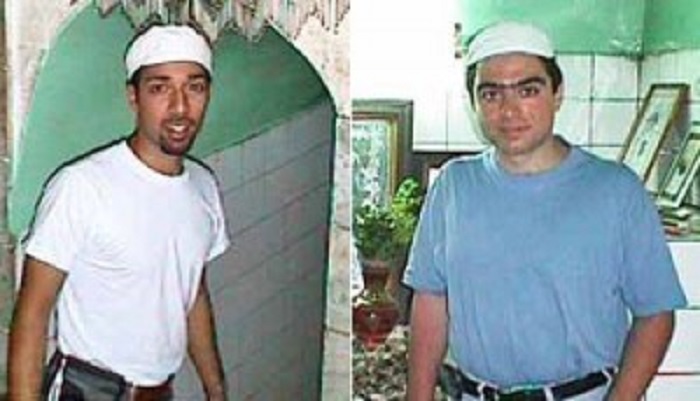
Trita Parsi traveled with Siamak Namazi to Isfahan, Iran’s third largest city, in August 2000. They also toured the Zoroastrian “Fire of Victory” Temple in Yazd. At the time, Siamak was living in Tehran, working for Atieh Bahar, a consultant company with close ties to the government. In 1999, Parsi and Siamak co-authored a paper that recommended setting up a lobbying organization in Washington to influence US-Iran policy. Siamak took a sabbatical in 2005 to complete a fellowship at the Woodrow Wilson Center in Washington, DC. While at the Center, Siamak helped Parsi formulate NIAC policies supportive of the Iranian regime.

Trita Parsi traveled with Siamak Namazi to Isfahan, Iran’s third largest city, in August 2000. They also toured the Zoroastrian “Fire of Victory” Temple in Yazd.
At the time, Siamak was living in Tehran, working for Atieh Bahar, a consultant company with close ties to the government.
In 1999, Parsi and Siamak co-authored a paper that recommended setting up a lobbying organization in Washington to influence US-Iran policy. Siamak took a sabbatical in 2005 to complete a fellowship at the Woodrow Wilson Center in Washington, DC. While at the Center, Siamak helped Parsi formulate NIAC policies supportive of the Iranian regime.

Siamak Namazi, an Iranian-American citizen, has been credited with helping found the Iran lobby including the creation of the National Iranian American Council alongside Trita Parsi as the primary vehicle for advocating for a nuclear agreement lifting economic sanctions on the regime.

The Daily Beast chronicled his family’s involvement as an “intellectual architect” for the NIAC as a pathway for empowering those within the regime whom he had a close relationship with and believed by helping secure an agreement it would boost his fortunes within the regime.

In the immortal words of Kevin Spacey who plays the scheming Frank Underwood on Netflix’s “House of Cards,” “We’re all victims of our own hubris at times.”

Truer words were never spoken about the Iran lobby because on the verge of reaping their perceived successes, they discover all they really are, are puppets for a regime of mullahs whose intent is only focused on preserving their own power.

That is because according to regime media reports, while visiting family in Tehran, Namazi was arrested by Revolutionary Guards Corp soldiers and tossed into the notorious Evin Prison.

There is an irony here on par with Alfred Nobel inventing dynamite and then creating the Nobel Peace Prize after his invention was used in war.

Namazi joins four other Americans who are being held hostage by the regime, including Washington Post reporter Jason Rezaian, Christian pastor Saeed Abedini, former Marine Amir Hekmati and the former FBI agent Robert Levinson.

According to a piece in American Thinker, Parsi and Namazi founded NIAC as a way to lobby for the removal of sanctions against the regime and promote its foreign policy while combatting anti-regime forces in the U.S.

Both Parsi and Namazi reportedly enjoyed close ties and access to Hassan Rouhani and Javad Zarif, the regime’s president and foreign minister, with Parsi being seen traveling with and in close discussions with the regime delegation during nuclear talks.

Conspicuously, the NIAC have been silent on the issue, declining comment and social media feeds for Parsi and other NIAC staff is devoid of any mention of the arrest.

But Hassan Dai, editor of the Iranian American Forum who won a defamation lawsuit filed against him by Parsi, speculated that the arrest suggests a power struggle of sorts within the regime’s leadership.

Dai explained in an interview with Breitbart News that Namazi had consistently “lobbied in favor of a faction of the regime,” which upset the mullahs because it would only be acceptable to “lobby for the whole regime.”

The fight between the factions in Iran is a fight for “the best solution to preserve the regime,” he explained, adding that groups like NIAC have never sided with true “reformists,” but with people who wish to employ a different strategy to empower the regime, such as Rouhani and former President Akbar Rafsanjani.

Because Namazi and NIAC prefer one faction over the other, “they are undermining the Supreme Leader. They are undermining the Revolutionary Guard,” Dai explained. “When you lobby U.S. policymakers to remove sanctions against Iran with the rationale that it will help reform the regime, you undermine the Supreme Leader, because he wants them to accommodate to the regime now.”

The arrest of Namazi sends a message from Iran’s rulers that “Rouhani has no power,” Dai concluded. “He cannot even protect his own friend.”

Breitbart News further speculates – and rightly so – that the arrest pours cold water on the notion that securing the nuclear deal would empower “moderates” within the regime and help reform it. Evidence since agreeing to the nuclear contradicts that idea completely with the conviction of Rezaian, the test launch of an illegal ballistic missile and the launching of a new offensive in Syria alongside Russian forces.

The arrest of Namazi demonstrates that the leadership of the Iran regime is of one mind and firmly in the control of Ali Khamenei and his religious cohorts and that any idea of moderation within the regime is a pipe dream; which may go to explain why coming off of the NIAC’s recent leadership conference to celebrate the nuclear deal, Parsi’s Twitter feed was filled with posts condemning Saudi Arabia, a bitter enemy of Iran and locked in fighting in Yemen.

If Parsi doesn’t tow the mullahs’ line, he might find a different kind of reception party the next time he travels to Tehran and end up sitting next to his buddy Namazi.

By Michael Tomlinson


Filed Under: Blog, Latest from Lobbies & Appeasers, National Iranian-American Council, News Tagged With: #NuclearDeal, Appeasement policy, Featured, hassan rouhani, Iran, Iran deal, Iran Economy, Iran Lobby, Irandeal, Jason Rezaian, Khamenei, Moderate Mullahs, National Iranian American Council, NIAC, Nuclear Deal, Rouhani, siamak Namazi, Syria, Trita Parsi

Human Rights Report Puts Focus on Iran Regime

October 28, 2015 by admin


Human Rights Report Puts Focus on Iran Regime

Human Rights Report Puts Focus on Iran Regime

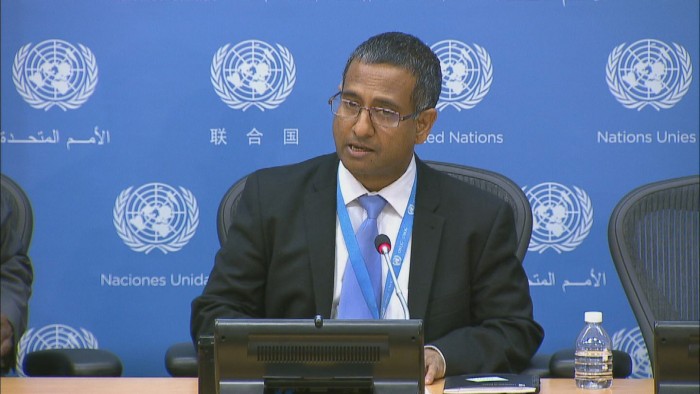
Ahmed Shaheed, the United Nations Special Rapporteur for Human Rights in Iran issued a new report saying that the Iran regime was on track to execute more than 1,000 people in 2015 in an unrelenting campaign of brutal human rights suppression that continues unabated after agreeing to a nuclear agreement that proponents said would shift the regime to a more moderate stance.

Calling it an “unprecedented assault on the right to life in Iran,” Shaheed described a surge in executions over the past year. He said Iran hanged nearly 700 people since January.

Shaheed said that within the past two weeks, the Islamic Republic violated international law by hanging two juvenile offenders. He added “there are dozens more waiting a similar fate on death row.”

According the New York-based Committee to Protect Journalists, at the end of last year, at least 30 journalists were held in Iranian prisons, including Washington Post reporter Jason Rezaian. Others have been detained since, and in August state media accused a senior Wall Street Journal reporter who once served as a correspondent in Iran of conspiring against the government. The Journal called the claims “completely false, outlandish and irresponsible.”

Sherif Mansour, the Middle East and North Africa program coordinator for the Committee to Protect Journalists, said in an interview with the Associated Press, reporters often get targeted because they are “much easier to frame” as spies.

Additionally, in more signs of a brutal crackdown, the regime jailed and sentenced two Iranian poets. Fatemeh Ekhtesari, a practicing obstetrician, and Mehdi Mousavi, a trained doctor who teaches literature and poetry, were first arrested in December 2013, months after Hassan Rouhani took office and sentenced to 99 lashes apiece for shaking hands with members of the opposite sex. Ekhtesari received an 11½-year prison sentence, while Mousavi got nine years on charges ranging from propaganda against the state to “insulting sanctities,” as well as the lashings, according to PEN America, an organization promoting literature and freedom of speech.

“I think people thought with the nuclear deal, there would be sort of a bit of a thaw as well or a bit of an opening up,” said Karin Deutsch Karlekar, the director of Free Expression Programs at PEN America. “I think the judiciary is sort of pushing back and trying to make clear that there isn’t going to be that opening people were hoping for.”

Shaheed’s report detailed a grisly butcher’s bill of death by the regime:

  • Between Jan. 1 to Sept. 15 this year, Tehran hanged at least 694 people, the highest rate of executions under the regime in 25 years;
  • The bulk of the crimes committed by those executed were for non-violent, political or drug offenses;
  • By way of comparison, in the last year of Mohammad Khatami’s term as president in 2005, the regime carried out a total of 91 executions according to the report; nearly doubling in the first year of Mahmoud Ahmadinejad’s term to 177 executions;
  • According to Shaheed, the Iran regime executes more people per capita than any other country on the planet.

In addition to drug crimes, Iranian law applies the death penalty for a range of offenses: from threats to “the security of the state” to “enmity towards God,” also known as moharebeh, to “insults against the memory of Imam Khomeini and against the supreme leader of the Islamic Republic,” according to the State Department’s 2014 human rights report on Iran. “Prosecutors frequently used moharebeh as a criminal charge against political dissidents and journalists, accusing them of struggling against the precepts of Islam and against the state that upholds those precepts.”

Shaheed said a “deeply flawed justice system” that violates international standards and national laws sits at the heart of Iran’s human rights troubles. He said he continues “to receive frequent, alarming reports” about the mistreatment of detainees and the use of torture to obtain confessions. Many of the accused lack access to defense lawyers.

The authorities, he said, have also refused to acknowledge rights for gay, lesbian, or transgender individuals, saying it is incompatible with sharia law. And authorities have imposed harsh sentences, including the death penalty, for posting articles on social media deemed offensive to the government. A semi-official news outlet reported that more than 480 people were flogged during the first two weeks of Ramadan for not fasting.

The regime refused comment on Shaheed’s report and in fact has consistently refused to allow entry into Iran by Shaheed or any member of his office to see first-hand the human rights abuses going on in Iran.

In fact, while Shaheed was issuing his report, Rouhani was holding forth with state-controlled media IRNA in a ceremony welcoming the new Spanish ambassador to Iran, saying he believed sanctions on the regime would be lifted as early as the end of this year, again contradicting assurances by the nuclear deal proponents that the sanctions removal would only come after the regime had met its obligations for dismantling its nuclear infrastructure.

Clearly the regime remains committed to its policy of public executions and cares not a whit about international opinion on the matter.

By Michael Tomlinson

Filed Under: Blog, News Tagged With: Featured, Iran, Iran deal, Iran Human rights, Iran Talks, Irandeal, Jason Rezaian, Khamenei

Iran Regime Reveals True Intentions

October 8, 2015 by admin


Iran Regime Reveals True Intentions

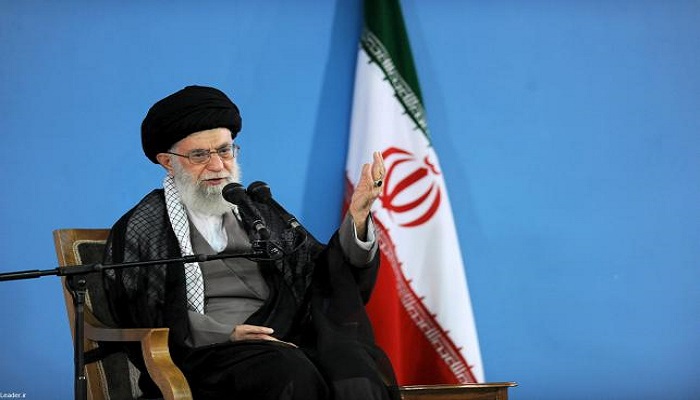
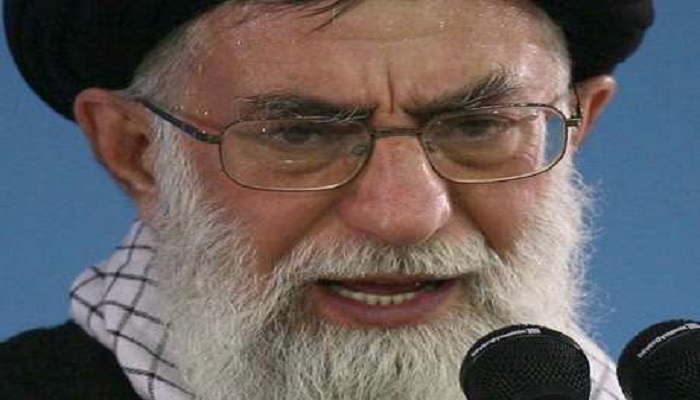
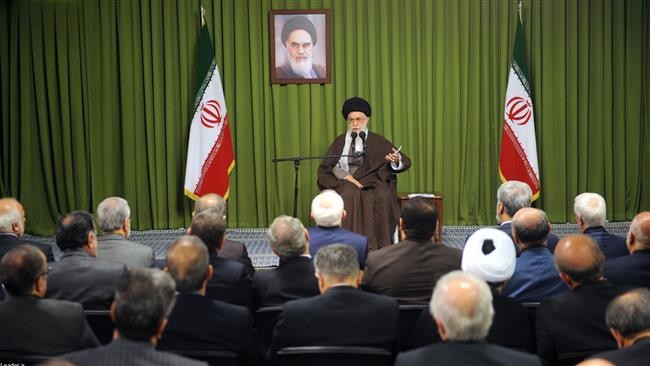
Iran’s Supreme Leader Ayatollah Ali Khamenei gestures as he delivers a speech during a gathering by Iranian forces, in Tehran October 7, 2015. REUTERS/leader.ir/Handout via Reuters

Ali Khamenei, the highest authority in the Iran regime, banned any further negotiations between the regime and the U.S. according to a statement released on his website, firmly putting the brakes to any idea of accommodation or moderation following the approval of a nuclear deal.

“Negotiations with the United States open gates to their economic, cultural, political and security influence. Even during the nuclear negotiations they tried to harm our national interests,” Khamenei was quoted as saying on his website.

Khamenei had previously said there would be no more talks with the U.S. last month, but this move was a step further in declaring an outright ban on any further discussions on any other topics.

The Obama administration, fed a steady stream of misrepresentations and false promises by the Iran lobby – led by the National Iranian American Council – expected a new phase of relaxed, open negotiations with the regime on a variety of issues including the ISIS, the Syrian conflict and sponsorship of terror.

Instead, now that the regime has achieved its goals in the nuclear deal – a lifting of economic and military sanctions, preservation of its nuclear infrastructure, delinking of human rights issues and release of billions in frozen cash – the regime sees no other reason to carry on the façade of moderation it has so assiduously pushed since the handpicked elevation of Hassan Rouhani as regime president.

In his address to Revolutionary Guards Navy commanders, Khamenei said talks with the U.S. brought only disadvantages to Iran.

“Through negotiations Americans seek to influence Iran”, Khamenei was quoted as saying to the IRGC commanders, who are also running much of Iran’s military involvement in Syria.

The bill of goods sold by the Iran lobby for hopes of a release of American hostages, removal of Assad and a reigning in of sectarian violence has now come due as Iranian regime’s leadership seeks to make all those promises false.

Michael Goodwin, a New York Post columnist wrote in Fox News:

“The White House deliberately downplayed the Russian buildup because it undercut central promises Obama made to Congress about the Iran nuke deal, which was then being debated.

“One of those promises was that Russia would help enforce the terms. Instead, Putin actually was making common cause with Iran, and both are now killing the Syrian rebels we supported.

“Here’s the scorecard: Obama got his Iran deal, and the world got a more aggressive Iran, an expanded Syrian war and wider Russian influence. With each passing day, the cost of stopping Putin grows more expensive.”

The yawning chasm between the promises made by the Iran lobby and the reality of what is taking place was discussed in another piece in Foreign Policy by Aaron David Miller and Jason Brodsky in which they write:

“One thing seems pretty clear: Somewhere in a parallel universe far, far away, the logic of a linear path to Iran’s moderation may be alive and well. But back here on planet earth, the odds on the health and prosperity of reform and the reformers, too, are still very long ones indeed.”

But supporters of the regime are still fighting back in trying to hold the line that a force for moderation exists in Iran and is fueled by post-nuclear deal euphoria, rather than the hangover the world is witnessing today.

One of those peddling this snake oil is Kourosh Ziabari who writes in Huffington Post:

“To the detriment of hardliners, Iran is reemerging as a regional power, and it’s easily predictable that with another four years in office plus the two intact years he has in hand – unless Ahmadinejad comes up with a new wizardry and wins the 2017 elections, President Rouhani will be able to build a strong and peace-making Iran which nobody will be able to demonize or depict as a threat to world peace and security.”

Ziabari pushes the Iran lobby message that there exists within Iran “moderate” and hard line” forces when in fact Khamenei has indelibly proven there exists only one voice on all policy matters and it is firmly his.

Even as Iran and Russia join with Hezbollah in launching a new phase in Syria, Iran’s mullahs are busy in other parts of the Middle East, including Yemen, where the Houthi rebels they support have been spotted in Iran getting support and new arms according to Al Arabiya.

The Houthi delegation “will convey to Iranian officials an urgent request by Houthi leader Abdulmalik al-Houthi to attain additional shipments of weapons after the Saudi-led coalition forces made several gains against the militia,” according to the report.

“Before visiting Tehran, the delegation had allegedly visited Beirut where it met with Hezbollah leader Hassan Nasrallah,” according to al Arabiya. “During the visit, the delegation allegedly voiced Abdulmalik’s al-Houthi’s gratitude for Hezbollah’s support in sending military experts to Yemen.”

President Obama’s former national security adviser also warned that Iranian regime leaders have effectively turned Iraq into a “client state” and are bent on exploiting the regional war against ISIS to promote their own brand of Shiite extremism throughout the Middle East.

“Iran’s grand strategy entails consolidating the hold it has gained in Iraq — a grip it seeks to tighten, directly and through proxies — and by stoking the sectarian fires,” said retired Marine Corps Gen. James L. Jones.

Gen. Jones testified alongside former Sen. Joe Lieberman, an independent, and both men lamented the administration’s failure to provide more assistance and refuge to members of the Iranian dissident group — commonly known in Washington as the “MEK” or “PMOI” — who have been left in the lurch in Iraq since the departure of U.S. forces in 2011.

On top of all this, word comes out that cybersecurity researchers have uncovered a network of fake LinkedIn profiles, which they suspect were being used by hackers in Iran to build relationships with potential victims around the world, according to a new report to be published by security firm Dell SecureWorks Inc.

This tactic, known as “social engineering,” is one where hackers trick people to get them to cough up personal or sensitive information. “Having those trust relationships gives [hackers] a platform to do a bunch of different things,” said Tom Finney, a security researcher at Dell Secureworks.

The 25 fake profiles described in the report were connected to more than 200 legitimate LinkedIn profiles — mostly individuals based in the Middle East who worked in sectors like telecom and defense. Those individuals and their companies likely have information that would be of interest to an Iranian cyber group, Dell Secureworks said.

Yes, the post nuclear deal world has indeed brought much change, just not the kind the Iran lobby promised.

By Michael Tomlinson

Filed Under: Blog, The Appeasers Tagged With: #NuclearDeal, Appeasement policy, Featured, Iran, Iran deal, Iran Economy, Iran Lobby, Iran Mullahs, Iran sanctions, Khamenei, NIAC, NIAC Action, Syria, Yemen

Syria is Just Tip of Iran Regime Iceberg

October 7, 2015 by admin

The Restocking of Iran Regime Bank Accounts and Weapons

The Restocking of Iran Regime Bank Accounts and Weapons

In what has to be regarded as one of the strangest lobbying efforts being mounted, Iran regime foreign minister Javad Zarif is being put forward for the Nobel Peace Prize Award for his work in actually duping the West, during the P5+1 talks that resulted in crafting a deeply flawed nuclear deal. Putting him forward as Nobel recipient would be akin to giving the peace prize to António Caetano de Abreu Freire Egas Moniz in 1949 for inventing the prefrontal lobotomy, and almost as appropriate.

If the idea wasn’t so serious, it would be laughable given what has happened since the agreement was reached.

Zarif himself has echoed public statements by Hassan Rouhani and Ali Khamenei in drawing a firm red line in the sand that Syria’s dictator, Bashar al-Assad, has to be part of any Syria plan and that Russia is on board with efforts to keep him in power.

Ironically, Zarif put forward the idea that any decision on Assad has to be made by the Syrian people. He neglected to mention that Assad and Iran’s Quds Forces and Hezbollah allies have driven four million Syrians out of the country and gassed and barrel bombed the remaining 600,000 who oppose Assad in a virtual siege aided by Russian air strikes.

But the coordination between the Tehran and Moscow goes much deeper than the regime has let on. In a compelling Reuters story, Iran’s Qassem Soleimani, the head of the regime’s Quds Forces, went secretly to Moscow last July and laid out the strategy for Russian intervention to save Assad in Syria.

“Soleimani put the map of Syria on the table. The Russians were very alarmed, and felt matters were in steep decline and that there were real dangers to the regime. The Iranians assured them there is still the possibility to reclaim the initiative,” a senior regional official said. “At that time, Soleimani played a role in assuring them that we haven’t lost all the cards.”

The decision for a joint Iranian-Russian military effort in Syria was taken at a meeting between Russia’s foreign minister and Khamenei a few months ago, said a senior official of a country in the region, involved in security matters according to Reuters.

“Soleimani, assigned by Khamenei to run the Iranian side of the operation, traveled to Moscow to discuss details. And he also traveled to Syria several times since then,” the official said.

In the biggest deployment of Iranian forces yet, sources told Reuters last week that hundreds of troops have arrived since late September to take part in a major ground offensive planned in the west and northwest.

Around 3,000 fighters from the Iranian-backed Lebanese group Hezbollah have also mobilized for the battle, along with Syrian army troops, said one of the senior regional sources.

The military intervention in Syria is set out in an agreement between Moscow and Tehran that says Russian air strikes will support ground operations by Iranian, Syrian and Lebanese Hezbollah forces, said one of the senior regional sources.

The agreement also included the provision of more sophisticated Russian weapons to the Syrian army, and the establishment of joint operations rooms that would bring those allies together, along with the government of Iraq, which is allied both to Iran and the United States.

All of this flies in the face of claims made by the Iran lobby that the nuclear deal would bring forth a more moderate Iran intent on bringing stability to region and fighting ISIS. Nothing could be further from the truth as the mullahs have boldly flexed their military muscle openly now.

The regime isn’t even hiding its military intentions now that it’s been given tacit approval by the rest of the world with the nuclear deal.

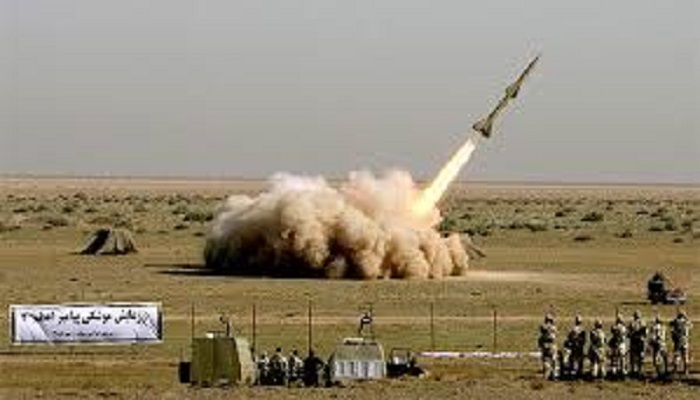
Brigadier General Amir Ali Hajizadeh, commander of the Iranian Revolutionary Guard Corps Aerospace Force, said that “all U.S. military bases in the Middle East are within the range of” Iran’s missiles and emphasized that the Islamic Republic will continue to break international bans on the construction of ballistic missiles, in a statement to the regime’s state-controlled Fars News Agency.

“We do not see any restriction for our missiles and the IRGC’s preparedness and missile drills are conducted without a halt and according to our annual time-table, but only some of them are publicized through the media,” Hajizadeh said.

The comments echo similar rhetoric of IRGC Navy Commander Ali Fadavi, who warned last month that “the U.S. knows the damages of any war and firing bullets in the Persian Gulf.”

“The U.S. is obedient and passive in the Persian Gulf and we impose our sovereignty right in the Persian Gulf very powerfully,” Fadavi said.

It doesn’t take a rocket scientist to figure out the Iran regime has been planning this coordinated military mission to save Assad long before the nuclear deal was finalized and with full knowledge and consent of Iran’s top mullahs. It is also clear that the messages delivered by the regime’s lobbyist allies such as the National Iranian American Council, Ploughshares Fund and J-Street were fundamentally wrong.

The mullahs have now gained a valuable military partner in Russia and are intent on pushing their gains across the rest of the Middle East.

By Michael Tomlinson

Filed Under: News Tagged With: Appeasement policy, Iran, Iran Talks, IRGC, Khamenei, Nuclear Deal

Iran’s Top Mullah Doubling Down on Hardline

June 24, 2015 by admin

Khamenei Military SpeechPity Trita Parsi of the National Iranian American Council and chief cheerleader for the Iran regime. He toils tirelessly to spin arguments in favor of closing a nuclear deal with Iran by emphasizing a newfangled moderation within Iran and the need to empower Iran’s “moderates” against the uncompromising “hardliners.”

Unfortunately for him, the key player in Iran, Ali Khamenei, who under the Islamic state’s constitution basically gets the final word on almost every aspect of Iranian life, undercut Parsi yet again with another of his now-famous rants denouncing all things Parsi previously hailed as significant milestones during these three torturous years of talks.

One might feel compassion for Parsi if it wasn’t for the fact that obfuscation has become a high art form for him in defending a regime that by all objective standards is corrupt and bloodthirsty.

In a speech broadcast live on Iranian state television and widely reported in global media, Khamenei doubled down on previous demands and called for sanctions against Iran to be lifted before the regime dismantled one bolt of its nuclear infrastructure and before any verification by international inspectors takes place. He also ruled out any freeze on Iran’s nuclear enrichment for a decade – as previously announced in the interim framework agreement – and repeated his refusal to allow inspections of any military sites.

“All financial and economic sanctions imposed by the U.N. Security Council, the U.S. Congress or the U.S. government should be lifted immediately when we sign a nuclear agreement,” Khamenei said.

Khamenei’s statements, when taken into context of what it means to not suspend nuclear development and not allow international inspections, show clearly the regime’s intent of not only maintaining the capability for developing a nuclear weapon, but dramatically shorten the window from years to mere months.

In an editorial in the New York Times by Prof. Alan Kuperman of the Nuclear Proliferation Prevention Project at the University of Texas, the good professor calculated that Iran’s breakout window actually shrinks from a proposed year to only three months.

Guy Benson in a Townhall.com piece reminds us of the perplexing revelation that during nuclear talks, Iran had actually already increased its stockpile of enriched uranium by 20 percent instead of shrinking it as previously agreed to.

Guy Taylor of the Washington Times began a series of reports examining the regime’s awful history of evasion and duplicity in hiding its nuclear program and denying access to inspections and raised red flags over the Obama administration’s assertions that it already knew for certain Iran’s prior history on nuclear development and didn’t need to know more.

“If you look forward without looking back, then you miss decades of Iranian nuclear mendacity and a well-established record of Iranian(regime’s) cheating and challenging the IAEA,” said Mark Dubowitz, executive director of the Foundation for Defense of Democracies, in the Washington Times report. “I think Secretary Kerry should be more cautious in assuming that the U.S. intelligence community has ‘absolute knowledge’ of Iran’s nuclear program.

“The Iranians stonewalled the IAEA for years. They’ve been denying inspectors’ access, and they’ve been building illicit nuclear facilities that we’ve been unable to detect,” he said. “We’ve gone through six separate U.N. Security Council resolutions since 2006, and time and time again, in every report, the IAEA has said it was unable to certify that Iran’s nuclear program is peaceful — that there are no undeclared sites or activities and there is no illicit diversion of nuclear material.”

Taylor further writes:

“Indeed, a timeline on the official website of the IAEA outlines a history of back-and-forth between the U.N. nuclear inspectors and Iranian authorities dating back to 2002.

“Although there is sporadic evidence of cooperation from Tehran over the years, the period was highlighted by repeated incidents of frustration by IAEA inspectors, who felt they were either outright blocked or intentionally misled during investigative visits to Iran.

“Such frustration reached a critical moment in 2006, when the U.N. Security Council responding by passing a resolution demanding that “Iran suspend uranium enrichment by 31 August or face possible economic [and] diplomatic sanctions.”

It is those sanctions and ones imposed by the U.S. that Khamenei has doubled down on to see removed in order to gain access to an estimated $140 billion windfall in frozen regime assets. Given the regime’s past use of funds in proxy wars and terror activities, we can only assume what a payday like that would mean to Hezbollah in Syria and Lebanon, Houthi rebels in Yemen and Shiite militias in Iraq.

By Michael Tomlinson

Filed Under: Blog Tagged With: Iran, Iran deal, Iran Lobby, Khamenei, Trita Parsi

Iran Lobby Working for $120 Billion Paycheck

June 11, 2015 by admin

PaycheckOnly someone with a doctorate in voodoo economics would equate the Iran regime’s “resistance economy” as a “blueprint for economic reform,” but that is exactly what Bijan Khajehpour of the Atieh International Consultancy is advocating in remarks he made at the Wilson Center.

The call for a “resistance economy” designed to withstand the impacts of economic sanctions imposed on Iran for its clandestine nuclear program was issued by the regime’s leader Ali Khamenei in February 2014, in which he called on the government of Hassan Rouhani to expand production and export of knowledge-based products, increase domestic production of strategic goods and develop markets in neighboring countries. He also urged greater privatization and increased exports of electricity, gas, petrochemical and oil by-products instead of crude oil and other raw materials.

How has that gone for Iran’s mullahs so far? Iran’s gross domestic product (GDP) has steadily declined the last three quarters from 4.4 percent, to 3.7 percent and now at an anemic 2.8 percent.

Khajehpour attempted to explain away the decline by blaming economic sanctions, government mismanagement, corruption, and former president Ahmadinejad’s brand of populist economic policies. The one variable he left out was Iran’s diversion of billions of scarce dollars to support proxy wars in Syria, Iraq and Yemen, as well as terror groups such as Hezbollah.

U.N. special envoy for Syria, Staffan de Mistura, estimated Iran spends $6 billion annually on propping up Assad’s government. Other experts put the number even higher. Nadim Shehadi, the director of the Fares Center for Eastern Mediterranean Studies at Tufts University, said his research shows that Iran spent between $14 and $15 billion in military and economic aid to the Damascus regime in 2012 and 2013, even though Iran’s banks and businesses were cut off from the international financial system.

All of which comes on the heel of fresh calls by Assad for even more fighters and equipment he needs to combat rebels which Iran has met with the delivery of 15,000 new soldiers to fight for Syria. Far from being a resistance economy, Iran has been on a war footing for the past two years, all of which is fighting unrelated to its nuclear program.

It is hard to see how Khajehpour can overlook these staggering costs and contend Iran’s economy rebound as it throws more men, cash and expensive military hardware at its neighbors.

And you can’t even blame the declining price of oil on the world market for Iran’s economic problems either. Iran has a fairly diversified economy, in which oil accounts for only 23 percent of GDP. The largest contributor to the GDP is services (around 50 percent of total output), which means Iran’s primary drivers of its economy are its people.

These are the same people who are regularly subjected to street justice by the Basij paramilitary, who are thrown into prison for posted offending or critical comments on social media, who see scions of the mullahs’ race around the streets of Tehran in expensive foreign cars while they languish in economic purgatory.

Most incredibly of all, Khajehpour tried to make the argument that the estimated $120 billion in frozen Iranian assets that would be repatriated in the event of a nuclear deal would actually diminish the revenues of such corrupt actors within Iran because they no longer would have a monopoly on what commodities went in and out of Iran.

While it is not the dumbest statement ever made, it certainly ranks as one of the least believable; given the enormous pressure the regime’s mullahs are under to keep Assad afloat, a tight rein on the Shiite-dominated government in Baghdad and Houthi-rebel controlled Yemen.

If Khajehpour thinks the mullahs will not use that $120 billion to prop up their puppets, then he only reveals his true colors as a regime apologist and unabashed cheerleader.

By Michael Tomlinson

Filed Under: American-Iranian Council, Blog, National Iranian-American Council Tagged With: Ayatollah Khamenei, Iran, Iran Economy, khajehpour, Khamenei, lobby

The False Choices of the Iran Lobby

May 22, 2015 by admin

War and PeaceAs we enter the Memorial Day holiday weekend, families will gather for barbecues and picnics and others will gather to remember those who have fallen in past conflicts and made the ultimate sacrifice for their nation. But Memorial Day should also be a day to commemorate those who didn’t put on a uniform, but still had to make the same sacrifices and their families had to pay that ultimate price.

It is an unfortunate legacy of the world we live in today that innocent men, women and children often have to bear the same price as those who are trained and volunteer to fight. Throughout the Middle East, that scenario is being played out on countless battlefields, in numerous villages, towns and cities in places such as Iraq, Syria, Yemen, Nigeria and Afghanistan.

But even cities and nations unaccustomed to fighting have been places of terror and carnage such as an office in Paris, a store in Sydney or a government building in Canada. All at the hands of extremist Islamists who have copied their playbook of terror from the Iran regime which has had a 30 year head start on terror spectacles and continues to this day with almost daily public hangings in most city squares.

So this Memorial Day ought to serve as a sobering reminder not just of the sacrifices service personnel make, but for those innocents who have been caught in the escalating violence around the world.

All of which makes the choices offered by the Iran lobby in regards to ongoing nuclear talks with the Iran regime all the more odd since supporters such as the National Iranian American Council have consistently framed the choices in a nuclear agreement as stark ones between war and peace. Their hyperbole clouds the real issue driving the mullahs in Iran and for them the choices are not about war and peace.

It’s really about cash and lots of it. Iran’s economy is reeling under the triple blows of corrupt mismanagement by the ruling elites, spiraling oil prices and the heavy costs associated with funding proxy wars and terror groups in Yemen, Iraq and Syria. Not to mention the billions of dollars being spent by the regime in building and maintaining a far flung network of installations and research facilities dedicated to developing nuclear weapons and the ballistic missiles necessary to carry them.

That need for billions of dollars in unfrozen assets, proceeds from oil sales and renewed capital investment is what drives the mullahs. They hunger for cash in the same way an addict craves his next drug fix. It is also why Iran’s top mullah, Ali Khamenei, has consistently demanded a complete lifting of all economic sanctions at once, including those levied by the UN Security Council, European Union and the U.S. Congress and president.

And that is the quandary facing the NIAC and other regime lobbyists; how do we sell a nuclear deal driving by a need for a financial bailout of Tehran? In classic spin control, they opt to frame the debate as a choice between war and peace.

They recognize that America is war weary and that voters have little appetite for more American blood to be shed, but the choice for Americans and by extension for Congress and the Obama administration is that the choice really is not between war and peace. It’s about whether or not to let mullahs in Iran get the cash they want and so desperately need.

Economic sanctions work. They brought the mullahs to the negotiating table and they are still the most compelling non-violent tool available to the International community. To abandon them without a solid deal that not only cuts Iranian regime’s nuclear program off at the knees, but also modifies its behavior towards proxy wars, terror groups and human rights is dumb and a mistake of historic proportions.

For when we gather to commemorate and celebrate Memorial Day weekend, we should remember that the surest path to peace is not through appeasement, but through strength; strength of conviction, strength of commitment and strength of will.

I hope your Memorial Day is a peaceful one.

By Michael Tomlinson

Filed Under: Blog Tagged With: Iran deal, Iran Talks, Khamenei, Memorial Day, NIAC, peace, Sanctions, War

Iran-Nuclear Talks Going Nowhere Fast

May 21, 2015 by admin


Khamenei Military SpeechPity the supporters and cheerleaders of the Iran regime such as Trita Parsi of the National Iranian American Council. They have all but shouted themselves blue to the highest mountains that Iran’s mullahs were indeed ready for a sea change in their relationship with the world. They argued that Hassan Rouhani was a new kind of moderate Iranian politician. They urged President Obama to embrace dialogue as the surest path to peace.

Those claims have been undone in large part through Iran’s own actions including the overthrow of the Yemen government, provocative acts in international waters, the decision to move forward with spy trials of American journalists and the continued crackdown at home including stepped up public executions and packing its prisons like sardine cans.

But out of the mouth of the regime’s top leader, Ali Khamenei, comes the most damaging statements to the credibility of the Iran lobbying allies.

In a speech at the Imam Hussein Military University in Tehran yesterday, Khamenei again denounced what he said were escalating demands by the P5+1 negotiating group and flatly declared any interviews of Iranian nuclear scientists by international inspectors to be completely off the table, as well as not allowing inspections of any of Iran’s military sites.

This follows similar statements he made last summer when Khamenei vowed to greatly expand Iran’s uranium enrichment capacity, scaling up to industrial size with 190,000 centrifuges, 10 times the number currently installed.

Not surprisingly, the regime still has not responded to a dozen questions from the International Atomic Energy Agency on the scope and scale of the possible military dimensions of its current nuclear program, leading to the agency’s head declaring serious doubt about Iran’s ability to live up to any agreement.

As the New York Times described, the inability to interview Iranian nuclear scientists makes compliance a moot point.

“Central to that is the ability to interview nuclear scientists, starting with Mohsen Fakhrizadeh, the man considered by Western intelligence officials to be the closest thing Iran has to J. Robert Oppenheimer, who guided the Manhattan Project to develop the world’s first nuclear weapon,” the Times said.

“The scientists and engineers Fakhrizadeh has assembled over the past 15 years are best suited to explain, or rebut, documents suggesting that Iran has extensively researched warheads, nuclear ignition systems and related technologies. Fakhrizadeh has never been made available to inspectors for interviews, and his network of laboratories, some on university campuses, have not been part of inspections,” added the Times.

Even more surprising were statements made by France’s foreign minister, Laurent Fabius, who unveiled details about the current state of nuclear talks in advance of the June 30 deadline currently taking place in Switzerland, where the Iran regime demanded a 24-day period before international inspectors could visit any of its nuclear sites in the event of a suspected violation.

It is absurd that Iran regime could get over three weeks to cover up or clean out any suspected violation before allowing any inspectors in. It makes a mockery of the P5+1 promise of “anytime, anywhere” inspections as part of the framework agreement previously announced.

Unsurprisingly, Trita Parsi and the rest of the Iran lobby have been as silent as fence posts during all this, probably realizing any comments they make in the face of such explicit statements from the one man in the regime in Iran who has the final say over an agreement would be worthless.

By Michael Tomlinson

Filed Under: Blog Tagged With: Iran deal, Iran Talks, Khamenei, Trita Parsi

  • « Previous Page
  • 1
  • …
  • 8
  • 9
  • 10
  • 11
  • Next Page »

National Iranian-American Council (NIAC)

  • Bogus Memberships
  • Survey
  • Lobbying
  • Iranians for International Cooperation
  • Defamation Lawsuit
  • People’s Mojahedin
  • Trita Parsi Biography
  • Parsi/Namazi Lobbying Plan
  • Parsi Links to Namazi & Iranian Regime
  • Namazi, NIAC Ringleader
  • Collaborating with Iran’s Ambassador

Recent Posts

  • NIAC Trying to Gain Influence On U.S. Congress
  • While Iran Lobby Plays Blame Game Iran Goes Nuclear
  • Iran Lobby Jumps on Detention of Iranian Newscaster
  • Bad News for Iran Swamps Iran Lobby
  • Iran Starts Off Year by Banning Instagram

© Copyright 2026 IranLobby.net · All Rights Reserved.