Iran Lobby

Exposing the Activities of the lobbies and appeasers of the Mullah's Dictatorship ruling Iran

  • Home
  • About
  • Current Trend
  • National Iranian-American Council(NIAC)
    • Bogus Memberships
    • Survey
    • Lobbying
    • Iranians for International Cooperation
    • Defamation Lawsuit
    • People’s Mojahedin
    • Trita Parsi Biography
    • Parsi/Namazi Lobbying Plan
    • Parsi Links to Namazi& Iranian Regime
    • Namazi, NIAC Ringleader
    • Collaborating with Iran’s Ambassador
  • The Appeasers
    • Gary Sick
    • Flynt Leverett & Hillary Mann Leverett
    • Baroness Nicholson
  • Blog
  • Links
  • Media Reports

Iran Lobby Tries Clearing Economic Pathway for Regime

October 10, 2015 by admin

Iran Lobby Tries Clearing Economic Pathway for Regime

Iran Lobby Tries Clearing Economic Pathway for Regime

The Iran lobby, led by the National Iranian American Council, has been busy working to clear the economic runway for the Iran regime now that it has its nuclear deal because now that it has the opportunity to operate more freely in the world, the mullahs have opted to significantly increase the regime’s military operations in Syria, Yemen and Iraq; all of which requires cash and mountains of it.

As part of that NIAC propaganda push, Tyler Cullis and Amir Handjani, posted an editorial in The Hill arguing that the U.S. should open greater economic ties with the Islamic regime; the reason being that European and Asian nations are already quickly seeking to exploit these new markets.

Cullis and Handjani are correct that there are some companies and nations seeking to rush into this economic void. We know that China has a deep interest in securing contracts for cheap Iranian oil, while Russia has already begun selling weapons to the regime despite the fact that embargos on advanced ballistic missiles and weapons remains in effect.

They note however that the Obama administration has put the brakes on the rush to re-open economic ties with the regime. Part of delay comes from the huge groundswell of negative reaction from American voters to the nuclear deal which has forced many representatives who supported the deal to backtracked and offer up new pieces of legislation to address the perception that the Iran regime received a sweetheart deal and the U.S. got nothing in return; most notably Sen. Ben Cardin’s (D-MD) move to introduce to track compliance by the regime.

Most anti-regime critics called the effort too little, too late and still does not address the central and most critical issue surrounding the Iran regime: the delinking of human rights and sponsorship of terror from the deal and thus making no effort to reform or modify the regime’s bloodthirsty policies.

There has also been discussions and disagreements over the conflict between the nuclear deal and the Iran Threat Reduction and Syria Human Rights Act (ITRA) which was signed into law in August 2012 by President Obama which closes the foreign subsidiary loophole that the an annex in the nuclear deal makes open.

According to Fox News, “ITRA contains language, in Section 605, requiring that the terms spelled out in Section 218 shall remain in effect until the president of the United States certifies two things to Congress: first, that Iran has been removed from the State Department’s list of nations that sponsor terrorism, and second, that Iran has ceased the pursuit, acquisition, and development of weapons of mass destruction.

“Additional executive orders and statutes signed by President Obama, such as the Iran Nuclear Agreement Review Act, have reaffirmed that all prior federal statutes relating to sanctions on Iran shall remain in full effect.”

All of which drives a stake through the arguments made by Cullis and Handjani who by using the flawed tactic of supporting “moderates” against “hardliner” mullahs, argue that continued economic isolation of Iran only strengthens the “hardliners” and leaves American companies out in the cold versus their European and Asian competitors.

First of all, it is refreshing Cullis and Handjani are so interested in the economic well-being of American firms, but the reality is they recognize failure to fully open Iran to international trade and commerce will not bring in the cash and investment necessary for the regime to generate the revenue necessary to fund its expansionist policies.

The regime has spent upwards of $15 billion in direct financial aid and military support just to prop up the Assad regime in Syria alone. This doesn’t include the billions being spent to arm Houthis in Yemen and outfit Shiite militias in Iraq, not to mention the regime’s old terrorist partners in Hezbollah. With slumping oil prices, the mullahs desperately need that foreign investment to help keep them in power as ordinary Iranians have staged protests against the “war economy” top mullah Ali Khamenei has mandated for the past decade.

Oddly, Cullis and Handjani use the analogy of President Nixon opening up relations with China in the early ‘70s as an example of opening up to a closed society the U.S. was in conflict with, but what they don’t mention is the fact that coming out of the Vietnam War, China recognized the need to end its sponsorship of armed conflict and instead turn to embracing capitalism.

The fact that a deeply Communist nation that inflicted the Cultural Revolution on its people in brutal repression, recognized it needed to do a complete policy turnaround and embrace the very thing it denounced as part of its founding represents why the Nixon overtures were even possible in the first place; China’s leaders made that opening available by being receptive to change.

Iran’s mullahs have exhibited no such inclination. In fact since the nuclear deal was agreed to, Iran has partnered with Russia to step up an air and ground campaign in Syria, was caught smuggling weapons into Yemen and has turned Iraq into a virtual client state.

So while the Iran lobby may be hard at work trying to rewrite history, the Iran regime is busy trying to shape the future to its own perverted vision.

By Laura Carnahan
Filed Under: Blog, Latest from Lobbies & Appeasers, News Tagged With: Amir Handjani, Appeasement policy, Featured, Iran, Iran deal, Iran Economy, Iran Lobby, Iran Nuclear, Iran sanctions, Iran Talks, Jamal Abdi, National Iranian American Council, NIAC, NIAC Action, Sanctions, Tyler Cullis, Yemen

As Russian Missiles Land in Iran, Dissidents Plan Action

October 9, 2015 by admin

As Russian Missiles Land in Iran, Dissidents Plan Action

As Russian Missiles Land in Iran, Dissidents Plan Action

Things got a little weirder and much worse in Syria as Russia launched a barrage of cruise missiles at targets in Syria, only to have them land in presumptive ally Iran’s territory as reported by CNN. U.S. Defense Secretary Ashton B. Carter sharply criticized the Russian move which came without advance notice or warning.

Significantly the official Iranian regime state media did not issue any statements acknowledging the gaffe except for a short statement criticizing the CNN report and calling it “psychological warfare.” An interesting choice of phrase since the mullahs would be hard pressed to explain to the Iranian people why the ally Qassem Soleimani, the head of the regime’s Quds Forces, recruited ended up dropping bombs on Iran.

The Iranian role points to the influence of the country, which is the strongest backer of Syrian President Bashar Assad and is close to the Shiite-led leadership in Iraq’s U.S.-backed government.

Meanwhile, key lawmakers on both sides of the political aisle began pressing the Obama administration to do more to help relocate and protect members of the Iranian resistance who are confined to a camp in Iraq and subjected to periodic attack and assault by Iranian agents and Iraqi forces operating under Iran regime control.

The assertions came at a hearing Wednesday, during which President Obama’s former national security adviser warned that Iranian leaders have turned Iraq into a “client state” and are bent on exploiting the war against the extremist group Islamic State in the nation to promote their own brand of Shiite extremism.

Iran’s expanding influence in Baghdad, the general added, does not bode well for the members of the Iranian dissident Mujahedin-e-Khalq (MEK) group — some 2,500 members of which have been kept in a state of semi-captivity by the Iraqi government since U.S. forces pulled out of the nation in 2011. The MEK and other Iranian dissident groups have proven invaluable in getting information out from within Iran on the regime’s secret nuclear program, including disclosures about the Natanz enrichment facility and Arak heavy water nuclear reactor.

Sen. Jack Reed, the ranking Democrat on the Armed Services Committee, said that the “deteriorating security situation in Iraq only highlights the need to find safe refuge for these individuals outside that country.”

The resurgence of the Iranian resistance has been met head on by almost rabid-like hatred by the Iran lobby which has used every dirty trick in an attempt to discredit anything from the resistance. This has been especially true in using the tactic of calling any criticism of the Iran regime being sourced by the massive “Israel” lobby. In many ways, efforts by the National Iranian American Council(NIAC) and others in the Iran lobby to tie actions by the resistance movement to the traditional Israeli lobby is some kind of “guilt by association” move in order to try to make whatever the resistance has to say less worthy.

This has certainly been pushed by members of the Obama administration who have close ties to the NIAC and other Iran lobbyists such as Alan Eyre, the State Department’s Persian-language spokesman, who was taken to task by the Washington Free Beacon’s Adam Kredo for his efforts to downplay Iran regime terror acts and promote the ideas of such noted anti-Israel advocates such as Stephen Walt and Paul Pillar; both are staunch supporters of the NIAC and Iran regime.

Kredo notes that Eyre even appeared as the keynote speaker at the NIAC conference in Washington, DC.

The effort to continually denounce the Iranian resistance and somehow link it to Israeli politics is a ham-handed effort to cover up for the fact that large portions of the Iranian people actively and secretly oppose the mullahs and are living proof that their regime hangs precariously.

By Michael Tomlinson

Filed Under: Blog, News Tagged With: Appeasement policy, Featured, Iran, Iran deal, Iran Lobby, National Iranian American Council, NIAC

As Syria Chaos Spreads, Iran Lobby Works Overtime

October 1, 2015 by admin

As Syria Chaos Spreads, Iran Lobby Works Overtime

As Syria Chaos Spreads, Iran Lobby Works Overtime

Events moved fast in Syria as Russian warplanes mounted air strikes at what they claimed were ISIS strongholds, but U.S. defense officials countered were instead Western-backed rebels opposed to the Assad regime. Coming on announcements by Russian officials of the creation of an intelligence-sharing unit with Iran regime and Iraq officials, the Russian action does not bode well for hopes to topple Assad.

The political calculation made by the Iran regime and its new Russian friends is that the U.S. lacks the political willpower and means to move forward on efforts to dislodge Assad, who has proven to be the mullahs in Tehran’s most stalwart ally and proxy.

Mohammed Alaa Ghanem of the Syrian American Council made the same analysis in Huffington Post as he looked at an editorial by Philip Gordon, the former Middle East chief in the Obama administration, in Politico.

Gordon argues that the goal of “displacing the Assad regime has proven unachievable,” and argues for a new U.S.-led contact group, different from the original one created in 2012, and instead include Russia and Iran in a new one.

Ghanem recites the failures in stemming Iranian backing of Assad at key points such as “when over 3,000 Iranian proxies first flooded into Syria, Secretary of State John Kerry provided no support to stop the assault and even strong-armed the Syrian rebels into attending peace talks. When Assad regime barrel bombs began raining down on Syrian cities, The U.S. again dragged the rebels into talks while blocking weapons transfers to stop the onslaught. U.N. Envoy Lakhdar Brahimi, who convened those later talks, has since blamed the regime for their failure.”

The Iran regime’s support of Assad and the unwillingness of the U.S. to halt that support – instead prioritizing approval of a nuclear agreement with Tehran – has led to an unimaginable refugees crisis of four million Syrians and civilian deaths numbering in the hundreds of thousands with another 600,000 Syrians opposed to Assad under virtual siege by Syria’s military and Iran regime mercenaries and Quds Forces.

But even with the rollout of the nuclear deal, there remain defiant voices in Congress still working to place restrictions on the Iran regime and connect the dots to the mullahs’ reign of human rights abuses. The fact that incidents of atrocities are sharply on the rise with increased news coverage, which has forced the Iran lobby to step up efforts to portray the regime as being a force for change.

Trita Parsi and Tyler Cullis of the National Iranian American Council, a leading Iran regime lobbying group, have been busy trying to convince news media that the rapid escalation in Syria is not the result of a new Russia-Iran-Iraq axis of terror, but rather the work of neocons bent on sending U.S. troops in.

Putting aside the fact that the only boots on the ground are now Russian and Iranian, the solution to Syria has always been centered in Tehran, not Washington. This point was driven home by protestors outside of the UN during Rouhani’s visit who represented a broad cross section of Iranian dissidents, Iranian-American community groups and Syrian activists opposed to the Assad regime.

Another advocate against the Iran regime is renowned author and Harvard Professor Emeritus Alan Dershowitz who published a new book, “The Case Against the Iran Deal: How Can We Stop Iran from Getting Nukes?.”

Dershowitz argues that policy makers have bit into a “bill of goods” which states that “any deal is better than no deal.” Historically, the objective of Iran to eliminate the barriers between it and a nuclear arsenal, and simple common sense proves that this deal makes the US and the rest of the world decidedly less safe.

The nuclear deal promises to release the Iran regime from the sanctions that have effectively isolated it for much of the past decade and held back the tidal wave of Islamic extremism that we are now seeing being unleashed.

More evidence of the spread of the Iran regime’s destabilizing influence came when Saudi-led coalition forces seized an Iranian fishing boat loaded with weapons on its way to deliver them to Iran regime-backed Houthi rebels in Yemen according to Reuters.

The announcement came a day after tribal fighters backed by the coalition won control of a strategic dam in central Yemen from Houthi forces following weeks of fighting east of the capital Sanaa.

The coalition, which also includes Bahrain, Qatar, Egypt and the United Arab Emirates, has been battling the Iranian-backed Houthis for more than six months.

A coalition statement said 14 Iranian sailors were detained on the boat, which was carrying 18 anti-armored Concourse shells, 54 anti-tank shells, shell-battery kits, firing guidance systems, launchers and batteries for binoculars.

I’m sure Parsi and Cullis would argue that the anti-tank shells and guidance systems were actually meant for an Iranian-sponsored fireworks display for children in Yemen.

By Michael Tomlinson

Filed Under: News Tagged With: #NuclearDeal, Appeasement policy, Iran deal, Iran Lobby, National Iranian American Council, NIAC, NIAC Action, Trita Parsi

Controversy Over Iran Lobby Connections Grows

September 17, 2015 by admin

Controversy Over Iran Lobby Connections Grows

Controversy Over Iran Lobby Connections Grows

The fallout from recent revelations about the nature and reach of the Iran lobby continues as more news media pick up various threads that are unraveling from Iran regime supporters such as the National Iranian American Council, which made an effort to pay former president Bill Clinton to deliver a speech to one of its fundraising galas.

“As we’ve said before, as a matter of course, all requests were run by the State Department,” said an official in the former president’s office. “And most importantly, ultimately, the president did not give this speech.”

It says a lot about associating with NIAC when you are relieved you didn’t take its money for a speech. For all of NIAC’s organizing, lobbying and fundraising, the disclosure of the paid speech forced a rapid backpedal away from the NIAC as it became clear no one wanted to be associated with a group so blatantly tied to Tehran’s mullahs. It also demonstrated that close association with the NIAC is not a recipe for long-term political health.

The struggle by the NIAC to overcome the Iran lobby label was taken up by liberal group Media Matters in a piece slamming original Daily Beast article by an Iranian dissident that examined the close ties NIAC and its staffers had with an influential Iranian family, the Namazis, who profit from consulting businesses helping to steer Western companies into partnerships with Iranian ventures, most owned or controlled by Iranian government entities such as the Revolutionary Guards Corps.

Conspicuously, the Media Matters piece, which included statements by Trita Parsi of NIAC, failed to address the most basic facts in the Daily Beast article which was the past employment of NIAC staffers by the Namazis-controlled Atieh consulting firm, several of whom later went on to work in positions at the U.S. State Department and National Security Council.

The Media Matters piece also did not address Parsi’s own damning emails and documents that came out of failed defamation lawsuit against Hassan Dai who at the time was a journalist for the Voice of America reporting critically on the NIAC. Parsi and the NIAC not only lost that suit and the subsequent appeal, but were excoriated by the three-judge appeals panel and ordered to pay for Dai’s legal fees for destroying and altering calendars and emails to hide their relationship with regime officials.

Media Matters contention that the Namazis would not materially benefit from the lifting of economic sanctions and that benefits would flow to the Iranian people instead was one of the boldest distortions played out. Iran has consistently been ranked as one of the most corrupt regimes on the planet with vast swaths of the economy such as telecommunications, energy and commodities controlled through shell companies owned by the Revolutionary Guards Corps or regime leaders such as Hassan Rouhani and Ali Khamenei.

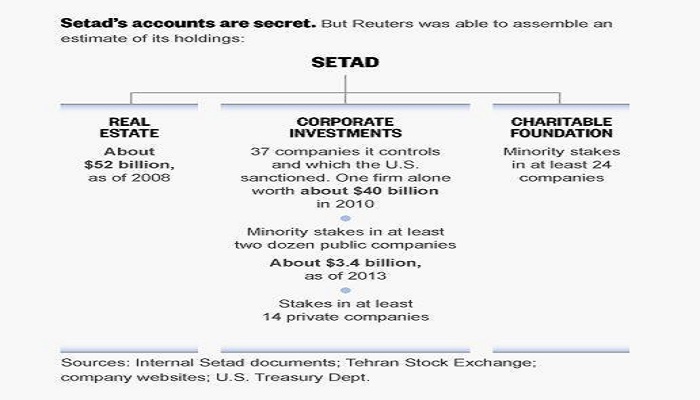
Reuters reported on one such arrangement controlled by Khamenei, one of the most powerful and secretive organizations in Iran – “Setad Ejraiye Farmane Hazrate Emam,” or Setad.

“The deal, which is likely to go into effect after clearing a major Congressional hurdle last week, lifts U.S. secondary sanctions on Setad and about 40 firms it owns or has a stake in, according to a Reuters tally based on annexes to the deal.

“The delisting of Setad — which has little connection to Iran’s nuclear program but is close to Iran’s ruling elite — feeds into U.S. Republicans’ criticism that the deal will empower Iran’s hardliners and help fund its regional ambitions.”

Reuters went on to report that with stakes in nearly every sector of Iran’s economy, Setad built its empire on the systematic seizure of thousands of properties belonging to religious minorities, business people, and Iranians living abroad, according to a 2013 Reuters investigation, which estimated the network’s holdings at about $95 billion.

Iranians who said their family properties were seized by Setad described in interviews in 2013 how men showed up and threatened to use violence if the owners didn’t leave the premises at once, said Reuters.

Already, one Setad firm appears to be moving to take advantage of the deal. Ghadir Investment Company, which the U.S. Treasury identified as a Setad-linked firm, signed a 500 million euro ($565 million) contract with the engineering unit of Finmeccanica, a spokesman for the Italian defense group said in August, according to Reuters.

Not only will the regime directly benefit economically from the nuclear deal, Parsi and his allies are now trying to spin the argument that things will improve in places such as Syria where nearly four million Syrian refugees have fled in the face of Afghan mercenaries hired by Iran, Hezbollah fighters armed by Iran and Syrian army troops loyal to the Assad regime funded by Iran.

Parsi went so far as to tell BuzzFeed that the deal would at the least help the conflict from escalating, but he neglected to mention the rapid escalation and destabilizing presence of Russian military troops and hardware now landing with regularity in Syria in support of Assad and working in cooperation with the Iran regime.

He also neglected to mention the regime’s Quds Force commander Qassem Soleimani’s secret visit to Moscow in violation of United Nations sanctions to discuss the acquisition of new military hardware and coordinate operations in Syria where his Quds Forces has been in the vanguard of fighting there.

Now as the news media see the deep ties the NIAC has to the regime and with all of the Republican presidential candidates vowing to ditch the nuclear deal on the day they take office, the fire sale is on for the regime to swipe, take and steal as much as it can before the door is finally closed on them.

By Michael Tomlinson

Filed Under: Blog, National Iranian-American Council Tagged With: Namazi, National Iranian American Council, NIAC, Trita Parsi

Iran Regime Dangling Dangerous Dollars

June 9, 2015 by admin

Delusional Trita ParsiWith the June 30 deadline looming for the third round of nuclear talks between the P5+1 group of nations and the Iran regime, the news media have picked up steam in discussing the possibility of foreign companies jockeying for position in investing in Iran once a deal is completed.

But in the immortal words of Greek fabulist Aesop “do not count your chickens before they are hatched.” More than a cliché, they are prudent and appropriate words for any companies looking to take advantage of a newly opened market in Iran.

USA Today ran a story looking at visiting business delegations streaming into Tehran, all with an eye towards the completion of these talks and a signing of a deal. The vast majority of these companies are European with only a few American firms kicking the tires of an open Iranian market.

“Even if all sanctions are lifted, there will still be blacklists of Iranian companies that Western companies should avoid,” said Bijan Khajehpour of Atieh International, a consulting firm in Vienna that works to bring companies into the Iranian market. “Assets in the economy controlled by the semi-state organizations are gradually approaching the size of government.”

But Khajehpour is wrong when he says that “developing Iran’s economy will lead to greater peace, political reform and moderation by its revolutionary government” because Khajehpour has a long record of associating with supporters and lobbyists of the Iran regime, including Trita Parsi of the National Iranian American Council, in efforts to direct companies and investment into Iran.

Khajehpour and his firm – co-founded with his wife Pari Namazi who is the sister of Siamak Namazi a close confidante of Parsi – have been boldly supportive of the regime in advocating for the lifting of economic sanctions by working to steer greater interest by foreign companies in Iran. The effort is designed to create a fait accompli and build global momentum towards the “inevitability” of a nuclear deal.

While the potential size of the Iranian market is significant with 81 million people, the obstacles are daunting irrespective of what happens at the negotiating table in Switzerland. For one thing, Iran ranks in the top 40 of most corrupt nations according to Transparency International; listed at 136, tied with Nigeria and Cameroon, with corruption running rampant throughout Iran’s government with much of the nation’s wealth diverted to the mullahs who control the country and their families.

Another facet of this corruption is the shell-company ownership of vast sectors of the Iranian economy by quasi-governmental entities such as Iran’s Revolutionary Guards Corps military which controls nearly a tenth of the entire nation’s economy by some estimates.  The IRGC has made no bones about its desire to see a completed nuclear deal because of the vast wealth that would be pumped into its coffers at a crucial time when it has expended billions of dollars in propping up the Syrian regime, Shiite militias in Iraq and Houthi rebels in Yemen.

The IRGC also recognizes that unless it can secure a deal and have foreign investment flow back in, disaffected Iranians suffering under the mismanagement and general ineptness of the mullahs might very well choose regime change in order to get their Apple iPhones and McDonald’s Big Macs.

The true scope of the conundrum facing Western companies revolves around the central idea of why would you want to invest billions in a corrupt regime who’s very actions might turn all those billions into lost assets in the likelihood that Iran’s mullahs continue their nuclear development in secret as they did before?

Every public hanging, arrest of a religious minority, acid attack on a woman, or assault by Shiite militia poisons the well so to speak and makes it untenable for any politician to give the mullahs what they want, especially in an election cycle.

By Michael Tomlinson

Filed Under: American-Iranian Council, National Iranian-American Council Tagged With: Iran deal, Iran Economy, Iran Human rights, Iran Lobby, Iran Talks, khajehpour, National Iranian American Council, NIAC, Trita Parsi, usa today

The Marginalization of NIAC

March 6, 2015 by admin

Outside Looking InWith the debris beginning to clear from the build up to the Israeli Prime Minister’s speech to a joint session of Congress and the March 24th deadline fast approaching for the P5+1 negotiators in Geneva, Switzerland for a framework of a deal for halting the Iranian regime’s nuclear program, it is an opportune time to survey the landscape and ask just how effective Iran’s chief lobbyists, the National Iranian American Council (NIAC), have been lately.


The NIAC had performed almost every acrobatic maneuver in drowning out the message about the true nature of the Iranian regime and its role as the center of extremist Islam in the world and terrorism, but how effective has it truly been?


NIAC also held a “National Day of Action” in an attempt to deliver petitions to local Congressional offices calling for an end to economic sanctions against the mullah’s regime in Iran. After much hype, the actual results were not even worthy of a Model UN session of high school students. Roughly 65 teams in only half of the states fanned out to deliver a few petitions and mostly posed for selfies in Congressional offices.


The political muscle of the NIAC falls far short of what we have come to expect from powerhouse political operations such as the National Rifle Association, labor unions, environmental groups or even grassroots efforts like Occupy Wall Street. From an impact standpoint, the NIAC seems to rank somewhere between “irrelevancy” and “obscurity.”


But the NIAC does not lack a certain notoriety, especially in the wake of a disastrous defamation suit it filed in which evidence was produced linking it to the Iranian regime and steps taken by it to obscure and cover up those connections. The NIAC has struggled mightily to recast the decision by the US federal Court of Appeals for the District of Columbia in a favorable light, but the court ruling reads like a blow-by-blow indictment of NIAC.


An excellent review of the decision and its implications for NIAC was published by Business Insider by Armin Rosen the other day and worth reading. Rosen recounts the most damning revelations from the court decision, including finding that:


  • NIAC really didn’t produce calendar records it was ordered to;
  • NIAC initially hid the existence of four of its computers from the court and was not honest about what they were used for;
  • NIAC misrepresented how its computer system was configured;
  • NIAC didn’t explain why it withheld 5,500 emails from its co-founder and former outreach director;
  • NIAC was not truthful about the nature of its record-keeping system;
  • NIAC took two and a half years to produce its membership lists under court order; and
  • NIAC did not turn over mountains of relevant documents and even altered an important document after the lawsuit was brought.


In response, the NIAC issued a “clarification” on its website in a feeble attempt to restate Judge Robert Wilkens’ opinion and heavily edited from his full opinion.


Lastly, there is a growing realization among U.S. news organizations that NIAC is merely a functionary for the Iranian regime and as such less of its “news” is finding its way into mainstream media. A review of just the past few days during the NIAC’s most intense lobbying and media efforts revealed the overwhelming bulk of news organizations carrying NIAC’s statements were Arabic news media with ties to the Iranian regime or semi-official Iranian news organs.


The dearth of in-depth coverage is growing evidence the group has worn out its welcome when it comes to serious policy discussions about Iran’s nuclear program and has even less credibility when taken into context of its apparent lack of criticism of the regime over human rights violations, support for terrorist groups and the propagation of Islamic extremism.


It is a curiosity for American news media to receive media pitches from NIAC that border on hysterical when it blithely ignores injustices committed by the Iranian regime so egregious as to shock even seasoned foreign correspondents.


Thankfully, the NIAC is becoming less of an influence as evidenced by this week’s events. We can only hope it eventually fades into political obscurity the same way the dodo bird became extinct.

By Michael Tomlinson

Filed Under: Blog, National Iranian-American Council Tagged With: Iran Lobby, Iran Talks, National Iranian American Council, NIAC

Equating Cuba to Iran is More Smoke and Mirrors

December 18, 2014 by admin

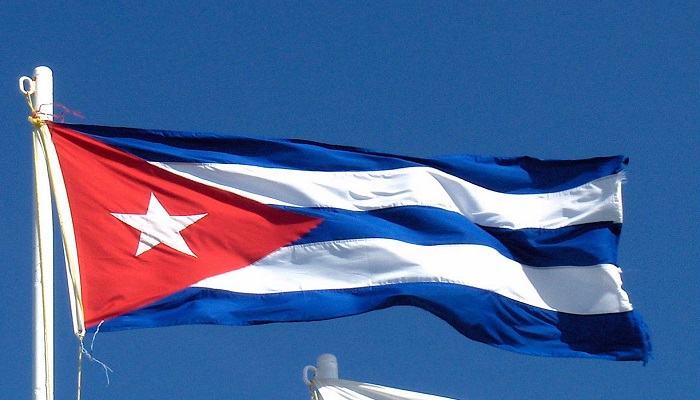
Cuba FlagPresident Obama laid out a move to normalize relations with Cuba after over half a century of unrest in relations. North Korea comes to mind too, but that involves another discussion on another day.

Sympathizers and supporters of Iran’s ruling regime have seized on the proposal to try and draw parallels to the U.S. approach to Iran. Most notably Trita Parsi and Ryan Costello of the regime’s foremost lobbyists at the National Iranian American Council, write in The HuffingtonPost that America’s perceived failed Cuba policy is akin to its similar flawed policy as it relates to Iran.

They attempt to draw parallels to economic sanctions placed on Cuba and Iran as both being failures in policy and deserving of retraction. They go to heap praise on President Obama’s recent efforts to advance a nuclear arms deal with Iran as evidence of this new pivot that can usher in an era of normalized relations between the two adversaries.

Unfortunately their obtuse logic is about as straightforward as a pretzel. Cuba and Iran are vastly different countries with vastly different economic, political and military histories.

Anyone over the age of 60 clearly remembers the Cuban Missile Crisis and the razor sharp edge the U.S. and old Soviet Union navigated as the world was pushed to the brink of global war. In a sharp twist of irony, Cuba’s placement of nuclear missiles aimed at the U.S. 90 miles away proved to be intolerable and were eventually removed through some last minute diplomacy and a heavy dose of military hardware in the Caribbean. Similarly, Iran faces the same choice in whether or not to pursue a nuclear arms program that could place Iran in the same position Cuba found itself in.

But the differences between Cuba and Iran are largely glossed over by Parsi and Costello. Whereas Cuba was a virtual vassal state to the Soviets and heavily dependent on imports of oil, food and other goods to keep the island nation going, Iran sits on one of the world’s largest reserves of oil and uses illicit petro dollars to fund a myriad of military activities as well as fund several of the world’s most notorious terror organizations.

It would be a remarkable display of honesty if Parsi and Costello were to actually use the terms “Hezbollah, ISIS and Iran” in the same sentence.

Iran has been governed by an unrelenting, unforgiving and uncaring religious cadre of mullahs who through advocacy of a particularly harsh and radicalized brand of Islam have managed to oppress the Iranian people for decades.

But par for the course for Parsi and Costello, they conveniently ignore the human rights abuses, depredations and decades-long effort by Iran to develop a nuclear capability in defiance of worldwide condemnations.

Iran remains deeply involved in the Syrian conflict, now manipulates Iraq in its fight against ISIS and continues to fund and support Hezbollah and Hamas, as well as shield its nuclear activities from international inspectors and continue to squeeze its own people with a stepped up campaign of arrests, imprisonments and executions that would make North Korea pale by comparison.

But none of that seems to make the proverbial exhortations of Parsi and Costello who remain slavishly obedient to Iran’s beck and call and are using the Cuba situation in another desperate attempt to push through a nuclear deal that would set Iran on a path not too dissimilar to the near global catastrophe of 1962.

By Michael Tomlinson

Filed Under: American-Iranian Council, Blog Tagged With: Cuba, Iran, Iran Lobby, National Iranian American Council, NIAC, Normalize relations with Cuba, Ryan Costello, Trita Parsi

  • « Previous Page
  • 1
  • …
  • 18
  • 19
  • 20

National Iranian-American Council (NIAC)

  • Bogus Memberships
  • Survey
  • Lobbying
  • Iranians for International Cooperation
  • Defamation Lawsuit
  • People’s Mojahedin
  • Trita Parsi Biography
  • Parsi/Namazi Lobbying Plan
  • Parsi Links to Namazi & Iranian Regime
  • Namazi, NIAC Ringleader
  • Collaborating with Iran’s Ambassador

Recent Posts

  • NIAC Trying to Gain Influence On U.S. Congress
  • While Iran Lobby Plays Blame Game Iran Goes Nuclear
  • Iran Lobby Jumps on Detention of Iranian Newscaster
  • Bad News for Iran Swamps Iran Lobby
  • Iran Starts Off Year by Banning Instagram

© Copyright 2026 IranLobby.net · All Rights Reserved.