Iran Lobby

Exposing the Activities of the lobbies and appeasers of the Mullah's Dictatorship ruling Iran

  • Home
  • About
  • Current Trend
  • National Iranian-American Council(NIAC)
    • Bogus Memberships
    • Survey
    • Lobbying
    • Iranians for International Cooperation
    • Defamation Lawsuit
    • People’s Mojahedin
    • Trita Parsi Biography
    • Parsi/Namazi Lobbying Plan
    • Parsi Links to Namazi& Iranian Regime
    • Namazi, NIAC Ringleader
    • Collaborating with Iran’s Ambassador
  • The Appeasers
    • Gary Sick
    • Flynt Leverett & Hillary Mann Leverett
    • Baroness Nicholson
  • Blog
  • Links
  • Media Reports

NIAC Book Gift Embarrassing

February 27, 2015 by admin

Hypocrisy MeterThe National Iranian American Council (NIAC) has been a dutiful spokesperson for the Iranian regime and has carried the mullahs water no matter how ridiculous the claims it had to make, but today was an epic new low in absurdity.

The NIAC delivered to all 100 members of the U.S. Senate a book entitled “In the Lion’s Shadow: The Iranian Schindler and his Homeland in the Second World War,” and autographed by its author Dr. Fariborz Mokhtari. The book details the efforts by Abdol-Hossein Sardari, an Iranian consular official in Paris in 1941 who aided Iranian and non-Iranian Jews by issuing them passports to exit during the war.

While the efforts of Sardari are rightly lauded for his efforts during the war, it is patently absurd that the NIAC would be passing these books out in an effort to portray itself and the Iranian regime in a more positive light in regards to the Jewish people.

It seems that there is a relation between distributing that book and the almost vitriolic nature of near-daily attacks coming from NIAC against Israel and the pending speech by Israeli Prime Minister Benjamin Netanyahu before a joint session of Congress on the Iranian regime’s negotiations over its nuclear weapons development program, Iran’s policies have been anything but humane or peaceful not only against the Jewish people, but the rest of the world.

It’s no secret there are many things wrong with Israel and its policies, especially the plight of the Palestinian people and the roadmap to peace in that part of the world, but there is no doubt that Iran’s long-standing support of terrorist groups hostile and active in and around Israel such as Hezbollah run contrary to any idea of peaceful motives.

Also, the fact that Iran’s mullahs espouse an extremist view of Islam that has fueled and provides intellectual and religious fodder for many of the region’s most extreme Islamic groups such as Boko Haram, ISIS and the Houthis in Yemen, points to the dangers it poses for peace. Not to mention the global range of attacks specifically targeting Christians and Jews by these fanatic Islamic groups supported by mullah’s ideology.

The book giveaway was accompanied by a note from NIAC’s head, Trita Parsi, in which he expressed his hope the book would be a reminder of the potential for a “different reality between the Jewish and Iranian peoples.”

He alluded to the ongoing talks as the linchpin to that new reality. The truth is far from what Parsi depicts. If news reports are accurate, the P5+1 led by the U.S. is prepared to offer Iran’s mullahs a deal that lifts economic sanctions and barely touches Iran’s existing nuclear infrastructure without any commensurate change in Iran’s policies in human rights or the treatment of political and religious dissidents. Yet mullahs have a different agenda.

The reality is that Iran’s mullahs intend to carry out a vision of regional influence for their radical form of Islam across the Middle East and Africa and gain virtual control of the of governments of Syria, Iraq, Lebanon, Afghanistan and Yemen.

It is also worth noting that the hero of the book, Sardari, was left penniless after the Iranian revolution in 1979 with his property seized by the mullahs, he eventually died in Nottingham, England in 1981 in penury; a tragic end for a man of conviction who did so much in the name of humanity.

It is a travesty the NIAC seeks to make hay of this man’s actions and even worse to use it as a fig leaf cover for the brutality of a regime well-known for its hatred of other religions, even of other Muslims who do not share its violent visions.

By Sheldon March

Filed Under: Blog Tagged With: Irantalks, Israel, NIAC, Nuclear

Parallel Nuclear Talks with the Iranian Regime

February 23, 2015 by admin

Magnifying GlassWhile U.S. Secretary of State John Kerry leads diplomats from the P5+1 negotiating team in meetings with his counterparts from the Iranian regime, another set of talks have been going on in parallel concerning inspections and access to the Iranian regime’s nuclear facilities by the International Atomic Energy Agency (IAEA) that have so far drawn much less media attention.

But in a secret report issued by the IAEA to its member states and obtained by some Western news agencies including the New York Times and Reuters, the IAEA declared that Iran’s mullahs have stalled for the past three years on several critical areas of concern over nuclear weapons development and have not been provided answers to questions that had been promised by the Iranian regime as late as last year.

The timing of the release of the report, coming as the third round of talks between the Iranian regime and the West gets underway in Geneva is interesting because it demonstrates the level of frustration international inspectors have reached in attempt to squeeze answers out of the Iranian regime over issues such as the use of next-generation centrifuges for enrichment of nuclear fuel and the testing of conventional high explosives which could be used in detonators for nuclear warheads.

The IAEA and the United Nations have always maintained that any accord reached with the Iranian regime be conditional on Iran’s mullahs fully answering the questions that still linger after years of stonewalling.

“We’ve been stonewalled on all those questions,” one European official involved in the talks said recently in the New York Times story. “And the question is does it make sense to lift sanctions against Iran before it satisfies the inspectors?”

In the Times article, an initial report by the IAEA in 2011 published a list of a dozen technologies, most of them necessary to build a nuclear weapon that inspectors said Iran had tried to master. That list was narrowed down to three which the IAEA wanted Iran to explain first.

More than a year later, the Iranian regime has still failed to provide information on even one single topic of concern to inspectors; that being the development of conventional explosives to create focused shock waves sufficient to compress the core of a nuclear device and start the chain reaction necessary for a nuclear blast.

The IAEA has been consistently blocked by the Iranian regime in getting even the most basic answers, which raises more concerns over the apparent shroud of secrecy that has fallen on the most current round of P5+1 talks. Many international observers critical of any agreement with Iran’s religious leaders, including opposition groups such as the National Council of Resistance of Iran, have contended the talks need to be transparent and open in order to allay international concerns and hold Iran’s rulers accountable because of a past history of obstruction and evasion.

In the Reuters story, Western diplomats have viewed such stalling as an indicator of the Iranian regimes unwillingness to cooperate fully until punitive sanctions are lifted in talks with the United States, Russia, China, France, Germany and Britain. This intent to have Iran’s mullahs be rewarded for simply sitting at the table is at the heart of the regime’s negotiating position and the reason why two earlier rounds of talks had failed.

Pressure to craft a framework of a deal by a March 24th deadline has placed both sides on a path towards a complex game of chicken to see who will blink first. Given the Iranian regime’s past willingness to tank previous talks, Western negotiators should be wary of giving in to regime demands simply to satisfy the appearance of progress.

No doubt the regime’s lobbying machine in the U.S. including the National Iranian American Council, that recently published a $200K ad in New York Times in favor of the mullahs, will press for a deal that hides most of the key components from public or Congressional scrutiny, but as the IAEA report has demonstrated, the Iranian regime has and continues to flaunt international concerns even after concessions and shows no interest in changing its ways.

By Michael Tomlinson

Filed Under: Blog, The Appeasers Tagged With: Iran, Irandeal, IranGeneva, Irantalks, NIAC

ISIS New Low and the Change It Brings

February 4, 2015 by admin

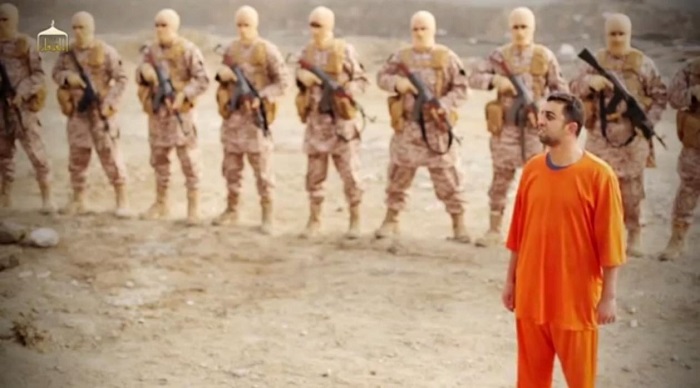
Jordan PilotThe world watched in horror yesterday as the terror group ISIS broadcast video of its execution of Jordanian pilot Moaz al-Kassasbeth by burning him alive in a cage and then burying him with a bulldozer. The imagery was graphic, searing into the international consciousness a new level of revulsion that even surpassed the beheadings ISIS had delivered earlier with regularity.

But what happened in the 24 hours following al-Kassabeth’s death was more revealing of where exactly the world stands in the face of such unremitting brutality. Jordan acted swiftly, executing two prisoners it had in its custody with a promise from official sources of swift and harsh response and retribution.

Japan and Great Britain joined in solidarity as did many other nations who have had nationals at risk or killed by ISIS during its rampage across Iraq and Syria. The death was so shocking and in contradiction to Islamic practices which forbid cremation that other moderate Muslim nations quickly expressed their own revulsion at this act.

Predictably, Iranian regime was not one of those nations and gave a formal condemnation with notable delay almost a day after the international outrage about the crime. Its supporters in the U.S. were even more quiescent; not even offering a simple tweet of revulsion at the act. In fact, in the case of Iran’s chief lobbying ally, the National Iranian American Council, there were no public statements. Its leading official, Trita Parsi made only one mention of the incident before launching into tweets criticizing Jordan’s King Hussein.

The rest of Iran’s supporters and sympathizers ranging from Ali Gharib to others were similarly silent on any condemnation of the brutal act. It does foster the question of why?

One could assume that it does not serve Iran’s interest to condemn ISIS since its intervention in Syria’s civil war on behalf of President Bashar al-Assad is in large part responsible for the growth of ISIS in the first place. But why would U.S.-based groups, sympathetic to Iran, such as NIAC simply not join the vocal outrage over this death? What would it cost them to send out a single tweet saying this was “gross” or “horrible” or even “tragic”?

But none of those things occurred and we are left with a better understanding of the true nature of Iran’s support network. Its sole aim and mission is to represent the interests of Iran here and most importantly to lobby hard against any re-imposition of economic sanctions during the ongoing third round of negotiations with the P5+1.

In contrast though to the NIAC has been the vocal condemnation sent out by Iranian resistance groups, most notably the National Council of Resistance of Iran. Its denouncement by Mrs. Maryam Rajavi, a woman at the head of a leading Muslim organization, is noteworthy because it forcefully takes a stand other Muslim groups do not and joins with the broader global outrage over the event.

Therein lays another odd quirk of the Iranian regime’s obsessive interest in fabricating regular attacks on the NCRI. Even with the world debating this violent act, the Iranian lobby spends considerable energy posting editorials attacking NCRI.

Why?

Because the mere existence of a group of Iranians dedicated to opposing the mullahs regime is anathema to them and puts a spotlight on the lie they perpetuate that all of Iran is united behind their rule. It is the most glaring blind spot mullahs ruling Iran have and a constant reminder to them of the essential weakness of their position in nuclear talks.

At the end of the day, Iran’s mullahs cannot be trusted and that is at the heart of why both Senate Democrats and Republicans are more than willing to toe the line and impose sanctions on March 24th should Iran not deliver a substantial and meaningful agreement to their liking.

The intelligence uncovered by the NCRI on human rights abuses and covert nuclear research sites has been instrumental in revealing the deceit of the regime and the mere fact they cannot recognize the barbarity of the death of al-Kassasbeth adds to the damning truth that Iran tacitly approves of what happened.

By Michael Tomlinson

Filed Under: Blog, National Iranian-American Council Tagged With: Iran Lobby, ISIS, NIAC

The State of the Union and Iran

January 21, 2015 by admin

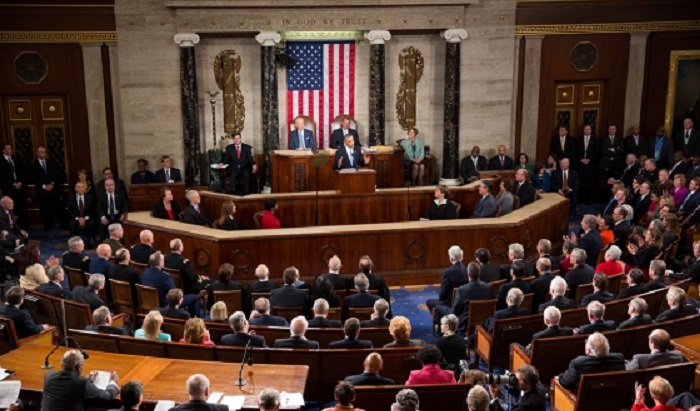
State of the UnionPresident Barack Obama delivered his sixth State of the Union address and like the previous five other speeches, he largely dealt with domestic issues as the nation continues to struggle with a lingering recession, stagnant wage growth and deadlocked politics in Washington.

And like his other speeches, this one ran slightly under 7,000 words in length and in it, President Obama mentioned Iran a grand total of four times, which is comparable to how many times he spoke about Iran in 2014, 2013, and 2012. The only difference in this speech was a slightly longer emphasis on the need to avoid the additional levying of economic sanctions on Iran during the third and latest round of nuclear negotiations.

Similarly, Iran’s coterie of apologists and cheerleaders went on the offensive in advance of the speech as early copies were circulated amongst administration supporters. The National Iranian American Council notably and predictably lauded the President’s statement with a statement warning of the possibility of war breaking out with Iran should sanctions be levied.

Of course what NIAC fails to address is that this so-called last best hope for peace for Iran is actually the third go-around for this administration and doesn’t include efforts by every previous Presidential administration who had attempted to rein in Iran’s ruling mullahs.

While Iran has played revolving chairs with presidents in order to first get tough with the West with Ahmadinejad, it then tried a different tack with a so-called moderate face now under Hassan Rouhani. In both cases, the heavy hand of Supreme Leader Ayatollah Ali Khamenei continues to sabotage any nuclear deal with his insistence that Iran retain not only its refining and enrichment capacity, but also its missile technology to potentially deliver a nuclear warhead.

NIAC’s hyperbole is indicative of the simple truth surrounding the issue of Iran; the American people simply do not trust the mullahs running Iran, least of all with nuclear weapons.

The fact that previous sanctions bills and the most recent one being proposed in Congress have been highly bipartisan with large numbers of Democrats joining with Republicans in an overwhelming show of solidarity on the issue demonstrates more powerfully than any speech that the President and NIAC are very much alone on this issue.

The funny thing is that the only people who are mentioning a possibility of war are only the NIAC and Iranian regime’s supporters, that have engaged in hyperventilating over the inevitable onset of war should sanctions come.

They neglect to mention that the same claims were made when previous sanctions were levied and in each case, war did not come. In fact the opposite occurred as Iran was forced to the bargaining table as its ability to export its brand of radicalized Islam became more difficult with fewer resources available. Couple that with crushing oil prices, and the timing is near perfect to forge a historic agreement with Iran to not only halt nuclear weapons development, but also seek improvements in Iran’s horrific human rights record, worsened under the “moderate” president Hassan Rouhani.

The U.S. and the West are being provided with an opportunity to use its significant leverage to move Iran forward back into the community of nations as a more democratic, pluralistic and free society than at any other time in recent memory. While the President focuses on nuclear talks, the window that has opened here is much more significant and should be taken advantage of immediately.

In short, the President needs to aim higher on behalf of the Iranian people, as well as the American people; a notion that the NIAC would be well served to adopt as well.

By Michael Tomlinson

Filed Under: Blog Tagged With: Iran, Iran Lobby, NIAC, Nuclear Iran, nuclear talks, Obama state of the Union

Equating Cuba to Iran is More Smoke and Mirrors

December 18, 2014 by admin

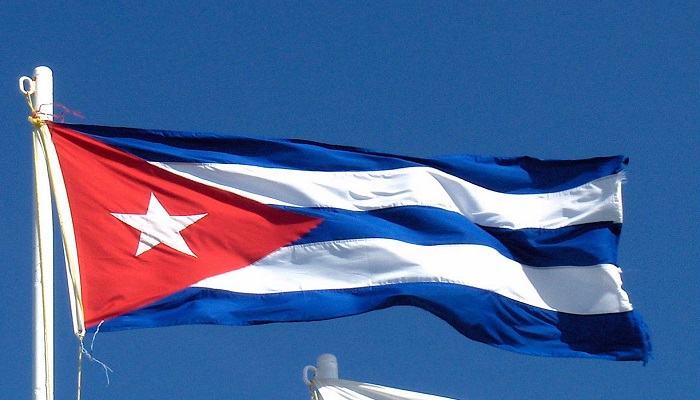
Cuba FlagPresident Obama laid out a move to normalize relations with Cuba after over half a century of unrest in relations. North Korea comes to mind too, but that involves another discussion on another day.

Sympathizers and supporters of Iran’s ruling regime have seized on the proposal to try and draw parallels to the U.S. approach to Iran. Most notably Trita Parsi and Ryan Costello of the regime’s foremost lobbyists at the National Iranian American Council, write in The HuffingtonPost that America’s perceived failed Cuba policy is akin to its similar flawed policy as it relates to Iran.

They attempt to draw parallels to economic sanctions placed on Cuba and Iran as both being failures in policy and deserving of retraction. They go to heap praise on President Obama’s recent efforts to advance a nuclear arms deal with Iran as evidence of this new pivot that can usher in an era of normalized relations between the two adversaries.

Unfortunately their obtuse logic is about as straightforward as a pretzel. Cuba and Iran are vastly different countries with vastly different economic, political and military histories.

Anyone over the age of 60 clearly remembers the Cuban Missile Crisis and the razor sharp edge the U.S. and old Soviet Union navigated as the world was pushed to the brink of global war. In a sharp twist of irony, Cuba’s placement of nuclear missiles aimed at the U.S. 90 miles away proved to be intolerable and were eventually removed through some last minute diplomacy and a heavy dose of military hardware in the Caribbean. Similarly, Iran faces the same choice in whether or not to pursue a nuclear arms program that could place Iran in the same position Cuba found itself in.

But the differences between Cuba and Iran are largely glossed over by Parsi and Costello. Whereas Cuba was a virtual vassal state to the Soviets and heavily dependent on imports of oil, food and other goods to keep the island nation going, Iran sits on one of the world’s largest reserves of oil and uses illicit petro dollars to fund a myriad of military activities as well as fund several of the world’s most notorious terror organizations.

It would be a remarkable display of honesty if Parsi and Costello were to actually use the terms “Hezbollah, ISIS and Iran” in the same sentence.

Iran has been governed by an unrelenting, unforgiving and uncaring religious cadre of mullahs who through advocacy of a particularly harsh and radicalized brand of Islam have managed to oppress the Iranian people for decades.

But par for the course for Parsi and Costello, they conveniently ignore the human rights abuses, depredations and decades-long effort by Iran to develop a nuclear capability in defiance of worldwide condemnations.

Iran remains deeply involved in the Syrian conflict, now manipulates Iraq in its fight against ISIS and continues to fund and support Hezbollah and Hamas, as well as shield its nuclear activities from international inspectors and continue to squeeze its own people with a stepped up campaign of arrests, imprisonments and executions that would make North Korea pale by comparison.

But none of that seems to make the proverbial exhortations of Parsi and Costello who remain slavishly obedient to Iran’s beck and call and are using the Cuba situation in another desperate attempt to push through a nuclear deal that would set Iran on a path not too dissimilar to the near global catastrophe of 1962.

By Michael Tomlinson

Filed Under: American-Iranian Council, Blog Tagged With: Cuba, Iran, Iran Lobby, National Iranian American Council, NIAC, Normalize relations with Cuba, Ryan Costello, Trita Parsi

  • « Previous Page
  • 1
  • …
  • 24
  • 25
  • 26

National Iranian-American Council (NIAC)

  • Bogus Memberships
  • Survey
  • Lobbying
  • Iranians for International Cooperation
  • Defamation Lawsuit
  • People’s Mojahedin
  • Trita Parsi Biography
  • Parsi/Namazi Lobbying Plan
  • Parsi Links to Namazi & Iranian Regime
  • Namazi, NIAC Ringleader
  • Collaborating with Iran’s Ambassador

Recent Posts

  • NIAC Trying to Gain Influence On U.S. Congress
  • While Iran Lobby Plays Blame Game Iran Goes Nuclear
  • Iran Lobby Jumps on Detention of Iranian Newscaster
  • Bad News for Iran Swamps Iran Lobby
  • Iran Starts Off Year by Banning Instagram

© Copyright 2026 IranLobby.net · All Rights Reserved.