Iran Lobby

Exposing the Activities of the lobbies and appeasers of the Mullah's Dictatorship ruling Iran

  • Home
  • About
  • Current Trend
  • National Iranian-American Council(NIAC)
    • Bogus Memberships
    • Survey
    • Lobbying
    • Iranians for International Cooperation
    • Defamation Lawsuit
    • People’s Mojahedin
    • Trita Parsi Biography
    • Parsi/Namazi Lobbying Plan
    • Parsi Links to Namazi& Iranian Regime
    • Namazi, NIAC Ringleader
    • Collaborating with Iran’s Ambassador
  • The Appeasers
    • Gary Sick
    • Flynt Leverett & Hillary Mann Leverett
    • Baroness Nicholson
  • Blog
  • Links
  • Media Reports

Iran Regime Dangling Dangerous Dollars

June 9, 2015 by admin

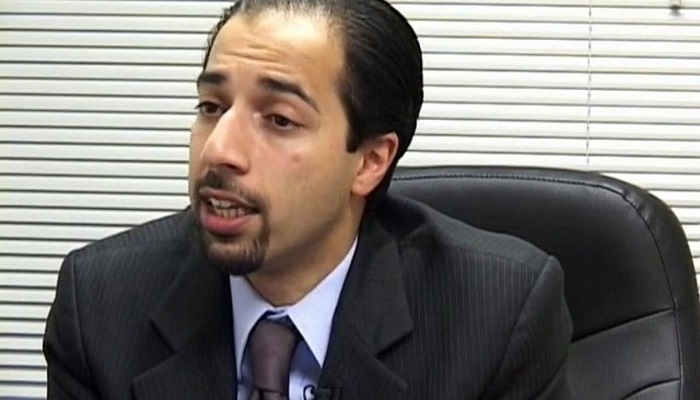
Delusional Trita ParsiWith the June 30 deadline looming for the third round of nuclear talks between the P5+1 group of nations and the Iran regime, the news media have picked up steam in discussing the possibility of foreign companies jockeying for position in investing in Iran once a deal is completed.

But in the immortal words of Greek fabulist Aesop “do not count your chickens before they are hatched.” More than a cliché, they are prudent and appropriate words for any companies looking to take advantage of a newly opened market in Iran.

USA Today ran a story looking at visiting business delegations streaming into Tehran, all with an eye towards the completion of these talks and a signing of a deal. The vast majority of these companies are European with only a few American firms kicking the tires of an open Iranian market.

“Even if all sanctions are lifted, there will still be blacklists of Iranian companies that Western companies should avoid,” said Bijan Khajehpour of Atieh International, a consulting firm in Vienna that works to bring companies into the Iranian market. “Assets in the economy controlled by the semi-state organizations are gradually approaching the size of government.”

But Khajehpour is wrong when he says that “developing Iran’s economy will lead to greater peace, political reform and moderation by its revolutionary government” because Khajehpour has a long record of associating with supporters and lobbyists of the Iran regime, including Trita Parsi of the National Iranian American Council, in efforts to direct companies and investment into Iran.

Khajehpour and his firm – co-founded with his wife Pari Namazi who is the sister of Siamak Namazi a close confidante of Parsi – have been boldly supportive of the regime in advocating for the lifting of economic sanctions by working to steer greater interest by foreign companies in Iran. The effort is designed to create a fait accompli and build global momentum towards the “inevitability” of a nuclear deal.

While the potential size of the Iranian market is significant with 81 million people, the obstacles are daunting irrespective of what happens at the negotiating table in Switzerland. For one thing, Iran ranks in the top 40 of most corrupt nations according to Transparency International; listed at 136, tied with Nigeria and Cameroon, with corruption running rampant throughout Iran’s government with much of the nation’s wealth diverted to the mullahs who control the country and their families.

Another facet of this corruption is the shell-company ownership of vast sectors of the Iranian economy by quasi-governmental entities such as Iran’s Revolutionary Guards Corps military which controls nearly a tenth of the entire nation’s economy by some estimates.  The IRGC has made no bones about its desire to see a completed nuclear deal because of the vast wealth that would be pumped into its coffers at a crucial time when it has expended billions of dollars in propping up the Syrian regime, Shiite militias in Iraq and Houthi rebels in Yemen.

The IRGC also recognizes that unless it can secure a deal and have foreign investment flow back in, disaffected Iranians suffering under the mismanagement and general ineptness of the mullahs might very well choose regime change in order to get their Apple iPhones and McDonald’s Big Macs.

The true scope of the conundrum facing Western companies revolves around the central idea of why would you want to invest billions in a corrupt regime who’s very actions might turn all those billions into lost assets in the likelihood that Iran’s mullahs continue their nuclear development in secret as they did before?

Every public hanging, arrest of a religious minority, acid attack on a woman, or assault by Shiite militia poisons the well so to speak and makes it untenable for any politician to give the mullahs what they want, especially in an election cycle.

By Michael Tomlinson

Filed Under: American-Iranian Council, National Iranian-American Council Tagged With: Iran deal, Iran Economy, Iran Human rights, Iran Lobby, Iran Talks, khajehpour, National Iranian American Council, NIAC, Trita Parsi, usa today

Tensions Mount and Iran Lobby Stays Deaf and Mute

May 26, 2015 by admin

Def Blind MuteTo say relations between the U.S. and the Iran regime are growing testier by the day would be an understatement of classic proportions.

In swift moving developments, an Iranian judge overseeing the espionage trial of Washington Post reporter Jason Rezaian has barred everyone except the defendant and his lawyer from being present. Even Rezaian’s mother and wife would not be permitted to be in the courtroom in a glaring example of the opaque nature of the regime’s justice system.

The fact that mullah’s regime in Iran would move swiftly towards what appears to be a sham trial while at the same time negotiating with the P5+1 nations on a nuclear deal has led to rampant speculation about the regime’s endgame.

According to the New York Times: “Political analysts have said they believe that the outcome of the Rezaian case, as well as those of two other Americans imprisoned in Iran, are in some way dependent on the success or failure of the nuclear negotiations.”

In which case, the regime has opted to make Rezaian and other Americans held in Iranian prisons nothing more than bargaining chips.

In another verbal jab shot by Qasem Soleimani, commander of the Iran regime’s Revolutionary Guard’s Quds force, denounced U.S. efforts against ISIS in what appeared to be a sharp rebuke of comments made by U.S. Secretary of Defense Ashton Carter’s comments that Iraqi forces supported by Iranian-backed Shiite militia “showed no will to fight” as ISIS overran the Iraqi city of Ramadi.

It is ironic that Soleimani would be denouncing the U.S. for what he called a lax effort against ISIS when it was his Quds force units that provided instruction and training to Iraqi insurgents using improvised explosive devices against U.S. and coalition forces during the Iraq war.

Both of these incidents come on the heels of an ongoing dispute with Iran at the nuclear bargaining table in which the regime’s top mullah Ali Khamenei publicly denounced any access to military facilities.

This was followed by a statement from France’s foreign minister who reported a demand from the regime to not allow access to any military sites by international inspectors unless 24 days’ worth of advanced notice was given.

Iran reportedly altered that red line in the sand by calling for “managed access” of sites, whatever that means. Iranian Deputy Foreign Minister Abbas Araghchi’s televised comments appeared to contradict comments by the Khamenei. Since Khamenei is indeed the regime’s supreme leader, we’re willing to believe his version of policy rather than the deputy foreign minister.

Meanwhile, as things continue to go badly between the U.S. and Iran regime, the regime’s biggest cheerleader in chief, the National Iranian American Council, has been strangely silent on all of these developments.

It has not issued a denunciation of Rezaiain’s closed trial. It has not tweeted anything about the apparent contradictions in Iranian statements on international inspection access. NIAC and its leadership have not even raised a single word of encouragement for the U.S. not to overreact to what Khamenei has been ranting about lately.

Oddly, its only official statement the last week came as an attack against Sen. Lindsey Graham (R-SC) in which it demanded an apology from him for what it called a “racist” attack in calling Iranians “liars” in regards to the regime’s ability to be trusted on any nuclear agreement.

So while Sen. Graham’s analogy involved an unfortunate choice of imagery, it certainly was accurate in regards to the regime’s lack of abiding to previous international agreements, including breaking promises on allowing inspections of nuclear facilities and still stonewalling questions from the International Atomic Energy Agency.

Of course, the NIAC would never stoop to biting the hands of their masters from Tehran so we are left with the international news media to scrutinize and criticize Iran’s increasingly bizarre behavior.

By Michael Tomlinson

Filed Under: Blog Tagged With: Iran Lobby, Lindsey Graham, NIAC, Qassem Soleimani

The False Choices of the Iran Lobby

May 22, 2015 by admin

War and PeaceAs we enter the Memorial Day holiday weekend, families will gather for barbecues and picnics and others will gather to remember those who have fallen in past conflicts and made the ultimate sacrifice for their nation. But Memorial Day should also be a day to commemorate those who didn’t put on a uniform, but still had to make the same sacrifices and their families had to pay that ultimate price.

It is an unfortunate legacy of the world we live in today that innocent men, women and children often have to bear the same price as those who are trained and volunteer to fight. Throughout the Middle East, that scenario is being played out on countless battlefields, in numerous villages, towns and cities in places such as Iraq, Syria, Yemen, Nigeria and Afghanistan.

But even cities and nations unaccustomed to fighting have been places of terror and carnage such as an office in Paris, a store in Sydney or a government building in Canada. All at the hands of extremist Islamists who have copied their playbook of terror from the Iran regime which has had a 30 year head start on terror spectacles and continues to this day with almost daily public hangings in most city squares.

So this Memorial Day ought to serve as a sobering reminder not just of the sacrifices service personnel make, but for those innocents who have been caught in the escalating violence around the world.

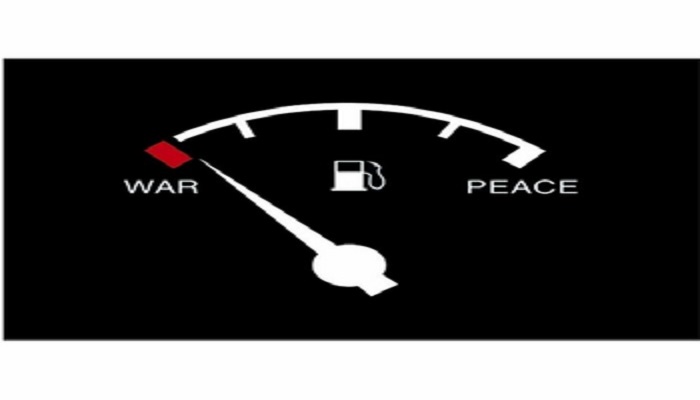
All of which makes the choices offered by the Iran lobby in regards to ongoing nuclear talks with the Iran regime all the more odd since supporters such as the National Iranian American Council have consistently framed the choices in a nuclear agreement as stark ones between war and peace. Their hyperbole clouds the real issue driving the mullahs in Iran and for them the choices are not about war and peace.

It’s really about cash and lots of it. Iran’s economy is reeling under the triple blows of corrupt mismanagement by the ruling elites, spiraling oil prices and the heavy costs associated with funding proxy wars and terror groups in Yemen, Iraq and Syria. Not to mention the billions of dollars being spent by the regime in building and maintaining a far flung network of installations and research facilities dedicated to developing nuclear weapons and the ballistic missiles necessary to carry them.

That need for billions of dollars in unfrozen assets, proceeds from oil sales and renewed capital investment is what drives the mullahs. They hunger for cash in the same way an addict craves his next drug fix. It is also why Iran’s top mullah, Ali Khamenei, has consistently demanded a complete lifting of all economic sanctions at once, including those levied by the UN Security Council, European Union and the U.S. Congress and president.

And that is the quandary facing the NIAC and other regime lobbyists; how do we sell a nuclear deal driving by a need for a financial bailout of Tehran? In classic spin control, they opt to frame the debate as a choice between war and peace.

They recognize that America is war weary and that voters have little appetite for more American blood to be shed, but the choice for Americans and by extension for Congress and the Obama administration is that the choice really is not between war and peace. It’s about whether or not to let mullahs in Iran get the cash they want and so desperately need.

Economic sanctions work. They brought the mullahs to the negotiating table and they are still the most compelling non-violent tool available to the International community. To abandon them without a solid deal that not only cuts Iranian regime’s nuclear program off at the knees, but also modifies its behavior towards proxy wars, terror groups and human rights is dumb and a mistake of historic proportions.

For when we gather to commemorate and celebrate Memorial Day weekend, we should remember that the surest path to peace is not through appeasement, but through strength; strength of conviction, strength of commitment and strength of will.

I hope your Memorial Day is a peaceful one.

By Michael Tomlinson

Filed Under: Blog Tagged With: Iran deal, Iran Talks, Khamenei, Memorial Day, NIAC, peace, Sanctions, War

Khamenei Rants Pose Obstacles for Iran Lobby

May 7, 2015 by admin

HeadacheThe Iran regime is a peculiar nation since it is by constitution a religious theocracy which places it in exclusive company in the world; the only other theocratic nations include the Holy See, more commonly known as the Vatican and headed by Pope Francis and the Central Tibetan Administration, which is the Tibetan government in exile headed up by the Dalai Lama. One could also argue ISIS is a theocracy in the territory it now claims and controls.

The reason virtually no other nation is theocratic in nature rests largely on the idea that people want to government by a secular set of laws accountable to them or at the very least to the dictators or monarchs ruling them. Vesting decision making into the specific interpretations of a higher power by religious authorities generally invites trouble throughout human history.

In Iran’s case, absolute power rests in the Supreme Leader, Ali Khamenei who has ruled the regime since 1981, a reign of 34 years exceeded in length only by a few African dictators. In his position, Khamenei’s whims carry the force of royal decree over virtually all parts of Iranian life including the military, judiciary, culture, economy and religion.

This absolute power also poses a significant problem for regime supporters who have spent a considerable amount of time covering up or spinning Khamenei’s more outrageous statements over the past three decades. Loyal supporters such as the National Iranian American Council have substantial experience in protecting regime leaders having ample experience with the wildly provocative speeches and comments made by former President Mahmoud Ahmadinejad who regularly denied everything including the Holocaust.

Khamenei’s more recent comments about ongoing nuclear talks have proven to be more problematic for regime lobbyists and spin doctors. His most recent remarks came the other day in a speech to Iranian teachers in which he reiterated sternly that the regime would not complete any deal under any military threats. He alluded to comments made by two U.S. officials, neither of whom could be identified by journalists or the statements Khamenei mentioned.

Besides creating fictionalized accounts of negotiations, Khamenei has also been busy denouncing any deal that did not immediately reward the regime with the lifting of all economic sanctions. He also directly contradicted talking points issued by the U.S. and French governments after the framework agreement was announced last month in Geneva.

The fact that Khamenei feels emboldened enough to make serious attacks at a proposed nuclear deal reflects how little regard he has for international opinion, let alone international action against the regime. This has been borne out by his recent military decisions to engage in proxy wars in Syria, Iraq and now Yemen, not to mention the seizure of a commercial vessel and engage in a game of chicken with the U.S. Navy.

This increased extremist behavior by Khamenei has been noticed by more news media who have sounded warnings about its implications.

Foreign Policy Initiative took note of this trend by saying “Iran’s behavior suggests that it sees no contradiction between its efforts to reach a nuclear agreement and its regional hegemonic ambitions.”

The Washington Post also noted efforts by Iran to leverage nuclear talks, writing “we already see that Iran is mastering ‘linkage’ — trying to intimidate the United States on other issues with the threat it will walk out of nuclear talks.”

A position reinforced by the Hill which noted Khamenei vented on Twitter with “Ayatollah Ali Khamenei, Iran’s supreme leader, vowed on Wednesday that his nation would leave nuclear negotiations if it feels threatened by America’s armed forces.”

All of which proves troublesome for people like Trita Parsi and Reza Marashi of NIAC who have to go to great lengths to encourage journalists not to listen to Khamenei or spin that his comments are meant only for domestic consumption.

One would wonder why Khamenei would even bother with domestic audiences in which his word is law and any dissident is punished by a swift arrest and imprisonment in prison.

By Michael Tomlinson

Filed Under: Blog Tagged With: Iran Lobby, Khamenei, Marashi, NIAC

Iran Lobby-Attempts To Seal A Deal

April 17, 2015 by admin

Iran Lobby trying to seal  a  deal

Iran Lobby trying to seal a deal

The phrase “cause and effect” can be applied to virtually every facet of life; from history, physics, marketing, politics and even the dinosaurs. Such a small phrase embodies so many connections in today’s world between actions and the aftermath of those actions.

In the context of today’s volatile Middle East, the Iran regime’s top lobbyist, the National Iranian American Council has argued its own cause and effect strenuously saying that failure to seal a deal on nuclear weapons development would inevitably lead to war, regardless of the facts failing to indicate any path to war.

But on the flip side, the NIAC has just as vigorously opposed any causal connection between the actions of the regime’s mullahs in directing a slew of proxy wars and human rights abuses and their ability to abide by any international agreement they sign.

Any objective observer can draw a straight line from point A to point B when looking at the cause and effects of Iran’s actions. For example:

  • The regime’s crackdown on opponents and protests through arrests, torture, imprisonment and public executions have effectively muzzled dissent at home;
  • The regime’s violation of international inspection agreements over the past decade have allowed it to quadruple the number of centrifuges it added to enrich uranium for its nuclear program; and
  • The regime’s support of proxies and terror groups in Lebanon, Syria, Iraq and Yemen have allowed it to build a buffer of extremist Shiite support surrounding it, displacing hundreds of thousands of refugees and killing tens of thousands of men, women and children.

The fact that Iran has engaged in nuclear talks over the past three years while it has engaged in a slew of blatantly arrogant moves in violation of the spirit of those talks has laid bare the hypocrisy of the regime and its supporters.

Even today, cybersecurity firm Norse and the American Enterprise Institute released a new study chronicling the regime’s dramatic increase in cyberattacks on thousands of American targets. According to The New York Times, “the report, and a similar one from Cylance, another cybersecurity firm, make clear that Iranian hackers are moving from ostentatious cyberattacks in which they deface websites or simply knock them offline to much quieter reconnaissance. In some cases, they appear to be probing for critical infrastructure systems that could provide opportunities for more dangerous and destructive attacks.”

Norse’s study shows the Iran regime’s attacks have shown no signs of letting up, even during critical nuclear talks. Between January 2014 and just last month, Norse’s sensors picked up a whopping 115 percent increase in attacks launched from Iranian controlled Internet protocol, or I.P. addresses, with more than 900 attacks daily in the first half of March alone.

At a time when the leverage the West has over the regime through these talks is significant because of the economic mess the mullahs have created, it is a lost opportunity not to force changes upon the conduct of the regime.

The old proverb, “Turnabout is fair play” certainly applies here and especially with the NIAC who have made a living on accusing the West of double standards in its actions towards Iran, but yet do not hold Iran’s mullahs to the same standards.

It makes sense and is imperative that we understand the true nature of the effects the regime’s actions and lay the blame squarely at the feet of the mullahs ruling Iran.


Filed Under: Current Trend Tagged With: Iran, Iran Lobby, NIAC, Nuclear Deal

The Moral Evil of the Iran Lobby

April 13, 2015 by admin

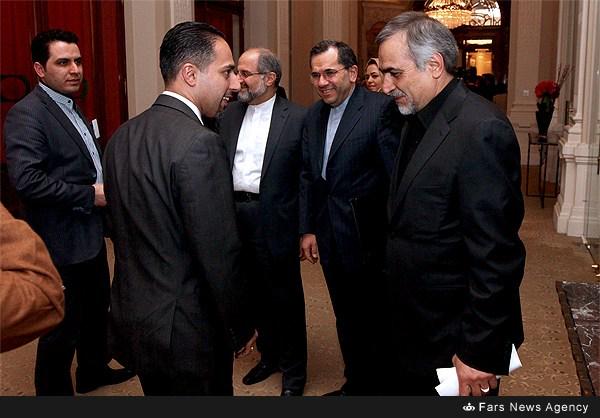
Trita parsi, greeting the mullah's delegation in Geneva during the nuclear negotiations -March 2015

Trita parsi, greeting the mullah’s delegation in Geneva during the nuclear negotiations -March 2015

With debate building over the proposed framework agreement between the P5+1 and the Iran regime, one of the most compelling questions arising is also the most relevant: “How can any agreement signed by an evil and corrupt regime be trusted?”

Any nation state can be relied upon to operate within the confines of an international community based on several factors. These might include the personal conviction and force of will of its leader or the guarantees embodied in its constitution. It might also be as a result of its culture, history or even religion.

In the case of the Iran regime though, the evidence is overwhelming of not only its moral failure to abide by international standards of peace and civility, but also the moral core of its leadership can be summed up as being one of “convenience in service to theology.”

Iran’s mullahs have been guilty of fomenting terror attacks through proxies such as Hezbollah which have claimed thousands of lives all around the world. They have been guilty of spreading an extremist form of Islam that has sparked sectarian conflicts throughout the Mideast and Africa, claiming thousands and displacing hundreds of thousands. They have been guilty of brutal atrocities and human rights violations on their own people in order to stifle dissent including thousands of hangings and punishments that could only be described as medieval.

Iran’s mullahs have denigrated women, targeted religious minorities and even made the simple act of web surfing a crime punishable by imprisonment. It is a leadership willing to contemplate the development of nuclear weapons as a tool of political expediency. It is a leadership claiming the mantle of religious certainty, but instead uses its power to enrich themselves and their families in a familiar reminder of feudal dynasties.

Aiding and abetting that corrupt regime is a lobbying effort that similarly turns a deaf ear and blind eye to the suffering being meted out by these mullahs. Groups such as the National Iranian American Council and its bosses Trita Parsi, Reza Marashi and others, have loyally placed the value of their contracts to Tehran above the morality required to do good in the world.

Haile Selassie, the former emperor of Ethiopia, famously said to the international community in the League of Nations when Italy invaded and used chemical weapons on his people:

“Throughout history, it has been the inaction of those who could have acted; the indifference of those who should have known better; the silence of the voice of justice when it mattered most; that has made it possible for evil to triumph.”

The international community did not rise up. Only five nations protested the invasion and slaughter of his people and in response, Selassie became an outspoken advocate the rest of his life to international security and multilateral support of justice.

The lack of protest, discussion and debate by the Iran lobby over the voluminous injustices and cruelties dispensed by the Iran regime is damning evidence of the lack of moral fiber within groups like the NIAC.

It leaves one wondering just who these men and women are that write editorials, lobby and speak on behalf of the barbarous cruelty of the mullahs. Are they just collecting a paycheck or do they honestly believe and support the mission of the Iran regime to remake the world in the image of its intolerant, extremist and cruel selves?

Selassie was right that by standing by mutely watching these things happen, the NIAC is just as evil and corrupt as the mullahs they defend.

By Michael Tomlinson


Filed Under: Blog, News Tagged With: Iran Lobby, Iran Talks, NIAC, Trita Parsi

Iran Regime Lobby Losing Grip on Congress

April 8, 2015 by admin

Trita parsi, greeting the mullah's delegation in Geneva during the nuclear negotiations -March 2015

Trita parsi, greeting the mullah’s delegation in Geneva during the nuclear negotiations -March 2015

The Iran regime’s lobbying and PR machine, notably led by the National Iranian American Council, invested significant resources in a blatant effort to lobby and influence members of Congress over the recent negotiations on the regime’s nuclear infrastructure.

The NIAC attempted to portray the negotiations as the only clear path towards peace and any member of Congress denigrating it was no better than a war monger. In response, Congress offered up the Corker-Menendez bill which gives Congress the power to keep economic sanctions in place while it reviewed any deal. Despite NIAC’s objections, it passed out of committee on a bipartisan vote.

Then NIAC was part of the “National Day of Action” involving delivering petitions to local Congressional offices. The effort produced sporadic selfies in scattered offices of volunteers, mostly Democrats already pledging to support the regime. In response, 47 Senate Republicans sent an open letter to the Iran regime promising to overturn any bad deal.

Itching for more failure, the NIAC marshalled its forces again for the stretch drive of talks and went on a media blitz and sent Trita Parsi and Reza Marashi to troll lobby bars in Lausanne, Switzerland. Instead, the House this time sent out a letter signed by 367 Democrats and Republicans, representing a veto-proof majority, calling for review and approval of any deal.

Even after talks concluded with a “framework” agreement that appears to be different in its terms if you read Iranian, American or French versions, NIAC continued to call it an historic agreement. On Monday, Sen. Chuck Schumer (D-NY), who is on track to be the new Democratic Leader succeeding retiring Sen. Harry Reid (D-NV), announced his support for the Corker-Menendez bill and called on Congress to review and halt any deal it deems bad.

His support is crucial and now probably gives Republicans the 60 votes necessary to override any veto from President Obama. Both houses of Congress now stand united in the need to review, debate, verify and approval or disapprove any final agreement coming out of P5+1 talks with the Iran regime.

Why did NIAC fail? Quite simply, it overpromised and underdelivered.

NIAC members, especially Trita Parsi, regularly mistakenly took positions throughout talks over the past three years that ended up having to be retracted or were proved wrong. Most notably were its claims about the Iran regime’s desire for peace, only to be routinely undercut by top mullah Ali Khamenei who gave his annual “Death to America” speech alongside demands that Iran retain all its nuclear infrastructure, immediate lifting of all economic sanctions and promise to keep developing ballistic missile technology.

In a way, you have to pity Trita Parsi and NIAC for having to work for verbal loose cannons like Khamenei who have all the subtlety of a freight train, but then again, Parsi and NIAC enjoy the perks of being mouthpieces for the biggest state sponsor of terrorism. i.e. Iran’s mullahs which explains how they can manage trips to Switzerland and an unlimited bar tab waiting for journalists to ask their opinions.

But has Iran’s mullahs really gotten the results expected from NIAC? If you judge success based on legislative wins in Congress, the answer has to be a resounding “NO!” The NIAC’s grip on Beltway reality grows looser, especially with new revelations from Breitbart News and others about the deep connections now being uncovered between NIAC and national security and foreign policy teams in the Obama administration.

The lack of disclosure by the administration has further tainted arguments made by NIAC for the deal as it becomes increasingly clear the organizations does not stand for the interests of Iranian Americans – four of whom remain in regime prisons without trial or charge – and instead is simply a cheap lobby for the mullahs.

We would urge Khamenei to get a refund from Parsi and cut his expense account for lack of results.

By Michael Tomlinson

Filed Under: Blog, News Tagged With: Iran deal, Iran Lobby, Iran Talks, NIAC, Trita Parsi

Trita Parsi of NIAC Lobbies for Iran

March 29, 2015 by admin

Trita Parsi has had close working relationship with Javad Zarif, when he was Iran’s Ambassador to the United Nations. In a deposition, Parsi stated he only communicated in 2006 with Zarif in order to “interview him.” But this is not true. Emails made public demonstrate that Parsi and Zarif collaborated on numerous political issues. Parsi publicly distributed an Iranian regime document to influence US policy. He made arrangements for the ambassador to participate in a conference on Capitol Hill and to meet members of Congress, and sought the ambassador’s council regarding the feasibility of a new Persian Gulf security arrangement. About the collusion between Parsi and Zarif, a former Associate Deputy Director of the FBI said Parsi should have been registered as a foreign agent of Iran. Arizona Senator Jon Kyl contacted the US Justice Department, urging an investigation of Parsi.

Trita Parsi has had close working relationship with Javad Zarif, when he was Iran’s Ambassador to the United Nations. In a deposition, Parsi stated he only communicated in 2006 with Zarif in order to “interview him.” But this is not true.
Emails made public demonstrate that Parsi and Zarif collaborated on numerous political issues. Parsi publicly distributed an Iranian regime document to influence US policy. He made arrangements for the ambassador to participate in a conference on Capitol Hill and to meet members of Congress, and sought the ambassador’s council regarding the feasibility of a new Persian Gulf security arrangement.
About the collusion between Parsi and Zarif, a former Associate Deputy Director of the FBI said Parsi should have been registered as a foreign agent of Iran. Arizona Senator Jon Kyl contacted the US Justice Department, urging an investigation of Parsi.

In an article published at the American Thinker titled “Friends of Iran in the United States” Michael Curtis studies Trita Parsi and his lobby firm, NIAC and how they are acting in favor of the mullahs by demanding annihilation of the nuclear related sanctions on Iran. Given the extent of activities by the Iranian lobby, the entire article is published below for our readers.

“On February 19, 2015, a full-page ad was published in the New York Times by the National Iranian American Council (NIAC) opposing the invitation given to Israeli prime minister Benjamin Netanyahu to speak before Congress.  It asked the question: “Will Congress side with our President or a Foreign Leader?”

The ad did not disclose that the founder and president of the organization, Trita Parsi, was an Iranian-Swedish citizen who holds a Green Card and has had links with Iranian authorities, especially the Iranian defense minister, Javad Zarif.  Those links were held to be extremely close by a critic, Hassan Daioleslam, an Iranian-American journalist and human rights activist who left Iran in 1981 and lives in Arizona.  He wrote that NIAC, and its leader Parsi, are an organization engaged in lobbying Congress on behalf of a foreign government – namely, that of Iran.

The invitation to Netanyahu and his speech to Congress became the occasion for dramatic political theater by Team Obama and its supporters, who disliked the Israeli’s criticism of the Obama administration’s attitude toward Iran.  Nothing was said by that team or in the mainstream media on the question of whether the NIAC had lobbied or tried to lobby Congress or had any impact on the current policy of the Obama administration in negotiating with Iran.

In his articles, Daioleslam (Dia) claimed that the NIAC, and former Congressman Bob Ney, who was associated with it, were helping Iran to manipulate U.S. policy on Iran’s behalf.  Among other issues, in 2007, the organization had lobbied to prevent U.S. funds going to democratic elements in Iran.  The NIAC brought a lawsuit in May 2008 in the attempt to halt Daioleslam’s further criticism of the Iranian regime.  But it delayed producing, and sometimes failed to produce, necessary information on its computers, calendar entries, and e-mails.  In addition, the assistant director of the NIAC changed some files from references to “lobbying” to “legislative direct.”

The U.S. District Court for the District of Columbia (Judge John Bates) in September 2012 dismissed the lawsuit.  The Court found that the NIAC had given false information to it, and it ordered the NIAC to pay Daioleslam’s legal expenses – about $184,000.  It held that the work of the NIAC and its founder, Trita Parsi, was not inconsistent with the idea that it was “first and foremost an advocate for the regime.”  Consequently, Daioleslam’s statement could not be considered defamatory.

The court in July 2010 had ordered NIAC three times to submit its server for inspection to determine if all documents had been given to it, and complained that additional computers in the network of the NIAC had not been produced.  The court found that the NIAC had withheld 5,500 e-mails written by its senior officials.  It is unclear whether this refusal or inability to produce documents was deliberate or result or incompetence.

The decision of the District Court was upheld by the opinion of two circuit judges and a senior circuit judge in the U.S. Federal Court of Appeals for the District of Columbia in a decision on February 10, 2015.  The Court of Appeals approved the opinion of the District Court that the NIAC was involved in systematic abuse of the legal discovery process and made false declarations to the court.

The court held that the NIAC had “flouted multiple court orders” and taken “inexcusable” action in delaying delivery of documents to during the lawsuit that it had itself brought, and therefore had driven up the costs imposed on the Daioleslam.  It referred to the NAIC’s conduct as “dilatory, dishonest, and intransigent.”

Ironically, this case is somewhat similar to other events current in Washington where individuals have refused to provide or have misplaced official documents or have given incomplete records after requests by members of Congress for full documentation.

The Court did not finally decide if the NIAC had violated the U.S. Foreign Agents Registration Act (FARA).  The statute, enacted in 1938, requires that persons acting as agents of foreign authorities in a political or quasi-political capacity make periodic public disclosure of their relationship with a foreign entity.  Action of this kind is legally different from advocating better ties with a foreign entity, because this would be in the interests of the U.S.

The NIAC was founded in 2002 by Trita Parsi, who said it would enable Iranian-Americans to condemn the 9/11 attacks.  It is organized as a 501(c)(3) nonprofit organization and states that it is non-partisan and does not receive funds from the Iranian government or from the United States government.  It says it is dedicated to advancing the interests of the Iranian-American community on civic, cultural, and political issues.  It speaks on behalf of that community to which it refers as “one of the most highly educated minority groups in the U.S.”

The founder and president of the NIAC has been invited to the White House, has arranged meetings between the Iranian ambassador to the United Nations and members of Congress, and given talks at the CIA.  He has done so without registering as an agent of a foreign power.

The NIAC also expresses its “vision” to work to ensure that human rights are upheld in Iran and that civil rights are protected in the U.S.  It received funds, almost $200,000, from the National  Endowment for Democracy.

More significantly, the NIAC has pressed for an end to international sanctions on Iran.  The NIAC has also played a partisan role in U.S. and international politics.  It lobbied against the appointment of Dennis Ross to the National Security Council.  The documents revealed to the Court that Parsi had helped prepare reports about Iran and helped send them to Atieh Company in Tehran, which paid Parsi for his work.

One can only hope that the NIAC was not consulted in the current negotiations with Iran on nuclear issues.”

By Michael Curtis, published at American Thinker

Filed Under: American-Iranian Council, News Tagged With: American Thinker, Iran Lobby, Iran Talks, NIAC, Trita Parsi

Iran Lobby – Trita Parsi Can’t Escape His Past

March 13, 2015 by admin

Boxed InTrita Parsi, the head of the National Iranian American Council (NIAC) and apologist-in-chief for the Iranian regime, was caught in another embarrassing revelation about his past conduct when Breitbart.com ran a story detailing a previous effort by Parsi between 2006-2007 to arrange a meeting between 12 Democratic Senators and Iranian officials to coordinate efforts against then President George W. Bush’s foreign policy.

The revelation came in email correspondence that was only made available after NIAC brought a failed defamation suit against Iranian journalist Hassan Dai, in which the enterprising reporter revealed the NIAC’s connections and lobbying efforts on behalf of the regime.

According to Breitbart.com, “Parsi and his group started a campaign called the ‘Iran Negotiation Project,’ where NIAC would help to link up Democratic Congressmen with the state-sponsor of terrorism. Dai reported that NIAC arranged for a group of 12 Democrat ‘Congress members that opposed Bush’s policy toward Iran’ and that they ‘met regularly to coordinate their efforts and planned to meet members of the Iranian parliament.’”

Parsi’s actions are even more ironic considering his statement to the American Thinker at the time in which he said:

“These [Democratic Party] members are very disillusioned with the Bush foreign policy and are tired to sit on the sidelines as Bush undermines the US’s global position. As a result, they are willing to take matters in their own hands and they accept the political risk that comes with it.”

All of which makes his recent condemnation of the efforts by Senate Republicans to hold the Obama administration accountable in current nuclear talks with the Iranian regime the height of hypocrisy. Parsi cannot help but be boxed in by how own past deeds and actions.

More evidence of NIAC’s hypocrisy was on display with a joint letter signed by it and 50 self-claimed groups largely compassionate to the criminal regime of mullahs sent to Senators urging more accommodation with Iran’s mullahs who urged them to not hold a proposed agreement accountable and subject to review.

But these types of mental gymnastics are nothing new for an organization that has so often tossed logic to the wind all in the service of the mullahs in Tehran that maintain an iron grip over their people and serve as the launching point for a large number of the world’s terror groups.

NIAC’s position in favoring the Iranian regime maintaining its nuclear infrastructure in the absurd piece of logic that it would foster regional peace was put to shame with the news reported in the Wall Street Journal out that Saudi Arabia had reached an agreement with South Korea to launch a feasibility study for building two nuclear reactors worth $2 billion over the next 20 years.

“Saudi Arabia’s former intelligence chief, Prince Turki al-Faisal, a member of the royal family, has publicly warned in recent months that Riyadh will seek to match the nuclear capabilities Iran is allowed to maintain as part of any final agreement reached with world powers. This could include the ability to enrich uranium and to harvest the weapons-grade plutonium discharged in a nuclear reactor’s spent fuel,” wrote the Journal.

Far from making the region a safer place, the Iranian regime’s relentless pursuit of nuclear weapons is now triggering a full-scale arms race.

The NIAC has long advocated positions that it later contradicts whenever it suits the whims of its regime masters and Senators are right to be skeptical of anything produced by it.

By Michael Tomlinson

Filed Under: Blog, National Iranian-American Council Tagged With: Appeasement, Iran, Iran Lobby, NIAC, Trita Parsi

The Marginalization of NIAC

March 6, 2015 by admin

Outside Looking InWith the debris beginning to clear from the build up to the Israeli Prime Minister’s speech to a joint session of Congress and the March 24th deadline fast approaching for the P5+1 negotiators in Geneva, Switzerland for a framework of a deal for halting the Iranian regime’s nuclear program, it is an opportune time to survey the landscape and ask just how effective Iran’s chief lobbyists, the National Iranian American Council (NIAC), have been lately.


The NIAC had performed almost every acrobatic maneuver in drowning out the message about the true nature of the Iranian regime and its role as the center of extremist Islam in the world and terrorism, but how effective has it truly been?


NIAC also held a “National Day of Action” in an attempt to deliver petitions to local Congressional offices calling for an end to economic sanctions against the mullah’s regime in Iran. After much hype, the actual results were not even worthy of a Model UN session of high school students. Roughly 65 teams in only half of the states fanned out to deliver a few petitions and mostly posed for selfies in Congressional offices.


The political muscle of the NIAC falls far short of what we have come to expect from powerhouse political operations such as the National Rifle Association, labor unions, environmental groups or even grassroots efforts like Occupy Wall Street. From an impact standpoint, the NIAC seems to rank somewhere between “irrelevancy” and “obscurity.”


But the NIAC does not lack a certain notoriety, especially in the wake of a disastrous defamation suit it filed in which evidence was produced linking it to the Iranian regime and steps taken by it to obscure and cover up those connections. The NIAC has struggled mightily to recast the decision by the US federal Court of Appeals for the District of Columbia in a favorable light, but the court ruling reads like a blow-by-blow indictment of NIAC.


An excellent review of the decision and its implications for NIAC was published by Business Insider by Armin Rosen the other day and worth reading. Rosen recounts the most damning revelations from the court decision, including finding that:


  • NIAC really didn’t produce calendar records it was ordered to;
  • NIAC initially hid the existence of four of its computers from the court and was not honest about what they were used for;
  • NIAC misrepresented how its computer system was configured;
  • NIAC didn’t explain why it withheld 5,500 emails from its co-founder and former outreach director;
  • NIAC was not truthful about the nature of its record-keeping system;
  • NIAC took two and a half years to produce its membership lists under court order; and
  • NIAC did not turn over mountains of relevant documents and even altered an important document after the lawsuit was brought.


In response, the NIAC issued a “clarification” on its website in a feeble attempt to restate Judge Robert Wilkens’ opinion and heavily edited from his full opinion.


Lastly, there is a growing realization among U.S. news organizations that NIAC is merely a functionary for the Iranian regime and as such less of its “news” is finding its way into mainstream media. A review of just the past few days during the NIAC’s most intense lobbying and media efforts revealed the overwhelming bulk of news organizations carrying NIAC’s statements were Arabic news media with ties to the Iranian regime or semi-official Iranian news organs.


The dearth of in-depth coverage is growing evidence the group has worn out its welcome when it comes to serious policy discussions about Iran’s nuclear program and has even less credibility when taken into context of its apparent lack of criticism of the regime over human rights violations, support for terrorist groups and the propagation of Islamic extremism.


It is a curiosity for American news media to receive media pitches from NIAC that border on hysterical when it blithely ignores injustices committed by the Iranian regime so egregious as to shock even seasoned foreign correspondents.


Thankfully, the NIAC is becoming less of an influence as evidenced by this week’s events. We can only hope it eventually fades into political obscurity the same way the dodo bird became extinct.

By Michael Tomlinson

Filed Under: Blog, National Iranian-American Council Tagged With: Iran Lobby, Iran Talks, National Iranian American Council, NIAC

  • « Previous Page
  • 1
  • …
  • 23
  • 24
  • 25
  • 26
  • Next Page »

National Iranian-American Council (NIAC)

  • Bogus Memberships
  • Survey
  • Lobbying
  • Iranians for International Cooperation
  • Defamation Lawsuit
  • People’s Mojahedin
  • Trita Parsi Biography
  • Parsi/Namazi Lobbying Plan
  • Parsi Links to Namazi & Iranian Regime
  • Namazi, NIAC Ringleader
  • Collaborating with Iran’s Ambassador

Recent Posts

  • NIAC Trying to Gain Influence On U.S. Congress
  • While Iran Lobby Plays Blame Game Iran Goes Nuclear
  • Iran Lobby Jumps on Detention of Iranian Newscaster
  • Bad News for Iran Swamps Iran Lobby
  • Iran Starts Off Year by Banning Instagram

© Copyright 2026 IranLobby.net · All Rights Reserved.