Iran Lobby

Exposing the Activities of the lobbies and appeasers of the Mullah's Dictatorship ruling Iran

  • Home
  • About
  • Current Trend
  • National Iranian-American Council(NIAC)
    • Bogus Memberships
    • Survey
    • Lobbying
    • Iranians for International Cooperation
    • Defamation Lawsuit
    • People’s Mojahedin
    • Trita Parsi Biography
    • Parsi/Namazi Lobbying Plan
    • Parsi Links to Namazi& Iranian Regime
    • Namazi, NIAC Ringleader
    • Collaborating with Iran’s Ambassador
  • The Appeasers
    • Gary Sick
    • Flynt Leverett & Hillary Mann Leverett
    • Baroness Nicholson
  • Blog
  • Links
  • Media Reports

Iran Regime Thumbs Nose at World with New Missile Launch

December 8, 2015 by admin

Iran Regime Thumbs Nose at World with New Missile Launch

Iran Regime Thumbs Nose at World with New Missile Launch

The old saying goes “The definition of insanity is doing the same thing over and over again and expecting a different outcome.”

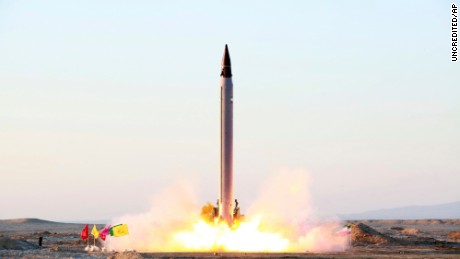
If the world expects the Iranian regime to change its ways in the wake of a completed nuclear deal last July, the answer it is getting from the mullahs in Tehran is depressingly the same as evidenced by yet another test launch of a new ballistic missile design in violation of United Nations sanctions against the testing of ballistic missiles capable of carrying a nuclear warhead.

According to Fox News, western intelligence sources say the test was held Nov. 21 near Chabahar, a port city in southeast Iran’s Sistan and Baluchestan Province near the border with Pakistan. The launch took place from a known missile test site along the Gulf of Oman.

The missile, known as a Ghadr-110, has a range of 1,800 – 2000 km, or 1200 miles, and is capable of carrying a nuclear warhead. The missile fired in November is an improved version of the Shahab 3, and is similar to the precision guided missile tested by the regime on Oct. 10, which elicited strong condemnation from members of the U.N. Security Council.

“The United States is deeply concerned about Iran’s recent ballistic missile launch,” Samantha Power, U.S. Ambassador to the U.N., said in a statement after the last Iranian ballistic missile test in October.

The regime appears to be in a race against the clock to improve the accuracy of its ballistic missile arsenal in the wake of the nuclear agreement signed in July.

The Security Council is still debating how to respond to the regime’s last test in October and therein lays the problem. While the world debates what to do in responding to the regime’s provocations, the regime continues on blissfully uninterrupted in its preparations.

The same scenario plays out in regards to the regime’s new offensive in Syria and its crackdown at home in an alarming rise in human rights abuses; all of which has been met by mostly silence and hand wringing in the rest of the world.

The regime’s new-found militancy has included a buying binge with Russia for new arms as a top aide to Russian president Vladimir Putin confirmed.

“When all the restrictions are removed and all the sanctions are lifted we will have quite a serious development in the field of military-industrial cooperation. It is already taking place in fields that are not covered by sanctions, and in future we are expecting to enter very large projects,” Vladimir Kozhin, a top military-industrial cooperation aide said in an interview with Izvestia daily.

The official added that Iran has shown great interest in cooperation with Russian weapons companies because practically all of its military forces require a major overhaul.

“Considering the fact that this is a large country with large military forces, we are talking very big contracts, worth billions,” Kozhin noted.

And now that the regime is due to receive a $100 billion payout as early as January because of the nuclear deal and a rushed incomplete investigation by the International Atomic Energy Agency that rubberstamped the regime’s compliance, the mullahs are due to get a huge payday.

The continued lack of action in the face of regime’s actions covers the large-scale such as military weapons to the small issues affecting individuals and their families as Washington Post reporter Jason Rezaian continues to languish in a regime prison on trumped up espionage charges; his incarceration now passing 500 days in captivity.

Even more disturbing is a report from cybersecurity firm Symantec which claims that regime hackers are using malware to spy on individuals including Iranian dissidents and activists.

The attacks aren’t particularly sophisticated, but the hackers have had access to their targets’ computers for more than a year, Symantec said, which means they may have gained access to “an enormous amount of sensitive information.”

Two groups of hackers, named Cadelle and Chafer, distributed malware that steals information from PCs and servers, including from airlines and telcos in the region, Symantec said.

“Reports have shown that many Iranians avail of these services to access sites that are blocked by the government’s Internet censorship,” Symantec wrote. “Dissidents, activists, and researchers in the region may use these proxies in an attempt to keep their online activities private.”

All of which means the regime is stepping up its efforts to identify specific and individual activists and dissidents, especially those living within Iran who may be communicating with outside dissident groups, as a means of tracking them down and arresting them.

It is a bitter irony that International Human Rights Day is approaching this week in light of this increased activity by the Iranian regime and highlights that no matter how the international community might buy the propaganda being spewed by regime lobbyists such as the National Iranian American Council; the reality has been much different.

If the attacks in Paris and San Bernardino do not wake up those who still refuse to believe that the rising tide of Islamic extremism is flowing from radical safe havens such as Syria and Iran is an imminent threat, then the Iranian regime’s actions in firing another missile in direct violation of sanctions should be an urgent alarm bell

By Michael Tomlinson
Filed Under: Blog, News Tagged With: Appeasement policy, Featured, Iran deal, Iran Human rights, Iran Lobby, Nuclear Iran, nuclear talks, Syria

Reasons To Be Thankful This Past Weekend

December 1, 2015 by admin

Reasons To Be Thankful This Past Weekend

Reasons To Be Thankful This Past Weekend

This past weekend, across the U.S., families sat down together to celebrate family and give thanks for all what they have, including secularism in government, freedom of speech and the practice of religion, support for the rights of women and minorities, protection for a free and active press and the guarantee of due process and a presumption of innocence in criminal cases.

All those things and more have formed the bedrock of American civil society for 239 years, but are virtually non-existent in the one country that has steadily called for the destruction of the American way of life since 1979: the Iranian regime.

The past few months of 2015 have certainly caused significant concern and alarm among Americans and throughout most parts of the world. We have seen terror attacks spring up literally around the world, most recently in the horrific attacks in Paris – first with the Charlie Hebdo attacks and then the bombings – and in the wave of atrocities perpetuated by Al-Qaeda, Boko Haram, Hezbollah and Shiite militias.

Couple that with the spread of sectarian conflicts – most fueled by the Iranian regime – in Syria, Iraq and Yemen, and you begin to get a pretty good idea of how chaotic the year has become in spite of the promises made by the Iran lobby that things would settle down after a deal was struck with the mullahs in Tehran over a new nuclear deal.

How wrong people like Trita Parsi of the National Iranian American Council were.

But for most Americans, their Thanksgiving wishes and victories were much smaller and personal. For them, most Americans could be thankful that this past weekend:

  • No more Americans were arrested and held hostage in Iran, except for the five currently held captive by the Iranian regime;
  • No new terror attacks were launched against Americans at home or abroad; and
  • The Iranian regime didn’t launch any new ballistic missiles like it did last month violating United Nations arms embargoes.

But for the Iranian regime, this past weekend wasn’t nearly a peaceful or good one for the mullahs as setbacks continue to dog the regime and stymie each of its efforts to expand its vision for a greater Islamic sphere of influence controlled from Tehran.

Among the news coming from media sources this weekend include:

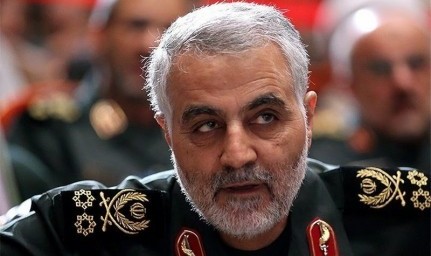
  • Reports that Quds Force commander Qassem Soleimani was seriously injured in Syria while supervising Iranian regime forces fighting rebels on behalf of the Assad regime. This follows previous news of deaths of other top Iranian military commanders in Syria;
  • The Washington Post reported that findings by the International Atomic Energy Agency can be expected to spark another round of intense scrutiny over the Iran regime’s claims its previously undisclosed nuclear program did not have any military components to it;
  • In anticipation of the IAEA report, the regime denounced the ongoing investigation and warned that Iran would not follow through on the nuclear deal unless the IAEA closed its investigation no later than Dec. 15;
  • Kenyan security forces have arrested two Kenyan men with links to the Iranian regime’s Quds Forces on suspicion of planning attacks in the East African nation, the Interior Ministry said on Saturday. It said their targets included “hotels in Nairobi frequented by Western tourists and diplomats;”
  • A flurry of reports in the Iran regime’s official and semi­official news outlets that have flooded out about more combat deaths suffered by Iranian forces in Syria have surprised analysts who monitor the country’s tightly controlled media. The reports, they say, indicate that at least 67 Iranians have been killed in Syria since the beginning of October, in a move some have described as an attempt by the mullahs to grab headlines back from Russia in an effort to burnish the image of regime forces fighting in Syria.

And to top off the weekend, top mullah Ali Khamenei went on his usual Sunday rant denouncing the U.S. and promising to keep the regime’s policies aimed squarely at preserving the Islamic revolution and spreading it throughout the region.

As reported in the Washington Times, Khamenei’s message was the subject of an analysis in a report by the U.S. Army Foreign Military Studies Office at Fort Leavenworth, Kansas.

“To encourage perpetual revolution might mean to foment continuous crisis,” the report said. “This, in turn, suggests greater regional instability and Iranian Revolutionary Guards Corps provocations toward U.S. forces and others.”

In other words, the Joint Comprehensive Plan of Action, the nuclear deal on which the Obama administration gambled for a more moderate Iran, has not tempered Khamenei’s fiery outcry.

“Khamenei’s endorsement of an expansive and perhaps even growing IRGC role confirms the group’s position as the chief obstacle to any political and economic reform in the Islamic Republic, and also suggests that the IRGC may win disproportionate advantage from any unfrozen assets or foreign direct investment entering the Iranian economy,” the report added.

All of which points out that while Americans celebrated values of family, peace, forgiveness and charity on Thanksgiving, the Iranian regime was busy deepening a conflict that has displaced half of Syria’s population, creating the largest refugee crisis in Europe since the end of World War II and spreading a radicalized form of extremist Islam manifesting itself in various terrorist groups around the world.

We can only hope the mullahs don’t get their holiday wishes granted next month.

By Michael Tomlinson

Filed Under: Blog, News Tagged With: Featured, Iran, Iran deal, Iran Terrorism, IRGC, Khamenei, Quds force, Syria, Trita Parsi, Yemen

Iran Regime Sympathizers Downplay Paris Attacks

November 24, 2015 by admin


Iran Regime Sympathizers Downplay Paris Attacks

Iran Regime Sympathizers Downplay Paris Attacks

In what has to be one of more astounding editorials written about the Paris attacks, Paul R. Pillar, a frequent supporter of the Iranian regime, penned a piece in the National Interest in which he actually tried to make the argument that the attacks were an example of “amateurish” tactics and that the outsized response from governments and media bordered on hysteria and ISIS did not warrant much respect.

“It is a mistake to regard the ISIS entity as a font of critical skills needed to kill people,” Pillar writes.

Let’s think about that statement for a moment. Pillar actually makes the claim that ISIS lacks the skills to kill people. That absurd statement ranks right up there with his previous editorials arguing vociferously for the nuclear agreement with the Iranian regime and his claims that doing so would usher in a new and peaceful phase in Middle East tensions.

Well, we certainly know how that worked out.

Pillar’s piece was reprinted faithfully in Lobelog.com, another loyal member of the Iran lobbying effort alongside the National Iranian American Council and Ploughshares Fund just to name a few; all of whom have recently made efforts to divert attention away from the bloody carnage in Paris and now Mali, and instead try to shift the discussion onto discrimination of Syrian refugees or warning of an overreaction in cracking down on civil liberties.

All of the members of the Iran lobby neglect to mention that the center and source of all of these problems starts and ends with the Iranian regime’s fanatical support of the Assad regime in Syria which started the conflict in the first place and helped spawn ISIS in the sectarian fight that sprang up when the mullahs in Tehran sent in thousands of Hezbollah fighters from Lebanon, Shiite Militias from Iraq and mercenaries from Afghanistan added to milliards of dollars to help keep its proxy in power in Syria.

The fact that Pillar attempts to gloss over the planning and execution necessary for the Paris attacks is unfathomable, other than he is trying hard to minimize the import of what the attacks mean for the West. He argues:

“Some organizational aptitude was needed to put together an operation that involved simultaneous dispatch of multiple attack teams, but this did not require organizing any more people than would be needed to put together a neighborhood soccer team,” Pillar said.

Most rational people would not think their local neighborhood soccer team could build eight suicide bomb vests, acquire and equip three teams with automatic weapons, arrange timetables, scout locations, determine how to funnel panicked people fleeing a bombed sports stadium into a kill zone and communicate via text messaging on disposable cell phones while arranging the attack via encrypted communications evading virtually all national intelligence agencies.

But Pillar exhibits the singular trait that afflicts all supporters of the Iranian regime; the desire to absolve it of any responsibility for spreading and fostering the kind of extremist Islamic belief that is now shaking the world with widespread, multiple and frequent attacks.

Pillar also neglects to mention another key facet of these attacks that is significantly more disturbing than the actual loss of human life; it’s the fact these attacks are not supported with any public demands.

There are no calls to release political prisoners or comrades. No demands for ransom or payments. No negotiations over territorial claims or grievances.

These attacks are based solely on the nihilistic extremist beliefs that also power and drive the mullahs in Tehran.

“The death toll for all of the Paris attacks, as shocking as it understandably was, nonetheless was much less than a more skillfully conducted operation involving a comparable number of attackers would have inflicted,” Pillar writes. “The attack team that went after the most target-rich location—a sports arena with tens of thousands of people—managed to kill only one other person besides themselves.”

I’m sure the families of those slain would disagree with Pillar on the skill level involved in murdering their loved ones, but his comments reflect the almost callous disregard the Iran lobby has for human suffering. Very similar to the Iranian regime’s initial condemnation of the attack but its consequent show of happiness by shamefully putting the blame on the French authorities in its state wide papers and media.

At key points in the travesty that is the human rights record of the Iranian regime, Pillar and his cohorts including Trita Parsi and Reza Marashi of NIAC, Jim Lobe of Lobelog.com and others have been struck deaf and mute when it comes to protesting the abhorrent human rights abuses of the mullahs in Tehran either in their comments to news media or in their own social media posts.

Americans held hostage, journalists rounded up, religious minorities imprisoned, social media administrators tossed in jail, dissidents executed, all these actions and more and warranted hardly a murmur of protest and yet Pillar deigns to call terror attacks in Paris as “amateurish.”

The only real amateurish act in this tragedy is the effort by the Iran lobby to whitewash the blood off the streets of Paris.

By Michael Tomlinson

Filed Under: News Tagged With: Featured, Iran, Iran Lobby, Lobelog, National Iranian American Council, NIAC, NIAC Action, Paul Pillar, Ploughshares, Reza Marashi, Syria, Trita Parsi

Iran Regime Crackdowns Continues as Paris Weeps

November 17, 2015 by admin

Iran Regime Crackdowns Continues as Paris Weeps

Iran Regime Crackdowns Continues as Paris Weeps

The contrasts in image and tone could not be more striking. On the streets of Paris, thousands gather to mourn those killed in ISIS terror attacks that shook Europe, while on the streets of Tehran, agents for the Revolutionary Guard are busy rounding up more journalists and dissidents in one of the fiercest crackdowns since the days of Mahmoud Ahmadinejad’s reign.

The latest victim of the Iran regime’s security crackdown was the arrest of a press cartoonist who was taken into custody while at work at The Shahrvand, a state daily newspaper in Tehran that is owned by Iran’s Red Crescent Society, or Red Cross according to New York Times.

The arrest had not been reported in the official news media as of Monday night. It came after the publication of a cartoon depicting tearful solidarity with the people of France over the attacks Friday that left at least 129 people dead. The cartoon was also posted on the Instagram.

The fact that a cartoonist is arrested by the regime for publishing a cartoon expressing sympathy for those slain by ISIS – the putative enemy of the Iranian regime – tells us all we need to know about what the mullahs in Tehran are thinking about the slaughter of French, German, American, British, Spanish and Swedish citizens.

The cartoonist’s arrest follows a nationwide crackdown in which several journalists and even two poets have been arrested as being subversive to the regime and serving as tools for Western influence as the regime seeks to stifle any voice of dissent in the wake of the nuclear deal it agreed to last July.

The “to-do” list for the mullahs have been busy lately as they have sought to win the civil war in Syria and secure the Assad regime, gone on a shopping spree for new weapon systems from the Russians, and send proxies to attack an Iranian dissident camp in Iraq in a brutal rocket barrage.

The mullahs have even instituted a new policy to impound the cars of any Iranian women caught driving a car without wearing a “proper” hijab or head covering. This follows past policies that forbade Iranian women from driving alone and allowed basij paramilitaries to beat women drivers and failed to prosecute others who threw acid at women while driving.

Senior mullahs have in recent weeks intensified their verbal attacks on “bad-hijab” women in Iran, with one likening them to “soliciting for sex.”

“The courageous decision by the commander of our police force to confront those women who defy and remove their hijab behind the wheel must be appreciated as it amounts to fighting prostitution on our streets,” said a mullah named Ahmed Alam Ulhoda in one of the more absurd comments ever published.

Another series of arrests targeted social media apps as the Revolutionary Guard also went after administrators on the popular Telegram messaging app for spreading “immoral content” according to the regime’s Fars news agency.

Telegram’s Chief Executive Pavel Durov said last month that Iranian regime authorities had demanded he hand over “spying and censorship tools”, and temporarily blocked the app when he refused.

The IRGC announced the Telegram users’ arrests last week, saying they had shared images and text “insulting to Iranian officials” as well as “satire and sexual advice”. At the time, the judiciary denied any such arrests had even occurred.

This comes after efforts by the regime to block access to popular social media platforms such as Whatsapp, Facebook, Twitter, Tango and Viber.

The crackdowns, especially the widespread nature and swiftness in their enforcement, underscore just how farcical the myth was that Hassan Rouhani’s elevation to president would represent some new “moderate” breakthrough for the regime. Indeed the violations of human rights in Iran has got worse during his tenure.

The alarming rise in human rights abuses moved Human Rights Watch to issue a joint letter signed by 36 human rights groups and other organizations urging support for United Nations General Assembly Resolution A/C.3/70/L.45 which seeks to promote human rights in Iran by calling on the regime to meet its domestic and international obligations to protect human rights.

The vote is scheduled on November 19, 2015 during the 70th session of the General Assembly.

“The Iranian authorities shouldn’t think they are getting a pass on human rights just because the nuclear accord has been signed,” said Sarah Leah Whitson, Human Rights Watch Middle East director. “Passing this resolution will send the message that the world has not forgotten about the country’s ongoing human rights abuses.”

More importantly, supporters of the regime have uttered not a word of criticism over the recent crackdowns. Groups such as the National Iranian American Council and The Ploughshares Fund and bloggers and commentators such as Jim Lobe and Ali Gharib have shifted their focus not on the tragedy suffered by the people of France, but rather in attempting to link the attacks and ISIS to Saudi Arabia in an effort to attack the Iran regime’s long-time rival.

Trita Parsi, head of the NIAC, has been busy on his social media feeds denouncing Saudi Arabia during the Paris attacks as much as he was busy denouncing Israel during the nuclear talks. In both cases, the real goal of his comments is to shift attention away from the bad acts of the Iranian regime.

Ultimately, the world is beginning to see past the facades put up by Iran lobby supporters and are recognizing that the true center of sectarian hate sits squarely in Tehran.

By Michael Tomlinson

Filed Under: Blog, News Tagged With: Featured, hassan rouhani, Iran, Iran deal, Iran Human rights, Iran Lobby, National Iranian American Council, NIAC, NIAC Action, Syria, Trita Parsi

Iran Regime Turns on Its Own

October 29, 2015 by admin

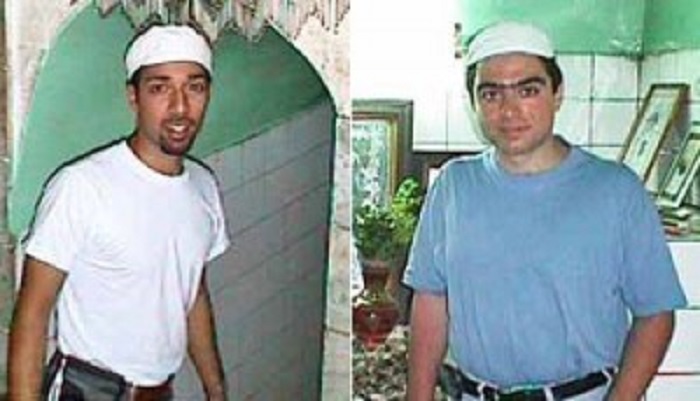
Trita Parsi traveled with Siamak Namazi to Isfahan, Iran’s third largest city, in August 2000. They also toured the Zoroastrian “Fire of Victory” Temple in Yazd. At the time, Siamak was living in Tehran, working for Atieh Bahar, a consultant company with close ties to the government. In 1999, Parsi and Siamak co-authored a paper that recommended setting up a lobbying organization in Washington to influence US-Iran policy. Siamak took a sabbatical in 2005 to complete a fellowship at the Woodrow Wilson Center in Washington, DC. While at the Center, Siamak helped Parsi formulate NIAC policies supportive of the Iranian regime.

Trita Parsi traveled with Siamak Namazi to Isfahan, Iran’s third largest city, in August 2000. They also toured the Zoroastrian “Fire of Victory” Temple in Yazd.
At the time, Siamak was living in Tehran, working for Atieh Bahar, a consultant company with close ties to the government.
In 1999, Parsi and Siamak co-authored a paper that recommended setting up a lobbying organization in Washington to influence US-Iran policy. Siamak took a sabbatical in 2005 to complete a fellowship at the Woodrow Wilson Center in Washington, DC. While at the Center, Siamak helped Parsi formulate NIAC policies supportive of the Iranian regime.

Siamak Namazi, an Iranian-American citizen, has been credited with helping found the Iran lobby including the creation of the National Iranian American Council alongside Trita Parsi as the primary vehicle for advocating for a nuclear agreement lifting economic sanctions on the regime.

The Daily Beast chronicled his family’s involvement as an “intellectual architect” for the NIAC as a pathway for empowering those within the regime whom he had a close relationship with and believed by helping secure an agreement it would boost his fortunes within the regime.

In the immortal words of Kevin Spacey who plays the scheming Frank Underwood on Netflix’s “House of Cards,” “We’re all victims of our own hubris at times.”

Truer words were never spoken about the Iran lobby because on the verge of reaping their perceived successes, they discover all they really are, are puppets for a regime of mullahs whose intent is only focused on preserving their own power.

That is because according to regime media reports, while visiting family in Tehran, Namazi was arrested by Revolutionary Guards Corp soldiers and tossed into the notorious Evin Prison.

There is an irony here on par with Alfred Nobel inventing dynamite and then creating the Nobel Peace Prize after his invention was used in war.

Namazi joins four other Americans who are being held hostage by the regime, including Washington Post reporter Jason Rezaian, Christian pastor Saeed Abedini, former Marine Amir Hekmati and the former FBI agent Robert Levinson.

According to a piece in American Thinker, Parsi and Namazi founded NIAC as a way to lobby for the removal of sanctions against the regime and promote its foreign policy while combatting anti-regime forces in the U.S.

Both Parsi and Namazi reportedly enjoyed close ties and access to Hassan Rouhani and Javad Zarif, the regime’s president and foreign minister, with Parsi being seen traveling with and in close discussions with the regime delegation during nuclear talks.

Conspicuously, the NIAC have been silent on the issue, declining comment and social media feeds for Parsi and other NIAC staff is devoid of any mention of the arrest.

But Hassan Dai, editor of the Iranian American Forum who won a defamation lawsuit filed against him by Parsi, speculated that the arrest suggests a power struggle of sorts within the regime’s leadership.

Dai explained in an interview with Breitbart News that Namazi had consistently “lobbied in favor of a faction of the regime,” which upset the mullahs because it would only be acceptable to “lobby for the whole regime.”

The fight between the factions in Iran is a fight for “the best solution to preserve the regime,” he explained, adding that groups like NIAC have never sided with true “reformists,” but with people who wish to employ a different strategy to empower the regime, such as Rouhani and former President Akbar Rafsanjani.

Because Namazi and NIAC prefer one faction over the other, “they are undermining the Supreme Leader. They are undermining the Revolutionary Guard,” Dai explained. “When you lobby U.S. policymakers to remove sanctions against Iran with the rationale that it will help reform the regime, you undermine the Supreme Leader, because he wants them to accommodate to the regime now.”

The arrest of Namazi sends a message from Iran’s rulers that “Rouhani has no power,” Dai concluded. “He cannot even protect his own friend.”

Breitbart News further speculates – and rightly so – that the arrest pours cold water on the notion that securing the nuclear deal would empower “moderates” within the regime and help reform it. Evidence since agreeing to the nuclear contradicts that idea completely with the conviction of Rezaian, the test launch of an illegal ballistic missile and the launching of a new offensive in Syria alongside Russian forces.

The arrest of Namazi demonstrates that the leadership of the Iran regime is of one mind and firmly in the control of Ali Khamenei and his religious cohorts and that any idea of moderation within the regime is a pipe dream; which may go to explain why coming off of the NIAC’s recent leadership conference to celebrate the nuclear deal, Parsi’s Twitter feed was filled with posts condemning Saudi Arabia, a bitter enemy of Iran and locked in fighting in Yemen.

If Parsi doesn’t tow the mullahs’ line, he might find a different kind of reception party the next time he travels to Tehran and end up sitting next to his buddy Namazi.

By Michael Tomlinson


Filed Under: Blog, Latest from Lobbies & Appeasers, National Iranian-American Council, News Tagged With: #NuclearDeal, Appeasement policy, Featured, hassan rouhani, Iran, Iran deal, Iran Economy, Iran Lobby, Irandeal, Jason Rezaian, Khamenei, Moderate Mullahs, National Iranian American Council, NIAC, Nuclear Deal, Rouhani, siamak Namazi, Syria, Trita Parsi

As Iran Regime Approves Nuke Deal, It Bulks Up Militarily

October 23, 2015 by admin

As Iran Regime Approves Nuke Deal, It Bulks Up Militarily

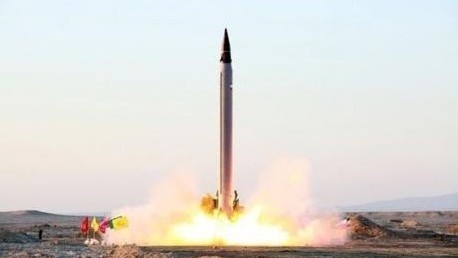
A new Iranian precision-guided ballistic missile is launched as it is tested at an undisclosed location October 11, 2015. REUTERS/farsnews.com/Handout via ReutersThe Iran regime’s top mullah, Ali Khamenei, added his tepid support to the nuclear deal that the regime’s Parliament also approved, clearing the pathway for the regime to get its payday of $150 billion plus billions more in foreign investment and economic activity.

But nothing is ever simple with the inscrutable mullahs of Tehran as Khamenei added the caveat that all sanctions had to be lifted or Iran would walk away from the deal. This reinforces the key stumbling block he placed in front of negotiators when he maintained that the regime had to first receive the benefits of lifted sanctions before it would begin any dismantling of its nuclear infrastructure.

The chicken and egg argument he poses is deliberately cloaked in the obscurity it needs to allow both sides proof of his adherence to the terms of the deal from both sides perspective, while allowing the wiggle room Khamenei wants to set the implementation of the agreement any way he sees fit.

This is readily apparent in the deluge of provocative acts the regime has undertaken since the agreement was signed, including:

  • The conviction of Washington Post reporter Jason Rezaian on trumped up spying charges and then offering to swap him for convicted Iranian arms smugglers;
  • The test firing of a new ballistic missile violating United Nations Security Council resolutions prohibiting development of new nuclear-capable missiles;
  • Coordination of a military alliance with Russia through a mission to Moscow by Quds Force commander Qassem Soleimani in violation of UN travel restrictions; and
  • Launching of a new offensive in Syria against forces opposing the Assad regime including the use of thousands of Iranian fighters and proxies from Hezbollah in Lebanon, Shiite militias from Iraq and Afghan mercenaries.

These acts put to a lie the claims long made by the Iran lobby during the nuclear negotiations that the regime was only interested in becoming a moderating force within the region. Led by the National Iranian American Council, those same supportive voices for the regime have been struck deaf and dumb in the face of these new violations by the regime.

The test firing of the new ballistic missile was especially provocative and so concerning that the U.S., Great Britain, France and Germany called on the UN Security Council’s Iran sanctions committee to take action over the violation.

In a letter obtained by Reuters containing details on the launch, the nations said the ballistic missile was “inherently capable of delivering a nuclear weapon.”

Is it too late to say “We told you so?”

Even now, news media that once editorialized in support of the nuclear deal have reversed course in noting the worrisome developments by the Iran regime.

“But the Syrian offensive is certainly more than message-sending. If successful, it could eliminate the chance to construct a moderate, secular alternative to the Assad regime, and send hundreds of thousands more refugees across Syria’s borders. It was just such aggression that Mr. Obama acknowledged might be a byproduct of the nuclear deal — and that he vowed to resist. If he remains passive as Maj. Gen. Soleimani’s forces press forward, both Iranian and U.S. allies across the Middle East will conclude that there will be no U.S. check on an Iranian push for regional hegemony,” said the Washington Post in an editorial.

There was also a move by 11 Senate Democrats to push the Obama administration to respond forcefully to the regime’s missile test, pressing the case that a response would set a precedent for how the U.S. would react to any future violations of the nuclear deal.

“We are concerned about the military significance of this test, which is part of a long-term Iranian program that seeks to improve the range and capabilities of its ballistic missiles,” the senators wrote. “We are also convinced that the launch is an attempt to test the world’s will to respond to Iranian violations of its international commitments.”

It is worth noting that several of these same Senators had voted in favor of the deal.

Joshua Keating at Slate raised a similar concern about the fallout from the nuclear deal saying “it certainly doesn’t bode well for the optimistic notion that the deal could lead to U.S.-Iranian security cooperation beyond the narrow areas laid out in the agreement and it certainly doesn’t look good for the administration. Iranian leaders were presumably well aware of this.”

This understanding of the regime’s intentions puts into perspective the potential use of the billions of dollars about to be released into the control of the mullahs and as the International Business Times puts it:

“Pushed by a combination of its own outdated military equipment and the formidable military buying power of its oil-rich Middle East rivals, analysts said Tehran is urgently plotting to upgrade and replace its own antiquated defense technology in favor of Russian- and Chinese-made military equipment by spending oil revenue that’s been trapped in an assortment of banks worldwide for the last three years.”

“Those options range from providing Hezbollah fighters, who are supporting Syrian President Bashar Assad in the Syrian civil war, to boosting aerospace efforts, including space-based platforms such as satellites, to advance its military into the 21st century,” according to Ariel Cohen, senior fellow at the Atlantic Council, an international affairs think tank based in Washington, D.C.

It is clear that the foxes let loose by the nuclear deal are now coming home to hunt.

By Michael Tomlinson


Filed Under: News Tagged With: Appeasement policy, Featured, Iran, Iran deal, Iran Lobby, Iran Mullahs, Iraq, Sanctions, Syria, Yemen

Iran Regime Reveals True Intentions

October 8, 2015 by admin


Iran Regime Reveals True Intentions

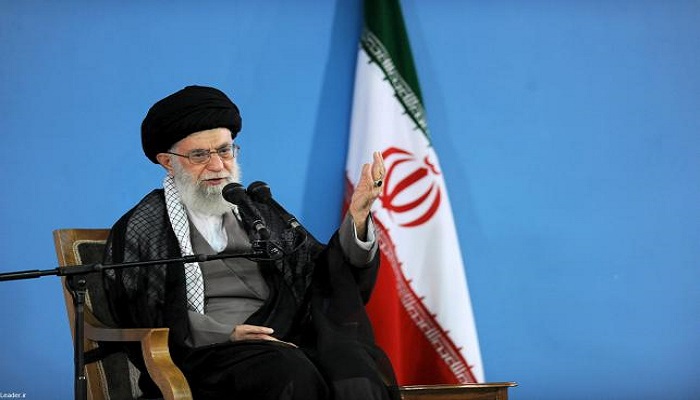
Iran’s Supreme Leader Ayatollah Ali Khamenei gestures as he delivers a speech during a gathering by Iranian forces, in Tehran October 7, 2015. REUTERS/leader.ir/Handout via Reuters

Ali Khamenei, the highest authority in the Iran regime, banned any further negotiations between the regime and the U.S. according to a statement released on his website, firmly putting the brakes to any idea of accommodation or moderation following the approval of a nuclear deal.

“Negotiations with the United States open gates to their economic, cultural, political and security influence. Even during the nuclear negotiations they tried to harm our national interests,” Khamenei was quoted as saying on his website.

Khamenei had previously said there would be no more talks with the U.S. last month, but this move was a step further in declaring an outright ban on any further discussions on any other topics.

The Obama administration, fed a steady stream of misrepresentations and false promises by the Iran lobby – led by the National Iranian American Council – expected a new phase of relaxed, open negotiations with the regime on a variety of issues including the ISIS, the Syrian conflict and sponsorship of terror.

Instead, now that the regime has achieved its goals in the nuclear deal – a lifting of economic and military sanctions, preservation of its nuclear infrastructure, delinking of human rights issues and release of billions in frozen cash – the regime sees no other reason to carry on the façade of moderation it has so assiduously pushed since the handpicked elevation of Hassan Rouhani as regime president.

In his address to Revolutionary Guards Navy commanders, Khamenei said talks with the U.S. brought only disadvantages to Iran.

“Through negotiations Americans seek to influence Iran”, Khamenei was quoted as saying to the IRGC commanders, who are also running much of Iran’s military involvement in Syria.

The bill of goods sold by the Iran lobby for hopes of a release of American hostages, removal of Assad and a reigning in of sectarian violence has now come due as Iranian regime’s leadership seeks to make all those promises false.

Michael Goodwin, a New York Post columnist wrote in Fox News:

“The White House deliberately downplayed the Russian buildup because it undercut central promises Obama made to Congress about the Iran nuke deal, which was then being debated.

“One of those promises was that Russia would help enforce the terms. Instead, Putin actually was making common cause with Iran, and both are now killing the Syrian rebels we supported.

“Here’s the scorecard: Obama got his Iran deal, and the world got a more aggressive Iran, an expanded Syrian war and wider Russian influence. With each passing day, the cost of stopping Putin grows more expensive.”

The yawning chasm between the promises made by the Iran lobby and the reality of what is taking place was discussed in another piece in Foreign Policy by Aaron David Miller and Jason Brodsky in which they write:

“One thing seems pretty clear: Somewhere in a parallel universe far, far away, the logic of a linear path to Iran’s moderation may be alive and well. But back here on planet earth, the odds on the health and prosperity of reform and the reformers, too, are still very long ones indeed.”

But supporters of the regime are still fighting back in trying to hold the line that a force for moderation exists in Iran and is fueled by post-nuclear deal euphoria, rather than the hangover the world is witnessing today.

One of those peddling this snake oil is Kourosh Ziabari who writes in Huffington Post:

“To the detriment of hardliners, Iran is reemerging as a regional power, and it’s easily predictable that with another four years in office plus the two intact years he has in hand – unless Ahmadinejad comes up with a new wizardry and wins the 2017 elections, President Rouhani will be able to build a strong and peace-making Iran which nobody will be able to demonize or depict as a threat to world peace and security.”

Ziabari pushes the Iran lobby message that there exists within Iran “moderate” and hard line” forces when in fact Khamenei has indelibly proven there exists only one voice on all policy matters and it is firmly his.

Even as Iran and Russia join with Hezbollah in launching a new phase in Syria, Iran’s mullahs are busy in other parts of the Middle East, including Yemen, where the Houthi rebels they support have been spotted in Iran getting support and new arms according to Al Arabiya.

The Houthi delegation “will convey to Iranian officials an urgent request by Houthi leader Abdulmalik al-Houthi to attain additional shipments of weapons after the Saudi-led coalition forces made several gains against the militia,” according to the report.

“Before visiting Tehran, the delegation had allegedly visited Beirut where it met with Hezbollah leader Hassan Nasrallah,” according to al Arabiya. “During the visit, the delegation allegedly voiced Abdulmalik’s al-Houthi’s gratitude for Hezbollah’s support in sending military experts to Yemen.”

President Obama’s former national security adviser also warned that Iranian regime leaders have effectively turned Iraq into a “client state” and are bent on exploiting the regional war against ISIS to promote their own brand of Shiite extremism throughout the Middle East.

“Iran’s grand strategy entails consolidating the hold it has gained in Iraq — a grip it seeks to tighten, directly and through proxies — and by stoking the sectarian fires,” said retired Marine Corps Gen. James L. Jones.

Gen. Jones testified alongside former Sen. Joe Lieberman, an independent, and both men lamented the administration’s failure to provide more assistance and refuge to members of the Iranian dissident group — commonly known in Washington as the “MEK” or “PMOI” — who have been left in the lurch in Iraq since the departure of U.S. forces in 2011.

On top of all this, word comes out that cybersecurity researchers have uncovered a network of fake LinkedIn profiles, which they suspect were being used by hackers in Iran to build relationships with potential victims around the world, according to a new report to be published by security firm Dell SecureWorks Inc.

This tactic, known as “social engineering,” is one where hackers trick people to get them to cough up personal or sensitive information. “Having those trust relationships gives [hackers] a platform to do a bunch of different things,” said Tom Finney, a security researcher at Dell Secureworks.

The 25 fake profiles described in the report were connected to more than 200 legitimate LinkedIn profiles — mostly individuals based in the Middle East who worked in sectors like telecom and defense. Those individuals and their companies likely have information that would be of interest to an Iranian cyber group, Dell Secureworks said.

Yes, the post nuclear deal world has indeed brought much change, just not the kind the Iran lobby promised.

By Michael Tomlinson

Filed Under: Blog, The Appeasers Tagged With: #NuclearDeal, Appeasement policy, Featured, Iran, Iran deal, Iran Economy, Iran Lobby, Iran Mullahs, Iran sanctions, Khamenei, NIAC, NIAC Action, Syria, Yemen

Things To Know About the Iran Regime This Week

May 18, 2015 by admin

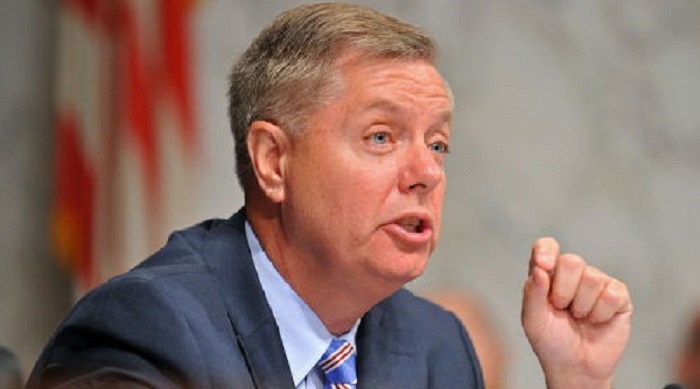
Sen. Lindsey Graham (R-SC) questions Supreme Court nominee Elena Kagan, President Obama's pick to replace retiring Justice John Paul Stevens, during during the second day of her confirmation hearing before the Senate Judiciary Committee on Capitol Hill in Washington on June 29, 2010. UPI/Kevin Dietsch

Sen. Lindsey Graham (R-SC) questions Supreme Court nominee Elena Kagan, President Obama’s pick to replace retiring Justice John Paul Stevens, during the second day of her confirmation hearing before the Senate Judiciary Committee on Capitol Hill in Washington on June 29, 2010. UPI/Kevin Dietsch

Sen. Lindsey Graham (R-SC) wrote in this weekend’s Wall Street Journal an editorial outlining eight conditions the Iran regime must meet before any nuclear agreement is reached. The points included common sense ideas such as closure of all hardened or formerly secret nuclear sites and allowing anytime, anywhere inspections of all Iranian military and nonmilitary facilities.

His points are valid and important in order to ensure any deal removes the threat of nuclear weapons from coming into the possession of the Islamic state., but the most important point he outlined as the conditioning of relief from economic sanctions on certification by the International Atomic Energy Agency that Iran was in full compliance and demonstrate that compliance over a sustained period of time.

The reason why this condition stands out above all others lies in the most pressing need Iran has right now which is cash. Iran’s mullahs have followed a policy of destabilizing the Middle East over the last three years including the funding of Shiite militias in Iraq and virtually taking over its government, supplying arms and support to the Syrian regime in its bloody civil war, and supporting a Houthi rebel army that has overthrown the government of Yemen and plunged the Arabian peninsula into a dangerous proxy war with Saudi Arabia and Sunni gulf states.

Iran’s mullahs have pressed hard for the lifting of all economic sanctions at once should a deal be completed because it needs the estimated $100 billion in frozen assets to help resupply its coffers depleted by proxy wars and plunging oil prices.

But even with this thirst for cash, Iran remains obstinate on even the most basic parts of an agreement. The regime’s top negotiator and Deputy Foreign Minister Abbas Araqchi opened talks with the IAEA recently which has been demanding access to Iranian military sites such as Parchin. “Iran, which is extremely reluctant to allow atomic inspectors access to military sites, has been stalling the investigation since last August,” reported Reuters.

This shows that mullahs’ desire for cash does have limits, namely they do not want to limit their ability to produce nuclear weapons. Iran’s mullahs believe that possession of nukes places Iran in a prime position to be the power in the region and weapons of mass destruction allow it to offset a nuclear-capable Israel, while also holding a hammer over the heads of Sunni states such as Saudi Arabia.

But this pursuit of weapons and funding of proxy wars have come at a steep price for ordinary Iranians. As Al Arabiya News Channel recently reported in a new series of stories focused on poverty in Iran:

“In 1979, shortly after the shah had been toppled, the new theocratic ruler Ruhollah Khomeini promised free electricity, water supplies and transportation services to all Iranians, to be paid for by oil revenues under a ‘just’ Islamic economic system.  Yet this promise – repeated by several regime presidents after him to make the poor feel the benefits of Iran’s oil wealth – was never delivered.”

Oddly enough though, U.S. Secretary of State John Kerry seems to think North Korea can somehow learn a positive lesson from any completed deal with Iran, which leaves objective observers dumbstruck since it was North Korea that provided the mullahs with the template for achieving nuclear capability by negotiating an agreement and then violating every aspect of it. In fact, North Korea has supplied Iran with much of its nuclear research and virtually all of its ballistic missile capability under manufacturing license.

Unfortunately while the rhetoric is starting to heat up on the near presidential campaign trail, the news media have all but ignored violent protests that have broken out in Iranian cities. The recent protests against the regime’s oppression began after a May 4 incident in which 27-year-old Farinaz Khosravani jumped to her death from a window when an Iranian intelligence officer allegedly tried to rape her at the hotel where she worked in the city of Mahabad according to the International Business Times.

The mass protests have been met harshly by Iranian regime’s security forces with the potential for even more deaths as a result.

All of which leads us to the most combustible issue coming to a head this week as an Iranian ship heads towards Yemen with what the regime calls a cargo of “humanitarian supplies,” but with no ability to independently verify it.

Iranian Gen. Masoud Jazayeri, the deputy chief of staff, warned that any attempt to interfere with the vessel would “spark a fire” in a clear warning to the U.S. Navy. The stakes rise higher as the Iran regime starts the weekend talking about a nuclear peace and ends it with warnings of war.

By Michael Tomlinson

Filed Under: Blog, News Tagged With: Iran, Iran sanctions, Iran Talks, Syria, Yemen

  • « Previous Page
  • 1
  • …
  • 4
  • 5
  • 6

National Iranian-American Council (NIAC)

  • Bogus Memberships
  • Survey
  • Lobbying
  • Iranians for International Cooperation
  • Defamation Lawsuit
  • People’s Mojahedin
  • Trita Parsi Biography
  • Parsi/Namazi Lobbying Plan
  • Parsi Links to Namazi & Iranian Regime
  • Namazi, NIAC Ringleader
  • Collaborating with Iran’s Ambassador

Recent Posts

  • NIAC Trying to Gain Influence On U.S. Congress
  • While Iran Lobby Plays Blame Game Iran Goes Nuclear
  • Iran Lobby Jumps on Detention of Iranian Newscaster
  • Bad News for Iran Swamps Iran Lobby
  • Iran Starts Off Year by Banning Instagram

© Copyright 2026 IranLobby.net · All Rights Reserved.