Iran Lobby

Exposing the Activities of the lobbies and appeasers of the Mullah's Dictatorship ruling Iran

  • Home
  • About
  • Current Trend
  • National Iranian-American Council(NIAC)
    • Bogus Memberships
    • Survey
    • Lobbying
    • Iranians for International Cooperation
    • Defamation Lawsuit
    • People’s Mojahedin
    • Trita Parsi Biography
    • Parsi/Namazi Lobbying Plan
    • Parsi Links to Namazi& Iranian Regime
    • Namazi, NIAC Ringleader
    • Collaborating with Iran’s Ambassador
  • The Appeasers
    • Gary Sick
    • Flynt Leverett & Hillary Mann Leverett
    • Baroness Nicholson
  • Blog
  • Links
  • Media Reports

Starting With US Navy Versus Iran Missiles

October 13, 2016 by admin

Starting With US Navy Versus Iran Missiles

Starting With US Navy Versus Iran Missiles

You may not have noticed the news, but there is a shooting war going on off the coast of Yemen between the US Navy and Iranian-backed Houthi rebels trying to overthrow the government in Yemen.

According to US military sources, the US Navy destroyer, USS Mason, was targeted in a failed missile attack as it operated north of the Bab al-Mandab Strait. It was the second attack in the last week against US warships.

The Mason fired defensive salvos in response, bringing down one of the missiles fired at it according to the Pentagon.

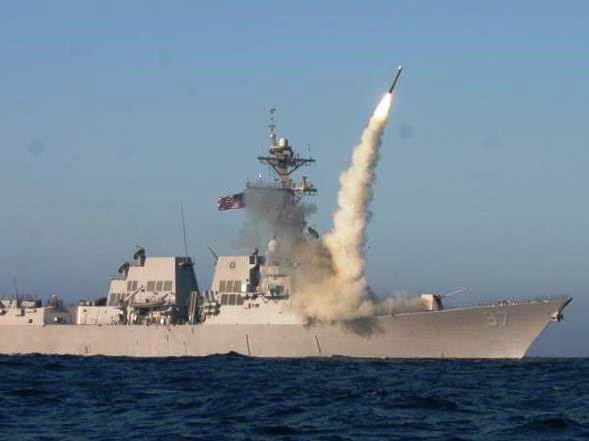
In response, the US Navy reportedly fired Tomahawk cruise missiles Thursday morning from the Red Sea at coastal radar sites in Yemen, destroying targets believed to have targeted the US warships.

The missiles were launched from the destroyer USS Nitze at three locations north of the Bab el-Mandeb strait, said Pentagon press spokesman Peter Cook.

“These limited self-defense strikes were conducted to protect our personnel, our ships, and our freedom of navigation in this important maritime passageway,” Cook said. “The United States will respond to any further threat to our ships and commercial traffic, as appropriate, and will continue to maintain our freedom of navigation in the Red Sea, the Bab al-Mandeb, and elsewhere around the world.”

Michael Knights, an expert on Yemen’s conflict at the Washington Institute for Near East Policy, said the targeting of U.S. warship suggested the Houthis, fighters from a Shi’ite sect that ruled a 1,000-year kingdom in northern Yemen until 1962, could be becoming more militarily aligned with groups like Lebanon’s Shi’ite militant group Hezbollah, according to Reuters.

“Targeting U.S. warships is a sign that the Houthis have decided to join the axis of resistance that currently includes Lebanese Hezbollah, Hamas and Iran,” Knight said.

The Mason was also the target of a failed missile attack off Yemen on Sunday, and the Navy praised the resolve of sailors aboard the ship.

U.S. officials have told Reuters there are growing indications that Houthi rebels, despite those denials, were responsible for Sunday’s incident. The rebels appeared to use small skiffs as spotters to help direct the missile attack on the warship on Sunday.

The United States is also investigating the possibility that a radar station under Houthi control in Yemen might have also “painted” the USS Mason, something that would have helped the Houthi fighters pass along coordinates for a strike, the officials have said.

Reuters has learned that the coastal defense cruise missiles used against the USS Mason on Sunday had considerable range, adding to concerns about the kind of heavy weaponry that the Houthis appear willing to employ and some of which U.S. officials believe is supplied by Iran.

Another missile launched Oct. 1 caused near-catastrophic damage to the HSV-2 Swift, a catamaran-style high-speed vessel that was operated by the Emiratis and once was a part of the U.S. Navy. Video of the strike published online shows the ship engulfed in a fireball.

It’s no secret that the Iranian regime has been supplying the Houthis in their insurgency campaign and warships from Saudi Arabia and other Gulf states have intercepted ships coming from Iran to Yemen loaded with illegal weapons, including rockets, mortars and launchers.

Even the U.S. Navy intercepted an Iranian shipping vessel sending vast shipments of arms to the Houthis in April 2016.

Attacking American ships in Yemen is becoming a disturbingly all too common affair since this Wednesday also marked the 16th anniversary of the terrorist attack against the USS Cole in Aden harbor, which killed 17 American sailors.

The fact that Iranian regime supplies virtually all of the arms to the Houthis, especially sophisticated weapons such as the cruise missiles fired at the US Navy ships, many members of Congress suspect that some of the $1.7 billion cash ransom payment made to the Iranian regime in exchange for the release of American hostages may have paid for the Houthi weapons.

The weekend attack on the U.S. Navy by Iranian-backed Houthi rebels has sparked another official inquiry surrounding the cash payment to Iran, with a group of 17 senators now seeking to obtain an official assessment by the Pentagon of how Iranian regime has allocated this cash to its military operations, according to the Washington Free Beacon.

Lawmakers, led by Sens. Kelly Ayotte (R., N.H.) and Ted Cruz (R., Texas), are petitioning the Pentagon to provide a full analysis of Iran’s military activity since last summer’s nuclear agreement went into effect.

Senior Pentagon leaders have said in recent weeks that the Obama administration kept them in the dark about the cash payment to Iran. The U.S. defense establishment widely believes this money will help Iran foster instability across the Middle East.

The 17 senators sent a letter late Tuesday to Secretary of Defense Ash Carter and Joint Chiefs of Staff Chairman Joseph Dunford. The inquiry centers around evidence that Iran has significantly increased its military activity since the nuclear accord went into effect.

“The plain purpose of transferring the payment in cash to Tehran was to circumvent the effects of U.S. and international financial sanctions,” the lawmakers wrote, according to a copy of the letter obtained by the Free Beacon. “Iran is almost certainly using this windfall to skirt the arms embargo and illicitly purchase weapons for the Islamic Revolutionary Guard Corps (IRGC), the terrorist organization Hezbollah, and/or the murderous Assad regime in Syria.”

The Wall Street Journal editorial board took a hard line at the possibility of Iran supplying and directing the use of these weapons against US forces, which “were attacked by two Chinese-built C-802 cruise missiles fired from territory controlled by Iranian-backed Houthi militia. Iran is a major operator of the C-802; its proxy Hezbollah used it in 2006 to punch a hole in an Israeli corvette off the coast of Lebanon.”

“More significantly, the attack on the Navy ships—with hundreds of American sailors aboard—is another reminder that the nuclear deal has done more to embolden than moderate Tehran’s ambitions, despite a cascade of U.S. concessions.”

“The Journal’s Jay Solomon and Carole Lee reported last month that the Administration secretly agreed in January to lift sanctions on two of Iran’s state banks involved in financing its ballistic-missile program seven years ahead of schedule. More recently, the Administration has granted Boeing and Airbus export licenses to sell passenger jets to Iran, and last week it issued new guidelines to facilitate dollar transactions with Iranian firms.”

“So let’s get this straight: The Administration grants the mullahs unprecedented concessions not called for by the nuclear deal, and they respond by attacking the U.S. Maybe President Obama sees a foreign-policy paradox at work. A better way of describing the dynamic might be cause-and-effect.”

So while the Iran lobby, especially the Ploughshares Fund and National Iranian American Council promised better relations with Iran, the US Navy already finds itself in a shooting war against Iranian proxies and missiles.

Michael Tomlinson
Filed Under: Blog, News Tagged With: #NuclearDeal, Appeasement policy, Ballistic Missiles, Featured, Houthi, Iran, Iran Human rights, Yemen

Iran Regime Trying to Execute 22-Year Old Woman

October 12, 2016 by admin

Iran Regime Trying to Execute 22-Year Old Woman

Iran Regime Trying to Execute 22-Year Old Woman

The Iranian regime is not a nameless, faceless bureaucracy. Its leadership is made up of men, virtually all of whom are deeply indoctrinated and adhering to an extremist form of Islamic belief that is at odds with the rest of the modern world.

These men are handpicked, have lifelong associations and cover for one another to ensure the continuation of their rule. Their families profit handsomely from the control these men exert over virtually all of the industries within Iran, while they are protected from prosecution and accusations of corruption by a system of religious courts that answer to no one except the ruling class.

The Iranian people are kept in check by a paramilitary force that enforces not only legal codes, but also morality codes of conduct, all of which are designed to keep free expression and even outside-the-box thinking firmly suppressed.

Elections are essentially rigged where these rulers decide who can run for office and routinely clear the field of any potential reformists or would-be moderates.

Their rule and effectiveness at ruling are put on display almost every day with public executions held in open squares throughout the country, usually from construction cranes and sometimes involving scores of prisoners.

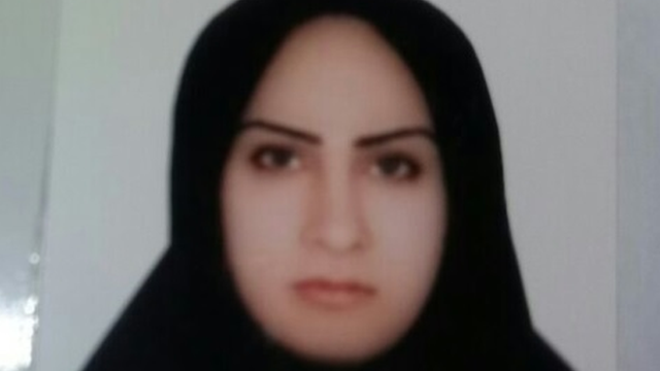
It is within this ruling class, dominated by religious mullahs, that has seen fit to imprison thousands of ordinary Iranians for crimes that would be anathema in the West. No case illustrates this disparity more than the case of Zeinab Sekaanvand, a 22-year-old Iranian-Kurdish woman who was arrested when she was just 17-years-old and convicted of murdering her husband after a grossly unfair trial according to Amnesty International.

The Iranian regime plans to execute her as early as October 13th, despite an international outcry for her release.

“This is an extremely disturbing case. Not only was Zeinab Sekaanvand under 18 years of age at the time of the crime, she was also denied access to a lawyer and says she was tortured after her arrest by male police officers through beatings all over her body,” said Philip Luther, Research and Advocacy Director for the Middle East and North Africa at Amnesty International.

“Iran’s continued use of the death penalty against juvenile offenders displays the authorities’ contempt even for commitments they themselves have signed up to. The Iranian authorities must immediately quash Zeinab Sekaanvand’s conviction and grant her a fair retrial without recourse to the death penalty, and in accordance with principles of juvenile justice,” he said.

Sekaanvand was 17-years-old when she was arrested in February 2012 for the murder of her husband, whom she had married at the age of 15. She was held in the police station for the next 20 days where she has said she was beaten by male police officers. She “confessed” to them that she stabbed her husband after he had subjected her to months of physical and verbal abuse and had repeatedly refused her requests for divorce, according to Amnesty International.

Her trial was grossly unfair. She was denied access to a lawyer during her entire pre-trial detention period and only met her state-appointed lawyer for the first time at her final trial session on October 18, 2014, the human rights group said.

The Iranian regime’s parliament has passed laws allowing marriage for girls as young as 13-years-old, including even a man marrying his own stepdaughter, in examples of the misogynist tendencies of these ruling men.

“Child marriage isn’t just a form of discrimination, it’s a form of violence,” Save the Children CEO Kevin Watkins told the New York Post.

“Forcing girls to marry much older men robs them of their freedom and amounts to sexual slavery. Instead of being in school, married girls face domestic violence, abuse and rape,” he said.

Human rights groups have long criticized Iran’s Penal Code which falls woefully short of safeguards required for juvenile offenders under international human rights law, and even those limited safeguards that do exist, such as informing juvenile offenders of their right to apply for a retrial, are often not implemented by the authorities.

While in prison, Sekaanvand become pregnant from a relationship with another prisoner, stalling her planned execution by the regime until she delivered a stillborn child on September 30th.

Doctors said the young woman’s baby died in her womb two days before she gave birth as a result of the shock she suffered after her friend and cellmate was executed.

According to Human Rights Watch, another 49 people who were children when they committed an offense are currently on the regime’s death row. In the past decade, Iran has executed at least 73 juvenile offenders, according to a January Amnesty report.

It is noteworthy that while the Iranian regime’s leadership pursues this binge of killing children, the Iran Lobby has been stunningly silent on the issue, offering almost no criticism of the practices.

A perusal of the social media feeds for notable Iran lobby members such as Trita Parsi, Reza Marashi and Tyler Cullis of the National Iranian American Council reflect a shocking lack of commentary of the regime’s willingness to incarcerate, torture and execute children, especially battered women who are victims of appalling domestic violence.

We can only assume the higher priorities for the NIAC is urging the lifting of more restrictions on the regime’s access to US currency so the mullahs can get more cash to line their pockets.

By Laura Carnahan

Filed Under: Blog, News Tagged With: Iran, Iran Human rights, Iran Lobby, IRGC, NIAC, NIAC Action, Trita Parsi, Tyler Cullis

Iran Lobby Working Feverishly to Save Nuclear Deal

October 11, 2016 by admin

treasury-logo

Since talks began with the Iranian regime on a potential nuclear agreement, the Obama administration has redefined generously its interpretations of “sanctions” on the regime to the point where billions of dollars have flowed to Tehran in ways unthinkable just a year ago.

The justification for the broad easing of sanctions has been the mantra that the alternative would be worse for the world; that failure to do so would empower “hardline” elements in Iran to seize the opportunity to take control and force out “moderates” and abandon the deal and start a nuclear arms race.

The administration’s position echoes the positions pushed by the Iran lobby, including prominent supporters such as the National Iranian American Council, which repeatedly claimed that the deal was helping cement support for perceived moderates such as Hassan Rouhani.

In response, the Obama administration has ignored, overlooked and even enabled a long string of accommodations for the Iranian regime that has emboldened the mullahs in Tehran. While no one disputes the intentions of the president in wanting to make a world free from nuclear weapons, we respectfully judge his efforts to have been a monumental waste of time.

The misguided belief by the US that Rouhani is a moderate that needs to be supported and whose re-election should be a priority is dumbfounding given the year of bloodshed caused by Rouhani’s policies including the massive escalation in the Syrian war, severe domestic crackdowns on human rights and the unprecedented executions of almost 3,000 Iranians, including women and children ranking Iran second in the world in state-sanctioned killing.

The latest act of appeasing the regime comes in the form of new guidance from the Treasury Department that effectively lifts the last remaining sanctions on the regime’s access to US currency exchanges.

The New York Post editorial board issued a blistering response to the action:

“The latest betrayal: The Treasury Department just lifted key restrictions on Iran’s ability to do business in US dollars and access world financial markets — breaking Team Obama’s explicit vows as it lobbied Congress not to nix the deal.

“Iran’s banks weren’t even cut off from the US financial system over the nuclear issue — but over Tehran’s funding of terrorism, its regional aggression and so on.

“Which makes another Treasury move even more squalid: It will now also let foreign firms and branches of US firms do business with Iranian groups like the Revolutionary Guard.

“The Guard is the chief conduit for Tehran’s support of terrorism, tied to numerous plots, including one in DC aimed at a Saudi envoy. And it’s also a prime force helping Syria’s Bashar al-Assad massacre civilians in his bloody bid to keep power.”

The guidance offered by the Treasury Department was designed to provide reassurance to foreign banks which have been skittish about conducting business in US dollar transactions with Iran.

According to Reuters, the guidance comes after months of complaints from Tehran, which says that remaining US sanctions have frightened away trade partners and robbed Iran of the benefits it was promised under the nuclear deal it concluded with world powers last year.

The guidelines, issued by the US Treasury Department’s Office of Foreign Assets Control on Friday, clarify that non-U.S. banks can do dollar trades with Iran, provided those transactions don’t pass through financial institutions in the United States.

What is even more incredible was that Michael Mosier, the associate director at the Office of Sanctions Policy & Implementation of Foreign Assets Control, and Christopher Backemeyer, deputy coordinator of Sanctions Policy, both were featured speakers at the NIAC’s Leadership Conference in an appalling act of conflict of interest.

The timing of their appearance before the leading lobbying arm of the Iranian regime shortly before the release of guidelines that effectively encourages and shows foreign banks how to avoid existing US sanctions put in place to stem the flood of cash flowing to terrorist groups such as Hezbollah is mind boggling.

Ironically, in an effort to minimize the impact of the Treasury Department’s guidance, the NIAC quickly issued a press release in an attempt to explain that this was not an evasion of existing sanctions, as well as encouraged the expansion of even more channels to accommodate the regime.

“The administration should take steps consistent with the U.S.’s stated policy that it will not stand in the way of legitimate business involving Iran.  Such measures include licensing U.S. person employees of foreign companies to engage in transactions involving Iran and licensing U.S. persons in general to facilitate transactions between foreign persons and Iran,” read the NIAC’s statement from Tyler Cullis.

Of course, the NIAC neglected to mention that any dual-national Iranian-American that traveled to Iran on business was likely to be arrested and held for ransom or a future prisoner swap.

The guidelines earned a quick rebuke from Congressional critics who warned of dire consequences in allowing the Iranian regime easier access to US dollars.

“The new guidance overturns the long-running understanding that the U.S. dollar cannot be used to facilitate international trade with any Iranian entities, let alone sanctioned entities. And by allowing foreign subsidiaries of U.S. companies to transact business with Iranian entities, the president is ignoring the clear text of a law passed by Congress,” Sen. Tom Cotton (R., Ark.) said on Sunday.

Sen. Mark Kirk of Illinois, who chairs a Senate banking committee with oversight over Iran sanctions law, said the new guidelines amounted to the White House granting Tehran new concessions.

Meanwhile, Rep. Mike Pompeo (R., Kan.) said Treasury’s changes “green-light business with terrorists. The updated FAQs remove barriers for foreigners to engage with firms the Islamic Revolutionary Guard Corps controls.”

By Michael Tomlinson

Filed Under: Blog, News Tagged With: Appeasement policy, Featured, Iran Human rights, Iran Terrorism, IRGC, National Iranian American Council, NIAC, NIAC Action, Nuclear Deal, Rouhani, Sanctions, Tyler Cullis

Key to Syrian Solution Lies in Pushing Iran Out

October 10, 2016 by admin


Key to Syrian Solution Lies in Pushing Iran Out

Key to Syrian Solution Lies in Pushing Iran Out

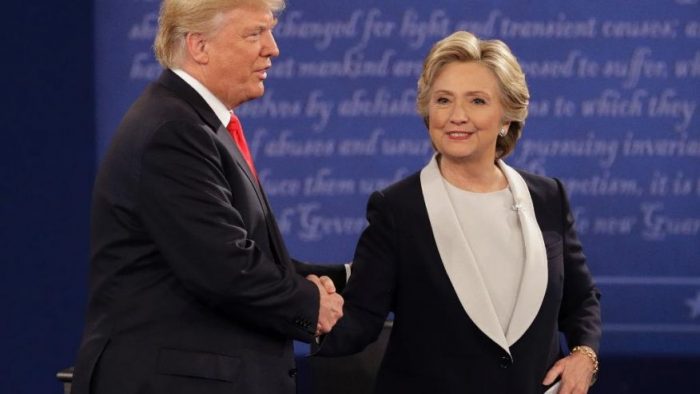
Sunday night’s presidential debate between Hillary Clinton and Donald Trump is sure to be analyzed, dissected and poured over for days, but while both candidates traded accusations on Syria and its effect to refugees, terrorism and geopolitics, neither candidate hit the mark when it came to highlighting the real solution to the Syrian civil war.

The real solution to stopping the bloodshed in Syria lies in getting the Iranian regime out of Syria.

The Syrian civil war has been raging since 2011 and it is easy to forget its beginnings and how it grew into the global conflagration it has become, but what has been indisputable has been the influence of the Iranian regime from the very beginning.

It is useful to recall that the source of the original unrest were protests by ordinary Syrians demanding democratic reforms in March of 2011 and the release of political prisoners. In many respects, the protests taking place on the streets of Damascus were eerily similar to protests on the streets of Tehran by Iranians protesting similar issues in the wake of a presidential election widely recognized as being fraudulent.

Within a month protests had spread throughout Syria and the Assad regime responded just as the mullahs in Tehran did two years earlier; with massive crackdowns by the military that included the indiscriminate shooting of civilians in the streets.

The images of dead and dying civilians in Tehran and Damascus are not the only things that connected the two regimes.

The Iranian regime acted quickly to funnel funds to the cash-strapped Assad regime after a series of punishing international sanctions were imposed for the regime’s use of chemical weapons and mass killing weapons such as barrel bombs on civilians, including hospitals; that support was estimated by the UN to be as high as $6 billion annually, with other human rights groups doubling that amount.

Additionally, the Iranian regime sent senior commanders from its Quds Forces to plan and lead operations involving Hezbollah terrorists to help repel the gains of Syrian rebels. This level of involvement increased with the forced recruitment of thousands of Afghan refugees as mercenaries, along with the shifting of Shiite militias from Iraq to fight in Syria.

The involvement of so much Iranian military capacity led to declarations from Syrian military officials that Syria might as well become a province of Iran.

Even with all of that Iranian regime interferences, the rebels were still making gains leading up to the actual shelling of Assad regime buildings in Damascus, which led to the now not-so-secret trip to Moscow by Quds Force commanders to beg for Russian intervention in Syria.

The increasing tempo of military actions collapsed a proposed cease-fire and led to claims and counter charges between the US and Russia reminiscent of the Cold War. Nothing illustrated that confusion more than the situation in the northern Syrian city of Aleppo.

The New York Times examined the zany alliances at work in Aleppo where there are Iraqi Shiite militiamen cheering for clerics who liken the enemy to foes from seventh-century battles. There are Iranian Revolutionary Guards fighting on behalf of a Shiite theocracy. There are Afghan refugees hoping to gain citizenship in Iran, and Hezbollah militants whose leaders have long vowed to fight “wherever needed.”

The messy mosaic of ground fighters on both sides has challenged Washington’s tangled allegiances. The United States is effectively allied with Iraqi Shiite militias to thwart the Islamic State in Iraq, but in Syria, some of those same militias are fighting on the side of the Assad government, which the United States opposes, and against a mix of rebel groups, some of them backed by the Obama administration.

The Daily Caller discussed the vast increases in Shiite militias in Syria.

“Most estimates of the total number of Shi’a militia fighters in all of Syria now exceed 60,000,” U.S. strategic advisory firm The Soufan Group notes. The Soufan Group highlights that this number may even exceed that of the actual Syrian Arab Army under command of Assad. These Shiite militias take orders only from Iran’s Revolutionary Guard Corps.

Alarmingly, even though the evidence is overwhelming that the only viable solution to Syria’s war lies in containing and ultimately removing Iran’s control of the Assad regime, the Washington Post reported efforts were underway by the Obama administration to actually weaken sanctions imposed on Syria.

According to lawmakers and staffers in both parties, the White House is secretly trying to water down the Caesar Syria Civilian Protection Act, a bipartisan bill that would sanction the Assad regime for mass torture, mass murder, war crimes and crimes against humanity. The bill, guided by House Foreign Affairs Committee ranking Democrat Eliot Engel (N.Y.), would also sanction entities that aid the Syrian government in these atrocities; that includes Russia and Iran.

The bill, named after a Syrian defector who presented the world with 55,000 pictures documenting Assad’s mass torture and murder of more than 11,000 civilians in custody, has 70 co-sponsors, a majority of whom are Democrats.

Now the White House has told members and staffers that the bill’s sanctions on Iran could violate the nuclear agreement the Obama administration struck with Tehran last year and the Russia sanctions could hurt any future efforts to work with Moscow diplomatically on Syria.

It is a stunning position to take and one disturbingly similar to arguments made by Iran lobby members such as the National Iranian American Council.

It seems that the similarities between Syria and Iran be beyond just murdered civilians in the street.

By Michael Tomlinson

Filed Under: Blog, News Tagged With: Featured, Iran, Iran deal, Iran Human rights, Iran Lobby, Iran Mullahs, Iran sanctions, Iran Talks, Iran Terrorism, IRGC, National Iranian American Council, NIAC, NIAC Action, Sanctions, Syria

In Syria and Iraq the Iran Regime Pulls the Strings

October 7, 2016 by admin

The Iranian regime has long been the supplier and sponsor for many of the Middle East’s terrorist groups and militias, including Hezbollah in Lebanon and Shiite militias and their death squads in Iraq.

The mullahs in Tehran have maneuvered these militias and groups across the playing field in an effort to manipulate the global powers such as the US and Russia to advance their own ends.

When the Syrian civil war broke out, the Iranian regime quickly dispatched thousands of Hezbollah fighters to prop up the Assad regime and keep it from being toppled. After years of conflict and the prodigious draining of financial reserves, the mullahs manipulated Russia into entering the war and saving the faltering campaign on the pretense Assad would preserve Russia’s access to naval bases in the Mediterranean.

The mullahs also used the leverage they gained from the Obama administration during the nuclear agreement negotiations to stave off direct US intervention in exchange for what the Iran lobby called “the promise of being a moderating influence” in the Syrian conflict.

The Iranian regime took the long view of these conflicts, finding the fight against ISIS a useful distraction from its own aggressive military buildup and gradual control of the Iraqi and Syrian militaries. Iran used the threat of ISIS to portray itself as an able partner in the fight against terror; one of the more absurd ideas to be hatched.

Unfortunately, many nations in the West took the bait and picked ISIS as the more immediate problem confronting them, not realizing or understanding that the mullahs in Tehran were the ones behind the scenes manipulating this scenario. Remember, it was Iran that originally provided safe haven to many top Al-Qaeda leaders pushed out of Afghanistan after the US invasion, only to set them up in Syria where some eventually formed ISIS as an Al-Qaeda offshoot.

Adding to the confusion for the US and its allies, the Iranian regime manipulated Iraq’s former prime minister, Nouri al-Maliki, to drive out Sunni partners causing some to join up with ISIS and aided in the downfall of Mosul and the rapid advance across northern Iraq.

The threat of ISIS allowed Iran to relaunch and rearm its Shiite militias that previously attacked the coalition forces and now effectively usurped the Iraqi military in the drive against ISIS in that country.

Now these same Iranian-backed Iraqi militia fighters are pouring into Syria to reinforce the Assad regime’s siege of rebels in Aleppo.

To put that into the complicated perspective the Iranian regime prefers: Iraqi militias, backed by Iran, who fought alongside US-backed Iraqi military units, are now fighting alongside Syrian government forces backed by Iranian regime against Syrian rebel units backed and trained by the US.

It is a situation that only the mullahs in Tehran could relish in turning US support in Iraq against US interests in Syria.

The Obama administration—in this game of chess—has been badly outmaneuvered because it failed to recognize that the heart of all these conflict was not ISIS, but in fact Iran’s manipulation.

The administration and much of the news media have been blinded by siren call of false promises made by groups such as the National Iranian American Council, which tried to portray Iran as an eager participant in the peace process, when in fact the Iranian regime ruthlessly sought to eliminate opponents to its vision of a Shiite sphere of influence with barrel bombs, rocket attacks and carpet bombing.

The fact that Iran has been able to get Russia to literally bomb Aleppo and other cities in Syria back into the Stone Age is a testament to the slick skill the mullahs have at lying.

With the collapse of the cease fire between the US and Russia because of more indiscriminate bombing of Aleppo, one could surmise that the flood of Iraqi militia into Aleppo is a strong indication that Iran was behind the cease fire’s collapse.

According to the Wall Street Journal, more than 1,000 Iraqi Shiite militants have traveled from Iraq since early September, joining the ranks of as many as 4,000 others already on the ground near Aleppo, the militia leaders and Syrian rebels said. They make up about half of the regime’s estimated ground force of 10,000.

The siege they are helping to enforce has tilted the battle there in favor of President Bashar al-Assad. His ruling Alawite sect has drawn on fellow Shiite powers—Iran’s Revolutionary Guards Corps, Lebanon’s Hezbollah militia and Afghan Shiite fighters—to shore up government forces depleted by deaths, defections and attrition over five years of war.

“Those…terrorist groups cause all problems in the region and the world and they should be stopped,” said Hashem al-Mosawwi, a commander of the Iraqi Shiite militia Al Nujaba, naming several Sunni opposition groups in Syria he deems synonymous with the Sunni extremists of Islamic State. The Syrian opposition is dominated by the country’s Sunni majority.

The pattern of painting all Syrian opposition groups as being part of ISIS if they are Sunni is part of the strategy of the Iranian regime to deflect attention on its own Shiite extremists by way of comparison to the barbarous acts of ISIS.

In many ways, it’s akin to a mass murderer pointing a finger at a murderer and yelling “killer!”

It is remarkable these Iraqi militias are flooding into Syria just as the Iraqi military backed by additional US advisors is about to launch the offensive to retake Mosul from ISIS, but since these Shiite militias are liable to play a marginal role in that campaign, the mullahs in Tehran are determined not to let all that manpower go to waste and instead is orchestrating this attack in Aleppo against the bombed out ruins of a city where the majority of the 250,000 residents still are starving and stranded.


Filed Under: Blog, News Tagged With: Featured

How Did the Iran Nuclear Deal Become a Partisan Talking Point?

October 6, 2016 by admin


How Did the Iran Nuclear Deal Become a Partisan Talking Point?

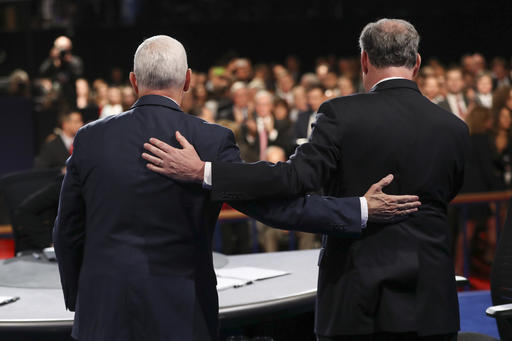
Republican vice-presidential nominee Gov. Mike Pence and Democratic vice-presidential nominee Sen. Tim Kaine stand after the vice-presidential debate at Longwood University in Farmville, Va., Tuesday, Oct. 4, 2016. (Joe Raedle/Pool via AP)

Last night’s vice presidential debate had its usual highs and lows, sprinkled with verbal fisticuffs and even some thoughtful answers, but the most interesting tidbit that came through was the sharp disparity over the Iran nuclear deal in which Democratic running mate, Sen. Tim Kaine (D-VA) all but gushed over the deal’s alleged stoppage of nuclear weapons versus Gov. Mike Pence’s (R-ID) blistering retorts against it.

Putting aside the relative merits of each side’s arguments, the larger question that needs addressing is “how did the nuclear deal ever become a partisan talking point?”

In many ways, it’s lamentable and regrettable that it has gotten to this point. For much of the past three decades both parties have been uniformly united over confronting Iran. That lock-step solidarity is what has driven the vast majority of successes against the Iranian regime such as the imposition of stiff sanctions following the crackdown on demonstrators to the stolen 2009 presidential elections.

Even top mullah Ali Khamenei recognized the terrible blows to the regime’s economy that resulted from those bipartisan sanctions when he summarily decided that the regime needed a new “moderate” face to win back international support after a deplorable eight years of Mahmoud Ahmadinejad.

The regime also recognized that in putting forth a “moderate” face, it had to cobble together a better lobbying effort to drive wedges in the united political front America and its allies had presented for much of the regime’s existence.

Those twin goals led to Hassan Rouhani’s selection and the creation of lobbying groups such as the National Iranian American Council and its offspring, NIAC Action.

Happily for the mullahs, the Obama administration was looking for a foreign policy win to close out its term having been unable to solve the puzzle of wars in Iraq and Afghanistan and the rising tide of Islamic extremism that sprang forth from the Syrian civil war and Iranian regime’s use of terror proxies throughout the region.

It was an unfortunate decision because it enabled the Iran lobby to begin driving that wedge between Democrats and Republicans and shaping a message that if you supported Iran deal you were for peace and if you were against Iran deal you had to be for war.

Most Democrats frankly didn’t buy it as leading members of Congress such as Sen. Robert Menendez (D-NJ), Sen. Ben Cardin (D-MD), Sen. Chuck Schumer (D-NY) and Rep. Eliot Engel (D-NY) opposed the Iran nuclear deal, but the Iran lobby worked furiously to try and shape the debate as a Democrat vs. Republican one when in fact it wasn’t.

For other Democrats, the choices were simpler in which they chose party loyalty in an election cycle, many privately hoping to impose additional sanctions after the presidential elections.

In fact, in the year since the Iran deal was approved, and the mullahs have showed their true nature with the widening of the wars in Syria, Iraq and Yemen, as well as the renewed crackdowns and human rights violations at home and escalation of its ballistic missile program, many of these same Democrats have offered up new proposals to impose new watchdogs or sanctions on Iranian regime.

Coupled with the fact that the mullahs have obliged by going on a binge of militant and aggressive acts including threatening US warships in the Persian Gulf and snatching up even more dual nationals for future hostage swapping, it is almost certain that after the November elections, the US will once again present a united front in confronting Iranian regime’s extremism.

But that prospect hasn’t stopped the Iran lobby from desperately trying to make Iran a partisan issue as NIAC head, Trita Parsi was busy tweeting out his enthusiastic support for Kaine’s comments in support of the nuclear deal, probably had to make many Clinton supporters cringe slightly.

In regards to the actual facts surrounding the nuclear deal, the media fact checkers waded through the statements and found some by Kaine to be slightly wanting of clarity.

From the Washington Post: “The deal, which has been sharply criticized by Republicans, did increase the amount of time that Iran would need to build a nuclear weapon by reducing its centrifuges for uranium enrichment and its stockpile of enriched uranium. But the deal expires in 15 years, and Iran’s nuclear infrastructure remains in place.

“While Iran has insisted it has no interest in building nuclear weapons, the deal does not eliminate the risk that it will obtain nuclear bombs.”

The New York Times called the claim that the Iran nuclear deal eliminated Iran’s nuclear weapons program an “exaggeration.”

A report released this September by the Institute for Science and International Security found that the deal will also allow, through an exemption, Iran to keep 50 tons of heavy water and “continue operating 19 ‘hot cell’ radiation containment chambers.”

Possessing materials such as enriched uranium and heavy water does not necessarily mean Iran will have the capacity to restore its nuclear program. The deal will not allow nuclear inspectors to confirm, however, whether or not Iran is complying with the deal. Iran got negotiators to agree that no U.S. nuclear inspectors will be allowed on Iranian soil, according to Breitbart News.

Ultimately, the issue of containing and confronting the Iranian regime has historically been a bipartisan effort. We hope that after November, it once again becomes bipartisan.

By Michael Tomlinson

Filed Under: Blog, News Tagged With: #NuclearDeal, Featured, hassan rouhani, Iran, Iran deal, Iran Human rights, Iran Lobby, Iran Mullahs, Iran sanctions, Iran Terrorism, National Iranian American Council, NIAC, Trita Parsi

Iran Regime Inks Oil Deal Benefiting Khamenei

October 5, 2016 by admin

Iran Regime Inks Oil Deal Benefiting Khamenei

Iran Regime Inks Oil Deal Benefiting Khamenei

The Iranian regime signed its first oil production deal under a new less restrictive model that it hopes will boost its production output in spite of a new agreement with other oil producing nations to curb production in an effort to boost sagging oil prices worldwide.

The clincher is that the Iranian oil ministry’s news agency Shana said the government had signed a $2.2 billion contract with a unit of Iranian company Tadbir Energy, which is controlled by a religious foundation overseen by top mullah Ali Khamenei, according to the Wall Street Journal.

The regime hopes its new Iran Petroleum Contracts (IPC), part of an effort to sweeten the terms it offers on oil development deals, will attract foreign investors and boost production after years of sanctions.

The National Iranian Oil Company also signed a contract with Persia Oil & Gas Industry Development Co., an Iranian firm, according to Reuters. The U.S. Treasury Department named Persia Oil & Gas in 2013 as part of Setad Ejraiye Farman-e Emam, or Setad, a secretive and powerful organization overseen by Khamenei.

With stakes in nearly every sector of Iran’s economy, Setad built its empire on the seizure of thousands of properties belonging to religious minorities, business people and Iranians living abroad, according to a 2013 Reuters investigation, which estimated the network’s holdings at about $95 billion. (reut.rs/1g1qkCg)

The U.S. Treasury in 2013 sanctioned Setad and 37 companies it said it oversees, calling it “a major network of front companies controlled by Iran’s leadership.” Those sanctions were lifted in January, as part of the historic nuclear deal reached between Iran and world powers in 2015.

The deal, the first to be clinched under new improved terms for oil companies, is aimed at increasing output from four fields located near the Iraqi border to 260,000 barrels a day, compared with 185,000 barrels a day previously.

The deals target an increase in overall output to 5.7 million barrels a day by the end of 2020, compared to only 3.6 million barrels a day reached just last August. The increase in production is being allowed under an exemption granted to the Iranian regime by the Organization of Petroleum Exporting Countries (OPEC), which may threaten the long-term prospects of the reduction deal.

Ali Kardor, the head of the National Iranian Oil Co., said Monday that Iran intended to return to the market share it held before international sanctions, implying a production level of over 4 million barrels a day.

The near-desperate desire by the regime to hit the increased production levels reflects the mullahs need to gain market share and sell aggressively in order to bring badly needed revenue back into the regime’s bank accounts, which have been largely drained dry through its support of the prolonged wars in Syria, Iraq and Yemen.

The United Nations special envoy for Syria previously estimated the Iranian regime’s support for the Assad regime in Syria topped a whopping $6 billion annually alone, with other analysts estimating the total Iranian support for Syria more than double that amount to $15 billion in military and economic aid in 2012 and 2013.

By signing the first deal under this new IPC structure, the regime hopes to entice foreign oil companies to return to Iran and invest in the development of these fields. Previously, foreign firms were reluctant because of buy-back contracts that only benefitted the regime and often left foreign operators with little to no profit.

The push to boost production is also seen as an attempt by Hassan Rouhani to boast of better economic news as he prepares to run for re-election in next year’s presidential election. Iran’s economy has remained stagnant even after the completion of the nuclear deal last year in which Rouhani promised significant economic benefits that have failed to materialize.

The lack of economic improvement for ordinary Iranians have led to renewed discontent in the form of protests by large sectors of the Iranian economy; from teachers protesting low wages to small business owners chafing under poor sales and workers angry over inflated salaries for high-ranking regime officials.

The inclusion of the first oil deal with a firm under the control of Khamenei also signals that the regime’s leadership is still in primary control over Iran’s future and alongside the Revolutionary Guard Corps, virtually every sector of the Iranian economy is controlled by the regime’s leadership.

That belief in the re-opening of the oil markets to Iranian oil may also be behind the recent snub of the German Economy Minister Sigmar Gabriel who was in Tehran on a high profile visit, but took the opportunity to urge the Iranian regime to pursue reforms at home and act more responsibly in Syria.

He also said Iran, which provides economic and military support to Syrian President Bashar al-Assad, should help push for a ceasefire in Syria’s civil war, adding: “I think Iran knows its responsibility there.”

His comments did not go over well with Iran’s parliament speaker, Ali Larijani, who opted to skip a meeting with the German cabinet member in a display of annoyance over the criticism.

Sadeq Larijani, brother of the parliament speaker and head of Iran’s judiciary, criticized Gabriel on Monday for his comments. “If I were in the government’s position or in the foreign minister’s shoes I would never let such a person come to Iran,” he said.

As Iran tries to re-enter the global markets, it should be ready for even more criticism as the world takes greater notice of the regime’s policies and practices.

Ultimately, Iranian mullah’s desire to regain a spot on the global stage may eventually make it once again even more vulnerable to new sanctions for its bad behavior.

By Michael Tomlinson

Filed Under: Blog, News Tagged With: Featured, hassan rouhani, Iran, Iran deal, Iran Mullahs, Iran sanctions, Iran Talks, Iran Terrorism, Khamenei

Iran Regime Killing Environment Like Its People

October 3, 2016 by admin


Iran Regime Killing Environment Like Its People

Iran Regime Killing Environment Like Its People

The Los Angeles Times ran a story examining the deteriorating plight of Iran’s agricultural industry and state of its environment in general; both of which are spiraling downward as dismally as human rights for the Iranian people.

The Islamic paradise promised by the mullahs when they hijacked the Iranian revolution three decades ago, has not come to pass and in its place is a land that has grown parched, where crops have died and entire communities are on the brink of collapse.

Iran’s worsening water crisis has spread desperation across this parched farm belt. Families watch sons leave the villages to hunt for scarce work in the cities. Crops are abandoned. The elderly and infirm forego medical care because they barely have enough money to survive, the Times said.

Iran’s farmers have struggled with several successive years of drought. But environmental mismanagement, water overuse, the pressures of population growth and a government more concerned with security and economic challenges have exacerbated Iran’s agricultural problems, the Times added.

In June, Iran’s Meteorological Organization said 72% the country’s 80 million people were living in “prolonged drought” conditions. Lakes are drying up and cities like Tehran have considered rationing water.

All of which points a devastating picture of how poorly the mullahs have managed the precious natural resources of the country for its people, but that insensitivity to the environment goes all the way back the founding of the Islamic Republic.

The late Ayatollah Ruhollah Khomeini, founder of the Islamic Republic, once told an aide who worried about inflation that Iran’s 1979 revolution “was not about the price of watermelons” — meaning it stood for loftier goals such as economic equality and redistribution, said the Times.

Khomeini’s successors, today’s leaders such as Hassan Rouhani and Ali Khamenei, have even less regard for the environment as they pour billions of dollars into three wars in Syria, Iraq and Yemen and steer the billions in unlocked assets resulting from the nuclear deal to go on a military shopping spree to buy fighters, missiles, ammunition and bombs.

The situation is so dire in many of Iran’s heartlands that many Iranians don’t know what to do next and the regime has been unresponsive to all of their entreaties for help.

In Qiyasabad, residents now must dig as deep as 500 feet to find water. The Hablehrood river, which flows down dun-colored hills to the north, is too salty to use for irrigation, they say. Most farmers still flood their fields to irrigate crops, which is terribly wasteful.

“Ten years ago, I swear, our water was fresh and plenty,” said Karim Baluchi, 54. “Ten years ago I had a decent life.”

He and half a dozen co-owners asked the government this year for a $6,000 loan for a new well and water pump. No one has responded, he said.

According to the Times article, last June, a senior cleric raised eyebrows when he said the drought was caused by women failing to wear appropriate Islamic dress; a clear example of how backwards the mullahs view their nation’s problems.

That lack of concern over Iran’s crumbling environment extends to some of its greatest treasures, including the Asiatic cheetah, otherwise known as the Iranian cheetah, a subspecies of the world’s fastest mammal that exists only within Iran and is on the verge of extinction.

According to the Los Angeles Times, Bahman Jokar, head of the cheetah desk at Iran’s environmental agency, said about 50 cheetahs are believed to remain in Iran’s central deserts – a population so small that to save it requires emergency measures.

“Unfortunately our government and parliament have other top priorities and saving the Asiatic cheetah is not the top one,” Jokar said in a rare bit of candor from an Iranian official over how dire the situation is for the big cats which are deeply rooted in Persian culture and the history of the country going back more than ten centuries.

It’s worth noting that the Caspian tiger and Persian lion, two other species of big cats native to Iran have already gone extinct under the Iranian regime.

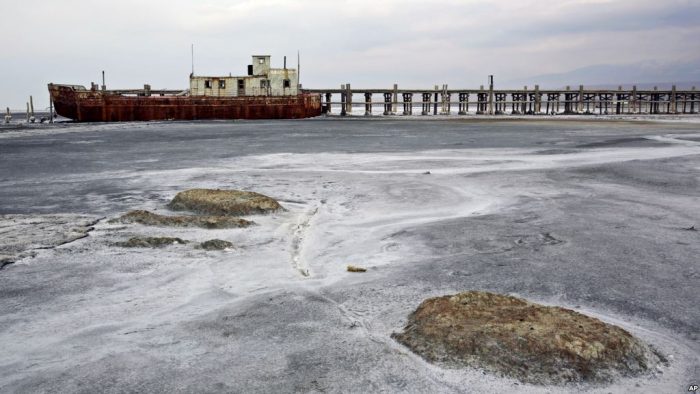
The gross mismanagement and disregard for Iran’s environment by the ruling mullahs extends to the perilous condition of Lake Urmia, the largest lake in the Middle East and sixth-largest saltwater lake in the world which has shrunk to 10 percent of its former size due to damning and overpumping of groundwater.

Even though Rouhani has made continued promises to save Lake Urmia for the cities in Iran that depend on its water, but little has been done and the damage may be irreversible according to environmentalists.

In an article in The Guardian, researcher Shirin Hakim and water management expert Kaveh Madani at the Centre for Environmental Policy of Imperial College, London, described Urmia’s surface as “an area facing a high risk of salt storms.”

The article pointed out that the shrinking of the lake has diminished a fragile ecosystem, with the gradual disappearance of native wildlife including the brine shrimp Artemia and migratory birds like flamingos and pelicans. Such degradation threatens dire economic consequences.

One of the main factors contributing to the state of Lake Urmia is the interference in the natural flow of water into the lake by over 50 dams. The damage has been compounded by unregulated withdrawal of water, water-intensive irrigation and the unsustainable use of fertilizers.

Even as Iran’s environment is destroyed and slowly turned into a wasteland, the mullahs and Rouhani are desperately working on an oil agreement with OPEC to allow it to pump even more oil to sell on the market in order to make up the enormous costs of fighting the Syrian war and keep the Assad regime afloat.

The irony is inescapable and so is the responsibility for this environmental catastrophe which rests on the mullahs in Tehran.

By Laura Carnahan

Filed Under: Blog, News Tagged With: Featured, hassan rouhani, Iran, Iran Human rights, Iran Mullahs, Khamenei, Syria

US Presidential Election Concerns Iran Regime

September 30, 2016 by admin

US Presidential Election Concerns Iran Regime

US Presidential Election Concerns Iran Regime

The sunset is fast approaching on the Obama administration, and with it will come significant changes in the US foreign policy approach to the Middle East and Iran in particular. The mullahs learned their lesson from the two disastrous terms of Mahmoud Ahmadinejad who made it easy to caricature the regime as slightly crazy and evil.

Their manipulation of the election ballot in 2013 assured Hassan Rouhani’s election and helped assist the Iran lobby in trying to project an image of moderation to the West; even though Rouhani’s first term has actually been bloodier than Ahmadinejad’s ever was.

Rouhani has outpaced Ahmadinejad with an unprecedented wave of executions and mass hangings that is approaching 3,000, including women and children according to Amnesty International. His crackdown on religious minorities, journalists, dissidents, artists and students has rivaled the abuses of the infamous 2009 protests.

With the upcoming election of a new US administration, the mullahs are intensely interested in the election outcome, as well as preparing the ground to keep the policies of appeasement rolling in exchange for the false hope that Iran will curb its nuclear ambitions.

The deployment of the Iran lobby has been largely aimed at helping Senators and candidates deemed favorable and supportive towards the nuclear deal, as well as continue coaxing journalists to view the Iranian regime with less than suspicion.

Meanwhile in Iran itself, regime news outlets have been giving considerable space and airtime to the presidential campaign, especially with the rhetoric rising sharply about the effects of the nuclear deal and the best approach needed by a new president to restrain and control the Islamic state.

There is no doubt that Americans and Europeans are anxious about the state of the Middle East, especially the three wars being waged with deep support from the Iranian regime in Syria, Iraq and Yemen, which have contributed to an unprecedented wave of refugees flooding into Europe and the US.

Javan Online, the daily newspaper close to Iran’s Revolutionary Guard Corps, ran an article Sept. 27 titled “The Iranophobia race.”

Kayhan daily, whose editor is appointed by the country’s supreme leader, called the debate “a contest in Iranophobia” in which “Trump threatened to attack Iran and Clinton continued to stress the political and economic pressures against Iran.” Though it didn’t mention Mrs. Clinton’s defense of the Joint Comprehensive Plan of Action’s diplomatic approach.

Hamid Reza Assefi, a former spokesman for the regime’s Foreign Ministry, commented in an op-ed for the Shargh Daily on the likely effect of the US election on Iran. He concluded, “Because of the special rules and the internal sensitivities surrounding the election in Iran … external issues will have no effect.”

He also wrote, “The truth is, both parties in the Unites States share the same opinion on the general aspects of the conflict with Iran.”

On that point he is correct. In spite of the round the clock efforts by the Iran lobby at trying to drive a wedge in the US electorate and attempting to peel off Democratic support, the truth is the vast majority of American voters remain deeply suspicious of the Iranian regime and both Democrats and Republicans are less inclined to accommodate Iran’s agenda after the bloody year since the nuclear deal was reached.

A senior international policy analyst for the RAND Corp., wrote in Fox News that with “the continuing climate of repression, the next Iranian presidential election, and (Ali) Khamenei’s eventual demise may provide some important opportunities for America’s next president.”

“The next U.S. president is likely to be met with multiple international crises after assuming office, and Iran may be one of the most challenging of them,” he writes. “In theory, Rouhani, often portrayed as a ‘moderate’ by the Western media, would have been strengthened by the agreement and able to pursue his agenda of liberalizing Iran both economically and politically. In reality, Rouhani’s presidency has failed to deliver on most of his promises.”

The laundry list of provocative actions by the Iranian regime over the past year has clouded any real building of support for the mullahs by the Iran lobby. The recent spate of arrests of dual national citizens and Rouhani’s reaffirmation that Iran does not recognize dual citizenship on NBC News only provides more fodder for critics of the regime.

The significance of Iran to US policy is becoming more apparent as more analysts and policymakers weigh Iran’s influence and threat level even above that of ISIS. In an editorial in the Los Angeles Times, writes that:

“US political leaders of both parties argue that destroying Islamic State is America’s top priority in the Middle East. In reality, that’s not nearly as important as confronting the challenge posed by Iran. The nuclear deal that went into effect a year ago may have postponed the danger of an Iranian nuclear bomb, but the multifaceted threat of a militaristic, messianic Iran — 80-million strong — is much more menacing to Western interests than the Sunni thugs and murderers of Raqqah and Mosul.”

“From Tehran’s perspective, it gained much more than it gave up. In exchange for postponing its military nuclear project, it achieved the lifting of many economic sanctions, an end to its political isolation and the loosening of restrictions on its ballistic missile program,” he added.

Truthfully, time is running out for the mullahs. We can only expect that the next president and administration will have a more skeptical eye towards the Iranian regime with the benefit of 20-20 hindsight.

By Michael Tomlinson


Filed Under: Blog, News Tagged With: Featured, hassan rouhani, Iran, Iran deal, Iran Human rights, Iran Lobby, Iran Mullahs, Khamenei, Moderate Mullahs, nuclear talks

Iran Regime Escalates War on Human Rights

September 29, 2016 by admin

Iran Regime Escalates War on Human Rights

Iran Regime Escalates War on Human Rights

There has been no doubt that the Iranian regime is one of the worst abusers of human rights in the world today. Its record of abuse has been well documented by human rights groups and Iranian dissident organizations.

Anyone sitting in front of a computer or using a smartphone can simply Google “Iran” and “executions” to get a taste of how badly the regime treats its own people. The regime tries mightily to hide its abuses from the world through its control of the Internet, prohibiting the use of social media and employing an army of cyberhackers to monitor communications, as well as attempt to crack the encryption on messaging apps such as WhatsApp and Telegram.

The Iranian regime is unique in one other regard which is that it pretty much doesn’t seem to care what the rest of the world thinks about its human rights record.

One example of that callous disregard for international condemnation was the regime’s decision to uphold a 16-year prison sentence against a prominent human rights advocate in Narges Mohammadi, which was widely protested by groups such as Amnesty International.

Mohammadi, who is critically ill, had been sentenced in May on charges of violating national security and acting against the Islamic regime through her support of an anti-death penalty campaign.

As vice president of the Defenders of Human Rights Center in Iran, Mohammadi gained attention in 2014 for defending women who had acid thrown on them in the city of Esfahan, purportedly for dressing immodestly.

While jailed this summer at Tehran’s Evin Prison, she staged a 20-day hunger strike in protest of authorities who barred her from speaking by phone with her family.

Mohammadi is mother to 9-year-old twins, who live in France with their father. Friends say she suffers from a chronic illness that causes partial paralysis, which has worsened due to her imprisonment, according to the Los Angeles Times.

“This verdict is yet another cruel and devastating blow to human rights in Iran, which demonstrates the authorities’ utter contempt for justice. Narges Mohammadi is a prominent advocate of human rights and a prisoner of conscience. She should be lauded for her courage not locked in a prison cell for 16 years,” said Philip Luther, Amnesty International’s Research and Advocacy Director for the Middle East and North Africa.

“By insisting that this harsh and appalling sentence is imposed for her peaceful human rights work, the authorities have laid bare their intent to silence human rights defenders at all costs,” he added.

Human rights activists and dual nationals continue to be imprisoned during the presidency of Hassan Rouhani, whose 2013 election had raised hopes of an easing of Iran’s harsh security laws, but has since come to be regarded as an instrument of the regime’s security apparatus.

Mohammadi is a supporter of the Campaign for Step by Step Abolition of the Death Penalty, known by its Persian acronym, Legam. Iran is one of the world’s leading practitioners of capital punishment, putting to death an estimated 1,000 people last year alone.

Last month, Iran put to death a teenager who was convicted of a crime when he was 17. Approximately 160 minors are on death row in Iran, according to Amnesty International.

“It is particularly shocking that this sentence comes as Iran’s authorities are preparing for renewed bilateral dialogue with the EU, given that Narges Mohammadi was convicted for her work campaigning against the death penalty and meeting with the former EU High Representative for Foreign Affairs. This casts serious doubts over Iran’s commitment to engage meaningfully with the EU on human rights issues,” Luther added.

And therein lay the quandary the world faces: Even as it seeks to open up trade relationships with Iran following the nuclear deal, the world turns a blind eye to the continuing, blatant abuses being committed by the regime.

The harsh sentence of Mohammadi for essentially representing women who had been brutalized by regime paramilitaries and police is an especially visible demonstration of how much the mullahs in Tehran simply don’t care what the world thinks.

Part of their disregard stems from their efforts to perpetuate the myth that the nuclear deal is so valuable to the world in keeping Iran from arming itself with nuclear weapons that the world is willing to look the other way on virtually any other issue in order to preserve the deal.

Forget the fact that the deal itself is a wreck and unenforceable and the regime already has taken advantage of it, but this attitude by the world’s leaders has enabled the regime to commit more atrocities, expand its military presence and rapidly rebuild its military without fear of punishment or reprisal.

Nothing epitomizes that more than the rapid development, testing and deployment of the Iranian regime’s ballistic missile program which has progressed from short-range conventional weapons, to now deploying intercontinental missiles capable of carrying nuclear, chemical or biological warheads.

The Foundation for the Defense of Democracies, wrote in US News and World Report, explaining the regime’s use of nuclear agreement to advance its own agenda.

“Tehran insists that foreign (implicitly, U.S.) machinations have undermined the sanctions relief that the deal should have brought. Iranian officials have claimed they have ‘no fear’ of the deal falling apart, and openly discuss how to snap back their remaining nuclear infrastructure if they believe the deal has been transgressed. These critiques form the core of Iran’s snapback-centric strategy, one aimed at upping the ante to pocket additional concessions,” they write.

The “snapback” mechanism included in the deal allows the countries involved to restore sanctions in the event of Iranian “significant non-performance.” But Iran retains a separate snapback capability that can nullify both nuclear and non-nuclear sanctions: the threat of ramping up its nuclear infrastructure. The fact that the Islamic Republic is able to credibly threaten such snapback means Western audiences will have to reckon with Tehran’s complaints,” they added.

By Laura Carnahan

Filed Under: Blog, News Tagged With: Featured, hassan rouhani, Iran, Iran deal, Iran Human rights, Iran Mullahs, Iran Talks, Iran Terrorism, Irandeal

  • « Previous Page
  • 1
  • …
  • 27
  • 28
  • 29
  • 30
  • 31
  • …
  • 72
  • Next Page »

National Iranian-American Council (NIAC)

  • Bogus Memberships
  • Survey
  • Lobbying
  • Iranians for International Cooperation
  • Defamation Lawsuit
  • People’s Mojahedin
  • Trita Parsi Biography
  • Parsi/Namazi Lobbying Plan
  • Parsi Links to Namazi & Iranian Regime
  • Namazi, NIAC Ringleader
  • Collaborating with Iran’s Ambassador

Recent Posts

  • NIAC Trying to Gain Influence On U.S. Congress
  • While Iran Lobby Plays Blame Game Iran Goes Nuclear
  • Iran Lobby Jumps on Detention of Iranian Newscaster
  • Bad News for Iran Swamps Iran Lobby
  • Iran Starts Off Year by Banning Instagram

© Copyright 2026 IranLobby.net · All Rights Reserved.