Iran Lobby

Exposing the Activities of the lobbies and appeasers of the Mullah's Dictatorship ruling Iran

  • Home
  • About
  • Current Trend
  • National Iranian-American Council(NIAC)
    • Bogus Memberships
    • Survey
    • Lobbying
    • Iranians for International Cooperation
    • Defamation Lawsuit
    • People’s Mojahedin
    • Trita Parsi Biography
    • Parsi/Namazi Lobbying Plan
    • Parsi Links to Namazi& Iranian Regime
    • Namazi, NIAC Ringleader
    • Collaborating with Iran’s Ambassador
  • The Appeasers
    • Gary Sick
    • Flynt Leverett & Hillary Mann Leverett
    • Baroness Nicholson
  • Blog
  • Links
  • Media Reports

Iran Lobby Wrong on Nuclear Deal Stabilizing Region

June 11, 2015 by admin

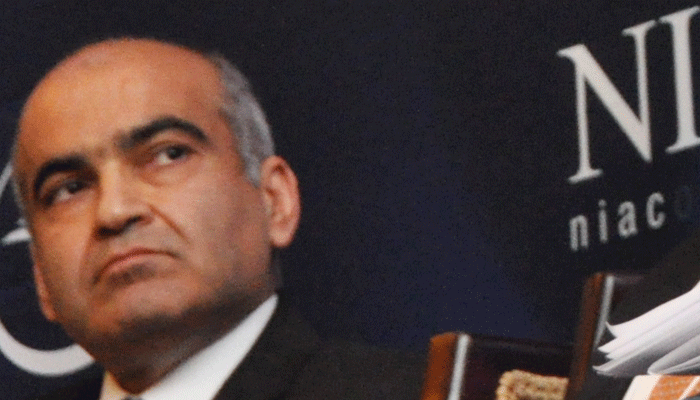
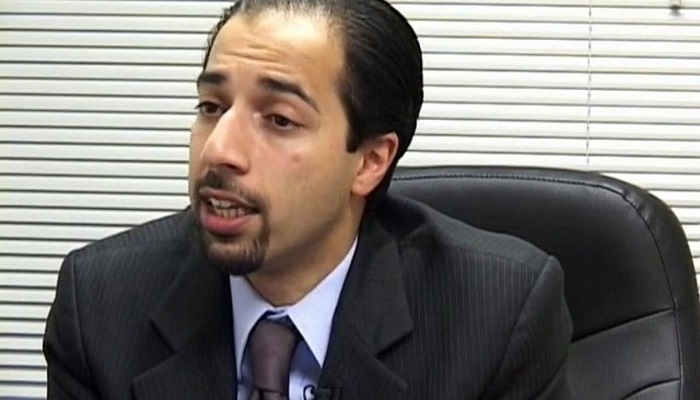
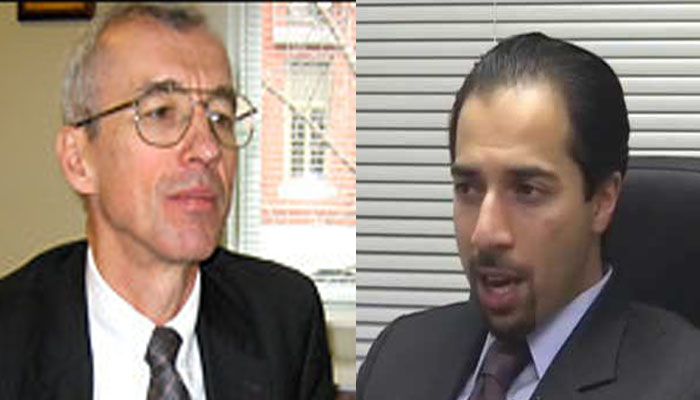
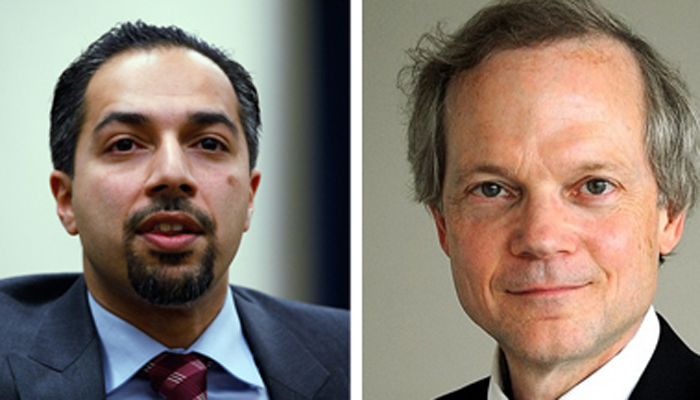
Parsi-and-FitzpatrickOne of the more extraordinary leaps of logic being propagated by the Iran lobby is that a completed nuclear agreement between the Iran regime and the P5+1 group of nations would help stabilize the Middle East and allow the U.S. to refocus and rebalance on more urgent matters. This flight of fancy was espoused by Mark Fitzpatrick, the director of the Non-Proliferation and Disarmament Program at the International Institute for Strategic Studies (IISS), and Trita Parsi, president of the regime’s chief cheerleading squad at the National Iranian American Council.

The claim being made by the two was that the U.S. could work with Iran’s mullahs on issues such as anti-narcotics trafficking, poverty alleviation, female empowerment and halting the spread of the Islamic State.

Now let’s think about that for a moment. They are contending that a regime with some of the highest narcotics addiction rates in the world and one of the largest traffickers in illicit drugs is somehow going to be a force for change in drugs?

They are contending that a regime with an economy in the tank due to the funding of three proxy wars Syria, Iraq and Yemen and terror groups such as Hezbollah and Shiite militias is somehow going to fight poverty? Especially when it ranks as one of the most corrupt places to do business with regime elites and mullahs’ families skimming off the top everywhere?

They are contending that a regime that empowers the Basij paramilitary to enforce strict adherence to Sharia laws such as prohibitions on women driving alone or holding hands in public by beating them and throwing acid on their faces is best equipped to empower women? Let’s not forget recent passage of laws allowing for child marriages as young as 14 years old and misogynist policies such as allowing fathers to marry their stepdaughters.

And they are contending that Iran can halt the spread of ISIS when it was its own policies that gave birth to ISIS by intervening in Syria and pouring billions of dollars in arms and fighters to prop up Assad and allow Syrian forces to drive out moderate rebel forces and encourage the rapid rise of extremist terror groups to form ISIS.

One would have to be a dolt to think these two have come up with a magic elixir to solve all the problems of the Middle East by granting Iran a deal enriching it with billions of dollars while allowing it to continue development of nuclear weapons without inspection of its military sites.

Iran’s chief rival, Saudi Arabia, has already taken dramatic steps to counter Iranian moves by securing a nuclear development deal of its own with South Korea and an air campaign aimed at defeating Iranian-backed Houthi rebels in Yemen.

How does any of this provide a sense of stability and security in the Middle East when Iran’s actions lie at the heart of some of the greatest human misery and suffering now being felt on the planet today?

Let’s not even mention Iran’s abhorrent human rights record which has been widely and loudly condemned by Amnesty International and the UN Special Rapporteur Ahmed Shaheed, who is mandated by the UN Human Rights Council to monitor and report on the situation in Iran.

It’s a farcical proposition by Parsi and Fitzpatrick, but nothing new with only two weeks left before the self-imposed June 30th deadline for a nuclear agreement as they step up the Iran lobby’s efforts to sell even the most threadbare of Persian carpet ideas.

By Michael Tomlinson

Filed Under: American-Iranian Council, Blog, Current Trend, Duping Anti-War Groups, National Iranian-American Council Tagged With: #NuclearDeal, Iran deal, NIAC

Iran Lobby Working for $120 Billion Paycheck

June 11, 2015 by admin

PaycheckOnly someone with a doctorate in voodoo economics would equate the Iran regime’s “resistance economy” as a “blueprint for economic reform,” but that is exactly what Bijan Khajehpour of the Atieh International Consultancy is advocating in remarks he made at the Wilson Center.

The call for a “resistance economy” designed to withstand the impacts of economic sanctions imposed on Iran for its clandestine nuclear program was issued by the regime’s leader Ali Khamenei in February 2014, in which he called on the government of Hassan Rouhani to expand production and export of knowledge-based products, increase domestic production of strategic goods and develop markets in neighboring countries. He also urged greater privatization and increased exports of electricity, gas, petrochemical and oil by-products instead of crude oil and other raw materials.

How has that gone for Iran’s mullahs so far? Iran’s gross domestic product (GDP) has steadily declined the last three quarters from 4.4 percent, to 3.7 percent and now at an anemic 2.8 percent.

Khajehpour attempted to explain away the decline by blaming economic sanctions, government mismanagement, corruption, and former president Ahmadinejad’s brand of populist economic policies. The one variable he left out was Iran’s diversion of billions of scarce dollars to support proxy wars in Syria, Iraq and Yemen, as well as terror groups such as Hezbollah.

U.N. special envoy for Syria, Staffan de Mistura, estimated Iran spends $6 billion annually on propping up Assad’s government. Other experts put the number even higher. Nadim Shehadi, the director of the Fares Center for Eastern Mediterranean Studies at Tufts University, said his research shows that Iran spent between $14 and $15 billion in military and economic aid to the Damascus regime in 2012 and 2013, even though Iran’s banks and businesses were cut off from the international financial system.

All of which comes on the heel of fresh calls by Assad for even more fighters and equipment he needs to combat rebels which Iran has met with the delivery of 15,000 new soldiers to fight for Syria. Far from being a resistance economy, Iran has been on a war footing for the past two years, all of which is fighting unrelated to its nuclear program.

It is hard to see how Khajehpour can overlook these staggering costs and contend Iran’s economy rebound as it throws more men, cash and expensive military hardware at its neighbors.

And you can’t even blame the declining price of oil on the world market for Iran’s economic problems either. Iran has a fairly diversified economy, in which oil accounts for only 23 percent of GDP. The largest contributor to the GDP is services (around 50 percent of total output), which means Iran’s primary drivers of its economy are its people.

These are the same people who are regularly subjected to street justice by the Basij paramilitary, who are thrown into prison for posted offending or critical comments on social media, who see scions of the mullahs’ race around the streets of Tehran in expensive foreign cars while they languish in economic purgatory.

Most incredibly of all, Khajehpour tried to make the argument that the estimated $120 billion in frozen Iranian assets that would be repatriated in the event of a nuclear deal would actually diminish the revenues of such corrupt actors within Iran because they no longer would have a monopoly on what commodities went in and out of Iran.

While it is not the dumbest statement ever made, it certainly ranks as one of the least believable; given the enormous pressure the regime’s mullahs are under to keep Assad afloat, a tight rein on the Shiite-dominated government in Baghdad and Houthi-rebel controlled Yemen.

If Khajehpour thinks the mullahs will not use that $120 billion to prop up their puppets, then he only reveals his true colors as a regime apologist and unabashed cheerleader.

By Michael Tomlinson

Filed Under: American-Iranian Council, Blog, National Iranian-American Council Tagged With: Ayatollah Khamenei, Iran, Iran Economy, khajehpour, Khamenei, lobby

Head of IAEA Calls for “Years” of Iran Regime Inspections

June 10, 2015 by admin

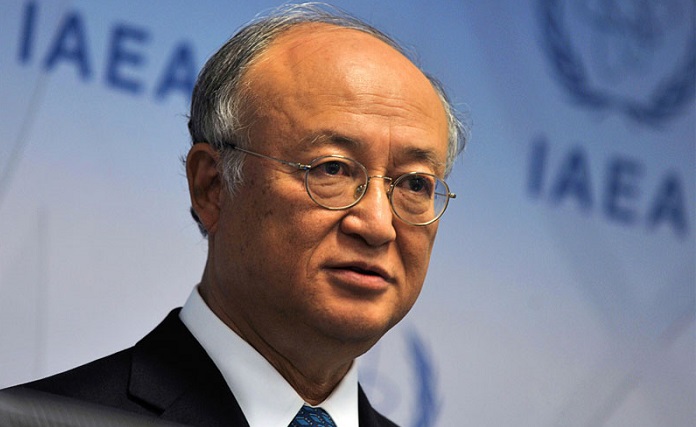
Yukiya Amano

In a blunt rebuttal to demands from the Iran regime’s top mullah Ali Khamenei that Iran’s military facilities remain off limits to nuclear inspectors, Yukiya Amano, director-general of the International Atomic Energy Agency said that inspectors must be permitted access to suspect sites for “years and years” in order to become confident that Iran’s nuclear program was indeed peaceful.

“We will continue these activities for quite a prolonged period of time and then, after making our efforts, we come to the point when we can provide credible assurance that there is no indication of activities other than peaceful activities,” Mr. Amano said at a news conference. “This is a long process and full cooperation from the country is needed.”


He added there was no way to tell how long it would take the IAEA to be satisfied about the regime’s nuclear program, but acknowledged it was a question of years and not months contrary to the pronouncements being made by many allies of the Iran regime, including its aggressive lobby in the U.S. and Europe such as the National Iranian American Council.


Amano’s position has been repeatedly bolstered by Western leaders such as French Foreign Minister Laurent Fabius who has contended that if anytime, anywhere access was not granted by Iran to its military facilities, a nuclear deal was off the table.


Iran has spent considerable effort to hide its nuclear activities at military sites, including questions about high explosives testing at its Parchin site which could be useful for detonating nuclear weapons. Tehran has refused to allow IAEA inspectors renewed access to Parchin for years after the secret work being conducted there was revealed by members of Iranian dissident groups including the National Council of Resistance of Iran.


The IAEA is not new to this delaying effort by the regime. It has previously sent to the mullahs in Tehran a list of 12 areas of concern over the military aspects of Iran’s nuclear program and to this day, the regime has chosen to ignore those inquiries in contradiction to its earlier claims of cooperation at the start of nuclear talks almost three years ago.


But the stonewalling of the IAEA by Iran is just one stone of an entire wall of obstruction by the regime’s mullahs who have already sought to delink its ballistic missile program from nuclear talks, as well as recent revelations showing that Iran’s stockpile of enriched uranium actually grew instead of shrank during the past few of months of an interim framework agreement to reduce nuclear material.


With the June 30 deadline fast approaching, it is becoming rapidly clear that Iran’s continued reluctance to cooperate on a slew of outstanding issues is threatening to derail the entire negotiating process.


The worrisome nature of Iran’s obstruction has prodded Senators to offer up amendments to the defense budget requiring continuation of sanctions in force since 1996 for another 10 years in light of the regime’s failure to comply.


The stage is set and the regime is clearly failing to uphold its end of the bargain…again.


By Michael Tomlinson


Filed Under: Blog

The Importance of Linking Iran Sanctions and Human Rights

June 9, 2015 by admin

Bijan Khajehpour

Bijan Khajehpour

Sens. Mark Kirk (R-IL) and Bob Menendez (D-NJ) have put forward an amendment to the defense budget that would extend congressional sanctions against the Iran regime for 10 additional years. The amendment is aimed at extending the Iran Sanctions Act of 1996, currently set to expire at the end of 2016, to the end of 2026.

The amendment is an important step in resetting the expectations associated with the Iran regime’s nuclear weapons program because it links it to the development of intercontinental ballistic missiles and human rights abuses; a significant step towards properly addressing the central issues with the regime’s conduct towards the world.

The regime’s chief cheerleaders, the National Iranian American Council, predictably were quick to denounce the legislation, warning that passage of the bill would derail ongoing negotiations. The NIAC’s statement was noteworthy for a few things, namely that it placed the burden of completion of a deal on the U.S. and not the regime.

“There are legitimate questions about whether the U.S. will be able to deliver on the terms for sanctions relief under a nuclear deal, and the passage of this amendment would give credence to those concerns,” the NIAC statement said.

It is a remarkable sentence because it firmly ignores the chief obstacle to any agreement between the West and Iran, which is Iran’s historic inability to live up to any of its international agreements. As recently as last month, Iran has steadfastly refused to answer outstanding questions from the International Atomic Energy Agency about the “possible military dimensions” of its nuclear program.

On top of that omission are repeated comments by Iran’s top mullah, Ali Khamenei, who has reiterated publicly his opposition to allowing access to any Iranian military facility or Iranian nuclear scientists by international inspectors.

This follows continued denials by Iran that it is involved in proxy wars being waged in Syria and Yemen, not to mention its control of Shiite militias in Iraq that are now being accused of reprisal sectarian killings against Sunni Muslim villagers, all of which points to a disturbing and repeated pattern of deception, denial and distrust.

The action by Senators Kirk and Menendez comes after passage of legislation signed by President Obama and over the vigorous objections of NIAC authorizing congressional review of any nuclear agreement reached with Iran.

This latest bill from Kirk and Menendez addresses a glaring hole in current negotiations, which is the failure of negotiators to hold Iran’s human rights conduct accountable, as well as including the regime’s capacity to deliver a nuclear weapon well outside their neighborhood and threaten Europe and Asia.

The NIAC and the rest of the Iran lobby have fought hard to keep these things out of negotiations because they know full well their inclusion would almost certainly doom Iran’s hopes of securing a deal and lift economic sanctions and flood the regime with billions in new cash and investment.

The proposed amendment is not a deal breaker for the West as much as it is a safety clause assuring the West does not deliver a bad deal that could come back to haunt them.

By Michael Tomlinson


Filed Under: American-Iranian Council, Latest from Lobbies & Appeasers, National Iranian-American Council, The Appeasers Tagged With: Congress bill on Iran, Iran, Iran appeasers, Iran deal, Iran Human rights, Iran Lobby, Iran sanctions, Iran Talks, Irandeal, NIAC, Sanctions

Iran Regime Dangling Dangerous Dollars

June 9, 2015 by admin

Delusional Trita ParsiWith the June 30 deadline looming for the third round of nuclear talks between the P5+1 group of nations and the Iran regime, the news media have picked up steam in discussing the possibility of foreign companies jockeying for position in investing in Iran once a deal is completed.

But in the immortal words of Greek fabulist Aesop “do not count your chickens before they are hatched.” More than a cliché, they are prudent and appropriate words for any companies looking to take advantage of a newly opened market in Iran.

USA Today ran a story looking at visiting business delegations streaming into Tehran, all with an eye towards the completion of these talks and a signing of a deal. The vast majority of these companies are European with only a few American firms kicking the tires of an open Iranian market.

“Even if all sanctions are lifted, there will still be blacklists of Iranian companies that Western companies should avoid,” said Bijan Khajehpour of Atieh International, a consulting firm in Vienna that works to bring companies into the Iranian market. “Assets in the economy controlled by the semi-state organizations are gradually approaching the size of government.”

But Khajehpour is wrong when he says that “developing Iran’s economy will lead to greater peace, political reform and moderation by its revolutionary government” because Khajehpour has a long record of associating with supporters and lobbyists of the Iran regime, including Trita Parsi of the National Iranian American Council, in efforts to direct companies and investment into Iran.

Khajehpour and his firm – co-founded with his wife Pari Namazi who is the sister of Siamak Namazi a close confidante of Parsi – have been boldly supportive of the regime in advocating for the lifting of economic sanctions by working to steer greater interest by foreign companies in Iran. The effort is designed to create a fait accompli and build global momentum towards the “inevitability” of a nuclear deal.

While the potential size of the Iranian market is significant with 81 million people, the obstacles are daunting irrespective of what happens at the negotiating table in Switzerland. For one thing, Iran ranks in the top 40 of most corrupt nations according to Transparency International; listed at 136, tied with Nigeria and Cameroon, with corruption running rampant throughout Iran’s government with much of the nation’s wealth diverted to the mullahs who control the country and their families.

Another facet of this corruption is the shell-company ownership of vast sectors of the Iranian economy by quasi-governmental entities such as Iran’s Revolutionary Guards Corps military which controls nearly a tenth of the entire nation’s economy by some estimates.  The IRGC has made no bones about its desire to see a completed nuclear deal because of the vast wealth that would be pumped into its coffers at a crucial time when it has expended billions of dollars in propping up the Syrian regime, Shiite militias in Iraq and Houthi rebels in Yemen.

The IRGC also recognizes that unless it can secure a deal and have foreign investment flow back in, disaffected Iranians suffering under the mismanagement and general ineptness of the mullahs might very well choose regime change in order to get their Apple iPhones and McDonald’s Big Macs.

The true scope of the conundrum facing Western companies revolves around the central idea of why would you want to invest billions in a corrupt regime who’s very actions might turn all those billions into lost assets in the likelihood that Iran’s mullahs continue their nuclear development in secret as they did before?

Every public hanging, arrest of a religious minority, acid attack on a woman, or assault by Shiite militia poisons the well so to speak and makes it untenable for any politician to give the mullahs what they want, especially in an election cycle.

By Michael Tomlinson

Filed Under: American-Iranian Council, National Iranian-American Council Tagged With: Iran deal, Iran Economy, Iran Human rights, Iran Lobby, Iran Talks, khajehpour, National Iranian American Council, NIAC, Trita Parsi, usa today

Iran Lobby Comes Late to the American Hostage Party

June 4, 2015 by admin

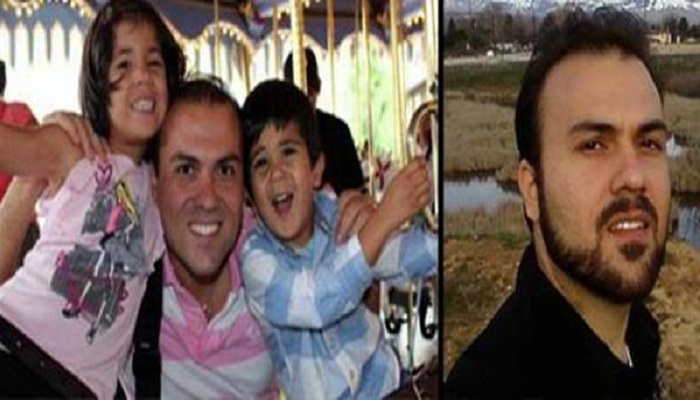
CGrDrmxW0AI6gKWAfter a day of gut wrenching testimony before the House Foreign Affairs Committee earlier this week in which families for four Americans imprisoned unjustly in Iran spoke out about the brutal torture their loved ones have been subjected to, the Iran regime’s trusty lobbyists, the National Iranian American Council, did not even have the wherewithal to join in the condemnation of Iran’s mullahs for this appalling human rights violation.

Instead, the NIAC issued a matter-of-fact recitation of the testimony and noted the passage of a bipartisan resolution sponsored by Rep. Dan Kildee (D-MI) calling for the release of Americans detained in Iran, including Amir Hekmati, Jason Rezaian, Saeed Abedini and Robert Levinson.

But the NIAC could not help itself. It seems to be permanently conditioned to always find a way of supporting the regime no matter how debased the actions it undertakes. In this case, Maria Hardman went to great lengths in attempting to explain the hostage-taking was an act committed by “hardliners” in Iran opposed to any rapprochement with the West and seeking to undermine nuclear negotiations.

She went on to take issue with calls by some Congressmen to hold Iran accountable for the illegal detentions, including linking them to ongoing nuclear talks. Hardman seems to posit that linking the two would somehow prove disastrous for nuclear talks.

It is an old argument she espouses, one that regime supporters such as Trita Parsi, Jim Lobe, Eli Clifton and others have consistently offered up – not as a pathway to securing the release of these hostages – but rather in trying to remove any obstacles blocking the regime’s access to a favorable deal that would reward mullahs in Iran with billions of dollars in cash, foreign investment and oil sales.

Rather than take the opportunity to condemn the mullahs for these illegal acts and the very high price being paid by these men and their families, Parsi have hardly uttered a word in support of these innocents. Aside from initial statements calling for their release at the time each of them was arrested, there has been scant mention by any Iran lobby supporter.

All you have to do is Google search “Trita Parsi” and “Saeed Abedini” for example and you will find the lack of quotes from him urging the imprisoned pastor’s release as rare as rain in California these days.

It is also worth remembering that while the Iran lobby attempts to portray Iran as riven by battling hardline and moderate factions, the simple truth is that the various factions within the Iranian regime are no different, when it comes to their treatment of their people. The regime is firmly and completely in the thrall of the mullahs who control – under the constitution – all aspects of Iranian life, including cultural, military, judicial, legal and economic. All power vests solely within top mullah Ali Khamenei and his recent comments have made clear what his expectations are about a nuclear deal.

The regime is firmly committed to twin goals: 1) To remove as quickly and as completely as possible all economic sanctions in order to rescue an economy run aground by rampant corruption and mismanagement by the ruling mullahs; and 2) To maintaining of Iranian regime’s nuclear development in order to extend its control over new territories it has gained through proxy wars in Syria, Iraq and Yemen. A task that the Iran lobby seems to be very dedicated to.

By Michael Tomlinson

Filed Under: Blog Tagged With: American, Amir Hekmati, Iran, Iran Lobby, Jason Rezaian, Robert Levinson, Saeed Abedini

Trita Parsi and Paul Pillar Outdo Themselves

June 3, 2015 by admin

Untitled-1Trita Parsi, head of the Iran regime’s top cheerleader, the National Iranian American Council, and Paul Pillar, a former assistant at the Central Intelligence Agency, authored an editorial in Huffington Post in which they attempted to make the argument that Israel was preparing to attack its adversary Hezbollah in an effort to derail nuclear talks between Iran and the P5+1 group of nations.

It’s an odd editorial since it reinforces the Iran lobby’s belief that in order to save a faltering nuclear deal it needs to raise the boogeyman of Israel. For the Iran lobby, Israel serves the same purpose as neo-cons, Sen. Lindsay Graham (R-SC) or Fox News, it gives people like Parsi and Pillar the opportunity to run hysterical promising war, apocalypse and mayhem should a nuclear deal not be achieved with Iran’s mullahs.

It’s a typical effort to cajole a reaction from American voters by promising war. A curious tactic considering NIAC has consistently promised a pathway to peace, but logic has never been a NIAC strong suit.

In fact, Parsi and Pillar are scraping the bottom of the barrel when they cite a NPR poll as evidence of shifting momentum for a nuclear deal among Americans. A closer reading of the article they cite reveals points quite unfavorable to them. Among those include:

  • An NBC News/Wall Street Journal poll last month found more than 7-in-10 said they thought a deal would “not make a real difference in preventing Iran from producing nuclear weapons.”
  • A Pew survey found that 73 percent said they either knew “a little” or “nothing at all” about nuclear talks. That same poll also found that a strong majority (62 percent) wants Congress to “have the final authority for approving any deal” not President Obama.

The funny thing is that the overwhelming majority of Americans don’t mind talks with Iran on a nuclear deal. Where they disagree with Parsi and Pillar is that the majority of Americans don’t believe Iranian regime will adhere to any deal and that mullahs in Iran simply can’t be trusted.

Americans are an optimistic people. They want to believe negotiations can yield peaceful fruit, but Americans are not stupid – much to the dismay of Parsi and Pillar – they recognize that trust for a regime run by mullahs that has launched and supported three major proxy wars in Syria, Yemen and Iraq can’t be trusted.

Americans also know all too well the brutal human rights situation in Iran and are acutely aware of the inhumane treatment being perpetrated in Iran on these same people.

Anyone typing in the words “Iran” and “hanging” in Google under an image search can see the ample proof on display of how Iranian regime’s judicial system dispenses justice. Americans also see Iran’s mullahs playing games with the lives of four Americans being held in Iranian prisons as pawns in the hopes of bartering concessions in nuclear talks.

It’s also even more galling to see that while Parsi and Pillar produce so much editorial copy aimed at warning of a war, they have never condemned the wars that Iran is already waging:

  • Wars against women, children and anyone who cannot exercise their basic human rights without fear of arrest or public beating;
  • Wars against Christians, Jews, Hindus, Yazadis, Sunni Muslims, or anyone else that doesn’t share their brand of extremist Islam; and
  • Wars against bloggers, journalists, pastors, businessmen, tourists, YouTubers and anyone else that dares shine a light on what is happening within Iran.

These are the wars Parsi and Pillar are not prepared to talk about and the real wars happening now that matter.

By Michael Tomlinson

Filed Under: Blog, National Iranian-American Council, News Tagged With: Hindus, Iran, Iran Christians, Iran Human rights, Iran Lobby, Iran Minorities, Jews, Nuclear, Paul Pillar, Sunni Muslims, Tritta Parsi, Yazadis

Iran Regime Nuclear Stockpile Grows During Talks

June 3, 2015 by admin

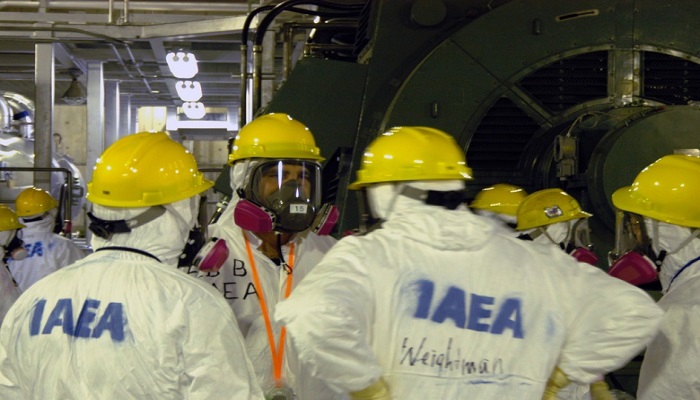
IAEA InspectorsIn a damning revelation, the New York Times revealed that with only one month left before a self-imposed June 30 deadline to complete a nuclear deal with the Iran regime, “international inspectors have reported that Tehran’s stockpile of nuclear fuel increased about 20 percent over the last 18 months of negotiations, partially undercutting the Obama administration’s contention that the Iranian program had been ‘frozen’ during that period.”

The findings were released by the International Atomic Energy Agency which poses a significant stumbling block to the hopes of the Obama administration. As the Times put it:

“In essence, the administration will have to convince Congress and America’s allies that Iran will shrink its stockpile by 96 percent in a matter of months after a deal is signed, even while it continues to produce new material and has demonstrated little success in reducing its current stockpile.”

The fact that Iran has continued building its stockpile of nuclear fuel even while it has consistently said it was not pursuing a nuclear expansion during three years of negotiations leads to the inescapable conclusion that Iranian regime cannot be trusted to comply with any deal reached.

Even while the regime’s chief negotiator Javad Zarif has played the role of charming, accommodating diplomat, his boss, Ali Khamenei, has just as consistently maintained an air of defiance in complying with the most basic of terms such as inspection of military sites.

Iran’s opposition to inspections presents a red line for France’s foreign minister, Laurent Fabius, who reiterated in an interview with the Wall Street Journal that a deal without inspections of military and secret facilities risked sparking a new nuclear arms race in the Middle East.

“The best agreement, if you cannot verify it, it’s useless,” said Mr. Fabius. “Several countries in the region would say, OK, a paper [has been signed] but we think it is not strong enough and therefore we ourselves have to become nuclear.”

But those were not the only disturbing news reports coming out of Iran. The state-run Fars News Agency reported on Monday that Russia’s Rosatom State Atomic Energy Corporation announced it would start construction this year of a second nuclear plant in Iran. The deal comes on the heels of an agreement between Russia and Iran to send the Islamic state an advanced anti-aircraft missile system.

The picture for meeting the June 30 deadline appeared even more muddled with reports from Reuters that Western negotiators appeared to be caving in on key Iranian demands such as shifting complaints about any alleged violations to a “dispute-resolution panel” that would come up with non-binding opinions in an absurd idea.

The proposal would direct complaints to the United Nations Security Council where the same Russia that is busy selling missile batteries and nuclear reactors to Iran would have a veto over any potential sanctions.

All of this would be happening at the same time the regime would be flooded with billions of dollars in oil sales proceeds, new foreign investment and the release of frozen assets at precisely the time Iran needs its coffers replenished after three years of proxy wars.

It does make any rational person wonder how Iran’s mullahs could be trusted when they’ve already added to their nuclear stockpile over the last 18 months while preaching its reduction at the negotiating table.

By Michael Tomlinson

Filed Under: Blog, News

Iran Lobby Silent as Religious Persecution Rises

June 3, 2015 by admin

Christian Persecution (1)There are certain truisms in life. Not paying your taxes will get you into trouble. Eating high fat foods makes you gain weight and the paid lobbying machine for the Iran regime will always remain silent when it comes to the mistreatment of those living in Iran.

That was on display the other as Fox News reported that “Iran’s revolutionary court imposed harsh prison sentences on 18 Christian converts for charges including evangelism, propaganda against the regime, and creating house churches to practice their faith.”

The sentences totaled almost 24 years, but the lack of transparency in the regime’s infamous judicial system did not reveal how the sentences were dished out to each person. In addition to prison time, each defendant was barred from organizing home church meetings and given a two-year ban from leaving Iran.

The Christians, many of whom were arrested in 2013, were sentenced in accordance with Article 500 of the Islamic Penal Code, a vague law used as a catch-all criminal statute to penalize threats to Iran’s clerical rulers. According to the law, “Anyone who engages in any type of propaganda against the Islamic Republic of Iran or in support of opposition groups and associations, shall be sentenced to three months to one year of imprisonment.”

It’s a code that has been used widely against religious minority as well as political dissidents as a quick means of throwing them in prison before deciding on more serious charges such as espionage, treason or heresy.

The persecution doesn’t stop with Christians as Iran’s mullahs have also targeted Sunni Muslim sects and other religious minorities such as Baha’is for harassment. The number of Christians in Iran is estimated at between 200,000 and 500,000, out of an overall population of nearly 78 million.

Although the Islamic Republic’s constitution guarantees on paper that Christianity, Judaism, and Zoroastrianism are protected religions, the application of mullah’s constitution relegates the members of the minority religions to second class citizens.

Against that backdrop was testimony given on Capitol Hill yesterday by the families of Americans being held hostage in Iran, including Saeed Abedini, a Christian pastor imprisoned by the regime’s revolutionary court.

The family of Amir Hekmati, an Iranian-American Marine, taken prisoner in 2011, testified before the House Foreign Affairs Committee that he has been subjected to brutal torture both physical and psychological. “Amir’s feet were beaten with cables. His kidneys were shocked with a Taser. He was drugged by his interrogators, who then forced him to suffer through withdrawal. Amir was also kept in solitary confinement for months on end and held in a cell so small for the first year of his imprisonment that he could not fully extend his legs. He was allowed to walk outside his cell once a week,” said Sarah Hekmati, Amir’s sister.

Amir was also kept incommunicado for years. His jailers took advantage of this and falsely told him his mother had been killed in a car accident in a cruel example of the regime’s treatment of its prisoners.

Yet throughout all this mistreatment, Trita Parsi and other advocates for the regime have barely uttered a word of protest, even while Parsi hob nobs with Iranian delegates in Swiss hotel hallways and lounges. Their silence, while deafening, is not unexpected since the brutal treatment of Iranian-Americans could prove troublesome to the end goals of bailing out the Iran regime with a nuclear agreement that lifts all economic sanctions immediately.

It is unfortunate that this Iranian hostage crisis appears to have no end in sight.

By Laura Carnahan

Filed Under: Blog, National Iranian-American Council Tagged With: Baha'is, Human Rights, Iran, Iran Lobby, Iran Talks, Trita Parsi

Iran Regime Deepens Efforts for Nukes

May 29, 2015 by admin

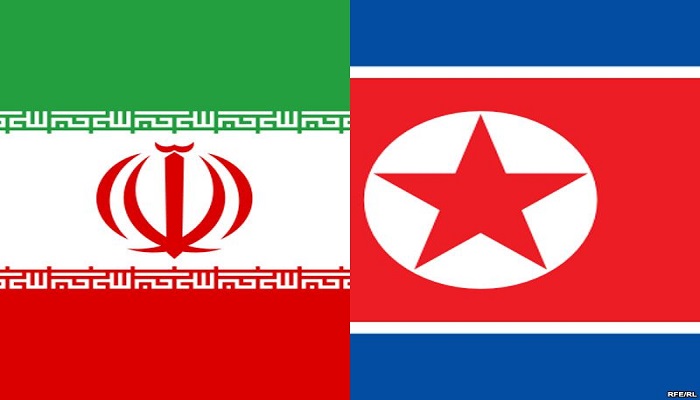
Iran North KoreaGlobal news media shifted their attention to new disclosures of a clandestine visit to Iran by a delegation of North Korean nuclear and missile experts to a military site near Tehran amid a third round of talks between the P5+1 group of nations and the Iran regime over its nuclear program.

As reported by Reuters, the National Council of Resistance of Iran, one of the leading dissident groups against the Iran regime which previously exposed the regime’s uranium enrichment plant at Natanz and a heavy water facility at Arak in 2002, cited information from sources inside Iran, including Iran’s Revolutionary Guards Corps, that a seven-person North Korean Defense Ministry team was in Iran during the last week of April.

The visit marked the third time in 2015 alone that North Koreans had been to Iran, with another nine-person team due to return in June shortly before the self-imposed deadline of June 30 for this current round of talks.

“The delegates included nuclear experts, nuclear warhead experts and experts in various elements of ballistic missiles including guidance systems,” the NCRI said.

The information obtained was based on dozens of reports from various sources inside of the clerical regime. Besides IRGC, sources included the Ministry of Defense (MoD), the Organization of Defensive Innovation and Research (SPND), which is in charge of working on the weaponization aspect of the nuclear program, and the Aerospace Industries Organization (AIO).

Breitbart.com sounded a cautionary note at the prospect of more integrated cooperation between the two totalitarian regimes.

“The North Koreans are growing more emboldened and hostile as they watch Iranian regime humiliate American negotiators. The claims of the NCRI should be vigorously vetted, as with all third-party intelligence, but it is quite plausible Kim Jong-Un would send technical experts to Iran to discuss mutually profitable strategies for getting the mullahs those atomic weapons they want so much,” Breitbart said.

Even Carol Giacomo, the editorial page editor for the New York Times, writing in her blog Taking Note that the optics of such a visit might prove problematic in efforts to keep Iran from gaining a nuclear capability.

“Such cooperation would belie Tehran’s insistence that it is not pursuing a nuclear weapon and would necessarily blow up any nuclear agreement. But even if a nuclear deal is reached, the major powers will need to watch vigilantly to make sure that Iran doesn’t switch from developing the technology that could enable it to produce a bomb to buying one from North Korea,” Giacomo said.

While many political analysts openly wonder why the regime would host such a delegation with the June 30 deadline looming for current talks, the regime has left no doubt that any agreement reached would be only on its terms, including demands from Iran’s top mullah, Ali Khamenei, to not allow international inspection of any military sites, to not allow interviews of Iranian nuclear scientists and an unconditional and immediate lifting of all economic sanctions imposed by the U.S., European Union and United Nations. All of which leaves the prospect of a deal in doubt, let alone meeting the June 30 deadline.

French foreign minister Laurent Fabius took a hard line in response to Khamenei’s demands, saying “France will not accept a deal if it is not clear that inspections can be done at all Iranian installations, including military sites.”

Fabius made his comments to the national assembly in Paris yesterday and urged other negotiating partners to adopt a similar position as talks resumed this week in Switzerland.

With Iran’s mullahs showing such defiance at such a critical time, we can only assume mullahs either don’t intend to honor any agreement reached or suspect they can string the West along or still develop their nuclear weapons just as their visitors, the North Koreans did.

By Michael Tomlinson

Filed Under: Blog, News

  • « Previous Page
  • 1
  • …
  • 57
  • 58
  • 59
  • 60
  • 61
  • …
  • 72
  • Next Page »

National Iranian-American Council (NIAC)

  • Bogus Memberships
  • Survey
  • Lobbying
  • Iranians for International Cooperation
  • Defamation Lawsuit
  • People’s Mojahedin
  • Trita Parsi Biography
  • Parsi/Namazi Lobbying Plan
  • Parsi Links to Namazi & Iranian Regime
  • Namazi, NIAC Ringleader
  • Collaborating with Iran’s Ambassador

Recent Posts

  • NIAC Trying to Gain Influence On U.S. Congress
  • While Iran Lobby Plays Blame Game Iran Goes Nuclear
  • Iran Lobby Jumps on Detention of Iranian Newscaster
  • Bad News for Iran Swamps Iran Lobby
  • Iran Starts Off Year by Banning Instagram

© Copyright 2026 IranLobby.net · All Rights Reserved.